
 Ask ChatGPT


 Thriving Minds with Alberto Zandi
16 Jan 2025 · 1h 10m
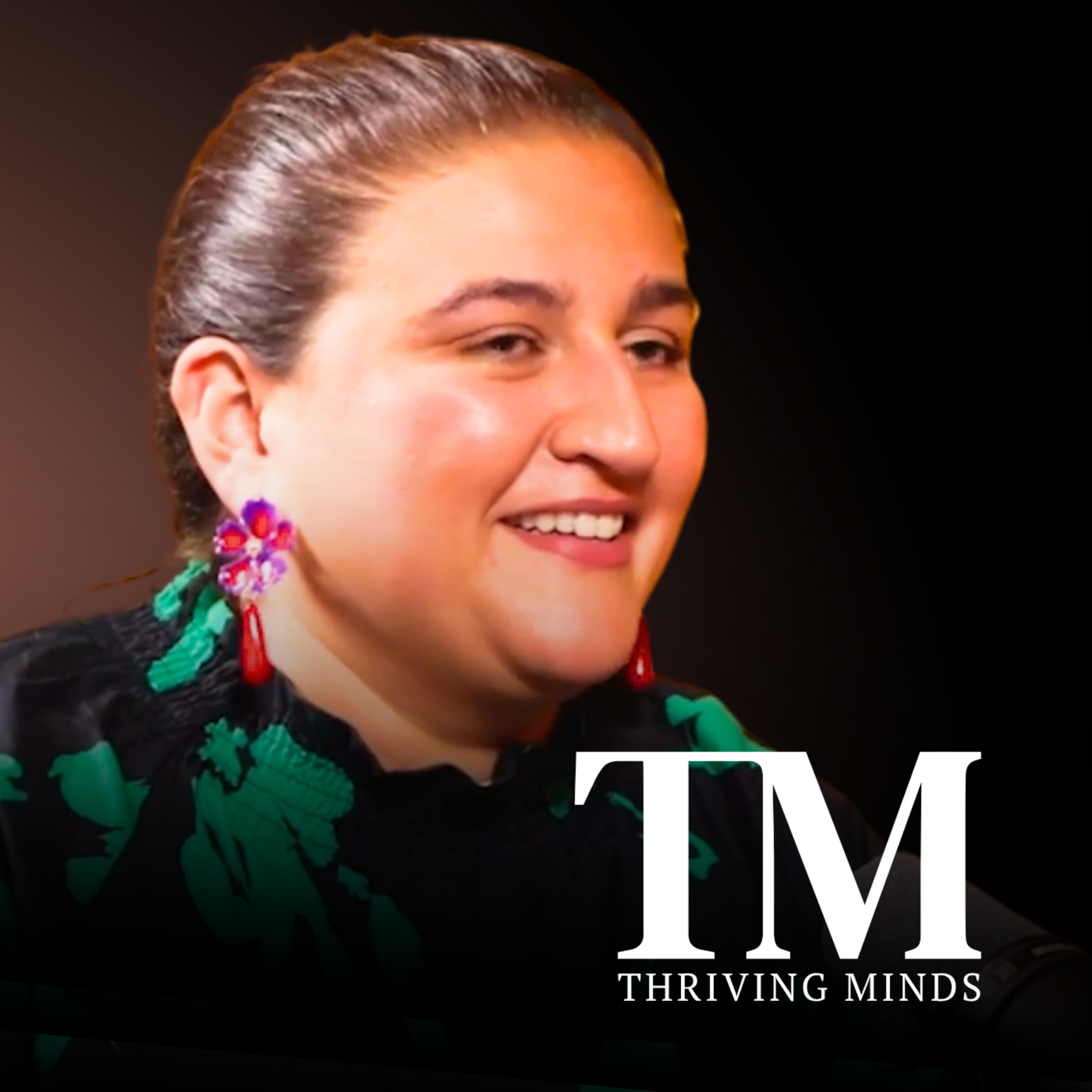
Guest: Elena Michael, Founder of Not Your Porn
In this thought-provoking episode, Alberto Zandi interviews Elena Michael, an activist dedicated to exposing the hidden truths of the porn industry. They discuss its effects on society, particularly regarding adolescents, sexual consent, and image-based abuse. Michael shares her insights from her experiences as a survivor and a campaigner against non-consensual content and abuses in the digital space.
Written by AI. May contain mistakes.

Get the gist, explore an idea or ask about something said.
 Claude
On Thriving Minds with Alberto Zandi, what are the key points of this episode?
Searching your listeningAutomatic transcript. May contain errors.
0:02What is image-based abuse? So image-based abuse is a really broad term that's essentially used to talk about the non-consensual taking, creating, or sharing of images. Elena Michael is the co-founder of Not Your Porn. Her NGO specifically fights against image-based sexual abuse. She also consults on things like the EU's Digital Safety Act and most recently on UK legislation for the regulation of AI deep fakes. You can understand somebody's behavior, but it doesn't mean that it's right and it doesn't mean that it's not abuse. And until that power dynamic is reassessed through education, I don't think we'll get better at knowing what the difference is.
0:42The people working on this issue work tirelessly. We are so lucky in the UK that we have the campaigners and the survivors predominantly and the charities working on this because they're the ones that are really thinking about tech for good. So let's say, let's take Hornhub as an example. How much money did they make annually? I think it's roughly 400 to 500 million a year, but it goes up every year. The fight is not totally lost. For example, in 2021, with assistance of the Sunday Times, you were able to make Pornhub delete around 80 % of their content because it wasn't legal. How did you make this happen?
1:25The new generations have so much quick and easy access to very heavy and hardcore porn. that must have severe consequences in the way that they see life as a whole. What do you think could be these consequences?
1:46This episode contains discussions of sexual abuse, which may be distressing or triggering for some listeners. If you or someone you know is affected by these issues, we encourage you to seek support from trusted individuals. So you went to law school and while you were at law school you found either a gap or a challenge that you wanted to tackle. There was a problem that you wanted to mitigate which was within the topic of porn. I guess most people, at least most people that I know, they get intrigued or inspired by other topics. So porn is not an obvious one. What triggered you? So first off, I have experienced abusive behaviour before in previous relationships when I was younger.
2:33And I think that as a survivor of those relationships, I knew that I was motivated to really tackle violence against women and girls. But the other reason is because when I was 15, some of the people closest to me, I haven't had any of my images shared, but some of the people closest to me had their images non-consensually shared underage. And back then, you know, it was things like MySpace and on MSN Messenger. And I have seen the long term impact that that has had on their ability to exist in the world. I mean, they're wonderfully resilient, but they shouldn't have to be. And similarly, in my experiences when I was quite young, experiencing, you know, toxic and also abusive behaviour, I didn't have the language to know that that wasn't OK.
3:22so I got into campaigning I knew I wanted to do something I knew I couldn't campaign particularly or specifically on intimate partner abuse because I thought it was going to be too triggering for me so huge like I have so much respect for the survivors that we work with because I don't know how they do that day in day out and also deal with the repercussions of re-traumatization but I think it's it instilled in me a really strong um anger um I suppose passion if you want to call it that to try and do something to help and when I came across um the grassroots campaign that Kate who you know first started Not Your Porn um had initiated I I knew I wanted to get involved?
4:09I think the word abuse could be could be portrayed in different ways so perhaps as a young woman you don't speak up or stand up for yourself because you don't know if what perhaps your partner or this other person is doing to you should be considered an abuse. Yeah. So in your own words, what is an abuse? So I've done a lot of work, you know, I'm 30 now and it's taken me over 10 years to realize that that behavior was abusive. So it was things like controlling where I go, threatening to take their own life if I didn't do things that they wanted to. Especially when I was going through periods of difficult mental health, gaslighting me to the point of saying that I'd said things when I hadn't said things.
5:01in some cases taking control of my phone, asking me why I'd spent money on certain things you know really all-consuming and made me feel especially with some of my younger relationships that I was not entitled to a life other than with that particular person and I also wasn't entitled to make any decisions for myself and I think it's really important especially for young people whether however they identify men women or anything else that we start having that conversation about recognizing abuse um not just in terms of in-person abuse but also online because often and for me as I've spoken to other survivors it happens really small and it's like a gradual dripping um don't get me wrong other people have different experiences but for me it was really small.
5:53I, you know, one particular partner, I remember thinking he was really cool and like really chilled. And after six to eight months, that wasn't the case. And I didn't have the language or the experience or knowledge or tools to recognize that that was actually abuse and that I don't have to tell him where I go. I don't have to tell him what I spend my money on. I don't have to tell him, you know, who I'm with. And I don't have to essentially put up with his shit because he's having a bad day um and it took a really long time to understand that that was even abuse and up until about the age of 25 I still felt like I was lying despite the fact that that particular partner had tried to get in contact with me um to apologize a few years before um and I also I'd had another case like another instance of where a partner had tried to get in contact with me who also exhibited I would say thankfully less abusive behavior um but I didn't realize that that apology was also potentially part of the behavior um and I think at the time you can recognize somebody as a person and even I would make a lot of excuses for why he behaved the way that he did when I started realizing it was abusive behavior you can understand somebody's behavior but it doesn't mean that it's right and it doesn't mean that it's not abuse.
7:19They're not related to the things that you're mentioning but they use this word abuse very often. Is there a particular moment where a man or a woman or however you identify yourself should be looking forward to say yes I am being abused and right now this is I should do something about it? So I think it's really difficult to pinpoint it but I am going to challenge you slightly on that because a lot of the time what we don't recognize is that there is a baseline of misogyny and kind of toxic abusive controlling behavior that we see as acceptable in relationships like if you look at on your instagram or any of your social media you see lots of conversations about love lots of conversations about relationships where some of them glamorize this whole like intense passionate love trope or narrative of this idea of like, oh, you know, we fight and we argue and we say horrible things because we're so in love with each other, right?
8:16And I think that there is that element to it, and it's complicated and nuanced. But there's also underlying in a lot of relationships, this power dynamic, where there is maybe some abusive and controlling behaviour, but it's difficult to then say they're abusive right it is a really gray area but my hope as a campaigner and also somebody that's experienced it is if we educate people and we talk about it more and more we can start making maybe better judgments about behavior that's actually we just don't want to accept it it's not nice and it's uncomfortable and we shouldn't be speaking to each other in that way or you shouldn't be speaking to me whatever and then when it goes over recognizing actually no this has become systematic this has become something that is part of our relationship where it's progressively and continually getting worse potentially I also just want to say with that you know abuse doesn't necessarily have to get worse to be abusive I think this is why it's so complicated but the more we educate people the more people can start making informed judgments about what behavior they're willing to tolerate but just to emphasize I do think in society we accept a certain level of misogyny and toxicity and also abusive behavior and until that power dynamic is reassessed through education I don't think we'll get better at knowing what the difference is.
9:43So once you accept yourself that you're being abused what is the best solution to this problem? So you accept that you're being abused so you label this is a problem I have a problem I need to fix this problem what's the best solution you talk to your friends to your parents you report it to the police well I think it's really difficult because my experience was very different to that like it literally was like little nuggets of recognizing that this was abusive behavior over the course of like five to ten years so it's only really now at 30 I can say wow that behavior was really not okay for a number of reasons and was incredibly dysfunctional and you know beyond hurtful so I think it's what I have done is for me personally and different people have different experiences is I went to therapy I spoke about it more with my friends and family and I you know it's not necessarily a problem to be fixed because you for me personally you renegotiate your relationship with it as you get older and it's become less important to me as I've gotten older.
10:50You know, at one point, it was such a significant thing that had happened to me in my life. And I was afraid to date and I was afraid to, in some cases, to go outside. I was afraid to wear certain clothing that I thought would attract too much attention, even though logically, I know that that doesn't influence anything, but it impacts your sense of security. And I think it also, you know, part of the things with abuse that I've learned for me is that it's not this kind of you recognize it and you fix it thing. It's you're constantly reevaluating your trauma. And you're also then having to deal with times when you're re-traumatized.
11:32Like, for example, somebody might say something to you, perhaps it's in a romantic context or employment context or in a friendship. You don't know why that triggers you, but it does. And it immediately makes you feel defensive and you just want to be safe. So in terms of advice I would give people, I personally didn't find it helpful to tell absolutely everyone about what I'd experienced because it made me feel exposed. So what I would say is find people that you trust. There are so many wonderful support services out there that you can just have an open conversation with and you need to really think about protecting yourself and your energy because you are the most important person to renegotiate that experience and in terms of reporting and I think that this is a really important issue I never pursued what happened to me even though technically legally I could now under the Domestic Abuse Act and other forms of legislation I never pursued it because I didn't want to go through the complete horrific experience of going through the courts, which I've also witnessed a lot of the survivors I work with regularly for Not Your Porn go through.
12:44And I know I wasn't strong enough to do that. And for me and my healing, it was better for me to work on myself. If you're transported back to that abusive relationship, in specific examples, what would you do differently oh I don't know I've actually talked about this a lot with my therapist in terms of like um not specifically that but looking back in the past and like controlling things um I I don't necessarily think I would do anything differently because I I think that you know I can't control that but what I would like in terms of the aftermath to have taught myself is to realize that I'm not the problem and fix well fix strong word um maybe give myself a little bit more grace for you know when you experience something like that especially when you've been made to feel like you're the problem you take on this huge burden and the emotional weight that you take on it kind of distracts from the pain that you're feeling because you know this was somebody that I loved once um and there were parts of him that I really cared for I think I would also probably try and give myself like a bit of a um a safe space to express like emotions that are especially with women I would say considered on like um unappealing or unacceptable like I was giving myself more space to be angry because I think I was I was so keen to move on from it that I didn't I didn't really process that and I but at the same time I think that the journey that I've been on and the experiences that I have had have actually you know it's happened in its own time and I think I'm very lucky that I have a support system that is open to talking about mental health, that is open to also like challenging their own beliefs about abuse and relationships and people.
14:58And I think if you're going to be, for people that are supporting others going through difficult times, I think be open-minded, listen. You know, sometimes that is the biggest and most important thing is having somebody to just listen and not go back to their preconceptions of something that's happened, who's open to hearing something new?
15:24Thank you. I know this topic is not easy and revisiting it must be troubling in one way or another. So I thank you for the openness. So at the back of these bad experiences, you motivate yourself to build this wonderful organization which is called Not Your Porn, which effectively is trying to tackle the image-based abuse. what is image-based abuse? So image-based abuse is a really broad term that's essentially used to talk about the non-consensual taking, creating, or sharing of images. So people more commonly might know of things like deepfakes. So that's where there's two people that are non-consensually, their faces and their bodies are manipulated to make it more often than not explicit content or quote-unquote revenge porn, which is where a partner or anyone actually for that matter, I think there's this idea that it's a partner or an ex-partner, takes or shares an image of someone non-consensually either on closed WhatsApp forums, on porn sites, on social media, I mean, anywhere.
16:36So there's lots of different terms. Those two, I think, at the moment are the ones that people know the most. So aside from deep fakes, which I'm assuming is basically faking an image, right? And building it and then posting it on a porn site. Where do perpetrators find this content? That's a big question. I think a lot of people assume that it's going to be just on porn sites, just on social media. But actually, the web is so much more complicated than that. It can be shared in private WhatsApp groups. There can be, we've had cases where individual websites and files have been set up and shared around local areas.
17:15We've also had cases where some things may have started on the dark web, but then have been posted on other websites. The interconnected nature of where this content lies and the different roles that different companies play in it, such as big search engines, where you can find, you know, listings of deepfakes. You can find a lot of the time the deepfake apps, you know, just there, easily accessible. There's just so much that goes into it. And so it's really difficult to say one place. The truth of the matter is that it's a huge ecosystem of exploitation and abuse. And what we see in the media is just a scratch in the surface of what's actually available.
17:59if you get involved in these groups and these, what I would hazard to say are actually online communities of people creating, sharing, disseminating this kind of non-consensual and abusive content. I have seen the BBC documentary where your co-founder Kate basically as an aftermath of building this organisation with you to fight against this particular crime, she's been targeted in this fashion, in this way. how can people get away with this? I think it's also I mean I would really like to know that's the first thing and there's so much to be done I think the reality is that when you're a campaigner in in most topics but also in topics where there's a an extended level of vulnerability like this when you're talking about abuse either online or offline people become harassed I mean And we've, in the past, I'm thankful to say, and also I'm worried to say in case we get subject to more from me saying this, but we used to be subject to quite a bit of harassment on our social media.
19:07People would sometimes issue death threats in the comments. They would also basically call us every name under the sun, send us dick pics and other content that was quite violent and graphic. So how people get away with this is that we don't have a comprehensive system. And right now, what we're currently campaigning with Professor Claire McLennan and Violence Against Women Coalition in partnership with Glamour UK is to create that comprehensive system where there's lots of different mechanisms where we can actually hold people to account. When you mean comprehensive system, you mean from a legal standpoint?
19:46point? So it's a mixture. I think a lot of the time people think the law solves everything, but we've had a lot of laws that have been passed recently. And actually, a law looks nice and great and it starts changing society to an extent and, you know, sending the message that these things need to be regulated or, you know, this behaviour is not okay. But what you need is a system that's more comprehensive. So we've got five kiosks. So the things are like reforming the current criminal laws which have gaps and holes in them. Sorting out the civil laws because most often than not, what survivors want immediately is to have content taken down and an assurance that that content's not going to go back up there.
20:28There's no civil mechanism at the moment that isn't really, really complicated and long and drawn out process where a survivor can just issue some sort of application to have something taken down. Yeah, it's mad. You have to go through such a complicated legal process and I think it's gotten a lot better now but when we first started campaigning we would email on survivors behalf to porn companies because we knew if we put our name at the bottom it might give them or any company actually give them a bit of a kick and be like we're watching you essentially you need to take this down but really earlier on survivors could wait anything up to a year to be taken seriously if it was even taken down at all and in some cases unfortunately especially with smaller sites which we'll get to later um that's still a massive issue if they they might not even respond to you so that's the third um sorry second thing funding specialist services like the revenge porn helpline most people don't even know that the revenge porn helpline exists but they are a fantastic organization very small group um that basically take down and liaise with platforms to get this content taken down.
21:41But they're tiny and they're dealing with a tidal wave, you know, and they need a lot more support as do other organisations. And then there are two other asks, which are more about the sustainability. So having a specific commission set up to actually deal with online harm, you know, it's not enough to just have these laws, you need an entire infrastructure to give support, because there's always new and emerging ways in which harm is perpetrated online. Like the stuff we know now is nothing in comparison to what is actually happening. And realistically, we're not going to find out for another five to 10 years if we're lucky.
22:18And the final one is education. Because, you know, I go into schools and I talk about porn and that is the most uncomfortable conversation for sixth formers ever. But somebody has to talk about porn. Somebody has to talk about digital sexual intimacy and sending nudes because they need to have informed, they need to be able to make informed choices because ultimately we live in a world where so many of our connections are defined by the online world and we need to understand how to protect ourselves and keep us safe. It seems to me that the legal reform is the baseline for the change to happen.
22:54Yeah. Now I see two very different moving parts. On one hand you have the legal changes that need to happen in order to tackle a technology-based problem, which is at least my understanding of this. So you have several limitations from a legal point of view. So A, they are nation-based, technology isn't. And then B, the speed of those reforms are incomparable to the basically opening 10 sites, new sites with new content in a matter of probably a few minutes. So how do you basically tackle such a complex and moving problem with basically the strength of the legal system, which is in a way weak and slow?
23:38Exactly. I mean, that is the problem we come up against time and time again, like you've hit the nail on the head. And I think part of the issue with that is that we can't expect a one size fits all approach to work. which is part and none of the things that we're proposing in our glamour campaign are you know that's not we just put this in place and then everything's sorted it's going to take review it's going to take development adaptation etc but one of the key things that would go some way to solving that or at least some way to creating preventative action would be to have a sort of e-safety commissioner like they have in Australia where there's one so the e-safety commissioner in Australia is essentially a body that's set up to deal with this kind of online harm not just image-based sex abuse but other forms as well so it could be fraud other things and their sole job is to deal with all of that and monitor trends and you know it's don't get me wrong there are other things that need to be in place for it to be the most effective but that given how much of crime.
24:46I mean, I believe the more recently, there were some crime statistics that were really saying more and more and by the National Crime Agency that said pretty much more and more of our crime is taking place online. It is completely astounding to me that we haven't considered or we're not thinking about having some sort of body that deals specifically with this, because the other bodies that we have at the moment, like Ofcom, which you may have heard of, and their whole online safety act, their job is different. It's not necessarily to be proactive and monitoring and checking and curbing behaviour.
25:21It's more about trying to implement accountability after the fact and having some sort of measuring and monitoring principles. So that doesn't quite fit with their current institution and we need an institution that can be reactive, that can check these trends. so it's difficult but there are if we can think innovatively which I think we have made some progress in the last few years of getting people to understand that we can't depend on and rely on old systems to fit new problems we've also got to adapt and be creative and I think that there's just like a huge shout out to the community in the UK the people working on this issue work tirelessly.
26:03We are so lucky in the UK that we have the campaigners and the survivors predominantly and the charities working on this because they're the ones that are really thinking about tech for good and thinking about how we can create a system that doesn't stifle tech but does hold it accountable and then does prevent this behavior, you know, finally but most importantly in the long run. You're mentioning education. So what do you think they should teach us and also at what age that would allow us to reduce this type of crime? So I think there needs to be from a very early age conversations about consent.
26:45I mean, I think we'd have to look at it in terms of what people are already being currently taught and what needs to be built on. But there needs to be an online safety program integrated into sex education without question. I went into school recently, into a school recently where I was talking to 17 year olds and I asked them what social media apps they use. Every single person put their hand up for pretty much all the major ones. And then I said, how many of you know what the safety features are? How many of you know what the guidelines are? A few. How many of you know what to do when something goes wrong?
27:19No hands in a group of 40, 17-year-olds who are all using these apps day in, day out, probably more than they're doing anything else. What should we do when something goes wrong? Yeah, hands down. Nobody knows. And what should we do? What should we do? Okay, so there's a mixture of different things. So initially, you've got reporting to platforms, and obviously this will depend on your age. There's reporting to platforms, contacting key stakeholders if you're under 18, so school, somebody that can support you because that process of like trying to, if for example, it's images shared or you're experiencing harassment online, that can be a really tricky thing to navigate when you're younger.
28:01Also talking to parents as well. And eventually at some stage, more often than not, the police will get involved, especially if you're under 18. But the police's approach generally, in my experience, has been more about educating the people involved if it's like peer to peer or if it's somebody older that's targeting younger people opening investigation to actually you know take a prosecution for it further with that person but in terms going back to your original question about what we need education wise we need a comprehensive online safety program from day one you know we've got kids as young as eight using all kinds of apps they need to be empowered to make decisions and choices that look after their safety as well as parents as well so I'm not saying we talk about porn from eight years old but I am saying it all fits into into a jigsaw puzzle that needs and you need all of these pieces and I do think it should be mandatory from 16 at least to be talking about porn and sending nudes because the majority of the schools I go into, teachers tell me that so many young people are sharing nudes.
29:14When do you think we should talk to our kids about porn? Oh, I think that's a really difficult question. And I think that, I mean, I know what I would personally do if I were a parent, I'd have that conversation probably from secondary school, because the majority of children that I've spoken to, who are brave enough to put their hands up when I, you know, ask how many, like, what, you know, have you, how young were you when you first came? 11 years old? 11, 12, I think, yeah. I think even if you're not talking about explicitly what happens in porn, just making people aware. I remember the first time I ever saw a porn video was actually at my Greek school that I used to go to on Fridays and Saturdays.
29:54and a boy who was 16, I believe I was about 12 or 13 at the time, showed me a porn video and I remember being like quite horrified because I'd never seen anything like that before and it was really graphic and like quite violent and I remember telling my head teacher and they dealt with it but even if people are not or even if young people are not necessarily seeking that content themselves they're exposed to sex both porn and otherwise all of the time so if we don't have um and just to like caveat that porn essentially is a different form of media a more explicit more vulnerable more exposed form of media that we don't have the same checks and balances that other forms of media do so if we're not having those conversations then you're allowing or you're facilitating, I would argue, young people not being able to make informed decisions.
30:50And I think that's why we need to start this program. It needs to be integrated into sex ed that there's online safety. Not necessarily talking about porn, but it fits into a much bigger picture. Probably 15, 20, 30 years ago, when you wanted to understand how sex worked, you would ask either an older sibling or your parents or an older friend and they would share with you the experience but i think the new generations they just have so much quick and easy access to very heavy and and hardcore porn and that must have severe consequences in the way that they see life as a whole what do you think could be these consequences oh um i mean it definitely impacts relationships whenever i leave schools um you can see on the 17 18 year old's faces that they haven't considered what i've talked about so i think it's this idea of like it i mean the biggest thing for me i would say from my experiences as a campaigner is the normalization of certain behaviors within sex and like not checking for consent or choking um hair grabbing all of these things which okay if you like that absolutely fine but you also need to have a conversation because not everybody's going to like that and you think some young kids are normalizing that because they see constantly in porn sites um well i think that's probably like a really broad statement i mean there's definitely an aspect of it but the other important thing to consider with porn sites showing this as well is that we have outlets for good sex education talking about consent.
32:38But when Instagram and other social media sites put policies in place to reduce the spaces where people can actually talk about consent and topics, we have an imbalance. So you have kids that are really easy. I'll try and explain this because I know I'm like rushing through this, but you have children or young people, I would say, who can really easily on a search engine find certain porn sites, although there are certain regulations and parental controls now, but you can use VPNs and other things to get around it. But then on the other side, you've got on social media sites where open conversations about consent and influences and charities that literally work with young people to teach them about pleasure, to teach them about safety, etc.
33:21Their voices are being shut down by being shadow banned. So even though it's not necessarily intentional, platforms are trying to be safe and make sure that, you know, their users are safe particularly if they're under 18 the gap between what has power and dominance and what people find normal becomes bigger and bigger and those more consensual more nuanced forms of information go quieter and those forms of easier it more easily accessible more violent I would argue gets louder and it doesn't have to be that way we need to start thinking holistically consent can you give an example and maybe we can lead for that so perhaps I could be engaging in a sexual relationship with a woman and let's say that I'm a person that would like as you said which by the way at home but choking and I see that maybe from her body language she's reacting positively and she's aroused and she likes it that is not consent correct I mean there are obviously non it's tricky and there are non-verbal indicators that could potentially be seen as consent but I would say given the world that we live in and how easy it is for there to be lack of consent to ask Jack you know do you like this are you enjoying it do you want me to change anything and I think that conversation doesn't just you know exist in the bedroom that's generally in all relationships like are you happy with this can we make adjustments to our lives whatever it is right it's about communicating and I think given the world that we live in and given how often consent isn't asked about even a small thing like are you okay doesn't disrupt the flow does it only takes two seconds so from my consent perspective how does the law look like so under the sexual offenses act 2003 consent is about whether somebody has the capacity to make a choice so if you don't have capacity because you've been drinking taking drugs in many cases um to do with like physical um sexual assault or abuse there have been a lot of cases where people have been asleep and have woken up to being assaulted.
35:49Being asleep, you don't have the capacity to make a choice. And I think it's really important to understand that consent can be withdrawn. So you can have capacity to make a choice, you can make a choice, but you can take it away. And don't get me wrong, it's not, that doesn't mean just because we have this definition that it's really easy. But with that, a lot of the cases that I see, one of the things that I'm mad about as a campaigner in recent years is that we've seen cases of rape, sexual assault, image-based sexual abuse in the media, the headlines being watered down, which is influencing, and I'll explain what I mean in a minute, but it's influencing the way that people understand consent.
36:33So for example, man has sex with underaged girl. That is statutory rape that's not having sex with an underage girl that is statutory rape end of don't water it down you know and why do you think they're watering down i honestly i wish i had an answer to that question i think it's like the multiple factors that are influencing it um i think there is also um potentially a worry about being sued for but in a case where somebody has already been handed down a sentence and has been, you know, predicted, not predicted, has been confirmed guilty, you shouldn't be saying that because you're influencing the way that people understand consent.
37:18It's not an easy, yeah, it's not something I can really answer why, but. So you're trying to tackle a very big and wide problem, which effectively has a massive industry supporting it, which is the porn industry. In order for you to have a meaningful impact, How much money do you think you need, let's say, on an annual basis? Well, to be honest, we're not funded, as you know. Now, all I would like at the minute is like 100 grand, just a year, just because we've already been doing this work unpaid because the people that I work with, the survivors I work with in the core team, we care about this to the point that we're not letting it go.
37:56But just to be able to fund those people so that they can actually live their lives, Like it's incredibly tiring as a campaigner and it takes so much adrenaline and energy to keep pushing. But you do it because you care. So if you get a hundred thousand, what would you do with it? Can you give me specific examples? So first, pay any costs like website. Currently, I pay for everything like that. If we get any legal advice, we're really fortunate that the majority of the time it's pro bono. Pay for the survivors that I work with to be able to do this as their full time job. so that they don't have to do this around their job.
38:33And that I can also pay for them to have development courses so that they can expand their careers and then we can expand the movement. And the biggest thing I would, like it's my dream to do, which is we're on route, is to have a survivor community where we have support groups. We test ran one last year that went really, really well. And we want to implement that, have somebody to facilitate it. And also to have a therapist that can do like drop-in sessions and host group sessions for survivors. Because unfortunately, the majority of abuse services that we have seen don't necessarily cater to online harm in the same way.
39:13And, you know, if people want to give us more money, that would be great. But 100k is the starting point, please.
39:24so effectively you would like to get a hundred thousand pounds in order to on one hand support the victims on the other hand also to lobby some sort of reform and even on a third point to disseminate the knowledge and bring awareness around this topic that people are are not aware of so this is a hundred thousand for you to solve these three different points but you're competing or fighting against this massive giant which is the porn industry how big is this industry so let's say let's take horn hub as an example how much money do they make annually i think it's roughly 400 to 500 million a year but it goes up every year and it's influenced by lots of different factors.
40:12Yeah, it's mad. And it's really important to understand that Pornhub, everybody says Pornhub and any Pornhub affiliated porn sites, but that is very specifically a tube model. And there are so many different other porn sites. What's a tube model? So a tube model is where content is uploaded a bit like YouTube. Yeah. But there are other sites. You've got subscription sites like, for example, OnlyFans. You've got other websites where it's like camming. you've also so cam girls live webcams you've got websites that function a little bit more like the social media that we're used to where you like send like snapchat and things or you have like online profiles and stuff like that like this the length of this industry people kind of just think of the mainstream ones where i've seen websites literally pop up within a week and go down the next week because that the content either because they've got shut down or they've been issued some kind of action or because people will just want to keep setting up these different websites to disseminate this content because they don't want to get caught and it's easier for them.
41:21It's huge. And the other side to think about with that is it's not just these big companies. There are very organized online communities of people where they're sharing, exchanging. Like one of my friend Zara from the Vengeborn helpline, well, she's not there anymore, but she explained it perfectly. Exchanging stuff like Pokemon cards. That's essentially what it's like online. Almost like social media. It's like the level of desensitization to the fact that this is abusive and exploitative behavior doesn't exist. It's like this entitlement to this kind of content. And you also see that with deepfake sites like Mr.
42:00Deepfakes or other modules like that, where people are like, oh, I've got images of this person. Oh, could you make a video like that? Oh, I really like this. Can I take it and put it elsewhere? It's literally like they're just talking about, I don't know, videos on TikTok of like cute animals. Like the level of desensitization is appalling. And I really worry about what that's doing to the way we look at violence and the way we look at the entitlement we have to other people's bodies. Are these sides regulated? or at least the main ones? Is it Pornhub regulated? I couldn't tell you. Like in terms of the main ones, it really depends what we're talking about.
42:40We haven't even got onto Telegram, Discord, private WhatsApp groups, individual like drives that are or like file sharing sites. And also we haven't talked about open source coding where certain modifications can be made to websites in order to share or create abusive tools. it's huge it's an ecosystem and what people always go for in the mainstream because it's easy it's palatable they've seen the headlines but actually it's an interconnected web the people you find on one site like let's say reddit on a listing they might be on 15 20 other sites accessing this content helping people find other content and that's like the ecosystem then you've also got the situation where you've got the initial individual perpetrator that might still be perpetrating abuse, we don't know, in their community with their friends also on these sites.
43:37People always think about it as if it's one person. There's entire groups of people perpetrating this kind of abuse. It's not just the initial perpetrator because once it's out there, anyone can often take it and put it elsewhere. So understanding the magnitude of the problem, people think it's this one and done situation. It's continual. It's perpetual. Most survivors that I know, and not all, but most live in fear that their images or these videos will either get taken and edited or reshared. And sometimes something as simple as a WhatsApp message or a message on social media can be triggering because you don't know if some random person who's created a dummy account is going to contact you either to be like, hey, by the way, I've seen this?
44:20Do you know that this is out there? Or think that you've done it deliberately and ask you for more content and harass you? Like, imagine that level of burden you have to live with every day, you're in your work meetings, and you've got your phone and you're that sense of panic, and you want to be sick, because you've seen this, but you can't do anything. And you can't just announce your entire meeting that this has happened. And then having to like live a normal life, have kids you know deal with your mental health do all your housework like the the impacts of this perpetually and then also having to advocate for yourself fight the police to take it seriously because the situation depending on which police force you talk to is completely like I've spoken to some amazing police officers that really get it but I've also spoken to in the last few years just to caveat not just more recently police officers that didn't even know that it was a crime for a perpetrator to individually share and thought it came under different laws.
45:17Potentially the police don't hashtag your case in the system the correct way, so then you're fighting for months to get some information and nobody's sharing anything with you. Then maybe it doesn't go through to the CPS, so the Crown Prosecution Service, and they reject it and say we don't have enough evidence. So then you're trawling through all these sites because police officers can't go on porn sites or any, not all porn sites, but also some other sites to get that. So you're becoming the investigator. Then you're sending it to them, chasing them like you're their boss. And at the same time, your family members are still, you know, they might be getting ill or you're going on holiday, your friend's getting married, you're trying to pursue this new relationship or your kid's sick.
45:56Like that burden is a full, it's more than a full-time job. It's like three, four jobs and a survivor with no funding, no backing is doing all of that. And companies are like, oh, it's too hard. It's not too hard. That individual's doing it for themselves and probably, you know, I'm speculating here, but has a host of mental health and physical health as a result. Sorry, I'm getting very emotional. As a result of being worn down by that, you have a huge profit margin you need to understand and this is what I say to companies we're not against companies but you need to understand that safety is profitable and I hate to say it like that but that is the case and the wider impact you're having on society of like peddling this kind of um this kind of content and you know I've even had cases where companies um who have turned around said but it's freedom of speech how can you call abuse freedom of speech I'm sorry, it's not.
46:53And I think we need to understand that companies have to be part of the solution, but they also have to be held to account. They're not going to do things in good faith. Can we really fix this problem? Can we find an all-around solution? Because from my initial understanding, every time you mitigate one small fire, 10 other ones can appear because, again, we're talking about technology. So if we take, for example, the crime of selling drugs, while you can, I think, chunk so much money and so many resources when it comes to police enforcement and different laws and so on in order for you to mitigate this massive problem, you are narrowing it, you're reducing it.
47:40But I think that if there is at least one person in the world that is willing to pay for these drugs or to consume that kind of porn, this problem would still exist in one way or another. Well I'm really glad you brought this up because I actually think in comparison to something like that and obviously we can be here splitting hairs about the factors that make why somebody might sell drugs or consume drugs etc. In this situation there are we have more control to influence behavior than we probably do in a lot of other areas and it's not just about regulating things after the fact is also about taking preventative action.
48:17So can we get rid of absolutely everything? No. Can we make steps towards changing societal behaviours and the behaviours of individuals and communities online? Absolutely. I mean, a fantastic demonstration of this would be Bumble, where they got so many different, basically, complaints and fears and concerns from predominantly, but not always, women users about their safety and being harassed that they said, do you want to see this image? Or they blocked certain things or you can't. In other cases for other tech companies, they block certain phrases being used. The technology is there and we're able to use it, but it has to be a safety by design approach because the impact of not having that is that we're influencing behaviours online to think that all of this is normal and acceptable.
49:08so I'd say preventative action is a huge part of this and I do think that we can definitely make the situation better but we need more buy-in from tech companies and I don't I'm going to be honest I'm getting really bloody sick of hearing oh we need to think about it and do all these things the time is now every time you wait and every time you have a conversation with your manager and their manager and whoever else there are very real survivors that are doing your job for you if you have a big safety department and all welfare team how can you be having those teams and not one engaging survivors which makes me incredibly angry because if anything they are the experts you know I'm a mouthpiece for the women I work with they are phenomenal and the stuff that they do it makes me shudder like with both anger and awe that they've won because they've had to go through that but also that what they've been able to achieve with no backing in policy or tech.
50:02But we need buy-in from companies. And if they're not going to buy in, which a lot of them, I would say, for other reasons, and I don't want to demonize also individual teams, because there are other, there are people within organizations and companies that really want to help. But at the same time, the overview that survivors are getting, the message that they're getting is that, oh, this is too big of a problem for us. But actually, it is within our reach to make choices. and changes so there are some forms of porn that are crimes and unhealthy do you think porn can be healthy in any way i absolutely think it's a possibility like i think a lot of the time people hear not your porn and they think we're anti-porn we you know our argument to that is it's not anti-porn to want to regulate and make sure that things aren't abusive you know um so i think porn can be healthy and I think that there are demonstrations of movements moving towards teaching about consent I mean there was a fantastic awareness campaign done in Australia by a number of content creators and sex workers about consent which had huge like it went really well and it was also like teaching young people about consent so I think there's a place for it But what people mistake is that they think the way porn is at the moment is what it's always like.
51:30It's exploitative, all these things. No, the way porn is at the moment is because the infrastructure that is in place is inherently exploitative. Any industry like, and I don't want to belittle it because obviously the level of harm with porn is different. But any industry, for example, let's say construction work. they've gone through all different kinds of reforms introducing standards construction work in this country say 50 to 100 years ago was not safe potentially exploitative all of those things the situation it's in at the moment okay don't get me wrong there's probably problems but we have all the safety measures in place to facilitate those people and those workers to exist in their environment, their work environment, and do no harm.
52:18Obviously, the level of risk with porn is higher, but the porn that we're seeing in the mainstream, at least in the moment, is because that infrastructure is about, I would argue, exploitation underneath it all. You have publicly spoken numerous times about revenge porn. I don't know what is revenge porn. Okay. What is it? So revenge porn is the non-consensual taking or sharing, and it can be both, of an image of one person or more. So for example, let's say you either share an image with me, generally explicit in nature, and then I send it on to my friend. That's an example of quote-unquote revenge porn.
53:03Another example would be if I take an image of you that's explicit that you didn't know about and then upload it to a site without your consent. Both of those situations are revenge porn. And a lot of the time people think that it's just within domestic or ex-domestic relationships or intimate relationships. It's not. The perpetrators of this can be colleagues, it could be someone you know in your local community, maybe someone you've only met once or twice. You know, there's a lot of different ways in which revenge porn can play out. How common is this happening in the UK? How common? I think it's far more normalised than we give it credit for.
53:39I don't know what the exact figures are today because obviously those will be skewed depending on reporting and who actually speaks up about it. But I would say that it's very, very common. If you think about the number of people that are sending nudes just normally as part of their relationship and you imagine... Sorry, let me go back and rephrase all of that. I think it's far more common than we realise. If you remember what I said at the beginning, this happened to someone I knew when I was 15, 15 years ago. This phenomenon is just progressing, or I don't even want to call it a phenomenon. This abusive behavior is progressing and evolving.
54:20That's 15 years ago. We haven't really moved on that far in terms of the way that people behave today. It's a new form, a new tool to abuse the online space. Is there a story that shocked you that you could share without sharing any names or references. So just for people that are less aware of what revenge porn is, like myself, would understand what could be an extreme case of this. I think the most shocking examples are the ones that are the most normal. Because more often than not, people think it's going to be this big case where maybe there's a group of six perpetrators. And don't get me wrong, there are cases where there's huge groups of perpetrators that organise a criminal ring sharing hundreds, if not thousands of images of people within their area.
55:11That does happen, but it's the things like your best friend has sent an image and put it on a website, sometimes because they want to make money, sometimes because they think it's funny, sometimes just for no reason at all because they're bored. People always get that one. They're like, people are bored and they upload images non-consumption. Yeah, because it's become so normalised. there was a research paper done a few years ago by a company called revealing reality that do lots of different research and some of the perpetrator motivations were things like oh I did it like sort of for peer I shared images of myself and I didn't mind people sharing images on because it gives me a sense of status like the complexity behind this behavior we always dilute there's actually lots of different reasons.
55:58So I would say in terms of stories, it's the ones where it's people that you wouldn't suspect, you know, people that you, or people that are so integrated in your life, you think, well, why would they have done that? People within communities. And the thing that's shocking to me is also the way in which communities around those perpetrators protect them. You know, you know that somebody's done this multiple times and yet you don't do anything about their behavior. And I mean, there are reasons for that, you know, in the sense that people feel empathy, think, oh, you know, my friend, my whoever it is to you wouldn't do that.
56:34That's more shocking. And I think it speaks to where we're at as a society of like, where we understand this behavior. It's one really normal on one side. But on the other side, it's like, we don't understand it as abuse enough. And we don't understand the long term damage that it does to people because you are constantly like I hope and there are survivors that you know it does kind of go away to the extent that they don't have to deal with it on a day-to-day basis but for a lot of survivors I know they are negotiating and battling with that trauma and re-traumatization I would say on a daily basis.
57:10I'm going to share this story of a friend of mine without naming the person but effectively this friend was on a dating app and started messaging with another person and my friend never shared any images any compromising images but after perhaps a few weeks messaging without having still meet each other face to face the person from the dating app effectively sent him a bunch of random pictures that were not from him he promised my friend promised me that we're not from him and this person threatened my friend to send these pictures to his but first of all posting them online on social media pages sending it to my friend's workplace so on and so forth so my friend approaches me with this topic and he was very brave to be able to open up to me about this and actually he called me in the middle of the night and then he said what should I do because I'm also very afraid of reporting this to the police because that can also mean that they can do an investigation within my workplace so what should people do in this case okay so I think there's the immediate situation of what you need to do and as a friend firstly I want to say I hope your friend's okay because that's a horrific experience to go through and secondly I think um so the first thing you need to do when you're presented with a situation like this is you either yourself or ask someone you confide in to take screenshots of absolutely everything, all the information you could possibly have.
58:44Because if you are at some point going to pursue legal action or you're going to get advice from a particular service, you need to have the evidence there. And as we know, when we have a traumatic event or when we experience something horrific like that, it can affect our memory, it can affect our ability to like process what's happening, not necessarily in the moment, but also later on. So it's important to screenshot absolutely everything. If you can't do it yourself, get somebody else to do it. The next step that I would recommend is contacting the Revenge Porn Helpline because in this case, which is a case of like in person, well, you said Revenge Porn Helpline.
59:25Revenge Porn Helpline. Yeah, they're amazing. And actually just between you and I, I think that they should be tagged, put at the bottom of this to say if you've been affected by any of these issues. And I can give you a list of resources of who to contact. I also would say, and this is part of the difficulty with these cases,
59:50if it's exchanged, whether it's exchanged over private messages or on an app makes the situation different. So if it's over WhatsApp, there's nobody you can call or talk to about harassing behaviour, which means you may want to contact the police to open investigation. If it's on a platform, you might want to consider reporting and going down that line. But the reality of the situation is there are, at the moment, very little tools of what you can do other than screenshotting everything, other than contacting the Revenge Porn helpline. A lot of people want to hear that there's like a direct step which will make this stop.
1:00:29But we unfortunately live in a system right now where that is really difficult because we don't have a comprehensive system of protections and preventions where we could actually tackle specifically that behaviour. The other thing, everybody has to make the choice for themselves about whether they want to open an investigation. but there might be some circumstances like potentially this one depending on how your friend felt because obviously he had work implications you know he was worried about work that speaking to the police is more like potentially a better option but I would also say there's so many different variables like it depends on his workplace if he had someone or if any survivor or anyone that's subject to this has a colleague they can talk to because, you know, the threat of something impacting your work is very, very real.
1:01:25And we've had cases where employers have been amazing to survivors. You know, if they've got public profiles on their websites, they take them down, they monitor and screen all their emails. The other thing to protect yourself, there's a load of fantastic resources on Refuge's website about online safety and also on the Revenge Porn helpline, which in your specific circumstances, like, for example, things about setting up Google alerts or not wanting to see an email notification that something's been posted, how to do a reverse image search, whereas if you've got those images, you can check where it is.
1:02:00But I do, particularly with that one, warn caution because that can be very traumatic. So yeah, the two predominant things I would say are screenshot absolutely everything. If you're unable to do it, ask someone close to you that you trust, contact the revenge porn helpline those are the two main ones and then if you feel able to contact the police um or lodge an incident report do but mental health and social support are going to be huge like you don't if you don't feel comfortable you don't have to tell everyone you know it's your it's what you need to go through to deal with it and if you don't want to feel exposed that's fair enough um but please try and get some mental health support because it is a horrible thing to go through.
1:02:47I think it's amazing that we have fighters like you in the field fighting against this type of crimes because this means that the fight is not totally lost. For example, in 2021, with assistance of the Sunday Times, you were able to make Pornhub delete around 80 % of their content because it wasn't legal. How did you make this happen? To be honest, shouting about it, I think it's really important also to recognize that we sit within a community, particularly in the UK, of amazing campaigners. Like we work as a community and we collaborate. And the voices of survivors are so powerful. Like I am, like I said before, completely in awe of the work that they do.
1:03:27It's influencing policymakers, it's changing people's minds, but we have a very powerful, very strong movement. And I think that with all of us tackling different elements, like the legal side, you know, intervention and immediate support, like the Revenge One Helpline were able to create this force and it instills so much hope in me but I also am so proud to be able to learn from and work with these people because they've taught me so much about this work and about this area and yeah I think that's how we're able to do it really because the things that you do with the press you know that might lead to a chain reaction in somebody else's work that then leads to somebody else thinking oh maybe we need to do this differently that leads to a conference where you're able to then have conversations with people that are working in tech then you know you're able to influence the workers because everybody thinks it's like a top-down approach it's not it's a filter-through approach you have to you have to influence individual people within a company in order for them to understand safety so the more you work as this collective movement the things that everybody's contributing the more powerful you are so i think that's how we did it really and shouting very loudly
1:04:46in this show we are exclusively interviewing forbes there and there are 30 listeners and most of the people within this list are entrepreneurs but i think it's fantastic to see that they're including people that they're not necessarily entrepreneurs but they're shaping the world in different ways like yourself and they're shedding a light on beautiful stories that people need to be aware of. In this case you've made it to the list in 2024. Being on that list did it give any visibility or empower your movement in any way? Yeah I think it gives it credibility. I think there's always this difficulty with grassroots campaigns because you're not formal and you have to be so reactive in many respects that somehow the work that you're doing not that it's not legitimate but it's not as seen as the big organizations with the big budgets or you know or the the politicians that have more of a platform so being on Forbes amplified like we were doing the work already but it just gave us a bigger platform that really to be taken seriously in campaigning you do need and I think it's one of these things that I struggle with as a campaigner of like making sure that we're amplifying survivors voices like obviously I'm on the list but I am part of a much bigger team who do amazing work right so making sure that those voices have a mouthpiece but also they have the microphone but then also recognizing that sometimes you have to play the game for people to listen and that level of strategy is a really hard balance.
1:06:26So yeah, in summary, yes, it really did help.
1:06:35At the age of 30, you have a massive source of inspiration and purpose, most importantly. You want to change something that is very meaningful to you. and unfortunately I think in a lot of cases a lot of people don't find their calling or a purpose ever or at very advanced stages of their lives you found yours at such an early stage in your case how would you define success oh that's hard um I think the thing is, I don't think I have a definition, but one thing I do want to say to it is people look at the Forbes 30 list or any other like sort of social currency success, right, which is obviously a massive achievement in its own right.
1:07:31But they look at that as like, wow, they don't see any of the story behind it. So what I would say is that success is messy. And it's, you know, having a big success or something happen one moment and then, I don't know, your washing machine breaks and your house floods at the same time. That's success to me. And it's just, you know, it's complicated. It's chaos. It's wonderful. It's messy. But fundamentally, I think it's also about community because the work that we do, like I would not be able to do this. One, if I hadn't have had Kate, because she taught me so much about press and so many different things but also the survivors that we work with like success is about community and if you in all the mess and chaos if you're supporting people and they're supporting you that's what makes you more powerful so yeah unfortunately it's not a very easy road map to follow if anyone if anyone wants to be a campaigner but embrace the chaos is what i'd say would you consider yourself successful oh um i think it's successful if i have a proper sleep but i don't know if i'd consider myself successful i think i'd more say that i'd consider myself curious and inspired by others not by myself elena i think that for someone to to be an entrepreneur in general you need to be self You need to be brave.
1:09:02But in order for someone to tackle such a multi-layered, complex and emotionally charged crime, you need to have a different kind of braveness and self-confidence, which I can clearly see you have and it's so inspiring. I think that you are the superhero that we all want to be, but in a way we want someone else to do that job for us. and for that I thank you on behalf of everyone that doesn't get to see the job that you're doing because it's helping us to live in a much better, healthier and balanced world. Thank you, that's really, really kind and I would like to say that it does not feel like a superhero when I've got like, I feel like I've been dragged through the week instead of running but there we are, but I really appreciate that, thank you.
1:09:48Thank you.
1:09:57what gives us all some here honest
Alberto is joined by Elena Michael, founder of Not Your Porn, in this eye-opening episode of Thriving Minds to uncover the hidden truths of the multi-billion-dollar porn industry and its impact on society.
They dive into:
This conversation will challenge your perspective and reveal the realities that few are willing to discuss. Don’t miss this powerful episode, watch or listen now!
Hosted on Acast. See acast.com/privacy for more information.


