
 Ask ChatGPT


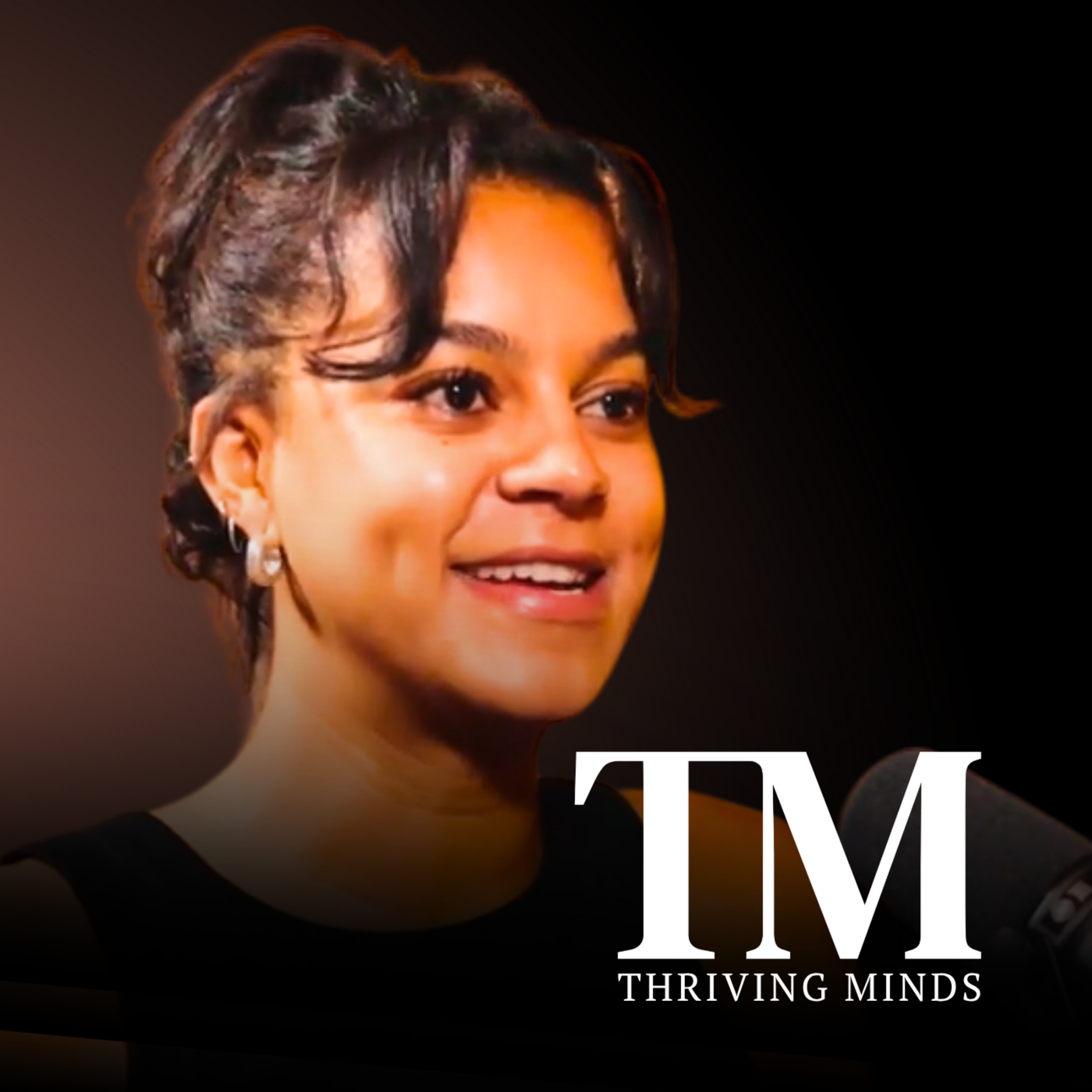
 Thriving Minds with Alberto Zandi
27 Feb 2025 · 1h 6m
Written by AI. May contain mistakes.

Get the gist, explore an idea or ask about something said.
 Claude
On Thriving Minds with Alberto Zandi, what are the key points of this episode?
Searching your listeningAutomatic transcript. May contain errors.
0:01I've always had the experience of being an outsider. You know, I wear my difference on my skin every day and I can't rub it off and I wouldn't want to, even if I could. But it's a luxury to move through the world and not feel different. And as the first black woman to swim for Great Britain, as the only black person in my subject year at Oxford, that's something that I've encountered in every institution that I've been in. I had some goosebumps when you said that it is actually a luxury to walk around the world where you don't feel different. Today's guest is Rebecca Ajulu-Buschel, CEO of the 10 ,000 Interns Foundation, which partners with UK businesses to create paid internship opportunities for underrepresented students.
0:46The first black woman to swim for Team Great Britain and the author of These Heavy Black Bones, a powerful exploration of identity and resilience. You know, through swimming, I think we learned to kind of respect that pain. Beyond respect, we probably learned to kind of love it in some way. And so I definitely thrive in that space of feeling like I'm, I don't know, standing on a cliff, like about to fall off. I think that's where I do my best work. I was too young to, you know, to consider what it meant to, you know, have to use my body in that way to pay my bills. If you were to summarize all the lessons learned from being a professional athlete into one transferable skill to be a good CEO, what would it be?
1:41Rebecca, you're the first black woman that has ever swam for the national team here in Great Britain. When we're kids, we all have this very first dream. Mine was to be a singer, by the way. Obviously, that didn't happen, as you know, for obvious reasons. But we all have this first dream. Was your first dream to become a professional swimmer? You know, it's funny. I always answer this question and say, you know, no, it just happened slowly, slowly, and then all at once. But there's a story that my mom tells me, and I think I was like five or six years old, and I saw my first competition. This was back in Kenya.
2:28And I came home and I drew this picture of a little brown girl with a big, comically big medal around her neck. And I said, this is me when I win the Olympic Games. And so I think it was always something that I wanted, even before I knew that I wanted it. so you're five six years old you have this dream and your dream is to become a swimmer and make it to the olympics then you make it to the olympics and that might seem according to your definition of what your success especially when you were that kid right your definition of success might have been i'll become a professional swimmer and make it to the olympics so you make it and then you quit why did you quit a dream that was thriving i mean i think it's it's funny how these things can take hold of you and they can shape so much of your identity but you know on the flip side of that they can also start to own you and they can start to um change your life in ways that you know you don't necessarily want them to so i quit the olympic team at the end of 2011 11, six months before the Olympic Games.
3:43And it was the hardest thing I've ever had to do, but I don't regret walking away. And I walked away because, well, for many different reasons. One of the reasons was that my love of the sport was about my love of being in the water and feeling so inside my body and so present. And it started to be more about the outcome than the process. and other people wanted to realize their ambitions through my body. And there was a huge amount of scrutiny. The color of my skin became so much louder than my performance in the pool. And I guess the last thing is that I wanted a life for myself beyond sport.
4:26And a lot of athletes aren't incentivized to think about what happens afterwards. And I knew I wanted to go to university. I knew I wanted to finish school. and I guess I wanted to choose for myself the life that I could have and that started to become incompatible with my dream and so I think as you grow up and as you change you can learn to choose yourself over these dreams that you had that maybe won't take you to the place that you want to go eventually. So there's a lot of things that I find very inspirational about you and about your story but this is probably the first thing that came into or that i that i concluded as as a very big source of inspiration which is the fact that you found success through quitting a lot of people might not understand that a lot of people might think if you quit you're not successful because effectively how can you put two very contradicted contradicting words into one sentence.
5:26But effectively, in your case, you're quitting. And by quitting, you're enabling all these fantastic things that we're going to talk about in just a minute. But you're enabling everything else that happened in your life. And I find this very powerful and unusual at the same time. I also competed in sports, not as a swimmer. I didn't know that. Not as a swimmer, but I played tennis. And funny enough, my most vivid memory when I was competing when I was younger, it wasn't about tennis. So that vivid memory, it was about the parents of the kids, of the other players. They were very tough on their kids.
6:07They expected a lot from them. It almost seemed like they were an investment. How were your parents during your swimming career? I think it's a really complicated question because what you're doing to your body at a really young age is, you know, some would argue unhealthy. And so your parents have to be a part of, you know, that kind of punishment, right? And when you're 11, 12 years old, like you wake up and, you know, do I want to go to training every morning? No. And my mom was the backstop. She was the person who took me and was like, no, you're going to go to training. And so you end up in this complicated relationship where on the one hand, this person's my biggest supporter.
6:57They're sacrificing everything for me to do the thing that I want. And in order to do that, they have to want it for you as well. And I think there's a very fine line between, you know, supportive and, you know, pushy, but in a way that is helpful for your success. And then when you tip over that line, there is exactly what you're describing, which, you know, can become very, very difficult. And you can see relationships fracture because, you know, parents are trying to realize their own ambitions, you know, or they want their children to achieve a kind of success that they didn't. And at the end of the day, you are children.
7:41And so your parents are there to look after you, to nurture you. But it's a very strange thing. It's a strange relationship. I still can't describe it properly. Let's bring yourself to a potential future. Let's say you have kids. I think there's a fine line in between encouraging and obliging your kid to do something. Would you oblige your kids when they don't want to go to that swimming class or horse riding or tennis or whatever it is that is their hobby? would you force them to do it in the days that they don't want to because you think you know better because you're older what would your approach be oh in short yes i would i think that i think that discipline is one of the kind of most powerful cornerstones of my personality and the thing that has helped shape me probably more than anything else.
8:41And I don't know if I would have that if I didn't do sport and if I wasn't pushed the way that I was. I wouldn't have my kids be swimmers. I'd make them do a sport that earns some money. And I wouldn't be getting up at four in the morning. But I think there is a healthy amount of structure that you can provide for children that I think I would probably want to provide for mine. But then I look back on that time in my life and I think, God, would I want to go through it again? I'm not sure. No, I would do it all again. It is said that in order for anyone to become an expert in any discipline, you need to train for 10 ,000 hours.
9:25That's a lot of time. So basically that means that the earlier you start, the more chances you have to succeed or the more ahead you are against the competition. So I struggle to justify to myself that it's a healthy choice for a kid to make such a long-term commitment to, in this case, a sport. So if you want to become a professional in a given sport, you usually make that choice at a very young age. When you're young, your mind is not ready. It's not developed. You don't know who you are. You don't know what you like. You don't know what you don't like. But you're making this very long-term choice.
10:03and I find it very hard to, as I said, to justify that this is a healthy choice for a kid. You made this choice when you were a kid. How was this experience for you? I mean, I guess it goes back to the first question, right? It was definitely my dream, but it didn't necessarily feel like a choice. I got in the water and I loved it and I was good at it. And as I kind of carried on down that road, It got more and more serious until, you know, I was putting my body through, you know, the first couple of hundred of these 10 ,000 hours. I've probably swam around the world at least twice now. And, you know, I don't, it didn't feel necessarily like a conscious choice to do that.
10:51But also it became normalized very quickly to train that hard. It wasn't something that I thought about or questioned. And, you know, we were all chasing this one thing, which was this dream of getting on the podium and what we had to do to get there. It didn't seem that crazy. I think there are lots of different kinds of athletes. I think that there are some people who get by because they are physically the best and their body is kind of naturally shaped to do this thing. And there are some people who are psychologically advantaged and, you know, they can quiet their nerves and they can kind of go into their body in a way that other people can't.
11:35And there are some people who, you know, like you said, get by mostly on effort and it's the amount of hours that they put in. And so I agree with the 10 ,000 hours thing. I think it's very difficult for people to understand if they are not inside these sports, how that feels. And as children, you know, are you really making that choice yourself or are other people making it for you? And if they are, is that okay? I don't know the answer to that question, but I think we as human beings are never going to stop trying to break records of the generations before us. And if that means you have to start young, then that feels like it's part of the bargain.
12:16But how young? Because I'm putting myself in the lens of a parent, of a father. and 10 ,000 hours is a lot of hours. And if you stress the body of a young kid a lot, I'm pretty sure, and I'm not an expert, but I'm quite confident that there can be a lot of negative consequences on the physiological growth of that kid, but also mental. In your experience, obviously you're a retired professional athlete, but you've been a professional athlete for so many years. You started incredibly young, five, six years old. when would be the sweet spot for a kid to say all right now I am moving from a hobby to a professional mindset right I mean I'd say I probably did that around 11 maybe 11 12 was when it really started to get serious and until that point I think my mom still encouraged me to kind of have fun with it
13:21but you know absolutely like I still wake up with phantom pains in my hips my feet are completely flat like all my arches collapsed I'm five foot six I should probably be a lot taller than that based on my parents but you know we did weight training really early I didn't sleep that much and all of that is sport definitely I think you know psychologically a lot of the stuff that I've talked about since I've retired is the stuff that other professional athletes are starting to talk about, you know, the darkness and the solitude that comes with training like that. But also the obsession and the compulsion.
13:59And that's definitely something that's followed me through kind of the rest of my life and something I still deal with. So, you know, when are you ready to make those decisions for yourself, right? The law says you're an adult when you're 18. You can have sex when you were 16 and you know I decided to put my body through this thing when I was 12 and maybe it's too early but I don't know if anyone could have stopped me do you regret it no not for a second so basically you're this young person you go all in for this one thing and when you're all in for one thing it's like when you're in a relationship right if you say this is the person and if I fail I failed, but I'm not looking at an option B.
14:44It is you. So in this case, it was this sport. There was no plan B and you're committing all your time, all your energy and focus into this one single thing. So when all your eggs are in one basket, if that basket breaks, you're in a bit of a trouble. So quitting or perhaps if your professional sports career doesn't take off in the way that you want might seem very scary because again, you don't have a plan B, a different option that you can move forward with how was this journey for you so you quit you decided that look I don't want to continue this path anymore like literally what did you do the day after you know it's so funny when I quit swimming I was still at school I was just about to write my final exams and I was about to turn 18 and I remember the next day getting home and And I was just like, there are so many hours in the day.
15:42Like, what do people do with all of this time? And I thought, how does anyone ever not do their homework? Like, there's just hours and hours and hours. The day just goes on and on. And so that was so strange. My relationship with time completely changed. And, you know, it was like a grief and a heartbreak. It was such a strange thing to suddenly be kind of stripped of this identity and know that I wasn't going to get it back. But I was really fortunate that my parents was so education focused as well. And so I'd always had this pressure to keep up with my studies in a way that I don't necessarily think other athlete parents had prioritized.
16:26And so I quit and I threw myself into my exams. I threw myself into studying and then I went to Oxford the next year. what would your advice be for anyone going through something similar
16:44gosh i think the idea that you make these decisions quickly is a fallacy i think it took me a year to fully accept that i was letting this go to have conversation after conversation I think that's okay, that you don't have to be decisive and one day change from, you know, this thing that's defined so much of your life to being beyond it. But I also think that for a really long time when I was swimming and for the year after I quit, I believed that the best thing that was ever going to happen to me had already happened. And that was a really scary and terrifying thing to think because I was 17 years old.
17:30And I guess my advice is that, you know, the best things in life won't happen to you. They'll happen to the people around you and they've already happened, but they'll keep on happening. And you kind of, you're lucky enough to be there. And so that was a hard lesson to learn. It was hard to let go. But I think knowing that there's a place beyond this where you won't feel like that anymore and it won't feel so scary. When you quit it, did you know more or less immediately after what you wanted to do or it took you some time? I mean, I think the great thing about letting go of an identity like that is that I haven't known what I've wanted to do since.
18:10You know, that was my whole life for almost 20 years. And now I get to reinvent myself all the time and I don't have to have a fixed identity. You know, maybe I still don't know what I want to do when I grow up. I guess the main take on this is that for anyone that is going through something similar, I think they should find peace in the fact that it's okay if you don't know what's going to happen next or what is it that you want to do next. And that might be something very scary, especially for people that are so competitive like athletes.
18:52Obviously, right now, you pivoted into something that is quite a success. So you went from being a professional swimmer, obviously then you went to Oxford. But right now, we fast forward to today, you're the CEO of this very incredible charitable organization or non-profit organization, which is called the 10 ,000 Interns Foundation. What is this organization about? So effectively, tell me the elevator pitch. Sure. So the 10 ,000 Interns Foundation is on a mission to transform the workplace for underrepresented talent. And that means that we want to create more equitable access points and we want to support people into work in a way that levels the playing field.
19:38So we've been creating paid internship opportunities since 2020 for young black students and graduates. 7 ,000 in just four years and 70 % of those remain in employment today. And we also work with over 700 organisations all over the UK to improve their understanding of the hurdles and unconscious bias that they have in place that is stopping their workplace from being more diverse and more inclusive. Help me understand those biases because it is very sad to see that we don't live in a meritocracy or meritocracy-oriented world unfortunately and you're already the second person within our first season that is involved in an initiative that is trying to level the field and to basically balance the skills when it comes to landing paid jobs.
20:30We're approaching it from a different angle than this other person that I interviewed, but effectively you're trying to achieve a very similar result, which means that the problem, it is there. And it might be there and a lot of people, including myself, can't see it. So open me a window and tell me exactly what's happening. Right. So I think that, you know, a lot of people believe, and fairly enough, that if you work hard and you sacrifice enough, then you will get the things that you want and you just have to apply yourself and you have to be dedicated. But talent and success is not just made up of hard work, right?
21:13There are all of these other things that you might not see because of your worldview. So for example, somebody is caring for their mother and they have to take two buses to get home from university to pick up their younger brother and they don't have time to read the book that you had time to read. They don't have a parent who's going to look over their CV and take out that spelling mistake. Like they don't have the same education that you had. And that means that they might not speak the same way as you do. They don't know what to wear when they go for an interview. And all of these things create hurdles and barriers that mean they're further away from the opportunity that you get by just working hard.
21:59and so in order to ensure that these people get the opportunity to show that they might be just as talented they are just further behind um at the starting line than you are we need to start to kind of understand that not everybody is in the same boat when we come to the front door and so we have to open that front door as wide as possible to let as many people in why is this important to you you know i mean i think i've always had the experience of being an outsider um you know i i wear my difference on my skin every day and i can't rub it off and i wouldn't want to even if i could but it's it's a luxury to move through the world and not feel different.
22:51And as the first black woman to swim for Great Britain, as the only black person in my subject year at Oxford, that's something that I've encountered in every institution that I've been in. And I've been fortunate enough to have a great education to, you know, benefit from how that allows me to move into rooms and influence people. And I know that other people haven't had that. And so it feels like, I was going to say a responsibility, but it doesn't feel like a responsibility. It feels like the only thing to do. I think it's incredible. And I think when people like you in the world that have basically the ambition to do things that would actually drive a meaningful change towards our society, not necessarily just to make money or build up the next company that would just maybe entertain people.
23:46but you are making a difference and you have my utmost respect because of this. In fact, when you were speaking right now, and I'll say this on camera, and I try not to get emotional, very emotional in these conversations, but I had some goosebumps when you said that it is actually a luxury to walk around the world where you don't feel different. I never thought about it in that way. And I think that's so inspirational and impactful what you're doing. Thank you. You showed me this morning this very cool new initiative that you've been following, which is, I mean, unfortunately for the ones that cannot see us on camera, but effectively, aside from Googling 10 ,000 Interns Foundation or your name, Rebecca, or going into the website, I find this very cool initiative where you're basically creating a old school type of newspaper, especially from people from our generation.
24:39A newspaper is old school. We have to admit this. but I find it a very cool way of engaging with people rather than the usual perhaps maybe just note in your website or your social media channels so if anyone is interested in this you can also have a digital version of this and it's effectively telling you all the incredibly useful amazing inspirational things that Rebecca is doing at 10 ,000 Interns Foundation yeah we're going to try and put some around London so if you find them let me know I'll help you distribute them around so you were able to pivot from swimming you were a professional swimmer and right now you are the ceo of this successful non-profit for a lot of people these two roles these two jobs are not relatable like how can you successfully be a good swimmer but at the same time a good ceo like nobody told you to be a CEO why should anyone hire you to be CEO I guess the question is in that first month when you got the job how was it like what do you do every day oh god did you feel the pressure of I don't know fake it until you make it how was it the first I mean it wasn't even the first month the first year of this job was insane I think I was I think I was 27, 28.
26:05It was really visible. There was this crazy press release when I got the job and I suddenly went from having been out of the spotlight for 10 years post-swimming to being back in this place where people were looking at me. And, you know, there's always that question of like, are you going to fail or are you going to succeed? And my board are all investment managers. The charity was born out of the investment management world. So there's a very intense corporate rigor to the way that we do things. I think it's the thing that's made us really successful as a charitable organization. And funnily enough, I found so much of my own personality traits in that way of working.
26:52I am exacting, I have a high tolerance for discomfort, which as it turns out means that I have a high risk tolerance as well, which is great when you're running a startup. I have never relied on motivation as the driving force of any action. You know, people get up and they think, I feel great today, so I'm going to have a good day. But I get up and I think today is another day where I have to do the things that are going to move us forwards. and discipline has always been that driving force for me, which, you know, helps massively. I think swimming made me unafraid to fail or lose. And I think that makes you a better business person because you're not always trying to be right.
27:42You're not always trying to get the gold star. You're not trying to succeed in the eyes of other people. You know, you're trying to push and be better than the you that you were. yesterday and you don't mind if if it screws up it's okay um so all of those things i think make me good in the startup space and i've learned so many of them from being a professional athlete if you were to summarize all the lessons learned from being a professional athlete into one transferable skill just one transferable skill to be a good ceo what would it be high tolerance for pain high tolerance for pain yeah do you feel pain at work yeah yeah always i feel i feel pain in not getting it right for my team um i feel pain at 3 a.m when i'm writing the board papers I feel pain when I have to exit someone from the organization.
28:51And yeah, there's a lot of pain in making those tough decisions. And I think there's a lot of joy that I feel in being able to sit with that and move through it.
29:04And, you know, through swimming, I think we learned to kind of respect that pain. And beyond respect, we probably learned to kind of love it in some way. And so I definitely thrive in that space of feeling like I'm, I don't know, standing on a cliff, like about to fall off. I think that's where I do my best work. Having a better tolerance with pain or more tolerance towards pain. I think that also can be extrapolated to having a better relationship with failure. because I think whether you're an executive or an entrepreneur, a lot of people are afraid of failing. And just by having that fear, perhaps you're going to operate very differently.
29:48And if you don't operate logically in very high emotional moments, I think the chances of you deciding something wrong are much higher. So having a good tolerance towards pain, which might be the consequence of failure and failure by itself, might help one become a better professional.
30:14Obviously, you have a very complex, multi-layered life. Your path has been influenced by very strong stimulus that make you who you are right now. If you didn't have enough on your plate, you decided to write a book which before we dive into into what the book is why did you write it writing a book takes time and you are a busy CEO how did you find time to write this book I mean do you have a time management methodology that's a good question um you know I could give you some bullshit answer about, you know, the way that I managed my diary. But honestly, I think I ruined almost every single relationship in my life for about six months.
31:09It was such an intense period of time. The book sold the week that I got off at this job, and then I was under contract to deliver it within six months. And so I was in my first six months of being a CEO, just like you said, I was definitely operating from a place of fear. I hadn't done this before in this way. And, you know, I'd wake up every morning like, oh my God, the balance sheet and this and that. And so I'd work all day and then I'd get home and I would write until like two in the morning. I think one of the things that has always really helped me is to not allow tasks to expand to fit the amount of time that you give them so I would never write or sit down to write without a clear starting and stopping point starting and stopping point from a time perspective or from a goal like until I reach maybe chapter two or so it's definitely it's both things because I'm insane so I would sit down and I would say okay, you're going to write a thousand words in the next 45 minutes and whichever comes first, like that's when you have to be done.
32:20And so I didn't, I mean, I didn't, I did a lot of planning and a lot of structuring for the book. It's also my own story, which makes it slightly easier to write. But, you know, I've, I've always wanted to write, um, I studied philosophy and well, I studied fine art at university, which had a heavy kind of philosophy, um, thread through it. And yeah, writing has always been a great love of mine. So I had to make it work, which I did kind of. It wasn't graceful, is what I will say. The title of your book is These Heavy Black Bones. There are a lot of books out there. And I can tell you this because I think my partner, my girlfriend, has written almost every book on planet Earth.
33:08She reads like a maniac. but there are a lot of books out there. Why should anyone read this one? Look, I think my story is unique. I guess everyone thinks that story is unique. Everyone thinks that same way everyone thinks their business is unique. I think a lot of the research I did when I was thinking about writing was reading other people's memoirs, but none of them about sport. all of them just about intense experiences. So I read this memoir about this guy who was adrift in the Atlantic for 76 days, just by himself on a dinghy after his boat went down. I read a memoir about a man who was captured in Lebanon and was in prison for four years.
33:55And I think what all of these intense experiences have is that they give us this shared sense of humanity. And I think that especially right now in the world, we're at a time where we need to feel close to each other. We need to understand that even people who've had different experiences to us still bear resemblance to, you know, what we think and feel when we move through the world. So yeah, my story is about sport and it's about race and racism, but it's also about coming of age and trying and failing to do something very hard. And I think there's something in that that will touch everyone, even if you're not a sports person.
34:39So I hope it's a good addition to the canon. So let's say that my girlfriend reads it, and I'll guarantee you she will read it, but let's say that she reads it. What would you hope for her takeaways to be? I think that, you know, I wrote the book to almost be like an offering of freedom to myself, to my young self who wasn't maybe protected well enough from the scrutiny and the harms and abuse that can often come with elite sport. But I think that other people who read it will, they'll hopefully understand what it feels like to self-liberate and maybe they'll have a pathway or a blueprint to do that in their own life you know we were talking earlier about the power of quitting and walking away and if someone's at a crossroads um you know i think that this book can help them free themselves from that you speak at length about sports injustice this basically you were saying that the definition of success as an athlete is very black or white you either win or you lose and this can have a lot of unhealthy or negative effects towards the athlete can you give me like the most shocking effects that you have seen either within yourself in your experience or within other athletes yeah i mean i think people have talked about this as i said before, more so now than they did during my era, but I think depression and eating disorders are rife in elite sporting spaces.
36:22I certainly experienced that myself. You know, I think the obsessive nature of doing something again and again can lead you to a way of thinking and a way of moving through the world that is, you know, not very healthy and is probably led by compulsion. And I think that oftentimes maybe the worst thing is people sacrificing everything for this one moment, them not achieving it and their life kind of going down a very dark path. I write about that in the book. One of my teammates who, you know, ended up in a very, very bad situation after he quit the sport. And so, you know, I think these are real lives that really bear the consequences of, yeah, a space that can be really unforgiving.
37:14How can you protect yourself as an athlete? I don't know if you can. I think there's always going to be that desire to, you know, go beyond the limits that we place on ourselves. And that means pushing yourself beyond what is healthy or maybe accepted. I think that over the last 10 years since I quit, people have been more encouraged to protect themselves from a mental health perspective. Simone Biles recently taking time out of the sport and coming back, I think, shows you that there are guardrails that you can put up that allow you to do the thing that you love in a slightly more healthy way.
38:05but I'm not convinced that there's an elite sporting world that is completely devoid of harm I think that it's a natural consequence in some ways of you know what you're doing to your body but certainly you know your body can bear the cost other people shouldn't be contributing to that so when we think about my relationship with my coach in the book for example and the way that he pushed me um those kinds of things need to be stamped out in sport absolutely can you map out the lowest moment in your career how was it like describe it to me paint me this this picture because i can relate to working so much for you to be tested in a very short time frame so perhaps you're training all these days months weeks years and then perhaps in your case as a swimming professional you're only swimming for what about what 10 minutes five minutes oh gosh 60 seconds there you go 60 seconds um and if you don't get the result that you want that can have a lot of mental health implications tell me the lowest moment and most importantly i want to What was happening in your head?
39:25How was your brain playing this out? I talk in the book a lot about my relationship with the perfect race and that that's this thing that athletes are always chasing, this euphoria, this perfect high. And at one point in the book, I also talk about the worst race.
39:45And it was my British swimming debut. It was in Budapest. I think I was 16 years old. and I was ranked first into the final. I think I just have my world number one ranking, and I was going to be the first black woman to swim for Great Britain with this race, and the pressure was indescribable, and I was so young. Well, at the time, I didn't think I was so young, but I look back on it now, and I was so young. And something just broke in my mind before I stepped on the block, and everything fell apart. And it's like you feel it all happening in slow motion. I can still remember it perfectly, but the race was just, it was just awful.
40:35And I remember touching the wall, and I didn't even look up at the scoreboards to see my time. And I think the last thing I remember thinking at the end of the race was like, I never, ever want to do this again. And I got out, and my coach and I had this huge argument. And that, I think, was the first moment where I thought, maybe what this is costing me is not going to be worth it. That was a moment.
41:07Do you think if the rest would have gone differently, you would have changed your mind? Yeah, maybe. I think there are a couple of moments like that, that last year, where I just couldn't quieten the noise. there was an article in one of the broadsheet papers a couple of weeks after that just before I went to the Commonwealth Games and it said a Julie Bushell to make amends for European horror and of course athletes and their performances are going to be scrutinized but hand in hand with the scrutiny about how fast I was swimming was this idea that I always had to prove people wrong because I was swimming against this racist mythology that said that people who look like Meat Can't Swim because our bones are heavier, hence the title of the book.
41:53And I think that noise was so difficult to compete against. And I decided that I didn't want to win that battle. And I think some of those low moments showed me that, yeah, maybe things could have been different for me if my difference hadn't been such a huge part of the equation. You're saying that it is said or people say that black people can't swim as fast because their boats are heavier. Did you feel any sort or kind of racism during your career? Yeah, definitely. I mean, I think, you know, this was 10, 12 years ago now. So we didn't have the same collective understanding of racism and the things that people said at school when we were kind of 13, 14.
42:52You know, you'd kind of be shocked to hear kids say things like that now. And I'm glad that times have moved on. But I also felt racism from the press.
43:06and I was like you said I was still a kid and I was learning to you know grapple with my own identity like I didn't know who I was I didn't know what my relationship to blackness was exactly at that point in time yet I had these labels being put on me and you know I guess I was lucky because I was the best so you know there was only so much that people could say and none of it felt particularly true. But it was still hard to also be that role model and be that person that maybe other black swimmers looked up to. And I didn't know how to be that when I was 14, 15. I didn't know how to take that on.
43:47I just, I wanted to swim fast. And like all teenagers, I wanted to fit in. I didn't want to be singled out. Is there still racism in the sports world? Yeah, absolutely. Absolutely. I mean, I think like the world over in every institution with all the power structures baked in, you know, there's a huge amount of implicit, probably an institutional racism, not necessarily the kind of aggressive, you know, name calling. But, you know, you look at the tennis courts that Coco Graff has been subject to recently and you think like, well, why is that happening? And it is probably unconscious bias, but that doesn't mean that it's not racism.
44:32How can we tackle this? I mean, it's the same thing that we were talking about earlier, right? It's, you know, it's about broadening people's understanding of different people's experiences. and also really ensuring that we are demonstrating that these spaces are for everybody. They're not just for one kind of person. And we can do that by, you know, for example, being more inclusive about, you know, what people can wear. Muslim women need to cover their bodies when they swim, you know, and that should be something that the sporting body allows. you know recently Fina outlawed a specific kind of swimming hat for black hair and all of these things signal to underrepresented communities that like you're not welcome and you're not included and so it just perpetrates the same cycles but I also think representation is really important and that's part of the reason that I wrote the book because you know the next little brown or black girl or boy who is told you know you can't swim fast because you know of the color of your skin or the density of your bones which is not true um will have something to look to that tells them that they can do you think there's anything that at an educational level the governments must be doing so perhaps when we are younger when we're kids they teach us things in a different way so we are more inclusive and more open-minded yeah absolutely I think education is the best starting point for all of this I think the way that we teach history the way that we talk about slavery the way that we talk about the global south I mean I'm from Kenya it's where I grew up in Nairobi and I'm also half British so one half of me kind of colonized the other which is a strange kind of violence to live with but we need to have these conversations much earlier and it's the same with swimming like this is such a cultural thing and you know kids don't know what they're saying they'll just repeat things that they hear and then it becomes you know it becomes law and other people think them as well and you know in the black community there is a lot of water fear there's a lot of aquaphobia because of these narratives that we should be able to stamp out in one generation if we get the education piece right.
47:01In your book, you also speak about bullying among athletes. What do you mean by this? I think you have to understand that it's a really strange setup, right? So there's 20 of us probably, and we lived in the same boarding house. We swam together every morning. We ate all our meals together. We went to the gym together. We went to school together. And then we would get up at a competition and race against each other. So we kind of lived as this pack and this unit, this extended family. But we were also competitors. And swimming is an individual sport. So, you know, besides the kind of usual teenage bullying and stuff that goes on generally, there was also this level of competition.
47:54and we were always trying to psych each other out. You know, everyone wanted to be the coach's favorite. And, you know, people would kind of separate like the weak one from the herd. And so I think it was a really, really intense environment to be in. And we were also treated like athletes first, not children. And that, I think, changed the kind of dynamic even more. But it was really tough. You know, I definitely experienced that myself. It was a really hard space to be in and it felt very isolating, very lonely at points. How can you tackle this? Because from my little understanding of the topic, there is only one person that can win.
48:41And if this is what you want to do in your life and you're a competitive person, definitely this is a very important thing for you. so how how can someone have a good relationship with a competitor oh i mean i think it's something that you grow into right you see kind of wise and sports people i keep making tennis references but you look at some of the tennis greats and they have this ability to be in on the court, to face down their competitor with no mercy, but to still shake hands at the end of the competition and to walk off and let that stuff go. And I think as a younger person or as a child, you know, you find it more difficult to move in and out of those two modes.
49:31So this is age related? I think it is age related. I mean, I've seen adults behaving very badly, so I don't, there are definitely exceptions. But I think that it's something that you probably have to learn and go through. But that doesn't mean that I'm saying that it's okay. It's certainly not. And I also think that a lot of this is going to be impacted by the kinds of role models that you have around you. So what are people signaling? And I think this all the time at work as a leader, it's like my behavior is the thing that's going to set the culture, really. And what I say is okay. And the way that I speak to people and the way that I show compassion, that will set the code for everybody else.
50:14And so I think coaches and, you know, the people who are running sporting programs, they are responsible for really setting the tone. Money. Oh, gosh. Do you think athletes, especially young athletes, should care about money? It's a huge question. I think there's such an ongoing debate about this. And the difference between amateur and professional sport is this huge, huge chasm. I think certainly this is something that I started to feel as I got to the peak of my swimming career. And my mom was amazing. She really protected me from the sponsorship deals and the, you know, the Grand Prix competitions where there were cash prizes.
51:09But, you know, once you do get into that space and you are a professional athlete, every swim you are competing, not just to win, but also for your funding or for, you know, your livelihood. and there's not a huge amount of money in swimming. It's not tennis, not golf. We're not even talking about big sons.
51:35But, you know, I really agree with what my mom did when she protected me from that stuff. I was too young to, you know, to consider what it meant to, you know, have to use my body in that way to pay my bills. And luckily, you know, luckily I didn't, But I know a lot of athletes who are in those positions and I think it's, you know, it's very, very difficult. Certainly you get to a point or an age or a level of maturity where you're able to conceptualize that, to understand it and you realize that this is a job. But then I think you have to opt in again, right? And it's kind of what you were saying.
52:13It moves from being a hobby to being this thing you take very seriously, but it's still amateur to being a job and the way you pay your bills is through your body. And I don't think that children should necessarily be put in that position. I'm glad that I wasn't. I think with the new social media generation, a lot of young people might get into sports for their own reasons. Because right now you see all these athletes, especially the successful athletes, that they have these luxurious lifestyles, these cars, these houses, these troubles. And as a young person, you might want that kind of lifestyle also for yourself.
52:53And yeah, you perhaps like the sport, but that is not your reason number one to engage with it. So your reason number one is reaching that lifestyle. And I think that's something that can be, in my opinion, very dangerous. Very dangerous because again, becoming a professional athlete means you're going all in. And your plan B, while you can have a plan B, and in your case, you are basically the living proof that it is feasible. still you are reducing the amount of chances or options that you have in your life in comparison to perhaps having studied and so on. I'm from Spain in my country I think I can safely say that the national sport is football and in football you can make a lot of money but again it's also very unstable career you can get injured and I remember growing up around this generation of people that they wanted to be football players mainly because they had these idols that they achieved the most amount of let's say medals or or awards and so on so it was a very novel and realistic reason of why they wanted to go and try this this sport as as a professional path but right now for example i have younger cousins um that they also want to become football players but they want to become football players for the wrong reasons.
54:16And they could very openly say that I want to become a football player because I like football, but mainly it's because I want to drive a Ferrari or I want to have this or that. And this is what they buy into. And I find this very dangerous. Do you think there's something that perhaps the coaches or the government or at an educational level we should be doing to prevent this? I mean, I think social media is like Pandora's box, right? We've opened it. we can't close it again. I think that, yeah, I completely agree. There's something corrupting about this. And I write about this in the book as well.
54:54The idea that, you know, professional sport is somehow, you know, corrupting the purity of sport. I think sport is this incredible, almost democratic thing that can bring people together. It can, you know, you look at the Olympics and you see countries that are at war, you know, competing against each other and athletes unifying people in a way that, you know, I don't know if anything else really does, but there is certainly this dark side and I think it's getting more and more powerful with and through social media. Honestly, I don't know. I don't have social media. no i you know i think it's there's so many benefits to the way that we're connected through this digital world um and you know without naming any of them there are just so many downsides to it um it's yeah it feels like a it's one of my mentors would say it feels like a wicked problem so i don't have the solution
56:03forbes it can sometimes be perceived or be related with power or with money how did you feel when you were included in the under 30 list you know it's funny i have always been someone who is so focused on doing the work and you know I'm probably not supposed to say this but you know I've never really felt like these lists are particularly productive or like conducive to unifying an industry right it singles certain people out as successful and sometimes that can be quite arbitrary when I got the email I was I think in the back of an Uber I had my laptop open I was like on one phone and on my other phone I saw the email come up and and then I just I was like oh that's nice and then I carried on working so I think um there was definitely this moment of reflection later in that day where I thought, you know, shit, I grew up watching people make it onto this list and this year it's my turn.
57:23And I didn't know how to celebrate that. I've never been good at stopping and taking in those moments. And I felt a little bit of jealousy as I watched other people seemingly celebrate it quite easily, right? And other people on Instagram or whatever, you know having champagne with their boyfriends and you know and I just I think I was just in the office like whatever just got to carry on working so I've had an always difficult and like uneasy relationship with those moments where you're supposed to stop and you know take a moment for yourself um and this was one of them as well it felt hard but you know there's something gratifying i think about at least having so much of that hard work acknowledged did it contribute or like bring you any benefits to either your career or or 10 000 interns foundation yeah definitely i mean i think when for example did you mention in your book if you're forbes under 30 i open the back page
58:34all right so it can be useful it can be it can be useful um no it's a it's a it's an incredible thing um i made the times list earlier this year and you know they flew me to new york i got to meet and learn from so many incredible people and you know with the forbes piece as well are you laughing at my picture I'm laughing because I actually read a big part of your book not the whole thing but a lot of it and you just I ask you a question and you're like can you go to the last page and just check if it's there and I'm like what it's there it is there Forbes made it into the book no I think oh my god what was the question see this is what i like it's raw it's authentic we're gonna we're not gonna edit this this is going live fine um question did it change has it changed things yeah so this is something i've really had to come to terms with and and kind of accept and actually i find it very easy to do that through the job there's not really a way to separate me from the organization now that I've been CEO there for, you know, a handful of years.
59:53And so my personal brand is the thing that will also help my organization's brand. Those two things have to exist in conversation with each other. And, you know, it makes a lot of this stuff easier for me because I don't really want this stuff for myself, but absolutely I want it for my community. I want to raise the profile of the work that we're doing. I think it's so important. And yeah, this, especially in the social impact category, you know, it does feel like an honor because it's not just recognizing what I'm doing, it's recognizing what my team is doing and what we are doing to build a more equitable future.
1:00:34Are you proud of yourself for making it to the list?
1:00:42I'm proud of myself for working hard, you know. I always have been that way. And so I would keep doing that Forbes or no Forbes. But yeah, I mean, that was a big moment. And it was also the last year that I could have made it. So it was nice to just, yeah, it was nice to sneak in. And it was, it's incredible to have that recognition, of course. Hi guys, just a quick one from me. We're very proud to partner with BornBound, an innovative sports apparel brand. And when I choose my workout gear, I look at three things. Number one, it has to look good because it helps me stay motivated. Number two, it needs to feel incredibly light, almost like I'm not wearing anything.
1:01:26And number three, it has to breathe and dry very fast. Born Bound nails it at all of this. We've secured an amazing offer. Use the code that we're going to leave here below for you to get 30 % off Born Bound gear. I hope you take advantage of it and you unlock the best version of yourself. That's it from me. Now, we're going to get back to the episode. Thank you.
1:01:50Rebecca, this is a very complex question. And a question that I'd like to ask for people that have accomplished a lot, like yourself. What is your definition of success?
1:02:07You know, I think I really revel in the quiet moments, right? We were just talking about these big moments of recognition and celebration and climbing the mountain. Those aren't the moments where I feel like I'm standing in the sun. And I think the days when I get up and I feel fresh and I have a good idea and I go to work and I watch someone who I've had a part in developing execute really well at whatever it is they're doing. And, you know, we get a great inbound because of the work that we've been doing on the brand. and I have time to call my mom and I make it in time for dinner with my friends and I'm present in that moment, that feels like success.
1:03:04Would you say you're successful?
1:03:10You know, by other people's definition, absolutely. I would be... By your definition.
1:03:19I don't feel like I get it right a lot of the time. I feel like I lose control of my day before 10 a.m. I feel like I don't have enough to give all of the people in my life who want something from me. Not in a bad way, but oftentimes I wish I had more time. And that doesn't make me feel successful. but I feel successful in the ways that my life aligns with my value system and that's the thing I think I'm probably most proud of that I've always done the thing that I feel is right and I've always done the thing that makes me true to myself and to the things that I believe in and that means that I don't have the most money or the most followers on Instagram, but I'm doing the thing that I feel will hopefully make me feel successful at the end of it all.
1:04:22If you had a daughter and she did everything you've done until today, would you consider her successful? I would say you need to rest. You need to go to sleep. would you be successful in your mind in your eyes of course then why don't you see yourself like that there's still more work to do thank you thank you thank you for coming thank you for your honesty I think your story is incredibly packed with so many lessons that we cannot learn from but if I was to summarize all these different lessons into one is your ability to pivot from one job, one industry, one dream into another one with the same passion, with the same thrive, with the same strength.
1:05:17And it is through this ability that you are right now able to bring things to light. You're able to bring things to the world that are contributing to everyone, including your book, which is effectively to bring awareness towards a very, very important topic. and your work at 10 ,000 Interns Foundation. So I am beyond inspired this morning. I think I can accomplish whatever I want today from the power and the energy you've given me. But I really thank you on behalf of everyone that doesn't have the opportunity to hear you or to know your story, but they're definitely benefiting from it in one way or another.
1:06:01Thank you. Thank you.
1:06:06Thank you.
“I didn’t just want to make history, I wanted to change it.”
Rebecca Ajulu-Bushell became the first Black woman to ever swim for Great Britain, but that was only the beginning. She went on to graduate from Oxford, become the CEO of the 10,000 Interns Foundation, and author the powerful book This Heavy Black Bone.
In this raw and unfiltered conversation, Rebecca opens up about the hurdles of being a Black woman in elite spaces, the fight to balance the scales, and the bravery it takes to rewrite the rules of success.
👉 This is not just another success story. It’s a blueprint for resilience.
🎧 Watch now on YouTube, Spotify, Apple Podcasts, and Amazon Music.
For this episode, we’ve partnered with Bornbound, the sportswear brand revolutionizing athletic performance. Bornbound mastered the art of combining extreme lightness, rapid-dry technology, and sleek design to create the ultimate running and workout gear.
As a Thriving Minds listener, we’ve secured an exclusive 30% discount for you!
Use code 30T at checkout and experience the difference of next-level sportswear.
Train smarter. Perform better. Welcome to the future of fitness.
🔗 Shop now: https://thrivingmindsshow.com/bornbound-acast
Hosted on Acast. See acast.com/privacy for more information.


