
 Ask ChatGPT


 Thriving Minds with Alberto Zandi
1 Aug 2024 · 43m
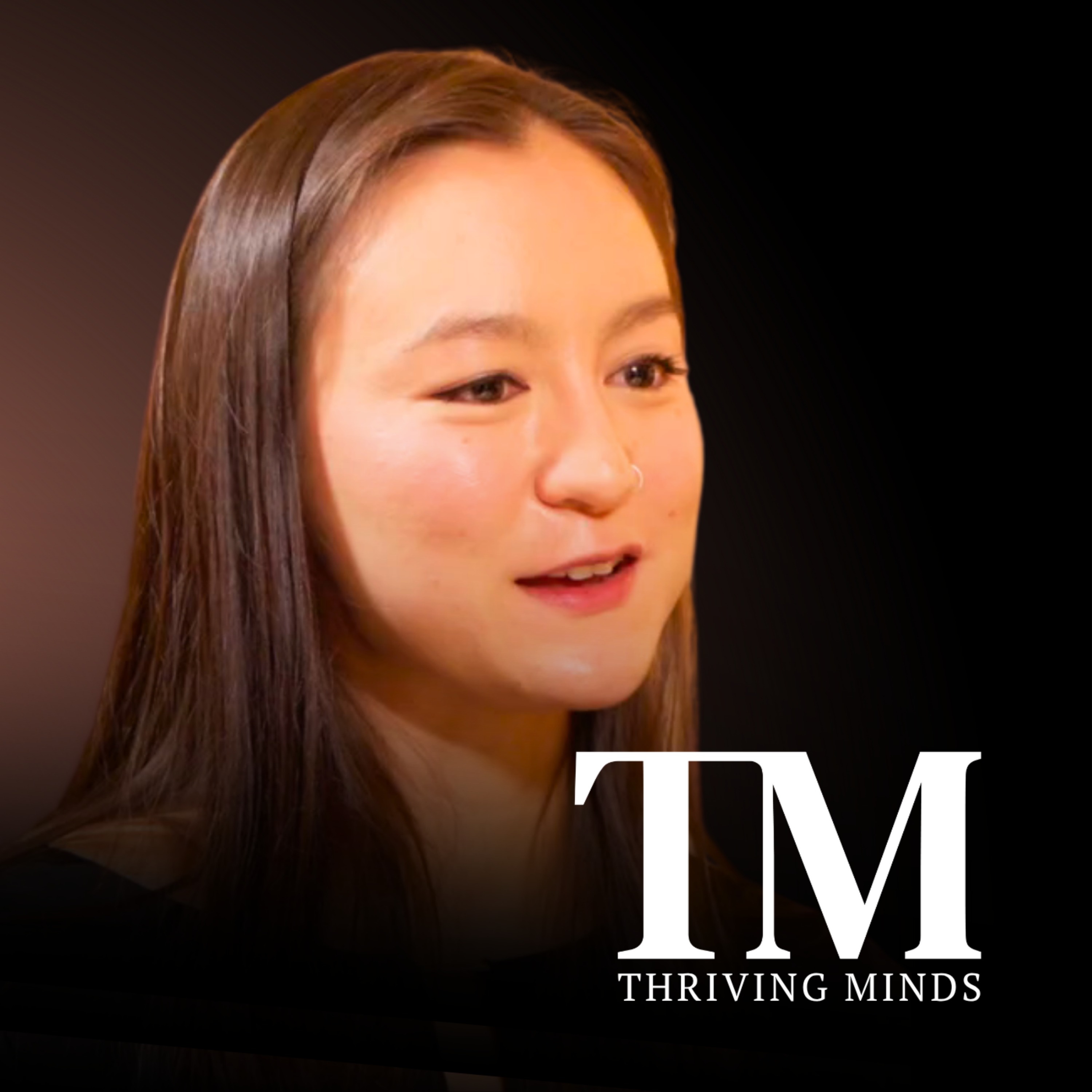
In this episode, Alberto Zandi interviews Alisha Fredriksson, co-founder and CEO of Seabound, a company focused on decarbonizing the shipping industry. Alisha shares her journey from being a competitive gymnast to becoming an entrepreneur in a highly technical field, highlighting the importance of courage, adaptability, and teamwork in building a successful startup.
Written by AI. May contain mistakes.

Get the gist, explore an idea or ask about something said.
 Claude
On Thriving Minds with Alberto Zandi, what are the key points of this episode?
Searching your listeningAutomatic transcript. May contain errors.
0:02Alisha, you co-founded a company in a very technical industry and you don't have 20 plus years of experience. How were you able to gain credibility with investors? I think I'm like probably brave enough to try or maybe sort of silly enough to think that it's worth trying. I love that. Alicia Fredrickson, CEO and co-founder of Seabound, a company focused on revolutionizing maritime transportation. Seabound looks to address challenges like carbon emission and cutting inefficiencies in shipping. Alicia is also a 30 under 30 Forbes lister. Alicia. Yes. You're probably the world's youngest entrepreneur.
0:46By the age of six, you started selling your own jewelry right around your neighborhood. The mission of Seabound is to tackle the climate crisis by decarbonizing the shipping industry. We think that the best thing you could do is basically keep the existing ships on the water and keep using the fuels that we have today and then trap the CO2 on board the ship using carbon capture technology. because you're trying to tackle a problem that no one in the world has an answer for. Where did this courage come from? Yeah, it's a good question. I don't actually know.
1:33Alicia. Yes. You're probably the world's youngest entrepreneur. at the age of six you started selling your own jewelry right around your neighborhood so I've asked this question a few times before to other founders but I want to ask it again to you do you think entrepreneurs are made or born we're starting strong we're starting strong yeah I'm torn I want to say I think they're made um because oh no I'm gonna I'm gonna conflict myself I think it's a little bit of both. I think entrepreneurs are sort of both born and made, which is maybe a cheat answer. But yeah, when I was six years old, I started making jewelry, just, you know, kind of little beaded products.
2:17And I made too much and I couldn't wear all of it myself. And so I started basically putting it into a little basket and then I would walk around the neighborhood and see if I could sell it. I don't know why that's what came to mind, but it felt natural at the time. So you were a competitive gymnast. I'm very interested in how the sports impact, especially competitive sports, right, at that level, impact the mindset of a future entrepreneur. So how competing at that level impacted your approach to business now? Sure. Yeah. So I was a rhythmic gymnast for, I want to say maybe eight years or so.
2:52And yeah, I would practice, you know, almost every day after school and it became competitive very quickly. I think some of the things I learned, I guess there's a few things. I think one was just sort of, you know, discipline and practice. So rhythmic gymnastics, if you're not familiar with the sport, it's not the flippy gymnastics. It's the one where you have a ribbon and a hoop and a ball. It's very sort of artistic and sort of dance oriented. It takes a lot of skill to, you know, to develop those types of techniques. And you basically practice for about a year to perform the same one and a half minute long routine.
3:29So you spend, you know, 20 hours a week training for a one and a half minute routine. So it's not super fun. I think you have to get comfortable, you know, aiming for perfection, putting the work in day in and day out, even when it's not particularly enjoyable. It's not really a team sport. So I think you have to have that discipline, you know, to keep yourself motivated. So I think even though it wasn't fun at all times, I think I got comfortable with the fact that you have to work hard to do things that are important to you. Another thing I learned as well, I think, was sort of competing with myself.
4:01So when I progressed throughout the different levels, I actually started competing against girls who were going to a special school where they would only study for half the day and then they would train seven hours a day. I was only training three and a half hours a day after school. And so I sort of had half of the training time, but I still had to try to keep up with them. So I knew that I probably wouldn't come first or second in a competition. But if I could just beat myself in the previous competition, that's what was most important. So I think, again, kind of, yeah, learning to compete against yourself and identifying that that's the goal rather than just competing with others for the sake of it.
4:37But in your case, it's different to almost every other sport, right? I think it's similar to running. you're training for such a long time to then compete for a very short time I would imagine that the emotional intensity is super high when you're competing yeah it was very intense and I think the hardest part for me was actually just controlling my mind so kind of physically or athletically I think I could do the routines quite well but sometimes if I made a mistake during the one of my first competitions I made a mistake and I sort of freaked out on the competition floor. I couldn't remember my routine, right?
5:14And then I just sort of awkwardly stood there and I just kept snowballing is what we call it. So to be able to control your mind that if you make a mistake, you sort of recover, you know, you can use your instincts, you react in the moment to fix things. That was the hardest part for me. It was actually, yeah, learning to be reactive in the moment and not psyching myself out. Is that something that you apply right now in your day-to-day job? I think learning to be calm under pressure is something that I've, something that I've learned. I think there's a little bit of a, I don't want to say fake it till you make it because I think it's like such a cliche, but there's a little bit of a sort of needing to wing it, needing to be comfortable thinking on the spot and needing to recover if you make some sort of a mistake.
5:50I agree with you. I mean, in my case, I used to play tennis at a competitive level also, and I've learned two main things, right? So the first one was to control my emotions right so in tennis because it's you're playing every point is a different world right from an emotional point of view right yeah so you can lose yourself very quickly so how to recover right from a point that was emotionally very intensive and go back to that sort of equilibrium right yeah was was probably the biggest lesson learned and then the second one was how to keep a competitive mindset right for a long period of time because what i've seen also in business but in sports back then is that you can be very competitive because you're super motivated but that motivation if it goes down your competitive mindset also goes down let's talk about your business okay you co-founded Seabound talk to me about it what's the mission of the company yeah so the mission of Seabound is to tackle the climate crisis by decarbonizing the shipping industry all right let's expand in that because I'm fascinated right now by By your industry, by your company.
7:02I mean, so let's take this to a fundamental level, right? Primary level. Say, imagine that I don't know anything about this topic. In fact, I don't know much about this topic. So within the transportation industry, right? In your particular segment, are you trying to tackle something that someone else is not doing? Also, what does your technology do in comparison to other solutions in the market? So how are you different to the rest? Yeah, so I often think about sort of the macro. So globally, we emit, I think it's about 40 billion tons of CO2 per year. The shipping industry emits about 1 billion tons of CO2 per year.
7:41So, you know, close to 3%. And it's one of four or five sectors that is still considered hard to evade, which means that they're very, very difficult to reduce the emissions from. So it's shipping, aviation, cement, and steel. I think those are the main four. And people have tried many different ways to try to reduce emissions from those four industries. Within shipping, particularly if we zoom into that, essentially we have 50 ,000 merchant ships on the water today that collectively emit a billion tons of CO2. So let's say on average, 20 ,000 tons of CO2 per ship per year. And for context, a car emits maybe two tons of CO2 per year.
8:22So it's orders of magnitude different in terms of how much CO2 from each ship. Most of the industry has been excited about the prospect of clean fuels or carbon-nutrient fuels that they could basically replace with the fossil fuels to reduce emissions. The challenge is that these fuels don't exist yet. So people are working on them. It's likely to take another 10 to 20 years for us to have enough fuels to power all the ships around the world. It's also challenging because other industries like road transport or aviation, they want the same fuels and they usually pay more than the shipping industry.
8:56So the industry might be stranded without these new fuels. What do you mean they pay more? So shipping has really low margins. So I think there's bigger margins in aviation, for instance. So shipping is usually at the back of the line, and they get sort of the dirtiest, cheapest fuels that are left over. So if you're a ship owner today, and you want to reduce your emissions so that you can meet your customer demands for green shipping, but also, most importantly, because there's regulation that says that you have to, your main option is actually to invest in a ship that has a new type of engine that is compatible with these new fuels.
9:34but that's a very difficult decision for you to make if you don't know whether or not the fuels will exist right um so i think that's that's one of the main things that ship owners have done today is they'll say okay even if the fuels aren't here yet i'm going to invest in a brand new ship with a fancy new engine um but for any ship owner that wants to continue using their existing ships doesn't have the money to invest in brand new ships they're sort of stranded so actually one of the competitors that we have, quote unquote, is that you could just slow down your ship. So it's called slow steaming.
10:06And if you slow down, then you burn less fuel, and then you emit less CO2. But you arrive later. But you arrive later. You know, it's not the most competitive approach. But it's just an example of there's nothing, you know, ready to go. There's also efficiency solutions, as I call it. So you could use software to optimize your route so that you're leveraging, you know so you have like the best wind conditions for instance or the best weather patterns but that only works that only helps maybe with five percent of co2 maybe maybe ten percent if you're lucky so there's yeah efficiency solutions but they're not really sufficient for reducing all of your co2 and so that's why you know we think that the best thing you could do is basically keep the existing ships on the water and keep using the fuels that we have today and then trap the CO2 on board the ship using carbon capture technology.
10:59What about migrating to an electric? Yeah. So I think battery electric ships could make sense for smaller ships, like maybe fishing boats, or it also could make sense for really short voyages. So maybe it's a ferry within the city, for instance, or like Uber boat here in London. I think that could quite easily be electric. The challenge is if you have a really big container ship, sometimes they carry 20 ,000 containers just kind of for scale, and they'll travel for 30 or 45 days at a time. You would probably need a battery, I don't know, half the size of the ship. I'm not sure, I haven't done the calculations myself, but you would need, yeah, so much space on board the ship for the battery that you'd be able to carry so much less cargo.
11:44and so it wouldn't really make sense for that anymore because you just need so much energy to transport these big, big vessels. So fuels are not an option because they're very expensive. Transitioning into electric engines is also not an option because the lifetime of the battery is not strong enough. And right now we're down to your proposed technology, right? So let's deep dive into your technology. Walk me through the baby steps of how it works. Yeah. So we capture carbon directly on ships. So essentially, when a ship is burning fuel, then there's a lot of CO2 in the exhaust gas that is coming out of the engine.
12:24So we use a technology called calcium looping. And basically, we expose that exhaust gas to little pebbles, which are comprised of calcium oxide. Calcium oxide is also known as quicklime. And essentially the calcium oxide reacts with CO2 to make calcium carbonate, which is also known as limestone. So the super simple summary is that we make limestone on ships and the CO2 is basically locked in the limestone pebbles. And how much of the CO2 can you capture? It depends on the size of the ship and on the length of the voyage. So for instance, we're looking at one medium-sized ship with about a seven-day voyage.
13:00And we'll actually capture about 95 % of its CO2 emissions. because we can drop off the limestone relatively frequently on this one-week voyage. For a ship that's much bigger or that's traveling for maybe 30 days at a time, we would likely capture somewhere between 20 to 50 percent of the CO2 emissions. So probably not all the way up to 95 for such a long voyage until the regulation is so strict that the ship owner has to do that. So theoretically, we could capture almost all of it, But we've seen most of our customers want to increase how much they capture over time, basically tracking regulation and how it's getting more and more strict.
13:37Right. So let me summarize this to see if I got it correctly, right? Because it sounds, to be honest, it sounds groundbreaking. So you're implementing a piece of technology on a ship that captures for short trips up to 95 % of the CO2 emissions. And then you keep them in a sort of container until it arrives to the port. And then when it arrives to the port, you apply some sort of chemicals in it, then it gets converted into a limestone that possibly you can even also sell again, right? So it's actually, it turns into limestone on the ship. So we have a couple of options when we get back to port with basically a box of rocks.
14:14So we've got the CO2 trapped in the limestone pebbles. And then either we can just sell that to be used as a building material, or we can basically do the opposite reaction on shore. So we would separate the CO2 from the quicklime, and then we can reuse the quicklime on another ship. So you can think of this as like pebble recycling. And then we would sell the pure CO2, which can be turned into fuels or chemicals, or it could be sequestered underground, depending on the location. From where I'm standing, this sounds almost perfect, right? Like a fairy tale, right? Like when you go into a date and she's absolutely perfect.
14:50And then maybe you discover that she's not after the third date. Yeah, what's the catch? I want to fast forward to the third day, right? What are the flaws? Because you're proposing a solution, right? That is, it seems to be quickly implementable, right? And it seems to be effective, right? Especially for short trips, you're capturing a lot of CO2 emissions. So what is right now the biggest barrier that you're going through in order to scale this up? Because if it's such a great technology with tangible outcomes, why is this something that... Why isn't it everywhere? First of all, it's not everywhere.
15:21Second of all, right? For example, I didn't know about it. Maybe I'm not an expert in the industry, but I know that there's progress in the electric vehicle domain, also for different types of fuels that are transmitting less CO2 emissions. So why is this not super scaled and worldwide now? Yeah, we're still building it, I think is the short answer. So we started C-Bound a little over two years ago, so we're still fairly early stage. We have actually tested our first system on a big container ship just last year. So we've proven that it works. We've done the first pilot, but it was still a prototype on a ship.
15:57And our team, we've mostly got engineers on the team. They are hard at work every day, basically building and testing the latest prototype as quickly as we can so we can get it out to market. But we're not yet, you know, we're not ready yet. And I think my team knows I ask them very, very often, you know, how do we move faster? Customers are asking for this, so on and so forth. But we still need to finish developing the technology. and we plan to deliver the first commercial systems in 2025. And then from there, we will hopefully start scaling as you're describing. So there's roughly between 50 to 100 ,000.
16:32Those are the parameters according to various different data points. Yeah. 50 to 100 ,000 transportation ships right now in the world. Yeah. How much one of these pieces of technology costs? And then obviously then is the next question. How much money do you need to scale this up? Yeah, so I think we have actually oriented more around the cost per ton of CO2 captured. Because, I mean, I think fortunately the shipping industry is starting to think in this way as well, especially because the shipping industry is actually on the European carbon scheme, the emissions trading system. But essentially, yeah, our goal is to get our system to be about$100 per ton of CO2 captured.
17:10And that would be OPEX and CAPEX included. It will take us time to get there. But that's really the target that we're orienting around. How much in total do you capture within a short trip? Yeah, it depends. Let's say we're looking at about 50 tons of CO2 per day for our next systems. So yeah,$100 per ton of CO2. The ballpark figure in one trip, how much is it? Yeah, so it could be sort of 1 to 2 million per ship per year. Okay, and is that something that is in line with the cost structure of the industry or is it too much for them right now? I think it's a little bit of both. So the shipping industry has entered the European Union's emissions trading system, which prices carbon between 70 to 100 dollars or euros per ton at the moment.
17:57So essentially, if we can get our costs to be below the price of the ETS, then the shipping company would be saving money. So they would potentially have to pay that as a penalty, essentially, or they pay us for it. And so then they could save if we're underneath the cost of that. today not all of the shipping industry is subject to the emissions trading system and so for some ship owners you know if there isn't a sufficient incentive then 100 per ton is too much today but i think in two to three years from now you know all ships will be subject within europe to the ets what about the governments can they do something to reduce such a cost for for the industry?
18:39Yeah, potentially. So, I mean, I guess there's sort of smaller forms of support initially, which are grant funding. So, we were actually lucky to get about a million pounds from the UK government for our first pilot project. So, that helps in terms of enabling us to test and de-risk the technology. But I think, I mean, schemes like the ETS are already government initiatives to be reducing emissions overall. You also have this regulatory body for the industry globally called the International Maritime Organization. And that has, I think, even more of a significant impact because it governs all ships around the world.
19:14And the IMO has also set targets for emissions reductions. So I think that's mostly what's driving the industry to look at how to reduce its emissions. Let's talk about those targets, right? I think most governments right now, they have put this target of reaching net zero greenhouses past emissions by 2050. How realistic is this? Um, it's hard for me to say how realistic it is for other sectors that I'm not as close to. I think I'm like generally optimistic. And I think that our challenges are more around sort of policy, inertia, things like that than it is about like technological readiness.
19:51I think we have most of the solutions we need to reach net zero. So I yeah, I would say it's probably I think it is realistic. But within the shipping industry, there's a goal to reach net zero by around 2050. They haven't been so explicit to say 2050, but they said close to 2050. And I think with carbon capture technology, I definitely think that that will help. Obviously, that's our belief. And then there are these new fuels coming online, hopefully in 10 to 20 years from now. So I think it's challenging, but possible. A friend of mine majored in environmental engineering. and every time we go for dinner, obviously, this is a big topic of conversation.
20:30And he told me that there is nothing that we can do at a society level that would change the direction where we're headed and that the change would only come from the corporations. What do you think? I don't fully agree with your friend. I think that sometimes people talk about there's different sort of channels for change. There's corporates, there's individuals, there's governments, so on and so forth. I think the reality is that we need all of them. I think there's maybe a comparison to be made around which channels are easier to pursue or faster to pursue. So, for instance, behavior change of billions of consumers around the world, that will take a lot longer than a few massive corporations reducing their emissions.
21:18you know just to yeah to change the habits of billions of people i think is is going to be too slow essentially and so that's kind of why when when we looked at how to tackle the climate crisis as well we looked at these sectors that have not yet solved you know there's their co2 problem essentially and then we decided to focus on those ones rather than maybe something more consumer oriented and that was just our theory of change but of course there's there's many different ones What can I do? What can we do at an individual level that would actually have an impact? Yeah, it's a great question.
21:54I think sometimes people ask this question and they look for answers like you could drive an electric car or you could ride your bike or you could recycle. Or you could eat less meat, so on and so forth. I think all of those things are good activities to do. But unfortunately, I don't think that they will have a massive impact. so by all means do them I do most of those things myself you know I don't eat meat I ride my bike everywhere I recycle when I can but I think what's most important for me and for everyone else is actually what do you spend the majority of your time on which for a lot of people is our jobs how can you use your career in a way to drive some sort of a meaningful impact and so before Seabound, I actually worked at an organization that helps people train for jobs that are struggling to get access to the workforce.
22:48And I was thinking about what that organization could do to tackle the climate crisis. And I thought, well, you know, they're best in the world at training and placing people into jobs. Why don't we train and place people into green jobs? And that's kind of using their core expertise to do something that's fundamentally sort of positive from an environmental perspective. So similarly, if the thing that you do best in the world is running restaurants, for instance, how can you do that in a way that contributes to tackling the climate crisis? And so I think it's, you know, we don't all have to become environmental engineers, but I think that there are green flavors, perhaps, to the work that we do already.
23:27And I think, yeah, the most impactful thing to summarize is to use your career for something kind of fundamentally climate positive, as opposed to just the individual habits, if that makes sense.
23:42Alicia, you co-founded a company in a very, very technical industry. And you don't have like 20 plus years of experience. How were you able to gain credibility with investors? Maybe the first element is just kind of having courage. I think I'm like probably brave enough to try or maybe sort of silly enough to think that it's worth trying. I love that. And I think that's probably 80 % of the challenge is just sort of believing that, you know, it's worth a shot and believing that you have a shot at it. In terms of then specifically gaining credibility, I guess there's maybe two audiences that I'm thinking about.
24:23There's our customers and there's our investors. And actually, investors mostly care that you are solving a problem for customers. So it's most important to start on the customer side. and as we've talked about you know the ship owners which are our customers they're struggling to find solutions to reduce their emissions and so they're actively searching and i think they're open to those solutions coming from you know a variety of different types of people that maybe they haven't usually seen solutions come from if that makes sense so um i think if the shipping industry had solved this problem no ship owner would be talking to me and my co-founder right but because it's such a hair on fire problem for them.
25:06And because we're approaching it in a creative way, our solution speaks for itself. And I think, you know, savvy ship owners are able to recognize that. So I think that's kind of the core answer is, you know, solve a real problem for somebody that wants to pay you to solve it. And if you can demonstrate that, then investors will get excited as well. It doesn't really matter who you are or what your profile is. At the same time, I think we have been fortunate to build sort of a group of supporters along the way. So for instance, we, you know, one of our first hires actually was a naval architect who I think is, you know, 70 plus.
25:46He had actually retired. We pulled him out of retirement. One of your first hires was 70 or 70 plus. Yeah. So he's, Yeah, amazing guy. Shout out to Mladen. And, you know, he'd already retired. He'd worked in the shipping industry for 40 years and came out of retirement to join our team. And so he, you know, believed in what we were doing and he was excited to work on something different for this industry that he knew so well. You know, when I brought Mladen into calls, then he just exuded credibility with our customers. So that's one example. We've actually recently started building an advisory council, mostly consisting of individuals with 30, 40 plus years of experience in the industry.
26:28So I think if you find your advocates, essentially, then you don't have to build all the credibility yourself because I think if you try to fake it, it's just going to appear inauthentic. So instead, yeah, let your solution speak for itself and find people who believe in what you're doing and almost kind of like borrow their credibility. On the investor side, in terms of building credibility, we were fortunate to get into a program called Y Combinator early on, which is a globally renowned accelerator program. At the time, you know, we started C-Value November 2021. We started Y Combinator January 2022.
27:01So we basically just had an elaborate idea two months in, but we were able to convince them of the importance of this problem and of our ability to tackle it. And then through Y Combinator, I think we gained a lot of credibility with the investor and VC community. And that's how we were able to raise a seed round within, I think, five months of starting the company. And then we kind of continued to progress from there. You quitted your job to start a company. Yeah. Starting a company on its own has a lot of uncertainties, right? In your case, these are even greater because you're trying to tackle a problem that no one in the world has an answer for.
27:44Where did this courage come from? Yeah, it's a good question. I don't actually know. Maybe I should ask your parents. Maybe I should ask my parents. I think that there's a number of decisions I've made in the past that are somewhat similar, that they were based around some sort of gut instinct. And I didn't really think it through that carefully, to be honest. It just felt right. So as an example, when I was in, I mostly went to school in Vancouver, Canada. And then I got into this international school program in India. and you know I decided within almost a split second that I would just move to India on my own and go to this boarding school my family wasn't coming with me I didn't really think it through I was there for two years kind of in the middle of nowhere where outside of a city called Pune okay amazing program really really grateful for the experience but kind of a weird thing to do and you know it felt right at the time I didn't know what yeah I didn't see any sort of downside risk so I decided to do it and I had a great experience you know I think we make these decisions over time throughout our lives that build up this personality or sort of comfort with comfort with new experiences which ends up serving us you know as we go.
29:01I really like your story because it doesn't fall under a cliche right you're not a tech founder or co-founder that has studied in Harvard or Oxford right and obviously that comes with all the perks right investment I went to a startup school. Exactly, I went to a startup school, right? So I think that's super inspirational for anyone that is listening to this. Let's talk about your co-founder. What is her role in the business? Yeah, so she's our co-founder and CTO. And we actually have a pretty easy split between us. Basically, anything technology-related, she's on top of. And anything commercials-related, I'm on top of.
29:40So it's been a very, very natural split. We still, you know, help each other a lot and we talk a lot about each other's domains. But we've been very comfortable, I think, just sort of fully delegating to each other. So, yeah, that's her scope of it. For co-founders in general, what are the do's and don'ts in order for the relationship to succeed? I think I just got lucky with Roja. So, Roja was also at this startup school. We were both part of the 28-person founding class. and we actually weren't super close. I think we had more of an admire-at-a-distance type relationship, but we had gone through a very intense experience of being in a brand-new university together.
30:22And by the way, that university moves to a different country every four months, so we had kind of a wild experience. Going through that, I think we had a common sort of language and understanding, and so even though we weren't best friends before we started Seabound, I think we trusted each other and we respected each other. so maybe one yeah lesson to pull out of that is just like trust is is really really critical and respect for the other person communication as well um so we we tried to be as open as we could at the beginning we did the sort of pretty cliche like co-founder interview essentially where you try to ask all the difficult questions before you start the company and luckily there are no red flags so so we kept going but um but yeah and I think it's also about sort of committing to each other over time, kind of like any sort of relationship that matters to you.
31:11You need to sort of build it. You need to care about the person. You need to put the time in to be there for them, not just for the work that you're doing, but for anything else that might be going on in their lives as well. Do you think it's better if co-founders have different professional backgrounds? I think so. Yeah, I think what sort of attracted me to starting a company with Roja, I don't think she knows this, but at the time she had... And now she will. Now she will. At the time, she had sort of a personal website. It was a portfolio of her work. And before I asked her to be my co-founder, I was just perusing that and looking at some of the projects that she'd done, I think was what drew me to wanting to start with her because I felt like we would bring something very different.
31:54Importantly, even though I think our brains work sort of differently or we think in different ways, we can still communicate very effectively together and there's a very strong overlap. So I think that, yeah, has helped our relationship, even though we're covering very different responsibilities. I fundamentally agree in this with you. I think teamwork is paramount for any company to succeed. I've recently watched a TV show. I don't know if you've seen it. is the TV show that has been inspired on Spotify's journey. And the reason why I like this TV show, and if you haven't seen it, I highly recommend it.
32:30And Spotify is not paying us to say this, right? It's because it's very different to every other founder sort of movie or TV show that I've seen in the past, right? All these founder movies like the Facebook one or Apple or even McDonald's, the whole story evolves around one person. Okay. And in Spotify, there's like seven or eight episodes and every episode is basically explaining the life of one of the seven or eight people that contributed to the success of Spotify, right? So one of them could be called the early investor, the other one is, I don't know, the CTO. Another one would be, for example, the lawyer, right?
33:07That she was instrumental in being able to actually have the music, right? Because there were so many different copyrights that they needed to pay to Sony, so on and so forth. So it's giving you this realistic view of how a company really operates, right? Which is the combination of a lot of different people working towards the same direction, which is teamwork. And then basically they close off the series by saying that alone, you can go fast. But together, we can go far. And I fell in love with that. Yeah, yeah. That's very cool. Roja and I alone couldn't have done this. So a sort of maybe secret that we don't talk about that much is that actually neither Roja nor I are engineers and we are building a fundamentally engineering heavy company.
33:58And so, you know, we don't talk about it that openly because at face value, you would expect the two founders of an engineering-heavy company to be engineers themselves. But for us, it was more that we used first principles essentially to come up with a solution that would be viable for the industry. And then we have found a way to hire, you know, the right team members that have been amazing at actually, you know, designing and building it. And so there's no way that I could have done this without engineers, right? And I think I sometimes think about my role at Seabound, you know, not as like directing the team or not as being, certainly not as being, you know, the foremost technical expert in any way.
34:41Instead, sometimes I think of myself as like a facilitator of other people's expertise. and I think we have a relatively unique culture at C-Bound because of the fact that we're not engineers, Roja and I, which is that we have put a tremendous amount of trust and responsibility in each of the engineers on our team. And we've actually borrowed a model from SpaceX, which is called kind of the responsible engineer framework. How do you borrow a model without paying for it? Well, so our first two engineers came from SpaceX and so we basically just follow the same operating principles. that are found at SpaceX, which is that you have a responsible engineer, an RE, who is responsible from start to finish for a particular component.
35:26And, you know, they're trusted to make the final decision on that component. And so each of our engineers, you know, they're responsible engineers for their domains. And they have a huge amount of autonomy, basically, to be sort of overseeing and designing those domains. and then Roja and I sort of keep track of what's happening at the macro and we sort of organize and we facilitate them but we're not directing the work that they're doing and I think that this has actually appealed to really smart engineers who want that autonomy. You know, they don't want to be micromanaged. They don't want to be told what to do.
36:01So even though it would be uncommon for us to have this sort of structure within the team in terms of my co-founder and my background, I think it's actually turned into such a strength because we've hired such amazing people that have been able to be excited and motivated to build this company with us. I think what you just said is very important for people that are trying to do something that is outside their comfort zone, their area of expertise. So I have a friend of mine that is going through something very, very similar. So he's been, you know, taking me out for coffee to ask me questions on how he can build up this company that is very much different to what he's doing every day, right?
36:40So it's not part of his area of expertise, but he loves it and he has a vision and he wants to achieve that vision. And my answer is very similar to your perspective, because my journey in my industry doesn't come from being a chef, for example. So I never thought that, for example, I cook a fantastic lasagna and I'm going to go and try myself out in the market. right? So my background prior to this was in strategy consulting, in particular in computer science, so nothing to do with the hospitality industry. But similar to you to gain credibility with investors to scale up my operations, if you have a team of subject matter experts that they are the ones that are driving that sort of knowledge and experience, but you are the one that is executing it, right?
37:30Then at least in my case that proven to be useful and at least until now successful. I think it's great for anyone that is listening to tune into exactly what you just said that these things are possible. You can start a business without being an expert in that industry. Obviously at some point you need to become an expert, right? Because you know you'll be out of the market in no time. But it is possible. And surround yourself with the best minds and take it from there.
38:00Forbes cool how important is the nomination for you um I I want to say we're not sponsored we're not sponsored we're not sponsored again I think it's I think it's not super important to be fully honest like we it's not something that I've sort of aspired or like dreamed of for a long time it's I don't actually know who nominated us, which is quite sweet that somebody out there sort of spotted it and recommended us. So I think I was like super, super grateful and excited to find out that we'd gotten it. It was also quite a surprise because it wasn't super on our radar. But it's been, yeah, quite a nice sort of encouragement and stamp of approval, I suppose.
38:47Did it help you in your business? I'm not sure. I think that, I think the publicity put us on the map a little bit more. and potentially that helped attract some of the people on our team today. I don't actually know how each of them sort of came to find Seabound. But yeah, I think it's certainly important to kind of build a bit of a brand when you need to hire, you know, really, really smart people to join your team. So I think it helped from that perspective. Describe me the moment when you heard about you being in the list. Where were you? Who was with you? Oh, did you celebrate? We had kind of an uncommon reveal, which was that I was actually invited to participate in a photo shoot so that I was kind of one of the, I don't know, cover people for the list that year.
39:39Yep. And so I had to fly to New York to do this photo shoot. And this was prior to the list being announced. So I get this email saying, you know, can you come for a photo shoot? By the way, we can't tell you if you're on the list or not. But, you know, there's a pretty good chance, given that we want to take photos of you. Sorry, they tell you, come for this photo shoot, come to New York, you have to pay for it. But we're not guaranteeing that you're going to be in the list. That was the email? Yes, yeah, pretty. I can't remember if they paid for it, if I paid for it. But essentially, yeah, the list is only announced on the day that it's announced, right?
40:13So nobody can know in advance. so it was a little bit cryptic but I had a pretty good feeling that we'd probably be on there if we were one of the featured people
40:28When you look back at everything you have achieved would you say you're successful? And I have to draw the line in this one because I've asked this question I mean we ask this question to everyone that comes into the podcast this is a tradition but in your case if you tell me you're not successful. I mean, I think the world is doomed. Oh, no. I have to say this from the bottom of my heart. Like today, do I think I'm successful? Yeah. I don't know. I think like, I guess yes and no. I think I am super, super grateful for the progress that we've made at Seabound since starting the company not that long ago.
41:04Sorry, starting a company is not easy. And I think that, you know, it's gone relatively well for us so far. Famous last words. So I think we've been sort of productive and pretty successful since starting C-Found. We've only done a pilot so far, and our goal upcoming is to capture CO2 on 1 ,000 ships by 2030 and 10 ,000 ships by 2040. So we haven't really started on that big ambition, which is where I think, yes, we've done amazing work so far, but all of the work is still ahead of us. So I think my sights are more set on what I hope to achieve in the future. So how would you define success? Yeah, it's a good question.
41:46I think for me, it's super cheesy, but it's having an impact, right? And so that's why I started Seabound. I think that's why I'm even interested in sort of also having conversations like this one, because it'll take us a long time to capture CO2 on a thousand ships or 10 ,000 ships. And so I hope that we can also have a bit of an indirect impact by inspiring other people to start climate tech companies or to join climate tech companies or whatever their sort of pathway for change might be. Because, you know, we need so much more than just C-Bound. We need so many companies out there that are reducing emissions.
42:25Alicia, thank you so much. This has been truly inspirational. I think the work you're doing will not only benefit you and your shareholders, but the rest of the world. And for that, you have my deepest admiration. Thank you. I strongly believe that the world needs more people like you. Thank you so much. Thank you so much. That's very kind. Thank you for having me.
Do you think you need to study a technology-related field to build a company in the tech space?
This is the story of Alisha Fredriksson, a gymnast who became an expert in climate crisis mitigation technologies and raised millions to found a company aiming to change the world.
Global shipping accounts for 11% of total emissions in the transport sector, and its carbon footprint could increase by a shocking 250% by 2050 if left unchecked.
But Alisha Fredriksson’s company, Seabound, has a plan to stop this in its tracks.
Hosted on Acast. See acast.com/privacy for more information.


