Ask ChatGPT

 Thriving Minds with Alberto Zandi
2 Jan 2025 · 52m

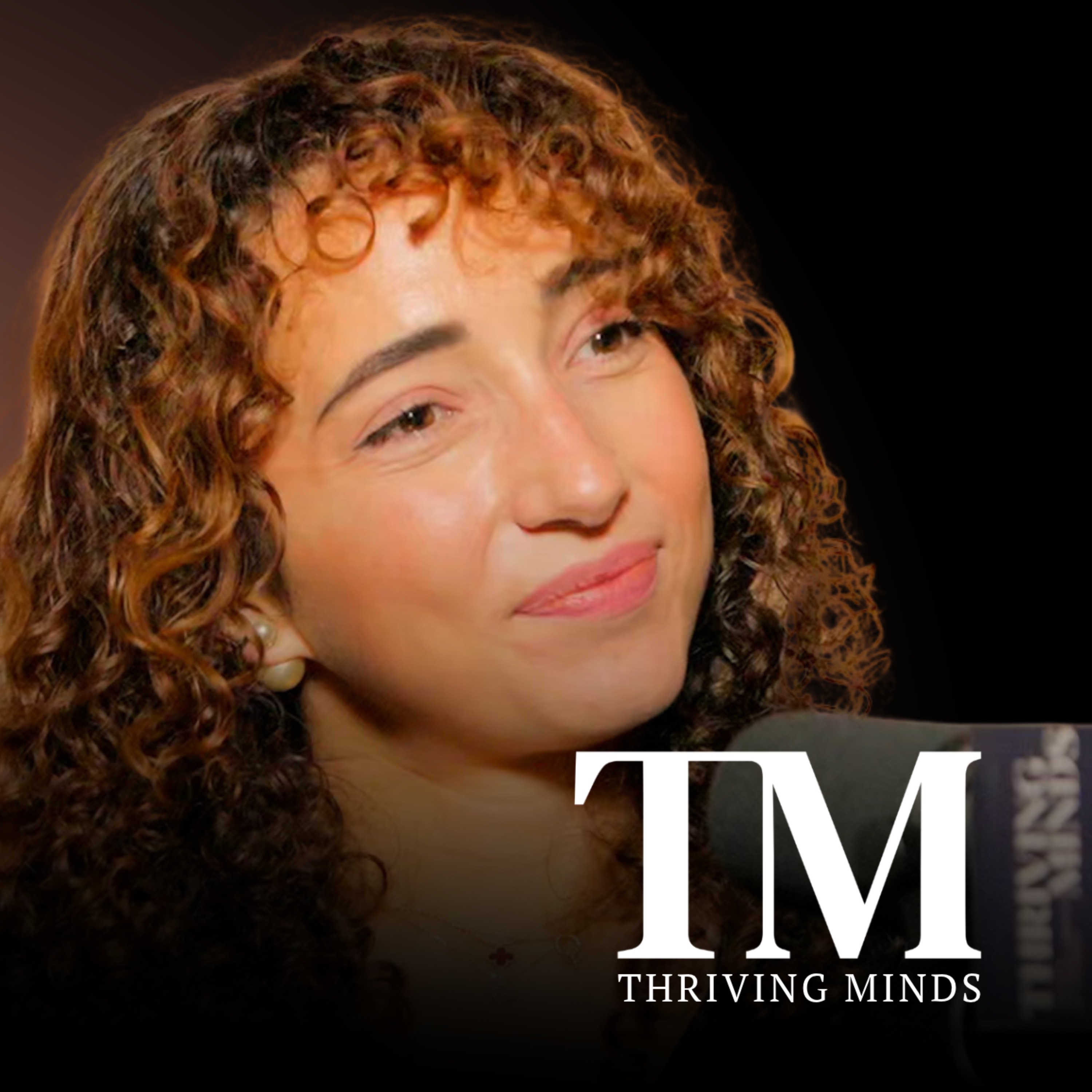
In this episode, host Alberto Zandi interviews Lou Llobell, a breakout star from Apple TV's sci-fi series Foundation. Lou discusses her journey in the competitive acting industry, sharing insights on perseverance, personal growth, and the realities of pursuing her dreams.
Written by AI. May contain mistakes.

Get the gist, explore an idea or ask about something said.
 Claude
On Thriving Minds with Alberto Zandi, what are the key points of this episode?
Searching your listeningAutomatic transcript. May contain errors.
0:01I think it's a combination of luck and talent and perseverance and passion and like you have to want to keep going even though you get told no. Lou LaBelle is a Spanish-Zimbabwean, London-based actress known for her breakout role as Gall in the Apple TV Plus original sci-fi series Foundation. Executive produced by showrunner David S. Goyer, the series was nominated in the Best Science Fiction Fantasy Series category at the Critics' Choice Super Awards in 2022. What keeps you from quitting? I love it. I love it. It's what I've always wanted to do. I'm actually working in a job that I fucking love.
0:38How many editions did you attend before you landed? the first big bro, 200. And that's over the span of one, two, three years. So you'll be considered lucky? Yes. Yeah. No, like, insanely. This is why, like, you have to really love it. Because the amount of times you get told no, because you don't look right, or your accent's bad, or you don't even get a no. You just send a tape, then it goes away. You wait for a week. no one says anything you just assume that you didn't get it without any response back you don't get any feedback half the time and that's the hardest thing I just finished season 3 I get paid and now I don't know when my like got paid well but I now don't know when my next pay check is going to come in because I don't have another job lined up how do you deal with that?
1:37well
1:45Hello. Look, some of my friends are actors and they all have very different personalities, but they all have one thing in common, which is that they've, they all wanted to become an actor or an actress at a very young age. So this is like something that they knew when they were kids. When did you know that you wanted to become an actress? I think I've had the same kind of experience. Like, I cannot remember a time when I didn't know I wanted to be an actress. Or, like, I wanted to be in this industry. And, like, I grew up in South Africa and Spain. But, like, I never knew how I was going to manage to get into it at this level.
2:30So it's exciting that I've always said I wanted to do it. And I'm now here. my first dream was to be a singer can you sing or did you think you could sing i thought i could sing i thought i could sing um you know the thing about singing at least for me is that i think that some songs i can sing them and some others i can't then i learned how to play the guitar and so on but at some point the idea of becoming a singer just just didn't work or fell off and then i started pursuing other different interests in my head but i think from for an artist there's something deep inside of you that makes you not drop that idea because you can have this at the age of eight at the age of 10 and you want to do it but at the age of eight or 10 you might not know anything first of all about yourself and second of all about life so i think it's sometimes natural that you're allowed to change your mind of course but i think it's it's something that you do if you really want it so how come did you keep that dream i honestly didn't think i could do anything else i was like the one thing like i speak to people i went to school with and they're like you actually did what you said you're gonna do which is move to you know the uk or to europe and do become an actor and be successful um so it was just i just literally had no other choice it had to work because your industry by definition is incredibly risky the odds of making it are super slim so one of the things that can happen is that when you start to grow older you might make a very simple risk reward analysis and in most cases you might think whether you want to be a singer or in your case an actor this is very hard and what else can I do that increases my my chances to succeed and I think in those moments having a good support system that motivates you is very important how are your friends and family in this case in this in this environment were they supportive with your the idea of you becoming an actress yes they were very much so my parents were amazing like I was always you know in plays at school and my mom would pick me up at 10 p.m and drop me off and do all the stuff.
4:55And my dad like helped me with all my school fees when I came to the UK and studied. And he like, you know, just was always like, it's an investment. So you just work really hard and do what you can. And like, I'm sure you'll be amazing because I'm so, you know, I believe in you. That was kind of the energy from them consistently, which I think probably helped with my belief that I was going to be successful and then led to that. Who knows? When you have kids, do you think it's better to support your kids to that level of intensity? Or do you think it's better to allow them for them to make their own choices and if they crash themselves, they'll eventually learn?
5:43I mean, I think there's a balance. My mom was like, you can be an actor, but you still have to study math and do all the... Do you know what I mean? Like she wasn't like, oh, okay, you're an artist now. Just, you know, she was like, you're going to go to university. You're going to do this. Like there was still like some sort of push. Like, for example, I didn't want to study abroad. I wanted to stay in South Africa with my friends and study where all my friends studied. And they were like, no, you're going to Europe and doing that there. Because we don't want, like, we want you to like think bigger.
6:17so they encouraged me to do more within still you know letting me flourish in what I wanted to do so then you came here to the UK yeah and you attended university do you think going to university is actually useful for an actor the jury is out
6:42um yes drama school is really great I think I think it's if you look at like actors that originated out of like Britain and the UK most of them did go to drama school that's just how it is here we're trained and then you go and do theatre or film and like that's just how it is whereas like in the US I think it's a little less common that you go and study to become an actor. I don't necessarily think it's necessary, but I do think it's helpful. It also gives you, like if you apply to an agent saying, I've been to this drama school and I've just graduated, they look at graduates from drama schools to like, so that's like the new level of, new group of people that they'd kind of look to.
7:30So that's helpful in that sense as well. And do you think if you're not American, is it slightly or considerably harder for you to make it in your industry? No. No? I don't think so. I think it's just there's so much filming everywhere now. Like it's not just based out of the US anymore. And if you can do accents and you work on that and you're able to, you know. Can you do accents? I can. Yes, I can. It's something I'm working on still. I think it's always good to work on your craft and do classes and lessons. Do not ask me to do an accent right now. Can you do me? A Spanish accent. I do a really bad Spanish accent.
8:16It's like really aggressive. Can you do a Spanish accent? Oh, wow. It's pretty good, no? Yeah. I think it's okay. All right. Okay, Manchester accent. Oh, no, no. No? No, no, that's why I cut it off. No, I'd have to like, but I also think it's like training yourself. And if you get roles that are, you're getting a lot of Scottish accent roles, then you should probably be learning how to do that.
8:51Speaking about roles, this is my opinion, but I think that in your industry, if you choose a role and it's the wrong one that could have yeah you know bad consequences for your career but again if you pass on a role and that role was good for you again it can have bad consequences for you so it seems that in a lot of cases whatever you choose the chances of that being a wrong choice are high how do you make this choice yeah that's tough because when you're a working actor that's auditioning and hasn't had a role yet or a big role or your big break it's so difficult to say no to things like I remember the first year of drama school I was saying yes to every I was just auditioning for everything I think also kind of the nature of it is that you're not going to get offered all your roles that you audition for you're most likely probably not going to get offered any of them maybe one in like a hundred or something like that like it's the odds are not in your favor um so I think saying no to roles when you're not established is difficult and not smart I think you also have to kind of do research and trust your agents that they're going to guide you in the right direction um like I've auditioned for some big things that I didn't want to audition for and got really far um and I was like why I don't want to do this.
10:19But, you know, if you look at the other side in terms of like a business choice or how it's going to catapult me into like being more known in the industry. Like there's all these other factors that you have to look at, not just the role that you're doing. And just because you're passionate about it. Do you think it's a good idea to listen to your agent or to your gut feeling? Yeah, I think both. My agent, I'm just super, super lucky. My agent's a really good friend of mine. we work amazingly together my agent in the UK I've got one in the US as well who's also amazing um and they're amazing because also the way that I picked my agents is very I was in a in a good spot you know my agent in the UK I didn't we kind of ended up together by chance and it's been the most incredible thing like I know that if I shut my phone off for like a week she can deal with it and i trust her choices can you make it without a good agent or that's a very important variable in the equation i think it's different it depends what you think of a good agent because you can get like a really successful agent that's in a massive agency that has 130 clients that are doing incredible work and like super successful and earning loads of money but if you're not earning loads of money and getting loads of jobs you might not get put at the top of that list and you might get a little bit forgotten or you have like an agent like I have who is also growing in the industry herself like she's incredible and like people are literally chasing her to like represent them um and she's just so passionate about us as people so none of if I go to her and say I do not want to do this because this and the other she'll give me a good argument and we'll have a conversation about which way we're going to go.
12:10But ultimately it's my choice, you know. And so she's got the best of both, but I don't think that she is, like not all agents are like her. I think there's also a factor of money. I'm not saying all the time, but it could be that way. Let's say I want to choose an agent and there's two choices. There's this, let's say, aspiring agent, he's up and coming, very hungry, that can have a lot of benefits. But at the same time, I have this other option, which is choosing this agent, which is more seasoned and more senior within the industry. More people know him or her. But at the same time, also this person is more demanded.
12:49So perhaps he has other talents that are even bigger than me. So maybe I might not be his priority. Which choice is better for me if I'm starting my career? I can't. I think it's individual choice. I would go for the other one. I wouldn't go for the big one. But that's what I did. I didn't go for the big one. I went for the person that's passionate about me and wants me to succeed, not because of their paycheck, but because they believe in me. So it's a matter of the relationship, how you connect with the person. I think so, but I don't think that's the same way for everyone. I think you can have a very like business-like, you know, relationship with your agent.
13:27And that works for some people. For me, I need someone that I can call at 10pm and be like, oh my God, I can't get this self-tape in. Can you please ask them for two more days? And they're replying to me instantly. That's the relationship I have with my agents, which I'm very lucky. In your space, I would say also in any job or in any industry, but going from zero to one is always much harder than going from one to 100. Can you describe to me that zero to one moment? Well, I mean, I think I got really lucky and landed a massive role, like bigger than, I didn't, I landed a lead role in an American TV show, right?
14:15Which is, doesn't happen to someone at the beginning of their career often. and I do feel like I'm so grateful and it's amazing but there's also a level of like I missed all the things in between and now it's hard to go back to like doing one day on a TV show or you know a really small cameo role in a big movie it's just hard because it's kind of like where do you place someone like me But I mean, I think it's a combination of luck and talent and perseverance and passion. And like you have to want to like keep going even though you get told no. Like I think in that first year that I was out of drama school, I auditioned maybe 120 times.
15:06Maybe got three roles that were all commercials and nothing that I really wanted to do. um and then I got a little role in a film which was sold to me as a bigger role than it was and I was basically like a glorified extra in Romania for three months which was amazing in terms of being on set and with all these other young actors and seeing you know meeting these people but like in terms of what it did for me other than having a named role on a piece of paper I didn't actually get to act really. But then two weeks after that, I got my first audition for foundation. And then it all kind of, you know.
15:50Hard work, talent and luck. Yeah. It's just that's the nature of like the industry I'm in. What order would you categorize them to make it in your industry? Talent.
16:05Hard work and luck, I think I'd put them at the same time. like I don't think I could because luck is so and when I say luck I don't mean like you know you pick up a pen like I don't mean like it's just right time right place right person kind of thing because there's people that kind of look like me when you I've walked into audition rooms and seen like different variations of me like looks wise but it's just depends on your essence what you're giving to the character like what you're bringing to it and i think a lot of that is like who you are because i think there's a lot of um you know you you are embodying other people but you're bringing something of yourself to these characters you have to be to do your job authentically otherwise it doesn't feel real can you get more talented through hard work yeah for sure but i think you need to have like a raw talent so who's your biggest inspiration in your industry in my industry
17:14i mean there's three amazing actors who i'm in awe of and they're all women of color and i just love how they've progressed in their careers and how talented they are and how like much they've achieved and even just like all the different things they've done um for Viola Davis is a freaking amazing actress like I'm in awe of her she is insanely talented and works so hard and just has done so many different roles that I'm just like in awe. Regina King is another incredible actress. Kandiwa Newton is British and Zimbabwean, I think. And she's, I just see her and I'm like, oh my God, I could be you.
18:08Like she looks like, her career path is kind of what I imagine mine to be. And then there's an Irish mixed race actress as well called Ruth Negger. And she's incredible and has done And I would die to work with her. So I think they are inspirations in their own way. They haven't had the same path, but... Let's take one as an example. So we said Regina King. Yeah. Do you think she works harder than you or she's more talented or luckier? No, I don't think it's any of that. I think the luck comes from the first job. I think after that, it's also like how you carry yourself on set, what you've done before, Like I don't, I mean, I've only done a sci-fi show.
18:55So you can't, like, I don't know if anyone can say that I'm, I could do a comedy or I couldn't because they haven't seen me do that. But I do think it's the right place, right time. I do think, you know, if you have more on your CV, you get maybe seen more. Like it just depends on what they're looking for. Like some projects want to find like foundation. They wanted to find an unknown actress to play this lead role. So in that, I was already in that category. So they weren't even looking at people that were already established. But sometimes they look at everyone and then want a big name so that they can sell their movie or people watch that show.
19:36So it just depends on how it all comes together before you even walk in the room. From a commercial standpoint, let's say that my priority is to get that big paycheck and also to be seen by as many people as possible. Does it make more sense for me to play on multi-genre shows? So one of them, I'd be doing something that is comedy-oriented, another one would be a thriller, another one would be a sci-fi. Or to be niche, like let's say perhaps Adam Sandler that is mostly known for comedy movies. Yeah, I guess. I think it just depends. I mean, if we're talking big-level people that are already established, like Adam Sandler, I mean, he did Uncut Gems, which was not I mean it was somewhat funny but it's like a lot more dramatic and serious which was a very different thing to what he normally does and that did amazingly well and he really stood out in that because it was different I think the the whole genre thing depends on I don't think it's like a there's like a one cookie cutter mold of how to run your career especially as an actor I think it's the talent the luck you know the hard work I think it all goes hand in hand but I do think luck does play a role right time right place and you can't like I can also say all I want to do is sci-fi but you know I don't know if that would be smart on my part to do I mean you could but I like I just think it's silly to only narrow yourself down to one thing because you think that's what's going to make you money and it shouldn't be about making money or getting famous it should be about wanting to do the work that is exciting to you if i were to compare this to entrepreneurship like you might be very good in tech um and you might have a few ideas in tech or even a few successful businesses in tech in my opinion that doesn't necessarily mean that you should only do tech for the rest of your life I think this is super interesting because I come with a sort of preconceived idea of what it is to be an actor because we've all watched movies or seen tv shows since we're kids so we tend to think that in one way or another we know what it is but I don't think that's true I think the idea of being an actor is very different to actually being one yeah what do think is that gap it's a lot more hard work than i think it looks and there's lots of great perks like that's not i don't deny that at all especially when you're at a level like us but like like you know us being the people on the show that i'm on but like for example i've got a friend who's um you know theater actress she's just done a uh tour uh for rocky horror um and they did a tour around Europe and she had a great time but she's also in like the fitness space and she's just gotten an opportunity in the fitness world where she's like I'm gonna have to take this because she she's passionate about that too but she's balancing these two kind of lives because you know acting is not a guarantee it's not something that just because you get one role you start getting every other role like it's what you think it is is not as easy to get to you there's a lot of things in between that you have to do like I'm doing accent coaching because I know I need to get my American accent to a certain level so that that's not a reason why they say no to me when I audition um it's just so many factors and there's so many things in between and so much work you actually have to put in.
23:29And also like you get paid. I just finished season three. I get paid and now I don't know when my, like got paid well, but I now don't know when my next pay check is going to come in because I don't have another job lined up. How do you deal with that? Save. Or yeah, I just don't, I mean, I don't spend excessively anyway, but you just have to deal with it because you've chosen this life. This is why like you have to really love it because the amount of times you get told no because you don't look right or your accent's bad or you don't even get a no. You just send a tape, then it goes away. You wait for a week.
24:12No one says anything. You just assume that you didn't get it without any response back. You don't get any feedback half the time. And that's the hardest thing. like I used to drive me crazy at the beginning and now I'm like I count five days from the moment I sent the tape and if I don't hear back it's a no in my head and then if it's still if it's a yes after that then it's like it's a win you know so you just have to kind of like trick yourself into being okay with those mind games talking about feedback can you remember the best advice someone has ever given you in my career like for my job let's do two advices one career wise and then generally my career advice i mean i think it's something i don't know if it was like someone that someone something that someone said it was more something i learned so when i just before i graduated my master's at drama school i um got a stand-in role so i was basically the person that they start lighting and set up the camera and light on before the actor walks onto set um for a big production in london and i just signed with my agent i said you know uh i'm not gonna i will audition but this is what i'm gonna do because it was a substantial pay and it was three four months of work but i got to like sit in on this massive set it was for men in black like this massive like film set with all these amazing acts like chris hemsworth tessa thompson and like just like hundreds of people working there like every single day i got to travel with them to morocco and like the biggest thing i learned on that set was that everyone has a job so don't try do other people's jobs on set and like the first time the first season of foundation it's like i think i saw a prop that was out of place and I went like my instinct was like to go and like put it in place and then I remembered like no no everyone's got their job and as much as you think you're helping it's like don't like go to the person and say hey by the way I think this is wrong or you know that's the way you help don't move shit sorry don't move stuff don't I love to swear I think we are no one told us anything so you know what I mean don't move stuff around or like try and do other people's jobs for them in that space even though your instinct is to help because it's a collaborative process I think that's the one thing I learned and then also Jared Harris once kind of was like ask for forgiveness don't ask for permission which works not all the time but it works it works sometimes for sure
27:15as an actor you're constantly embodying someone else's life like you're borrowing for an extended amount of time someone else's feelings emotions every time i'm watching a movie with my girlfriend and then the lead guy is hooking up with someone that is very pretty, she looks at me like this, thinking, hmm, what would you do if you were an actor? Would you have feelings for this girl? Because she's obviously very good looking and you have to pretend that you have an emotional connection with her. So then we start this conversation on who's right, who's wrong. Would you have a problem with her?
27:55Ultimately, I just want to get away from the conversation because whatever I say, it's wrong. Would you have a problem if your girlfriend was an actor that was doing a scene like that? I don't think so no I mean it's a job it's like exactly do you have an issue with a dentist cleaning some pretty girl's teeth I think that's slightly different but no but it's but do you understand what I'm saying it's like it should be seen as that kind of like it's just part of the job I mean let me put it this way I wouldn't be the number one fan when that scene appears to be like yeah that's my girl she's kissing fantastically of course I wouldn't do that I mean, it comes from a place of like, you have to find some sort of attraction or something.
28:38But it's not you, it's your character. Which is partly you, for sure. But like, I don't know. Let's say I would support my partner in whatever makes her happy and whatever else I think is healthy for her. But I wouldn't be rooting to see that scene. For sure. But I think it should be on like, is it believable? and if it's believable and you're uncomfortable with it, that's a good thing. Did you have this problem with anyone, by the way, with a partner, with a boyfriend? No. No? I mean, sometimes it gets a little bit weird or a little bit odd, especially if you don't know the person you're with yet or they don't know, like you've just met that person that you're doing a scene with.
29:24But like everyone I've done any intimate scenes with have become really close friends. And yeah, there's like a level of attraction in terms of like being able to sell that attraction. But I think we're all human adult people that can control. And if you are attracted to them, then you just, you are. And if it happens, it happens, I guess. Like if you have a relation, a monogamous relationship, then you probably shouldn't be doing that. But I mean, that's on you and not on your job. Let's build up another example. Let's say you're playing someone that is depressed and you're playing this role for over a year.
30:02Yeah. Doesn't that affect your own personality in one way or another? I guess it could, for sure. So how do you get out from that, let's say, from being in character? I mean, I think you just have to learn. Like, it's something that you learn, I learned to drama school, is like being able to get into these like really deep, dark spaces to be authentic. But then at the same time, when they call cut, being able to snap out of it. It's like when I have crying scenes or scenes where I have to really show that kind of like sad emotion. It's sometimes hard. Like sometimes I'm like really in it and crying and hyperventilating.
30:39And then, you know, they call cut and I just need a second. But you have to kind of snap back because you want to, you don't want it to overtake the job at hand. Because you still have a whole day to get through. How quickly can you get into that emotion and how quickly can you get out? So if I ask you right now, can you cry? It depends on what we're doing because like crying on cue is one thing. I was never good at that at the beginning. And then like I went through like a really rough like year a couple of years ago. And now every time I do, not rough like bad, bad, but just like emotionally myself.
31:18and now every time I do um like sad scenes it's like the tears just come and I'm like oh my god my life experience is helping my career because before I used to need like help to make the tears come can you can you share with me how does that that looks like what the like do they put you tears right before like the director says action it's like a you know like menthol yeah thing and And so there's like a, it's called a tear stick. And so you can, like, if you want to do it that way. And I only use it now if it's like, I've been crying for like 30 takes and now it's a wide shot and I need to, you know, have the tears again.
32:03Then it'll help after, you know, you've done your close-ups. But, you know, I don't know. Like if it's a good script and the scene, you've read the scene and you're prepared and you know what your character's going through and why it's sad and, you know, sometimes you cry without you even planning to and other times you don't and it kind of works because it's just human emotion when you're sad is not always tears and crying, is it? Like you can be like angry or there's different ways to show those kinds of emotions, which is interesting. I guess this is where acting school comes into place as you say I guess so Or just observing people Like not all your friends cry in the same way right Like or you and your brother I assume would not express emotion in the same exact way And that's just that's education right That's like you learning Like I love watching people and like seeing people on the street And drama happening or like you know because you get to read people and you get to see how people react differently and it's inspiration for future roles i may have
33:18rejections probably your industry has the highest amount of rejections compared to any other type of job and when you get rejected one time and another and another it can really affect you how do you stay motivated and confident it's difficult for sure I think it's learned you have to learn how to deal with it because you can get it like I did at the beginning get in my head so much and I was like driving myself crazy with like I don't know I'd go on IMDB and start tracking all the things that I auditioned for and then just to see who got cast if it wasn't me and then be really upset or I wouldn't be able to watch something that I was that I'd gotten really far in that I didn't get cast in um and so you just have to learn you just have to learn that that's just part of how it works and you can't get in your head because that kind of sets you back if you don't you because you will stop believing in yourself and that's when you kind of lose all motivation to keep going in this industry because it's hard it is so hard I have no other joy I love it I love it it's what I've always wanted to do I'm actually working in a job that I fucking love I wake up every day and I'm like I'll be on set and I'm doing this amazing stunt routine that I've been rehearsing for a week and be like oh my god this is my job and how lucky am I that I get to do this job with all these crew and cast and everyone that's like at the top level of what they do and I get paid and I would do this for free you know what I mean like as in in terms of that's because you love it so much and you get to like express yourself and it's just I feel so lucky like I could not imagine for me anyway doing anything else and so that's what keeps me going because I want it so bad what advice would you give someone that is right now struggling someone that is maybe waitering and goes from one addition to another and they get that constant rejection yeah i think be kind to yourself is what i would say like it's also not life or death like there's other things that you can do if it's not acting like there's other things in the industry that you can do and find interest in like I also gave myself funny enough I was like if I turn when if by the time I turn 30 I don't have a job like I haven't had my break then I need to start thinking of like what else I can do um but I would say just don't stop believing and don't stop working on it there's so many courses there's free stuff that you can sign up to if you're part of spotlight like they've got meetings with casting directors that you can go and talk to um yeah I just think keep doing it and also make your own work I know it's easier said than done but like I don't write but you know start writing or find you know a way to be part of a crew on like a short film and learn how to do something else on set um and don't be afraid about the small jobs i guess i would say too do you think having a deadline is something that most aspiring actors should have i don't think so i just think that if you're not earning money doing this job after like 10 years then it's not i'm i'm a realist so i would probably be like if it were me i'd probably be like okay well this is not for me then and i'll put it i'll still maybe do it but just it wouldn't be my primary focus how many editions did you attend before you landed your first fit first big role 200 250 and that's over the span of one two three years two years so you'll be considered lucky yes yeah no like insanely like i yes i'm the only person out of my class that is at where i'm at now and there's working actors for sure but not they haven't landed a role that's like a lead so i have this friend the one that i mentioned he keeps going to different editions and and i'm sure that this conversation would be helpful for him.
38:09And in my opinion... And he's got an agent. He's got an agent. In my non-professional, humble opinion, I think he's very good. And I've seen him in action. But he's just not getting what he wants. He moved from Spain to London to pursue his career. He's been, you know, going to play in theatres and, you know, just going to any... Would he ever go back to Spain and act in Spain? Something that he's considering. That's something I'm considering too, to be honest. Really? Yeah. because you want to expand and like not just pigeonhole yourself into one thing already like i guess for him going back to spain would be like in a way giving up his stream so that's the way he's so much like good to like netflix is like taken over by spanish shows that are super successful that like launch you into other things the main thing that he struggles with is the rejection because according to him is very personal because you walk into a room and almost everyone looks like you and they're saying no to you in my case for example as an entrepreneur if i'm raising funds for a new project they're saying no to the project yes maybe there's a 5-10 percent reason that i'm involved in that decision making maybe they don't like me or they don't believe in me to be the right person to execute that project but effectively it's the idea in your case is is is you mainly at least that's what he thinks so that's the misconception i think Why would you tell him?
39:34It's not you. It's not like they're thinking, oh, we don't want him or her. It's more we want this other person because of this, this and the other. That maybe you don't fit that or maybe they're just like brought in the right energy. Maybe they just clicked with the director. Maybe they have blonder hair. Maybe they fit like they look more like the daughter of the mother and father they've already cast. Like there's so many other factors that if you take it as just you, it's a flawed perception, in my opinion. Because there's more like 50 people auditioning, if not more, let's say. So to think that they're like singling you out and saying, well, we don't want you.
40:20It's not that case. It's the opposite. What did you have to sacrifice to become an actress? Well, I live very far away from my family. For one, I'm like the only person in my family that lives in the UK and I moved here when I was 18. And I had no one else. So I just like was completely independent. It's like over 10 years later now and I'm still here. Independent. But we live in a time where it's easy enough to keep in contact. so thank god that we've got iphones and facetime and whatsapp video to be able to communicate but i would say like that's something i've had to work really hard to gain back my relationship with my friends and family and i've certainly like had tough breakups and lost a few friends along the way because i chose like this path you know what i mean like like i'm not saying just because i chose but i think indirectly like my energy was on something else and which meant that i lost and you know some relationships ended because of it if you could change one thing in your journey what would it be that's a really good question i don't know because all the stuff that i would change is probably stuff that i didn't think went well but because of those things that happened i am who i am today and i'm more motivated and more focused than i ever was so it's kind of like a weird question because the bad things the things that i would want to not have happened are probably have been good for me.
42:14Would you do anything differently?
42:21No. Like, I'm here and I got here and I'm in the place where I've always wanted to be and I think it's because I... No, it's because of everything that's happened. No. Hello. If you're true to yourself, do you think you know who you are? Can you tell me in the simplest of words, who are you? How many words do I have?
43:03um i think for one you don't like i thought i knew who i was every year since i turned 20 and then i realized every year that it wasn't you know i didn't know myself completely um these are not simple words but you know I need I need to I need more words um I think I am
43:37very motivated I am very loving and loyal
43:47um yeah I would say that but I also think that there's a level of not being selfish that I have to be or that I am but I think because I would always choose
44:05that's so hard yeah I think I'd always choose my like individual happiness before trying to like make someone else happy by changing myself or changing my path that I want do you know what I'm saying like I don't think I would if I had a partner for example that you know wanted to live together or something i think i'd find it really difficult to like sacrifice my career and this thing that i love so much that i've worked so hard to get to where i am to do to you know to stop that to to do something for someone else in that way um where's the fine line i know it's a hard question where is the fine line in between self-belief and being selfish yeah I think that's that's the question right that's why I didn't want to use the word selfish but when I meant selfish I meant more like I put that like my career comes above anything else really like I love my family and my friends and I would always like make time for them.
45:33For me, it's about having time for everything but nothing hindering this thing that's going to make me happy and that makes me so happy. So I don't know. I don't know what the line is. Sometimes the person that we are is not a conscious choice. It just happens to be and that happens to some people. in your case the person that you just described that you are did you choose to be like this? I think it's a combination like I've been very like driven always and
46:18now that I'm in this position it's like I know what I think I have to do to get more and more successful hopefully
46:32Forbes you made it to the list in 2023 was this important to you it was such a shock I honestly had no idea um that my publicists were even putting me forward for that so it was like amazing to be recognized um so I wouldn't say it was something that I was like aspiring to get to but when i saw it i was like oh like it's so so amazing that someone looked at you know my information about me and said huh yeah you know let's give her that recognition so show me the moment where were you i don't know i don't even think it wasn't even like that i was just more like wait what you know that kind of thing and i didn't really understand because i'd seen these lists all like before but it wasn't something that like i followed or like aspired so it was just kind of like and then it kind of dawned on me what it meant I was like oh that's so exciting um and I guess it's always nice to be recognized for some the work you're doing uh and so yeah it's great it pushes you a little bit to want to be recognized again and again and again and again and again i mean generally forbes covers entrepreneurs um i mean lately they've started to feature some artists like yourself does it actually help your career in any way to have this endorsement uh i think it's a topic of like conversation which is a good starter like a lot of interviewers like kind of refer to that and it's maybe could get you an interview with someone that you really wanted to do, you know, in that sense, in terms of promoting yourself, I think so.
48:16But no, I wouldn't say, you know, casting directors are like, oh, she was on the Forbes 30 on the 30 list and would give me a role because of that. Did your parents know what it was? I don't know. My parents, like, they think this is, like, how it goes for everyone. Like, my dad would always be like, okay, cool, yes, if you just work hard you'll just become an actor and I was like dad that's not how it works like I get told no all the time and it's just like really hard and then and then I might not get anything for like five years and so like or more and then like literally a year in I got this role and he was like see I was like that's just not how it works it's like I got lucky okay um so I I don't, half this time they like get excited, you know, I was on a magazine cover.
49:10They were like, oh, cool. And then they just kind of like, like it's exciting, but I don't think they really understand fully. Like they don't see me as that. They see me as their daughter that, because I haven't changed in that sense. So I guess they haven't really seen something so drastically different for them to think that all these things actually mean that much in the bigger picture.
49:42I think the definition of success is something for sure very different for a parent than a son or a daughter, that's for sure. But it's also very different for people that work in the same industry. So I could be, for example, an entrepreneur or even more niche within the hospitality space and the definition of success could be very different from from someone else's that is doing something relatively similar even for yourself as an actress how would you define success doing something that you love to do and you wake up every day wanting to do it and you makes you happy that's what i would say like i if i was an actor that was earning enough to keep going and was doing all the things I love I would pick that any day over being in the biggest film with the biggest you know I mean just being happy and wanting to do what you do would you say you're successful I guess so if we're thinking those terms yeah for now until we'll see I might not get another job ever again so we'll see what happens i think i think you will and i thank you very much for coming this morning i have the deepest admiration for the people that have the courage to follow their dreams i think in your particular case being an actor it requires a lot of courage and determination and perseverance and again self-belief because you're constantly getting these rejections you're not good enough for this i prefer this other person and just waking up in the morning and doing it all over again, it just speaks so much about who you are and have the deepest admiration and respect for you in this case.
51:31So I thank you for coming. And I also have this internal feeling that this is the beginning for you. Oh, thank you. I appreciate that so much. I hope so. I hope it's not the end. Thank you for having me.
51:56I don't have to say anything else.
In this episode, Alberto Zandi sits down with Lou Llobell, the breakout star of Apple TV’s hit sci-fi series Foundation. While the world is just beginning to recognize her talent, we are the first to bring her inspiring story to you.
Lou shares:
This is your chance to discover Lou Llobell at the start of her meteoric rise. Her journey is a testament to resilience and a reminder that every breakthrough comes with its share of challenges. Watch out for her, this is only the beginning.
Hosted on Acast. See acast.com/privacy for more information.