
 Ask ChatGPT


 Thriving Minds with Alberto Zandi
13 Aug 2026 · 1h 9m · 30 chapters
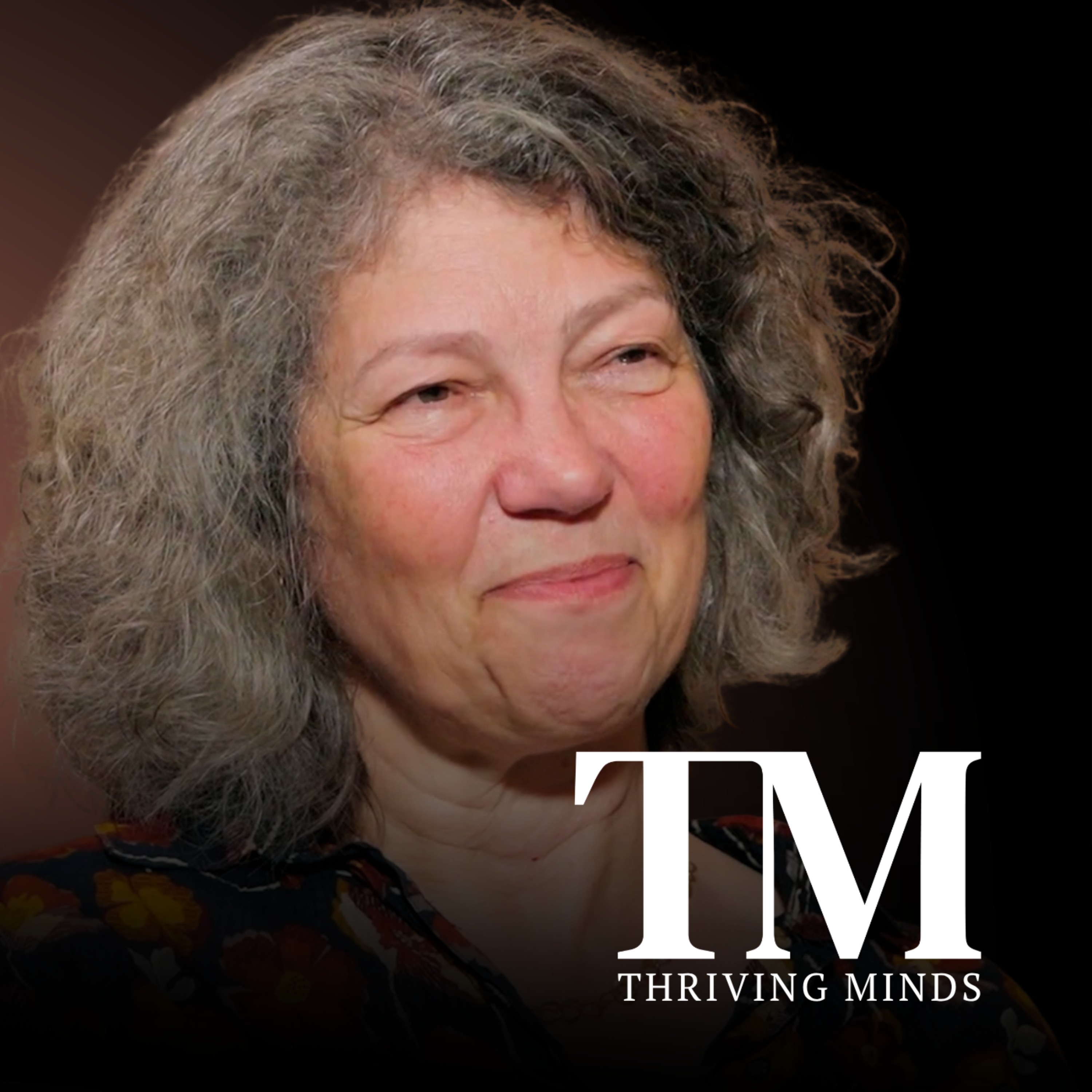
How big tech (including AI and social media) shapes adults’ and children’s lives by prioritizing profit, collecting pervasive data, and designing feeds that reduce user agency; risks include anxiety, depression, stress, compulsive use, and harmful personalized content, while benefits include social connection and niche support.
tech companies have grown more powerful than countries; mental health harms are strongest for “excessive users” and vulnerable people; “agency” (feeling in control, self-efficacy, meaningful goals) is central to well-being and is undermined by attention-maximizing design; children are not asking to have devices removed but to redesign them; regulation should be “safety by design” with age-appropriate services and risk assessments (EU Digital Services Act; Brazil’s ECA Act).
children seeing beheadings and violence against women online; a teen survey where 46% would rather break a bone than have a broken phone; personalized diet advice escalating to extreme thinspiration/cosmetic surgery; “manosphere” content pushing polarizing hate.
Prof Sonia Livingstone, social psychologist at LSE; Oxford PhD; has advised UK and EU institutions and worked with the UN on AI/digital well-being; author of Parenting for a Digital Future (nearly 20 books).
Written by AI. May contain mistakes.
Discusses the worries children have regarding online risks and vulnerabilities.
“We should be concerned because technologies we have now track and collect data on our every movement and they are primarily motivated for profit.”
Explores how technology is affecting parenting and children's development.
“Young teens were asked whether they would rather have a broken phone or a broken bone, and 46 % said that they would rather have a broken bone.”
Professor Livingstone shares her academic journey and expertise in technology's impact.
“I was always interested in hearing their voices.”
Discusses the transition from viewing technology as beneficial to recognizing its risks.
“And that, for me, was the beginning of a journey that did a number of things.”
Examines the power of big tech companies and their effects on mental health.
“So now we are asking much more, what are the problems?”
Professor Livingstone discusses both the negative and positive aspects of technology usage.
“because they don't seem to be the fastest or the most efficient or the biggest.”
Explores the balance between using technology and its effects on mental health.
“But partly it's technology, but we've lived through a financial crisis.”
Analyzes different patterns of technology usage and their implications for mental health.
“and a sense of a lack of trust in institutions, which has really fallen off the charts if you look at all the graphs on public trust.”
Discusses how different types of technology usage affect mental health and agency.
“Who are the people who are not really using the tech so much or finding a way just that there's a lot of people who are turning off, say, oh, I've unsubscribed from, you know, I've deleted my profile on TikTok, whatever.”
Explores the concept of agency in relation to mental health and technology usage.
“And then they tend to think that that's how the entire world is.”
Comparative analysis of social media consumption and addictive behaviors, like sugar.
“You know, you and I are busy people and the idea of wasting time is an anathema.”
Examines the impact of technology on children's social interactions and risks.
“as well as the things we really need, something to talk about with our friends.”
Discusses the lack of restrictions on children online and their desire to test boundaries.
“But actually, that's what children need.”
Offers insights on how parents can educate their children about technology use.
“What would you advise to parents that are trying to educate their kids in a healthy way when it comes to technology usage and particularly social media?”
Explores signs that children may be struggling with technology and its effects.
“Would you say this is a similar analogy?”
Discusses how parents can approach technology usage as children grow.
“I have the same reaction that everyone else.”
Explains the importance of parents modeling healthy technology habits for their children.
“You know, what are the other treats we could give?”
Learn how parents can effectively model healthy technology use for their kids.
“Because if we don't want our kids to smoke, I mean, they're going to smoke or the chances of them smoking is higher if they see the parents smoking.”
Explore the characteristics of a balanced digital childhood in today's tech-driven world.
“What does a healthy digital childhood look like?”
Understand the importance of regulating technology to ensure a safe environment for children.
“much better regulation of big tech and put much more resource into what I'll call good tech.”
Discuss the necessity of creating age-appropriate online services for children.
“So an eight-year-old does not get recommended new contacts who they haven't met.”
Examine the conflict between encouraging innovation and ensuring user safety in tech.
“Another use case would be don't expose this kid to porn, don't expose this kid to violence and so on and so forth.”
Consider the potential evolution of technology regulation amidst rapid advancements.
“Why do you think they're not enforcing it enough?”
Analyze how AI influences individual decision-making and personal agency in daily life.
“that has been dominant for the last five years.”
Learn about the dangers of AI interactions for vulnerable teenagers and their implications.
“everyone suddenly has been using generative AI in ways that they didn't anticipate, that entirely new, that it seems intriguing and exciting and convenient and smart.”
Learn about the dangers of AI interactions that can lead to serious mental health issues in teens.
“every time we engage with AI, they're also collecting our data and building up the personal profiles they have on us all, and then they'll start advertising it.”
Explore how technology can both alleviate and exacerbate feelings of loneliness in society.
“It's there in their, you know, whatever app.”
Understand the importance of maintaining physical interactions and the impact of technology on our lives.
“Why is walking in nature and real face-to-face relationship interactions important to us?”
Discuss the need for a change in technology's business models to prioritize user well-being over profit.
“But change makes us look backwards and it makes us look forwards.”
Learn about the importance of educating ourselves and others about technology to protect our well-being.
“It needs to come from us because I agree with you that the primary focus of technology companies is not our well-being, is economic growth, is to make money.”

Get the gist, explore an idea or ask about something said.
 Claude
On Thriving Minds with Alberto Zandi, what are the key points of this episode?
Searching your listeningAutomatic transcript. May contain errors.
0:00Sonia Livingstone: Companies that own the tech have become bigger than countries. Profits are bigger than the GDP of many countries. And people's voices, society's voice, the public interest risk getting squeezed out. So it's economic growth versus people's well-being. Professor Sonia Livingstone is one of the most cited world-leading researchers in the field of digital well-being. And her work has informed regulation and policy across the world. A professor at the London School of Economics, she has spent three decades researching how technology affects adults and children in different ways and has published a number of books, including Parenting for a Digital Future.
0:34Sonia Livingstone: In this conversation, she explains how digital media and AI are shaping our lives and our children's and what we can do to protect them. We should be concerned because technologies we have now track and collect data on our every movement and they are primarily motivated for profit. Children tell me they are worried about what they see online. They see risks. It unnerves them, makes them feel vulnerable, it makes them feel powerless. So the best advice for parents... Young teens were asked whether they would rather have a broken phone or a broken bone, and 46 % said that they would rather have a broken bone.
1:17Why is this happening to kids?
1:19Sonia Livingstone: So I do think... What are the signs that we should be looking out for that will determine that our kid is struggling with technology? One of the really interesting ideas in the theory of parenting is that... Professor Livingstone, how would you introduce yourself and the work you do? I'm a social psychologist. That means I think about people in their social situations. And these days, that's increasingly about technology. So I work in the Department of Media and Communications at the London School of Economics and Political Science. and I kind of bring my psychology knowledge into interaction with all the other thoughts and theories and ideas about how the digital world is changing, especially children's lives, but everyone's lives.
2:07Why is this topic so important to you that you've dedicated your career to it?
2:12Sonia Livingstone: It wasn't quite the plan, but I was always interested in people. I was always interested in hearing their voices. I was always very struck by the many claims that are made about people's lives. Everyone has lost their mind to social media or technology is taking over. And I always wanted to be the researcher that goes in and spends time with everyday people in their everyday lives and kind of explore what it means for them and then try to kind of build the bridge between their lives, their experiences, their words, and the grand claims that are being made about social change in society in the 21st century.
2:53And then I want to, I want for people to learn a little bit more about your background, because I do know you as a leading voice in this topic, and you've written a number of books, I think almost 20 books. So can you walk me through your credentials, your training, and what you basically have done over the last years that equipped you to become a subject matter expert in this topic?
3:17Sonia Livingstone: I think I was helped by doing my PhD at Oxford. That was a kind of big push for me to really, Oxford is a very combative place. Everyone is arguing. Every time you make a claim, someone tries to knock you down. I kind of learned very early to be ready to defend arguments with evidence, with ideas, with great concepts. I spent probably eight or ten years working as a social psychologist and then I realised that I got a lot of funding from the European Parliament and the European Commission and others to start kind of tracking how technology was really changing people's lives. And that, for me, was the beginning of a journey that did a number of things.
4:03Sonia Livingstone: So it enabled me to kind of deepen my expertise in the nature of technological changes. And that's not just tech, but it's also the legal changes, the regulatory changes that are going on around, especially on a European level. And then it also took me out of the university. So I'm an academic that spends a lot of time outside the university. I'm regularly asked to advise the British government, the European Commission, the European Parliament, the Council of Europe. And increasingly, I'm working with the United Nations, which is trying now to take a kind of global perspective on whatever is the latest developments, especially artificial intelligence.
4:45Sonia Livingstone: So I'm always the one bringing a knowledge on the ground from multi-method research of how tech is impacting people. but also how they are adapting and responding to it. And I try to bring those into those expert debates and still rebut some of those kind of dismissive claims about ordinary people and how they're coping. And then what is technology doing to us as a society that deeply concerns you and all the other wider institutions that you're working with? I find the way you phrase the question interesting because when I started this 10 or 20 years ago, the question was, what can technology do for us?
5:31Sonia Livingstone: What is the exciting possibilities? And I do think, especially in the last 10 years, we have changed the question. So now we are asking much more, what are the problems? What are the risks? And I think that's right because technology is running away with us in various ways. So the tech is running away with us because it's innovating very fast, but behind the tech are the companies. and what's really feels, I think, out of control to many people, including governments, including regulators, is the way in which in the last 10 years, the companies that manage and own the tech have become bigger than countries.
6:09Sonia Livingstone: Their profits are bigger than the GDP of many countries. Their power is kind of overtaking the capacity of even countries working together through the European Commission, through the African Union, through the United Nations. So it's the sense that the business model and the profitability of the tech is now driving what might be good for us in our lives and what is turning out in many ways to be bad for us. And people's voices, society's voice, the public interest, those are risks getting squeezed out. Why is it bad for us? Because from what you're saying, it seems now clear to me that the wider governmental institutions are worried about the amount of power that these very big tech companies have but are they also concerned about the negative consequences towards things like our mental health and well-being is that something that should be should we be concerned of when it comes to using technology yes we should be very concerned um we should be concerned because this the technologies we have now uh they track and collect data on our every movement they track and collect that data and use it in ways that are automated that often even the companies can't give a good account of and they are primarily motivated for profit so yes i'm not against business entirely and companies of course are trying to make products that will help our um help our daily lives improve children's learning um there's a lot of kind of well-being products out there but the bottom line comes first and so there are products that we're not getting that could be better for us.
7:50Sonia Livingstone: And there are business developments that aren't happening because they don't seem to be the fastest or the most efficient or the biggest. Are there any major negative consequences that you have come across when it comes to the usage of technology? So perhaps depression, anxiety, stress. Can you talk about any of those? I've spent a lot of time in the last few years researching with clinicians with psychologists with psychiatrists thinking about how having technology between us and other people you know it's mediating and the tech is always kind of in between in the device in the app in the service so that is having I think a number of negative consequences but it's also bringing some new opportunities so I think what I would like to convey is a kind of balance I do a lot of interviews with children children tell me they are worried about what they see online they see risks risky things online that we never expected them to see in human history, like beheadings, like violence against women.
9:08Sonia Livingstone: You know, they see a lot of bad stuff. Obviously, it's a problem. It unnerves them. It unsettles them. It makes them worried for themselves. It makes them feel vulnerable. It makes them feel the world is a bad place. It makes them feel powerless. So these are all, you know, really worrying things that we would love to get control over as a society. but children also tell me um the same services are where they see their friends where they um relax after school because the school day was stressful where they um can reach out and get some help especially if they are the um only i don't know the only child who speaks urdu in their class and they can find a kind of urdu community or the um one of the few lgbt kids in the class and they can find other, you know, there's ways that the digital world scales support and help that allows for all kinds of niche experiences that children really value.
10:03Sonia Livingstone: So they don't want the devices taken away. They don't want us to say the tech is bad, therefore stop it. They want us to redesign the tech to maximise the opportunities, minimise the risks. But at the same time, if you ask a kid, do you want to have chocolate? They're going to say, yes, I do want to have chocolate. So is there a request, something that you feel like is sensible or would you say that kids should not be utilised in technology altogether due to all the consequences that you've just mentioned? Actually, in my experience, children don't keep wanting to eat chocolate. If you leave children in a room with a ton of chocolate, they'll eat a bit too much like the rest of us and then they'll stop like the rest of us and maybe they'll be glad if you offer them an apple so I think um children I was an anomaly then as a child um children I find like everyone else are kind of reflecting and figuring out what is good for them okay they don't have kind of full control over their desires actually none of us do but they are reflecting and this moment is really interesting because I think everyone is now reflecting the tech has become so in your face so obviously kind of more than any of us can manage and control in our own best interest that everyone is reflecting and children too but I just wanted to make one other point about why we are now all thinking about the problems of technology and of course the innovation has reached a point that it's very salient but there are a lot of other things that are happening in people's lives that are also challenging and problematic and a lot of those things are leading people to see tuning out by scrolling on Instagram or TikTok as a kind of a release a relief a way out a bit of relaxation time so when we say what are the reasons why there's a mental health crisis now, which, you know, the World Health Organization and others agree that there is.
12:08Sonia Livingstone: But partly it's technology, but we've lived through a financial crisis. We're facing a planetary crisis with evolution. We're living through a lot of conflict. And everyone, I think, is feeling the economic instability, the cost of living crisis, and a sense of a lack of trust in institutions, which has really fallen off the charts if you look at all the graphs on public trust. And no one is feeling confident about the future. So these are also factors that help explain anxiety, depression, mental health crisis more broadly. That's a very interesting point. If we isolate those factors and we look at, for example, doomscoring, as you were mentioning, that on its own is it bad for our mental health what the research seems to be showing right now is that doom scrolling or excessive use of screens is a problem when people do it a lot so if you imagine um if you imagine 100 people and some are not doing it at all and most are doing it a bit and some are doing it more some are doing it i don't know five hours a day or seven hours a day or something.
13:23Sonia Livingstone: So we can see in the research very clearly that for the excessive users, they have a problem. There is a problem. And doom scrolling is part of it. But we also have to ask, who are those people? What else is going on in their lives? For the majority in the middle, we don't have great evidence that it's a problem. And when I interviewed them, they say, okay, so I was having a bad week. So I tuned out a bit with the doom scrolling. And or I was I had a demanding day and I did it for half an hour and then I went and did something else. And for the ones who don't do it at all, that's interesting. I think we should understand them better.
14:01Sonia Livingstone: Who are the people who are not really using the tech so much or finding a way just that there's a lot of people who are turning off, say, oh, I've unsubscribed from, you know, I've deleted my profile on TikTok, whatever. They're making some choices that I think we need to understand better because maybe we can learn from that too. In your experience what do you think is worse? The time that we spend using tech or the type of tech that we're using? So for example are five hours of doom scrolling going to have the same consequences as five hours of checking my emails or reading different articles from different media outlets or newspapers?
14:40Chris?
14:41Sonia Livingstone: I spend every day five hours doing my emails and I find it quite stressful and exhausting because there is, you know, that's work. That's challenging things to be dealt with. Five hours doing scrolling. So even then, I think there were two things. The way that platforms are designed is always designed to keep us going. One more video, one more reel, keep going, keep going. That's a problem. That's overriding human agency. That's overriding the decision we made when we first sat down and said, I'll have half an hour with a cup of tea, I'll relax, and then I'll do X, Y, Z. If we never get to X, Y, Z because the platform is monetizing our attention and keeping us there, that's a problem.
15:29Sonia Livingstone: The other problem is the content. So my feed right now is kittens and cake decoration. they figured out i want to relax but honestly there's a limit to how many kittens and cake decorating i can watch so i stop research shows that many people are doing that they're kind of you know whatever they like that's what they're fed um there's the always one more real problem um but the content itself may not be problematic but for some people especially vulnerable people especially people with mental health difficulties especially kids who aren't ready the the content of the feed is also a problem and that is where um it is the feed is personalized to vulnerabilities if you once if you're a 15 year old girl and you once looked at diet advice you get a lot of diet advice and then it gets more extreme and then research shows um that you get also the cosmetic surgery adverts you get the extreme the thin spiration you know the extreme thin you get advice on you know and eventually you could be pushed in a kind of eating disorder direction so we see that with um the manosphere for boys at adolescent boys and young men that there's this kind of push towards um content that denigrates women and that um begins by making boys feel more confident that ends by making boys feel more confident at the cost of respect for women and it becomes polarizing and hateful so I think you know the content really matters but it's different for everyone and that makes it very hard for anyone to know when you look at the next person staring at their screen you don't know are they reading a novel are they reading the news are they catching up in the email are they watching hate content are they watching something really depressing you know it's just so diverse and sometimes really problematic yeah that's so interesting so it does make sense to me when i think about the type of content that we're consuming and how that content is shaping our perception of life and reality as a whole so for example many of my friends they're what i would consider high performers they they they work incredibly hard whether it's at their jobs or their businesses but then when they go online what they're basically pushed are other entrepreneurs or other high performers, typically the 1 % of the world.
17:55And then they tend to think that that's how the entire world is. And then they're comparing themselves to that. So it brings them anxiety, stress, and sadness. So that does make sense to me. And as you said, we can take the example of other types of content and how that affects other people. But what I found very interesting, and I had no idea, is what you are referring as agency. So if I am doom scrolling for an hour and I have no agency towards the time that I want to spend on Instagram, but if I am working on a PowerPoint presentation that is very important at work and I know that I need to work on that presentation for an hour, I have agency over that activity.
18:36Why is that agency important to us from a health or mental health perspective?
18:41Sonia Livingstone: I think there is probably no more important concept than agency in human well-being. So agency, it wraps up a number of different dimensions. It means we feel in control and in charge. Okay, that's important to us. We don't want to be all in control. You know, we're in a social world. Other people also have ideas and expectations of But we need to feel that we are directing our lives to an important extent. We need to feel that we're directing them in a way that is meaningful to us and to others around us. And meaning is social. So we can't do meaning all by ourselves. You know, your PowerPoint presentation is for an audience.
19:29Sonia Livingstone: And when I'm lost in my email, I'm actually interacting with others. You know, it's meaningful in a way that we've chosen and to a purpose that is kind of negotiated together with others. Then we need to feel also part of agencies. We need to feel that we have what psychologists call self-efficacy. So we need to feel that we have the skills and tools to bring about the goals that we are working towards. We don't always succeed. We know that we're all on a journey. We have to kind of keep developing. but we have sufficient efficacy to believe that we can get where we want to go. So the doom scrolling, if it's just I need to chill life, you know, I had a hard day, and then I'll put my phone down, do something else is fine.
20:16Sonia Livingstone: We also need means of relaxation of kind of resetting of getting those cross voices from our day out of our heads. But ultimately, you know, we kind of need to go through our day knowing we are part of a meaningful world which has purposes that we are sharing with others and that we can have goals that we have expectations of achieving. And tech can help with that, but when it pulls us so that we are serving its ends, not our own, then it's gone too far. how long using tech or particularly social media is it too long and then it becomes overly negative towards our own health we don't have good data on that and i think we don't have good um data because people are so variable and the ways they use the tech are so variable so i I think we could be clear that doing for our, if we're not using tech in a way that is part of our identity and purpose in our life, if we're literally just wasting time, killing time, people talk about killing time.
21:34Sonia Livingstone: You know, you and I are busy people and the idea of wasting time is an anathema. We want to put our time to good use. So if we're killing time, I think it's already a problem. And that might be an hour, the hour when we could have done some exercise or could have talked to the people sitting next to us. But five, six, seven hours, you know, that's where the research makes it clear it's beginning to be too long. But five or six hours, if I'm writing my next book, you know, I need to be staring at a screen for that long. And then I'm just struggling to have a healthy relationship with technology for the following reasons, particularly with social media.
22:14So I'm going to give you a slightly different analogy, which I think it would then help to make sense with the technology example. So if I want to lose weight, I try to stay away from sugar. And then it is now evident and there's tons of evidence that sugar is addictive. So the more sugar you eat, the more your body is going to crave it. So the easiest way for me to not eat sugar is to not even eat a little bit, like to completely cut it out my diet and not eat it for prolonged periods of time. Then if I do the same with social media, so for example, if, as you were mentioning, I want to take my mind off for half an hour because I've had a very stressful day, maybe that works for that particular moment, but then my brain is going to ask me for that moment again tomorrow, and then maybe it's not 30 minutes, it's 35 minutes.
23:02So how can we regulate this?
23:04Sonia Livingstone: um do you mean how can we individually manage it or how can we as a society pass laws about it first individually so and now i think in the world of social media and big tech we're looking for analogies and um sugar is a good one but also not a good one um because um the social media is it depends what we're using if it is simultaneously um a way of killing time then we could just turn it off and find another way to relax but it is also a way of knowing what the culture knowing what your culture is about having something to talk to other people about the next day um taking part in that conversation that says did you see did you see that you know or sharing a joke that is often, so it's also human connection.
24:01Sonia Livingstone: And I think we have a bit lost our respect for or away in finding other kinds of human connection that are about reading, it used to be reading the newspaper or reading a book or watching TV. You know, So none of these things were necessarily brilliant, but there was a diverse way, a diverse set of ways in which we interacted and then we could bring that into our social interaction. So now we've kind of lost all those other habits and we've put it all on the social media and that is bringing us the problems from the addictive feed as well as the things we really need, something to talk about with our friends.
24:50I want to talk about children again. I read a study where young teens were asked whether they would rather have a broken phone or a broken bone. And 46 % of these teenage kids said that they would rather have a broken bone. And almost the other half started to ask questions like, how long would my phone be broken for? or which bone would you break, which for someone that is older than them and perhaps has not grown up with technology finds that study mind-blowing. What's your take on this? Why is this happening to kids?
25:33Sonia Livingstone: So I do think the... So we do have evidence that the tech is increasingly being designed in a way that is intended to be compulsive. And so it's kind of hard to put it down and hard to imagine your life without it. But in the last 10 years, especially, we have also a bit redesigned society so that kids don't have alternatives. And if I ask the child, what are they going to do with a broken bone? Okay, it's going to hurt. They're actually going to get some attention. Maybe they'll get some time off school, it will get fixed eventually. What are they going to do without their phone? So children don't, and we don't use the phone, we don't phone up anymore and say, what are you doing on Saturday?
26:26Sonia Livingstone: Shall we do this? It's on the social media. It's on the WhatsApp or the Snapchat. We don't really like our children going around to, you know, walking down the street and knocking on a friend's outside saying hi can you come out and play or hi can you hang out with me we don't let our kids out to do that um we i think us our public spaces have become really unfriendly you know it's not just no ball games wherever there's some grass to play children tell me they don't feel welcome on the bus if they go on as a group older people are like oh those kids are very noisy and what are they doing and where's their parents we don't want them in the shopping roles, we kind of watch them with suspicion.
27:06Sonia Livingstone: It's like they're not meant to be in the world. So when I think of taking a phone away from a child, I see the compulsive tech that is a problem, but I also ask myself, what do we want them to be doing? And what have we made welcoming, social, fun spaces where they can have their own agency? And I think we've withdrawn those. And you think that they found a world in which they are accepted, and there's more space for them. Yes. In the digital world. Exactly. They find it. They're suspicious of it. You know, they've become cautious. They've heard our voices. They know that we are worried about what they're seeing and worried that they're spending.
27:44Sonia Livingstone: So they're weighing it and they're worried about it and they're critical of themselves, which I think is really sad. We've given them a space to be themselves, but it's also, oh, they say, I know I'm addicted. I know my parents disapprove. I know, you know, they already have this self-criticism, which is a shame. but they don't know what to do instead because we haven't as a society given them some great alternatives is it also because in in real life kids are naturally treated as kids meaning that there's a number of things that they are not allowed to do and they're prohibited to do and then in the digital world they are effectively adults there are no restrictions does that give them any any type kind of pleasure so what the um psychologists are clear about is that the process of development has to involve a measure of risk taking where children kind of do things that are a bit edgy and a bit beyond their capacity and then maybe they you know it used to be fall out of a tree or um make a mistake or things get a bit dodgy when they're crossing a road.
28:55Sonia Livingstone: Adults don't like any of that. But we've got very risk averse. But actually, that's what children need. And so when they talk about going online or going on social media, often their talk is about finding those edgy spaces, you know, finding the new social media that adults haven't discovered about yet and locked down and regulated. Or, you know, children talk about things adults can't bear, like pedo baiting, you know, oh, he's a bit of a dodgy, who's that person's content? And then they play a little game with them if they're a team. And of course, it scares us whittlers, but they're not doing it to be bad.
29:32Sonia Livingstone: They're doing it to kind of test their capacity and learn, OK, I can cope with this. And then they might feel stronger. They might feel more resilient. I know how to deal with those weirdos that approach me on social media. So we want them to be super safe, but they want to test their limits, work out what they can do and find their way of being capable. What would you advise to parents that are trying to educate their kids in a healthy way when it comes to technology usage and particularly social media? Yeah, parents ask this all the time and I think it's on everyone's mind. So I spend a lot of my time going to schools and talking to children or going into homes and talking to parents and children.
30:16I think my first thing is to say they are all different I know parents first instinct is to
30:23Sonia Livingstone: think everyone is doing this or everyone is kind of the same and I don't want my child to be left out but they're not I walk into a class of 25 kids at any school grade and some are gamers some are on social media some say I'm you know I don't want any of that I take them aside and I over their store playing with toys or they like reading books they don't always say it but they are really different and so i think if the other thing i found from from talking researching parents is parents have their values and i see a happier synergy between the parents and the children when the children know what the parents values are and they kind of come to respect them usually reject them sometimes you know then the parents need to work harder to make it comprehensible but I think anyway so two messages one everyone's different don't feel you've got to do what everyone else is doing and then second figure out what is important to you and find a way to explain that to your child in a way that is appealing so give you an example um I went into a home um and the first thing I did was I bumped into these kind of papier-mâché things hanging from the ceiling and the parent was a kind of would-be artist.
31:45Sonia Livingstone: She wasn't making a lot of money, but she wanted to be an artist and she wanted to be creative. And so there was a lot of craft activity all over the floor. I was like treading on the paints and that. So they were crafters, but also then online. It wasn't instead of, it was also online. She'd curated this kind of playlist of especially games that had an alternative aesthetic that were kind of gave the child a chance to learn to make and to code and to feel that they could make things too they did it often together but also the kid could do it you know parents are busy they have to cook dinner and work and so on so but the children were absolutely clear we like we'd have to be like everyone else we're proud to do it our way we have some aesthetic values which other people are taking together we feel we can craft and make and achieve.
32:34Sonia Livingstone: And it doesn't have to be professional with millions of views. It has to be something we made that we're proud of. And she communicated that so effectively. And I took that away and thought, other people were watching YouTube videos with their kids to learn to cook, and they were cooking together. And that meant also, if there was something on the feed that was dodgy or dangerous, the parent could take the moment to say, actually, we're not just going to watch the next video that comes up we're gonna research or you know just you know so there were the moments of advice and the parents want but there was also the fun of doing it together and that means the parent also knows what the child's capable of and sees the child's competence and that often gives parents confidence in their child so so to simplify the advice is parents seem to use technology with their kids so kids could normalize the interaction with technology It's almost like, I mean, in Spain, I've had many friends and my family too, when they wanted to introduce their young adult kids into alcohol, typically the first thing they said was, if you're going to do it, I want you to do it with me and I want to teach you what wine is, what beer is and when to drink it, how much is enough.
33:51Would you say this is a similar analogy? So you're not like sort of feeling like you are, you know, a little criminal when you're using technology. You want to normalise it for the kid and for them to have a good communication channel with the parent.
34:03Sonia Livingstone: Yeah, and the child is watching. Children watch parents so closely. They are watching. Are the parents always on the phone? Are the parents saying, oh, goodness, I've just wasted all this time? Are the parents making good decisions? So children are watching. Think of the little eyes on you all the time. And as a parent, how can we identify or how can we know what are the signs that we should be looking out for that will determine that our kid is struggling with technology, that definitely there are negative consequences and then we need to do something about it? so I think um the simple answer is um pay attention to your child and see if they are withdrawing from their friends withdrawing from family situations with not doing so well in school you know if they seem to be kind of opting out so a lot of teenagers do look like they're opting out and they don't want to come and have dinner with their boring parents and so on.
35:05Sonia Livingstone: So I think, you know, it's not quite that straightforward. Sometimes parents can be, have their own problems. And this is a hard message for parents, but I'm very struck by how many children do talk about their parents being stressed, their parents snapping and getting a bit kind of, you know, hasty or judgy or angry sometimes um so probably you know the best advice for parents is be a happy chilled person yourself if you can possibly manage it that will bring about a happy chilled um child but children have so much so much to contend with you know they are worried about their school grades these days much more than they were when i was a kid they are worried about the future as I already said they you know they they are worried about fitting in and if they feel they don't fit in or if they're being bullied um I think if parents can kind of make themselves the person that their child wants to tell about that that's really helpful and if the child doesn't tell it's not like it's the parent's fault um but they they need to tell someone maybe parents can find you know a friend of the family or an aunt or older sibling children need to be able to talk about what's affecting them and that's hard to manage and how should a parent the parent's education style change according to the children's age so for example right now if I go out for for for lunch I see a lot of parents eating and and they're like five-year-old kids or six-year-old kids they're eating next to them with an ipad in front of them and they are watching i don't know a movie or a tv show or cartoons um should a should they be doing that is that good for the kid is it bad for the kid and also how should the parents approach evolve towards technology education as the kid grows up so i would say so i have a little sympathy for the parents who have the iPad.
37:19Sonia Livingstone: I have the same reaction that everyone else. I think, oh, you know, that child should be living their life to the full and part of the interaction and so on. But I also see other people in the restaurant don't want to hear the child's voice. They want them to be quiet. And the parent is probably also, you know, wants a nice meal. And, you know, there are lots of reasons why we can't be stimulating and supportive with our children 24-7. Everyone needs a break. and parents are being blamed a lot for what they're doing, which I think is problematic. On the other hand, you know, what the research shows very clearly from the start, from the very first moment, you know, babies start kind of developing, is what they really need is human interaction.
38:07Sonia Livingstone: And it doesn't have to be much, but what they learn from, what wires their brains, what makes them sociable, is people looking them in the eyes, saying things that are at their level and responding to whatever they do even if all the child does is look back or smile or you know wave their arms it's the responsiveness of the adult and so when it comes to introducing screens I hope a bit later than little babies but later it's the what really matters is the way in which the parent and child do that together so that the parent points, explains, laughs with the child. Maybe you're sitting, you know, you're kind of sitting cosily together as you look at the screen so that the screen becomes part of the parent-child interaction and the screen doesn't dominate.
38:55So it goes back to the initial advice. So share that technology experience with your child, regardless of the age of your child. And what about the punishing study in which, for example, a kid or a teenage boy or girl would do something not good right and it could be completely unrelated to technology maybe they don't have good they didn't achieve good grades and then the parents would automatically punish them with I don't know one weekend without their phones and the phone becomes this commodity that the parent can give or take according to rewards or punishment according to the kids sort of like performance is that good is that bad parenting so i see that happening a lot
39:37Sonia Livingstone: and i think it is part of why we are also obsessed with our phones because we've made the phone the punishment reward moment because we do it both ways it's also if you get good grades you get extra time to play your computer games or or whatever so we've made it a focus of our so So it would be constructive if we could say, OK, the phone has pros and cons, but let's look beyond it. You know, what are the other treats we could give? What are the other ways we punish is too strong? But what are the other ways we might, you know, show our concern or rethink the restrictions around a child so that we don't make everything about the technology?
40:21Sonia Livingstone: because then it becomes something everyone argues about. It becomes really emotive. Both parents and children get upset when someone picks up the phone in front of them. It's like, I'm tuning out from you or I'm doing something you don't want me to be doing. And it becomes so emotive that it's kind of too much for anyone to control. And what about screen time? Do you think kids are capable of regulating their own screen time or should the parent intervene? One of the really interesting ideas in the theory of parenting is the difference between what's called authoritarian parenting, kind of top down, restrictive, you do it because I said so, parenting, and authoritative parenting, which sets boundaries and which establishes the parent's authority, but doesn't do so in a punitive way and does so balanced with opportunities.
41:14Sonia Livingstone: so I think that's a helpful distinction so the kind of you know you do it because I said so I have the power I pay for the phone all of that is kind of unhelpful because the child feels they're not listened to they're not heard anyway the parent is often hypocritical because they themselves are using their phone too much yeah and the child looks for a way around but I thought you know But children do want boundaries and they do want boundaries that show that that are appropriate to their age and their skill and their kind of capacity. And so, you know, that's that's the kind of parenting that is really important.
41:54I think you're making another very interesting point there. So how should we as parents utilize technology in front of our kids? Because if we don't want our kids to smoke, I mean, they're going to smoke or the chances of them smoking is higher if they see the parents smoking. So how should we do that when it comes to technology?
42:11Sonia Livingstone: um children are watching us really closely in how we use our phones they know when we have got it under the table and we're using it they um you know they're watching our eyes they know when we're not really listening because you know so i i think parents are trying to set a good role model very often but children are really stern critics um so i would say it probably is better to say, I need to spend half an hour with my phone now catching up on my email rather than pretend you're not doing it and do it under the table. That's so interesting. Children really value it when we're straight with them and we tell them we're struggling with stuff too, or we know we have some bad habits and we are trying to do things better.
42:59Sonia Livingstone: And they'd rather support us in that journey than have us deceive them. They really hate being cheated. That's so interesting because I've seen parents trying to look perfect in front of their kids. And what you're saying is that you should show them that you're human. Yeah. No matter how old your kid is, right? Interesting. What does a healthy digital childhood look like? I don't know, from the moment you wake up until the moment you go to bed, what does it look like? I think we really don't know. And I think that is the benefit of this moment of kind of anxiety and panic that we're living through.
43:35Sonia Livingstone: that there is now a national conversation really about exactly that so we're not going to go back to the 19th century which had a lot of problems anyway so we're not going to get rid of that we're the 20th so we're not going to get rid of the tech it looks um i think from people's everyday people's point of view it looks really different so just to tell you about another of the families i interviewed i interviewed one family that was really high tech there were like their parents had their own um and if you some that had their own server or some that had like and their own network within the house with lots of devices and and they were learning to code with their kids and so digital a good digital childhood for them was really high tech and a very tech focused others it was good because we do our hour you know separately after school then after we've done our homework and then we all play a board game together that's a good childhood it's like a balance it's a good diet and there's everything in between and lots of other options but from the country's point of view from the government's point of view i think we um are not in any way yet implementing a good digital childhood so that for me that means the government has got to do much better regulation of big tech and put much more resource into what I'll call good tech.
45:03Sonia Livingstone: Parents tell me they don't know how to find educational videos on YouTube. They don't know which ones are educational. The government, you know, we could tell them. They tell me they don't know how to find the good creative alternative resources that would be beneficial, that would help their kids learn. We could fund those. We could make them available where they already exist. and a good digital childhood is going to be balanced. So we need more youth centres, more parks, safer streets, quieter traffic, you know, people feeling more empowered to make choices about when to use the tech and when not.
45:34Can you expand on that? So what does good regulation look like for kids when it comes to using technology? In the last five years,
45:43Sonia Livingstone: countries have started introducing good regulation, I would say. So I'll give you two examples. One is the European Union's Digital Services Act, and the other is the just passed Brazilian ECA Act. They're both very similar in that they both say the digital services, all the companies, have to assess the risks that they pose to the public. they have to make a special assessment about the risks that they pose to children and then they have to mitigate those risks they have to implement what people are now calling safety by design so rather than saying we'll have everything and the the online safety act in britain is sort of there but it's not quite so comprehensive which is why the government has to keep adding to it so the model has got to be i think um uh take out the illegal really take it out that means um uh um sexual abuse content really violent you know anything that crosses a threshold should not be findable um if it illegal means illegal um and then we need uh age-appropriate services and that's what the European Commission has developed so that when a platform knows someone is 8 or 13 or 17 the service they can access is different according to what is appropriate for that age.
47:24Sonia Livingstone: So it does mean that services have got to start asking us how old we are when we access them and that's something that the regulators are really struggling with because we don't want the platforms knowing who we are we don't want them knowing our age so we've got to develop um age assurance services which are independent of the platforms which are which respect people's privacy which don't share the data further they're beginning to be developed they're almost there and then the platforms have got to um through regulation um respect the age of the child. So an eight-year-old does not get recommended new contacts who they haven't met.
48:12Sonia Livingstone: A 14-year-old doesn't get recommended new contacts, but can be in touch with their own contacts. An 18-year-old can be free within what's legal. It seems to me that the number of use cases could be almost infinite. So what do you think of that? I would explain a little So, for example, an eight-year-old wouldn't be exposed to contacts that they don't know within social media because the social media through this external governmental institution or platform is able to identify that this is an eight-year-old kid. But that is one use case. Another use case would be don't expose this kid to porn, don't expose this kid to violence and so on and so forth.
48:55So how many of those use cases do you think we would need to build at different age brackets? Don't you think that would be maybe almost infinite?
49:07Sonia Livingstone: So the way the regulation is designed at the moment is to focus on the main use cases. Okay. So yes, there's an infinity and we have to decide what to do about so-called the long tail, that all the incredible different ways that different people use technology. But we know what the main ones are, and we can start there, and we can design for them, and there's a business model for those, right, because those are consumers. And there's a desire from the consumers to have that. It's not happening yet. Big tech is moving in its own direction. The regulators are coming at them with bigger and bigger finds.
49:50Sonia Livingstone: I think in the next few years we'll either see big tech say okay there's different ways we can make our profit by giving people more of what they want which is safety which is privacy which is great fun opportunities as well and which is age appropriate I think you know the outcry across the world is this is what we want and there's got to be a business case for it but the platforms haven't pivoted yet. They're resisting for all kinds of reasons. And the regulators are not really enforcing strongly enough yet to make them. So this is an interesting moment. I think it's a bit of a standoff. Why do you think they're not enforcing it enough?
50:29And when do you think this is going to happen?
50:31Sonia Livingstone: I don't know when it's going to happen. I think it's going to happen soon or maybe it's going to fail. So one of the problems in the kind of big geopolitical sphere is that every country is also trying to get that first mover advantage in the big tech. So Europe wants to have its own Silicon Valley. Britain wants to be first or a real player in artificial intelligence. They want to be ahead. And that means they don't want a lot of regulation. They want to enable startups. They want the entrepreneurs to be able to do their thing without having to hire a ton of liability and compliance lawyers before they could even first get into the app store.
51:13Sonia Livingstone: So they're also trying to keep the regulation really light to stimulate the market. Yeah, so it's economic growth versus people's well-being. It seems like safety and innovation are right now at loggerheads and it's going to take some really clever thinking to find different ways around it. I mean, you've been in the front facing this fight with most of the European and British regulatory bodies for the last decade. Where do you think this is going? Do you think soon and how soon would that be? Are we going to be living in a world in which tech is more regulated? I fear that we are good at regulating the tech that has been dominant for the last five years.
52:04Sonia Livingstone: And we're terrible at regulating the tech that's coming. So I think, and of course I have no idea, but I think we are getting better at regulating games and social media. And we haven't even begun with AI. And maybe what the next five years is gonna see is social media decline as people start turning away and AI goes up and we start all over again. And the innovation there is even faster and regulators and lawyers and governments don't do things quickly. So I actually think the task for parents, for ordinary people is going to get harder.
52:50I want to talk about AI because before we started recording, you've made some very interesting remarks about how artificial intelligence is impacting us as a whole in society. What are your views on artificial intelligence and its consequences to all of us?
53:08Sonia Livingstone: So I think ever since ChatGPT launched in October 2020, everyone suddenly has been using generative AI in ways that they didn't anticipate, that entirely new, that it seems intriguing and exciting and convenient and smart. But now it's insisting on our using it everywhere, right? You do a Google search and you get the AI answer before anything else. You turn on your WhatsApp and the AI thing is, you know, it's quite hard not to press it. It's like there everywhere. So back to agency, So it's already taken away our agency. It says, excuse me, I'm first. And that is a problem. I think a lot of people want to make their choices.
53:59Sonia Livingstone: But the nature of that AI, okay, so it's doing multiple things. One is it gives us the answer to whatever query or whatever task we might have in front of us in a way that is very hard for us as individuals to evaluate. Is it telling us the truth? is it giving us the best answer is it giving the answer we need um is it uh giving us the answer that serves someone else's profit motive more than you know our interests we just don't know or people even governments don't have uh transparency into how the ai is working so what is true what is false what we all know then everything is personalized and that's also worrying.
54:47Sonia Livingstone: So I ask for an answer to a question and I get a different one from you. We see that in research all the time. So I get an answer that is shaped one way because I'm a woman and you get a different answer because you're a man. The AI is giving different answers to people with different colour, different coloured skin and different backgrounds. It gives answers to different languages. It knows that I like kittens and cake decorating. So it gives me answers around that. and you know it knows you maybe like sports so there's lots of ways in which it's trying to please and then we see that also in the interaction with the kind of sycophancy so this overall trying to please trying to win us trying to keep our attention is a whole new level of that attention economy that is um personalizing our knowledge what we know in ways that we can't properly fathom so what you're saying you know natural is that the ai platforms intention is to naturally keep us in the platform for economic reasons and the way to do that is by pleasing us through the answers rather than giving us an unbiased answer yes interesting very interesting yes and then the next is you know they'll start selling advertising and so on because of course every time we engage with AI, they're also collecting our data and building up the personal profiles they have on us all, and then they'll start advertising it.
56:15Sonia Livingstone: So there have been some, you know, really terrifying cases where teens have, lonely teens or teens who are unsure about their identity, have engaged with AI in ways that have then led them to self-harm, or in a few cases to suicide um there are some a lot of big um court cases already heard and can you give an example of one of those um so uh there was one um very prominent case of a 14 year old boy actually um open talking to open ai has just settled on that one um he began talking about how he was feeling And it began both encouraging him to feel, you know, I understand you. I, the AI, understands you and what you need and who you are.
57:05Sonia Livingstone: It said some things like, you don't need to tell your parents about our conversation. This is just between you and me. and when the boy felt really bad it um uh it kind of encouraged him to feel that that um unhappiness was his genuine self was who he was and that it wouldn't get better to be fair to the um to the platform it did when he began to get suicidal also say you need to get help and it did that a number of times but it also said and stay talking to me and stay with me and don't talk to others so it isolated him just like a groomer would isolate a child it isolated him even though it put in the you know we've been told we have to offer help so we offer help and in the end he did die wow how should we be using ai in a way that is safe real care really should we use it at all i i think it's a very real debate about why we are using ai in ways that substitute for people there's a growing body of research in which every lots of people from children through adults um say they love that their ai they feel understood by it it understands them better than the people around them we have a loneliness epidemic in our society and that's been a very long time coming so lots of people are lonely and you know my advice would always be if you're feeling bad go and talk to a friend go and talk to someone who understands you but not everyone has got that we live more and more in one person flats we live more and more in urban settings in kind of high rise where we don't bump into our neighbors we um uh live more and more in uh in kind of isolated so we don't talk to strangers you know we don't talk to people on the street because we call them strangers not neighbors uh so we've and and the loneliness uh is actually worse for late teens young adults which is not you know not something people think or we think of teens as incredibly social.
59:28Sonia Livingstone: There's a lot of really lonely ones. And AI is now there in their Snapchat. It's there in their, you know, whatever app. And it says, hi, how are you feeling? I care about you. Don't go. Are you hopeful about where we're heading as a society in the future?
59:48Sonia Livingstone: I hear a lot of positive claims for what tech could do. but i don't think those positive claims for tech really understand what people need and what society needs so the promises of tech are about efficiency scale profit speed um uh doing away with boring jobs but most people do boring jobs um and then they enjoy going home to their family or they find a way of making their job interesting. You know, not everyone is incredibly high achieving and people need pathways into things that might take them through a few boring jobs. People, if you ask them what really matters to you, you know, what did you want for your life?
1:00:39Sonia Livingstone: They don't say, I want to be efficient. I want to do everything faster. I want to have a thousand friends. They say, I'd like to have a couple of friends. I'd like to have a community of, you know, know five people or ten people or 20 people who can come to my birthday party the efficiency and profit and um the speeding up of everything is not how human beings find their value and their meaning in life if someone today is listening to this and they feel very overwhelmed by technology where should they start so they can feel better go for a walk look at the trees look at the sky take a deep breath think about what you want to be doing um find the people who do care about you or that you do care about or that might build a relationship and then reflect on how the technology can help that because the one person you really you know get on with might be living on the other side of the world and you want to zoom them and say okay let's talk every you know let's talk more let's see to them all um so the if the tech is a tool is a support is an enabler fabulous because it does enable that grandparents are chatting to grandchildren who live you know in other parts of the world or the country um a lot of people are living away from family or change country and the tech enables connection so great but But keep your boundaries around it and keep your control over it so that it is serving what you need, not you serving it.
1:02:18Why is walking in nature and real face-to-face relationship interactions important to us? And why is that combating the negative consequences of technology? It's a good question.
1:02:33Sonia Livingstone: I think we all know it when we go for a walk and we breathe deeply and we see that the spring is coming in the trees and we can hear the birds. We kind of know. But I think one reason is that we are physical. We are bodies, you know, as well as minds. And we exist in the world and the tech kind of takes us away from our very material nature. and so we start we start just being eyes and thumbs and a kind of a stare at a bright screen and the rest of the world goes dark but actually we know we we feel better when we exercise we feel better when we um uh look people in the eye we feel better when we um haven't been sitting all day because we're also bodies and we're also there with other people and so that's the balance i think we're we're losing and nothing is as responsive to you to any of us as the person in front of you and the tech can simulate some of that but a lot of the time it is blanking out the person in front of you in order to um take you away from your stresses um but doesn't solve them what simple rules would you advise for everyday life i would say making wise technology choices rather than thinking restrictions thinking about why you're doing whatever you're doing so reflection i think people are reflecting i think some are saying i'm going to limit the time some are saying i'm going to reshape the content some are saying um you know how can i do it better with people so that it's also social um some people are just turning it all off i think that you know there's a lot of interesting experiments going on right now that we can probably all learn from and everyone is having this conversation which i think is also really interesting and it means we're reflecting on the tech but we're also reflecting on our values and what we want if you could change one thing about our relationship with technology today, what would that one thing be?
1:04:58Sonia Livingstone: Well, if I really had a magic wand, I would love to change that business model that means that everything, all the clever wizardry that technologists can do is being subsumed in the overwhelming desire to hold our attention you know come what may and if i could just if we could just change the business model so that we could have a diversity of tech offering us different things and letting us go when we want to do something else is there anything else that you would like us to talk about when it comes to technology social media and its consequences either to children or to us as a whole society that we haven't talked about.
1:05:48Sonia Livingstone: This is such a point of change and we're always living through change and every generation feels it's living at the pivot of change and in a way we are and technology is our moment of change along with some other things like geopolitical crisis and planetary sustainability and so on. But change makes us look backwards and it makes us look forwards. And I think a lot of us are now looking backwards to remember what we want. And that can be positive as long as it's not nostalgic. I think no one really knows how to look forward anymore. We don't know what we want for the year 2030 or 2040. And we need some better shared imagination to inspire us a bit because I think everyone's quite fearful.
1:06:37professor livingstone if you had to compress all your knowledge into one essential piece of advice that we must implement in our daily lives what would it be
1:06:49Sonia Livingstone: people matter and we must sustain our connections with people doesn't have to be very many people pay attention to them they'll pay attention to us and we will find our agency and our meaning in life thank you i've deeply enjoyed our conversation i believe that there in this day and age very few topics that are a common denominator across everyone's lives and i think technology is the only one that can affect that is affecting us regardless of how old we are because we're all exposed to it in one way or another i was reflecting on this as i was preparing for this episode and it seems right now almost inevitable that we all need to have a certain type of relationship with technology because even if you want to address certain daily life activities that perhaps in the past would be manual like banking it needs to be now online banking um or paying your government bills you need to do it for a web portal it's things are changing and i think we technology is not going anywhere and our education around how we need to use technology so we protect ourselves.
1:08:02It needs to come from us because I agree with you that the primary focus of technology companies is not our well-being, is economic growth, is to make money. And I don't want to blame them alone because that has been the premise of any business since the inception of businesses. so we need to take agency into how we educate ourselves at an individual level at the society level and I think there's a lot of work that needs to be done by governmental institutions to instill this into our education system so people can learn how to protect themselves from technology not only through places like this podcast but also through the curriculum at schools and universities so I thank you for shedding some light into a very important topic you've given me a lot to think about and I'm pretty sure that you've given a lot to think about to our community listening to us today so thank you so much.
Professor Sonia Livingstone is one of the world’s leading experts on how technology is changing our lives. A technology social psychologist at the London School of Economics and Political Science, she has spent decades researching social media, digital wellbeing and online safety, while advising governments and international organisations around the world.
Technology was supposed to make our lives easier. But has it also made us less in control?
In this episode, Professor Livingstone explains why the biggest technology companies are fighting for our attention, how social media can learn and exploit our vulnerabilities, why screen time alone is the wrong way to think about digital wellbeing, and how artificial intelligence could take the attention economy to an entirely new level.
She also explains why children are struggling to put their phones down, what parents are getting wrong about screen time, how our own phone habits influence our children, and why simply taking technology away may create more problems than it solves.
You will learn:
• Why agency may be one of the most important factors in our mental wellbeing
• How social media platforms are designed to keep us scrolling
• Why five hours on a screen does not always have the same effect
• How personalised algorithms can push vulnerable people towards increasingly extreme content
• Why children may feel they have nowhere else to go when we take their phones away
• The biggest mistakes parents make when managing technology at home
• Why children are constantly watching how their parents use their phones
• How to create a healthier relationship with technology without removing it completely
• Why AI companions could become particularly dangerous for lonely and vulnerable people
• How to use AI without allowing it to replace human judgement and real relationships
• Why governments are struggling to regulate technology quickly enough
• The simple changes we can make today to take back control of our attention
Professor Livingstone’s message is ultimately simple: technology should be a tool that helps us live the life we choose.
It should not choose that life for us.
Buy Prof Livingstone books:
https://www.amazon.co.uk/stores/author/B001HP4N1E/
Follow Prof Livingstone:
https://uk.linkedin.com/in/sonia-livingstone-6b0b8712
https://www.lse.ac.uk/people/sonia-livingstone
#ThrivingMinds #AlbertoZandi #Livingstone #Professor #BigTech #DigitalWellbeing #TechRegulation #MediaLiteracy #LSE #SiliconValley #MentalHealth #Technology #SocialMedia #Automation #DigitalAge
Hosted on Acast. See acast.com/privacy for more information.


