
 Ask ChatGPT


 Thriving Minds with Alberto Zandi
25 Jun 2026 · 1h 39m · 39 chapters
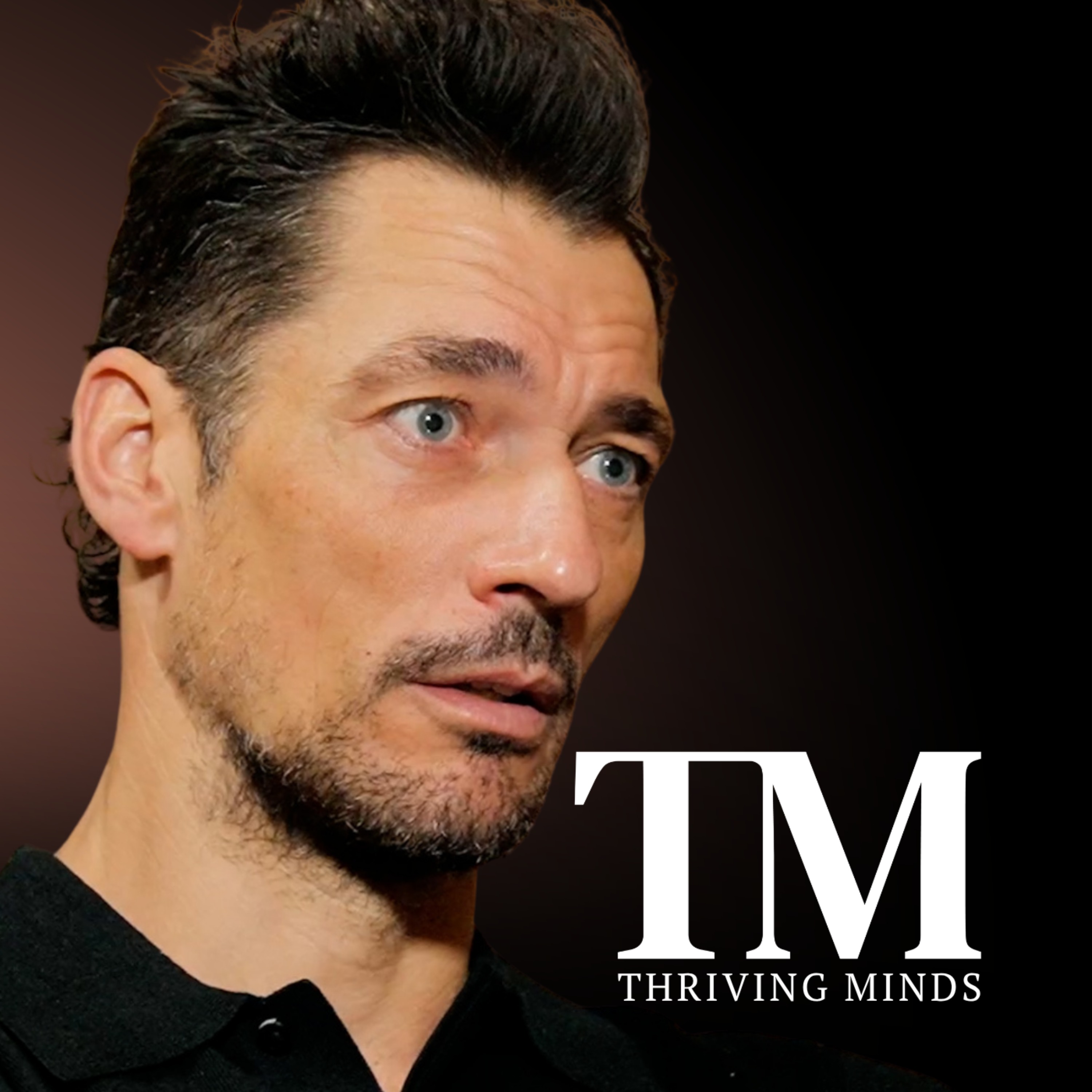
David Gandy reflects on his rise from being an “odd one out” in male modeling to becoming the face of Dolce & Gabbana’s Light Blue fragrance, and how he built a lasting personal brand through loyalty, resilience, and control of his creative direction. He also discusses modern masculinity, arguing that young men’s confidence is being distorted by social media and “manosphere” content, and that male suicide is a major, under-addressed crisis.
David Gandy is a globally recognizable male model (Dolce & Gabbana Light Blue), now a writer and entrepreneur. He founded David Gandy Wellwear and has long-term brand relationships (e.g., Jaguar, M&S, and collaborations including with M&S).
Success took 5–6 years; he stayed driven by inner belief and enjoying the journey. Tandy Anderson (Select Model Agency) restructured his career toward editorial and higher-end opportunities. He credits Dolce & Gabbana’s Light Blue campaign with generating over 3.5 billion euros in fragrance sales and becoming a defining image of a “bigger” modern man. He stayed grounded by separating “David Gandy” from his everyday self and by not indulging in celebrity-party culture. For masculinity, he argues schools and media should avoid demonizing young men and should encourage help-seeking.
Olympic Games closing ceremony where he was the only male among UK supermodels; hotel life with shared bathrooms during his “editorial-only” year; missing a train home after a Dolce dinner; and his “don’t believe your own hype” approach.
Written by AI. May contain mistakes.
David discusses his journey and the challenges he faced in becoming a prominent male model.
“David Gandy is one of the most recognizable male models of his generation, rising to global fame as the face of Dolce & Gabbana's iconic Light Blue campaign.”
Explore how David manages his fame while maintaining his personal identity and mental health.
“That's why in the closing ceremony of the Olympic Games, there were all the female UK Bruce super novels and then there was me.”
David reflects on his childhood and the entrepreneurial spirit instilled by his parents.
“That's why my mum went along as well with a friend.”
David shares his experience in university and how it shaped his career path.
Learn about David's entry into modeling and the competition that launched his career.
“I didn't say I didn't learn anything, because I think the highlight, because I did multimedia, computing, marketing.”
David discusses the challenges he faced as a model and how he built confidence.
“Well, then I was putting to this morning modeling competition without my knowledge and did that.”
David discusses his early experiences in the modeling industry and challenges with body image.
David explains his desire to transition from commercial work to high-fashion editorial work.
“Um, and then we progressed from there, but that was six years into it.”
David shares a key meeting orchestrated by his agent that changed his career trajectory.
“And she orchestrated this idea that David's, she told him, David's got this massive campaign.”
David reflects on his early struggles, financial difficulties, and the determination needed to succeed.
“And Mariano, who knew me, said, stay around.”
David describes landing a significant campaign with Dolce & Gabbana that changed his life.
“We think it's a fragrance, but I can't tell you.”
David discusses the immediate impact of his success and how he navigated newfound fame.
“I can tell you the crossroads when that image came through, it wasn't launch and said, this is the image.”
Learn how David Gandy established his brand identity and recognition in modeling.
“and a bit of media training and stuff like that.”
Discover the importance of loyalty to brands and how it impacts a model's career.
“And then I think a year later, we then shot the commercial.”
Explore Gandy's motivations beyond fame and his relentless pursuit of passion.
“If I had done that, I now know I would not have lasted as long on Light Blue.”
Understand how David Gandy sought creative involvement and control in his projects.
“I've never stopped, and I'm still not stopping.”
Learn about the significance of respecting mentors and gaining knowledge from experience.
Delve into how David Gandy maintains his humility and mental health in the spotlight.
“So also I saw a lot of guys who had this, who had a lot of self-confidence but no realism.”
David Gandy shares experiences in the fashion industry and the value of humility.
“She gave me a few tips and spoke to me and asked questions where I just wanted to ask her a million questions.”
Exploring how David Gandy's definition of success has shifted to helping others.
“In this show, I've had the amazing privilege of interviewing incredible high-performance and successful people from various different walks of life.”
Discussion on how modern masculinity is evolving and its challenges.
“What do you think men right now struggle with most?”
Delving into the reasons behind men's struggles with confidence and body image.
“I've recently had three friends who have had friends commit suicide and they were between 30 and 40, and they didn't even know about it.”
The impact of social media and instant expectations on men's body image.
“People are forgetting about what should be achieved and you are judged by.”
Exploration of how changing gender roles affect men's identity and societal fitting.
“testosterone steroid use growth hormone um you've got to be very very careful because not even doctors will say they know what a safe level of testosterone is.”
David Gandy discusses the challenges and successes of male models compared to female supermodels.
“I could have, well, women are only more than me and I'm never going to get there and play a victim.”
Gandy shares insights on evolving male roles in parenting and household responsibilities.
“I can also sort of say as well that men's roles, we are the first, as a dad, we are the first roles to have to be so much more, so much of a bigger part of raising our children and home life.”
Discusses how media representation influences societal expectations of men and women.
“that would allow definitely also men to understand that that's just normal.”
Gandy reflects on the hurdles faced after launching his brand during uncertain times.
“company in five years i want to three exit or 10 exit get out i made my money and i'm now in my Lamborghini on a yacht in Monaco and that's defined as success.”
Explores the personal identification with a brand and the implications of potential failure.
“I mean, you already answered with that my next three or four questions.”
David Gandy discusses the challenges of defining success in business and the importance of persistence.
“well where well where is separated from the david gandy the model and i think david gandy the model and that branding is very separate to who I am.”
Gandy elaborates on the hurdles faced by entrepreneurs and the significance of timing and consumer trust.
“And that in a way impacts their self-confidence because they think that themselves as entrepreneurs, they fit and it was their fault.”
In this segment, Gandy reflects on the personal sacrifices made throughout his career and the balance between work and life.
“We're expanding that much more sort of for next summer as well.”
Gandy shares his experiences of loneliness and rejection in the modeling industry and the lessons learned from them.
“I'll disclose that I really like what you're doing.”
David Gandy reflects on the hardships he faced in modeling and the lessons learned.
“Of course, by that stage, in all things, I was more comfortable.”
David shares his experiences with bullying and how it shaped his mindset.
“I don't think it's a very natural thing to overcome those times.”
David discusses his perspective on challenges and finding opportunities.
“If you can tell yourself that, if you understand about it, if you think about it, then you understand it.”
David shares his thoughts on happiness and the simple pleasures in life.
“You've lived a very complex and multilayered life.”
David explains the value of perseverance and supporting others for personal fulfillment.
“you happy right now um because i think that's i i wouldn't have say i've said yes because i'm I'm looking at everything.”
The guests express gratitude and reflect on the importance of sharing perspectives.
“I wish I was as articulate as you to be honest.”

Get the gist, explore an idea or ask about something said.
 Claude
On Thriving Minds with Alberto Zandi, what are the key points of this episode?
Searching your listeningAutomatic transcript. May contain errors.
0:00There was a glass ceiling and I broke through it. No one else believed in me. Dolce had given me this opportunity. The Dolce & Gabbana campaign becomes one of the most successful fragrance campaigns in history, reporting over 3.5 billion euros. It took you five to six years to be able to land that amazing campaign. I'm pretty sure your head was constantly telling you, am I doing the right thing? Am I wasting my time? What kept you going those five years? The world's most famous male model, David Gandy! Mr. David Gandy! David Gandy! David Gandy is one of the most recognizable male models of his generation, rising to global fame as the face of Dolce & Gabbana's iconic Light Blue campaign.
0:38Now a writer, entrepreneur, and founder of David Gandy Wellwear, he's helping redefine modern masculinity, health, and style. In this candid conversation, David shares how he climbed to the top of the fashion industry and what it takes to build a true and meaningful brand. I remember sitting downstairs and just going, I'm not doing this anymore. I was always called the odd one out. within the modeling industry. Brands want androgynous guys, get smaller, get thinner. When it came to Dolce & Gabbana, they were looking to completely change the industry to the light blue guy that you see. You become this overnight sensation and this new definition of how a man should look like.
1:16How did you protect yourself, your mental health, your confidence, but also your insecurities when you were dealing with such fame?
1:25If I'm going to do something, I want to be the best at it. That's why I understood. I needed to build my brand, my name up. That's why in the closing ceremony of the Olympic Games, there were all the female UK Bruce super novels and then there was me. If you look inwards and you are brutally honest, not with me, with yourself, are you happy now?
1:53David, who are you today and how would you describe yourself? Well, that's a big question. Who am I today? This morning I've just been dad, dropping the girls off at school, sat in traffic to get here, rushing around like I always am. And yeah, a very normal morning like everyone else has, really. And that's about it. It's nothing particularly interesting to say. It's very hard to describe yourself or what you are. The trouble is somewhere, and I talk about it quite strangely, is that there's, because I've had 25 years of building David Gandy, I often have to talk about it in a third party because that's almost the David Gandy brand.
2:47and then there's me so there's maybe how people perceive from dolce to being an entrepreneur to starting businesses to all that to the everyday me and i do keep them quite separate so it's sometimes quite weird to talk about you know but i but that's the name of the brand of course but it's also my name so um it is it's defined between like two different kind of very different roles probably the roles that my girls see me uh my children who i if you ask them what i did they would probably say i think daddy makes clothes he's on tv now and again you know that's they don't really know i don't talk to them about it very much and then of course i step outside and then people know me in in a different manner and of course you then put those two roles together and my daughter's like daddy why those people stopped you why are you talking to them why are they having a photo taken with you because I'm just dad I'm not particularly very interesting to them unless I'm putting up their bouncy castle or running through the park with them I've always found that a very good way to explore who a person is is by starting their journey in their childhood years because they instill very much the values that we carry into our adulthood absolutely how was your childhood childhood was a very normal childhood um I mean I say normal but I had parents who my dad especially, my mum and dad built businesses together but my dad was the entrepreneur and I've witnessed pretty much now if I knew I got my drive from my mum and dad but my dad, my stubbornness my perseverance is from him but I'm a mix between them but my mum and dad would tell me funny stories that my mum and dad met when they met they're working for the same the same company a freight forwarding company i think and on the first date my um my dad was in a higher position than my mom because she was a secretary or pa and he said to her they started talking about wages and then they actually worked out that my mom was on a higher wage than my father so my father went to the boss the next day and said well this is ridiculous she's on a higher wage than me so either put me on another wage or I quit and they didn't they didn't up his wage so he quit so he went off and that was the kind of like the start of starting then his own business with lots of different with friends and in freight forwarding they built that business they business that was a business called enterprise forwarding it got to a point where being so big and among so other people when things get bigger I think you're losing control you're then among this other you know a bigger corporate so then And he left and started his own business in Freight Forward.
5:33That's why my mum went along as well with a friend. And then clearly got a bit bored of that. That was running well. He had a few businesses, a few sort of properties over in Florida. People were asking him about that. So he started building houses and taking people over to Florida, started a travel company, started that company. And then that was how he kind of ended. And in the background of all that, he's a brilliant financier and trades and markets and always has since he was quite young. My dad came from a very impoverished background, so his idea was just building, building, building, building and not stopping.
6:13I think that's one thing as a person, you may not understand that your success in one month, you can't quite enjoy it because you don't know what's coming in the next three months, six months. so you're constantly um trying to move forward and seeing what seeing what the future holds and that and that was my dad i understand that more than ever now you know the pressures of especially being you know being a man and having children and a family and supporting and you know when you're when you're on your own it's sort of different to when you have a family you only have to look after yourself but then you have a family and you're responsible for them as well um so the drivers from that but you know I went to a Bilyarkey Comprehensive school it was not like where my children go to school in a lovely private school in in Barnes I went to Bilyarkey Comprehensive of probably 15-1600 children um came out followed the path to go to university I had a year off because my passion were cars um so my instinct was right was not to go to university but so i deferred a year i went to go and work for auto express magazine as a as a work experience they asked me to stay on so i stayed on for about six months what were you doing there i was for an 18 year old maybe 17 18 we leave i was delivering the cars to the test track for the test drivers to to test so that's that was my job and they were paying me like i think it was about 75 pounds a day i shouldn't have left it was a great job i mean it was it was good and um yeah then went to university and housemates of mine put me in for a competition to um this morning modeling competition and that was nearly 25 years ago why did you go to university why yeah it's what everyone it's what you're pushed to do because your parents wanted you to do that no there was no my parents never pushed or guided or anything it was very independent they always said i was a very independent independent person um funny story is once they but i think we were um we traveled a lot when we were my my dad was a i always say educated us my run dad through travel we we went to some incredible places um the amazon rainforest in alaska um all over south america Machu Picchu all over Africa um for the first year we took my grandparents and we did a Californian giant for about three weeks and I was I was some reason I I passionate at the time was tennis I need a new tennis racket I was about 13 and I I remember um going well I need a tennis racket I'm in LA I asked for a map I asked where a tennis shop was and it was a couple of miles away and in my head went a couple of miles away I'll walk so I kind of called my parents in their room so I'm going and they got the complete one on the stick and thought I was going to the swim pool with my sister while I was wandering off.
9:12I got back. There were police. There were everyone. They thought I'd been kidnapped or missing. I was just wandering around having a nice time. I got a drink. I got a tennis racket and my dad said, you're always trying to wander off somewhere or another and they put me in good stead for modeling for 20 years. There I was on my own traveling, exploring, and that's what I wanted to do. So university wasn't fulfilling to me. I felt very trapped within university. There was some great deal. I didn't say I didn't learn anything, because I think the highlight, because I did multimedia, computing, marketing.
9:50So in hindsight, I knew where the world was probably going with computing and multimedia. In the basic form, we wouldn't recognize today's world. um but i remember having an amazing marketing teacher and he didn't teach in a normal way because he was very successful and then came to teach him so he was giving us examples of failures of branding of strategizing of how this works how this doesn't work and funny stories along the way um and that's how i remember that my memory works better like that when someone's giving me examples and i'm intrigued and i can still remember um the stories he was telling us you know working in the car industry computer industry i remember they had and this is honestly one example i don't have when i went to university and it was a long time ago but when the first cd roms came out they get kind of complaints that to the complaints that the the coffee holders on the computers weren't working and no one could work out what they were talking about but because people never seen cd-roms you remember you might be too young used to press it and they used to have a you know hole where you put your cd-rom people thought it was a coffee holder and they'd break it and i remember that story and it still sits with me today because it was a fascinating story of how things were too advanced for their demographic of what they of the people could try into a computer um car industry stories he you know he told us um probably one of my fascinations with with jaguar because you know he worked i mean he worked there for a while and he was telling me about you know launching certain cars and etc so i was fascinated and because i was fascinated and he wasn't a mentor but i respected i remember that that was an easy first for me you know that was um i went to and said you just check this to we had a conversation a cup of coffee and he took time to where a lot of other teachers didn't take time they were like you're at university where it's not a one-on-one thing but he sat down and you went good day and and I sort of remember it was a 94 out of 100, which was the first, he went, this is brilliant, I mean, good.
11:53I didn't get that all the time. So you were a very curious child, and then you go to university, you meet this teacher, and for this teacher, you understand that there's so much more to life than media and technology, because he's showing you all these different stories from various different industries, and you develop a healthy relationship with failure, because he was talking about failure. He was talking about failure a lot, yeah. And then, from then on, how do you become a model? Well, then I was putting to this morning modeling competition without my knowledge and did that. And then you get a contract, a contract.
12:29You win a contract with Select. And I say that because it's not really a contract. Because also a couple of the other guys in the competition, they said, you could probably do something for you. But David, from commercially, from the TV, people voting, from the viewers voting, you won the competition. but I went into the agency and I met a lady called Tandy Anderson who was the owner of Select Model Agency um still my agent for the today still a great friend my the biggest mentor I've had in the industry and and I still remember it was um she sort of looked me up and down she didn't say much ripped me to pieces about what I was wearing my hair everything else and they went that's tandy i was like i like her immediately and um yeah we we then went to progress from there but i was um i saw something within the industry it was intriguing to me i'd know i didn't know anything about fashion the fashion industry modeling anything apart from what we talked about earlier and i was a war was you know the the levi's guys the the fragrance guys the big um sort of successful guys at the time that you were seeing and in the nautica ads and everything else because the the times have changed actually the models are very rarely seen in ads now if you actually think about it it's actors musicians athletes have got all the fragrance ads but back in you know 25 years ago it was the models who were getting those campaigns um so and it intrigued me and i didn't work particularly very well at first very commercial because of course i felt like again what we think like i came into the industry when it was about the androgynous skinny guy i wasn't you know not as big as i was through the years but i was you know a bigger guy always had a bigger frame so i was you know always called like the odd one out within the modeling industry um how did you feel with this from a confidence point of view well if you go into again and they give you because samples are you know they might be a 36 or 38 as they call it they're tiny so you go if you repeatedly go into castings or you go in and they go try that on and you're in a bunch of people and you can't get the trousers above your thighs or you put the t-shirt on it's too small and you're kind of laughed at a little bit then yeah it's not the it's not the best thing in the world um but i've got quite thick skin and of course i was 21 nearly 22 by this time so i wasn't 16 17 like a lot of the youngsters are so i had a head on my shoulders um so i was like fine and and of course then predominantly what most people do is fall within you know the androgynous the brands want androgynous guys get smaller get thinner that route i was like well i'm never going to be confident i was always training you know for sports and so that wasn't going to be natural for me and i needed the confidence in myself to walk into a casting um so feeling like i just got bigger and started training more and when it came to dolce and gabbana i always sort of say they were looking to completely change the industry and to completely turn this around from this androgynous skinny um guy to the light blue guy that you see which was bigger so i always say they had quite a small pool to choose from at that or pond to choose from that time and there was me um and even if i look about that camping i don't think I was in particularly great shape, but everyone talked about the body because it was very different to what everyone else had been seeing.
15:59Um, and then we progressed from there, but that was six years into it. But Tandy was the one, when I went back to Tandy, I was earning, you know, decent money in commercial and catalog, um, no campaigns, no great editorials. And it wasn't what I wanted to do because I could see the path to where I wanted to be, which was the Levi's commercial, the fragrance commercial. I wasn't going on, we weren't going along the right path and making the right steps because within an agency they're like David's earning fine, he's not anything to worry about but of course I was going this is not what I want to do so I turned around to Tandy and the agency once went okay, look, this is not what I want to do it's not fun for me, it's fine but I'm not working with the great photographers I'm going to do something I want to be the best at it and Tandy said to me she said okay, but you have to give up we have to completely restructure you on how you are perceived within the industry and outside the industry more in the industry.
16:55And she went, you're Dolce & Gabbana. And everyone else said, I don't think you are. I think if you want to go to something, go Ralph Rolano or Marnie. She went, you're Dolce. Believe me, you're Dolce & Gabbana. And she went, so you need to give up all your catalogue work. We need to get you some editorial. Her husband took pictures of me. He was a photographer. And we had those first images. And I just didn't work. Didn't have any income coming in. Didn't have anything. For how long? it's probably i mean i'd probably say a year or so of editorials going you know going to do appointments in milan going to do appointment meeting everyone in new york and then i'd worked for dolce at the beginning of season a show season but then i changed a lot in five years as you do from say being 21 to 25 you grow as a man and uh actually tandy orchestrated a meeting she she had birthday party with Dolce & Gabbana, with Mariano Vanko, who I'm still working with today.
17:51And she orchestrated this idea that David's, she told him, David's got this massive campaign. He's got, he's got to pick up his airline tickets and shows how long ago it was to pick up an airline ticket. We're going on airline. He's got to pick up an airline ticket. And I thought it was actually a metaphor. That's because it's not for my generation. Yeah, exactly. So she was, he was like, fine. So she went just walking, look your best and walking. and I walked in and just said, so sorry to interrupts, you know, Domenico Stefano. But of course, that was what she wanted. They had turned around and said, David, and I was like, hi guys, I'm so sorry to interrupt.
18:25They said, no, no, please stay around. And Mariano, who knew me, said, stay around. And I did, and I remember that night, I missed my last train home because I was living at home at the time because I couldn't afford a flat because I'd given up everything. So I went back to just go and live in Essex for a while. and the last train was at 5 to 1 and I had to miss it because I was at the first party. But I couldn't afford a taxi to get home because the taxi would have been£70. And I couldn't afford that. So I just stayed around London until the first train home at half past 4 in the morning, 5 o 'clock in the morning to then get home.
19:00So yeah, and it was... But that was part of it. I think everyone thinks in the modelling industry you're in amazing hotels. They see the glamour of it. but I was in hotels with shared bathrooms for whole floors and looking at diners that were doing you know a burger steak and chips for ten dollars and I would sort of scrape together and go right I can afford that but I didn't have much money at all at that point so it wasn't particularly glamorous but at the same time you know I was with a good friend J.P. John Paul who weirdly now he's doing everything you know he was um it's taking him so 25 years to get noticed and he is doing absolutely every campaign at the moment um and we did it together you know we were in really shitty hotel rooms and and and i'm around new york just and both of us and they would send lots of guys out to new york they would give us a fax with everything on it and that's why i always describe I said, well, you would notice that you would go into a casting and by the time there's 10 guys and they're bored of your campaign, they're looking at your portfolio.
20:14By the third person, they're like, thanks so much, they're not looking at it. So I thought, well, what if we went the other way around? So me and JP, when all the rest of the guys would go and do, say, J.Crew at 9 o 'clock in the morning, we would do Ralph Lauren at 9 o 'clock in the morning to turn up at the offices and say, we're so sorry. And they're like, no, no, no, you're coming. Of course, you had a one-on-one relationship. You could sell yourself a bit more. You could explain. Everyone else went home because they didn't get any work. Me and JP had loads of options on. So we worked out that there was a formula somewhere.
20:48But we needed that breakthrough. And that Dolce & Gabbana meeting, after we went to that dinner, I went to go and do the campaign over in L.A. with Stephen Mizell. And then they wanted me to come and do the show in June. and that's when Heidi, my agent, called me and said, don't pack your bags to come home. We're negotiating on something. We think it's a fragrance, but I can't tell you. And then she called me and she went, right, fly to Naples. And that's when she said, it's a fragrance. Mario Testino's shooting. He's down in the restaurant going to see Mario. The next morning we were on a boat over to Capri to shoot Light Blue.
21:25That was how quick it was.
21:31before we explore that that uh that moment in your life which was an incredible milestone one thing that i'd like to navigate is is the five years before that because unfortunately i think one of the things that we've established in in this show after interviewing incredible high performers and very successful people like yourself is that going from zero to one tends to be much harder than going from one to 100 and typically what takes to go from that zero to one is just resilience, hard work, and time. You shouldn't quit, which is what you and I were discussing earlier. And it took you five to six years from when you started modeling to be able to land that amazing campaign.
22:09Five years or six years in your twenties is a lifetime because I'm pretty sure your head was constantly telling you, am I doing the right thing? Should I be doing something else? Am I wasting my time? What kept you going those five years i think you have an inner belief and i and i look i do honestly say as well you know there is perseverance and in belief and you know john paul as i just explained we were doing 24 22 years ago we were around new york together he is only to this day doing every campaign so he has still kept with him modeling and done lots of things but come back and done very well that's how long it's taken him um you know someone like jamie dawnham the famous actor he came into modeling now he was snapped up by amani ck he went straight into the big time big campaigns you know um but it's when i'm saying about i often think it's uh the journey is an exciting experience and sometimes i mean we talked about it earlier when you get something that you want there's it's maybe not as good as you thought it was going to be um it is always exciting with with Dolce to get that.
23:18But if you look back on, on that, um, experience, that journey, especially with JP and a few other people, but I was very on my own in hotel rooms for years is, um, when you can, when you can't afford anything, when you can't have anything, when you then can, or you treat yourself to something, you remember those times, you know, you remember those things, even if it's a, you know, I'm, you know, you go, well, I can't afford a nice dinner, but I'm going to treat myself to a dinner tonight when I haven't been able to afford it. You relish that so much and appreciate it. When you start having success, a dinner's a dinner.
23:58You're invited to lots of different dinners. You can afford different dinners. And it takes a totally different perspective. But the journey is the exciting part to it. And I think that's where I've always had that drive, is I enjoy the journey, the ups, the downs, the failures, to get to where I want to be. so I don't know what the driving force was but I knew that there was definitely something that guys were missing and I thought I could get there for some reason or another and I don't know where that inner belief was but it was but I knew I needed a platform I knew a big campaign and that's what Dolce but a lot of people could have sat on their laurels and got Dolce and done nothing and a lot of guys did I also saw the failures of guys I witnessed them.
24:44There was a big group of guys at the time who were, they were like the famous group. Outside the industry, no one would have known them. But inside, they were doing the Nautica campaigns, the Gantt campaigns. They were getting everything. They were all in the rough. And I started hearing their reputations of, they're not turning up on set. They're having a great time. And they're just like, we're not coming in today to shoot. they were acting like they were superstars. And I witnessed this on a Gant commercial once. We were shooting, I was shooting one of these guys, got the gang campaign. And I witnessed they had no relationship with brand.
25:28They thought they were bigger, where I've never ever done that. You know, I always talk to everyone, always make sure that when I'm working for that, for a brand, for a person, and I'm focused at everyone on that shoot on that day, where these guys were off drinking, they're on their phones, sunglasses on, wear. And I thought at the time, that's the wrong way to go. I'd like to talk about that because once you shoot the Dolce & Gabbana campaign, that campaign becomes one of the most successful fragrance campaigns in history, reporting over 3.5 billion euros from that perfume alone, from a sales point of view.
26:06And I think that that was like 35 % of the overall Dolce & Gabbana's beauty business, which is incredible. How did your life change when this happened? And how did you stay grounded? Well, that was, I mean, I remember we, I still, I remember the moment I was at a traffic light in the back of a car in Fulham. I can tell you the crossroads when that image came through, it wasn't launch and said, this is the image. and of course I was even on the shoot I was like wow okay how is this going to how is this going to react with an audience because of the sexuality of it and I actually sent it to my mum and my mum I'm not I've got to show you this but I'm not sure about it of course nothing and she said this is going to go amazingly something this is this is what an image i've never she went and she didn't know anything about fashion uh or in campaigns but but that's the point if if your mom or someone said that's an amazing campaign a beautiful picture you know you've probably got something and the moment that was released um i still remember my agency and my phone going off you know sort of just being called and the agency being called going we've just got press we've got you know journalists needing to know who this guy was um i think i was over in new york at the time they said you better come home like we um uh yeah you need to come and and of course they were not prepared for we didn't have you know pr's and um anyone to deal with press or anything so i was very much sort of finding my feet and quickly found you know a um charlotte who came in to help me with pr and press and and a bit of media training and stuff like that.
28:03But it was instant. It was literally an instant. And then the doors opened for everything and everyone wants you at every opening, every campaign. Brands want you for their campaigns, which is a funny thing because they didn't want you a few months before. And everyone recognizes you. They didn't know a name. So of course they were like, you are that person. You're the person in the white swimming shorts, but didn't have a name. So that was my next step. I was like, okay. So I need to build the name because we've built the platform that's given me the opportunity. Now it's time to put, as I said, David Gandhi as the third person to David Gandhi brand.
28:41Because if you looked at, and I've studied, and was very lucky to work with a couple of them, Chrissy Turniton and Kate. And I thought, and I looked at them, and the fascinating thing behind Kate Moss and Naomi and Cindy Corfus is that you don't even need to know their surname. if you say Kate, Naomi, Cindy you know who they are so it was down to the branding and I thought this is where the next level is you've got to brand yourself so that if I'm up against another campaign or a commercial or anything David Gandhi's coming in instantly you have this persona that your name is connected to that brand and that's what the girls did you know syndicate it's like zara or whoever h &m kate moss is doing it not their models doing it kate moss is doing it collaboration with kate moss collaboration with syndicore ford was probably the best um i think she's an incredible business woman and i so that's where i was like okay so now we need it's the campaign is with david gandy it's needed a name to put in it the book you know we had a dolce and gabbana book called david gandy m &s started the collaboration it's david gandy for autograph and that was how the branding and the name that's how it started but how did you get the name to become a name i mean there's a strategy strategy behind that i mean it it's um the press you are doing um it's saying no to the right you know because at that point you can imagine there's a lot of offers coming in there's a Dolce immediately kind of said, we need David on exclusive because we had the campaign.
30:31And then I think a year later, we then shot the commercial. So I was then exclusive for fragrances with Dolce. But that allowed me to do other like clothing and everything else. But my stubbornness of when brands said, because we had Versace and the Marnie and all these other things. and I was like, I'm now Dolce & Gabbana. No one else believed in me. Dolce had given me this opportunity. So I wasn't going to dilute that by going and doing their rivals or other names. So I wasn't going to do the show, open the show for Versace. I would open it for Dolce and I wasn't going to go to an opening for Armani and go and do a campaign for him.
31:09I was Dolce. If I had done that, I now know I would not have lasted as long on Light Blue. Interesting. because I know Dolce & Gabbana and Tomenico Stefano. I know the Italian brands. They are very much about loyalty and so I am. And if you ask lots of people, Tandy Anson, Tomenico Stefano, they'll be, you know, what's David's traits? They'll say, he is loyal. And I quite like that within people. I don't think you see it very often. So lots of guys will, and then girls, will dilute their brand and themselves and you'll see them everywhere. You'll see them doing every campaign and of course once you've done that um you might have six months a year two years of doing everything but then brands are sick of you you won't continue where i remember cindy crawford saying i don't want a one-night stand i want a marriage with brands so that's why i understood nice and that's why you know i did 18 years 20 years with dr gabbana i'm still working with jaguar after 15 years mns of course we had a 10-year relationship and we're now back with mns so when people talk about they sort of go david's done these campaigns and often they're often wrong they say oh you did the huge you know david does hugo boss and all these times i was like i never did hugo boss i don't even know where you got that from um because i was so loyal to the brands who who gave me who gave me the chance massmo duty did massmo just gave me a great chance so when mass massmo duty came calling after you know light blue i was like yeah of course i do massmo duty because you gave me a chance first of all so it was my chance to give something back to the brands um um you know that had given me a chance as well that speaks volumes about yourself what i also find very fascinating and interesting is that you've tasted what success was you become this overnight sensation and this new definition of how a man should look like and i remember so vividly also that that campaign but that wasn't enough for you you wanted to keep going you wanted your name you wanted you wanted something more from the modeling industry I couldn't stop.
33:11I've never stopped, and I'm still not stopping. There was an interview yesterday and said, four years' time, you'll be 50, when do you stop? And I said, simple answer, I won't, I can't. There's always, whether that's... And it allowed me, to monitor, to... Fashion was never my... We talk about passion. It was a purpose, I suppose. There was a purpose behind what I was doing. but my passion um was always and always has been cars my passion is design um so to sit there and turn up at a shoot and someone's in charge of the creative and someone's in charge of the styling and your hair and everything else you're pretty redundant until that moment you're on set and i have always loved the idea of being part of the creative i could see you doing campaigns and be like, well, it'd be better over there or if we do this and you get to recognize that.
34:13And I used to do it with photographers. We couldn't get a shot. And I remember there were problems in lighting and this is where the shot wasn't working out. And I remember saying, the shot's over there. The light's beautiful. And they said, David, just take five minutes. We're going to have a discussion. We can't get the shot. I'd be like, okay. And I'd go and sit where I thought the shot would be. And I used to sit there until the photographer looked around and go, wait there, that's the shot. And I'd be like, yeah, I know that's the shot. But I've been in the industry for a while. That's hopefully what you bring to a campaign.
34:40You're not sitting there being, again, talking about curiosity. You're not sitting there just thinking, waiting for people to tell you what to do. You need to be in charge and helping that. And I suppose that platform, it gave me so much more control within the industry to what I wanted to do instead of the industry being in control of you and people in control of you. And it gave you options. that that's you know and that's um that's where um success and freedom and money you know it does bring money which gives you freedom to do what you want to work on your passions and we did so much after that um there was immediately sort of after if i went on a five-year journey i knew i wanted to collaborate with a brand i knew i wanted to design clothing and be part for the whole process but again you probably have people now that had a major campaign they've got a collaboration a year later and it will fail i still didn't know anything after six years being in this intro a bit and then it was probably another six years before i got mns um the collaboration david gandy mns um and then five years on for that so i'm very respected even though i probably say i don't like authority and i say authority are probably the same school teachers someone or people telling me what to do but i respect people um and there's a one thing people got to understand the younger generation got to understand is um like we're talking about my university teacher like talking about my my mom and dad my dad tan jansen um certain photographers i respected them because they knew more than me and you can learn from them now i may have thought I knew more and you do in your 20s and 30s I know better I'm going to do this but respect the people of the merit that they have got to because they are seeing something that you don't understand yet and that's what I did I was very respectful Dolce & Gabbana Tandy everyone respectful of those people didn't always agree with them but I did what they told me to do out of respect if I hadn't listened to Tandy you know I didn't think I was probably Dolce & Gabbana I probably thought i was ralph armani someone else um what everyone else was saying but she said it so i listened and that's where you get to so you do have to respect people um a lot of the time but i but i also am very i'm a realist um would i love to have been a vet would i give everything up to this day to be a vet and working africa with animals yes i would wow but i'm never going to be able to do it because academia is not my port for so there's no point me persevering at saying that university is trying to get or you know a levels and degree it's never going to happen um do i love racing driving and would i love to being a i have race cars am i a good enough level naturally to be at the top no i wouldn't i i won't do that's being realistic to where you are and not going down a road that isn't realistic to you.
37:49So also I saw a lot of guys who had this, who had a lot of self-confidence but no realism. They thought they were going to get to a certain element. And they keep plugging away and plugging away and plugging away and you always go, you are going to get to a certain level in the industry but you're never going to get this far. So I always say I'm a realist as well. I believe anyone can do anything but be realistic about it as well. It seems to me from the outset that you're a realist because you're very humble. You come across as incredibly human and down to earth. So I'd like to explore that a little bit further.
38:26How did you protect yourself, your mental health, your confidence, but also your insecurities when you were dealing with such fame? and I can only imagine the parties and the success and the following from so many people.
38:47Good question. I mean, being grounded, I still got my friends from when I was Anthony Parker. I knew him when I was three. He's still a good friend, still my friends from school. The weird thing is when Fashion Street, the amount of people that I could actually call friends is a small handful in 25 years. Why is that? I don't know. It's a, I know certain people that they are friends, but when I'm talking about, I think people think within the fashion industry, the celebrity friends, the parties, everything else. Now parties, we have some magnificent parties, Dolce & Gabbana launches everything else.
39:32but I'm not naturally that person to be there. Red carpets, everything else. I had some amazing times, but I never indulged in that arena too much. So when everyone carried on partying, I was probably out in crowds. I'm quite a solitudinal sort of person, And so I don't get a big energy from crowds of people. It drains. My wife is exactly the opposite. She gets her energy from people and crowds and parties. And wherever she would stay, I would have to leave. So it wasn't too indulgent. I was very much a solitary. And when you're solitary and an individual, you're not listening to too many people.
40:27and what people will tell you after a certain point they will first tell you that things are not you know things are not possible and why are you saying you can get exclusive contracts and why are you aiming so high because you're probably trying to make themselves feel better really than you they're trying to bring you down but when you then do make it then everyone tells you probably how amazing you are and how you can do all these different things i never listened to those people i never listened to the voices it was um just listening to myself and as I always say to people don't believe your own hype there's hype about you and you've got it for a while and you've got to maintain that but you've got to be you've got to maintain it to someone who is still you so anything I've done after Dolce and we did the book and M &S and these different things in between that was writing for Vanity Fair and the Telegraph and the Times.
41:29It's a difficult thing to do, journalism, writing, racing cars, all those different things. They were my passions. That's what allowed me to do it. And that also opened doors up to work with those brands. So the fame and the being acknowledged that you were successful was lovely. But as I always say, don't believe your own hype. And of course, when I meet people like, I work with Chrissy Turlington, Ann Taylor Camping, I saw what she turned up with her dog and a publicist. That was it. There was no big entourage. There was nothing. She was wonderfully polite to everyone. She gave me a few tips and spoke to me and asked questions where I just wanted to ask her a million questions.
42:14She was just a lovely person. There were good examples. and then you sort of realize that the people that have been in the industries in fashion modeling um actors all these different things the ones that have got the longevity are the ones that are very respectful that we call them sort of like down to earth or normal which people think you're very normal and i said what is normal i'm just me um and that's what you found they were they didn't act like the big stars and all the entourages and think they were better or bigger than anyone else. And I think that was a great lesson to behold, really.
42:55Indeed. And my family and friends wouldn't have put up with anything else. As I said, I'd tell my daughters I could have campaign pictures and magazines all over the walls and everything else. I'd only have one picture at home, apart from family pictures of us. So they don't really even understand even what I've done. I did find a box of portfolios the other day. I was having a clear route. And then my daughters were going through and finding different piles of magazine covers. They're like, Daddy, is that you? I was like, yeah, is that you? Is that you? And they kept asking, is that you? My God.
43:33So they understand briefly what I do, but I don't, you know, I'm not, my success, however you gauge success, is the parent I am to my daughters. but my big success is helping. I love to help other people. I've invested in friends' businesses and helped them grow, donated a lot to charity, done stuff for lots of charity, on foundations for charities. And the biggest thing is having the opportunity. What this life has given me is the opportunity, hopefully, to help other people, mentor other men and girls, you know, in this industry and other industries as well. and my biggest excitement is when they call me up and they've got a major campaign or a major contract or you go and see what you've done for a charity and mostly children and animals I work with and what you've been able to do.
44:31This life has enabled me to be able to do that and I think if you can make a difference in that in other people's lives then that's success to me. That's very beautiful.
44:49In this show, I've had the amazing privilege of interviewing incredible high-performance and successful people from various different walks of life. And in my opinion, they all have a superpower, and they become very successful in a particular industry because of that superpower. And it's very interesting that then a lot of people, they just stay in that lane, and they retain that success in that lane. But it's very interesting that you have turned your superpower from a stellar modeling career into a wider mission, which is helping other people, helping people feel confident. And one of my favorite areas right now that I'd like to explore with you is the new definition of masculinity and how you're helping men in particular feel more themselves and content with who they are in life.
45:36What do you think men right now struggle with most? Well, we're looking at this in more detail. I'm speaking about the House of Parliament because we're working with the Centre for Social Justice, which is the Lost Boys campaign, because they're seeing some major changes and confidence within men, falling behind girls in academia. um there's we're demonizing them with this toxic masculinity phrase um to be honest a lot of it the confidence and this is still my biggest thing and i hope we do something about it this idea that we're getting all our information um and supposed to confidence from social media because we're all so on technology and i say we because we are all doing it um and i hope someone comes in to ban social media in this country or try to for people under 16.
46:36I would argue it should be under 18, but let's go 16. Because I think as we are seeing from these really immature information on the manosphere of what a male should be, is total crap. But what you, I never respect anyone in the manosphere, but you have to respect that they are engaging with young men. So, but the content is not the right content. So we have to fight back about that and engage with young men. And mentor them with the correct way of being, hopefully, a man or what masculinity is defined as. And I think that's important, but it's going to be a hard thing. We need to start connecting with young men again and not demonizing them and telling them that they are toxic.
47:39Because that is what is happening. I think schools are admitting this. The survey in the Centre for Social Justice is saying that young women, especially when they're being afraid of young men, they're being told that young men are toxic and they are a problem in the community. Of course, when you tell people enough times, including women, including guys, they start believing it. And it's simply, hopefully, not true. But I'm not making this sort of them and men and women. It's, as a whole, maybe we need to communicate in a different way to our two children, starting at school. And where this all stemmed from, of course, is that the biggest killer of men under 50 is suicide, male suicide.
48:28I've recently had three friends who have had friends commit suicide and they were between 30 and 40, and they didn't even know about it. They had no reason why they did it. They weren't even aware. And it still amazes to me that the biggest killer, maybe in the UK and probably other countries under 50, so you can see is it being taken seriously as it should be what are we looking, what should we be looking for as parents, as friends in schools to help young men and young men need to be made aware that if they're feeling a certain way they need to seek some help but we are men we don't always seek help we're a bit useless when it comes to that and I'm not saying we're not.
49:20I also know that men have a problem opening up and talking and admitting this. But again, this is a way that you define masculinity. We must be strong and we can't really tell people our problems. So that may have to change as well. It's a massive subject. We do a whole podcast on it. I completely agree with you. I think this is a very important topic that needs to be addressed because the data is there and it's clear that there is a problem. And there's something that needs to be done about it. When I was researching this, I came up with, from my research, four different reasons why men don't feel great with themselves.
50:04So I'd like to read one by one to you. And then I'd like to get your take on each of them. So one of them is body image. so due to social media right now beauty has become a social currency also for men and this is something that is new to men and they don't know how to navigate yeah what do you think of that very true but I wouldn't just narrow that down to men I think where everyone is being judged by the way they look I was watching a throwback to again talking about the supermodels of the Cindy the Crawford you know when the supermodels Naomi and everything else and the difference between that and now is that the models if you looked at them all they were all completely different they all had their individuality having work done there was you know it was a natural beauty and they're all sort of like very different to today and everyone is starting to look quite similar um and this is the termination of social media is people are I believe they're being judged on what they look like, what they're dressed in, the brands they're in, the parties they're at.
51:21People are forgetting about what should be achieved and you are judged by. You're not judged in modeling, on your merit of being a model or even in some jobs it's based on your followers. How many followers do you have? how many likes are you getting what's your engagement and that's how young people are growing up that's how they believe and and brands are um you know they are employing people on this as well so you can't say it's it's not important because this is how you know young men perceive or young men and women perceive they are making making money and i can't see that changing for a while but yes the but the body image thing is a very difficult subject.
52:10And again, it's the content that you are seeing. And this is why I talk about so much about training, you know, how do you get your body? How have you got your body over the years? And I said, it's hard work, it's perseverance, it's training five times a week, it's taking good, it's eating well, taking good supplements. But of course, it's this urgency to say, how long does that take? And you say, well, it's six months, a year, six months to see a difference, a year to get into really great, you know, if you persevere to get in really good shape, you've then got to maintain that. People want it instantly now.
52:43So instantly is looking, is determining now what are, what growth hormones, is it steroids? I want it instantly for my social media. And then of course you, you get into this trap of them. and they and again people have made money from looking a certain way so yes there is it's monetized go back 10 years go back 15 years nothing was monetized from social media from looking like this um so i think you have a good break people having confidence and i always say i'm i'm confidence in being forcing half stone slightly bigger slightly muscular i was no one's never going to tell me to the way I look but I've done that for myself not for the modeling industry um but I think men are seeing this online now and again it's it's not a message I don't want to give people exercise is great great for mental well-being great for health um however testosterone steroid use growth hormone um you've got to be very very careful because not even doctors will say they know what a safe level of testosterone is.
53:57And testosterone, if you're delving a bit deeper, growth hormones, they actually cut your body's natural supply of testosterone. So if you're even on testosterone for a while and you don't particularly need it, your body is apparently, your body will stop making testosterone. So if you come off with testosterone, your body's not making it, you go into deep depression. so that could be another reason behind young men and suicide when you were modeling were you ever introduced into any of this never okay i wouldn't even i wouldn't even have a clue i have to ask these questions myself yeah you know where how do people get stuff i have to understand it by speaking out of where do people get steroids from where do people get testosterone from all these different things um but of course it's all black market and so you're never going to get an actual uh true data on how many boys on how many men are doing this yeah that's um you can see i mean listen i i can look at an actor and think hang on how did you go from that role to the role you're in and you are huge i know that is not natural um so i i can see and it's a different look on a steroid and a growth woman you can tell your chin changes shape your george can change shape your you have a certain um figure that you're using could you know your abdonald's kind of bulge out a bit and so so you can tell when people are are doing it um but no it was um i i i never have another reason why men are struggling in our society is because they don't feel like they can fit in um as they used to before with the integration of the women into the workforce right now women not only earn as much as men but a lot of women earn more than men so the man is no longer the financial provider at home which is a role play change and this is something that the man is struggling with when it comes to fitting within society what do you think of this well look for my own experience um i went into and still am in an industry that is dominated by women as i've talked about yeah dominie tally and senior unit select um you talk about the female supermodels but there are plenty of other female models and that they were earning very very well and very successful and what you're doing you have to talk about the supermodels so i came into this industry um as a man that probably was there was a glass ceiling and i broke through it to hopefully rival the female supermortals and i've always said i will never ever say that the girls didn't deserve it they wasn't equal because there's no point in doing that they of course they did if you're it's based on merit you know it's based on your hard work and if i'm in if i was in a campaign 20 years ago with christy turnington of course i'm not going to get paid as much as christy turnington because she is the draw she is the engagement she is the branding she's worked hard she's got the merit of course she's being paid that's why people that's why that campaign choosing her that's why i understood i needed to build my brand my name up to rival that so that we are on an equal for when we go into a campaign we are probably getting paid very similar you know prices uh or similar wages that's why in the closing ceremony of this you know the olympic games there were all the female uk bridge supermodels and then there was me um because i I built my brand up to hopefully be recognized among them.
57:33But that is how I believe. And I didn't complain about that. I could have. I could have, well, women are only more than me and I'm never going to get there and play a victim. Or what I've done is I understand what I need to do. I'm going to persevere and get it and hopefully I will do. But I'm never going to deny women that have. Absolutely. Absolutely. Men shouldn't feel demonized that women deservedly are getting the jobs and earning more if they're working just as hard as men. But I think there was a slight thing that it was probably a given that CEOs and all these roles were men. And that's changing and men are having to fit in with that.
58:21I can also sort of say as well that men's roles, we are the first, as a dad, we are the first roles to have to be so much more, so much of a bigger part of raising our children and home life. Now I do the shopping, the cooking, we share the school drop-offs, the lunches, the snack boxes, the drop-offs, everything. The cleaning, the washing, I do all of that as well. so if someone defines me as a sort of a typical the definition of a masculine as some people say I then say well I can turn that around and actually say well these are the things I do they probably wouldn't be determined but that doesn't emasculate me anymore where a lot of men would go why don't I do that they might define it as that's a woman's job we have someone to do that but I do that so I'm not defining that these are a man's a man's role, a woman's role, a wife and husband role, it's a partnership.
59:21And yes, as you write, I think men are finding that difficult to navigate at the moment. You have to be confident and strongly. That doesn't take away your masculinity if you're doing the shopping and the washing and your wife is earning more. So many friends who their wives are probably earning more than them. But it's a partnership. but we are you got people got to understand that we are transitioning from this very traditional um mindset you know men take care of the money women look after the children and they're at home that's only changed my father was pretty much the same we are the first thing so parents to be very much more of a partnership and those roles are either reversed or equal and that's going to take time to change a little bit so yeah i agree with you i think i wouldn't say an industry to blame but an industry that could help with this transition is the the media or the or the movies or tv shows industry because a lot of men look at tv shows movies and especially maybe older movies or tv shows and and they see the stereotypical figure of what a man should look like and then that's pretty much defined by how much you're contributing financially towards your family and that defines how successful you are and you're seen and perceived as in society.
1:00:42And then they actually become adults and then they're trying to seek that same type of validation and reassurance and definition of success, which is from being that role model or that movie character that once upon a time they saw when they were kids. I think that if the media industry shifts their roles and they start, and I think they've started doing it into placing women in in very powerful positions, equally as men in some other occasions, more than a man, that would allow definitely also men to understand that that's just normal. And we need to normalize these things. That's the problem is normalizing those dynamics is what I think some men are struggling with because they have either not seen it at home with their parents, or they have not been able to see this on screen.
1:01:30Yeah. And you've got to have, I don't know why men and women still have these mindsets in the way they do sometimes. And we can blame, you could talk about movies and TV, and I think we are seeing a transition of women having much more powerful roles. But you can look at, give an example, Devil Wears Part 2, Mona Streep is in this powerful role. She is the powerful. That first film was out many years ago. we live in a country where we had the queen in the highest in the monarchy and under her for many years was Margaret Thatcher the head of the police force was a woman that is not a new thing Margaret Thatcher came in the 1970s to run the country, the queen was the queen and then for over the years we've had the head of the police force Chancellor is a woman so I don't think you know that that hasn't it's not just changing a little bit you know but i actually think the uk is very good and we've been a great example when you see a female president of the united states never have we all want to pigeonhole we all want to this is something we want to define but i think one of the the biggest things as well is how you base your you and we talked about success earlier is that the idea of success is for men it seems to be from the social media what i don't from it is starting a company i 10x it i sold it for 50 million that's success that's what it's sort of deemed on that is and people want to know how to do that and very quickly how do i get a company in five years i want to three exit or 10 exit get out i made my money and i'm now in my Lamborghini on a yacht in Monaco and that's defined as success.
1:03:19That's so dangerous and unhealthy.
1:03:27Let's talk about your brand. In 2021 you launched your brand David Gandhi's Wellwear. So why do you make this move in your life from being the face of some of the biggest brands worldwide to then building your own? what would you be on building as i talk and build building a brand um and then i had david gandy autograph that that marks and spencers um we sold about um sales were about 90 million over six years so it was very successful um and we came back and as i said i very much shied away because I knew how hard it was. I'd seen that more people fail at having their own, say, beauty, grooming, clothing brands than succeed.
1:04:16The successes recently, if you look at maybe Castor or Gymshark, they're few and far between. But you think about the biggest brands, of course. And I knew how difficult it would be, how much money it takes, how much perseverance it is. and we're still in our infancy, you know, we're not even five years old yet, but, you know, we're, and it has been very, very difficult as I knew it would be. So yeah, it was probably a final chapter in the fashion history. I always knew I probably wanted to do it and the opportunity came about. And I think I already, and I'm not saying this is going to go successful, you know, I mean, And every few months it's touch and go whether we are growing, but we're doing very well at the moment.
1:05:14But I'm not saying success. But I don't think I could have gone on life without having to at least attempt at it. There's been failures in the past, and this may be a failure. I hope it's not. I don't think it will be. I believe in it wholeheartedly at the moment. But it's still a very young brand. So, yeah, it was that. I would rather have attempted it and failed than not done it at all because I always would have questioned that part of it, whether I could have done it. Beautiful. I mean, you already answered with that my next three or four questions. What have you learned in this journey as an entrepreneur?
1:05:49How did it change you? I'm not sure if it's changed me. I mean, I would say the only thing I... With... There's been so many ups and lows. is of course we started just after COVID. There was among many brands a forced sense of where the industry was going because of course a lot of people had money after COVID weirdly because they had been paid working but they weren't spending. So of course a lot of people bought or were purchasing. You then had, life got very expensive. You had war in Ukraine, got another war going on at the moment. so you are seeing so many different brands um having to be bailed out or bought by m &s or next or bought by bigger corporations um smaller brands that no one will bail out i've seen them fail um sadly in this country at the moment um there is very little incentive to start a business or to grow a business.
1:06:56And that's a sad thing because the UK and Britain has always been about entrepreneurship and starting. My father-in-law did. My father-in-law, my father, yourself, me, it's getting harder and harder and harder. Shop prices, retail prices, consumer prices, cotton prices, it's been very, very, very difficult. So that's after sort of three years of starting Worldwear, I knew we needed a partner. So of course, my success last time was with M &S, and we needed that platform to their 20 million-odd customers. So that was my role in the last couple of years, to make sure that we got in with M &S, and that gave us a bit more security.
1:07:43But it is tough out there. It really, really is in the retail world. It's not just working at Worldwear, but of course I'm the face of Jaeger at M &S, quite a pivotal role with Hackett at the moment. We've taken their creative for Hackett London and number 14, Savile Rowan. It's a brilliant brand, traditional British brand, and they are doing very well. But many, many brands, including luxury, are finding it tough at the moment, especially in this country. If it fails, right, because anything in life can happen, what would this mean for you and how would you feel about yourself?
1:08:25good question I haven't even thought about it I'm not quite comprehending anything like that at the moment whether it will fail whether
1:08:36it takes a different role it takes a different the branding name is still there so there's always an opportunity that someone will and they have already offered to buy and expand it and everything else so So it's, but I wouldn't look at it against a failure because I have no regret that I haven't put every bit of passion, time, money, everything into this brand. I've discussed with many entrepreneurs the fact that once you build a business and it's your startup, it becomes like your little baby. Of course. And because it's your little baby and you're literally investing all of your resources, so all your time and your money.
1:09:28This becomes an incredibly important, not part of your life, but in a way part of yourself. And that can be a double-edged sword. Because if you identify yourself with your business, so you think my business and myself are one thing. If the business succeeds, I'm succeeding. If the business fails, it's not the business failing, it is me failing. yeah in your case um this analogy can apply even further because the name of your business is also your name where are you in this journey in detaching yourself from this is a business and i'm growing a business and this is myself well i think well where is is it's david gandy well where well where is separated from the david gandy the model and i think david gandy the model and that branding is very separate to who I am.
1:10:20So I wouldn't say any of that is going to be a failure on the part of me and I take it to heart. I think you will take it to heart, but I'm learning probably, like you are loads of entrepreneurs, that you're learning again on the job sometimes. So many people have had successes and sold their business for hundreds of millions they will then go on to try and build other businesses and there are some examples that have done very well but a lot of people don't they automatically think well I've had success with that I'm going to put it into another business and we'll do the same thing and it fails so sometimes it's nothing to do with the entrepreneur, the person itself the driving force it's about time as well and that's one thing I learnt again starting if I had quit after 5-6 years in the modelling industry um i would never have got dolce i would never carry it on um that was timing different for other people um so it's listen to it's um there isn't i don't think one particular formula but as you said i think you nailed earlier that to get from zero to let's say five million of growth is so difficult after that a lot of business are only interested when you're doing 5 to 10 million they're like when you do 10 million come and see us because that then is a lot easier to scale up and it is almost a matter as you know of data data analysis putting money into it and scaling that up but most clever people will know between getting to that 5 million and then 5 to 10 million revenue is so so difficult to get that brand going i find that you have two very healthy things going on right now for you if you allow me to to speak my mind so one of them is your definition of success in entrepreneurship which i absolutely agree with you i think unfortunately and i've seen a lot of entrepreneurs many of them who are my friends in which for external reasons macroeconomical factors right as you were mentioning so there's interest rates there's wars affecting inflation and so on and so forth there's a tremendous competitive landscape that impacts your business.
1:12:32And that in a way impacts their self-confidence because they think that themselves as entrepreneurs, they fit and it was their fault. But in your case, you are placing a lot of value, not necessarily on the result, which is either your revenue or your profitability. That is one way of defining success. But another very important way for you to define success is through the hard work, your passion, and how much time we have invested into this. And I think that's incredibly healthy because if you go to bed and you're staring at the ceiling, and I think that those are some of the hardest moments because your brain is a little bit tired and it starts to play games with you.
1:13:12If you're looking just at the result and you are happy or sad because of the result, that's going to be a rollercoaster for you, especially in a startup. But if you go to bed and you think, I've done everything humanly possible. And if it didn't work, I've tried, I've really tried and there's nothing else that I could have tried. And I think the word human, you're human there is quite important because it enables you to accept that you're not God. Your powers are not infinite. And I think there's so much beauty and strength in identifying that there's so much that we can control. And as long as we tried our best within these boundaries, that's enough.
1:13:46And then sometimes not because of like, I love the word you use, timings. I think timings is a better way of framing luck. You're in the right place at the right time. Then that becomes incredibly successful. but the work needs to be put in there so or so. And it's just a matter of keep trying and then it's a numbers game, it's a timings game and then at some point if you don't quit because you kept trying, that timing will work out at some point for you. Yeah, and it may be within well where we, our core of what we've done and heightened essentials that people have trusted me for years to make and they know where they stand, it may be this is always hopefully touch, we're going to do very well.
1:14:25and the more we expand, we're going to knits and jumpers, sweaters this season. We're expanding that much more sort of for next summer as well. But it could be the fact that, say we tried a, I said, well, let's just do a lovely tailored pair of trousers with side adjust just to see, and they do very well. Because at that point you go, okay, maybe we should do a tailored jacket, a double-breasted because i've always said we won't do tailoring because i'm not a tailor what if it does well and it might be the fact that you have progressed and there's there's and your other entrepreneurs brands in retail said we started off with swimwear failed we went into um uh sort of sweats failed we then went and we did leggings and underwear success we then expanded from there and essentially they then brought out what they were doing at first of and they put it onto their brand.
1:15:23So they're finding that niche of what their customer expects from that brand. And I think we already have that niche and people understand it, but we've got plenty of scope to open up the market even more and customers trust what we're doing. Of course, you have to build that base that customers trust us with essentials. They love what we're doing, a retainable luxury. And they're coming to us, hopefully, to go, okay, what else can you do now? What else can we buy from you? Of course, you've got to have the revenue and the money to expand and advertise. and do all that and um so yeah it's uh you can't be defined definitely by by by your failures absolutely not i mean i could we we started many years ago before i don't know apps were such an essential part of what we use today but i saw the benefits from app and we did a david gander style app and a david gander fitness app literally just those two things they were very basic compared to today but i remember going to so many brands going it's going to be about apps it's about styling you you you need to sort of put yourself in avatar and put your clothing like no one sponsored it no one could see what i was talking about fitness apps the same thing i was like people will use apps at gyms and i'll go just go here's a training and i want i've got half an hour and i want to do arms what do i do you put it on a database we did a very basic version of it but no brand would support it no brand saw what i saw we were too early to the game absolutely too early but if you think about you know if we today it's so there's so much competition we just were too early and i would be too late if i did it again so we just missed that liberal clinical of doing that at that time um we live and we learn We live and learn, absolutely.
1:17:15But again, about timing. I mean, from a consumer point of view, I'll disclose that I really like what you're doing. I mean, I was browsing your website a few days ago and I kept adding things into the basket. And at some point I look at the basket and I'm like, holy crap, it's way too big. Let's cut it down a little bit. But I really enjoyed it, so my compliments on that. I'd like to enter the final part of our conversation, which is a little bit more personal, it's a bit more tender, it's a little bit softer and emotional. And I'd like to go there with you. At the personal level, what has your career cost you?
1:17:59What does it cost to me? It's the first time I've ever been asked that.
1:18:09I don't think it's cost me anything. So, I mean, I mean, no i would say if i looked back my i actually probably sometimes don't believe when i've seen online this about life balance now i have been i'm able to balance a bit of life at the moment um being there for my children dropping off at school being everything they need to do whilst balancing my life of work. What people see as a balance is that at nine o 'clock when my children go, at eight o 'clock, nine o 'clock when my children go to sleep, I'm up for another three and a half hours dedicating myself to either training, doing all the emails for the next day, having a bit of dinner.
1:18:56Most people are probably in bed by half past nine. But I do that enable me to have a bit of a balance. but my balance of being has been i can balance my life now is because of my dedication of 20 years of not having holidays not going particularly traveling the world but working um not having weekends bank all those things again being so exhausted by christmases that i would spend christmases on my own because i was to that point so tired that my parents my sister lives in spain she'd go we're going to spain go and spend it with your sister i'd be I can't travel anymore. And you're constantly, what you're putting in this world is that at every different shoot, you're probably among different people.
1:19:43You're then out to dinners. You're then out to parties. You're then, you know, you're traveling constantly with different people, constantly around people. And you just don't want to be around them like anymore. You need a rest from that. So I would spend Christmases on my own. I said I wouldn't take holidays because in my head, i worked out everyone took holidays late july and august if there was work in july and august there was no one to do it so i'd be like i'm not going on holiday i'm going to do the work so that was just my entrepreneur or my sort of thing okay i need i need to make money and i want to make money and i want to continue working so i never took holidays really until i met my partner steph now and um or 10 years ago that i started going okay we better have some we better have some holidays because I'd never really been on many of them.
1:20:32So I had relationships for stuff, but there was a time trying to fit into that. A relationship was never, ever going to work because I was traveling 90 times a year. What has been the most difficult moment in your journey?
1:20:53most difficult moment um i think there's been difficult times i mean you were saying as you sit there in bed sometimes and your head starts spinning you start overthinking not even overthink but thinking about something too much i've definitely i definitely had points in uh i remember sitting in hotel rooms in new York when I had to be out there by myself and I didn't know anyone in New York. Um, and, uh, not particularly working well, but still persevering getting out there. And there were times that, yeah, you think, but there's especially one time I was in the maritime hotel and I was probably my fourth week out there on my own, got to know a few people, but not very many.
1:21:42And that's hard, you know, after all things aren't going right. Uh, and you're lonely a little bit. and I'm not too, I don't really get lonely so I remember that was a hard time another time was before I did Dolce, I remember about three and a half years into Ralph Lauren cast me and said we'll have David for the campaign and I finally thought, I've got Ralph Lauren this is going to be it such a major campaign, a brand I so respect growing up with and they're creative of course you tell everyone I'm going to do the Ralph Lauren campaign and went upstairs packed my bags and then got a phone call from my agent and she said they've dropped you they've cancelled the flight don't go, don't go to the airport and I remember that being the hardest point and I felt a bit embarrassed because I told people I was doing it you get things very much sensationalised in your head about doing it And that was, that was, I thought I sat down and I'm sitting downstairs and just going, I'm not doing this anymore.
1:22:50The not getting castings, you know, being judged on what you look like, which is basically how you're cast. That never got to me. But that of not getting that campaign when you thought you had got it. But it taught me an absolute brilliant lesson is don't get excited until you're on set. and even on set I've been taken off set when they changed their mind even to the point of a telephone store where me and the famous actress Scarlett Johansson we did a Dolce campaign together and then we then got cast completely separately again to go and do another campaign for a champagne in LA and I turned up and we were talking about she said David how are you?
1:23:37Have you seen the pictures from Dolce? I said I have they look amazing and the brand didn't realize we worked together and they decide on that set that they did not want us to be together again because we were the same as dolce of course they wasn't going to cancel scarlet they were going to cancel me so i sat there for two hours on my own not being spoken to no one explaining i knew exactly what was going to happen and my agent called me and said they've dropped you um but the positive of that story is i said this time i didn't look at it as a negative i said okay what what's the contract and they went still being fully paid they can't do this and I said okay I said okay move the flight for a day I'm going on I'm going to take a bit of a holiday went round hired a sports car drove to Carmel had a day and a half of a holiday went back got paid and then on the back I actually said thought about it and thought I don't even drink champagne why am I going to do champagne so very much I love whiskey in Scotland so we went and got the Johnny Walker campaign I was ambassador for Johnny Walker for a year taught myself how to become a positive rather than an indicative.
1:24:38But there are harder times. Of course, by that stage, in all things, I was more comfortable. So even if they had said, I'm not paying you, and that pain wouldn't have been the biggest thing in the world, if I'd done five years ago, and I would have had that payday, and they had been taking that away from me, that would have been a major, major downfall. So yes, listen, there have been hard times. But I'm very fortunate to be in the industry. I am to achieve what I have and I think about that every day because if I put myself and I do and I see in situations what people have to deal with within the charities we work for and the foundations then that's hardship that's tough compared to what I had to put up with it's not tough at all so constantly kind of put things into perspective now and again
1:25:36It seems to me that when you go through something, you're very good at having this internal dialogue with yourself to put things into perspective and to normalize things and to release some pressure. How did you learn to do that?
1:25:52Good question. I don't think it's a very natural thing to overcome those times. some people can't I suppose there were some times at school I was quite bullied I didn't have many friends and I used to spend lunch times literally sitting in the library so I wasn't bullied or I didn't have to put up the people that were doing that to me so I sat in the library reading James Herrett which is a British vet and he wrote books and that's what I did for many years and And it taught me, and I was a little bit different at school compared to a lot of people, and I still stuck to my guns. I wasn't going to change.
1:26:43It was the way I was. And I think that put me in good stead for the business I went into, not saying going being bullied or anything else, but it gave me a thick skin. It taught me that no one else, and I was always taught this from the reaction, no one else is going to do something for you. no one's going to come to the rescue no one's going to help I don't have money to rely on you have to make your money so I've always had that mindset to get over stuff and I said earlier in the industry you are judged you cannot take things in this industry too seriously upon yourself because you are judged at that point of casting of the way you look and now I have to cast people now for world war of course um and we've done castings i you have this vision in your head of this creative and it's simply you're not saying that person isn't right for next year or they would have been all right for it's you're you're casting people on your creative at that moment and they simply don't fit it and you have to tell and i told myself that that was basically do you fit the clothes david no okay sorry you can't do the campaign okay david we need this look in a campaign, you're not quite right at the moment.
1:28:00If you can tell yourself that, if you understand about it, if you think about it, then you understand it. It's not a personal opinion, not a personal angst against you. So yeah, it was... I think a lot of people look at something as... I always try to turn something into a positive or turn it positively and think there's lots of opportunities in life. if this doesn't work, there's an opportunity here. If this doesn't work, there's an opportunity there. Constant game, I always call it constant game of chess, especially as a goal-orientated person. I know that the goal is checkmate, but there are people putting adversities in front of you that you have to navigate around until we get to that final point.
1:28:48And I think that's been where my mindset has always been to there's always opportunities to do it. And there's a way to get there in some ways. You've lived a very complex and multilayered life. How do you define happiness?
1:29:09Defining happiness, do you know what I mean? What is... For you. For me.
1:29:18i'm not going to say that not achieving something um a goal um isn't success to me isn't doesn't make me happy it it does um it absolutely does but i think there's a there's a massive thing in me that where still the simple things in life make me the happiest. And that could be in Richmond Park's morning. I took my dog out at 6.15 this morning. There's fog going up off the steam off the grass. Sun coming through, beautiful day, me and my dog, coffee. No one else around. I appreciate that moment. I appreciate it. That makes me happy. um my daughter's laughing and wanting to do everything with me gardening and being in the car and everything else makes me happy making other people makes me happy that's one of the biggest things if i can do other things for other people and my my role at the moment is is a dad is making making sure that they are protected and happy the same with steph and uh the same world where you know there's a success i i do hope it's a great success but i hope it's a great success for the people and we pray for this way who have supported you and working for you as well there's a responsibility for people um as well who are working with you um and uh that in the end is to me is is happiness really um so but that is me i can't define it for other people and some people unfortunately don't and we were talking about again find they won't ever find a happiness you know they but happiness is defined what people think about at the moment or whether it's associated with money and looks and branding and i don't think that's why there are so many people that are quite disillusioned at the moment if you look inwards and you are brutally honest not with me with yourself are you happy now yeah yeah i am content is i think is a is a but it's a hard way to say are you happy right now um because i think that's i i wouldn't have say i've said yes because i'm I'm looking at everything.
1:31:55But there's a contentness of what I've achieved over 25 years. I'm content the way with my children, with my family. And at the end of the day, it's all based on as we get older, especially as I get older as well, is everyone is healthy. You know, that is one of the major parts of it. Everyone is healthy and happy. And my children come home and smile on their face from school, and we have a laugh. and that's the biggest thing so content is that there's still things i want to achieve yes absolutely but um the last 25 years has given me some contentment at least i'll have happier days than others i'll have happy mornings i'll have sad mornings same as same as everyone else to be honest if you could talk to your younger self when you was just the starting before the Dolce & Gabbana campaign what would you say to yourself?
1:32:55It's a funny thing I've been asked this quite a few times and I wouldn't want to tell myself anything I wouldn't want it because what do I say to myself and you know if I said if I went don't worry in two years time you'll go to a party and Dolce will give you a campaign for 18 years anyone's heads if you give that to someone instantly my mindset anyone's mindset is don't have to bother don't have to work don't have to strive because you know you got it if i told my younger self that my whole point was i didn't know how long that contract was going to be was i wanted to push the boundaries and strive more and break through the grass ceiling and constantly strive every day to work to get into the business i would but give someone something immediately what's the what's the drive what's the hunger the only thing that worries me today is i don't i didn't i don't have the hunger that i did when you don't have anything because suddenly when you do have something you have the nice house and you have the children the cars and everything else you don't have the hunger that you did when you were younger that is the only thing that worries me and probably a bit of a daily basis but i don't though i'm not taking the chances and the hunger that i used to have but you can't do you know it's the same as uh i think it was marvin haggler a boxer once said when you're hungry and you've got nothing and you're a young boxer you're out at half past four in the morning you're training every inch it's a lot harder when you're in silk pajamas in a lovely house in bed to get out 4 30 in the morning and jog for them and and be hit for round after round after round and keep getting up to strive for that because you have nothing to lose at first so it's hard and that's just that's just being a human being um that's why a lot of entrepreneurs you actually see them they are very successful and then they lose everything because and then they build that hunger again to build the next success and the next success but sometimes they lose everything to be able to have that hunger to build something else and it is that journey and hunger that is the most you know there's a striving force um and that's what i'm very much trying to instill into my daughters as well is having this hunger when you're not giving them too much um protecting them and giving them a leg up but not giving them something because the best thing in a human being like yourself like i and like entrepreneurs is that feeling that you've achieved something um and that's one of the greatest feelings in the world my final question to use the following david if you had to compress all your knowledge into one essential piece of advice that we must implement in our daily lives what would it be oh my goodness me um
1:35:52look i always say to someone i believe it's about persevere like perseverance and perseverance purpose wins i would say that to younger people today um but i would probably just say for what i've learned from the from the best people um is that supporting and helping others you will get a contentment from doing that unhappiness sometimes you can't get from anything else so if i wanted to say you know i said to you do not forget people who have supported you and who have given you a, don't forget those people that have helped you along the journey and help other people get to where you've got to if you achieve it.
1:36:41And that's my, probably my biggest advice to, to anyone. Thank you so much. Thank you for, for coming, for being so honest, so real. And it's been a pleasure. Thank you. Your story has so many things that we can learn from. You are not only an incredible professional because you've succeeded in your modeling career, but then throughout different stages of your modeling career, you didn't settle for something that perhaps almost everybody else would have settled for and feel like, well, that's enough. And I feel like I'm enough. you kept challenging yourself all the way until a point right now in your mid to late 40s that you still keep that spark of wanting to find different things in professional avenues of life and i think preserving that spark and that challenge and that purpose allows us to then being better version of ourselves in other arenas of our lives so whether it's fatherhood or whether it's in a romantic relationship or as a friend or as a son or daughter then at the personal level which has been the biggest discovery for me because no matter how many research packs my team can produce for me, this doesn't come out there.
1:37:56You are a very beautiful human. You're very real. You're very humble. That's very kind. I wish I was as articulate as you to be honest. I could listen to you talking for ages and I say something that I think must be so boring. But thank you. Thank you for sharing your journey and your perspective on some of the most important topics in my opinion about this modern world and also with my community. Thank you.
Most people saw the campaign.
Very few saw the years he almost gave up.
This week Alberto sat down with David Gandy, the world’s most recognisable male model, entrepreneur, founder of David Gandy Wellwear, and one of the defining figures in modern masculine style.
David became globally recognised through the iconic Dolce & Gabbana Light Blue campaign, a moment that helped redefine male beauty and turned him into one of the most recognisable faces in fashion. But before that breakthrough, there were years of rejection, uncertainty, lonely hotel rooms, cancelled campaigns, and moments where he questioned whether he should keep going.
In this conversation, David opens up about what it really took to survive 25 years at the highest level of fashion. He explains why he never fitted the industry standard at the beginning, why he refused to shrink himself to become what everyone else wanted, and how the very thing that made him different eventually became the thing that made him stand out.
But this episode is not just about modelling.
It is about success, identity, masculinity, fatherhood, entrepreneurship, failure, loyalty, and what happens when the image people know becomes separate from the person you really are.
You will learn:
This conversation is for anyone who has ever felt like they did not fit in, chased success thinking it would finally make them enough, or tried to build something meaningful after a difficult chapter.
It is a rare look behind the image, behind the brand, and behind one of the most recognisable men in fashion.
Follow David:
https://www.instagram.com/davidgandy_official/
https://www.facebook.com/OfficialDavidGandy/
https://twitter.com/DGandyOfficial
https://www.davidgandywellwear.com/
https://www.instagram.com/davidgandywellwear/
https://tiktok.com/ @davidgandywellwear
https://www.facebook.com/davidgandywellwear/
https://www.pinterest.co.uk/DavidGandyWellwear/
#DavidGandy #Entrepreneur #ThrivingMinds #AlbertoZandi #FashionIndustry
#BusinessFailure #MaleModel #BrandBuilding #Perseverance #RetailBusiness
#FashionBrand #StartupLife #Entrepreneurship #SuccessMindset #CareerReinvention
Hosted on Acast. See acast.com/privacy for more information.


