Ask ChatGPT
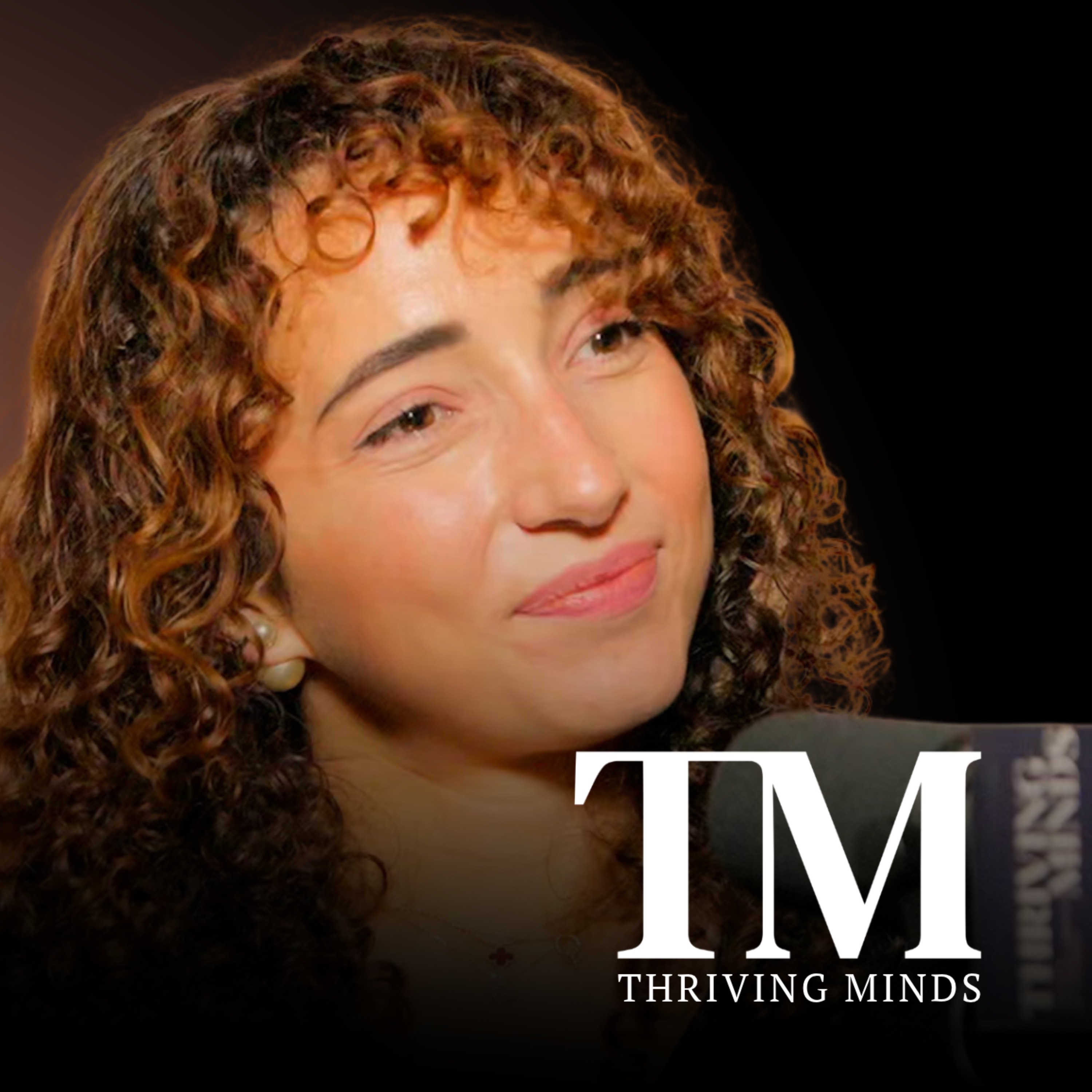
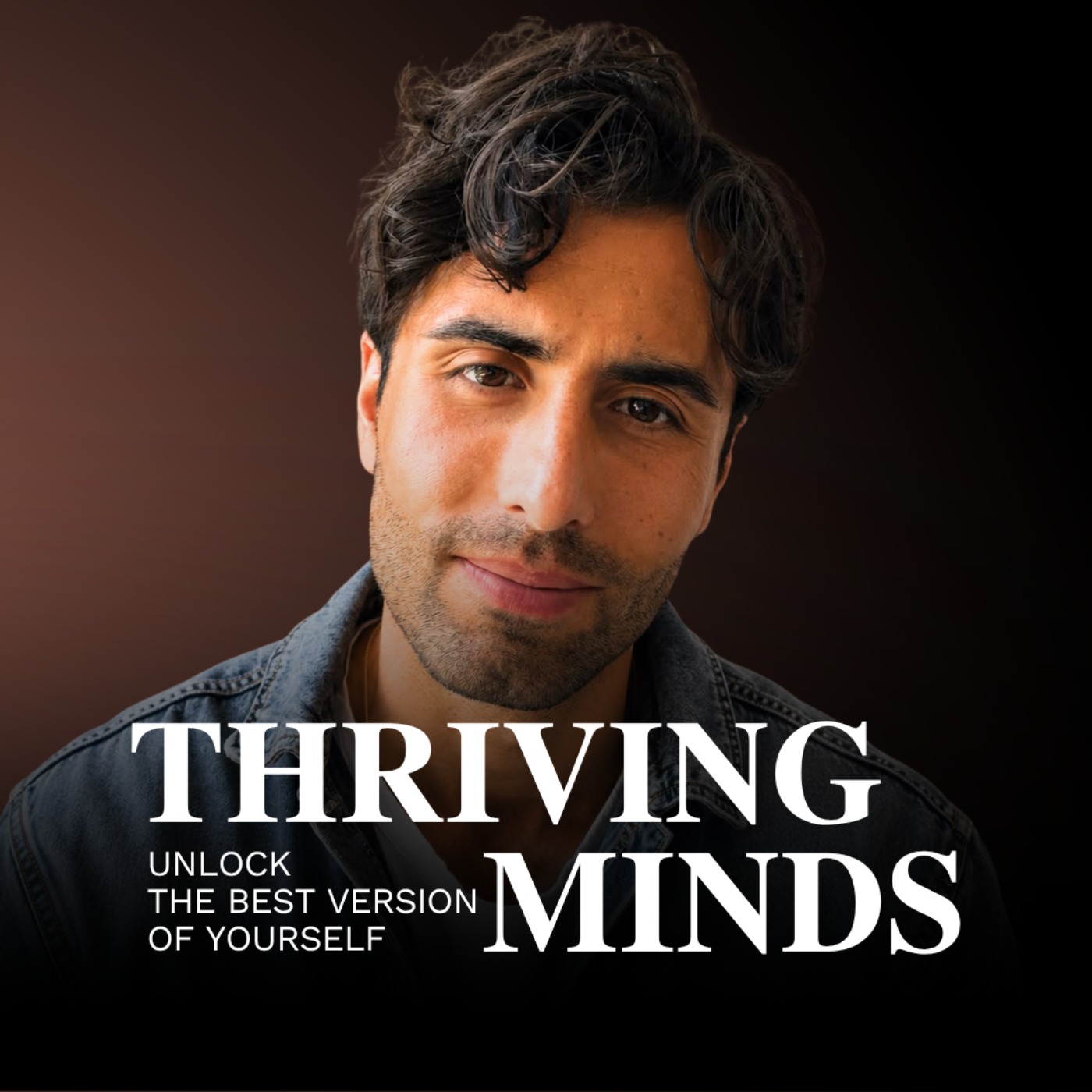
 Thriving Minds with Alberto Zandi
16 Oct 2025 · 57m

Host: Alberto Zandi
Tam Kaur, Self-made entrepreneur, investor, and advocate for ambitious women
Navigating success, burnout, personal branding, and mental health.
In this episode, Alberto Zandi sits down with Tam Kaur to discuss the often unseen struggles of high achievers, the nuances of hustling, and the importance of mental health. They delve into Tam's journey of building a personal brand, overcoming rejection, and maintaining authenticity while striving for success.
Written by AI. May contain mistakes.

Get the gist, explore an idea or ask about something said.
 Claude
On Thriving Minds with Alberto Zandi, what are the key points of this episode?
Searching your listeningAutomatic transcript. May contain errors.
0:28That first video got a million views. book buy yourself the damn flowers and she's listed on the 2025 forbes 30 under 30 list i sat down and i really started to make a strategy of the structure of my youtube videos and i was going to hook people's attention and stand out from the crowd and fill the gap in the market in my niche first video i made with that strategy blew up we had 2 000 subscribers on youtube but within the last two years you've reached over a million and a half subscribers what's the greatest lesson you've learned in this journey. I view the purpose of life as to go on the process of becoming the best version of myself and in doing that I have to keep doing things that make me feel uncomfortable and challenge what I've always been familiar with.
1:12If somebody told you you were 30 failures away from your goal, from living your dream life, how fast would you fail? Success is guaranteed if you don't quit. Guaranteed. It's guaranteed. Yeah. If you would lose all your followers, subscribers, brand deals, what would you do the morning after?
1:40Tam, you are best known for being an entrepreneur, an influencer with over 2 million followers, a book author, a podcaster. And this is how people know you, or the reasons why they know you. But how would you describe yourself? I would describe myself as somebody who is really creative. And I feel like that's at the core of everything I do and why I've made all of the decisions I have. I would say that I'm highly ambitious and driven. But I'm also somebody who is so still connected to my inner child that while I may come across quite serious on social media and very grown up, I wouldn't actually identify like that in my day-to-day life.
2:27Interesting. So does that mean that you're not really yourself on social media? I think with anybody that's on social media or that runs a business and then has a founder-led presence, you can only give so much of yourself and you have to keep parts to yourself. And that's the only way to protect your sanity when you're giving so much of yourself online, especially for someone like me where I'm vlogging my life and I'm sharing my day-to-day. I am being as authentic as I can but I'm not showing 100 % of the picture. If we were to split this percentage-wise would you say you're showing 50 % of yourself and yeah 50 % I think 50-50 is fair yeah.
3:05So would you say that that's also the case for other content creators so we get to see 50 % of who they really are? I think so just in the way that social media has moved and cancel culture and things like that you just naturally have to be a little bit more reserved. And then secondly, with the way that social media affects your mental health, you want to keep those parts to yourself. And then thirdly, you also just can't record and document 100 % of your days. So people don't always get to see the full picture. And then on top of that, with whatever they do see, it's always down to their perception and their opinions and their biases and the way that they view life.
3:37So even if you are showing them 100 % of yourself, it's still not even going to be perceived in the correct way. Interesting. And how did you learn this? did someone tell you? No, I think I just learned this through life experience. I, even through school and like maybe having friendship problems or relationship problems and things like that. And then my first experiences with hate online as well, going through that and then teaching myself how to heal through it and how to deal with that, along with reading a lot of self-development texts, I started to learn how to see it in this way. Take me back to your childhood.
4:12Was it a happy one healthy it was one that was very out of the ordinary I would say that it was pretty normal and happy um until the age of seven where both of my parents moved to London so I'm from the Midlands I'm from Derby so London was like a two three hour drive away moved in with my grandparents and obviously with mine and my grandparents age difference being so large I just feel like that probably really set the tone and affected me a lot throughout my school years because it wasn't like I could come home or ask for help with homework or ask for advice. I was also an only child. So how do you think it shaped your personality?
4:52It's made me incredibly independent. I think from a very young age, I learned come home if I have a problem at school, whether that be academically or with a person, I'm dealing with it. And so from a young age, I was always online, googling videos on like how to be confident, how to do this, how to solve any sort of problem I was going through at that time. Do you think you were missing anything during your childhood? Was there an emotional connection that you were missing? Yeah, I used to think that all the time. Right now, I mean, in the last few years, I've tried to reassure myself. And now I look at it like everything was meant to happen the way it was meant to happen.
5:27And everybody's, the cards everybody's dealt was different. But at the time, all throughout my teenage years, I felt like, one, I wish I had a sibling because I think it helps having that person to lean on. and to I definitely wish that I had my parents in the picture and that I had that support system because I lived with my grandparents and because that was a very traditional household I naturally felt like I didn't align with my peers at school. How do you define a traditional household? So my grandparents so I'm from an Indian background so my grandparents were very strict so I wasn't allowed out of house a lot it was like straight school back home and I don't even blame them for it.
6:05Like I know that they had my best interest at heart and they were very protective. But growing up like that for 10 years, I felt like my communication skills suffered as a result. Other kids are like going to the park after school, they're going to high school parties, they're hanging out at the mall together. There's so much more social interaction once school ends. And I feel like mine was just constantly alone in a bedroom with a computer, which did help shape me in my career because I actually learned how to edit videos when I was 10 years old. So I feel like it put me ahead in some senses that I was learning how to draw.
6:39I was learning how to film. I was learning how to edit. And I had to keep entertaining myself with these different hobbies. I started my first business when I was 17 because I was in a bedroom and I had nothing else to do. But I think it has made me suffer in this sense of friendships. And that's still something I struggle with today, like connecting with people. That's so interesting. Is that why you became a content creator? Because you were looking for meaningful connections or at least connections but for the online world no actually the reason I became a content creator well I didn't always want to be a content creator the number one thing I always said was I want to work alone because that was my comfort zone and that was what I was familiar with and I always said this when I was younger the thought of interviewing for a job and then working around a bunch of strangers every single day gave me such anxiety I was so afraid of it meanwhile all of my peers all of my friends didn't phase them and it was so normal but to me I was like, I can't do that.
7:31I can't live that life. I want to be by myself, want to make my own decisions. And I want to be creative in whatever that career ends up being. I feel like that's what led my decision, me being in charge of the show of my life. Interesting. And how do you feel right now, many years after? At the beginning of the journey, I loved it. And I loved that my life can be anything that I decided to be. But as it's gone on, I realized, because even in the process of building it and trying to get to where you want to be and meeting your career goals, you do have to still spend a lot of time alone, working from home, being on your laptop, perfecting your craft.
8:09And so years into the journey, I realized I was still in the same position that I was in in school. And yet now I had so much freedom and I could go wherever I wanted. And I was still keeping myself in that same box. So now I'm at a point where I'm constantly trying to get myself out of it. I'm pushing myself outside of my comfort zone. I'm going to more influencer events and trying to connect with those people. Still not something that comes naturally. And still something I've had to kind of try to teach myself in through reading books or watching videos and things like that. It's like I have to, it's like a lesson I have to put myself through, whereas I've seen other people and I feel like it comes to them much more naturally.
8:44But I think it's all part of the journey, so it's worth it. I think you're the first content creator slash influencer that perceives herself as introvert. Yeah, I'm a huge introvert. I can walk into a room and approach people and start conversations because I've taught myself how to do that. But because of the way I grew up, all of my energy is drawn from my alone time. So it's so important for me to have a few days in the week where I'm at home. I don't want to be out all the time. I don't even like to be at the influencer events all the time. There are many events I've been to that absolutely drain me.
9:20Do you like what you do? I do. I love what I do. But I think with every job there comes those ups and downs and certain parts that you absolutely thrive in versus some parts that you maybe prefer less. And the reason why I'm asking this, there are two reasons. The first one is because it sounds a bit contradicting that the nature of your work right now it's perhaps by nature against your personality but also sometimes we choose a career path at a very young age and we have our reasons and we are incredibly convinced when we are young but then as time goes by we're older our personality changes our tastes and preferences get you know shaped and then perhaps we are not the same person and hence maybe a decision that we make seven eight years um ago we don't want to carry on with that decision right it could be at a professional level this you've never thought about this no i with what i'm doing right now i think it's all perfect and even though there are some parts that might contradict my natural um introverted nature i love that because the way that i view the purpose of life is to go on the process of becoming the best version of myself.
10:34And in doing that, I have to keep doing things that make me feel uncomfortable and challenge what I've always been familiar with. I want to get as far away from what was familiar to me in my childhood because I wasn't happy then. And so everything I've done to get out of my comfort zone, such as turn up to events, which yes, sometimes may be draining, but other times I've met amazing people from it. And I think that's normal for everyone. Even when I did my podcast, it started as one mic in my apartment doing it on my own. And I was incredibly terrified of bringing on guests and having a whole video set up and sitting like this and inviting people on.
11:07And then also having to take on the role of not just being the person answering the questions, but learning how to interview other people, which is a whole other skill set. But I did that for two seasons. And again, I loved it. And I made such incredible connections with other entrepreneurs because I challenged myself to do that. Taking back to your university years, what does TAM, introvert person, but wants to be a content creator study? Marketing. Why marketing? Well, I actually didn't even want to go to university. Having grown up with like a more traditional family, they were just like, you should go to university.
11:40And I think at the time, because I didn't know what my career wanted, I didn't know what I wanted to do. I just thought, makes the most sense to buy myself a couple of years and figure out what I want to do. So you were 18, you didn't know what you wanted to do. You studied marketing because your parents in a way push you to attend university the only thing that you knew was that you didn't want to work with anyone you wanted to work alone and I thought marketing seems simpler than a lot of the other degrees that my friends were doing like psychology or medicine and at the time I was kind of dabbling in social media a little bit but that I really started building on it and taking it more seriously my first year of university why because I just had in your first year you have so much free time and I think I feel like you have so much free time yeah but also when I went to university my confidence completely shifted and changed and I felt like I believed in myself more so I could put myself more out there than ever before why I was a certain way throughout seven years of school so I stayed at my school for college as well so with the same people for seven years and because of that even though I kept wanting to be someone who was extroverted and confident I felt like I couldn't because I was surrounded by the same people.
12:51So I was stuck in a box or an identity and I knew how other people perceived me. You could start over. Exactly. I could start over. And when I went to this particular university, I didn't know anyone from my school that was going. It was in a new city. I was living away from home for the first time. And I thought I can be whoever I want to be and no one's going to find out who I was before. So it's perfect. I wonder if this is something that could also be done in later stages of life. So perhaps someone in their 30s or 40s, they need a fresh start. Because in order to drive meaningful internal change within yourself, I do agree with you that if you're surrounded by people that they've already known you and they know your ups and downs and your traits and your personality may be more challenging because you need to sell the idea of the new version of yourself to them.
13:36But if you are in an environment in which nobody really knows you, that becomes so much easier. I wonder if this is something useful to do maybe in your 30s or 40s like just maybe a couple of times within your lifetime do you think you would do that 100 % I think it I think you could do it every single day that you wake up and I think it's so like I said I'm going to just work up in a different place every time yeah yeah I think if you're not happy in the place that you are you can completely not completely but reinvent yourself in a way to adopt the traits that you want or surround yourself with new people so that you feel safer stepping into new characteristics or a new identity so I'm going to a painting class tonight because it's a separation from the influencer events that I'm always at.
14:16It's a safer space to not be perceived as who I am when I'm working and to show up as maybe a different part of myself that I don't always show or just to see what comes out from it and to interact with a different group of people that I wouldn't see in day-to-day life because they're not in that industry. Interesting. So university enabled you to become a new version of yourself and that that also unlocked Tam, the influencer. But what you started itself, the degree, was it useful in any way for you to become a content creator? No. I've always said that. I don't remember a single thing I learned.
14:53And I learned more from what I was doing outside of lecture time. So I set up my YouTube channel, the same YouTube channel I'm still making videos on now in my first year. I was experimenting with loads of different versions of content on Instagram. I went through a lot of different phases. I was doing fashion at one point, then I was doing lifestyle, then I was doing uni content, then I was doing self-development. And now I'm kind of like, now it's just about me and the different things that I like. So it's been a journey. And then also in my third year, I was pitching myself to brands and I was working more like a business.
15:23I also worked part-time at a jewelry company in that city as their marketing, first their social media content creator, and then their marketing manager. And it was being in the real world and having that experience that taught me more about social media and business than anything in a lecture did. Plus, I also didn't turn up to many lectures. I would rather be in my accommodation, like learning my craft. And I do think that paid off. So working at the social media job, a real job, was actually useful for you to become a content creator? Along with doing my own stuff, yeah.
15:59Right, let's talk about your content creator career. So for those who don't know you, You have a YouTube channel with just a bit over 1.7 million subscribers. So you said you started this channel on your first year of uni, correct? Yes. Why did you start this channel? But I was posting a lot more on Instagram than usual because I just felt confident. I was out a lot because of university. So I was posting a lot of pictures of my life. And I started to develop a small but engaged community of girls that were either also in uni or just also from the UK. and they were really engaged in my content.
16:37And I think they took interest in my content because I was vlogging a lot of what I was doing at university and posting on Instagram. So I was kind of tapping back into what I loved with the video but posting on Instagram. And somebody suggested to me, why don't you open a YouTube channel? And it reminded me that I had a YouTube channel when I was 14 because that was my initial passion. Stopped because people at my school found out and I was embarrassed. And I thought, this is the perfect time. I feel confident. I feel like a new version of myself. People actually want to see it this time. so let me try and see where it goes.
17:06But the reason why you started it was it for fun or you actually wanted to make a career out of it? It wasn't anything to do with the career I just genuinely had so much passion for it so I learned how to edit videos when I was 10 and most days after school I would be taking random clips of YouTube and making edits just because I loved the process of being on a computer and making something creative out of video so I had the idea to do a YouTube channel because I thought then it's unlimited and I can edit anything I want um also I just I was obsessed with YouTube at the time I loved watching YouTubers I kind of wanted to emulate them in a way I was only 14 years old so it was also that like being interested in the fashion and the beauty space and just trying it out but I definitely let other people's opinions and perceptions get to me do you still let them no out of all the different platforms that you work with youtube tiktok instagram which one would you say is the most important one to generate revenues i think youtube because i mean one they financially reward you the best out of every single platform but aside from that it's where you can genuinely build a community of people that know you and trust you relate to you and understand your message more than you can get across on any other platform like Instagram or TikTok or Facebook, where you have just a couple of seconds to get people's attention.
18:28So it's the difference in between being able to sell long form content versus short form, right? So in short form, people can relate less to it. I think people on short form don't understand you as much as they do long form. And that's really what I've understood with the followers of mine I've spoken to in real life with the people that approach me, even with the people in my personal life who had a certain perception of me from Instagram. And then when they either A, got to know me in real life or B, watched my YouTube videos where they could see my personality, saw me in a different light. I think people are quick to judge on the short form platforms, but on YouTube, because you can actually be yourself, you can build that community and you can build that trust.
19:06I believe that going from zero to one in anything in life is so much harder than going from one to 100 do you remember the moment that was like a catalyst moment that catapulted you or a video it was january i want to say 2023 yeah january 2023 i had been stuck on 2000 subscribers on youtube for three years i wasn't that consistent because those three years i was in university but i still had a few videos hadn't been growing much whatsoever at this point i was a few months out of university. I decided not to apply to any grad schemes or apply to any jobs. I finished university and I was like, I've worked on social media, my social media for three years.
19:45And I know I love it. And this is my passion. And I trust in that. But you have, you said 2000 subscribers, and I think 20 ,000 on Instagram. And that was about it. Nothing enough to make a consistent income. But I moved back in with my grandparents and I gave myself six months to try and make it a career. By January, I was three, four months in and I was starting to panic because I didn't, I wasn't getting results. I wasn't making much. And I sat down and I really started to make a strategy of the structure of my YouTube videos and how I was going to hook people's attention and stand out from the crowd and fill the gap in the market in my niche on YouTube, which is self-development and lifestyle.
20:21Made that strategy. First video I made with that strategy blew up completely. What was the video about? It was called Lucky Girl Syndrome. So I took a trend that was already going around on social media, which a lot of people were making videos on that trend at the time but applied kind of the structure that i wanted and the edit the editing techniques that i learned 10 years prior really came into it to make it a really fun engaging video that people actually stayed for what is the lucky girl syndrome it's a manifestation technique so it's basically the way that you perceive yourself and the set of beliefs that you hold saying that you are a lucky girl and that you can attract any opportunities you want everything works out in your favor it's kind of like affirmations in that way so i was explaining it all went quite viral and then every video that followed after that went equally viral viral that first video got a million views and all of my videos before that were probably averaging maybe a thousand views at most um and then every other video was getting every video after that was maybe like 600 ,000 700 ,000 views I was averaging 100 ,000 subscribers every single month for year and a half so let me see if I got the storyline correct you graduate from university You don't want to work for a corporation and you give yourself six months to see if becoming a professional content creator would be something that you can do for a living.
21:40Three to four months in, you're not successful. And then you define a strategy to tap into a gap within your niche. And within the first video that you deploy, you go viral. And that was in 2023. So the first three years of you becoming or being a content creator, you had 2000 subscribers on YouTube. but within the last two years you've reached over a million and a half subscribers interesting what's the greatest lesson you've learned in this journey of everything i do i think there's so many but the first one that came to my head was because it's so fascinating the reason why i'm asking this is because a lot of people might be thinking she's been doing this effectively for about five years and more than half of that time frame, the growth rate that she had was so minimal.
22:29So to what do we attribute that exponential growth? So what's that lesson learned? Is it, was I lucky? Or was it related to something else? Because your 1.7 million subscribers minus 2 ,000 subscribers really came in the last year and a half or so. Yeah, it was 2 ,000 subscribers to 100 ,000 in three months and then 100 ,000 to a million in a year. So it was really fast. And I think the biggest difference in lesson I saw was all down to self-belief, which is why I talk about that all the time. So those few months, as soon as I graduated university and I was acting like it was a full time job, but not seeing any results.
23:03I had self-doubt every single day. I was calling my boyfriend all the time saying, I don't know if I can do this. I was very emotional. I was so distrustful of myself. I kept thinking, oh, my God, I've made the wrong decision. I can't do this. I keep trying every new thing I'm trying. And even though I was waking up and putting in full shifts, like starting the day at 8am, finishing it at 10pm, generating different ideas. I opened a jewelry business at the time. I was doing YouTube. I was balancing all the platforms. There was a lot. I also started writing my book at that time as well. So it felt like I'm actioning everything and I'm doing so much more than everybody else.
23:38And yet, why am I not getting anywhere? And really, it all came down to the fact that I didn't actually believe in myself. And there were still those insecure parts of myself that I had as a teenager in school that were seeping through. And I had to target them and get rid of them to be able to move on to the next phase of my life where I could peacefully exist in success and in being seen by others and in being confident. So would you say that the moment that you became more yourself in front of the camera, that's when things started to work out for you? Yeah. And the moment that I realized I'm allowed to be successful and this is allowed to work for me straight away.
24:14And everything I've ever dreamed of for myself can inevitably happen for me. Whereas before, and I think a lot of people are taught this, you just think, but what if it doesn't? You're always kind of trying to prepare for the worst case scenario. And it, as a result, it affects your own energy, affects your own confidence. And then your mind is trained to constantly seek out every single way that you could potentially fail. A lot of people that perhaps are not very familiar with the industry dynamics might not know how you can make a living out of having 1.7 million subscribers. So can you describe to me how do you get paid and then throughout all of the different channels, a rough figure annually of how much you're making right now?
24:55An estimate.
25:00from in terms of making money as a content creator you have certain platforms that pay you outright just for posting so you'll have the tiktok fund you'll have the youtube fund and then you have your brand sponsorship so this is when brands want to work with you to place advertisements within your content so as soon as i started blowing up there were brands who wanted to sponsor each video i have regular sponsors now regular companies that i work in Did they contact you or you contacted them? When I was really small, I started to reach out, make a media kit and reach out to these brands directly.
25:33And then as the following grew and more people were noticing me, they reached out to me. So now it's a really nice system where I have a management and I have a team and they kind of talk to those people. But also I have a great relationship with the brands I work with. So I can regularly work with the same companies. You now have a manager and a team. How big is your team? oh so my management team would be two three i would actually lose count but i think it's above 10 people do you need all those people to be able to become successful at your level no i don't think you need all those people when i blew up and when i hit him and when i hit million when i hit 100 000 it was still just me just one person i didn't even have a management at that point yeah um the reason i have a team is so that i can have work-life balance and so that things can grow without me being there.
26:20And that's so I can go and try other ventures. So I have written a book, I was doing a newsletter, I've partnered with a jewelry company, Abbott Line, and I'm doing work with them now. I started my own journal business, and I wouldn't be able to do all of that without having a team that running things without me. So hypothetically, from an operational perspective, you could still be running things by yourself? I could, I think I would be really burnt out because of the amount of things I've chosen to do. There are people out there that are just YouTubers and that's what fills their cup. And I know a lot of people that do just do that because that's manageable.
26:58But I'm somebody who is very curious about a range of different things. And I always like I was just an influencer, but then I always wanted to dabble in entrepreneurship and then I always want to be an author. So if you're that kind of person that wants to do so many things, I think it's really important to have a good team that supports you and is really talented in what they do as well yeah have you found a recipe to success when it comes to going viral so perhaps a type of content video image video length genre music I think all I can say is all I really know is my niche and in terms of strategy I am still figuring out the other platforms like Instagram and TikTok so I just show up as myself and I say things that I feel passionate about in the moment.
27:42And I think with passion, people can sense it immediately. And that's what have have them hooked on your videos. YouTube, I would say is where I do feel like I've developed a strategy. So as somebody who grew up watching a lot of self development content anyway, 10 plus years ago, when there was rarely any kind of that kind of content online, I used to feel really frustrated at the length of the videos, I felt like they were too long, people were talking too slow. And I didn't feel thoroughly engaged with it. Maybe that's just amazing. Maybe I have a really short attention span. But it really frustrated me.
28:13And I felt like people weren't talking concisely, they weren't getting the point across. And I thought, if I was someone who only had five minutes, and I want to learn how to be confident before I was off to school or a job interview, how are you going to get that information across to me? And because that was my pain point in that niche, I decided to fill it. So if there were other people that also felt like it, I could fill that gap in the market for them. And that is exactly why my editing style is the way that it is, why I have a hook in the way that I do, why my video length are the way that they are.
28:40And then I also - How long are your videos on average? On average, I say 15 to 20 minutes. As I've gotten bigger, I've allowed them to become longer because that's what people have naturally requested. But at the very beginning, I ensured that they would always be 15. Because especially if you're new and nobody knows you, you have to hook their attention immediately. And if they see you've got a 30, 40 minute video, they're kind of going to lose interest because they don't trust you yet. They don't trust that you're going to value their time enough to give you to give them the value that they require um so the advice would be if you're starting from scratch to start with shorter videos and give as much value as you possibly can and then as people start trusting you that's when you can start you can take up more space then okay yeah um and it's also why i introduced structures in my videos i'd never seen anybody else do it might be wrong though but i put in chapters with every single video so if somebody just came for the mindset shifts or the actionable steps, it would all be timestamped.
29:38So they can go, they can get that information, then they can leave. And I think that's helped me develop a really good, close relationship with my audience where they know I value their time. And I want to provide as much value as I can. I'm not just trying to long out the intro just to get them to stay throughout the whole video. And how do you deal with like negative comments? As you, So as your channel gets bigger, does that also increase or perhaps it's the opposite? No, I definitely think it increases the larger that you grow on social media. And I think at the beginning it was hard to deal with.
30:15I think I always thought I could deal with it well because it's always something that's spoken about. So when I was coming into this world, I was like, it's fine. It's normal. Everyone gets hated on. Everyone gets trolled. But then when it's actually happening to you, you're kind of a bit taken aback, taken aback, especially if your content is about helping people and providing value. But even in that sense, there are always going to be people that feel triggered by your opinions or disagree with your opinions, and they're going to lash out because of that. But I think immersing myself in all of the self-development work and texts and research that I do has really protected me from that, because I can see it from a different perspective.
30:50It's really easy for hate to affect you. If you just look at it at face value and you think this person is personally attacking me and this person doesn't believe in me and this person thinks what I'm doing is wrong and they want to cancel me. But really, if you look at it from the lens of people are completely allowed to disagree with me, that's so fine. But for somebody to want to take the time out of their day to comment that and to purposely phrase it in a way that they know would hurt you says so much about their own character, not you. And it helps you detach. These messages, these comments.
31:23Not anymore. Now I actually rarely read my comments, but there are some times where you can't avoid it. Like I'll be scrolling on my own TikTok page and a video will come up about me or I might see certain comments. So it's not completely avoidable. I definitely look a lot less than I used to. But now when I do see them, it helps me detach a little bit more and send compassion to those people rather than trying to fight back with it. I like that approach.
31:55let's talk about artificial intelligence how can ai help creators these days i think it can help with idea generation to an extent and i think it can help cut your workload in half in a sense so whether it be i would have loved this because i i was never using AI for like the first two years. But if I had taken hours to write a YouTube script, it takes really, really long. And then I want to then generate that into two short TikTok scripts to still get that same message to a different audience. AI can do that in seconds. And it really saves me so much time. Whereas I used to be sitting there trying to figure out how I could rearrange the words or shorten it and things like that.
32:40Yeah, that's so interesting. And then when you do you read those scripts in front of the camera, you memorize them? I don't memorize them. know. So I, once you've written it, you kind of already have it in your head anyway, because I would have just written it the day before, film it afterwards. So I have it always on the laptop screen next to me. And then I'm looking at the camera here and I might pause it every few minutes to just look, remember what I'm going to say. But a lot of the time I can go off without it. When I ask you a question that some of my friends requested. So some of my friends, they, they have a corporate job, a nine to five job.
33:12And for them, it's quite challenging to imagine how a content creator job is considered hard work. Can you describe to me like a regular work day? So you wake up until, you know, go to bed. Every day is different. And I've themed the different days of the week. So Mondays are always my work from home in front of a computer day. No cameras, no nothing. so that's my kind of prep content planning day so it will be hours of writing the youtube script for that week then i'll be planning out any short form content i want to record that week for tiktok and anything else but then recently it's been a lot of admin and planning for my journal business that's that's where a lot of my priority and time lies now because now i've built up the team that can do the uploading for me or do the editing for me whereas before that would have taken editing used to be an entire day and i do two videos a week so that's two days that i've kind of been able to hand off.
34:07And then Tuesday is my onstage day. So that's when I'll fully get ready. And I'll be batch recording content all day, whether it be getting Instagram content for a brand, definitely recording a full YouTube video, and then batching short form content, along with then batching ad content for my journal business, because then that now has its own social media pages as well. And then Wednesday will be Wednesday, Thursday changes, sometimes there's a lot of events to go to, so I wouldn't even be able to work, but it will be batch editing all of the short form content you do edit your own videos only short form yeah youtube i've uh i've delegated um and then again it's just back to business work and trying to build that and then friday friday friday saturday and sunday i just allow to be flexible so either i can see my friends or if there's anything left from the week that i want to catch upon or that i want to expand on i can use that time to do that and when you go on holiday how do you juggle that with i film things in advance so the week before I go on holiday is twice as busy it's horrendous so I'll be filming like two videos in a week instead of one which I know doesn't sound like hard work but the thing is even though physically it's not hard it takes a lot of emotional energy out of you because even if you're having a really tiring draining day you have to show up and bring a certain energy to have people engage in the video to make sure their experience of that video and whatever they've come to learn that day is useful.
35:31Interesting. For how long do you think you can do this? I don't know. And I'm not putting a timeline on it. I don't think I'm the type of person that would do it forever. I'm somebody who gets bored quite easily, but that's a trait of mine that I'm trying to overcome. And I'm somebody who's so curious that I'm always trying to learn something new, which is why I juggle so many ventures at once. I just, I think we'll see, but I'm also somebody who doesn't like to have a five-year plan or a 10-year plan. I try to have somewhat of a year plan. And I'm still flexible with that. And then I just want to see who I am next year, and then plan when I am that version of myself, because I'm constantly changing.
36:05And I would hate to develop a plan for when I'm 30 now. And then I get there and I'm like, none of my values now align to when I was 24, 25. So everything is forecasted or programmed within a year in advance. Yes. Interesting. Let's talk about your book. You published a book in 2024, titled Buy Yourself the Damn Flowers. In a nutshell, what do you expect readers to learn from it? Self-love. The entire book is about self-love. It's split into a few different components. So it talks a little bit about relationships, but I wanted to make sure that that wasn't the entire theme of the book. The entire core of it is all about yourself, becoming a better version of yourself.
36:49And when it talks about relationships and friendships, it's not only healing from ones that may not have served you, but also becoming a better version of yourself throughout your self-love journey so that you can attract the ones that actually serve you so that they can provide you value and you can provide value to them. Because when you are insecure, for example, you're not only harming yourself, but you're harming the people around you without even knowing it unintentionally. So I also wanted to factor a little bit of that into the book, but I think 90 % of it is understanding what self-love actually is, understanding how to practice it and understanding what that lifestyle is.
37:20What is it? I don't think there's one particular definition. And I personally struggled with that. I used to, when I was on my self-love journey, Google it and try and watch videos about it. And I was always dissatisfied with the definition of it. I think it's something along the lines of to take care of oneself or to show care and affection to oneself. And I felt like it was too vague. So I came up with the 10 components of self-love, some of which include self-sufficiency, showing yourself the five love languages which are the five level languages are gift giving quality time acts of service every time somebody asks me i always forget the other ones um words of affirmation and gift giving i don't think i said that already to yourself to yourself so everybody always normalizes when you're dating you're going to talk about the five love languages to the person that you like and then you're going to figure out what is theirs and then you're going to focus your attention on giving that to them, which is beautiful.
38:16But nobody has ever focused that attention on themselves. Learning when do I feel most loved? I might tell my partner my love language is quality time, which it is for me. And then to solely 100 % rely on another person to give you the love that you crave I think is unfair because the only person that can love you best is you because you're the only person on this earth that is ever going to understand yourself the most. You're the only one that has known you're seen every single one of your days that you've lived, not even your parents. You're the only one that has an unbiased viewpoint of yourself.
38:51Everybody else views you through their own lens of their life and themselves and their beliefs. And you're the only one that has to live in your head every single day. So I think we are the ones that know how to love ourselves best. So while I may expect dates from my partner, because that's my love language or quality time, I also have to take myself on dates. and I feel like that's the most self-loving thing I can do for myself to also make sure that romantic love isn't the center of my universe and I'm always maintaining my independence through everything interesting how can we not fall under selfishness I hate that question I I experience it all the time I I understand my audience very well especially at the beginning when I had the time to go through every DM and every comment.
39:39The number one thing I got when I was talking about self-love wasn't, could I have some extra tips on how to do this? It was, what if I love myself too much? What if I'm too selfish? What if I'm a narcissist? And I think those words don't even belong in the same sentence. They are completely unrelated. And I speak about this in the book as well. In the first chapter, when it comes to understanding self-love, I've got a table of self-love versus narcissism, because the two things are always interlinked for some reason. Narcissism includes manipulation. It includes thinking that you're better than others and trying to bring other people down.
40:09Self-love is always trying to lift yourself up, walking into a room and knowing I love myself and I'm so confident in myself. And I hope everybody feels the same way about themselves because everybody deserves that. It's about being so confident and secure in yourself that you also wish the same for everyone around you because there is no competition and there is no envy and there is no trying to one-up other people. I think being a self-loving person is the kindest thing you could do for everyone around you. when when you learn how to self-love yourself is it a one-time thing so now I've learned it and I'm going to love myself forever or is something that you need to repeat yourself every week every now and then I've always said it's a lifelong journey and I feel nowhere near done however I've come such a long way from who I have been my entire life I've overcome insecurities that I know will never bother me again.
41:01And at the beginning, I was very hyper fixated on it. So I spent one entire year just focusing on self-love. And I think that propelled me further in the journey and helped me make much more progress, fixing any, for lack of a better word, damage that I was experiencing in my personal life and my self-perception before. So for example, I really relied on romantic relationships. I relied on external validation. those are things now I've undone and I've unpacked and I don't have to deal with anymore because of simply one year so I don't think it's something that you have to make the center of your it took you one year to work on those things I don't think it's something you have to make the center of your day every single day but it's something to remind yourself of and it's something to prioritize no matter what whether it be like I said before like trying new things putting yourself in new environments to unlock new versions of yourself I think a huge core of self-love is self-discovery because you can't love someone that you don't truly know.
41:55And I think we spend so much time going on dates with other people, obviously, as we should, to learn every insignificant detail about them so that we can love all those different parts. But when do we grant ourselves the time to do that for ourselves? And how can we learn who we are? Solitude and quality time with yourself. So that's exactly why I've taken myself on solo dates. whenever I've traveled alone or gone to places alone, I've tapped into thoughts that I was carrying that I wasn't even aware of before. And that has been incredibly helpful in learning who I really am without distractions or noise or having company with me.
42:30When did you start doing this? The year of 2021. And I think the first holiday I ever took myself on was February for Valentine's Day. It was the first Valentine's Day I spent alone in years because I was always in a relationship. And staying at home alone doesn't count. You need to go outside. No, you can definitely stay home alone. I think with solo dating, it's all about the intention. So let's take a restaurant, solo date for an example. If I was sitting at the table, I want to be people watching. I want to be thinking what's in my head. I want to be enjoying my meal instead of having an iPad with Netflix right there.
43:04That's still a distraction. Or having my phone out and scrolling while I'm eating. You're still distracting yourself and still needing something to accompany you so you don't have to be with yourself. How often do you do this? I used to do it regularly every single week. I'd say now it's probably fallen back to every fortnight. Oh, wow. Talk to me about failure. How is your relationship with failure? Now I think it's in a really good place because I can look back at my journey, see how consistently I failed in the come up to this point and realize that every single failure served me and contributed to the knowledge I have now and the career and the lifestyle I have now.
43:44None of it was an accident and none of it should have been avoided. It was all very necessary. So I've had two, maybe three. I always forget businesses before the one I had now. And while they all failed or while I quit them and they didn't get to where I wanted them to be, I couldn't do what I do now without that knowledge and without now avoiding the pitfalls that I went through before. When I was 16, I set up a fashion blog and I was teaching myself how to write that allowed me to have a successful newsletter now at this point in my life. I had a YouTube channel when I was 14. I wouldn't even say that was a failure.
44:18I think my video creation and editing was really good, but it was knowing my pitfall then was my confidence and letting other people get to me. And now that's a reminder in my head that keeps me going at this point in my life. I think failure is so, so necessary. Everything's just an experience. If you would lose all your followers, subscribers, brand deals what would you do the morning after
44:44I would probably set up a business because it still allows me to be my own boss and it still allows me to be creative and make those independent decisions for what I want my life to look like and to provide value to other people which I think is always going to be the core of anything I do for me it wasn't always social media growing up it wasn't even entrepreneurship it was just a few key factors of work work alone be independent try and do something for others and that was it and I didn't know what it was going to look like if someone right now is navigating what they want to do in their professional lives but they don't know what they want to do what would you advise them my advice would be to keep trying and failing and I only say that because that's the personal journey I went on and I can only speak from my personal experience.
45:33I think everyone's different. Maybe it'll work for you. Maybe it won't. But I had a fashion blog when I was 16. And then I had a jewelry business when I was 17. And then I did part time work at a recruitment firm when I was 18. Hated that. Then I was in uni and I was working social media. I did my YouTube. And then I was treating that like a business. And then I worked an actual in store jewelry business. So I've done so many things and that's given me more information than ever on what I love and what I hate and you have to look at it in a dating sense um for example so the more dates you've been on or the more relationships and stuff you realize these this is what I can put up with and this is what I can't put up with so if we allow ourselves to act like that in a relationship sense so that we know who is actually going to be our person we need to do that in a work sense as well and doesn't that always have to be applying for jobs you could try your own dropshipping company I know a lot of people are doing that now where you could set up your TikTok page or you could do a faceless YouTube channel.
46:30There are more options now than ever and you could do them all from the comfort of your own bedroom. I agree with you a thousand percent. I feel, I think that everyone should improve their relationship with failure. You can't determine if you like a dish, a food, if you didn't try a bad one. You can't appreciate a good partner, a romantic relationship if you didn't have a bad one, a good friend from a bad one, a good business from a failing one, a good video on TikTok from a bad one. And yet, unfortunately, I believe that we live in a culture that demonizes failure very much. I've discussed this numerous times with friends and sometimes on camera with other guests, but I've studied in Spain, in the UK and in the US and in both three systems, failure is very much disencouraged.
47:18So when you fail an exam, the teacher won't tell you, hey Tam, I know you failed this exam but you're going to learn so much from this failure that everything that comes afterwards is going to be great no, they will tell you, Tam, why did you fail? this is going to impact your future career and all those different things obviously you're going to be afraid of failing again right? unfortunately also when you look at movies and TV shows when someone gets heartbroken, it looks horrible like they're crying So obviously you don't want a failing relationship. And then perhaps that also prevents you from actually opening up and truly getting to know someone.
47:58So I fundamentally agree with you. That's a question that I really like to ask. If you were to start from scratch or someone that wants to decide what to do in their professional life, how would you advise them? And your answer, in my opinion, was super healthy, very spot on. There's not one size that fits for everyone, right? So you just need to find your own definition of success. What is it that you like based on who you really are? And then you can start making smart choices. And you can only do that by failing. If you're not failing, you're doing something wrong. You need to be doing a lot of things wrong.
48:30That's the whole point of it. Absolutely. I saw a quote on social media and it said, if somebody told you you were 30 failures away from your goal, from living your dream life, how fast would you fail? And you would. But the thing is, it's funny because that's the truth for everybody's life. You are only a certain amount of failures from having exactly what you want, not only because of the lessons and experience you'll learn in perfecting your craft from those failures, but also it also links back to self-discovery. You understand yourself more, what you want, and the life you want to live more from those failures.
48:59In this show, I have the privilege of interviewing very successful professionals like yourself, each of them working in different spaces, different industries. And the common denominator across all of them is not that they are geniuses or they are profoundly lucky. is that they all believed in themselves and they never quit. They failed so much. And what I can say with confidence is that their successes came at different stages. I personally don't think that you can achieve a certain level of success after perhaps 30, 40, 50 failures. Maybe for someone's after five failures, maybe for someone's after 50 failures.
49:39There are so many different factors that are outside our control that may just prolong that achievement. But what I can say with confidence, and this is based on data from every entrepreneur or professional, successful professional that came to the show is that success is guaranteed if you don't quit, if you keep moving forward. And I can believe that it's guaranteed. Yeah. Let's talk about a different kind of success. Let's talk about Forbes 30 Under 30. Making it on the list, was this important? to you yes thank you for your honesty it was important to me and it was something i always wanted for myself it might be seen as superficial or unnecessary and that's absolutely fine i wouldn't even disagree with that but i think i think i knew what it was when i was a teenager maybe that's when i discovered it and i was fascinated by it but the thing i told myself coming from the unordinary childhood I had, the life that I had, was I'm not going to endure these adversities just to live a normal life after it.
50:50The only way I reassured myself to get through those times was I have to be extraordinary to make up for this. I have to use these challenges to extract lessons from them to become better than I have before. and so things like Forbes 30 under 30 things like a million subscribers is that it's like that tick not in the sense that oh I'm successful now but I'm following the path that my younger self really wanted and it always feels like this is a favor to my younger self when I hit Forbes 30 I was so happy that that day I was so happy every day after that everything feels normal and I've learned that slowly over the last few years I always thought hitting a million subscribers would be amazing I remember actually feeling sad at the time because I've not a million sorry a hundred thousand because that was the first milestone I felt sad because because it was my first milestone I thought shouldn't I feel happy shouldn't I feel like complete shouldn't I feel successful I didn't think feel any of those things because the real happiness and the real success lies in the every day it lies in the journey not just one trophy not just one accomplishment so that was a struggle that first milestone but that was a great lesson for me to learn.
51:59And now everything that's come after it, whether it be hitting a certain revenue mark, whether it be a million plaque or Forbes 30 into 30, it's nice. And it's like, I'm doing this for my younger self, but it doesn't define me in any way or my success right now. I think that's a very important lesson learned because I think society, our culture, media, They define how success needs to look like. And then based on that stimuli, we start projecting who we need to be. When I achieve this, I will be happy. When I get that, I will be content. When I make it there, I will be enough. Things will make sense.
52:40And when you achieve those things, then you realize, God damn it, this doesn't feel how I imagined. and again going back to failures you will only realize that by trying and failing so much in my journey my biggest lesson learned to define success but also happiness is very much related to what you're sharing is enjoying the journey for two reasons the first one is because the journey it is profoundly longer than achieving something achieving something let's say forbes under 30 or a million subscribers it is a milestone that could be celebrated one day and that's it but the journey takes you in your case five years yeah right so much longer it's like when we're kids right i remember almost no one in my high school or school they enjoyed the weekdays and they were like just waiting for the weekend to arrive and i used to think god damn it but like the week is composed of five days and the weekend is only two days we're wasting five days of our life, you know, for just two days.
53:44That just didn't make any sense to me. And I feel like right now in my professional life, I've also learned that. And it's so important. And then the second reason is because when you slow down, you can appreciate the smaller things that actually make you happy. Like you could be walking down the street and you enter a cafe store and you're like, they're playing my favorite song. Well, I really like this coffee. And they sound so dumb and so irrelevant but they can become so powerful in your life going back to forbes did making it to the list contribute in any way shape or form to your content creator career as in since i've made the list yeah maybe landing some collaborations or no i wouldn't say so no who knows maybe in the future um but that's not really why I wanted it it was more to say I did it that was it and that that's enough for me I always said I was like when I hit it I want to print it out frame it put it on my wall and I've done it
54:56tam how would you define success i think to me being successful is continuously unlocking new versions of myself that i never thought i could be before and i i never used to define success in that way i used to define in a very typical way of of making a lot of money or or gaining a lot of social media followers but the more and more that happened, it wasn't actually filling my cup. But without a doubt, every single time I realized, oh my God, I'm doing something I never thought I could do before. That gives me more satisfaction and joy than anything else could, than a plaque could, than a trophy could or anything.
55:35Would you say according to this definition that you're successful? Yes, 100%. I don't recognize who I was as a teenager. I didn't even recognize who I was last year and I love that process. Thank you. Thank you for your honesty. I believe that almost in everyone's definition of success, the word freedom plays a central role. And to me, you very much embody that. I would define you as a free person, someone that decided to do something that was meaningful, that was probably also something that no one was doing years ago because your space, your sector has evolved so much in the last five years.
56:21Right now there is some clarity in how or there's a blueprint on how to make a living out of it, but back then there wasn't. And you just did it because the only thing you knew about yourself was, I don't want to be with anyone. So you were already back then making decisions based on who you were. And it's fascinating to see that when you fast forward to today, five years down the line, with so many different lessons that you've learned, but also so much success that you have accumulated, you still preserve that mentality. But with so much more complexity, you still want to unlock the best version of yourself.
56:54You still want to learn who you are so you can make the right decisions for yourself, not the ones that society or your parents tell you. So thank you for sharing your inspiring story. And I look forward to having this conversation again, probably in a year from now, because I very much think that I'm going to be speaking to a completely different time. Yes, I love that. Thank you so much. Thank you.
What if burnout isn’t a time issue, but an energy one?
This week, Alberto sat down with Tam Kaur, self-made entrepreneur, investor, and a powerful voice for ambitious women navigating business, identity, and burnout.
Tam shares how chasing success nearly broke her, the rejection that made her stronger, and the cost of trying to prove your worth to a world that misunderstands you.
They explore the hidden struggles of high performers, setting boundaries without guilt, and how to protect your peace without losing your ambition.
Tam also opens up about what it really takes to grow a personal brand from scratch, what content converts, how she monetizes authentically, and how she protects her mental health behind the scenes.
This episode is about more than hustle, it’s about healing, clarity, and becoming unshakable.
You’ll learn:
Follow Tam:
https://www.instagram.com/tamkaur/
https://www.youtube.com/tamkaur
https://www.tiktok.com/@tamkaur_
https://www.facebook.com/tamxkaur/
#TamKaur #ThrivingMinds #ConfidenceJourney #HealingOutLoud #BurnoutRecovery #FemaleCreators #MindsetGrowth #EmotionalResilience #AuthenticityOnline
#UKContentCreators
Hosted on Acast. See acast.com/privacy for more information.