Ask ChatGPT

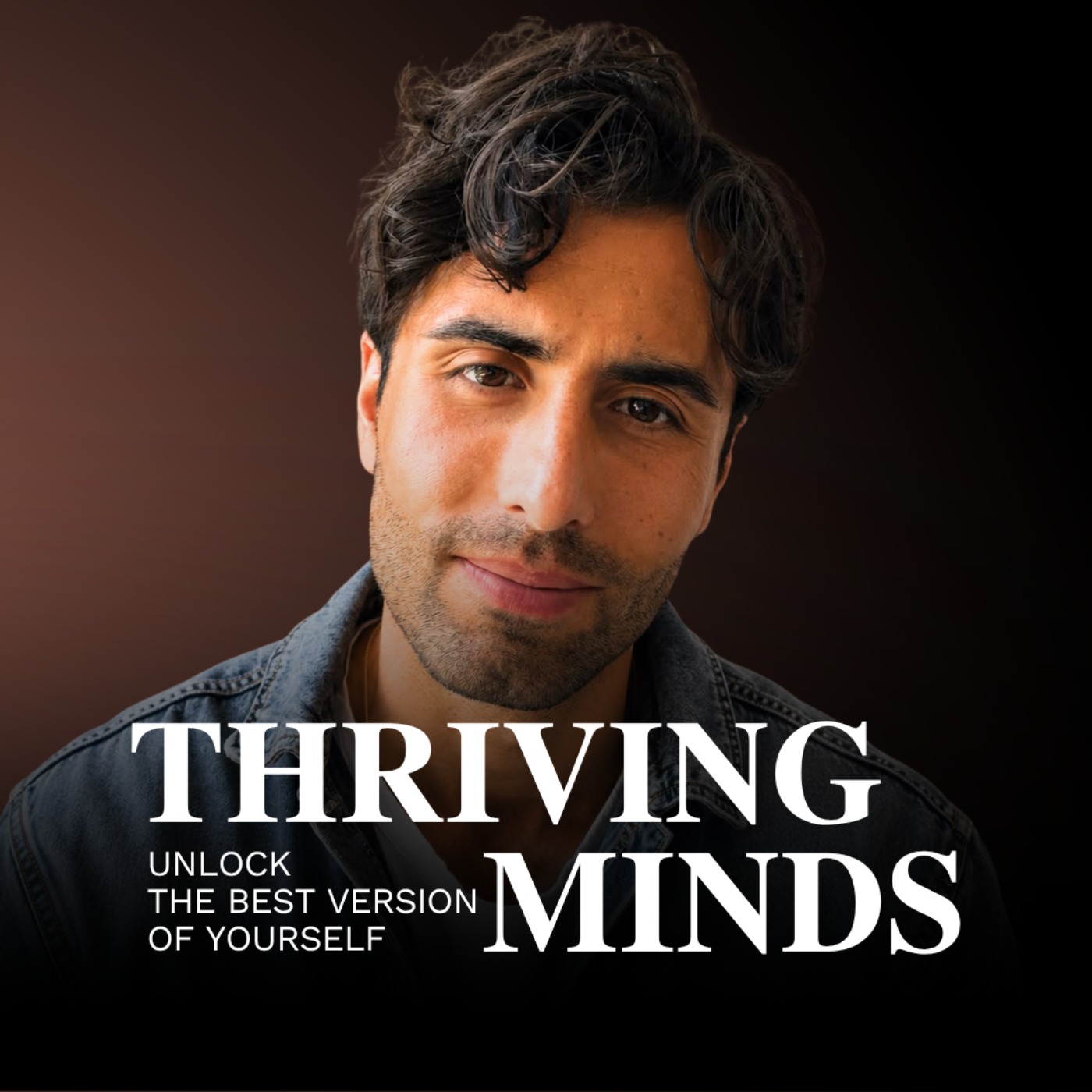
 Thriving Minds with Alberto Zandi
17 Sep 2026 · 1h 18m · 33 chapters
Simon Alexander Ong argues that “ready” is a decision, not a feeling, and teaches a path to real purpose and well-being by protecting energy and redefining success.
Simon Alexander Ong, London School of Economics alumnus; after a decade in financial services he became an internationally renowned life coach, keynote speaker, and best-selling author. He wrote Energize and focuses on energy, success, and purpose.
Many people live “someone else’s definition of success,” leading to exhaustion. Misalignment shows up physically (e.g., Sunday-night tension, Monday dread). Discomfort is part of meaningful growth, while misalignment feels like an urge to escape. Fear is reframed as (1) fear of judgment and (2) fear of the unknown—unknown can be possibility. Success is impact, not status or money. Use SIN (Skills, Inputs, Network) instead of rigid five-year plans to clarify direction. Energy is life force and is “infectious”; people buy how you make them feel.
He hid his job exit from his father briefly (“ask for forgiveness, not permission”), then later showed results at his April 2022 book launch (250+ attendees). He describes a conference strategy: meeting speakers by targeting their hotel lobby routines. He uses parenting examples (teaching through options, not just “no”) and contrasts discomfort vs misalignment.
Written by AI. May contain mistakes.
Discussion on redefining success and the importance of energy in life.
“he reinvented his career to become an internationally renowned coach, helping people achieve success without sacrificing their well-being.”
Simon shares his journey from finance to becoming a life coach.
“But I think one of the most powerful was sitting in the office, looking at people ahead of me, decades ahead of me, and realizing I did not want to be where they are.”
Exploring how individuals can recognize disconnection from their true selves.
Distinguishing between discomfort and misalignment in personal and professional life.
“Sunday night and there's a bit of tension that starts to manifest physically ahead of the new week.”
Addressing fears of judgment and the unknown when pursuing a new path.
“I think misalignment hits harder in terms of tension.”
Learn how to embrace judgment and prioritize your happiness.
“was not living a life true to themselves.”
Understand how to manage family opinions while pursuing your entrepreneurial dreams.
“Should they just not talk these things with the people that they still love?”
Explore the nuances of sharing life choices with parents and the impact on personal journeys.
“I remember my dad was abroad at the time and he would do a Skype call with me.”
Discover how to impart valuable lessons to children through real-life experiences.
“But then I realized there's a lesson I can teach her here.”
Learn how true success is measured through impact rather than status or wealth.
“The fact that you had to lie to your father at a specific stage of your life does not make you a bad person because ultimately it is your life.”
Understand the importance of self-reflection in discovering personal values and goals.
“parents crafted for you, in a way you achieved it.”
Learn how journaling can help clarify your goals and desires.
“We're so caught up in the business of the everyday, then we don't carve out time to reflect.”
Discover the SIN model for personal and professional growth.
“So first, what are the skills that interest you to improve?”
Understand how personal growth can affect your relationships.
“And what you'll notice, just as I noticed, is as I transitioned from employee to entrepreneur, when I caught up with some of the people from my previous workplaces, I found I had less and less in common.”
Explore how supportive partners influence your journey to success.
“Second part of the environment you can't change, how do you dilute it?”
Learn the importance of teamwork and avoiding scorekeeping in relationships.
“when we think about environment, Ryan Holiday, the stoic philosopher, even wrote a blog post years ago, I think this was when blogging was kind of like a thing at the time before social media took over.”
Understand the effects of social media on self-comparison and jealousy.
“The worst relationships I hear is where you keep score.”
Learn how to view comparison with a healthier perspective.
“I think we can't help but compare today.”
Discover the importance of self-competition over competing with others.
“help it you're going to compare the moment you log onto your phone it's just being aware of how you can compare yourself in a healthier way the perspective of the comparison that's a very interesting take on this.”
Explore the concept of energy and its impact on our interactions.
“Energy, at its root cause is life force.”
Understand the foundational role of physical energy in our lives.
“You know, you think New Year's resolutions.”
Learn practical steps to boost your physical energy levels.
“Not to eat out as much because often you don't know what's going into the foods, but just be intentional with your nutrition.”
Discover the importance of moderation in children's diets.
“Again, because I see so much as a parent, you give a child too much sugar, what happens is they become a different person.”
Learn how guiding children towards moderation can foster a balanced relationship with food.
Discover the pillars of mental energy and the importance of focus and creativity in achieving goals.
“Can you focus on the things that matter or are you constantly being drained by everything else around you?”
Understand the role of gratitude and relationships in boosting emotional energy and well-being.
“because AI is now doing all the other stuff.”
Explore how spiritual energy relates to finding meaning and aligning your work with your values.
“You know, our openness to be vulnerable with people is what connects us together.”
Learn about the evolving nature of success and the importance of continuous learning in personal growth.
“that can kill your energy and and that's what causes a lot of exhaustion today it's not the physical aspect it's the spiritual aspect it's draining your soul doing something that clearly isn't what you were meant to do.”
Learn about the importance of a lifelong learning mindset for personal growth.
“I've had to learn how to adopt AI and how to use it in the function of the business I run.”
Explore how the loss of a loved one reshapes perspectives on life and priorities.
“When you have someone that close just disappear, just go, you really realize how fragile and short life is.”
Reflect on the impact of a mother's absence and the lessons passed on.
“I think that's one of my, that's one of the biggest tragedies in my life is that I couldn't show my daughter to her.”
Understand the concept that readiness is a decision, not a feeling.
“thank you for sharing pleasure Simon this is my final question to you If you had to compress all your knowledge into one essential piece of advice that we all must implement in our daily lives, what would it be?”
Reflect on powerful insights about life, happiness, and success.
“There's so many things that I've learned from our conversation, but there's two that really stayed with me.”

Get the gist, explore an idea or ask about something said.
 Claude
On Thriving Minds with Alberto Zandi, what are the key points of this episode?
Searching your listeningAutomatic transcript. May contain errors.
0:00Too many of us are waiting to feel ready. Ready isn't a feeling, ready is a decision. You decide to be ready and you can decide now. Coming into a job that I wasn't connected with and not living the dreams I had in my head. I remember when I was in finance, I would lock myself in a cubicle and I would close my eyes and I would dream of a very different life. When you ask that very important question, what does success look like for me? How did you find the answer to that question? Simon Alexander Ong is a best-selling author, leading keynote speaker and coach, who helps people rethink their relationship with energy, success and purpose.
0:35After a decade working in financial services left him burnt out, he reinvented his career to become an internationally renowned coach, helping people achieve success without sacrificing their well-being. He is the author of the best-selling book, Energize. Skills, input and network. Work on building those skills and that unlocks other opportunities. inputs. What are the inputs you're currently consuming and how can you upgrade that? And then N is network. How are you growing and nurturing your network and learning from the network you're building? Because what happens is when you invest in skills, inputs and networks, suddenly things start happening.
1:10You are one of the greatest minds in the planet that speaks about what energy does to us, how it serves us and how also we drain our energy. People don't buy your products, your services all your ideas as much as they buy your energy they're buying the way you make them feel true success is simon for anyone discovering your work today what do you help people with for me i help people understand how powerful they already are and to channel their energy into truly living because i think we're born with dreams of what we want to achieve we have goals we want to aspire to but somewhere along the way we forget that and we end up conforming to a life we never planned to we end up living according to someone else's definition of success we live exhausted we live disconnected to who we truly are and i help people remind themselves about what their real goals are in life about what their strengths are the strengths they were born with and how they can begin applying that to their future a lot of people listening to this episode right now, maybe in a stage in their lives or their careers in which they do feel disconnected.
2:26They've made a choice in their early 20s and they said, I'm going to become a lawyer, I'm going to be in finance. But now in their 30s or 40s, they carried those choices into a life that right now they don't love. In your case, the first decade of your life, your first mission was in finance. But then you realize that that wasn't your calling and you became an amazing author, or an international speaker. When did you realize that the life you chose was not serving you? And how did you make that change? So I think there were a number of factors that played into that. But I think one of the most powerful was sitting in the office, looking at people ahead of me, decades ahead of me, and realizing I did not want to be where they are.
3:11I did not want to be in that position decades from now. coming into a job that I wasn't connected with, feeling the pain of just going through the motions of every single day and not living the dreams I had in my head. I looked at them and I said, I didn't want to be where they are. Not because they weren't making money, they were making good money, but they looked exhausted. They looked frustrated. They looked like they couldn't wait to end the week, to go back home, to go on holiday, that wasn't living to me. And that made me start to make this journey inward, to really reflect on, well, what does success mean to me?
3:51And I realized that's why so many of us are exhausted. We're living life according to someone else's definition. We're running someone else's race. But only when we make that journey inward to understand, well, what does success mean to me personally? And begin making steps towards that. Never easy, But I think that's where true freedom lies. It's living life on your terms, doing the things that you enjoy and the stuff that makes you feel alive. When you asked that very important question and you looked inwards, what does success look like for me? How did you find the answer to that question? Well, first of all, it might not come to you straight away because when you've only done one thing for so long and you've been told by so many around you, whether it's your peer group or your parents or your family, that this is what success is.
4:36you don't know any better. And so for me, it's opening up the path of exploration. Well, when I look outside of my industry, let me look at what other people are doing that makes them happy. Why are they fulfilled? Start asking some questions and go exploring, read material, speak to people who are enjoying a life that you want to enjoy and learn from all of these inputs. Because as you go out to explore, follow your curiosities as well, what happens, you'll start to get a clearer idea on what success means to you. You might ask someone, well, I noticed you're really happy doing this job of yours.
5:14To me on the outside, it doesn't make sense because I would never choose to do this job. What is it about that, that gives you this fulfillment? And when they share their stories and their responses, that helps to guide you as to what you should explore next. What is it I'm really looking for? Maybe it's not the job per se, but it's the feeling you get from doing that work maybe it's the impact you have on other people by doing that that work what do you think people are so disconnected from themselves i think we're so disconnected from ourselves because we think the answers to our problems in life lie out there so if i achieve this then i will be happy when i get to a certain place then i will be happy when i make the money then I will be happy and so that disconnects us from myself because then we're looking at other people's lives we're looking at well they've got this they look happy so I must need that exact thing as well in order to be happy but what we forget is that every single life is different what makes them happy might not be the job itself it might be what that job gives them that job might not give you the same thing you know to some people doing finance won't make them happy because there's a thrill of investing money into the market and making a return that might make that person happy it's the thrill of that risk for somebody else it won't make them happy because what they're losing is time maybe they value time more time to think time to spend time with their loved ones time to do the things they actually enjoy so i think it's really about understanding what are my values and what are the things that will align to those values that will make me feel more happy that will make me feel alive in doing what i'm doing i feel like an even bigger problem is being disconnected from oneself but not knowing that you're disconnected how can one understand if we are not in the right path if we're not fulfilling our dreams i think usually starts with a physical feeling so you know when you are in the job you hate and you get to Sunday night and there's a bit of tension that starts to manifest physically ahead of the new week.
7:25You start to feel the blues of the weekend that is just gone. Even Monday morning when you're on that commute to work, there's that physical tension inside of you. That physical tension is a sign telling you that what you're doing isn't what you're meant to do. And that physical feeling is the opposite of when you're actually doing something that you enjoy. Because when you do something you enjoy, you look forward to Monday. You know, I look forward to Monday because then there's opportunities that come into my inbox. I'm excited because there are projects that there's going to be follow-ups on.
7:57Things are going to start moving forward. I'm excited and I feel that physically. So I think a lot of that starts inside of our body. The body is speaking to us all the time, whether we listen to it. I mean, that's another challenge there. And so that tells us if what we're doing is actually aligned to who we are now. And then the challenge is, what are we going to do about it? Are we going to listen? Or are we going to ignore that feeling? If we listen to it, the next step is, well, how can I use the time outside of my current situation in order to explore and to create a roadmap, if you will, to doing something I actually want to do long term.
8:38And this is why when I talk to people who are in jobs or careers, they don't actually enjoy and they say i want to change but i don't have the time to do it and i say time is never an issue it's it's about your priorities you know if something is a priority you will find the time and that's what i had to do when i was in finance and i realized that actually the the life you want to build actually starts in the margins of the life you have and those margins are maybe your train is delayed maybe you're traveling to work and all you're doing is you're scrolling for your phone maybe you have some spare time because you're in a queue to get lunch all of these amounts of time however short add up over time how you use that determines whether you transition quicker or your transition becomes years if not decades how can we distinguish discomfort from misalignment?
9:41I think misalignment hits harder in terms of tension. You know, I remember when I was in finance, there will be moments in the day, especially when the days got quieter, I will go into the men's toilet, I would lock myself in a cubicle and just lean my head on the side of that cubicle. And I will close my eyes and I would dream of a very different in life now that to me is a sign of misalignment because you are looking for an escape plan you are looking for some route to get you out of where you are for me the difference between discomfort misalignment is that discomfort is a part of the process in the sense that any path you take in life is always going to have some level of discomfort the question is which discomfort are you willing to tolerate in order to get to the other side?
10:32And if it's something that's meaningful to you, you will tolerate it. I mean, for example, parenting is a great example, because I've been talking about it a lot recently. But the discomfort of parenting is that the first two years of being a parent is not going to be comfortable. You're going to have little sleep, your time is not yours, and your schedule is never going to be fixed, because the child is fully reliant on you as a parent to look after it. Now, that is a huge discomfort for a lot of people. But we are willing to put up with that discomfort because we know that after the first couple of years, the reward comes back in multitudes.
11:09They start speaking to you, they show you love, they give you so many lessons that you couldn't get otherwise. That's a discomfort we're willing to tolerate because we know the vision of what can be. So I think discomfort is always part of the process it's a question of which discomfort are you willing to tolerate or which what are the things you're willing to suffer for in order to get what's on the other side whereas misalignment is this sort of like you know desire to escape from where you are because it just doesn't bring out the best of you it exhausts and drains you uh but discomfort i think is is uh is a different is a different experience.
11:51I really like the parenting example because it was pointing at one very very powerful and potent feeling which is love. Most of us were willing to go through the discomfort knowing that there is love at the end of that journey but there is another very potent feeling which is fear and sometimes fear is preventing us from doing things. Going back to the professional work example, which is, I may not change in the direction of my professional life, not because of love, but because of fear. I'm fearful of failure. I'm fearful of not knowing what comes next. What would you say to that person? I think it's about reframing the experience because I think a lot about fear comes down to do two things from my experience.
12:37One is the fear of judgment. What will people think of me? What will my parents think of me? That was my fear. It was if I quit my corporate job, which pays well, which gives me stability, what would my parents think? Because they've invested in my education. You know, they've invested in my upbringing. And potentially I'm throwing this away to go on a path that is not guaranteed. You know, success is never guaranteed at the beginning because you've never done it before. So that's, I think, the first big fear. And then the second fear is the fear of the unknown. And so it's kind of reframing our experience with both of these.
13:14the fear of the unknown is understanding that yes, unknown can be a source of anxiety. Of course it is. But at the same time, it can also be a source of possibility. And so it's reframing that experience to seeing the unknown as a source of possibility. When everything is unknown, anything is possible. Now that creates a very different relationship to the unknown than always seeing it as a source of anxiety. With regards to fear of judgment, the fear of judgment is really understanding that the person you want to make happiest most is you. You can't live a life for other people. You know, we've seen this and heard this so many times from people who are at the end of their lives and that the biggest regret they had was not living a life true to themselves.
14:05And so it's really understanding that people are going to judge you anyway, whatever you do in life. So you might as well do the thing that you enjoy. You might as well do the thing that makes you happy. You're still going to get judged, um, whether you do that or you do something different. Uh, and so it's coming to peace with the fact that whatever you do, someone will judge you. Uh, I mean, I learned this through public speaking, um, social media. I put content out, uh, on, on social media platforms is that whatever you put out there, there will always be people that love what you do. And there will be people but I hate what you do, whatever you say.
14:35Now you just have to accept that and not get too caught up with the opinions of what other people think. And I share this with a lot of people I coach and I work with, is that you should value more if you are going to listen to other people's opinions. You should value more the thoughts and opinions of those people who are also in the arena with you and not the people who are spectators. Because they don't know what it's like to be in the arena. only other people who have been there do. I want to share with you a practical example so you can shed some light in what a solution might look like. So actually many friends of mine are under the same reality, which is that several of them, they do want to build something of their own.
15:23They do want to become entrepreneurs. And I do see the builder within them. But for better or for worse, they were brought up in families that were more conservative, And when they share these ideas with their families, with their parents in particular, they usually talk them out of it because they tell them that they should go into a safer route and so on and so forth. And this is probably one of the strongest factors that is preventing them from starting. What would you advise them? Should they just not talk these things with the people that they still love? They still love their parents or their siblings or very close friends, but they know that they are sort of slowing them down in their path.
16:00Should I see them less? What should we do? Well, first thing I would ask them is, if you're about to become a parent, would you ask advice from someone who has never been a parent? You wouldn't. This is what a lot of people do. We ask advice from our family, especially when our family has never run a business before. And yet we let that influence our decision on whether we should move forward or not. But yet we wouldn't do the same thing if we're about to become parents. when we're about to become parents we pick up the phone and call other people who are parents or who have already become parents before and say hey you've had a child you've had a couple of children in the last few years what's your best piece of advice for me i'm about to become a parent but you don't pick up the phone to people who've never been parents before and say hey i know you're not a parent but what advice do you have for me become a parent from the people you've spoken with who have been parents you wouldn't ask them and and so i would say place more emphasis on people who are in the journey with you or who are ahead of you on their thoughts and advice.
17:03Or in my case, do it first and then tell them later. There's a great quote by Richard Branson when he talked about the stunt marketing tactics he would use in launching a new product or service. And he would say, ask for forgiveness, not permission. Because if you're always asking for permission, you'll never do the thing because you're giving up control of your future to somebody else. But if you do the thing first and it doesn't go well, you can always ask for forgiveness. But if you do it the other way around, chances are you're never going to make a move. And so with me, for example, I quit my job in the corporate world and I didn't tell my family for a little bit.
17:44I remember my dad was abroad at the time and he would do a Skype call with me.
17:51Back how's the job going? And I would just buy myself time. I would just say, you know, dad, the economy is tough. I'm still trying to get that promotion, but let's see what happens in a year when I have my next performance review. All the while he didn't know I was out of a job and in the early stages of building what I get to do today. And it was only about 18 to 20 months later when I started sharing more on social media. And he saw me do an interview on BBC radio and he started sharing it on his social platforms. And from there, he started to get curious. I have a bit of a provoking question here, if you allow me.
18:29So I do have a personal relationship with you. So I know that you are a very honest, hardworking, and also very successful person. But when you were transitioning from finance into public speaking and becoming an amazing life coach, it seems to me that there was a period in which you had to quote unquote, lie to your father. yeah would you say that that's something advisable for somebody to do for my situation it was and i think it comes down to the relationship you have with your parents i grew up in a household where my fam my family was very results driven my mom was emotional glue in the family but unfortunately she passed when i was 17 and my dad was very results driven them.
19:14I'll give an example. So if I came home and I said, hey, I just landed a great speaking opportunity at this event in the US, my mum will be amazing. You know, how are you going to prepare for it? What's involved? Whereabouts in US? She was a lot more attuned to the emotional aspects of my life. Whereas my dad would probably say, how much they're paying you? You know, he would be very focused on the results and concerned about whether I could actually make a living from it. so I knew that if I shared it earlier it would be very quickly derailed so because of the relationship I had that for me was the best option if I were to pursue what I'm doing now in order to manage that that relationship it worked I can't say it worked for everyone but I think for me it worked and the most beautiful moment for me looking back was when we had a when we had the launch of my book and it was in April, 2022.
20:11And we weren't even sure the event was going to happen because this was just after the restrictions were lifted from the pandemic years. And we had a full room. There's about 250 plus people in the room for the book launch. And I reserved a front row for my dad, his partner and my family. And to see my dad at the end of this book launch, go around the room, like a kid in a candy shop saying, Hey, Simon, I see that celebrity every day. Can you take a, can you take a photo with us? Um, just seeing his face in that room made me realize it was so worth it because he got to see the results of the risks I took, which I don't think he may have approved of before I took them.
20:51Uh, so for me, I think it, it worked, but I think it does ultimately come down to the relationship you have with your parents. my daughter for example um i have a feeling she would probably ask me and i would encourage and i would nurture her in the direction she wants to go it's one of the lessons i've learned from my own upbringing is yes hard work's important but i want my daughter to work hard at what she enjoys what what kind of gives her energy uh and i'm trying to teach her the lessons i i want to it's like bruce lee once said don't buy your children the things you were never bought teach them the things you were never taught and so i'm trying my best to do that with her i mean a great example was uh i remember we were we were shopping one day and we were walking past hotel shop a lot and she looks up at me and says dad uh can i get some chocolate and my initial thought was like okay maybe maybe my response is no you've had a lot already some chocolates and sweets i I think that's enough for the day.
21:53But then I realized there's a lesson I can teach her here. Most parents would just say no and that's it. But I want to give her options because I realized as children grow up, they're told no so many times. And that becomes the response they hear in their head. Should I do this? No. So I said to her, I'm not going to buy you any more chocolate because I think you've had enough today. However, I'm not going to stop you from going into the shop and asking yourself if they have a sample that you can try. So she wasn't sure initially whether that was a yes or no. And then she smiled and then she walked into the shop and the assistant bends down and say, oh, hi, is there anything you like in our shop?
22:32And she looks up at the assistant and says, do you have a sample I can try? Giving her biggest smile to the assistant. And the assistant said, wait there, let me see what I can do. So she goes behind the counter. She comes out and gives her a chocolate lollipop. And my daughter comes out smiling with what she had got. But now the lesson she can take away with her is that if I don't ask, I will never know. So for me, that was a beautiful moment to not just see it as, is it yes or no I say to her? But actually, how can I give her an experience of a lesson which she can take with her going forward?
23:06This is incredibly beautiful. And I do also think that she got the lollipop because you have the cutest daughter on planet earth. I'll just disclose that she's so cute. But because I do know you personally, I know that you are a good hearted person. And I think this is a quite an important point that I would like for people to understand. The fact that you had to lie to your father at a specific stage of your life does not make you a bad person because ultimately it is your life. And the fact that somebody loves us greatly, like our parents, for example, doesn't necessarily mean that they always know best.
23:39and ultimately it is your life. After having coached so many people from various different walks of life, how much do you think our parents' education instill in us our risk tolerance? I think a lot, because so much of our belief systems is built from the first 10 years of our life. Again, I reference parenting because I see it now and it makes me reflect to my own upbringing. in. I was brought up in the first 10 years of seeing academic results as a metric of success. Did you get an A grade? Were you top of the class? Did you pass? Did you get to this school? Did you get to this university? And so when that becomes a metric of success, you ignore everything else.
24:26You focus entirely on studies. You ignore risk-taking. You focus on getting a good education because you think that is the ticket to where a dream life is located. And that's all you focus on. Everything else is great. It's a nice to have, but it's not important to focus on it. I'm a very creative person. I love accessing my creative thinking abilities. I loved painting and drawing when I was a young kid. But as I grew up and I wanted to pursue some of that, my parents were always like, great as a hobby, but you shouldn't look at pursuing that because it doesn't pay the bills. Now you look at a world now when I've grown up, there's so many people making a lot of money in art and using their creative thinking.
25:07But at the time, that belief system I had was very much instilled from my parents. And so seeing the impact it had on me, now nurturing my daughter in that, where I bring her on stage or I encourage her to speak to people, what I'm noticing is that that rubs off very quickly. I would take her to an event for entrepreneurs and she would introduce herself without fear. And it shows us that when we're born we have little fear children don't have fear of public speaking interesting yeah you know if they did they'll be hungry and tired all the time they tell you when they're tired i need them now they tell you when they're hungry where's the snacks where's the food they're constantly speaking because without speaking they can't survive but what happens is that communication ability gets eroded over time yeah imagine what it feels like when you take your kid somewhere and all the adults are saying, I'll tell that kid to be quiet.
26:05You know, why did you bring a kid here? They're disrupting the event for the rest of us. So what happens is they hear all of that. And then they think, well, maybe I should be quieter. Maybe I shouldn't speak up. So that first 10 years really builds the foundation for what we take forward into our teenage and young adult years.
26:28I want to bring some hope into the conversation because the definition of success that your parents crafted for you, in a way you achieved it. So they wanted for you to land into a very good university. You went to London School of Economics. They wanted for you to get a very good job in finance. You had that, but it never felt the way you were promised it would feel. and then you manage to change completely the direction of your life in a way that it not only serves you financially for sure but also and most importantly meaningfully in your heart how can people find that definition of success give me more practical examples what can they do right now at home yeah so for me at a high level then i'll kind of drill down to practical so the high level what i learn is that success is not about your status it's not about money it's not about achievements it is not about what you built for you because that then just dies with you true success is the impact you've had on other people who feels more confident because of you who believes in themselves a little more because of you who feels empowered to be a leader because of you i've learned that's true success now how we accomplish that might be very different for some people some people might be just being a good parent for other people it might be building a successful business.
27:46And for other people, it could be relaxing on an island somewhere, just enjoying time with their friends. Now, the way we understand what that version of success is, is first, be aware of what gives you energy and what drains you. Most of us are not aware of that. We're so caught up in the business of the everyday, then we don't carve out time to reflect. And for me, one of the most powerful activities I did was journaling. It started by just creating a few prompts and going deep with those prompts, such as what does success look like to me? What am I curious about right now? What inspires me about the people that I consider to be great leaders?
28:27What is the lifestyle I want to enjoy? And so I just started with these prompts to really understand more about my own goals in life, what would make me happy, what would make me smile. And then from there, I just started going even deeper. Because the thing is, when you first do this exercise, you're not going to have a lot of insight. You have some superficial ideas, but then just by starting the process of self-questioning and understanding what lights you up, that then gives you clues as to where to go next. And I think one of the traps we have is when we think about success is we always ask ourselves, well, what's my five-year plan?
29:03Even in job interviews, I remember going to a job interview and people would always ask me, Simon, where do you see yourself in five years? Where do you see the business in five years? nobody knows and a lot of business plan projections never materialize um so if i if i don't know where i'll be in five years what do i focus on and so what i suggest people focus on is sin now sin s-i-n stands for skills input and network so if i don't know where i'm going to be in five years because a lot of things can change even when i look at my career when i first left corporate But I just said to myself, I want to be a good coach.
29:39I just want to coach amazing people and build a thriving business. But five years later, I was doing things very different from that. I was coaching, speaking, content, writing a book. But the way you unlock all of those things that go beyond anything you can imagine is to focus on sin. So first, what are the skills that interest you to improve? It could be learning how to use AI. It could be learning how to build a business. It could be learning how to market. it. Work on building those skills and that unlocks other opportunities. Inputs. What are the inputs you're currently consuming and how can you upgrade that?
30:12So inputs are things from the social media accounts you follow, the books you read, the podcasts you watch, the things you listen to, the spaces you spend time in. All of these things are inputs. And then N is network. How are you growing and nurturing your network and learning from the network you're building? Because what happens is when you invest in skills, inputs and networks, suddenly things start happening. And you very quickly start understanding what your definition of success is. Because when you expose yourself to people in the network that are where you want to be, you learn what it is that you really value in life.
30:49When you start to upgrade your inputs, guess what? That feeds your mind. It teaches you the things you didn't know so you can grow. And in the skills, unlocks opportunities the old you could not have access to. So when I look at my journey, I didn't have the skill of speaking when I first started. It was just coaching. And then I got curious. I was like, actually speaking could be a great way to raise awareness about the work I do. And so I learned how to speak better on stage. And then that unlocks more opportunities. And then it was, okay, now I've learned that skill. What's the next skill I can learn?
31:22And so you start to acquire skills that set you apart from other people. And in the process, you start to understand which the skills really give you energy and which the skills actually i can outsource that to someone else yeah so it's to focus on sin and then see what that unlocks for you network for me has been one of the biggest contributors for a lot of opportunities i've had um you know there's this idea i i i share with people called the proximity principle which is when you put yourself in close proximity to people doing remarkable things uh and people who are basically living life with intention, you can't help, but also follow in those footsteps.
32:02And if you have the right energy and you come with the desire to add value, that network will present opportunities to you. I mean, I remember going to a conference one time and my brain was like, okay, how do I maximize this opportunity of being at this conference? So I didn't go to the talks. A lot of people go to talks and say, okay, I want to go to the talk. I'm going to listen to a great content, maybe take a photo with the speaker. I said, okay, where are the speakers staying at? So I found the hotel they were staying at. And all the meetings I had lined up, I did it in the lobby of the hotel the speakers were staying at.
32:38Because I knew that when they had their breakfast, they would have to go through the lobby to exit the hotel to go to the event. And when they're done with their talk, they had to come back through the lobby to get to their room. And it created all of these amazing moments of just bumping into people, someone saying, hey, Simon, I really enjoyed this conversation by the way you should meet this person i've got a dash now but you should continue the conversation with this person and then they were like hey you should come speak at our event next year and so that was me putting myself in a position where i could work on the end the network part of sin because as our network grew so the opportunities came with it once we started asking ourselves these very important questions and we got through the scene model something starts to change within us because you start seeing truths that perhaps were always there but you just didn't have the eyes yeah the understanding to see them so it changes you as a person and then let's say you go through those changes and you have a new definition of success there's a new version of you and then you look around you and you see at the people that are in your life and perhaps some of them they are not helping you with your new purpose in life some of them are friends that you've built over so many years and you love them but you just don't see eye to eye anymore because you are a different person and you actually like the new person that you are yeah what should you do with those relationships well first of all when we think about those relationships uh we're talking about environment and when we look at an environment there's two environments the first environment is the one you can change so you can decide okay i'm going to spend less time with these people and i want to spend more time with these people the second part of the environment is the part you can't change now that environment might be your family yeah it might be colleagues if you happen to be working in an office environment still you can't change that environment uh you can dilute it but you can't change it you can't say okay i don't want him to be my uncle anymore you can't change that and so it's within the part of the environment you can change is what you do in that part and what I've realized in the journey of growth, you just, you don't change only, but your circle shrinks as part of your growth, simply because not everyone is ready to grow in the way you are.
34:50And what you'll notice, just as I noticed, is as I transitioned from employee to entrepreneur, when I caught up with some of the people from my previous workplaces, I found I had less and less in common. Now, if you still get on, doesn't mean you never see each other, but you probably end up seeing each other less. And that's just part of the evolution of your journey. You're drawn to a very different environment now, because when you go to your new environment, you come away full of energy, insights, ideas, collaboration. And that's what I found. I will go to a mastermind one night, just with other entrepreneurs in the room, different industries, different sectors.
35:28And I'll come home and I couldn't sleep sometimes, because I will be flush full of ideas. I'll be thinking about, oh, I need to follow up with this person. We spoke about this. I think we can build something on that. Or I should connect this person to this person. That's what gives me energy. Again, it's that possibility. And so part of it is accepting that as you grow, your circle will shrink. It's just part of the journey. You're going through this transition from shedding the old you and becoming the new you, where your environment is being upgraded. And within that, it's then assessing yourself.
36:01Who are the people you want to spend more time with and who are the people you think you should spend less time with? That's that part. Second part of the environment you can't change, how do you dilute it? If you know certain people in that environment you cannot change are going to drain you of energy, look at what you can do to dilute that impact. Because you can dilute it. You might not be able to eliminate it, but you can dilute it. How much does our romantic partner determine our future success in life? Massive, massive influence. I think it's probably the number one factor when we talk about environment.
36:36It is the number one factor. I just got goosebumps with that, yeah. Go on. It is because it's a relationship no one sees. You know, you can talk about the people you spend time with. People can see it on your social media, on your photos. You can talk about the rooms you're in. People can see that on social media again. But nobody, apart from you and your partner, gets to see what the relationship is like behind the scenes and the reason i say that is because my wife's been with me since before i got into business uh she's been through the ups and downs she's seen the stresses and the challenges and when you've got a partner that believes in you and encourages you and supports you especially through those moments when you yourself question you yourself which you would do we're all human you're going to question yourself at different points.
37:21But when you've got someone there who has your back, it's powerful. You feel like you've got an unfair advantage. And there've been multiple studies done this, where they would bring couples together, and they would look at what would happen when they gave these couples two options. One was a safe challenge, and one was a riskier challenge, but you're not guaranteed a reward. and they would just observe how people would react depending on what the partner said so a partner might say oh we should just go for the safe one because we can win the award but i'm not really sure we're going to win on the risky one and then the other one when they would encourage the risk to say well why not let's give it a try we never know what's going to happen and to see how those words would influence the decisions people took and actually carried a lot of weight there was a massive influence on the decisions they took.
38:17And so for me, I think it's one of the, if not the most important factor, when we think about environment, Ryan Holiday, the stoic philosopher, even wrote a blog post years ago, I think this was when blogging was kind of like a thing at the time before social media took over. He wrote that, you know, the person you marry, your life partner, is going to be the biggest factor for your success. It's the number one relationship. and I've seen that play out not just in my own relationship but in other people's relationships as well if you're a dreamer if you're a builder if you want to create things in life what type of partner do you think works best works best with this person is it a facilitator somebody that would tell you yes you can do it blindly or somebody that would balance you I think it's it's it's not just someone who are blindly believe in you because that's not helpful either you need somebody yes who will encourage you who believe in you but also somebody who will challenge you somebody who will call you out on on things that you can improve on because you don't just want to have a yes person around you you want someone who can notice things observe things about you and say hey i i noticed you always seem to do this and it's not working out maybe you should try something different.
39:37You want someone to challenge you as well. The key is like, and I think there's an overlap with building a business when you look for a co-founder. There's similarity in the sense that ultimately the most successful relationships come down to do we operate well as a team? That for me is the asset test because it's the same as running a business. When you search for a co-founder is do we work well as a team? Not just on the good days, but also on the challenging days and the tough moments. Do we work well as a team? And there are going to be moments where, you know, I'm going to lean to her support and she's going to lean to my support.
40:13And the way I see it is that when I win, we win together. When I lose, we learn together. And that's the attitude to have. We're not looking at bettering each other. I think in a lot of instances, the reason why relationships break down or we see people divorce is because of a lack of communication or the desire to try and get one over the other person to try and look better than the other person. You're not trying to look better than the other person because that's not gonna lead to one way. It's gonna lead to a breakdown in your relationship. It's, well, how do I lean into what my partner's good at and how do I lean to what I'm good at so we can support each other in ways that we lack?
40:50So she would be better than me at some things. I would be better than her at some things. But how do we compliment each other? How do we kind of rise together? Because then we can enjoy the rewards of that success. I find that very interesting. It's either a win-win situation. Or a win-learn. Or a win-learn, but also, or a lose-lose in the form of breaking up. But there is never a situation when there's a win-lose. Because there's never one winning and the other losing. Yeah. The worst relationships I hear is where you keep score. Yeah. And I can sense it when I talk to friends where they're like, you know, I've been doing this, this, this, but they're not doing this and this.
41:26They should be doing at least this and this. That's horrible. I'm like, you know, what sort of relationship is this? What happens is that you give your all because you love the person and you love the relationship. And what they give back is a natural consequence of that. But when you start keeping score, well, you're turning it into a very different type of relationship than what it could be. I want to shift the conversation into what I believe is one of the biggest problems right now in our society, which is comparing ourselves with one another, which it got so much worse due to technology and social media.
42:01What's your take on this? I think we can't help but compare today. The moment you open your phone, you see what people are up to. You're going to be comparing. Whether that is, man, I wish I said yes to that event that I said no to. Or maybe I should have gone down that path and said the path I'm on. You're going to be comparing. But the trick is, is how you compare. If you compare and you end up feeling envy or jealous of the other person's life, it's not healthy. That is unhealthy comparison. But if you compare to be inspired, that's healthy comparison. So you could look at what someone's achieving.
42:44And instead of feeling jealous or envious, if you ask yourself the question, what can I learn from that, from what he or she is doing. That for me is healthy comparison. Because then you're using the person for inspiration, which I think is a much healthier way. So when I was early in the journey, I would obviously go into my phone, I would look at social media, and I would see what people are up to. And I would see the successes people enjoying and what they were doing around the world and in their respective industries. And I would always ask myself, what are they doing that I can learn from?
43:15And I would just jot down my lessons. And I would say, okay, they seem to be doing this well how can i work on this better so i was using it as a way to improve myself and be better than who i was yesterday so i think there's unhealthy comparison and healthy comparison yeah so i think that's important to distinguish to blanket say comparison is bad i mean we can't help it you're going to compare the moment you log onto your phone it's just being aware of how you can compare yourself in a healthier way the perspective of the comparison that's a very interesting take on this. My analysis on the root cause of the problem is the following.
43:51I believe that since we were very young, we were always told to be better than somebody else, right? So whether you're at school, unfortunately, sometimes your parents or your teachers would tell you, oh, look at this other person, he has better grades than you, right? So you're not trying to be better than the previous version of yourself. You're trying to be better than this one other person then you go into university into the workforce so then you have this new word um assigned to you which is it's the word competition you're competing with another business oh and it's not about being great it's about being the best and i think framing things and being the best is where the unhealthy side of uh the whole aspect comes into into fruition what's the point of being the very best like um if you if you take this at a company level i think there's space for almost you know all companies to be successful right but also at an individual level the fact let's just take this podcast for example the fact that somebody else's podcast or a number of podcasts are hugely successful that doesn't necessarily mean that mine won't be successful so i think at least in my perspective a good reframe would be rather than trying to be the best whether it's at an individual level or company level whatever it is that you're building in your life some parents even compete with other parents about their you know parenting skills it's not about being the best it's just about being good at whatever you're doing absolutely just having that maybe inner competition with your own self yeah and and that's the thing is compete with yourself that's the key competition you want to you want to be in because i think when you when you compete with yourself you'll get more than you ever imagined but when you compete with others it's a losing game because if you're competing with others i mean you're never going to win because the goalposts will keep being moved uh but if you compete with yourself you can measure that you can ask yourself am i better than who i was yesterday yes what am i going to be better tomorrow to be even better than yesterday and you keep improving every single day and this way when you are going to compare look for inspiration look at people who are doing what you want to do how can you be inspired by them what can you learn from them and then i think that becomes a very different relationship to comparison you are one of the greatest minds in the planet that speaks about energy and what energy does to us, how it serves us and how also we train our energy.
46:07What is energy? Energy, at its root cause is life force. We talk about in popular culture a lot, in Star Wars we might call it the force, in yoga they call it prana, in my culture they call it chi, in Maori culture they call it mana. Essentially it's life force. It's the way you show up. it's the way people feel when they're around you they can't explain it but they just say something about that person that i really felt connected to or i was drawn to this person because there was something about them this is all energy um and it's it's what we're essentially made of if you look at physics we're just all energetic beings living a human life um and it's a feeling we experience when we interact with with other people so when somebody's energy is negative you can't help but become more negative when somebody's energy is positive and contagiously positive you can't help but be more positive so energy is infectious but it's neutral in the sense that you just become more of what the energy you spend time with and so if we know these things exist it's how do we address it on a practical level and the way to address on a practical level is well to ask ourselves well if i look at these different dimensions of energy physical mental emotional, spiritual, what are the things I have to address in order to show up with better energy?
47:28Because what I've realized is that people don't buy your products, your services, or your ideas as much as they buy your energy. They're buying people. They're buying the way you make them feel. Maya Angelou said, people will forget what you did, what you said, but they will never forget the way you made them feel. That feeding is a transfer of energy. And so as we work in it ourself where we work in our health our sleep which is the physical energy our movement um mental energy is about mindset focus and creativity emotional energy is all about relationships with yourself with your partner with your loved ones and spiritual energy is all about meaning and purpose are you doing things that give you energy are you doing things that make you feel alive you show up very different can you expand on all of those four different pillars of energy So physical energy is the one that everybody talks about.
48:19You know, you think New Year's resolutions. At the beginning of every year, talk to most people that make resolutions. It will probably be something along the lines of, I want to get fitter this year. I want to eat healthier. I need to work on my sleep this year. All of that is physical energy. And physical energy is built around the pillars of sleep, nutrition, and movement. And it's the basis of everything. If you don't have physical energy, how can you do anything else? so that um pillar of energy is the foundational pillar for all the other three absolutely because there's a saying i i show in a book that goes to the healthy individual they will have lots of hopes dreams and goals but the sick have only one and and that's why physical energy is the most important you you can't do anything else without your health um then we have mental energy which is about focus mindset before we go into mental energy can you expand on the three different um initiatives or activities that we can do to enhance and to boost our physical energy so you've mentioned nutrition sleep and exercise so if we start with sleep if you look at your most productive days i guarantee your most productive day started with a good night's rest that's the importance of sleep uh whereas your least productive days chances are it was from those days where you had little sleep where you survived in just a couple of hours you were reactive, you weren't the sort of person you would like to be around people maybe that day.
49:46Sleep is important. And I think what helps with that is to have a night routine, a transition to having good quality sleep. But it's also understanding that you're not going to have that all the time. So what's your ideal sleep routine? What's your sort of like plan B on the rest of days when things are a bit more up and down? And then what's your bare minimum? Like at a minimum if i have the worst day what's the minimum thing i want to do to ensure i've got some good sleep that night what's your bare minimum so my my bare minimum is i switch off an hour before before i go to bed that's the bare minimum um because what happens if you just go okay i've done work and i go straight to my bed your your sleep's gonna be pretty poor because what happens is the brain hasn't wound down yet so the brain is still winding down while you're in bed.
50:38And that's why you might not sleep until hours later. So for me to create even 60 minute transition from finishing work and going to bed, that allows my brain to wind down within those 60 minutes before I kind of go into bed there. So that for me is kind of my minimum. And ideally, you know, it's to have a few more hours before I go to bed. You know, maybe do a bit of journaling, maybe to reflect, think about the next day, start to work on my priorities, do a bit of self-care activities. Again, just kind of relax me. And that's why I've noticed like when you, when you go on holiday, the reason you have some of your best sleep is because you have a really good nighttime routine.
51:20You might go out with, with the family for dinner. You have a nice walk under the stars when you're on holiday, you come back, you do a bit of reading, you have quality conversation with the people around you and then you naturally fall to sleep and you wake up thinking wow that was such good sleep i had last night and that's because you had a really good transition to sleep um and so think about how can we bring some of that into our home so that we have that same experience as often as possible so that's that's on the sleep side the nutrition is just understanding again well if I look at the diet I consume is it something that gives me good energy or something that is just killing my energy and is bad for my body because what you consume determines your level of energy if you're going to consume junk all day guess what you're not going to have great energy levels come the afternoon but if you're careful about what you consume then what happens is you have greater energy to last throughout the day so for me it's about focusing on cooking my food as much as possible.
52:25Not to eat out as much because often you don't know what's going into the foods, but just be intentional with your nutrition. And then movement. For me, daily movement is an absolute non-negotiable. I've got to move my body every day. Even if it's just a long walk, a swim, some active rest, movement is an absolute non-negotiable. you may not always want to work out but you never regret the feeling you have after you've had a good workout and that feeling after just really sets you up for the day i really want to draw attention to this very foundational pillar which is um your your physical state of being right so through the exercise your sleep and what you eat and the reason why this is so important and i know that some people listening right now to the episode might be thinking well alberto this is obvious right this may be obvious for a lot of people and i know we've discussed that maybe deeper lens with neurologists and yeah so on and so forth these various topics but it's very interesting to still see it i was at a wedding in a european country i will not name that the country but it was very interesting for me to see that from that culture most of the people that i was discussing with they do believe that they can excel mentally emotionally and spiritually without taking care of their bodies and it was very interesting to see that this connection that they would jump this sort of like foundational layer and they would like to excel at the other ones and what you're saying and i agree with that is that you can't jump and excel at the other ones without this foundation it might last short term you know but eventually the body catches up you know you talk about people to get cancers or illnesses in their later years those things didn't just show up those things started to grow over years maybe decades because of mistreatment of the body so so i think it's easy to say in the present that the physical energy doesn't matter when you're not seeing the impact of it just like often we don't see the impact of our bad habits and our bad choices but in the later years eventually it catches up with you yeah and you would wish you could have treated your body differently but by that time it's often often too late yeah and in addition to that based on other conversations that i've had with other experts So, for example, with an amazing neurologist, if you are eating, for example, sugar all the time and you're continually increasing your glucose spikes, that's going to deplete your neurocognitive function.
54:47So your ability to, in the short term, to use your memory, articulate your thoughts and basically focus on simple activities is going to be impaired, which effectively is going to affect whatever you're doing personally or professionally. Yeah, I mean, very simple example. Again, because I see so much as a parent, you give a child too much sugar, what happens is they become a different person. They become hyperactive, they react very easily, they become less kind, but nothing's changed apart from the fact they just had a lot of sugar. And then they have this crash after where they just end up sleeping.
55:21And so it has a detrimental impact on the way they are. so even with my child what i what i expose her to is i'm of this idea that everything in moderation because i've also been um growing up where when you're on extremes you want what's on the other side yeah and it can be very it can be very toxic you know i grew up where i wasn't allowed alcohol uh you know i wasn't allowed to drink uh until very later on and so i went to university can you imagine what happened i went on to the other extreme i started drinking all the time uh excessively but because i never was exposed to it and so the brain gets curious you know what is it like to drink alcohol and so you go you flip to the opposite extreme so with my daughter it's everything in moderation but i guide her i say this is what we eat most of the time you can have some of this stuff but only now and again yeah so you know what it's like because i want to expose to it so she knows what it's like otherwise she's going to do the same thing yeah if you're never exposed to something at some point you get curious and you want to give it a try and you can flip to the other extreme and what i've noticed is that now she likes trying lots of different stuff but she's very controlled she'll like try a slice of chocolate cake and she will say okay i think that one slice is enough uh i said you should have wanted more and then she'll be like well it's not very healthy so i think one slice is enough i get to try it but i don't i don't want to eat too much more yeah so it's understanding yes you can try stuff but it's managing how much you you consume of it let's talk about uh the mental pillar for energy so mental energy for me is all about focus mindset and creativity so focus i think is becoming one of the most powerful skills in today's world we are thrown so many distractions and our ability to focus on the things that actually matter is going to determine how far we go.
57:18For me it's a superpower. Can you focus on the things that matter or are you constantly being drained by everything else around you? And so part of that is how do we build in me time into our schedule? So when I work with clients and I look at their calendar, I will often see they're quick to say yes to work meetings. They're quick to say yes to social events and holidays, but they're not so quick to say yes to me time. And what I mean by me time is it could be an hour, two hours here or there blocked out just for them. To reflect, to focus on thinking, to focus on the project, to focus on doing the thing they keep putting off because all the other stuff draws them away from doing the thing they were meant to do.
58:02They're not quick to do that as much. So how do you build an environment around you, a schedule where you can actually focus on making progress on the things that actually matter? So that's the first component. The second is mindset. You're going to face challenges, setbacks, and obstacles, guaranteed in any path. But those things are never the issue. the challenge is how do you respond to them how do you grow because of them or how do you get defeated by them that is that is all mindset driven your relationship with all of these experiences determine whether they make you stronger or whether they yeah they kill your journey whether they kill your growth and then for me creativity is the powerful one because when something feels like fun and play you just do more of it yeah you look at children i mean they're very creative you know when they really want a toy or they really want something um if they're told they can't they get creative they figure out well how can i get it and and they see the whole thing as a bit of fun and play uh and uh and they start working out solutions you know again another example i saw recently was uh i i was out in the playground with with my daughter and she she asked the boy if she could play with his toy and the boy said yes in about 10 15 minutes 10 15 minutes goes by and she says oh it's my turn now and the boy didn't give her the toy so my daughter looks around and she sees his mom and she realizes actually she's the gatekeeper so she walks up to the mom and says hey uh he said he was gonna give me a toy after 10 15 minutes but he's still not giving it to me and the mom yells to the boy and says hey give uh give sienna the toy and the boy immediately gives her the toy and that's creativity in action and i think that some of the most successful people i know whether it's entrepreneurs business leaders or people in positions of leadership they have this they have this knack of finding creative solutions they have this ability to think different that's mental energy can you spot things that most people can't spot and i i described this i've been sharing this recently with talks i've done i I describe it as the wormhole effect.
1:00:14So in physics, there's this concept called the wormhole. And the concept is the fact the wormhole collapses space and time to allow you to travel from one point to another almost instantaneously. So there's a scene in the film Interstellar by Christopher Nolan, where an astronaut gets a piece of paper out and he draws a point on one side of the paper and a point on the other. And he says, if you were to travel from this point to that, you would draw a straight line connecting the two. Now that's how most of us think of travel in a linear fashion. But if I took the piece of paper, folded it in half and punched a pencil through the two points, I've now created a tunnel for you to get from this point to that point almost immediately.
1:00:57And so that got me thinking about people creating their own wormholes in real life. I mean, if you look at Steven Spielberg's story, Steven Spielberg became the youngest director in Hollywood history, not because he followed the linear path, but because he created his own wormhole. So he booked a tour to Universal Studios and he went on the tour, but he didn't leave with the tour. He stayed behind. He snuck into the gentleman's toilets. He locked himself in a cubicle when the tour left. He came out and he just started networking with the people on set, directors, producers, actors. And he bagged a three-day pass.
1:01:34And eventually he showed his short film Amblin to a guy called Chuck Silvers and then he showed it to his boss and his boss said this is amazing and handed Spielberg a contract on the spot or I remember being at Richard Branson's book launch years ago for finding my virginity and there's an entrepreneur sitting a few rows in front of me he created his own wormhole by writing his business pitch on a piece of paper put his contact details at the bottom folded that paper into a paper airplane and threw it on stage in front of thousands of people and got the attention of Richard Branson. So this is examples of creativity in action, creating your own wormhole to bypass years, maybe decades to get where you want to be, but just thinking different in doing so.
1:02:19That's fascinating. Creating your own rules. Creating your own rules. And doing what most people won't. And that's why creative thinking is all about mental energy. Mental energy is how you connect things. It's one thing AI can't do. AI can't connect the dots for you or spot patterns or spot a route in. That creativity is down to you. And I think creativity is a skill. It's gonna be even more powerful in the years ahead because AI is now doing all the other stuff. It's now gonna be a test of who is creative in using the resources we have around us. So you don't think it's innate? You think people can learn that skill?
1:02:54I think people can learn it. And the way we learn it, again, comes back to what I was talking about earlier with SYN is your input in your network. because when your inputs are diversified, when your network is diversified, that feeds your creativity. If you're just spending time with people doing what you're doing, you're not going to be creative. But if I look at my network, for example, I know a film director, I know a musician, I know a chef, I know an investor, I know a sports person. They're very successful, but in very different industries. But when I catch up with them, that conversation feeds my creativity.
1:03:28I'm thinking, what can I learn from what they're doing that I can bring into my industry? or what could we do as a collaboration that would be so unique and so original that people will be talking about it just because it's never been done before. So emotional energy is driven by the relationships we have with ourself and other people. So if you have a healthy relationship with yourself, that's gonna be high emotional energy. You're gonna be your biggest cheerleader. You're gonna be talking to yourself in the same way you would to people you care about. When you have good relationships around you, when you have a good connection with your partner, when you have people around you support your growth when you have a good network of people that can challenge you and introduce you to opportunities it's powerful emotional energy in place there but when you don't it's going to feel a lot more like a chore it's going to feel so much more hard work and one of the things i do to ground my emotional energy is really immerse myself in gratitude and i found that has that has really benefited me so much again And you're not embracing gratitude just because it's something nice to do and you want something on the back of it.
1:04:36You're embracing gratitude because it's just a nice way to live. And what I mean by gratitude is not just writing a list of things you're grateful for, because I think that's almost just the first step. So you might finish the day and go, I'm grateful it didn't rain today. Or I'm grateful I got the project done in time. Now, I'm thinking going even deeper. not just what you're grateful for but who are you grateful for and then a level beneath that is how can i express that gratitude to the people i'm grateful for and i think that really deepens the connection you have with other people i mean i remember i i was invited to do an interview in sky news once and before i left the building i went up to the security guard and i said can you give me the names of the people that booked me to for this interview so he gave me two names and I went back home and I ordered the gift box for each of those individuals that invited me to the to the show and I remember we were whatsapping a few days later and she said to me one the one the girl said to me Simon thank you so much for the gift you've made the stars of the office today because everyone is picking out the you know the chocolates and the the kind a gift box that you sent us there, feeding off it for the afternoon.
1:05:53And I said, no worries. I'm sure you get a lot of that from the guests that you've brought in into the studios. And she replied and she said, you'll be surprised. No, we don't really get it often. And so I found this amazing what can happen when you express gratitude to the people who have helped you. I mean, this is why whenever I get asked by people, what was the favorite part of your book that you enjoyed writing it is never a chapter for me it's acknowledgement section because when i when i spend time writing the acknowledgement section it got me reflecting on the fact i probably wouldn't be where i am today if it wasn't for all the people i reference and acknowledge in that part of the book the people that believed in me the people that said yes to bringing me in for an opportunity that supported me um basically mentored me or coached me in some way without their influences, I would not be where I am today.
1:06:49So I think gratitude plays a big part in emotional energy and also vulnerability. You know, our openness to be vulnerable with people is what connects us together. And if we can kind of have relationships where we can be vulnerable with someone, that I think also contributes to better emotional energy. The amazing neuroscientist, tj powell uh shared on this show that gratitude is so powerful because when we practice it but also when we receive it we release a very potent neurochemical called serotonin yeah which is the truest form of happiness in terms of feeling it in ourselves let's talk about spiritual energy now yeah so spiritual energy is meaning and purpose do you feel the work you're doing is actually giving you meaning in life?
1:07:41Does it feel like it's an extension of who you are? Do you feel like you're making an impact in the world? That for me is spiritual energy. It's about being alive. Do you feel alive doing what you're doing? If you are, then you're spiritually aligned. You're high in spiritual energy. If you're not, then that goes back to what we talked about earlier about misalignment, disconnection. That's where we can feel exhausted. And that's what I'm seeing a lot in today's world is that you know people might work out they might have the ability to be creative they might have good people around them but if they're doing something they just don't enjoy that can kill your energy and and that's what causes a lot of exhaustion today it's not the physical aspect it's the spiritual aspect it's draining your soul doing something that clearly isn't what you were meant to do.
1:08:35I want to ask you some tender, soft and personal questions. You have become very successful in your chosen field. What has success not given you that you thought it would give you? When I was in the beginning of this journey, I thought success was going to be an end destination. and it's something we can a lot of us would see at the beginning you know when i get to this idea of success when i'm doing all of these things um that's where i can start enjoying life it's like the same way people would say when i win the lottery i can start traveling the world or i can start doing all these things i wish i could have done before what i realized is success doesn't give you that what you achieve along the way is simply a sign that you're on the right path there's there's no such thing as an end no such thing as an end in fact i think if you enjoy what you do you're never going to stop doing it and and that's what i've come to realize and as part of that it is why even when i talk about the journey i'm on and people would often say to me simon what's it like to be there i'm like well there is no there because the moment you stop growing is the moment you stagnate and so the way i i see this journey now is one that is never ending but also when you see it's never ending you're constantly upgrading your skills you're constantly um looking for opportunities out there and every year you do that you have this feeling of i'm just getting started even now i feel like i'm just getting started because i've had to learn so many new skills that didn't exist when I first started.
1:10:23AI is a great example. I've had to learn how to adopt AI and how to use it in the function of the business I run. And YouTube is another great example. Speaking and interviews, all of these new skills I didn't do when I was at the beginning of my journey. Because I'm having to learn, I'm sure next year I'm going to have to learn more new skills. It gives me that feeling of I'm just getting started. And that's what keeps me excited that's what gives me energy is not knowing what's going to happen next year but being open to wanting to learn it's having that that eternal student mindset that white belt mentality if you will that if you're always learning you're always growing but there's always going to be so much to look forward to that's that's what keeps me moving
1:11:09you lost your mom at 17 how did this change you i think this was one of those when you look back in life i think this was one of those defining moments because when when an experience like that happens especially when it's unexpected then it matures you almost overnight and you realize that a lot of the stuff you thought were things you should be chasing are just meaningless and i always walk away from that experience with two words constantly ringing in my head which is don't wait you know we all know we're going to die at some point um that life is short but i don't think i don't think a lot of us appreciate that but really understand that until something like that hits you.
1:12:05When you have someone that close just disappear, just go, you really realize how fragile and short life is. And coming out of that, those two words kept ringing in my head, don't wait, don't wait. Just channel that energy into truly living and take risks because you're not guaranteed tomorrow. You're not guaranteed to be alive next week. yeah there were things we had planned uh literally in the weeks after she passed and because it was a tragic accident you know it completely changed our worlds um you know i didn't know how to share at the time um mental health wasn't a topic that was as mainstream as it is today um i couldn't talk about it with my family because they weren't those sort of individuals that would hold space for you to speak into and so i went inward that's the beginning of journey that's when i first started to journal was the only place i could download my forwards were onto paper and i think that helps me to understand myself more uh but yeah really it really changed my perspective on life uh it really helped me to understand and what was trivial in life, and what was the bits of life that would really give meaning to a life well lived.
1:13:35Your mom never got to see you become a father. What do you think she would think? I think that's one of my, that's one of the biggest tragedies in my life is that I couldn't show my daughter to her. because I think they would have got on so well. I mean, I still remember taking my daughter to her grave and I was telling my daughter about her life. And I said to my daughter, I said, she taught me how fragile life is. And I said to my daughter, you have taught me how much a miracle life is. And so I think if my mom was still alive, she would first of all be very surprised with what I'm doing because I was a very shy young kid.
1:14:28Very stereotypical for Chinese kids at the time, I guess. I didn't want to put my hand up in class to speak in front of the room. I would prefer to put my head down, get on with the work and catch up with friends after. I shied away from all of that. So I think first of all, she'll be very surprised about the work I get to do today. and I think second my hope is I think she would be proud of the family I'm creating taking lessons from her own life and what came from her passing to give my daughter a foundation for hopefully bright future thank you for sharing pleasure Simon this is my final question to you If you had to compress all your knowledge into one essential piece of advice that we all must implement in our daily lives, what would it be?
1:15:32I would say one sentence would be this. When you make moves towards what you want, what you want makes moves towards you. too many of us are waiting to feel ready when i feel ready then i will start when i feel ready then i will speak when i feel ready then i will put myself out there ready isn't a feeling ready is a decision you decide to be ready and you can decide now you can decide now that you are ready to start showing up for you to start backing yourself because as soon as you start choosing you everybody else will too that belief in yourself that desire to do good in the world to have an impact in people's lives you will change because of it and everybody else will see and feel it so that will be the one sentence i would share thank you for sharing so much and so many valuable insights um into how we should see ourselves and how to connect with ourselves, with others and with life.
1:16:43There's so many things that I've learned from our conversation, but there's two that really stayed with me. And I think they were going to stay with me forever, which are the following. The first one is to not wait. Life doesn't wait. Happiness doesn't wait. Your definition of success doesn't wait. You can achieve all of that today if you want to. It's about starting. It's about the journey, not the destination. So as long as you started, you're already on the journey, so you achieved it. And the second one is that life is too short to spend it trying to achieve someone else's definition of success rather than our own.
1:17:18So thank you for the most beautiful conversation, Simon. Thank you so much for having me.
Simon Alexander Ong is a globally recognised personal development coach, international speaker and bestselling author who helps people rethink success, protect their energy and build lives that actually feel worth living.
But before speaking on the biggest stages around the world, Simon spent years working in finance, following the version of success he thought he was supposed to want.
Good university.
Good career.
Good salary.
Yet he would sit at work dreaming about escaping his own life.
Eventually, he realised that success on paper means very little if you feel disconnected from the person living it.
In this episode, Simon explains:
◼ How to recognise when discomfort has become genuine misalignment, and what to do next
◼ His SIN framework for changing your future through Skills, Inputs and Network
◼ How to stop letting fear, other people’s opinions and even your family determine your decisions
◼ The four forms of energy you need to protect: physical, mental, emotional and spiritual
◼ Why your partner, friendships and environment can dramatically influence the person you become
But this conversation becomes much deeper.
Simon lost his mother unexpectedly when he was only 17.
Her death changed the way he understood time and left him with two words that have shaped his life ever since:
Don’t wait.
Don’t wait until you feel ready.
Don’t wait for somebody else’s permission.
And don’t spend your life becoming successful according to somebody else’s definition.
Because, as Simon explains, ready is not a feeling.
It is a decision.
Follow Simon:
https://www.linkedin.com/in/simonalexanderong/
https://www.youtube.com/@simonalexandero
https://www.instagram.com/simonalexandero/
Buy Simon's book:
#ThrivingMinds #AlbertoZandi #SimonAlexander #PublicSpeaking #KeynoteSpeaker #Mindvalley #HappinessMindset #AuthorLife #PersonalDevelopment #SuccessTips #Entrepreneurship #SpeakingCareer #SelfImprovement #Fulfillment
Hosted on Acast. See acast.com/privacy for more information.