Ask ChatGPT

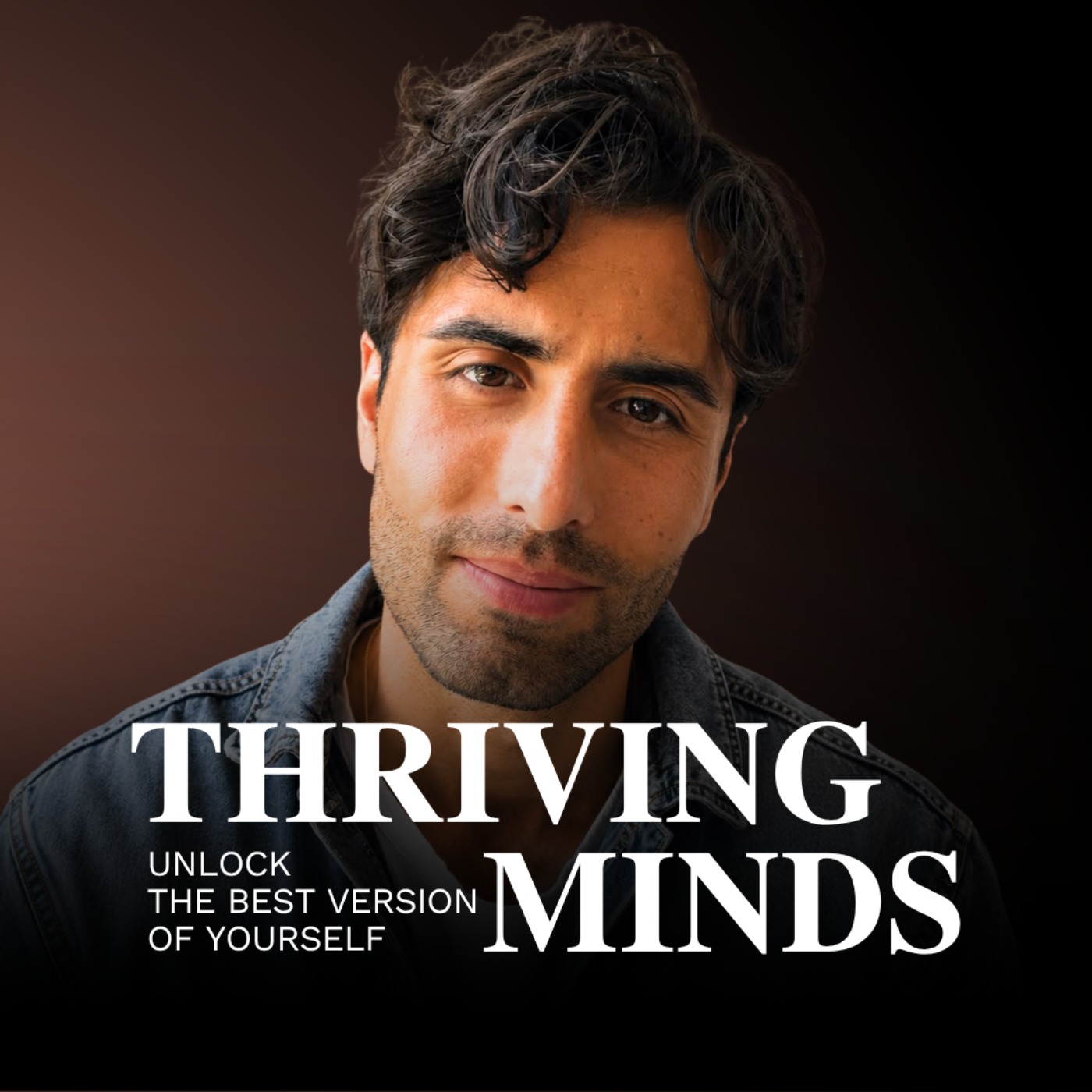
 Thriving Minds with Alberto Zandi
2 Jul 2026 · 1h 30m · 38 chapters

Hormone health and “precision/early” prevention—how sleep, sugar/insulin, stress, diet order, exercise, and genetics affect aging starting around age 30, with actionable “baby steps” to avoid diabetes, dementia, weight gain, low energy, and libido decline.
Guest (Dr. Florence Comite) background: Yale-trained physician and endocrine researcher; spent 25+ years at Yale University as clinician, researcher, and educator. Later trained at NIH (Bethesda). Known for precision health using hormones, metabolism, biomarkers, and genetics to intervene before disease appears. Treats conditions across the endocrine system; has worked on early puberty reversal in children and fertility/pain disorders (e.g., endometriosis, fibroids), and menopause/perimenopause and male andropause/periandropause.
DNA is stable, but how it “performs” changes via epigenetics. Hormones act as body-wide messengers; each person has a personal “hormone sweet spot.” Sleep quality (deep sleep) and stable blood sugar drive hormone balance. Both high and low glucose are harmful; fasting and intermittent fasting can help some but can also worsen others depending on cortisol/sugar responses. Stress/cortisol and alcohol disrupt hormones via liver/sleep/sugar effects. Post-COVID taste/libido changes may involve hypothalamus disruption.
Deep sleep vs total hours; ghrelin increasing cravings when sleep is insufficient; “eat breakfast like a king, lunch like a prince, dinner like a pauper”; PCOS framed as a polymetabolic disorder tied to sugar/insulin; endometriosis as a cause of severe menstrual pain and fertility impact; a long-term patient whose diabetes improved when he reduced alcohol; COVID-related inability to eat sushi/eggs later returning; therapeutic plasma exchange (“young blood/old blood” concept) discussed as expensive but potentially relevant to long COVID.
Written by AI. May contain mistakes.
Discussion on how hormones affect various aspects of health and aging.
“to understand what is happening inside the body before it becomes a problem.”
Exploration of preventive health measures versus conventional reactive medicine.
“So you graduate, so you go to med school and then you quickly realize that they're teaching you how to treat a disease rather than how to prevent having that disease.”
Explanation of what hormones are and the consequences of their imbalance.
“difficulty with libido or sexual function, brain fog, inability to think clearly.”
Insights into the critical role of sleep quality on hormonal health.
“In very simple terms, imagine that I'm a 10-year-old boy.”
Discussing how diet, particularly sugar intake, affects hormone levels.
“and it can be six and it can be 10 for different people, but it's the quality of the sleep.”
Delving into how sugar consumption affects overall health and hormonal functions.
“You want to make sure protein is, you know, first in your diet when you eat, even a snack.”
Explore how sugar affects hormonal balance and overall health.
“Like, you know, it could be brown sugar, it could be white sugar.”
Learn about the impact of intermittent fasting on hormone regulation.
“So some people need to eat, for example, for both cortisol and sugar, they need to eat every three hours.”
Discover advice for women dealing with menstrual irregularities and related health issues.
“And so if you feel like you're putting on weight or your cycle is not going the way it should every month, and it's perfectly common to miss a cycle now and then.”
Get practical tips on diet, exercise, and sleep for better health.
“Like, would you tell them sleep at this hour, eat these things, don't eat those, these other things, exercise in this particular way?”
Learn how individual differences can affect sugar responses to foods.
“So there are actually devices, too, you can wear around your neck that sit on the vagus nerve that slow you down, that make it possible for you to sleep better, less stress.”
Explore the benefits and risks associated with birth control pills.
“I want to talk about birth control pills, contraceptives, because I've researched very polarized views in its not only efficacy, but also how it impacts different parts of a woman's function.”
Discover how hormonal birth control may affect women's preferences and decisions.
“and the kinds of choices you make in life, whether what environment you live in, the foods you eat, the sleep, all the things we've been talking about affect how your body experiences health for life.”
Understand the symptoms and variations of PCOS and its implications.
“Because most women will ovulate 12 to 14 days before their next period.”
Learn how COVID-19 can alter taste preferences and hormonal balance.
“So everybody is different and translating it.”
Get advice on lifestyle adjustments to manage PCOS symptoms effectively.
“There's new kinds of treatments that you've probably heard about.”
Learn how lifestyle adjustments, like diet and sleep, impact health.
“change something within their lifestyle so then they can recheck if they have those symptoms?”
Explore how alcohol consumption affects hormonal balance and health.
“What does alcohol do to our overall health and more in particular to our hormonal balance or imbalance?”
Discover the role of genetics in hormonal health and aging.
“So instead of splitting like a bottle of wine, he might take a drink or a drink and a half.”
Understand how incremental lifestyle changes can lead to significant health improvements.
“So that's made up of only four amino acids, basically change the entire body.”
Learn why sleep is critical for overall health and performance.
“One of the things I say to people, I just gave a talk at a very well-known company and they travel extensively.”
Find out why resistance training is essential for maintaining muscle and health.
“And most people don't know about testosterone in women.”
Understand how to balance exercise with recovery to avoid injuries.
“Sitting around, you lose actually your bones melt.”
Learn how overtraining can hinder progress and the importance of rest.
“and working out and maintaining my muscle is far more important because I feel so much better.”
Understand how hormonal imbalances affect men and their health.
“And I think it's a very important concept to adjust, to be able to change.”
Explore the relationship between testosterone levels and aging in men.
“So D-H-E-A, again, I don't encourage people to just arbitrarily go into a pharmacy and pick all the supplements because I can't even make sense.”
Discover how genetics plays a role in hormonal conditions in men and women.
“How does testosterone show up from a traits perspective?”
Learn about various hormonal conditions affecting growth and development in men and women.
“So I trained in diabetes, thyroid, all the usual growth and development in kids.”
Discover how genetics plays a crucial role in health outcomes and personal choices.
“And so I think there may be some truth to that, but I'm not certain whether you've learned what is the learned behavior or, you know, it's part of your family heritage.”
Identify signs of hormonal changes in aging and their implications for health.
“So it's a very common gene and I have it as well.”
Understand the details of perimenopause and how it affects women and men.
“I'm not familiar with Perimenopause, I'm more familiar with menopause.”
Learn the importance of health assessments starting in your twenties and living fully in later decades.
“But when it when the rubber hits meets the road or whatever, is that the way to say it?”
Explore critical health advice focused on sleep and its impact on overall well-being.
“Florence, should we discuss about anything that we didn't discuss yet in relation to your areas of expertise?”
Learn how to prioritize what matters for a fulfilling life.
“But choosing your poisons and deciding what exactly is important to you and why and who you're here for.”
Discover why quality sleep is essential for health and longevity.
“If you had to compress all your knowledge into one essential piece of advice that we must implement in our daily lives, what would it be?”
Understand how small, achievable changes can impact health.
“Thank you so much, not only for coming, but for sharing life-changing advices.”
Learn the risks and benefits of using AI for health advice.
“for you to go through big transformational life changes.”
Explore the evolving relationship between AI and clinical wisdom.
“We should be very cautious, like proceed with caution, buyer beware.”

Get the gist, explore an idea or ask about something said.
 Claude
On Thriving Minds with Alberto Zandi, what are the key points of this episode?
Searching your listeningAutomatic transcript. May contain errors.
0:00Sleep is going to heal you faster than working out. Your DNA is stable for life, but the way our DNA performs is different. So genetics is key, but it doesn't have to define. It's not inevitable that you're on a path to diabetes or dementia or just declining with age. I want people to be able to own that knowledge and turn it into wisdom for themselves. So we do have the power to change the course of our lives regardless to the course that we've been dealt with. Exactly. Dr. Florence Comette is one of the world's leading voices in hormone health, endocrine medicine, and precision health. After more than 25 years at Yale University as a clinician, researcher, and educator training future doctors, she went on to pioneer a new way of looking at health, one that does not wait for disease to appear, but uses data, hormones, genetics, metabolism, and biomarkers to understand what is happening inside the body before it becomes a problem.
0:53In this conversation, she shares why hormones shape so much of how we feel, age, sleep, think, gain weight, lose energy, build strength, experience, desire, and live longer. The kinds of choices you make in life, whether what environment you live in, the foods you eat, the sleep, affect how your body experiences health for life. The changes that you've outlined, these are things that anyone can do at home. One of the reasons diabetes comes out in your 40s and 50s is because you do it even if you work out perfectly. How does hormonal imbalance affect men? It's part of the reason men don't live as long as women, because...
1:31Dr. Florence, how would you introduce yourself and your work? Well, at the heart and soul, I feel like I'm a healer. And I feel like I trained to take care of people and to make sure that people can own and enjoy life to the fullest. And that really arose from the fact that my father was like that. He was a huge influence in my life. So when I finished training medical school at Yale, University School of Medicine, he asked me how to stay healthy. And believe it or not, that never occurs to anyone in medical school. You learn about disease, not about health. So I felt like I didn't have any answers for him.
2:06And it confused me. And so when I went into training, subsequently, like being a resident and understanding what was going on in people, and I saw that there was so much illness and specifically you would take care of people who had a complaint, I decided that was not really the way to do it. And the way to do it would be to look at a human being as an individual and figure out how they were living life. What was their health story like? And how can you change their story so they don't turn into their parents or get diseases like their grandparents or aunts and uncles? And so that's how I think of myself as someone who can connect the dots and can make it understandable, integrate knowledge across data, real data.
2:47And to me, data is about what's going on inside the body at the cellular level. We've heard the term biomarkers. So it's looking at biomarkers. What are the numbers that create you, whether it's hormones, metabolism, your brain health, your heart, your liver, and then look at that and determine what is the interpretation of that? What are the insights I can make? And once I get those insights, work with an individual as a partner to ensure that they take actionable interventions that are based in knowledge of their own body so that they can course correct and feel well no matter what age they, whether they're 10, 20, 30, 40 or beyond.
3:27Interesting. So you graduate, so you go to med school and then you quickly realize that they're teaching you how to treat a disease rather than how to prevent having that disease. Exactly. It's reactive, not proactive in conventional medicine. So I decided to be proactive and I was lucky enough to train at the National Institutes of Health in Bethesda, Maryland. The NIH is kind of the place where we do original research in people and in laboratories. and I was, again, I had fantastic mentors and teachers who showed me how to think about things originally and how to create as opposed to just follow guidelines because the guidelines are very much one size fits all and average and it doesn't apply to any one of us.
4:11We're very different and as I learned, you're an identical twin and I'm an identical twin and we know in Aitley that we're not exactly like our twin. So I was fortunate to be able to think in terms of collecting data and understanding the research and then how do I learn from that to apply it to the next human being. Can you talk to me a little bit more about your training at Yale and the further trainings that you had that equipped you to become an expert in this topic? Yeah, definitely. Well, at Yale, we train in every field of medicine just about, which is interesting because you get to see everything from how the brain works or neurology or neurosurgery to delivering a baby.
4:46And I was always fascinated by how the body interacted And moreover, hormonally, endocrinologically, I trained very deeply there. I did started doing research for which I won many awards in medical school and beyond, which is also gratifying because you know that you can think out of the box. You're not shaped. You're not just thinking in a standard way, in a routine way. And once I trained at Yale, I graduated and got a fellowship in endocrinology. And it was a very different, in general, endocrinology fellowship, which is a study of human hormones and metabolism across the entire system, from the brain to the testicles or the ovaries or the adrenal gland, the pancreas, the thyroid, you think differently because you're thinking systematically.
5:30What is your system like? How is that operating? And I got to see from little children where I helped reverse early puberty in little children and bringing peptides to market very early on, like over 30 years ago, curing certain conditions that are now standard of care, all the way to taking care of women who had issues with fertility or pain or disorders like endometriosis or fibroids, menopause and perimenopause. And in men, similarly, they have andropause and periandropause where their hormones and metabolism start shifting, particularly as you move into the 30s. So 30 is a break point in effect, and your system really begins to go downhill under the surface for the most part.
6:14And it's expressed as lack of energy, difficulty with libido or sexual function, brain fog, inability to think clearly. And all of that had an effect in the way I thought. And so I created a program to be able to look at people in a particular way, which I call N of 1, meaning that each of us is very distinct. Again, even identical twins, we start out from the same DNA, but the DNA itself is kind of a rough draft. And the way my twin lived versus the way I live, the choices I make versus her, even our taste buds are different. And so we're able to see what that does to the body and mind and how that shifts the way you age.
6:55The goal being not to get sick. You've listed an array of different consequences of diseases that they're all pointing out to the same root cause, which is having a hormonal imbalance. Let's talk about that in particular. In very simple terms, imagine that I'm a 10-year-old boy. What is a hormone? What are hormones and what is their function? So to start as a 10-year-old boy, you may not even be in puberty then. And testosterone is quite low. But what hormones are are messages in the body. It's as if the body is hearing sounds from different places and engaging. And it's not just a one-way street.
7:29It travels around the body. So if your brain is telling your testicles as a boy or a man, you need to make testosterone, the amount of testosterone that's circulating goes back to your brain and says, hey, is this enough? What do I need to do? And that changes over time. All the hormones change different function in the body. So I can just point to the thyroid, which is this butterfly gland around your neck, and that can affect cognition, memory, the way you think. Your hair, it can affect bones and muscle and your heart. It can cause arrhythmias in your heart if it's not balanced right. It's a very common disorder to have thyroid disorder.
8:05So hormones themselves are noticed to the body of how they need to act and behave. So they are, in very simple terms, messengers that tell different parts of our body how to function. Exactly. Yes. And then the problem becomes when we either have too many hormones or too little hormones. Is that the types of problems that we can have? In a way, Well, we all have hormones and usually the same kind of hormones, although it's different in men and women. We almost have exactly the same hormones. They just act differently and they do different things in the body. So having lack of optimal hormones, meaning there's a sweet spot for hormones, all the hormones of the body, and it's different in each person.
8:52and targeting what you need to be in your sweet spot means that you have to look at every decade of life to say, what is the level that's right? And how do I feel? So it's not just hormones in a vacuum. It's what I call precision medicine, meaning you're looking at the data of what your body is made up of, and then you need to tweak it and move in certain directions, maybe eat a little differently, work out, make sure you get sleep and quality sleep. And all of those feed your hormones and it relates back and forth to your system. So let's imagine that somebody right now doesn't have the opportunity to be able to look at their own biomarkers.
9:29So these factors that would be able to tell us if we are on the right path or wrong path from a health and longevity point of view. You've mentioned a few of the perhaps consequences or symptoms of having a hormonal imbalance. Can you talk to me a little bit farther about those? So if I feel fatigued or if I feel tired, what does that mean? Is that a hormonal imbalance? And then maybe give me other examples so people from home can look into their lives and feel like, well, maybe I should get checked. Well, that's one of the reasons I wrote the book too, because what I describe are certain patterns in Invincible, the name of the book, that actually allow you to take control of your body with very simple baby steps to begin with.
10:05You don't need to see a physician or certainly get information in social media, which can be very misleading sometimes. But you need to understand that if things change, if you feel differently, for example, one of the major symptoms is energy. A lot of people don't feel like they have enough energy, particularly as they age. Looking at the way you're living life and the choices you're making, for example, very, very common, probably the most common is difficulty with sleep. Many people don't realize that there's so much you could do to course correct how you sleep, not just the number of hours, which we all hear, you know, you should get eight hours, and it can be six and it can be 10 for different people, but it's the quality of the sleep.
10:47You You need to get deep sleep in order to feel energy. You can sleep 14 hours, but if you have 14 minutes of deep sleep, it's not good. You can sleep six hours and you might have an hour and a half of deep sleep and you might wake up with a lot of energy. And all of that begins to help your body move in the right direction. And it relates to the way you secrete hormones. For example, if you don't sleep enough, you make a hormone called ghrelin from the brain and that makes you hungry for bad food. So you wake up kind of with urges to eat donuts and other food that's not good for you because is your body's not in balance?
11:18So hormones create a sort of picture for people that they can interpret in different ways. And actually in the patterns, they might see themselves in these patterns in the book at any age in their 30s, 40s, 50s. You mentioned deep sleep. What is deep sleep and how can we get that deep sleep? Deep sleep is the most restorative sleep. It kind of cleans up the metabolic damage that happens. And actually there's a washing that goes on in your brain to your body where you clean out these toxins. But there are tips that people can use for themselves. For example, not eating for about an hour, hour and a half before they go to sleep, even two hours, because it allows your brain to move into a place where you can make the right hormones, things like growth hormone, lower cortisol.
12:03You can make sure your sugars stay stable. That's another huge factor in hormones. Sugar and the way your body interacts with sugar based on your genetic makeup is one of the most critical factors of avoiding disease with aging. So people who understand that know that they can focus on eating protein, fat and fiber before carbs, limiting processed food and ultra processed food. And those kind of factors alone can make a huge difference in someone's life because we take for granted that we're raised or see the community in which we live and eat and that it sometimes doesn't serve us well. For example, I love bread and I will eat bread, but I know from monitoring my own sugar, when you put a bread basket on the table, like you go to a restaurant and you're hungry, you want to slow down that intake of bread or you want to make sure that you maybe use some foods like a nut butter or a handful of nuts or take fiber before you eat the bread.
13:02So it slows the absorption of foods that are high carbohydrates. You want to make sure protein is, you know, first in your diet when you eat, even a snack. Talk to me a bit more about sugar. So it's very bad for our hormonal balance and for overall health. Why? Why exactly? So sugar is sort of, in a way, contributes to every cell in the body. In fact, there's ways we look at biomarkers that tell us, for example, if you're red blood cells, You know, we all have blood cells in our body. And I think of them sometimes as powdered jelly donuts because they can be powdered with sugar. You have more sugar on it.
13:39They go everywhere in your body and they get sticky. So they can interrupt your nerves. They can interrupt your mind. They can interrupt your heart, your eyes, your kidneys, your liver. And so sugar itself isn't evil. Like regular sugar, in fact, I endorse people having regular sugar instead of using other forms of sugar. What is regular sugar? Just plain sugar, sugar cane. Like, you know, it could be brown sugar, it could be white sugar. But some of these other types of sugar substitutes are not as good for the body. Sometimes they make you crave foods in ways you don't need. Like which ones?
14:13Aspartame or Splenda. I don't know if there's the same names in the UK. And those may turn off your body and turn on your body for different secretions and hormones that you don't need. And so using more physiologically comparable, I'll define physiologically. It means working with the body. So some people use the term natural, but some things that are natural may not necessarily be good for you. So the reason that sugar is so important, and it works through hormonal system with insulin and that relationship together with your genetic makeup dictates how foods affect you. So for example, there's a device called a continuous glucose monitor that I think can be purchased over the counter now.
14:56I know for sure in the States, I'm pretty sure elsewhere in the UK and across the world, it's available. It costs not that much money in terms of understanding how your body's sugar fluxes, but disconnects in the sugar and the way you age are relatively important in that almost every disorder of aging from dementia, either Alzheimer's or other forms, cancer, which is cause sometimes insulin is a, if insulin is out of order and that relates to sugar, you can get inflammation and that can cause problems in every cell. So heart disease, heart attack, stroke, cancers, osteoporosis, even bone loss, where you shrink and you're shriveled up and you break bones like your hips or those are all indirectly related or directly related to sugar.
15:47You get fat in your liver or visceral fat around your belly. you know, the usual tummy that a lot of people get into their 30s and 40s. Even if you do everything right, the hormones are out of sync. And if your sugar isn't in a certain sweet spot in a certain area, and there are numbers that go along with that, you can follow that yourself. You actually can put that into play without seeing a clinician and get guidelines for that. And your advice would not be to completely stop eating sugar, but to eat the natural sugar and eating it in the right order. Exactly. Like try to eat your macronutrients in a way.
16:25So you're asking, what can people do can just put that into play, even as a 20-something or 30-something? And that is one of the most important things. So you want to keep your range of sugar within. It's like your temperature. You know, we all know that it's supposed to be 98.6, but actually some people's regular normal temperature is 97 and other people might be 99. So not all of us are exactly the same, but there's a range that is healthy. For those that are listening from Europe, that's around 37 degrees Celsius. Yes, sorry. I should have done that. We heard about that yesterday and I didn't automatically change it.
16:59Yes, you're exactly right. And so ideally we know if that goes off, if your temperature goes up or down, something might be going on in your body that's not so healthy. And it's usually a sign of an infection, right? We all knew about that with COVID, which changed the world in a way. And I think is why we're so focused on longevity and health now, because when people weren't healthy, they did very badly. Many of them ended up on respirators or died if they had underlying disorders that they weren't even aware of. So this lack of awareness is really, you know, key as well.
17:37Deep sleep, sugar, what are other contributing factors to hormonal imbalance, like, for example, stress? Stress is huge. So there are ways you can deal even with stress, but stress causes certain hormones to go out of sync. For example, cortisol. And sometimes a person doesn't feel stressed, but their cortisol is elevated. Other people may be stressed and that is a natural state for them, but their cortisol isn't. So your body can react differently. Like for example, intermittent fasting. That can be great for some people. That can hurt other people. And for some, it can be neutral. There are actually genes that say if you intermittently fast, it doesn't do anything to you.
18:17And so you have to be aware of it. So some people need to eat, for example, for both cortisol and sugar, they need to eat every three hours. Otherwise, they get faint or weak or feel like they're going to pass out. Or the term hangry, do you know that? Hungry and angry. And so understanding that your body is unique and what you need to do, you can learn how to change and take baby steps to make it even better is so easy. and so reachable. And that's why I wanted the book, because while I've taken care of lots of people, it would be impossible to take care of millions around the world. And I felt like if people got information, they actually would know what to do with their own sense of well-being so that they can achieve optimal health for life and live a long life in great shape.
19:02That's really the goal. I was sure the generalization that women should not do intermediate fasting because it affects them from a hormonal perspective different to men. Is that generalization accurate? No. So it's very variable and it's really about the singular human being. So there are some women where their hormones will change for better or for worse, and if they try to starve or intermittently fast, they don't do well, you know, and they need to eat every three to four hours. Generally, what I recommend is using like a trail mix. If you're running around and you're too busy to actually sit and eat, make your own trail mix with some nuts and yogurt balls or dark chocolate, even one of my favorite treats.
19:42And then you can keep your sugar stable because actually I've seen a lot of women in their twenties and thirties who cannot have babies. And the reason, or they go through in vitro fertilization and they don't make good eggs or embryos. And that is largely because their sugars are too low. They're being too careful. They look fantastic on the outside, but on the inside, their body isn't functioning the way they need to function to have healthy embryos and healthy eggs. For men, fasting is also equally the same issue. You can have some men who can fast all day. I see a lot of men who say, I don't have to eat till dinner.
20:17And a lot of times they then overeat for dinner, which isn't the best time of day to overeat. In fact, one of the rules I think is helpful that some people should take to heart is you eat breakfast like a king, lunch like a prince and dinner like a pauper. And you eat dinner and try to finish dinner earlier in like a couple hours before you go to sleep. That doesn't always apply. I'm someone who can fast. I can fast all day. I haven't eaten anything yet. I'm not hungry and I probably won't get hungry for another couple of hours. And so, and even then it's optional for me because I maintain my sugar pretty well.
20:52I can keep it within the range I want to keep it without eating, but that's not true for, I would say it breaks down into a third, a third, a third. A third of us can do that. A third of us should not do it because it gets too low. And that's actually bad for the body too, because it hurts the heart cells, the brain cells, and it's actually a sign of future diabetes too. So too high sugar in your body or glucose, too low, both extremes are not good. You want to stay within a narrow range to keep yourself as strong and as healthy as possible. What would you advise to that girl that right now is in her 20s or 30s and perhaps due to overexercising or maybe not following the right diet and doing intermediate fasting, they have an irregular period or no period whatsoever.
21:35And they are concerned that they won't be able to be fertile when they want to have a baby. What would you advise them? In that situation, there should be some testing that's done. In the States, you can actually almost order your own tests from almost everywhere, like whether it's Aura or Whoop or the laboratories like Quest and LabCorp. That might be possible here, but I know there's private and public health care that's a little different in the same way that you might be able to have choices. So for someone like that, if they've not taken hormones, like hormonal treatment with birth control pills can suppress testosterone in young women and actually creates a situation where you can become a diabetic.
22:16It's actually almost a diagnostic test for diabetes. And so if you feel like you're putting on weight or your cycle is not going the way it should every month, and it's perfectly common to miss a cycle now and then. That is not irregular. It's common. But if your cycle is always irregular and you're not sure what's going on, testing is really necessary. And there are certain times of the month that you should be tested to see what's going on. Particularly, you should test whether you're ovulating or not, which is toward the end of the cycle. What about the cycle being painful? Is that something that women should accept?
22:49Should it be painful? Not necessarily. There's a degree of discomfort. There's hormones we secrete called prostaglandins that can cause cramping and discomfort and also the cravings that we all have and the change in GI symptoms. Some women notice that. They notice either they're constipated or they have diarrhea with their menstrual cycle. And that should be looked at because if it's extreme and if it interferes with the way you live life and you can't function, then it might be something called endometriosis. Endometriosis is very common. And it's a sign that the lining of the uterus is implanting elsewhere in the body or outside the uterus.
23:26And that can be painful because bleeding internally can be very painful. I actually know personally, I don't have endometriosis, but I have a certain condition called ischemic colitis that when I'm stressed, which isn't very common, but I get there. And when I'm not drinking enough fluid together, I can get this condition. And if I bleed internally, it's excruciatingly painful. So you know you don't want that. So for women who have a lot of pain, they should be studied. They should see a doctor and figure out what's going on and why, because you want to stop that in its tracks because it can interfere with fertility and comfort.
24:01You can't live life well because you're uncomfortable. What would you advise them in very simple terms? Like, would you tell them sleep at this hour, eat these things, don't eat those, these other things, exercise in this particular way? So those are all great questions. But let me preface it by saying, which I've referred to before, as twins, we both know that you're not exactly your brother. I'm not exactly my sister. And so there are changes in us. My sister doesn't have the ischemic colitis, but she had a gallbladder problem. But in general, if you want to start in a place where this is a good starting point, you want to eat at least one gram per kilogram of protein a day for your body weight.
24:41If you exercise a lot, and I'll define what that is, it may be two grams of protein, not massive amounts of protein. That's not necessarily good. And if kidneys are a problem, then you really don't want to do a ton of protein. But one to two grams per kilogram is a great way to start. Exercising. It's great to have a combination, particularly as you head into your 30s and 40s. A lot of men seem to be more attracted to weights, and women are a little afraid of weights. and I'm generalizing completely because there are women who love weights and men who love aerobic exercise and running and all of that.
25:16But a combination of resistance exercise two to three times a week where you maybe half an hour to an hour where you lift weights and it doesn't have to be the heaviest weights because it can change your body, even low weights with reps. You want to do high intensity interval training, which allows you to ask your heart to speed up and be powerful. And that's really an important part. And that's where you might go for a walk, but in the middle of the walk, you might sprint for like a minute or do it on a treadmill, if that's your thing, or a Peloton or rowing, any one of that. And then aerobic, move, move every day.
25:54So that's exercise. As far as sleep, I mentioned a few things already, but ideally six to eight hours is kind of a nice number. Again, some people can sleep 10 and other people might sleep a little less than six. It's actually a genetic disorder where you only sleep four hours and you can't sleep more than that, but they have a different kind of position. So generally six to eight hours at least, of which you want to get at least an hour or more of deep sleep and an hour or more of REM, which is the dreaming creative sleep. So there are people just like with fasting who get a lot of deep sleep, but don't get enough REM.
26:30And generally you can function that way. I'm one of those people. So when I wear my aura or when I understand what I'm doing, I can sleep three or four hours and feel fine, just like I can fast. But not everybody is like that. Most of the time, if you default to REM sleep, you don't feel energetic. You can sleep 10 hours and you wake up feeling tired. And that usually is a sign that you're not getting enough deep sleep. So those are the basic functions. And also then anxiety and stress. So you brought up cortisol. One of the best ways to turn off cortisol and to reduce that stress is meditation.
27:04And it doesn't have to be serious meditation. It could be breathing, you know, for a few minutes where you calm, you call into action a system in your body called parasympathetic as opposed to sympathetic. And it calms you down, even if you're angry and upset. I got some advice from my Qigong master, who I adore, and I've studied the field. And he used to say, if you feel like this toxic energy around you and you need to keep space, that you put your thumbs inside your hands and you cover them. And I've actually felt a difference. So I asked him, well, what if my hands are busy? And he said, do it with your feet, like try to curl your toes.
27:40And he was right. It worked. It worked phenomenally well. So there's a lot out there that I don't know yet, but that was one of the tips that I thought was fantastic. Can you explain a little bit further the difference in between sympathetic and parasympathetic when it comes to our nervous system? Yeah, so our nervous system, think of the sympathetic system as turning on. Everything is excitable and parasympathetic as being calm. So there are actually devices, too, you can wear around your neck that sit on the vagus nerve that slow you down, that make it possible for you to sleep better, less stress.
28:12It doesn't work for everyone. And I know because we've tested it. But for some people, it will work. Just like anything we choose in life, it's not a great fit. Like for some people, if they wear a continuous glucose monitor, they'll find that eating a banana causes their sugar to go to 200 while eating, having ice cream or a cookie doesn't do that. And there's a lot of studies on this. Other people, it's the reverse. Are those people lucky people? Yes. I'm one of those people where a banana causes my sugar to go up, but it doesn't mean that I eliminate it altogether. I just have a banana with like nut butter.
28:46I put some nut butter on it and I can eat ice cream. And usually, again, it depends on the makeup of the ice cream. You have to have ice cream. I've studied once the combinations of all the different yogurts out there and ice creams because I much prefer the ice cream than a yogurt kind of ice cream. And some of the yogurts are worse for your system than ice cream. So I encourage people to try out what might work for them individually. I want to talk about birth control pills, contraceptives, because I've researched very polarized views in its not only efficacy, but also how it impacts different parts of a woman's function.
29:26So what are your views on it? So I think there's positives and negatives as there are in everything in life. There are studies that show that if you're on birth control pills as a woman for about seven years, you reduce almost all cancers of the reproductive system except for cervical cancer. So endometrial cancer, which is the lining of the uterus, ovarian cancer, that's all really important. On the other hand, you're also reducing critical hormones because what birth control pills are are very low doses of estrogen and progesterone and no testosterone. And we can get to that. But estrogen and progesterone are vital for the body, for the brain, and for the bones, and for the heart.
30:07And so you're taking very little. And so it causes an increased risk, for example, of poor bone. So if you have a genetic propensity, if in your family there's osteoporosis, which is weak bones, fracturing hips, shrinking with age, fracturing your wrists at a young age. Actually, in women it can happen in their 40s and men in their 50s and 60s. Then it should be a balancing act. I believe very strongly if young women from their teens to their 20s are taking birth control pills, they need to take some testosterone. Generally, they can't maintain testosterone. In the States, testosterone isn't even approved.
30:42Yet I've been on it for 30 years because I have a very strong family history on both sides. My mother and father each had a sister that osteoporosis played a role, fracturing and shrinking played a role in their death. And so I wanted to avoid it. So when I look at my twin and I, I started it 30 years ago. She didn't start it until about 10, 15 years ago. She has early osteoporosis. I don't. So there are outcomes that you can study. And that's what I meant by data. And that's how I look at individuals. So I can see prototypes, which again is invincible because it's about defying your genetic makeup.
31:17So my genes have a high risk of osteoporosis, but I don't have to act on that. So that is a field called epigenetics, where you can turn switches on and off. and the kinds of choices you make in life, whether what environment you live in, the foods you eat, the sleep, all the things we've been talking about affect how your body experiences health for life. And that's critical to me. So birth control pills are very good in some aspects. And for some people it's necessary. It's not like it's, you want to choose them. They're safer in terms of your risk of getting pregnant, but it's not a hundred percent by the way.
31:54And so it's easier to do that. And some of us wish there were birth control pills for men. There aren't yet. You can't, you know, testosterone itself doesn't really shut the system down the way estrogen does for us women. So there are positives in everything. It's not like all or nothing to me. When I was researching this topic, I found very interesting the work from Dr. Sarah Hills. I'm going to read it to you and I'd like to get your take on it because I just found it interesting. So basically, she was saying that, or her work reveals that women, from a psychological point of view, they're different people when they're on the pill or off the pill.
32:35And she said that her work explores how hormonal birth control alters women's brain, mood, and partner choices. Hormonal contraceptives stop ovulation and flatline natural estrogen, substituting it with synthetic versions. This can impact partner preference, decreasing a woman's attraction to highly masculine features like defined jaws, big shoulders, and so on. Her work recommends choosing your romantic partner off the peel before committing to a long-term relationship. Well, it's fascinating, but I haven't read her research. Okay. Similarly, I think for, I'm not, yes, it is true that on birth control pills in general, but there are birth control pills that cause variations in estrogen.
33:23So it's, it may be similar to what happens as women age into their forties and fifties and enter perimenopause and menopause and their cycles are not as variable. So estrogen levels go up and down during the cycle. Usually they're very low the first week. They go up, up, up until two weeks before a menstrual cycle. And that could be 21 to 36 days. It's not always 28 days. It's just convenient to say 28. And so your body does change. We women know how to change because every week of our cycle is very different. And so whether that can universally apply, I find that a little challenging. I would want to read the original research and see exactly how it was studied.
34:08I do think it has an effect. estrogen, testosterone, progesterone all affect the brain. Does it affect the brain to the point that it makes different choices or different sense of wellness? I think it has a lot of validity to think about it that way. And I'd be fascinated to read that work. Why is it easier to say 28 days? Because most women will ovulate 12 to 14 days before their next period. So when you figure out where they are in their cycle, you can't figure it out from day one. You have to count backwards. And so 14 days for a 28-day cycle is right in the middle. So it makes it easy to figure out.
34:45And in general, women can, you know, have 28-day cycles, but it's not exact. And most women aren't like clockwork. Our bodies can vary depending on what we eat, what we drink, the stresses in our life, having children or not. All of that plays a role in our body. What is PCOS, polycystic ovary syndrome? So it's now a new term, polymetabolic disease or disorder. And what it is, it's a number of abnormalities that can show up in the body. So you can see changes like difficulty. You have extra little cysts in the ovaries. is if you take a picture of the ovaries by ultrasound, you'll see a lot of little follicles, which isn't common.
35:31But women can have that condition without the follicles. It was first defined as more about the ovaries. Now it's clear, and I've known this for years and treat a lot of women with this disorder, that it creates abnormalities in sugar, abnormalities so you can easily gain weight, abnormalities in cholesterol. You can have skin conditions, a condition where you get browning, barren patches on the skin called acanthosis nigricant. But you can have sisters who have exactly the same genes and one has every stigmata, every sign of this condition, and the other has none. So it's very variable in its presentation.
36:10And again, that has to do with the choices you might be making and how your genes can turn on and off. There may be another part of the genetic makeup, the DNA, which doesn't change. So your DNA is stable for life, but the way our DNA performs is different. So these switches, that field of epigenetics that I talked about is critical. And that's why understanding how you eat, sleep, exercise for you in particular, which again, may be different than your twin brother. So everybody is different and translating it. So one example with my twin and I also, and I'm sure you have some examples, is that I can live on sushi and sashimi, except after I got COVID, I lost my taste for two favorite foods, sushi and chastime and eggs, which are unrelated.
36:53So it definitely affected my brain and my desire to eat those foods. My sister doesn't touch fish and she's a phenomenal gardener and I basically murder plants. I really, I can keep people alive, but not plants. So we have distinct differences and I'm sure you can think about that with your brother as well. And those differences, especially yours from pre-COVID to post-COVID are because the COVID disease changed hormones in your body and then hence why maybe you don't like the taste of certain things? Yes. What I believe is the COVID, those spikes, and even if you didn't think you had COVID, but you had to get the vaccine, those spikes travel everywhere in the body.
37:30And I wasn't aware of it until after the COVID, the acute phase of COVID passed. It was one of the first to get it I didn't, because I traveled to San Francisco, came back, and it was already around. So I had it very early. And those spikes affect every part of the body. In fact, in the States, the CDC looked at the degree of disorders that are happening now, like heart disease, heart attacks in younger people, strokes, neurological abnormalities, even in children. And so those spikes can damage every part of your body. In my case, what I think happened is those spikes affected a part of the brain called the hypothalamus.
38:11It's a higher part of the brain than what we think of as the pituitary or the third eye. Have you heard of that term? Yeah. Where you go right behind. So that's the pituitary. But higher than that is something called the hypothalamus. And the seat of the hypothalamus is called the arcuate nucleus. And that part of the brain affects your desire, libido, as well as food cravings. And I think that mine was affected because otherwise it makes no sense that these two very different kinds of foods that happened to be my two favorite foods, I completely couldn't eat them. I couldn't even smell eggs for a long time.
38:45Five years later, this past summer, I finally started eating eggs in Portugal. I was traveling and I was testing it all the time. And all of a sudden I could eat eggs again. And this is literally my favorite food along with sushi and sashimi. I mean, maybe the Portuguese eggs are better than that. Could be. Chokes aside, but like if someone is listening to this, they're thinking, well, post COVID, I also had to change in the way that I am or the way that I taste things. What should they do? Is there something that they should do? There's really very little to do. There's some very invasive tests that you, treatments that you could do, but I'm not sure that it's reachable for most people.
39:22There's new kinds of treatments that you've probably heard about. Have you heard the term young blood for old blood? No. So that's where they connected two mice and they transferred the blood from one to the other. The old mice got young, the young mice got old. And nowadays we do therapeutic plasma exchange where you take a unit of blood out of one arm and you put the red blood cells, but you clean the yellow, the plasma. And by cleaning the plasma, you can remove these particles that are dangerous, that cause problems. They're called senescent cells and they're immunologically active. They're also referred to as zombie cells.
39:59And they're leftover cells from infections and they can hurt you. So you need those cells to convert into what we call killer cells. But what happens is when they've been used up either because of COVID or hepatitis or Epstein-Barr or mono or autoimmune conditions, you have too much of it. And as we get older, we get more and more because we've been exposed to life and we can get disorders and viruses and other conditions. by cleaning them out, you can actually make a difference for long COVID and COVID. I think I've seen this on social media. Is it a yellowish liquid? Yes. The plasma is the, when you draw blood and you let it sit, you'll see it divides into red on the bottom.
40:40That's the hemoglobin, mainly red blood cells. And on top, you'll see plasma. If the plasma is very pink and very yellow or pinkish yellow kind of, it means you have high lipids. So that's a little trick too. But cleaning the plasma is one way of reducing and reversing what COVID can do to your body. Should we do that like once a year? It's very expensive right now. So until it gets, it's, we work with a company called Circulate and they're spreading the word and they have the right kind of machines and the people, nurses who know how to do it. It's actually a technique that's been in use to clean the cholesterol from the blood.
41:18So it's called apheresis and using certain filters. So like if you, do you ever donate a unit of blood? Yeah. So if you donate a unit of blood, you know, it goes into a certain kind of mechanism that cleans it and can separate it. Sometimes they use different components of the blood. It's the same concept. You're pulling out this blood, it goes through a certain, you know, cleansing and you get rid of the plasma that has bad particles in it and you replace it with albumin. But it costs thousands of dollars now. So until it becomes reachable, I think it's difficult for most people. I want to quickly go back to PCOS.
41:53So you've mentioned a number of symptoms. If someone at home feels like they have those symptoms before they go and they get checked, would you advise them to do something or to change something within their lifestyle so then they can recheck if they have those symptoms? They can start where I outlined, where it's look at your sleep, look at how you're eating food, because mainly one of the first symptoms would be weight. Weight is uncontrollable. And it can start in a young child. And metabolic syndrome is very common. And you're born with certain genetic makeup and features that weight, even if your siblings are in great shape and they're thin and run around, which is what we expect in children, because you're running around, you're active, right?
42:34It said you can't keep up with a two-year-old because they can run back and forth on a football field all day long and not get tired. And I would get exhausted. So all the standard approaches are key. And then what people find out when we work with them is they may need to make a little change here or a little tweak there. Maybe for them, again, eating, they need to eat every four to five hours as opposed to fasting, you know, 16 hours. They need to decide for themselves what is working based on the evidence they create for themselves. So it's a process that everybody can do.
43:14I want to talk about alcohol. What does alcohol do to our overall health and more in particular to our hormonal balance or imbalance? So it's an interesting question. So alcohol can actually change the way we absorb hormones and the way our hormones act. It affects largely the liver. It's a toxic kind of substance in some ways and high, particularly wine can have a lot of sugar in it. So again, it's a balancing act. I don't believe in deprivation. I believe in moderation. I'm not going to tell people not to drink, but I think they need to understand what alcohol does to them specifically. One of the side effects of alcohol, particularly because we tend to drink it at night, you know, and if we're drinking a couple of glasses of wine and have a couple of cocktails, it's going to affect our sleep.
43:57It's going to cause sugar to go sky high. And then while you're sleeping, it can go quite low because the body has to deal with it and clean it out. And so that can be problematic. Now, it doesn't happen to that degree in everybody. There's a man I've taken care of for 15, 20 years who's well known as a celebrity in the news world. And he is cut and chiseled. He really takes immaculate care of himself. He has very high risk of Alzheimer's dementia. So he was always aware of that, like every member of his family. And when he came to me 15 years ago, it was actually because of his memory. He said, my memory is declining and I can't work like this.
44:35And it reversed very, very quickly. I think testosterone played a big role. But when I looked at his initial biomarkers or numbers, he already had borderline diabetes. And the only thing he did to relax, because this man works very, very hard, was to share a bottle of wine at night with his wife. And he didn't want to cut it out. And I understood, like, that's your one place where you go to turn off and relax. After a few years, he experimented and he cut out alcohol altogether and his diabetes went away. It was a direct impact for him. In the end, he's decided, and this is the last few years, that the alcohol, he can drink it in moderation.
45:16So instead of splitting like a bottle of wine, he might take a drink or a drink and a half. And that made a difference. So is he optimal? No, but he's decided that the quality of his life is such that he's not going to give up wine, which he enjoys so much and it helps him relax. But he's going to do it in moderation. So moderation as opposed to deprivation can also help us. Maybe we can't completely cut out some of the things that are hard for us to do, but maybe we can scale it back. So someone where rice is a big part of their diet, but rice causes sugar to go sky high in that particular person, maybe eating half the amount of rice that you're used to, substituting for something else.
45:53Looking at brown rice, which is good. It's not perfect because brown rice is known to have arsenic in it more than white rice. So there's a balance. Arsenic is a poison for your body. It's a toxic poison. So the same thing is true of things you would not imagine, like living on a golf course or near a golf course. If you read in the book, you'll see that that actually increases toxins in your body. Endocrine disruptors, which means it changes the balance of hormones and it causes illness. And you don't want that either. But are you going to move if you live near a golf course? No. Brushing your teeth three times a day actually reduces your risk of heart attack.
46:30Because there are germs in your mouth that can travel through the rest of your body. And by brushing, you're removing some of the germs that would cause infections and potentially heart attacks. Make sense? Yeah, I'm just unpacking in my brain how I'm going to change my life after this conversation. I want to talk about genes because we've talked extensively about the external factors that can affect our overall health, but in particular our hormonal balance. what role do genes play in our hormonal balance so genes play a huge role largely men and women as our bodies change every decade i don't think of sometimes in medicine it's defined as you're in your reproductive years meaning you can have babies or you can make babies as a man and you're non-reproductive years i think of it as every decade of life and each decade of life our body evolves you can see some of the changes that are going to happen even in children i have without even knowing a story about, which is important, knowing what your health history is, your family history.
47:35But without that, the numbers speak to me. I've been told it's a gift. For me, it's simple, but I thought every doctor did that, but it's not the case. So that's where a lot of this started, being a twin, looking at numbers, and also showing that changes are happening dramatically under the surface in our 30s. So you're about to enter your 30s, that's gonna be something you're gonna wanna think about or figure out by looking around at your family, at yourself and what you're doing. So genes will, is the, is we think of it as maybe a rough draft, the DNA you inherited, which is genes. So that's made up of only four amino acids, basically change the entire body.
48:13And those don't change, but what changes is the way, the choices you make for what you're producing in your body and the health of your body. So genetics is key, but it doesn't have to define. It's not inevitable that you're on a path to diabetes or heart attack or dementia or stroke, or just declining with age, Parkinson's, other things. You can actually look at those effects. And that's what I wrote about because I want people to be able to own that knowledge and turn it into wisdom for themselves. And you can by very simple tools, like the continuous glucose monitor, by eating and sleeping and working out differently, all of which I've defined, but in general.
48:53So you need to define it at your personal level, which I think of as N of one, meaning we're all unique, even identical twins who have the exact same genes, they can change. They can change in utero. They can change later in terms of the way they express themselves, the epigenetic part of it. That is very encouraging and very refreshing to hear. So we do have the power to change the course of our lives regardless to the course that we've been dealt with. Exactly. And it's really nice to hear that if you can implement it. But again, implementing doesn't mean changing your life overnight. This is not a New Year's resolution.
49:28This is something that's a process. So I also, from the very beginning of doing this work, when I started Women's Health at Yale in the 90s, I would say, let's do baby steps. Let's pick an area that's particularly disturbing or maybe easy for you to change. Where is a place so that you get encouraged and you get motivated and you see that change begets change, if you will. And so you want to go from strength to strength. And that's possible for every single one of us. From your research, what was that area for most people? For most people, I thought when I started it would be exercise, food, sleep.
50:04It's the reverse. It's sleep, food, exercise. And so sleep is paramount. One of the things I say to people, I just gave a talk at a very well-known company and they travel extensively. And these are mostly men in their 50s, 50, about 50, 55. And I said, if you're traveling and you're exhausted, don't wake up at six in the morning to go to the gym. Sleep in because sleep is going to heal you faster than working out. So there's weights that I put against what is specific. Sometimes if I see a woman in her 40s or 50s dealing with hormonal fluctuations because of menopause and perimenopause, I will selectively decide what hormones are necessary.
50:48If sleep is a problem, progesterone is the way to go. If she can't put on muscle and she even looks fabulous, but she's skinny fat, meaning she doesn't have enough muscle, but she just models fat well, and there's a lot of women like that. Men too, where you begin to lose muscle in your 30s and muscle is a critical organ of longevity. You need it to package sugar, actually. One of the reasons diabetes comes out in your 40s and 50s is because you don't sustain muscle, even if you work out perfectly and eat perfectly. Testosterone plays a big role there. So selectively marrying what is necessary for a person, whether for a woman is it progesterone or testosterone, in men balancing their estrogen as well as their testosterone, but not giving men very high estrogen because that's not the physiological state for men.
51:36Men usually have lower estrogen, higher testosterone. We women have actually more testosterone than estrogen circulating in our body, but higher levels of estrogen. And most people don't know about testosterone in women. Most doctors don't even use it. Don't prescribe it. If muscle tissue is so important to all of us, does that mean that we should all be lifting weights forever, almost? Yes. So that I can say definitively. With moderation, meaning don't make yourself so muscle bound. I saw an article, I forgot in what newspaper, maybe it was a telegraph, where they're showing how everyone is so muscle crazy and protein that they overdo it.
52:14So again, the body is finely tuned and you don't want to overdo something in a massive way and underdo it in another way. So resistance training, three times a week, half an hour, an hour, don't do, no pain, no gain is not necessarily true. Yes, a little discomfort. Like when I work out, even with low weights, I feel it for the next day or two. So you want to make sure there's a relationship between what you're doing and you want to develop it over time. So you don't want to start by going to the gym and lifting a hundred pounds. You want to start maybe with, for women, maybe five, 10 pounds and depending on your body build, what you've done before.
52:53So I think one of the things women can do for themselves and men is make sure they actually work out like that in their 20s even, and younger. Because I find that children who were picked last to be on teams, like I'll be told this by certain groups of certain ethnicities, actually, Ashkenazi Jews and certain sects of Asians, where they as children were not picked to be on a team, they were always the last person picked for soccer or football or baseball. And over time, they didn't work out. And some of it is genetic. It's definitely based on their genetic makeup that they didn't have the kind of muscle development.
53:32They didn't have the same kind of energy. But then as they age into the next few decades, they can't recover as fast. It takes much longer if you've never worked out. So working out, particularly resistance training, but also moving, aerobics, whether it's sprinting or marathons or just walking, is a good thing to do because it encourages your body to stay healthy and encourages you to recover as you age. Sitting around, you lose actually your bones melt. You lose calcium. So you get weaker. That's why when you're in bed and you're not feeling well, when you first get up, you can't move in the same way.
54:08In fact, I mean, you're answering already the question that I had. So I want to address precisely the people that right now are listening to this, that they are not actively working out. How can we convince them? So can you talk to them directly and tell them what their life will look like if they don't work out? Basically, if you don't work out, you'll be incapacitated. Now, can you go months or a couple of years and not really pay attention because you're so busy with your entrepreneurialism or building your family or both? Maybe there's issues with your parents and you're raising a family at the same time.
54:44It's very hard to get everything aligned, particularly for women, but also for men, because we tend as women, I think, to be caretakers a little more and we have the babies. So we end up our bodies shift all the time and we have to adjust, but not to worry about it, to start slowly. And I think the biggest issue is getting to the gym. Once you're in the gym, if you can find something you like to do, for example, I used to, you know, go on a treadmill to watch certain shows that I might not watch if I'm just at home watching TV or doing something like Emily in Paris, for example, which I never thought I'd like.
55:19And it was on when I got on a treadmill and I found myself falling in love with the costumes and the clothes and all of that. But that is the motivation. So I had hurt my knee. I tore my ACL and my meniscus a few years ago. And I was so busy with my company and growing it and developing things that I really didn't get back in the gym. It took me a couple of years. I got stem cell treatment because I didn't want surgery and it healed immediately, which was wonderful. But it took me a while to convince myself. And now just the last month, like actually two weeks ago, I had a choice of going to the gym or getting makeup for something I needed to do.
55:57And I decided to go to the gym and not do the makeup because I knew that the gym and working out and maintaining my muscle is far more important because I feel so much better. And that's the reinforcing impact of it. So it's like that endorphin release that we talk about from the brain, which is also a form of a messenger hormone, a neurotransmitter that makes you feel good because you're in the gym, you're laughing, you're with friends, you have relationships. All of that is critical to your health too, not just food, sleep, exercise, but the way we live life. So now let's talk to the other type of people, the people that they actually prioritize their workouts above everything else.
56:37And they're working out every single day. What would you tell them? To be careful because you can have strain from over exercising, overexertion. I'm taking care of a man now who is in, he's getting in better shape. He's in his forties and he tore tendons in his arm and he's very upset because he can't do upper body exercise. He can't lift the weights he wants to. And he did that by overtraining, by lifting too heavy, by pushing himself. So there's a time for rest and a time for working out. You can't work out all the time because you put your body under stress. And all of us have different breaking points.
57:13So I know now, because I tore my ACL in my medial meniscus, that when I do yoga, I can't overstretch. I was very exuberant. I wanted to do it right. And so I overstretched and I felt it, you know, tear. And so I'm more cautious. And I think paying attention to what your body is signaling is really important. So with this man, we're on the phone with him, we're talking to him, I referred him to someone who does regenerative medicine, and they're doing physical therapy. And we have to caution him to be patient, because he's very impatient, he doesn't know why he can't get better tomorrow. And he needs to put time in to heal.
57:50So healing is an equal part of everything we do in terms of training and being aware that we can't always do everything perfectly. For example, when I travel, I actually don't work out that much. I might walk and run around, but I don't go to the gym. I used to, but now I find that I need sleep more and I prioritize sleep rather than working out. And I think it's a very important concept to adjust, to be able to change.
58:23Let's talk about men in particular now. How does hormonal imbalance affect men? It's huge for men. I think it's part of the reason men don't live as long as women, because their hormones are not palp... There's no way to tell what your hormones are doing necessarily unless you're so tuned into your body, but I find that to be rare. What I see most men present with, and I used to think, like in women, I used to think it would be weight, and this is many, like two, three decades ago. And in men, I thought it was libido and sexual function. It turns out that energy in both sexes, in everyone, makes a huge difference.
58:59Whatever biological or whatever choice you are as a gender, it doesn't matter. And so having the energy that you think you should have, because there are a lot of men in their 30s who do exactly what they did, but they can't maintain their health. They can't maintain the muscle. If they can get the six pack, they can't maintain it as well. And so they're doing everything exactly the same. Same is true for women, but they're gaining a little weight, maybe not as much as we women because we have less testosterone and have much more. So they don't put weight on as quickly as we do, particularly around our middle.
59:33And so men's hormones begin to dip in a linear fashion. So as opposed to women's cycles, which we hit a wall when we get to menopause, there's no more eggs in the ovary. And there are things we're looking at now to extend the life of the ovary. There's a drug called rapamycin that might do that. Some research is going on where they take a piece of the ovary and they put it in your buriot and the tissues in your arm to keep the eggs alive. In men, their testes are not going to make as much testosterone because there's a disconnect with the brain. So they can make testosterone. But what I have found, and I published in this in 2013 in the Endocrinology Society, is that men's testosterone falls, but it's because they're not being stimulated adequately from the brain.
1:00:19There's something called a negative feedback loop. When a hormone goes down in the body and it needs to be high, then the brain should pay attention from the hypothalamus, which I mentioned before, and the pituitary. They should both stimulate the testes to make more testosterone, and it's not happening. And it declines over the years. There are some men in their 40s who have very low testosterone, and other men, and then you can stimulate it and you can continue to stimulate it until their 80s. Other men, and we use a peptide by the way to do that. Other men use, testosterone is more ubiquitous.
1:00:52It's easier to get. And so you can take testosterone. But I believe in keeping the testes functioning for life because there's data that shows when a man fathers children later in life, they actually live longer. It's a sign of longevity. And when women get pregnant later in life, it's a similar thing. So there's something to do with hormones that make us sustain life in a longer way than otherwise. So I use peptides for men to begin with if they fall into that category. At some point, the testes don't function in the same way and they fall off and you can't really stimulate them. At what point?
1:01:28It could be 40 for some men and it could be 80 for other men. So, but always by the time a man reaches 30, their hormones are shifting, their testosterone's lower. Are there supplements you can use to raise testosterone? No, but you can use pro-hormones like something called dihydroepiandosterone. Have you heard about it? No. D-H-E-A. So D-H-E-A, again, I don't encourage people to just arbitrarily go into a pharmacy and pick all the supplements because I can't even make sense. There's too many and you don't know if they're active and you don't know that you'll absorb them and they'll be metabolized in your system.
1:02:02But there are certain hormones that can encourage testosterone, but it doesn't increase testosterone. Working out, which is misunderstood because I see it all over social media, doesn't increase your testosterone. What it does increase is your growth hormone. So as we age beyond our 20s, growth hormone starts falling. And the combination of those two hormones in men, testosterone and growth hormone, are synergistic, meaning they work together to encourage the heart. Growth hormone goes up with working out and sleeping. So if your testosterone's low, it won't. So there's a balancing act for men that's critical, just like women in that regard, in terms of growth hormone and testosterone.
1:02:41Apart from peptides, what can we do from an organic or natural point of view to increase our testosterone levels? Sleep more is probably the best thing to do. If you sleep, you're going to stabilize your system. In effect, there was a study that came out a few years ago saying, well, naturally when men have children, their testosterone, it's nature's way of shutting down testosterone. No, it has to do with aging. But also no sleep. Your baby is up at night. You're interrupted all the time. Your body can't perform. In the same way, as I mentioned, that hormone ghrelin that goes up. So there are changes that happen during the night that are critical for restoring our system.
1:03:21So testosterone is one of those hormones that good sleep really helps testosterone. Quality sleep helps testosterone. I was shared by a love anthropologist, a very good one from Oxford University, that the role that testosterone plays in men is so we can keep that sexual hunting, sex reproductive drive. And then once we have kids, especially within the first few years of having our children, they wind down so then we can, we stop trying to hunt for a new sexual partner and we can focus on protecting the family. And this is what I was told that is not only for humans, but for mammals in general.
1:04:02Is this something you don't agree with? Again, I would have to read his research. And I could tell you once I read the research and the selection criteria and what he applied. I think what we're really talking about is biological aging. If you reverse biological aging, because you start having kids, you're getting older, right? And the kids are interrupting a lifestyle. You can't always take good care of yourself because your first instinct is to take care of your children, right? They wake up at night. They don't feel well. They come into your bed. They're disrupting the way you sleep and eat.
1:04:34And so naturally, testosterone goes down in the 30s, and it continues to go down. So 1 % to 3%. that whether or not it contributes to hunting and to being able to survive or looking for a partner could be true. But again, I would have to read the research to tell you how much of truth and not everything that's published in the New England Journal of Medicine is real. And a lot of times, a lot of researchers find that your bias going into a study is what you find in the study. So you may do these studies and you may even study thousands of people or millions of people, which we do with drugs all the time.
1:05:10But then what happens is you get like an average result and then you apply it to everybody. So I would not be so definitive about it. I would want to look at what I think of as little big data, meaning figuring out what every single human being actually needs and how they operate. So I can't rule it out. It sounds fascinating and I would love to read the research. How does testosterone show up from a traits perspective? Because I think we've all encountered a situation in which maybe a man is maybe arrogant or like, you know, yeah. And then you hear like a sort of sentence of somebody saying, wow, there's too much testosterone going on here, something like that.
1:05:50Does testosterone show up? Does it cause rage? Yeah, or that specific type of masculinity or strength or competitiveness also at the same time. There is data about that. In fact, what's said is that people in the financial world have higher testosterone levels. I have not found it to be universally true, but I think there's something to be said for the way testosterone has an action in your body. The levels of testosterone in men that are optimal are one free testosterone, 180 to 250. But you can have a man who has a testosterone level of 180 and another man who has the same level of testosterone.
1:06:33One can be full of muscles and the other not necessarily, because there's other factors that are gonna apply. Like what does each man do with the level of testosterone they have? But it's all over the place and it changes all the time. Like if I draw blood on somebody one day and draw it on the next day, and generally when you wanna test testosterone, you wanna do it first thing in the morning. When I draw blood on men and women, the levels of testosterone can be quite variable within a range, but I've almost, I've never found someone optimal once they hit particularly mid-30s, you're beginning to decline, and it just further declines over every decade of life.
1:07:11It's why we get weak and frail, and disease permeates, and we see emergence of symptoms. You've seen men walking around hunched over a walker, that's osteoporosis. And if they had paid attention to that 20, 30 years before, they didn't have to curve and shrink. So the same thing is true of women. Men get osteoporosis just like women. It's thought of as a woman's disease. It's not. It just happens in men a little later in life. Heart disease happens a little later in women because we have more estrogen and estrogen tends to be protective of the heart. Testosterone is protective of the bone. So it's more than sexual function and hunter gatherer.
1:07:49It's about the brain cognition and memory. It's about the heart. It's about the liver, like fatty, fatty deposits in the liver or visceral fat around the belly all contribute. And testosterone has a role in that, as does growth hormone, as does many of the other hormones. You've mentioned that men live shorter due to our decline in testosterone levels. Can you expand on that? It's not necessarily through the decline in testosterone. So I'm sorry if I tied that together. It's men, more baby boys, you'll find this fact interesting. There are more baby boys born than baby girls. By the end of the first week of life, there are more girls than boys.
1:08:32And boys are somewhat more fragile. Men are more fragile than women in some ways. Women tend to have more adaptability, I think, in a way. And so, for example, I take care of a whole group of young men who had disruption during puberty. So when they were developing, usually that happens between 12 and 15, 10 to 16 maybe. And something happens in that time. They're very depressed or they have a car accident. And I've seen all sorts of this. They don't develop in the full fashion they should. And by the time they reach their 20s, they know that they can't perform in the same way. I just don't mean sexual function.
1:09:13I mean in every way. And they don't feel like they're as sharp as they could be. They don't. And largely it's because there's more vulnerability. I don't know why. I don't know what I don't know. But I do know that we women have two X chromosomes and men have one X and one Y. Is that the difference? Because that's the main difference between men and women, that we inherit, women inherit an X chromosome from their father and X chromosome from their mother. What's a chromosome in simple terms? Chromosome is the DNA. So we all have chromosomes. And the only two that don't match in men are the X and the Y.
1:09:47You get the Y from your father, and they've been able to track that going back decades now with genetic research. They can see the heritage of people because the Y always has to pass from father to son. There are irregularities where a man could get two Xs or three Xs and a Y, and women can get an X, what we call XO, and it turns into certain conditions because my background is very deep in what we call reproductive endocrinology. So I trained in diabetes, thyroid, all the usual growth and development in kids. But the reproductive area is fascinating. There are conditions in women called Turner syndrome, where women don't get cycles and they don't have periods and their ovaries aren't functional, but they look like women.
1:10:32There are certain other stigmata that you can see. Sometimes they have a webbed neck. There are other issues. There's also a condition in men called testicular feminization, where they're men, they're actually born, their genetic makeup is XY, but their expression of it, their end organs, meaning their skin, their testes, their brain, they don't respond to the testosterone or the androgens. So Raquel Welch, who's a very famous actress, she had testicular feminization. And it's usually personified by you're born, you look like a girl, you don't look like a boy. The testes are tucked up into your scrotum and area.
1:11:13You don't see it. And they actually have to be girls for life because their bodies can't perform as men. They don't respond in any of their cells. So it's a very complicated field. They have male reproductive. Yes, they completely have male reproductive. They don't have a uterus. They don't have a vagina. They have testicles and they have to be removed because they can become cancerous once they're too heated up. There's another condition that's also pretty common, but not as severe, called cryptorchicin, where the testes can be pulled up into the lower pelvis area, and they either have to be retrieved or resected because that can be a source of cancer later on in life.
1:11:54So there's all sorts of these conditions that affect our growth and development. I feel like we're excited. We're born with them. All of them. You can born with them. Yeah. You don't develop them. Genetic. No, not usually. Yeah. There's a couple of conditions. There's something called Kleinfelters. I don't know if this is going to be of interest to your audience, but I find it fascinating. And many men who are criminals are in prisons with Kleinfelters where they have extra X chromosomes. It's the way the egg and the sperm came together. So the egg or the sperm had too much, too many chromosomes, and they added to the condition.
1:12:31It causes things like Down syndrome, too, because there are changes in the DNA, right? But in this syndrome, in Kleinfelters, boys can go through puberty, but eventually their system shuts down and they have no sperm and they can still function as men, but their testosterone is low. And many of these men, not all, but many of them, you can find them in prisons because there's an aspect to it that's not normal for them. Like what leads them to go to prison? Is there a common denominator? They're just, there's a, whatever these extra X genes do, they may be related to other ways of performing and behavior that causes them to become criminals.
1:13:08In fact, I heard something funny. Sexual criminals? No, not sexual necessarily. Any kind of criminal. But it's not always. I've seen, I would say, I've seen more men who are not with Kleinfelders than do have Kleinfelders. I don't really treat prisoners, so I can't tell you the incidence of it, but there's studies on that as well. In fact, I was on a plane once going to Denver and I sat next to a couple of producers from Australia and they said they found out I was a physician and they said, you know, in Australia, we think that being a physician or being a criminal runs in the families. And so I think there may be some truth to that, but I'm not certain whether you've learned what is the learned behavior or, you know, it's part of your family heritage.
1:13:49That's fascinating. Do you have any more insights that would be equally mind-blowing to this? I know this is fascinating. It's not well studied in medicine. In fact, one of the reasons we do so poorly with hormones, peptides, and all the rest of it is that you get a little bit of exposure to it in medical school, and then you're done as a physician. So now it's become a huge industry, you know, hormones, peptides, metabolism, and it's great. But it's not well studied, and it's not well known, and a lot of it is experimental. So I urge people to find good direction, credentialed direction, like my book and other people's books that have real degrees and have studied the field and really understand what it's all about.
1:14:31And there are lots of people out there who have.
1:14:39Let's talk about your book. Okay. So what should readers expect from it? So invincible, defy your genetic destiny to live better, longer. Exactly that. Like you can change the direction of your DNA. I think you heard me say earlier that your DNA is a rough draft of who you can be and what you can turn into. And by understanding these factors and what you can see in yourself or even better in your family as well, and you look at those factors and then you choose to live life a certain way, you can make changes. So you don't have to end up being a diabetic, like maybe your mother or having a heart attack, like your father or dementia, like a grandparent, you can actually own the direction.
1:15:24Like I did. Or end up in prison. Or end up in prison. Exactly. Like I did with the bone. Like one of the reasons I started taking testosterone so young is I didn't want to lose bone density. And I knew I was at high risk. And I know it runs in my family because I see it in my sons. And so I protect them. Or another gene called MTHFR. Have you heard of that gene? No. So it's a very common gene and I have it as well. I'm actually homozygote for it, meaning I have two copies. I got one from my mother as a gift and one from my father. And what it does is it doesn't allow you to absorb B vitamins effectively and what we call methylate them.
1:16:04As a result, certain amino acids go up in your bloodstream, something called homocysteine, which can lead to early hearing loss, sudden sensory neurohearing loss, which I have. I got it about 20 years ago after a viral illness, and I reversed some of it, but not all of it. And now I take care of people where I pay attention to it. It means you're using up too much B vitamins. Wine can do that. Metformin, which is a drug we use very commonly for people, even if they're just pre-diabetic, it's a great way to actually protect aging. And it's comparable to fasting. It actually activates caloric restriction genes.
1:16:43So I think what you can learn is see yourself in these patterns. We're all going to have whatever, you know, male, female, whatever we are, we're all going to have hormonal changes with aging that usually occur beginning in the 30s, but you can see it in the 20s and certainly by the 40s. But there's a range for men and women. And if you see these patterns, you're in perimenopause menopause or periandropause for a man or andropause, then you can recognize what's happening in your family and how you feel. And if the symptoms are there, for example, fatigue, hair loss, putting on weight, feeling your heart is slowing down, your brain is foggy, it may be thyroid disease.
1:17:26And that's also a very common condition that's underdiagnosed. I see a lot of patients who come in and because of the way certain tests are done, they can't tell that the thyroid is not functioning well. It's the same thing as I described in men where there's this negative feedback loop. So the thyroids here, the pituitary and the hypothalamus have controls on it. They can get out of sync and then your thyroid may not perform well and you don't know it. And it can look like early menopause or andropause in men. So certain tests are important, but what I like people to start with is five biomarkers, a continuous glucose monitor, and understanding how they may want to choose to eat, sleep, exercise, and handle stress.
1:18:12And those factors alone can make a mega difference for every single person, every single person. You've mentioned perimenopause. I'm not familiar with Perimenopause, I'm more familiar with menopause. What is perimenopause? When the system begins to go off. Before the menopause. Before the menopause. It can last overnight. Like literally you go for, in a woman, you can go from one month where you have a period like clockwork every month. And then all of a sudden it's gone. Or it can take 10 years. And the symptoms that leads to, whether it's low energy, weight gain around the middle, more increased risk of bone loss, the sense that you're, you know, you can't function as well as you do.
1:18:56Your brain isn't working as well. I remember a neighbor of mine who became a patient years ago, and she was one of the most stable. She was a teacher, very stable. All of a sudden I get a text, a call from her, and she's like, I don't know what's going on. Her name is Diane. I don't know what's going on. I can't function. And her son and my son were best friends, one of my sons. And she was in the perimenopause, which causes an instability. Sometimes I've seen, so my work started with women because they were anxious to get this information. And they're more regulated as far as going to doctors because we're trained to go to doctors every year for pelvic exams, right?
1:19:31And so she was, I'm not sure what's going on in me. And I never felt this way. And it was because her cycles were changing, her hormones were changing. And so because of those patterns of estrogen, progesterone, and testosterone, it's very important to know that Your sleep could be disrupted. You don't have the same taste for working out. Exercise, motivation, anxiety, and stress affect you differently. Men have exactly the same thing. I've even seen men with hot flashes. You know what hot flashes are? So when women's temperature, there's a dysregulation of the temperature that we maintain in our system.
1:20:10So women get hot flashes, which kind of feel like cold flushes. A lot of times women are now calling and actually was coined by Margaret Mead, but power surges where you feel powerful, but it's disturbing and it can interrupt sleep. It can interrupt. You can feel like you take clothes on and off because you're constantly sweating. Men also can experience that as their hormones fluctuate because they have the same kind of brain hormones and circulating hormones. Same exact thing can happen. And I've seen many men with it, but everyone expresses it differently. So some people feel it and other people are completely oblivious to it.
1:20:44So some of it is how tuned in you are to your body and how much attention you can pay to the body. But in the book, you can learn what these kind of symbols mean and where it can get confusing and what you need to sort out. Who should read this book? Because I want the people that are listening to the episode, which we will leave the link to buy the book in the episode description. But who should buy the book? Should it be a teenager? Should it be someone in their 50s? Should it be someone that feels like they have some of the symptoms that we've discussed? Just everybody should buy the book because it's for everybody who wants to be healthy.
1:21:17But when it when the rubber hits meets the road or whatever, is that the way to say it? You are looking at changes that begin to happen. And in our 20s, we feel invincible. And that's when we're most at our peak. We really are. You know that with athleticism, right? You know that you feel pretty powerful. 25 to 30 is like immortal almost, right? You know, everything's fine. You don't really pay attention to a lot because you can burn the candle at both ends and do whatever you want. By the time you hit 30, and welcome to your 30s. I already picked. Yes, you did. But it's variable. I mean, yes, it's not always 27.
1:21:55Maybe it's 31 for some people. Maybe it's 24 for somebody else. But when you look at childbearing, when you look at getting pregnant, when you look at all of the factors of living life to the fullest and what your numbers look like, the data looks like, 25 to 30 is the spot where most people are optimal. So I believe people should get tested in their 20s. And I find it amazing when I get families and I take care of a father and a son or a mother and a daughter, or even a mother and a son and a father and a daughter, that the same trends are there. And I can see it even as an 18-year-old, a 20-year-old, because we take care of a lot of families.
1:22:32And in fact, when I started this work, I was really focused on precision getting data. I always believed in personalizing because as a doctor, you sit in front of someone and it's going to be personal and you need to think that way. What do I apply to this human being? How can I help them? But to me, the precision was collecting the data and designing in a going forward way, data that could help me analyze what am I actually seeing and how can I help each person actually achieve optimal health for life and not get disease. And so when I see a father and a son, I sometimes can see exactly how that person should be in their twenties.
1:23:11And now they're in their forties or fifties and I can help them get there because we know what the twenties looks like for their family. So I ideally feel that everyone should be studied in their twenties. And so the book is effective there, but really it matters as you, as you hit your thirties, because then it will help you feel like what's going on. Like, What can I do to get myself in a place where I can live life to the fullest and full of vitality and do whatever I want through 100 or 120? Dr. Florence, should we discuss about anything that we didn't discuss yet in relation to your areas of expertise?
1:23:50Maybe the only thing that I might not have emphasized or brought up is that everyone has the potential to change. Living life perfectly is not an option. Nobody can be perfect. But choosing your poisons and deciding what exactly is important to you and why and who you're here for. You have to be here in life for yourself. You have to be here in life for those that matter to you and your loved ones, whether family or friends or partners. And I think that's why the book is so important for everybody, because I want it for everybody. There's no way that I can do this kind of work in every person.
1:24:28But by sharing this knowledge and starting with baby steps, you can own your life and you can feel great for the rest of your life. Dr. Florence, my final question to you is the following. If you had to compress all your knowledge into one essential piece of advice that we must implement in our daily lives, what would it be? I would have to vote for sleep. I think getting quality sleep is the most critical part. So there are all sorts of wearables. We touched on the continuous glucose monitor, but there's the Whoop and there's Aura and there's the Apple Watch. And all of those can help you get a sense of how your body is functioning without going to a doctor because there aren't enough doctors to do this kind of work.
1:25:13And mostly they're not trained. They're not trained to be proactive and look at your data. There's no family docs anymore. So in the old days, and you might've had this when you were a child in Spain, there was a doctor who knew your family. They could tell if Joe came in with depression, maybe his mother had it or his aunt and what to do with him and how to treat him and how to help him. Nowadays, at least in the States, and I think it's true in the UK, you're not seeing the same doctor who gets to know you year after year. Insurance changes, you have to change your doctor. Most people use urgent care.
1:25:45So you're losing a vital part of who you are because you don't have that piece of it. So I think that to me would be the most important piece. Thank you. Thank you so much, not only for coming, but for sharing life-changing advices. This is one of those episodes that I would have to go back to and listen again several times because there were already a number of things that I know that I need to implement in my daily life that would make the biggest difference. I am so honored to have you on the podcast because I believe that every every topic that we've touched in relation to our health and particularly our hormonal balance is something that we all in a way want to know of we know that hormones play a very big role within everything that we do in our daily lives but we don't know the extent into which they can actually influence our overall health and longevity.
1:26:46And I am very happy to have heard that some of the changes that you've outlined don't require for you to have a big budget or for you to go through big transformational life changes. But these are things that anyone can do at home that are attainable or doable by everybody and that would have a meaningful and real and tangible impact into your overall health. So thank you for being with me today. And I'll make sure to share with all of my friends and my network, your book? That means a lot to me because that was my dream to start. Back in the day when the internet became available, I used to think that if I could prove the model and get proof of concept as a researcher, as a scientist, it should be for everybody.
1:27:26So there was a term we used, which you may not have heard of because you were born around that time, but it's called bricks and clicks, like sharing that. Now it's digital health or it's infused into AI, but you have to be just as careful with AI as you are with social media. You can get some answers, but they're not all good. So it would mean a lot to me because it would change the direction of how people live in health and vitality. You're just giving me a little bit more there that I need to ask AI. So we should not, because I feel like a lot of people, and I include myself in that basket, follow AI's advice when it comes to health.
1:27:59Should we not do that? We should be very cautious, like proceed with caution, buyer beware. So we have a ton of Silicon Valley patients that run companies and start companies these entrepreneurs who you speak of when we first chatted. And they all do that. They throw their into Claude or into, and I use, I love AI, believe me, but I can tell where it's hallucinating, at least in my field. So they'll send us all the data and then we'll show them back to back because we have a proprietary data set. The data set we have is built on research and data, as you mentioned in your business. And knowing the data and how you apply it is critical part of this.
1:28:36So yes, You can get some early direction from AI, but right now I think there's better instruction in the book, in my book, because it's built on true data. It's not built on all the data in the world. Did you ever hear of Watson, by the way? So Watson was a GE. It was a machine. They actually put it on Jeopardy. Do you ever watch Jeopardy where they question? So there's a Q &A and they have people on TV who win money if they guess words and stuff and answers. and it was thought of as garbage in, garbage out because they collected all the old books in the library, put it in there and thought they had answers.
1:29:10But medicine is living, breathing. I don't know what I don't know. And I don't know what we're gonna discover in the future. And we constantly apply new concepts. So to understand that that's not, that what you're seeing in AI is everything from everywhere. How do you know it's real? So I would be very cautious. It's a little, it's better than Watson was, but it's not where it's going to be in the future. And you're always going to need the clinical wisdom, whether you learn it for yourself by using wearables or you work with somebody you trust in partnership in a clinician, whether it's a doctor or whether it's a physician associate or a nurse practitioner or even a coach or trainer who knows what they're doing, that will make a much bigger difference than taking direction from AI.
1:29:56Thank you, Dr. Flores. Thank you for your time.
1:30:01You
You are not lazy.
You are not broken.
And you are not just tired.
This week Alberto sat down with Dr Florence Comite, Yale and NIH-trained endocrinologist, precision medicine expert, best selling author of Invincible, and one of the global leading voices in personalised health, hormones, metabolism, and longevity.
Dr Florence explains why the body can begin changing under the surface much earlier than most people realise. For many people, the first signs are not dramatic disease symptoms. They are the quiet changes we often ignore: low energy, brain fog, poor sleep, weight gain around the middle, lower libido, slower recovery, cravings, muscle loss, painful or irregular cycles, and feeling like the same habits no longer work.
In this conversation, Dr Florence explains why age 30 can become an important biological turning point, why hormones act as messengers across the body, why sleep is one of the most powerful tools for health, and why the future of medicine should be proactive, personalised, and based on understanding your own data before disease appears.
This episode is not about chasing perfection.
It is about learning how your body works, recognising the early signs that something may be off, and taking small, consistent steps that can change the direction of your health.
You will learn
• Why your body can start changing under the surface around your 30s.
• Why feeling tired, foggy, low libido, or “off” may be a sign your hormones and metabolism need attention.
• What hormones actually are, explained in simple terms.
• Why sleep is one of the most important foundations for longevity, energy, hormones, and recovery.
• How poor sleep can affect hunger, cravings, sugar, cortisol, testosterone, and metabolic health.
• Why muscle is one of the most important organs of longevity.
• Why resistance training matters for both men and women as they age.
• How sugar, alcohol, stress, processed food, and poor sleep affect your body.
• Why some people do well with fasting and others should avoid it.
• What women need to know about periods, PCOS, painful cycles, birth control, fertility, perimenopause, and menopause.
• What men need to know about testosterone, energy, libido, muscle, ageing, and andropause.
• Why identical twins can age differently despite sharing the same DNA.
• Why your genes are not your destiny, and how lifestyle can influence how they express themselves.
• Why AI and social media health advice should be approached with caution.
• The simple baby steps Dr Florence recommends for taking ownership of your future health.
This conversation is for anyone who wants to understand their body before something goes wrong.
It is for anyone who feels tired, foggy, older than they should, or confused by conflicting health advice online.
And it is for anyone who wants to live longer, feel stronger, and stay healthier for as much of life as possible.
Follow Dr. Florence:
https://florencecomite.com/
https://www.instagram.com/drflorencecomite
https://www.comitemd.com/
Order Dr Florence book:
https://amzn.to/4gzaTqH
#DrFlorenceComite #ThrivingMinds #Longevity #HealthyLongevity #HormoneHealth #HormoneBalance #BiologicalAge #ReverseAging #PrecisionMedicine #Biomarkers #Metabolism #Healthspan #AntiAging #SleepHealth #DeepSleep #BloodSugar #InsulinResistance #IntermittentFasting #Menopause #Perimenopause #Testosterone #PCOS #WomensHealth #MensHealth #Epigenetics
Hosted on Acast. See acast.com/privacy for more information.