Ask ChatGPT

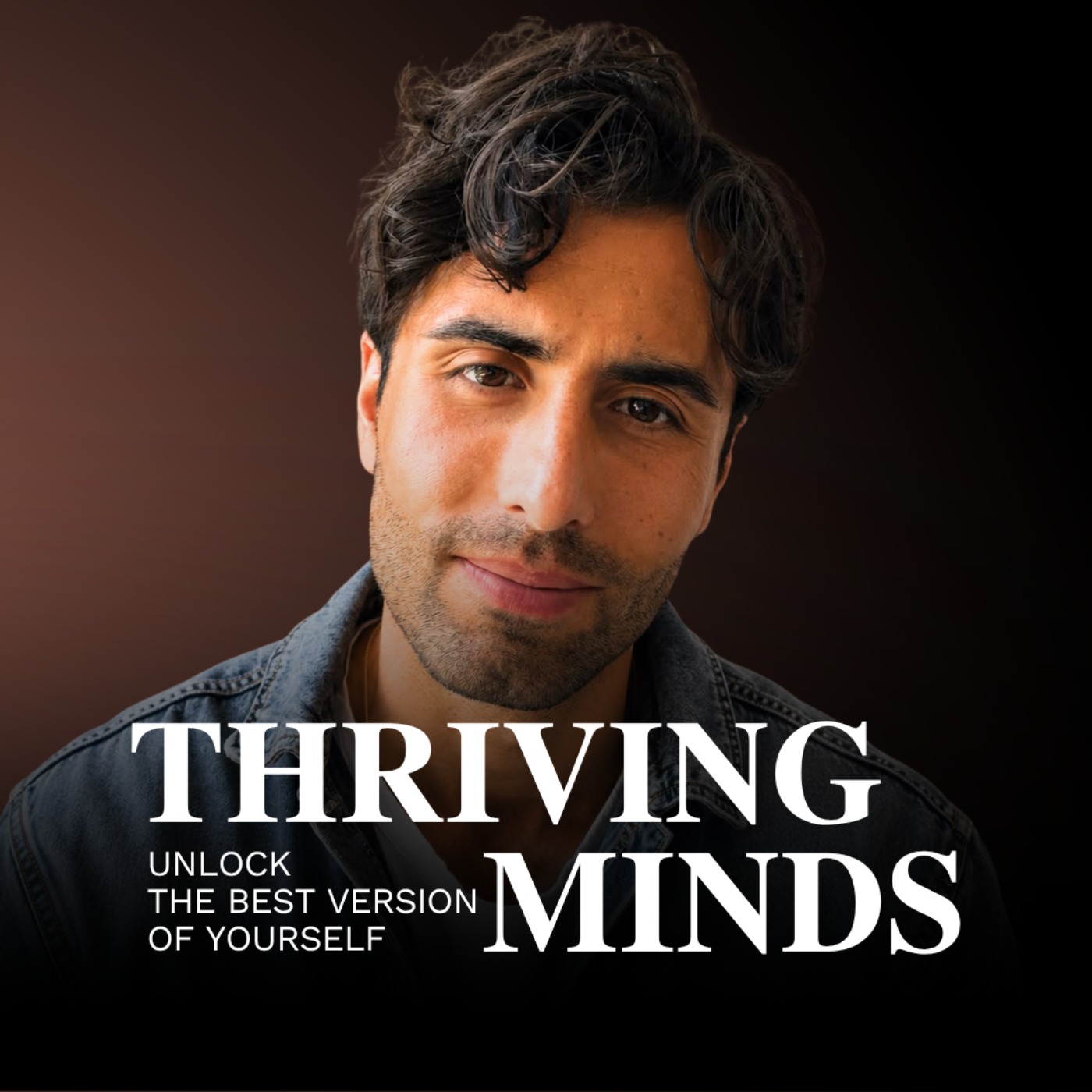
 Thriving Minds with Alberto Zandi
6 Aug 2026 · 1h 8m · 28 chapters

Simon Woodroffe recounts how he built Yo! Sushi from a desperate, late start into a global brand, then scaled into hotels (Yotel) and other “Yo” ventures, sharing lessons on boldness, quitting, scaling, and money.
Simon Woodroffe (OBE) is the founder of Yo! Sushi and owner of the Yo Company, also behind Yotel. He created Yo! Sushi at 47, grew it into a chain sold in 2023 for nearly £500m, and was a founding “dragon” on BBC’s Dragon’s Den. He previously worked in rock-and-roll show design/production and later TV rights.
He “acted as if it was going to happen” despite limited funds, opened Yo! Sushi with ~£200k tied up, and ended up owning ~95% at opening. Scaling required hiring teams and handing over operations (e.g., Robin Rowland). Bold ideas beat over-planning; quit if it’s wrong, but don’t be late to quit.
Conveyor-belt sushi concept sourced via Japan research; opening in London’s Soho with major brand tie-ins (Sony, Honda, Nippon Airways); robot restaurant attention; hardest challenge = people (chefs and himself); Edinburgh site misstep; Yotel began with prototypes and airport locations, then expanded to large New York hotels.
Written by AI. May contain mistakes.
Simon discusses the early challenges and successes of building Yo Sushi.
“He created Yo Sushi at age 47 and built it into a globally successful brand, which he sold in 2023 for nearly 500 million pounds.”
Exploring Simon's identity and his unconventional path to success.
“When you start something, it's not easy.”
Simon shares insights about his childhood and the motivations that shaped him.
“My dad was Brigadier Woodruff, the Indian Cavalry Association, you know.”
Discussing the impact of Simon's early choices, including a stint in prison.
“And when I got a chance, you know, if you read Yo Man, which is kind of what we're talking about today because it's my autobiography that's come out, the stories are all in there.”
Simon describes his journey from working in rock shows to entrepreneurship.
“Well, I was a roadie and I used to put up the lights and with the bands of the day, the Moody Blues and Jethro Tull.”
Simon reflects on the opportunities available in today's evolving landscape.
“Because in this day and age, you can do everything, really.”
Explore how changing times create new opportunities for entrepreneurs.
“You don't have to take on what I call the C word, the consultants.”
Discover the origins of Yo Sushi and the journey Simon Woodroffe took.
“So Yo Sushi, how did you come up with the idea?”
Learn about the common challenges faced when opening a restaurant.
Understand key lessons and strategies for scaling a successful business.
“I mean, things were going very well for you, but I'm pretty sure as for any other entrepreneur, there were some challenges.”
Hear about mistakes made and innovative approaches taken in the restaurant industry.
“And of course, then I got into the hotels and that's a much bigger business than the rest of them.”
Learn about Simon Woodroffe's approach to being bold and daring in business ventures.
Discover Simon's insights on why selling a business can be a strategic move.
“if you go to business school they're going to ask you to follow a a specific roadmap or methodology on how to run a business.”
Explore Simon's thoughts on the importance of money and relationships in life.
Find out how to change your perspective on asking for investment and money.
“relationship with money i try to i've been bold in the past you know i've pushed it out and when that you're younger, I think it's worth being very, very bold.”
Gain insight into Simon's journey and experiences as a dragon on the show.
Learn about Simon's next venture after Yo! Sushi and his vision for Yotel.
Learn how Simon Woodroffe conceptualized and built the Yotel brand.
Discover the highs and lows of Simon's entrepreneurial journey and his reflections on timing.
“Somebody even pitched me that we should go into the funeral business.”
Understand why Simon chose to write a book and what insights it offers.
“I want to talk about your book because you're 74 right now and I'd like to understand why is it that you wanted to write a book in this chapter of your life?”
Gain insights on how to navigate failures and the importance of resilience in business.
Entrepreneurial challenges and the motivation to pursue business ventures.
Simon shares personal reflections on his past and the importance of self-forgiveness.
“when you look back at the Simon who was at his lowest what do you find hardest to forgive him for?”
Discussion on political advocacy and envisioning a better governance system.
“And only interested in outcomes, not interested in debating policy, just outcomes and success.”
Simon discusses his current projects and aspirations for the future.
“I've still got various projects going on.”
Insights on education, character development, and stepping out of comfort zones.
“The thing is that the real thing for the future is education that we need in all these countries.”
Simon emphasizes the importance of exceeding customer expectations in business.
“Do you think the newer generations are worse at feeling comfortable in uncomfortable situations?”
Simon distills his life lessons into a powerful message of boldness and gratitude.
“And on a different day of the week, I could give you any number of answers.”

Get the gist, explore an idea or ask about something said.
 Claude
On Thriving Minds with Alberto Zandi, what are the key points of this episode?
Searching your listeningAutomatic transcript. May contain errors.
0:00Simon Woodroffe: Welcome to the robot restaurant serving sushi and silicon chips. I opened a million pound restaurant with just 200 grand. I didn't have the money to do it, but I put everything on the line and I acted as if it was going to happen. Within a week, there was a queue down the block. Believe it or not, I ended up owning 95 % of the business the day we opened. And if you own it all and you're not beholden to investors, you can just make decisions like that. Things were going very well for you, but I'm pretty sure as for any other entrepreneur, there were some challenges. What was the hardest challenge in building Yo Sushi?
0:33Well, look, two problems really is there always. Simon Woodruff, OBE is the entrepreneur behind Yo Sushi, Yotel and owner of the Yo Company.
0:42Simon Woodroffe: He created Yo Sushi at age 47 and built it into a globally successful brand, which he sold in 2023 for nearly 500 million pounds. An original dragon on the Dragon's Den, Simon is known for turning bold, unconventional ideas into successful businesses and shares his lessons learned and rock and roll journey to entrepreneurship through his book, Yo Man. People say you were lucky because back in the 60s and the 70s, you didn't have to have all the qualifications. But actually, as the world changes, which it is now, there's more opportunity. This is the land of opportunity. Things are going to change more in the next 10 years than happened in all my lifetime.
1:18What would you advise young people who feel lost, behind, or unsure of their path? When you start something,
1:25Simon Woodroffe: it's not easy. It's painful. You always find a way through if you keep going long enough, but never be late to quit and cut bait if it really is wrong. How can you tell when it's the right moment to quit and let go? I remember thinking to myself, I've got to get out of this business before I get found out. Imposter syndrome feeling.
1:48Simon, you have lived many lives across theater, folk and roll, television, entertainment, entrepreneurship. You built a business that then was valued at hundreds of millions of pounds. You became one of the founding dragons at Dragon's Den. Beneath all of those accolades, how would you describe who you are?
2:07Simon Woodroffe: How would I describe who I am? You see, the thing is that you are such an analyst, and I'm just like I'm me. I'm what you discover. um but if i had to put what i am in words i'm a i'm a guy who had a hard childhood and um i mean it wasn't desperate but i came out of it swinging and i just followed my gut feeling and all sorts of amazing things happened and it's only when you get older and you look back that you can match all those dots up. But I guess I had two things. One is no education, very little education. So I didn't know all the pitfalls that would befall me. And two, somehow or other, I had great enthusiasm.
3:02Simon Woodroffe: And I didn't have that imagination educated out of me. So that's a very long answer to a simple question. I'm something like that, but you're going to find out. Talk to me about your childhood. Why wasn't it happy or joyful? My dad was Brigadier Woodruff, the Indian Cavalry Association, you know. And my mom was a very loving woman. And they, like you, actually, I happen to know, they got divorced. And my dad didn't treat my mom that great. and um you know and i left school when i was 16 and the doors album had just come out and sergeant pepper's lonely hearts club band had just been released and suddenly the world at the end of the 60s was looking very colorful and i thought i want a bit of that and i was out of there and when i look back on that little boy who kind of ran away from his background and then had to put it all back together.
4:07Simon Woodroffe: I'm rather proud of him, you know, the young man who did that. But no, it was... Look, I've met people who had very unhappy childhoods, and mine wasn't very unhappy. It was just a bit difficult. And I've met people who've had very good childhoods who are happy in life or unhappy. So really, it's the decisions you make along the way, not what actually happens to you. Talk to me a little bit more about those difficulties, because there may be people listening to this right now that would be able to relate to this. They might be going through a tough period, but right now seeing in your example. I think I was quite lonely and was one thing about it.
4:56Simon Woodroffe: And I made up for it by putting a big act on. And my father was one of those army guys who wore a red handkerchief in his top pocket. You know, he's quite posh. And he was a big, larger-than-life character. And I figured that if that's what he did, I'd copy him and I'd be one of those people. So I was a bit of a show-off. Some might say I still am. And, you know, that can be useful. But when I went, and I went to school, to boarding school when I was seven, which isn't great, but that's what happened to English boys of that background in those days. And I was, you know, I bigged myself up constantly.
5:36Simon Woodroffe: And so I didn't make friends. And I think that was where that loneliness came from. But I say I didn't make friends. I had lots and lots of friends, but nothing very deep. And that took a lot of putting back together. So it was, but you know, what you say about your audience is absolutely right. but I came out feeling what in English we sometimes call chippy you know a chip on my shoulder you know a sort of resentment you know an anger really and actually if there's people listening you have that you know I'm gonna show them I'm gonna show my dad or my brother or whatever it was it's a good thing to have because it really drives you to get up and do things and I think that was a motivation for me more than money or wealth or fame was that I'll show them, I'll prove myself, which probably came from the low self-esteem of childhood.
6:32Simon Woodroffe: How did you combat that internally? Well, as I say, I just big myself up. And when I got a chance, you know, if you read Yo Man, which is kind of what we're talking about today because it's my autobiography that's come out, the stories are all in there. How I went to prison when I was 17 for dealing drugs, my first entrepreneurial, you know, enterprise. Talking about that. Well, I mean, in those days, dealing hash and a bit of LSD I had as well was sort of a good thing because it was the thing that changed the world at that point. We didn't know about the terrors of drugs in those days. So that stopped me.
7:23Simon Woodroffe: I did eight weeks in North Sea Camp in England, which was a detention center. They used to call it the short, sharp shock. and it stopped me in my tracks and I thought I'll never ever break the law again so that was good but I came out of it with with the desire to do something and um you know that was that was a pretty horrendous thing and and actually you can imagine for my father the brigadier and my mother um you know upper middle class English it was beyond their ken you know so I was on my own from early on and there wasn't a great deal of money in the family in fact we were sort of the poor relations and um i went out and and i well what i really did is i got a job first in the theater very lucky to get one and learned my stage left from my stage right and if you knew all about theater in those days that was the very early days of production of rock shows and that's what i got into and um that that was my break really and i was in rock shows I ended up designing, I'm sure we'll talk about it, designing rock shows.
8:32Simon Woodroffe: But that's what I did. Let's talk about that. Yeah. Yeah. Talk about designing rock shows. Well, I was a roadie and I used to put up the lights and with the bands of the day, the Moody Blues and Jethro Tull. And then I met this guy called Ricky Farr, who was a boxing guy before the Second World War. Big guy, big sort of go for it guy. And he had a sound company. which was doing sound for the early bands and he said why don't we get together and you know about lighting you start a lighting company and we actually went to island records which is a big record company in those days and got some money and you know i mean i had no experience of business in that sense and i was a young guy like you were when you started out and um we started a lighting company and beyond belief ricky managed to get the job for rod stewart's first tour which after he left the faces and rod wanted a big white stage and i remember going in to see billy gaff who was his manager in those days and rod came in and they wanted and i'd driven the van for richmond theater so i knew where to get the white drapes and where to get the rostrums and i could draw i could draw and i drew up this stage show and so took it in the drawings in to show rod and he said it's just what I've always wanted big show you know showbiz and he said if it can travel because it had to go all over the world because part of it was the mechanics of how it all went together and I was fascinated by that the engineering side as well and I drew it up and they gave me money I made a profit on it and we turned up at rehearsals and Rob and Billy walked in and said oh it's great really really great and I remember going out to dinner the next week and somebody He said, what do you do for a living?
10:21Simon Woodroffe: And I said, oh, I'm a set designer. I'm a stage designer. They said, what do you do? I said, I do rock shows. Oh, I didn't even know people did that, you know. And suddenly, being that actor, a bit like my dad was, you know, sort of larger and live character. And people were going, oh, that's good. Can you do the same for us? And that's what I got into. And I built myself up. And what did you do afterwards? well i did that all the way through till 1985 and it was the early days of rock and roll and i had an office in los angeles even for a while i did the bit first the early aussie osborne shows wizard of oz we did with sharon in the early days and an aussie and um yeah i i'm and and then Then we had a design studio here in London, actually, in Wapping, in the East End, in the early days of the East End, looking out over the river down there.
11:17Simon Woodroffe: And we had all the bands of the day used to come through. And then Live Aid came along in 1985, which was the big show. And I knew Geldorf from the Boomtown Rats. And somehow or other, we got involved in building the stage for Live Aid, which was the first stage ever for an outdoor show that used a revolving stage because you had to change the bands very quickly because it was a very big live broadcast, the first really big live broadcast. And we did that. And then suddenly, that was the catalyst, 1985, when rock shows sort of grew up and became show business and started to be run by accountants, not kind of, you know, maverick managers, you know, like Stiff Records, Dave Robinson.
12:04Simon Woodroffe: and if it ain't stiff it ain't worth a fuck you know you probably shouldn't say that on air and um and uh you know they were maverick people and but suddenly it was a grown-up business and i remember i'm sure none of your audience have ever had that feeling and i remember thinking to myself suddenly the highfalutin new york designers coming onto the stage doing this stone's new big show and i and i was an untrained designer and i remember thinking to myself i've got to get out of this business before i get found out you know it was that sort of imposter syndrome feeling and um when i look back now i think man i could have you know really gone on to big things in fact my brother did he went on to work for the rolling stones as a show director for for 40 years nearly he's done it and done all sorts of things patrick woodruff um and um i could have stayed in that business but i didn't i got lost again you know sort of i mean got lost and i went into the television world with a guy I knew from the rock and roll business and I knew the managers of the groups and we started selling television rights so I'd been in a creative business and then I went into an international business where I had to know contracts and deals and how things worked around the world and I was building a kind of knowledge I suppose when I look back on it creative and business and i had the two and i really liked and i suspect that you might be the same but i like the creative side of doing something which later went into the restaurants but i also like the business side of how you make businesses work and i think i was very lucky to have both those things and i often say to people they go oh i can do a great idea or a wonderful source for a restaurant but I can't do the money and the business.
13:56Simon Woodroffe: And I say, yes, you can. It's not very difficult. Because in this day and age, you can do everything, really. You don't have to take on what I call the C word, the consultants. You don't. We already know it. It's incredible, as you know, for what you're doing with your restaurants around the world soon. It's incredible opportunities. People say you were lucky because back in the 60s and the 70s, you didn't have to have all the qualifications or, you know, there was less red tape. And now it's more difficult. But actually, as the world changes, which it is now, there's more opportunity for all the listeners out there.
14:39Simon Woodroffe: This is the land of opportunity. Things are going to change more in the next 10 years than happened in all my lifetime. And as the world gets turned upside down, opportunities abound. and the world changes.
15:00Simon Woodroffe: Music, television, what happens next? Well, it was music, restaurants really, television. And then I thought, well, you know, I had this brand called Yo And what I had done is when we first got venture capital in, which was, you know, five, six years into Yo Sushi. And I had an MD, Robin Rowland, who had joined me by then. And we went and talked to the VCs. You know, it's a real grown up proper stuff, you know, because we'd had a big hit with Yo Sushi. We were up to four or five restaurants. The money was rolling in. Let's take a step back there. So Yo Sushi, how did you come up with the idea?
15:48And then for those who don't know what Yo Sushi is, what is Yo Sushi?
15:51Simon Woodroffe: Well, Yo Sushi is, it was the first of, when I came out of the rock and roll business and the television business, I was lost. And I actually went to live in Chamonix in the French Alps because I was a mountaineer and a climber and a sailor. And I thought, I'm just going to have a simple life down there. And after a while, I thought, no, I've got to do something. I've got it in me. I was thinking I wouldn't need a great deal of money. And I came back, and I wasn't going to do restaurant. I was going to do indoor rock climbing walls. I was going to start a removals company. I could have done anything.
16:27Simon Woodroffe: There was a moment of desperation. I was running out of money. And I phoned up people. I remember making a list of people I was actually intimidated by and a bit scared of, and I remember phoning them up. And one of them was a guy called Mr. Uehari from Fujisanki Television, who was a TV producer in Japan. I'd worked with him on a show called Hit Studio Deluxe, which was a Japanese version of the English Top of the Props or American Bandstand. And he was very nice to me. He said, oh, God, really great to hear you. Let me take you out to lunch. So we went and had lunch in Barclay Square. and it was sushi and I sat there and I hadn't really thought about sushi but I'd lived in California and I loved sushi I saw how big it was there and I said you know maybe I could do sushi over here you know what you want to do and there was this long sort of Japanese silence and I waited until it ended he looked up at me and he said what you should do Simon is a conveyor belt sushi bar with girls in black PVC miniskirts well we never did the miniskirts but it was his way of saying it was stylish and this was before the internet so i couldn't go and look up you know conveyor belt sushi bars but i did my research and some very expensive phone calls pre whatsapp and all of that and to japan and eventually ended up in japan and found out there were two and a half thousand of these conveyor belt sushi bars in japan nobody had heard of them you know japan was the last great mystery of the east describe them to me and they were in those days they were conveyor belts going around in little sort of cafe type places the guy who invented it had actually been to the kirin beer factory and seen these conveyor belts going around and said i can serve my food i mean what an imaginative thing to do back in 1958 or something like that and there were they'd been going for years and i saw them and i thought i could take this idea and then put it make it much more fashionable and do it on a much much bigger scale which is what we eventually did in poland street in soho and i anyway how did you find i came back to england with that in my head and i thought man in fact i went to the japanese food machinery exhibition and i've been in rehearsals in burbank california all over the world some of the biggest stars in the world i was far more interested in going to this food machinery thing and i walked in there and they had these conveyor belts and machines that made all the food and i I sort of half expected that I'd walk around the corner and see Terence Conran or Gordon Ramsey, you know, the grown-ups.
19:08Simon Woodroffe: So, in a way, when I discovered it all, I thought, man, I hope, you know, it was that feeling of being found out again. Nobody's going to find out about this or me. And I started putting it together. And then I started looking at sites. And it was such a sort of outrageous thing to do. and it was so different that eventually i managed to persuade um i went to just see the landlords of all the restaurants and it needed to be soho it needed to be big i found an old carpet shop in poland street which is slightly off pitch but it was big and it was a jewish uh manny davidson thing and i went to see him and he said you've got so much bottle simon i'm gonna give you a break and give you a lease and i thought very nice too then he told me the price of the lease which in those days is a hundred thousand pounds a year and i've been thinking i'm going to pay about 20 or 25 back then it was way above my pay grade and i thought no i'm just going to go for it i'm gonna i didn't have the money to do it but i put everything on the line and i acted as if it was going to happen put everything that i had i had 200 grand tied up in my flat i had uh i managed to get a 200 000 pound government loan guarantee scheme which tony blair had put up and i opened a million dollar restaurant a million pound restaurant with just 200 grand that i had begged borrowed and stole i didn't actually steal but it was quite close if you know what i mean and i managed to get everything built myself because of course i've been a builder i knew how to build things like the stage sets and i knew and i got deals i got a deal i got a deal with sony they gave me some cheap tellies i put them over everything sony honda all nippon airline and actually i had private investors who were kind of interested but they wouldn't commit and we opened without the investors we managed to get to open and opened it and within a week there was a queue down the block i mean it was unbelievable and i still and i owed millions literally and i didn't have the money to pay it but everybody thought we were a big deal because we had sony honda and all nippon airlines who'd given me hardly anything i just over delivered to them put them over everything and people thought they were backing us and so everybody gave us credit and i told all the investors to go away and i believe it or not i only ended up owning 95 of the business the day we opened i mean i was and if you own it all and you're not beholden to investors you can just make decisions like that i'm clicking my fingers here because that was the feeling of it and um and it went very fast from there and i got a call from dominic cummins who did the fifth floor at harvey nichols big sort of you know highfalutin thing in london and we opened in selfridges food hall and then suddenly we were up to five restaurants and i was running the business and you know the money was rolling in we'd had a hit record but of course you know with me running it the money was a new idea every week the money was rolling right back out again And that's when I got the restaurant professionals in and let them get on with it.
22:23I mean, things were going very well for you, but I'm pretty sure as for any other entrepreneur, there were some challenges. What was the hardest challenge in building your sushi?
22:29Simon Woodroffe: Well, look, the day we opened and, you know, we got all the acclaim because it was so interesting, you know, computer. We had robots going around. One of the robots used to say it had digital voice and it used to say, move your fat ass. somebody's got a fucking job to do in this restaurant people would be going you know i remember american tourists going did did you hear what he just said oh it's a robot you know it's 97 right we got a lot of attention um and so you know i was going whoa this is just great and then of course as you know because you've done restaurants is that's when the problems start you know and what are the problems the problems are always there's two problems really is they're always people you know is people and as i always used to say chefs are from venus and all the rest of us are from mars you know they so chefs chefs were difficult and but i taught the chefs to be computer literate in the days when they went and they got into that and we had good relations for the most part and then of course the most difficult person of all is yourself because you know i'd change my mind and i'll do things but we survived you know we survived and yo sushi has been going for 30 years um which is a very long time for a restaurant group and it was up to 125 restaurants at one time now it's what is it i think it's 75 restaurants only but i think we're in 400 supermarkets with our own stalls in the supermarkets in england and around the world so you know it's It's not what I'd originally imagined, but it's gone on to be bigger.
24:06Simon Woodroffe: And of course, then I got into the hotels and that's a much bigger business than the rest of them. What's the greatest lesson you've learned about scaling a business? Scaling a business.
24:20Simon Woodroffe: I don't know if I'm the best person to tell you technically how to do all of that. but um from a people point of view i think the really good thing that i did was you know when you start a business like that and you get that much success albeit with all the problems you describe there is a sort of sense that i had that i was invincible that i could go anywhere and then we opened it we actually opened it at edinburgh which is a complete disaster and slowed us down by years but fortunately i knew even though i thought i knew the answer to everything and i was better at everything than everybody else but event i did realize that i was deluded and that to get other people in and let other people do things to scale a business you need a team and an entrepreneur can start something and get it up and running and deal with every single detail but you need a team and then to hand over and that's what I did do I handed over to a guy called Robin Rowland and his team and um you know and I let them get on with it actually and I closed my office door and let them get on with it and it wobbled at first and then they they built out a much bigger business and I was able to do on I still own the yo brand so I was able to go on and do other things with the yo brand what's the biggest mistake you've made while building your sushi um well i was lucky i think in my period of tenure i didn't make so many mistakes i mean the openers just said edinburgh we opened edinburgh and that's way it was way off pitch in the wrong place so that was the wrong site um what were the the mistakes i made i mean the one i always think about is that i used to think i want to buy these buildings not rent them and everybody He said, no, stick to your core business, stick to restaurants, don't go into the property business.
26:27Simon Woodroffe: Absolutely, I should. And I had an opportunity to buy a lot of the buildings. And my friend Duncan Ballantyne on Dragons there is a friend of mine now. And he built Ballantyne gyms out, which are kind of okay gyms, but, you know, I think some of them are very good. But nothing's absolutely spectacular. But he made all his money because he bought every single building he went into. and he said he'd made his money out of property and if i'd done that i'd be a zillionaire now i don't know about a zillionaire but i would have been uh i'd have been even better so and and also going to businesses that you don't know anything about i knew nothing about restaurants at all other than having eaten out in them and people used to say oh we don't do that do things like that in the restaurant business this is how we do it and i said well all are better for not doing it that way we'll do it my way what was your way um well it you know things like they they'd go oh you have to have a trance and you have to have tips i said no tips in yo no tips at all you know because it's a piss off really you know and and but we had a team that absolutely loved what we were doing you know we had robots and computers and they were yoing and toing and yoing and all of this stuff and the chefs were all on show everybody loved the restaurant they sort of all our team all the boys and girls felt that it was theirs you know they had something to really show off and of course it got a lot of interest on television not just in the UK around the world it was in movies it was in the Johnny English movie Microsoft made TV commercial about us you know and they were proud of it so it was things like that to do things differently to how they've been done and as the world changes which it is now you can do anything different we hear about whatever that word is that everybody uses you know to radically change any market sector and that's what we all have a chance to do the thing the thing that i regretted though that we had i was telling you earlier about the robotic drinks trollies which had digital voices and we had digital voices you could still have them in you know you press the button and it'll say things you know give me my sake now and i wanted to put one outside the restaurant on one of those restaurant boards where you could press the button and it would tell you what the what was on the menu digitally speak to you before digital voices were common and um and what i really wanted to do is that when we were closed i wanted people to press the button and it would say fuck off we're closed because i thought everybody would come after they'd been out clubbing at night everybody would come and press the button just to see it and we'd get famous do you know i got i was so stupid i got talked out of it you know the grown-ups came along and they were so going no you can't do that you know and i thought absolutely so to be bold and outrageous in everything i mean you can start a corner shop and make big success of it but my way has always been to be bold and outrageous and we were talking earlier weren't we about you know you i don't know if you've announced it but you know possibly going global and going to other places say if you go if you go into one of those big cities you know whether it's new york or los angeles or rio de janeiro go big go really big big flagship we've arrived you know because then things can flow from that yeah and i found that it's the same amount of work to go big and raising the money is as easy is easier to go when it's big and it's the same amount of work and it's much more difficult when you've got the bank on board and the investors it's much more difficult to go broke if it's big if it's small people write it off if it's big they want to stick with you this is one of the most beautiful things that i love about this show is just hearing these amazing advices because if you go to business school they're going to ask you to follow a a specific roadmap or methodology on how to run a business.
30:27But in your case, it's just being bold, thinking outside of the box that attributed to your success.
30:33Simon Woodroffe: I think so. And at the risk of sort of being so bold as to plug my new book, Yo Man, that's coming out, somebody said the thing that's great about your book is it's a swashbuckling story. It's a rock and roll story about my life. And I look back and I think, wow, how lucky was I? You know, with a lot of hardship as well. and i don't just big myself up i talk about what i actually went through but it's also somebody said you should read it twice once for that and the second time to sort of extract all the things you could learn from it because i you know people say oh you're a bit of a business guru simon but i i make a point of never telling anybody what they should do or trying to analyze it but saying please steal anything that I've made mistakes on from me and learn from it.
31:24Simon Woodroffe: And all I can do is talk about what I learned along the way. And if people want to learn from that, that's great. But I'm never going to tell anybody what they should do. You sell your sushi twice. So the first exit, minority exit, was in 2003. And then the second one in 2008 for a reportedly figure of just over 50 million pounds. Why do you sell your business? And then again, it got sold after that for a really an enormous amount to hundreds of million yeah 650 million um you know the the point what i have learned is most people are precious it's my baby i'll never sell it you know i want it's my life you know the thing about these businesses you build them especially if you build them from the beginning and they're like those card houses you built out of playing cards when you were kids and you blow and they fall over you know and if you're doing it like i was on a wing and a prayer my own money um you haven't got anybody to turn to when things go wrong so i think that the best strategic way to build a business is right from the beginning to think how can i set this up so i can sell it in the shortest amount of time possible well you know maybe three years or five years or seven years and so that you've got sort of the last two three years you've got pipeline arranged for the next incoming investor and you've got good accounts say look good and all of that so you sort of set it up for that because then then that moment of selling a company was one of the greatest moments not because I got lots of money and I did get quite a bit of money but it was the feeling of security and safety that i've actually done this from scratch and i've made enough money that i didn't have to worry so much you know that's what money i mean if anybody tells you money doesn't make you happy they're lying but what it does do is to um it certainly is to make you feel a little bit more secure in that you've done this yourself and you don't have to worry about the daily bills what is your relationship with money well it's i think that's just the best question i've got a friend called danny kruger who's a politician actually he's the guy behind reform behind farage and he's got a charity called only connect that i've always been involved in and that it tries to help prisoners coming out of prison in various different ways um and he's got a new initiative and he calls it love and money and apart from health which is what we all need the two fundamental things in this world are love and money money because we need that to survive in this very very complex world and most people go oh no i'm not so interested in money you know i just want to have a group of friends and this that and the other but i think money is enormously important and i think the relation i have a good relationship with money i try to i've been bold in the past you know i've pushed it out and when that you're younger, I think it's worth being very, very bold.
34:32Simon Woodroffe: Because if you fall over and things go wrong, you can get back up again, dust yourself off and do it again. And I never met the person who went out to do what they really dreamed of doing, even at the risk of financial insecurity and regretted it. And even if it went wrong, but I met many people who look back and said, I wish I'd taken the chance. So I've been bold. But I also have been very conservative with money. and I know that I never want to run out of money if I possibly can. And today, to live within my means, you know, to live within your means and live within your means doesn't mean being cheap.
35:07Simon Woodroffe: Well, it does actually mean being cheap. It means when you've got very little, I never expected to have a BMW or to drive around and go to fancy restaurants. I'd just cook at home and eat toast and eat very little and spend all the money on the business and getting the thing going. and then you do it so i think i have a good relationship with money i i'm happy with money and i'm happy with being rich and trying to be a millionaire and all of that stuff i think it's a really really good ambition and then the other part of it danny kruger talks about is for prisoners coming out is love and relationships and love is really about how you have good relationships with the people who work for you with the people that you know with with with everything you know family and everything.
35:51Simon Woodroffe: And so those are the two parts. How can someone be good? How can someone improve their relationship with money? Is it by making mistakes in the first place and then learn? I think you can not be scared of money. That's the main thing is not be scared of money and not be scared of asking people for money. I mean, my hardback book right now is$22.99. That is the best value for money. you could possibly get and actually be coming down when the paperback comes out that is the best value for money so i'm not scared of selling myself um my book for example in this thing and um i think a lot of people are they're scared of asking for money if you go to an investor and ask them for money you're not begging for money you're giving them an opportunity if you've put it together right and you shouldn't ever be asking for anybody for money unless you've really got something that you're so convinced and that you've got yourself so on the line that you're going to hurt more than that investor's going to hurt and you really believe it and when you really believe something you're incredibly convincing and i'm always saying you know don't hide behind a deck don't hide behind an investment plan um be able to express it yourself as i'm talking to you now and convincing the person especially if i had everything on the line i have had lots of times and i would have hurt more than any investor hurt in that way and i know i learned that on dragons then you know the people who actually came in who had actually sold things and you know even if it was um you know just sold things to friends or um you know just sold a hundred units of something you know we were as dragons we were very impressed by somebody who actually made the sales so you don't have to do it on a great big scale just get going
37:53talk to me about your experience at dragon's den so you are one of the founding original dragons in the first season of dragon's den that's right how was that experience um well i mean it i
38:02Simon Woodroffe: nearly wasn't on dragons then actually because i i heard about it from um we were at richard branson's house for the top 100 events or whatever and i did the thing and i remember meeting doug um not doug richard's um doug and bantyne actually down he was down there with a film crew sort of you know trying to get we were all trying to get attention it was you know the chefs had had their day on tv and us entrepreneurs are starting we were in a show called mind of a millionaire and another one called london's riches they got that wrong about me at the time but i was on the show and um and um and i heard about um dragon's den there was talk before among the entrepreneurial community and i just made some money out of yo sushi for the first time and i thought i'm not gonna they said you have to give your money away on it and i thought i'm not gonna give away my money on i'm gonna keep it so i turned it down you know and i'd been quite good on telly you know i'd come over well on telly so um the producer said i was disappointed anyway they they i got a call a few months later and by this time i was kicking myself because everybody was talking about this show this is going to be this is going to be the new apprentice it's going to be a really big thing and i was oh god how could i have turned that down and then i got a call from a guy called dave tibbles who's one of the producers and he said you know we've just done a pilot and one of the dragons hasn't cut the mustard would you reconsider and of course i said step this way you know absolutely i would so there i was so we went to the first show and and the um bbc wardrobe department came around to my houseboat where i lived on a in a houseboat on the thames and had rifle through my wardrobe and said oh this won't do so we went off to richard dreams and got got some new clothes and this that and the other is fantastic they became wardrobe property and um and we did the first show and it was nobody knew if it was going to take off or anything and and it it was done as live and um at the end of the first day's recording we all knew that we had something we sort of thought we had something in the in the bag and we were all we were all quite us five first dragons we were quite experienced on tv so we generously gave way to each other we didn't over talk we knew what they were the cameras were looking for in terms of a tv show albeit it was going to be always be edited down but we were pretty well we gave it a bit of aggression between the between us to give it some sort of you know what they call jeopardy some edge to it you know what we would call being direct you know other people would call it a bit aggressive so it was it was fun to do and of course when it went out um it got a lot of attention very very quickly and it was very very good for my brand and you know all the all the visuals were of yo and yo sushi and all of that and we got even more attention and people were talking about this and i remember i remember calling around dragons when it first went out and they were and they you know most of them were going peter jones he said what do you think of my performance i thought very very good you were good you know that's the thing you have to remember it's a tv show not an investment show if you want good investments BBC's not the place to go I can tell you interesting I got and I got around to all of them and uh I remember calling up um Duncan Valentine and saying what do you reckon he said he said uh he said they recognize me on the street he said I fucking love it I love it you know it was a show this yeah then you built your next business your hotel yotel yeah yotel yeah no i mean what do you do when you've um built a successful restaurant chain you've sold it you've got a few million quid in the bank you've got somebody else running it um what do you do next and so and you own the brand name and at the time there was there weren't these multi name names with multi brands you know there's virgin and virgin what he did was amazing he went into a million different things most of which didn't succeed but enough did that made him a really big deal fantastic model really richard branson and then stellios had just started easy and he was doing easy jet and easy hotels and easy car and this that and the other and and really there wasn't a third one you know you thought what was the third one there's nobody else and so i thought oh well we'll jump into that you know we'll be yo this that and the other and um and so i thought well what's the next one i think well yeah a hotel so i started i started with a great big sheet of paper and i draw so i started drawing up all these things and i got another guy russell marklison came in and we we actually built the first yotel in the car park in east london out of polystyrene blocks and it had windows that looked out onto the street if you like you know rather than outdoors and onto the corridor i should say and um we walked in there and it was small but it was perfect it was like the interior of a private jet or something like that it was perfect which is the hotels are still are today they they're smaller rooms than you typically get but they are everything is perfectly designed within them like a yacht you know luxury yacht and um we walked in and we all went this is great i want to stay in a place like this i want one at home you know it could be smaller and then we built a full-size prototype and i'm a real believer in prototypes full-size prototypes not just drawings and we built a full-size prototype and we took it and exhibited it at a big exhibition in what was then earl's court exhibition center called 100 design and we had we had cues everybody was coming to our stand was they wanted to go this is the future this is the future and the tvs came down they said is this the future is what was the tv when we opened your sushi it was um welcome to the robot restaurant serving sushi and silicon chips and the the hotel we we opened and they said this is the future you know space the final frontier you know and it got attention and uh it was and that was where british airport authorities came past and the guy came by said this is perfect for the airports so we opened the gap work and then at heathrow and then at skippel airport and then charles de gaulle airport and then gerard actually was my partner then by then he went to new york and found Related, who is the biggest property company in New York.
44:45Simon Woodroffe: And they had a building that they just was coming out of the ground. They'd lost their clients at 10th and 42nd Street, just off Times Square. And they said, if we could fund it, by this time, we'd got a funder out of Kuwait, a company called IFA Hotels and Resorts. And we took it to them. And they said they'd fund it and we got other investments in new york and beyond belief we built what i believe is the sort of largest hotel we bought nearly 800 rooms and open in new york after just doing these small airport hotels um and that was what led to really yotel going out all over the world 400 rooms in singapore 600 rooms in istanbul you know all over the world i think there's 25 hotels now and we even took the hotel back to japan we opened in the ginza and and just about to open actually uh this year in in um 2026 in um in thailand in bangkok which is where i have a home so um yeah no it's gone out all over the world there's much much bigger business than the sushi and then i got into the fashion business with yo japan which lasted for a few years and you know there's other things on the slate who knows where it may go but um if i'd sometimes wonder if i'd started much earlier i didn't open your sushi till i was 47 and um which is hopefully for people older people who are listening today you know but if i started at 20 if i'd started at your age wouldn't you started early if i started at your age where would i have been today where will you be beautiful story i'm so inspired what did what did you enjoy most from an operational point of view the restaurant business or the hotel business well i was very involved with the restaurant business you know i actually ran it for the first four years so i was very involved so did i enjoy that i love developing it i love the idea and putting it all together and building it i think that the first four years were probably the most stressful years of my life so i can look back on them and say it was a wonderful story and we had all the press and all the stuff but it was they were difficult years um yotel i conceived and designed it and put the whole thing together but really gerard was the guy who sort of was in the forefront gerard green with who i have a hotel with now in in um catalonia a bicycling hotel actually called um called off grid near girona and he was a hotel pro so he took the brunt of it and really was in the forefront so i thoroughly enjoyed the ride of watching that and um then i got into yo homes which have yet to see the light of day although yotel now is licensed to do what they call yotel pads which is sort of yo homes and I looked at Yo Zone, the spa I was going to do.
47:55Simon Woodroffe: Still on the slate, I've got Yo ships, which are not ships at all, but lighter than air dirigibles that can float across the Atlantic, take two days, another form of transport, you know, not Yo jets, and Yo into all sorts of things, Yo Do. Somebody even pitched me that we should go into the funeral business. I said, what would it be called? They'd say, Yo Below. No, I don't know. So we'll see. We didn't do that. But yeah, Yo is a very good name and it rhymes with lots of things. And I'm sure everybody at home is going to write in and go, oh, you should be doing Yo Do Banks or whatever it is. What fuels your ambition to this day?
48:40Simon Woodroffe: well you know i think what really gets me going is ideas and when i talk to somebody like you actually were talking before when i hear talk about ideas and and just that thing of having an idea in your mind and seeing it come to fruition i don't know how you are but i if i have a new idea i've been known to while i'm sitting there talking to somebody about it and it only came up a minute before to pick up the phone to somebody I know and say I'm thinking of going to the car hire business you know we're developing a concept it's called yo to go or whatever it is and I act as if it's actually happening and make it real and see it develop and I know that I don't have to do what I say I'm going to do because everybody goes it's like politicians they go you know the interviewer says um ah but two years ago you said you were going to do this and you haven't done it you're going to so what i changed my mind you know so i think you can develop things and move them very very fast and get them up and and and see what you can do and i call it seeding ideas and go out as if it's real and put the thing together and spend a bit of money and see if you can make a model of it or make it happen or build a prototype or do a test on something and that's what really gets me going is ideas um the money when it comes in is fantastic and i love it because it's um it um it feels safer you know it's the it's the it's the test of what you do when you actually have a hit record or a hit restaurant or hits anything and the money's flowing in that is pretty pretty cool but then you know it comes to a lot of problems because you've got to make sure you don't lose the money that you've just come in and I've lost quite a bit over the time on my mad ideas.
50:38I want to talk about your book because you're 74 right now and I'd like to understand why is it that you wanted to write a book in this chapter of your life?
50:49Simon Woodroffe: I had a book deal actually 20 years ago when I was in my 50s that they wanted me to post-Dragon's Day and we want to write a book and they were going to give me an advance in this. And I got three ghostwriters to do chapters and they just got it completely wrong. And I didn't have the time or the energy or believe I even had the skill to write a book. And about three years ago, I was on holiday in Thailand on an island. There wasn't much to do and I had my iPad with me. And I thought, well, I wonder if I can write, you know, because I've done lots of speaking and, you know, I had a voice in that respect.
51:25Simon Woodroffe: And I wrote 30 ,000 words on an iPad in a couple of weeks and i found the voice and a few people read it and said that's you know they're great stories they're great stories you know you've got to put it together properly and it took me three years i only wrote when i felt like it i didn't write because i had to and um and it turned into and and i wrote 120 000 words it was a very very big thick book and then i got an editor and he was slash and burn he said take that story i said i love that story slash and burn slash and burn slash and but i took lots out and he was so right and he gave me a few tips he said bring the audience with you the person who's reading the book you know yeah man we're talking about um and you know ask them questions do you ever feel the same as i felt which i go through how is that for you you know and there's one of the devices i used another is um was you know it was to be another four years before i opened yo sushi and i didn't know that but I was learning this and this so the book has got what I learned in it but it's also got it's a rollicking story you know it's a swashbuckling rollicking story and I always used to think that my life had been just difficult really which is one of the great lessons of life is that life is difficult you know and when once you realize that life is difficult you stop complaining about it never promised you a rose garden but when i look back at the life i've had it's a fantastic story you know it's great what happened and it wasn't always didn't always feel great it felt very difficult a lot of the time but i've made a good you know made a good story about it i guess so that was why i did it um just just like everything else i've done i did i i just got it started and then kind of got hooked on it and when you start something and for people listening you know it's not easy it's painful you know it's difficult starting something because there's always people go oh yes but you know and what about this and what about that there's what I call showstoppers you know something comes along and stops you and I always say you know go around stone walls build golden bridges to make it easy for people to walk over to you and when when When you get to something, you know, we had the, you know, the fire people came in and said, you can't have a fish, you know, on a, all the health people on a conveyor belt going around.
53:57Simon Woodroffe: You can't have the open kitchen like that. You know, things that you would think was absolute showstopper. Oh God, how could I have made such a stupid mistake? Just carry on. You just carry on and you always find a way through if you keep going long enough. But never be late to quit and cut bait. If it really is wrong, I've got out of things as well. you know stop no shame in getting out how can you tell them when is the right moment to quit and let go yeah yeah it's very good very good question um i think you for me you have to follow your gut feeling and really learn not to be not to hide behind your pride you know that you think oh god if i let this go and i close this restaurant or whatever what's everybody going to think of me they're going to think I'm a failure and this that and the other actually it taken me a long time to realize it nobody is thinking about that about them they're too busy thinking about themselves exactly yeah you're pointing to yourself and um so really it it's good and and and closing things down and stopping getting out and changing direction can be a good thing when you've got a lot of money behind it you want to stick with what your plan is that's for sure until you make the change who should buy this book um well i yo man is a really i always wanted i made sure the publishers that it was on the entertainment side you know and i think it's a book for everybody i hope it's i mean what people always say about when i do speeches or reading this book or whatever it is that it's inspiring because you know i didn't have a great education i didn't have a great background i didn't you know i was lost a lot of times you know it's not as if i had a silver spoon and it all kind of came out easy and it's inspiring that you know that idea that anybody can do anything and in this world you know we're taught we have to sort of get on the ladder and struggle up and sing and i think you know what makes somebody I think if you've got a very nice life and a nice relationship and a group of friends that you were at university with and a nice job that brings you money, why would you want to give all that up for sleepless nights that us entrepreneurs go through and difficulties and having to sort things out?
56:23Simon Woodroffe: and that that's very thing but if you have a little bit of i don't know about you but if there's a little bit of grit in your oyster that you want to prove yourself or do something or make some money or do something if you've got if there's people listening you've got that you know you're very lucky to have that grit in the oyster that pushes you to get out and go and do something and i think it's not a safe world and um you know have a go because you know things can work out and even if they go wrong you can start again i don't know if yo had gone wrong at the age of 47 coming up to 50 um would i have i've often wondered would i have been able to get up and do it again and people always say to me when i'm talking about that they go i bet you would have done bet you would have done but i don't know the answer to that question very powerful my next questions simon require for you to be very real with yourself when you look back at the Simon who was at his lowest what do you find hardest to forgive him for?
57:29Simon Woodroffe: To forgive me for, yeah. You know, I mean, I don't I don't really, when I, I mean, partly I think I've forgotten a lot of the bad stuff, you know.
57:44Simon Woodroffe: You know, breaking the law when I was a kid. I've never done anything terrible. I think I've been a difficult person. You know, I think I've been aggressive. I think I've been tricky, you know, financially. I think I've been selfish, mean, all of those things. But I think that's part of being human. I think we all have a dark side to us and a light side and I think that I've become really I've become the person that I always wanted to be um so yeah I I am I definitely definitely forgive myself and do I have any regrets I don't think I do really have any regrets I'll tell you um since I started doing social media a couple of years ago which is really I did it just to promote this book it's been enormously gratifying the people I've met and the people who've written to me and I remember when I was knocking on people's doors I always said if ever I got in the position where other people were knocking on my doors I'd always respond to them and so far I've pretty much been able to do that you may say I'm a bit slow sometimes but I have been able to do that and that has been a real pleasure to do that and to be able to encourage others to do things so um and is there anything i really regret not really that but one has come up recently and that is that i think that 10 15 years ago i might at some level have gone into politics not politics to be an mp so much but to be a real advocate and i'm doing it even now i'm not going going to do it here on your podcast but to advocate advocate a real radical change in how we govern our countries a real radical change in how we educate our children a real radical change in how we buy medical services for ourselves and a real radical way and i think people will look back in 50 years and say that the idea of having a nation in which you tax people at 50 60 percent with all the stealth taxes is absolutely mad and that the one thing that we've got from brexit in the uk for example is that we are free of the manacles of being told what to do by other people and that maybe certainly with these entrepreneurial things that we can make a model society for how things and i'm a big fan of you who's the guy who started new singapore and he did incredibly well And he taught his 50 MPs at the beginning to be only interested in working very, very hard.
1:00:29Simon Woodroffe: And only interested in outcomes, not interested in debating policy, just outcomes and success. And he paid them a million dollars each. And that's what we could do in this country, a small cabinet, not conflictory, working together to implement the will of the people, which when we have digital voting, the people can express their view, right? Wrong or indifferent. So I think I'd like to have done that. And here I am doing it. So there it is. What do you want for this chapter of your life? This part of my life? Well, I'm enjoying what I'm doing. I'm enjoying the book. I've still got various projects going on.
1:01:17And I don't have to do anything.
1:01:20Simon Woodroffe: and I have some fun. I love to meet the people. I love to travel. I hope that with Yeoman, we're going to publish in India, in the Middle East, in Southeast Asia. And I hope that I'll go on tour and rather than going to China so I can walk along the Great Wall of China and see how beautiful it is. I can go and do some talks and meet interesting people and encourage entrepreneurs to do things and be part of this new changing world. so I'm still in the thick of it all and here I am talking to you and enjoying doing so. We have a lot of young people listening to this show. What would you advise them?
1:02:00What would you advise young people who feel lost behind or unsure of their path?
1:02:07Simon Woodroffe: The thing is that the real thing for the future is education that we need in all these countries. is we need a 30-year education plan. But if you're coming out of education and you're looking at, you can't go back and do your education all over again, so you have to educate yourself. And in order to be successful, whatever that means, whether it means happiness or money or doing the venture or having the idea and seeing it happen, um i would say that um you know you you have a chance today to be bold and go out and do that and to do that is not about your spreadsheets and your business plan it's about developing yourself as a character so that you can actually be in front of people and developing your idea and i always say take an idea if you've got an idea save up a little bit of money borrow off your credit cards and give yourself three months three months interesting period of time this three months is 100 days and if you just chip off one percent improvement in knowledge a day at the end of three months you've got 100 improvement and try and do the same with yourself and become the person that you want to be because if you can become the person that what you want to be anything can happen that's how that's how politicians and big people and successful people have i my image is always that you stand in the sand you draw a circle around yourself and you're inside your comfort zone and when you step outside you feel scared or fear or whatever it is but like the pebble dropped into the water if you stand outside for long enough and feel the fear and do it anyway you know discomfort if you're trained to step back into comfort but it's uncomfortable at the beginning and you drop the pebble in the water and the ripples go out and your comfort zone gets bigger and bigger.
1:04:04Simon Woodroffe: And that's what I encourage people to do is step out of your comfort zone and think bigger about your life and what you can do and be prepared to be knocked down and be prepared to fail sometimes and dust yourself off and get on with it. Do you think the newer generations are worse at feeling comfortable in uncomfortable situations? Yeah, I think that could be a very good challenge for this next generation is to be a little bit more little bit less comfortable a little bit more of the time instead of thinking that you need to have that car that you need to take this date out that you need to go out to this bar or whatever that you can actually stop and just save the money and spend it on developing the idea or get together with another person and and and figure out what you what you're doing to really go and do something one of the things that i always say to young people is whatever you do everybody's thinking oh what am i getting for this job what am i getting for that how much am i getting over deliver just over deliver to everybody what i want to do with i'm servicing somebody is i want to see their jaw drop you would not believe what simon just did for us you know just absolutely blow people's minds and people some people will rip you off you know or take advantage of that but for the most part over delivering is an incredible thing whether it's to your customers in a restaurant or hotel or whatever your business is over deliver and terry lee hay was the chief executive of tesco's for many years and the british supermarket and i always used to really admire him he used to spend two days a week on the floor experiencing what the customer experience is and so often when i go on a website and i have a bad experience or do have anything about experience i think has the ceo of this that has the founder actually gone and experienced what the customer is experiencing that's more important than sitting in a boardroom making big decisions from the top yeah i agree my last question to you is a question that is a tradition on this show and we ask this question to all the high performers that sit on that chair whether you are a leading entrepreneur doctor scientist athlete singer simon if you had to compress all your knowledge into one essential piece of advice that we all must implement in our daily lives, what would it be?
1:06:31Simon Woodroffe: It's an interesting question. And on a different day of the week, I could give you any number of answers. And I don't know what I'm going to say in the next 30 seconds. So let me open my mind to what would be the one piece of advice that I would give people and i think it has to be something along the lines of be bold with your life you only live one time and when you were conceived i don't know if you know this this is a bit gynecological but there were 40 million other sperms competing for a chance at life and you got that chance you got there first and if another one had been it wouldn't have been you so you are already lucky so go out and make the very best of anything that you have thank you it's been incredibly inspiring and enlightening getting to know you I find your story and your life a beautiful and powerful lesson on how success can be achieved because success to you was not linear you've had to endure pain uncertainty reinvention and then you found success so thank you for being so honest with me today it's been brilliant thank you so much thank you
Most people believe they should have figured their life out by 30.
Simon Woodroffe says he was lost, nearly out of money and 47 when he opened YO! Sushi. He explains why boldness matters more than following the perfect plan, and why some of the greatest opportunities appear when you ignore how an industry tells you things should be done.
Simon Woodroffe is an entrepreneur, the founder of YO! Sushi and YOTEL, one of the original Dragons on BBC’s Dragons’ Den, and the author of Yo! Man. YO! Sushi grew from one unconventional Soho restaurant into an international brand, while YOTEL expanded from a small airport hotel prototype into a global hospitality business.
He explains:
The views expressed are those of the guest, and this conversation is intended for general informational purposes only.
This podcast and its associated materials should not be used as a substitute for professional financial, legal, business, health or other specialist advice.
Follow Simon: Instagram LinkedIn Website
Buy Simon’s book: Yo! Man
#ThrivingMinds #AlbertoZandi #SimonWoodroffe #YoSushi #YOTEL #Entrepreneur #HospitalityIndustry #BusinessWisdom #ThailandLife #FounderStories #StartupAdvice #LifeAfterSuccess
Hosted on Acast. See acast.com/privacy for more information.