Ask ChatGPT

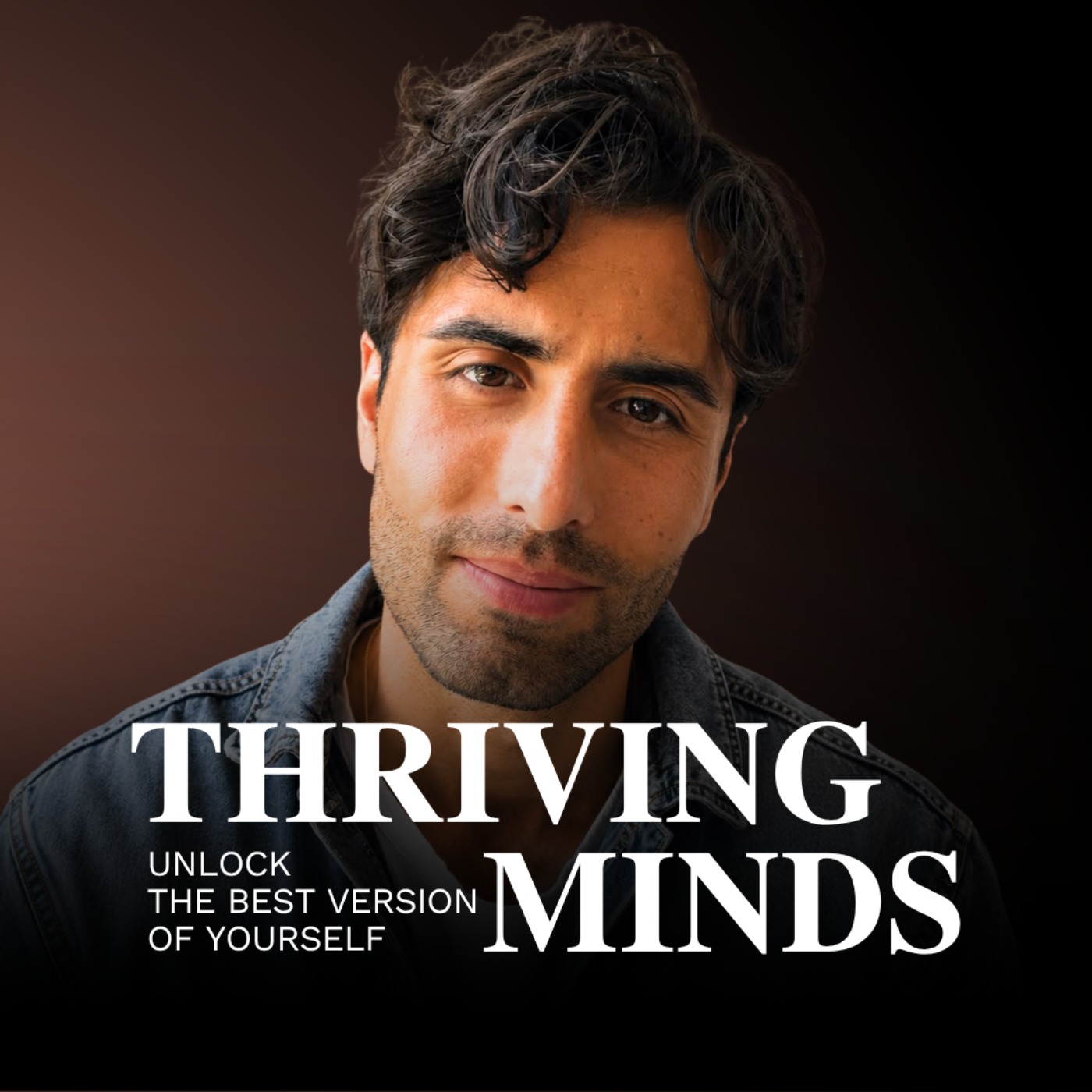
 Thriving Minds with Alberto Zandi
15 Aug 2024 · 39m

Written by AI. May contain mistakes.

Get the gist, explore an idea or ask about something said.
 Claude
On Thriving Minds with Alberto Zandi, what are the key points of this episode?
Searching your listeningAutomatic transcript. May contain errors.
0:02I never dreamt of being a restaurateur or working in a restaurant or owning a restaurant or anything related to hospitality wasn't part of my dream. Arian Zandi, he's the co-founder of Emerald Hospitality Group, 28 years old, has over 200 employees, and is, of course, a Forbes 30 under 30 lister. Emerald Hospitality Group was also listed as a top 100 Sunday Times company with biggest growth in 2024. You started that company with me, right? I'm not only your brother, I'm your twin brother. To put it very simply, it's a group of restaurants that we have both founded and created. It's a timeless industry that it will always be there.
0:43And there's definitely ways in which the industry is evolving. And for us, it's providing that experience and not only the food. 60 % of the restaurants fail within the first year. You have defeated this multiple times. What have you learned in terms of leadership? What do you think is your recipe or your secret to success? For me, success.
1:15Ariane, you went to a great university and landed a very well-paying job too. So why did you decide to become an entrepreneur? For me personally, I've always wanted to become an entrepreneur. So it was never my plans to start a corporate job or a corporate career and then stick to it. but at the same time I needed to start somewhere to learn the ropes of what a business is and then feel confident to be able to work by myself. So my first job that I landed and we landed it together, it was in management consulting. It was very useful for us, definitely very useful because it gave us all the insights of how an internal company works without being too much focused on a specific industry and that gave us all let's say the confidence and the business knowledge to be able to then move to a more passionate project which is being an entrepreneur but also with the skills and the structure that corporate and in particular consulting gave us you built your company at the age of 22 very young but obviously you started that company with me right i'm not only your brother i'm your twin brother so the emotional support that he had for me and obviously this is vice versa too was very very strong do you think you would have started or you would have had the courage because it takes a lot of courage to start the business do you think you would have had that courage to start it so early on in life if i wasn't in the picture i think that's a very good question um i don't have 100 the answer to be very honest because i would uh it's very hard for me to imagine to do any of the things that I have done without you.
2:59For the two reasons. First, we're twins. We were born together and we had very similar upbringings. And doing things in general without you, it's strange for me. And also all the things that we have overcome together throughout the business. I mean, the businesses that we have founded. I can remember that every single setback that I had or you had we were there for each other so perhaps I would have not been as let's say encouraged or brave to do it by myself at first but for sure I've always known that I wanted to do it so there was there was no stopper or block towards that but you were a big part of it and I wouldn't I wouldn't change any of that this episode is obviously extra emotional right to me in my case I I don't think I would have started that early because I had that emotional support from someone that a knew me very very well and then b shared that same vision and no one especially at that age when we're both you know our lives were very similar still back then our ideologies in life our goals our targets were very much aligned so if you put these two combinations together being with someone that is very similar to you and at the same time that same person represents this incredible level of support for me was almost not a no-brainer but it made things much much much easier to say yes likewise i quit my job and let's do this together
4:39your company emerald hospitality group what is it elevator pitch right yeah To put it very simply, it's a group of restaurants that we have both founded and created. Currently, we have four restaurants. All are different cuisines, but they all deliver experiences. So they have things that are very different, but one thing that is common, which is the idea or the concept that they deliver and experience. We have one that is Latin American. We have another one that is Italian. We have a Spanish one, which is where we are at the moment. And the last one that we have opened, which is South French.
5:15So on a nutshell, that's what we do. We have created it in order to deliver something else beyond just eating well for our clients. And then also with the hope and the target to take all of those brands internationally to a broader audience. Let's deep dive into what makes your company different. There are so many restaurants in the world. What made you think the world needs one more or multiple more? so why did you enter this industry the world doesn't need another restaurant or as good as ours so please for anyone out there wanting to open a restaurant don't in fact there's too many of us I don't think I mean it's it's a very old industry hospitality I don't think it's a need and we have a cracked I don't know the code the Da Vinci code I don't know how to go to Mars I don't think it's that kind of industry.
6:15Fortunately and unfortunately. But I do think that it's a very rewarding industry that has always been there. That has not been, let's say, majorly disrupted by technology. So restaurants like ours, that they do deliver experiences and they unite people throughout the technology development eras like Deliveroo or Uber Eats and so on has not been disrupted, has not eaten at all any of the market share of going out. COVID for instance has also not disrupted the idea of going out with friends, in fact has enhanced it more. So I always had that in mind, the fact that it's a timeless industry, that it will always be there.
6:58And there's definitely ways in which the industry is evolving. And for us, it's providing that experience and not only the food. and I think that if we provide that experience better than other restaurants then clients will stay with us but ultimately once you provide that experience and that added value to your clients the most important thing for them to become loyal is consistency. A lot of people when they're looking to start a business they think if what they're going to venture themselves into is either something that you always wanted to do and since you're a kid that was your dream or this is an opportunity that just happened in your life and you just took the opportunity in your case did you always wanted to be in the hospitality space or was something that at some point in your life you thought well this is a good next step yes uh so no um i never dreamt of being a restauranteur or working in a restaurant or owning a restaurant or anything related to hospitality.
8:05It wasn't part of my dream. But equally, I never had a dream of being in one specific industry. It's not that I said I wanted to be a doctor or an astronaut or a chef. No, my dream was to be an entrepreneur. And for me being an entrepreneur, it's pulling together people to create something that adds value to an end customer, whatever that is. And that enjoys me and that brings me a lot of joy, that creates my passion. And it's a big part of why I wake up every single morning to create that and do it better every day. Let's deep dive a little bit more into the hospitality industry. 60 % of the restaurants fail within the first year.
8:48So it almost seems like before you start the business, you're set for failure. in your case you have defeated this multiple times what do you think is your recipe or your secret to success well it's i didn't know those stats but i knew it was a very high number of closures within the first year for me and for us i think what enabled us to stay open the on the first year and beyond and being as we are cash flow positive from the first day a bit positive from the first month as well. It's the ability and the capabilities that we have as entrepreneurs. So we don't get too focused on one area of the business.
9:34So we don't get too focused on just the food and we deliver the best, I don't know, menu. We don't get too focused on the design. So we don't have that tunnel vision on one item of the business. We are entrepreneurs and we look at it holistically and we're very much data driven in this case so before venturing in into this business we have done a lot of research of who is our customer what is a customer that moves around that area because at the end of the day it's um it's it's retail so you are physically based somewhere so understanding who's going to be your customer in that area and creating that offer for them i'm going to add to that and i'll take the liberty of doing this in this episode because obviously you're not only my twin brother, but we've co-founded this company together.
10:24I think personally, I attribute the success so far that we have experienced in our business. Well, surely because of you. Apart from that, it's because we didn't enter into the market thinking that, you know what? I cook an amazing pizza or lasagna and I'm going to try myself in the market, right? I'm just going to open this business. But we onboarded a lot of different corporate standards. We implemented processes. you know, incredibly data driven and remove the emotion completely outside of the equation in an industry that by definition is very unstructured, right? So most of the competitors are very unstructured compared to us in this regard that the level of perhaps of not, I wouldn't say bureaucracy, but the level of sophistication that our operations have, I think is at a different level, not necessarily comparable to the hospitality industry.
11:16So I think that was a good competitive advantage. We've been doing this for now six years, six, seven years. We started obviously with a very small team. And right now the team has increased to over 200 employees. I'm very interested to know what have you learned in terms of leadership over the last years. What I have learned is that you need to work with the resources that you have. and when it's a startup, when you're starting a business, those resources are not unlimited with the resources that you have. So you need to make sure that your team and other resources that you can employ are well utilized and are efficient in order to deliver that and not get too distracted with activities or items that are not going to deliver results.
12:10That's one thing that I've learned. And secondly, again, as a startup or starting up a business, it's cash flow. So you need to have very clear KPIs, but those always at the beginning need to be very tight on cash flow. So understanding that your business will have different moments of cash needs and being able to prepare for those is extremely important to stay afloat. because when you're starting a business, you have highs or peaks on demand, especially in hospitality, then lows, and they're really unpredictable sometimes costs. So having a view on that cash flow will ensure you that you're going to stay on business.
12:51There is no point of having a great idea and great sales if then you're not able to sustain that for a number of years, even if it's within your business plan. So that I would say was also a big lesson learned for us. In terms of leadership, I have seen you grow a lot in the last years. I came into the business with, let's also start from the fact that we initiated this business at the age of 22. So we're very young now, but we were very, very young when we started. And I came into this business with an idea of, a preconceived idea of what the leader should be. It was a mix of different movie characters, different TV show characters that I admired, and maybe some political leaders.
13:40So basically, I put together this collage of a profile of a leader, and I tried every day to be that. and it became apparent to me in fact very quickly that that was not going to be applicable it was not going to be effective because I was feeling very weird I was reacting in ways that I had no control basically I wasn't myself so my main lesson learned in the last years in building up the business the company was that you need to make mistakes your own mistakes learn from those mistakes and shape a leadership style that resonates only to you because I don't think there's a leader that fits every size that fits every box I think there's a leader that fits your personality your environment your company values and that's my biggest lesson learned to personalize my skills going back to what I've seen from you I've seen that 100 100 what is your vision for Emerald Hospitality Group.
14:45Our vision was always the same, to take all the brands international. At the moment, we're very excited because we have just signed an agreement with a very important family office. And that agreement will first take us to open two new restaurants. One of them, it's an extension or it's the second site of an existing brand of our Italian concept, Como Garden. and then another one in the rooftop of a very important building in central London. And that would be a completely new brand. This partnership for us, it means a lot, mainly because this fund has the capabilities of taking our brand or new brands that we create with them to some of the best spots in the world.
15:31And that's something that we have always dreamed of and worked really hard for. Okay, so what happens if you don't achieve that? So you don't bring your brands internationally, so your dreams are crushed. How do you pivot that? How do you keep yourself happy and motivated? What's the plan B? I mean, there's a lot of other dimensions of my life that keep me happy and motivated. Not only that one. But the plan B is to continue expanding in London. London is a huge city. I mean, I think within London you can fit three other cities that are also big and let's say cosmopolitan in the world. So the plan B would be to continue expanding here and perhaps to other markets that I know more.
16:13But I'm very confident on the plan that we have. I'm very confident on the team that we have to deliver that plan. I'm confident on our brand. I'm confident on our new partner to make sure that this plan maybe doesn't go exactly the way that we want it. but it's still going to be delivered and successful.
16:35Before starting a business, one does a lot of research, any business. And once you start researching about the possibilities of opening up that particular company, you start seeing things like, there perhaps are a lot of competitors, source, maybe I require more capital than what I have. You know, you identify these complexities from an analysis and then you can get a paralysis. So I call this paralysis by analysis. In your case, this is even more aggravated because in the hospitality industry, the moment that you type anything in Google or you ask any family member, any friend, they're going to tell you, don't enter this industry you're going to be a slave to it and you're going to lose a lot of money so how did you overcome this with this paralysis right before entering into the business it's true that you get a lot of advice for people that they think they know about the business so that was something that i i always i've always done but secondly particular to our industry it is true that it is very difficult and it is true that it is very demanding and the way that i overcame that paralysis and I decided to enter and also continue through it was to divide all the workload and all the complexities of the business in different building blocks from the very beginning instead of just looking at it like one whole thing of how to open this restaurant like how am I going to get my head around it I divided all the things that I knew that would make in order to open a restaurant so on one side it's going to be this set of activity then this other set of activity so divided it and like a consultant put it in a chronological order in order to be able to open it and and project manage it on the best of my ability and that helped me to overcome that let's say analysis paralysis okay so basically you're taking on a big big problem and you're simplifying it is that the key to in this case also to confidence right because right now you're sitting in front of me you're very confident from everything that you're saying it's a mixture of what you have learned in the last years, but perhaps this is also the technique, right?
18:51Simplifying everything that you've been through, right? Every problem, break it down and go one by one. Correct. The synergies in between co-founders are very important. And right now, this is something that I'm trying to identify across almost every guest that I'm bringing to the show. Because if you have a good relationship, professional relationship with a co-founder that can set you up for success. But if you don't, obviously it can also set you up for failure. In this case, I am your co-founder. So I would like to understand what is your view in our relationship and how important do you think having a partner and your relationship with that partner it is to the success of the business.
19:37Very, very important. Your co-founder is going to be with you from day one and is going to share a lot of things with you. good things and not pleasant things. So it's going to share with you all the successes, all the good moments, all the achievements with you. When you sign a new investor, when you get bigger demand, when you turn a profit, that person is going to be there with you. No, and by definition, and it's very beautiful to share that good moment because you will have that sense of achieving it together. But also your co-founder will be there when you're having other types of feelings on a business, when the business is not going that well, when the business is struggling, when it's starting up, when you're not finding a solution.
20:25So having a good relationship with that person, it's extremely healthy and needed for both as co-founders, but also for the business, because the interaction and the relationship that you have with your co-founder will always be reflected on the business, especially when you're starting up, because you don't have a huge team and that team will always feed off of the sentiment and the relationship and the energy that the co-founders bring to the table. And if the co-founders don't have a good relationship, that will immediately be seen. I would also say that it's very important to have the right expectations with your co-founder.
21:03So sometimes you do think that, sometimes you're very aware of what you're doing and you believe that you have a lot carrying on your shoulders and you're delivering a big amount of the workload or of the results. But that's just a reflection of how much work there is on the business and you're doing. But you sometimes lose the ability to see how much work the other co-founder is actually doing because you're so focused on your side. You know, you're doing a million things at one time, different roles, different tasks, being only one person. And you sometimes forget that your co-founder is doing the same thing on the other side.
21:42So one thing that it's an advice or my lesson learned would be what you get from your co-founder. It's what it is. That's the best. And you should work with that instead of asking or trying to get more from your co-founder. And I think that's a very healthy way of looking at it. And also a way that you can work together collaboratively as a team, instead of beating each other up. and that's extremely important and extremely valuable. Don't expect more than what you're getting because you should trust that the other person is doing its maximum and is probably already jogging through a lot of things that you can't see and you can't see everything.
22:26I agree with you. I think expectations are something that can impact a lot their relationship. I don't think that is only the case for co-founders but in general for relationships. But I also think that communication is very important and that transparency needs to be there. We need to be very honest with each other. How honest do you think we are with each other? I think we are as honest as one can be with someone outside of yourself. Can you put it in a different way? There is nothing that I'm keeping from you that I don't think you need to know. Like whatever I'm not telling you is just something that I'm keeping for myself, that it's just my inner thoughts.
23:13And I want to think about them more clearly, settle them down and then share them with you. But everything that I'm sharing with you is full transparency. And I like to think that also well thought. What's the hardest moment? As a twin brother and co-founder is you're not only my co-founder. So, and I cannot play both roles separately. You're my co-founder and twin brother when we're in business. You're my twin brother and co-founder when we're going out for dinner. do you have a memory of the hardest moment that we've been through together i don't have one particular memory of the hardest moment that we have been through um obviously when uh business it's not going in the direction that we want or that we expect according to the level of effort that we're putting um it creates friction in the relationship not because of how not because we antagonize each other or we, as I said, expect more or less from each other.
24:07But just because in general, your mood is a bit more down and I think it's okay to be down sometimes. Your levels of energy are also down and that obviously gets impacted in the relationship with your co-founder. So there isn't one moment that I could recall, but there's been pockets of moments throughout this whole journey of entrepreneurship. And I think there will be more and I don't think it's in my view I don't think it will be a matter of either picking up one or understanding what happened in that particular occasion or even trying to avoid having more in the future it's a matter of accepting it acknowledging it it's part of business it's part of how human beings are it's part of relationships it's interesting because Because for me, the hardest moment or hardest moments, they share the same commonality.
25:04They don't come from the outside world being, let's say, negative. So it doesn't come from a bad external situation. In fact, my toughest memories with you as partners, as co-founders, as brothers too, come from the most stupid, small petty fights for the business. And those ones are the ones that stayed the longest in my memory. And that I also remember that they have a very strong emotional charge. which is interesting because they don't come from from when the situation in the business is is bad but at the same time at least this is something that i've applied for myself and i'm not i don't think i've ever told you this but one of my mechanisms to reset and move forward was not to think well you know crap how what what should arian do to not do this again right so what should he change instead of focusing on you even though unconsciously i'm going to think that is your mistake you're to blame i'm focusing on myself how can i improve and just by thinking about myself i feel much better about you so that allows me to reset and go back to the table let's say for discussing something we need to decide something that is important to the for the business to find that balance, that equilibrium.
26:34Let's turn into the more beautiful side. Do you have a memory that perhaps might be the most beautiful memory that you have through the last years that we have been working together? Again, not one, but every single opening that we do is very beautiful. So when we open a restaurant, we always do a lunch party. We invite friends, family, good clients, press and so on. But I always find that one moment in that night, every, like we already opened four restaurants, so there's been four nights like that. I always find that one moment in that night that amongst the crowd, I look at you and I see you just interacting with other people and I just smile a lot, also internally, and I get very happy that we have done that and we were able to get to that point together and that level of enjoyment and happiness just because you and I have created it.
27:27So yeah, those opening nights, those nights are beautiful. I 100 % agree. For me, I also, when I was thinking about this, I found it very interesting. My answer. My most beautiful moments, they come not from a nice situation, but in fact from the opposite one. So when things go very hard in business, let's say let's say COVID for example restaurants were closing the world was closed our businesses were closing we didn't know if we were going to survive let alone you know keep growing in those moments when you know the shit hits the fan in those real moments is when we come together and that's when I see not only my partner I see my brother and those for me are the most beautiful moments because that's when I get close to you like there's no tomorrow So my take on this is that the hard moments in business, they don't come because of the business, in my opinion, at least in our case, we're family, we're twins.
28:34And the good moments also, they don't come because we're making, let's say, lots of money. For me, they come when we are closer together. And that comes when the external world is not going well for us. I know you had moments where there was every fiber of your being telling you to quit. Let's do something else. And that I think is not only it comes inherent with our business in particular, but generally in business. Again, do you have a technique? What goes through in your mind that allows you to pull through and keep moving forward? I wouldn't say it's a particular technique. In general, I like to apply a positive mentality.
29:14we have a lot of employees and I like to think that they all look up to us and we still regardless of the times that we navigate through whether it's COVID whether it's cold war or economic crisis they still look up to us and they react based on how they see us how they see our feelings and our behavior and we still need them to um to deliver so i try to stay as firm and strong with them as possible so they can still look up to me and count on me as a person as a reference as a leader that they can come with their questions with their worries with their doubts because i think that when you needed most when at the darkest times you need that one leader that is going to rise and show up for everybody and that's the way that i see it for our business because we are the owners we are the leaders we have gone through a lot there is still a lot that we're going through and we need to be that figure i'd like to be that figure for you and I also like to be that figure to all my team.
30:35And the ability to be able to provide a bit of comfort to everybody is what keeps me going. Where do you find support? Within me. Within you. Within me. Always. I find this fascinating. Obviously, in this case, I can see it from the outside and I'm a testament to what you're saying. and yeah it's incredibly inspiring I hope that I mirror some a similar emotion to you but you you to me are are inspirational and that's something that allows me also to put to pull through right because we're on the same boat together different responsibilities but on the same boat together effectively so yeah I find this very very inspirational again there is no better teacher than real life experience what would you advise to your 22 year old self there's just so much you can't control you cannot control everything so do your best and that's good enough and one advice that goes together with what i just said that i was given by someone that is very important to me and it was very important on my journey he said um may life teach you what life is about so what i learned from that and what i would like to um explain to people about that is you will do your best but there is still a journey there is a wider world there is life that you don't know and you just need to wait and continue within that journey for that and and you just need to let life to do that thing for you how do you pull back from self-doubt how do you pull back from self-doubt
32:39it's important to let things settle so when you're doubting yourself sometimes it's a rush for a moment. So you need to let it settle and externalize it. Because sometimes when you say it out loud, if you can share it with someone, if it's a safe space to share it with someone that you trust, like your brother, your sibling, your family, then it is healthy to do so. Because then when you hear yourself saying it from outside, you probably realize that it's not that bad or that strong of thing and then you can you can look at it from another angle thank you and i thank you because i know you very well and i and i also know that opening up in this case in public is not easy and it's also something that perhaps is not supernatural to you so i really appreciate you opening up.
33:33Let's change the tone.
33:39Let's talk about Forbes. Last year you got nominated and you were included in the 2023 list, which is for some a great accomplishment, for some others maybe something less meaningful. How important was this nomination to you? It was It was very important, naturally. It was something that, it wasn't a, let's say a dream per se, but it was something that we, I always wanted to. It was a recognition from a really important, really important magazine. And it's a magazine that is for entrepreneurs, successful entrepreneurs. And as I always wanted to be one, for me, it was a very, very joyful moment to be recognized.
34:25that in last year's awards um so yes very happy and also it made it extra happy to be able to be there together it wasn't me and then you so that that thing combined there was a very special moment and i think it was also very important for us as a career and a step in our career because um on one side it brought a lot of things afterwards that recognition is a public recognition a lot of people trust that award, not only us. And that puts a rubber stamp of what we have done and what we're capable of doing at an early age and something that is solid, you know. So that, for example, has brought us new investors that they trust on what we do, they trust on our capabilities.
35:15Also within our team, they feel that they are in a very competent and reliable, let's say, management or co-founding co-founders like you and I. So our overall environment has benefited from this award. I think for you, in this case for us, was extra special because we were coming from a situation where we had to work very hard during COVID to turn things completely around 180 degrees literally and we got out of it and we have obviously our financial results that are telling us things are going well but then you get this public recognition which we both discussed it you know offline it's not something that we craved it's not something that that we dreamed of but it was like a small you know hat in the back saying hey guys well done because we've been through countless nights of no sleep, of staying super late, discussing, working, value engineering our company, because we have honestly been through something that for our industry has been detrimental.
36:26And this recognition came right after that in the form of, hey guys, in life, if you work, you get rewarded. And this was one example of our reward from everything that happened afterwards, which I think this is why it became extra special. Adrian, your business generates several millions. You employ hundreds of people. Does this equate to success? So you're asking me what is success to me? Yeah. I don't think that's success. It doesn't equate to success. I mean, so there's a lot of things behind that scene, behind those numbers. as you said sleepless hours is that really success um the um opportunity cost that you have and also to get there so i wouldn't say that is success for me success is a state of mind where you believe generally believe that you have completed what you have set out to do and i don't think that's a numerical value in terms of money or number of employees but then money is what you get from being right so so that is what is success to me so then are you successful at the moment my state of mind i do believe yes that i have achieved what i wanted to do i wanted to open a different restaurants all different and being able to prove that they are all working well by themselves almost on autopilot mode all delivering returns to me and my investors and they're ready to take them international.
38:02So yes, I feel successful. Arjen, thank you so much for coming this morning. This has been, to me, very special from so many different angles. And I hope that for you was also a little bit special. I think what you, your story, what you have gone through, everything that you've been working on are great examples for people to look up to and find inspiration from. because a lot of times being an entrepreneur is portrayed as having this groundbreaking idea. And if you don't have this groundbreaking idea, you're not a great entrepreneur or you're not an entrepreneur, right? Don't even start. You have entered into one of the most competitive industries in the world in history, one of the oldest ones.
38:50and you have not only become successful, very successful at a very young age, but you have been very successful in some of the hardest moments in the history of the United Kingdom, which I think this is very inspirational to a lot of people. And I thank you for coming this morning and sharing a little bit of what you have done. Thank you so much. Thank you, Alberto. Thank you.
39:19You
Most people don’t start a business because they don’t think they have a groundbreaking idea. Arian Zandi proves this wrong, emphasizing that implementation is more important than the initial idea.
Arian Zandi decided to quit his corporate career in strategy consulting to follow his passion for entrepreneurship. In 2018, Arian co-founded Emerald Hospitality Group. Many would argue that the hospitality industry is very tough, but Arian’s approach to business is industry-agnostic. While some industries may be more competitive than others, the success of a company in any industry hinges on the implementation of the idea and the governance of the business. By 2024, Emerald Hospitality Group employs over 200 people, has nine-figure revenue, and has been listed by the Sunday Times as Britain's 100 fastest private companies.
In this episode, Alberto is joined by his twin, business partner, and co-founder of Emerald Hospitality Group, Arian Zandi. They discuss the benefits of being an entrepreneur, the sacrifices involved, and the importance of a balanced co-founder relationship.
Hosted on Acast. See acast.com/privacy for more information.