Ask ChatGPT
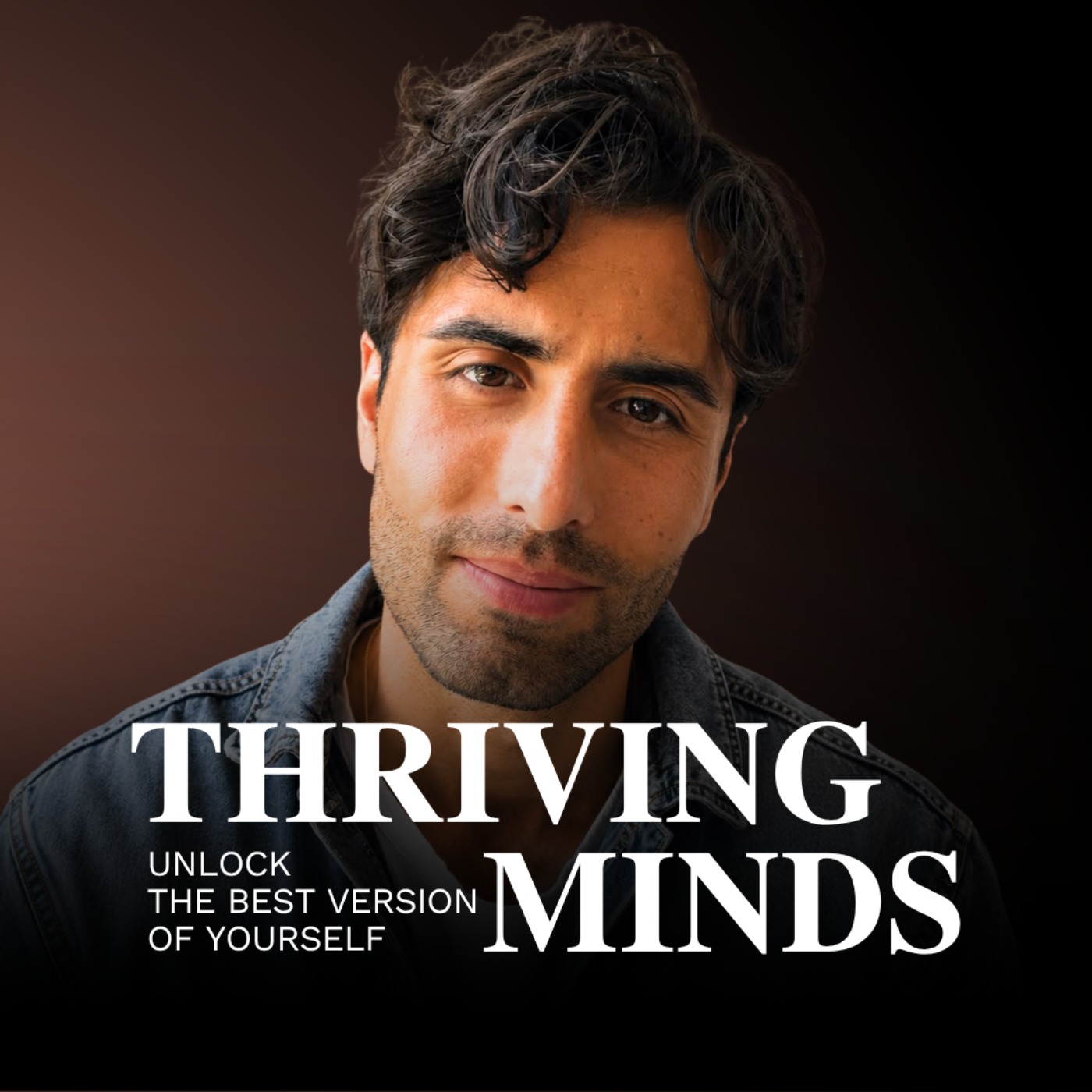
 Thriving Minds with Alberto Zandi
6 Nov 2025 · 1h 12m

In this episode of Thriving Minds with Alberto Zandi, the host interviews Caspar Lee, a pioneering YouTuber who transitioned from online fame to entrepreneurship. Lee shares his journey from experiencing burnout and identity loss to finding clarity and purpose in his business ventures. The episode discusses the lessons learned during this transformative process and emphasizes personal growth.
Written by AI. May contain mistakes.

Get the gist, explore an idea or ask about something said.
 Claude
On Thriving Minds with Alberto Zandi, what are the key points of this episode?
Searching your listeningAutomatic transcript. May contain errors.
0:00These people are worth hundreds of millions. Top YouTubers are easily clearing top, top actors these days, in my opinion. And you're not compelled to go back to YouTube? At 21, you made your first million. Yeah. How did that make you feel? Casper Lee is one of the world's first globally successful YouTubers, followed by millions and earning millions, but who walked away from it all to reinvent himself as an entrepreneur. He co-founded the Influencer marketing platform, Influencer.com and the Venture Fund Creator Ventures. In 2020, he was featured on the Forbes 30 Under 30 list for his achievements in media.
0:37YouTube was still this exciting experimental place. I started convincing not only YouTubers to collaborate with me, I managed to get people like Kevin Hart, The Rock, like Ed Sheeran. How do you get people like that to come to your show? So I didn't actually enjoy doing those big interviews because I would get like crippling anxiety and stomach fear for like days before. I had like this year of anxiety, like really like crippling, to the point where I wouldn't even get in a car, I wouldn't want to leave my house. And so... How did you come out of it? If you could talk to your younger self, what would you advise him?
1:14Being a YouTuber, you are an entrepreneur. You're literally building a media company. I want to create this influencer marketing platform that allows creators to work with brands in a smarter way. Since then, that business is now got 160 people in about five countries. is so much to you own of that business. If I were to ask you today, what is your purpose in life? How would you answer this?
1:44Kaspar, when you strip away YouTuber, investor, entrepreneur, how would you describe yourself? I'm a goofy husband who probably hasn't fully grown up. The world is kind of this fun game for me at the moment. But there were moments when it wasn't fun, it was really difficult. And then I also see myself as like a South African living in another country. I fit in here in terms of I've got loads of friends. I feel like culturally it's very similar to kind of where I grew up. But I do see myself as someone who eventually wants to go home and make a difference back in South Africa. I feel like when you grow up somewhere like that, it never leaves you.
2:36Take me back to South Africa with you in those early years, your youth. How was growing up there? How did it shape your mind? Yeah, so we moved there in 1995 when I was like a young baby. Hopefully all babies are young. Actually, some are man babies out there. There are a few of those. And yeah, I grew up in this place called KwaZulu-Natal, which is a rural kind of village type area for the first few years. And yeah, I just remember always running, like learning to cycle when I was like three years old, being outside, not overstimulated like London, but stimulated by kind of nature. and then we constantly moved and changed.
3:24My mom did a million different things. She was a chef and a state agent. She started a chocolate factory. My dad did all sorts of things as well. Actually, before that, my mom was also in the film industry and that's where they met. So that goes quite nicely into what I eventually became one day. But yeah, everything was always changing. they always did enough for us we were always okay we got to go to some good schools and things like that but money was always on their mind and so growing up I was always kind of worried about could I ask for this or how was I going to keep up with the kids in school I got a scholarship to a school eventually that I somehow managed to do very well on the exam, even though I'm not very good at school because I'm terrible at remembering stuff.
4:20But the exam was like an IQ test and I kind of was fine at that. Or I guess I did well. But I remember going to that school, which was, you know, filled with kids with quite a lot of cool things. And, you know, when I went home, it was a stress. And so, yeah, I think early on I was like making money is not easy, but I want to try and find a way to do it so I can have a secure environment for myself, my family and my kids one day and even my own parents, which I'm super excited now that I'm in a position where if anything ever happens to anyone in my family, I know that we can look after them. I think our parents' education directly and indirectly shape our personalities.
5:04I think from an indirect perspective, what you're exposed to is the fact normalized pivoting into different things so you see that moving from london to another country is something or from the uk to another country something normal and then you see your parents going from one career or one job one industry to another so you normalize pivoting which is already something unusual that's interesting and that's indirect but from a direct perspective how was your parents educational style yeah so they um they they they gave a lot of trust in me maybe because they were very busy uh but i remember i spoke to my parents about this um they never went to a single parent teacher kind of conference you know where your parents come to see how you actually did uh and i remember being very happy about this as a kid because i wasn't the most well behaved you still look very happy um and so so yeah i guess there was that uh another thing maybe you know they were always present with me at home.
6:13And they were always loving and, and great. But there wasn't like this big fear that if I did something wrong at school, that I would get in trouble. And actually, once I did actually do something wrong, I drank alcohol when I was 14 on a hockey trip. And it was like, literally, I had half a bottle of Hunter's Dry, which if you're South African, you might know but it's very weak alcohol um didn't feel it but eventually got called in I got kicked off the hockey team couldn't go on this hockey tour and my stepdad at the time who joined us by then uh he basically had a massive argument with the principal in front of me saying what the fuck do you think you're doing throwing this guy off the team for drinking a little bit of alcohol and that was interesting to see someone stand up to authority like that I was petrified because I took authority at school very seriously.
7:09And actually, funny enough, because I didn't go on that hockey trip, my parents decided that they would let me go to London instead to meet all the people I'd been speaking to online. And I made loads of YouTube videos with them, and that's where I was able to blow up my YouTube channel. Fascinating. I think that having a very strict relationship with an authority figure can make you be less of a risk taker because you want to follow the rules i think to one extent exactly it needs to be respected that was yeah that was the nuance there is my stepdad himself he was my authority figure but i saw him stand up to other authority for me and what do you think that how did that shape your mind well yeah you as I said I used to um be like when my mom would break any rule like I would just be a mom what are you doing stop it stop it like we gotta follow the rule like someone said wait five minutes wait five minutes and I think by the time I was 17 18 I figured out that I couldn't just wait around for absolutely everything.
8:24I'm not saying do something illegal, but I had to figure out ways to advance what I was doing. And an example of that would have been on YouTube in the early days, this was like 2010. I was just on my own in South Africa in a bedroom and I had to figure out how to get people to watch me and no one was watching me. And so I created like five to ten accounts manually, didn't create a bot, didn't go buy them, just created these accounts. And every time I uploaded a video, I would comment on my own channel saying how amazing it was. So hopefully other people saw that I was good advertising for myself.
9:01I could also combat all the dislikes I was getting with likes because you could see likes back then and dislikes. And then I would also go to other people's channels and I would say, hi, I'm Casper. I make videos like this YouTuber. and then I'd get those accounts that I was on and I would just sign into every single one. It took me a long time and I would like my comments. So it was the most number one like comment back then. And so yeah, I would find little ways that weren't perfectly by the book because I'm sure on the terms of service on YouTube back then, you're not meant to be creating accounts.
9:31But I would imagine that you were on YouTube back then, not because you wanted to make a career out of it because probably you didn't even know what was a career, but you wanted to have some fun. yet you still wanted to be seen yeah why um I don't know I uh I guess I wanted to I did I think I wanted to be cool I think being most well I don't know if everyone feels like this but for me it felt very normal to want to be cool and accepted amongst uh kids at my in my class I really wanted to impress girls growing up I was always like one of the things I loved most about school was going to like see girls like could I get a girlfriend um like I went to co-ed schools not my whole life but as soon as I went to a co-ed school for the first time I was like this is amazing and so I thought like maybe having a YouTube channel would make them think I was cool I had pretty bad skin growing up so maybe I was trying to um compensate compensate for that I also have Tourette's syndrome and I like that was also something that maybe wasn't what's that syndrome so it's basically like where you have involuntary tics so you might move your head like that you might click your neck you might some people have uh verbal tourettes where they have to swear um and so yeah i would get kicked out of class and like when you're on a date and you have to like like kick the seat in front of you because your your leg is twitching or something like that that was something that i was probably trying to compensate for with youtube and then this turns from a a compensation initiative to a full-time career you moved to London at the age of 18 and you wanted to follow a full-time professional YouTube career yeah so when I was 18 I just said to my parents I'm gonna try and make YouTube work I didn't know where that was gonna be I I went to the US for a bit.
11:24I kind of stayed on people's couches. I had, I think I'd managed to save up about 6 ,000 pounds. And in London at the time, I think, you know, you could get an apartment that I wanted to live in. That was, I could put the deposit down and I could start paying my first month's rent. And my parents were okay with me doing that as long as I was funding it myself. and I quickly saw that there was an opportunity to make this really big at that point and that was probably the first time I started thinking about the money not just to be able to get me food at the tuck shop which I was able to do for like a few months before I finished school with YouTube money but I saw it as like this is something that could be quite big and if you work really hard you make some smart decisions you don't have to be the most talented person in the world to do well on YouTube, especially back then.
12:15It was something you could kind of gamify quite easily by collaborating with the right people, making the right content and going to the right events. Talk to me about that particular strategy, because two years after you moved to London, you reached, I think it was your first million of subscribers. But then two years after that, you had 7 million subscribers, you were doing something right. So to what exactly do you attribute that to growth. So there was this community of us who came together. It was first called the Brit Crew, which we didn't call it that. I'm not British, so I don't know how I fell into that.
12:52But that was a group of us who all made videos together. And then there was this one that again became named the Buttercream Gang, which is a really weird name. But basically, the strategy I had personally was not trying to rely on myself or my relevancy to grow my audience. just like you maybe in the beginning with this podcast use something like a platform like Forbes I used other people's stories as a platform for myself and in the beginning it was just like us playing fun games together but over time I started interviewing people I started convincing not only YouTubers to collaborate with me but I would you know I managed to get people like Kevin Hart the rock like Ed Sheeran how do you get people like that to come to your show so that was when YouTube was still this exciting experimental place for these people when they were launching a new movie or um or a song um and I and back then like now if you well now if you basically invite someone on a channel with seven million subscribers that's getting two million views a video it's pretty easy to get pretty much anyone who's promoting something.
14:02Back then, they were super like, what the hell is going on here? So I couldn't just start in, I couldn't start off by saying, guys, come to my house. I want to make a video. I had to go to them. So I would go to press junkets. And a press junket is basically when someone's sitting in a hotel room for 10 hours talking to a bunch of journalists and each journalist gets like 10 minutes. But I would say to them, okay, I'm going to do this, but I have a little bit of leverage. I've got like this big YouTube channel that's going to do a lot better than everyone else who's in these rooms. Like even if they're from the BBC, like we're going to get more views than that.
14:36And you were communicating. I was communicating to their, yeah, with my team to their reps. You already had a team. Yeah. Okay. And, but I consciously made the decision, like my team would come to me and say, they don't want to let you have longer. They don't want to take away the backdrop, which would be like the movie poster. and I said no if we're gonna do this and this is where I had to take a bit of a risk with the negotiation we got to make it look like these guys are in my bedroom we got to make it look like these guys are actually my friends and if I can be the first youtuber to make it look like these big celebrities are just friends or we're doing some sort of fun skit together or they're coming around my house that's gonna be way more interesting content than I've just managed to go to a press junket so I managed to do that and then over time how did you manage to do that well they I mean they to be honest it's not that hard to tell them just to take away the sign for 10 minutes or to just pretend to be like at someone's house like I know like there was this thing where everyone else was maybe too scared to ask them but because I had enough leverage because the YouTube channel was big enough I did that and I think it made a massive difference and then when you had literally one two or three big names do something everyone else is then doing it so like when Ed Sheeran did my my video that was your first big name no no that was like way after but the reason he did it and he got in touch with our team about it because he's a very smart marketer.
15:58And he was like, I like how Casper's doing it in a more authentic way. He doesn't seem nervous about it. He doesn't seem like he's at a press junket. So he came to my apartment to do it, which was super cool because everyone in the apartment block thought I was pretty cool having Ed Sheeran come up. How old were you? At this point, I must have been like 22. Wow. And yeah, then had some crazy experiences. But for me, I got actually really nervous in those situations. And I didn't actually enjoy doing those big interviews because I would get like crippling anxiety and stomach fear for like days before.
16:34And even though I'd done like 10 of these things or more, like every time it didn't get easier. And I didn't really know what that was. Do you now know what that was? I think it was a yeah it was a it was I think it was youth like imposter syndrome not really believing what I was doing was legitimate and you know I think over time I've become more secure in myself but I reckon there's still moments where if I push myself and do something where I don't feel like I'm meant to be there I still get really anxious and I've kind of learned how to work with it like i've learned to just like let it happen i've learned like it doesn't really matter if i go super red in the face people don't really care that they maybe actually want you to succeed even more when they see you going through something like that and whereas i think back then i was just trying to avoid things um that made me scared even though i'd eventually do it i'd spend like three days thinking how do i not do this so you became more you throughout time and that gave you confidence accepting yourself exactly accepting like it's okay to feel those nerves um kind of rather it's almost like what's those those little like the chinese something game where if you push it together it actually opens up i i don't know what it's called someone hopefully in the comments can tell me um but like it's weird in life where you stop fighting something it gets better and then the you know the other thing is i think now when i got you know recently got married, now in my 30s, I'm starting to realize like maybe everyone just always feels like this.
18:11And when I realized that, and even like as you get older, no one has all the answers. I'm like, okay, well, this is just this great fun game. There isn't this like perfect person who I'm trying to become. I can just be myself. And that's cool. I think it's a powerful tool to normalize a given situation and to humanize it. At 21, you made your first million. Yeah. How did that make you feel?
18:43I always had this kind of weird relationship with money because growing up we didn't really have a lot of it. And we were always kind of like trying to figure out how we can not survive. But I don't want to ever say that we had nothing. But, you know, there's families out there who have an income, but they're still struggling. And when I made that money, I was like, I'm not going to spend any of it. Like, I need to turn this into more so that one day if everything falls apart, I have this nest that I can look after myself and my family. and I've always wanted to kind of create this nest that can protect me so I can go out there and do more and more crazy things to potentially build a bigger nest or to have fun.
19:37But yeah, it was never a case of going out and buying something cool. I don't enjoy paying for an asset that loses value. um i love my favorite thing is buying an asset i actually like and there's a chance that it can increase in value it seems to me that from your parents professional experience they were pivoting from one job to another there was an income but perhaps the visibility and yeah the visibility and the regularity of that income was inconsistent yeah and perhaps that's what you were seeking yeah consistency I think so and um and yeah being a youtuber you know I I was never under the impression um that it was going to last forever um my audience I think they they liked me because I hopefully was funny they liked me because of the videos um and people I had in them but I was also young right and um a lot of people probably liked me because we were the same age or there was just like this kind of youthfulness to it all and I I knew that I couldn't keep doing those sorts of videos into my 40s 50s and 60s and I even thought like do I want to be there was parts of making videos I love like editing but coming up with ideas and constantly trying to convince people to collaborate me with the other YouTube video like it gets tiring and it's a treadmill so I wanted to be able to go to myself or my future self and say like you don't have to do this and that's why i never spent anything on crazy shit i did spend a little it's interesting what you're saying that you thought that you you weren't sure if you wanted to do the same thing when you were 40 50 or 60 i've asked that same question to the manager of the sideman that came to the show i asked him do you think that an influencer a youtuber could be posting videos about gaming or comedy videos, which are the ones that Simon, for example, right now they're doing when they're 40 or 50.
21:40Because I would assume that A, maybe the talent, the influencer, the YouTuber might not want to be doing that when they're 40 or 50, but also their audience would have grown. His answer was, you would be surprised how many people in their 40s, 50s and 60s from an audience point of view are into that type of content. And also they are people with a higher income than the youngsters that are on YouTube. So you said that is a big market. I agree with him 100 % now. And I've seen how, even as I've gone through life, I still go back to YouTube and I still love creators. And I don't think that's ever going to change.
22:17I've got this habit ingrained in me now. And when I was back then, I probably thought, because old people weren't watching YouTube, why would they start? But what's actually going to happen is our age group is going to grow up and continue. Um, but at the same time, the style of content I was making, I felt was for a certain demographic, whereas people maybe like the sidemen, they've kind of grown with their audience, the kind of the world I was involved in, it didn't work. And if I was ever going to do it, I would have, I always believed I would have to take a break or do a massive pivot. Um, and so I guess you could call, uh, stopping YouTube for five years a break.
22:55Maybe one day in many years, I'd jump on the platform. I still love creating content. I love talking. I love entertaining. But I've kind of spent the last five years building stuff and actually doing stuff. So maybe when I do come back one day, I have really useful information to give. And what's the greatest lesson you've learned when it comes to YouTube in particular? The greatest lesson with YouTube.
23:21it's just so many lessons I think I've learned how to take something from zero to one and that's the great thing I've learned how to take rejection I've learned how to feel a flop I've learned how to get a ton of hate I've learned how to deal with praise yeah this so there's not one big thing you know that's what I've learned from YouTube but But I think it's very similar to entrepreneurship. And that's why I think like YouTubers are famous now. And when you compare them, well, they do get compared to musicians and actors. But I think YouTubers, not all of them, but I think a lot of YouTubers are very well-rounded entrepreneurial people when you compare them to normal celebrities because they've actually had to go through this thing, which is like, you're the editor, you're the producer, you're the director.
24:16you have to build a team you have to be consistent you have to think you have to come up with ideas you don't just have this talent that pushes you through which youtubers do you think are leading leading the way at a global scale not necessarily just in the uk yes um the the the industry is is so fragmented now that like the youtubers i watch today aren't necessarily the most popular ones um and uh so are the most popular ones well jimmy mr beast mr beast um in terms of kind of views he's just unrivaled um and and and then you get all everyone kind of in between but the kind of creators that obviously there's also a lot of uh children's content creators i never see but these guys are actually probably getting as many views as him have you heard of like like nastier like i met um so that's a big market yeah i met this this girl like nastier i think she's got like hundreds of millions of subscribers and she's like nine hundreds of millions of subscribers on youtube yeah yeah it's like these people are building how much would can you make annually if you have hundreds of millions yeah i mean no i mean she's i don't know i mean this person's in I mean, yeah, whatever.
25:38These people are worth hundreds of millions. It's insane. Top, top YouTubers are easily clearing top, top actors these days, in my opinion. And you're not compelled to go back to YouTube? I think if you're going to do that level of YouTube, that's your full focus. And you have to be quite lucky. to also it's not it's not it's skill as well consistency but you can't just say i'm gonna work super flippant hard and i'm gonna become that it's a combination of many things um and and and i think it's uh while while it's a it's obviously a place you can make money i think there's other way if your if your goal is the money if you're asking me would i go back to youtube for the money i think there's easier and better ways you could you could make money but if the goal is because you want to reach a lot of people and you want to make really cool content then YouTube is a great place for that.
26:40Talk to me about the moment that you quit because you were hitting absolutely every target possible back then you're getting the subscribers the views the money yet you quit. Walk me through either that period or the particular day in which you decided i'm going to walk away from this so even though it probably looks today like it was all really really great um it went from like 10 million views to like 5 million views to like 2 million views to like a million views and then even less and when you start seeing that happening even this amount of views today like if i got 500 000 views on a video today I'd be like that especially YouTube that is incredible and anyone doing 500 ,000 views a video on YouTube is doing incredibly well but I kind of went from those heights and I was like I'm now doing this business stuff which involves YouTube it involves Instagram it involves TikTok I'm also a manager of a management company do I want to be also trying to keep this thing going while I'm not focused on it.
27:52And it's not necessarily going in the right direction. I'd rather leave it on a high. And I'm a big fan of leaving things on a high. Don't wait until they've fully collapsed before you do it. That doesn't mean give up as soon as you see something going wrong one day. But if you've got really good data, it's sometimes better to move to something new. So yeah, I wanted to have that great memory of YouTube as something great that I did with my life. and I wanted to not try and hold on to it forever.
28:25We were discussing this earlier and I find this fascinating and a very powerful lesson. Some people, if they're lucky in life, they get to fall in love with the dream, with an idea, with the purpose. And in your case, at a young age, that was YouTube. And then if you're even luckier, you get to fall in love for the second time with a second dream, a second idea, a second professional path, which in your case was entrepreneurship. And you were able to pivot from one dream to another at a height, which is also very unusual. So in 2017, you become an entrepreneur. And since then, you've co-founded several businesses.
29:08So you have, you're the owner or co-founder of an influencer marketing agency. a talent management company, an investment fund, and most recently a student accommodation in South Africa. Before we deep dive into each, why did you become an entrepreneur? Why was this interesting or important to you? Growing up, my mom did loads of things. One of the things she did was start a chocolate factory. And while that sounds epic, it's actually a really hard business. and I had to help out on weekends and I learned about selling stuff to people in the markets and not only did I sell chocolate, I realized we had loads of books in our house and I would just take the books and try to sell them at 100 % margin because I wasn't paying for them.
29:52It's called stealing. But yeah, I always wanted... In South Africa and in the UK. Exactly. And I basically always loved doing that kind of stuff and then being a YouTuber, you are an entrepreneur. you're literally building a media company. Not that that's why I started, but that's what I figured out I was doing. So you thought that you had transferable skills, but you did not have a business degree. And right now, unfortunately, in my opinion, we live in a world in which they tend to criticize us if we don't have an area of expertise that is backed by a degree. Did you ever feel like you would have done better as an entrepreneur with a business degree or not?
30:35At the time, I thought if I had a business degree, it would probably help me because I maybe would have been more confident in what I was talking about at the time. Looking back now I'm so happy I didn't go and get a business degree in those early years because I spent that same time doing something really really useful when wanting to be an entrepreneur which is actually being an entrepreneur. Walk me through the journey the roadmap of founding all your different ventures so let's go perhaps one by one tell me why you found them and how did you do it? Yeah. So I was dating this girl who I'd met on Tinder and one of her friends saw me on a bus because I, my face was on a bus.
31:19I was doing YouTube and it was a campaign about being a YouTuber. Um, so her friend got in touch with her and asked if he could meet her, uh, me, sorry, if he could meet me. And, uh, and she convinced me because she's my girlfriend at the time and I had to say yes to everything and so we sat in a room and I thought it was gonna be like a 30-minute chat with this guy and I realized he had something special he was someone who tried to go to business school but he knew he wanted to be an entrepreneur quicker than waiting for that to finish so he'd taken a break from his degree and he had said like I want to create this influencer marketing platform that allows creators to work with brands in a smarter way than currently going on.
32:05And I knew there was a problem. I also knew that I had the ability to make this business better. And so I came on board. We raised some capital. We got more brands to sign up. We got more creators to sign up. At that point, you were a confident young man then. I just watched Straight Outta Compton. Or naive. Yeah. Pardon? Or naive. Yeah, naive. Which can be very useful. Exactly. I think being naive can be very useful. Yeah, exactly. I just watched Straight Outta Compton and I saw Dr. Dre turn his kind of rapping career into an executive. Great movie, by the way. Great movie. And I walked into my management company and I started with a baseball bat, just smashing it up, just like him.
32:45I'm kidding. So that's what inspired you to become an entrepreneur? I think so. I was like, I can't wait to run just for it to happen to me. I need to go out and do it. Brilliant. And so, yeah, we, you know, this is the first time I did something like this and I realized early on, like, Having a really good operator who's super motivated to make a business work with me, who's more of a kind of a visionary out there, creative, someone who's connecting everything, having those two things together is great. So that was that. And since then, that business has now got 160 people in about five countries.
33:26And it's going extremely well. Then I started a talent management company with a guy called Joe Sugg. And he's one of my best friends. We made YouTube videos for a very long time. And we were leaving a management company that had done good for us, but we felt like we could do something different. And so we approached WME IMG, who you might know. They're the biggest talent agency group in the world. They represent people like The Rock and represent just thousands of brands and just creators and everything. And so we convinced them to set up a talent management arm for social creators, which they said yes to.
34:13And we did it with them. And since then, that business has now been around for seven years. We have 30 incredible managers managing a roster of about 50. But you are in these two businesses that you just mentioned, a co-founder and an investor, but do you hold any operational role? yeah so i do um but we have people who are um you know line managers and day-to-day management managers of people i don't have direct reports in any of the businesses but i have like operationally i gotta spend x amount of time a week on things i've you know i'm a director of all of these businesses which comes with board responsibilities and all that kind of stuff but I've avoided becoming like an operator.
35:04So your approach or methodology in business is to identify a gap, set up a business, automate it with the management team, hold a strategic role more than operational, and then keep building new businesses. Exactly. I'm not someone who is very good at details. Even though I enjoy it, like I love sitting on a laptop and just spending hours like going over it. I actually am a bit slow at doing it because I get so obsessed with like every single thing. I've got a bit of OCD and I'm not the best. I'm like a forgetful person. Unless I put something in my phone, like write it down immediately after I've thought about it, I'll forget it.
35:43And so I've got like this ability, I think, to go out there and think differently and like get exposed to so much and can connect to so many people that that can really help whatever business I'm involved in. And I actually, when we started these things, I wanted to do multiple things as well, because going back to my childhood, I was a believer that things don't usually work out. Like my parents had started a few things and they didn't all work out. So I wanted to do more than one thing. So I didn't put all my eggs in one basket. And so while by doing that, you maybe have a tiny little bit less ownership, you can actually grow that less ownership into something way bigger because you have people who are super talented that you've managed to convince to do things with you.
36:25And you can also do multiple things potentially. In my case, I could. And then the success of MVE and Influencer.com led me to start investing. I did this because entrepreneurs had asked me if I'd come in as an angel investor in a couple of deals. And I was very close with my cousin, Sasha, who was just finishing at Harvard Business School, who had a very different style and upbringing to me in terms of he's like super on it with details. He's super smart. He was like number one in Oxford, top 5 % Harvard Business School. He was going to work in private equity. And I told him about these opportunities to invest in businesses.
37:08And he was like, oh, shit, some of these are actually pretty good. I'm going to help you to figure out which ones are good because I had no idea what's a good business to invest in. How old were you at that point? This was like six, seven years ago. So I guess like 24, 25. And even though I had entrepreneurial experience, as an entrepreneur, I don't always think they make the best investors. They can be good investors, but it's a very different skill. So he guided me through that. We then started getting other creators to invest alongside us. We even got actors, artists, athletes. and we did like four or five deals.
37:43We didn't take any money from any of these people to help them with the investing the way we made our money. Having investors with that profile, do you think, especially in consumer goods industries, helped the companies in which you're investing in? It helps them for sure. And what we were doing differently though, which allowed us to get in the best consumer companies, was we were not saying we're going to give you 10 ,000 pounds and then if we do a tweet, we want to have X thousand pounds free of equity. We were just saying, we're going to give you 10 ,000, whatever the money is. Each, like people are different.
38:17Some people are putting in a lot more than that. And we're not going to ask for any free equity in return and we're going to be helpful. So we're just going to be like any other investor, but we're also going to be helpful because we have a following or we have connections or we can give thoughts on something because that's our area of expertise. Were you not leveraging your more powerful or advantageous position because you had celebrities as within your camp table to maybe challenge the valuation? No, not at all. Because as an investor, you don't make money by... Of course, you can technically make more money by bringing the valuation down and then it does really well and you do really well.
38:58But the better way to make money in investing is just going to the best deals in the world. and those best deals aren't going to say, oh, you want to invest? Okay, I'll bring down my valuation for you. They have thousands of investors trying to get in. And so rather than going for maybe the top 20 % of deals and bringing down the valuation, we were going for like the top 1 % of deals and just trying our very best to convince them to let us in. And so we did that and one of the companies sold, it was a 500 million dollar part of a 1.5 billion dollar transaction that happened within like a couple years a few other companies including wild deodorant sold recently which were part of that syndicate that we were doing investing in and we just had really good we were not only getting great irr we were not only having good markups on paper we were actually having dpi we were like selling companies too so we raised a fund one which was 20 million dollars a couple institutions a lot of kind of high net worths were investing in that and this time we were investing on behalf of other people we weren't just doing it as a syndicate you were avc not ape early stage exactly vc yeah um and the 20 million dollar fund is it's gone extremely well um for a fund of that time that size that vintage um let's hope it continues to do so.
40:24And we've now raised a second fund,$45 million. So now we have$65 million under management with some incredible LPs who these are our investors, they're fund of funds. In which industry do you deploy this capital? In consumer internet. So mostly a lot of kind of AI application layer stuff. We've done something called Beehive, which you might know, which is a newsletter platform. we've done 11 labs which is basically a SVOI ASI tool which is fucking amazing I'll show you it afterwards, you won't know the difference between my clone voice and my real voice there's all sorts of incredible businesses even Practica, it's a great language learning app it's kind of like basically an AI avatar can teach you any language in the world at your own speed and in the way you learn and it's like millions of users and so yeah we've we've managed to hit this interesting intersection of technology consumer founders who want some support when it comes to the creator economy because that's how consumer companies get customers what is your role in this business so i'm the partner with sasha there's just two of us and we do this all together and again it's another example of he's the main guy i'm the other one co-founder and it allows me you know working with someone like that who yeah he's not only family but he's like a mentor he's everything is incredible and it allows me to continue to do what i do at influencer mve but i learned so much from the fund and i learned so much from those businesses for the fund and our portfolio companies that it's just like this perfect kind of flywheel.
42:07Talk to me about your latest venture, a student's accommodation in South Africa. Yeah. So I don't actually talk about this very much because sometimes when you talk about loads of businesses, just like people kind of tune out. So I thank you for asking me. And that's why I love to be on the podcast. Your ability to pivot, not necessarily only to pivot, but to have a great time management skill and to be engaged to an extent with so many different businesses and they're all different, but they are at the same time related. I think it's fascinating. So please tell me more. So yeah, I mean, you might go, why is student accommodation related to influencer marketing, creator economy?
42:46And the answer is, it's 100 % related because students are the people who find out about things online. And so actually, while it's... That's your addressable market. Exactly. It's just the best way to acquire customers. And so, no, it's not actually the latest business I'm involved in, but it's something that is starting to now become a lot bigger because we've been building it for like a long time in the background. But now we have like 500 rooms in Cape Town and we're hopefully going to launch in London soon. So we should probably talk. Are you using your fund to invest in that business? No, it's a completely different business.
43:22Actually, it's a very capital efficient way we're building the business. It sounds capital intensive though. Yeah, buying the properties would be, but we've done a combination of where we can getting equity in buildings, buying a bit of equity in buildings. We've done some houses ourselves and that you can do that with the bank and you can do lots of loans with this sort of thing. So there is capital, but it's not necessarily, you don't need to raise a bunch of money to do it the way we've done it. But the majority of the rooms we do, we like, we manage them basically. Still capital intensive, because even if it's not your capital, you are raising debt, right?
43:53Exactly. But not like having to raise from a, exactly like private equity or VC. But at the same time as I said it's some of the buildings like well of the 500 rooms as a percentage we we manage so that's like that's very capital efficient um uh so we there's a combination of owning the properties and managing the properties um and we basically built this community of of really amazing young people who have found us on social media and then when they come into the buildings they just they're just basically building this amazing community which we're able to foster with them um and yeah it's the team i can't again take much credit for that community side of things what i hopefully can take credit for is the social media side which created the demand but now like that that community is flourishing and we've got like thousands and thousands of people on the waiting list and we want to try bring it bring it to the uk as well because um i think the uk property market at the moment is in a weird place and i think there's a big opportunity i picked up on a common denominator when you're describing the four different businesses.
44:58And it's not something technical and it may not be something obvious, but it was something beautiful for me to see. Every time you were describing each of them, you were smiling. So it seems that for every business that you involve yourself with, you're passionate about. Yeah. And I think that's very important because it will allow you to see things through because although on paper, it seems that everything is going well for you from an entrepreneurial perspective. The life of an entrepreneur is packed with problems that you need to solve. And if you don't love your business or don't believe in your business from a passion perspective beyond profits, you're going to end up quitting very quickly.
45:42I'm interested in getting a better understanding of the problems you've faced as an entrepreneur in the last years. Yeah, so, I mean, you're always facing problems. That's kind of what happens. Issues rise to the surface. And while I prefer to focus on what's going well and trying to double down on that, especially as an investor, that's what we love to do. you don't focus on all the issues, you focus on putting all your capital into winning bets. As an entrepreneur and as a co-founder, issues come up and you're constantly putting those issues out. And every single day, I know I'll get a little bit of bad news about something going on.
46:25When you're dealing with that many people, it happens. But if you don't take it personally and you look at each issue as a challenge, and you try and do the right thing and you feel like you're somehow still a good person I don't think you need to take everything um in a super emotional way I mean I've had the the time actually I've got it most emotional uh is actually with the student accommodation business because those are real people living their lives with us and when you have a lot of these people some bad stuff can happen because these are young people and you know if I ever get a call from there then I'm very concerned when it comes to the other stuff that's super important but it's most of its marketing that I'm involved in or investing or technology businesses but with the student accommodation that's where I can be like you know that's serious because these are young people who we need to look after and make sure that we've done everything we can for them
47:33Probably the greatest lesson that one can, the greatest lesson that an entrepreneur can can arrive to is not related to a particular methodology or mindset or approach that you would apply in business or a set of skills. As we've, as we, as we've unpacked, as an entrepreneur, you're constantly exposed to so many different situations. In your first business, probably you were doing absolutely everything. So you are doing marketing, finance operations. You learn so much. But then as you evolve and you grow and you involve yourself in different industries, you get to understand who you really are as a person more than anything else.
48:19And I think that's probably the biggest gift that entrepreneurship gives you, learning about yourself. what is the greatest lesson you've learned about yourself um
48:34i'm terrible at these sorts of questions because i just every day is different and like i i guess the greatest lesson i've learned about myself is it's a stupid answer but i'm terrible on jet lag i need to come up with a better answer than that it's interesting because in every other question you were facing me this is the only question that you decided if anybody's looking at the at the at the screen and not just listening to this casper just turned himself and was answering me in a completely different angle anything it's like what's your favorite food what's your you know favorite musician or anything what is the number one that I struggle with those questions for some reason.
49:21And so when you don't prepare, I guess, for an interview and they don't see the script beforehand, they're going to struggle. But I think... Let me help you there. I'm going to share with you what has been my greatest lesson. When I became an entrepreneur, I was 20 to 29 years old right now. And we've created a large business, employing hundreds of people, generating millions in revenue, and luckily millions in profit too. But when I started in this industry, or as an entrepreneur, I was very perfection-oriented. I still am, but I learned to have a healthy balance, to focus on progression rather than perfection.
50:06and I wanted for everything to be absolutely perfect because I wanted for things to happen yesterday and that was my mindset and that had a negative consequence not only within myself but also I could see that in my team within my team but also my friends and family that were around me because I was almost seeking the same level of perfection and and progressive mindset to them And then as I grew my business and I started to confront things like delegation, so meaning that you cannot do everything yourself because there's no other way to grow unless you delegate. I came into terms in which something, a word in my head that became very powerful in this moment, which is learning.
50:54You're still learning. You're still learning. That allows me to humanize myself, to calm down and to accept that things will never be perfect. That perhaps even my own definition of perfection within a given situation or a given task or project may not be the real one. And if I preserve a constant progressive and mindset that is open to be educated all the time, I can still be a perfectionist, but I'm not an unhealthy perfectionist. And this took me a long time. And unfortunately, I've lost probably some good relationships along the way because of this. But again, going back to the very initial conversation that we had off camera, but maybe we can release this as a behind the scenes.
51:38You learn nothing from success. You learn everything from failure. And this is just one example of one of my, let's say, personal failures that is applied to business that allowed me to become a better version of myself. now that you've given me some time to think about it I have got something that I think is super relevant which I've just forgotten give me one second I actually had it in my head while you were talking give me one second
52:13what the fuck my mind's gone completely blank I want to get it it was really good. Kirin our editor when you listen to this. Oh I got it. Do not cut this I love this one. Yeah I got it. Keep this in this one. Exactly. And I lost it again.
52:31Okay yes. During the morning this is not the name of the day. You know how I said I can figure everything out. So I used to think growing up that when I achieve something really great or some really good news happens that's what makes me really happy I used to like getting that big thing I wanted for Christmas maybe or finally convincing like a girl to go on a date with me like or finally making a million pounds as you said I thought those were the moments that would make me happy but I realized the moments that make me really happy are actually when I do something I didn't want to do and I get through it so like going through a challenge makes me way more happy or like avoiding a big loss or something like that makes me way happier and stimulates me way more like after this interview um you know every podcast i do for some reason i still feel like oh i'm gonna be a bit nervous what if it goes wrong and when i do it because i feel like even if it's a small challenge like this i feel so good for the rest of the day and so it's made me truly realize like that thing i'm chasing that big prize at the end doesn't bring the happiness what brings me happiness is those little challenges along the way and doing them i agree with you glad i could remember that i also think that especially this happens a lot to young people we are fed a particular definition of success that is very much dopamine based and framed by hollywood which is getting you know the beautiful girl or making that amount of money and it's fascinating because then we end up structuring our lives in a way in which we're constantly trying to achieve that And then once we achieve it, we have a prior understanding of what that may feel.
54:14And then you think, well, when I achieve that, everything will make sense. I will be enough. You know, everything will fall into the right place. And then you achieve it. You get that million pounds or you buy that Christmas gift. And it doesn't feel how you imagined it. And then also you realize that that specific moment lasts very short. Scotty Scheffler was talking about this, the golfer. He's like the best golfer in the world. And he talks about winning majors and he says it lasts for two minutes. But what doesn't last for two minutes is hanging out with his family. The journey. He just loves it.
54:51And people were like, oh, that's kind of weird. Do you not actually enjoy winning these amazing things? Do you not enjoy the sport? no that's not what he's saying he's saying he loves the challenges he loves the journey he loves the small things in life but those like big things that everyone thinks is amazing when you're there you're kind of like wow i'm still i'm just okay it's probably a two minute of greatness and it was this weird situation also when i was i got married recently um and when uh we were standing there um in the ceremony i thought i was going to feel like the sense of like the whole world is going to be like crazy and we're gonna be spinning in euphoria while we're doing it I was like actually it feels like we're standing here I love it I'm having the best time in front of all these people I'm with my wife but it just felt like I was just standing on a stage with my wife in front of our friends almost like like in a play that makes sense where we're actors in a play and I thought you I would like feel it but you just I'm just here and some days when something great happens and I get great news but I'm feeling slightly sick I'm feeling slightly sick some days when I get bad news, but I'm feeling really good because I've gone to the gym and I'm somehow strong that day.
56:03That's how I feel. And it's usually not dependent on these big things. It's usually just the everyday stuff. I agree with you. And that's very beautiful and powerful. I think that our perception and how we value time, unfortunately, gets ingrained in our system way before than what we think. So if you go back to your school years, even when you were like, you know, younger than 10 years old, you're seven or eight, you go to school for five days a week and the weekend is two days. I remember at least when I was in school, both in Spain and in the UK, everyone wanted for the week to go by very quickly.
56:47So the weekend would arrive. And I used to think, goddammit, the week is five days and the weekend is only two days. How many days of our lives are we just like wasting and just hoping for them to go by quickly for two days? Like, I am not a math person. I also don't want to be a math person. But that math doesn't work, right? And that's your childhood as well. Exactly. The best years of your life. And I felt the exact same thing. like mondays sucked and fridays were great but i think sometimes what made the fridays great probably is that mondays sucked exactly is that what you're gonna say yes and it's it's in a way how we find purpose and how we define purpose so one of the things that i really enjoy about your your journey and your story is that you were able to find different purposes throughout your a very young life.
57:45He had an initial purpose which was at a professional level, YouTube oriented. And the second purpose, again, at a professional level, which was entrepreneurial oriented. If I were to ask you today, what is your purpose in life? How would you answer this? Today, my purpose is trying to be a stronger person. I went through a period like three years ago where I was super anxious scared of everything and I want to build a family I have now a wife I'm starting to build that family we're not having kids just yet but the goal is to do that and I want to just be a very strong father one day a good son a good husband and hopefully a good kind of person to work with or work for.
58:41So yeah, right now it's that. So I'm in that building stage. I still feel like I'm in my thirties, but one day I do want to go back to South Africa and make a proper difference to a lot of people's lives if I'm in the position to do so. It's something I've already kind of started doing in a small way throughout my life, but uh i want to do a lot more you are by definition a risk taker what is your relationship with fear yeah so i was uh i was on holiday recently and there was this massive uh rock to jump off and uh i do like to go towards it but i got it i got to the very top of the rock and I was like this is like 14 meters or something I wish it was 10 meters but then I was like no I just I have to kind of do it because I'm going to feel so good afterwards so my relationship with fear is okay use it sometimes because it's actually important it stops you from dying but if you can be calculated and you're not fearful of something that's going to hurt someone else you're just fearful of something that you think is going to hurt you but it's not actually going to hurt you then just try and do it because you'll feel good afterwards what's your biggest fear now my biggest fear I guess I haven't experienced a tragedy in my own family I've been super lucky obviously you know I've suffered loss with grandparents and and that but not with like my closest family or friends and so I'm kind of like everyone goes through that and I've never experienced it I can't imagine what it's like so I'm terrified of a phone call one day that's a very interesting one because until last year I also never experienced tragedy but last year my uncle the brother of my mom he passed away he was 54 nobody could see it like nobody could predict it because he didn't smoke he didn't drink he went to bed and he never woke up he had a heart attack and it's fascinating to see that even in those very dark moments from something that doesn't make much sense there's still growth at the personal level but also at the family level and you lose something but also you can gain a lot if you allow yourself to see that so for example in the case of my family we were never as close as we are right now for example he he has three three kids three daughters three cousins to me and we were close but because they live in spain and i live in london we were never deeply close at an emotional level so we would see each other at the christmas dinner and we would just share surface level updates from each other's lives how are you doing how's your work going or your university whatever it is but right now when we meet we we go deep and we try to understand each other and we're very much all of us present in the moment and that's something that we gained and and came from a loss so i guess my humble advice that comes from my experience that if you ever have to go through that in my opinion there's always something that can help you grow and there's always something positive that can come out from a loss.
1:02:09Yeah. Yeah. It's, yeah. It's something I don't think I'll understand properly until that happens. But I, you know, yeah. I just, you know, the older you get, it's going to happen. I've got this, I've got this, I think, great uncle who's 99 years old. and his children were speaking to him and they were just like, something about his friends. I don't know, they were asking about his friends and he was like, no one I grew up with is alive. Every single one is now gone. And he's in a privileged position to have gone through that but I almost don't know what's worse, like experiencing a lot of loss or being the one who is lost.
1:02:57Yeah. So yeah, it's life, right? And it's something I think we don't talk about a lot of. And I don't know if you spoke to any experts when it comes to this, but something I think I want to learn more about because it's one of the two things that are certain in life, death and taxes. It's an interesting one. I've never brought an expert in that regard, but yeah, we should speak about loss. I agree. A good friend of mine, he once gave me an advice. That sounds very simple, but it's profoundly powerful. I said, may life teach you what life means? And you can apply that to anything in life. It's interesting.
1:03:38Yeah. Yeah. Let's talk about advices. So if someone wants to follow their professional dream, their careers, and I'm sure you have friends that fall under this category, but they are too afraid to start, what would you advise them? what would you tell them so they can start you've got to i mean it's annoying my advice to start something is to start something that's but but don't don't try and make it too amazingly perfect before you do it don't have this huge goal of what you're going to look like like the same with gym like don't start gym because you want to be super muscular like start it because you want to get through that day.
1:04:24Just think about the day, take it into small segments and think if I go to gym for 30 minutes today and I do, uh, you know, three workouts that is starting, starting is not perfecting. And so my advice is just to pick it up and, and every single day that you do it, even if you don't do a lot, you make progress. Um, and, and you don't need to quit everything you're doing before you see a sense of success. Um, so don't feel like, you know, when I did the YouTube thing and I became an entrepreneur. I didn't quit YouTube before I saw the entrepreneurship stuff working. Because we live in a world where you need to survive.
1:05:02Money is really hard to make and living, especially in London and the cities where a lot of these businesses are started, is really expensive. But then when you do see it working and you're able to take a risk, give it a go. If you could talk to your younger self. what would you advise him? Yeah, just calm down. Don't worry so much, I think, is the main advice. Don't overthink it. Enjoy. Things are going to go quickly. Yeah, it's weird growing up and always thinking, especially when you're young, you always want to be older. And now I'm like on that. I feel like I just don't ever want to get any older now and I'm kind of at the perfect age.
1:05:51um and so yeah i wish maybe i enjoyed it even more than i did with all the knowledge you have acquired until today knowing everything you now know what would you do differently if you would start all over yeah i would have started the business stuff even earlier um you know starting in your 20s early 20s sounds early we were young entrepreneurs but i would have just started earlier because the earlier you start, the compound is incredible. Every single year now we're growing. And yeah, if we just started a couple of years earlier, we would be so much further. Yeah, I'd also just tell myself that you're going to get through things and stop overthinking it now.
1:06:42Like when I was going through the kind of year, I had like this year of anxiety, like really like crippling to the point where I wouldn't even get in a car or I wouldn't want to leave my house. And I was speaking to a psychologist about it. And I was like, I was like, how am I going to take my kids to school one day? How am I ever going to get married? And he's like, stop thinking so far ahead. Think about today. And I guess. What was the root cause of that? I think it was a combination of lockdown, because it happened during lockdown, stomach issues that got out of control. I don't know exactly, because your stomach is so connected to your head.
1:07:21And I'm sure you know more about this than I do. And it's just kind of this kind of spiral of all these things. And then they made me want to avoid everything. And then by avoiding things, I was even more scared of those things. And so... How did you come out of it? So exposure therapy very slowly over time was a big part of it. And that is basically saying with the car thing, like do a small, tiny trip around your neighborhood, get bigger and bigger. Like I was terrified of getting on flights. You have to eventually get on that flight to get over it. So yeah, the more confidence I built, the better and the stronger I got.
1:08:03And that's why I say like my goal right now, I just want to be very strong. and that's not being strong physically it's also up there and um how long did it take you to overcome this uh it was a good like kind of year to get like to a place where i was actually out there doing stuff and during this actually i was fundraising for the for our first fund like during part of the bad time and that was so hard because i was in meetings with with my partner Sasha and while on the outside I probably looked fine inside I was like I don't even know how to explain it you feel so ill and anxious and scared and all of these things but I think it was like a year of of still doing it and then even a couple years later I would still have like every now and then like something maybe it's usually to do with jet lag or stomach or something and created it and then I would go back to it but then it would only last like a day and now I still think there'll be days where i feel anxious and like randomly i'll you know and it won't i don't even know why it will be something's out of sync or something but at least now i know like that's gonna last a day or an hour and it's you don't have to like stop start avoiding things and the the best thing to do is get back on the horse keep making yourself strong caspar how would you define happiness for me happiness is uh is stability yeah just just i don't want to be up there like i don't want to be ecstatic and just always smiling i just want to be chilled um are you happy right now i'm very happy yeah it's uh yeah i've i've just you know i've had a great night's sleep had a great meal with friends last night this week we've done a lot of great work and i did a couple things that scared me again like i had to present in front of my team in the uk and us like 160 people and i was super nervous about it i spent a lot of time working and i did a good job so this week i'm happy next week i don't know but those swings aren't as big as as maybe they used to be before are strong and how do you define success defining success is i think being able to help out others i think if you're in a position to be strong enough to support others who aren't as strong i think that's that's a great success and um we live in a world where that seems to be very financially related because we're in a capitalist society and but i think that's only one part of it.
1:10:44That's one like, small part of it. I think people can be so much more successful when they're able not to give someone money to solve a problem, but they can give them experience and advice and time. And would you say you are successful? In that regard, I could do more, because I'm so busy building the strength. And that's why I say I'm always like, I'm going to become that super a successful person helping others like that in the future but i think uh even talking about out loud there's this stuff you can do today which isn't just building financial success but it's it's helping others out thank you caspar i i enjoyed our conversation for so many reasons but the main one is is because your your story demonstrates that purpose is dynamic and as humans we grow, we evolve, we learn and so do our goals and our purpose.
1:11:43So I thank you for sharing your story and for showing us that it can be incredibly powerful to pivot in the pursuit of happiness. So I thank you for that and I look forward to following the next steps of your journey. I look forward to coming to eat at your amazing restaurants. Yes, thank you. Cheers.
What happens when you outgrow the identity the world gave you?
This week Alberto sat down with Caspar Lee, one of the first YouTubers to build global fame, make millions, and become an online legend.
After achieving success most dream of by his early twenties, Caspar walked away from the internet spotlight and rebuilt himself, from burnout and identity loss to business, clarity, and purpose.
Now a successful entrepreneur and co-founder of several companies, Caspar reveals the personal and professional lessons behind his pivot from content creator to entrepreneur.
This episode dives into the rise, the crash, and the rebirth, and what it really means to evolve.
You’ll learn:
This isn’t just a story about going viral, it’s about going inward and forward in life.
Hosted on Acast. See acast.com/privacy for more information.