 Today in Focus
26 Jun 2025 · 28m

 Add vo to ChatGPT or Claude to ask about everything you hear
vo listened to this episode to put together the overview and transcript, so there may be the odd mistake.
How Iranians experienced the first 12 days of the Israel-Iran war, the shaky ceasefire, and what anger at the Islamic Republic could mean for future regime change or hardening.
Eli Ghedanmayer (Senior Policy Fellow at the European Council on Foreign Relations), advises governments on Iran’s nuclear program; previously did wargaming in Geneva.
Israel’s strikes hit nuclear sites and senior IRGC/military ranks; Iranians were psychologically unprepared; state propaganda had created an “illusion of safety.” People are angry at lack of sheltering and warnings, and at regime priorities (policing dissent) versus protecting against infiltration. Netanyahu’s calls for Iranians to rise up haven’t fully translated into street action; many rally around “Iran” as a nation under attack while fearing chaos like Libya/Iraq.
accounts of shattered windows and assassinations of university professors/nuclear scientists/IRGC commanders; evacuations to the Caspian north followed by bombings; internet blackouts and surveillance; a child killed in Tehran’s Narmak district; discussion of hijab protests (2022) and current repression.
0:00This is The Guardian.
0:09Today, Iran will never be the same again. What is this war meant for Iranians?
0:22Just so you know, this episode includes some swearing.
0:29For now, as of Wednesday night, and this could really change any time, the ceasefire between Iran and Israel is holding, if only by force of presidential rage.
0:41Ellie Geranmayeh: We basically have two countries that have been fighting so long and so hard that they don't know what the fuck they're doing. Do you understand that? Across both countries, the smoke is finally clearing. The Iranians who could flee are returning to their homes and starting to ask questions of a government many have been opposed to for years. Questions they'll ask even if the bombing starts again. How was the country left this vulnerable to Israel's strikes? What's left of the nuclear program? And for the ordinary people who have risked their lives calling for change to the Islamic Republic, What kind of Iranian regime will emerge from these days of fire and fury?
1:29From The Guardian, I'm Michael Safi. Today in Focus, how Iranians experience this war, and if it's really over, how they might emerge from it.
1:41Eli Ghedan Maya, so good to have you on today in Focus. You've advised governments for years on Iran's nuclear program. You're an expert in the country and its politics. when you woke up a couple of Fridays ago to learn that Israel had launched this blistering bombing campaign against Iran. What did you think in that moment? Oh, good question. No one's asked me that actually the whole week. I actually woke up at 4.30 in the morning. The night before, the day before rather, I had been at a private meeting in Geneva where we were doing wargaming, looking at scenario planning for a potential deal versus no deal.
2:21I guarantee you at that meeting, no one thought Israel would be striking with that degree of timing. And when I woke up and I saw that not only had Israel struck nuclear sites, but it had also taken out the senior ranks of Iran's military, it was basically this sense that, 10 years of my work in trying to prevent this moment of war between Israel and Iran. Just, oh my God, it's here. When you talk to people, friends and family back in Iran, what are the stories they're telling you of how they're experiencing this? I think right now the focus is on personal safety, making sure younger members and elderly members of each family is cared for.
3:09And I think there is still a feeling of shock. Iran has in some ways been waiting for this moment for over four decades since the revolution in Iran. But I think people were just psychologically unprepared for this day because there had been so many decades of threats from Iran to Israel, Israeli threats to Iran, U.S. threats to Iran, you know, vice versa. So in some ways, people just hoped that it was one big game that people higher up were playing and that would never reach this moment. And I think now there is a sense of just unknown.
4:00Throughout the past couple of weeks, we've been speaking with different people across Iran. It hasn't been easy. There's been rolling internet blackouts, close surveillance. It's difficult to report in person from inside Iran. But people were still eager to talk. For their own safety, we've changed their voices. I asked them all a simple question. What was this war like for you? At Don on June 13, the attacks began. It was around 2 or 3 a.m. in Taiwan. The whole building suddenly shocked with this incredibly loud and terrifying sound. I immediately checked the news, but there was no clear information yet.
4:40The window of the building right across from us shattered and came crashing down. My parents woke up in total panic. We were all so scared. We had no idea what was happening. By around 5 a.m., the news remained contradictory. The state media offered nothing concrete. As the sun rose, it became clear several university professors, nuclear scientists, and commanders of the Islamic Revolutionary Guard Corps, IRGC, had been assassinated and multiple military sites were hit. Many of my friends are in military service, which is mandatory in Iran, like in South Korea or some other countries, anyone could be killed in these strikes without any real connection to Islamic Republic State or IRGC?
5:35We had to leave everything behind, our home, our daily life just to survive. And this nightmare we were living through, people in the cities don't even have a safe place to go. No shelters, no protection. For years, instead of using people's money to help them or improve their lives, the regime used it to build measles. And now those same people are the ones in danger. Right now, we are scared. We feel helpless. And honestly, we feel alone. The Islamic Republic's propaganda, despite years of our opposition and activism against it, had still managed to create a perception of safety for us, an illusion that once shattered shook the foundations of our lives.
6:33Now the Iranian people, long oppressed and innocent, were being crushed between the repressive government on one side and Israeli expansionist violence on the other side. I kept thinking, how could the government supposedly responsible for protecting our lives and property not sound a single air raid siren, not issue a single warning? And how could it show such disregard for our safety?
7:12And tell me how people have reacted to what Israel did, the assassinations of top military leaders, nuclear scientists, and these bombings over the past two weeks, including of areas where civilians live. I think there is just anger and disbelief at the lack of military preparation for this moment on the ground, right? So Iran isn't like Israel, where there are, you know, 10 shelters on every street. Actually, Tehran has barely any shelters, as far as I know. people were being told to go into metro facilities, mosques and schools. And there's a sense of helplessness that the leadership that has promised all these decades that they are bringing security to them, this social contract that was created of, we give you security in a very unstable Middle East, and we then restrict your social, political, economic rights, that has really been ruptured.
8:04So now there's a lot of anger being directed for the lack of preparation by the state for this moment. Now, the anger I'm seeing from, you know, civil society voices and your average person that I'm speaking to is, you know, why on earth was the Islamic Republic for four decades telling us what to wear, what to eat, what to say, when actually they should have used those resources to ensure that Mossad was not infiltrating the top ranks of Iran's military command and control in the way that they managed to carry out these attacks, that Monsanto was not managing to bring ship parts of drones so that they can launch attacks from inside the homeland against us.
8:45Why on earth were you expending state resources to police your people in unnecessary ways, whereas actually you should have been using it to protect the borders? So I can't stress the level of sort of despair, growing anger. You know, just to give you an example, like, for example, a lot of people I know in Tehran evacuated to the north near the Caspian Sea, where people thought it was going to be relatively safe. And overnight, there were bombings carried out there. And, you know, it's this, again, without internet, you're trying to check if people on the ground are safe. People, families can't communicate with each other too.
9:23So if one person sees the evacuation order, they can't even tell the other persons and their loved ones.
9:32Soon it became evident that even Western governments weren't willing to condemn the attacks. They spoke of Israel's right to defend itself, as if Iran had been the aggressor. I later learned that a woman I had met years ago, an ordinary poet with no ties to the regime or military, with just a last name similar to one of the nuclear scientists, Abbasid, and was killed in the initial strikes. I saw images of a child crash beneath rubble in Tehran's Normak district and his father, lifeless, nearby the debris. I felt utterly insignificant. The war was in the skies and we were on the ground under the bombs.
10:28Eli, at the same time as the shock that people are feeling, this anger towards the regime, what surprised me is reports that despite Benjamin Netanyahu calling for Iranians to rise up and overthrow the regime, people have rallied together around what seems like this sense of being Iranian, of the nation under attack. Have you picked up on the same thing And what can you tell me about it? I think that state of shock is still continuing. I'm still feeling that. But also the sense of, I think, growing anger at the indiscriminate nature of Israeli strikes, particularly when Israel began targeting Iran's energy infrastructure, when normal, ordinary Iranians that were in a building with a nuclear scientist, for example, were part of the casualties.
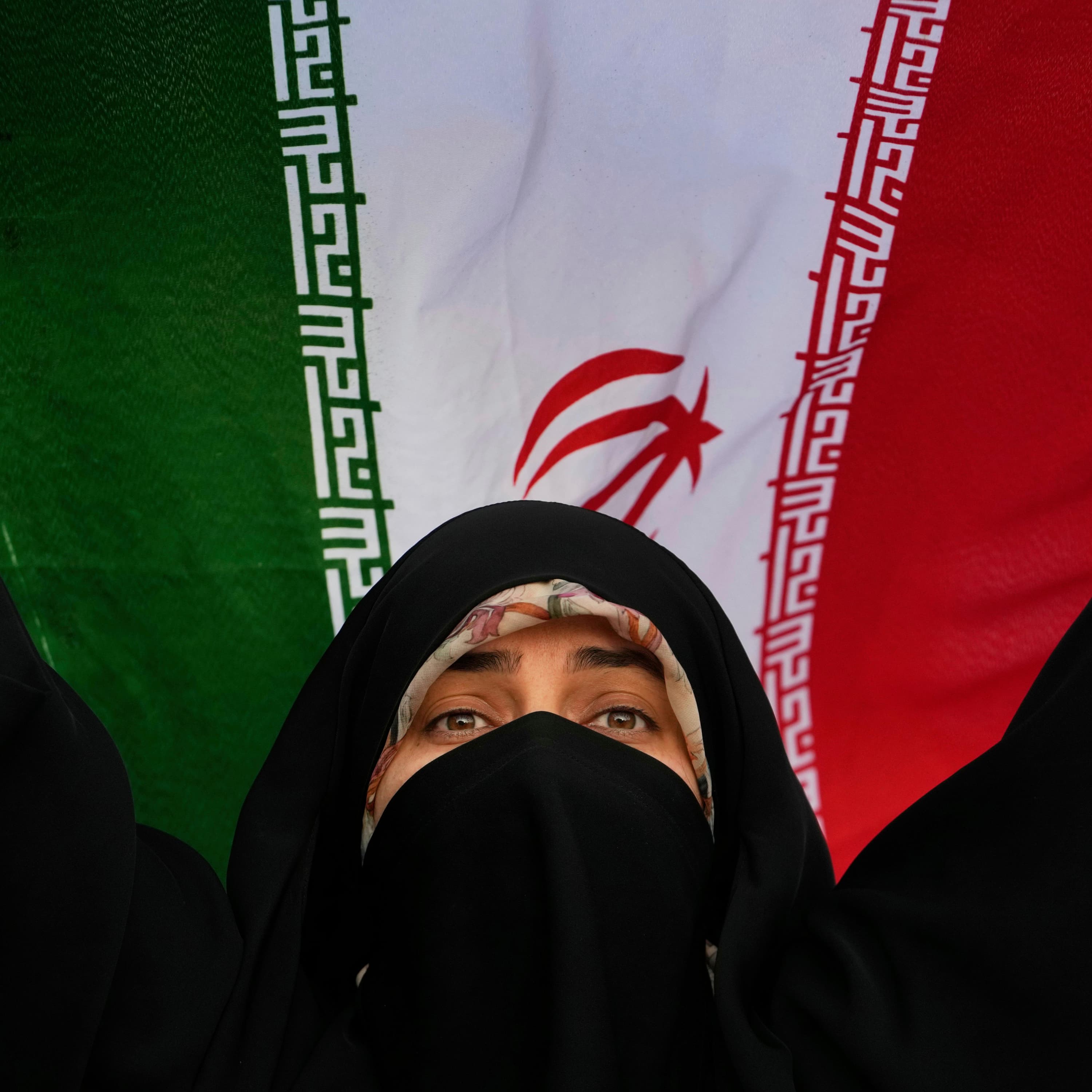
11:18I think this increasingly brought people to a sense of, okay, we need to defend Iran as a nation state. We're not defending the Islamic Republic of Iran, but we need to ensure that our country comes through this on the other side, that our people are maintained safe. And so right now is not the time to sort of pour out onto the streets. I think the majority of the population that, you know, people that I speak to, at least let's say, are very, very angered, as I said, by the situation. They're stuck between a rock and a hard place because they know what's happening in the world. They're not foolish enough to think that Netanyahu's promise for a democratic Iran and an easy transition is one that is the most probable outcome here.
12:08When they look at what's happened in neighboring Afghanistan, Iraq, these were with all the might of the U.S. military power. You still have the Taliban next door and Iraq went through two decades of sectarian conflict. And so there is this real fear that right now, is it the time to rise up and topple, let's say, if they could even do it, topple the governing elite from within? Or is that a recipe to sow the type of chaos that we saw in places like Libya, for example, after US and allied military intervention basically desecretated the country? And then when you have on top of that, for example, editorial boards of leading Israeli media outlets suggesting that President Trump's one of his top priorities should be the ethnic partition of Iran, that raises real alarm bells for your average Iranian who is very nationalist and does not want to become another big country that became a failed state.
13:13So it's a really, really very sensitive dynamic right now.
13:20On Sunday, a bomb exploded near my home. My head was trembling with fear, whimpering and stop. I grabbed a bag I had packed days earlier and started the car and tried to leave the city. But after two hours of sitting in traffic, I was still near my house. I gave up, left the car in the middle of the street and walked back home. I found myself thinking maybe the next bomb will hit close enough to end this.
13:51The traffic stretched all the way into the city center. I had no fuel and gas stations were not only packed, but imposing strict limits. Even if by some miracle the Islamic Republic could be toppled with minimal financial or military costs. And even if, again, hypothetically, Israel and the U.S. allowed a truly independent government to rise, unlike what they did in Afghanistan, I still saw no hope left in the rubble of destroyed infrastructure.
14:28Ali, the events of the past few weeks have been the culmination, the culmination for now, of years of instability for Iranians. Most of us will remember the women life freedom protests that shook the country for months in 2022. they ended, they fell out of the news, but they left a huge mark on the country. So tell me about what's been happening in Iran over the past couple of years. So two years ago, the Islamic Republic of Iran, I think, faced its biggest domestic nationwide challenge since probably 2009, if not the founding, the time of the revolution. People had pushed back against state restriction on social norms.
15:11So many women taking off their hijab on the streets. This was a costly fight. There were many deaths. There were many political prisoners, many civilians injured in these protests. It was a bloody affair. And there was a lot of repression from the state against those protests. And I would say those protests, a lot of them were homegrown. And, you know, it's, I think, you know, in the grand scheme of things, it's not a major success that people had on the ground, but it is a very notable success. And it's very visual that, you know, for the past year, practically, in the major cities across Iran, women are taking off their hijab and basically defying state security apparatus that make, you know, trying to hamper them.
16:00and there has been a backing down from the state on this front, not a total one, of course, but from figures that I've heard, for example, that one in three women in Tehran will not be wearing a hijab and there isn't those clashes that you were seeing between morality police and the folks on the ground. There was a sense that maybe now with Trump, there might be a possibility of having a new deal that lifts economic restrictions and maybe with the presidency of this more, let's say, moderate government that came with the sudden death in the helicopter crash of Iran's more hardline president, that this more moderate president that came in could slowly start to change the mood.
16:45Well, all of that has now been turned upside down.
17:01Eli, we've heard about the way that Iranians have rallied together under Israeli and American bombing these past two weeks. But internally, in terms of its attitude, its repression towards its own people, how has the Iranian government been handling the war? Okay, first I'll start with because of the Israeli bombings, the Iranians have used this as justification to significantly shut down access to the internet. At one point, it seemed that across the country, the internet services were all down, and even VPN systems were not working. And this was in response to the government's stated increased threat levels that Israel was using people's smartphones as tracking device.
17:53And that is how it's basically pinpointing members of the government and the military. So it's a highly, highly securitized environment, as with most countries under a state of war. There is also a real sense of panic, I think, from the security systems that they have to reestablish control. And one way they're doing this is showcasing these operations, special operations that they're having to take out Mossad-linked groups, but they are also introducing a heightened state of repression across the country, including political dissent. And so my sense is that, at least in the near term, they may purge political dissent by linking that to essentially collaboration with foreign agents.
18:44So I have to say that, unfortunately, I think we need to buckle up for a much more difficult days inside Iran.
18:59Coming up, what do Iranians think of their country's nuclear program and have the past two weeks changed their view?
19:15We're talking to you now in the wake of this extraordinary American intervention in Iran hits on three Iranian nuclear sites. What was the reaction inside the country to those strikes and to Iran's retaliation, its well-telegraphed retaliation on Monday night? So this moment was something that I think the Iranian government had been trying to avoid for the past decade and a half. The psychological effect of these B-2 bombers that have never really been used in operation before being dropped on Iran, I think is a moment to be reckoned with, both on the sort of public opinion level and also the leadership level.
19:57Right now, it has basically just been a head spinning 48 hours because President Trump has pivoted a day after those strikes to laying the grounds for a ceasefire that has been announced. Now, we don't know whether that ceasefire will sustain, but there is a sort of at the moment from what I'm seeing, a sigh of relief that at least the American bombing campaign for now has come to a close. There isn't much, I would say, trust that the Israeli-Iranian ceasefire will hold, but there is at least, I think, real desperation for that to hold. Yeah, very understandably. The exact results of those strikes on Iran's nuclear program are still in dispute as we speak.
20:44President Trump is claiming the sites were obliterated. A leaked Pentagon report on Tuesday put it differently. It said the program had been set back by just a few months. One thing I'm wondering, Ellie, is what did ordinary Iranians think of the nuclear program before the war? And do you think the Israeli bombing campaign has changed that view one way or the other? Look, I think that the group that supported wholeheartedly the Islamic Republic of Iran, which is increasingly a small minority of the country, is going to become very gung-ho on this issue and to say that essentially Israel is the chief destabilizer across the Middle East and the only way that Iran can be a regional power on par with Israel is if, like Israel, it becomes a nuclear power with weapons.
21:38So I think there is going to be a huge pressure coming from that base and the sort of leadership rank that are very militarized in their perspective and believe hard power is the way you achieve success for the country. I think there's another segment, which is probably represented by the government of Pezashian, the president of Iran, that says that actually Israel will not be deterred by nuclear-powered Iran. Look at just what we have seen between Pakistan and India, two nuclear weapons states that are still willing to strike at each other. And their point being that weaponizing the program will not bring peace and security to Iran.
22:20That only essentially through a political track with the United States, first and foremost, which creates an opening between the US and Iran is the only way that you can basically limit Israeli future military action inside Iran. And then you have, I think, another segment of the population that are extremely at odds with the Islamic Republic of Iran, a hope for domestic pushback that will create regime change in the country, not external, but domestic, that see basically this entire gamble that Khamenei has taken with the nuclear program as having failed, that Iran has paid too much of a high cost, that a civil nuclear program even is not worth it, given how much insecurity it has caused inside the country for the past two decades.
23:12It's fascinating because you could say that either side is perfectly rational here, that this war proves that Iran needs a nuclear weapon to deter its enemies, and also that it's caused them so much pain and trouble that maybe it's time to turn a page and try some other idea. Ali, I appreciate we're early into the aftermath of this war, if indeed it is the aftermath. It's tough to speak to people in Iran to get a real picture of this. But from what you can tell, do you have any sense of how the Ayatollah Khomeini, Iran's supreme leader, and his Iranian regime may emerge from this conflict? How much more extreme or moderate it might have become after all this?
23:54Look, I really think we could be at a fork point of two sort of extremes of where the leadership goes. Things will likely surprise us all. But if I were to guess that there are two sort of options here, one is for Khamenei to emerge out of this, ceding much more power to Iran's military establishment. particularly the IRGC that is in charge of providing national security, but also Iran's regional policies that have caused a lot of headaches for the world. Yeah, the Iranian Revolutionary Guard Corps. Exactly. And to say essentially, look, we are still in the state of sort of war with Israel, especially if the ceasefire is not holding.
24:39And in that circumstance, I think we would see a much more hardened, outward-looking Iran and a much more hardened inward-looking Iran. And, you know, sort of scrambling to maintain all the levers of power, both domestically and externally. There is another option whereby Khamenei emerges out of this with an understanding that the resilience of the Iranian people was one of the, you know, major contributing factors for Iran coming out of this. You know, the fact that you didn't see in this period daily protests against the Islamic Republic of Iran isn't an indication that there is huge love for the ruling Ered, but a sort of, I think, understanding from the public that they are extremely weary of an external power like Israel bringing democracy to Iran and regime change to Iran.
25:39So I think this wisdom from the Iranian public should be rewarded through a redefinition of the social contract between the state and society. And to open up the space for political discourse, but to open up the space for understanding how exactly Iran as a nation state can best secure its place in the world and in the region. I do think that something will give in terms of how the state and society interact. Unfortunately, most indicators would point that Iran will pick the first option of hardening its position abroad and at home. But I still think there is some prospect of that second option emerging if the advisors around Khamenei and Khamenei himself come to the conclusion that his policy over the last three decades have not sufficiently developed the country economically, have not sufficiently protected the country from external military action.
26:52Ellie, thank you so much for your analysis. Pleasure. Thank you so much for having me.
27:01And that was Ellie Gerdanmayer, a Senior Policy Fellow at the European Council of Foreign Relations. Thank you also to all the people across Iran who sent us messages and to the journalist Deep Apparent for helping us to collect them. For all the latest on this situation, keep an eye on our live blog. It's at our website, theguardian.com. This episode was produced by Alex Atak. Sound design was by Joel Cox. The executive producer was Sammy Kent. We're back tomorrow.
27:35This is The Guardian. Oh
Scan the code with your iPhone camera
Listen in the app.