 Today in Focus
21 Oct 2026 · 11m

 Add vo to ChatGPT or Claude to ask about everything you hear
vo listened to this episode to put together the overview and transcript, so there may be the odd mistake.
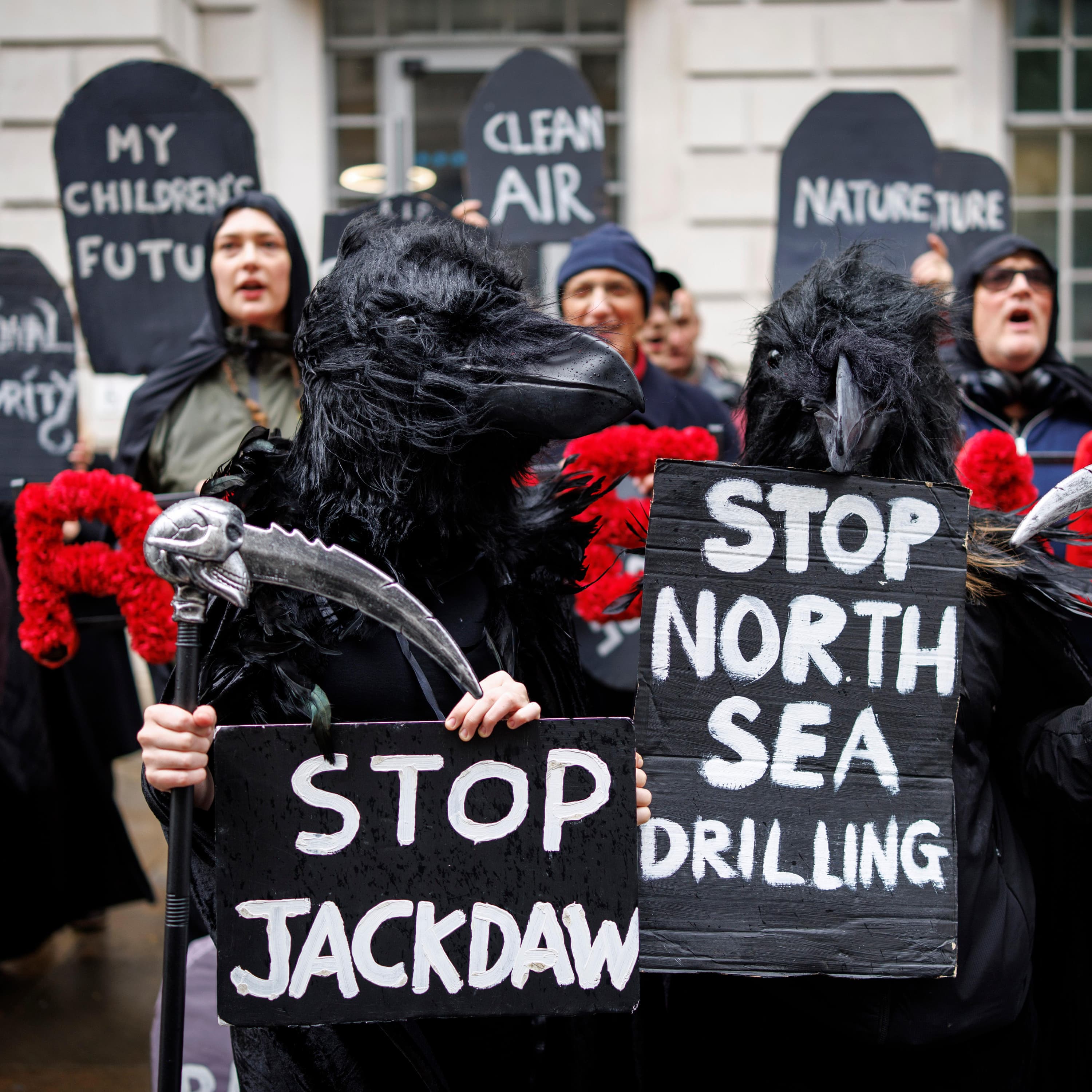
The Guardian “The Latest” discusses the Labour government’s approval of the Jackdaw gas field off Scotland’s northeast coast, calling it “climate vandalism,” and compares it to the larger Rosebank oil project. It argues the decision increases total fossil-fuel extraction despite climate targets, won’t lower UK bills, and undermines energy-security and jobs claims.
Matthew Taylor, The Guardian environment correspondent. Referenced voices include Zach Polanski (Greens leader) and Energy Secretary Miatta van Bule (reported to be leaning toward rejecting Rosebank).
Jackdaw approved in 2022; legal challenge halted production; drilling planned within weeks. Emissions from Jackdaw are “minimal” globally but add to the fossil-fuel total that will be burned. Energy security and jobs arguments are described as marginal or declining due to basin depletion and automation. Rosebank is estimated ~7x worse for emissions.
UN report trajectory toward 2.8°C warming; claim of 27 projected jobs; North Sea job losses since ~2000; oil industry profit cited at £93 billion (three months to June); Trump’s interest in North Sea extraction.
0:00This is The Guardian.
0:30rate shopping to ship up to 15 times more with up to 90 % savings. Go to ShipStation.com and use code AUDIO to try ShipStation free for 60 days.
0:45We can't keep digging up more and more fossil fuels. It will all get burned. No more oil! No more oil! The economic and social consequences from the climate crisis are going to only get bigger. And the idea that we're drilling for more oil and gas will shock a lot of people and depress a lot of people, I think. From The Guardian's Today in Focus, this is The Latest with me, Michael Safi. Matthew Taylor, you're an environment correspondent with The Guardian. We learned this morning that a controversial gas project called the Jackdaw was approved. Let's start with what is Jackdaw? Jackdaw is a gas field off the north east coast of Scotland and it was given the approval, first of all, in 2022 by the previous government.
1:30A year later, there was a legal challenge to it. And so production was, well, before it started, was halted. It was stopped in its tracks. There's been a legal wrangle ever since then about whether it should be given the go-ahead. It's been on the desk of this Labour government for quite a long time now and people have been anticipating this decision one way or another for many months and indeed years. And they'll start drilling within weeks. That's the plan. That's the ambition of the developers, I think, yeah. So Zach Polanski, the Greens leader, has called this climate vandalism. Is he right about that?
2:01I think if you take a step back and you think about the summer we've just experienced, and indeed the UN report this morning that says we're on track for 2.8 degrees of warming, which is a terrifying prospect, a genuinely terrifying prospect. 2.8? 2.8 is what the latest trajectory is that we're on at the moment. the idea that the answer is to drill for more oil and gas in the North Sea will seem like climate vandals to a lot of people. So while the emissions produced by Jackdaw themselves will be kind of minimal on a global scale the idea is any new gas or oil or fossil fuel projects are just bad for the environment.
2:37Yeah absolutely in global terms certainly Jackdaw is not a big gas field but it is a gas field it is going to increase the total sum of fossil fuels that we have and will burn. So yeah, it is bad for the environment and it sends out a very bad signal about the direction of travel for the UK government. It'll lead to more gas supply. Will that mean my energy bills get cheaper? The short answer is no. It is a reasonable size gas field, but it'll make no difference to the gas market internationally. And that's where the gas price is set. So it will make no difference to energy bills. So help me understand this.
3:10It's very bad for the environment. It's not helpful to energy bills. Why approve it? Well, over the last few years, there's been lots of arguments put forward by those in favour of more drilling in the North Sea, from the reduction in bills to energy security to reversing the loss of jobs in the northeast of Scotland. And each of those has come into contact with reality. They've fallen away slightly. And I think we're left now with what seems to be the last argument of those in favour of this, is that it will create more tax revenue or slightly more tax revenue for the government. I think if you take into account the subsidies to oil and gas industry, that is also fairly marginal.
3:47So, yeah, it's a good question. Why are the government doing that? I'm not sure of the answer. There's lots and lots of political pressure and industry pressure on the government. And that seems to be the reason that they've done this. Can I ask you about a couple of those reasons that you say didn't survive contact with reality? One of them is energy security. Why wouldn't extracting gas from an energy field in the UK make our supply more secure? Because it's only a market. I think it's 2 % of our gas needs over 10 years will be supplied by this field. So it's marginal. A lot of that gas will go to the UK homes, but a lot of it will go into the international market as well.
4:27So it will make no difference to energy security, really. The real energy security will come from getting off the sort of volatile fossil fuel markets and relying more on renewable energy. And that's where a lot of people see real energy security coming from. And I think for a lot of people, this is a best distraction from that process of gaining real energy security. The other argument by the government is that it's good for jobs. Is it not? I mean the government come out this morning and confirmed that the the projection is it will create 27 new jobs 27 new jobs I mean the gas fields are increasingly automated over the 10 years from 2015 half the jobs that were supported by North Sea Oil and Gas were lost and in that time hundreds of new licenses were issued the jobs are going in the North Sea because of it's a declining basin it's a geological factor rather than economic.
5:25It's running out of resources. It's running out of resources, yeah. At the high point of the basin at the turn of the century, around 2000, it did support hundreds of thousands of jobs in the northeast of Scotland, made it incredibly wealthy. But that has dwindled ever since. And the reason for it dwindling is not the lack of licenses, it's the lack of accessible oil and gas in the North Sea. Andy Burnham said today that, basically, we're going to need the gas anyway. It's better that we get it from a site within UK territory than from overseas. That's a fair argument, isn't it? Yeah, this is an argument that we hear quite a lot and often people say we might as well use our own gas.
6:04But the main point, which I think pushes back against that, is that it's not that if we use our gas, the gas that we would have imported suddenly stays in the ground. That gas goes into the market and is burnt. We can't keep digging up more and more fossil fuels. It will all get burnt. We need to stop extracting fossil fuels. and ramp up renewables and the transition to a sort of renewable economy. And this is not a step in that direction. It gets back to the point that overall you're increasing the amount of fossil fuels and therefore carbon emission. Exactly, yeah. Absolutely, yeah. And that's absolutely what we don't need to be doing in this moment.
6:40So Jackdaw is just one piece of this puzzle. There's another major fossil fuels project called Rosebank, a Scottish oil field that we're waiting for the government's decision on. The Energy Secretary, Miata van Bule, is reportedly, we have a story today, that she's leaning towards rejecting Rosebank. Is that the kind of political play here, that they approve Jackdaw, but they reject this much larger project, Rosebank? It looks like it might be. And Rosebank is a much, much bigger deal climate-wise. It's a huge oil field and it will cause huge emissions. I think the danger is that we've already seen this morning, the industry lobbyists are out on the radio and the media and indeed the opposition politicians saying, Jack Dorr, it didn't happen quick enough.
7:26We need to do faster. We need to do Rosebank. We need to load more things. So the pressure will just turn now to the others. Now, if they've got the backbone to resist that pressure and to double down on climate action, then, yeah, let's see. But I think the pressure will now turn to Rosebank and turn to the other oil and gas fields. And how much bigger is Rosebank than this Jackdaw project? Much, much larger. I think the calculation is that it's seven times larger in terms of emissions than Jackdaw. So it's a substantial oil field. I think it's one of the last remaining accessible oil fields.
7:58So it would be a huge deal if they give the go ahead for that. One of the arguments Labour's making is this doesn't break their election manifesto because Jackdaw was approved in 2022 before they were in office. they've pledged their manifesto no new gas or oil projects will their base buy that argument that kind of technicality that they're hiding behind yeah i i don't know whether the base will buy it but i think it's a fairly spurious argument i think people thought of the labor party as not giving the go-ahead to any more oil and gas drilling in the north sea today's announcement is a is a pushback it's a snub to that and i think people will be asking the question and i think that's the danger they're not going to assurge the right and the lobbyists who want ever more This is not enough for them, but it will send a message to their supporters that they're not really serious about climate action and taking action.
8:44So I think it's a strange political choice for them to make. Who knows how it will play out? I think the Green Party will make a lot of capital on the back of this. And I think the only people who will be really happy are the oil industry, which is one of the most profitable industries we've ever seen. and then three months to June this year, it made£93 billion in profit. Wow. The one thing this will certainly do is increase the profits of the oil industry. One other person who'll be happy is the US President Donald Trump, who has been obsessed with extracting all resources he can from the North Sea.
9:23I'm not suggesting that's why the government's made that decision, but what does it say that in 2026, with what we know about the climate, a Labour government can't resist the political pressure to approve drilling on a new project that we know will cause greater emissions in the world? Yeah, I think the news this morning will depress a lot of people, certainly people who understand the consequences of the climate crisis that we're facing. We saw a flick of that in the summer with the heat, but we've got to recognise that probably the summer we've just had is one of the coolest we're ever going to experience.
9:55God. And the economic and social consequences from the climate crisis are going to only get bigger. and the idea that we're drilling for more oil and gas will shock a lot of people this morning and depress a lot of people, I think. Matt, thanks for coming and talking to us about it. My pleasure. And that's it for today. Many thanks to The Guardian's environment correspondent, Matthew Taylor. Before we go, NASA, our new award-winning documentary, is playing right now in cinemas in the UK. Go and watch it if you can. It's directed by two of the Oscar-winning directors of No Other Land and reveals the secret systems used by the Israeli military in the mass killing of Palestinian civilians in Gaza.
10:35It's an extraordinarily powerful film produced by The Guardian. Thank you for listening to this episode of The Latest. Today in Focus will be back in your feeds tomorrow morning and The Latest will be back tomorrow night. This episode was produced by Angus Neal. The senior producer was Leo Schick. The executive producer was Zoe Hitch. And the presenter was me, Michael Suffick.
11:00Democracy is a story we began to tell 2 ,000 years ago and we've stopped telling it. Put culture wars and the algorithm together and what do you get? A crisis of imagination, society and politics. So says Britain's national dramatist James Graham. There's been moments when I've been on my phone in the evening and I've just been swiping, swiping, swiping on mindless videos and I can feel in my brain the mental equivalent of a nutritionist kebab on the night bus home. In a new series from The Guardian, we hear from the playwright on class, storytelling, empathy. That is not centrist dad. That is not both-sidesism.
11:40That is the founding principle of theatre. From The Guardian, this is Radical Thinking with me, Adit Chakraborty, coming this Saturday in your Politics Weekly feed.
11:54This is The Guardian.
12:26We'll see you next time. get your free welcome gift. Stamps.com code podcast. Taxes and fees apply.
Scan the code with your iPhone camera
Listen in the app.