 Ask ChatGPT



The UK’s potential rejoining of the EU, driven by shifting UK politics and EU leaders’ “welcome back” rhetoric, with a focus on what could realistically happen before/at a late-November UK-EU summit.
John Henley, Guardian Europe correspondent; Lucy Hoff, host.
Henley is a long-running Europe reporter for The Guardian, covering EU-UK relations.
EU leaders have been open since the day after the Brexit referendum, but UK “red lines” (no single market, customs union, or freedom of movement) previously blocked change. Andrew Burnham differs by saying Brexit isn’t working and pushing closer cooperation. Economic estimates cited: 6–8% of GDP from removing Brexit trade barriers. Public opinion has shifted: 52% of Brits would now vote to rejoin; among Leave voters, 22% would rejoin. EU progress depends on UK dropping Starmer red lines and on all 27 member states agreeing, amid upcoming elections across Europe.
Macron saying “welcome back,” Pedro Sánchez offering open arms, Burnham meeting German Chancellor Friedrich Merz, and a proposed youth mobility scheme plus progress on agricultural standards at the end-of-November summit.
Written by AI. May contain mistakes.
Discussion on the evolving relationship between the UK and EU post-Brexit.
“John Henley, you are our Europe correspondent.”
Exploration of how Brexit has affected the UK economy and public opinion.
“But essentially what he's saying is, whereas everybody up until now has said we're going to make Brexit work.”
Analysis of changing public sentiment toward the EU and the implications for politics.
“But Andy Burnham obviously is dealing with a different sort of climate.”
Discussion around the UK's security role in Europe and the need for cooperation.
“The UK has one of Europe's largest armies.”
Speculation on the potential for UK rejoining the EU and upcoming elections.
“There's a lot of internal hurdles to clear.”

Get the gist, explore an idea or ask about something said.
 Claude
On Today in Focus, what are the key points of this episode?
Searching your listeningAutomatic transcript. May contain errors.
0:00This is The Guardian.
0:30months, the EU may be a very, very different place. From the Guardians today in Focus, this is The Latest with me, Lucy Hoff. Our new Prime Minister, relatively new Prime Minister, Andrew Burnham, has made no secret about his desire to move closer to Europe. John Henley, you are our Europe correspondent. Europe has always kind of batted this away a little bit, or been slightly aloof about, you know, this is our choice, not yours. But the mood feels like it's changing somewhat. Would you agree? Yeah, I mean, it definitely is. I mean, I think, I mean, Europe has always been open to the idea of the UK returning.
1:11And that, in fact, you know, European leaders said that pretty much, you know, the day after the Brexit referendum, basically. And have been repeating much the same thing ever since. I think the problem has been on the UK side and, you know, particularly the red lines set by the former Prime Minister Keir Starmer, who basically said, you know, we intend to stick by the kind of 2019 Boris Johnson agreed Brexit plan, which means we're not going to go back to the single market. We're not going to go back to the customs union and we're not going to go back above all to freedom of movement. And those red lines essentially meant that there was very, very little room for manoeuvre in any kind of change of relationship with the EU.
1:59And what Andy Burnham has done is basically break that wide open, you know, whether it will be possible in the UK or not. You know, domestically is another issue. But essentially what he's saying is, whereas everybody up until now has said we're going to make Brexit work. Andy Burnham, the big difference is Andy Burnham has basically said Brexit is not working and we really need to do something different. Yeah, it's the type of thing we heard in much more subtle language from Rachel Reeves, isn't it? You know, like the reason the UK economy is doing this badly is in no small part because of Brexit.
2:36But Andy Burnham, as you say, is going much further in what he deems to be kind of much more full cooperation with the EU. He's at least opened the door, you know, and I think clearly the economics play into this hugely. I mean, the estimates go from kind of six to eight percent of GDP. And, you know, I think what Burnham understands or someone has told him, you know, is that one of the ways and possibly even the only real way to improve economic growth in Britain, or at least an obvious way to do it, you know, is to remove those trade barriers between Britain and its largest trade partner that were thrown up by Brexit.
3:18And I think what also plays into it is that Andy Burnham has come in with a very clear idea of what he wants to do kind of socially in the UK, in terms of things like social care, NHS, etc. And, you know, those need money. I mean, those really need money. And that's not going to come from the level of economic growth that Britain has got at the moment. Yeah, and it's the economic problems that the UK has been experiencing since 2016 that seems to have contributed to a huge shift in public opinion here. I mean, recent polling which suggests that 52 % of Brits would now vote to rejoin the EU and of people that voted to leave, 22 % would now vote to rejoin.
4:01I mean, for so long, it's felt like such a toxic thing for British politicians to talk about closer ties, let alone rejoining. But Andy Burnham obviously is dealing with a different sort of climate. I mean, it's clear that, you know, public opinion has been only been moving in one direction since Britain left the EU, essentially. You know, the polls for supporting or at least regretting Brexit and also supporting rejoin have really only been going in one way for the last decade or so, really. So that's, you know, that's clearly one thing. And I think also there's a clear kind of demographic reason behind this, which is that, you know, it was mainly older people who voted for Brexit and mainly younger people who voted against it.
4:48And many of those older people, some of those older people, you know, are gradually disappearing. And there's a whole generation of new young people who are who are coming through and are becoming voters and and, you know, are experiencing the impossibility of going and spending a few months in France or Germany or Italy. You know, all of this plays into it. Yeah, absolutely. Absolutely. And there's this sort of almost quite sweet romantic courtship going on between various European officials and our own government. Macron, after Andy Burnham's conference speech, said, welcome back. Pedro Sanchez of Spain said it would open its arms to any bid from the UK to rejoin the EU.
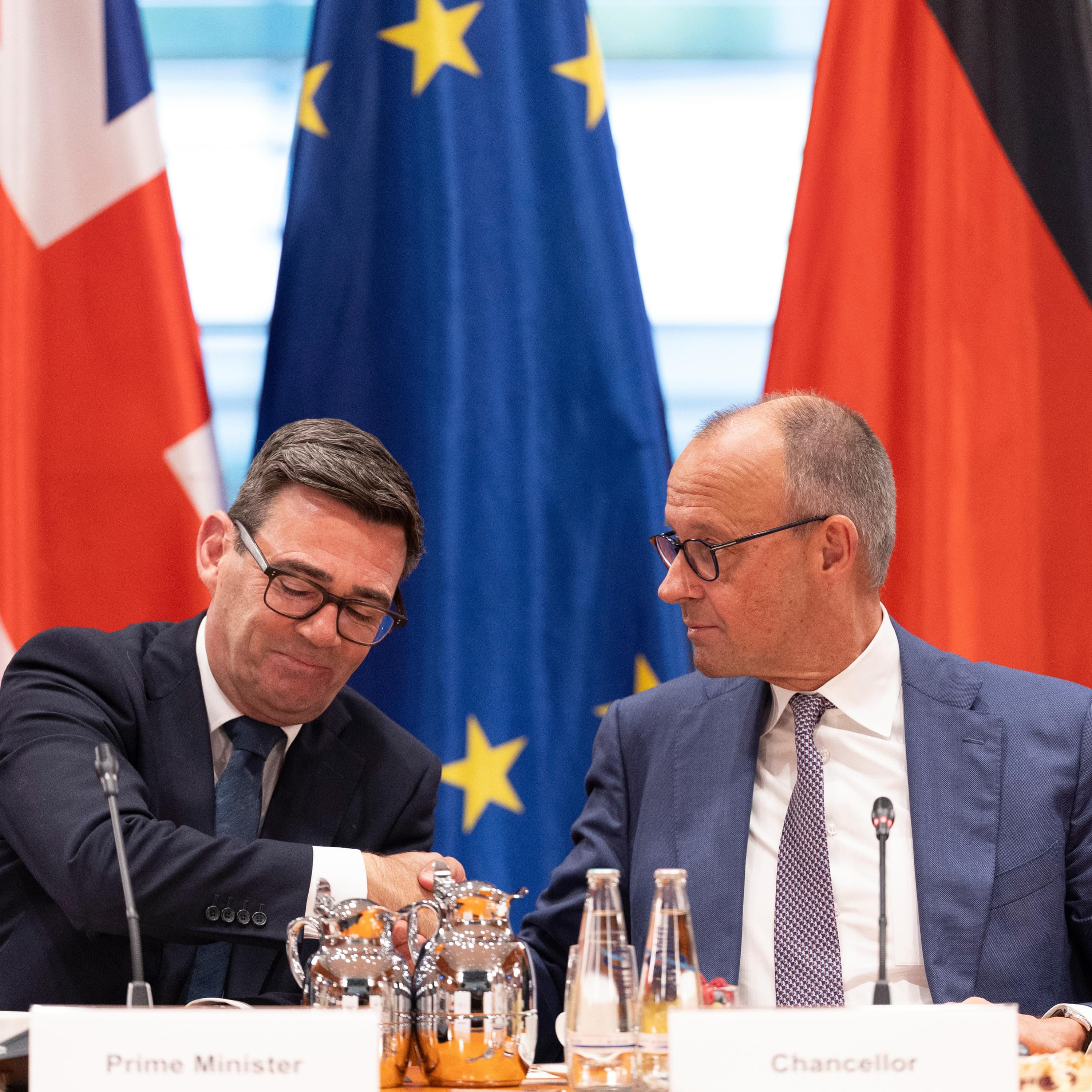
5:34Andy Burnham is in Germany today, speaking to German Chancellor Friedrich Mertz, who's described it a regrettable decision that the UK chose to leave the EU. So lots of kind of welcoming language, I always say, from the EU towards the UK. In Germany, they've been talking about, a lot about young people, about freedom of movement of young people and giving them the opportunity to move between the UK and Europe, but also about security cooperation, which is another huge reason why this move is felt to be necessary in such a dangerous world that those ties should be greater. Absolutely. And I think that I mean, that's Britain's one of Britain's really strong cards is the whole kind of security and defence operation.
6:20You know, a question. The UK has one of Europe's largest armies. It's a nuclear power. You know, its security and intelligence services are widely respected. It could really contribute something to the European kind of security effort, as you say, in a really fast changing and increasingly dangerous world. So, yes, certainly that's one of the cards that Britain can play and will be broadly welcomed and indeed desired by the EU. But I don't think we should be kind of putting the cart before the horse here. warm words and words of sort of potential welcome are not the same as accession talks starting.
7:06Yeah. And on that, we do have this crucial UK-EU summit that seems likely to happen sometime around the end of November. It does feel like at that point we might get some sense of any concrete action either side is going to take. Yeah, I mean, that is supposedly going to deal, there are two or three very specific kind of issues that, you know, hopefully will be dealt with at that summit. free movement for for at least a kind of a youth mobility scheme some kind of progress on that agricultural standards food and agricultural standards that will kind of ease the bureaucratic obstacles that there are between you know between the UK and Europe on food and agricultural products that kind of thing but I think we need to be really clear that you know I think from the European side, we will continue to see an awful lot of warm words and encouragement and kind of, you know, we'd love to welcome you back with open arms, etc.
8:10But there's not going to be any concrete progress towards the kind of major change in relations that might happen and that might even, you know, lead to the UK rejoining until there is a kind of formal decision in the UK to drop those Starmer red lines, basically. And the other thing to bear in mind, I think, is that the EU isn't a monolith. You know, it's 27 member states. They will all need to agree. There's a lot of internal hurdles to clear. So it will need progress on both sides, essentially. And I guess, crucially, we are looking at two very, very important elections in France and Germany next year.
8:54So if Britain does decide to rejoin the European Union, they might be looking at a very different type of bloc. Absolutely. And even earlier than that now in November in Spain. So we may well see we have elections in Spain, France, Germany, Italy, Poland within the next 12 months. You know, the EU may be a very, very different place. And there may be some quite frankly kind of Eurosceptic political parties in charge in several major European countries. and that could really change everything. Yeah, yeah, certainly. The far right is on the rise in many of those elections. So it could be a very different picture indeed.
9:32John, thank you so much for your time. Pleasure. That's it for today. My huge thanks, as always, to our Europe correspondent, John Henley. You can keep up with his reporting and our Europe Live blog over at theguardian.com. Thanks for listening to this episode of The Latest. Today I'm focused to be back in your feeds as usual tomorrow morning. The Latest will be back tomorrow night. This episode was produced by Angus Neal and Rafka Tuma. The senior producer was Rana Amgobin. The executive producer was Zoe Hitch. And it was presented by me, Lucy Hoff.
10:03We understand fascism to be a response to crises. And it always is. It always emerges in moments of systemic crisis. Are we really living through end times fascism? Naomi Klein and Astrid Taylor think so. And they can see it coming for them and the rest of us. The fact that you can have a president who says, well, maybe I have to annihilate Iran. But you also have tech executives saying, yeah, there's a 25 % chance we're going to wipe out humanity. Yet they haven't given up hope of a fight back. It suddenly felt like instead of racing to keep up with all of the terrible things, we're racing to keep up with the resistance.
10:41So how dangerous is Trump and his coalition of billionaires, evangelicals and MAGA diehards? This is Radical Thinking, a new series from The Guardian with me, Adit Chakravarti. Out Saturday in the Politics Weekly Feeds.