 Today in Focus
16 Nov 2026 · 14m

 Add vo to ChatGPT or Claude to ask about everything you hear
vo listened to this episode to put together the overview and transcript, so there may be the odd mistake.
Gaza’s deadly winter—flooding, cold, disease risk, and why aid and reconstruction materials are blocked—plus questions about Israel’s “collective punishment” and attacks on healthcare.
Lucy Hart hosts “Today in Focus.” Emma Graham Harrison is the Guardian’s Chief Middle East correspondent, reporting from Gaza/region.
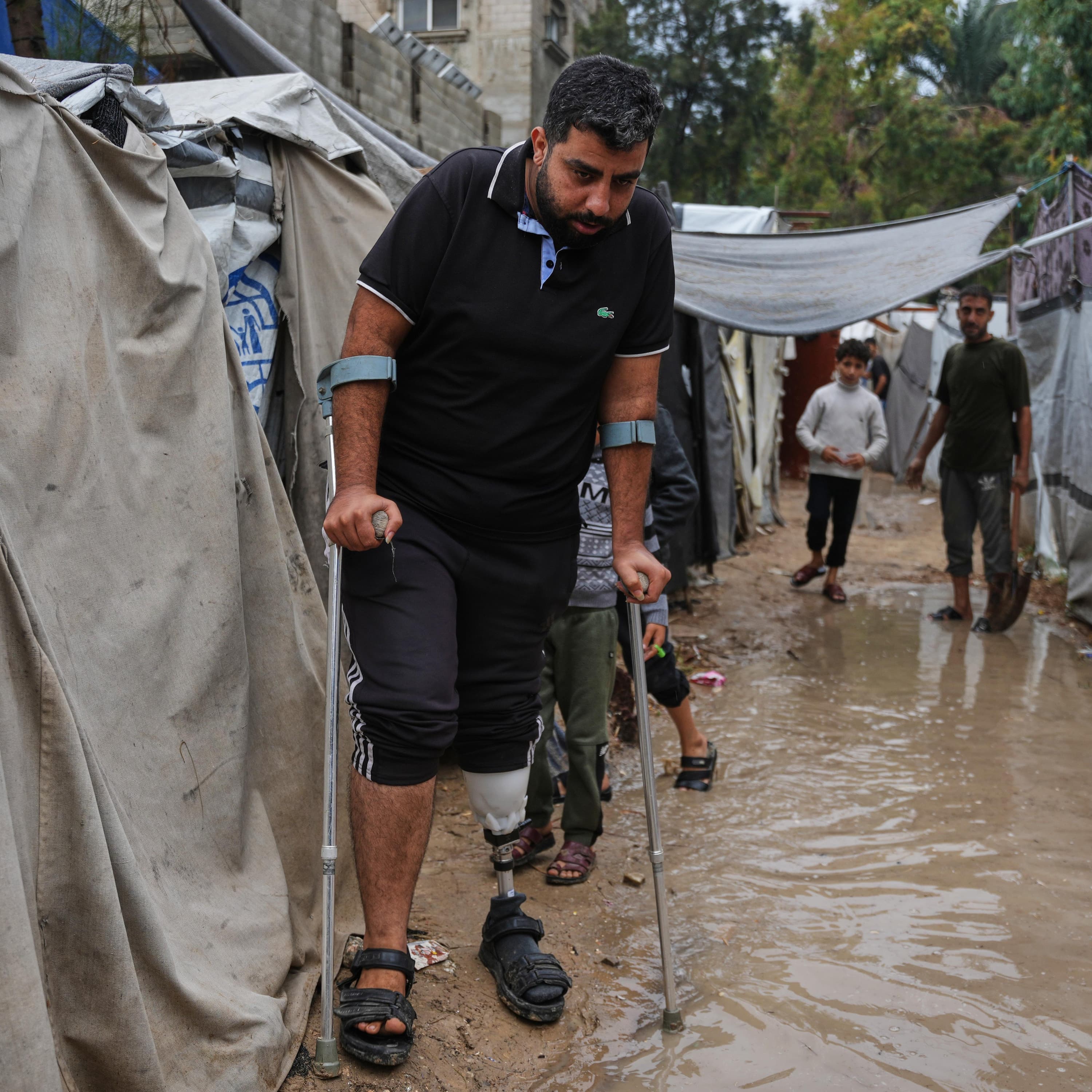
Winter impacts were predictable (overcrowding, broken sewage, weak housing). Floods destroyed or waterlogged food and shelter; at least one baby died of hypothermia; a sandbank collapse killed at least four. Disease cases (meningitis, diarrhoea) are rising due to sewage failures. Israel’s restrictions on “dual-use” items and limited crossings make distribution “impossible,” including blocking about 150,000 tents and sanitation/repair supplies. Reported aid truck numbers fall far below a 600-truck/month ceasefire expectation. A hospital bombing (Nasser Hospital) killed a prominent surgeon; questions remain about justification and protected status.
tents wading through knee-deep water; sandbank collapse; WFP vehicles lacking spare parts; dual-use examples (tent poles, sanitation pipes, engine oil/fuel); Haaretz-based truck shortfall; Nasser Hospital strike.
0:00This is The Guardian.
0:30respond if they go rogue. Okta secures AI. Learn more at Okta.com.
0:40Everybody knew winter was coming. They knew that the sewage systems were a disaster. They knew that an overcrowded, weak, malnourished population was crammed into a tiny area. The Israelis often say that their army is one of the most high tech in the world. So why are they deploying these really medieval techniques of collective punishment, mass hunger, mass misery in Gaza. From the Guardians today in Focus, this is the latest with me, Lucy Hart. The situation in Gaza has been horrific beyond comprehension for some time, but it now looks like Palestinians are facing one of their most difficult and challenging winters yet, after these deadly floods in Gaza last week.
1:24Emma Graham Harrison, you are our Chief Middle least correspondent. These floods happened last week. What was the immediate impact of them? So we saw tents, you know, people sort of wading through water, you know, above their knees, their belongings, the few things they've managed to save over more than three years of war, in some cases swept away, in other cases waterlogged. That includes very precious supplies of food. People are very hungry. You know, if you've got a bag of flour that you're storing in your tent that gets full of water you have lost your your family's food for that month it led to of course an increase in cold people weren't able to warm up we saw one baby died from hypothermia and because there's so little space in gaza because the entire population of gaza is crammed into just 30 percent of gaza's area a lot of these tents are now sort of on beaches in sandy areas and we saw one sandbank because of the the sort of intensity of the rain it collapsed on top of some of these tents killing at least four people women and children and you can't tell those people to move somewhere else because there's nowhere else to move you know so there's people living next to where that sandbank collapsed in tents waiting for the next rainstorm because this is just the beginning of winter yeah and four-fifths of buildings in gaza destroyed some Some people, because of the precarity of an already incredibly precarious temporary accommodation situation, have been trying to return to buildings.
2:54But there have been casualties from buildings collapsing on people. So it just sounds dire. Obviously, with this flooding in a very cramped area, there is a huge risk of disease. And that has proved the case, hasn't it? Yeah. So, you know, there's already a reported increase in cases of meningitis, you know, diarrhoea, all the diseases you'd expect. this problem with lack of sewage treatment is something that's been going on you know really for years now inside gaza winter comes every year this was a very predictable problem that aid organizations had tried to prepare for it had been a priority we've heard from the un other organizations they've been ordering the equipment to repair sewage treatment facilities that have been bombed have been partly destroyed and it's just not being let into gaza along with many of the other things that would help people deal with this situation a little bit better you know the only thing that will allow people to get back to something like normal life is real reconstruction but until that starts you know if people for instance have tents that are waterproof that's a big difference and you know there's 150 000 tents not being allowed into gaza there's engine fuel there's spare parts for the vehicles that deliver aid that pump the sewage you know all of these basic things are not being allowed in.
4:14And this is absolutely, you know, a disaster foretold. We knew these problems were there. We knew winter was coming and that that would bring flooding and it would make them worse. Yeah. As you say, just huge blockades of aid getting in, namely 150 ,000 tents that are at the border that are being blocked from entry. What is happening at the border and within Gaza that that distribution is impossible? Israel's blocking it. We'll hear from Israeli authorities that they're not blocking it but they're making the logistics so complicated that what it amounts to is a functional block so and this works in so many different ways you could also say a lot of it's kind of boring and technical and therefore it's very hard to kind of grab onto for the headline of a news story but some examples um israel has this broad prohibition of dual use items so you can't bring anything into gaza or it's harder to bring anything into gaza that could potentially have a military use.
5:09I mean, there's situations where we could think of that as being very obvious, like explosives. But that covers, for instance, metal tent poles, because Israel says they could be used for constructing sort of military tunnels or other buildings. The pipes that you need for sanitation, because Israel says they could be used for draining tunnels that are built by Hamas. And engine oil, fuel, all absolutely basic items. So those things are more difficult to get in. At the moment, there's only one crossing into Gaza. So there's only one entry point through which all the aid can go. Gaza itself is quite small.
5:46You think, well, you know, from the north to the south, that would normally be less than an hour's drive. But most of the roads have been destroyed. The military still controls a lot of them, the Israeli military. So movement has to be coordinated. Taking something from the entrance in the south to the north can take hours and huge amounts of time. You know, one of the basic things that the humanitarians are asking for is just to open a few more crossings so that aid can enter Gaza near to where it needs. You know, if you're saying fuel shouldn't be going in, well, why not let the aid into a place where you need less fuel to take it to the people who need it?
6:19And then we've just seen new data has been reported today. I've seen some of it. I haven't had time to get a full picture. But under the so-called ceasefire that Israel signed a year ago, as we know, there hasn't really been a cease in the firing. It's a bit of a misnomer in many anyways. Israel is supposed to let 600 trucks of aid into Gaza. Truck is anyway an unhelpful term, really, because it's very imprecise. What do you put on a truck? How big are the trucks? Nonetheless, it's a very makeshift idea. And what we've seen is that that so that should be around 18 ,000 trucks a month. What we've been seeing for the last six months, at least, according to a report in Haaretz based on Israeli data, Israel hasn't been coming anywhere near that total.
7:04And some months it's been not even hitting a third of that total. Israel says it allows in as much aid as is needed and attributes all delays or shortfalls to humanitarian groups failing in the logistics. But, you know, the scale of shortages of these cutoffs is so extreme that, for instance, even major UN organisations like the World Food Programme, they normally have 20 cars just for their staff to get around. And early this month, they told us only five of them were working because of a lack of spare parts. They've now got that up to 15. But even people with the, you know, big organisations with connections can't get the basics they need.
7:44I mean, Emma, it's just hard to see how essential sanitation equipment and medical supplies to treat, you know, the many diseases that are circulating in Gaza, how that could be considered dual use by any measure. You know, I think that's a really good question, Lucy. And, you know, there's obviously an urgent humanitarian catastrophe going on that gets very little airtime in Israel. It's not debated. And no one really poses what to me seems like a very fundamental question. The Israelis often say that their army is the most moral, one of the most high tech in the world. So why are they deploying these really medieval techniques of collective punishment, mass hunger, mass misery in Gaza?
8:30Is that the only way that they think they can beat Hamas? And if not, then why are they doing it? Yeah, although you add to that that a hospital was bombed last week, the NASA hospital, one of the very few remaining medical facilities in Gaza. I mean, it just feels, Emma, we've been talking for so many years now, like so little has changed. And that particular strike, which was completely unexpected, has just had another devastating ripple effect on an already decimated people. What we've seen with these repeated attacks on healthcare is they don't just target buildings, which are difficult to rebuild under the circumstances we've discussed, but also the medical staff who are even more difficult to replace.
9:14You know, we've seen doctors leave and we've seen many of them killed. And this strike killed one of the last, you know, one of one of the really prominent doctors who was remaining, who was still in Gaza, a really well respected and important surgeon. So, you know, it's the loss of life, the immediate tragedy. There's been no allegations. Israel has said it was targeting Hamas. It has said it killed some Hamas operatives in the strike without providing evidence that I've seen. But there's no allegations at all that this doctor was anything other than a civilian doctor. And, you know, I think that then raises questions.
9:49Hospitals have special status in war, special protections. There are circumstances in which you can attack them. But, you know, Israel has been fighting Hamas for over three years, has killed all the leadership who were in place on October 7th. And, you know, several iterations of lower level Hamas commanders have been taken out and often immediately replaced. What was the urgent threat to Israel or to Israeli soldiers' lives that justified that strike on a protected hospital? You know, I'm not a lawyer, but I think one question you hear from lawyers is what is the justification for that? Even if you say that Hamas were operating out of the hospital at that time, given the broader circumstances, you know, how can you justify that?
10:43Yeah. And again, there's been a sort of call from the international community today. And the reason that we're speaking, which is that there's been a joint statement from Australia, the United Kingdom, Italy and Canada, who are calling on the Israeli government to let more aid in. I mean, I feel, again, we've had these joint statements from the international community so many times and they just fall on deaf ears. You could say, you know, on the one hand, it's important that this is enough of a political priority that these governments feel compelled to make a public statement. On the other hand, what is the pressure or incentive that those governments are using to bring about change?
11:28And at least there may be things going on behind the scenes, but a statement on its own, you know, we've seen again and again, hasn't really been a force for any significant change. And I'd come back really to what I said earlier. This is not something that has caught everybody by surprise. Everybody knew winter was coming. They knew that the sewage systems were a disaster. They knew that an overcrowded, weak, malnourished population was crammed into a tiny area. and they'd laid out the things that needed to be done to at least ameliorate somewhat those conditions to slightly lessen the risk to life.
12:11And those things didn't happen. And I think, you know, everybody needs to be asking questions about that, primarily to the Israelis, but also to our governments. Why has it not been a higher priority? Why have we not used the political and economic levers we have to push for action? I think perhaps on that point, it's also worth noting, You know, Israel is our ally. People often compare this to humanitarian crises in places like Sudan, which are also, you know, equally urgent. There are utterly horrific things happening there. But the difference is that the Sudanese government is not a close ally with whom we have deep, you know, military and political and economic cooperation.
12:49You know, we do not have the same levers potentially to use on them that we do on the Israeli government should we choose to use them. And I think that's really important to make that distinction. Yeah. Emma, thank you so much for your time. Thank you, Lucy. That's it for today. My huge thanks again to Emma Graham Harrison. Keep up with all her coverage over at theguardian.com. Thanks for listening to this episode of The Latest. Today I'm focused. We'll be back in your feeds as usual tomorrow morning. The Latest will be back tomorrow night. This episode was produced by Angus Neal. The senior producer was Leo Schick.
13:22The executive producer was Zoe Hitch. And it was presented by me, Lucy Hoff.
13:31NASA is the new award-winning documentary that the Israeli government doesn't want you to see. Directed by two of the Oscar-winning directors of No Other Land, NASA reveals the secret systems used by the Israeli military in the mass killing of Palestinian civilians in Gaza. Time Out says, as a work of journalism, it is inarguable. As a work of cinema, it is exemplary. New York Magazine has called it one of the most important films of our time. NASA, the most critically acclaimed documentary of this year, is available in cinemas now. This is The Guardian.
14:44We'll be right back. Upgrade your shipping operations to stress-proof your biggest sales days and capture every bit of potential revenue. Go to ShipStation.com and use code AUDIO and get 30 days free. You're either all in on this model, or maybe you're building with another. You're either speed, or is it security? You're either custom, or are you ready to use? Or, you're AWS AI. With hundreds of models, ready-to-use agents, speed and security built in, you don't have to pick a side. You can have them all. How will AI revolutionize your business? AWS AI is how. Cash Now, More Later from Opendoor gives you cash up front for your home, plus all the profit later.
15:30That's no chaos now, no cash left behind later. Skip the showings now, pocket extra profit later. This is so simple now, this is so awesome later. Or sell fast now and pop the champagne later. Cash Now, More Later. Now available nationwide. Start your offer at opendoor.com slash ACAST. Profits calculated after fees and costs, eligibility and offer price may vary.
Scan the code with your iPhone camera
Listen in the app.