 Today in Focus
16 Oct 2026 · 45m

 Add vo to ChatGPT or Claude to ask about everything you hear
vo listened to this episode to put together the overview and transcript, so there may be the odd mistake.
The Guardian’s interview about the documentary “NAZA: the film Israel doesn’t want you to see,” which alleges Israeli military use of AI systems to target people in Gaza and authorize strikes that kill large numbers of civilians. The film centers on “NAZA” (Nezek Agavi), a code for expected civilian deaths per strike, and claims the system’s error rates and thresholds normalize mass killing.
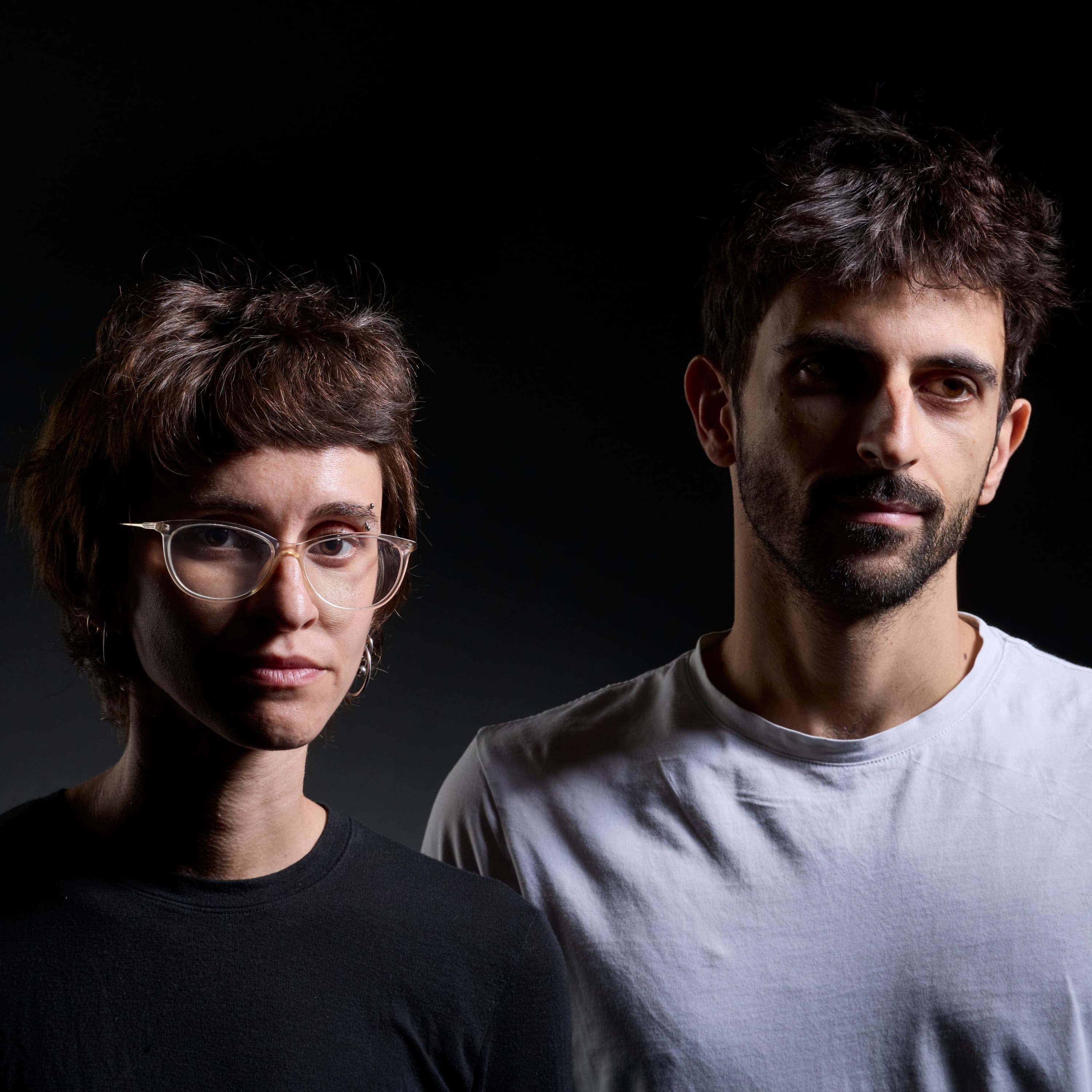
Yuval Abraham and Rachel Zor (co-directors/filmmakers of NAZA), Israeli filmmakers and former investigative reporters; they say the film is built from years of reporting and secret interviews with military whistleblowers.
AI “Lavender” assigns 1–100 likelihood scores to Gaza residents based on phone behavior to identify suspected Hamas members; soldiers describe thresholds (sometimes 10–15% error) and “bomb economy” rationing. Another system, “Where’s Daddy,” allegedly uses children’s/teenagers’ phone messages to time bombings when family members return home.
“NAZA 500” authorization; “Where’s Daddy” using a 12-year-old’s “dad came home” message; comparisons to a 2002 strike killing 14 civilians (11 children).
0:00Yuval Abraham: This is The Guardian.
0:07Yuval Abraham: Today, the Israeli filmmakers lauded as heroes and branded as traitors for exposing mass killings of civilians in Gaza.
0:23Yuval Abraham: Just before we start, there are some distressing scenes in this episode, including moments where we describe the killing of children. But I would urge you to listen if you can.
0:39Yuval Abraham: Throughout the war in Gaza, the Israeli military always told its people and the world one thing. Israel does not target Palestinian civilians. We target Hamas terrorists. It does not deliberately kill civilians. We want to differentiate between our enemy, which is these Hamas extremists, and between Gaza civilian population who are not the targets of our offensive. But in a new documentary from Israeli filmmakers Yuval Abraham and Rachel Zor, Israeli military insiders set out the vast AI systems used to rain down airstrikes on Gaza that have directly led to the mass slaughter of civilians.
1:23Rachel Szor: They deserve it.
1:26Yuval Abraham: The film takes its name from the code word used to count the number of civilians expected to die when authorizing a strike against a suspected Hamas target.
1:35Rachel Szor: Yeah, NAZA is a military acronym that intelligence officers use to refer to the number of civilians, Palestinian civilians, that they expect will be killed in an airstrike. It stands for two Hebrew words, Nezek Agavi. What is NAZA? Nezek Agavi. The number of people who are going to die in a attack.
1:59Yuval Abraham: NAZA 1. NAZA 20. NAZA 500. NASA doesn't distinguish between women and men, adults and children, militants and civilians.
2:17Yuval Abraham: So a baby can be one NASA.
2:19Rachel Szor: Yeah, in the NASA, this is one of the sources that I ask them that, and it's a question I've asked many soldiers. The NASA number doesn't differentiate. I mean, 20 NASA can mean 20 children. Sometimes people talked about it and it almost felt like, you know, 15 NASA, 20 NASA, 40 NASA, like you're in the market and you want to buy a sandwich. And it's like, is it 15? Is it 20? This notion that there is like a greater authority that, you know, legitimizes being a cog in a much larger system.
2:52Yuval Abraham: The film, which was produced by The Guardian and is in cinemas in the UK and across the world today, is based on testimony from over 100 sources and features secret interviews with 24 military whistleblowers filmed on rooftops across Tel Aviv. This film is probably is another way of propaganda against Israel, against the IDF. And it has already provoked rage and an extraordinary political backlash inside Israel.
3:26Rachel Szor: You take away the context, you refuse to investigate the facts, and then you tell the world the story that much of it is already prepared to believe. That is what Naza does.
3:36Yuval Abraham: Yuval and Rachel have been branded traitors. threaten to have their citizenship stripped. And Netanyahu has pledged to hunt down and expose their sources. From The Guardian, I'm Annie Kelly. Today in Focus, Yuval Abraham and Rachel Zaw on Naza, a film Israel doesn't want you to see.
4:04Yuval Abraham: Rachel Shaw and Yuval Abraham you're filmmakers and the co-directors of NASA and it's a film that has built on years of reporting into the Israeli military's AI-assisted targeted killing of civilians in Gaza reporting that is done by yourselves and other journalists including Harry Davis from The Guardian Rachel, I would like to start the interview by asking that when you set out making this film, what was the story that you wanted to tell and who did you most want to see it?
4:35Rachel Szor: Yeah, I mean, so we have been working on the film for the past two and a half years, three years. Yuval was working on these investigations. I think we understood that there is this opportunity to get those soldiers to also speak in front of the camera. And I mean, I think that was the first thing that we wanted to do. I mean, we saw this opportunity to get it on record and we felt that there's a meaning to it. Sometimes that brings another value than written journalism. I think we've seen in the last two years a lot of denial of what Israel is doing. I mean, there is justification from a lot of the public, but also there is this part of the society who are either not acknowledging it or denying it or finding different excuses.
5:23Yuval Abraham: This sort of collective disbelief in a way in what they're being told.
5:28Rachel Szor: Yeah, definitely. And I mean, the soldiers who are speaking in the film are actually soldiers who are coming from, they say in the film, from the elite part of the Israeli society. I mean, a lot of them describe themselves as leftist, as they relate to this part of the Israeli society. They're not big supporters of the Bibi government. And our first idea was to, it was really stupid, but we wanted to film it in public. Like we had this idea of going to the main street in Tel Aviv, Rothschild Street. And we imagined Duval sitting on a bench with the interviewees and hearing those testimonies and descriptions of the systems that they're using in the public.
6:08Rachel Szor: Of course, we can do it because they're anonymous. But I think the idea was to do it in a place that kind of meets the public space because because we felt that so much of these systems are being kept in the dark. No one is either not aware of it or not speaking of it. So we wanted to create this, I don't know, meeting point. And somehow we reached the idea of the rooftops also in Tel Aviv. The interviews themselves that you conduct on those rooftops are, I mean, clinical, detailed, deeply, deeply upsetting.
6:42Yuval Abraham: I saw the film this weekend. I haven't been able to stop thinking about it since. It describes in detail how an AI system called Lavender was used to survey and target people inside Gaza through mass surveillance through mobile phone networks. And then that targeting led to strikes on Gaza by the Israeli military. We did cover this on an episode of Today in Focus a few years ago. But Yuval, what did your sources tell you about how this system directly led to mass civilian deaths inside Gaza?
7:16Rachel Szor: Yeah, one of the things that happened after October the 7th is that the Israeli army was constantly looking for ways to create more targets. In previous operations in Gaza in 2021 and also in 2014, soldiers said that the targets just ran out. And one of the reasons why Israeli officers and soldiers say they relied on AI, on artificial intelligence, was to make sure that this stream of targets, one source calls it a factory of targets. is constant, and that the bombing is constant. Early November, already the Israeli military spoke about, if I'm not mistaken, I think it was 12 ,000 targets that were bombed in the Gaza Strip.
7:57Rachel Szor: And what our reporting has shown and soldiers describe in the film is one of those systems called Lavender, which, as you were saying, it's an AI-based system that gave almost every individual in Gaza who has a phone with them a rating between 1 to 100, which indicates how likely it is the system believes that this individual's patterns of behavior, the way they use their phone, is similar to the way a Hamas member would use their phone.
8:25Yuval Abraham: So it's built on a model of how they expect a Hamas member to be using a mobile phone.
8:31Rachel Szor: Exactly. So the way these AI models work is that you give them data to train on. So the Israeli military basically creates a list of people that they say are Hamas members for sure, according to them. And the system analyzes the way their phone behaves and patterns of behavior. So it could be things that are like your contact list on your phone. So you can imagine if you're in Hamas, maybe you have a lot of people on your phone that are saved with the name Hamas or are in the organization. It could be someone that constantly changes their phones or someone that their phone is located near Hamas training compound.
9:09Rachel Szor: The crucial thing with Lavender is I think there are two things to think about here. The first is that, as soldiers are saying in the film, the army knew that there was obviously an error rate, that this was a statistical mechanism. They give an example of someone who could be a baker, for example. He has a bakery and it's near Hamas training compound. So their phone patterns could be similar to Hamas militants, but it doesn't necessarily mean that that person is in Hamas. And it had an error rate and that depended on the threshold, that depended on how many targets the Israeli army wanted. So if you're willing to accept more civilian casualties, you can set the threshold of errors to be lower or higher.
9:51Rachel Szor: I think that's one thing to think about. And the other is just the scale, because these are people who were not killed in surgical targeted strikes when they were in combat. The people marked by lavender, the people who were on Israel's kill lists in Hamas or suspected to be in Hamas were targeted inside their homes. They were targeted alongside their entire families, alongside everybody in the building. And so when you use AI to generate thousands of targets like this, hundreds and thousands of such human targets, then the results are total destruction of entire families.
10:26Yuval Abraham: And you mentioned this margin of error that was almost built into this system.
10:31Rachel Szor: Yeah.
10:32Yuval Abraham: I mean, what was that margin of error? How much did they expect to get wrong?
10:36Rachel Szor: So it was between, sometimes it was 10%, other times it was 15%. Again, it changed throughout the war.
10:42Yuval Abraham: You said that there were thousands of potential targets. So that's a huge margin of error then. It is.
10:47Rachel Szor: It is. There were thousands of people who were on Lavender, according to sources, who were not part of the Hamas military wings and were marked statistically. They knew that was the case. There was, I've heard this again and again. There was a, you know, one soldier said there was a statistical approach to mistakes, meaning we know that one out of 10 strikes is going to be a strike against someone that is not in Hamas. But we're willing to accept that because they said humans make mistakes too. The Israeli army said in response that there are always humans in the loop, that, you know, the AI-based system does not make the decisions from start to finish entirely on its own.
11:26Rachel Szor: And we're not claiming otherwise, that is true, but one has to ask themselves where that human is in the loop. And what we've seen with Lavender is that the decision to incriminate someone, the decision to say this individual is a junior militant in Hamas, that's a decision that has been done by the Lavender system. There are further decisions that humans are involved in. For example, the decision of where to bomb that person. For example, the calculation of how many civilians are going to die with that person. So there are humans in the loop, but this crucial part of the so-called loop relied heavily on AI in certain units in the Israeli army.
12:05Yuval Abraham: So the system is effectively deciding who lives and who dies.
12:09Rachel Szor: Yeah, I mean, that's how the sources put it, yeah. that has been the case, especially in the units in the Israeli army that dealt with the junior ranking Hamas members. So of course, there were people who were focused on the senior members of Hamas, for example. That's a situation where they did not rely on Lavender because they knew who these people were. And the challenge was trying to locate them. Often they were inside tunnels. How do you pinpoint their location? But for people targeting the more junior militants, these are people that the Israeli army after October 7th didn't know who they were.
12:48Rachel Szor: They didn't have a mapping out of the entire Hamas military wing. And so relying on AI was seen as like a necessity. Like without creating these mechanisms, we just won't be able to know who these people are. Yeah, exactly.
13:00Yuval Abraham: And also, I guess when you've baked in a 15 % error rate, it allows you then to spread the net much wider. You talked about how the Israeli military had effectively at one point run out of targets. So it's spreading the net as widely as possible using this AI targeting.
13:18Rachel Szor: I mean, if you think about it, there's a moment in the film where one of the soldiers who took part in this talks about how at a certain point they realized that there were tens of thousands of such targets of suspected Hamas militants. and he says that the benchmark was there was like a general authorization of bombing these people in their homes with up to 20 civilians and this is actually happening in front of the camera he makes the calculation in his head and he says if it's tens of thousands of people and we're allowed to kill up to 20 per person and he does the kind of multiplication in his head the result is the destruction of you know people can calculate how many people the limiting factor is the amount of bombs that are there I mean the Israeli army had a specific amount of bombs.
14:03Rachel Szor: So it was called like the bomb economy. They had to ration out how they're using the bombs. But such a situation ensures that the army won't run out of targets and they can use all the bombs that they are receiving. And this is unfortunately one of the things that have happened.
14:18Yuval Abraham: And going back to the kind of the NASA number, can you describe what kind of figures we're talking about? Was it that the more senior the target, the higher the NASA was deemed to be acceptable for the number of civilians that would die as a consequence of that strike?
14:34Rachel Szor: Well, generally that was the case. We spoke about up to 20 for junior targets and we know of multiple cases where the target was more senior and the NASA numbers were in the hundreds.
14:46Yuval Abraham: I think it was up to 500, which is an astonishing number, isn't it? It is.
14:50Rachel Szor: It is the highest number that I've heard. That particular strike had an authorization of or 500 Nasa. It's very striking to compare this to what has been the norm in the Israeli military in the past, because obviously there have been, you know, human rights organizations have described Israeli actions in Gaza as war crimes in the past as well. I mean, these policies of bombing people inside their homes existed also in the past. But if you look back, if you go back to say 2002, Israel bombed the highest ranking member of the Hamas military wing, Salah Shkadeh was his name, He was the head of the military wing in his house in July of 2002, killing 14 civilians, 11 of them children.
15:31Rachel Szor: And it caused a huge uproar in Israeli society. People in the opposition at the time spoke about it as state terrorism. There were pilots who signed the letter saying they will refuse to bomb Gaza in this way. People were shocked that the army can know that there are children in the house and they can still bomb the house. And this was 14 people, 14 NASA, so-called NASA, right? Right. And and today, this number, 14 NASA, the soldiers are saying we would bomb 14 NASA or up to 20 NASA for for not for the senior ranking member of Hamas, but for any member in the organization. And even if we're not even 100 percent sure that this person is at home or we're 100 percent sure that this person is even in Hamas because he was marked with an AI based program like Lavender.
16:14Rachel Szor: So you can see how these notions of NASA and collateral damage have been so stretched. I don't know what's the word to use here, but so they lost all meaning and became a tool that facilitates and normalizes mass killing.
16:29Yuval Abraham: There was another moment in the film where you talked about how NASA also doesn't distinguish between children and adults, men and women, civilians, non-civilians. So a baby can be one NASA.
16:42Rachel Szor: Yeah, there is no, in the NASA, this is one of the sources that I ask them that, and it's a question I've asked many soldiers. The NASA number doesn't differentiate. I mean, 20 NASA can mean 20 children. It can mean one NASA is one civilian who's not the target. And we've seen, I mean, Air Wars, an organization that monitors airstrikes and has done a lot of work on Gaza, has documented extensively the first month of the bombing. And it shows that on average, strikes that they found a Hamas militant was killed, on average had 20 civilians alongside that militant. So to me, hearing, again, this number 20 reappear also in this statistical analysis of, I think, more than 600 airstrikes in Gaza that Airways have conducted over the first month, it really matches and connects to what the soldiers have been saying.
17:43Yuval Abraham: and as you talked about one of the most distressing parts of the film is when you talk about this system called where's daddy you've mentioned the policy the strategy of targeting people in their own homes as they are sleeping or living alongside family members. The targeting system that has since also been reported by outlets such as Haaretz. Rachel, could you explain to us what is Where's Daddy and what did your sources tell you about it?
18:12Rachel Szor: Yeah, so I mean, it's actually based on this way of connecting to the phone of family members, not just of the targets, but actually there is a way to connect to the phones of the sons, daughters. In that way, there is an algorithm that creates this alert when there is a use of words such as daddy coming back home.
18:35Yuval Abraham: This is listening to children's phones, to teenagers' phones, talking about their parents.
18:41Rachel Szor: Yeah, so one of the soldiers is actually describing that he can listen to or read messages of a 12-year-old girl saying, talking with her mom, saying that her dad just came back home. And that's the time that they're choosing to bomb. Rachel, when you talked about the IDF sources
19:02Yuval Abraham: who were talking to you about hacking into the phones of a 12-year-old girl, listening to where she might be telling her mom when her dad is coming home, just to be clear, those family members are then dying alongside their father, their husband, their son when he comes home.
19:18Rachel Szor: Yeah, I mean, it connects to this term, NASA, the collateral damage as the soldiers are describing. But yeah, I mean, this is part of the...
19:28Yuval Abraham: They're all NASA.
19:29Rachel Szor: Yeah. When you have a system making certain decisions or when you just have laws and rules like these NASA authorizations, where you have a number, especially a numerical number, that you can look at the house and say, okay, is it under 20 or is it over 20? If it's under 20, if it's 17, then it's legal. There's an authority that decided that it's okay. And if it's over 20, then it's not okay. Sometimes people talked about it and it almost felt like, you know, 15 NASA, 20 NASA, 40 NASA. Like you're talking about how much, you know, like you're in the market and you want to buy a sandwich. And it's like, is it 15?
20:06Rachel Szor: Is it 20? And there's like a greater authority that, you know, legitimizes being a cog in a much larger system. I was really surprised by how much that thinking that, you know, you have to trust the system. And it really repeated itself in many of the interviews.
20:32Yuval Abraham: You know, it struck me watching it, how hard it must have been for you to sit on those rooftops, both of you, and listen to those testimonies of people explaining how they participated in a genocide remotely in such a systematic kind of clinical way. What out of all the things you heard on those rooftops were the things that hit home or affected you the most?
20:58Rachel Szor: As we were making the film, I mean, it was shocking, it was hard, but we also felt that in a way, as Israelis, that we have this, you know, responsibility. I mean, it felt also like we have this access now to these sources and i think that was what led us the most i mean to to try to to do whatever we can as fast as we can because these things are still going on and to bring it to take to to make this film as fast as possible and still of course things were shocking were shocking even though of course anyone that's open social media today can see what is happening in Gaza. Palestinian journalists have been documenting and showing what is happening in the last years.
21:40Rachel Szor: But I think still, it's weird to sit there with people who come from the same background as us. And, you know, there's also like this image of sometimes of these killings from far who are happening behind the screen without really knowing what is happening. And there's this, we were talking before about the phones. There's this segment in the film that they're actually describing how they can open the phone and, as we said, hear what is happening in the house before and also after the bombing. One is describing hearing the family, hearing TV or a baby crying. And I think for me, it was pretty shocking to understand how much knowledge they have, how much they can actually hear before and after the bombing.
22:27Rachel Szor: I think for me, what was the most difficult or disturbing to hear, I knew about the targeting systems because I've written quite a lot about it before. And so I wasn't, I mean, it was shocking when I first heard about it for the reporting that I've done for Plus 972 magazine and then also together with The Guardian. But there was a point in the film where the soldiers just stopped talking about targets, where they just say, you know, at a certain point, anyone who crossed an imaginary line, It doesn't matter if they're like a man, woman or a child, would be killed, would be murdered. And this, to me, speaking with soldiers and officers who had an understanding about that process was extremely disturbing, especially the discussions, you know, sources in the film who speak about the food sites in Gaza.
23:17Rachel Szor: How they said every morning there would be three teams of soldiers who would massacre the Palestinians coming to the food site. speaking about how there would be a line of Palestinians rushing towards food. This is happening in a situation where these people have been starved, like as an official policy, Netanyahu talks about it on Israeli TV. The Israeli army, between March to May, did not let any food into Gaza. There was widespread hunger. People are hungry, people running towards food. And there were people trying, instead of running in the line, they were running through a valley going downhill.
23:53Rachel Szor: And snipers who were sitting far away, no soldiers in danger, would just shoot these people to kill. And soldiers speak about, you know, how some days six people would be shot like this, other days 15 people would be shot like this.
24:07Yuval Abraham: You know, one of those agonizing things about the film was that escalation, but also the scale of the death that was kind of being rained down on Gaza from the skies. the way that your sources talked about not only their own compliance with that system, but the way that even the sense of purpose, even fun that they had while participating in that machinery of war. Yeah. How did you try and make sense of that mindset? Did it make any sense to you that how those people that are speaking to you on those rooftops could have got to that point?
24:44Rachel Szor: You have an answer? It's the hardest question, I think, really. It's very difficult and it's one of the things that we try to understand in the conversations and in the interviews. It speaks to the level of dehumanization that exists, that it was amplified, obviously, after the October 7th massacre. There was understandable, of course, trauma and grief in the Israeli society and anger that was very quickly weaponized, I think, by politicians, by military leaders, in a sense that it kind of became a widespread notion that there are no innocent civilians in Gaza and that everything that is done in Gaza, they deserve it and we shouldn't care about it.
25:27Rachel Szor: And these are things that have influenced army policy. I think that the dehumanization runs deeper than that, in a sense. I think some of it probably relates to the fact that Palestinians have been living under Israeli occupation and control for decades. And I mean, critics of that have said, have warned already in the past that such a system where millions of people don't have rights and are under the control of another group of people will inevitably lead to total dehumanization. And I think that definitely plays a significant role. And the international community also played a significant role.
26:07Rachel Szor: I think, you know, especially the United States, but not only, also other countries in Europe could have stepped on the brakes and could have withheld weapons and taken diplomatic action to tell Israel, look, what you're doing cannot continue. It's clearly against international law. And it didn't happen in the Biden administration. And then it didn't happen, of course, under the Trump administration. So one person in the film talks about destroying neighborhoods in Gaza and cities. And he says that the sense was, you know, we have international legitimacy now to do this. Let's get it done before this international legitimacy runs out.
26:44Yuval Abraham: So there was a rush to get the job done. There was a rush.
26:46Rachel Szor: But in retrospect, I mean, maybe they didn't need to rush because the international legitimacy stayed for so long. And things are shifting slightly now. But there still is international legitimacy to a large degree. And evidently 1 ,400 Palestinians, more than 1 ,400, were killed since the October 2025 ceasefire in Gaza. And most of them have been civilians. So clearly, you know, there are no breaks.
27:12Yuval Abraham: No, no one is stopping this, are they? No.
27:14Rachel Szor: And that's part of the reason why it can continue for so long. And as someone, I care, you know, the reason why we made this film first and foremost is to end these crimes against Palestinians. We also made it as Israelis because we believe in a just future for both people, for Palestinians and Israelis, where the human rights of everybody is respected.
27:46Yuval Abraham: I thought you also made a very strong point as well about the kind of collective denial of the residents of the city where this was happening as well it's such a visually arresting documentary you're filming on the rooftops at night and you're intercutting those interviews with scenes of the city, which is almost like mirroring the mass surveillance that the Gazans are being put under. While just 60 kilometers away, Palestinians are being killed in their home, a whole population being made homeless.
28:23Rachel Szor: Yeah, I mean, Tel Aviv is kind of another character in the film and I think it was for various reasons. the first of them is also the fact that the main israeli military headquarters is actually in the heart of that city and a lot of the operations and attacks that are being described in the film are actually happening from there and as you were saying gaza is only 60 kilometers from there but as as you walk in the city you you as you were saying you see bars you see people living their lives as as you know as a city should be of course but there is this sort of tension of of of the silence of what is happening and what you can't actually see.
29:03Rachel Szor: And we made this decision of surveilling kind of or looking into people's apartment. I think the first reason why we've done it was actually to just show also how our society is living the life as usual in a way. I mean, of course, you can see also in the film there's demonstrations to return the hostages. because there's sirens from missiles. The city is still experiencing the war, but it's denying and ignoring something so big that is happening that we are carrying. I think generally living in Israel and knowing what's happening in Gaza, you generally have this notion, and sometimes you want to scream, you want people to at least talk about it, to at least, I don't know, to give it some place.
29:54Rachel Szor: And I think especially in Tel Aviv, which is a city that maybe a big percent of the population in the city won't be the people that will say that there is no innocent people in Gaza, and they will have many excuses for what we're doing. Either they will not talk about it, or they will use these, I don't know, trying to say that they're hiding behind civilians, Hamas, that we're using human shields, that we are not targeting. You hear actually Bibi saying in one of the speeches in the TV that Israel is not targeting civilians. But I think when you match it with what the soldiers themselves are saying, the systems they're describing, then, I don't know, there's a clash.
30:37Rachel Szor: The killing of civilians is not a mistake. I mean, it's a calculated element of the bombing. It's premeditated. It's, in some cases, intentional. And it's not only, I mean, as Rachel was saying, it reflects, I believe, an Israeli decision. It reflects this notion that we speak about a lot. We spoke about a lot here that this notion of dehumanization, right, that Palestinian life has very little to no value. And that was there. And that was there in the rooms where this bombing policy was designed. it's a big question right the complicity of not not only the military but also people who are you know who are living in a society and are remaining silent despite crimes taking place next door and i think i'm always cautious about you know assigning blame to an entire society or because it's it's it's not true and also there is there is still a very big difference between being a soldier in an army that is committing a crime and being a you know a citizen of a country that is oblivious to it or justifying it in terms of responsibility.
31:43Rachel Szor: But I do think that, yes, I mean, there is a criticism here that we are directing towards, again, towards people that we, the reason why we are doing it is because we believe in the ability of societies to change. And we, you know, we look at the people who live in Tel Aviv, who describe themselves as liberal Israelis, who are part of the anti-Netanyahu camp, who are on the, you know, so-called center left. They speak about, you know, they're secular people. They believe in things that many people, progressive forces in the world may believe in on the one hand and on the other hand, justify and allow for the killing of 20 ,000 children in Gaza and participate in such killing.
32:21Yuval Abraham: And you mentioned we should stop to acknowledge the fact that hundreds of Palestinian journalists died in the process of trying to tell the same story. Do you think that it took Israeli filmmakers and Israeli military insiders telling this story to receive this kind of international attention, but also the domestic attention that this film has received?
32:44Rachel Szor: I mean, if you look internationally, I think the work that Palestinian journalists have done still had a meaning. I mean, you see a shift also in the public opinion, and it's all only thanks to the really courageous work that Palestinian journalists have been doing. I mean, people in the world are aware there's still no changes in the government's policy. It's still not enough. But I mean, all of this has happened because of their work. I think about Israel and I know that, yeah, I think it's also part of the dehumanization. It's part of the racism inside the society that if it's coming from Israelis, then yeah, it has more meaning.
33:21Rachel Szor: I think part of the reason why it also got so much attention in Israel, it's because in a way people see us as traitors.
33:34Yuval Abraham: Coming up, Yuval and Rachel on the extraordinary political backlash against their film.
33:57Yuval Abraham: You know, as you're talking about, the film has received huge critical acclaim, huge already box office success, standing ovation at the Venice Film Festival, even before many people had seen NASA. The backlash, though, was terrible and extraordinary. As you said, you've been accused of treason. There have been threats against you, Rachel. your family has been targeted by protesters. The Israeli government claim it could strip you of your citizenship. There's also been this strange propaganda documentary called Naza, The Real Story, that attempts to undermine and flip the narrative and the claims in your film.
34:37Yuval Abraham: Firstly, I just want to say I'm so sorry because I can't imagine what you have lived through over the last month. It must have been terrifying and terrible for you to have gone through this. But I wanted to ask, Why do you think the backlash to this film has been the way that it has been so aggressive?
34:57Rachel Szor: You know, there's this notion of if there's dirty laundry, you don't clean it outside. And I think this was at least partially, there is this code of silence in the Israeli society that says we're not allowed to speak about these crimes that are happening. not inside the society, but especially not within a film that people that are not Israelis can watch and see. And that provoked a lot of anger and accusations, as you're saying, that we are traitors. But I have to say that obviously I don't see it that way. I don't think journalism or filmmaking is treason. And I think it's our duty as Israelis to be critical of what our government is doing, of what our army is doing.
35:44Rachel Szor: You know, conformism and lack of criticism leads to crimes being committed in Gaza, but it also leads to a collapse of a society. It's something unhealthy. It's something dangerous. It allows the right, it allows people like Netanyahu and others to remain in power for much longer. It sort of kind of like accepts and normalizes this trend and shifts to the right and far right within Israeli society. So I think we should hold our ground. And yes, I think crimes, there's this notion of hasbara, of like explaining of propaganda and explaining, you know, why what Israel is doing is justified. And sure, I can get why people would want maybe to do that.
36:20Rachel Szor: But I think at the end of the day, crimes should not be explained. The killing of so many children should not be explained. It should be stopped. And that is what we are trying to help do with this film.
36:31Yuval Abraham: The IDF came out with this multi-page response that effectively disputes all of the claims made in their film. Can you just take us through what it was that they said?
36:40Rachel Szor: Yeah. You know, interestingly, it disputes most of the claims. We talked about where is daddy and the systematic targeting of people in their homes. That is one they didn't speak about in the statement. I don't know why, but it's interesting. Yes, we're obviously very confident in the information in our film. The IDF said, you know, they denied the use of AI without human involvement, which we were not claiming like that. They denied the NASA numbers in the hundreds. They denied the number 500. The reason why we feel very confident in this is because, first of all, many of these claims have been corroborated not only by us, together with the Guardian's investigations desk, but also by highly respectable media outlets in the world.
37:26Rachel Szor: Washington Post, The New York Times, just recently Haaretz, Der Spiegel, also based on Israeli security officials and sources. We're also very confident about the practices that soldiers speak about in our film because we've verified these claims with multiple sources and because they match what you see on the ground in Gaza. If you look at Gaza right now, you see a place that is totally destroyed. If you look at satellite imagery, like city after city, it's just rubble. The majority of the people killed are civilians. So this matches what the soldiers in our film are saying and not what the military spokesperson is saying that is talking about a highly surgical, calculated campaign with so many safeguards to prevent civilian harm.
38:15Rachel Szor: You know, maybe that exists in some kind of theoretical world or on paper, but I don't know. But in the reality, the policies that were in effect that soldiers are talking about, what has actually happened is not that. It is a different kind of campaign and it's results we are seeing on the ground in Gaza.
38:47Yuval Abraham: The backlash has been very wide as well in terms of the different kind of angles that people have been coming at you from. I've seen accusations that this film could be weaponized to increase anti-Semitism, that it's a blood libel. I wonder what your response to those accusations are.
39:06Rachel Szor: Yeah, I think it's undeniable that anti-Semitism is on the rise and it's horrible and we oppose it. We are Jewish ourselves and we would never want to do anything that increases anti-Semitism. And I think there's a danger in associating journalistic work which reveals crimes of the Israeli state with the hatred of Jewish people. So even if there will be extremely bad faith actors that weaponize our film in that way, I think we should be very clear that we are rejecting that completely. And it should not stop us from doing our role as journalists. I think, you know, journalists and filmmakers, we should be able to report on truthfully.
39:45Rachel Szor: And that is the main point in the film. And in the long term, I think that, you know, the safety of Palestinians and Israelis is connected. I really do believe that. And so stopping these crimes is, in the long term, I think, beneficial for everybody.
40:00Yuval Abraham: Why do you think that at this moment in time, the film has become such a political threat or a political opportunity by Netanyahu's government in Israel? Yeah.
40:11Rachel Szor: So, you know, elections are coming up in Israel, the end of the month, and the Israeli right Netanyahu himself are trying to use any opportunity that he has, that they have, to get more votes and to create loyalty tests for the parties in opposition. and because Gaza has been an issue that all of the Jewish Israeli political spectrum from the very far right to the center-left has had quite similar positions on justifying these military actions in Gaza. Our film provided to be, I think for Netanyahu, a good loyalty test for the parties in opposition telling them, why have you not condemned the NASA filmmakers?
40:52Rachel Szor: And indeed, many of them ended up taking the same position as Netanyahu, unfortunately. It's interesting because Benjamin Netanyahu at first denied everything and said that everything that is being said in the film is not true. But he's actually saying that there needs to be an investigation to find his soldiers who are revealing secrets. So I think in a way, it supports what we are saying, that everything that is being said in the film is true. and the soldiers who are speaking in the film are just giving the testimonies of what has happened inside those systems. So I think it also even strengthens the film and what is being said in it.
41:34Yuval Abraham: So, Rachel, you received a standing ovation when your film premiered at Venice. 25 minutes standing ovation, which I actually imagine must have been quite uncomfortable for you guys to sit through. The film is currently playing in cinemas across America and Europe, and it's opening in the UK today. It's also going online on The Guardian website in November, worldwide for everyone to watch for free. I wanted to ask you why it was so important to you that this film was free to view to everybody.
42:08Rachel Szor: Yeah, so it's right. It's not a usual distribution plan for a film. But I think because we feel it's, you know, it's urgent because these things are still ongoing. It's not something that stops. We decided to go to Venice and to do it theatrically, also to get attention, of course, as a film to use this stage. But we feel that as soon as possible, also people in Israel, in the US, in the UK can watch it. Yeah.
42:35Yuval Abraham: And finally, I wanted to ask you both a question about, you know, this is not your first film. But I wanted to know, you know, has making NASA changed you personally? Has it changed the way that you see yourselves, Israel, human nature and what people are capable of?
42:54Rachel Szor: Wow, I think it probably changed me in a lot of ways. I haven't begun to digest. I lost a lot of weight. I became much thinner because of the really the stress around the film. Yeah, it somehow made me less maybe optimistic. I don't know. But I do feel that it's kind of hard to, it's still hard to say. I still feel like we're in the... Maybe it's still too close to it. It's still too close to it. Yeah. Yeah. I don't know what you feel. No, I think I felt also understanding the amount of responsibility we have as Israelis. We have this access. We are there on the ground. And I think the main thing that maybe changed, I also felt it when making No Other Land, is that there is so much to do.
43:36Rachel Szor: and I mean of course it doesn't solve anything we won the Oscar with Netherlands and still communities are still being destroyed in Masafari Atam I'm not saying it's I don't know if it's the right tool or the right thing to do but I think there is so much to be done and I think yeah as Israelis this is our responsibility
43:55Yuval Abraham: It is an agonizing watch but an astonishing film and I really hope as many people as possible see your incredible work on this and thank you so much for joining us today.
44:07Rachel Szor: Thank you. Thank you so much. Thank you very much.
44:13Yuval Abraham: That was Yuval Abraham and Rachel Zaw. My thanks to them. And again, although it's a really difficult watch, I do urge you to go and see NASA if you can. It's in cinemas across the world now and it will be streaming for free on The Guardian website in November. We should also mention a couple of people on the team at The Guardian who were involved in additional reporting on NASA, Paul Lewis and Harry Davies on investigations. And that's it for today. This episode was produced by Alex Zatak and presented by me, Annie Kelly. The multimedia editor was Lawrence Topham, sound design was by Brian McNamara, and the executive producer was Khoma Khalili.
44:55Yuval Abraham: And we'll be back later on today with the latest.
45:18Rachel Szor: This is The Guardian.
Scan the code with your iPhone camera
Listen in the app.