 Today in Focus
9 Oct 2026 · 28m

 Add vo to ChatGPT or Claude to ask about everything you hear
vo listened to this episode to put together the overview and transcript, so there may be the odd mistake.
Conversation with Russell T Davies about 40 years of writing and producing LGBTQ stories for UK TV, from Queer as Folk to Cucumber/Banana/Tofu, Years and Years, It’s a Sin (AIDS crisis), and Tiptoe (renewed fear and homophobia). He argues for joy plus honesty, and for authentic casting (including trans actors for trans roles).
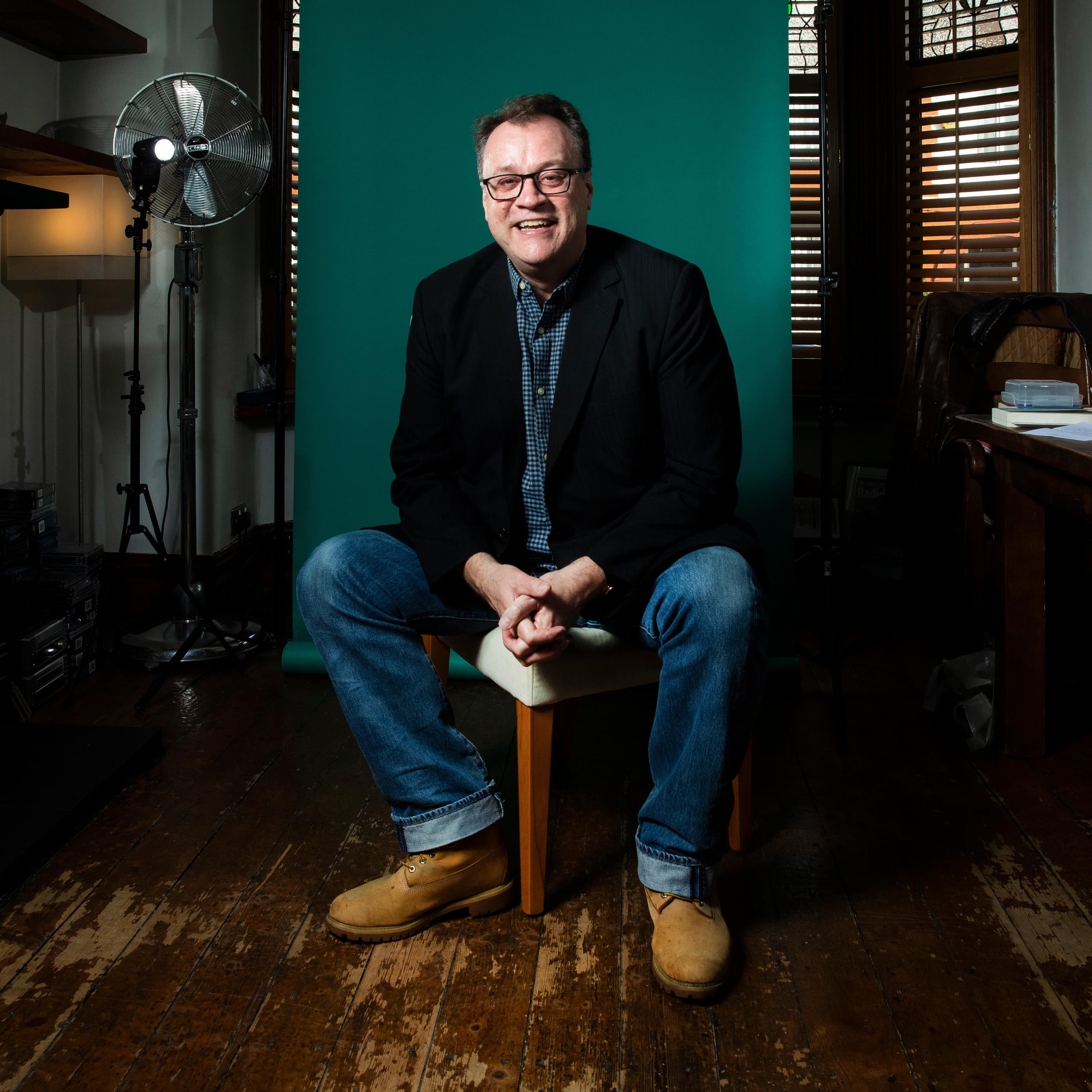
Russell T Davies (writer/showrunner; created/ran Queer as Folk, Cucumber/Banana/Tofu, Years and Years, It’s a Sin, and showrunner on Doctor Who). Interviewer: Helen Pitt (The Guardian).
Section 28 and AIDS shaped his youth; Queer as Folk deliberately avoided being an HIV drama; Tiptoe reflects growing real-world safety fears; acting authenticity matters (“save yourself time and get real”); trans roles should be cast with trans performers.
Queer as Folk’s Canal Street setup and explicit 1999 rimming/virginity scene; Cucumber’s trans character cast with trans actress Bethany Black; It’s a Sin starring Olly Alexander; Tiptoe’s Leo (Alan Cummings) and homophobic neighbour (David Morrissey).
0:00This is The Guardian.
0:08Today, from queer as folk to it's a sin, Russell T. Davies on four decades of bringing gay stories to the screen.
0:22A quick warning before we start, there is some strong and sexually explicit language in this episode.
0:35Russell T Davies. Even if you don't know his name, you will definitely have watched one of his shows if you grew up in the UK.
0:46As well as rebooting Doctor Who, he has been bringing stories of gay lives to our TV screens for the past 40 years. I hope you don't mind, Henry, but when you masturbate in that top room, it creates a sort of silhouette. Some boys don't come out of the closet, they explode I came to London and I thought, great, I can be gay It's been his mission since he came of age as a gay man in the 1980s A time when LGBTQ people couldn't get married When they couldn't join the army A time when queer kids' lives were overshadowed by Section 28 and the AIDS crisis But Davy's writing changed all of that Bringing stories of gay joy, gay love, gay laughter to primetime telly, while never shying away from the homophobia and discrimination that queer people still face today.
1:35From The Guardian, I'm Helen Pitt. Today in Focus, Russell T Davies in conversation.
1:46Russell T Davies, welcome to Today in Focus. Thank you very much. Thanks for having me on. I'm thrilled to have you here because I am a long-term fan. I'm not scared. And if you will indulge me, you know, to explain why we need to go back to Morecambe High School in 1999. So we're on the Lancashire coast. How old were you then? 18. So I'm doing my A-levels. I'm bored out of my mind in this crap seaside town, dreaming of the bright lights of the big city. I'm watching Channel 4 one night. Queer as Folk comes on. The first ever queer drama on British television. Your early masterpiece. And it absolutely blows my mind.
2:23Did it? It really did. because younger listeners will find this hard to believe, but I came of age at a time when our teachers couldn't tell us it was okay to be gay. No, it wasn't allowed to be talked about. Section 28 forbade it. And all I knew was that gay men got AIDS. Yes. And it seemed to be a frightening thing to do. If people suspected you were gay, they would beat you up. That's what happened in high school. But all you had was the tabloid point of view, wasn't it? Exactly. And then Queer as Folk comes on and it's like, boom, glamour, fun, excitement. Sex. Outrageousness. Wow. And I was so excited that I wrote my A-level media studies dissertation on it.
2:54No way. Did you pass? Yes. Well, here you are. I got an A. I got an A. Hooray. I've come to claim my money. Thank you. And for those who haven't seen it, it's still available on Channel 4 on demand. But can you just briefly describe the setup? Yeah, it's the story of three Manchester lads, Stuart, Vince and Nathan. Nathan's 15 and just coming out the closet. 15 in 1998 when I wrote it. So one night he goes out to Canal Street and meets Stuart and meet Vince. Stuart and Vince are 29 years old, two best friends. Vince secretly in love with his best friend, Stuart. And that's the threesome, really.
3:29I often say about that show that those characters are like three people split into one. Nathan's the young version. Vince is the nice version. Stuart's the arrogant version, the tough version. And it's life in Manchester. It's Canal Street in 1999. There's always some new blog, some better blog, just waiting around the corner. And that was the night he came along. The one night stand that never went away. I re-watched it the other day. And what anyone of my generation will probably remember about that first episode is the rimming scene. Let's go there. It's so nice to meet you and talk about this immediately.
4:03So, yeah, as you've said, Nathan meets Stuart. He is up for it. And then Stuart takes him home to bed, takes his virginity in a very graphic way. How the hell did you get that on telly in 1999? We just did. I mean, I thought we all thought, let's try. Let's do this. There are very important reasons. When Queerist Folk came out, the age of consent had been lowered from 21 to 21. It was once 21 years old when I grew up, but I'd been lowered to 18. But for straight people, the age of consent was 16. Why? Why? What's the thinking behind that? So that's why I deliberately introduced Nathan, who was 15.
4:38So he's even below 16. There was kind of a feeling in the air that 16 was on its way. But that's not the point. It's him to feel out of his depth and to be out of his depth and to be strong enough to rise above that meant he had to be 15. Technically, you can't give your consent at 15. But that's not what the drama is about. The whole point about Nathan is that there's no one he can talk to. He can't talk at home. There's no structure. There's no reference except all the passion, horniness he's got. It's what I was seeing at the time when I'd lived in Cardiff, watching the gay scene there and just had to write about it.
5:08It just came burning out of me. And you wanted it to have a different title originally, didn't you? It was queer as fuck originally. I thought we kind of wouldn't get away with it. And publicity people said, you'll never get to talk about it on TV. They said, you'll never go on Richard and Judy and talk about this. And they were right. And I think everyone kind of read that into it anyway. Queer as fuck, it kind of sounds like it. So, yeah. Yeah. And as I've already hinted at it, It really completely changed my perception of what it would mean to be gay. And in episode one, as well as all the sex, Stuart, who is the rogue, played by Aidan Gillen, who, of course, went on to an incredible career.
5:42He was in The Wire, Game of Thrones. Nathan, played by Charlie Hunam, also had a huge Hollywood career still going. Stuart becomes a father and he's donated sperm to two lesbians. And it just looked so fun. And I really, I know that, you know, I'm sure all gay men of that era will come and tell you how much it meant to them. I was a straight girl, but I really envied Donna, who is Nathan's best friend. Oh, Carla Henry. Yeah, a great actress. And I know it's a terrible cliche now to want to have a gay best friend, but I wanted that and I just thought, oh my God, this is all happening 50 miles away from me in Manchester.
6:17How important was it for you to just show that gay lives can be fun and joyful? Well, that was the whole remit of the show. Actually, it was Channel 4 saying, come and celebrate. They'd seen other stuff of mine. In actual truth, I've been writing gay characters for the past eight years or so. Slipping them in. I worked in soap operas at Granada Television. And, oh, I had a bisexual groom having sex with his best man on the wedding day. I did a story about gay teenagers coming out, a thing called Spring Hill that had two gay teenagers coming out. I did an HIV story on Children's Ward, which I'd wished had been a gay story.
6:53But actually, we just did the HIV side of it, which was brilliant and challenging and brought up queerness and stuff like that. Now if you get a blood transfusion, it's all checked by HIV. Mine wasn't. Why didn't you tell me? Because I'm sick of saying. I'm sick of having to tell people.
7:19And you've now written a book called Queerist of Folk. I have. It romps through all of your TV projects over the years. Yeah, I think a romp's a good thing. I'll have a romp. I use that language, you know, favourably. And you've just mentioned that you wrote for Children's Ward, which was a great ITV children's drama. Yeah, brilliant. I didn't realise that you got your big break writing for Why Don't You? Yes. Which is another seminal TV show from the 90s. It was all presented by children. Absolutely. The full title, Why Don't You Switch Off Your Television Set and Go Out and Do Something Less Boring Instead.
7:49Brilliant. Why don't you just switch off your television set
7:58It started the career of many people, including Ant, from Ant and Dec. Yes. What did you learn by writing for children? We had a great time on that show because actually, I mean, this is very specific, but when you get children on screen, they're often going, you know, you can hear a kind of, but these weren't trained actors. They were from local schools, from Liverpool schools and Cardiff schools. And I kind of, I devised what I think was a very good system where they never had printed scripts. They only wrote the scripts out in their own handwriting. So I'd make up a script on the spot. I kind of had a script in my head, but actually in rehearsals, I'd say, right, you come in and say this, you come in and say that, you do that.
8:32And then we'd do that for 10 minutes and say, right, go and write it all down now. So they all had it in their handwriting. And I swear it brought it to life that they never went, hello, I am now going to do a recipe. They were genuinely talking. They were going, hello, hi. I think we radically improved the child performance rate, if I say so myself. And in your 20s, when you were starting out in TV, you passed an audition to become a presenter of Play School. I did. Another legendary show from my youth aimed at very small children. But you're writing the book. You made one episode and packed it in.
9:01And you've remained firmly off screen ever since. Yes. Why? I kind of – I'd already started working behind the scenes in television. Then they were very nice and said, come and do this audition. And, I mean, a lot of people could present Play School. I can draw. So I'm quite a good cartoonist. So I took an easel into the audition and I drew. I illustrated a Roald Dahl story while telling it and I drew. So they went, oh, great. And they went to such an effort. They went and got me an equity card. They were so kind and so behind me and so supportive. So then I went to television centre. I did rehearsals.
9:31Chloe Ashcroft was in it and did one episode and I literally felt like I was on the wrong side of the camera with all my heart. Well, it didn't hold you back.
9:46And you write in the book that you grew up essentially in a family of teleaddicts and that one of your earliest memories was watching Doctor Who aged just three and a half when one of the doctors, William Hartnell, regenerated into another Patrick Troughton. And one of the characters in Queer as Folk, Vince, who worked by day in a supermarket, looks very much like the big Asda that I know in Manchester. It is the big Asda! It is! He's obsessed with Doctor Who. And of course, a few years later, you ended up not just writing the revamped Doctor Who, but becoming the showrunner on it, first with Christopher Eccleston and then David Tennant.
10:20I'm the Doctor, by the way. What's your name? Rose. Nice to meet you, Rose. Run for your life. You write in the book of how when you got the gig, the son called it Doctor Queer. Of course they did. How did that feel for you at the time? And did it make you more or less eager to put some gay life into it? Oh, no, I'd have done that anyway. And look, when The Sun does that, you just roll your eyes, don't you? I mean, those silly people. The only time I have a worry with things like this, it's like journalists say you don't become the story. So if I have a worry, it's not about me. And Sid, the man who throws himself forward for every publicity tour.
10:51I mean, it's weird. Honestly, I kind of honestly think the writers should be invisible and just stay at home. And yet we're in a world now where that's impossible. So just to go back to Queer as Folk for a minute, the actors that you cast in those three main roles were all straight. and I wonder how you view that now. Oh, happily, it's like, I don't think the present rewrites the past at all. You've got to remember, for those three men to take on those parts was a colossal undertaking when there were actors being told not to come for audition. That actually happened and actors read it and turned it down.
11:22Yeah. And I think people are quite famous actors now when one of them went, not in your life. Who is that? Go on. But no, I'm not going to do that. It's not fair because someone will turn up at his door tomorrow saying, why did you do that? That's genuinely not fair. But so for those three to quite unashamedly say, yes, I'll take on a gay role. Can you imagine, think about 1998. It's like actors were criticised or attacked for acting gay on screen. Whether they were gay or straight, it's like it was not seen as a good thing to do. So those three were stars and heroes in my eyes. I think your view has changed over time about the importance of representing gay talent, trans talent, queer talent on screen.
11:59Yes, across the board. And then when you came in the 2010s to write what's sort of loosely a sequel to, well, three sequels really, to Queer as Folk, Cucumber, Banana and Tofu, you had a trans woman playing a trans character. Yes. One of the first on British TV to do that. Isn't that astonishing? Yeah. Yeah, that's like, how primitive does that sound? Used to be a bloke. Yeah, she did. You know what? It's really boring being someone's fetish. And how important was it to you at that point? Had the world just moved on and you thought, you know what, we might have had Julie Hesman-Hash playing Hayley Cropper in Coronation Street, playing a trans woman, but it won't wash anymore.
12:41I'm a transsexual. I mean, I'm not a female by birth, Roy, but by choice. It was, yes. That was literally why I decided to write that story. and to cast it that way. I'm also backed by a brilliant casting director called Andy Pryor, who's really a kind of world leader in this kind of stuff and passionate about disabled representation and authentic casting across the board. And I found myself agreeing with that. And there was a kind of a thinking amongst the team. There was a great big sigh of thinking, but isn't that going to limit us? Surely there's only three trans people who could play this part and what if they don't fit the part?
13:23Andy Pryor went off and came back with 15, 20 people. And we had a glorious audition. Paris Lee's auditioned for that. I'm sure she might be saying. Really? Because she's got a fantastic career now. We had all sorts of people auditioning. And along came Bethany Black. And it just felt right. And the glorious thing was we also cast Julie Hesman-Halsh, who had played Hayley in Coronation Street. And I deliberately had those two characters meeting because Julie's done such passionate work for the trans community, knowing she's not a trans person herself, but nonetheless representing the cause, and knowing herself that the baton has to be passed on.
13:51And she did that. And I had a scene where the two of them met and hugged. That means the world to me. because it was a real moment, I think, yeah.
14:08And does it bother you now if you see a gay show where the actors are straight? You know, you mentioned in the book the controversy over heated rivalry, that sort of sexy hockey, or is it lacrosse? I've not watched it, hockey. Oh, guys, hockey. You've not watched it? Sorry, no. Oh, it's glorious. Oh, my God, it's so sexy. you should really watch it it's fun um look it does bother me but it's just me being bothered at home also i sit there going well i don't know i don't know if they're gay or straight i think they played heated rivalry very cleverly i still don't know and actually the maker of that jacob t and he has very happily in interviews dismissed everything i'm saying and frankly his show is more successful than mine right now and and we've talked to each other we've communicated online and he's lovely he's very lovely about queer as folk and and had he watched it the original he's He's a passionate, I suppose, of the original.
14:55He genuinely had watched it. So, you know, I love him. He can do whatever he wants. But so I do, sometimes with the soaps, I find myself rolling my eyes going, I just sit there thinking, how far did you look? If you couldn't find a gay man to play that gay man or a lesbian woman to play that lesbian, how far did you look? And there's such good work being done, like in the cast of EastEnders, by genuinely out actors. And also, you know, at this point, someone will always pipe up in the arguments going, but it's acting. and you sit there and go, but what's acting? Acting is being as true as possible, getting to be as real as possible.
15:27So save yourself time and get real. Make it absolutely real. And I do swear you get a different performance. You get a saltier performance. You get something that's more grounded. It just rings when you see someone do it. And I'm not going to name names because, again, I'd have to talk about actors who I don't know are out or not, but I see some gay actors on screen playing gay, and I think it sings. I think it rings. I honestly feel a vibration going, that's real. You're gay. and I get a joy out of that. So, like I say, I'm not in charge. Everyone else can do whatever they like. But for me, it works.
15:58It definitely works. And, you know, I mentioned Years and Years there, which is one of my favourite series of yours. Oh, thank you. You're the viewer. No one watched it. And it's eerily prescient, this series. It's a very dystopian look at life in Britain. Yeah. It came out in 2019 and it followed a family in Manchester, good old Manchester, over the subsequent 15 years. Look at the state we are in. God knows we need to shake things up. So I propose that in order to vote, every British citizen must take an IQ test. Oh my God, what did she just say? Are you saying that some people are too stupid to vote?
16:31I've got you listening now, haven't I? And it had an amazing cast. I've already mentioned Ruth Maidley. You had Russell Tovey. Russell Tovey. Emma Thompson. Emma Thompson was in it, yeah. And she played the role of Vivian Rook, MP, sort of dangerously charismatic MP, who sort of breaks through on something that looked basically like Question Time, right, where she says something outrageous about the Israel-Palestine conflict. Gets told off for swearing, so you can't see anything these days. And honestly, you know, when Liz Truss, I probably missed the amount of people who were like, oh my God.
17:00But it wasn't just that character that kind of predicted the future. You also have Russia launching a full-scale invasion of Ukraine. Ukraine, yes. You have a refugee crisis. You have a very sad scene involving a small boat in the crossing. No spoilers for what that one is. Yeah, yeah, yeah. How did you know what was going to happen? Well, it just, I mean, all I have to do is read The Guardian. I'm not being nice. Yeah, read The Guardian. But in many ways, I think I threw 100 things at the screen and 50 of them stuck. You know, you joke that I was the only viewer. How does it feel when a show tanks?
17:30Oh, it's not the first time it's happened, to be honest. I'm really sad because I loved it. I was proud of it. It's really good. I know, I know. It did have a second life. It was sold to Netflix and got to number six in their charts. So it kind of flared into life afterwards. And let's talk about the projects that didn't happen. I was very amused to read in the book that you only began working on years and years after ignoring an email from Jesse Armstrong, one of the most foremost screenwriters of our time. Oh, our time and the loveliest man of our time as well. Tell us about that. Hi, Russell.
18:02I've only met him once or twice, but he said this lovely email. I've got this show developing with HBO. Here's the pilot, which I'm looking for people to join the writing team. And I never even watched it. And I was like, I lost about three months. He's like, hello, are you ever going to watch? I'm sorry, I'm so busy. What's it about? He said, it's about like a family, about the Murdochs. They like the Murdochs. I'm like, oh, I'm very busy. And it was succession. And you watch it and you see the writers on it, like Lucy Preble and all that tea. But you also turned down the chance to write a James Bond film.
18:32Well, yes. It was, what's it called? Skyfall. And I went, and again, I don't get James Bond. I don't particularly like it. I watch James Bond films. I don't like it. So I just went, no, thank you. Then I went and saw Skyfall. and I literally sat there and went, oh, that's the James Bond film I would have written. He goes home. He goes home and Judi Dench dies. Spoilers, everyone. But I just thought, oh, wow. That is what I would have done. James Bond. Good God. Are you still alive? It's nice to see you too. I've got to say, it's movies. I would have spent two months on it, got a lot of money and been sacked.
19:09And I don't particularly care to do that. There is a whole world of rewriting and there are people whose entire careers are rewriting, getting a lot of money, buying a villa, but actually they never actually get their scripts transmitted. I'd rather die. Coming up, how Russell T Davies finally tackled the AIDS crisis.
19:43So years and years might not have been a huge hit, but It's a Sin was starring Olly Alexander as the lead. And it took place against the backdrop of the AIDS crisis of the 1980s. You'd spent a lot of your career, it seemed to me, writing about joyous things. And now you are tackling the big sad thing, the thing that I, as that 18-year-old in Morecambe, associated with gay people. Yes. Richard, what's wrong with you? I've got AIDS. I'm gay. I'm homosexual. I contracted HIV and I'm sorry, but now it's AIDS. Why did you decide to go there and why did it take you so long to do so? I simply thought it was time.
20:28And actually, if you look at my work, it's kind of heading there. Queer as Folk, I very absolutely deliberately chose not to make it an HIV drama because every single gay drama at the time was. so it was a really clear decision with queers folk not to do that there's little moments ticking away all the time but just as a background it's quiet and then it's funny it kind of rises up on my work it's like there's a pivotal my work cucumber which is about middle-aged gay men and there's a conversation at two in the morning at a burger bar where it just rises up in the dialogue and they start to talk about the tombstone adverts from the 1980s and how much that's haunted them if you ignore aids it could be the death of you so don't die of ignorance The whole of Cucumber is actually about gay shame and is a middle-aged man who's never come to terms with sex and actually psychologically you kind of trace that back to the 80s where when he was coming out, sex was the most terrifying thing.
21:22So it lurks. And when you've got something lurking like that, that was like a great big red flag to me going, right, that's it. That's the next thing you need to do. And I'm glad I waited all that time. I think it had time to mature in my head And it also gave me a chance to watch every single other gay drama on film or stage or books ever written, which was the best possible research I could have had. And I actually got to write the things I thought weren't being said, the memories of the 80s that didn't feature in things a lot. So it was like 40 years of research. And for your most recent show, Tiptoe, you returned to Canal Street 26, 27 years on from Queer as Folk.
22:01But this time the mood is not so much of joy as kind of dread. And it tells the story of Leo, a gay man played by Alan Cummings, who owns a bar on Canal Street, and his relationship with his homophobic neighbour, played by David Morrissey. Boy next door looking for sex online and lying about his age. But his dad doesn't know he's gay, so do not see anything. This is Leo, my gay neighbour. Oh, if that's not offensive. Well, it is. And it opens with Leo hanging from... Yeah. Hanging from a lap post. So you know right from the beginning, this is not going to end well. It felt so different from that optimistic, fun vibe of Queer as Folk.
22:39Where did the idea for that show come from? The world. The world. I mean, that's what I've seen. And as a gay man, that's absolutely how I felt. I myself began to feel unsafe, just slightly, and I'm in a very privileged position. And how would that manifest itself? Actually, well, I describe this in the book, which is that at one point I have, and this is ridiculous, but it's kind of symbolic in my head, but I keep a knife by my front door just in case because actually I am kind of loud and public and I speak about things. And actually there's been a couple of, I don't want to go into too much detail, but there are ways to work out my address from that.
23:15And that has happened harmlessly. I'm fine, but it just opens up a little door of doubt. So I'm 95 % happy, but the 5 % doubt makes me think actually, are you safe? But when you see, especially when you support trans rights and go and do a search of my name. Go and do a search of my name on X and it's vicious. And you just begin to get a chill at the back of your neck and think it's not safe. And I'm very lucky. And God knows, I'm a big tall six foot six man. It's like I hate to be a woman out there campaigning. I hate to be a trans woman out there campaigning. It's a woman much more, I would say, vulnerable than me.
23:49I am laughing at the knife by my front door. I'd stab myself first. It's like, or I'd drop it. It's hopeless. But the fact that I thought I needed to do that. In a nice suburb of Manchester. In a nice suburb of Manchester, but that's where Leo lives, in a nice suburb of Manchester. We're very sad. I've got a lamppost outside my house exactly like that. And for those who are much more active than me, who are literally out there making speeches every day and really standing up and are really, really, really spotlighted and hated, what the fuck is that like to be them? So that's what you have to write about.
24:18I just thought, how can I not write about that? I'm a writer. Once you've started to find yourself living in that sort of world, I literally had to write about it.
24:36You write very adoringly in the book about many other writers, particularly Paul Abbott and Kay Mellor, two working-class folk who went on to create Shameless, Band of Gold, loads of other amazing shows. Now, nobody's saying the Chatsworth estate is the garden of Eden, but it's been a good home to us, to me, Frank Gallagher and my kids, who I'm proud of, because every single one of them reminds me a little of me. And you met them on Children's Ward. And you write in the book that they showed you that anyone can be a writer, that class background doesn't matter, but you write at the same time, writers are fucking nuts.
25:13Oh, yeah. Why? Absolutely. They are. Have you met them? It's like a lovely Kay Mellor's no longer with us. She sadly died about two years ago. And so I started working Granada on a show called Children's Ward. On day one, on the Monday morning, going into a room, Paul Abbott and Kay Mellor, who within two years ruled television and ruled it for like 20, 30 years with an eye and grip. And they were so lovely. And what I mean by nuts is they kind of proved anyone could become a writer. They hadn't trained. They just had scripts pouring out of their fingers and they couldn't stop typing. I cannot sit at my desk and work without remembering something that one of them said.
25:46I remember Paul Abbott saying to me, psychology is simple. Like that. And by which he meant how complicated it was, but how at root you come down to something when you're thinking about a character you come down to something very, very simple. They want to stay young or they're jealous or they're unloved. That's what he meant by simplicity. And I remember that every single day when I'm writing. I always remember Kay Mellor. I said, what are you developing at the moment? She said, developing? I don't develop. I get things made, she said. I love that, ma 'am. I carry that philosophy forward as well.
26:17But the point of those two is how kind they were. This little Welsh lad coming in, going, nam, nam, nam, hello. and they literally took me into their homes and met their families and read my scripts and encouraged me and found opportunities for me. There were moments where they said, oh, Russell can do that and pushed me forward. They were gorgeous. So I just tried to pay that forward as well. Good times. In the book, you describe it's a sin as your life's work. Are you done? What's next? Oh, no. Well, Tiptoe came next. And yeah, I've got new scripts sitting there. What's it about? No, it might not get made.
26:50And I've learned over the years not to talk about things because someone jinxes them, but it's Manchester again. Yeah, I love a Manchester show, yeah. Well, so do I, so I will be glued to the screen. It's been an absolute joy to talk to you, so thanks so much. Thank you. Thank you for watching all those years ago. I really appreciate that. Oh, no problem. That was Russell T Davies. His book, The Queerist of Folk, is out now. And that is all for today. This episode was produced by Eleanor Biggs and presented by me, Helen Pitt. Sound design by Brian McNamara and the executive producer was Huma Khalili.
27:21We'll be back in your feeds this afternoon with the latest.
27:33This is The Guardian.
Scan the code with your iPhone camera
Listen in the app.