Ask ChatGPT


 Today in Focus
13 Oct 2026 · 35m · 13 chapters
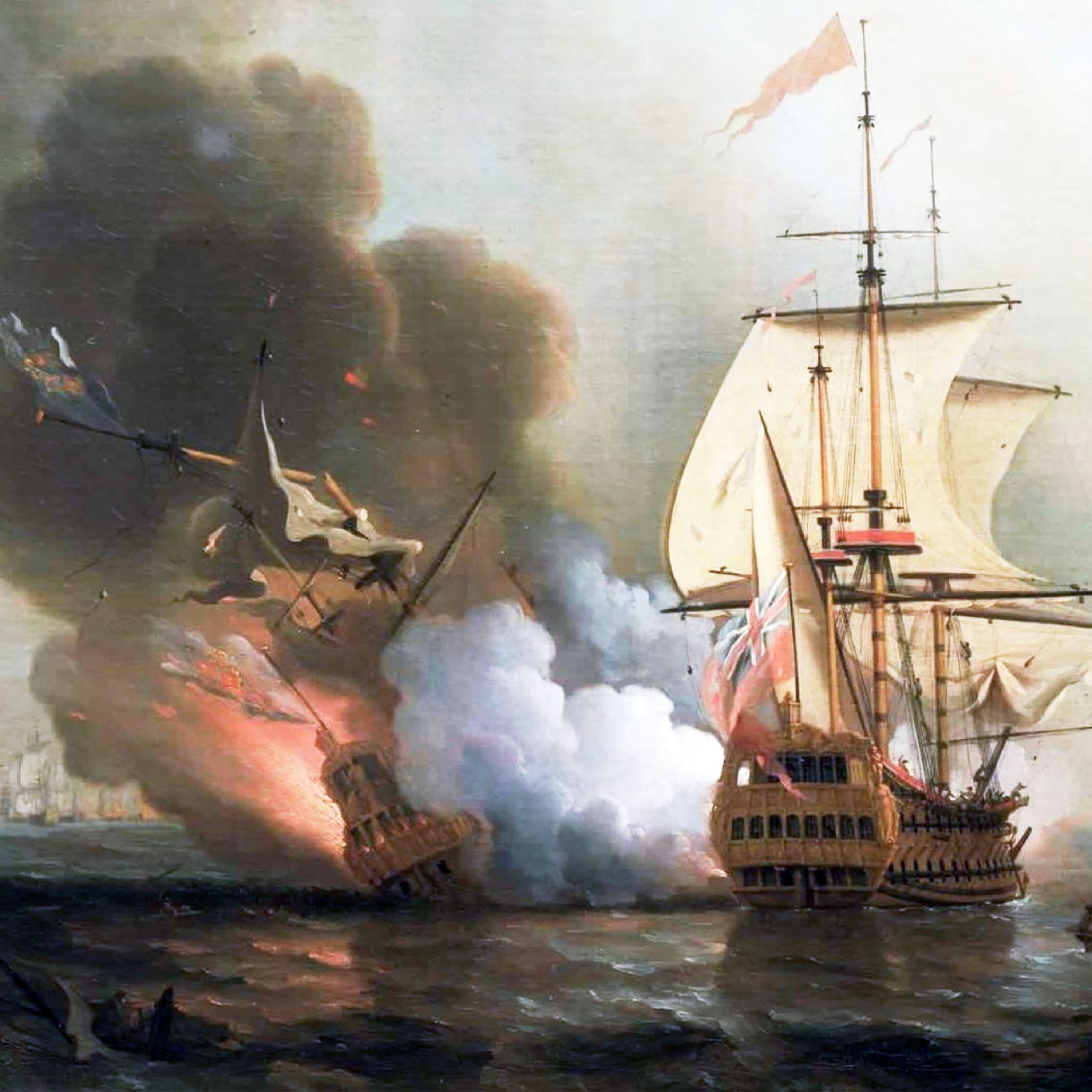
The 1708 Spanish treasure galleon San Jose—its sinking during a British ambush off Colombia, the centuries-long hunt, and the 2015 discovery by Roger Dooley—plus the ensuing legal fight over ownership and credit.
Julian Sancton, a journalist who wrote for Vanity Fair and later authored Neptune’s Fortune about the San Jose mystery. Roger Dooley is the central figure discussed: a Cuban-trained maritime archaeologist who worked for Castro underwater and spent decades searching for the wreck.
The San Jose carried over 100 tons of gold and silver worth about a billion pounds. Dooley found it in 2015 using Spanish-archive testimony and Spanish coastline details, not English accounts. He was initially kept out of public credit, and the wreck’s control is disputed among Spain (sovereign immunity), Colombia (territorial waters), Dooley’s backers, and other claimants.
Sea Search Armada’s early-1980s sonar/submarine “anomaly” claim; Dooley’s 1984 discovery of battle coordinates in archives; 2015 Remus 6000 sonar missions; identification of bronze cannons with a dolphin design on the gun butts.
Written by AI. May contain mistakes.
Exploration of the story behind the billion-dollar shipwreck San Jose.
“A few years ago, Julian Sancton, a journalist, came across a story about a shipwreck found off the coast of Colombia.”
The factors leading to the sinking of the San Jose in the 1700s.
“Today in Focus, the most valuable shipwreck in history and the man who found it.”
Details on how and why the San Jose sank during a naval battle.
“How is it that the San Jose ended up at the bottom of the ocean to start with?”
Discussion of the efforts to find the sunken treasure over centuries.
“There was 17 ships strong, but only two galleons, the San Jose and her sister galleon, the San Joaquin, among the most magnificent Spanish galleons ever built.”
Focus on Roger Dooley's journey and passion for finding the San Jose.
“And so even at that time, they said the treasure sank in waters where it is too deep to dive.”
The eventual discovery of the San Jose wreck in 2015 and its significance.
“It is found in November 2015, thanks to the indefatigable, persistent, pathologically optimistic efforts of Roger Dooley.”
Learn about Roger's relentless pursuit of the San Jose treasure and the crucial clues he uncovered.
“He had trained as a maritime archaeologist and had worked for Castro as essentially Castro's man underwater, tasked with finding lost treasure wrecks.”
Explore the moment Roger and his team found the San Jose, including the technology used and the emotions involved.
“It consisted of several missions every day would explore a different zone of Roger's search area by dispatching an autonomous underwater vehicle called the Remus 6000, which is a sort of torpedo-shaped robot.”
Understand the immediate aftermath of the treasure's discovery and the public's reaction to Roger's role.
“I'm curious, what is it that Roger did that others didn't do?”
Discover the competing claims over the wreckage of the San Jose and the principle of sovereign immunity.
“That moment where Dooley is robbed of the public credit is a preview of what's coming now that the San Jose has been found, and that is a fight.”
Learn about Roger Dooley's emotional involvement and his efforts to preserve the San Jose's legacy.
“So all of this has gone to The Hague where war crimes and so on are usually hashed out.”
Explore the debate on the rightful ownership of the San Jose treasure and its significance to humanity.
“In the course of speaking to Roger, researching this book, have you come to a view about who this priceless treasure or$1 to$2 billion treasure should really belong to?”
Understand the historical context of the San Jose and the ongoing implications of its discovery.
“And so when you say it should belong to humanity, that's very appealing.”

Get the gist, explore an idea or ask about something said.
 Claude
On Today in Focus, what are the key points of this episode?
Searching your listeningAutomatic transcript. May contain errors.
0:00Fiona McAnena: This is The Guardian.
0:09Fiona McAnena: Today, the billion-dollar shipwreck everybody wants a piece of.
0:20Fiona McAnena: Hey, I'm running out to drop off a stack of letters and packages. Need anything shipped while I'm gone? Save the gas. Stamps.com lets you print postage and schedule pickups right from your desk. Sync your contacts into the address book, get detailed accounting insights, and get notified the moment your certified mail is delivered. All from my desk? All from your desk. Join the 4 million businesses using Stamps.com right now with code podcast and get your free welcome gift. Stamps.com code podcast. Taxes and fees apply.
0:57Fiona McAnena: A few years ago, Julian Sancton, a journalist, came across a story about a shipwreck found off the coast of Colombia. And on board were treasures supposedly worth a billion dollars, which he thought must have been a typo.
1:11Julian Sancton: Surely it meant millions of dollars worth of gold and silver, but indeed it was supposedly billions, many tons, more than 100 tons of gold and silver.
1:22Fiona McAnena: For Vanity Fair, Julian wrote a piece about the extraordinary 300-year mystery of where the ship had sunk and how it was finally found a decade ago. The magazine piece became a book project, and the more Julian dug into the story, the more he realised, just as tantalising as the story of how the San Jose was found was the tale of the man who had done more than anybody to find it. But there was a problem.
1:47Julian Sancton: The man responsible for this discovery was secret. I heard whispers of a mysterious Cuban-American archaeologist named Roger Dooley. And in all of those whispers, he was painted as a sinister, shady figure. People described him to me as a criminal, possibly a drug trafficker, even a human trafficker. It was implied that he had stolen the coordinates of his greatest discovery. And he was, to me, perhaps I imagine that he might be the villain of this story. But as a journalist, I needed to at least get his perspective. And I could not trace him. He was a ghost. And then all of a sudden, a few months into my reporting, I get a call from a 305 area code.
2:37Julian Sancton: and I knew that that was Miami. And I pick up the call and I hear on the other end this raspy voice as if it's coming from the bottom of a crypt saying, it's Roger Dooley.
2:49Fiona McAnena: Two months ago, I got a heart attack. I had a heart risk. People say, well, he survived by a miracle because if I let him... Roger Dooley talked fast, full of stories like the time he'd survived nine minutes without a beating heart and others that seemed too fantastic to be true.
3:15Julian Sancton: I didn't know whether to, after everything that had been said about him, believe what he was saying. In his telling, he was almost like the Forrest Gump of Cuba, where he's happening to show up at all these major events in Cuban history. But the more I followed up on that, the more I realized that everything he was telling me was true. And this is something that I was able to nail down only after hundreds of hours of cross-referencing what he said and speaking to people that I could reach back in Cuba about his particularly colourful life story, which led him from Cuba over the course of a 40-year obsession with this ship to, in 2015, discovering the wreck of the San Jose.
3:52Fiona McAnena: So why did so many people try to paint him as a villain? From The Guardian, I'm Michael Safi. Today in Focus, the most valuable shipwreck in history and the man who found it.
4:08Fiona McAnena: Julian, before we dive into this absolutely astonishing story of a shipwreck, I want to do that cliched podcast thing and say we have to go back in time. In this case, not a few weeks or months, but 300 years. How is it that the San Jose ended up at the bottom of the ocean to start with?
4:27Julian Sancton: For about 200 years following the Spanish conquest of the New World, there were regular fleets of ships taking gold and silver and other resources of the American continent across the Atlantic back to Spain. Now, by the early 1700s, the Spanish Empire was starting to decline in power. It's starting to be eroded from within by corruption, smuggling, and a vast amount of debts. In 1701, war breaks out in Europe, a war called the War of Spanish Succession. In that time, from 1700, in fact, from slightly before that time to 1708, there had not been a single treasure fleet coming from the Spanish main back to Spain.
5:20Julian Sancton: And so you can imagine the accumulated wealth that the Spanish king was increasingly desperate for to pay for the war and the many debts that Spain was saddled with. The San Jose was the flagship of the treasure fleet that came in 1708. There was 17 ships strong, but only two galleons, the San Jose and her sister galleon, the San Joaquin, among the most magnificent Spanish galleons ever built. Galleons were essentially armed cargo ships that were quite voluminous, not necessarily the most agile ship in the seas, but capable of carrying a very large amount of cargo and theoretically protecting it.
6:06Fiona McAnena: So they were the kind of seaborne equivalent of those big trucks that drive around filling up cash machines.
6:13Julian Sancton: Yeah, exactly. Yeah, they're like a Brinks truck. The Count of Casa Alegre, who was the 71-year-old commander or captain general of the treasure fleet and the captain of the San Jose, knew well that a British squadron was lurking in the waters, in the Caribbean waters, specifically waiting for the fleet to make its journey from Portobello, Panama, which is where the ships were loaded up with riches, to Cartagena in Colombia, the fortified city from which it would make the beginning of its return journey to Spain. So he knew that the British squadron was waiting to ambush him, and yet he believed that the king could wait no longer for his riches.
7:05Julian Sancton: The winds were favorable, and it seemed like he was going to be able to make it, but at the very last minute, on the very last day, the winds turned, and when he was almost within sight of Cartagena, all of a sudden his progress and that of the fleet was blocked. Here come the four ships of Commodore Wager's squadron, much more agile ships, much better suited to naval combat. And at one point, a tremendous explosion, according to the expedition crew, rang out from deep within the bowels of the San Jose. And seconds later, the San Jose disappeared, had sunk.
7:48Wow.
7:49Fiona McAnena: Can I ask you one question? I mean, from what you've gathered through your research for this book, what were those naval combat exchanges like? What was it like to be a sailor living through that? You know, what could you see? What could you hear? What could you smell?
8:06Julian Sancton: You certainly would have smelled gunpowder. You would have smelled the smoke because a fire broke out on the San Jose that engulfed the entire thing. You would have smelled saltpeter. You would have smelled blood. There would have been the sound of drums to keep up the energy and to fire up their martial spirit. It would have been pretty chaotic, especially as the smoke and the darkness made it increasingly difficult to see. And of course, you tell yourself you can't dodge a cannonball, that every time you hear something whiz by you, you would feel that you were protected by God. But you would also know that the cannonball itself was not necessarily the most deadly thing, that the shards and fragments of bone and wood that would be hurtling in their wake were often just as deadly.
8:52Bloody hell.
8:54Fiona McAnena: In your book, Julian, you say that the cargo aboard this ship was valued at over a billion pounds. A billion pounds. What was on it that was so valuable?
9:06Julian Sancton: Primarily gold and silver. Yes, there was more silver than gold, but gold is many times more valuable. And there was more gold on the San Jose than had ever sailed in another ship because this coincided with a period of very high gold production.
9:23Fiona McAnena: And so once this ship sunk, I guess it was well known the value of the riches aboard it. How soon did people start to think, we need to try to get to that ship?
9:36Julian Sancton: Well, they certainly would have thought of it immediately, but it was believed that the ship had sunk in deep waters. We now know that those waters are about 600 meters deep. And so even at that time, they said the treasure sank in waters where it is too deep to dive. So what was left was not treasure, but a sort of a legend that lasted for centuries, that the greatest treasure that ever sank was just a few miles offshore.
10:05Fiona McAnena: As the decades become centuries, things start to change in this part of the world. at some point you have a new kind of person come along, Americans, and they fancy themselves able to do things that others in the past haven't been able to do. So at what stage do Americans start investing in hunting for the San Jose?
10:29Julian Sancton: Well, they began hunting for the San Jose probably in the late 70s. There were many attempts to gain permission to explore Columbia's waters, with the emergence of scuba technology, which all of a sudden made the seafloor much more accessible. And by the late 70s, the sort of the adventurers and the fortune seekers and the sort of romantics that had populated the beginning of this golden age gave way to a new class of treasure hunter, which was a little more buttoned up and more institutional. There were people on Wall Street that were starting to invest in treasure hunts. And the San Jose was known as the holy grail of shipwrecks.
11:09Julian Sancton: And there were several attempts made to gain permission to explore the waters. But the one that got the furthest along was by a company now known as Sea Search Armada. And in the early 80s, thanks to an elaborate operation that involved the use of a submarine, they announced that they had discovered the resting place of the San Jose was an anomaly on the side scan sonar that they later investigated with the submarine. But whatever it is that they found was encrusted with coral, and it wasn't ever very clear what it is that they had indeed found. Doubts were raised pretty much from the beginning about whether they had indeed found the San Jose.
11:52Fiona McAnena: How smooth was the process of trying to find this ship for this group of privately funded U.S. treasure hunters?
12:01Julian Sancton: Well, it wasn't that smooth. From the beginning, they had to deal with harassment from local, what they described as local pirates. Their ship was boarded one night by machine gun-wielding pirates that were trying to break in. Fortunately, the locks held. They were fired at by the banditos. And, you know, I guess the word had got out that they were looking for the San Jose. And according to them, these local Colombian brigands figured that it would be probably more effective to not dive down to the San Jose, but take it from the people who did. But Sea Search Armada never found a single gold coin from the San Jose or a single artifact, in my estimation.
12:47Fiona McAnena: So this privately funded expedition comes to nothing. It ruins some fortunes. It wastes a lot of people's time. When is the San Jose eventually found?
13:00Julian Sancton: It is found in November 2015, thanks to the indefatigable, persistent, pathologically optimistic efforts of Roger Dooley.
13:11Fiona McAnena: My really interest of the San Jose is to make an ecological excavation. I described him as, you know, the book begins with him in the early 80s going to the Spanish archives.
13:24Julian Sancton: And in that time, there's photos of him. And I describe him as looking like a young Don Quixote and being imbued by a similar sense of purpose. And indeed he did. And now he looks like the real Don Quixote now that he's 81 years old. He's got a thick beard, now fully white. He's got long flowing hair. He has a crooked nose. He has a scar in his left hand from the bite of a moray eel. He looks basically exactly like you would imagine somebody who hunts shipwrecks for a living would look.
13:53Fiona McAnena: Cuba, great. Go to all these places and talk to fishermen. So I started to go all around Cuba, trying to create like a national archive. I'm the first. Nobody did that. I'm talking about 1960.
14:06Julian Sancton: He had trained as a maritime archaeologist and had worked for Castro as essentially Castro's man underwater, tasked with finding lost treasure wrecks. And when he came to the United States, he was starting from the bottom of the ladder. And Roger has that particular mindset where he just won't even acknowledge the obstacles in his way. And he had been single-mindedly obsessed with the San Jose ever since that day in 1984, when he was in the Spanish archives and chanced upon some documents containing clues to its whereabouts.
14:37Fiona McAnena: Tell me about that day in 1984. What happened?
14:39Julian Sancton: Well, he was looking for clues or documents relating to another galleon, Nuestra Señora de las Mercedes, commonly called the Mercedes. But in looking for the Mercedes, he found in a place where you would least expect it, critical documents relating to the battle in which the San Jose sunk, which included geographically specific coordinates. It's not enough to say exactly where it sank. There was no latitude or longitude, but there were sort of distances he was able to later triangulate, which would help him establish many, many years later his search box to find the San Jose. And so that was the beginning of his obsession with the San Jose.
15:21Oh, can I just ask you, I mean, like, in order to find these maps,
15:24Fiona McAnena: these old documents, where is he looking? Where are those things located?
15:29Julian Sancton: Everywhere he could find. And after having been stuck in Cuba, been unable to travel to the great archives of the world, all of a sudden Roger was like a man who'd been in the desert finding an oasis. You know, he was drinking in all the archival bounty he could find. So he was traveling to London to track down the English accounts of the battle. The English ship logs were quite detailed, more so than Spanish logs at the time. and he was able to find this ship's log from the San Jose's pilot buried in the British Library. And in the early 2000s, Roger makes his way to the Library of Congress and as was his habit, went to the maps room and looked through any maps he could find from the 18th century, probably a 30-year range around the battle that might have given him some clue.
16:31Julian Sancton: Under the fluorescent lights of the rather modern manuscripts division, the map room in the Library of Congress, he finds a series of maps that had been bought by the Library of Congress from a London antiquarian. And among them was a map by a Spanish cartography student who had spent years in what is now known as Colombia, what was then known as New Granada. And it's this beautiful map with just in a very fine hand with little settlements painted in red. The map was a little bit yellowed. There was a drawing of what may look like a dragon out in the ocean, you know, as we know that that's something that cartographers like to do.
17:16Julian Sancton: And what caught Roger's eye and made his heart beat faster, was a feature of four small X's off the coast of Colombia near what is now known as the Rosario Islands. And these four X's were labeled Bajo del Almirante, which is Shoals of the Admiral. Now, this particular reef is referred to today as the Tortuguillas. And before it was called something else, there is no other map in which it is called the Shoals of the Admiral. And so this map was from 1720-something when memories of the battle would still have been fresh. And Roger had the intuition that the Admiral in question would have been Charles Wager, who the Spanish referred to as the Admiral.
18:03Julian Sancton: He was certain that this reef had something to do with the battle. And in fact, they say X never marks the spot, but in this case, it may have.
18:14Fiona McAnena: So then he takes his findings to, I guess, the Colombian government. What happens next?
18:21Julian Sancton: Well, this is before he found it. This is when he believed he had enough to inform an expedition. He didn't have the financing. He didn't have the technology. And most importantly, he didn't have the permission to search in Colombia's waters. He gets going. Roger starts lobbying Colombian congresspeople, trying to appeal to the correct authorities, cold calling everybody. But he wasn't making any progress. And he realized, again, pathological optimist that he is, that his best shot would be to speak to the president, whom he didn't know.
18:57Fiona McAnena: I think the sky's the limit for Colombia. That's Colombian President Juan Manuel Santos at the University of Miami on Monday.
19:08Julian Sancton: He attended one event. Roger was trying to wend his way through the crowd to present him with a copy of this map that I mentioned to you to tell him that he knew where the San Jose was and that he was hoping to get permission to find it. That didn't work. So he crashed a cocktail party in New York during the United Nations General Assembly and this time was able to buttonhole Santos like Coleridge's ancient mariner and tell him his harrowing story. And Santos was a little baffled by this guy he would later describe as someone who looked like Hemingway. He also said, who is this crazy hippie, this crazy treasure hunter?
19:48Julian Sancton: But he was intrigued. intrigued. And after this strange encounter with this odd, this eccentric archaeologist, he looked at the map and he found scotch tape behind it, a letter that Dooley had written him, asking him for permission to find the San Jose. And Santos was so, I guess, won over that he made it possible for Roger to go find the San Jose. So now Roger needed the financing, which he found by, again, cold calling an English hedge fund titan named Anthony Clake. And now he needed the technology. He appealed to the Woods Hole Oceanographic Institute in Cape Cod, Massachusetts, which was one of the most prestigious such institutions in the world and which had found the Titanic years before.
20:38Julian Sancton: He was the ultimate hustler, you know, learned how to hustle on the streets of Brooklyn and Havana. And here it came to fruition.
20:44Fiona McAnena: That's incredible. I mean, that's like, it's gonna be a movie about this guy's life, maybe based on your book. I hope so. Yeah. And so then take me then please to, having established this consortium of people, having got permission from the Colombian government, paint for me the scene where this thing is finally, finally found after so many years of effort, so much money and like lives thrown at it.
21:09Julian Sancton: It consisted of several missions every day would explore a different zone of Roger's search area by dispatching an autonomous underwater vehicle called the Remus 6000, which is a sort of torpedo-shaped robot. It would send out a side-scan sonar to its left and to its right. And at the end of the day, it would return to its master. And the data it had found would be sent to an apartment on the waterfront where Roger was waiting with his survey specialist, Gary Kozak. and the two of them would go over the data and see, you know, for long stretches, they would find nothing but just geology. The Colombian government had not allowed for him to search the entire area because it was afraid that if it searched along the same longitude as what Sea Search Armada claimed to have found years before, if the longitude of those coordinates were the same, they believed that that would complicate their case against Sea Search Armada, which had been ongoing practically since the Cesar Dramatas announcement of a discovery of that anomaly they claimed was the San Jose.
22:18Julian Sancton: So they forbade Roger and the team from searching along that longitude. Roger convinced them that they had to come back to search the remainder of that search box area. And that they did in the fall of 2015. And on Thanksgiving Day, the naval ship found evidence that looked like it just, you know, to us, we wouldn't have noticed anything looking at the data later. But Gary Kozak and Roger Dooley, looking over this data later when it was brought to them in a secure lockbox, saw this little speck. It looked like a yellow crumb on an orange placemat. Okay. Whoa. We've got something there that is, I think it's really not geologic.
23:03Julian Sancton: a spread of debris on the bottom, a scatter pattern. And they ordered Woods Hole to go back, this time closer, and this time with a camera affixed to it. And they took pictures, got even closer, and when finally the data was sent back to the apartment, they looked over it, and Woods Hole had cheekily put a photo, the first among the data had put a photo of three bronze cannons, and Roger, as soon as he saw that, his reaction, it's caught on video. Uh-oh. Uh-oh. Oh my God. And he looks specifically for one feature on those cannons that he knew would indicate the telltale sign that he had found the San Jose, and that was that there would be a design of a dolphin on the butt of the gun, which is a design that was abandoned shortly after the San Jose.
23:56Julian Sancton: And sure enough, those dolphins were present. He had found the San Jose.
24:04Fiona McAnena: I'm curious, what is it that Roger did that others didn't do? So these wealthy Americans, everybody else who spent so much time and money looking for this, what did he do differently to them?
24:17Julian Sancton: He claims that he paid more attention to the Spanish archives than to the English archives.
24:23Fiona McAnena: What I did was a summary of all the testimony of people who was in the battle. What everybody says about the heading, about the timing, about the wind direction, that gave us an area where we believe that something sank.
24:37Julian Sancton: Every previous attempt was giving undue weight to the English testimonies, to the English accounts. And what he did was really pay more attention to the Spanish and especially to their descriptions of the coastline. He was also a sailor. He understood the sea, having studied it in the Havana Academy of Sciences and having lived his life in the ocean rather than in libraries. He thinks that that was a great advantage to him. But they didn't know, they didn't study the shape, the wind, the speed.
25:08Fiona McAnena: If you study that, you realize that it's not possible. That's what I was trying to do. This is a 31-year campaign of his life. What do you think he thought in that moment?
25:20Julian Sancton: he was too stunned to express emotion. But his wife, who was there with him, who was Colombian, ran to him to see what the commotion was. You can see this on camera. And all of the men around Roger are putting their hands on his shoulder, are laughing, are clapping. And she sees this, and she wraps her arms around him. She starts bawling. She starts crying, almost as if she's expressing the emotion that he was too stunned to express. It was the absolute culmination of his life, the most glorious moment of his life, and almost immediately that glory is taken away from him.
26:13Julian Sancton: Juan Manuel Santos, the president, announced the discovery of the San Jose, announced a big press conference, and even though privately he had congratulated him and had acknowledged that this was redounding to Dooley's glory. Publicly, he made no mention of Dooley. He only referred to him as a man who looks like Hemingway. All the secrecy around him in the initial phases allowed his detractors to paint him as a criminal.
26:45Fiona McAnena: Coming up, they found the treasure. So who gets to keep it?
27:02Julian Sancton: Are we doing enough with AI or are we already behind? The Intelligent Enterprise, hosted by me, Tom Stoneman, is the podcast for leaders who want to be able to answer those questions. On our latest episode, the generation growing up with AI and how they're using it at work.
27:20Fiona McAnena: Like I wasn't just asking questions, but I was actually collaborating with it. Follow the intelligent enterprise wherever you get your podcasts.
28:07Fiona McAnena: That moment where Dooley is robbed of the public credit is a preview of what's coming now that the San Jose has been found, and that is a fight. So who are the players fighting over this find, and what is it that they actually want?
28:27Julian Sancton: The players are, on the one hand, Spain, which appeals to a principle called the sovereign immunity. And this principle of sovereign immunity establishes that a warship that has flown under the flag of a certain nation remains the property of that nation no matter how many centuries have passed, no matter how deep it lies, no matter whether it's even intact. However, Colombia is not a signatory to that agreement, partly because they knew they had the world's greatest treasure lying in their coasts. And so they didn't want to relinquish that to Spain. So Colombia believes that this wreck is theirs because it lies in their territorial waters.
29:09Julian Sancton: Then you have the backers of Roger Dooley, Maritime Archaeology Consultants, which is the name of the LLC formed by Anthony Clay, the hedge fund executive. And then you have other less legally defined claims, such as those by the descendants of the indigenous people who were forced to mine the gold and silver from their ancestral homelands. So you have tribes from Bolivia, from near the Andean silver mines that yielded the silver of the San Jose. You have countries like Peru, who historically claimed a portion of recovered Spanish treasure because it came from the vice royalty of Peru. Then you have Cesar Charmada people who claim that they might have found, at the very least, a portion of the San Jose.
30:00Julian Sancton: We know that the San Jose broke up and that what was found by Dooley is about three quarters of the wreck. And so they claim that whatever it is that they found, Sea Search Armada in the early 80s, that that could be the missing portion. As I show in the book, the object they found is 140 feet long, and it's not even clear whether it's human-made or just a geological formation. But even if it is, maritime archaeologists have described it as most likely metal rather than wooden. And if it's a portion of the ship, the entire galleon was 140 feet long. So if it's a portion of the ship, how could it also be the length of the entire galleon?
30:35Julian Sancton: It doesn't really hold up. But so nevertheless, they remain very much in this battle. And C-Suite Armada has been waging a war in the courts, trying to reclaim in the courtroom what they couldn't find on the sea for a portion of the treasure. And that has led to a case at the Permanent Court of Arbitration in The Hague, which is still ongoing. And we're expecting a ruling on that later this year or early next. Really?
31:03Fiona McAnena: So all of this has gone to The Hague where war crimes and so on are usually hashed out. Now they're listening to a case about this 300-year-old San Jose.
31:14Julian Sancton: Well, yeah, it's not the war crimes tribunal, but it's still The Hague. It has gotten to this. There's a lot at stake, but there's also Colombia's pride at stake. It's a way to change the story from what people normally associate Colombia and its military with, which is endless drug wars. this would be a way to tell a much more glorious and beautiful story.
31:38Fiona McAnena: And has Roger himself had to go to The Hague to testify? And what does he make of the fact that this discovery that he played such a crucial part in is now in the hands of lawyers?
31:50Julian Sancton: He has not gone to The Hague. He's heartbroken by the fact that he's been kept out of this process. He's still in touch with the government. They know that nobody knows the Galleon as well as Roger Dooley. So he's always there on the periphery. They've promised him that one day he would be the director of a great museum built to showcase the riches of the San Jose. And yet nothing has ever happened. And he's always cast aside and he's absolutely heartbroken, but he has not given up hope. And he's in fact started a foundation to try to remain in the picture and dedicated to the preservation of the knowledge of the San Jose and his own archives, which amount to terabytes worth of data on the San Jose.
32:31So he's 82 years old.
32:34Julian Sancton: He's more energetic than you or I. And he will remain in this fight as long as he has blood in his veins. And what about you?
32:45Fiona McAnena: In the course of speaking to Roger, researching this book, have you come to a view about who this priceless treasure or$1 to$2 billion treasure should really belong to?
32:59Julian Sancton: It's easy for me to say, because I don't have a vested interest in it. But I believe that it belongs to humanity in general, because these galleons were vectors of globalization. They led to the modern world as we know it. Aboard the San Jose were, you know, Ming Dynasty cups from China. There were natural resources from Latin America. There were objects from Europe, these key vectors in the development of the Western Hemisphere. And to give a portion of that over to one party or another would be to do a disservice to humanity. Certainly, I don't think any of the treasures should be sold, nor does Roger.
33:43Julian Sancton: Though he made what I would argue was a devil's bargain when he promised a portion of the treasure to Anthony Clake. Anthony Clake, the British investor. Such an investor, yes, yes, yes. But even Clay at this point just wants to be reimbursed for the cost of the expedition. I don't think he necessarily wants to sell any treasure. Then there's academics who believe that this wreck is best left in situ, where it lies, according to the directives of UNESCO. But I don't think that's – because that would be the best way to preserve it. But I don't think that's necessarily doing anybody any good either because A, the sea is a corrosive environment.
34:26Julian Sancton: And B, that would be depriving of all of us from a chance to commune with history, this particularly rich time capsule of history. And so what I would hope is that, you know, Colombia doesn't have the resources to excavate it on its own. Spain perhaps would want to help, but then you enter this sort of custody battle. I would hope that people would just want to, you know, contribute to the multimillion dollar, probably$70 million it would take to excavate this correctly over many years. So that we could all have a chance to admire the artifacts of the San Jose and learn the stories that it contains.
35:05Fiona McAnena: And so when you say it should belong to humanity, that's very appealing. But what does it actually look like?
35:12Julian Sancton: It's very pie in the sky. I think there should be a museum. What I mean by that is that it should be an internationally funded endeavor. And that wherever the museum ends up, and there are plans to build one in Cartagena, and surely it would be a touristic draw, everything should remain coherent. and we should bring in the expertise of people from around the world to illustrate and explain the story. It should be a collaboration rather than some kind of plaything of one party or another.
35:45Fiona McAnena: But I guess it feels like the dynamics that led to that fortune being amassed and then sunk, you know, it was 300 years ago, but they're kind of universal. That's absolutely true.
35:57Julian Sancton: The greed and the cruelty that led to the acquisition of this treasure in the first place and to its sinking, these passions didn't just die with the sinking of the San Jose. They went dormant. And when the San Jose was found again, they were reawakened. And now, all of a sudden, these 300, 400-year-old passions are back out and leading to this conflict.
36:22Fiona McAnena: Julian, it's an incredible story. The book sounds incredible too. Thank you so much for coming and talking to us about it.
36:28Julian Sancton: Mike, thank you so much. What a pleasure to speak with you.
36:33Fiona McAnena: And that was Julian Sancton, a journalist. His book on the San Jose is called Neptune's Fortune, the billion dollar shipwreck and the ghosts of the Spanish Empire. That is it for today. This episode was produced by Guy Zaffman and Alex Atak. Sound design was by Ross Burns. The executive producer was Elizabeth Kasson. And we'll be back this afternoon with the latest.
37:00Fiona McAnena: This is The Guardian.
37:10Fiona McAnena: Hey, I'm running out to drop off a stack of letters and packages. Need anything shipped while I'm gone? Save the gas. Stamps.com lets you print postage and schedule pickups right from your desk. Sync your contacts into the address book, get detailed accounting insights, and get notified the moment your certified mail is delivered. All from my desk? All from your desk. Join the 4 million businesses using Stamps.com right now with code podcast and get your free welcome gift. Stamps.com, code podcast. Taxes and fees apply. Observe the North American dad, 50s, great polo collection. He enters his vehicle information on Carvana, an offer appears in minutes.
37:50Fiona McAnena: Remarkable. He squints, reads it again, smiles and says, dang, that's a good offer. The highest form of approval. No haggling. No hassle. No one called him boss. He's still on the couch. Astonishing. Sell your car today on Carvana.com. Pickup fees may apply.