 Today in Focus
1 Jul 2025 · 26m

 Add vo to ChatGPT or Claude to ask about everything you hear
vo listened to this episode to put together the overview and transcript, so there may be the odd mistake.
A Guardian report from Saint-Louis in Alsace, eastern France, where 60,000 residents received letters about a PFAS “forever chemicals” drinking-water ban starting May 5. PFAS levels were found up to four times the safety limit (up to 4x), with 3,000 people told to stop drinking tap water (pregnant/breastfeeding women, children under two, and immunocompromised people). The contamination is traced to Basel-Mulhouse-Freiburg Airport firefighting foam used since the 1970s, which seeped into groundwater feeding local drinking supplies.
Phoebe Weston, Guardian environment reporter/biodiversity reporter; Sandra Wiedemann, 36-year-old mother in the vulnerable group; Bruno Wallenschneider, ADRA residence-association leader; Biat Freermuth, retired chemist; Severine Maistre, former clinical-trials/pharma professional.
PFAS are persistent, widespread, and linked to hormone disruption, immune effects, fertility issues, kidney disease, birth defects, and cancers. Residents rushed to buy bottled water; Sandra reports two miscarriages and endometriosis since moving. ADRA blood tests found up to 22 micrograms/L (EFSA concern threshold 6.9). Authorities allegedly detected PFAS as early as 2015 but residents were not warned. Airport stopped PFAS foam in 2017, yet groundwater remains contaminated. No proven cancer spike yet; health links expected to emerge over time.
0:00This is The Guardian.
0:06Today, a trip to eastern France where forever chemicals have poisoned the drinking water.
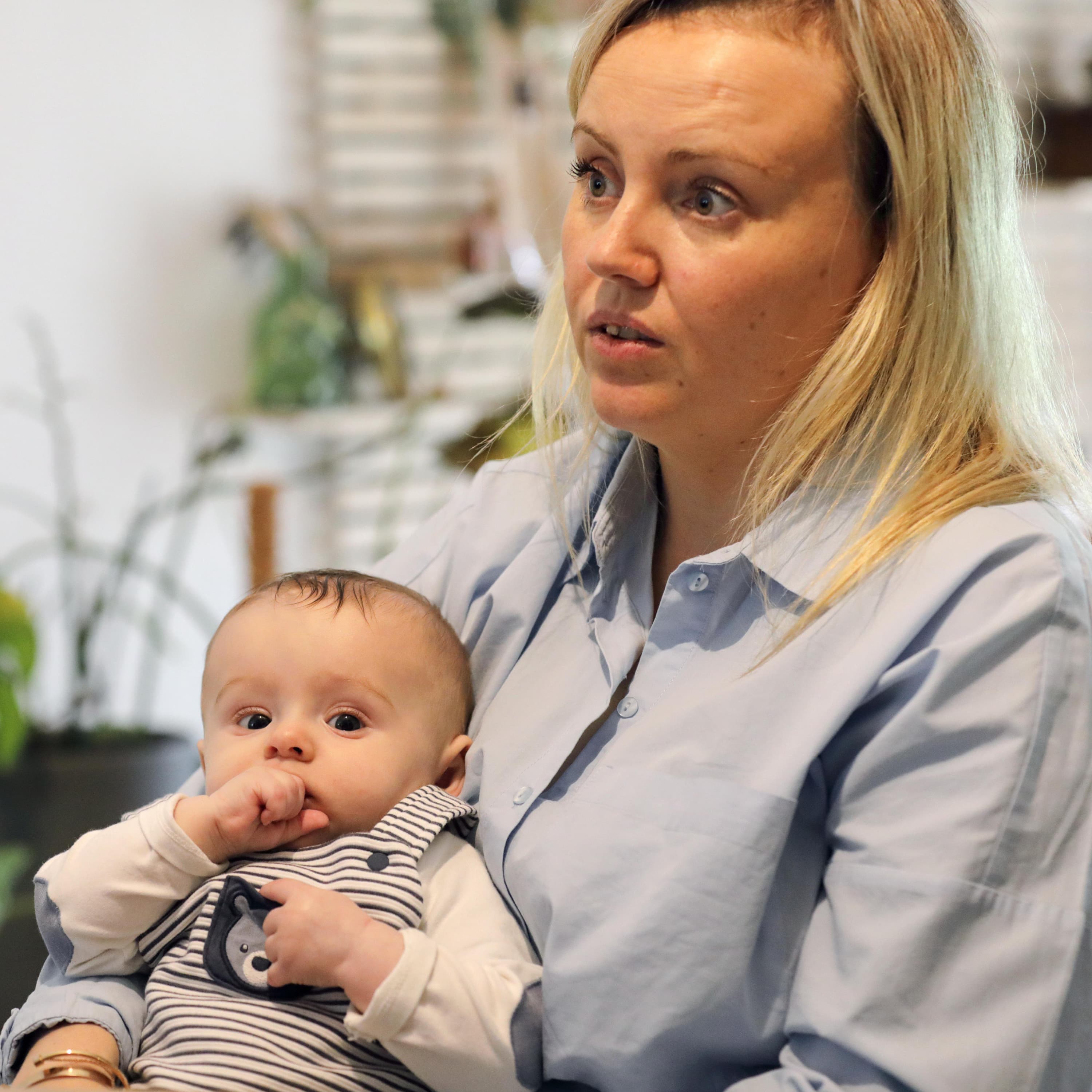
0:28So in April this year, on one quiet Saturday night, Sandra Wiedemann was sitting on her sofa and she was just watching Saturday night TV. This is Phoebe Weston, an environment reporter at The Guardian. She's talking about a woman she met recently, Sandra Wiedemann, who lives with her husband and baby out in the hills of Alsace in eastern France.
0:53And the news came on. And a story broke.
0:59Which essentially said that the water coming from her own tap could be poisoning her. It had felt until then like a safe place to raise a child Big houses with lovely gardens Backdropped by the wild Jura mountains Maybe, maybe you could ignore a report on the TV news But then came the letter And then three days later This letter dropped through her door and it dropped through the door of 60 ,000 other people living in the communes around St Louis, saying that their water was contaminated. It was from the local authority, telling her that chemicals she'd never even heard about before were poisoning her drinking water.
1:56Suddenly, every shower, every baby bath felt fraught with danger. Or every time she cleaned her teeth or even washed some salad. What's happening in this quiet corner of France is a preview of what could happen in a town or a village near you soon. As more is known about the danger of forever chemicals to human health. From The Guardian, I'm Helen Pidd. Today in Focus, a warning from the taps in Alsace.
2:28Phoebe Weston: Phoebe Weston, you're a biodiversity reporter at The Guardian. and you recently took a trip to Alsace in northeast France. Tell me where you went and what is it like as a place? So it's an area just near the border of Switzerland and Germany. I was in a commune called Saint-Louis and then around Saint-Louis there's a collection of 10 communes or villages which they kind of bleed into one another. It is quite suburban. These villages are 10 minutes from Basel in Switzerland. It's also quite an industrial area. There's a fair amount of factories around and there's an airport, but you can see the Dura mountains in the background.
3:07I spoke to people who drive over the border into Germany and go to the Black Forest. You know, these villages seem quiet and people are generally happy there and life is good. So I went there because at the end of April, 60 ,000 people living in these villages got a letter through their door saying that there was a water ban starting on May the 5th. And this is because the government had detected high levels of PFAS or forever chemicals in drinking water. They'd found them up to four times the limit, which is considered safe. And local authorities say that people who fall into the vulnerable category, kids that are less than two years old, women who are pregnant or breastfeeding, and people who have weak immune systems should not drink the tap water for the rest of the year.
3:59And the rest of the population were told that they can carry on drinking the water. Although I did speak to lots of people who were like, well, PFAS doesn't just impact those vulnerable people, it impacts everyone's bodies. What's unusual about this case is the fact that drinking water has been banned, and it's been banned for such a large number of people. And I've tried finding examples of a ban due to PFAS happening elsewhere in Europe at this scale, and I can't find anything.
4:28Phoebe Weston: And before we go any further, can you explain for us what are PFAS and why are they such a risk to human health? Well, we're reading more and more about PFAS and learning more about them and the health impacts they have. So we're talking about PFAS. This is a family of several thousand... ...put new limits on PFAS, also known as Forever Chemicals. ...notice-anticipated CDC report on how PFAS impacts humans. Half the tap water in the U.S. tested positive for PFAS. And PFAS stands for per - and polyfluoroalkyne substances. And this is a kind of umbrella term for thousands of chemicals that are really valuable because they are water-resistant, grease-resistant, heat-stain-resistant.
5:10so they're found in loads of things that you would use every day like non-stick frying pans is a well-known example. Even burned food won't stick to Teflon, so it's always easy to clean. Waterproof jackets, food packaging, electronics and what makes them so wonderful to consumers is what makes them so bad in the environment because they literally don't break down. This is the whole point of these chemicals And so when they get into the environment, they spread far and wide. And because these chemicals are so robust, they're really hard to get rid of. And we are increasingly learning they're causing health problems for humans and also for our ecosystems.
5:54Research from America found that 99 % of Americans have PFAS in their blood. And research from Europe has found similar figures. So they really are everywhere.
6:05Phoebe Weston: and you've said that there's sort of growing evidence that they are very bad for human health as well as for the ecosystem. What kind of conditions have PFAS been linked to? So when PFAS get inside the human body they disrupt hormones, they can cause inflammation and they bind proteins which means they can circulate around your body more easily and they've been linked to a range of health problems like high cholesterol, fertility issues, issues with the immune system, kidney disease, birth defects, and also cancers. So they impact a number of organs in the body. They also, as well as posing a threat to human health, PFAS threatens ecosystems because they build up in the tissue of organisms in the same way that they do in humans and can also cause the same hormonal issues, immune issues, fertility issues.
6:56So they are detrimental not just to humans but you know other wildlife as well.
7:08Phoebe Weston: Let's go back to France where you say that 60 ,000 residents received this presumably very alarming letter saying that such high levels of PFAS had been found in the drinking water and you said that particular groups are at risk so pregnant breastfeeding women, babies who are two or under how many people were told that they were in the at-risk group so 3 000 people have been told they're in the at-risk group and should stop drinking tap water right and each of those individuals will receive 80 euros to help cover the costs of using bottled water but obviously it did cause huge alarm when that letter came through and there was like a Covid-style rush to the supermarket to get bottled water.
7:53She's buying a lot of water. And I went down there and had a look around the main supermarket in St. Louis a month later, a month after this came in, and spoke to the guy who stacked shelves there. He'd been working in a supermarket for 30 years, and he was like, I have never seen anything like this. Wow, Clément has done 10 fois. Some brands are selling 20 times more water, and some 10 times. So clearly and understandably, lots of people are really worried about this. You can see why they're having to replace the water so often when you see how much people are buying. Like a whole trolley full.
8:31And we've heard already about one of the residents you met in St Louis, Sandra Wiedemann. She was the woman who got that dreadful shock when she turned on the TV news back in April. She's a 36-year-old mother of a six-month-old son called Com. And Sandra moved to the area a few years ago. She was understandably really upset when she found out about these restrictions. And she is within the vulnerable category. And since then, she has been drinking bottled water. Now, Sandra, like a number of people I spoke to, was also concerned about the impact that this could have been having on her health.
9:14So she said her health was fine before she moved to the area. And since she's come here, she has had two miscarriages and has been diagnosed with endometriosis. And she said she just wonders whether this is related to PFAS in the water. She can't prove it, but it's just a concern that she had. And we've been messaging on Facebook since. She says she's thinking about moving house. She's like, why would I live in an area that's poisoning me, essentially? It didn't make her feel safe. She moved to this really lovely, quaint village, nice place to raise a kid, feels safe. And now she basically doesn't feel safe.
10:01Phoebe Weston: Yeah, and even though she's among those who are getting this government grant towards buying bottled water, I mean, you use water for everything, don't you? If you're washing your hair, washing your baby, watering your plants, it would affect so much of daily life. Exactly, yeah. It's just drinking water that has been banned, but you are still coming into contact with contaminated water throughout the day.
10:35Phoebe Weston: you've told us that PFAS are basically unavoidable they are everywhere and probably in the blood of every person listening to this podcast when you were in Alsace you went to the source of the local contamination in Alsace tell me where is it well I stood by road and looked over a fence at the source of the contamination. And the centre of this crisis is the Basel-Malus-Freiburg Airport, which is a bit of a mouthful. And this airport serves passengers from France, Germany and Switzerland. There's more than 100 flights, leave it a day. So it's a busy airport. And it has essentially been using foam used in firefighting that contains PFAS since the 1970s up until 2017.
11:27Right. The reason why they use this specific foam is because it's good at fighting kerosene fires, so it's often used at airports. So what happens is that this foam leaks into the ground and then 15 metres below that you have groundwater. Groundwater is water that accumulates naturally under the ground, so the Dura Mountains are nearby. When it rains, the water comes off the mountains and fills up into the groundwater. and then this groundwater provides the drinking water for 60 ,000 people who live in the area. And what's happening is that the foam is seeping through the ground into the groundwater, which then goes into drinking water.
12:06And this is how the contamination is happening. And these villages are all within five to 10 minutes of the airport. It's quite a small area. It's quite a dense area. And in 2017, the airport stopped using these foams because they found firefighting foam that didn't contain PFAS, so they now use that. So this pollution in the drinking water continues because PFAS are very robust. They spend a long time in the natural environment, but the airport isn't actually using the foams anymore.
12:35Phoebe Weston: And so you went to the airport, you saw ground zero, I suppose, for this particular contamination. What are local residents doing about it? Well, they're pretty angry. And one of the angriest of them is Bruno Wallenschneider. How do you feel when you drink this contaminated water? Angry. Angry. He currently lives in a house which is five minutes away from the airport. Bruno is new. Yeah, it was built between... And he grew up in that house as well, so he really knows this area very well. He knows everyone.
13:19He's a really positive guy, and I think he just does a huge amount.
13:28He's really leading the fight for answers, not only from the government, but also he wants the airport to pay for this pollution.
13:43And he is head of this 200-strong residence association called ADRA. How many days a week do you work for ADRA? The Association of Defense of Riviera and the Airport of Balmeluz. It's now half-time. And ADRA was created to fight against the airport long before PFAS.
14:12Because local residents were annoyed about the number of flights and the sound pollution, air pollution associated with it.
14:26And since they found out about the PFAS contamination coming from the airport, this is their latest battleground. So Bruno wanted the local government to test the blood of people in the St. Louis area to better understand the potential health impacts that this PFAS contamination could be having. And they didn't do it, so he took it upon himself to organize this himself.
14:59and he sent off 10 samples of blood from ADRA members to a lab and the results show that the highest person out of those 10 members had 22 micrograms of PFAS per litre in their blood. The average of those people was 14.9 micrograms per litre.
15:25And the European Food Safety Authority says that long-term adverse health impacts are possible for people with levels above 6.9 micrograms per litre of blood. Yeah, that's twice, three times as high as the European Food Safety Authority would suggest is the danger zone when it comes to PFAS. I spoke to Biat Freermuth, a member of ADRA, and he is a retired chemist. The next community, there is a water well where they take out the drinking water for the whole community. He's trying to work out what happened when and why people weren't told sooner. So he's been going through government records dating back to 2015.
16:16And in this water well, there is also a test point for PFAS. Biat found that the government agency for groundwater, Sir L 'Agence Rameuse, first found records of PFAS in the water in 2015. 2015. They test PFAS about three times a year. But there was a spike in 2017. In 2017, they caught up a factor three almost. And as a chemist, Biat said something should have been done when they saw that spike in levels. and the act has emailed these government agencies to try and understand what happened and he still doesn't know. You can write emails from these guys, they don't respond.
17:00Phoebe Weston: So basically the authorities knew for at least eight years. They did, Helen, yeah, but it was like not the right authorities or, you know, it was like a water agency knew but some people I spoke to did think that there was basically a conspiracy going on and they all knew and that it was easier not to tell people. Bruno told me that before this, he said in France, we had faith in water, but that's broken. He said the authorities have lied to us. They've tricked us. And you said that one of Bruno's goals is to force Basel Airport to pay up for the damage that they have caused. But presumably, I mean, would they not say it was perfectly legal?
17:49Phoebe Weston: We had no idea that this was potentially so carcinogenic, so dangerous to human health and the environment. They say we were using certified foams like other airports, so we didn't pollute the environment in an unregulated way. And Bruno's saying, well, this is the source of the pollution. You may not have intentionally done it or there was no malice in it, but the result of your actions is that you have polluted the drinking water of thousands of people. And why should they pay for that? The airport should pay because this is the source of the pollution. Your position is consumers should not pay for this.
18:26It's not that fault. It's the airport. It's the airport's fault. They've got a 250 million euro investment coming. And basically the bill for putting in new water treatment systems and sorting this issue out is going to be around 20 million euros. And the airport has said that it will contribute. It's not clear how much, but the state is not pursuing any civil or criminal case against the airport. But this is where Bruno is saying that he is going to do it. And what's interesting about this case is that this case is the first time in France where a commercial airport is known to be the cause of pollution.
19:05And because these foams are so widely used, there are very likely to be others. So if Bruno is successful in this, it sets quite an interesting precedent. What happens when we get these PFAS spikes and who pays? There will be other people living around airports or other communities that may be able to make similar cases if Bruno is successful with this one.
19:29Coming up, how worried should you be about forever chemicals in your water?
19:46anyone who's watched the Hollywood movie Dark Waters will be aware of the Teflon scandal in the US in West Virginia where residents sued DuPont who invented and manufactured Teflon products for contaminating their water now the residents won and as part of the settlement a judge ordered DuPont to fund this massive study which looked at almost 70 ,000 people to try to examine whether there was a link between Teflon and various health conditions and it ultimately concluded that Teflon was linked to various cancers including testicular and kidney cancer, pregnancy-induced hypertension, thyroid disease, ulcerative colitis and high cholesterol.
20:27But in terms of this particular part of France, is there any conclusive evidence yet that the contaminated water has caused a spike in cancer or any other conditions. Obviously the blood tests that Bruno organised could be an indication that there's going to be adverse health impacts, but no. And I also spoke to a woman called Severine Maistre. The point, and my point is, I think that we are at the start of the story. Severine used to work in the clinical trials for drug development. So again, Again, it's quite this ADRA group has lots of retirees with brilliant expertise to look into this. I used to work in the pharma.
21:07We used to say if we are not looking for something, we can't see it. I mean, as far as we are looking for something, we see it. Basically, if you look for PFAS, you find them. So currently, we're talking about peaks here and there. But if you look harder, you're going to find these peaks everywhere. In a year, it will be 1 ,000, 10 ,000, and it will explode. So it will be everywhere in France. And not only in France, it will be the same in Germany. And she believes that it's likely that people in St. Louis are experiencing adverse health conditions. People are probably starting to be sick, but they are not literally sick.
21:49And she believes in 10 or so years to come, we will be able to link those health conditions to PFAS. but they can't at the moment. For the time being, honestly, we don't know. Do you think you will know? Yes, I'm sure.
22:06Phoebe Weston: So you said that in St Louis, the levels are among the highest in France, but if you broaden it out across Europe, is there PFAS everywhere? In 2023, this forever pollution map was created, which found there's more than 23 ,000 sites across Europe contaminated with PFAS that's either identified in water, soil or in living organisms. And at more than 2 ,300 of those, the levels were considered hazardous. So this level is 0.1 micrograms per litre, above which it's believed that there could be adverse health impacts. And this is, as of January, the EU is imposing this threshold of 0.1 micrograms into law.
22:50So what's happening in San Luis is likely to be repeated elsewhere. we know that there's a number of places that are breaching this limit. And once it's written into law, I think we're going to see more cases like we're seeing in Saint Louis elsewhere in Europe.
23:06Phoebe Weston: At the risk of sounding a bit parochial, what about us here in the UK? Should we be worried or should we prepare for a future drinking bottled water? So in the UK, there's no legal limit on the amount of PFAS present in drinking water. The guidance is the same as this EU guidance and 0.1 figure. but it's not in law so we should be worried about PFAS in the UK. There's loads of research suggesting that PFAS are widespread in UK waterways so this town called Bentham in North Yorkshire. This is about Bentham a town of 3 ,000 people and its biggest employer Angus Fire. It's home to this firefighting foam manufacturer called Angus Fire.
23:50The groundwater contains 1.2 million nanograms per litre of PFAS. The greatest PFAS pollution in the UK. Angus Fire denies ignoring advice and say they always operated within industry standards and stopped working with PFAS in 2022. And also we see spikes in PFAS around military bases and airports where things like firefighting foams are used. So they found levels of PFAS around Heathrow Airport. So generally speaking, If you are near to these industrial areas or military bases airports, you're probably more likely to be impacted, but they really are everywhere. But I hope we're not drinking bottled water.
24:35There's certainly a push for people to put this into law in the UK as well, although no indication that that currently is going to happen.
24:43Phoebe Weston: It's an irony that bottled water is the solution when we're all told that plastics are such a problem and microplastics in the water and in the ecosystem. Completely. And that was a point that so many people in St. Louis brought up. They were like, we don't want to drink bottled water. We've been told for a long time that bottled water is bad because of the environmental impact and also concerns about drinking water that's been sitting in plastic. So they were baffled and frustrated that that was now being presented as the solution. Some people were just coughing up more money for glass bottles because they didn't want to drink plastic.
25:18And I'm on this Facebook group with hundreds of people who are up in arms about this PFAS contamination and they're posting what they're doing. And people have put in quite complicated home water filtration systems and I'm not aware of how effective they are. But it's a story about how a public good, when it no longer works, people who can pay to protect themselves can. But those who can't have to just continue drinking the contaminated water.
25:46Phoebe Weston: Depressing, and it sounds like we're only at the beginning, certainly not even the middle or the end of this scandal. Phoebe, thank you very much. Thanks a lot, Helen.
25:59That was Phoebe Weston. You can read her report from Alsace at theguardian.com. And that's all for today. This episode was produced by Ivor Manley and Maxid Adnan. It was presented by me, Helen Pitt. Sound design was by Rudy Zagadlo and the executive producer was Sammy Kent We'll be back tomorrow
26:21This is The Guardian
Scan the code with your iPhone camera
Listen in the app.