Ask ChatGPT


 Today in Focus
1 Oct 2026 · 12m · 5 chapters
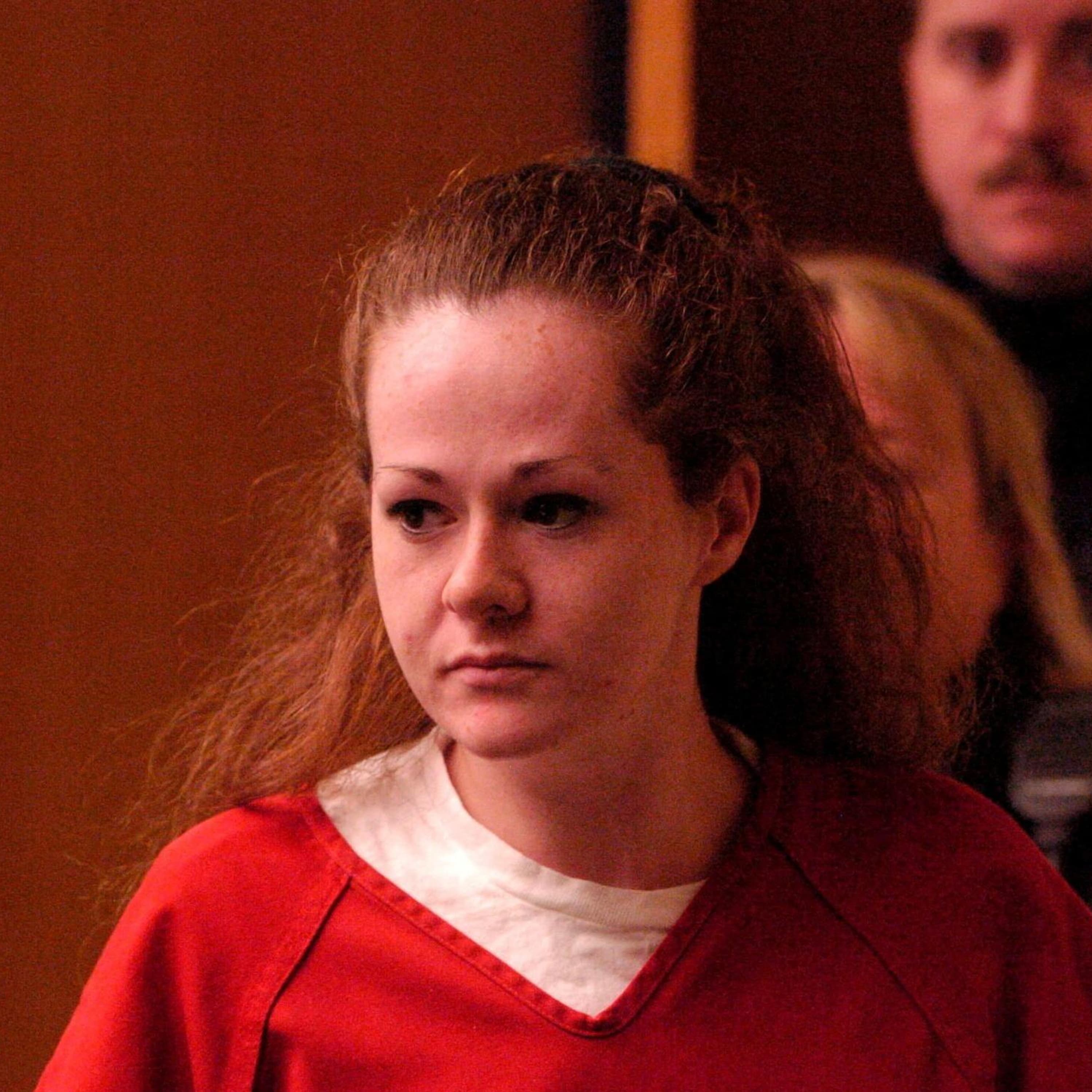
The Guardian’s “The Latest” discusses Krista Pike, a Tennessee woman on death row who survived two lethal-injection attempts, and broader claims about botched executions, trauma, and the death penalty.
Clive Stafford-Smith, a long-time US capital-punishment attorney who has represented clients facing execution; he says he has witnessed six executions, including two by lethal injection. He also references a doctor, Joel Zivett, involved in Pike’s case.
Lethal injections are frequently botched because execution teams aren’t doctors, IV access can fail (Pike had small veins), and drug supplies may be suboptimal/out of date. The state is trying to revive Pike to execute her again; Tennessee paused executions pending investigation. Stafford-Smith argues death penalty “catharsis” for victims is false and cites a study suggesting possible innocence in 13% of executions since 1977.
Pike’s case—first Tennessee woman to face death penalty in 200 years; she was 18 and convicted for killing Colleen Slemmer (19). Stafford-Smith highlights Pike’s childhood sexual abuse and Tennessee’s recent concession, plus Supreme Court stay/lift timing before the failed execution.
Written by AI. May contain mistakes.
Discussion about the botched lethal injection case of Krista Pike and its implications.
“From the Guardians today in Focus, this is The Latest with me, Lucy Hoff.”
Exploration of Krista Pike's traumatic past and the crime that led to her death sentence.
“And ironically, now they're trying to save her so they can kill her again.”
Details about the legal challenges and appeals surrounding Krista Pike's case.
“And there's a fundamental irony there that they would like to execute people who did the kind of thing that messed Krista up, but they want to execute Krista first.”
Discussion on the implications of Krista's case for the future of the death penalty in America.
“And so you mentioned that these lethal injections are some of the sort of worst or the least reliable methods of carrying out the death penalty, which is legal in around half of the states in America.”
Reflections on how the death penalty affects victims' families and societal views on justice.
“Well, it certainly brings the issue of the death penalty right front and centre of the discourse around the world, doesn't it?”

Get the gist, explore an idea or ask about something said.
 Claude
On Today in Focus, what are the key points of this episode?
Searching your listeningAutomatic transcript. May contain errors.
0:00This is The Guardian.
0:10It's pretty obvious when it's being botched and it's pretty frequent. There's a moderate chance that the poor woman will be brain damaged by what she went through. One of the things that really aggravates me is the government telling victims that somehow this is going to be a cathartic experience. I've been in the chamber with the victims who have watched someone die in front of us, and when they come out, their lives haven't got better. From the Guardians today in Focus, this is The Latest with me, Lucy Hoff. A woman in Tennessee, Krista Pike, has survived two doses of a lethal injection. Clive Stafford-Smith, you are an attorney who's been working against capital punishment and the death penalty in the US for many years now.
0:56what happened in this case because there were journalists and eyewitnesses present weren't there there were and you know i'm sad to say i've been there and done that i've had six of my clients over the years executed and two were by lethal injection and it's one of those things that a little understood that um the lethal injection is botched more than any other form of execution And that's what happened last night to Krista. And there are a couple of main reasons for that. One is that the people who do the execution are not doctors, because doctors are sworn by the Hippocratic oath. And so they have these pretty incompetent people doing it.
1:39We once did an experiment in the science museum about whether we could get veins by trying ourselves. And I would make a terrible executioner. And the problem for Krista is she had very small veins as they were all born. That's often true of people who have had the tragedy of too much drugs and drug abuse in their childhood. So that was the first. The second is that they don't have very good drugs because the drug companies really don't want their materials used to kill people. It's not good PR. And so now the states who want to execute are getting these very, very suboptimal drugs that are either out of date or don't work.
2:25And it seems last night was a bit of a combination and that actually the IV line that they hadn't got in very well popped out a couple of times. And so they didn't manage to kill her. And ironically, now they're trying to save her so they can kill her again. Yeah, it's absolutely harrowing. She was heard to be snoring about 40 minutes after the injections were given. I mean, Krista Pike is a name that will be very familiar to an American audience, perhaps known to people overseas. It was a very, very famous case or has been in the three decades since her conviction. Can you tell us about what her crimes were?
3:06Because she is the first woman to face the death penalty in Tennessee in 200 years. Yes, since 1819. And there have only ever been three women executed in Tennessee, and two of those were born to slavery. So with Krista, it had some pretty sad and shocking facts, as so many of these cases do. Krista was only 18 years old. She came from an immensely traumatized background. she thought this other woman was trying to steal her boyfriend and took her out and was teaching her a lesson, and it all got very much out of hand. And she ended up abusing this poor woman to death. Colleen Slemmer, we should say, was the name of the victim.
3:51Yeah, Colleen was just 19, and there's a great tragedy there too. One of the fundamental issues that's come out about Krista is that she was horrendously abused as a child. She was a victim of a lot of sexual abuse. And quite recently, the state of Tennessee conceded that, and that was the subject of last night's appeal. But Tennessee right now is trying to get the death penalty for people who abuse children at a young age, sexually abused, just as happened to Krista. And there's a fundamental irony there that they would like to execute people who did the kind of thing that messed Krista up, but they want to execute Krista first.
4:34Yeah, as is so often the case with female convicts, that they are disproportionately victims of very, very serious crimes themselves. Right up until literally the 11th hour, her legal team were challenging the death penalty on those grounds that she was a victim of such extreme abuse and trauma as a very, very young child. and up until her conviction at the age of 18. What happened there? Are those challenges still underway? No, and I was following it because some people I knew were very much involved in that. And again, I've been there, done that. It's really horribly traumatic. So what happened was the Sixth Circuit Court of Appeals stayed the case and the appeal went up to the Supreme Court.
5:25And sadly, under the current Supreme Court regime, where the six of the nine justices are very conservative, I've been looking into this recently. And there's only been one case in the last year when they haven't lifted the stay. And so I think those of us who were okay with this stuff knew that was probably going to happen. it didn't happen till very late in the day which was probably good frankly for for christa because when you're in that situation you don't want your plant sitting there waiting to die forever knowing it's going to happen but then they lifted it at the very last minute not quite the 12th hour one time i got a stay with 58 seconds left so these things happen um and and then they went ahead and tried to kill her and failed anyhow.
6:14Yeah, gosh. And so you mentioned that these lethal injections are some of the sort of worst or the least reliable methods of carrying out the death penalty, which is legal in around half of the states in America. Are these sorts of botched executions fairly common? Well, they are, unfortunately. And a big part of it is who gets to see them. I've had to watch them myself six times, and it's pretty obvious when it's being botched, and it's pretty frequent. But people have covered that up for a long time, and most executions, like last night, are happening towards midnight in the early hours it's going on and people do that in the dark because it is so often so terribly botched and they don't want the world watching live as it happens.
7:12I mean one would think as in the olden days that have public executions if you really think it's going to have any impact on people's lives. Yeah yeah it's absolutely shocking from a perspective here in the UK. Okay. I'm just wondering, so we're speaking at lunchtime on Thursday. What is Krista's current condition? Because she's in hospital but is still alive. And you mentioned there are efforts to revive her in order to kill her again. Well, she is in hospital. We haven't got the final report on it yet. Joel Zivett, who's a doctor who's been working on the case, is of the opinion that there's a moderate chance that the poor woman will be brain damaged.
7:54by what she went through. Now, if that's true, goodness knows she may be incompetent to be executed because if we destroy someone's mental state too much, that becomes the reality of it. If not, the Supreme Court president says that they can have another go. I'm not convinced they will in her case because the governor of Tennessee is pretty shocked by this and has stayed all executions for the rest of the year and is requiring a full investigation. And I'm not convinced they will have the, I don't know quite what I'd call it, the barbarism to go through with it again. I hope not. Yeah. Well, it certainly brings the issue of the death penalty right front and centre of the discourse around the world, doesn't it?
8:45I mean, you mentioned that in Tennessee, the death penalty is now paused, but it is still legal in 26 other states. But do you think this will revive a debate about this? I mean, the debate's been happening. And when I started doing death penalty cases over 40 years ago, there were 85 % of Americans favoured the death penalty. Now it's less than 50%. And I have this slightly naive hope that in my lifetime, They will abolish the death penalty, and I sincerely hope that's true. But there's lots of other places around the world they have it. I just came back the night before last from Baghdad, and there are 6 ,000 people on death row there.
9:29So there's a lot of work to do yet. And of course, there would be some that in this instance support the conviction and the death penalty that Krista Pike was given, not least the family of Colleen Slemmer, who described this as a mess and really wanted this to go through, given what happened to their daughter three decades ago. Yes. And of course, you have sympathy with the poor people who are the victim's relatives. And again, I've talked to the relatives in pretty much all of the cases, the 400 capital cases I've done over my career, because you can't just say you're against the death penalty, we're against people being murdered.
10:08But one of the things that really aggravates me is the government telling victims that somehow this is going to be a cathartic experience that'll make them feel better. And I've been in the chamber with the victims who have watched someone die in front of us, and when they come out, their lives haven't hasn't got better. And, you know, what we should be doing is trying to help people come to some sort of go through the grieving and come to some sort of understanding as to why this nightmare happened to them, while at the same time recognizing that we're currently batting, according to a study I'm in the middle of, 13 % of the people we've executed since 1977 were probably innocent.
10:53And they may think that's good enough for government work, but it's not good enough for most of us. And so it does nothing for the victims to know that the wrong person got executed for the death of their loved one. Oh, goodness. It is a horror. But Clive, thank you so much. Thank you. That's it for today. My huge thanks again to attorney Clive Stafford-Smith. You can keep up with all our coverage of this story over at theguardian.com. And I really recommend listening to our sister podcast, Stateside with Kyan Carter. Kyan Wright is speaking to Mahmoud Khalil, who was detained by ICE for his role in student protests at Columbia University and is still facing deportation under the Trump administration.
11:35Search for Stateside wherever you get your podcasts and you can also find them on YouTube. Thanks for listening to this episode of The Latest. Today I'm focused will be back in your feeds as usual tomorrow morning. The Latest will be back tomorrow night. This episode was produced by Angus Neal. The senior producer was Ryan Ramgobin. The executive producer was Zoe Hitch and it was presented by me, Lucy Hough.
12:01you