Ask ChatGPT


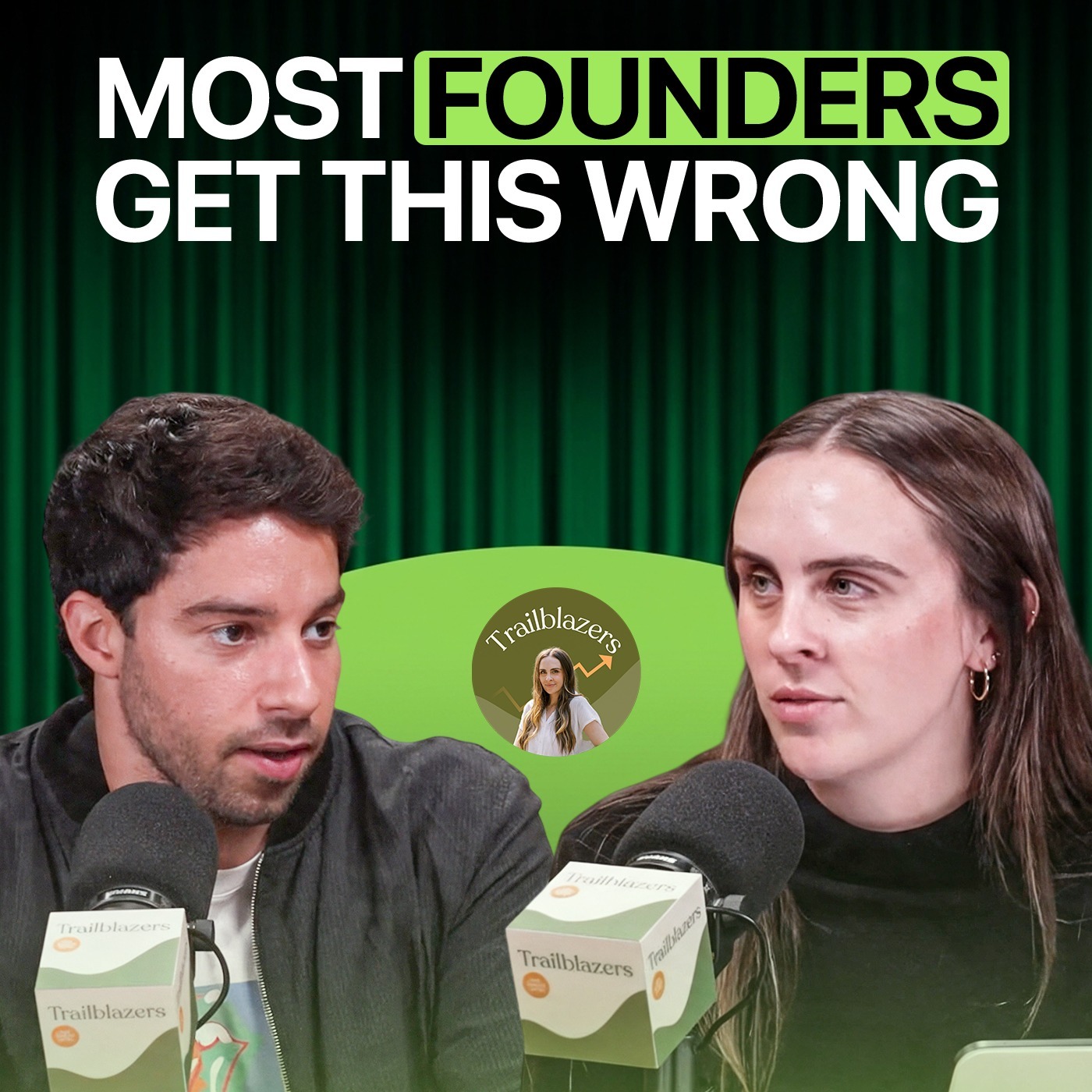
 Trailblazers by Erica Wenger
15 Sep 2026 · 1h 3m · 30 chapters

Episode topic: Brian Kelly (The Points Guy) explains how he built a travel/credit-card points media business from a personal blog into a 11M+ monthly visitor platform, how affiliate marketing mechanics drove early revenue, and how the model evolved with media training, SEO/AI search changes, and later angel investing.
Founder of The Points Guy; built it from a blog into a travel media empire with contributors, rankings, and an app. Regular on Good Morning America, CBS Mornings, CNBC, CNN, MSNBC, Bloomberg. Named Forbes #1 travel influencer; Out 100 honoree. Invests as an angel; backed Built (rent rewards) and others. Also involved in Rainbow Railroad, Peace Jam, Gabawi Peace Foundation, and Hedrick Martin Institute.
Affiliate earnings came from engaged audiences and signup-bonus conversions, not just ad clicks. New York Times coverage and media appearances accelerated SEO and traffic. Media training helps founders “bridge” back to key messages. AI search requires longer-term affiliate strategies beyond click-based payouts.
Starting as a $50 ticket points service; first affiliate month $5,000; $120k in one day from a British Airways offer; $28M sale to Bankrate with earn-out; later burnout then shift to spokesperson; Built investment during COVID; “seats.aero” and last-minute award inventory as “hacks.”
Written by AI. May contain mistakes.
Brian shares his professional journey and the hardest part of writing his New York Times bestseller.
“That might be my autobiography title one day.”
Brian discusses dealing with stress dreams and the significance of marketing his book.
“It's kind of like building like a giant business.”
Brian reveals how his admiration for Celine Dion motivated him to pursue his dreams and the impact she had on his journey.
“Okay, so we got to get into all of that.”
Brian narrates the early days of The Points Guy and how he transitioned from a side hustle.
“Talk to me about those first couple years.”
Brian discusses the rapid success of The Points Guy, including significant revenue milestones and the sale of his blog.
“$10 domain I bought myself, was doing myself.”
Brian shares his journey and emotional connection to The Points Guy.
“the performance, you know, within 120 employees.”
Brian discusses his transition to being a spokesperson and its implications.
“yeah, with red ventures, they said, good, like stop managing their people that can do that.”
Brian explains how affiliate marketing works and its significance to his business.
“And Built being my biggest one, I got in on that as a safe note.”
Brian emphasizes how media training enhanced his ability to connect with audiences.
“So in the beginning, when my audience was small, that was$5 ,000 in the first month.”
Brian highlights the benefits of being a media figure and its impact on business.
“media and being comfortable in front of the camera is a huge, a key message I have to founders is get media trained.”
Brian shares tips on how to find and benefit from media trainers.
“Yeah, there are professional media trainers out there, usually former journalists.”
Brian discusses how AI is reshaping affiliate marketing strategies.
“You crushed it with the media, so you went up in SEO.”
Brian reflects on the importance of adapting business models and leadership changes.
“Let's think about a holistic way of getting paid, not just on acquisition.”
Brian explains the benefits of having a strong executive team in place.
“And fun fact, she's got a venture background.”
Learn about the importance of collaboration and self-awareness in leadership.
“And I think at the end of the day, just you need to like the people you work with.”
Discover Brian Kelly's journey into investing and key lessons learned.
“obviously spend a lot of my time thinking about, and I want to get into the weeds with you and how you think about it.”
Understand how to identify and leverage valuable investment opportunities.
“growing, you know, 11 billion in less than five years.”
Explore the importance of maintaining relationships in business and investments.
“So yeah, I mean, I just now get incoming a ton of deals.”
Examine how to approach investments in unfamiliar industries.
“I want to talk about investing in things that are not connected to your brand.”
Identify the traits that make founders successful in their ventures.
“Easier said than done though, because when you're first getting started, everything sounds like a good idea.”
Learn why consistent communication between founders and investors is crucial.
“It's funny you make the comment about the most connected ones often don't need the help.”
Discover tools and hacks that help maximize travel rewards and bookings.
“I want to ask you a couple of quick points questions.”
Explore strategies for booking first class flights at a fraction of the cost.
“You're saying this to an investor who invests in tech.”
Understand how to optimize credit card points for travel benefits.
“Otherwise, I hate to break it to you, but planes, even business class, are public transportation.”
Hear insights on the importance of feedback and learning from leadership failures.
“Let's get to our Trailblazer trade-offs, okay?”
Discuss the potential future of AI and its impact on business.
“You know, it's not about like when you, how many times you fall, but it's how you get back up or whatever that line is.”
Learn about the importance of mindset and having support in management roles.
“Like getting a business coach that you can have get in the weeds and then deliver it and be open to receiving it is the biggest management gift that I've ever been given.”
Explore the pros and cons of bootstrapping compared to seeking venture capital.
“But, you know, if you can bootstrap, I think you can start a lot of companies, especially with AI now.”
Discover the challenges of travel planning and how AI can enhance the experience.
“You're a perfect case study in this because you sold your company for$28 million and you owned presumably all of it.”
Discuss the transformative potential of AI and its impact on personal finances.
“Tuscany was 90 and just roasting in July.”

Get the gist, explore an idea or ask about something said.
 Claude
On Trailblazers by Erica Wenger, what are the key points of this episode?
Searching your listeningAutomatic transcript. May contain errors.
0:00Erica Wenger: Today on the show, I am so excited to be joined by Brian Kelly. Brian is the founder of The Points Guy, the travel media platform he built from a personal blog into a genuine powerhouse. One that now reaches more than 11 million visitors a month with a full team of contributors, acclaimed rankings, and its own app. Dubbed by the New York Times, the man who turned credit card points into an empire, Brian turned a childhood obsession with miles and travel into an entire industry, and along the way, inspired millions of people to make their own travel dreams real. His expertise made him a regular on the country's top morning shows, Good Morning America, CBS Mornings, and Live with Kelly and Mark among them, as well as CNBC, CNN, MSNBC, and Bloomberg.
0:38Erica Wenger: He's been named Forbes' number one travel influencer, landed on Adweek's Young Influentials, and Travel and Leisure's Most Notable People in Travel, and is an Out 100 honoree. Brian is also a firm believer that travel can be a global force for good. He serves as a committee member for Rainbow Railroad, a global ambassador for Peace Jam, co-chair of the Gabawi Peace Foundation Leadership Council, and a board member of the Hedrick Martin Institute. More recently, he's become a prolific angel investor, backing more than a dozen companies, including Built, the rent rewards platform now valued in the billions.
1:07Erica Wenger: Let's welcome Brian. Thanks for having me. What an epic buy-up. I always say it's never a dull moment. That might be my autobiography title one day. Yeah, that's like on the tombstone. It was never a dull moment. Truly, though, every day is pretty fun, not going to lie. I love it. I love it. Well, before we get into the interview, I like to start everything with an icebreaker, okay? And it's not going to be a softball. It's going to get right to the heart of it, okay? We're going deep first. Okay. So when you look back on everything I just said, we think, you know, let's say 16 years ago-ish, you started The Points Guy.
1:38Erica Wenger: What has been the hardest part of your journey? It can be personal or professional. Professionally, the hardest thing I've ever done is write a book and have it be a New York Times bestseller. That is a hustle to sell books these days. There have been business luminaries that don't make the list. And it wasn't just about making the list, but from editing, writing, you know, I'm used to short firm blogging. So to write a book and then birth it to the world that, you know, market it was super, super challenging. Glad I did it, but I'm not rushing to do it again anytime soon. Yeah. I feel like once you've done it, you can kind of like ride that forever.
2:13Erica Wenger: Yeah. Like it's like a sword. You like 50 years and be like, I am a New York Times bestselling author. Yes. No one's going to gut check when that happened. Yeah, no one cares if you did it twice. Yeah, that's true. Yeah. That's true. It's kind of like building like a giant business. Like as long as you do it once, you're always considered like a successful founder. Thank you. I'll take it. Yeah. What was the hardest part of it? Was it the writing? Was it the like, you know, running on your tour to try to get a bunch of books sold? Well, I love marketing. So the marketing piece, once it was ready to go, I do tons and tons of media through the Points Guy, have deep relationships.
2:43So I had a crazy lineup of press and I love being on TV. I love evangelizing, especially for something that I believe strongly about. Like, you know, I had been doing the points guy for 15 years, but so many people are still clueless with points. I was like, I need to write a book so people can leave me alone at dinner parties. Like, read my book. Don't ask me a question until you read my book. But writing it was the hardest part. I have ADHD. I am a perfectionist. And that's the hardest thing where I wanted to go so deep on topics because I need to prove and drive it home. But you also have to be high level and keep a story going.
3:16So trying to find that balance. And I had so many stress dreams before launching it. Like no one's going to read it. It's going to get panned. It's going to get horrible reviews. So that was, you know, a really stressful time. Many sleepless nights. So I'm glad I did it though.
3:33Erica Wenger: Yeah, you should be really proud. I think the stress dreams thing is not talked about enough. Like that is when you know you're going something really challenging. Yes. I used to have dreams. I was going to give a presentation where I would like blank. Yep. I'd like blank in the middle of the thing. That stuff, that's like what keeps you up. because you're not sleeping and you have the fear running at night. I have a dream. I'm not a singer. That's like the one thing I hate. I hate karaoke and I have a dream that I'm like on American Idol and forget the lyrics. The worst. And then I'm like, I'm not a dancer either.
3:56I can't even dance to like, you know.
3:58Erica Wenger: But you're funny. You could like crack a joke. I could figure it out. Yeah. And you could be like, ha ha, we forgot. Or I'll just start singing Celine Dion, who's my favorite. Oh, me too. Do you have a favorite? I'm going to see her opening night of her return, like her residency in Paris. Wait, I might be crazy, but I didn't know she was coming back. Yeah, she's coming back September 12th. She's doing a six week run. So Celine Dion is the reason why I started the Points Guy. Okay, so we got to get into all of that. But I thought she was sick. She's sick, but she's back now. So I'm still, there's a piece of me that is like nervous whether it's going to happen.
4:28She was just on the cover of Harper's Bazaar. She's promoting it. So I'm going night number one. I actually had a dream last night about it that I went to the concert and she was doing a sound check and they let me in. And I experienced Celine Dion like dressed down doing a sound check.
4:41Erica Wenger: The dream. Yeah, but I was like far back and I needed to get closer and I didn't have tickets and I was stressed about getting kicked out. That's my brain for you. I love that. I love that you're uniquely you. Does Celine know that she is the origin story for The Points Guy? I've met her twice. So she, yeah, when I was starting The Points Guy, I was at Morgan Stanley and I started this blog. It started to take off. I knew I got so much joy from it, passion. I've been doing points since the 90s. And, you know, I come from a middle class background. I'm not in the entrepreneurship world. My parents are, my dad's successful.
5:14My mom's an amazing mom and homemaker and also has a career. But I didn't, I was not raised to become like a business guru. So when the points guy was taking off, I wanted to quit my job at Morgan Stanley. And everyone, my mom's like, what are you going to do for benefits? Like everyone was kind of like, sweetie, the world doesn't need another travel blog. You have to work in finance. And I was listening. I'm obsessed with Celine Dion. I was listening to her song, Taking Chances, through Times Square. And I'm in my business casual attire. And I feel like such a worker. Me working up seventh app, click, you know, my khakis.
5:50And I just was like, I don't, this isn't the life. I've always known I was going to be rich and successful. That has been a constant. I knew I would do it. And listening to Taking Chances, it's all about taking chances, jumping off the ledge, not knowing what's below. Had an out-of-body experience, went into the elevator, talked to my boss. I was like, I need to leave to do the points guide full time. And I thought she'd be really mad. She's like, good, you should. And if it doesn't work out, come back. And in my head, I had played out so many negative scenarios of she's going to kick me out. I'm going to lose my benefits that day.
6:22And it was just a lesson. Celine was the nudge that I needed. And when I met her, she was like, so was it a good decision? And her brother reads my blog, who's like her manager. He's like, Celine, he gets to travel around the world in first class. It was a good decision.
6:37Erica Wenger: And also, he's meeting you now. Like it clearly worked out. Yeah. If you're in a room with Celine Dion, it worked out. Yes. You know, it speaks for itself. So I met her a second time several years later and she's like, so was it still a good decision? She remembered. And she like sees, I know I'm six foot seven. I'm front row at her concerts. She like toys with me. So that's like my, she's my like guiding force. There's something in her music too. Like I really feel this way. I don't know what it is. My sister and my mom did a dance at her wedding to Because I Loved You. There's just something.
7:09Erica Wenger: Every song she sings, you make a life decision. It moves you so deeply. It's like there's drugs in it or something. It's so powerful. It's like, yeah. If you let it, it's not just about the love. People are like, oh, it's just corny love songs. But there's actually power behind it if you let it. 100%. Let it force you to quit your job and start a mini little empire. One thing I've learned talking to GPs on the show, and in my own experience as a GP, your back office is a signal. How fast you close deals, how clean the LP experience is, how your K-1s land, investors notice all of it. The more buttoned up you are, the more likely they are to give you more money in the future.
7:48Erica Wenger: That's why I want to talk about Sidecar. Sidecar is the SPV platform built for fund managers who want institutional quality execution without hiring a full back office team. They'll review your deal within hours, handle full secondary transaction support, and give you transparent pricing up front. No platform carry. Also, your LP relationships stay private, which is super important. It is not a marketplace. If you're running a professional fund, your infrastructure should look like it. Sidecar makes that possible without the overhead. Check them out at sidecar.io slash partners slash trailblazers.
8:19Erica Wenger: So let's go back to the beginning. You quit the job. You start the points guy. This is 16 years ago, which is insane. Talk to me about those first couple years. I know they were a while. You were growing like fast and there was a sale. It happened really early on in your journey, which is, by the way, I mean, unique and rare as is an understatement. Talk to me about that. The quick timeline. So I start the blog and actually the points guy wasn't even content at first. It was, I was a travel agency. So I was helping everyone I know book flights. And one day my ex-boyfriend was like, um, you should charge people for this because you're saving them thousands of dollars.
8:50Like they'd be glad to pay you. So I started the points guy as, you know, you would submit a form on my website, tell me what points you had. And I would charge you$50 a ticket. So it was just a side hustle. you know i would come home from morgan stanley i was in hr recruiting so not making a lot of money so you know a couple hundred bucks a thousand bucks a month on the side was like okay nice little uh you know side gig and i then started a friend of mine uh was a wordpress developer so he's like you have to blog you have to blog and um so he set me up with the wordpress site in june of 2010
9:24Erica Wenger: and lay the landscape of like blogging at this time blogging at this time there had been blogs throughout the 2000s. But I think 2010 was when fashion bloggers started getting invites to fashion shows. Like it was really the right time and place. This is pre-Instagram. Instagram wasn't really until 2012, I think is when I joined. Twitter was around. Facebook was really growing. So, and there was a community called Flyer Talk, which was, you know, pre-Reddit was not around, but Flyer Talk was the Reddit for frequent travelers. I had been in that community since 2004. But that community was so unorganized.
9:59Reddit's pretty organized today and pretty easy to, but Flyer Talk was coded. People gatekept all the frequent Flyer secrets. So I was like, well, I can translate to the masses, which they, of course, hated. But I saw business opportunity. You know, people working in finance and consulting, there was a huge group of affluent consumers that were still confused and too busy to take the years of time like I had. So let me translate that. I made no money. Google AdSense at the time was making$20 a month. But the turning point for me was in 2011, I got into affiliate marketing. So unbeknownst to me, I was blogging on a gold mine because my audience, though not huge, was rich, good credit scores.
10:41The Henry's, high earning, not rich yet. Millennials that the banks were obsessed with getting. We're outside of the financial crisis. They were all about getting the younger cardholders that would become their bread and butter. So right time, right place, right audience. And in affiliate marketing, my first month was$5 ,000. And then in April of 2010, I learned that leveraging press. So I had a New York Times article come out, which by the way, was in my spam inbox for two months. Seth Kugel of the New York Times, who was a frugal travel editor, had emailed me. So any entrepreneurs out there, check your spam inbox periodically because that email changed my life.
11:21He ended up writing a story because I changed his whole perspective on points in April of 2010. And that link back, and it wasn't in print. And I felt like such a failure because my parents were like, oh, sweetie, you didn't make it in the print. But the best thing they gave me was a digital link back from the New York Times to the points guy. In 2011, that was what Google, that was huge signal to SEO. So my site from that point on rocketed. And there was an affiliate offer for 100 ,000 points on a British Airways card that the day the New York Times article came and just sent thousands of people.
11:56So I made 120 grand that day. And so while Celine definitely helped push me over the edge, I felt this tidal wave that this could be a real, real business if I actually did it full time and wasn't doing it on the sidelines of my$70 ,000 a year HR job at a bank.
12:14Erica Wenger: Yeah, it's unbelievable. So yeah, so I made a million dollars in six months and then in April of 2011, so just about a year of revenue. I think I made$3 million in a year. Not too bad. A little better than 70K. I had no investors. $10 domain I bought myself, was doing myself. I had a couple of part-time employees in the beginning, no equity. And so bankrate this publicly traded company. A friend of a friend knew the CEO. I went in to meet with him. Zero plan, no deck, no business plan. I kind of just went in to meet him. And that night he sent me an email like, I want to buy your blog. And I'm like, what are they going to buy it for?
12:52It's been one year. And also I'm making 300 grand a month cash as a 27 year old jetting around the world. I'm like, I don't want to go back into corporate. But I and I didn't even have a team of bankers because I wasn't for sale. But I had a great tax attorney at Grimberg-Trorig, and he was my advisor. So I one-on-one negotiated the sale over six weeks. It was the craziest six weeks of my life. But I ended up with$28 million, three and a half year earn out. And I just thought I would be stupid to not take, I think it was 8 million cash on closing day. It's a 28-year-old. Then I was like, I'll always be able to, you know, I have enough money now that no matter what happens.
13:30I can, you know, I know I have the skills to do something. So, but I'm still here all these years later, which is even crazier. And in 2017, Bankrate got bought by a company called Red Ventures. Red Ventures still owns the points guy. I ran it till 2020. And in 2020, I had, I would just say a burnout, you know, being the face of the brand, going on TV, being behind the scenes, working with the parent company, flying back and forth to Charlotte, the performance, you know, within 120 employees. Like I never started the points guy to be a media executive managing creatives and the business side. So I definitely, I had a burnout moment where I was like, is this, it's been 10 years.
14:16Should I just leave? But I love what we do. I love, I mean, my job is the best job in the world. I walked down the street and people, you know, I was in Provincetown this past week, people come up to me and just say, you changed my life. I love you. Yeah. I got to visit my sick mother before she passed because of points. And I was doing this like, so that is what drives me. I didn't want to walk away from that because the mission of the points guy, I still am deeply, you know, moved by. And, um, yeah, with red ventures, they said, good, like stop managing their people that can do that. You're special.
14:47Do what you do best. Not everyone can go on with Gail King and shoot the shit and also get our brand in front of millions of people consistently. So that was a really cool moment. Once again, similar to leaving Morgan Stanley, where in my head, I was like, well, if I tell them I can't do this, then it's going to be leave, get out. But that was when I knew, I mean, I knew always I've been an asset to the company. And so, yeah, in 2020, I switched into just being the full-time evangelist spokesperson, which is what I love doing. And at that same exact time, pandemic kit. I'm not traveling. I also realized I had more time to focus on now investing my wealth.
15:25And I had a couple of interesting people knock on my door, including Ankur Jain, the CEO and founder of Built. And I thought, well, if this isn't an opportunity to take some of this time now that I have not managing this company. So I really started angel investing at that point and throughout the pandemic. And Built being my biggest one, I got in on that as a safe note. I got in before it was even called Built as a concept, put a bunch of money into it too, in addition to getting a lot of advisory shares. So yeah, Built's been life-changing.
15:57Erica Wenger: That's so epic. Let's maybe touch on, I want to jump back a bit and touch a little bit on affiliate revenues. People understand how you even got here. Because when you say you go from zero quitting the job to a$20 million sale, 300K cash a month, these numbers are insane to people. just quickly tell us how does that work? So there's a British Airways flight. Let's use that example. You open up a credit card. You get 100 ,000 points. How are you making money on that? Just tell everyone the mechanics there. The mechanics are this. So a lot of internet advertising is per view. You need to have millions of views and they're paying you pennies on the dollar.
16:31But that's how big publishers, they sell ad inventory. And whether you click and buy something or not, they're still getting paid. Well, I didn't have the traffic for that, But I had a really engaged audience that trusted my advice. So when I recommend an Amex Platinum card, if you get an Amex Platinum card, I'm just going to say back in 2011, it was maybe$400. So I would get paid zero if you clicked a link and didn't get the card, but you read my review. I got zero dollars. But if you clicked it and were like, oh, I want to go to the lounge. I didn't realize I could transfer to Air France for 60 ,000 points, which is the amount of the signup bonus.
17:03So I was able to market credit cards in a way and say, this is how I use it. And I'm six foot seven and I'm flying comfortably around the world for free on points from this credit card. By the end of the article, you're like, I want to get this. I get it now. Instead of just seeing a glossy ad in the Wall Street Journal, I think the credit card companies were realizing that bloggers could get their message across way better. So I would get paid, say,$400. So in the beginning, when my audience was small, that was$5 ,000 in the first month. But when I started to realize using my talents to speak to media to drive huge new audiences to the site, and at the same time, Google was realizing all these signals.
17:45After New York Times, I went on CNN. I went to media training. That's a huge tip I have for founders. Go to media training. Even if you don't want to be the main spokesman for your company, learning how to speak to media and being comfortable in front of the camera is a huge, a key message I have to founders is get media trained. Spend two days, go to professionals. They will put you in different settings like a radio interview, a TV interview.
18:12Erica Wenger: Trailblazers podcast. Yeah, podcast because you, I got millions of dollars worth of free advertising and continue to do so by leveraging media. Because when media, You get on the media. It's not just you talking about your company. You need to be entertaining. You need to give the audience and you need to be a good guest that they know if they have you back on, you're not going to be a waste of time. And you always have to give nuggets to the audience while speaking to the host. So it's challenging. It is hard. It is a skill you need to learn. But I learned that early on. And that was a game changer because not only was I getting new audiences for every article, every TV show, the brand awareness, which then also helped me go into Amex and Chase.
18:53Brian is now the media darling, right? So there's a whole strategy behind it. When you become a media star, social media star, your value goes up. So when budgets get cut, and this happened all the time, it still happens, and they need to get rid of publishers, they're going to think twice about the points guy because not only am I driving you really high quality customers, but I'm a voice in media. And often in the media, I'm asked, what are the best credit cards right now? So being powerful in media has a multitude of benefits to your business. And learning how to do that, I think, is a skill that will pay for itself many times over.
19:29Erica Wenger: Totally. And I think, especially because founder-led brands are becoming so much more important, even if you don't even want to be a creator, just knowing how to leave your company and storytell properly, what does it even mean to be media trained? Do you type in LinkedIn media trainer? Tell me how you find someone. Yeah, there are professional media trainers out there, usually former journalists. and they will put you through bootcamp. I went in Chicago for two days, did fake, and you have to watch yourself back. So they'll tell you your mannerisms, what you're doing, your umming, your eyeing, cut that.
19:59It's very, no one likes watching themselves, but it is the best because professionals will give you tips. Most importantly, I think when you start going on in media, you're worried about something bad happening or being asked a question you don't know the answer to. They'll teach you the art of bridging. So no matter what you're asked, you know how to always bring it back to something that you want. And you also have to get your points across. You have to use that time to your advantage as well, but not by being overly salesy because then people check out. It's a fine balance. So media training, go to official media training.
20:34It's not that expensive, but spend the time and push yourself.
20:39Erica Wenger: I love that. Let's talk about the messy middle of building an audience. You've got your newsletter in one tool, your podcast in another, your website hosted somewhere else entirely, and your community is scattered across multiple apps. You have to pay for four different subscriptions, and then they still take a cut of your earnings. Does that sound familiar? Beehive has just fixed this with their latest update. It's one platform where your newsletter, your podcast, your website, your paid subscriptions, and now your community can all live together. Everything talks to each other because it's finally under one roof.
21:09Erica Wenger: And here's the part creators like myself love most. when you earn on beehive you actually get to keep all of it so there's zero percent taken from your subscriptions zero percent from your digital products and publishers on the platform have actually made tens of millions in revenue and kept every single cent so if you're tired of stitching tools together and ready to actually own your audience go to beehive.com and use the code trailblazers30 for 30 off your first three months that's beehive b-e-e-h-i-i-v.com code Trailblazers 30. So I have a confession. I used to be a compulsive note taker. Every single meeting, I'd be half listening and half scribbling and still leaving with gaps on next steps, details that were shared and more.
21:47Erica Wenger: But Granola completely changed that for me. It's an AI powered notepad for meetings and it's connected to every single call on my calendar. Before each call, it shows me a well-researched brief so I knew who I'm meeting with and the full context going in. During the call, I jot down whatever stands out. Maybe it's a keyword or a decision I make and Granola handles the rest. It'll transcribe in the background on the call and then turns my rough notes into clean structured takeaways the second we hang up. There's also no bots joining calls. It just works in the background. I use Granola for several things.
22:17Erica Wenger: If I finish a meeting with the potential investor in my fund, I'll ask Granola, what could I have done better to get my point across? If I'm meeting with a founder I like, I'll ask Granola to point out any major green flags or maybe red flags I may not have already caught. For people with a lot of to meetings and decisions that require endless context, Granola is a game changer. Actually, we're running Granola on today's episode, so you can read the full show notes at granola.ai slash trailblazers. New users get three months completely free. That's granola.ai slash trailblazers. So jumping back to the affiliate revenue stuff, because I think this is in particular really interesting.
22:50Erica Wenger: You really hit a gold mine. You hit a gold mine. You crushed it with the media, so you went up in SEO. You made so much money, you get the sale. AI is changing a lot of things. AI is changing where we get our recommendations. It's changing SEO, as many call it AEO now, right? How are you thinking about affiliate revenue a little bit differently now? And I'd love to talk about how the business has evolved in terms of the business model since that crazy 2011 year, 2012 year, all the way to today. Yeah. So the business model is changing. You have to in media change. And by the way, when I got into affiliate marketing, no one else was really doing it in publishing.
23:23And I felt like it was almost scammy in a way. I'm like, will I be respected? Can I still go on the Today Show if I have a website where I'm making money? But eventually what ended up happening is all of the major, you know, vogue, everyone has affiliate marketing because that's where you make money with your engaged audience. So, but over the years, we want, you know, affiliate is a huge part of our revenue because, you know, once you rank, is the Amex Platinum card worth it? And you have that top one or even top six spot, that's just constant money that's coming in and you need to continue updating that post.
23:58But yeah, with AI now, certainly everything's changing, but there are ways, you know, most AI platforms pull in the points guy, but we're not getting paid on the click necessarily. So it's about working with advertisers saying, look, our content is going to fill AI results. We're not going to get paid on it. So let's think about a longer term strategy. Let's think about a holistic way of getting paid, not just on acquisition. Because by the way, you also need to retain all these cardholders. And so back in the day, the card issuer was really just focused on acquisition, getting as many new cardholders as possible.
24:31But now what we've seen in my book, How to Win a Travel, I call this the platinum age of travel. There's so much competition. Consumers can go from one issuer to another. The issuers now need to retain their customers. So we're working with issuers on retention content on brand partnerships we create we have a content studio where we can work with not just the credit card companies but travel we have i'm not the only talent at the company we have about 15 other spokespeople content creators so we can help brands shape their messaging whether it's through ai results search is still important youtube is still extremely important so the landscape is shifting but our value is not just from a blog post And that's why over the years we expanded beyond just a blog into technology, into content partnerships across social media.
25:24Erica Wenger: Yeah, well, that's how you've stayed relevant. I mean, it's very hard to build a media business 16 years ago and still be even more relevant actually today, which is super exciting. I can't speak numbers, but it's been very profitable always. Even in the deepest, darkest days of the recession, we maybe lost money a couple months, but immediately year over year. I mean, it's been a very profitable company, which I'm proud of, that it's evolving. And we have a new CEO, Liza Landsman, who is a seasoned executive in financial services. She helped sell Jet.com. She's got a big vision. She's recruiting top-tier talent.
26:03So it's fun to be a part of a team that we have experts across the board. And yeah, You've got to, just like a shark, you've got to keep moving or you die.
26:14Erica Wenger: I love that you brought up Liza. So I know Liza. She is the best. And fun fact, she's got a venture background. Yep. Right? Shout out to NEA. How did you convince Liza to join you? I will tell you, I saw her background. Someone wanted to introduce us. And I see this just killer background venture. And then all of a sudden, I see CEO of the Points guy. New job for her. And I'm thinking, huh, good for Brian. Good for the team. But that is a good get. Yeah, she's amazing. So tell me how you got her and why you wanted that profile. You know, and we interviewed tons and tons of people. And I really pushed our parent company, Red Ventures, a lot.
26:49We had a lot of internal candidates coming to run the points guy and they had their own marketing expertise. But I really pushed our CEO, Rick Elias. We got to get an external candidate. We can't just keep pulling from our internal playbook, which has served Red Ventures very well. But, you know, being we're a unique brand in the Red Ventures portfolio. We also, you know, we own Lonely Planet, Bankrate, and a bunch of other sites. But the Points Guy has, it's a brand. It is a household name that it just deserves a higher caliber leader. So, you know, we interviewed tons and tons of people. And when we found Liza, you know, she met everyone there.
27:31And I said to her, we're going to have fun. I mean, she is a growth executive. We're growing. But we needed more external people. and she has an incredible network. So I kind of laid out, I'm here to work. I keep signing deals to stay on with the points guy because they let me do what I love. I can also do my personal investing. So to me, it's the best of all worlds because I'm more valuable to the companies that I invest in being a part of the points guy. So I said, I'm going to stay. Let's build this and do it together. And I think at the end of the day, just you need to like the people you work with.
28:06Erica Wenger: And I'm sure they're grateful too that you are so self-aware of what you're good and bad at. Correct. I think that's so much of it. There's no competition. I do not want to run this company. I want to win. I'm a winner. And I want to work with smart people who know where the blind spots are in our organization. And she's immediately pulled in a bunch of people. She's worked with in the past in product, marketing. We have a new CMO, Jackie Stern, who's fabulous. So yeah, it's a powerful team. Times are shifting. It is challenging. But, you know, when you have a good executive team, anything is possible.
28:41So I'm excited for the next chapter of the Points Guide.
28:45Erica Wenger: And you've built a great foundation. You know, we can give credit where credit's due. Yeah, I'll take it. I love it. So let's talk about your personal investing, because this is something that I obviously spend a lot of my time thinking about, and I want to get into the weeds with you and how you think about it. So your COVID hits and you're like, OK, I get this built opportunity, but I want to do more investing even beyond that. What is the thesis? What was like the rationale? Was it I have this, you know, bucket of capital and I want to deploy it? Was it I have these opportunities and I want to find the capital?
29:10Erica Wenger: Tell me how it like came about. So the first investment I did actually was the morning brew. So yeah, Austin and Alex. Yeah, Austin and Alex DM me for I think a year. And I was so busy being CEO of the Points Guy, you know, just focused on growing my business. I'm making a lot of money there and I'm doing some brand deals on the side. So I'm like, I want cash. I don't want equity in this random startup. But finally, I think I put$30 ,000 in. But what I loved about it, I advised them. Meanwhile, I didn't even know to ask for advisory shares. And then even as what I learned a lot on that first investment, because their business started explode.
29:43And then I wasn't even able to put more money in because I didn't negotiate those terms. I was being too nice about it. And I was like, let me just, knowing what I know now and the value I can bring you and the doors I'll open you and how I supercharge your business, like you're going to let me put more in when that time comes. And you're also going to give me advisory because my name being attached to this and my instant network will bring immediate value. And you're just going to share a little bit. So I learned, so I 10X, I got a 300K payout, I think three years after my investment. I'm like, oh, wait a minute, this is really good.
30:17And I didn't even negotiate for the best term. So when Built came around, I negotiated for those terms, which is a blessing because Built has been growing, you know, 11 billion in less than five years. And I think we'll go way higher than that. I'm extraordinarily bullish on what the team is building there. And then after Bill, I mean, I am so lucky. I have an amazing deal flow inflowing. So especially after built and I really, because I believed in built and Ankur has said publicly, like built wouldn't be what it is today without me fully, full throttle, endorsing that, bringing the right influencers on board and getting media aware of just how incredible it is.
30:56I think once I really helped, was one of the people who helped built really take off in a very fast, then I think a lot of other companies now are like, wow, and Ankur will tell anyone, like, I don't do anything half-assed. I'm here to win. I want to, you know, I'm never going to get advisory and then go MIA. That is just not who I am as a person. So, yeah. And then, you know, Cardless is probably my second most growing investment, Cardless, which now Power's built, which is very interesting. We love when they work together.
31:27Erica Wenger: You're like strategic partnerships. Here I come. We love it. And it better work. Yeah, you can't screw over both teams. But Michael Spelfogel, CEO of Cardless, is a former intern of mine. And I'm like, God, I feel old. And funny enough, his step-grandmother is my first boss out of college who I stayed in in touch with. So learning to keep your network, never burning bridges, always keeping open with the people in your life. And I now know anyone that I know, even employees I didn't like, I never want to burn a bridge. And I just tell that to everyone because one single person, a person you sit next to on a flight can change your life.
32:02So yeah, I mean, I just now get incoming a ton of deals. I also now will speak at conferences like Dayer VC and I talk to people. I have a lot of friends kevin collarin i forget what venture of slow yeah i mean i forget which of our investments i met him through now we co-invest together we share deals so slow is like so up your alley too
32:23Erica Wenger: obsessed i mean kevin collarin is just so we had jack rains on the pod you know jack yeah the best yeah he also wrote a book yeah their etiquette they did i went to their etiquette you went to the etiquette thing yeah i spoke at it which was a hoot um so i'm just tickled by like the vc world Like having not come from, I was a Spanish major in college. I had a 2.8 at the University of Pittsburgh because I was so bored in class, but I was student body president. And like I said, I've always known I'm going to be rich. That was my biggest thing growing up. I had mood boards. I would call the Mercedes and get their glossy catalogs of all their cars.
32:57I had it on my wall. Like I just always knew I'd be successful, but I didn't academically, I knew that wasn't. But my charisma, what I learned in learning doing the student body president and in fraternity, I realized like I can engage with people and that's going to be how I get in and slowly but surely figured it out.
33:15Erica Wenger: Yeah. Well, that's what we learn in business, right? It's like EQ is just most of the equation. The 2026 primaries are taking shape. And if you have a strong opinion about how they're going to go, CalShe lets you actually trade on it. CalShe is the largest prediction market in the U.S., federally regulated and available in all 50 states. You're not betting against a house. You're trading against other people in a live market, taking yes or no positions on real world events. Elections, federal interest rates, economic data, you name it. Right now on CalShe, you can trade on the California governor race, Senate outcomes, and a dozen other major political storylines as they develop.
33:46Erica Wenger: As the probability shifts, you can buy in or out of your position in real time. It's a completely new asset class and honestly, one of the more interesting ways to have skin in the game on what you're already watching closely. Download the CalShe app, that's K-A-L-S-H-I, and use code TRAILBLAZERS to get$10 when you trade$10. Or go to calshe.com slash R slash TRAILBLAZERS to accept this$20 offer. With CalShe, you can trade on anything. 18 plus only. Restrictions and eligibility requirements apply. Event contract trading involves risk and may not be suitable for all investors. Prices, values, and available markets may differ from those mentioned.
34:18Erica Wenger: For more information, see calshe.com slash regulatory. Okay, so a quick experiment. Think about the last long message you typed. Could be a Slack thread, a prompt into Claude, maybe it's a detailed email. It probably took you 10 minutes, maybe even 20, to get it right. Now imagine you just said it out loud instead. That is the whole pitch for Whisperflow. Whisperflow is voice to text that actually works in every app on every device. You speak naturally and it outputs clean formatted text that's ready to send. No setup, no integrations, no fixing weird transcription errors. And it works across Gmail, Slack, Notion, Claude, iMessage, wherever you type.
34:51Erica Wenger: And unlike the built-in dictation on your phone, Whisperflow removes all filler words, mid-sentence corrections, and jargon. What I personally love about it too is that it perfectly matches my style. So I often type in all lowercase letters, so it'll type like that. I also say things like LMK, which means let me know in shorthand, and it'll auto adjust it from let me know to LMK. Like many of you, I also do a lot of brain dumping into LLMs. So instead of typing it all out, I actually just speak my windy train of thought into Whisperflow, which is infinitely faster than trying to get my fingers to keep up with the pace of my thoughts.
35:23Erica Wenger: If you do any serious writing or just send a lot of messages and emails, using Whisperflow is a no-brainer. Get one whole month of Whisperflow Pro completely free at ref.whisperflow.ai. slash trailblazers. I want to talk about investing in things that are not connected to your brand. So and how you think about that, because I mean, built in card lists, pretty obvious connection there. I would say Morning Brew, very obvious connection with newsletter. If you want to feel old for a quick aside, one of our podcast sponsors, one of my investments is Beehive, which is an early Morning Brew employee.
35:53Oh, interesting.
35:54Erica Wenger: So we can throw it all the way back for you. Everything's connected. But I want to ask you about like investing in things outside of things you know well? Do you say, I don't do that at all. I only want to get involved when I can be helpful and I have people to push it to. Or do you maybe do some healthcare, maybe do some climate, maybe do some vertical SaaS? How do you think about that? Investing outside of the areas you know well? In general, I try to stick to what I know. I've actually done two liquor brands. The first one failed miserably, Double Cross Vodka. That was actually my first investment years ago.
36:26It was a friend of a friend. The founder ended up dying, I think, in a DUI crash. It was horrible. and I lost, I don't know, 100K. And that was when I didn't have a lot of money. And I knew deep down I shouldn't be doing this.
36:36Erica Wenger: But it's also so ironic that you have a vodka brand and you die from it. I mean, that's very sad. So like doing all the consumer goods. Now, I have friends and VCs that are like, this company is growing. I recently invested in Sows because I love the product. Do you have bullet pitch, guys? Yes, I know Felix. So Felix Levine is a good friend. So Felix will email me like, look, this is gangbusters. It's just growing. So I'm like, I'll do 50K just because I believe. Yeah, it's good to diversify some. But in general, I want to be behind brands. I'm known for educating consumers on products that are going to make your life better.
37:08So if the product makes people's lives better, makes a confusing topic, like points are confusing to people, I can help explain so that you can live your life better, save money, travel better. So that's like sort of the consensus. I did recently invest in like a sleep tech bed company through Felix. and like, but those are not, you know, my core investments. I like to do things where my network is immediately valuable. But I'm very particular with putting my full weight behind something until the product's right. So yeah, I'm trying to actually slow down. Now I was saying yes to a lot of different things and I want to be focused and mindful.
37:52Erica Wenger: Totally. Easier said than done though, because when you're first getting started, everything sounds like a good idea. I know, I know. I've had my certainly my fair share of busts and most of the busts that I've had, I've known deep down. And some of them were in travel. But, you know, my billionaire mentor friend was so bullish on it. So I almost did it as a favor. And then, of course, it didn't work out. And so so those. But as we all know, you have to have the failures in order to gain the clarity. You know, listen to yourself again when you when you hear that voice being like this. I don't think this is great.
38:21Like, stop letting people hype you up. But admittedly, I don't have I do this myself. I mean, I have lawyers and I don't do tons of diligence, to be honest. Yeah. If I like the founder, that's a big thing for me, especially if the founder's exited. But I'm trying not to do consumer product. Certainly, as Marshall says, no celebrity beverage.
38:45Erica Wenger: It's tough. I mean, Alex Cooper just shut down Unwell. I know. Well, let's talk about calling water Unwell. Yeah. But yeah, it's a tough business. It's a really tough business. Is there a strategy around the number of deals you do in a year, how you source them, or is it really, it sounds like it's quite ad hoc. It's quite ad hoc. And it's kind of just like whatever you have and think is right. Yeah, I think each year now, I think if I can do six deals, I usually write, you know, between 50 and 150.
39:12And it's sort of like what I've been doing. But if anything great comes along. But I'm staying within the realm of loyalty, like the next generation of loyalty, because there is a big shift happening. You know, loyalty is more valuable than ever. You know, the loyalty programs are driving airlines to stay in business. Airlines that have not invested in loyalty are folding by and large. So credit cards are booming and more and more people have points but still don't know how to use them. So I'm very interested in there's Smart Media Technologies is a company that's a blockchain loyalty platform.
39:47I believe that there's so much people have so many miles and points sitting out there that go unused. used, which the banks don't love, by the way, because they need to account for them on their books. So finding ways to tokenize loyalty. So, you know, you've got 30 ,000 Southwest miles that you're never going to use. You don't want to redeem them for a gift card. But if you could tap to pay with those and get$200 spa treatment, like I know a lot of people would do that. Airline would love that because it's less than what a flight would be. So I'm trying to figure out that's really what I love.
40:20Erica Wenger: That's what you know well. It makes perfect sense. I want to ask you a question about the founders you like. Yes. And I'm preaching to the choir here, but from what I can tell from you and from your taste, Alex and Austin were very public-facing founders. Anker, extremely public-facing founder. You at TPG, extremely public-facing founder. What's your take on how important it is for the founder to be public-facing? And I say that because you know both worlds very well. You know creator media and you know business and making money. Do you have a take on that, on like prioritizing that? I don't think the founder has to be.
40:56You know, what I think Bilt has done very well is Bilt has tons of influencers they work with. They have partners, you know, people, true evangelists that spread the word. Not, you know, Encore being public and spreading the message is important. But I actually like founders that realize the need for to get creators on board. And that's like bullet pitch and what Felix and Brett are doing. I love that, you know, the creator economy is not going away. It's getting more influential. And the brands that realize their storytelling can come from many different ways. Like that's what I think is more impressive.
41:32so the founders that I like are charismatic and I want to see them building relationships with multiple you know what Ankur did with Built is he didn't just build relationships with the banks he got all of the real estate partners on board and he's now diving deep in hospitality and fitness and he's just ultimately connected so I love founders who are connected who aren't just coming to me being like introduce me to every single person and making me do all the heavy lifting encore knew tons of people um so yeah a connected a connected founder who realizes the importance of getting other people to tell the story is is my favorite kind also founders who are communicative i hate when people ghost me or you're i'm too busy well i'm busy too and i have 30 companies that i'm investing just a simple update goes a long way so i i dislike when founders go mia and you know, you leave your investors thinking the worst.
42:30Erica Wenger: A hundred percent. It's funny you make the comment about the most connected ones often don't need the help. And I think that's a misconception in venture. Like you're supposed to be so helpful and sure, you love helping these companies and the card list built integration is great. But in reality, a lot of the best founders don't need you. And so it's also balancing that. You want to be helpful, but they also often don't need you when they're doing their own thing. And I will say, though, when you need me, when I have good ideas, I want the founders to actually listen. don't ignore me um but also it's i'm not the ceo i'm not the founder i'm going to give you my advice if you choose not to take it so be it um but don't come complaining to me later when i was right which i hate to tell you when it comes to like consumers cards loyalty what's going to happen in the landscape i'm ultimately plugged in in that space i read like i'm on my own instagram all day i'm on twitter every day like i'm constantly digesting and i have lots of good inputs for data.
43:26So no one knows it more than you. I mean, I don't know.
43:30Erica Wenger: I'm kidding. I want to ask you a couple of quick points questions. OK, now that I have you here. So you spent 16 years teaching people how to hack the system. OK, what is the single greatest hack that you cannot believe still works? Well, I think what people don't use is technology. So, you know, when I started the points guy, you just had to be an expert. Airline websites sucked. They didn't work. Today, there are tools like PointMe, seats.arrow, and I am an investor in PointMe. I do love seats.arrow. Seats.arrow is amazing. It's different. What seats.arrow will do, so if you want to fly, let's say, Newark to Athens on Emirates business class, which there's tons of availability, today, you'd have to scroll on Emirates' website one by one.
44:10Seats.arrow can show you an entire year of routes. So whether that's Newark to Athens in business class, and you can click a button and see an entire year of availability and then you plan your trip around availability. You can set alerts. You can, you know, there's a tool for finding Lufthansa and Alnapan and JAL first class and, you know, really setting alerts for awards because airlines open up inventory nonstop. Another hack that people don't realize is last minute. I'm pretty last minute. I constantly change my plans, which is great because airlines open up crazy amounts of award inventory at the lowest saver levels last minute.
44:46I'm talking even one to seven days before the flight. So say you're always like, you know, people always say, well, I look in Delta's 500 ,000 miles every day. Well, often they'll actually drop it to 200 ,000 miles a day before. But if you don't know to look or set an alert on Seats.Aero, then you're paying the full price when you could just cancel and redeposit and rebook for a cheaper amount on a different airline. People don't realize most loyalty programs still let you cancel up until departure free of charge. So when you're redeeming miles, that's a fully refundable ticket. Keep looking for something better.
45:18So say you want to, you know, so the lower awards open up nonstop. There are sites out there called Thrifty Traveler. Thrifty Traveler is like$100 a year. And every day they send emails with drops of award inventory. I've booked so many trips. They'll send an email and they'll text you too. Amazing deal. Fiji is on sale with Fiji Air. Because the airlines, sometimes they just release tons of inventory. whether it's their systems recalibrating, but it only lasts like a day. So people, if you subscribe to Thrifty Traveler, plan your trips around where the amazing inventory is. There'll be Australia.
45:54Australia during New Year's was like 60 ,000 points. Crazy.
45:59Erica Wenger: And such a bucket list thing to do. Great. So paying$100 to have 365 days of deals, like even if you just choose one deal, that can... So letting other people do the hard work for you is my biggest tip. I love it. Leverage technology. You're saying this to an investor who invests in tech. So I'm like, I agree with you. What's the single greatest savings you've ever had on a booking? Well, I'm a first class whore. There I said it. I want to make a warning to everyone. If you're comfortable in the class of service you're currently flying, whether that's economy, premium economy, do not change that.
46:34Because once you start dabbling in the dark arts of business and international first class, It is so hard to go back and it will be an expensive lifelong habit. So I am all about first class and international first class is insanely expensive. Here's a tip that I, so Lufthansa, for example, doesn't let you redeem most miles for their first class, but they do let you upgrade. So I'm flying to Johannesburg from Frankfurt and it was$10 ,000 for first class. and even though I can expense that fundamentally like just it is against my dna to pay full price I would be a charlatan but what I did was I booked a three thousand dollar business class flight and instantly Lufthansa lets you see if there's an upgrade to first class so here's what you do you book a flight because all the airlines allow you to cancel within 24 hours with Lufthansa you book business ticket it and then see instantly for me today I did this right on the street before this podcast, I was like, fingers crossed,$1 ,800.
47:36So$3 ,000 ticket and$1 ,800 to get first class in the 747 on an 11-hour flight versus paying$10 ,000. Twice as much if I just would have booked it outright.
47:46Erica Wenger: Unbelievable. That's pretty good savings. And it happened just right outside. Right outside. 50 % off. More than 50%. Truly. Wow. Unbelievable. I will say when you walked in the door, and I'm sure you get this all the time, you're so tall. Freakishly tall. But in a wonderful way. And broad. My shoulders are so wide that I don't fit in most business class. Yeah. Like it's like, I wonder if, uh, you know, I I'm so small. Do I, do I dabble or do I just never, do I just never stick in, you know, stay in economy forever? Well, how many points do you have? Like I have so many, I have so many, but the problem, my problem, and this is the other thing I'd love to get your take on is I just use like Amex platinum and chase and I just rack up points and don't even look at it because I'm like busy.
48:25Erica Wenger: And you know, for people like that, they're not optimizing. They're not opening the new travel things. And by the way, if you have Amex point.me slash Amex is free for Amex cardholders and it'll tell you. Say you went in New York to Paris, it'll say, oh, transfer to Air Canada to book on United for 60 ,000 or Air France has it for 90 ,000. It'll just do it all for you. And it shows live availability. So you can just transfer and book it. Okay, I'm going to try Point Me. I haven't done that one yet. Point Me is excellent. Also, if you have Amex Platinum, I would get an Amex Gold card in tandem because a gold card is 4x on dining and groceries, which we spend a lot on.
48:59Amex is only 1x on everything and then 5x on uh airfare and some other travel but the gold card is like the amex
49:09Erica Wenger: favorite amongst points experts okay i've never even heard of the gold card wow you're really okay new every day learn something every day last question we'll get to our trade-offs you have beautiful children do they fly with you international first class and their nanny as well i'm like a big believer in we all fly together sometimes i'll be in first with one kid and like because you can't get availability and i'm not spending crazy amounts for them to fly in first but like the nanny will always will always be in at least business or first um and for the most part they're well behaved there was a korean air flight somewhat recently where my toddler just the problem with kids is when they get overtired they become demonic and he didn't want to sleep and started screaming and i did feel kind of guilty that we're in first class and people are paying a lot of money i did my best he did eventually go down but i like to say to people if you want to control the manifest on the plane you're flying on, you are more than welcome to charter.
50:04Otherwise, I hate to break it to you, but planes, even business class, are public transportation.
50:08Erica Wenger: And it's a good reminder for the people that always play first and never have to experience a crying baby. This is what real life is like. Yeah. And in general, just get a pair of headphones that are really good. Bose QC Ultras are amazing. Even if, you know, sometimes a crying baby can still get through them. But here's my tip. Put earplugs in your ears and then put noise canceling over it. Whoa, double whammy. Double whammy. Okay. I love it. We're full of tips today. Yes. So here's a problem I hear constantly from operators. The data exists. The answers are somewhere in there, but getting to them, actually pulling a useful insight without bugging the data team or learning SQL takes way too long or just does not happen.
50:46Erica Wenger: Hex solves that. Hex is an AI analytics platform where anyone on your team can ask data questions in plain English and get real answers backed by your actual business context. No SQL required. And the best part is that Hex shows you exactly how its data agents think, so you can see where the logic comes from and trust the output. The more your team uses it, the smarter it gets. From seed stage founders running lean to larger orgs dealing with serious data complexity, Hex is built to scale with you. It's game-changing for people like me who want to understand what's going on under the hood, but we are not the data experts.
51:17Erica Wenger: It's funny too, because I feel like every time I look over my operator friend's shoulders, whether they're in product or marketing or ops, they often have a Hex dashboard pulled up. It's a great tool. Trailblazers listeners get an exclusive 30-day free trial at hex.ai slash trailblazers. Let's get to our Trailblazer trade-offs, okay? Let me know what comes to mind first, book in hand or podcast in ears? Book in hand. Any favorites recently? So I do a lot of work with Nobel Peace Prize winners, and one of my favorite books is Lama Bowie, Mighty Be Our powers. It is about her journey from being a refugee to a Nobel Peace Prize winner.
51:50And it's just those stories. If you're hitting roadblocks in business, when you read the stories of Nobel Peace Prize winners who have defied odds to end civil wars, I believe everything's about perspective.
52:02Erica Wenger: I love that. It makes you grateful instantly. Instantly. It's a dose of reality. Yeah, it brings you back to earth. I love that. Hire slow or fire fast?
52:13I think higher slow is a smarter decision that's what I did I mean it's somewhere in between but I don't believe in in firing fast okay
52:25Erica Wenger: 10 small wins or one big moonshot one big moonshot oh tell me more yeah just go big or go home it's the story of my life like go for it love it because I feel like small little wins get people distracted from a big vision and companies that are just doing small things all the time. I don't think really ever achieve greatness. Or listen to Celine Dion. So you've got confidence to do a moonshot. Have an out-of-body experience and just start making irrational decisions. I love it. I love it. It's almost scary. Your whole life will go in flux if you listen to too much, Celine. Being early or being right?
53:00I think being early. Actually, no. in entrepreneurship. Early is not always better. I think coming correct later with the better strategy. I think so many startups that come later better end up winning.
53:15Erica Wenger: Okay. What's the best teacher, a mentor or a mistake? Mistake. Okay. Any that come to mind that you're like, learned a lot?
53:28is me realizing i was not a great people manager for years i kind of knew that but it wasn't until i really had a business coach come in and was like she interviewed all my employees and i had this oh shit moment like i'm not a good manager but no one would have been able to tell me that unless i had made those mistakes you know so i'm not a big believer in like self-help like trying to foresee life's problems. Like you just have to go with it and hopefully be aware enough when you make mistakes. Oh, wait a minute. I'm not supposed to be doing that.
54:00Erica Wenger: Yeah, but you seem like someone who is just so self-aware that like if someone confronts you like, hey, I think you're not good at this thing, people managing. Yeah. You'll hear it. I did. Which is so much of it. Unfortunately, for so many years, I didn't have that person to even tell me. Yeah. What made you want to get a coach in the first place? I think at that time, I was actively melting down, burning out. and the company red ventures was like hey you can have the executive coach that you know is our ceo's long-time advisor and she's going to come up and help you and sit down i'm like great let's do it and then she's like i'm going to interview all your employees and we sat down and she's like let's have and i remember exact time and place and it was like you know what's it the emperor has no clothes and i'm like oh wait a minute and then yeah it it was like yeah when your reality because i'm business business is blowing up we're popular everything's great and then when the reality hit of like wait a minute i am not being a great boss and this is not who i was raised my parent you know so and i give myself grace because there was tons of pressure to deliver grow and i'm managing my brand with a new parent company trying to that's a lot and most people will run away Yeah.
55:11Erica Wenger: And so I think it says so much. You know, it's not about like when you, how many times you fall, but it's how you get back up or whatever that line is. You were like, okay, I hear it. Now, how can I slot in? Right. Versus being like, I am a good people manager. Right. Or screw you all, I'm leaving. You know, I respect the grace you had through it. Well, I respect the grace that Red Ventures had for me. They knew it. And instead of just, you know, hey, we're taking this away today and making me feel like, hey, I might just want to get out of here, which maybe I would have done because I also was just burnout.
55:39that we came to it together through analysis and feedback. And I just think to founders out there, I implore you to figure out a way to get unsolicited, true feedback, not one-on-ones where your directs are telling you everything's great because there always will be that power divide and your directs have to pay for school and families and they're not going to ever really tell you the truth. Like getting a business coach that you can have get in the weeds and then deliver it and be open to receiving it is the biggest management gift that I've ever been given. Yeah. And it's not to say I won't return to management one day, but I will return to it with a complete different mindset.
56:21Erica Wenger: And with someone right by your side to help make sure you're doing it in the way that feels aligned, but also serving others. Yeah. I hear you. Is the future of AI abundance or chaos? I'm an eternal optimist. I think it's abundance. Okay. Love that. Killer product or loyal niche audience? Loyal niche audience. Tell me more. I think if you develop the audience that cares deeply for you, you can continuously evolve. And I think you've got to start with the loyal audience and giving them a lot like we did with Built. The Built product has changed. Built has made mistakes with product. But Built is still growing even through mistakes because the audience, which has been given so much value through their point system, through their promotions, that the company's still doing well.
57:10So I think so many companies sit and wait and try to evolve and have a perfect product versus just getting in the weeds, listening to their consumers, understanding the pain points in the consumer process and then building. Once you have people's trust, you can continue to evolve and completely change the product because throughout time, products are going to need to change anyway. So start with the audience, build the loyal, build trust and listen.
57:34Erica Wenger: Absolutely. I mean, you're the expert at that. That's why I was excited to hear your answer. Because, you know, if you didn't say that, I would be like, oh, something's wrong. Flaw. Yeah, exactly. VC or bootstrapping? I think bootstrapping. I spent$10. I know my case is very unique. But, you know, if you can bootstrap, I think you can start a lot of companies, especially with AI now. And being able to code and to map things out and do research. And like you can do a lot, as we're seeing with many, you know, billion dollar founders with one, two, three employees. So, of course, VC money is important when you need to scale and hit strike while the iron's hot.
58:14But I think people think VC money is so easy. Let's get it. But that is not the mindset I would do if I did it again.
58:20Erica Wenger: You know, it's funny. You're a perfect case study in this because you sold your company for$28 million and you owned presumably all of it. I can't tell you how many founders sell their company for billions and walk away with less than 20 billion. Yeah. I get served those on my algorithm all the time. The founders who break down the math. Yeah. It's insane. And also, yeah, you're not being able to pay yourself. You know, you're getting a founder salary and then not a great payout. Whereas if you would have just kept more equity and just paid yourself more. Yeah. Yeah. It's wild. It's wild. Okay.
58:54Erica Wenger: Never post on social media again. we're gonna like bundle writing into that okay never do like another blog post again and this is all connected to like you and the points guy or never raise another dollar ever again well never raise another dollar never we're profitable okay um and yeah we would tpg doesn't raise money we've never raised money what about for a future business um once again i mean if i can do it once i can do it twice let's create really cool content I like it. Let's, you know, give the people what they need. And travel, I still think there's a lot that needs to be done. So, you know, even elsewhere.
59:31Yeah, posting and content and owning an audience. I feel like there's so many ways to monetize that.
59:36Erica Wenger: I love that. What is the number one thing that is missing in travel right now? I think intelligent travel planning. You know, AI is helpful. I so believe in AI for travel. You know, I save fancy hotels. And I, when I went to Australia last year, wanted to plan stuff for my kids. I wanted to charter a boat. And it would be one day between every email with the time change with the concierge. Hot take. I think hotel concierges are wildly overrated in most cases. There are some hotels where they do it great. But I think the concierge model is distant. It's informal. It's the incentives are not aligned.
1:00:17And I think people think they're getting ripped off. So I think AI really needs to, and it is, you know, improving vastly and helping you plan a fully curated trip. But I also believe in like travel, luxury travel advisors are booming. So blending, you know, having a luxury travel advisor with the human touch with AI. But yeah, it's still a full-time job sometimes to plan. I want to do two weeks in Europe and understanding what the on the ground situation is, understanding weather, which, you know, hot take. EU summer is overrated. As someone who does it every year, I'm really rethinking that for next year.
1:00:54Erica Wenger: Was it unbearable this year? Unbearable. I was supposed to go to Paris. It was 99 degrees, which I was like, this is unsafe for children. So we canceled Paris, went to Portugal. Tuscany was 90 and just roasting in July. Did you go to Cannes this year? No. Because I've seen, do you see the canned pictures and videos of just melting everyone? It's not enjoyable. Yeah, I hear you. Okay, last and final question. Tied to kind of what we're saying here, but is AI overhyped or underhyped? I think it's underhyped. I think it's changed my life dramatically and I'm still not fully utilizing it. I'll just say from my personal side, having multiple investments, having traditional investments and having a fancy high net worth advisor, one of the biggest issues I've had in my life is calculating my net worth like Carta, a pulley cake uh and then all my investments i do a lot of you know some crypto private equity i had goldman like i my financial life you know it's doing well overall but it's impossible because my financial advisor doesn't want to touch this stuff card is not integrating with fidelity you know like so i think you know there is a new tool called arch which i just started using i was been a godsend.
1:02:11Erica Wenger: I literally was about to be like, I have a rec for you later. Ryan's company. He's amazing. Amazing. So I love Arch. And I signed on. I was like, can I invest, dude? You know? I know. They're crushing it. They're crushing it. But if you ever want to meet the founder, I can't trust you. But I think real life problems like AI has been dramatically improving my life. So I think we are just touching the surface of how AI can make our lives better. Absolutely. Brian, thank you for being here. Thanks for having me. This was super fun. I appreciate it. Safe travels. And you just start splurging on business class.
1:02:39Oh, I think I might have. You only live once.
1:02:41Erica Wenger: Like once in a while. You know what I mean? I got to. Yeah. Got to. Thanks so much for listening to the Trailblazers podcast. If you found this conversation valuable, please follow along on socials, share with a friend, leave a review, all the things. Most of all, please subscribe to our channel. It helps more contrarian builders find us and supports the work we're doing here. To learn more about what we're doing, you can visit trailblazerspod.com or my venture capital firm parkrangerscap.com or just follow along on socials at Erica underscore winger. Until next time, keep trailblazing.
In this episode, we sit down with Brian Kelly, founder of The Points Guy, to break down the business behind one of the most recognizable brands in travel and credit card rewards.
Brian shares how The Points Guy actually makes money, why affiliate marketing became such a powerful business model, and how he built trust with an audience that credit card companies wanted to reach. We also discuss his decision to sell the company for $28 million, the advantages of bootstrapping instead of raising venture capital, using media and SEO to grow a brand, and how his experience building TPG shaped the way he now approaches angel investing. Later, Brian shares practical strategies for maximizing credit card points, finding award availability, and booking business and first-class flights for significantly less.
If you're interested in entrepreneurship, affiliate marketing, online businesses, credit card rewards, travel hacking, angel investing, SEO, or building a valuable audience, this episode is for you.
This episode is supported by Sydecar, HEX, Wispr Flow, Granola, Beehiiv, Kalshi
Sydecar: https://sydecar.io/partners/trailblazers
beehiiv: https://www.beehiiv.com/splash?utm_campaign=trailblazers-2026-Partnership&utm_medium=podcast&utm_source=trailblazers&utm_term=podcast-1&stripe_campaign_code=TRAILBLAZERS30 (or use code “trailblazers30” for 30% OFF)
beehiiv: www.beehiiv.com/splash?utm_campaign=trailblazers-2026-Partnership&utm_medium=podcast&utm_source=trailblazers&utm_term=podcast-16&stripe_campaign_code=TRAILBLAZERS30 (or use code “trailblazers30” for 30% OFF)
Granola: http://granola.ai/trailblazers
*Granola is the official notetaker of Trailblazers. Checkout the episode shownotes here: https://notes.granola.ai/t/dad0c1f2-3590-415e-b2ee-13a7aee11e95-008umkv4
Kalshi: http://Kalshi.com/r/trailblazers
Wispr Flow: https://ref.wisprflow.ai/trailblazers
HEX: http://hex.ai/trailblazers
🎧 Listen on Apple Podcasts: https://apple.trailblazerspod.com
🎧 Listen on Spotify: https://spotify.trailblazerspod.com
📲 Follow on TikTok: https://tiktok.trailblazerspod.com
▶️ Subscribe on YouTube: https://youtube.trailblazerspod.com
📸 Follow on Instagram: https://instagram.trailblazerspod.com
🐘 Learn more about Park Rangers Capital: https://parkrangerscap.com
Trailblazers is your favorite tech + VC podcast, hosted by Erica Wenger (GP at Park Rangers Capital). Each week we sit down with founders, operators, and investors who’ve found conventional success in unconventional ways. New episodes every Tuesday.
Enjoy!
Timestamps:
00:00 - Intro
04:58 - How Céline Dion Inspired Brian to Quit His Job
08:18 - From a $50 Side Hustle to The Points Guy
11:06 - How a NYT Backlink Generated $120K in One Day
12:22 - Selling The Points Guy for $28 Million With No VC Funding
15:59 - How Credit Card Affiliate Revenue Really Works
17:51 - How Media Training Generated Millions in Free Exposure
22:45 - Evolving The Points Guy for the AI Era
28:49 - How Brian Kelly Became an Angel Investor
35:35 - Why Brian Won’t Invest in Celebrity Beverage Brands
40:24 - What Brian Looks for in Great Founders
43:32 - The Last-Minute Flight Hack That Can Save You Thousands
46:19 - Saving $5,000+ on Lufthansa First Class
51:31 - Trailblazer Trade-Offs