Ask ChatGPT


 Trailblazers by Erica Wenger
20 Oct 2026 · 52m · 16 chapters

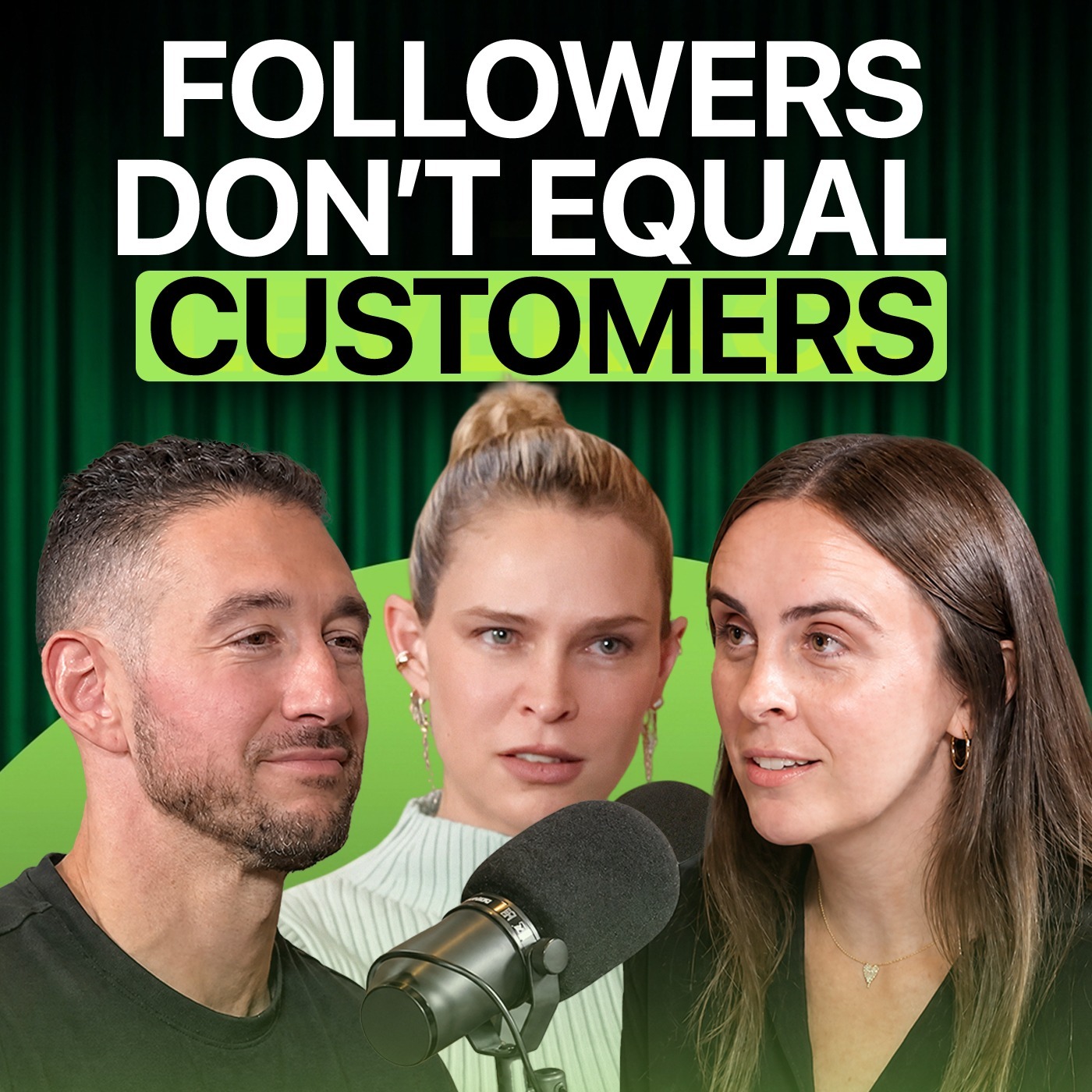
Michael Broukhim (Deep33) argues AI is a national security issue tied to “sovereign AI,” information warfare, and the geopolitics of frontier tech infrastructure (especially data centers). He connects AI capability to control by individuals/companies/governments and claims the U.S. must not hesitate due to misinformation and political cycles.
Michael Broukhim is a general partner at Deep33, a deep-tech venture fund backing quantum computing, advanced energy, AI infrastructure, and robotics. He co-founded FabFitFun and served as co-CEO, scaling it into a multi-category subscription platform. Earlier he co-founded Charlie (digital strategy; clients included Samuel L. Jackson, Pfizer, Golden Globes). He’s an angel investor in Ring, Reformation, Chow Now, and MeUndies. He taught media literacy at USC and is adjunct at USC’s School of Cinematic Arts.
AI deployment is industrial-scale and security-relevant; export controls can “compel” AI firms; data-center protests are framed as politically manipulated; Israel-U.S. tech partnership is a key innovation bridge.
FabFitFun supply-chain failures and layoffs in early 2020; Deep33’s Israel ecosystem thesis; Hut8 (Asher Ganut) as an AI/data-center investment; Anthropic/Claude and U.S. export controls; protests against data centers and alleged “poison” via antisemitism.
Written by AI. May contain mistakes.
Michael shares a significant personal experience that impacted his life.
“I don't know who wrote that, but it sounds amazing.”
Discussion on challenges before and after Michael's wedding, including business issues and family health crises.
“Up until that point, business for me and frankly, most of my professional life, academics, etc.”
Michael reflects on how a difficult year led to personal growth and realization.
“and I appreciate you sharing all that with me.”
Michael discusses how his view on control has changed after his experiences.
“because I had this kind of mythology about myself and very much had to kind of strip it down and build back, what do they say?”
Michael talks about putting God at the center of his life and the journey that led him there.
“this is feeling a lot less like a business podcast that's kind of how these things go okay yeah you're doing it right you're doing it right stay on track Good, good, good.”
Discussion on learning from history and the relevance of education in understanding current events.
“And, you know, this is the world we're living in now.”
Michael shares his motivations for teaching at USC and the importance of entrepreneurship education.
“I want to talk to you about just quickly your like academia stint.”
Learn how entrepreneurship can flourish in academic settings and the impact it has on students.
“He started a company initially called Cloud Kitchens.”
Discover the journey from running FabFitFun to becoming an investor and what inspired this shift.
“Tom, talk to me about your transition with FabFitFun into more of an investing role now.”
Unpack the unique focus of Deep 33 on hard tech and the concept of sovereign AI.
“I have to ask you the obvious question of FabFitFun is your background, which has a certain flavor.”
Learn about the challenges and innovations in creating new products and the concept of sovereign AI.
“It's about constantly rebuilding our supply chain and at scale delivering a different set of products four times a year.”
Explore the implications of developing AI superintelligence and the balance between innovation and ethical concerns.
“Hopefully it'll still be timely and it'll be interesting to see how this plays out.”
Understand how political changes affect investments in AI and the importance of proactive engagement.
“How do you think about changing political parties and elections?”
Discuss the fears surrounding AI among youth and how to channel these concerns into positive action.
“I want to ask you a sort of challenging question.”
Explore how geopolitical issues, particularly concerning Israel and data centers, impact American society.
“It's such an important ally, and it's such a massive potential tip factor in terms of America having influence in not only a key region of the world, but also technological supremacy in the world.”
Discuss the importance of media in geopolitics and the role of freedom-loving individuals globally.
“I think you should absolutely put something together on this and share it.”

Get the gist, explore an idea or ask about something said.
 Claude
On Trailblazers by Erica Wenger, what are the key points of this episode?
Searching your listeningAutomatic transcript. May contain errors.
0:00Erica Wenger: Today on the show, I am so excited to be joined by Michael Broukhim. Michael is a general partner at Deep33, the deep tech venture fund backing frontier founders across quantum computing, advanced energy, AI infrastructure and robotics, betting on the moment artificial intelligence moves from experiment to industrial scale deployment. But most people know Michael from what he built before venture. He co-founded FabFitFun and served as its co-CEO, growing it into one of the best-known multi-category subscription membership platforms in the country. That operator's resume shapes how he invests. Rather than writing checks and stepping back, Michael brings a joint venture mindset.
0:34Erica Wenger: Leaning on the audience building and membership expertise he honed at FabFitFun to help founders grow through real distribution partnerships and hands-on support. Before FabFitFun, he co-founded Charlie, a digital strategy firm whose clients range from Samuel L. Jackson to Pfizer to the Golden Globes. And he's been an active early stage angel with early bets on companies like Ring, Reformation, Chow Now, and MeUndies. Born and raised in Los Angeles to Iranian immigrant parents, Michael graduated magna cum laude from Harvard and earned his JD from Sanford Law. He's also spent time as an adjunct professor at USC's School of Cinematic Arts, teaching at the intersection of film and business.
1:07Erica Wenger: Let's welcome Michael.
1:09Michael Broukhim: Thanks for having me.
1:11Erica Wenger: What a bio. You've done a lot of things.
1:13Michael Broukhim: It sounded good. I don't know who wrote that, but it sounds amazing.
1:16Erica Wenger: It's a combination of Leia, a little bit of my assistant, a little bit of your team, you know, nice little amalgamation.
1:24Michael Broukhim: Well, thank you very much. Thanks for having me. Honored to be here.
1:27Erica Wenger: Awesome. Okay, so before we get into it, we like to start with an icebreaker. Okay. This is going to be a hardball question. Okay. What is a time in your life that almost broke you? It could be personal. It could be professional.
1:41Michael Broukhim: We're going straight into it.
1:43Erica Wenger: I like to get to the heart of it because I find if I start with a layup like tell me about your
1:48Michael Broukhim: childhood yeah no I I had a uh a crucible period so it's tell me more um you know uh it the the fulcrum of it was my wedding uh which which was the the best day of my life and you know and that um i'll describe it like this so my wedding was on march 7th 2020 which was the last weddings anyone who had their wedding that weekend it was the last weddings of the world so for me and my friends i was the me me and my wife we were the the closing party essentially and leading up to it and in the direct aftermath of it uh i truly felt like i was going through the birth canal and uh
2:42Michael Broukhim: the you know here's you have the the birth pains of coming out as a couple so so what happened uh And leading up to it, first, we had our first ever challenges in business. Up until that point, business for me and frankly, most of my professional life, academics, etc. was just up and to the right, like a straight line. i kind of looked at something and put my mind to it and it happened and we had our first you know we had some real supply chain issues that came up with the with the growth that we were having at fabfitfun a product fell out we couldn't put it in the box that had a bunch of ripple effects and before i knew it we had reached the point that about a month before my wedding we had to we had to fire lay off 100 people uh this was a significant chunk of the company
3:36Erica Wenger: and so this was pre-covid so this is like february of 2020 this is february where covid
3:41Michael Broukhim: wasn't starting yeah it was like a it was a rumor and people were aware of it and your smarter friends were already planning and prepping and so we had this overlay of covid coming I had my first kind of business hiccups. One small other thing, my father-in-law two weeks before tore his Achilles. So walking down the aisle became a question. We had the wedding, which was a beautiful day. And then six weeks after it, my brother was diagnosed with cancer. my brother is my best friend we we started fabfitfun together we were co-ceos and so i had this strong sense where i remember the question that kept coming up for me in 2020 was essentially who's in control because i you know up until that point i i said i'm i'm in control if you know i have agency i can make things happen and still live life with a lot of agency but realize that between the kind of the the business challenges the supply chain hiccups and then obviously and health is kind of the ultimate decider in that where you're like it's totally out of my hands and again my brother my co-founder my best friend we're 13 months apart we grew up very very close and you know not only was he out of commission but he was out in a pretty harsh and substantial way to go through six months of chemo and it was a It was a very, very difficult time.
5:20Michael Broukhim: And you have the overlay of COVID over all of that. So we were, and it was my first year of marriage too. So we were in this hyper, hyper, hyper isolated situation. We had to look at my brother receiving treatments through a glass window because we couldn't go in.
5:39Erica Wenger: And he's so immunocompromised too with COVID. It's like in particular, he has to be isolated.
5:44Michael Broukhim: And then maximal confusion, right? Like you don't know what's the interaction between these two. You know, there's obviously established research around cancer and going through it, et cetera. But how does COVID impact it? And how do you have to conduct yourself in that environment? Already people are isolating themselves. We were, I mean, we had the most lockdown quarantine of anyone. So that year was a really transformative year for me.
6:12Erica Wenger: It sounds really, really, really, really hard. and I appreciate you sharing all that with me. Most importantly, how is your brother doing now?
6:19Michael Broukhim: Thank God he's 100%. He's doing great.
6:24Michael Broukhim: And I look back now and I say that was the best year of my life because I had this kind of mythology about myself and very much had to kind of strip it down and build back, what do they say? Build back better, kind of brick by brick, right? Yeah.
6:42Erica Wenger: What did you realize about who has control And like, what do you do now differently? Because I mean, you look at your resume, it's like the Harvard, Stanford, the starting two successful businesses. You get to work with your family. You found the love of your life. Like all these things sound good and incredible. What is the thing now that you operate differently with after that crazy year?
7:04Michael Broukhim: I really, you know, this is not something that is normally maybe, maybe not language that people use on a business podcast, but I think I put kind of God at the center of my life. and it wasn't an idea that i had grown up with uh i felt connected to this idea of a higher power but in a more real sense you know i i'm i'm jewish and and uh i i had a the the let's call it like the the cultural wrappings of judaism very present in my life but the idea of actually thinking about what does it mean to be in service of a of a higher authority and and to rely on that higher authority to to kind of be your your partner in your endeavors your your life uh creation that wasn't something that had i had never really put much thought into it there were little uh breadcrumbs leading up to that my my my wife actually was a a history major at harvard we went on our first date in 2017.
8:05Michael Broukhim: this is feeling a lot less like a business podcast that's kind of how these things go okay yeah you're doing it right you're doing it right stay on track
8:11Erica Wenger: Good, good, good. So we got to get to the root of the human, you know?
8:14Michael Broukhim: So we went on our first date in 2017. And at that point, she was actually a undergrad at Harvard. And I had graduated about a decade before.
8:28Erica Wenger: So you did not meet in school.
8:29Michael Broukhim: We met on a date. We met on a dating app.
8:31Erica Wenger: Love it.
8:32Michael Broukhim: And she was telling me how much she hated Harvard. And I was supremely confused. I said, you know, I loved it. What's going on there? And she said, well, I started taking this history class, Intro to the Middle East, and the professor was telling us how the Middle East was this peaceful place, and then a bunch of apartheid colonialists showed up and created the apartheid state of Israel. And Charlotte is a New York state debate champion, so she went into it with the professor and eventually was given a bad grade. and encouraged to leave the department and left and became a comparative religion major in the divinity school.
9:16And so she had started kind of exploring religion, exploring, studying
9:21Michael Broukhim: with some rabbis, but also she was kind of became an expert in early medieval Christianity. And so we had this kind of like this kind of breadcrumb backdrop of these ideas floating around. And so that was something to kind of grab onto. Yeah.
9:38Erica Wenger: So one thing I've learned talking to GPs on the show, and in my own experience as a GP, is that your back office is a signal. How fast you close deals, how clean the LP experience is, how your K-1s land. Investors notice all of it. The more buttoned up you are, the more likely they are to give you more money in the future. That's why I want to talk about Sidecar. Sidecar is the SPV platform built for fund managers who want institutional quality execution without hiring a full back office team. They'll review your deal within hours, handle full secondary transaction support, and give you transparent pricing upfront, no platform carry.
10:11Erica Wenger: Also, your LP relationships stay private, which is super important. This is not a marketplace. If you're running a professional fund, your infrastructure should look like it. Sidecar makes that possible without the overhead. Check them out at sidecar.io slash partners slash trailblazers. That's S-Y-D-E-C-A-R dot io slash partners slash trailblazers and it sounds like she's someone too who was so educated in the history like i think that that's something that has had to become more relevant or even should become more relevant now is learning the actual history learning the things that have happened uh so that you are rooted in you know truth as much as you can be when you have these kinds of conversations obviously everyone has their own version of truth um but i think it's really powerful to study history and study where religions come from so that when we do have conversations that might be a little bit more challenging or very debate heavy sounds like in her case it comes from a place of knowledge versus emotion yes and it's more complicated than ever
11:14Michael Broukhim: because you could study and you could go to a great university like harvard and still the person that's teaching you might be totally wrong. And that was actually her experience. And, you know, this is the world we're living in now. We're living in a world of, you know, you could call them hoaxes or information ops or psyops, but it's a real thing. It's something that I went deep down the rabbit hole and eventually taught a class at USC on kind of media literacy because we have an open information system in the United States, which, you know, where the biggest privileges in the world is that we have freedom of speech.
11:52Michael Broukhim: But the other side of the coin of freedom of speech is not only are we free to say anything, but people can blend in and say anything. And we have effectively a digitally borderless environment. And there's a lot of people who'd like to see the United States not do well. There's a lot of people who would like to see you know capitalism struggle and one great very effective way of doing that is kind of undermining our our information security our information ecosystem and i think that's a lot of you know these kind of experiences i've talked a little bit about uh sent me down a rabbit hole of learning about that environment and And, you know, but definitely part of my growth in the last five, 10 years.
12:46Erica Wenger: Yeah. I mean, me as well. I see the same things. And I think that's the that is the struggle when things are borderless. Like we get a lot of sometimes we get a lot of great technology, whether it's social media or it's cryptocurrency, which is a whole other conversation. But the downside is that it is so borderless and it is so open. I want to talk to you about just quickly your like academia stint. So I see the USC teaching. I think I personally have struggled a lot with academia, not always feeling so aligned with my point of view and feeling similarly to probably how your wife feels that there's a lot of people that maybe I don't agree with that are in charge in a lot of these universities.
13:24Erica Wenger: But you said, I'm going to go back anyway. I'm going to teach a class. I'm going to like meet this issue where it's at. Tell me what made you want to go back and teach at USC. And I see that it's under the film school. Yeah. Which is an interesting choice. Yes. I would have obviously expect this to be like a martial class, business class. Tell me a little bit more about that decision.
13:46Michael Broukhim: So one of my best friends in the world, my childhood best friend, got involved in the film school. He asked me to come and guest lecture initially in a class that he was teaching. And eventually we kind of hit it off and built it from there. Is he in entertainment for his career or what's his background? No, he's an entrepreneur. Oh, he's an entrepreneur too. Yeah, he's an entrepreneur. his name's Diego Berdakin. He started a company initially called Cloud Kitchens. It's now called Adams. He's his partner. Maybe I've heard of it. Let me think. Exactly. Very small company.
14:19Erica Wenger: Yeah.
14:19Michael Broukhim: But stepping back for a second, I think he, myself, a handful of others, I think we look at the world as something that we want to project great things into. And entrepreneurship is one form of that. Working within institutions is something that's inescapable. I mean, these institutions kind of shape the world, whether it's USC or Harvard or wherever else. And so he saw there was this white space essentially for teaching initially just genuine entrepreneurship to kids. that the you know usc is known for a lot of things which has quite an incredible film school these kids are very very talented so there was both a push and pull the the film school said we have a lot of kids graduating they don't know what to do other than to go into the mail room at wme uh and become kind of go up this this agency track and meanwhile there's all these new platforms there's youtube and instagram and x and there's all this entrepreneurship that's possible in this new media environment.
15:22Michael Broukhim: And so they wanted a class on entrepreneurship in the film school. And Diego and I brought that to the table. Again, we think of ourselves as almost kind of part of this rebel alliance where we're injecting. We had good academic experiences. I mentioned I loved Harvard, but I wish there was a class like the one we taught, which we were bringing in the Travis Kalanick's of the world, Evan Spiegel, and other folks who were in LA at the time and doing guest lectures and just telling authentic stories about how they built their companies. Now this is, you know, we're in the age of podcasts, but when we started teaching this, this was like very inaccessible.
16:01Michael Broukhim: And there's also versions of stories that people will tell behind a closed door under kind of a confidential environment where you get this kind of unvarnished truth. And I think our students really benefited from that. And we actually have some pretty insane success stories uh one of my alums is running a 12 billion dollar public company already which company a company called hot eight okay i think i've heard of it yeah yeah yeah yeah so it's an ai infrastructure company okay uh data center builder did you guys invest oh i i did
16:33Erica Wenger: invest you did okay okay because it's also like a nice pipeline for deal flow you know like your
16:37Michael Broukhim: best investment it wasn't what i was it wasn't what i was expecting but also yeah that's one the beautiful things about being in a university environment having really top students and talent you know young people have to figure out what to do in life and often the best opportunities are at the frontier and this gets you know to my kind of investing thesis in general um but you want to go where where the to the edge of innovation that's where the most interesting things are happening and certainly students have the the most motivation to go find what those edges are
17:08Erica Wenger: and they're in an environment where that's all anyone is doing you know they don't have the distractions often of life it's just like let's do the passion let's do the school let's just obsess over the things we like um so i want to talk about on the business side fabfitfund had some struggles in early 2020 like you had mentioned supply chain stuff i mean i actually randomly was building a subscription business during that time too so i i'm like right there with you i'm like i get it it was really hard um there were a lot of holdups at the ports and uh A lot of everything was in flux. Tom, talk to me about your transition with FabFitFun into more of an investing role now.
17:44Erica Wenger: So I know you invested a lot of your family office. Now you have a new venture fund, which we'll get into. But at what point did you maybe step back a little bit from the day-to-day of FabFitFun and put on your investing hat a little bit more?
17:56Michael Broukhim: So the roots of the investing was not even a step back. It was kind of a step in, right? We would see just incredible opportunities all the time in innovative entrepreneurs, etc. And we did quite a bit of investing through FabFitFun and taking equity stakes in brands and helping them with joint ventures, etc. So that was kind of one natural extension. Eventually, there were things that really sat outside of the lines at FabFitFun. Our payment processor was Stripe. I had a good friend who was a very senior executive at Stripe and was lucky enough to invest
18:30Erica Wenger: in in them in 2015 uh in stripe in stripe wow yeah and and you know gradually i just saw that being
18:38Michael Broukhim: an entrepreneur having a lot of founder friends a lot of people around me who were starting companies etc and i just naturally started investing in friends my my early co-founder at fabfitfun uh took a complete turn in life in a similar way that i've kind of gone into these new areas he actually became Elon Musk's chief of staff around that period. So that put me in a place where I was following kind of his trajectory and seeing what SpaceX was doing, what Tesla was doing. I was lucky enough to invest in SpaceX in 2017. And from there, it became this kind of, you know, initially a hobby. And then over time, realized that I had some great access, some great people around me.
19:23Michael Broukhim: and how do I kind of formalize that structure and what do I actually believe in from an investing standpoint that I can't do just as an angel investor. And that's where Deep 33 was born out of.
19:32Erica Wenger: That's super exciting. And so tell me about Deep 33, why you started it and how is it going? I mean, from the looks of it on the internet, I know it's still, you know, you're still a stealth fish. You have a couple of funding announcements that you've shared with the world, but tell me about Deep 33.
19:49Michael Broukhim: So first of all, it's been going amazingly well. Most importantly, we are just seeing incredible talent, incredible entrepreneurs. I think that's the number one thing. I mean, in some ways, VCs, you know, you could dress it up in a lot of ways, but it's kind of collecting money from people and then giving it to other people. And you just want to transform that capital into something that's doing very, very useful things in the world. world. And for us, we knew we wanted to be at the frontier. I also spent a lot of time kind of in this post October 7th world in the Israel landscape and really understanding that ecosystem.
20:26Michael Broukhim: And what I saw was that, you know, as an American, this relationship between these two ecosystems was really, really key in terms of winning not only the AI race, but just frontier technologies in general because there aren't that many places in the world where you can do true frontier innovation essentially you know if you think of like the the ai stack and what's required to to innovate across these different types of bottlenecks you have this confluence of ingredients of defense industry which kind of creates uh the kind of the pressure and the scale and the money to to innovate in the physical world, institutions of higher learning, RF industry, optics industry, silicon industry, all in one tight geographic region.
21:15Michael Broukhim: Silicon Valley looks like that. There's pockets of China that look like that. And Israel looks like that. And there's basically nowhere else in the world. And so to me, there wasn't this essentially kind of like hard tech, deep tech focused venture capital firm that looked at the Israel ecosystem in that way and served essentially as a bridge between these two ecosystems. So me and my partner came together and we put Deep 33 sort of at the center of that thesis.
21:43Erica Wenger: So let's talk about the part of building an audience that nobody teaches you, how you actually get paid. Everyone waits until they have enough subscribers, but on Beehive, you can start earning from day one. Even with just a handful of subscribers, the ad network is already working for you, plugging you into a network of sponsors that fit your content. Then once your foundations are set and you've built something people genuinely value, that's when you layer in a paid tier, giving your audience exclusive access to that extra value and using boosts to grow it. And here's what creators love most.
22:13Erica Wenger: When you earn on Beehive, you keep it. 0 % taken from subscriptions and 0 % taken from digital products. So whether you're just starting out or ready to add that next layer, go to beehive.com. That's B-E-H-I-I-V dot com and use code trailblazers30 for 30 % off your first three months. That's B-E-H-I-I-V dot com code trailblazers30. So I have a confession. I used to be a compulsive note taker. Every meeting I'd be half listening and half scribbling and still leaving with gaps on next steps, details that were shared and more. Granola completely changed that for me. It's an AI powered notepad for meetings and it's connected to every call on my calendar.
22:53Erica Wenger: Before each one, it shows me a well-researched brief so I know who I'm meeting with, when we last talked, and the full context going in. During the call, I jot down whatever notes stand out, a keyword, a decision, a quick thought, and then Granola handles the rest. It literally fills in and transcribes in the background and turns my rough notes into clean, structured takeaways the second we hang up. There's no bots joining calls, it just works in the background. I use Granola for several things. If I finish a meeting with a potential investor in my fund, I'll ask Granola what I could have done better to get my point across.
23:24Erica Wenger: If I'm meeting with a founder I like, I'll ask Granola to point out any major green flags or red flags I may not have already caught. For people with a lot of meetings and decisions that require endless context, Granola is a game changer. Actually, we're running Granola on today's episode. You can read the full show notes at granola.ai slash trailblazers and you can see it linked below here. New users get three months completely free. That's granola.ai slash trailblazers. Super exciting. I have to ask you the obvious question of FabFitFun is your background, which has a certain flavor.
23:55Michael Broukhim: Yes.
23:56Erica Wenger: Consumer, subscription, influencer. That's one flavor. Deep33, I would say, has a very different flavor.
24:04Michael Broukhim: Yes.
24:05Erica Wenger: You know, I guess in a lot of ways, they're both like products, right? That you're pushing and you're investing in. But they have different flavors. What gave you the confidence to launch something so different than your background? And I would say, in addition, the USC was, you know, Stint was a media focus. Charlie was a media focus. You have this like media consumer background. And now you're jumping into like hard tech, deep tech, frontier, AI, Israel. Like these are all very new, very global, very infrastructure heavy plays. was there any struggle there in terms of the confidence or you know the like public perception even because your brand was associated with a different flavor previously yeah look first
24:51Michael Broukhim: to me if you're not growing you're dying and so i i think this was like a deeply intentional deeply authentic decision for me and this is where my head was naturally gravitating towards It was these types of companies to learn about them, to meet the founders, to see what they were building, to understand them, you know, even in public market settings. And, you know, thankfully, I, you know, I got to build FabFitFun over quite a long period of time. We started the brand in 2010 and there was time to start exploring, you know, at the peripheries initially through investing. and I think investing frankly gave me the confidence.
25:37Michael Broukhim: You know, I saw what my investor friends were doing. I saw what I was doing and I thought I had this kind of differentiated understanding, these differentiated opportunities and that I could actually be helpful to these companies. So take Hut8. This was a student of mine. He had actually just an incredible entrepreneurship. His name is Asher Ganut And he would both in in class and then year after year after class come to me with different ideas and in a similar way, actually, some of them were like kind of consumer ideas. There were like COVID related ideas. And then one year he said, I'm starting this this Bitcoin mining company and.
26:20Michael Broukhim: Sat with him, understood it and said, you know, he was more encouraging of this one. said you know this one i think is really special and it's going to work and so decided to invest him and and kind of went up the learning curve with him and the reality is there's a there's a huge benefit in entrepreneurship to having a bit of a novel mindset uh you know there's a way in which if you're too too much of an expert in in in certain areas you can have these kind of blinders to where the white spaces and opportunities are uh i see that in the consumer space that fabfit And so I kind of have this kind of pattern mapping to entrepreneurship in other areas as well.
27:00Michael Broukhim: And the second thing I'll just say is FabFitFun is an insanely complex business. I think we kind of look on the surface like it's a box of products, how complicated it could be. But this is where we've always been in the world of atoms, not bits. So as much as we want to be culturally kind of move fast and break things in certain areas, when you're dealing with supply chains, you have to be, you know, measure twice and cut once in order to not mess up. And you have, you know, you have inventory, you have coordination amongst a huge number of suppliers. And, you know, what shows up to the customer is a beautiful box.
27:41Michael Broukhim: But we operate a 650 ,000 square foot facility in Chino, which I think is one of the most complex kitting operations in the world, frankly, to output what we do at FabFitFun. And that's, you know, behind that is also a global network of suppliers around the world that's constantly shifting. Because FabFitFun is not about actually refining one supply chain just one time. It's about constantly rebuilding our supply chain and at scale delivering a different set of products four times a year. So there's a lot of complexity to FabFitFun. I think it made me comfortable with complexity in general. And yeah, it was up for the challenge and so far so good.
28:21Erica Wenger: I love that. Yeah, I totally hear you. And I think in general, this concept of having a new product every quarter is actually very novel. Because like you said, most folks, I mean, think of Apple, which we think is the quintessential hardware business and product business. It's kind of the same things. They're just refining as opposed to net new, which I hear you. So talk to me about this concept of sovereign AI. So I've been scrolling back through some of your content just to get a flavor for like how you're approaching Deep 33. And you talk a lot about sovereign AI and the importance of it. What is your take there on sort of like open systems versus closed systems?
28:55Erica Wenger: And what is like Deep 33's philosophy on what you want to see more of in the world? Yeah, so, you know, there's and this is very kind of of the moment.
29:08Michael Broukhim: You know, I don't know when we'll be dropping this, but.
29:13Erica Wenger: We'll drop it in like a month.
29:14Michael Broukhim: In a month. Okay. If you need to time it. Hopefully it'll still be timely and it'll be interesting to see how this plays out. But you kind of have this story with a company like Anthropic where there's almost this kind of projecting out from where they started to where they hope to end up, where, you know, I think even Dario's suggested, you know, maybe we'll be the only company in the world or we'll, you know, completely dominate the economy. And maybe there's a good version of that, but it sounds somewhat dystopian in a lot of ways. And so if we're building a new AI superintelligence demigod, maybe that's one version of the world.
29:56Michael Broukhim: And it's not the version of the world that, frankly, I'm involved in building, or I don't know if there's much to do other than to wait and see how that develops. Meanwhile, you have this other version of AI where it's, let's say it's taking the Steve Jobs analogy. He used to say, you mentioned Apple. He used to say that the computer is like a bicycle for the mind. It lets you just kind of go faster. And I think AI is essentially like a rocket ship for the mind, right? It's this extension of capability that adds several zeros. It's orders of magnitude step function more capability and the question is can you can you own that capability whether you're a person as an individual in some meaningful sense or as a company or as a government and so with deep 33 we we take that we we think that's the version of the world that people will want that's the version of the world that individuals will want that companies will want and governments will want and we're investing behind that theme essentially that that ai as a partner where you are truly, you know, whether you want to say the sovereign individual is a famous book or sovereign as a country.
31:13Michael Broukhim: And Israel is this incredibly interesting experiment in that because it has an incredible partnership with the United States and yet has to have some level of its own technology infrastructure. You could see one of the kind of regulatory responses in order to control uh anthropic um i don't want to say control but maybe that's the right word i don't know yeah they're well that's the new word these days and and what was the tool that the the us government used it was export controls and that was a way to essentially um compel anthropic back into what what meaning the united states needed anthropic to do or be and so if you if you start looking at the world in terms of how these export controls might play out, how else they might be used, etc.
32:06Michael Broukhim: There's a lot of questions that come up for all the other countries of the world. And if you want to have this world of freedom seeking countries in a kind of alliance, where is that innovation going to come from? I think a lot of it's going to come from Israel.
32:21Erica Wenger: The 2026 primaries are taking shape. And if you have a strong opinion about how they're going to go, Kalshi lets you actually trade on it. Kalshi is the largest prediction market in the U.S., federally regulated and available in all 50 states. You're not betting against a house. You're trading against other people in a live market, taking yes or no positions on real world events like elections, Fed rates, economic data, you name it. Right now on CalShe, you can trade on the California governor race, Senate outcomes, and a dozen other major political storylines as they develop. As the probability shifts, you can buy in or out of your position in real time.
32:53Erica Wenger: It's a completely new asset class and honestly, one of the more interesting ways to have skin in the game on what you're already watching and know about closely. Download the Kalshi app, that's K-A-L-S-H-I, and use code TRAILBLAZERS to get$10 when you trade$10. Or go to Kalshi.com slash R slash TRAILBLAZERS to accept this$20 offer. With Kalshi, you can trade on anything. 18 plus only, restrictions and eligibility requirements apply. Event contract trading involves risk and may not be suitable for all investors. Prices, values, and available markets may differ from those mentioned. For more information, see Kalshi.com slash regulatory.
33:26Erica Wenger: So quick experiment. Think about the last long message you typed. A Slack thread, a prompt into Claude, a detailed email. It probably took you 10 minutes, maybe even 20 to get it just right. Now imagine you just said it out loud instead. That is the whole pitch for Whisperflow. Whisperflow is a voice to text that actually works in every app on every device. You speak naturally and it outputs clean formatted text that's ready to send. No setup, no integrations, no fixing weird transcription errors. It works in Gmail, Slack, Notion, Claude, iMessage, wherever you type. And unlike the built-in dictation on your phone, Whisperflow actually removes all filler words, mid-sentence corrections, and jargon.
34:04Erica Wenger: What I love most too is that it perfectly matches my style. So I often type in all lowercase letters and say things like LMK, which means let me know in shorthand, and it auto-adjusts it for me. Like many of you, I also do a lot of brain dumping into LLMs. So instead of typing it all out, I just speak my windy train of thought into Whisperflow, which is infinitely faster than trying to get my fingers to keep Keep up with the pace of my thoughts. If you do any serious writing or just send a lot of messages using Whisperflow is a no brainer. Get one whole month of Whisperflow pro completely free at ref.whisperflow.ai slash trailblazers.
34:38Erica Wenger: That's ref.whisperflow.ai slash trailblazers. Yeah, I totally hear you. And I think it's really exciting. How do you think about changing political parties and elections? Because I think especially when it comes to all things AI, and I'm being very broad with this, but these export controls being one example, like it does fluctuate a little bit based on who's in power. So how do you as an investor hedge against that? Because I think that it's a tricky thing because we are early stage investors. It's a 10 year time horizon. We're talking about, you know, how does the world look in 2036? But there's a lot of variables in the meantime.
35:18Erica Wenger: Totally. Politics being a big one. So how do you think about it?
35:21Michael Broukhim: I think you got to stay close to it. I think you got to have real leads as a company. You have to think about, I think that, you know, ultimately people talk about moats a lot. I think the best mode is, is, is getting out in front, getting a big lead and then compounding that lead. And, and the politics, you're going to go through cycles. I mean, you know, the United States has seen incredible cycles, incredible polarity. and to think that that you know one one camp is just going to be at the top the whole time is definitely not right and you know that that's that's where i think about the right network of alliances is is so vital to the united states because it kind of creates some level of stability it's it's it's hard to to change that so quickly over time and uh so supporting the right alliances I think is incredibly important for the United States, for the future of the free world in a lot of ways.
36:19Michael Broukhim: I think there's this kind of this big geopolitical rivalry between the US and China essentially. And I'm very, very hopeful that the United States not only prevails, but does so in a pretty spectacular way that makes life for freedom loving people in countries abundant and exciting and adventurous. And I think I think we're on a good track overall. I think there's again, there's people who would like the US to slow down. They like to see the US fall behind. And sometimes that manifests itself in our politics as domestic actors. And I think the only thing you can do is just kind of look at the playing field at any given point and say, you know, where where are the opportunities?
37:03Michael Broukhim: You have to always look for opportunities. I think it's very easy to to think that the world is is kind of fixed. but it's not it's you you are a you are a player in the world you get to put your own pieces on on the chessboard and uh you know those pieces can have their own characteristics and and abilities and superpowers and those pieces can be companies they can be ideas they can be um uh you know different types of organizations and initiatives. And yeah, I increasingly look at entrepreneurship and business as a way to project project a future that you believe in. I mean, what else could it be?
37:50Michael Broukhim: That's I think that's the highest form of creativity and is to is to look at the world, see where the opportunities are, come up with an idea, build it out and then see it flourish.
38:01Erica Wenger: Yeah, it's we're team agency over here. I agree with you. And it brings it back kind of full circle to what we're talking about at the beginning of the conversation that you've lived your life with such agency that's gotten you to this point. I want to ask you a sort of challenging question. I think a lot of young people now hear AI and they will see me post this podcast and they're going to say, oh, everything is no AI. When I go on TikTok these days, there's a lot of like anything AI is a hard no.
38:26Michael Broukhim: Yeah.
38:27Erica Wenger: You know, data centers are bad. bad um any kind of ai you know using or abusing artists or musicians or actors all bad everything with ai is bad um and there's definitely been again this is going to air a little bit after but there's a big doomsday cloud over the past week um just in terms of in the news there's been a lot of people coming out of these big anthropics open ais saying you know human extinctions on the horizon so there's a lot of doomsday fears uh what's your advice for a young person that sees ai hears ai feels scared thinks that it's all bad thinks that it's killing the planet thinks that it's going to take all the jobs it's maybe going to you know make humans extinct um what is your what is your advice to them i feel incredibly passionately about this this is why i
39:15Michael Broukhim: asked you so i might even look into the camera like look at the camera give you advice you break be afraid of AI. You have this moment of incredible world transformation and find a way to use AI to project your ideas, your vision for the world into reality. That is your opportunity as a young person. You've got to go after it. You are very likely being subjected to poison in your media to confuse you because it really sets the United States back for us to have this kind of hesitation around AI, for young people to have this hesitation. There's no reason that the average person should have such a passionate view about data centers.
40:04Michael Broukhim: It's kind of nuts. And you know, the data centers are going to be built. They are going to be built no matter what. The question is, are they going to be built in the right places and for the right people to take advantage of them. And so if you're there are valid, legitimate concerns, we have to be thoughtful about how we build this out. We can't stutter, step, hesitate and essentially seed the world to people with much more dystopian views of what the future should look like. So, you know, jump on the bull, ride it, help, help figure out how this should look. Come up with your own productive solutions use ai to to create beautiful things in the world and get after it that's that's that's that's kind of my advice i think i think um you know i'll say this because i i kept telling myself i should write this piece somehow um you know i've i've you mentioned media i i've for a few years i changed my class at usc from from entrepreneurship to class on media literacy because this topic was so fascinating to me.
41:15Michael Broukhim: And I mentioned our open information environments. I actually think the data center thing is one of the funniest versions, manifestations of this, because there are literally, in suburban, rural America, just protests around data centers in this highly emotional way. And it makes no sense whatsoever. However, data centers and the revolution are driving incredible GDP growth, incredible job creation, incredible productivity. It's there will be eventually and there is already. But so far, it's only done good things in terms of like, how do we divide the pie? It's actually led to a lot of almost like the reindustrialization of America in a really positive way.
42:02Michael Broukhim: And we got to get that right. but the fact that people are up in arms about it i think i think there's a question of how did they get up in arms what is in their street what is in their feeds what's where is this coming from and you know i i keep i keep telling myself um you know i i studied the history of kind of the the the the the israel moment that we have we're living in and maybe it's even i would say it's even in some ways maybe past peak now because data centers is a bigger and better wedge to divide Americans when it comes to our geopolitical rivals. Israel was a great one. It's a great wedge.
42:43Michael Broukhim: It's such an important ally, and it's such a massive potential tip factor in terms of America having influence in not only a key region of the world, but also technological supremacy in the world. And so Israel was a really good one for people who want to see America slow down and for America to struggle to pick on, because it also has this second kind of benefit of not only harming America geopolitically, but you're also harming America from a human capital perspective, because you have antisemitism locally in the United States. And all of a sudden, you take this incredibly high achieving group of people and start having questions around how and where and what their motivations are and how they can build, etc.
43:30Michael Broukhim: And so this is a, this is poison in the veins of American society. And it was a good selection from people who want to see America be harmed and slow down to create these types of issues. It's funny to see data centers where the, you know, you have this kind of like free Palestine movement, and they're also protesting data centers. What do these things have to do to each other? The only thing they have in common is that they are issues that harm America. And so, you know, it's it's this wild thing where, you know, sitting with I was shocked. I couldn't believe my cousin, someone, you know, I even took my class and he's telling me he's very skeptical of data centers for water, environment, etc.
44:12Michael Broukhim: So I said, have you actually gone and looked into it? There's no like raising electricity prices. data centers are paying their own way for electricity. Water is recycled in a data center. Like on a fundamental level, these aren't real, real, real environmental issues. And again, whatever pollution is happening in China isn't staying in China. Whatever the environmental issues are, they don't stay localized. These are like, you know, we have one earth, one environment. And so there is this way in which I think whoever wants to see the United States struggle is certainly making data centers an issue.
44:49Michael Broukhim: It's funny to kind of like compare that to how they made Israel an issue and to just think about what that means for our information environment. It's a really interesting thing. I'm trying to maybe do some more deliberate work and unpack that further.
45:03Erica Wenger: So here's a problem I hear constantly from operators. The data exists and the answers are somewhere in there, but getting to them, actually pulling a useful insight without bugging the data team or learning SQL takes too long or just does not happen. Hex solves that. Hex is an AI analytics platform where anyone on your team can ask data questions in plain English and get real answers backed by your actual business context. No SQL required. And the best part is that Hex shows you exactly how its data agents think, so you can see where the logic comes from and trust the output. The more your team uses it, the smarter it gets.
45:36Erica Wenger: From seed stage founders running lean to larger orgs dealing with serious data complexity, Hex is built to scale with you. It's game changing for people like me in particular, who want to understand what's going on under the hood, but are not the real data experts. It's funny too, because I feel like every time I look over my operator friend's shoulders, whether they're in product or marketing or ops, they often have a Hex dashboard pulled up. Trailblazers listeners get an exclusive 30-day free trial at hex.ai slash trailblazers. That's H-E-X dot A-I slash trailblazers. I think you should absolutely put something together on this and share it.
46:11Erica Wenger: I think it's funny. As you're talking, you keep talking about selection. And I almost keep visualizing this like like evil selection committee that's like, what's the next thing that we should pick? And it's a lot of our geopolitical rivals, as you know. But, yeah, I appreciate you articulating that. And I think this is these are the kinds of conversations that a lot of folks are not having and they are not hearing. And it's why I love our world so much, because we're able to question the status quo and we're able to look at the data and we're able to think thoughtfully about what are these concerns that people have about data centers?
46:47Michael Broukhim: Totally, totally. You know, people will think these are kind of conspiratorial worldviews. But the reality is because the average person doesn't sit there and hatch schemes. it's just not like you're living your life, you want to enjoy your family or go out, have a drink, have fun and do good work. That's like what the average person wants. But the reality is that there are geopolitical rivalries and countries have the resources, state actors have the resources to put a lot of thought and intention behind what will give me an edge. and that's you know you you see it ultimately in the ultimate expression of that is a war right um but why fight a war when you can when you can win win the minds you know and that's a that's a lot of what's been happening in in in our information ecosystem that's so much of it i mean i think that is where the war is happening today um i think i'm gonna i'm gonna have a request for
47:47Erica Wenger: you and then we're gonna wrap um you have such a unique background in media and you understand it and the work you're doing now with your firm is so important, I'm going to encourage you to try to do more media with all the stuff you're doing because I think, unfortunately, there isn't enough media around geopolitics and investing.
48:05Michael Broukhim: Yeah.
48:07Erica Wenger: We have a hardcore American dynamism push right now. Yes, yes, yes. Which I think is important. And I stand by it tremendously. And the team there will only say the best things. David, Catherine, all of them, especially at Andreessen. And obviously, there's a bunch of other firms popping up. Lux is doing some great work too. but i think it's really focused on just america and it isn't focused enough on geopolitically there really are kind of like two sides and then there's like a bunch of sort of like neutral parties that kind of fall in line with wherever the wind's going and so i'm gonna make a request that you maybe think about what your firm's role could be when it comes to media beyond just
48:43Michael Broukhim: american dynamism so i'm gonna say a couple things first of all i i take you up on your request and thank you you know maybe you're putting me on the map here uh but um the that is a significant part of our thesis as a firm which is to say you know i'm i'm american i'm deeply deeply deeply patriotic but we are not going to win this alone there is an alliance of freedom loving people and it's it's hard to just pin it on even an alliance amongst democracies i i go one level lower where it's just freedom loving people uh because there are democracies that have been hacked around the world that are really struggling that you know have lost their orientation have lost their kind of core value uh understanding of what what it was to defend protect and extend uh democracy within their own countries and and hopefully you know be a light onto onto other countries uh we've there are the american dynamism movement i think is rooted in that that that that idea to express it um but as we said earlier you know the political landscape here domestically will have its ups and downs and so you know where is our you know where's our where's our like like our you know think of it like a like the moses basket right like where is the where are the where are these hopefully pockets of freedom that we sprinkle around the world that can help us if we're struggling because there have been moments it's very clear that america can go through periods of struggle and you know whether it was like a winston churchill who helped him helped you know kind of awaken this uh this this kind of american impulse to to to help make sure that you know we're defeating nazism at that time and and you know all the other kind of terrible ideologies in the world.
50:38Michael Broukhim: We very much, you know, one, we think Israel is that type of partner, but there's a web of these types of partners. And when we think about technology investing, it's across this kind of spectrum of alliances. And those opportunities we think are massive.
50:54Erica Wenger: Yeah, I totally hear you. And I think it's even a name beyond American dynamism. And you have to create what that name is.
51:00Michael Broukhim: I actually have a domain, but I'm not ready to.
51:02Erica Wenger: Okay, well, we can talk offline, but I do think that there is, I think that that name also works for what they're doing. But I agree with you. I think sometimes America goes through waves and I think there's these freedom loving pockets that we have to come up with some terminology that sort of gives us like a North Star.
51:15Michael Broukhim: Well, our enemies have terminologies.
51:17Erica Wenger: Right. Right. So like the very, yeah, exactly.
51:19Michael Broukhim: I mean, think about communism, right? Communism is not local to a country, right? It's not one country. It's a global movement. You know, there's other versions of that. Yeah. So, so. I hear you. Yeah, absolutely.
51:31Erica Wenger: Michael, thanks for being here. Thanks for having me. What an epic discussion. I appreciate it.
51:34Michael Broukhim: So much fun.
51:34Erica Wenger: Thank you. Thanks for listening to Trailblazers. If you found this conversation viable, follow the show, share it with a friend, and leave a review. Most of all, please subscribe to our channel. It helps more Contarian builders find us. To learn more about this podcast, you can visit trailblazerspod.com. To learn more about our venture capital firm, you can visit parkrangerscap.com or just follow along on socials at Erica underscore Wenger. Until next time, keep trailblazing.
Michael Broukhim is the co-founder of FabFitFun and Deep 33, a venture capital firm focused on AI, robotics, and frontier technologies. He's also an early investor in companies like SpaceX and Stripe.
In this episode of Trailblazers, Michael explains why AI is becoming a national security priority, how the US and China are competing for technological leadership, and why controlling critical technology matters more than ever.
We also discuss the importance of US-Israel tech partnerships, the growing resistance to AI infrastructure, and how his experience building FabFitFun shaped his approach to investing.
If you're interested in artificial intelligence, venture capital, AI infrastructure, or emerging technologies, this episode is for you.
This episode is supported by Sydecar, HEX, Wispr Flow, Granola, Beehiiv, Kalshi
Sydecar: https://sydecar.io/partners/trailblazers
beehiiv: www.beehiiv.com/splash?utm_campaign=trailblazers-2026-Partnership&utm_medium=podcast&utm_source=trailblazers&utm_term=podcast-21&stripe_campaign_code=TRAILBLAZERS30 (or use code “trailblazers30” for 30% OFF)
Granola: http://granola.ai/trailblazers
*Granola is the official notetaker of Trailblazers!
Kalshi: http://Kalshi.com/r/trailblazers
Wispr Flow: https://ref.wisprflow.ai/trailblazers
HEX: http://hex.ai/trailblazers
🎧 Listen on Apple Podcasts: https://apple.trailblazerspod.com
🎧 Listen on Spotify: https://spotify.trailblazerspod.com
📲 Follow on TikTok: https://tiktok.trailblazerspod.com
▶️ Subscribe on YouTube: https://youtube.trailblazerspod.com
📸 Follow on Instagram: https://instagram.trailblazerspod.com
🐘 Learn more about Park Rangers Capital: https://parkrangerscap.com
Trailblazers is your favorite tech + VC podcast, hosted by Erica Wenger (GP at Park Rangers Capital). Each week we sit down with founders, operators, and investors who’ve found conventional success in unconventional ways. New episodes every Tuesday.
Enjoy!
Timestamps: