Ask ChatGPT

 Trailblazers by Erica Wenger
6 Oct 2026 · 1h · 20 chapters
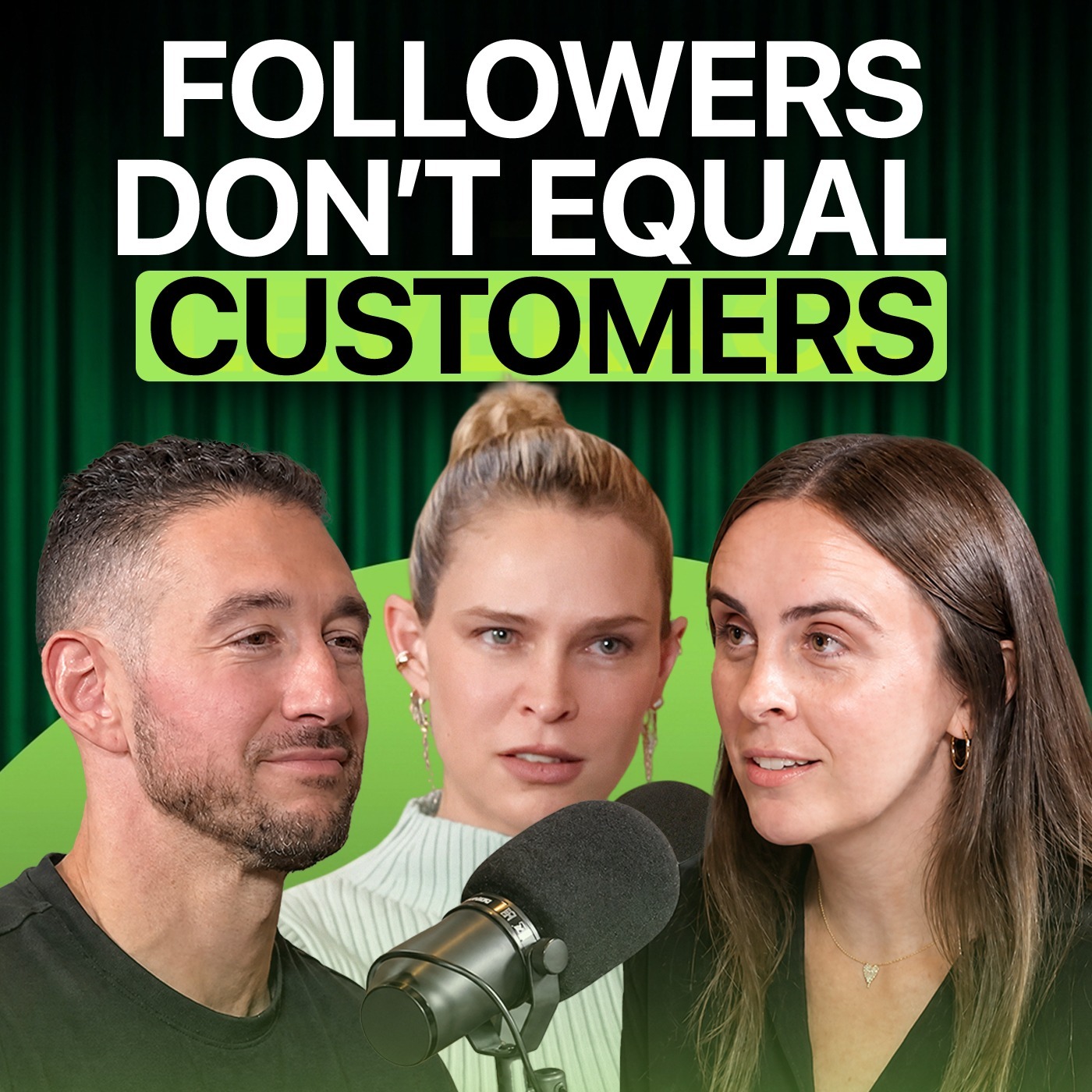
Why celebrity-backed brands and creator-led ventures often fail, and how Sara Foster and Phil Schwarz built Oversubscribed Ventures as an early-stage consumer-tech and consumer-brand investor by treating founders like operators and aligning with “the customer” audience.
Written by AI. May contain mistakes.
Light-hearted conversation between the hosts and guests, sharing fun anecdotes.
“I was like, oh, I guess I'm not a loser.”
Sara and Phil discuss personal challenges and the pressures of parenting.
“This is not conventional podcast advice, so you might not love this, but I'm not going to start with a softball.”
A discussion about the importance of college education and its evolving value.
“And letting them fail, knowing it's not your company.”
Sara shares her experience of dealing with the cancellation of her show and finding self-worth.
“What's the toughest thing in your life that has happened that almost broke you?”
Discussion on the value of sharing failures and connecting with audiences.
“I think it's like a good lesson for people because like nobody wants to feel shame.”
Explore the importance of honesty in entrepreneurship and storytelling.
“Is like a huge sign of maturity, I think.”
Sara and Phil discuss their first meeting and shared experiences.
“And then we're going to get into business.”
Sara and Phil recount their journey and the inception of Oversubscribed.
“I want to get into you two, like this partnership.”
Examine the unique challenges faced by celebrities in starting businesses.
“Their association of the content, you know, like the first place they saw this product was in their content.”
Explore how family offices are utilized by celebrities in venture capital.
“More often than not, they have their own private family office.”
Learn how Oversubscribed was founded to address funding issues in celebrity ventures.
“But for us, we were getting so much deal flow because founders were seeing what we had done with Bumble, what we were doing with Bumble, what we were doing with Mir, that the deal flow was like epic, you know?”
Understand the collaboration and complementary strengths among partners in Oversubscribed.
“Phil is a partner and runs it, but his main focus is Corazon Capital in Chicago.”
Discuss the realities and misconceptions surrounding the venture capital landscape.
“And underlying it all, like just a very deep respect and admiration sort of across the board.”
Learn about the criteria and discernment necessary for investing in consumer businesses.
“But being a VC on a cap table is like a whole different.”
Explore the creation of an ecosystem that aligns consumer brands with investor audiences.
“But like we are investing in consumer businesses that we understand.”
Understand the importance of long-term thinking in investment selections for celebrities.
“And therefore, anything we do has to fit into their world in some way.”
Explore the factors that influence early stage venture funding decisions.
“So generally speaking, that's the easiest question to answer, which is that Corazon is just a more broad, not fully generalist, but more generalist early stage venture fund.”
Learn about the significance of genuine involvement in investments and networking.
“But, like, I invested in a company called Rowan five years ago.”
Discuss the differences between personal branding on Instagram and Twitter.
“I wanted to ask you, this is a bit of a, you know, a spicy question.”
Discussion on the future of consumer brands, AI's role, and a focus on women's health.
“So that's one of the reasons why I wanted to chat with you.”

Get the gist, explore an idea or ask about something said.
 Claude
On Trailblazers by Erica Wenger, what are the key points of this episode?
Searching your listeningAutomatic transcript. May contain errors.
0:00Erica Wenger: Today on the show, I am so excited to be joined by two guests, which is a first for us, Sara Foster and Phil Schwarz, the team behind oversubscribed ventures. Sara is one half of the Foster sisters, the comedy and fashion duo she formed with her sister Erin. Together they produced the hit Netflix rom-com Nobody Wants This, now renewed for a third season and nominated for a Golden Globe and an Emmy for Outstanding Comedy Series. Two, co-host of the world's first podcast and three, run the contemporary apparel brand Favorite Daughter. Before all that, Sarah spent years in front of the camera with roles on 90210, Entourage, and the parody series Barely Famous.
0:34Erica Wenger: And from 2017 to 2020, she and Aaron served as co-heads of creative at Bumble. Phil brings the operator's resume. He is a partner at Corazon Capital, but he first made his name as CMO of Tinder, where he built the brand's marketing from the ground up, landing splashy celebrity partnerships and helping launch Tinder Plus, this subscription business that scaled to over 1.7 million paying subscribers and$175 million in annual revenue in just 18 months. right as the company went public. Before Tinder, he co-founded the Kaplan Techstars EdTech Accelerator and held growth roles across Match Group and beyond.
1:04Erica Wenger: Together, they run oversubscribed ventures, investing at the earliest stages in consumer technology and the brands and tools that support it, rolling up their sleeves with founders in exactly the way they once did at Bumble and Mirror. Let's welcome Sarah and Phil. Wow, that was well said. I was like, how was it? Was it okay? I was like, oh, I guess I'm not a loser. I don't know. You've done some things. I kept at a couple. So fun fact, actually, I'm just going to like break the fourth wall. I see Entourage here right before this. Jeremy Piven was recording. Fun fact. I swear. Did you see him?
1:34I saw him walking down Sunset and I was like, why is Jeremy Piven walking down Sunset Boulevard? He was here. Does he invest? He does not invest. He was on the pod. Okay.
1:42Erica Wenger: But he was recording another podcast before. Oh, he wasn't on this pod. No, no, no. He was on another pod. I know. We wouldn't have him on unless he did invest. Yeah. Maybe he does that I don't know about. But anyways, I just have to call that out because it was too weird. Yeah. I never think about Entourage, but twice in that hour. One of the chance. It's only in West Hollywood. It's two stars of Entourage. By the way, just so the audience knows, I was in one episode. I love that. A little different than Jeremy Pittman. You know what? We can always name drop. That's the beauty of doing it. Just a little thing, a little check, a little thing.
2:06Erica Wenger: But I did play myself. Oh. So, you know. Okay, maybe I should watch it. Yeah, yeah. I love it. All right, well, we're going to get right into the episode. Okay. This is not conventional podcast advice, so you might not love this, but I'm not going to start with a softball. No. I'm going to go with, like, the hard questions, okay? so I'd love to start with maybe Phil first and then we'll go to Sarah are you not going to tell us though how we met? that's next don't you worry are you ready? I'm ready this is like the hard one and you've got to answer it honestly you can take a sec you can make a personal or professional what is a time in your life that almost broke you?
2:42okay
2:42Erica Wenger: geez Phil yesterday? yeah on the way here on the call All in the way here.
2:58You know, I'll be honest with you. I think I'm going through it right now. My son just went to college. Turned 18, went to college. We dropped him off two weeks ago. He's at Indiana University, Bloomington, Indiana. Beautiful place. Great school. Yeah. He, you know, it's a crazy thing to invest all of your mind share, all of your time, all of your effort, all of your heart into something and then just let it go out into the world. Like I, it's one of these things that I've heard from parents who have dropped their kids at college. But you don't know, you don't feel it, appreciate it until you go through it.
3:35And he, you know, literally on the way over here, he called me. he's contemplating which major he really wants to be in he got a bid from a fraternity he's considering whether he wants to accept that bid he really likes the guys but he's worried about the academic side of it anyway uh it's so hard because i like went for 18 years being able to like give him the advice and say here's what i think you should do but i feel like i'm now at the point where he's got to make that call on his own and so where we raise our children to leave Like the goal is to leave because the opposite of that is they're like, don't go to college because they, you know, fucked up.
4:10Can you swear? So it's like the goal is that they leave and we know what's going to happen and we pray that it happens. Like we pray, we get them these tutors. We hope they do have the best grades all to leave. Yes. But then you're like, wait, I mean, I'm not, I'm not there yet, but I will be there. You're close. How close are you? Well, I have a 10 year old and a 15 year old. Yeah. You're three years. So you're not that far away. I mean, God willing. But I will also say in some weird twist, all this work for 10 years, I've been a venture capitalist, all this work advising founders on, you know, how to think about things, frameworks of thinking, you know, what I would do in a situation.
4:45But ultimately, it's your call. Like it all all of a sudden rushed back to me when I was on the phone with my son. That's funny.
4:50Erica Wenger: And letting them fail, knowing it's not your company. Like they have to fail themselves and learn. Yeah, exactly right. And part of the growth is he's going to make good decisions, going to make bad decisions, but he's going to, as long as he learns from the bad ones, that's the key. So it's like, but it's a, you know, it's a weird thing. So it, anyway, I feel like I'm going through that right at this moment. And it'll probably be even more so because as he gets older and older and older, he's going to have his own life. Hopefully, again, knock on wood, if all goes well, he finds a partner that he likes, build his own family.
5:18Erica Wenger: Right. And it only gets more like we're buddies, not I tell you what to do and you live with me and all that stuff that you're comfortable with. Yeah. Well, it's, you know, you start off being the only voice that they listen to and that the breadth of the, you know, advice they get expands over the course of time. And, you know, that just becomes increasingly true. Does he want to follow in your steps and go into finance? Or he doesn't know yet? I don't think he knows yet. Yeah. I mean, I love that you call financial capital finance. Yeah. Yeah. Yeah. Well, I mean, maybe he'll start banking first.
5:47like everybody does, but also we're not going to need analysts in a couple years because AI is a better analyst. I probably shouldn't say that, but I think it's the wild, wild west right now. If you have aspirations to go into finance, what's the entry-level position going to be? Great question. Well, listen, that's what he's wrestling with. In four years, what jobs will exist for entry-level for recent college grads? Well, he's going to have to be an entrepreneur, I guess. I mean, there's even the question of like, do you go to college at all? Like, you know, if you take a step back. Well, I have a whole thing about that.
6:19I think you do go because it's never going to, you're never going to not need to build relationships. That's what college is, I think. Like I really, for me, I've said this before, it's like very redundant, but I want my girls to go to college because that's where they're going to meet their people. They're going to meet the people they go into business with. They're going to meet the people that hire them. They're going to meet the people that they hire. They're going to meet the people that inspire them, that are doing better than them. I love when my girls, I'm always like, go surround yourself with the people that are crushing in life.
6:50Like, they will inspire you. You sit with them long enough, it's going to wear off on you. Like, so that's for me why I want them to go to college. And I think you're exactly right. I think the share of importance placed on the social connection in college is going to go up dramatically. Because ultimately, a lot of what you can learn at these schools is the same. Like, you don't, it's hard to differentiate on just academics alone. And because of AI and some of the things you can do with it, I think like the thing you will come out of college benefiting the most from are these relationships. That probably has always been true.
7:23But I think it is going to be increasingly true as these kids, as this generation graduates.
7:28Erica Wenger: Yeah. I also think it gives you a stamp. And there's like all this conversation about like when you can create anything overnight. Like a 200-year-old institution that vets for high-quality talent, that stamp on your resume will help you and maybe even be more valuable. So, like, if you do go to a great institution that says, we generally look for higher caliber people, I think it's one of the few ways that you can signal to the world, like, I am somewhat smart and somewhat competent because I think we're going to revert back to a lot of the, like, culty, well-known institutions of the past, you know, decades and centuries.
7:59But, like, the days of, like, Goldman only takes you if you're a Harvard MBA. So done. They're just done. I get resumes on the daily from Wharton graduates, Harvard MBAs, Stanford. It doesn't mean what it meant. I'm not saying it's not an incredible accomplishment. And my dream is for my 10-year-old to go to Stanford and play on the tennis team. It's still incredible. Don't get me wrong. But I just don't think it carries the same weight. When I'm looking to hire, it's not. It doesn't matter. Yeah. I love that, though.
8:28Erica Wenger: It's like merit over everything. So one thing I've learned talking to GPs on this show, and in my own experience as a GP, is that your back office is a signal. How fast you close deals, how clean the LP experience is, how your K-1s land. Investors notice all of it. The more buttoned up you are, the more likely they are to give you more money in the future. That's why I want to talk about Sidecar. Sidecar is the SPV platform built for fund managers who want institutional quality execution without hiring a full back office team. They'll review your deal within hours, handle full secondary transaction support, and give you transparent pricing, upfront, no platform carry.
9:03Erica Wenger: Also, your LP relationships stay private, which is super important. This is not a marketplace. If you're running a professional fund, your infrastructure should look like it. Sidecar makes that possible without the overhead. Check them out at sidecar.io slash partners slash trailblazers. That's S-Y-D-E-C-A-R dot I-O slash partners slash trailblazers. Sarah, tell me what's your answer to that question? What's the toughest thing in your life that has happened that almost broke you? look I think it's hard to sit here and point to just one I think I've had many chapters in my life I mean I think a pivotal moment which forced me to take like a really hard look at myself in all the ways as a as a parent as um you know a woman in I don't even want to say business because I hadn't even dipped my toes in business yet but um Erin and I created a television show called Barely Famous.
9:59We wrote it, rewrote it, we started it, we did it, you know, and it got canceled after two seasons. And at the time, I went into a full depression because I was like, what's my value now? What will I do? What skill sets do I have? Now that I don't have this, I'm going to have to take a really hard look at myself. I had a, I think my daughter was three. wait no was she older maybe she was older oh I just had my second I just had my second and it was um it was a it was a dark time it and I maybe had a little postpartum from a look that I just never even dealt with or faced which I didn't even identify I was just you know um and anyways it was I had to do a real sort of um dissection of my life and what I wanted I didn't even know what I wanted.
10:56And I needed to find self-love. I needed to find myself confidence again. I needed to find, it was like a shock to the system. Like it was, I thought this show was going to, when you, when you create a scenario when you're in your head that doesn't exist, the disappointment is just very great. And so anyway, so from there we ended up, It was actually the thing. Without that show, we would have never taken the bumble job because when Whitney Wolf Heard sort of asked her team, all her girls and guys that worked at the company, what shows they loved, who they loved, what celebrities they loved or actors or whatever, they were like, we love the Fosters.
11:43Like, we love that show. It's so good. And so from that, she hired us to come speak at one of her sort of off sites. And there we forged a relationship. And it set us down like a completely different path that we wouldn't have had without Barely Famous. Totally. So it all worked out. But it's all to say I really just – I had no clear direction when it was canceled. And I thought, like, my life is over. It's all over.
12:08Erica Wenger: You also put it out there. I mean, I think a lot of people have private failures. Yeah. But so much of what you've done, like literally every step of the way, whether it's like the barely famous thing, whether it's nobody wants this thing, whether it's the Bumble, the mirror, like you're so public. Yeah. And so I think there's also that extra level of, wow, everyone knows. Yeah. But to your point, it led you to Bumble, which led to a bunch of other amazing things. And maybe you wouldn't be here otherwise. I think it's like a good lesson for people because like nobody wants to feel shame. Shame is an emotion that we all try to avoid.
12:39It's an emotion that triggers the worst parts of ourselves. And instead of like running away from it or acting like, oh, we didn't really want to do it anymore either, we were like, no, let's just be honest. Let's just be vulnerable and self-deprecating, which is we built our entire brand being self-deprecating. It endeared people to us because that's endearing. It's endearing to hear someone's truth. It's not endearing to hear someone lie about being fired. It's endearing for someone to be like, I was fired. I feel like a failure. That connects us. And it's the connection that without the connecting with our audience, we have no show, no brand, no anything really.
13:26I mean, maybe we'd have a show because Aaron's a really good writer. but I do think, um, you know, one of the biggest signs of maturity I think is owning your failures. Yeah. Like I feel like when you're young, you come out, you're like, I can't, I just, I have to mask all the bad things and I have to only talk about the good things. I have to make my resume like so filled with like bullshit. Yeah. A hundred percent. Or when I talk about this stuff, I don't talk about any of the bad stuff that happened. I only focus on the good things. How amazing I am and all that I've done. Exactly. And I think over time you realize that the ability to kind of fail at something, not by the way, barely famous, not a failure, but, but, you know, the ability to like have to retrench and take it a different approach.
14:10Yeah. Is like a huge sign of maturity, I think. And it just takes, you know, it's a shame that it, we have a society that focuses so much on the positive that we have this sort of like bias towards the positive that we don't allow people to own more of their failures early. I just think, you know, that's a perfectly fine thing to do. Yeah, it's a good lesson for young people listening. For sure. You know, it is, all we have now is connecting and storytelling. If you're an entrepreneur, you have to be a storyteller or good luck to you. So like everybody needs to sort of hone this skill of storytelling and you're not a good storyteller if you're not honest about that.
14:47Totally right. Totally right. I would also say having worked with Sarah and Aaron for, I don't even know how long at this point, a decade more, they are who they are. Like this is the beauty of working with them. Like people ask me all the time, like are they, is that, you know, what is it like working with them? What you see is what you get. Like you, they are very honest. By the way, it's also, it's fascinating to work with two sisters who have no ability to walk away from each other. Like, you know, and have. Deeper than a marriage. You know, and have the history they have together. And as Aaron often says, like oftentimes I'm like, you know, trying to just walk, find a bush that I can walk into and back away like Homer Simpson.
15:31Really well. But, you know, but the beauty of that is that they're so honest. They're so transparent. There's no like filter in front of it, which in the world of whether it's BC or corporate or what have you often exists and I think ruins things. So they don't they have none of that.
15:46Erica Wenger: I love that. Well, I also think it's an interesting thread with the best founders in the world. Like, they are just so themselves. Totally. And you might not love it. Like, Elon's a good example of, like, he's so Elon. Yeah. Whatever you think, Elon, you speak to anyone on his team, he's Elon off screen and on screen. And by the way, he was Elon before SpaceX IPO did a$5 trillion value. Totally. He was like that when he was building Tesla and no one knew who he was. Exactly. He was like that. Exactly. So, yeah, I think there's something really interesting, too, from, like, the investing standpoint to think about, like, founders that way.
16:15Erica Wenger: and how important it is to be so end of one and just owning it one way or another. You're going to find people who love you, find people who don't love you, but I think that's also how you build something really exciting and really culty, you know? Yeah. Okay, well, I have to get to how we know each other. Okay. And then we're going to get into business. Okay, I'm embarrassed because I— No, no, no, it's okay. Because you do look for— Like, I'm not going to make you guess because you could really just—it's been eight years. Okay, thank you. Okay, so I'll fill everyone in. Okay. We met eight years ago.
16:41Erica Wenger: Okay. I met you. I met your sister. Okay. And you met my sister. Okay. And do you remember you spoke at USC at the Own It Women's Conference? It was like a women's empowerment conference with like insane speakers, female entrepreneurs, also a lot of like celebrities. Okay. And it was at USC. Yep. Giant auditorium. Yep. Bovard. Yep. 2019. Okay. Did you interview us? I didn't interview, but I threw the event. So I didn't interview, but I started it at USC. And we reached out to you in Montana, who has been with you forever. The greatest. The greatest. No, the greatest. And honestly, when I met Montana, I was like, one day I'm going to have a Montana.
17:20Erica Wenger: And now I do have a Montana. You manifested it. I manifested. And you know, Montana is now running our production company. Oh, of course she is. Of course, obviously. Only great things for Montana. But anyway, we had a golf cart, right? Do we have a golf cart? We had a golf cart. And you posted my sister. I had my daughter with me. I totally remember. This was your event. This was my event. So this is you and me. Okay. At this event. Is it coming back? and this is like the other girl that's landed and i'm still in a turtleneck and i'm still in a turtleneck she loves a turtleneck and so does aaron look oh my so that's the other co-executive person in aaron i fully remember is it back i fully no and you posted my twin sister driving you in a golf cart yeah i fully remember and i by the way not that i've like talked to that many people about meeting you because it doesn't ever come up but like once in a while if someone sees own it photos they're like oh what are they like yeah exactly what you would think were we were we amazing lovely so good the best how you are now yeah but anyway it was kind of funny what happened to that event then are you not doing I mean you're too busy right no but I just like graduated oh because you did it while you were I was an undergrad I was like a sophomore and I was like I'm like strong independent woman want to bring together strong independent woman and I started this like massive conference I mean that was my first like you know founder journey if you will things have changed but yeah and it was like crazy we had like thousands of attendees dang well thanks for having us you were one of our keynote speakers yeah Thank you.
18:42Thank you. Wait, so was that pre-Bumble? It was 2019. So you told me. No, we were at Bumble. Maybe you were at Bumble. I think Bumble was like around there. Okay. But yeah, you talked about like business. That's a small world. Entertainment, small world.
18:55Erica Wenger: So let's talk about the part of building an audience that nobody teaches you, how you actually get paid. Everyone waits until they have enough subscribers, but on Beehive, you can start earning from day one. Even with just a handful of subscribers, the ad network is already working for you, plugging you into a network of sponsors that fit your content. Then, once your foundations are set and you've built something people genuinely value, that's when you layer in a paid tier, giving your audience exclusive access to that extra value and using boosts to grow it. And here's what creators love most.
19:24Erica Wenger: When you earn on Beehive, you keep it. 0 % taken from subscriptions and 0 % taken from digital products. So whether you're just starting out or ready to add that next layer, go to beehive.com, that's B-E-E-H-I-I-V.com, and use code TRAILBLAZERS30 for 30 % off your first three months. That's beehive, B-E-E-H-I-I-V.com, code TRAILBLAZERS30. So I have a confession. I used to be a compulsive note taker. Every meeting, I'd be half listening and half scribbling, and still leaving with gaps on next steps, details that were shared, and more. Granola completely changed that for me. It's an AI-powered notepad for meetings, and it's connected to every call on my calendar.
20:05Erica Wenger: Before each one, it shows me a well-researched brief so I know who I'm meeting with, when we last talked, and the full context going in. During the call, I jot down whatever notes stand out, a keyword, a decision, a quick thought, and then Granola handles the rest. It literally fills in and transcribes in the background and turns my rough notes into clean, structured takeaways the second we hang up. There's no bots joining calls, it just works in the background. I use Granola for several things. If I finish a meeting with a potential investor in my fund, I'll ask Granola what I could have done better to get my point across.
20:35Erica Wenger: If I'm meeting with a founder I like, I'll ask Granola to point out any major green flags or red flags I may not have already caught. For people with a lot of meetings and decisions that require endless context, Granola is a game changer. Actually, we're running Granola on today's episode. You can read the full show notes at granola.ai slash trailblazers, and you can see it linked below here. New users get three months completely free. That's granola.ai slash trailblazers. Okay, so I want to get into venture. Yeah. Let's go. I want to get into you two, like this partnership. So you said you've known each other for over a decade.
21:06Erica Wenger: Obviously, oversubscribed is like a more recent part of that decade. How did you guys meet? And then I want to get into how you decided to start oversubscribed together. Great. I mean, so when Phil was at Tinder, you had reached out to us. I don't know how you. I think I got connected to you through WME. Okay, through WME. Somebody set up a meeting for us. Right. So it was like, you know, I think at that time, Tinder was very male-focused. It was – the perception was that it was a place for guys to find girls to hook up with, I think. And Phil came on board and was like, we need to find a way to endear ourselves to women.
21:41Am I speaking correctly? You are speaking correctly. And WME, I guess, said, well, you should do like a content series with the Fosters and like comedic. Because we had sort of, at that time, we had positioned ourselves as this, not the go-to, but we were one of the first celebrity influencer type people to where when brands would want to align themselves with somebody with a following, we were like, but there's a catch. We write all the content. We don't want you to do it. And we want to come at it from a very comedic standpoint. So like a La Mer, which has historically been very serious. It's like elevated luxury.
22:21It's Estee Lauder. We were like, that's not our brand. So if you're going to hire us, let us make fun of La Mer. Let us make fun of$300 cream. And they were like, OK. And then to this day, marketing executives will still come up to me being like, that La Mer series you did made us then want to do blah, blah, blah. So I'm not trying to say we, you know, spearheaded this whole new thing. But that's just sort of what we were doing at the time for income. and it was different and it wasn't for everybody, by the way. Some people were like, no, that's weird. And other people thought it was great. So WME suggested us for Tinder.
22:55That's right. I was pregnant. So I was like, that's probably not for me. That might be weird. Stretching the comedy limits a little too much. Yeah, that might be. Whose baby is this? Yes, yeah. Let's play a game. Yeah, yeah. It could have been cool. But so Aaron did it without me. Yeah. And I, so I didn't meet you. Aaron met you first. And the content was amazing and whatever. And then we had, we stayed in, We did end up meeting. We stayed in touch. We had lunch at the Grill in Beverly Hills. Yep, that's right. And that's when we talked about Mirror. Exactly. And so we were at Bumble, and Bryn Putnam was creating a company called The Mirror, which was a workout mirror that you hang on your wall, and it was a virtual trainer, if you will.
23:40It wasn't pre-product, but it was pre-launch, pre-revenue. and it was too I think they had raised a lot of money at that time yeah we actually I met Bryn we looked at it and she was wonderful and very smart and we looked at it for Corazon Capital my other fund and it was too late stage like they had just raised too much for us to be able to write a check we're early stage investors and so but it was obvious to me that the thing they needed to do was like normalize this product in the consumer realm and it was obvious to me that Sarah and Aaron were like the only people to do that. And so we met, we had lunch.
24:19I was in LA. I was living in Chicago at the time. Yeah, you gave us the deck. You had printed out the deck and you were like, just look at this. This is interesting. And we're like, well, we're at Bumble. We can't really be like creative directors of two companies, but this is very interesting. And I think like we're all fighting to be relevant. We're all fighting for discoverability. We're all fighting to be seen, right? Our product or whatever it is. And Bryn was like really, I think, wanted front-facing people on her cap table. And that could also take sort of an advisory role to explain to the consumer why it's not super weird to work out to a mirror on the wall.
25:04At Bumble, what we were doing was trying to normalize finding a friend and a co-worker on the app. So we came on when Bumble was launching the other arms of the app, Bumble Biz and Bumble BFF. That's when we came on. And we did great work. We did great work. It became very visible. And Bryn was kind of like, okay, well, let's do that for us. And we're like, okay, well, we can't, but let's see what we can do here. And we invested. We got real equity, real skin, and went to work. And Lululemon acquired it for half a bill like a year later. And I think, by the way, they did such good work that I think to this day people still think you founded the company.
25:48Oh, my God. Their association of the content, you know, like the first place they saw this product was in their content. And so I think it worked remarkably well.
25:57Erica Wenger: And this is, by the way, so common now that you attach these like creators and celebrities to brands. It was not common then. It was much less common. No, no, no. When we took the Bumble job, we were at Mirror. People thought, oh, wow, these girls, their entertainment career is over. They're finally being taken seriously as comedic actresses with Barely Famous. Yes, it was canceled, but, like, people loved the show. And now they're going and doing this. Hollywood's done. We got people made fun of us. People made fun of us. People thought it was so lame. And what was the making fun of you? Was it, like, they just want to make money?
26:29Erica Wenger: Was it, like, they can't get a show made, so they have to do this? I was kind of like, oh, God, like, I guess, like, things aren't going so well for them. On the entertainment side. Yeah. Yeah. Yeah. On the entertainment side. And what's so funny, too, is, like, investments, I mean, we could talk endlessly about this, how, like, investments make people so much more money than any of the, like, entertainment-y stuff ever does. Totally. Like, it's hilarious. Like, I love the Haley and Justin example. Like, her one company made more money than a lot of his, you know, music career. Yep. Or, like, Kevin Durant had a huge investment that just got announced today.
26:58Erica Wenger: like you make actually a lot more money when you're doing the bumble in the mirror stuff than often a lot of the entertainment-y stuff so it's interesting that the perception was there not doing well when in my opinion because it wasn't crushing it it's trendy now yeah yeah it wasn't trendy there like it wasn't it just was you you didn't see we also it was a time when if a celebrity or someone with the following posted something or talked about something it was like it worked. The consumer's too smart now. Yeah, they see through it. That doesn't move the needle anymore. It's too oversaturated.
27:31Everyone, you don't believe it anymore. It's much more difficult. That's why you see really famous people with millions and millions and millions and millions and millions of followers whose products fail or businesses fail. I mean, it's also really hard for an early stage investment to pay off. It's not easy. It's not easy. And it makes, when you hear these crazy stories of the Kevin Durant's or the whatever you think like oh but it's it's hard work
28:00Erica Wenger: it's hard man yeah I mean it's one in very few you know exactly it's a needle in a haystack it is it is um I'd love to talk about how oversubscribed came about oh yeah specifically through the lens of most celebrities creator celebrities start a family office yeah there's like a handful now like the Paul brothers the chain smokers Kygo has a stint obviously Serena Williams there's a few of these that actually have public-facing venture firms, but it's actually quite uncommon. More often than not, they have their own private family office. Well, a family office is when you're willing to use your own capital.
28:31This is true. So I wanted to hear. So tell me, how did that come about? Yeah. So for us, it's actually the opposite. A family office is ideal because you don't have to deal with LPs. You don't have to feel the stress of spending other people's money. Ideally, you angel invest. Or raising money. Raising money. Ideally, in a perfect world, you angel invest, Do you have a family office? Whatever. But for us, we were getting so much deal flow because founders were seeing what we had done with Bumble, what we were doing with Bumble, what we were doing with Mir, that the deal flow was like epic, you know?
29:02And we were having to go, well, we can only write a$25 ,000 check, which usually results in very, very, very, very, very minimal equity. And then sometimes we were like going, you know what? We can't even write because there's no more money. You know, so we really didn't start oversubscribe because like, oh, it's cool to be in venture, which it is now. It's now trendy to be in venture and it's cool. We did not do it because of that. We literally had a problem. We had no more money and we had a really great deal flow. And so we were like, all right, it's time to raise money. It's time to get real skin in the game.
29:38We don't want to own 0.025 % anymore. We want to own 10 % or 5%, you know. But obviously, we're not going to do that alone. It's really important to know what you know. It's more important to know what you don't know. And there was no world we were going to do this alone because it's all the other things we do. It's all the other full-time jobs we have that are the reason we get deal flow. So we could not abandon those to then have oversubscribed full-time. So Simon, Aaron's husband, was like, you got to do this with Phil Schwartz. He has Corazon Capital out of Chicago. They're consumer investors.
30:16This could be a really cool thing. And we landed on this formula that you didn't see then. Maybe you're seeing now. I don't know. But where his fund essentially anchored over subscribed. It's mine and Aaron's fund. Phil is a partner and runs it, but his main focus is Corazon Capital in Chicago. So they anchored our fund and then we utilize his back office, his diligence, everything. They source deals that we would never be able to see. We source deals that they would never be able to see. They're a value add in ways that we're not. We're a value add in ways that they're not. And there you go. There you go.
31:00And then we will, you know, The two funds will co-invest together in a bunch of different deals. Listen, I have yet to see something exactly similar to, I think, what we've created. It has worked extremely well. There are probably many reasons it works well. Probably the most important of those is the relationship that Sarah and Aaron and I have. And just like, not just the history of it, but the dynamic of it. Like, you know, I think to Sarah's point, like we kind of know, like the things that they know, the intuition they have, the capabilities they have, the resource that I don't have any of those things.
31:37And I have a ton of respect for like their points of view on things. And, you know, and I think the same is true in reverse. Like, you know, there is a bunch of things that I can do that they probably probably don't even want to do that in value that I can add. I'm not dissecting a data room. I'm like, did you get the data room? Cool. Let me know what it says. Do we think thumbs up or thumbs down? Let me know what it says. Right. So I think it is this sort of like mutual, this like complementary nature of the personal relationships. It's true in every partnership, of course. But I think it's especially true here.
32:13Alongside the complementary nature of the two funds and what the capabilities that each has. And underlying it all, like just a very deep respect and admiration sort of across the board.
32:24Erica Wenger: I love that. You're right. It is such a unique model. And I was trying to like rack my brain. The only thing that could kind of come to mind was like what Kim Kardashian tried to do with Sky, bringing in that PE guy, like ish. But there isn't that. And it's definitely not like, you know, most funds don't do fund to fund investing unless they're like a giant bane or an insider or something. So yeah, I think this is an interesting model that I hope you guys publicize about more because I think it could be actually really interesting. There's a lot of really brilliant creators and celebrity types who could use a partner versus just doing it themselves, you know?
32:54Probably something we should talk about more.
32:56Erica Wenger: Yeah. Well, that's why we're here. Good advice. Good advice. Here we are. Yeah, but it's also like, and I don't want to disparage creators because they're amazing, but I don't think people understand, I mean, how much work it is. It is not just like, oh, go post. 100%. We are sitting, we are dealing with packaging. We are dealing with target executives. We are dealing with so much more than just, oh, post and buy these diapers. Yeah. It's just, I do wish that people had more respect for venture and investing. I think it's gotten a little bit, we've jumped the shark a little bit. It's gotten glamorized.
33:35You know? And I'm also the first to be like, I'm still learning. I've now been doing this for like eight years and I'm still learning. I don't know half of what I should actually know, which is what he's there. I don't think that's true. Yeah.
33:47Erica Wenger: I think that's because people get confused between angel investing and venture. Like I think people are very used to the 25K check and you do the post and you say, good job. And maybe I'll introduce you to one person. Yeah. But being a VC on a cap table is like a whole different. It's a whole different. We don't lead rounds, I will say. Right. We don't ever lead rounds, but Corazon can. Yeah. And Corazon does. Look, I would also say just part of the, in addition to all the things that Sarah described, which is they had deal flow and they needed sort of a vehicle to channel that into. I think what they bring to, they deserve to have a fund.
34:18Like they brought something unique to the venture capital ecosystem and they were doing things that other people weren't doing. And they like the hard thing to find is somebody with credibility, following, and a willingness to roll up their sleeves to actually do shit. And intelligence. And of course.
34:36Erica Wenger: Because I think that's like, and again, I'll just compliment you for a sec, really high IQ. And it's not always, that's almost the most important part of it. You can think intuitively about where things are going. I mean, even your comment about analysts earlier. Thanks. It's just like you kind of get it. But anyway, continue. But I do think that's an important piece. It's not just following. Well, it's crucial. And I think we've dumbed it down. We've dumbed venture down. Yeah, totally. It's the days of, yes, that's great if you have a following and can post. Fantastic. We need that, you know?
35:04Yeah. But that is just a very small piece of the puzzle. It totally is. And by the way, your point is exactly right. And to Sarah's credit, you know, we started doing this. She had not spent any time in venture capital. No. and she like it's remarkable to like you know see how quickly she's come up to speed like you know i my my goal you're a great teacher my goal is to work myself out of a job like i don't think you know they um she and erin really understand i think the questions to ask what really makes you know moose the needle with a company and how to evaluate a founder you know how to kind of think about whether a company can be big or not we're not investing in software you know we're not doing I mean like B2B and SaaS.
35:46Well, some B2B stuff. Yeah, a little bit. But like we are investing in consumer businesses that we understand. So we're also like there have been a few businesses that are amazing and the cap table is like sexy, like really like Andreessen's on it, you know. And we're kind of like, I don't think we could be helpful. Yeah. I don't even understand it. I don't think our audience would understand what is this. And we don't do it because whereas I think that you have to have real discernment. in venture. And I think people get swept up in, oh my God, this person's investing. I know that person's investing and blah, blah, blah.
36:24And that doesn't usually work. Yeah. And I think we approach every investment for oversubscribed as not a passive investment. There are some funds that are passive investors and nothing wrong with that. And that's just the way they do things. In the world of oversubscribed, it is far from that, is the opposite of that. And therefore, anything we do has to fit into their world in some way. It has to be their - That's an indoor ecosystem. We have an ecosystem, right? I say this a lot. I'll say it here. We have created an ecosystem, a flywheel, okay? So where like the person who is buying the consumer brands that we invest in, that we talk about, is buying Favorite Daughter.
37:03She's watching Nobody wants this. She's listening to our podcast. It's the same girl and guy, you know? And so if it doesn't fit into that, it's not easy for us because sometimes we really want to be a part of something, but we don't because you can quickly lose credibility too. I think that's another thing that people need to understand. You kind of like don't get a lot of chances. You have to, if you're promoting the mirror and then you're promoting, what's the other, what's the, what was the competitor, the tonal, tonal, then what? Yeah. So then what? Then your following is going, wait, but you were just telling us that the only thing you...
37:45Yeah, you can't switch it. No, but I think, and I'm not like knocking it because it's very hard to say no to money. You know, when this is your livelihood and you're getting amazing brand deals, it is hard to say no, but you have to think, if you're as an investor, you have to think long-term.
38:03Erica Wenger: The 2026 primaries are taking shape. And if you have a strong opinion about how they're going to go, CalShe lets you actually trade on it. CalShe is the largest prediction market in the U.S., federally regulated and available in all 50 states. You're not betting against a house. You're trading against other people in a live market, taking yes or no positions on real world events like elections, Fed rates, economic data, you name it. Right now on CalShe, you can trade on the California governor race, Senate outcomes and a dozen other major political storylines as they develop. As the probability shifts, you can buy in or out of your position in real time.
38:35Erica Wenger: It's a completely new asset class and honestly, one of the more interesting ways to have skin in the game on what you're already watching and know about closely. Download the CalShe app. That's K-A-L-S-H-I and use code TRAILBLAZERS to get$10 when you trade$10. Or go to calshe.com slash r slash TRAILBLAZERS to accept this$20 offer. With CalShe, you can trade on anything. 18 plus only restrictions and eligibility requirements apply. event contract trading involves risk and may not be suitable for all investors. Prices, values, and available markets may differ from those mentioned. For more information, see calshi.com slash regulatory.
39:09Erica Wenger: So quick experiment. Think about the last long message you typed. A Slack thread, a prompt into Claude, a detailed email. It probably took you 10 minutes, maybe even 20 to get it just right. Now imagine you just said it out loud instead. That is the whole pitch for Whisperflow. Whisperflow is a voice to text that actually works in every app on every device. You speak naturally and it outputs clean formatted text that's ready to send. No setup, no integrations, no fixing weird transcription errors. It works in Gmail, Slack, Notion, Claude, iMessage, wherever you type. And unlike the built-in dictation on your phone, Whisperflow actually removes all filler words, mid-sentence corrections, and jargon.
39:46Erica Wenger: What I love most too is that it perfectly matches my style. So I often type in all lowercase letters and say things like LMK, which means let me know in shorthand, and it auto-adjusts it for me. Like many of you, I also do a lot of brain dumping into LLMs. So instead of typing it all out, I just speak my windy train of thought into Whisperflow, which is infinitely faster than trying to get my fingers to keep up with the pace of my thoughts. If you do any serious writing or just send a lot of messages, using Whisperflow is a no-brainer. Get one whole month of Whisperflow Pro completely free at ref.whisperflow.ai.
40:20Erica Wenger: That's ref.whisperflow.ai. slash trailblazers. How do you think about the balance between posting the thing that will make you money and posting the thing that is actually for your audience? Because there's a world where there is that B2B SaaS opportunity where you could see the 100x. Do you just say we never do that and we just do the consumer stuff and the CPG stuff? Or do you maybe on the side and don't post about it and it's a different relationship? How do you think about that? I mean, we have LPs. So it's like we told them that we are an early stage venture. We told them what we're going to be doing.
40:53So you can't, there isn't like a lot of, we have a, we have a pretty tight agreement. So we don't, we really try to stay within the mandate. Yeah. Tell me about the mandate. So
41:06Erica Wenger: like we're talking about it. We're talking about that girl or guy that kind of fits this flywheel. If there's a founder that's listening right now, or maybe like an operator that's thinking about what company they want to work for, and maybe it's in your portfolio, what does an oversubscribed deal look like? And also maybe how does it differ from a Corazon deal? Because there's so much overlap. Like obviously I spent time on your portfolio page. I know a lot of both your founders. There's definitely overlap. The 831, the Noble, but there's definitely differences. So talk to me about that. What's an oversubscribed deal?
41:32Erica Wenger: Well, they have a lot more money. So they lead, we put some out there. Look, the latter one is almost the easiest, which is, look, we're willing to bet on Aaron and Sarah all day long. So that is why you see a lot of overlap. CoreZone is more broad. So generally speaking, there could be a series of things, B2B SaaS is just a random categorical example that Corazon would do under the right circumstances that oversubscribed would not do.
42:00So generally speaking, that's the easiest question to answer, which is that Corazon is just a more broad, not fully generalist, but more generalist early stage venture fund. So that's the easy question. What does an oversubscribed deal look like? Do you want to start with that? I mean, And I think people sometimes think we only invest in female founders. That's not a mandate. We just, of course, gravitate to female founders a lot of the time. But that is definitely not a mandate. It's very simple. Our thesis is, are we the customer? Is our audience the customer? And that is it. And is it early?
42:36No, we're early. Yeah, we're early. Look, I mean, we have one or two sort of like growth situations that felt opportunistic. But like, yeah, we're early. That's right. And by the way, we're pre-revenue. I mean, it just, we will. Yeah, I would say there's nothing too early. No. You know, we, obviously the main filter, the place that most things fall out of the filter is does this fit into Aaron and Sarah's world somehow. In addition to that, like, you know, we need to see a path to make venture returns and things. That's the thing. This isn't charity. Yeah. I mean, LPs want the 100X. I mean, they want the, this isn't, yeah.
43:10And that can happen in a bunch of different ways. Are there any first-time funds 100X'd? Oh, yeah. Really? There's a fund that 300X'd, Founders Fund. And then blockchain capital and lower carbon.
43:19Erica Wenger: Wait, like Fund One? Fund One? Fund One. So what was that, like in the 90s, Founders Fund? Oh, yeah. Early. I mean, 2000s, but yeah, it was early. And then, I mean, I don't know when Founders Fund, I think it was like 2000 or mid-2000s. Or maybe Thrive. Thrive. I think not yet. So Chris Saka's is like the most notable. Josh Kushner's Thrive? Yeah, but not 200X. His first fund's done really well. His first fund is, yeah. It's like a$7 million fund or something? Yeah, exactly. No, five. Five. Five. Five. his first one. See, that's the other thing, too. How do you think about fund size? This also might be a fund two question as well.
43:51Erica Wenger: How do you want to grow this? You don't want to raise too much money. You don't want to raise too much money because you want to make sure your check size fits the thing you're doing, but you also You want to have enough for follow-ons. You want to figure out your strategy. Do you want to be this really collaborative early check, not leading forever? Do you want to grow your LP relationships and be a lead, pre-seed, seed fund? Do you want to have a growth strategy? How do you guys think about the future of oversubscribing? It was important for us to sort of come to the table, not insane. It was important for us to come to the table being like, look, we get it.
44:23We don't have Harvard MBAs here. We know that we are not your traditional venture investors. Like, we understand that. We get it. So we were very intentional with being a small fund. Fund two will be bigger. Yeah, I mean, I think— But not that much bigger. No, but that's the thing. I think strategy will evolve over time. I think in reality, you sort of like you hit on it, like you sort of need a mix of things out of a fund. You need enough shots on goal. You need enough ownership in the things that you invest in that if they work, they work big. And so we're always kind of looking, I think, for that balance.
44:57By the way, the other thing that I'm sure if Erin were here, she would point out, we can't overcommit Erin and Sarah to too many things. Like so we can't I think in contrast to other funds, we can't go. I mean, yes, if we got fully passive on investing, we could do a lot of things. but that's just not, I think, who we are. But you have to also earn the right to be a passive investor. Yeah. You have to earn your right because we're not there yet. Like, our cachet is us. Yeah. We're not at the point as if we are not seasoned enough that anybody would want our passive income. I mean, yes, okay, some people, but like really meaningful sort of highly competitive situations.
45:37Like, I don't know that that's – I think that's right. And so by definition, I don't think we'd want the fund size to get too big. I mean, even if you write a bigger check, bigger average check into things than we do currently, I think there are natural limits to that. Like, we can only do so many things that they can actually really have rolled up their sleeves and do things for. Yeah. So we're just conscious of it. I mean, look, I think there's a lot of talk about, like, posting. Posting. Posting's fantastic. But, like, I invested in a company called Rowan five years ago. That's the earring thing.
46:04Yeah. $15 million valuation. They're a billion-dollar company. Okay? I very rarely post. I am doing so many other things that you will never see. I'm connecting them with other people to put on the cap table that are far more visible than me. I'm looking at renderings of stores. I'm diving into where they should be opening. I'm going on LinkedIn and messaging a landlord that is giving her hell, Louisa, the founder, about giving her a spot. I'm messaging him going, you're going to give her that fucking spot. Okay? I'm messaging the Caruso people being like, this is what you need. I'm going to Stanford with her and speaking to students because they wanted both of us.
46:49I'm doing so many things that she doesn't care about if I'm posting. There's so many other things. I'm gifting. I have an entire network of moms. And I'm looking at line sheets for the Christmas drop, the holiday drop. The list goes on. And here's another thing is founders talk. So if you're an influencer or a celebrity, quickly you're going to get a bad reputation or a good reputation because there's a lot of people now that want to invest. So founders talk. They call that other founder and they go, oh, so-and-so wants to invest. We have a little bit left in this round. What did she do for you?
47:33And that founder is going to be like, she didn't do shit. She literally didn't do shit. She posted and guess what? It didn't convert. By the way, it's funny. She has 5 million followers. It didn't convert. All she does is post and she doesn't do anything else behind the scenes, which is a lot of it. You need to know like you can only get away with it for so long if you're not willing to do the work. You won't get the allocations anymore because founders talk. It's funny you say that because actually something came up that I hadn't even told you about yet. We're in the process of making an investment.
48:05and the one of the the ceo of that company sort of back channeled to other found i don't even know who she spoke to to be honest with you uh and she was like you know people love you guys and i was like well that's good to hear i mean because i you know oh really yeah uh because so it does it does
48:22Erica Wenger: come back no oh i mean by the way it's not just other founders it's lps they're gonna call your founders it's co-investors that are thinking about sending you a deal i mean it's and it's the same 500 people that run our industry, which is so wild too. Wild. Totally right. And they've been around for decades. And it's like, if you don't have common consensus among that group or you kind of poison a few of them, you're done. No, this is serious stuff. This is not just like fluff. This is not just like, oh, let's invest. Let's blah, blah, blah. Let's raise money. This is serious stuff. This is people's livelihoods.
48:54These are founders that have to be really strategic with who they take money from and who they give advisory shares to. We get advisory shares. You know? Like, that's part of the deal. And it's serious business, and we don't take it for granted for one second. Anytime a founder sends us a deck and wants to meet with us, I go, that's cool. Like, I don't take it for granted for one second. And I think, by the way, to your point, when we raised money for oversubscribed, it was not from friends and family. It was from third-party LPs. who I are, and, you know, we're super grateful for, oh, because they were willing to make a bet on a first-time fund.
49:36Anybody that's willing to make a bet on a first-time fund, you have to be appreciative. And not at a great time. We weren't raising at the best time. No, that's right. It was like 22-ish? Yeah. 21. 21?
49:47Erica Wenger: 22? 22. I think 22. By the way, it takes a couple years to raise a fund, so that's another thing. It probably was many years. And we learned a lot from that experience because what happened was we stopped and we started and we stopped because we were also doing so many other things. So we paused. It was also like COVID weird time. Like it was just recovering from that. Just there was a handful of things that made us sort of pause. And you can't pause. You got to keep going. Yeah, you got to keep going. You close with what you have. You got to keep the train on the tracks. Yeah, or you pause and you close with what you have.
50:15And then you move on to the next fund. Like you don't. Also true too. Yeah. But in either case, like I think what we were looking for in addition to, like the fact that we took outside money or that you took outside money, really the first time you had ever done that, I think in your career is like a very serious thing.
50:32Erica Wenger: We didn't raise money if you're a photographer. It's a joint venture. Right. Yeah. It's incredible. Centric brands I saw. Right. So here's a problem I hear constantly from operators. The data exists and the answers are somewhere in there, but getting to them, actually pulling a useful insight without bugging the data team or learning SQL takes too long or just does not happen. Hex solves that. Hex is an AI analytics platform where anyone on your team can ask data questions in plain English and get real answers backed by your actual business context. No SQL required. And the best part is that Hex shows you exactly how its data agents think, so you can see where the logic comes from and trust the output.
51:06Erica Wenger: The more your team uses it, the smarter it gets. From seed stage founders running lean to larger orgs dealing with serious data complexity, Hex is built to scale with you. It's game-changing for people like me in particular who want to understand what's going on under the hood but are not the real data experts. It's funny too because I feel like every time I look over my operator friend's shoulders, whether they're in product or marketing or ops, they often have a Hex dashboard pulled up. Trailblazers listeners get an exclusive 30-day free trial at hex.ai slash trailblazers. That's h-e-x.ai slash trailblazers.
51:39Erica Wenger: I wanted to ask you, this is a bit of a, you know, a spicy question. So a lot of your content is about like entertainment and pop culture and posting these brands, but you're actually, like I said, extremely smart and have a lot of takes on like pro-business, capitalism. I looked at your Twitter and you have a really thoughtful Twitter. And the Twitter persona to me, as someone who is getting to know you, is different than the Instagram, Sarah. It's completely different. And it's funny. I actually looked back and I realized I'd liked some of your tweets, kind of like not really realizing it was you.
52:09Yeah.
52:10Erica Wenger: And I was wondering, how do you think about Instagram, Sarah versus Twitter, Sarah? And do you see a world where Twitter, Sarah, like infiltrates Instagram, Sarah a little bit more? and has these conversations about business, about how this is real, how this is not fluff, about, you know, economics, business, finance. Like, what's your conversation there in your own head? And what's the framework that you use? So I don't have anyone that does any of my social media. I have nobody. It's me. I am not somebody who has, I'm not regimented with my social media. I, like, you're never gonna see me waking up and be like, hey guys, I just woke up.
52:46I'm gonna go wake up my kids now. Like, that's just not who I am. Like, that's great if that's what you're doing. That's not my vibe. So I will go, like, a month without posting anything on my grid. I will post every day on stories. I'll post not for four days on my stories. It's just sort of a feeling. Twitter is more emotional for me. Instagram is not emotional. It's kind of like I use it to move product. You know, I use it for Favorite Daughter. I use it for comedy. I don't really do pop culture. I don't like talking about celebrities or pop culture. Like, we don't really do that. I mean, like, comedy and, like, entertainment.
53:21Yeah. So, I don't know. We try not to comment on other people. Yeah. And if we do, we always try to make ourself the butt of the joke. I do think that's something we try to do. Twitter, Twitter is me. Like, Twitter is really, it's spicy. It's just. But it's so honest. Yeah, it's honest. It's honest. And I've never deleted a tweet. ever. I've never deleted a tweet.
53:51Erica Wenger: Okay. My push for you as someone who's getting to know you is think about blending a little more because like, I think your Twitter takes are so smart and show another side of you that I think your Instagram followers would really appreciate. Well, listen, I've been very vocal about politics on my Instagram. Maybe you've missed it, but I've been very, very blunt and very direct. And unfortunately, I have, it's greater than me now. I have Erin, who's my business partner. We have business relationships at Netflix, at all these other places. Our centric brands was Blackstone-backed for a while. I've gotten myself into situations.
54:34We're a big, big, big partner to Nordstrom. I do have to ride the line. Yeah. And it doesn't mean compromising my integrity or my values or my authenticity. But I have to just be, I'm so visible on Instagram. I'm less visible on Twitter. Like, I didn't even pay to get the verification. Like, I was verified my whole life. And then, you know, and they took it off. And you had to pay for the verification. I'm like, I'm not paying for the verification. So I didn't even do that. But I do have to think about it a little more. But that doesn't mean for one second that I don't stand by every single thing that I say.
55:12But people are really angry right now. And when I go off on Instagram, which I've definitely done, there's blowback. And I can handle it. But I don't want to make it complicated for Nordstrom and Netflix and my sister and my parents. I mean, I've had death threats, like real death threats. like my children, like in a real way on Instagram. So it is something I think about, but I've never deleted anything on my Instagram either. So you can go further down and you'll see some stuff. I hear you. None of this is easy.
55:48Erica Wenger: None of this is easy. But I do think even separate from the politics stuff, maybe just the business-y stuff, you're super just legit. And I wish that more people saw that side of you. So that's one of the reasons why I wanted to chat with you. That's so nice. I do have one more question and then we're going to wrap. Oh, my God. It went by so fast. I know. It's fast. Okay. So this is like a fun one. Future of consumer, future of consumer brands, what you invest in, what are you excited about? Are there areas that you're like, oh, we'd love to make a bet in this space? Are there themes that you're really thinking about a lot?
56:18Erica Wenger: I'd love to hear your take on what are you excited about? I mean, listen, I would say we have something sort of in stealth mode that we're doing. But I would say AI is going to replace a lot of things. it will not replace women's health. It will not replace the thing. I mean, I think it will help in a lot of ways. I think it's going to be unbelievable for detecting early cancers and all of those things. I think all that is great. But women's health is a very underserved area. And we are leaning even more into that. we now know so much more about microplastics and all the damage it is doing to a woman's fertility.
57:06Women are going into menopause earlier. This is a word that we didn't even know. I thought menopause was for 60-year-olds. Now it's happening to people who are 40. And I think women's health is an area that we're going to be really focused on. for sure and i think to your point like i think look we will look at technologies that enable these things but in addition to that all the ai in the world like we still have to live in this real world um there have to be companies making innovative products in the real world and so i think we will sort of um ai is not going to lift this ass honey ai is not going to lift this ass not yet not not until you get a robot not to get a robot you're a robot optimist you know just Yeah, I'm just holding it.
57:50Yeah, it's not going to make the skin, you know, clearer. It's not going to make my gut less inflamed. Like, these are things that a robot cannot do for us. No, exactly. So we all still have to exist here, and there has to be innovation in that market. And, you know, that market has fallen out of favor for a lot of the world of venture capital, the world of CPG or physical goods.
58:11Erica Wenger: Underpriced, though, means potential better return. Definitely better pricing on the way in, for sure. As long as you can, by the way, get through the sort of valley of death on the other end, meaning you have to – getting better pricing on the way in is great, but you have to be able to raise follow-on capital, and follow-on capital is now harder to get. So you also have to be much more conscious of that on the way in. But I think we will sort of divide – I think women's health will be a big – continue to be a big focus, and we will divide the line between technology and physical goods, and we will entertain both.
58:44what we want. We're so bullish on CPG. Like, CPG's had such a bad rap for so long. Like, oh, we don't even invest in that anymore. Well, we do. Yeah. And you see, by the way, you see even in the news. You see the exit. You see the Goodles. Did you see that? And Goodles or whatever. And Goodles just exited. There are still real venture returns to be made there. You just have to, you know, you have to bet right and a lot of things have to go right for any company to succeed. But we will continue to look at those things.
59:07Erica Wenger: I love it. I think your comment, too, about like the growth rounds, like the A and the B and the C, that's the real tricky. Like you can find the great founder but how do you get them there? And hopefully with your maybe more institutional relationships, you know, it's a good partnership. No, because I think you really, that is so much of it. You're like backing illegible founders and getting good prices and then you're like, wait, but now that you want to go raise more capital, you're not hype-y. Who's going to be there? And so I think it's really nice that you have this partnership where, you know, you can start it and you can continue it.
59:32Erica Wenger: Yeah, yeah. Thank you guys for being here. This was super fun. This was amazing. It went by so fast. I know. Thank you for having us. That was so fun. Thank you. Thanks. Thanks for listening to Trailblazers. If you found this conversation viable, follow the show, share it with a friend, and leave a review. Most of all, please subscribe to our channel. It helps more Contrarian builders find us. To learn more about this podcast, you can visit trailblazerspod.com. To learn more about our venture capital firm, you can visit parkrangerscap.com or just follow along on socials at Erica underscore Wenger.
1:00:03Erica Wenger: Until next time, keep trailblazing.
In this episode, we sit down with Sara Foster and Phil Schwarz, co-founders of Oversubscribed Ventures, alongside GP Erin Foster. We discuss how celebrity, media, and traditional venture capital are coming together to build a different model for investing in consumer companies.
Sara brings a background in entertainment, brand building, and consumer influence, while Phil brings decades of experience across technology, marketing, and venture capital, including serving as CMO of Tinder and Partner at Corazon Capital. Together, they break down why they started Oversubscribed Ventures, how they evaluate and support companies, and why millions of followers no longer guarantee that a product will sell.
We also discuss how AI could change the value of college degrees and entry-level jobs, what founders should expect from celebrity investors, how reputation travels through venture capital, and why they see major opportunities in consumer products and women’s health.
If you're interested in venture capital, entrepreneurship, consumer investing, celebrity brands, AI, startups, or the creator economy, this episode is for you.
This episode is supported by Sydecar, HEX, Wispr Flow, Granola, Beehiiv, Kalshi
Sydecar: https://sydecar.io/partners/trailblazers
beehiiv: www.beehiiv.com/splash?utm_campaign=trailblazers-2026-Partnership&utm_medium=podcast&utm_source=trailblazers&utm_term=podcast-19&stripe_campaign_code=TRAILBLAZERS30 (or use code “trailblazers30” for 30% OFF)
Granola: http://granola.ai/trailblazers
*Granola is the official notetaker of Trailblazers. Check out the episode show notes here: https://notes.granola.ai/t/db5d5620-36a4-4796-9ed6-408c6d55d3ad-00b881l8
Kalshi: http://Kalshi.com/r/trailblazers
Wispr Flow: https://ref.wisprflow.ai/trailblazers
HEX: http://hex.ai/trailblazers
🎧 Listen on Apple Podcasts: https://apple.trailblazerspod.com
🎧 Listen on Spotify: https://spotify.trailblazerspod.com
📲 Follow on TikTok: https://tiktok.trailblazerspod.com
▶️ Subscribe on YouTube: https://youtube.trailblazerspod.com
📸 Follow on Instagram: https://instagram.trailblazerspod.com
🐘 Learn more about Park Rangers Capital: https://parkrangerscap.com
Trailblazers is your favorite tech + VC podcast, hosted by Erica Wenger (GP at Park Rangers Capital). Each week we sit down with founders, operators, and investors who’ve found conventional success in unconventional ways. New episodes every Tuesday.
Enjoy!
Timestamps: