Ask ChatGPT
 Trailblazers by Erica Wenger
25 Aug 2026 · 49m · 21 chapters
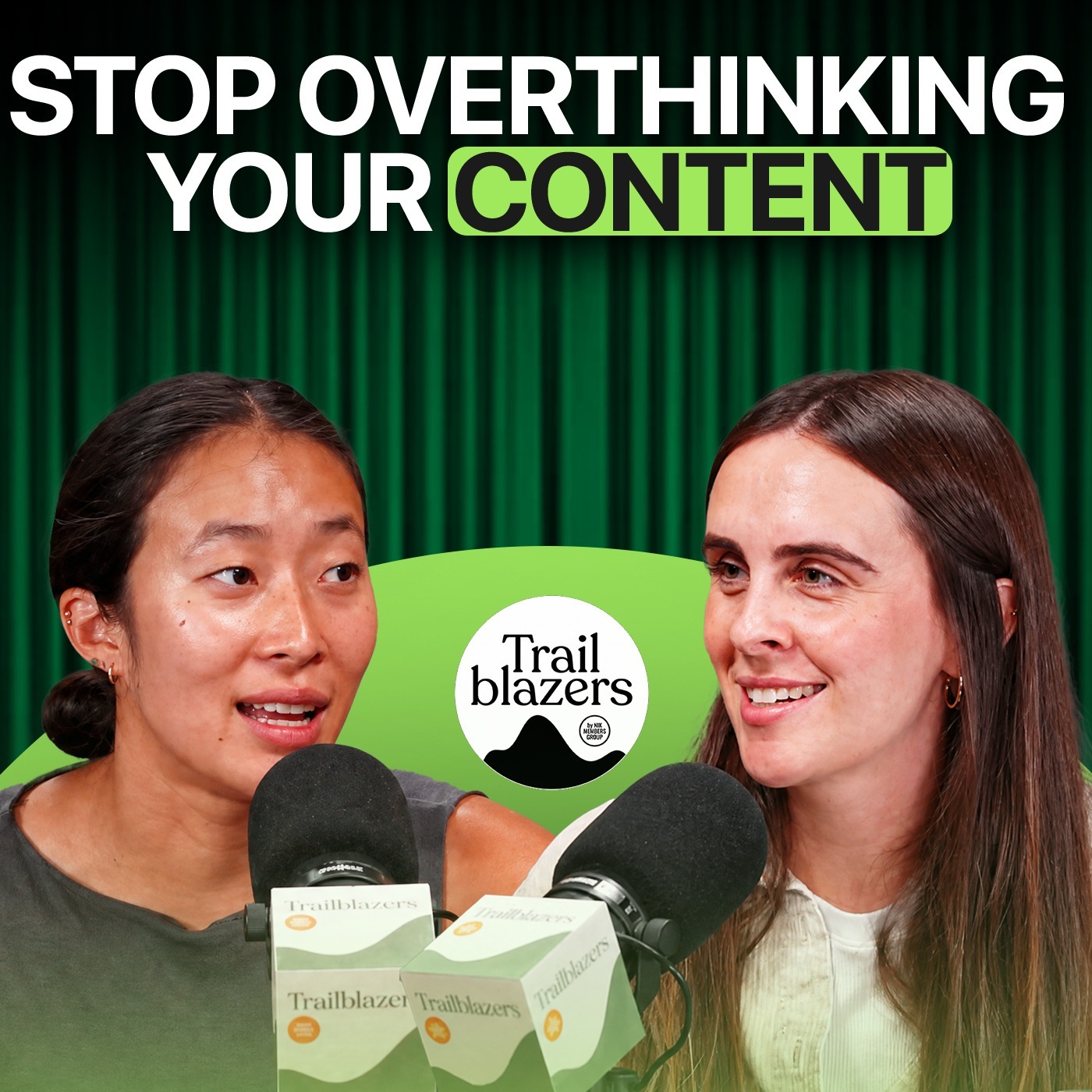
Nadya Okamoto discusses why founders should become content creators, how to balance founder work with creator work, and practical frameworks for posting and growing audiences. She also shares lessons from building menstrual-health impact brands and her current role as co-founder/CMO of Pi, plus her views on the future of marketing in an AI-saturated attention economy.
Nadya Okamoto is a content creator with 6M+ followers. She co-founded August and Period (a nonprofit she started at 16 to fight period poverty/stigma, later one of the largest youth-run women’s health orgs). She’s author of Period Power and co-founded Zoomies Run Club. She advocates for menstrual equity and mental health, speaking openly about depression, PTSD, and recovery; recognized by Forbes Under 30, Bloomberg, People, and Inc.
Content creators are “billboards” that can monetize attention; algorithms reward frequent “lottery tickets,” often favoring raw/unedited authenticity; founder-led public branding can be accidental at first, then becomes a system; founder/creator are different “muscles”; marketing is shifting toward fast, field/guerrilla, community-driven media.
posting 80 wedding videos; viral unedited 7–9 second clips; Pi as an IRL community admin console; Andy Dunn (Bonobos) as a mental-health disclosure inspiration; running partnerships (Bombas, On) and marathon-based income.
Written by AI. May contain mistakes.
Nadya discusses the intersection of her personal experiences and professional endeavors.
“And I really love that it's a combo of professional stuff and personal stuff.”
Nadya explains how being a content creator functions as a business opportunity.
“I think what's interesting though, is like, do you need to bucket yourself as a lifestyle creator or a knowledge creator?”
Discussion on balancing the amount of content produced versus its quality.
“number to do and how often to post every day and how high the quality bar needs to be.”
Nadya shares insights on how authenticity resonates with audiences.
“spam account because there are even posts that like, I want to take that footage and eventually edit it into my daily vlog.”
Nadya reflects on her journey and the challenges of burnout.
“So before we get further, I do want to do our icebreaker.”
Discussion on the concept of building brands publicly and its evolution.
“And then, you know, eight years ago, almost no, no, six years ago, when we started August, it wasn't like, oh, I want to be a public facing founder.”
Nadya discusses her evolving identity as a content creator and entrepreneur.
“Like I used to just say, like, I think it's a different things in my different career.”
Nadya highlights the complexities of managing multiple platforms for audience engagement.
“Let's talk about the messy middle of building an audience.”
Nadya shares her unexpected journey to becoming CMO at Pi and her daily responsibilities.
“So I want to talk a little bit about Pi and what you're working on now.”
Nadya contrasts the perceived glamour of entrepreneurship with its gritty reality.
“And it means doing speaking and photo shoots and jet setting around the world.”
Nadya discusses the evolving role of CMOs and the importance of understanding social media.
“But like at the end of the day, like there is just more content.”
Learn about the significance of adapting quickly in a fast-paced, AI-driven world.
“And I do think it makes such a big difference to have to be a CMO at that side and like not have to have an intern explain to you how to use the app and what the buttons are.”
Discover how age perceptions impact career narratives and self-identity.
“And there's no, like, it's so interesting because when I was younger, especially in media, like my age was always such a big part of it.”
A reflection on the value of personal achievement over age-based labels.
“And like when you can't hide behind your age.”
Explore the journey of connecting with influential entrepreneurs and the impact of mental health advocacy.
“Okay, I want to ask you just quickly about meeting Andy.”
Understand how to capitalize on personal interests to create income streams.
“And I this all kind of happened at the same time that I was transitioning out of an operating role with August, which I think is like very natural.”
Get rapid-fire answers on various topics, showcasing personal preferences and thoughts.
The conversation explores the balance between achieving small wins and pursuing big goals in one's career.
Discussion on the significance of being an early adopter in trends and the lessons learned from mistakes.
“What's the best teacher, a mentor or a mistake?”
Nadya shares her views on the dual roles of content creation and entrepreneurship, emphasizing the importance of social media presence.
“It was like we were at a stage of the stage of the business where every investor conversation it was.”
The hosts discuss whether AI is overhyped or underhyped, revealing the complexities of its implications.
“Like I think there is like even though we say it's all free and it's organic, which is true.”

Get the gist, explore an idea or ask about something said.
 Claude
On Trailblazers by Erica Wenger, what are the key points of this episode?
Searching your listeningAutomatic transcript. May contain errors.
0:00Erica Wenger: Today on the show, I am so excited to be joined by Nadya Okamoto. Nadya is a content creator and the co-founder and CMO of Pi. She's built an audience of 6 million followers across social platforms. And before Pi, she co-founded August, the Period brand, and Period, the nonprofit she started at 16 to fight period poverty and stigma, which grew into one of the largest youth-run women's health organizations in the country. She's also the author of Period Power and more recently a co-founder of the fast-growing Zoomies Run Club. Beyond building companies, Nadia has spent the last decade as a staunch advocate for menstrual equity and mental health, smashing period stigma, taking on barriers like the tampon tax, and speaking openly about her own experience with depression, PTSD, and recovery.
0:39Erica Wenger: She's been recognized on the Forbes Under 30 list, Bloomberg's 50s One to Watch, People Magazine's Women Changing the World, and Inc.'s 2026 Female Founders 500, and I'm sure many, many more lists. A marathon running 20-something based in New York City, Nadia has turned her whole life into a case study in building things that matter. Let's welcome Nadia. Thank you for having me. What a bio. What a mouthful. No, you've done a lot. You've done a lot. And I really love that it's a combo of professional stuff and personal stuff. Yes. Like, I think when I think of you, I think of someone who blends those worlds really well.
1:16Erica Wenger: And I think that's hard to do for a lot of people, not just creators, but just like humans. I think it's also the nature of being a content creator where like you have this opportunity and challenge of the fact that like everything you do is also a business opportunity. Like whenever I meet someone who knows nothing about the creator economy and they ask me like, how does this all actually work? Like how does it turn into a job? Like the simplest way to explain it is like you are a billboard and you can take parts of that billboard and like rent it out to brands. Right. And so it's kind of like the I think naturally when you're a lifestyle creator, anything you do is also part of your career, right?
1:55So like running is one of my biggest personal hobbies. It's also my main source of income, you know?
2:01Erica Wenger: So I think that it's, it's kind of like, it's, it's honestly the biggest blessing of being a content creator. Yeah. I think what's interesting though, is like, do you need to bucket yourself as a lifestyle creator or a knowledge creator? And how do those intertwine? Because I think like a lot of people have boundaries. Like I'll speak for myself. Like I make a lot of content about tech and business, but I'm a little more private actually a lot more private about like I'm getting married soon I'm also running a marathon yeah we'll see we can talk about that but I have like some other things that I just keep to myself so like how do you think about that oh I have no boundaries nothing literally the only thing I have boundaries on is when I'm respecting someone in my life's personal boundary totally so like I recently got married contented the whole thing I think on my wedding weekend I posted like 80 videos like I truly made content about everything and my boundary is like whatever my now husband doesn't want to share he's never had a social media account and so for in that experience like there were things that he were really important to him that like did it we didn't share like full vows his vows if it were up to me I would have posted everything so the answer to that is like I have no boundaries and both my younger sisters who are also like my best friends also have very little boundaries on social like we've just grown up on social media it's such a big part of our lives so yeah that's that's my honest answer I love that and I I'm sure he appreciates that you're willing to like hold the line I mean if I love you enough challenge the line yeah yeah he's understanding yeah he seems great um okay so I have to like ask you the obvious question 80 videos on a wedding weekend yeah so I was doing my research before chatting with you and i did see 80 yeah i i think when i looked at it it looked like 100 but i hear you that it was 80 most people from their weddings they will post three six ten you did 80 talk to me about the balance between like quantity and quality and how do you think about it because like i think a lot of people are scared to bombard their followers but you're also a perfect case study and like i bombard you bombard but it works so like how do you think about that and like the number to do and how often to post every day and how high the quality bar needs to be.
4:10Erica Wenger: Like, tell me a little bit more about your frameworks for that. I post as much as I possibly can every day. Again, I'm not a full-time creator. I could be, and I'm very blessed to have that opportunity, but like, I truly have a full-time job and I've always had a full-time job. And so for me, like my MO is that like, I post as much as I humanly possibly can. And so that That means between any Zoom calls in the evenings, I'm like editing contenting. And for me, I definitely am a quantity over quality person, but I don't think that's what everyone should be. That's just what works for me, right?
4:44Like, actually, my youngest sister is much more of a quality over quantity person, and it works for her. And she teases me that like some of my messier videos, like she wouldn't have posted. That being said, those are often some of my most viral videos, right? And even if I look at like the last week, I just got back from Lollapalooza last night. music festival. And my most viral videos were like the ones that took me the shortest to edit, the ones I never like once I edit through, I don't rewatch it just because for me, I think because I'm balancing so much, I've learned that what works for me personally is if I take my ego out of it and I don't have any perfectionism about it, that's the only way I can handle this career.
5:21Otherwise, I get so wrapped up in like, is it look good enough? What could I do better? And instead, I'm just like, do post, do post. And my thing is like even six years into being on TikTok, like I still have no idea on a day to day, like what's going to be the viral one and what's not right. Like even if I look at my wedding, the, the post that I think is close to a million likes that I didn't edit at all. Like I literally filmed and there's no cuts, whatever is like me walking to walk down the aisle. And like that, I literally filmed, I didn't edit at all. I just like in the moment uploaded it and posted it, um, didn't rewatch it, nothing.
5:56And, and so, yeah, I'm definitely a quantity over quality person. That being said, I recently started a spam account because there are even posts that like, I want to take that footage and eventually edit it into my daily vlog. But in the moment I'm like, this is such a funny video or like, I like it video enough that I'm just going to post it unedited. And I include all like, kind of like the pauses and things I would other normally edit out. Um, and I really liked that. And I've had a few viral videos this week, but I think the one thing I look back on is like at, on Friday, every week, I look back at everything that's been posted and I try to study, like what performed well, what didn't perform well.
6:30And even for the company with Pi now and previously August, I look at everything that the company did as well. I think it's different. Like the algorithm is always changing. And I think the algorithms used to be a lot more focused on quality because it was like when the feed is in chronological order, you know, like your followers will see things you post. Now with people mostly living on explore pages and for you pages, I think the algorithm is a lot more like a lottery. And the more lottery tickets you have, the more chances you have of going viral. That lottery ticket still counts, even if it's ripped up a little bit, even if it's rough around the edges, it still fucking counts.
7:08Right. And so I think the way I think of it is like, you don't want them to be awful videos, but oftentimes the unedited seven to nine second one that is super raw and emotional or organic. And like the more lottery tickets you have, the better.
7:22Erica Wenger: I love that Well it's also humans Are craving that authenticity Yeah And I think that the raw videos Just naturally have more of that Is a spam account public Or are you Yeah Whoa I'm enjoying it I'm having a lot of fun With my spam account I love that No I totally hear you though And I think like Instagram Has really evolved To be more like TikTok In this like explore And for you feed style One thing I've learned Talking to GPs on the show And in my own experience As a GP Your back office Is a signal How fast you close deals How clean the LP experiences how your K-1s land, investors notice all of it.
7:55Erica Wenger: The more buttoned up you are, the more likely they are to give you more money in the future. That's why I want to talk about Sidecar. Sidecar is the SPV platform built for fund managers who want institutional quality execution without hiring a full back office team. They'll review your deal within hours, handle full secondary transaction support, and give you transparent pricing up front. No platform carry. Also, your LK relationships stay private, which is super important. It is not a marketplace. If you're running a professional fund, your infrastructure should look like it. Sidecar makes that possible without the overhead.
8:26Erica Wenger: Check them out at sidecar.io slash partners slash trailblazers. Awesome. So before we get further, I do want to do our icebreaker. I feel like we go deep in the content hole and I'm like, we like to start every interview with the same question. So I'm going to back it up and I'm going to ask you this question and you can take it any direction you want, personal or professional. But, you know, if you look back on your journey, it's not even just this past six years of being a content creator, but all the way back. 12 years ago. So crazy, crazy. What's been the hardest part of your journey so far?
8:54Erica Wenger: The part that you think almost broke you? I think for me, it was one, just not burning out. Like I think I've gone through burnout through periods of my life, you know, in different levels of extremity. And when I think about a lot of the young entrepreneurs who started around the same time as me, like in their early teen years, I'm very thankful that I'm like still here. here and still going and still doing the entrepreneurial thing. But like I've seen so many of my peers like burnout, right? And that burnout, I think, is from a mixture of like personal pressure to external pressure, external criticism.
9:33Like my career was made possible by building a public facing brand. And I talk about that a lot because I think when you're young and you have no professional experience, if you don't come from familial wealth and you don't have like You don't have a resume to push you forward. You're starting with nothing, which is your hustle, your scrappiness, and your social capital, and your whatever public brand you can build. That is the currency that you have. so like for me I built very publicly and in real time that also means like any mistakes you make anything you've ever said is like all there right it can it's it's celebrated but it's also criticized and so I think the hardest thing for me was just like not burning out from honestly like both the personal and the external pressure and criticism yeah I mean I think that's something
10:19Erica Wenger: that everyone struggles with and I hear you on the young front I always say like the way to be successful is to either like have family money and just be like super wealthy um to have a crazy track record have been around for a couple decades or to have fame like aka personal brand and like if you don't have one of the first two you have you have to try the third um even though there's it's definitely bumpy along the way um talk to me a little bit about balancing the like founder side with the creator side so like you know i think there's this whole movement of building in public and you know it's kind of in vogue right now to be like a founder-led brand um how do you think about that with your companies and transitioning into new companies and porting that audience over like what is your calculus there for for building in public it's so interesting because when i started the whole content thing like i never like people weren't saying founder-led brand yeah like it wasn't even part of the language of entrepreneurial zeitgeist it was truly just like even if i look back you know 12 years ago it was like i started a non-profit we needed volunteers we had no money The only thing we could do for free was like me making posts on Facebook at the time, right?
11:25To like my friend's parents, you know? And then, you know, eight years ago, almost no, no, six years ago, when we started August, it wasn't like, oh, I want to be a public facing founder. We want to be a public facing brand. It was like, we raised$2 million pre-seed. There's an extreme pressure to scale. And we don't want to get caught in spending all of the money we just raised on marketing, on meta ads, on influencers. Like the only solution was that someone went organically viral. It was going to be a customer or was going to be someone compensated in equity, a.k.a. a co-founder. Right. So it wasn't part of a strategy, just a strategy to say, you know, we're going to be public facing founder.
12:02Like people weren't talking about that yet. Now it's very much like public facing founder. This language is so buzzwordy. But like back then it was just like, oh, we need to hit these numbers. someone needs to go viral in a way that doesn't cost them any cash burn so for me like that was when I was posting like a hundred times a day sometimes like it was usually more like 60 to 80 but like sometimes I was hitting that a hundred times a day shit posting like literally I would sit with a tally mark and just go through like trying everything like trending audios educational content walking through the product like you and it's all there my digital footprint is terrifying trying, but I was like forcing myself to like figure out what went viral and just leaning into whatever performed.
12:48Like I, I very much approached content in the beginning phases as like throwing spaghetti at the wall and just like learning from whatever stuck. Um, and so, yeah, I mean, I think that for me, like it was just, let me figure out what worked. And then I kind of fell in love with content from there. It was kind of like, you know, seeing it worked and then being like, wait, this is really fun. Wait, I'm actually really enjoying this. You know, I would be making content even if I wasn't paid for it. And so now I think it's kind of become more of like a personal hobby and outlet.
13:17Erica Wenger: I love that. But it was kind of accidental. It sounds like it was really like you were in the founder seat and eating like$0 CAC. And like, how do you do that? It was I wouldn't say this accident. It was like purposeful for the purposes of the business. And then it kind of like accidentally it was like, no, literally after two months on TikTok, I had a million followers, I think like it grew really quickly, like 2 million in the first year, I think. And then 4 million by like year three. And like now I've gained about a million on all the other channels, like with YouTube and snap and things like that.
13:43But like, yeah, so I think, I think that's kind of how I think of it. But like now, like I treat my creator business, like it is a whole other business with its own employees and its own team and its own revenue goals. And I think I approach my creator business very much like I would any other business that I'm running.
14:00Erica Wenger: totally it's not a llc you know exactly yeah so when people ask you how do you define yourself like i obviously just read your bio i saw there was like a clip of you on some news thing where you called yourself a social entrepreneur yeah i read this as your sort of like founder and content creator and the way you talk about it you kind of talk about them as like these like two separate things yeah um and then i know you do some like marketing strategy we'll get into all that but like what what is the multi-hyphenate or like the word that used to describe yourself Oh, my gosh, this is so tricky.
14:28And I think it's always changing. Like I used to just say, like, I think it's a different things in my different career. Like I only started calling myself a content creator about six years ago. But I've never equated that like with being a founder. Because to me, like I do think of them as two separate careers, right? Like I have my content creator work, which is like Nadia influencer, brand deals, building profile, you know, that kind of thing. and then like my job on the founder side is like quite unsexy it's the opposite and honestly like it's a completely different part of my brain and I think a lot of people when they first look at my my persona at the moment they would assume that I was like a big content creator and then I became a founder but like it was not that I was like a founder and then I became a content creator to like support my business and then it like kind of accidentally and then became purposeful became its own career.
15:21But like I think of being a founder where like my day is usually like on my laptop grinding, doing Zoom calls, whatever. Like I think of it as very different, a different muscle, different from being a content creator. So like now I think I just say like content creator and entrepreneur. Before I had like a career as a content creator and like I was doing social media and like doing some brand deals, but like funneling it all into the nonprofit for years. I just said like social entrepreneur because that's just like language that was honestly like used at the time of like i'm an entrepreneur who like cares about impact yeah honestly like i feel like that was a buzz title oh years ago where it was like companies realizing like oh impact matters and then everybody was saying like social entrepreneur like socially conscious entrepreneur now i think what's exciting is that like at least there is some expectation that as an entrepreneur especially of a public facing consumer brand that like you care about impact right so like it almost is like irrelevant to say social entrepreneur because it's like we should assume that these companies are socially conscious i don't think that's actually happening totally but i do think that there is some of that right so yeah but yeah i think my how i've described myself has evolved
16:28Erica Wenger: for sure yeah it's so interesting to hear of the evolution and how it's maybe not what it seems i also think social entrepreneur so i actually know well i got my master's degree in it yeah in fact so i know well but like for a while people would think that meant like social media and entrepreneurship yeah when obviously you and i both know it means more like how can we create businesses that are doing good in the world. Yeah. So you think it's like a funny word, too, because I actually think it's like quite confusing for like people who don't know what the word social means. Yeah, it's got many possibilities.
16:53Erica Wenger: Exactly. Let's talk about the messy middle of building an audience. You've got your newsletter and one tool, your podcast in another, your website hosted somewhere else entirely, and your community is scattered across multiple apps. You have to pay for four different subscriptions and then they still take a cut of your earnings. Does that sound familiar? Beehive has just fixed this with their latest update. It's one platform where your newsletter, your podcast, your website, your paid subscriptions, and now your community can all live together. Everything talks to each other because it's finally under one roof.
17:23Erica Wenger: And here's the part creators like myself love most. When you earn on Beehive, you actually get to keep all of it. So there's 0 % taken from your subscriptions, 0 % from your digital products, and publishers on the platform have actually made tens of millions in revenue and kept every single cent. So if you're tired of stitching tools together and ready to actually own your audience, go to beehive.com and use the code TRAILBLAZERS30 for 30 % off your first three months. That's beehive, B-E-E-H-I-I-V.com, code TRAILBLAZERS30. So I have a confession. I used to be a compulsive note taker. Every single meeting, I'd be half listening and half scribbling and still leaving with gaps on next steps, details that were shared and more.
18:01Erica Wenger: But Granola completely changed that for me. It's an AI powered notepad for meetings and it's connected to every single call on my calendar. Before each call, it shows me a well-researched brief so I know who I'm meeting with and the full context going in. During the call, I jot down whatever stands out. Maybe it's a keyword or a decision I make. And Granola handles the rest. It'll transcribe in the background on the call and then turns my rough notes into clean, structured takeaways the second we hang up. There's also no bots joining calls. It just works in the background. I use Granola for several things.
18:30Erica Wenger: If I finish a meeting with a potential investor in my fund, I'll ask Granola, what could I have done better to get my point across? If I'm meeting with a founder I like, I'll ask Granola to point out any major green flags or maybe red flags I may not have already caught. For people with a lot of meetings and decisions that require endless context, Granola is a game changer. Actually, we're running Granola on today's episode, so you can read the full show notes at granola.ai slash trailblazers. New users get three months completely free. That's granola.ai slash trailblazers. So I want to talk a little bit about Pi and what you're working on now.
19:01Erica Wenger: So you were like hinting at this day job. Yeah. And I know the day job has evolved as you've built different companies, but there've been lots of big announcements lately. You and Andy, you know, you get involved with Pi. Tell me what is the day-to-day look like now? And then we'll get into like how you met Andy and how this came about. Yeah. Yeah, so I recently stepped into a role as co-founder and CMO at Pi, which is a real life social networking app. And I honestly kind of like stumbled upon this new founder journey unexpectedly. But at the same time, like every part of my job, my career has been unexpected.
19:36Like I think about what I wanted to be when I was in high school, I fully thought I was going to like go to law school and be a public defender or go into politics. Like I cared deeply and like the internships I remember like staying up late to search for were like working at the UN, working on campaigns. Like I really thought I was going to go the public defender. I actually was in a beauty pageant once in high school and I was like, I'm Nadia. I'm from Portland, Oregon, and I want to be a public defender. Like, that's literally what I thought I was going to do. And then I think I just have like followed my passions of like menstrual health into, oh, wait, I can approach this from consulting.
20:12Like their company said, long winded way of saying like every founder part of my journey was like not ever expected. But anyways, I, yeah, my day to day as CMO, like, again, this is why I think of my content creating works so different from my founder work is like truly grinding on my laptop doing phone calls working with the team all day like usually i wake up i'm going to chicago a couple times a month now because the whole team is based there yeah um but like i wake up and i'm just like calls emails calls emails we've brought on a bunch of interns in new york um and now hiring in la and so kind of like building out the field marketing teams um who are you know kind of responsible for really creating like the ground movement from the bottom up on getting people together in person, using the app, real-time feedback.
21:03And so, yeah, I mean, I think like it's so different from my job as a content creator. Where there's overlap is obviously like as a co-founder, part of why I was brought on at that level at this stage of the company was because I have this persona online that I can really like share and build publicly with. But my day-to-day is like it's like really just grinding on my laptop it's like classic co-founder
21:28Erica Wenger: stuff you know i mean it's all the things that when you're building a company and you're trying to find product market fit you would be doing naturally but i always i think it's always at the same time like surprising for people especially who aren't in the business space when like i and i've had a few conversations that like honestly my run club with like people who are interested in entrepreneurialism and they're like i get the sense from those conversations that i think because of public facing founders out there, there's this aura of being like a co-founder or like a founding, especially founding female entrepreneur, that like being a founder is like really glamorous.
22:03And it means doing speaking and photo shoots and jet setting around the world. And like there is, there is a lot of that and it's fun, but like the day to day is quite unsexy and you're strapped to your laptop and like just grinding. And I think that in the world of social media and like there was recently a tv show about like female ceos and the whole show is like what's it called i forget
22:26Erica Wenger: it's like an amazon series i think i might know about this with some vcs on there too i don't i don't think so but it's like i think it's like winnie harlow and like you know these kind of celeb ceos serena williams maybe but like it kind of gave the impression i think power to them i'm inspired by all of them but like it really portrayed being a ceo as like private jets photo shoots, glamorous dinners, getting dressed, you know, and like, to me, I'm like, that is a very small subset of like celebrity CEOs. Most founding journeys is like, it's not a pretty site, you know, and we do it because we love it.
23:00And we have this like mission that we're obsessed with. But I always joke that like being a founder is kind of masochistic, like, you sign up for this experience of just like stress and everything's uncertain. And, you know, everyone around you is telling you it's not possible and you just go for it because you believe so wholeheartedly in it
23:17Erica Wenger: and you're addicted to it yeah i get that we're addicted to the pain we're crazy you get like you work like three times as hard and get like half the pay like everything about it but i think it's the like emigreed ism like some people have been saying that online like she's amazing and um she obviously is like behind a lot of the kardashian brands and there's a lot of stuff herself but you know she is the classic example to me of someone who like does it all works really hard but somehow makes it look glamorous and i think a lot of people think that that's what it looks like and i'm like she's running multiple multi-billion dollar businesses like even just the budget for her hair and makeup has got to be crazy you know it's like a totally different game yeah very different very different um so because you're in this cmo seat yeah and you're a creator you're the perfect person to ask about the future of marketing so i want to get your thoughts you know you're in again a really unique position i always joke that like more cmos need to create content because I swear they like say things and I'm like I'm sorry have you ever posted anything on TikTok like come on yeah um what what does the future of CMO and marketing world look like you mentioned field marketing you obviously do a lot of like public facing founder-led brand stuff but I'd love to get your take on especially as AI you know takes over the world um what do you think is going to actually work I mean I think that we've seen this over the last like five ten years which is that like I do think that now especially in an attention economy where I mean AI is making it faster for like everyone to produce content is that the the competition just for like attention gets higher and higher right these platforms are more saturated there's always new platforms you know by included that are kind of like you know also also creating media ours in in our case is like very IRL focused and a lot more like active participation.
25:01But like at the end of the day, like there is just more content. There's more saturation of what's out there and what's competing for your attention, which is where I think that traditional CMOs, if you think about the pattern of like spending a lot of money on like a TV spot, a high quality, high produced TV spot that runs once a quarter versus like 100 videos a day posted by X amount of creators in X amount of markets and like field org. Like I'm all about like field guerrilla marketing at the moment because one, I think it's a startup. It's scrappy and you can learn the fastest from it. But also because it's like I think that we're returning to not just like brands and platforms being like high produced, but like more its own media agency of, you know, kind of coordinating all of this content, both from the company and from like all of its super fans and all of its community.
25:58Right. And I think that like this, the speed you need to move at, there's just like a higher, a higher bar there.
26:06Erica Wenger: Yeah. No, I love that. Is there any hot takes on like maybe a type of marketing or like a platform that maybe people haven't heard of that you've just like unlocked recently that you think is really exciting i mean i think for me like i use one tool called repurpose um i love repurpose and they don't pay me for this and they don't sponsor our podcast i know but like i think that a lot of people are like oh i do not overthink oh different videos need to be on different channels i'm like no i put the same video on every six different platforms and you never know which platform it'll go viral on and like it's a different viewer like people who watch YouTube shorts are not spending time on TikTok as much.
26:46Like people have their platforms where they watch videos. And because the algorithms are so crowded, like there's not really a risk of like, oh, I already saw this video on a different platform. Right. So for me, I think like I'm all about using tools like that that make it easier for me to just focus on making content, churning out content like a fucking factory. Yeah. And I think a lot about that. But in terms of like my hot takes on the CMO side like I've thought this for a long time like I don't think this is new but I think because of social media it has completely changed like the how important it is for whoever is at that at the top of the marketing world or division to fundamentally understand social and I think you know actually before I built August my co-founder and I were working on a Gen Z marketing firm that, you know, Juve, right?
27:37Juve. Yeah. That has now been acquired by UTA. But we were working on that. And like, we were a bunch of teenagers telling CMOs at the time, like, you guys need to be hiring Gen Z in marketing worlds. And this is when we were all like teenagers. And like, part of that was because it was like, you guys don't even understand how to use the app. And this is what the future of marketing is. Now, you know, I'm on the older side of Gen Z in 1998, like we are in our late 20s where we are stepping into like exec marketing positions. And I do think it makes such a big difference to have to be a CMO at that side and like not have to have an intern explain to you how to use the app and what the buttons are.
28:14And I don't say that to like shame an older generation, but I say it as like it's a speed thing, right? It is like a because I think of AI and the scary part of it is like we all have to move faster and it's about producing and learning a lot faster. And I think for me, I love that. I kind of thrive in the chaos. You have to take your ego out of it and you just focus on what works. But I think it means that like I tease Andy a lot, even like, you know, in in when you can skip over needing to like educate on the platform and it's more just like, oh, these platforms I've grown up with since I was 12 years old.
28:47It's just a speed thing. You can produce faster and I can direct a team of, you know, teenagers who are producing content on social because I know exactly how to use the platform.
28:56Erica Wenger: Totally. And I love this idea that like you guys were pushing this a decade ago. Like now finally you're in like the powerful positions, not just your team, but like everyone of our generation to actually like put social first and to move fast. It's kind of sad though, because I am like, when we were at Lollapalooza, I'm like, damn, I feel so old because you're around all these like middle schoolers and you're like, oh, you guys are gen alpha. Like I'm, we're not the young generation anymore. And I mean, you just got married. i know like you're officially an adult yeah like i'm fucking almost 30 that's yeah but i like i i definitely like i always think about like so much of my career from a public branding standpoint was like being a young entrepreneur and like nobody's writing about me anymore and saying like young entrepreneur you know it's like no i'm like exactly where i should be at this stage of my career like even i got started young but like i'm 12 years into my career yeah like this is exactly where I'm meant to be.
29:54And there's no, like, it's so interesting because when I was younger, especially in media, like my age was always such a big part of it. It is not at all.
30:00Erica Wenger: Yeah. Isn't that nice though? Because then it's like, it's really actually more about you and what you've accomplished. Like, I think sometimes people can hide behind the age thing of like, I'm the youngest to do this. I'm the only woman. And like, oh, I totally hid behind it. Yeah. And which is fair, by the way, because it's like easy press early on. But like, I think as you get older, you really want your work to speak for itself and have age not be part of it. Like, I always joke, Like as an investor, it doesn't matter what age, gender, anything I am. Like if I get you the best returns, like you will give me money.
30:28Erica Wenger: Yeah, totally. And that's all that should matter. Yeah. Yeah. But I think at the same time, like it's my own personal insecurity. Like I'm I think a lot of people think I'm like super confident. And like I do think that I have confidence in many areas, like especially in like my abilities. But I do have a lot of self-doubt. And I think that's where like I have a lot of stress about my age. Like every time it's my birthday, I have some sort of panic attack of like, I can't hide behind my age anymore. And I used to so much. And even though like I could convince myself that my work speaks for itself, like there's always a part of me that is like, is it enough?
31:03Right. Am I enough? Is it enough? And like when you can't hide behind your age. And that was so much of like what I I told myself made me successful at a young age. like it is a it's a total growing edge you know um and yeah it's just like another thing to be
31:18Erica Wenger: anxious about totally well okay i'm gonna like encourage you maybe the next time you do anything public yeah we take out like the forbes under 30 in the bio and like we take out all the like youngest and we just like rock with the fact that you're awesome as you are at this age and like the the youth doesn't have to be part of the equation yeah that's that's my challenge true True, true. It's very true. The 2026 primaries are taking shape. And if you have a strong opinion about how they're going to go, CalShe lets you actually trade on it. CalShe is the largest prediction market in the U.S., federally regulated and available in all 50 states.
31:49Erica Wenger: You're not betting against a house. You're trading against other people in a live market, taking yes or no positions on real world events, elections, federal interest rates, economic data, you name it. Right now on CalShe, you can trade on the California governor race, Senate outcomes, and a dozen other major political storylines as they develop. As the probability shifts, you can buy in or out of your position in real time. It's a completely new asset class and honestly, one of the more interesting ways to have skin in the game on what you're already watching closely. Download the Kalshi app, that's K-A-L-S-H-I, and use code TRAILBLAZERS to get$10 when you trade$10.
32:20Erica Wenger: Or go to Kalshi.com slash R slash TRAILBLAZERS to accept this$20 offer. With Kalshi, you can trade on anything. 18 plus only, restrictions and eligibility requirements apply. Event contract trading involves risk and may not be suitable for all investors. Prices, values, and available markets may differ from those mentioned. For more information, see calshi.com slash regulatory. Okay, so a quick experiment. Think about the last long message you typed. Could be a Slack thread, a prompt into Claude, maybe it's a detailed email. It probably took you 10 minutes, maybe even 20 to get it right. Now imagine you just said it out loud instead.
32:52Erica Wenger: That is the whole pitch for Whisperflow. Whisperflow is voice-to-text that actually works in every app on every device. You speak naturally, and it outputs clean, formatted text that's ready to send. No setup, no integrations, no fixing weird transcription errors. And it works across Gmail, Slack, NoShan, Claude, iMessage, wherever you type. And unlike the built-in dictation on your phone, Whisperflow removes all filler words, mid-sentence corrections, and jargon. What I personally love about it too is that it perfectly matches my style. So I often type in all lowercase letters. So it'll type like that.
33:23Erica Wenger: I also say things like LMK, which means let me know in shorthand, and it'll auto-adjust it from let me know to LMK. Like many of you, I also do a lot of brain dumping into LLMs. So instead of typing it all out, I actually just speak my windy train of thought into Whisperflow, which is infinitely faster than trying to get my fingers to keep up with the pace of my thoughts. If you do any serious writing or just send a lot of messages and emails, using Whisperflow is a no-brainer. Get one whole month of Whisperflow Pro completely free at ref.whisperflow.ai. Okay, I want to ask you just quickly about meeting Andy.
33:55Erica Wenger: Oh, yeah. Tell me the like, so Andy started Bonobos. Yes. He's very well established in his own way and consumer, you know, early to that crazy DTC wave. How did you guys meet? Well, I mean, Andy. So Andy Dunn was literally an entrepreneur that I studied when I was starting August. Right. Like he was in the early 2000s of building Bonobos as like one of the first successful direct to consumer brands. for those of you who aren't familiar with it it's like menswear pants my finance bro husband like exclusively wears bonobos and they really kind of you know made headlines as like a store that had brick and mortar but you couldn't buy anything in store it was like trying on and then you would order online um they eventually had a very successful exit for over 300 million and when I was starting August and we were raising in like 2021, it was Bonobos was still very much like one of the key success stories of direct consumer.
34:54Right. And so I think for me, like I studied Bonobos is like, you know, as kind of the defining one of the defining examples of direct consumer success stories. And we were building a direct consumer period care brand when we weren't in retail for like the first three years of the business. I eventually got in touch with Andy through another founder friend and he invested in August and we just sort of stayed in touch. And at that time, he was just coming out with his book Burn Rate, which is about his story of building bonobos and hiding the secret of having bipolar. And I had been diagnosed with borderline personality disorder and bipolar disorder and borderline personality disorder are quite different, but they're in relatively like the same family of like very stigmatized personality related disorders.
35:44And, you know, I think when I was starting to be public about having borderline, he was kind of like one of, if not the only example of someone in the founder space being public about having something like that. Like I remember when I got diagnosed researching who had borderline and the only thing that came up was like pete davidson and so i was like looking at pete davidson and andy's as kind of quite different men both great in their own way yeah but i think that like i just really admired how andy kind of handled disclosing that publicly the choice to do that and then a lot of his advocacy around mental health and being an entrepreneur and then you know i think i was kind of in that same track and we did a few collaborations on like events.
36:28And I didn't start using Pi organically until last year, started a run club with my sister and then kind of like came back around and was like, wait, I've actually been using Pi a lot. And I love it for all these reasons. It's kind of like my one-stop shop admin console for managing a community. And I just really believed in the product, but I also had a lot of ideas on how it could be better and what it was doing wrong. and how I would like bring some sort of different energy to it. And I kind of just evolved my role, like continuing to step more into being involved, you know, as a user of it and then an advisor and then a top creator and then, you know, stepping more just like fully into a role as co-founder and CMO.
37:11And I this all kind of happened at the same time that I was transitioning out of an operating role with August, which I think is like very natural. Like I was so nervous to talk about leaving August operationally. I'm still on the board. But like, I've also met so many people in the startup space where it's like, yeah, you were there for six years. That's a long time for a founder to be there. You know, like I think my co-founder absolutely is doing an amazing job. But I think like six years in, it was like the skill set needed to scale a national retail brand is just like so different. And I'm like a year one through three guerrilla marketing, startup marketing person.
37:47Erica Wenger: Yeah, you know yourself and you're excited for your next adventure, which is so fair yeah um i love and i didn't even realize that like mental health piece with andy yeah but it makes so much sense now that you've articulated it um yeah so thank you for sharing all that i appreciate it um okay one last question before we get to our lightning round you hinted in one of your answers that you make an insane amount of money from this run club okay not from the run club from running from running okay tell me like how do you make so much money from running i think of you as someone where you've got all these other crazy content partnerships partnerships you've got all these different advisory and like chief roles how do you make so much money from running i mean again it goes back to like your body is a billboard so you like promoted their brands yeah it's like literally it's as a content creator anything you wear or use is a potential brand deal right you're a billboard and when i say like and or even sometimes like what you ingest like i've gotten some recent like food deals of like things that I genuinely do use and like those are all potential partnerships right like we live in a consumerist culture where it's like in running you know I only started running two years ago and fell in love with marathons like when I tell you like I know I'm fucking crazy I started running two years ago trained for a month did the New York City marathon I'm not a fast runner like I do it to like finish and feel good and like be happy I'm the same I'm the same yeah and so but I just ran my 13th marathon I'm running my 14th in a few weeks and two years in two years to maybe almost three years now you haven't gotten injured at all no I actually feel like my body's feeling better and better because I like learned recovery and strength like I personally just am obsessed with running like it's taught me so much about resilience and like I could go on and on about like my love for it um but yeah so I mean when you start running you become really obsessed with all the gear that you you use.
39:34And so that's everything from like any goo, fitness gel, shoes, you know, like literally anything you wear. And so like, I'm very blessed to have certain partnerships. Like I've been a Bombas ambassador forever. I'm signed with On right now. And like I've worked with, I had the opportunity to work with so many different fitness or brands that I really know and love. And my sisters are also, you know, doing all these brand deals for running. And like, we all just genuinely love this sport yeah i love that i love that are you doing the new york marathon in like i'm hoping to i'm hoping to but i'm doing sydney and chicago and you're probably trying to get your whole what is that no so it's your six marathon majors yeah but so actually my six is technically sydney but they just added sydney so i'm gonna get my six star medal in october in chicago yeah i'm so
40:21Erica Wenger: excited cannot wait to see that i'm so excited oh i'm so happy i can just see you glowing about it here's a problem i hear constantly from operators the data exists the answers are somewhere in there but getting to that, actually pulling a useful insight without bugging the data team or learning SQL takes way too long or just does not happen. Hex solves that. Hex is an AI analytics platform where anyone on your team can ask data questions in plain English and get real answers backed by your actual business context. No SQL required. And the best part is that Hex shows you exactly how its data agents think.
40:52Erica Wenger: So you can see where the logic comes from and trust the output. The more your team uses it, the smarter it gets. From seed stage founders running lean to larger orcs dealing with serious data complexity, Hex is built to scale with you. It's game-changing for people like me who want to understand what's going on under the hood, but we are not the data experts. It's funny too, because I feel like every time I look over my operator friend's shoulders, whether they're in product or marketing or ops, they often have a Hex dashboard pulled up. It's a great tool. Trailblazers listeners get an exclusive 30-day free trial at hex.ai slash trailblazers.
41:22Erica Wenger: Let's get to our lightning round. Yeah, I could keep peppering with questions, but I want to get through it. Book in hand or podcast in ears? podcast in years i any faves so ashamed to say like i don't think i've physically read a book in years like years you're busy it's okay so but i'm so big on audiobooks i am just finished the cold start problem by andrew something andrew chen andrew chen yep um which was honestly i homework from andy actually because i think obviously like pie in this world is like we have a cold start problem and we need to solve it so i just finished that and i listen to audiobooks as i go to sleep and then every day i listen to the new york times app and i listen to the headlines and the daily love so you're just like on top of stuff culturally relevant yeah but like that that's unfortunately the only news i consume but i i listen to like 30 minutes a day yeah i hear you that's great i mean listen 30 is better than most most people just like look what's on instagram um higher slow or fire fast um fire fast okay why it just saves time like i think you should do both higher slow and fire fast but yeah i think you just when you know you know 10 small wins or one big moonshot okay i wish i was a one big moonshot person like that's what i think i should be but i think i'm a 10 small wins person why do you think you should be the one big moonshot person because as in you wish that were your answer or like you wish that's how you lived your life both like I think I want to be a more thoughtful I'm gonna invest in this shot but I think because I have this like social media brain again it kind of goes back to like I approach life in many ways is like I'm I'm just like kind of like a frantic rabbit like I'm like you know like I want to work on all these things and try it all it's a spaghetti thing like 10 small wins but I do think that I'm getting to a point in my career where i'm like maybe it's time or more strategic to say like oh this is some one thing i really believe in i'm gonna moonshot i think that's also part of getting older yeah it's like the hierarchy of like when you're an intern you do like 100 tasks in a day that don't matter but then when you're the ceo you do like one task in a year that matters yeah so i just think it's part of maturity and like for all of us you know yeah so i guess i'm kind of like i if i'm being fully honest with myself i'm in that 10 small wins camp but i very much am like thinking about how do I change my mindset to that one big moonshot totally I hear you being early or being right early okay and why because you never know what's gonna be right I think in the world of like there's always a fucking new app there's a new trend like trends literally are like you try it and you move on and you don't know what you it's not in your control well I feel like you being like one million TikTok followers in two months is like the perfect example of like just also being early like I feel like you were on TikTok yeah before everyone else and then I can I was kind of like in the later stage.
44:15Really? Of the early stage. Oh, okay. Yeah. But you were still early. Yeah, I was early. And I'm totally served by that.
44:21Erica Wenger: I love that. What's the best teacher, a mentor or a mistake? A mistake. I've never had one mentor. Like I always think of like, oh, I just have many people I look at as mentors, but I've never been like, can you be my mentor? I've never asked someone, can you be my mentor? And it always fascinates me when I hear someone like, oh, I have two mentors. Their names are blank. I feel the same way. I've never been like, oh this is can you be my mentor like i that's so weird to me like i just think of everyone as someone i can learn from yeah friends you can learn from yeah i hear you is the future of ai abundance or chaos both okay if you had to pick one right now it's chaos but it's like chaos that again it's kind of like are you early to it are you adapting to it are you you know twiddling your thumbs and avoiding it and i think in the world of startups like it is really scary what's happening and like i'm terrified of it and i don't fully understand it and like the i think there needs to be more regulations and like the environmental impact like all of that is concerning and like i'm looking around myself at peers in the startup space and like if you're not using ai like you literally are not going to survive as a business yeah i hear you killer product or loyal niche audience?
45:35I would say both. If you pick. I think you'd have to, I'd have to choose loyal niche audience. Okay.
45:41Erica Wenger: And why? Because I've seen so many people have a great product and no audience and then it doesn't go anywhere. Yeah. The niche audience gives you a chance. Yeah. What you're saying. Okay. VC or bootstrapping? I'm a VC girl. I wish I could say I'm a bootstrapping person and I bootstrapped certain things like my last businesses, the run club is completely bootstrapped but i think i'm like a go big or go home and i and i think that like yeah i think i like the pressure see maybe you are one big moonshot girl you know you never know that answer is very moonshoty i'm a one big big moonshot but okay here's the thing is i think if i was truly a one big moonshot person i would choose between being a content creator yeah you'd like narrow uh choose between being a content creator to start a person i'd be like let me just go in on this one career and instead i'm like i want to do a run club i want to do a startup i want to be a content creator maybe i'll do a podcast i want to write a book like i think i'm in many ways i'm like a 10 big moonshot person great and it's up to you on whether or not you think that's possible as long as you believe it yeah as long as you believe it okay never post on social media again or never fundraise another dollar again never fundraise another dollar again okay so you're vc but up into a point you don't give up social oh i've had And I've had investors say like, you shouldn't like I think that was one of the challenges of and why I was like, it's time for me to leave August operationally.
47:02It was like we were at a stage of the stage of the business where every investor conversation it was. Now, Nadia's platform has been the most strategic ad and now we have to completely separate it. And I think when I realized like, OK, I what it didn't used to be. But now part of my biggest value add is that I have this platform. I need to be in an operating role where like I can use that and leverage it. Right. And I think that in this world of like, again, the attention economy, it's like you either raise capital to build attention or you organically have it. And so for me, like that social currency, like is capital in and of itself, both personally and professionally.
47:38Erica Wenger: Yeah. Yeah. You've also invested so much time into it. Like I think there is like even though we say it's all free and it's organic, which is true. You also invested so many hours that have compounding effects. Well, and obviously, like I'm working on a startup. I have a founder level salary, like, and I'm very thankful for that. But and like, I hope one day that'll be a big payout. But like, at the moment, 95 % of my income comes from being a content creator. Yeah, I hear you. Last and final question. Is AI overhyped or underhyped? Overhyped. Okay, that's kind of a take. I think it's overhyped, but it's like, deserves a lot of that hype.
48:17Okay. Yeah. But still slightly overhyped.
48:19Erica Wenger: Yeah. Okay. Nadia, thanks for being here. Thank you for having me. This was so much fun. Thanks so much for listening to the Trailblazers podcast. If you found this conversation valuable, please follow along on socials, share with a friend, leave a review, all the things. Most of all, please subscribe to our channel. It helps more Contrained Builders find us and supports the work we're doing here. To learn more about what we're doing, you can visit trailblazerspod.com or my venture capital firm parkrangerscap.com or just follow along on socials at Erica underscore Wenger. Until next time, keep trailblazing.
In this episode, we sit down with Nadya Okamoto, serial entrepreneur and creator who founded PERIOD at 16, went on to build period care brand August, and is now Co-Founder and CMO of social app Pie.
We discuss why every founder should become a creator, how building an audience can become a competitive advantage, why posting more can outperform perfect content, the unglamorous reality of building a startup, and why the next generation of companies will need to compete for attention.
If you're interested in entrepreneurship, startups, content creation, social media, marketing, personal branding, or understanding how attention can become a business advantage, this episode is for you.
This episode is supported by Sydecar, HEX, Wispr Flow, Granola, Beehiiv, Kalshi
Sydecar: https://sydecar.io/partners/trailblazers
beehiiv: www.beehiiv.com/splash?utm_campaign=trailblazers-2026-Partnership&utm_medium=podcast&utm_source=trailblazers&utm_term=podcast-12&stripe_campaign_code=TRAILBLAZERS30 (or use code “trailblazers30” for 30% OFF)
Granola: http://granola.ai/trailblazers
*Granola is the official notetaker of Trailblazers! Check out the episode show notes here: https://notes.granola.ai/t/744dba26-26b1-4095-aee4-3d54531745fb-008umkv4
Kalshi: http://Kalshi.com/r/trailblazers
Wispr Flow: https://ref.wisprflow.ai/trailblazers
HEX: http://hex.ai/trailblazers
🎧 Listen on Apple Podcasts: https://apple.trailblazerspod.com
🎧 Listen on Spotify: https://spotify.trailblazerspod.com
📲 Follow on TikTok: https://tiktok.trailblazerspod.com
▶️ Subscribe on YouTube: https://youtube.trailblazerspod.com
📸 Follow on Instagram: https://instagram.trailblazerspod.com
🐘 Learn more about Park Rangers Capital: https://parkrangerscap.com
Trailblazers is your favorite tech + VC podcast, hosted by Erica Wenger (GP at Park Rangers Capital). Each week we sit down with founders, operators, and investors who’ve found conventional success in unconventional ways. New episodes every Tuesday.
Enjoy!
Timestamps: