Ask ChatGPT

 Trailblazers by Erica Wenger
4 Aug 2026 · 59m · 21 chapters
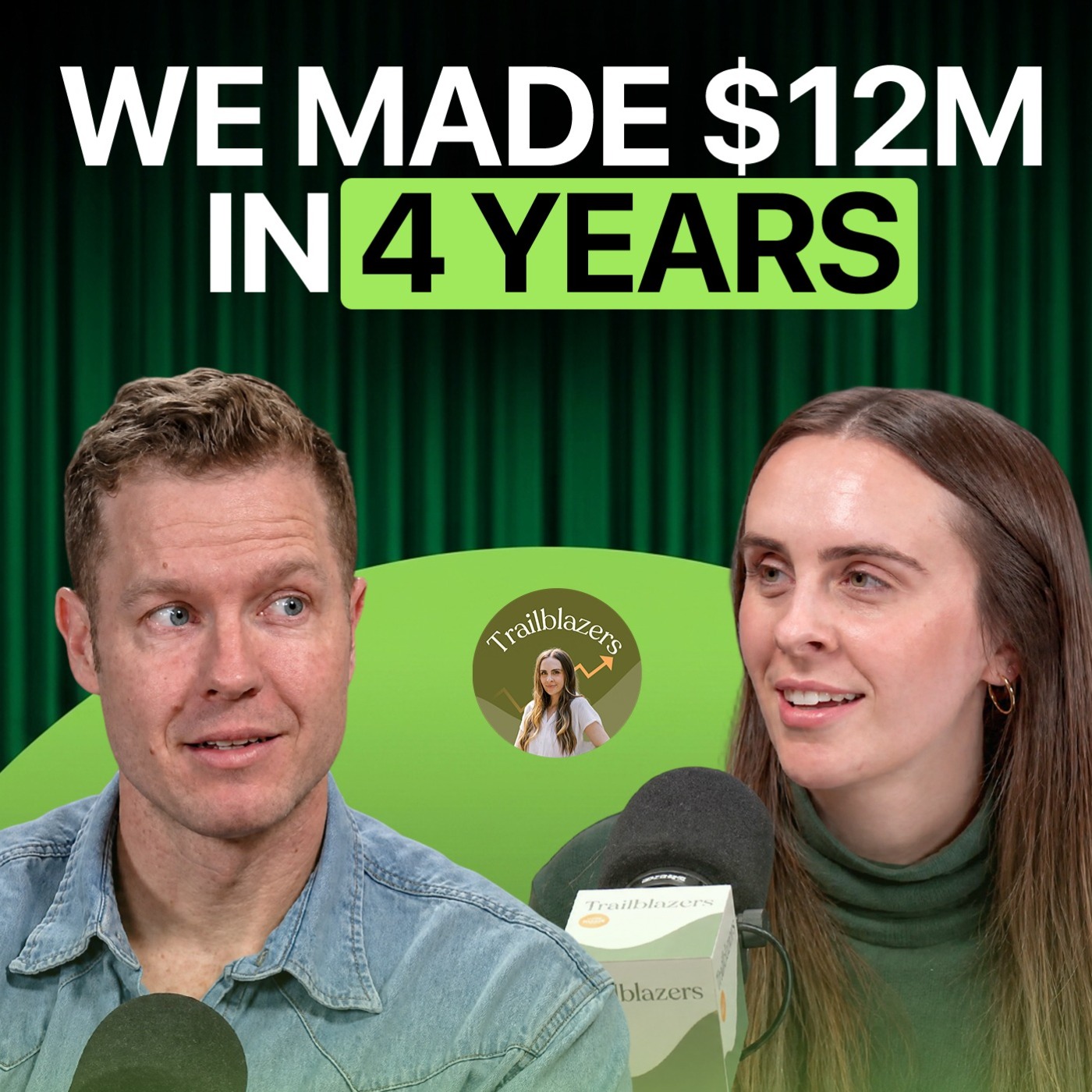
Rebecca Kaden (Union Square Ventures) discusses the “biggest myth about great ideas,” how USV thinks in market cycles, and why the “Rebel Alliance” (a consortium/stack approach) can compete with dominant AI platforms. She also covers USV’s thesis-building process, “public thinking” as an alpha strategy, and how USV builds internal AI agents to support deal work.
General Partner at Union Square Ventures (NYC). Previously Partner at Maveron (consumer early-stage). Started as a journalist at Narrative Magazine; studied English/American literature at Harvard; MBA at Stanford. USV backs companies including Coinbase, Twitter, Stripe, Cloudflare, Abridge, Radiant Nuclear, and Generalist.
Venture is driven by market cycles (e.g., Carlotta Perez “installation” vs “deployment”), not fund years. Gatekeeping ideas is a mistake; USV practices “public thinking.” Even if large closed models win, application-layer competition and open components create room for startups. Energy is a foundational “umbrella” bet (USV launched an energy fund in 2019).
USV’s Rebel Alliance framing; historical USV deployment-era winners like Twitter/Etsy; healthcare pivot example (Abridge vs a systems-focused go-to-market via a Bridge investment); internal agents for legal review and deal scoring trained on USV’s deal docs and email/notes.
Written by AI. May contain mistakes.
Rebecca discusses her transition into venture capital, including her challenges and growth.
“Okay, so we start every interview with a bit of an icebreaker.”
Rebecca reflects on the addictive aspects of venture capital and the importance of seeing future trends.
“You say the last thing I'll do in the world.”
Discussion on market cycles and their significance in venture capital investing.
“Like, here we're going for a decade, you know.”
Rebecca explains the concept of the Rebel Alliance and its implications for startups competing with large companies.
“There's a lot of pieces you've written, but I want to talk a little about this like Rebel Alliance.”
Exploration of the competition landscape for technology applications and the role of open source models.
“And this wasn't always something we thought was definitely going to be true.”
Explore how competition in the AI space is evolving and impacting business strategies.
“So we thought, OK, what do we do in that case?”
Discuss the importance of sharing ideas and frameworks within the startup ecosystem.
“So, you know, you guys have done such an interesting job publishing always since like the dawn of time where you see the world.”
Understand how investment strategies are shaped by market observations and evolving frameworks.
“The stack was becoming clear in our mind.”
Learn how to rethink market structures and eliminate gatekeepers.
“And you're like, this is just what I'm saying over and over and over.”
Explore the philosophical frameworks guiding investment strategies.
“crypto and agents, you know, and direct to learn education are actually all to us going towards the same goal of a more direct.”
Understand the importance of flexibility and strategy in venture funding.
“And I actually think having unified goals and values matters.”
Learn about the importance of managing liquidity in the investing landscape.
“that will make your LPs money, you know, because I think that's so much of our job too.”
Explore how firms can leverage AI agents to enhance operational efficiency.
“So one of the things I want to talk about that you hinted at was some of the internal AI agent stuff you're building.”
Learn how the firm utilizes trained agents to streamline legal and investment processes.
“So, one of the earliest things we did was, you know, load all of the history.”
Discover the importance of feedback in training AI agents to improve their effectiveness.
“And so we've just committed to being very engaged and giving the level of feedback this needs to make it very, very useful at the firm.”
Understand the significance of new data sources and how they enable better decision-making.
“I'll keep it vague for when this announces or when this goes live.”
Explore how ambient data collection transforms insights and opportunities across industries.
“And the reason is a thesis of USV that's, you know, again, kind of from the beginning is not new, is that great companies are often built off of unique data loops that are self-improving over time.”
Quick-fire questions revealing preferences and philosophies on various topics.
“Let me know whatever comes to mind first.”
Explore how new platforms will transform the way we share and discuss ideas.
“And I'm going to extend this to like never post on your blog ever again or never fundraise another dollar again.”
Discuss the potential of different media formats, including podcasting and writing.
“Like, I think in some ways we become reliant and stale.”
Dive into the discussion on whether AI is overhyped or underhyped and what the future holds.
“For anyone who is maybe worried that's a little overhyped, we're in some big bubble, what comes next in your view?”

Get the gist, explore an idea or ask about something said.
 Claude
On Trailblazers by Erica Wenger, what are the key points of this episode?
Searching your listeningAutomatic transcript. May contain errors.
0:00Erica Wenger: Today on the show, I am so excited to be joined by Rebecca Kaden. Rebecca is a general partner at Union Square Ventures, many of which will know USV, the thesis-driven firm based in New York that backs companies changing market structures from the outside in. Over the years, USV has written checks into category-defining companies like Coinbase, Twitter, Stripe, Cloudflare, Abridge, Radiant Nuclear, and Generalist. Before joining USV, Rebecca was a partner at Maveron, the consumer-focused early-stage fund, also based here in New York. But she actually began her career far from venture capital as a journalist for Narrative Magazine.
0:32Erica Wenger: She credits that work with sharpening the instinct she now uses to spot breakout companies, understanding how a story comes together before everyone else can see it. Rebecca studied English and American literature at Harvard and earned her MBA from Stanford. Today, Rebecca and her partners at USV are focused on the next wave of transformation, the Rebel Alliance forming the new agentic stack, data at the edge unlocking entirely new data sets in the physical world, an application layer built to obliterate markets rather than merely automate them, and programmable energy as the horizontal foundation beneath it all.
1:01Erica Wenger: A native New Yorker, Rebecca has come full circle. She lives in New York City today with her husband and two sons. Let's welcome Rebecca. Thanks for having me. Thanks for being here. I'm so excited. So fun. Okay, so we start every interview with a bit of an icebreaker. All right, let's do it. You can take it any direction you want, but it is quite meaty. I'm not giving you a softball, okay? So we talk a lot about the hard paths here. So when you think about your journey so far, professional or personal, what has been the hardest part of your journey so far that almost broke you? Oh, this is a good question.
1:36The hardest part of my journey that almost broke me. I don't know if it almost broke me, but, you know, I came from a background that had no exposure to this industry, you know, really at all. I was I felt like a real outsider in it. And I was looking to make this change. And a mentor of mine had said to me, you know, I think you should get into venture. I think it would be a good fit for you. I'm, you know, I'm kind of an innately curious learner. I like the process of learning things over and over. I like people. You know, he thought it'd be a good fit, but I got into it. And I, you know, had imposter syndrome times a thousand, right?
2:15Because the industry asks you quickly to have legs to stand on. Right. Why are you here? What are you offering? And it it took me a while to really learn that and to figure it out and to kind of learn on the job what my strengths were that I could offer without, you know, just being the last thing I did in the world. And I'm now very grateful for that, because I think that kind of experience and self-reflection, you know, gives you the confidence when you get there, but it was a journey to do it. Totally.
2:53Erica Wenger: You say the last thing I'll do in the world. And I think a lot of VCs say that, that it's sort of like their final job. When did you realize that? Like I would imagine, and I may be projecting here, but I would imagine like post-Stanford, you get your first venture job and you're like, let's see. Like, let's see if I like it. At what point in the journey, I think it's been like almost 15 years now, right? Like when were you like, oh, this will be my final job? Well, I very much think I believe in doing lots of things in the world. I hope I have. I hope I am a core investor for many decades to come.
3:29And I also hope my future holds lots of different explorations and projects and ways to contribute in all kinds of ways. But on venture, you know, I think it's a little bit addicting, right? Like you get into it and I'm competitive by nature. I'm competitive against myself. I like learning new things. And you realize you're kind of on a treadmill of doing that, right? Where your core job is to continuously think about what's around that corner, right? And the investors I admire most are people that pick well and operate well with their founders they work with, but are also experts at seeing around the corner.
4:13There are investors that I think are excellent at picking up on momentum and running after it. And that is a huge skill and one I admire and in many ways aspire to do. But I admire more the seeing around the corner, if that makes sense. And I work at a firm with people I think are really excellent at that. But you experience that and you want to do it again and again and again. And also, these things have long life cycles. It takes a long time to see it through. And so you realize, you know, every time you commit, you say, here we go. Like, here we're going for a decade, you know. And that's a long road.
4:52So I don't imagine getting off of it. And I don't know exactly when it happened. I think, you know, your portfolio adds up and some work and some don't work, but you kind of just get. I love that experience of getting excited about an idea and a hypothesis and starting to pull that thread and keeping it going and going down some kind of false roads, but then going down the right ones and getting to the finally to that company and having that conversation with the founder where you're like, you're who I've been looking for. Totally. That's amazing. and I kind of always want to do it.
5:28Erica Wenger: I love that. I think this concept too of reframing, like venture doesn't work in terms of years. It works in terms of cycles. Totally. So like if we say like every fund is 10 years, I'm just generalizing, like you're kind of only like one and a half iterations through. Yeah, I very much think in terms of like either fund cycles or market cycles of like how many of these things am I going to get to see? And which do you think you use more? Is it like the fund cycle? Because I'll tell you as someone who has gotten to know the firm, I think of you guys as like each fund, Do you really sort of step back and think about like, OK, what's the thesis here?
5:58Erica Wenger: Yeah. And obviously you write through the market cycles, but I would objectively say like fund cycles or how you guys measure time and like how I think about you guys like grounding yourself, especially in your writing. How do you think about marking time? I think a lot about market cycles because especially how can you not right now? Right. Like I think anyone who has kind of been through the past cycle and then is sitting on this precipice. Right. We think a lot about Carlotta Perez, which has kind of installation eras and deployment eras. That's her framework. And if you think about the Internet, it had a massive installation era.
6:36Then it had a boom and a bust, kind of. But out of that came messiness, but also an incredible deployment era. And USV really, really shone in that deployment era. That's where you got Twitter. That's where you got Etsy. That's where, you know, you got kind of these things that really change how people. What interests me about technology isn't technology itself. It's the hypotheses about human behavior that it enables. And that's where that really happened. And it's, you know, you sit at this moment and you see all of the installation that's happened pretty quickly in the last kind of couple of years.
7:15And then you feel this bubbling of this deployment cycle about to happen. And it's pretty exciting. You're like, this is what a market cycle feels like. Let's go. Like, it's going to be messy. There's going to be busts. But out of that is going to be the impact of technology that changes how we live. And, you know, that's what we're kind of here to do. And so I think about how many of those kind of cycles am I going to, you know, be able to lean into.
7:41Erica Wenger: One thing I've learned talking to GPs on the show and in my own experience as a GP, your back office is a signal. How fast you close deals, how clean the LP experience is, how your K-1s land, investors notice all of it. The more buttoned up you are, the more likely they are to give you more money in the future. That's why I want to talk about Sidecar. Sidecar is the SPV platform built for fund managers who want institutional quality execution without hiring a full back office team. They'll review your deal within hours, handle full secondary transaction support, and give you transparent pricing up front.
8:13Erica Wenger: No platform carry. Also, your LK relationships stay private, which is super important. It is not a marketplace. If you're running a professional fund, your infrastructure should look like it. Sidecar makes that possible without the overhead. Check them out at sidecar.io slash partners slash trailblazers. You guys wrote a really interesting piece. There's a lot of pieces you've written, but I want to talk a little about this like Rebel Alliance. Which you guys I feel like are most known for, especially recently. Like this idea that it's not going to be these like big, large foundational companies that will take up all of the market share.
8:41Erica Wenger: But there's actually a lot of opportunities, especially consumer. Yeah. Right. Like you talk about the deployment era. Like there's just so much on the horizon. Can you explain to people who, you know, maybe look at like an open AI where they have an infinite number of downloads and members and distribution built in? How is an up and coming startup going to defeat them or compete with them? and talk to me about your rationale, especially on the consumer side, because I think your essay was so well-written and very thoughtful, and I'd love for you to share more of those insights with folks. Yeah.
9:07So the idea of the Rebel Alliance is the idea of a stack and that a consortium can take on the big guys. And if you look at the history of the internet, one thing we love about it is it's built bottom up. It's actually not built top down. And there are things that you would do on the internet if it was built top down that would have been really nice, right? Like packaged neatly and things would have made sense. But actually, the beauty of the internet are the weird corners, right? Then the weirdness that comes out of it. And these kind of bubbling up products that emerge that only can happen because they're kind of stacked together.
9:43And we're looking at right now, and we have in some ways, a more top down technology market than we've had in quite a long time. And that's because of how capital has been deployed. And that's because of kind of fundamentals maybe of how, you know, large language models work. And there's benefits to it. And we're not arguing that those aren't going to work. It would be a weird argument, right? Those are working. And we're benefiting from them. But what we're arguing is there's also room for the consortium and for the stack and for the pieces to sit on top of each other and to take the market as well in this kind of Rebel Alliance way.
10:26And what that means is things like open source harnesses or open source models or things that can be used without walled gardens around them. And we're seeing a gravitational pull towards it. I think users are interested in it. I think builders are interested in it. And I think there are benefits of control, flexibility, pricing power that come from building in a stack and not, you know, reliance on the kind of big behemoth in the room.
11:04Erica Wenger: Which is very exciting as a builder because you're not dependent. Your fate is not in someone else's hands. Well, I would say it's essential as a builder. Yeah. Right. And this wasn't always something we thought was definitely going to be true. Maybe 18 months ago, we actually published something else called The Four Quadrants. We called it The Four Futures. And the idea was really, it's hard to write a piece where the punchline is basically, we don't know what's going to happen. But the punchline was basically, we don't know what's going to happen. And what we argued in it was, we don't know what's going to happen because we're in this time of ambiguity.
11:42where a lot of it depends on probably two axes. One is how open or closed the models are. And two is how fast the progress is, right? Do we hit asymptotes and limitations that we don't currently foresee? Or it's past precedent and these just kind of continue functionality to the moon. And that really nobody knew. But there's a world in those quadrants where the closed large models win everything, right? And in that world, the application layer kind of doesn't exist. Right.
12:15Erica Wenger: It gets totally absorbed. Did you guys assign percentages to each quadrant? I don't know. And everyone wanted us to like every LP wanted us to every founder wanted to. Yeah. But at what point was like, we don't know. But maybe it's like looking at your portfolio, because I think this is something that Fred had mentioned was like, so these are our four quadrants. We'll invest in each. Yes. Our punchline was we want exposure to all four quadrants. Like a classic fund doing it all. Right. Yeah. Why pick when you don't have to? Yeah. No. And our argument was that doesn't, you know, what we were trying to say is what's advantaged in each.
12:47And one, the large models are advantaged, but also things like programmable energy is advantaged, right? Because kind of actually the horizontal undercurrent of everything is you need dramatically more, more efficient, faster, ideally cheaper energy to fuel the ecosystem. So we were saying like, you know, even if the large models kind of win the day and own everything, you're still going to need energy.
13:11Erica Wenger: There's some like blanket stuff, too, that like across all scenarios, it's a smart bet. Totally. It's like almost like the umbrella. Energy is our biggest bet there, actually. I think that's now that's, I think, kind of a consensus point of view, though. I think there's a lot of different angles of energy. But you guys were definitely early. Like, I remember. Yeah. Everyone was saying, you know. Yeah, we launched an energy fund in 2019, I think. And so, you know, we've been very, very excited about new formats of energy, you know, programmable energy, which is really the ability to control and direct energy in new ways with technology, but also new formats of energy generation like Radiant or Zanskar around geothermal.
13:51them all. So all across the energy stack. But we were scared that if the big, large language models won, particularly if really one of them won, there would be no application error. And we thought about that. So we thought, OK, what do we do in that case? And what do you invest in? But what we've realized, which is part of, you know, for us, always theses build on top of each other. They're never kind of on their own. And the Rebel Alliance directly comes out of that, Because what we've realized over time is despite the large models doing so well, there's still competition, right? And there's actually increased competition for, I think, a bunch of reasons.
14:30One is there isn't one winner. Two is there's increased price sensitivity, right? Those models realized and those companies realized they want to make money. So they couldn't just do super subsidized, you know, subscription prices across the board. Sad for all of us. Really good for the application layer. Totally. Because competition creates opportunity at the application layer, because now there's something to compete for, for that business to be built on top of. Open source models are, you know, they're now talked about a lot, but they're a real contender and there's real benefits. And so there's more competition at the model layer than I think at one point we thought might be true, which has given us a lot of renewed conviction in this application layer and the idea that it wasn't going to be fully absorbed.
15:18As has the kind of fundamental truth that we probably should have known all along, which is it's really hard for big companies to do all the things. And we've learned that lesson in every cycle, right?
15:28Erica Wenger: This is true, but the behemoths always feel so, I mean, like everything's AI cycles, like never been done before, growing faster than ever. So there's always the what if of. Totally. And yet you see them launch consumer verticals and stuff. Yeah, yeah, yeah. And some of them will work and some of them won't work the same way that that was true at Google. And that's been true at Meta. Totally. And that's kind of the nature of large companies. And you might argue, and I think we've been talking about, that actually I think the desire for continued capital at scale, which they really need to survive, might force even more focus.
16:03Erica Wenger: Yeah. You'd hope. I mean, you'd think, right? Yeah. Because there's only so much to go around. Yeah. Let's talk about the messy middle of building an audience. You've got your newsletter in one tool, your podcast in another, your website hosted somewhere else entirely, and your community is scattered across multiple apps. You have to pay for four different subscriptions and then they still take a cut of your earnings. Does that sound familiar? Beehive has just fixed this with their latest update. It's one platform where your newsletter, your podcast, your website, your paid subscriptions, and now your community can all live together.
16:33Erica Wenger: Everything talks to each other because it's finally under one roof. And here's the part creators like myself love most. When you earn on Beehive, you actually get to keep all of it. So there's 0 % taken from your subscriptions, 0 % from your digital products, and publishers on the platform have actually made tens of millions in revenue and kept every single cent. So if you're tired of stitching tools together and ready to actually own your audience, go to beehive.com and use the code TRAILBLAZERS30 for 30 % off your first three months. That's beehive, B-E-E-H-I-I-V.com, code TRAILBLAZERS30. So I have a confession.
17:06Erica Wenger: I used to be a compulsive note taker. Every single meeting, I'd be half listening and half scribbling and still leaving with gaps on next steps, details that were shared and more. But Granola completely changed that for me. It's an AI powered notepad for meetings and it's connected to every single call on my calendar. Before each call, it shows me a well-researched brief so I know who I'm meeting with and the full context going in. During the call, I jot down whatever stands out. Maybe it's a keyword or a decision I make. And Granola handles the rest. It'll transcribe in the background on the call and then turns my rough notes into clean, structured takeaways the second we hang up.
17:39Erica Wenger: There's also no bots joining calls. It just works in the background. I use Granola for several things. If I finish a meeting with a potential investor in my fund, I'll ask Granola, what could I have done better to get my point across? If I'm meeting with a founder I like, I'll ask Granola to point out any major green flags or maybe red flags I may not have already caught. For people with a lot of due meetings and decisions that require endless context, Granola is a game changer. Actually, we're running Granola on today's episode, so you can read the full show notes at granola.ai slash trailblazers.
18:07Erica Wenger: New users get three months completely free. That's granola.ai slash trailblazers. I wanted to ask you about like the alpha you uncover and how much you share versus not. So, you know, you guys have done such an interesting job publishing always since like the dawn of time where you see the world. I think the four quadrants, let's use that as an example because you just talked about it. It's like a way people can now talk about scenarios of who's going to win. But in a lot of ways, that is a little bit of your alpha, like that you've created these like four quadrants and that your LPs can know, oh, wow, they're being more diversified about it.
18:37Erica Wenger: And so how do you guys decide what to share, what not to share? And do you ever worry that you're like giving away the secret sauce? Or do you have more of like an open source view of it, too, where like you want to benefit the ecosystem? A totally open source view of it. OK. I actually think our alpha is the opposite. Tell me. I think our alpha is public thinking. Yeah. And putting our ideas out into the world. Said by the journalist. Talk your book. But one of the things I think resonated with me about USV from the first time I've spent time with the partnership was that idea that we actually think gatekeeping ideas is a, you know, recipe to lose.
19:17that actually what you get by, you know, effectively open sourcing ideas, right? And put it, we call it public thinking, and often we call it half-baked thinking. If you know, you know, what we really think about and what my partners have really pushed on me is, our goal is not to produce the Oracle, right? Or to say this is the answer, or to say this is the ultimate market map of X. It's to say, here are some ideas. We're more sure about some of them than others. But we want them out into the world because we want the feedback, right? Pressure test our ideas. Pressure test them by disagreeing with us, by agreeing with us, by sending the companies that relate to them.
19:54Which is super helpful. That's the whole thing. By you saying, oh, now I know you're interested in that, right? Like, maybe, you know, we wrote about data at the edge and a lot about physical world AI. Maybe you were like, I didn't know they were so interested about that. And now I do. And so, I'm going to meet a founder that's focused on that. And I know that USV wants to talk about it. Also, our theses get better. It doesn't happen in an intellectual box. It happens in the real world. 100%. And so you can only do that by getting ideas out there. So I actually think the alpha comes by taking those ideas and being better about connecting the dots to how those become investable businesses, not by the ideas themselves.
20:36Erica Wenger: We're also giving everyone a framework to use. Like, I think that's so much of your public thinking that differs from other firms is that sometimes other firms will just talk about like an exciting launch. And like, we want to invest more in this area. Right. Yeah. But you guys really are like, here's the four quadrants, you know, and like this is this is a framework. Yeah. To grab on to. Yeah. You know, I think mostly it helps us because it's it's just how we think about things. And I find it really I think about our kind of thinking stack. We have a Rebel Alliance stack, which are the pieces of building agents that are going to launch into the world and change how we live.
21:08But if you think about our thinking stack, I think about frameworks. Four Quadrants is a framework. I think about frameworks. I think about theses. I think about ideas and then companies. So frameworks is kind of a worldview of how would I make sense of what's going on in a market? A thesis is a hypothesis about where there's opportunity. Ideas pull that into specific verticals and companies are things you can invest in. And ideally, we want to build all down that stack.
21:37Erica Wenger: A thousand percent. OK, so you set me up perfectly for this. OK. Tell me your process. So like, do you start with the framework? Do you start with the theses? Do you meet a brilliant founder building a company and see if it fits something you've already done? What is the process amongst those sort of four levels that you go through? And I know every company is so different and maybe every partner within USV is quite different. Yeah. But I'd love to hear your strategy for finding great founders and where you start. I think it's really evolved over time. I think when I got to USV, it was pretty bottom up, right?
22:09And we would know kind of the theses or the overarching ideas. And then I'd want to meet a lot of companies and see kind of how I can connect the dots. Over time, I spend more and more time really on that thesis. because I find that the more I can know what I'm looking for, the more likely I'm going to thread the needle of the right idea and the right team, right? Because I really want both. And the more likely I'm going to have a conversation with that founder that one gets out the things that I actually think I need to make the right decision and also differentiates the conversation, right? So that I'm going into it and saying, not, you know, pitch me a business and I'll tell you if I think it's good, how would I know, right?
22:57And more, I have a hypothesis about how a market works and you have a hypothesis about how a market works and you're probably spending a lot more time in it than I am, but we've done our work, right? We've prepared our minds. Let's have a conversation about where we align or don't align. Way more effective. And way more interesting.
23:15Erica Wenger: More interesting. Like selfishly, right? It's more about like ideas. Yeah, yeah. More likely for, I think that I can walk away and say, that's a founder I want to get behind because I think it's meatier in a lot of ways. And I've really learned that process over time. I don't think I came in with it, but I do think I've learned it. And so I now really rely on it. But our process in developing the theses, people ask this question and I always wish I could give a clear answer and I can't because it's like everything else for us. It's pretty bottom up. It's like we're meeting companies, we're talking all the time we devote a lot of space within our partnership to talking about ideas not pipeline our portfolio we have designated times we talk about pipeline our portfolio but we also have designated times we talk about ideas and we prioritize it and so we kind of pull the thread sometimes an inch at a time and sometimes a mile at a time right and it depends and sometimes it feels like we're not getting anywhere and then sometimes you're like okay it's like coming together and we generally write it like when we feel like we've been saying it internally a lot Totally.
24:22Do you know what I mean? Like comes up three times in a week or something. And you're like, OK, this needs to go out. The Rebel Alliance is a great example. We've been saying those words internally. We also had been we had developed a real perspective on open source harnesses. And now we've made several investments in the category, maybe none of which have been announced. But probably by the time this comes out, they will be. Yeah. And that's a piece of the stack. And we'd also, you know, been looking at other pieces of the stack, the consumer layer, you know, open source model, different parts.
24:51and thinking about how these come together. We'd also been real builders in it, right? And we built a lot of kind of an agentic operating system for ourselves. And we were seeing how we were doing that and the tools we were using and what we were relying on. And that was informing it. The stack was becoming clear in our mind. And finally, we're like, all right, we got to get it out there because we want to see more of it and we want to encourage it. And we want that conversation to happen. and for us to be a part of it. And so that requires a whole, like a hodgepodge simultaneously of us pushing each other on the ideas.
25:30And we're always like tighter, crisper, narrower, right? Like shorter, tighter, crisper, like how, you know, less broad, you know? And then when we finally feel like it's clicking, we'll put it out into the world.
25:45Erica Wenger: I love that. One of the analogies that I use with my writing is I think of it like an album where I have like the headline, like the title of the album. And then I have like all these songs underneath it, AKA additional essays that are supplemental, but there's very much like a headline. And that usually, I mean, we'll see how long I do this for, but so far it's been like every few years, every fun, you sort of have like a new album that you put out. Totally. Like an artist. And I'm really inspired by like a Taylor Swift of the world where like at every point in her life, she's got like her red area, she's got her lover area.
26:11Erica Wenger: And you can kind of tie that to like certain focus areas or certain market cycles, if you will. How do you guys think about like the umbrella? is it just because because i see it as sort of like you guys just throw smart ideas out but how do you think about like the cohesiveness of it and bucketing them as like you know this is like our 10th fund and so these are like all the things under the 10th fund it's way less um neat than that even though that sounds really nice like i um to us it's actually the same so so we publish We've published, I think, four theses collectively as a firm over 20-something years, right?
26:51And in our minds, we publish them when we feel like the previous one is no longer articulating the overarching thesis that we're going off of. So we've said it in different ways. There's been large networks of engaged users, which is really USV thesis 1.0. There's large networks of, they're all building on each other too. the large networks of engaged users differentiated by user experience and then also the data layer underneath them, right? There's, you know, there's been these kind of iterations. The last one was, you know, changing the structure of markets from the outside in because of kind of structural pressures.
27:31Actually, those are all the same thing, right? And we have these moments where we realize this. Like I was looking for an old blog post on the USV blog that had nothing to do with this because I was trying to pull it up for some founder I was working with. And I came across one that Fred had written, I think in 2014 or 15, that's called Obliterate, Don't Automate. And what Obliterate, Don't Automate is, is don't change markets from the inside by, you know, making it easier for the existing gatekeepers. Change them from the outside by changing the structure of the markets involved. And you're like, this is just what I'm saying over and over and over.
28:06And it's actually we rephrase it for different moments in the market, which I think we have to do. But the overarching theme of what we're saying, which is that which is how do you change our market structure? All markets have gatekeepers. And there's a temptation in technology to build for the gatekeepers to create efficiencies on the inside, right? agentic software for healthcare systems. It's not that we don't think that's a good business. It probably is a good business. It's not what we want to do. We want to think about how can you make the system more direct? How can we drive the cost of healthcare in this country to zero?
28:42Not by making it more efficient for the gatekeepers to exist, but by eliminating them. How can you structurally change education so that it's not bounded by geography and cost? You can build direct to learner product, right? You know, all of, you know, how can you democratize the internet and give power to the individual versus the platform? You can build a web and an agentic stack versus a centralized force. So, it's all really the same thing applied to kind of different market moments.
29:17Erica Wenger: It's interesting, too, because a lot of it's just like philosophy. It's sort of like how you view the world like i think a lot of like i used to joke like creator economy and crypto and a lot of stuff it's all about like decentralized ownership and like sort of like there's it's different technology in different eras but it's you as a firm sort of take a stance on what is your philosophy and i think it's so cool that 10 years later you can find a piece and it's got that same dna i would say a lot of that has to do with the fact that you still have so many of your early partners involved 100 like fred's now you know excited yeah totally and And everyone's allowed at USV to kind of have those moments.
29:50Right. And like reignite, you know, and be like, this is the moment we've been waiting for. And it's very cool to see that when it happens, because there's this aligned interest and then these different threads of it that get people excited. You know, as you just said, crypto and agents, you know, and direct to learn education are actually all to us going towards the same goal of a more direct. Personalized, customized. Yeah. Whatever the words are. Yeah. And so you're just pulling these different threads towards the same goal. And that when that it doesn't always hum, you know what I mean? But when it hums, it's really good.
30:31Erica Wenger: there's also the argument though that that is so um one view of the world should the funds be having multiple points of view right like i don't know what your take is there i you know i know you guys invest like across a lot of different kinds of sectors and obviously talk about programmable energy you guys have done a lot on crypto social back in the day like all that stuff yeah but is there a take ever internally like hey we've been sort of like beating this philosophy since the dawn of time should we sprinkle some bets in more because it feels maybe easier is the wrong word It's always hard to build a business.
30:59Erica Wenger: But when you think so lofty of like, let's just like cut out the middleman and let's do this, like let's rethink education from first principles. It's often harder than the like, almost like, I don't want to say quick hits, but a little bit of the quicker hits of like, you know, selling to people that are already there. But it's pretty fun and interesting. So a few things. So you need diversity in lots of ways in a fund, right? You definitely need diversity of ideas. you need, I think, diversity of categories, right? Like, I don't think you need every form of it. And I actually think having unified goals and values matters.
31:36But you definitely need diversity. I think we get that because we are pulling lots of threads of this expression. Also, kind of by the definition of being early stage investors, sometimes you invest in things that move around. Do you know what I mean? And so you're investing and it's like, it's bottom up, it's going like towards that view of a decentralized world nope it pivoted you know and actually it really hits my best example of this is always a bridge yeah right which we love a bridge we're thrilled to be in a bridge yeah shiv is a n of one founder that yeah he is absolutely fantastic and that company is adding a huge amount of value to a population we care quite a lot about which is both practitioners and patients.
32:20When we invested in a bridge, it was direct to practitioner in a bottom-up motion around, you know, can you make this more direct by recording visits directly? That is not where it found go-to-market success, right? It really found go-to-market success through healthcare systems, you know, and kind of the large players in it. That's great. And that's still moving that market forward. But it also told us, let's take another bite at this apple, right? We still want to drive directly to the end users of this market. And we got to Doctronic, right? Which is direct to patient driving that cost of care to zero through new kind of tool sets.
33:02We love both of those. And by the nature, kind of one of the beauties of early stage investing is you can't be that prescriptive. And you have to know what you're betting on and and embrace the edges changing along the way and enjoy it. Right. And so I think that's actually kind of ironically a pro of how the portfolio evolves, even if you don't know it going in. But we also raise relatively small funds, which we should talk about. Right. Like, yeah, not as small as we used to, but given the market. Inflation. Yeah, exactly. Relatively small funds. And we do that very purposely for lots of different reasons.
33:40But one is we think we can then manage them bottom up, right? We don't have to invest in everything. We don't have to play the ultimate coverage game. We have to play a very strong coverage game in our theses and buckets we decide to pursue and go after. We want to be in the companies that win the markets of the markets we decide to go after. But we aren't trying to do everything. And we would raise a very different fund if we were, right? And so one of the benefits of the fund size we've chosen is that degree of flexibility that we can really remember we're not boiling the ocean here. And so we have the luxury, honestly, of being particular about what we pursue.
34:27Erica Wenger: Yeah, which is very nice. And I think there's so few firms, we won't name names, but there's just in general so few firms that have maintained that strategy. and it's really inspiring to see conviction, not just in terms of companies you back, but in terms of the fun strategy that will make your LPs money, you know, because I think that's so much of our job too. You know, like we forget, it's not just about hype and marketing and hot companies. It's about who consistently puts up top returns. And when you've done that, how do you keep doing that? Totally. Because that's, sometimes you'd argue harder than doing it in the first place.
34:54Erica Wenger: It's like, how do you maintain that? Totally. Special sauce. Yeah, totally. And, you know, how do you get into the right companies, but also how do you get out? Yeah. And how do you, you know, create? I think one thing I think my partners at USV are excellent at is fund construction and management. Like they're really good at it. And I've learned a lot about that part of venture that I don't think is actually talked about that much. Totally. I just had so the our episode came out very recently with Anne from Floodgate. The best. The best. The absolute. The absolute best. So anyways, in so many ways.
35:30Erica Wenger: And she's I will say and she's fine with me saying this like she's one of the firms that has kept their fund size very consistently. Yeah. And she said something so brilliant about exiting and how the expectations look so different for her to exit versus a multi stage. And it sends such a different signal to the market. Yeah. And we had such an interesting and beautiful and very open discussion about that. Yeah. How like it's not just about what valuation they had, but it's about realizing those returns for your LPs and actually what you can do and what that signals in the market. Because I think it's so different for her than it is for a multi-stage, multi-billion dollar platform.
36:02Erica Wenger: Totally. So, USV has always been very consistent that we are a firm that sells on the way up, right? And that we look for liquidity opportunities in great companies as they accrete value along the way and that we work hard to return funds pretty quickly if we can and be proactive about that versus just kind of waiting for ultimate exits. And I've really enjoyed learning about that and drank all the Kool-Aid around that value. I also think, and that's been controversial, you know, in the market for lots of different ways. I mean, you guys are one of the few. I mean, that's why you, Floodgate, whatever.
36:41There's no money. I think it's going to become less controversial in a lot of ways. It kind of already has, right? Like, I don't think there's really any expectation. I mean, maybe I'm wrong, you know, that everyone hangs on to OpenAI and Anthropic. You know, I think the scale of private companies, the speed of it, the kind of capital dynamics actually are changing that. And so that's one of those things that may relate. And just, you know, I think there's becoming a knowledge truth that liquidity has to be managed in this market. And so because it hasn't been for so long, there's like that pain.
37:19Erica Wenger: And then there's also, like you said, like the growth is so fast. You have to grab on to them. I mean, those IRRs are crazy. Like, I'm sure you've seen it, too. Like it's numbers that you've never thought you could see. And so, you know, I think that's kind of forced a conversation broader that I'm hearing more of the market move in that direction just because of those dynamics. Yeah. But I think it's going to take a bit for people to actually make those changes because there is just precedent. Yeah, there's culture. There's culture. Yeah. The 2026 primaries are taking shape. And if you have a strong opinion about how they're going to go, Calci lets you actually trade on it.
37:49Erica Wenger: Calci is the largest prediction market in the U.S., federally regulated and available in all 50 states. You're not betting against a house. You're trading against other people in a live market, taking yes or no positions on real-world events. Elections, federal interest rates, economic data, you name it. Right now on Kelshi, you can trade on the California governor race, Senate outcomes, and a dozen other major political storylines as they develop. As the probability shifts, you can buy in or out of your position in real time. It's a completely new asset class and honestly, one of the more interesting ways to have skin in the game on what you're already watching closely.
38:19Erica Wenger: Download the Kelshi app, that's K-A-L-S-H-I, and use code trailblazers to get$10 when you trade$10. Or go to calshi.com slash r slash trailblazers to accept this$20 offer. With Calshi, you can trade on anything. 18 plus only, restrictions and eligibility requirements apply. Event contract trading involves risk and may not be suitable for all investors. Prices, values, and available markets may differ from those mentioned. For more information, see calshi.com slash regulatory. Okay, so a quick experiment. Think about the last long message you typed. Could be a Slack thread, a prompt into Claude, maybe it's a detailed email.
38:52Erica Wenger: It probably took you 10 minutes, maybe even 20 to get it right. Now imagine you just said it out loud instead. That is the whole pitch for Whisperflow. Whisperflow is voice-to-text that actually works in every app on every device. You speak naturally, and it outputs clean, formatted text that's ready to send. No setup, no integrations, no fixing weird transcription errors. And it works across Gmail, Slack, No Shan, Claude, iMessage, wherever you type. And unlike the built-in dictation on your phone, Whisperflow removes all filler words, mid-sentence corrections, and jargon. What I personally love about it too is that it perfectly matches my style.
39:25Erica Wenger: So I often type in all lowercase letters, so it'll type like that. I also say things like LMK, which means let me know in shorthand, and it'll auto adjust it from let me know to LMK. Like many of you, I also do a lot of brain dumping into LLMs. So instead of typing it all out, I actually just speak my windy train of thought into Whisperflow, which is infinitely faster than trying to get my fingers to keep up with the pace of my thoughts. If you do any serious writing or just send a lot of messages and emails, using Whisperflow is a no-brainer. Get one whole month of Whisperflow Pro completely free at ref.whisperflow.ai slash trailblazers.
39:58Erica Wenger: So one of the things I want to talk about that you hinted at was some of the internal AI agent stuff you're building. Your librarian, as you all call it. Yeah. So I'd love for you to tell everyone, you know, how are you guys, a firm with a solid amount of resources? How are you thinking about building your own agents internally? And we're doing it at my firm. I have my amazing fiance. Shout out to him, who's a software engineer and builds me things for zero dollars. Love that. But like, what are you guys most excited about and what have been the things that maybe other firms have not yet done that you think are extraordinarily valuable?
40:27Erica Wenger: It's not it's not to like make the reservation when I want it. And it's not the, you know, scrubbing data that, you know, everyone else can do. Is there anything really insightful that you guys have been excited about doing internally? Yeah, lots of things. So I mean, the way we think about this is like if you think about what the Internet did, the Internet made information accessible. Agents are making expertise accessible. And so how do you take advantage of that? All of these firms, us included, are filled with knowledge bases of expertise. And we, our goal, USV has always been small, people-wise, right?
41:05And we really like that. None of us are, I don't know if, you know, probably one of my partners will be upset if I say none of us are great managers, but I don't know that any of us are great managers. and none of us aspire to do a lot of managing. Yeah, totally. We leave it at that. They don't aspire. Yeah, we don't aspire. Yeah. We really like a small, flat, fast firm. And part of that is we've never liked a lot of people at it. Now you don't need a lot of people at it. Convenient. Really convenient. So we were, and we're tinkerers. We like to get our hands dirty. We like to, we've always been interested in this kind of builder stack of products that's kind of been, you know, part of our culture for a long time.
41:47And there's so many of them. So, we were early in just getting our hands dirty and starting to build and playing around. And so, in a very bottom-up way, we started playing around with what we could build. And what we learned is that we could build a series of agents that did a lot of work for us that we used to have to do ourselves. So, one of the earliest things we did was, you know, load all of the history. And And actually, Fred did this as like a, you know, playing around in a weekend. And then like everything else, we kind of have fiddled with it until it's usable, you know, and kind of professionalized for our firm.
42:23But took all of the docs we've ever used to close deals at USV, all of the historical deal docs and trained a model. I mean, how much was that? I mean, it's a lot. But right now, it doesn't take that long to do that. Right. And so we said, OK, you know, what if any time we got a legal doc, any time we need to write a term sheet, any time we got a legal doc, we could just forward it to a legal agent and get an immediate read on, you know, how it stacks up to everything else we've seen. Whether that's, you know, we're issuing a term sheet or we're closing deals or doing definitive docs, but also if one of our companies is raising a round and gets a term sheet they want to review or, you know, anything.
43:04Right. And so we trained it. And then we gave it tons and tons and tons of feedback. And now we named the agent and the agent sits on all of our emails and responds anytime a legal question comes up. That's been really, really useful to us. And all we did is roll out that motion across lots of other things as it came up. So we have another agent that's really a deal agent. And any time we either get sent an investment opportunity or go out and source an investment opportunity, that agent sits on our emails and gives us a read. And they give us a read. It actually gives us a score. We don't care that much about the score, though it's a composite.
43:47So we care about the composite as an input. And part of what it's doing is it's scoring it against all of our express theses. does it weight the more current like have you guys figured out interesting formula there yeah and we've given it tons of feedback yeah um you know and so it goes through everything we've written and everything we're prioritizing and it weights it against our current conversations we record everything all of those notes are fed in all of our email you know granola yes shout out granola sponsors the podcast there we go granola is you know lifeblood uh we love of um usv as they know and you know so it feeds in all of our notes and so that helps the weighting and we've given it, lots of feedback.
44:27And so, you know, that deal agent now is a voice that's helpful and also can like, you know, immediately help us understand how it relates to the things we're talking about. That only works because we express a lot of ideas. So that's, you know, another example. You know, obviously it's created all the information about our, you know, it used to be like you wanted to remember how much capital you had in a company and what you owned of it. You'd at our fingertips, all of our LP reporting, you know, all of that is in a series of agents that, and every day, you know, they get better and they, we now have them sync with each other.
45:06You just keep adding these skills and we have a architecture that's way better than when we started. And they require a lot of feedback. We always say that they kind of come in like a first year analyst. But that's perfect because you guys do this anyway.
45:19Erica Wenger: Yeah. And so you're just like, okay, we'll give them the same curriculum. Yeah, we give them, yeah, we train them, you know, They come in and we always joke like the first thing they do is they want to get the deal done. So the first time you send them the deals, they love every deal. Right. And they put it in the right upper quadrant of every market map that they make. And then you say, no, here's, you know, and it gets better. I think what people don't always realize when they're doing that is the level of feedback it requires. That if you are trying to use an agent and it's not great right away and you're like, okay, so it doesn't work, you're never going to get it there.
45:51but you know our we now have someone who runs this internally and today he showed us something for instance which is going to give us a really quick little app kind of feature we have kind of an operating system these all these agents now sit on so it'll be one of those and you know before our team meetings it's going to have you say kind of yes or no to whether you want to surface things about portfolio companies that were brought up in our emails and his point is that's going to make that conversation better, but it's also training data, right, of what appears in the email that we're then going to want to speak about live and what doesn't.
46:27And so we've just committed to being very engaged and giving the level of feedback this needs to make it very, very useful at the firm.
46:35Erica Wenger: I mean, it's just the same as like having a really junior hire that you want to train and you're like, God, the first three to six months of onboarding are a pain, but then they start really doing things themselves and then interact with other agents. And totally. It's just exponential. Yeah. It's worth the early investment. Yeah. And you're just experimenting, if nothing else even if it like goes sideways you're tinkering you're learning bottoms up I love the it's very refreshing the like bottoms up approach to everything and it's very it's very consistent and authentic which I think is something that makes firms great it's like whatever your philosophy do it throughout do with your internal ops do with your you know how you invest do with everything yeah yeah yeah and you either love it or you don't yeah but it's like consistent it's very you yeah okay I have one final question and we'll get to our lightning round I keep peppering you all day you know date at the edge Yeah.
47:20Erica Wenger: Epic essay released recently. I'll keep it vague for when this announces or when this goes live. So interesting. So brilliant. This concept that like we have these new data sources we've never had before. You gave a lot of interesting hardware examples, you know, batteries that used to last six months now last 10 years. You mentioned granola, which is exciting. You know, it like has all this data, but now we can actually record it. What does that mean? So tell me a little bit about like how that essay came about and what's the response been and ultimately like why did you write it? Yeah. So one thing I love about Data at the Edge as a pillar, which is a thread of our thesis that I've been particularly excited about and really leading a bunch of investments behind, you know, around chips and robotics and sensor proliferation and things like that.
48:06And the reason is a thesis of USV that's, you know, again, kind of from the beginning is not new, is that great companies are often built off of unique data loops that are self-improving over time. Right. And for a long time, that was software. Right. And there were all these opportunities to have data network effects in software where the more data you collected, the better the product got, which encouraged more data. And so it was a self-improving data loop. it's now harder in software, right? The dynamics of software have gotten crowded and there's a lot of conversation about agents are opening some of that, but also it's hard and the software dynamic has changed.
48:46But we have the ability to collect data from sources that have been always dark. And that is so cool because it's net new opportunity. So think about ambient conversation. We could never collect. It's not that we couldn't record. We've been able to record conversation for 100 years. But the ability to take that conversation, parse it, process it, put it in a model, and make it usable to build on top is really new. And so, it's made data sets that have actually been accessible to collect, usable to build on in a totally new way. The physical world is obviously such an exciting one, right? We have a massive proliferation of sensors.
49:26Hardware cost has dramatically declined. Appetite for it has dramatically risen. Automation has made it possible to do things that were previously impossible. We have chip technology, which is making it last longer and so can reach edges it hadn't reached before. And so we can now collect data from the physical world that on its own is interesting, but you can build on and create these self-improving data loops in the physical world, not only in software. And that's opening use cases around climate and energy and diagnostics and infrastructure that we previously weren't able to access at all. And I think that is really, really, really cool because it's not making things better.
50:12It's making things possible. And that's, I think, where kind of the biggest opportunity comes from.
50:17Erica Wenger: Yeah, I completely agree with you. And I'm so excited to see the investments you guys make in this space. I think of it a little bit almost as like 2D to 3D. It's almost was this like additional dimension like i think now we're also used to like google and open i like where you just use language to search things but what does it mean to capture the world and i think that's where a lot of this physical asf's coming in that's so exciting like what does it mean to have a you know a 3d version of your home what what does that look like you said the you had some really interesting stuff in the essay as well about just like different use cases uh especially with these with these ships i'm very excited same so here's a problem i hear constantly from operators.
50:51Erica Wenger: The data exists, the answers are somewhere in there, but getting to them, actually pulling a useful insight without bugging the data team or learning SQL takes way too long or just does not happen. Hex solves that. Hex is an AI analytics platform where anyone on your team can ask data questions in plain English and get real answers, backed by your actual business context. No SQL required. And the best part is that Hex shows you exactly how its data agents think, so you can see where the logic comes from and trust the output. The more your team uses it, the smarter it gets. From seed stage founders running lean to larger orgs dealing with serious data complexity, Hex is built to scale with you.
51:27Erica Wenger: It's game changing for people like me who want to understand what's going on under the hood, but we are not the data experts. It's funny too, because I feel like every time I look over my operator friend's shoulders, whether they're in product or marketing or ops, they often have a Hex dashboard pulled up. It's a great tool. Trailblazers listeners get an exclusive 30-day free trial at hex.ai slash trailblazers. Okay, cool. Let's get to our lightning round. Let me know whatever comes to mind first. All right. Okay, let's do it. Book in hand or podcast in years? Book in hand. Old school. Old school.
51:55Any favorites recently? You know what? I love to read fiction. Yes. Which is kind of unpopular. I like to listen to nonfiction and I do all the time and a super wide variety. But I find reading stories sparks imagination that's actually helpful in surprising ways.
52:21Erica Wenger: I love that. I would argue, I'm extrapolating here, but that's why I live in New York City because I feel like there's so many different kinds of stories that spark my brain, whether they're about fashion or about politics or about philanthropy or whatever, where SF, it's like all the same stories. Yeah. That's my hot take. Okay, cool. um any favorite books you recommend or my favorite book of all time which is always a um it's a weird one is um pale fire by vladimir nabokov whoa what an eight in pale fire yeah it's amazing okay great i will add to the list high or slow or fire fast both if you have to pick um fire fast.
53:02Okay.
53:02Erica Wenger: Anything more on that? I think my answer is both. I would hire slow and fire fast. But I also think sometimes in these growing companies, you need speed. So I'd probably say hire fast, but selectively and keep the team super high quality and tight, which means you got to fire fast. Great. 10 small wins or one big moonshot? One big moonshot. I think we're just in a moment where like, I think there was a time where I was more focused on the idea that these kind of like incremental improvements could add up to these things that would change how a market worked. And there's tons of examples where that's true, but over time, I've gravitated towards believing that there's no more downside in the big swing than the smaller swing.
54:01So, swing bigger. Love that.
54:04Erica Wenger: Being early or being right? Being right. Okay. What's the best teacher, a mentor or a mistake? I think the best teacher is a mistake. I mean, it's a more painful teacher. But I find, you know, being told something, you know, I think the best partnerships actually come with both mentors and mistakes. because you can learn from other mistakes because your partner, my partners are super open about it and just like willing always to lay it on the table and, you know, in the hopes that we don't all have to make the same mistakes. But there are certain things that making them on your own teach you that visceral reaction that you need to really push yourself to get better.
54:55Erica Wenger: Absolutely. Is the future of AI abundance or chaos? us? I think it's total abundance. I'm an optimist. I don't know. I think about that data at the edge thesis and all of the things. And a fundamental part of that thesis that I really like is that we don't know really what's going to come out of it, that there's just a deep unknown, right? The idea that we can access all of this pockets of data and information and understanding of our world are going to lead to use cases we can imagine now and far more we can't. And that's the definition of forward progress. We don't know, but we have to kind of believe that progress creates abundance and not be scared of it.
55:37Erica Wenger: I love that. Killer product or loyal niche audience? Killer product. You know, build the thing that lots of people are going to absolutely fucking love. Great. VC or bootstrapping? Oh, God. Depends what you're going to build. But, you know, if you're going to swing big and investment can create opportunity to invest early in things that have long term efficiency and payoff, you know, then VC is a good opportunity. Amazing. Never post on social media again. And I'm going to extend this to like never post on your blog ever again or never fundraise another dollar again.
56:24kind of go hand in hand. Yeah. Hence the difficult questions. Yeah.
56:32I guess never post on social media or a blog again. I think there's lots of avenues to getting ideas out there into the world and there's always going to be new ones. And actually, that's something I've been excited about. Like, I think in some ways we become reliant and stale. And I think we're going to find new ways to have discourse around ideas that, you know, one thing, USP was an early investor in Twitter. And the thing I like about that investment, besides, you know, that it was successful, is it changed the market structure of something, right? Publishing had a gatekeeper and with Twitter it didn't.
57:02What are the next things that have gatekeepers that now won't? Back to bottoms up. Right. And I'm excited to think about that.
57:09Erica Wenger: I love that. Quick aside. You guys have always been writers and bloggers. I saw Michael and Fred just did a podcast. You know, what's what's the future of like the new media and like what's next in terms of publishing ideas and writing for you guys? Are there any areas you're excited about? Format wise? Yeah, format wise. Yeah. Abundance, I think. Right. Like, you know, Mike is, you know, our newest partner. He's so awesome. He started a podcasting company. He did. Anchor. Shout out. He started Anchor. Yeah. He loves, but he's really good at it. Go podcast. Like, I don't think with great content, I don't think format is the boundary, right?
57:45Like, I think all, right? And find the right format for the ideas you're communicating and get them out into the world.
57:53Erica Wenger: I love that. This is the final question, okay? Is AI overhyped or underhyped? I think I know your answer. It's underhyped. Okay. And what do you think comes next? For anyone who is maybe worried that's a little overhyped, we're in some big bubble, what comes next in your view? abstractions on top of technology that make it usable and awesome for us. I love that. Rebecca, thanks for being here. Thank you for having me. This was so much fun. Thanks so much for listening to the Trailblazers podcast. If you found this conversation viable, please follow along on socials, share with a friend, leave a review, all the things.
58:25Erica Wenger: Most of all, please subscribe to our channel. It helps more contrarian builders find us and supports the work we're doing here. To learn more about what we're doing, you can visit trailblazerspod.com or my venture capital firm parkrangerscap.com or just follow along on socials at Erica underscore Wenger. Until next time, keep trailblazing.
In this episode, we sit down with Rebecca Kaden, General Partner at Union Square Ventures, where she invests in the next generation of AI, software, and technology companies shaping the future.
We discuss why AI is still dramatically underhyped, how venture capitalists identify world-changing technologies before everyone else, the future of open versus closed AI ecosystems, why the best investors think in decades instead of years, and the frameworks Rebecca uses to evaluate the next wave of billion-dollar companies.
If you're interested in AI, venture capital, startups, investing, or understanding how the world's best investors think, this episode is for you.
This episode is supported by Sydecar, HEX, Wispr Flow, Granola, Beehiiv, Kalshi
Sydecar: https://sydecar.io/partners/trailblazers
beehiiv: www.beehiiv.com/splash?utm_campaign=trailblazers-2026-Partnership&utm_medium=podcast&utm_source=trailblazers&utm_term=podcast-9&stripe_campaign_code=TRAILBLAZERS30 (or use code “trailblazers30” for 30% OFF)
Granola: http://granola.ai/trailblazers
*Granola is the official notetaker of Trailblazers! Check out the episode's show notes here: https://notes.granola.ai/t/53b581cd-316f-4211-967c-0a6176678e84-008umkv4
Kalshi: http://Kalshi.com/r/trailblazers
Wispr Flow: https://ref.wisprflow.ai/trailblazers
HEX: http://hex.ai/trailblazers
🎧 Listen on Apple Podcasts: https://apple.trailblazerspod.com
🎧 Listen on Spotify: https://spotify.trailblazerspod.com
📲 Follow on TikTok: https://tiktok.trailblazerspod.com
▶️ Subscribe on YouTube: https://youtube.trailblazerspod.com
📸 Follow on Instagram: https://instagram.trailblazerspod.com
🐘 Learn more about Park Rangers Capital: https://parkrangerscap.com
Trailblazers is your favorite tech + VC podcast, hosted by Erica Wenger (GP at Park Rangers Capital). Each week we sit down with founders, operators, and investors who’ve found conventional success in unconventional ways. New episodes every Tuesday.
Timestamps:
00:00 - Intro
5:28 - Market Cycles vs. Fund Cycles
8:28 - The Rebel Alliance & Open Ecosystems
11:18 - The Four Quadrants & Future Of AI
12:51 - Programmable Energy Bets
14:02 - Renewed Application Layer Conviction
18:11 - Public Thinking as Alpha
21:39 - Developing and Testing a Thesis
27:16 - Changing Market Structures From The Outside In
33:26 - Flexibility in Small Fund Sizes
35:59 - Selling on the way up
39:58 - Building Internal AI Agents
47:00 - Data at the Edge Thesis
51:46 - Trailblazer Trade-offs