 Ask ChatGPT

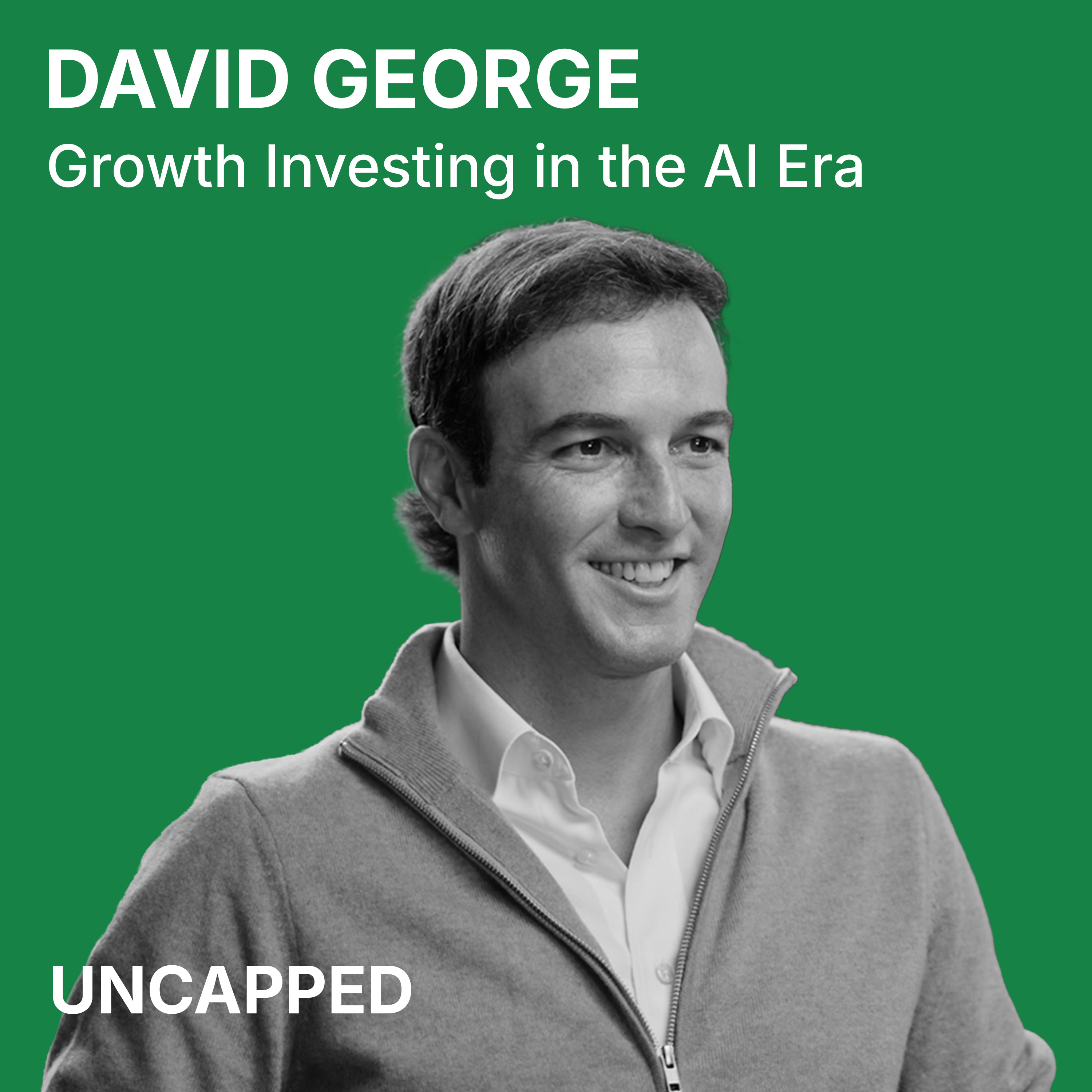
David George (a16z) argues “it’s all going to work” in AI: open source and frontier models, new chips and NVIDIA, and token-based infrastructure will all scale. He frames AI’s growth as driven by massive demand (insatiable enterprise usage, <5% diffusion into B2B) and severe supply constraints (data centers bottlenecked until ~2028). He also predicts consumer AI will evolve from search-like chat to proactive multimodal assistants that take actions, plus major tailwinds in autonomy and robotics.
David George is an investor at Andreessen Horowitz (a16z), focused on AI and growth-stage investing; he discusses investments such as Replit, Harvey, Databricks, Palantir, and SpaceX-related AI.
~30M coders drive most enterprise spend; top users follow a power law. Frontier models dominate revenue today (~95%+ of ~$125B across major labs). Token “sellers” will be justified by buyers’ productivity gains (coding productivity improving, with handholding needed). Consumer will monetize via ads/subscriptions/“native” formats.
Coding tools (Cursor, Replit, Lovable, Codex/Cloud Code), legal AI (Harvey, Kirkland spending $500M), customer support diffusion, and autonomy (Waymo/Tesla; “14x safer” framing).
Written by AI. May contain mistakes.
Discussion on the potential of AI technologies and investment strategies.
“Is it going to be NVIDIA or is it going to be new chips companies?”
Exploration of revenue sources and the concentration within AI markets.
“You know, in the enterprise, basically what's working, it's like coding, writing stuff.”
Analysis of the impact of knowledge workers on AI adoption and revenue.
“Like it's like, you know, whatever, two or three orders of magnitude less than what the models actually train on.”
Examination of frontier AI models and their demand in various sectors.
“that's very smart I think they're right that the economy is going to oscillate between using dollars and tokens and it's going to be a new form of currency Totally.”
Insights into investment frameworks for AI-driven applications.
“I'm curious your thoughts on what you, how do you, and obviously it's very hard to know, but how do you sort of mentally picture what their incentives should be on making more first party products?”
“So think like, you know, all the Microsoft Office products.”
Explore the potential and safety of autonomous vehicles compared to human drivers.
“Like don't you think like if you're like how many people die a year from a human driver if it's safer?”
Discuss the dynamics of capital cycles and the growth investing perspective in the current market.
“We at Benchmark just raised our first growth fund in history.”
Understand the significance of narrative and storytelling for companies in today's market.
“It's sort of like, I think this, I can't remember if this is, I heard this first from Thrive or somebody, but it was like, you know, one way to be contrarian is to believe a thing nobody else believes.”
Discover how 'vibes' influence fundraising, valuations, and employee retention.
“I actually have a funny story from a meeting that I was having with Ben in 2018.”
Explore how companies manage narratives to enhance their valuations.
“You know what's amazing to me on that one is that he, I mean, Palantir had a huge multiple before the recent, like now it's, I think the growth has inflected recently.”
Understand the scalability and future potential of venture capital firms.
“You know, there's this funny bit I mentioned to you.”

Get the gist, explore an idea or ask about something said.
 Claude
On Uncapped | Benchmark Breakfast, what are the key points of this episode?
Searching your listeningAutomatic transcript. May contain errors.
0:00If the premise of your question is, is this going to be successful or that going to be successful? The answer in AI is probably and. It's just the most exciting time to ever be an investor and in the technology markets. Keeping up with it is going to be hard. Keeping up with it is going to be hard.
0:17All right, David, I'm really excited to do this. I've been really looking forward to this. So thanks for coming by. Yeah, great to hang with you. So one of the topics that's been on my mind a lot that I think you've got really good thoughts on is something that my partner Eric Vischer said recently on the Invest Like the Best podcast. And it was basically, he was like, it's all going to work. And it was in the context of, you know, people question, is it going to be open source or frontier? And he's like, the open source is going to work. The frontier is going to work. Is it going to be NVIDIA or is it going to be new chips companies?
0:49And he's like, there's going to be both. And you can kind of like go on and on through, you know, the stack and AI. And Eric's point was basically like, people are asking the wrong question of just like, is it this or it's that? He's like, it's both. And I'm curious how you think about this at Andreessen and sort of in your seat. Yeah, of course. So I am very, very closely aligned with Eric on this point that it's all going to work. I actually liked the way that he framed it up. I framed it up slightly differently, which is just like the answer to all this is and. And so like, if you're answering, if your, if your question, if the premise of your question is, you know, is this going to be successful or that going to be successful, the answer in AI is probably and.
1:25I think it's helpful to start just like, where are we? So right now, from an infrastructure buildout standpoint, we just surpassed the railroads as a percentage of GDP, which has been recovered. It's like 3 % now or something like that. Yeah, exactly. And look, it's probably going to get harder and harder to build data centers, which we could talk about later. But I think that's going to 10x. So right now, what's happening is basically - As a percentage of GDP, you think? I think hopefully this will drive GDP growth. And this is going to take many years. So it won't 10x in one year. So it won't be 30%.
1:53But we'll be spending many trillions. But we will spend many trillions, right? So all of this success, which is the greatest, fastest success we've ever seen in business, which is basically opening I and Thropic together. And then if you add in SpaceX AI now with Cursor, they call it like$120 billion of revenue. And they add more revenue per month than all the hyperscalers, except for Amazon. That's crazy. Now, all of that is on the back of just actually a small amount of people paying for stuff. So it's like 30 million coders in the world who are the vast majority of the revenue. There's 1.5 billion knowledge workers.
2:25But like basically all of this, which is like adding more revenue than the best businesses that have ever been created, is on the back of a small group of people. That's actually a really interesting point, that it's over a billion users of these things. And we think about it that way. But it's actually, you're saying it's 30 million are spending basically all the money. 30 million. So there's a billion consumer users. And by the way, we should talk about consumer because we're like nowhere in consumer right now, even though there's a billion users. But in the enterprise, basically, the vast majority of the revenue is coming from just a small amount of coders.
2:50And this is like in power terms. Even within that$30 million, I'm sure it's a power law. It's a massive power law. I'm sure you've talked to your companies and a lot of this stuff. The top million of the 30 are spending. The top million of the 30 are spending just a massive amount. And so if you take an optimistic view of what that means, like the potential is so much greater than what has actually diffused into like everything beyond those million people. And so, again, there's one and a half billion knowledge workers. And we're just talking about B2B. And so it's just a massive amount that is going to happen in what I think is going to be like the next five years.
3:21Right now, demand is totally insatiable, right? You know, in the enterprise, basically what's working, it's like coding, writing stuff. You're starting to see early signs in some, you know, functions beyond that. Like legal is one where we've kind of seen this take off. I think it's like 12 months behind. But for broad knowledge work, for the one and a half billion knowledge workers in the world, we're like nowhere. So you just start with that as the premise, which is we're already seeing scale that's never been seen before. And we're scratching the surface in diffusion. It's less than 5 % diffused into the B2B economy.
3:56That means we're going to get really, really big if we're right about this diffusing and being applicable broadly. So that's one piece. On the supply side, we are massively, massively constrained, basically in everything in the supply chain. So basically, you can't get data center capacity until 2028 because basically there's bottlenecks in every step of the supply chain. So that is where we are in the supply and demand. And I think it's important to lay that groundwork because it is like the crux of why I think everything is going to work, right? Like all of the sort of like steps in the ladder are going to work.
4:30Talking about the supply side for a second. So it's four gigawatts right now. is sort of like your kind of view at the moment that if we had 8 gigawatts live and online, it would all get used as well. Yeah, it would all get used. Yeah, yeah, yeah. And look, maybe like it would be different prices or something. Like we could talk about pricing of what's happening for tokens. Yes. But yeah, I think, you know, if you get like more OpenAI and Anthropic or SpaceX AI capacity live, it generally gets used. So just to sort of like check the premises along the way, and obviously, as you know, I fully agree with what you're saying, But just to check it along the way, what would have to happen for it not to be the case that as gigawatts come online, all the tokens keep getting consumed?
5:10Is there any world where is there anything that could update our priors, you know, that four gigawatts becomes 20 and they don't all get used at the same or even higher prices? I think there's two forms where this could take hold. One is like what happened with coding is anomalous relative to everything else in B2B or knowledge work. And because of the difficulty of injecting commerce from knowledge work from companies, like the rest of white collar work just doesn't really like have major impact. Like I think that is extremely unlikely. I think it's sort of like a data collection problem and like an application of the models problem.
5:49The other would be, you know, we do have teams that we've backed that are working on like algorithmic breakthroughs, right? And so, you know, perhaps you would get an algorithmic breakthrough where, you know, rather than having to consume, you know, massive. Yeah, like efficiency goes way up, both in training and in inference. I think that's unlikely. I think it's possible we could get breakthroughs in training. Like, I don't know, you've probably seen the stats on what it took you and I to like build our knowledge base. Like it's like, you know, whatever, two or three orders of magnitude less than what the models actually train on.
6:21So there seems to be an opportunity there. You still will then have inference, which is an absolutely massive market that's going to be much bigger than training anyways. And so, you know, yeah, we could get efficiency gains in inference. But I think what we've learned so far is the more you reason at the model, like at the time of inference, the better the results get. And so I think that will continue to hold in knowledge work broadly. So I struggle to find a way for this like not to work. Now, if we went to, you know, from five to 100 in a quick amount of time and the products aren't built to actually like take that on, you know, sure.
6:56But like we don't, we're not going to have that problem because it's going to be really hard to get this stuff online. I'm curious what you think about this. I mean, so I also can't easily see it, but the best vector that I've heard was a conversation I had with a friend where we were basically saying, you know, all this stuff has come online. And so at first, you know, a few years ago, there was like the big build out and you saw like, you know, we're putting hundreds of billions in at the time. And then you get, you know, the models get a little bit better and you start deploying them and you kind of like keep moving through the pipeline.
7:22And now you see revenues growing like crazy on the back of AI. But the point in this conversation was most of the revenues that we're talking about are sellers of tokens, not buyers of tokens. And so the next thing we kind of need to see is data around the buyers of tokens actually getting these huge efficiency gains. In other words, you know, a hyperscaler. Yeah, like what's the ROI at the enterprise level? Yes. You know, users like of writing all this more code. Like, is your business getting better by writing all this more code? Yeah, or said another way, it would be a bad outcome if the sellers of tokens were making lots of revenue and the buyers of tokens were not making lots of revenue.
7:56They were just buying lots of tokens. Yeah, yeah, yeah. Look, I'm very optimistic about this point. Like, I think that whole argument is predicated on the fact that there won't actually be tangible, tangible, productive use of, like, writing more code far more efficiently that is better. Right. I just think that's fundamentally wrong. Yeah, and I haven't looked. I know a year ago there was a study, or maybe even a little more, but something like a year ago, there was a study that in AI coding, it was actually you got 20 % less effective by using AI code, but this was before - This was before the big four or five breakthrough.
8:26My guess is if you re-ran that study, you would not see that anymore. Yeah, and the best coders in the world have fully flipped over on this. And if you talk to the CEOs of the cutting edge companies, I think they would tell you that they feel much more productive. Like I, you know, spending time with Stripe, like they feel like there's very high returns to them being able to be a lot more efficient in writing code. You know, like is like Procter & Gamble getting big efficiency gains from what they're spending on AI today? Like probably not yet, but I think they will. They probably need a lot of handholding.
8:57That's probably the answer is, you know, I think the labs and, you know, Databricks and Palantir, companies like that are probably thinking about it the right way where you have to do a lot of handholding to produce value. but you will produce a lot of value for those companies. And then there's companies like Stripe. I don't know. One of the things that we're thinking a lot about right now is where is that effort actually going to? Is it going to front-end building more products or is it going to back-end trying to make your business more efficient? And the best companies in the world right now are singularly focused on front-end.
9:28You can produce 10x, 100x more revenue potentially if you nail the next product. whereas on the cost side you can only get so much more efficient and that opportunity will always be there so it's like shorting your own future if you are just focused on the cost side whereas you're taking an expansive view of what you can become by the way the open route radio is very good there too just to be like we're going to own this at the ALR as well that's very smart I think they're right that the economy is going to oscillate between using dollars and tokens and it's going to be a new form of currency Totally.
10:04You know, so we're obviously, you know, we're big fans of those guys. Also to the point of like it's all going to work. You know, we talk about open source a lot in relation to the Frontier Labs. And I guess the point there is if the total token, you know, usage just goes up by 100x, it's just like these things are all going to get so big. They're all going to get so big. And so, you know, I wanted to like lay the groundwork first before making the case for like which of the individual layers of the stack are going to be successful. because I think it paints a picture where we're going to 20x or 50x over the next 10 years and just how much work is being done with this stuff.
10:40And by the way, we're just talking about enterprise right now. We should talk about consumer, but just enterprise. So if you look at the Frontier Labs, like today, the Frontier Labs are like 95 % plus of dollars, like the$125 billion or so across the three of them. It's like they're consuming all of the revenue in the market, basically. Everything else is a rounding error. they have raised more than like the entire downstream ecosystem like just open ai and entropic have raised like 350 billion dollars so like they do have scale like they have massive scale benefits um and right now what's revealed in the preferences of users is um users are opting to use frontier models and i think there's a bunch of reasons why that's the case um right now people are willing to pay you know 10x more for frontier for frontier tokens you know i think in coding that's that's definitely going to persist for some period of time you know there's there's reasons why you could see a case that people will like cost optimize and use like below the frontier over time um but right now like assume that yeah the real the revealed preference is like everyone everyone who is a heavy user of this stuff wants to use the frontier i think there's well and also it seems to me like if that happens the frontier should be at even more valuable tasks that are worth even more.
11:55Even more. So like curing cancer. Yeah. If coding was worth X, like what's curing cancer? Curing cancer is worth, you know, some astronaut. Yes, of course. And so right now, like I think there's a couple of reasons why people are using the Frontier stuff. Like one is just there's so much user or consumer surplus to having this work done for you that you're willing to pay so much more. Like you're willing to pay the incremental amount for that Frontier. Does that make sense? Yes. Secondly, like they've done a pretty good job with first party products. So, you know, people really like using Codex and Cloud Code and Cursor.
12:27And, you know, I think increasingly we'll use stuff like GrockBot. Like it's going to be really valuable to use the first party stuff. There's a bunch of reasons why that's the case. They've done a good job with product. I also think they have very tightly coupled their harnesses with the models so that the experience you have with those products is actually very, very good. And so subbing out some other model where you don't have the harness and you don't have the product and don't have the interface, like no one's doing that today. I'm curious your thoughts on what you, how do you, and obviously it's very hard to know, but how do you sort of mentally picture what their incentives should be on making more first party products?
13:02And I'm asking this in relation to, as you think about investing in applications at the growth stage, and you think like, what's going to be worth it for them to build a first party app in? And will that matter? Or again, does it all win? Like, how do you think about their incentives and how, if at all, it relates to your application investing? Yeah, so we've done a lot of application investing. So again, this is like in the theme of and, right? Like we think a lot of things are going to work. On the application side, my framework is the big labs are going to be very focused on first-party products that are obviously in coding and within the blast radius of coding.
13:38And so you can interpret the blast radius of coding however you like, but it's probably some things around it. You know, that's one piece. And then secondly, they're going to be focused on first party products that appeal horizontally to all 1.5 billion knowledge workers. So think like Microsoft Office and Google Apps. And they would like to have those as first party products. We know from their work that they're doing, like the work that they do with data vendors, like they are very focused in those areas. Right. So think like, you know, all the Microsoft Office products. And so, you know, outside of that, there's a question of like what number of priority is it for them?
14:15So, you know, we're large investors in Harvey. And so, you know, Harvey, I feel like, you know, legal is, I don't know, it's very interesting to people on X. But it's a market that's like absolutely in takeoff. Yeah. Right. So if you take an optimistic view of it, there's many differences, which we could talk about. But it's probably like 12 months behind coding, just in terms of like diffusion into the workforce. And it's now gotten to the point where end clients are demanding that their law firms use Harvey. They're like, we care about it for product and we care about it for cost. And so you must use it.
14:47So it used to be this thing where people would talk about like hallucinations. And then now it's just like, no, everyone has it. And so, you know, it's probably like somewhere between number six through 15. By the way, that one, it really is funny how much it gets people on X. And we know this too, obviously. Yeah, for Legora. Yeah. And it's like, I think people, A, were surprised that these companies can grow this fast in legal, which you would not have thought would be an early adopter. And then you've got a lot of doubt because they're like, oh, well, wasn't it hallucinating and stuff? It's like, yeah, like 18 months ago.
15:21Yeah, 18 months ago. And they made a smart bet, which is like, what happens when models get 100X better? Yeah. And it's going to work. And it's going to work. And legal is actually just like a perfect thing, too, because it's language, but it's like kind of mathematical. Yes, exactly. Yeah, it's extremely logical. It's extremely well-documented, like in terms of case law, right? And, you know, the big breakthrough that we saw, which I'm sure is the same case with Legora, is, you know, reasoning models. And so like lawyering is reasoning. And so like, yes, it makes sense. But no, I agree that that doesn't seem like the next thing.
15:53Because there's a tradeoff too, I think, where if they start picking off random companies, then you lose the trust. Yeah, then the ecosystem, yeah, of course. I think all the big platforms, I'm sure Microsoft had this. Salesforce had it. Yeah, they all had to decide, like, is it worth pissing everybody off to go, like, eat some random thing? Yeah, the old Microsoft thing, like, you know, a platform is only a platform if all of the things built on top of it generate more revenue than it. That's right. Right? And so I don't think that that's totally lost in the labs. now like it might still be priority number six and like there was a major validation event which was when Kirkland came out and said they were going to spend 500 million bucks to build their own technology stack like people were like oh man what's that mean for Harvey so then you've got these bubble ones where they're it's not a niche but it is not you know it is not the path those applications yeah exactly but it is going to be worth many many billions and there's two things that are really important about it one like the last details of the product really matter to the users and then two, it requires like real go-to-market and on-the-ground efforts.
16:55And so, you know, those two things, everyone talks about like what are now the motes of software or applications. FDs. Yeah, those things like in the ground, like making sure they work, like is a big thing. And so, you know, will the labs like go do that in a verticalized way? At law, like probably not. Like, you know, whatever, there's a cloud legal product. They just can't be everywhere all the time. They can't do all of the things, right? And so our investments are informed by that. It's not to say that we won't do things in that blast radius or in that sort of knowledge worker horizontal category.
17:30But we do ask the question a lot more about what is the product roadmap, what's the right to win. In the applications beyond those, I think there's going to be hundreds of flowers that bloom. This is going to be a massive unlock. Yeah, but back to the point of it's all going to work. I think even the stuff in the blast radius, it's probably going to work. It's probably going to work. Yeah. Like we're large investors. We're the biggest investors in Replit. Like it's working very, very well. Yeah. Replit and lovable. And you wouldn't think that these things, you would think that though, you're like, well, isn't, you know, aren't Codex and Cloud Code going to be able to make a website?
18:03And the answer is, yeah, they can. And also these things are unbelievable. They're very good. And you know, like cursor also, and that is like dead in the center of the blast radius. And you know, there's a huge market of people who use it. And so, yeah, it's all going to work. I think, you know, at the model there, like the appetite for frontier technology, I just think it's like undisputed. It's just going to be there. The appetite for N-1 or open source technology is also going to be huge. Like it's going to be massive because if you 50x the usage that happens, like people will care about cost.
18:35And like maybe there will be a point where if cost is 100x higher for frontier, like people really start paying attention to it. Well, an N-1 is going to be really good soon. It's going to be very good. N-1 will be better than 5-6. Yeah, take - By the end, you know, I don't know when, but by soon. Yeah, and so you can see it actually at the cutting edge of the application companies, right? Who care about their own cost because that's their gross margin. And so, you know, how long has it been since most customer support tickets required the highest end model? Yeah. Like three years or something, right?
19:06And so you can see a path to the sort of abstraction layer following how much value is required. And there's going to be a lot of people vying for the abstraction layer, like the application companies, obviously the labs with their first party products, companies like Databricks or Palantir or Snowflake, they're going to vie for it. But I think people are going to use every variation of that. And it's all going to work. By the way, the customer support example is such a good one to me of how long diffusion is going to take. Because the technology has been more than good enough for a little while.
19:38And we still, I don't know what percent penetration it has, but tiny. And that's like the clearest example to me of the technology is fully there. It's just going to take many years to get there. Yeah, the old enterprise thing of better, faster, cheaper. Yeah. It's been better, faster, and cheaper. It's one on everything. For two years. Yeah. And the companies are doing great. The companies are growing faster than any other application companies before them. There's still some laws of physics here. But yeah, I mean, you know, you got to sell it and you got to implement it. And it's like there's a lot of messy integrations you have to do and rules that you have to follow, brand guidelines.
20:10And again, like the labs aren't going to build that motion. Yeah. Like there will be companies built on top of them. So that's like a classic and. So this is all enterprise. What about consumers? So, you know, like I think, I mean, obviously, ChatGPT was sort of like the first consumer moment. And, you know, it was also the whole AI moment. But the first AI moment was a consumer moment. And like that's what caught everybody's attention was for the first time people were using this thing. And they had been hearing about AI for, I don't know, 10 years. And then all of a sudden you have this thing.
20:37and even the first version of Chai GPT, you were like, oh, I've never seen that before. But now talk to me four years later or whatever it is. What's the progress of consumer and how do you see it? Yeah, I mean, there's a billion people using it, right? And there's more than a billion people using it. Obsessively. Obsessively. But the instantiation of the product and the use case is very basic, right? We're in skeuomorphic mode for the vast majority of consumers, which is they are doing what they used to do on a search engine inside ChatGPT. And that's the extent of the use case of the vast majority of those billion people.
21:14Except for the kids. The kids use it better than that. Yeah, my son, total aside, a 10-year-old is writing full-on rap songs and creating music. No, it's not an aside. This is the future. This is the future. And it's incredible. It tells you the difference where it's like there's a large cohort of people who are going to probably always Google. you know use this as a google replacement but that's not how the kids are going to use the kids are going to be the kids are going to be totally native like in and you know you can see it with the kids now like they didn't they never were like trained my kids were never trained on like search engines and now they just it's a whole new thing where they get it to you know to give them answers to anything and give them you know work product of anything the big shift is going to be like when it goes from being reactive to proactive and you know we're like just scratching the surface on that yeah um it's going to be multimodal so it's not going to be just like sitting doing this like the voice stuff actually is very very good now um you know there's a bit of a head fake because the open ai voice stuff was not very good for a period of time and it had to rely on a dumber model and now it doesn't and it can handle interruptions and things like that so like a natural human interaction form now exists yeah um and capabilities for doing proactive work on your behalf and like action taking is like we're just now there right like open claw was the first moment I think GrokBot is a moment now.
22:35And I think that'll be kind of the future of consumer use. It's so funny to me that no one talks about consumer right now. Everyone is obsessed with coding, rightfully so, given what's happened with the revenue ramps of the companies. But if like historical technology markets are in a guide, like the big prize is going to be the killer consumer products because you can address billions of people with them. So I think those are going to get a lot better. I'm very optimistic. and those are going to come with like the world's best business models too. It's going to be like a lot of value generated.
23:03There's going to be a ton of consumer surplus. Like what would that look like? I think it'll be advertising or some greater form of advertising. Like if you tried to describe, the thing I always say is like if you tried to describe the form factor of the feed to people like during classifieds and newspapers, like it would make no sense. So we have yet to figure out like what the native consumption model is going to be than what the native ad format is going to be that follows that. Do you think it's ads and subscriptions? Yeah, definitely. Yeah, I think it's both. Like you think that it'll be a situation where hundreds of millions of people might be willing to pay today surprising amounts for this thing?
23:37Yes, absolutely. And again, I think... And that's when it's like a personal assistant for everybody. That's when it's a personal assistant for everybody. And so again, I think my framework is like 10x more value will just accrete to the surplus of the users. But there's going to be a lot of value created for that 10%. And so that accretes to the companies. And so it'll be subscriptions. You know, it'll be ads or some new form that isn't quite what we think of today as ads that hasn't probably yet been invented. And it's going to be a new form of, like, consumption. And so I'm very optimistic about that.
24:12The thing that you're most excited about in consumer is something that gets to an assistant for everybody. Yes. Yeah. And, like, take action on your behalf in a trustworthy way. you know like I don't know I've started building all these automations for myself and like I'd say I'm aggressively trying to make myself more native and I get like real value out of like 2 out of 10 of them but like there's a lot more that I think will be done and you know the models will get 10x to 100x better over the next 5 to 10 years so think about what that's going to resolve in one of the other big personal agree with this obviously one of the other big personal consumer you know autonomy ai things i think about a lot is just self self-driving cars and autonomy is i just feel like i mean you know i just got a tesla for the first time and like i got it you know i it is insane it is like the best product because you get in the car you type in where you want to go and it takes you you don't have to think about anything yeah else the whole ride gets you out of any weird thing it can park anywhere.
25:14And I don't think most people have realized how good self-driving is yet unless you have a self-driving Tesla. Yeah. Or if you live in a place where you can get a Waymo. Like basically that's like it's a small group of people. Yeah. So, you know, and so it's like you've got these companies that can do it now, Waymo and Tesla, but it has not diffused yet. And so A, I don't think people realize, I don't think, you know, the people who have done it realize, but I don't think everybody realizes how good autonomy is right now. But then the other most important thing is I don't think that it has turned into the business model that it needs to turn into yet.
25:45So I'm curious your take on this. I know you're an investor and you have thought a lot about this, but where are we on the autonomy curve? Yeah. It's so funny to think about these other major technological tailwinds that are happening because AI just supersedes everything in our minds right now. I always find it helpful to just take a step back and you say, okay, what are the way... Product cycles drive our business. And so what are the big waves that we're catching right now. Like autonomous driving is one. But the previous generation of these was like mobile phones plus social, e-commerce, SaaS, cloud, kind of all coinciding.
26:19And that produced like 25 trillion of market cap. And like, it's like a ton of, that's like a lot, right? And, you know, like what do we have staring at us in the face right now? Like we've got AI, we've got autonomy, we've got robotics, we've got AI's application to health. Yeah, I was going to say bio. We have the American dynamism category, which is like modernization of defense. The combination of all of those - It's got to be more than 25? Way more than 25. It's just the most exciting time to ever be an investor and in the technology markets. Autonomy specifically, I think it's just very underappreciated.
26:58The auto industry and people driving cars is one of the biggest industries in the world, obviously. Right now, okay, so if you rewind all the way to like taxi driving, right, that was like less than 0.1 % of the overall miles traveled in the US. There were a bunch of reasons why that was the case. Then the ride share companies came along. And, you know, I was an investor in Uber. You know, obviously you guys were too. The big thing that happened obviously was like a better business model. But it was really like the 10Xing of the market size. So like, you know, taxis were 100 million bucks in San Francisco, and then they became a billion dollars like three years into Uber and Lyft.
27:37And so a 10x the market size because you delivered a much better product. Autonomous driving, we're going to look back 10 years from now and say like, oh, there was another obvious 10xing that would happen there. At least. At least, just on the ride hail side. So if you have a product that is 14 times safer than a human driver. Then it's barbaric to drive. It's actually so like this is my view now. Like don't you think like if you're like how many people die a year from a human driver if it's safer? Isn't that, you know, because isn't the data like pretty abundant? It's 14. It's millions of miles traveled in Wemos and they're like between 10 and 14 times safer than a human driver.
28:16Yeah. So like it is barbaric to not actually allow for these things to diffuse into your economy. So I think like history will look back on people and judge them very poorly if they don't let it happen. Yeah. But for the consumer side, just start with that. If you can drive in something that's 10 to 14 times safer, you would pay a massive premium. I think there's a very clear case for how you actually get the cost below the cost of Uber and Lyft today. So right now, owning a consumer car equates to like 80 cents per mile, like fully loaded depreciation, insurance, gas, all that stuff. Like that's your cost of an incremental mile.
28:55um riding in an uber or lyft is probably like two bucks and change per mile um this market is like massively elastic so like if you can get you know the cost of a waymo or a tesla or whatever you know ride hill service which i think there'll be others yeah um down below that like there's going to be an explosion of demand so it's 14 times safer it's only gonna get better by the way it's gonna get safer it's gonna be 20 times safer soon um and you know it's gonna be less than the cost like you will see a 10x plus then you talk about personal car ownership uh and so there's 17 million cars sold a year in the u.s new um and by the way there's like 250 million cars in the u.s um just in the u.s like how much would you pay for full autonomous features for a passenger car that you owned a lot it's like double 10 000 yeah like minimum ten thousand dollars right um and once you're used to it is yeah you can't you can't not have it's really gonna go back so you could sell Sell it up front.
29:52You can do a subscription. But call it minimum$10 ,000 a car, 17 million cars. Then you have all of the Western world. And then eventually, it'll get cost compelling enough to reach developing markets. So it's going to be one of these things where 50 years from now, the whole composition - Yeah, no one will be driving. The composition of everything looks different. It takes time because you've got to produce the cars. People are always struck how many Waymos there are. Waymos, if you're in one of the cities where they are, they feel ubiquitous. there's like less than 10 ,000 in the US, in the whole US.
30:25And so it's one of those areas where there's Waymo, there's Tesla. I think there'll be other players. We've backed a couple that I think have a real shot at it. And it's not going to be 10 players, and it's going to be a massive market. And so it's easy to lose sight of markets like that because it's like the growth of AI. But those are going to be huge, huge markets that we're super excited about. Yeah, and then, you know, related there's robotics, which is going to be, I mean, there's nothing quite going yet. But you see the glimmers of it now. And it's like you go into the labs that are working on it and, you know, like the startups that are doing it.
31:00Obviously Tesla's very good at it. But it's clearly going to work. It's clearly going to work. Yeah. And like it'll be a bigger market than language, right, when it does work. Because it will have, you know, B2B, you know, applications. It'll have consumer applications. Like I think we're probably pretty far off from having robots in our house. Yeah. But for like in a factory, like relatively defined use cases with like redundant tasks, with safe environments, like we see it. Like we invested in, you know, one of my partners a lot of investment in mind robotics. And so, you know, Sarah did this deal and it's the founder of Rivian.
31:40And, you know, he basically was like, first of all, he's an exceptional founder and has produced a great company with great products. But he's going to put robots on the factory floor. And so they'll do manufacturing assembly work on Rivians. It's relatively defined use cases with pretty high ROI today. And then it's an embedded customer. You kind of have it. And you can not only get revenue from that, but you can also have the models learn from the work that you're doing. And so you have this feedback loop in the field that you can actually work on. There's other stuff that is kind of picks and shovel stuff that we're excited about.
32:17but like we will have a chat gpt moment for robotics i don't know when it's going to be yeah like i think it's within five years hopefully yeah um there's very very smart teams working on it yeah and i think it's going to be one of the biggest markets so it'll be bigger than language yeah and it almost like has to be when you think about think about the industrial impact of it right um and since one of these things where it's like the physics doesn't prevent it from happening and you can see the glimmer so it's this will take i agree with you this is going to take more than 10 years to get all the way there but like i just don't see why it wouldn't all work Yeah, I think it's going to work.
32:48Yeah, I think it's going to work. And I think we'll have them, you know, everywhere. And I think, like, by the way, the byproduct of this is that we'll have, like, massive productivity booms. Yeah. Like, I think that's going to be the economic impact. Quality of life will go up. You know, we'll have to think hard about, like, job impacts and stuff like that. And, you know, our workers kind of trained to make a transition, especially if it happens fast. Yeah. But, like, the history of all these technology breakthroughs is that we find higher order things to do. Yeah. 60 % of jobs didn't exist 70 years ago that we have today.
33:21So we'll have a similar transition period that happens. But I think it's going to be a massive productivity boom. It's going to be awesome. So I want to talk about capital and financing a little bit. We at Benchmark just raised our first growth fund in history. And the baseline for that was something. Welcome to the dark side. Yeah, exactly. It's like the forbidden fruit. And the thinking for us behind it was something along the lines of venture returns now happen at growth in a way that they didn't used to. And this conversation that we just had really supports it because the outcomes are that big.
33:56And the things that run really run. And it's all going to work and all of these things. And that sort of led us to the thinking that the sort of 10 to 100x or 1 ,000x, whatever, the really big multiples can happen all along the way. Yeah. Which I know you believe that. You're preaching to the choir. I want to connect this, though. So I would like to hear your thinking on that. And I would also like to hear, we just talked about the product cycle and where we are. But there's also this related but not exactly the same thing of the capital cycle. Yeah. And the capital following the products and investing behind them and all those things.
34:28So I would just be curious to hear your take on where we're at from a capital perspective, from a growth investing perspective. Yeah, of course. So as it relates to why go do growth and is it a compelling category, obviously, you have seen the light. The dark light. The dark. It's great. The market that we're in is like a$5 trillion market. So it's like whatever. It's like 20 % of the S &P 500. So if you're not actually playing the full sort of gamut of that in the private markets, you're probably leaving a lot of money on the table. Like we did this analysis a long time ago that basically showed half of private market returns get generated between the seed and the B.
35:13And then half of returns get generated from the C plus. And so if you're not aggressively playing from the C plus, you're definitely leaving off half. And by the way, that was during an era when companies went public earlier. So now that companies are staying private longer, if you could fast forward five years, the ratio is going to be even more extreme. It'd probably be 70-30 or something in favor of the late stuff. You can also get venture outcomes because the power law is so crazy strong today, right? And so, you know, when you get it right, like, it can really go right. And we're in this dynamic market where the power law is more extreme than in the past.
35:48And I think it's a result of a few things. One is just, you know, we're early cycle. And so, you know, the early companies can establish themselves as leaders earlier. Secondly, this one in AI is unique because if you throw more money at it, it can just scale up and get better. So that is different than previous cycles. If you threw endless amounts of money at ServiceNow or Workday or Salesforce during the SaaS era, they would get all messed up. We saw this experiment with the Vision Fund. You throw money at these things and the companies get screwed up. Right. Or if it was a consumer company, they would spend it on Google and Facebook.
36:32And like, that's not a good thing. Was that the mechanism for why the Vision Fund was was it just like dumping too much money in companies that didn't need it? Or was it hitting the cycle at too late of a time? Or was it both? I think it was both. And it was like, well, first of all, like, I don't think it was a bad idea. I think it was just like wrong time of the cycle. And then we were not in an environment where if you put more money into something, it got better. Yeah. Just automatically, like with with no scale limitations. like that is what happens with AI. Yes. Like it used to be, you know, if you put, you know, a$40 billion fundraise into Salesforce, like what are they going to do?
37:07Like go hire a bunch of sales reps and engineers? Like it just wouldn't work. Whereas if you put$40 billion towards training, you know, these models, you know, like they get much better. And so that is very unique in the moment that we're in right now. You know, I think about the world as like product cycles and capital cycles. and I tell my team like the ideal state of the world would be you're in a great position on the product cycle like scale of one to ten. Ten being good, one being not good. Like in 2021, we were at like a one, which is like we didn't realize it at the time. But that was like late SaaS, late cloud.
37:43It was post-mobile phone growth. Like all of the incremental consumer time spent was going to the major, you know, the major technology companies already. So there was like no room for something new. So product cycle was like a one out of 10. And in 2010, it was like a eight out of 10. It was very good. So right now, product cycle is like a nine or 10 out of 10 for all those reasons I laid out, like AI autonomy, American dynamism, robotics, biohealth, like all these things are going to happen over the next 10 years. Capital cycle, your ideal would be like a 10 on product cycle and a 10 on capital cycle, I mean, valuations are really low.
38:20They almost never coincide because there's like excitement about the trend. It was like the best part of the product cycle ever and no one else saw it but you. Like 2023, like early days of when AI started working. That was probably pretty good. And the capital markets were a little more benign. And like some of the crazy stuff and run-ups hadn't happened yet. Like that was like, I don't know, like a seven. And, you know, like 2010, you know, you could buy like SaaS companies and B2B marketplace companies for like, you know, whatever, four times revenue or something. Like that was pretty good too.
38:48Yeah. Right now, capital cycle-wise, people see the excitement. And you can still find ways to do good investments. And the companies are growing so fast and they're so dynamic. It's fine. But we're probably at a six or something. It's OK, but not great. But the thing that drives our business over 10 years, whether it's venture or growth, is the product cycles. And that's like a 9 or 10 out of 10 right now. Yeah. Yeah. It's sort of like, I think this, I can't remember if this is, I heard this first from Thrive or somebody, but it was like, you know, one way to be contrarian is to believe a thing nobody else believes.
39:24The other way is to believe the same thing everybody else believes, but believe it 10 times more or something like that. Yeah. And that's sort of like, that's a little bit our motto as a firm, I would say, is just, you know, especially at the growth stage, incrementally believe like what could go right and like spend the time thinking about what could go right. I always say our businesses, we pay fair prices for great companies. And the alpha you get is always on the revenue side. It's not like, is this going to end up a higher margin business than I'm? And so that's market insights, product insights.
39:58And the market doesn't appreciate sometimes the things that can really, really, really grow fast for a long period of time. like Databricks is an example of this. By the way, I got to have dinner with Ali recently and oh my God, what an amazing CEO. So I coined this phrase like model busters or whatever which is basically like the first time we invested out of the growth fund obviously Ben did the Series A and then we did basically every letter and I think we're on like M now. I joke with Ali that we're going to be like stadium seating and get to like double A. You know, like, you know, we're going to just stay private.
40:36I don't think so. Yeah. But but the first one that we did out of the growth fund was right when we started the growth fund. And we did a round at like six billion dollars. And like the technical terminator Ali has like figured out seven years later his his revenue has accelerated. It's like he has figured out more new products. And like our observation when things really go right, it's often the founder that figures out the next thing. Yeah. And, you know, his business is now positioned to benefit from AI. That's why it's growing so fast. And our bet is he'll figure out the next thing and the next thing and the next thing.
41:10And he's great. And, like, he, like, those founders like that, like, as you guys have a growth business, like, late-stage venture business, like, those founders are the asset class. Like, if you back them, they're going to figure out all these amazing things to do. Like, when we did SpaceX, you know, like, Starlink wasn't even GA yet. And they had theories as to, and the economics were terrible, and it didn't work. And here we are. That is one of the best business segments ever created. And he's got an AI business on top of it. And he's going to have orbital compute, which is also going to work.
41:45And so those founders are the things that you have to bet on. And the outcomes of the companies can be much larger than you would ever put in a financial model. And that is the thesis that we have. One of the things that I really look up to about Andreessen is I think you got the sort of importance of narrative right from the beginning. You know, like I think about even when the firm was started, there was such an understanding that, you know, at the time it was, you know, media was very important. But there was just an understanding that stories matter and that, you know, the way you present matters and being loud and in the conversation is really important.
42:22And I feel like obviously from 2009 or something. In 2009, yeah. Since then, obviously, things have changed a lot. And I think in a very happy update, we've had sort of the Lululification of everything where people are going direct and owning their own narrative and you get more authenticity. You guys have a lot of new media going and all these other things. But I think Andreessen has understood the importance of narrative. And it seems to me that narrative is louder than ever. Right now, for companies, it's at all stages. It's like companies launch and you see these beautiful videos and companies at the later stages have their investors kind of, you know, creating stories for them in various ways and they're owning media.
43:06And it's all just loud. But I think it's important. And I'm curious how you think about narrative now at this point in the cycle when we're all, you know, living on X and we're living in the news. And, you know, how do you think about this all? Yeah. Look, this is just like the vibes, right? Like the vibes, the vibes matter. But they matter. They matter a lot. I actually have a funny story from a meeting that I was having with Ben in 2018. So this was, I don't know, three or four months before I joined. And we were kind of hashing out, you know, what is our strategy going to be? And so, you know, I had all these ideas of, like, these are the new teams we need to build.
43:38And this is what the investment team looks like. And he's like, well, what's your marketing strategy? And I was like, we don't really need a marketing strategy. It's not really a thing in growth. And he just, like, looked at me and said, like, that's the dumbest fucking idea I've ever heard. and like venture firms didn't market themselves. And then we did and it worked really well. So like, why would you not do it here? And so I came along, you know, I came from a place that was a lot more conservative. And so I've sort of seen the light. Vibes matter. Let's just talk about why the vibes matter.
44:08So the vibes matter because of fundraising, of your valuation for retaining your employees and for hiring new employees, among other reasons. And like in some markets, the vibes matter for your customers too. But like at a minimum, it's those things. If you look at, and this is basic, but like why does a higher valuation matter? Like higher valuation means, you know, less dilution, more ability to raise capital. And, you know, you can use that as a weapon. And in a world where capital actually makes your company better. Yeah, exactly. It's worth more. It was worth less when it was not, you know, the thing.
44:45Yeah. And like now every investor and every employee and potential employee is like living on X and like consuming the vibes. So if you look in the public markets, the companies that have done a great job of this, like there's a direct line to their valuation and their life gets a lot easier with a higher valuation. Right. So like famously right now, it's Palantir and Karp. And, you know, he's got like a cult following. You know what's amazing to me on that one is that he, I mean, Palantir had a huge multiple before the recent, like now it's, I think the growth has inflected recently. Yeah, it has.
45:18Yeah, it's massively accelerated. Massively accelerated. But it had the premium before it had that. Yes. And there's something interesting there. Yeah. And like, by the way, to tell you how much it's vibes, like no one knows what ontology means. No, I don't know. It's not even like a thing, right? And, you know, but like the big thing, obviously, they have an amazing - I think a lot of people don't even really know what Palantir does. Yeah, yeah, for sure. Like, including like big retail holders of the stock. Like a friend of mine who has a huge position and I'm like, explain it to me. And he's like, eh, good vibes.
45:49But what has happened, right? Like they're massively accelerated in commercial and they're now seen, you know, among CEOs as like a trusted place to go implement your AI. So it has actually given them a direct benefit on the commercial side because they're seen as like the ones that will navigate the situation for you and they're trusted. The valuation is a huge benefit for them. And then it's massive for them retaining and hiring employees. Similar to the Elon companies. Like Elon, obviously, like having a big valuation allows them to have a bigger war chest, to buy companies, to raise more capital, to have loyal following.
46:23So you can look at like the high retail ownership stocks. And there's like a correlation, if they're doing well, a correlation to the valuation. Um, uh, there's funny, I heard from a hedge fund guy, the, this theory on shorting stocks and his theory on shorting stocks was, I never short a messianic founder and I never short a product that people love. The inverse of that is if you have a messianic founder and there is a product that people love, you can actually like trade very high and have all these benefits, right? Um, right now in AI, obviously you said why the capital side matters and valuation side matters, it is incredible that the whole market is like hanging by a thread on the performance of like two now kind of three private companies on like a monthly basis.
47:12I was just thinking as you were talking that the narrative, however strong the narrative is now, the importance of it all is about to go like hyperbolic as these companies get public. Yeah. And you can even see it. You know, there's this funny bit I mentioned to you. You can see investors and people who are on the opposite side kind of jockeying about trying to set expectations around these companies. Oh, yeah, like Anthropic and OpenAI's revenue. Yeah, and it's not like the insiders are all pumping crazy numbers. It's actually like expectation management. But the amount of calories going into controlling these stories is just going to be wild.
47:49Yeah, and it's not even just the CEO. So like I talked about how the asset class is the founder and I talked about Karp and I talked about Elon Ideally if you have a dynamic founder who can be the face of the company It's like Palmer with andrel, right? Like that will benefit you in many ways Yeah, again, if you have a product that people love that messianic founder thing is like a massive asset And it will make people care at every at every layer that matters right capital side employee side customer side. And if you don't have that, if you're like some no name like SaaS CEO, it's like very hard to command people's attention and like make them care.
48:29It also matters for people down in the organization, right? So like right now, I think the person who's doing the best job of this in the market is Tebow from OpenAI. And like he's very direct. And, you know, not only is it feeding good vibes among the investor community and good vibes among employees, it's driving a lot of behavior on the customer side, too. And so I think when done right, you know, it can have massive benefits and it's not to be underestimated. It's something we talk to our founders about all the time now. It's like, you got to go direct. You got to own the narrative. You're the face of the company.
49:01You need to tell a compelling story. And if you don't, yeah, some people care, but a lot of people aren't going to care. Yes. And someone else that's almost as good, but not quite as good product can come along and tell the story better. Yeah, exactly. Yeah, exactly. Yeah. My last question, and I think I asked, I had both Mark and Ben on at different times, and they both were, you could just feel the ambition and the scale and sort of the mindset around all of it. And, you know, this shows up in a lot of ways. And, you know, I was just joking to you before we sat down that, you know, Benchmark's pretty small.
49:36Andreessen's pretty big, you know, in terms of like its team and sort of all these things. I guess my question is how far, given that we're looking at not 25 trillion, something bigger, like how far can this all go? Like how big can a venture firm, you know, get? What rate limiters, if any, are there on what you can do? Like, how do you think about, you know, what's left above, you know, the already, you know, large size you guys are at? Yeah. Look, we talk about this all the time because there's pieces of our business that are scalable and there's pieces of our business that are not. And something that you said, which I think is super smart, is if you want to go fast, be small.
50:16If you want to go far, you got to be big. And so there are things that we do that may cause more organizational overhead, but allow us, we think, to go further. And part of that is scaling our investment approach and scaling our team that does investing. And then a big part of that is the 650 employees that we have that help our companies. So how big can it get? Yeah, 25 trillion in market cap creation. Tech is, call it like a third to a little higher percent of the overall market cap in the economy. If you look at previous eras, right, as a percentage of the overall market, different industries were actually much larger in the past.
51:01So like railroads, and financial services and stuff. At their peaks, they would be like 80 % of the market. I don't see a reason why tech will not continue to ascend as a percentage of the market cap. Like right now, eight of the top 10 most valuable companies in the world are previously venture-backed technology companies in the US. And they all kind of look cheap. And they all look kind of cheap. And they're probably the best businesses ever created. And then by the way, we have OpenAI and Anthropic and SpaceX on their heels that are like growing faster and that are going to get bigger. And then, by the way, if you go back to those big trends that I see coming over the next 10 years, like we don't even have the players on the board yet for those.
51:44So in terms of like macro side, I see no limit on how big it can get. In terms of our share and our ambitions as a firm, we probably have like 20 % market share. Like we measure this at least in growth land. And if you look at a real frame of our market, we probably have 20 % market share. Now, ideally, we would have 20%, the top 20%, right? We would do the 20 best of the 100 things. But there's kind of no limit on how much more we could scale. We just want to be doing the top 20 % to 25 % of things. So I think you're going to see massive macro market growth. I think our share could grow a little bit, but that's not a goal.
52:28I think it's more like we can ride the wave really well. I mean, even keeping up with it is going to be hard. Keeping up with it is going to be hard, right? And so our ambitions are to be involved in the best companies across all the areas that we focus on. You know, they're all technology focused, but they're pretty discreet, right? Like there's infrastructure, there's applications, there's American dynamism, there's biohealth, crypto. Like those all require different things. But there's going to be new waves. And so hopefully we can like be part of those new waves and then ride the market growth.
53:01And that's kind of the sum of the goal. Love it. David, this was great. Thanks a bunch for making the time. I really enjoyed it. Yeah, me too, man. Thanks.
David George is a General Partner at Andreessen Horowitz, where he leads the firm's growth fund. Before a16z, David was a General Partner at General Atlantic. He has been involved in investments including Databricks, Ramp, Harvey, and Figma.
We discussed David's framework for thinking about the AI buildout: why the thesis that "it's all going to work" is the right one, and why the answer to almost every question in AI right now is "and" rather than "or." We got into where we actually are in the diffusion of AI into the enterprise, why there are 1.5 billion knowledge workers that AI has barely touched, and what would have to be true for the buildout not to continue. David shared his framework for thinking about product cycles vs. capital cycles, why right now is a 9 or 10 out of 10 on the product side, and why autonomous driving and robotics are massively underappreciated. We also talked about why vibes and narrative matter more than ever for founders, why he never shorts a messianic founder or a product people love, and how he thinks about the scale and ambition of Andreessen Horowitz as a firm.
Timestamps:
(0:00) Intro
(0:23) The answer to every AI question is "and"
(1:27) Where we are in the AI buildout
(4:55) What would stop the token buildout
(7:16) Sellers vs. buyers of tokens
(10:39) Frontier labs vs. open source
(13:18) Application investing and the coding blast radius
(14:01) Harvey and legal as a category
(20:46) Consumer AI and where we are
(22:14) From reactive to proactive AI
(25:52) AI, autonomy, robotics, bio health
(27:49) Autonomous driving and why it's underappreciated
(30:46) Robotics and what comes next
(33:25) Benchmark's new growth fund
(34:11) Why growth investing is compelling now
(34:53) Half of private market returns happen at growth
(37:57) Product cycle vs. capital cycle
(41:54) The importance of narrative
(43:14) Why vibes matter
(46:20) Never short a messianic founder
(49:39) How big can Andreessen Horowitz get
Links:
https://x.com/DavidGeorge83
https://x.com/jaltma
https://uncappedpod.com/