 Unholy: Two Jews on the News
3 Nov 2026 · 35m

 Add vo to ChatGPT or Claude to ask about everything you hear
vo listened to this episode to put together the overview and transcript, so there may be the odd mistake.
How record Arab-Israeli turnout in Israel’s election (19 Knesset seats) reflects anger, fear, and neglect under Netanyahu, and what it could mean for coalition talks and Arab parties’ future roles.
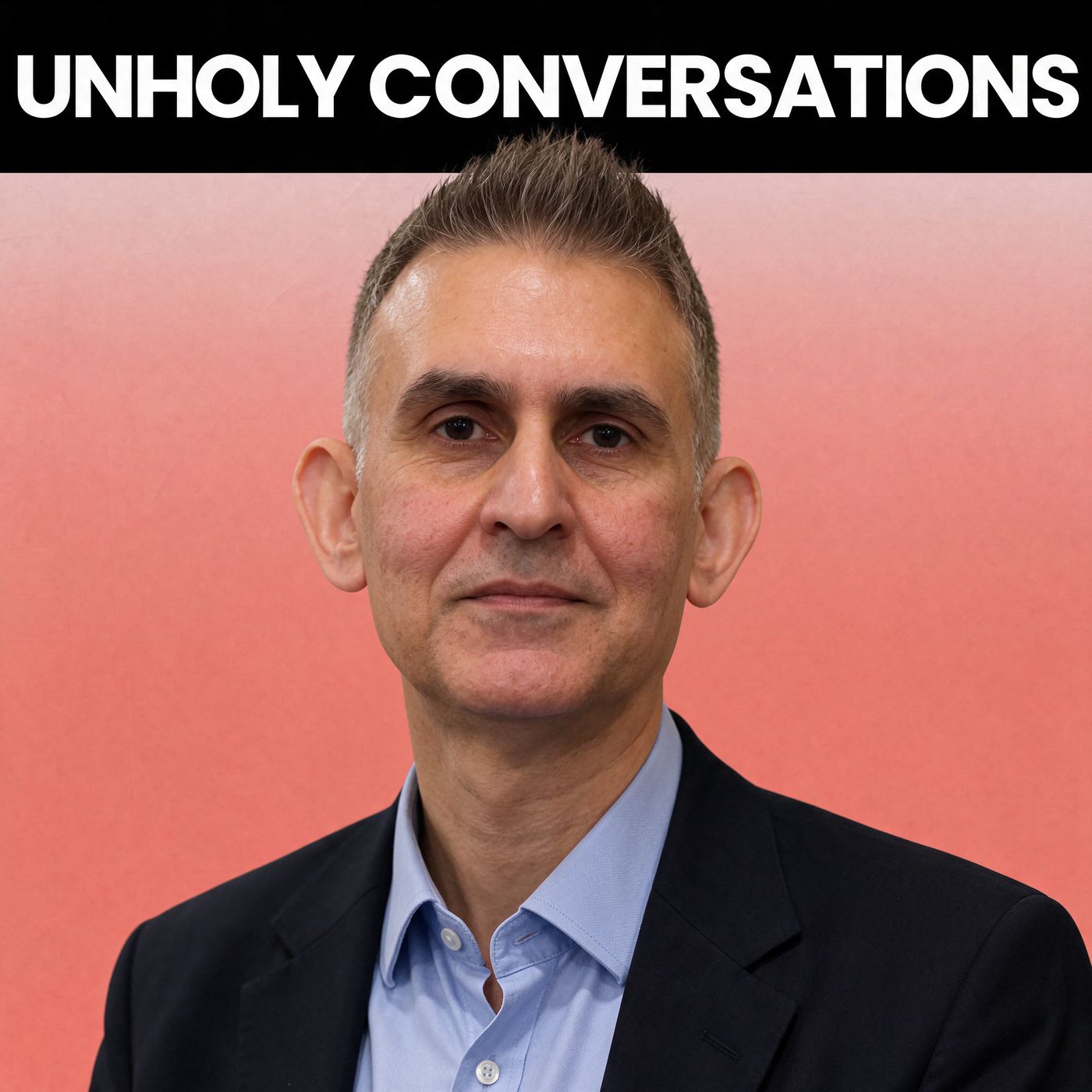
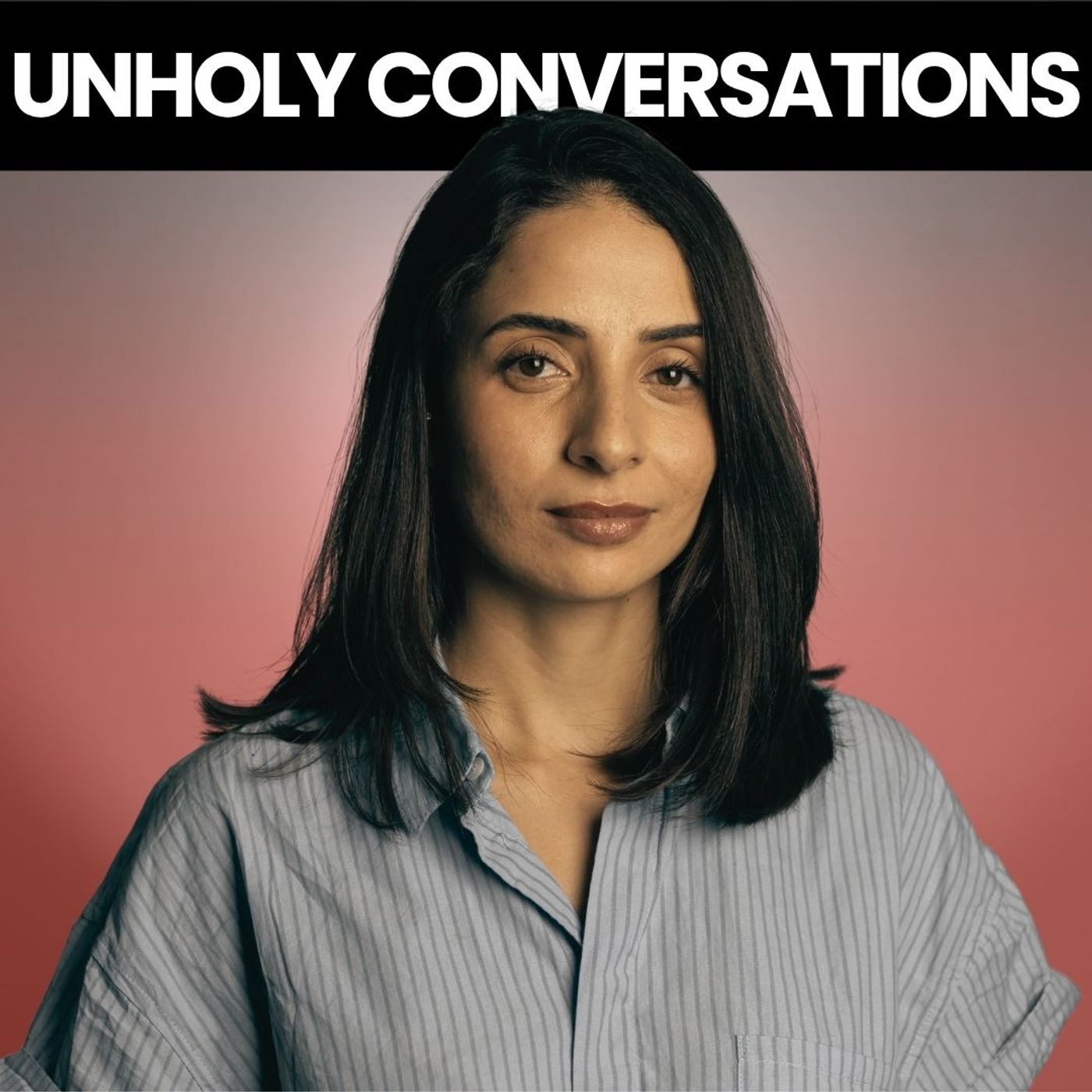
Nagham Zbeedat, Haaretz journalist covering Palestinian affairs and the Arab world; from Sakhnin (north Israel), speaking from Haifa. She describes her own shift from years of election boycotts to voting on election day.
Turnout was driven less by faith in Israel’s system and more by urgency to remove Netanyahu and address issues like limits on speaking Arabic at work, home demolitions (north to Negev), and escalating gun violence in Arab communities. Netanyahu’s claims of rigging/foreign interference are met with humiliation and frustration.
Her reporting in Sakhnin; discussion of Ra’am vs Joint List (Hadash–Ta’al–Balad) coalition vs outside support; Eisenkot’s conditions (Hamas “terror” and “destruction”); Balad leader Samah Abou Shehada disqualified after praising Oct 7 and Gaza’s “success.”
0:04The highest turnout recorded for Palestinians in here is due to dynamic factors that played in this election. I would say it is because of the fear, because of the feeling of neglect, feeling of anger regarding the Netanyahu government and all the struggles that they have lived in the past few years, whether it is the limitation to speak Arabic, in workplaces, whether it is home demolition from the north to the Negev, whether it is escalating gun violence in the Arab community and other issues that they are struggling with.
0:56It's Unholy, I'm Jonathan Friedland in London.
1:00Yonit Levi: And I'm Yunaid Levy in Tel Aviv. This is our Tuesday Unholy Conversations, still in a very unclear political map here in Israel. We wanted to talk to someone to give us insight on one of the most interesting phenomenons in this election cycle, which is the massive turnout of Arab Israelis and the fact that they have now 19 seats in the Knesset. What does that mean? What does that mean for the future of Israel's society? And what does that mean for the next government? And also, what does that mean for the kind of younger generation of Israeli Arabs and Jews in this country?
1:44Naham Zbidat covers Palestinian affairs and the Arab world for Haaretz. Her hometown is Sachnin in the north of Israel. She joins us now from Haifa. Naham, welcome to Unholy. Thank you for having me.
2:28know what the mood in the community is like just about that, about the fact that there was this huge turnout, this record number of seats, 19 seats in the parliament, whether that has induced a feeling of some kind of excitement and energy, even pride in this democratic participation, or different feelings. But you just tell us what the mood is on that. I would say it's a mixture of satisfaction, belief, the apprehension, but also anger following the fraud investigation campaign led by the Netanyahu government. There is a sense that Palestinian citizens of Israel have demonstrated what they have been rejected and denied, what have been rejected and denied to them, that they are politically engaged, that they have urgency, that they cannot simply be ignored.
3:21I would be careful about calling this as excitement, because the turnout isn't necessarily a vote of confidence in the political system in Israel, but rather it was led by urgency, by fear, by anger by the Netanyahu government. So for many people, their vote was to remove the Netanyahu government, to remove Benfira, to remove Smutrich. In my reporting, I spoke to people who boycotted the Israeli-Ginnias election for years and who ultimately voted this time because they felt the urgency of revenge against the government, especially after the years of war that we have been all living in, the escalating violence in the Arab community.
4:13So the pride in the turnout is existent, but I would say it's a very sober kind of pride. People are asking what might this political participation can actually achieve.
4:28Yonit Levi: Let me connect to that, to that mood and what can be done with that. Is there a difference in the way Ra 'am, the United Arab List, and the joint Arab List, which is Hadash Tal and Balad, see that cooperation in an ideal world, how they would want to use that political power in the future Israeli coalition, the future government? We have two different parties with two different perspectives and approaches toward the Israeli political system, where we have Da 'am, who has expressed support and intention to join a coalition in the future, whereas we have the joint list who will support the next government from the outside, from the opposition.
5:16And I think this, it tracks back to the identity and national identity of both groups, where we have the main goal is to focus on civil issues such as home demolition, limited budgets, the violence in the Arab community. And I'm not saying that Joint List is not focusing on those issues as well, but rather they are focusing it under the same umbrella as the national identity of being Palestinian citizens of Israel and connecting to other Palestinians elsewhere, whether it is in the West Bank, Gaza or in the diaspora. So given that difference between the two different parties, what's striking is both increased their vote massively.
6:04It wasn't as if there was a choice by the Arab community to take one path of greater cooperation than another. There seems to have been support for both approaches and strong support for both. How do we interpret that? Because I wouldn't limit the reason behind the highest turnout for the Arab voters in Israel to one reason or one explanation that says that people just wanted to vote. because whether they voted for Ra 'am, whether they voted for the joint list, or whether they voted for other opposition parties, I think the highest turnout recorded for Palestinians in here is due to dynamic factors that played in this election.
6:59I would say it is because of the fear, because of the feeling of neglect, a feeling of anger regarding the Netanyahu government and all the struggles that they have lived in the past few years, whether it is the limitation to speak Arabic in workplaces, whether it is home demolition from the north to the Negev, whether it is escalating gun violence in the Arab community and other issues that they are struggling with. And these fears, these struggles, these realities were the reason that got the people together to vote. And whether it is Ra 'am or the joint list, people just wanted to remove the Netanyahu government.
7:49Yonit Levi: Yeah, which is proving to be quite a challenge. You mentioned that Netanyahu is trying to say that the vote was rigged and there was foreign interference when it comes to the Arab vote. And there are other responses. Some of even the things that have been said in the public sphere are, you know, racist and vile comments. What does the community make of that? What do you personally make of all of that? I think anger and annoyance of being asked to come out and vote, being asked to remove the Netanyahu government constantly over the past elections until now. And when they do that, when they practice their rights, they are being labeled as a fraud and stealing votes.
8:36For me, I felt humiliated, especially because I myself was boycotting the Israeli Knesset, the Israeli election for years now. And I did struggle with making my decision this time whether I should vote or abstain. And it was really hard for me to overcome my boycott principle. And for that vote to be labeled as a vote by Qatar was something that made me think, did I make the right decision? Did I make something wrong with believing that something better might happen, that my vote could make a change? So frustration is a common, I would say, a common feeling among Palestinians and Arab voters in Israel.
9:28It's fascinating because you were talking publicly about the fact you were not going to vote. And then in the end, and I've read what you said about this, literally on the day, towards the end of the day, you finally made this decision that, yes, you were going to participate and vote. and I think you wrote about being quite moved by seeing so many people come out to vote, you know, in Arab towns in the north and becoming part of that. What pushed you in the end over that line to say, yeah, I'm going to cast a ballot? Honestly, it was the whole scenario and the whole scene of Palestinians who had this slight and glimpse of faith that maybe their vote will change the reality that they live in.
10:10I was reporting and covering on Arab towns on that day, on election day. And I had to cover Saknin, my hometown and my hometown, and where I was supposed to cast my ballot, my vote. Yet I keep delaying my visit to Saknin because I hadn't made up my mind yet. That morning, I was so determined that I'm going to still boycott the election. and I spoke on that day I spoke to so many people who used to boycott the election I spoke to so many people who have been participating in the election for decades and I think each person I interviewed that day had a little bit of influence on making my decision and at the end of the day, I made peace with my decision thinking that maybe, maybe at least with my vote, one family, one Palestinian family, whether it is in Gaza, the West Bank or in Israel, could go home to bed believing that tomorrow will be better.
11:22Yonit Levi: That's such an interesting personal story that you're telling us. I wonder if you can tell us a little bit more about people around you, your family, your friends, were they also kind of boycotting the elections up until this point and changed their mind only now? Or was it slightly different? I actually do argue a lot with my father because he is in support of participating in the election, whereas I always explain why I am boycotting the election. And I wouldn't say exactly. I am in the environment where everyone is boycotting the election. I did form this opinion based on a principle of mine, based on history, based on stories, interviews, and people who I heard talk about their lives, their experiences, and struggles.
12:17As I said before in previous, and I still believe in that despite actually voting in the end, that the Israeli election and the Israeli Kinesis election portrays this election as some sort of a democratic tool for all of its citizens to express their voices, to aim for change. While I think that this is partially true, I think there is some part of it is false for Palestinian citizens in Israel, as we are constantly treated as less-than-citizens, as not equal, whether it's citizens, whether it's Arab representatives in the Kinesit. And if, historically speaking, the Kinesit has been established since the establishment of Israel, and the Arab representatives have been in the Kinesit since.
13:21Yet, when it comes to discrimination laws that have been passed in the Kinesis, one of the most discrimination laws that have been passed was the national state law that gives identity and national identification exclusively to Jewish people. So with that, it has been passed when the joint list, when the Arab parties had 15 seats in the Kinesis And they were the third biggest parties in the Kinesis And they even had an Arab party in the coalition So I don't think that participation is the issue but rather the political limitation that are given to the Arab representatives in the Kinesis that are the issues for me.
14:14And given that, and given what you said in the end pushed you and many others to end their boycott, which was a feeling that we just have to take this chance, if we can, to get rid of this Netanyahu government. I think that's as you were pretty much describing it. what sense do you have now of the political parties those arab representatives who are there how determined are they to establish an opposition government a government of change as it's called meaning will they be prepared do you think to show more flexibility to even cross some previously red lines to get this done and we can get into the detail of what those lines might be but i'm just interested to know the degree of motivation, whether because of the Arab public, the Palestinian public in Israel, those Arab-led parties are now really determined to do whatever it takes to form a new government in a way that they have not been as determined in the past.
15:16I would break down the Questioning two questions. I would say the opposition, the government that may be a government that is led by the Eisenhower is not as determined, apparently, to form a government with the Arab parties, given the conditions, given the hesitations and the limitations that they have expressed with sitting with the Arabs and forming a coalition government. And on the other hand, I do believe that the Arab voters have a strong desire of change and they have achieved that so far. But it does not translate into unconditional mandate for the Arab parties. I guess I think an important question to ask is what people mean when they say they support participation in the Kinesis, when they say they support participation in the government?
16:20Do they mean that Arab parties should join any government that promises funding for Arab towns, or should they give unconditional support for the Arab parties who join a government that would allow or would pass laws such as the nation-state law or other discrimination laws laws that might affect the Arab community in Israel.
16:48Yonit Levi: It's interesting to me because when I look at the political system in Israel, there's a great deal of hypocrisy, right? On the one hand, you have Netanyahu famously in 2021 negotiating with Rahm and with Mansour Abbas personally, meeting him four times, trying to convince Betzalus Maltic to agree to him entering the coalition. If Betzalus Maltic had given the green light, we would have had a coalition with Netanyahu and with Rahm and with Ben Gvira. It would be quite a thing to watch. On the other side, of course, we should mention that the joint list cooperated with the Likud while there was a changed government, both to vote down bills and to bring down that government.
17:25Yonit Levi: I assume they regret it quite deeply now. So there's a lot of cooperation going on, even if it isn't stated cooperation. And I'm trying to kind of tag on to Jonathan's question and say, even if we look specifically at Eisenkot's conditions, he added a fourth condition for anyone to join his coalition. He said anyone would say you need to call for Hamas to be destroyed and you need to say it's a terror organization. You know, famously or infamously, particularly Ram and the Joint List have not said that. Do you think that Mansour Abbas would go an extra mile and give that kind of declaration or would it be too dangerous for him to do that?
18:01Even that statement, I would break it into two different parts because stating that Hamas is a terrorist organization is one thing and then calling for its destruction is another thing. because as many arts investigations and reports have shown and other news outlets in Israel have shown that when it came to targeting Hamas members, the human death toll has also been really high. So I think the distinction between the destruction of Hamas and the destruction of Gaza is a very thin line, given the record history of the Israeli army in Gaza. However, I think Mansour Abbas has pursued a strategy of pragmatic engagement with the Israeli state.
18:55He has recognized Israel as a Jewish state in the past. He emphasized on other issues and conditions that Eisenkot had stated. so I think Mansour Abbas of all will be willing to go the extra mile however he is a very smart a very well-spoken politician and I'm really eager to say to see what he will come up with what he will say and what is his next move. I would second that he was a guest on our podcast and he's a fascinating, and I agree, he's a kind of nimble politician. I think most people think that he will somehow find a way to clear these hurdles that, as you've explained to us, you know, Eisenkart and the so-called change bloc, the mainstream opposition parties, have put in the way.
19:53And obviously there are two sides to this. There's two, you know, there's two dancers in this dance because there's the demands made by the so-called Zionist parties, and there's obviously the needs of the two Arab-led parties and their demands. Most people think that, or rather, I think that Mansour Abbas will find a way. In terms of the joint list, how far do you think they can go? Because they have historically included more radical factions. We've mentioned Balad. I don't think many people expect them to join a government, But the thought is they might be from the outside able to support a government.
20:32And in a way, that will require them having to go some distance. We know about Mansour Abbas's flexibility. How flexible are the parties that make up the joint list? I think the joint list as a group altogether and separately has historically opposed defining Israel as a Jewish state because they see this definition as incompatible with the equal national and the civil rights for Palestinian citizens of Israel. And one of the reasons that people believe some of the people who came out for them to vote and voted for them was because the Palestinian national identification of the party So with the recognition of Israel as a Jewish state, with the condemnation of Hamas as a terrorist organization and the destruction of Hamas in Gaza, I would be really cautious and I wouldn't be optimistic about them taking this extra mile.
21:46Because the question whether, for example, whether Israel is a Jewish state, what does it mean? Does it mean that there is a national hierarchy in which one people has collective national rights over the other? whether it's believing and recognizing the existing state and its institutions, it's quite different.
22:12Yonit Levi: There's a history there. We should also mention that this time of Balad, Samoy Abishchada, the head of the party, was disqualified because of things he wrote right after October 7th. He said that October 7th is an important historical event in strategic terms, and he said others can learn from the success of Gaza. that got him disqualified. When you look at some of what, maybe this is an unfair question to ask because there are definitely problematic things that have been said by Jewish politicians and even some of them in the government. But when you look at some of what the Arab politicians have been saying over the past couple of years, particularly after October 7th, do you understand, do you kind of maybe can understand what some of the Jewish voters are looking at with some trepidation?
23:00I would understand why some people, some Jewish Israeli people, would be hesitant for this cooperation between the opposition and the Arab parties. But however, this would only mean that we are focused and looking at one group's struggles and conflict and ignoring entirely the other one. Sam Abush Hadi, for example, came out and apologized for his article And I think it was injustice, unfair and injustice what happened to him As you have said, there is some Israeli politicians who are in the Kinesis Have said some worse things And yet, here we are so I think this with with this hesitation I think there will always be this separation and division between Israelis Arabs and Jewish Israelis because I think the same because we're fighting for the same thing which is democracy and justice so if we are going to overlook look, one's democracy, because we only care about how their democracy might affect us, then I think we're going to be stuck in the same loop, no matter which government we're going to have.
24:32Let's say that somehow, because we all agree that politicians are quite agile and can do, they can find their ways out of words and past statements. Let's say they manage to somehow get this across the line, and a new government is established, and maybe Rami's inside it and the Joint List supports from outside, however that happens, let's just imagine that. A lot of people say, you may achieve that, but it would then crumble very quickly and it would not last, especially, they say, if there were to be a situation of war. So that if Israel was to resume military action against Iran, for example, or even increased operations in Gaza.
25:18We know, obviously, the situation we've talked about a little bit on the West Bank. Any one of these situations, would it be conceivable, would it be possible in a situation where military activity is ongoing for either of these two Arab-led parties to remain with such a government, whether on the inside, like one or on the outside from the other? Or would they immediately have to walk away and bring down the government? I think this is probably one of the most difficult questions and situation for any prospective coalition. And the experience of 2021 demonstrated that an Arab party can participate in an Israeli government, but that government was already fragile when the Gaza war happened in 2021 and exposed the limitation of political cohesion and participation for Arabs, for Arab representatives in the Kinesis.
26:18A military confrontation action with Iran would present a different challenge, I think. It would be framed by much of the Israeli political system as a matter of national security and existential threat. I think for Palestinian citizens of Israel, however, the question would be a little bit more complicated because they would be asked to support a government participating in a military campaign against a regional war. And when it comes to Gaza, they will also be asked to support a military action against their people who are inside Gaza. And many Palestinians have political, historical, and ideological connections.
27:11Even if they don't support the Hamas government, even if they don't support the Iranian regime and policies, I think it is entirely possible that the Arab parties could support a government on domestic issues while opposing a particular military operation and participation. But whether they could remain in the government would depend on the scale of the operation, whether it is in Gaza or it is in Iran. And the lesson of 2021 is that the coalition can make cooperation possible because it doesn't eliminate or undermine the national conflict.
27:58Yonit Levi: I think about how unclear the situation is now. And I'm looking from some glimmer of optimism as I'm sitting here in Tel Aviv, you're sitting there in Haifa. What needs to happen for the societal situation in Israel to be better between Jews and Arabs? What do we need to understand about you? What do you need to understand about us for us to sit here in five years, if that's the trajectory, and smile and say we made things better for the next generation? I think compromising on both sides, because given the conditions that have been made by Isinglod and the conditions that have been imposed on Palestinians and Arabs, whether they are in the Kinesit or on the streets, it has shown that the compromising is limited and it feels that is limited to Palestinians.
28:52So I think compromising should be equal, whereas I have and I must look at why might Jewish Israelis be afraid and hesitant to sit with Palestinians and Arab representatives in the Kinesis and why they don't have faith in the Arab representatives to speak about their problems. It also needs to be the same from the other side, from the Jewish-Israeli side, when looking and talking about Palestinian citizens of Israel. Because over the years, for example, when we are talking about elections, over the years, Palestinians and Arabs have been asked to vote, have been asked to remove Netanyahu governments.
29:43But when they demand security, safety, inclusion, equality, their demands are negotiable. And their citizenship is always on a test. Their loyalty is always on a test. So I think accepting Palestinians and Arabs as citizens first is a good start to begin with. Do you think ultimately it's conceivable that there could be a time where we're not talking about Arab parties and Jewish parties, that there could be a genuine mass political party that Jews and Arab Israelis just vote for in, you know, I don't know whether equal numbers, but a party that no longer has those sorts of designations? Or is that naive and idealistic to even imagine such a thing?
30:30I think it's a little bit early to talk about this because in a way we had that with the standing together political movement. Makom Lekulano applies for all of us. Sorry if I translated it wrong. But I think they have portrayed all of the components, all of the intentions and goals of a united Jewish Arab political party, regardless of their activism and all of their work on the streets. But the intention behind this political party is pure, I might say, with the inclusion of both Jewish voices and the Arab voices. Yet they have not received the support that they expected. Thus they withdrew from running for this election, Knesset.
31:36So I think there might be in the future And there might be another run for the Makom Lekulano But there's a lot of work that needs to be done in Israel first
31:50Yonit Levi: Naram Zbidat, we really appreciate this conversation Thank you so much for giving us your perspective on this Thank you so much for having me
32:04Well, that was a fascinating conversation. A group who are absolutely, as you said, at the top of the episode, central to all the calculations, the negotiations that are going on about forming this coalition. And there's the perspective of somebody I thought so fascinating, her own journey. She went into this campaign thinking she was not going to vote. A lot of people in her community do not. Her own father always does. And you can imagine that table argument. And it's actually on voting day itself, you know, watching people vote who believe they kind of just have to, to have a chance to change a government that has particularly been difficult for the Arab community, as you heard Naham explain, in terms of just, just to pick one issue, crime in the Arab sector, which has been so neglected.
32:52They felt they had to take the chance. And she, you know, yes, a reporter, a journalist covering this community, but also a citizen. And she felt she just had to do her, play her part. And now, you know, the big question is, does that go somewhere? Does something actually eventuate from it in the form of a new government?
33:09Yonit Levi: Yeah, I mean, to me, when she was talking about having political arguments with her father, I wanted to say, well, that's not, that doesn't happen only in the Arab community. Let's put it that way. To me, one of the more kind of honest moments when she said, I understand why some Israeli Jews would be afraid of this kind of cooperation. And it shows an ability to kind of empathize and to see the other, which to me might be lacking in the society in general. I was thinking of Ayman Oda just when he began to be the leader of the Joint List. This is 2015, sitting in my studio with Arya Deri of Shas, who brought the revolution of the Mizrahi Jews and saying to him, we both have been discriminated against.
33:49Yonit Levi: We could cooperate with each other. Of course, that never really happened. But there are these lines where you see that those two communities can cooperate with each other. We still don't know anything about where this coalition will become, what kind of coalition will be formed, what kind of government will be formed. But to me, I think she shed so much light on what the community itself, the Arab community thinks. Yes, completely. There are these opportunities that come along. It's now really clear, I think, that you're just not going to get a government of the opposition, as it were, the anti-Netanyahu world, without that support.
34:25If this opportunity is lost, I do worry, based on what she was saying, that a lot of people in the community of Palestinian Israeli citizens will just conclude, well, look, you know, we did our bit, it led to nothing, and we're going to walk away. and I think that's a real danger. These opportunities, she's mentioned, there have been efforts in the past. I think it does have to be seized and who knows, for the next generation, something, she hinted at that, you could see more cooperation. It's got to build, but it's got to start somewhere, one step at a time and you begin with those sort of baby steps.
35:00But hugely important, I think really valuable conversation with Naram Zbidat. So we are grateful to her and we have some other thank yous.
35:09Yonit Levi: Indeed, a very big thank you to Nir Leist and to Michal Porat. We will meet on a regular episode on Thursday, Jonathan. Lots to discuss, including the midterms. There are other elections going on. We will talk about that on Thursday. We will. See you at the end of the week. Cheerio.
A week after Israel voted, the identity of the next government is still unclear — but one thing is not. Israel's Palestinian citizens turned out in record numbers and Arab-led parties will have 19 seats in the new Knesset. No government of change can form without them. Nagham Zbeedat, who covers Palestinian affairs and the Arab world for Haaretz, refused to vote in Knesset elections for many years but she ended her personal boycott last week, casting a ballot in her hometown of Sakhnin. She tells Yonit and Jonathan what the surge in Arab turnout was really about — and why it is not a vote of confidence in the system. Where do Ra'am and the Joint List part ways? Can either of them meet Gadi Eisenkot's conditions, and what would a war with Iran or Gaza do to a coalition that depended on them? Looking ahead, what do Israel's Jews and Arabs need to understand about each other if there is to be a chance of a better future?
🌐 Our website: https://unholy-podcast.com
💛 Become a friend of the pod:
Patreon: https://bit.ly/UnholyPatreon
📺 FOLLOW UNHOLY
YouTube: https://www.youtube.com/channel/UCGlvtS7As7WHh7YtmU5SMUQ
Instagram: https://www.instagram.com/unholypodcast/
X: https://x.com/unholypod
Bluesky: https://bsky.app/profile/unholypod.bsky.social
🎧 LISTEN TO UNHOLY
Apple Podcasts: https://podcasts.apple.com/il/podcast/unholy-two-jews-on-the-news/id1548441108
Spotify: https://open.spotify.com/show/2m2UnLfiAyOehtF1bsv98W
🎙️ THE HOSTS
Yonit Levi
Instagram: https://www.instagram.com/yonitleviofficial/
X: https://x.com/LeviYonit
LinkedIn: https://www.linkedin.com/in/yonit-levi/
Jonathan Freedland
Instagram: https://www.instagram.com/jonathanfreedland/
Bluesky: https://bsky.app/profile/jonathanfreedland.bsky.social
📩 Contact: unholy@unholy-media.com
🔗 All links: https://linktr.ee/unholypod
Hosted by Simplecast, an AdsWizz company. See pcm.adswizz.com for information about our collection and use of personal data for advertising.
Scan the code with your iPhone camera
Listen in the app.