 Unholy: Two Jews on the News
24 Nov 2026 · 32m

 Add vo to ChatGPT or Claude to ask about everything you hear
vo listened to this episode to put together the overview and transcript, so there may be the odd mistake.
Dave Rich argues that since Oct 7, 2023, global anti-Israel protest language has shifted into antisemitic tropes, increasingly creating an atmosphere that enables violence against Jews. He frames the “Jewish question” as a recurring Western political obsession where Jews/Israel function symbolically, not materially, and claims antisemitism now has political relevance beyond fringe groups.
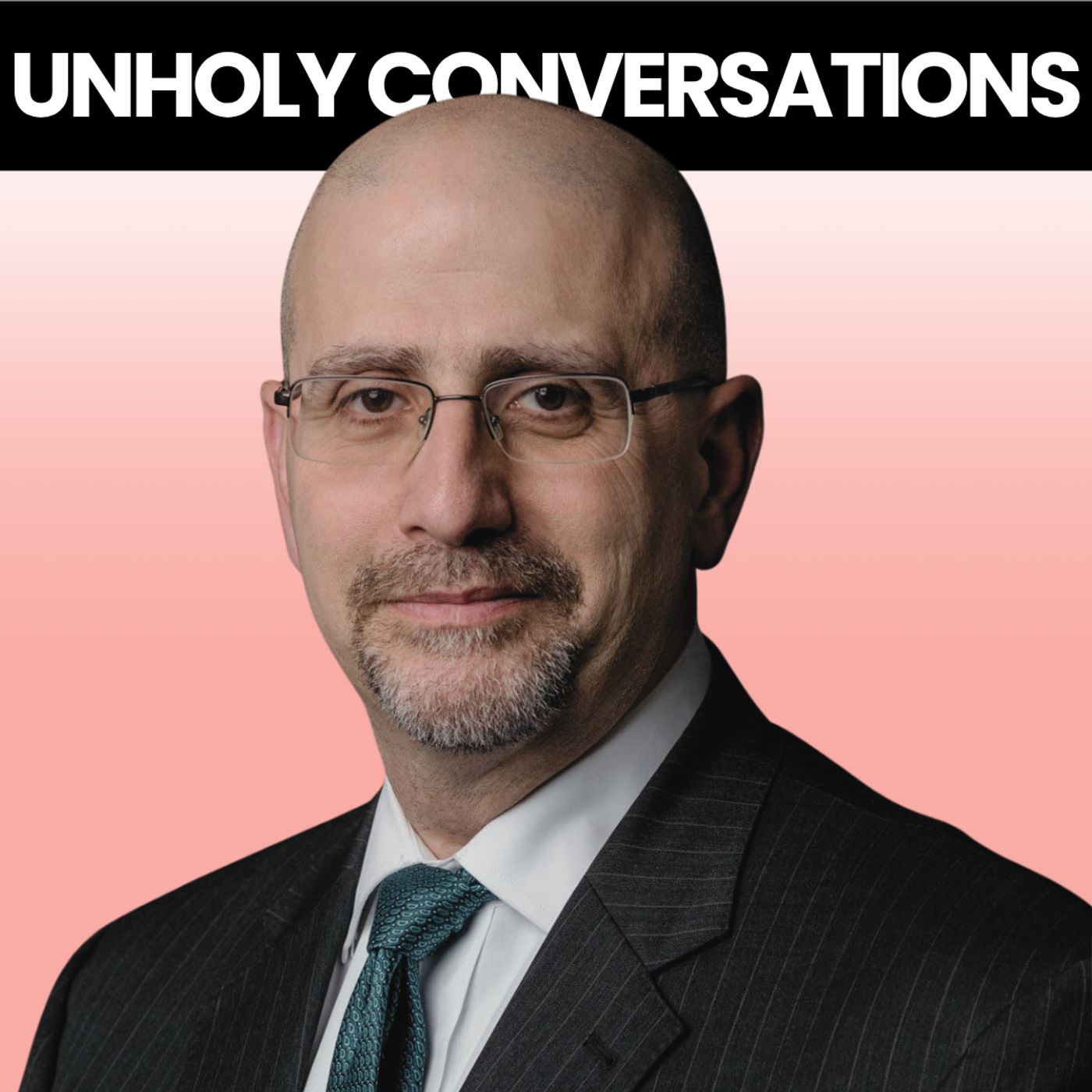
Dave Rich, UK-based author and “foremost authority on antisemitism,” collecting writings from 2023–2026 in From Berry to Bondi: Global Antisemitism After October the 7th.
Protesters increasingly treat Israel’s existence as illegitimate; slogans mirror terrorist justifications (genocide/child-killing/ending Zionism); this resembles “stochastic terrorism.” He says antisemitic attacks spiked immediately after Oct 7, before Israel’s Gaza actions.
Manchester Yom Kippur synagogue attack (Jihad al-Shammi); Boulder hostage march (Mohammed al-Sabri); Washington Jewish Museum shooting (Elias Rodriguez); “Epstein class” campaigns during the Iran–Israel war; Denise Gough’s Star Wars analogy; Pankaj Mishra’s “Shoah After Gaza.”
0:00Welcome to the latest of our unholy conversations. I'm Jonathan Friedland in London. This latest conversation is with someone who is one of the foremost authorities on antisemitism in the world. He's based here in the UK. And his latest book is called From Berry to Bondi, Global Antisemitism After October the 7th. So here is my conversation with Dave Rich.
0:32Dave Rich, welcome back to Unholy. Thank you for having me back on. In the book, it's a collection of your writings really on anti-Semitism over the last three years, since October the 7th, 2023. And I think you make, right from the start, a quite striking observation that the character of discourse about Israel and where it meets, where it collides or even turns into anti-Semitism, The character of all that has changed since October the 7th, that we are now confronting something different. What can you tell us about that? I think we've seen all around the world, especially in the UK, but in many other countries as well, the emergence of this enormous protest movement against Israel, against Israel's actions in Gaza, that has an understanding and a narrative about what's happening in Gaza, not just that the events there are, as we've heard from many times, are genocidal and ethnic cleansing and so on, but that the actual character of Israel brings the entire state's existence into question, that nobody in this movement really campaigns against the occupation anymore.
1:45If people argue nowadays against the occupation of the West Bank and Gaza and for two states, that's almost seen as a sellout position in this movement, that to be part of it, you have to argue that Israel is a manifestation of settler colonialism, that it is illegitimate and inauthentic, and it shouldn't be there. And this began on October 7th itself, when you had tenured professors at American and British universities tweeting about the Hamas attacks on the Kibbutzim and southern Israel, that the people living there are settlers on stolen land, so what do you expect? And Kibbutz Ba 'eri and the other Kibbutzim or on land that is sovereign Israel, not even disputed.
2:28So right from the start, you had this idea that the entirety of Israel shouldn't even be there. Now, allied to that is the language used by these protesters is the same as the language used by the terrorists who come to kill Jews. So when Jihad al-Shammi was trying to batter down the doors of Heaton Park Synagogue in Manchester on Yom Kippur last year, He was shouting, this is what you get for killing our children. When Mohammed al-Sabri threw Molotov cocktails at a hostage march in Boulder, Colorado, killing one person, injuring 11 or 12 others, he was shouting about killing children, about ending Zionism, about Gaza.
3:15Same with Elias Rodriguez when he shot dead two people outside the Jewish Museum in Washington, DC in May last year. The language they use to justify coming to kill Jews is about genocide and child killing and Gaza and ending Zionism. And this is exactly the same language you get on this big protest movement, marching through our streets, in our university campuses and all over social media. Now, that doesn't mean, of course, that every one of those protesters would support violence at all right but we know terrorism political violence racist violence doesn't emerge from nowhere it doesn't drop out of a clear blue sky it comes from a hinterland of ideas an atmosphere of dehumanization and demonization of a target group that leads to the creation of a mentality that would justify or excuse violence against them there's even an academic term for this is called stochastic terrorism, where you can't predict exactly when or where a terrorist attack is going to happen against a particular group, but you know, sooner or later it will, because of the atmosphere, because of the language.
4:25And this connection between the protest movement and the terrorism is something that not enough people recognise. I think not enough authorities have really woken up to the fact that within this very broad, legal, democratic protest movement, you have an extremist narrative an extremist uh kind of trend that uses exactly the same language and the same justifications as the murderous terrorists and we can't ignore this it's happened too often for it to be a coincidence and this point you make even in the introduction to the new collection is this uh change in the character even of the most overt anti-israel conduct including the slogan scrawled, I mean, probably AI generated on a warhead sent by Iran to Israel, saying, in the memory of victims of Epstein's island.
5:18And you sort of develop this idea that actually, even the most overt anti-Israel action is adopting and taking on the characteristics of quite familiar anti-Semitic, anti-Jewish language and discourse. Just develop that point, if you can. This was something I thought was really striking during the war between Israel and the US and Iran that began at the end of February of this year, is that so much of the campaigning language against the war coming from Iranian propaganda, but also from within kind of anti-war movements in Britain and America, focused on Epstein, talking about the Epstein class.
6:02that this was a war for the Epstein class and that fighting back against the war was striking a blow for the victims of Jeffrey Epstein. Now, of course, it doesn't need to say, but Jeffrey Epstein has played no part in that war. I mean, he died seven years ago, but people landed on this. Now, who was Jeffrey Epstein? right he was a jewish powerful wealthy financier who preyed on children and who had networked secretly behind the scenes with all sorts of powerful people and all sorts of conspiracy theories have developed about what went on on that island now i'm not saying this to diminish his crimes which were appalling what i'm interested in is it's almost like he ticks every box for the anti-Semitic imagination.
6:48The conspiracy element, the power, the money, the blood libel element of preying on children, the sexual deviancy, and so on and so on. And so wrapping up, you know, why is President Trump launching a war against Iran? Why is Netanyahu doing it? To wrap that up in this slogan of it's the Epstein class has such resonance. We saw it on protests in London. We saw online i mean you know far left groups here would build whole campaigns around it iran put out this series of or paid people to create this series of actually very engaging and witty animated lego videos attacking america during the war which included you know lines in the songs there'd be like a rap song at the back with this animation about epstein about bringing down the epstein empire.
7:39And I think the utility of antisemitism is something that has really changed in recent years. The salience of it, the ability to use very deep, very old antisemitic narratives and tropes, such as conspiracy and child killing and so on, to attract and animate and mobilize millions of people, actually, is one of the things that has really changed since October 7th. You know, we've always known that anti-Semitism was there. There's always been extremists pushing these ideas, planning to attack us on the fringes of society. But most of the time, you know, for decades, for Jews living in Western countries, for sure, anti-Semitism didn't really matter on a big scale day to day.
8:31And the argument I make in the book is that this is what's changed. The antisemitism now matters. We are living in a world where it has political relevance, not just amongst fringe extremists, but amongst some of the best known, most influential voices in our societies. And that requires a complete shift in how we as Jews think about it and respond to it. Yeah, and it matters in the most direct way. possible, which is that Jews are being killed at the most extreme end again, and attacks on synagogues and on Jewish life, instead of a rare occurrence, a regular occurrence. You talk in one essay of the return of the Jewish question, and it's a very arresting phrase.
9:17You mean something very specific by it, which I think is not often understood, how the Jewish question was understood and what it meant. Just explain to us what you mean by the Jewish question and its return, and how it's become salient far beyond just, you know, academic discussion, that it's become a real thing. So the Jewish question was a political idea that sort of emerged in 19th century Europe around this question of what does it mean for Jews to have freedom, to be emancipated, to have full rights in our societies where previously they didn't. And it was something discussed either by people who thought Jews had a negative influence on society, or by people who were trying to argue back against that position.
10:04But essentially, in the 19th century, pretty much all the leading political figures, philosophers, writers would engage with this idea that the Jewish question, the status of Jews and what do we do about the Jews, had real meaning across the whole of society. Now, there is an irony in the name because it was never really a Jewish question. It was an anti-Semites question. This was a question of people who saw Jews as a negative presence. It became very symbolic for people's political positions on all sorts of other things. The position people took towards Jews and anti-Semitism or emancipation wasn't really about Jews.
10:47It was about much bigger issues of national identity, of democracy, of civil rights, of your position on all sorts of other political issues that the Jews weren't involved in. And my argument is that this is now the world we're living in again. Maybe it should be reframed the Israel question or the Zionism question. But, you know, I'm just looking this week at, you know, we just had a football match between the Republic of Ireland and Israel. And for weeks, political and media and public discussion in Ireland has been absolutely obsessing about this match and what they should do about it and what it means for them to play against Israelis.
11:30and they played last night and they wouldn't even shake their hands because God forbid you should be defiled by the touch of an Israeli hand. The week before, we had a global discussion about Ed Sheeran and because Macklemore, who's a very pro-Palestinian and at times some might say anti-Semitic rapper, was kicked off his shows in America. And the point is these issues in football and music, nothing to do with politics ostensibly, suck up the attention of huge numbers of people, of an entire nation's public discourse in terms of Ireland, in a way that isn't the case for anything else. You know, when Ireland played cricket against Afghanistan, which is governed by the Taliban, where girls are not allowed to go to school, where there are no human rights, no one cared in Ireland.
12:20There was no discussion, because there's no Afghanistan question in Ireland at all. It just doesn't have this symbolic resonance. Now there's very old reasons going back 2 ,000 years why Jews have a symbolic resonance in Western societies in a way that other peoples don't. You see this time and time again in all sorts of places. The issues to do with Jews, Israel, the Holocaust, anti-Semitism take on a much weightier meaning than actually the number of Jews in a particular country and the size of Israel would justify. And it's this symbolic role that then carries all sorts of other politics with it.
13:00We should just say two things. One is that I'm sure if Macklemore was here, he would deny that he's a sometimes anti-Semitic rapper. And he would say that when he did dress up in full Jewish caricature, complete with beard and wig and large prosthetic nose, he did later apologize for that, despite the uncanny resemblance to an anti-Semitic caricature. And people may also want to know that the Republic of Ireland did beat Israel 3-0, just in case they're frantically checking after your mention of it. But the point I think you're driving at, which is such a sort of striking one, is what these people argue is not just that somehow, you know, Israel is a big human rights issue, but somehow the world's fate hinges on this question.
13:45I think at one point you You describe the Jews as a sort of keystone in Western civilization, as if the whole thing will tumble down if this isn't secured in some way. And I just have to ask you this because I think people will be blown away when they hear it. You mentioned an actress who appeared in Star Wars, who perhaps inadvertently absolutely distills this kind of thinking. Can you just tell us that story? So this is an Irish actress called Denise Gough, who was starring in a TV spinoff from the Star Wars franchise. And I love Star Wars and I watched all of it, but I ended up not watching this one.
14:28And she gave an interview beforehand. She's very pro-Palestinian, nothing wrong with that. Actors can campaign on whatever they want. But in this interview, she said someone had explained to her, you know, for people who know Star Wars, the most famous scene probably in the whole franchise is in the first Star Wars film, which came out when you and I were quite young, but old enough to probably see it in the cinema at the time, where the Death Star is this big planet-sized weapon that commits genocide at the touch of a button and that allows the empire, the evil empire led by Darth Vader, to trample on free peoples all over the universe.
15:09But it has a hole. there's a hole in the side an exhaust chute and if you fire a missile into that hole and it goes all the way to the core of the death star it blows it up and people all over the world are free from imperial oppression and genocide is averted and denise goff's argument was that palestine is like that hole and if you can fire your missile down it and if you can free palestine you free the whole world. You liberate it from imperialism and from genocide and everyone is free. And she even started naming countries in Africa that are where, you know, human rights and abuses and conflict will be ended if Palestine is free.
15:52She didn't quite explain exactly how, but that's the vision. Now, she's not the only one. You know, the other end of the intellectual scale, Pankaj Mishra, who was a very well heralded novelist and essayist, wrote a very celebrated an influential essay in the London Review of Books, which he then turned into a book. It was called The Shoah After Gaza and then The World After Gaza, in which he made the same argument. And he was very open. He said the reason why Israel plays this role in a way that no other conflict does, it's not just because of the number of people killed and the devastation and so on and so on, it's because Israel is Jewish.
16:29And Jews have a pivotal symbolic role in the stories that the world tells itself. and in all the dividing lines in society and in global politics. And there are loads of other examples like this as well. And, you know, on a sort of pure concrete material basis, none of these things make sense, right? Israel is a tiny country, 10 million people. There are other conflicts, even in the Middle East, where far more people have been killed. The Jews are a tiny people. You know, there are more, 15, 16 million of us worldwide. But we have a symbolic role in other people's stories that makes them think that there is something that if you get this right, if you liberate the world from the particular kind of sinful or cruel behavior that Jews perform, then you usher in a new era, a new kind of millennium of freedom and liberation.
17:31And this is something that we've seen throughout history, I mean, going back to the Middle Ages and so on. And it's something that still crops up today. And even Jewish writers, I mean, Peter Beinart in his book about being Jewish after Gaza, concluded with a rousing cry that if Jews help to liberate Palestine, we liberate the world. Now, why? I don't think there are all sorts of places in the world that will not be any freer if the Israeli-Palestinian conflict is settled. It's the symbolic... meaning of it. Yeah, I mean, reading your book made me feel that we are, as Jews, often making a kind of category error.
18:07We think that the problem is this or that incident in Gaza, or this settlement in the West Bank, or the exact place where the green line is. The real, as you put it, the concrete and the material. But there's this other discussion going on, as it were, among everyone else, which is on a completely different mythic, symbolic plane. It's not about actual jews or actual israel it's about this place we have in the global imagination and so you might do a fix in the concrete material realm but it won't really have a bearing on the mythic realm and so that there's this sort of you know gap between the two that was one thing i felt i want to drill into the link um this is an awkward topic and people you know you'll need to know on the podcast, I remember after early in October 2023, this was one of the things we wrestled with a bit.
19:00And this is the link between that spike in anti-Semitic attacks, more than a spike, surge in anti-Semitic attacks around the world. And that follows, you know, violence and conflict in the Middle East. The link between that and the conduct of Israel itself. And I know, because you write it in the book, and it's a point you have made often, that anti-Semitic attacks spiked immediately after, even on October the 7th, before Israel had done anything. So in other words, this isn't a response to, you know, people throwing bricks through synagogue windows is not a response to Israel bombing people in Gaza.
19:39That's a mistake to make that assumption. I absolutely accept that. But when people see there's been so much of it, footage recently, for example, of just awful incidents of settler violence on the West Bank. You know, we talked about on the podcast, those pictures of 16 year old settler boy clubbing a disabled amputee, Palestinian older man. Are we meant to think that that really has no impact at all on the volume or intensity of attacks on Jews somewhere else. Does it not work, actions by Israel and Israelis, to inflame the opinions of those who, absent those actions by Israel or Israelis, would not be or would be less susceptible to anti-Semitic ideas?
20:32I mean, look, it is a complicated dynamic, I think. I will never make excuses for anti-Semites. They are responsible for their actions and their behavior. So the argument that the Israeli government creates or generates anti-Semitism through its behavior, I think, is fundamentally a wrong argument. and to illustrate that you only have to compare that to other issues so i mean as we've discussed before after russia invaded ukraine you didn't need extra security outside russian orthodox churches in britain there was no wave of hate crime targeting russians you know nobody uh nobody says you know chinese people need to make sure they distance themselves from the chinese government otherwise people will understandably conflate them and then they'll get attacked because no one would think of it no one protests outside chinese restaurants because of what's happening to the uyghurs because you know the the specter of the pogrom does not hang over russian or chinese communities in the west in a way it does over jewish communities and that framing is what everything follows from.
21:44Now, having said that, if a fire is raging, I think it's sensible to try and avoid throwing further logs on that fire. Israel had other priorities after October 7th, and I totally understand that. It was a very, very difficult war to fight. There's been a lot of criticism of Israel's public diplomacy since then in terms of how that affects Israel's standing. but there have been times for sure when things have happened either in gaza or in the west bank where either it would have been better if they hadn't happened or if the response was better or the explanation was better the thing that drives all of this is the thing that really drives the anti-semitism is two ideas one of them is genocide and the other is child killing right now the genocide framing is everything and i think it's important to state in my view i don't think it is genocide i don't think the evidence is there for genocide i've read all the reports on it and they don't convince quite the opposite actually but once you have that framing every social media if you are an activist if you are someone enraged by what you believe israel is doing every clip you see is just another evidence of genocide right and the other side of it of course is the child killing side and that has very deep anti-semitic roots and of course you know thousands of children have very sadly and tragically died in gaza the difference is children die in wars especially very nasty brutal wars in built up civilian areas the difference is when the idea comes, the allegation comes that that is the purpose of the war.
23:32You know, when people describe, you can go on the websites of major NGOs and see Gaza described as a war on children. Now, calling it a war on children doesn't imply that children are a very unfortunate, but perhaps at times unavoidable, being killed as part of the conflict. It implies that's the whole point. And once you're alleging that killing children is the whole point, you are really in blood libel territory and it's that master framing that then that really drives the way people view and interpret and share the absolute constant flow of frankly horrific and very disturbing images of death and destruction yes i suppose what i was distinguishing between was those people who are already anti-semitic and you've analyzed their behavior and actions and motives brilliantly and then those people who are as it were uncommitted they're swing voters on this issue they're just there they're seeing this horrible stuff my point was does it not work to make those people susceptible to people who otherwise if Israel was just not in the news and Israel there you know there was no war in Gaza no settler violence in the West Bank would not be open to these ideas but they become open to them because of what they see that's I agree with you completely about all the caveats and the complexity of this.
24:55It's rare I get a chance to actually drill down into this with someone who really knows about it. And so is there, in that complicated dynamic, does that play a part? I mean, I think you can look across British politics and American politics, and you can see lots of examples where some longstanding friends of Israel have become quite alienated because of certain actions or behaviours or statements. from different ministers over the last and from on the West Bank or in Gaza over the last few years. So I think that's definitely there. And I think more generally in some sections of society, and we shouldn't overstate this, most people in Britain don't care about any of this at all.
25:39And the actual percentages of how many people sympathize with one side or the other haven't moved that much. but certainly amongst younger people, it has become absolutely the kind of common sense position that, you know, Israel is the bad guy in all of this. And Israel is doing terrible things. And there isn't much challenge to that, really. There isn't much sympathy or understanding for Israel's position. and for sure for young people who spend their time on social media. There's also the element of an incessant flow of imagery and argument and content that is really disturbing and very damaging to Israel's position.
26:25And like I say, no real explanation in the other direction a lot of the time. And I think amongst younger people that has shifted opinion. Now, how permanent that is and how much that can change back, you know, we will see. Yes. Yes. I mean, I suppose what I was thinking was that it does it function in some ways as like a gateway drug. In other words, they're incessantly absorbing tons of anti-Israel material and that opens the door to anti-Jewish thinking. That's, I suppose, what I was sort of trying to probe that process. I think to a certain extent, yes, of course. We see that a kind of extreme hatred of Israel, not just a criticism of its behavior, but that slips quite easily into this idea that Israel is some kind of uniquely cruel state, illegitimate state, shouldn't exist.
27:15We need to get rid of it or fundamentally completely change it. That does slip into a kind of suspicion falling on Jews. What links the two? the linking bolt really between this very extreme hatred of Israel and suspicion of Jews is the demonization of what Zionism is. And I think for most Jews, we've kind of sleepwalked into a position where we assume that our understanding of Zionism, which is basically that Israel should exist, the Jews have the right to a state in their ancestral homeland like everyone else, that there's a consensus around that and that's shared. And we're just now noticing, or over the last couple of years noticing.
27:56But for a lot of other people, that isn't what Zionism is at all. And they have a very different understanding of Zionism. And a lot of the kind of anger and hatred and violent rhetoric and the anti-Semitic framings are getting poured onto an understanding or a definition of Zionism which sees it as a form of racism, of white supremacism, of Jewish supremacism. We increasingly see the word Zionism defined as Jewish supremacism by people on the left using a phrase that originated with the American far right. And what happens is the people doing this tell themselves they're not being anti-Semitic because they're not talking about Jews.
28:39But they're talking about Zionism in ways that most Jews recognize as completely anti-Semitic. there's a kind of disconnect in understanding. But then from that, it's very easy to see how that is a jumping off point to suspicion falling on any Jews who don't proactively distance themselves from Israel as being part of this kind of racist movement, allegedly. Let's get to the conclusion of the book in which you do ask the famous Leninist question, what is to be done. You give some time there, which is in terms of counter-terrorism or what governments could do. But for the sake of this podcast, I'm keen to hear what you think Jews should do about what is not a Jews problem.
29:24This is the anti-Semites problem. We agree with that. It's their fault, not ours. But what we might do in the face of this. And you talk about education and you talk about spelling out what anti-Semitism is and what it isn't and the limits of those approaches. how just telling people anti-emitism is doesn't close the argument we've discovered what might work do you think look there's all sorts of like you say practical suggestions whether that's you know policing for protection or education or campaigning or so on the problem is some a lot of this is being done already and so far it's not really moving the dial on any of this um you know beyond the simple fact of the police intercepting terrorist plots to killed Jews, which they seem to be good at, and they seem to have stopped one in Manchester just last week.
30:14In terms of changing people's attitudes, I don't think we've yet worked out what actually works. And I think this is partly because antisemitism is always a function of bigger changes in society. And to the extent that extremism and populism and conspiracy theories are much more popular now than they used to be, and the kind of basic premise and principles of liberal democracy are kind of crumbling a bit or fraying in our countries, anti-Semitism will always rise at times like that. And I think the challenge for Jews at the moment is, it's almost a conceptual one. It's not about things to do, it's about ways to think.
30:56To not give up, to find that inner resilience. I think we have strong communities and we have hugely resourceful and smart people. to find our allies. And also, you know, we've lived for decades, for a couple of generations now, in Western liberal democracies with a sense of safety, day-to-day safety. We've always had security. We always know that terrorists are there, but a sense of safety. That's gone. For most Jews, that has gone. And we're desperately trying to get it back. And I think, of course, we have to try and do that. But I think also, almost more urgently, We have to learn how to build and live Jewish lives without that sense of safety.
31:42We have to get our heads around the new reality and the new situation. And that's not to give up. That's not to stop living proud, open, confident Jewish lives. But how do we do that in a world where anti-Semitism is so common and where that sense of we can rely on our safety day to day isn't really there anymore for a lot of Jews? I think that's the challenge. book is from berry to bondi global antisemitism after october the 7th it is by our guest on the podcast today dave rich dave thanks so much for coming on holy thank you very much for having me
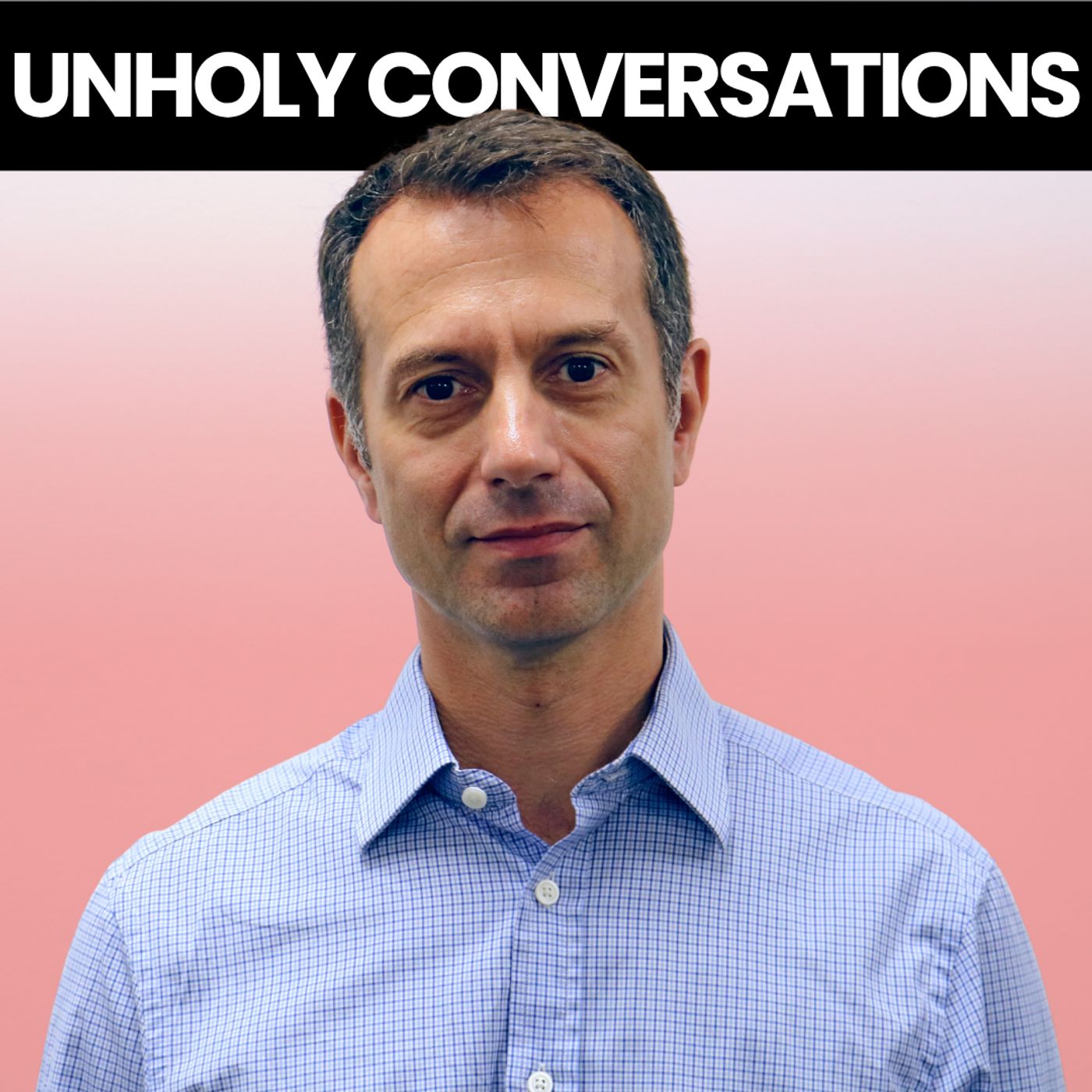
Jonathan sits down with Dave Rich — author of a new book, From Be’eri to Bondi — for an in-depth conversation on the changing face of antisemitism since October 7th. Chants at street protests that borrow the vocabulary of those who murder Jews. Conspiracy theories that quietly fold Israel into whatever the internet is angry about that week. And an old, dark question, dressed in new clothes. Rich's argument is that Jews and Israel now occupy a symbolic role in global politics and culture far larger than anything geography or military power or one government’s actions can explain — and that understanding the myth is the first step to answering it.
[This conversation was recorded in September as a bonus episode for premium subscribers]
🌐 Our website: https://unholy-podcast.com
💛 Become a friend of the pod:
Patreon: https://bit.ly/UnholyPatreon
📺 FOLLOW UNHOLY
YouTube: https://www.youtube.com/channel/UCGlvtS7As7WHh7YtmU5SMUQ
Instagram: https://www.instagram.com/unholypodcast/
X: https://x.com/unholypod
Bluesky: https://bsky.app/profile/unholypod.bsky.social
🎧 LISTEN TO UNHOLY
Apple Podcasts: https://podcasts.apple.com/il/podcast/unholy-two-jews-on-the-news/id1548441108
Spotify: https://open.spotify.com/show/2m2UnLfiAyOehtF1bsv98W
🎙️ THE HOSTS
Yonit Levi
Instagram: https://www.instagram.com/yonitleviofficial/
X: https://x.com/LeviYonit
LinkedIn: https://www.linkedin.com/in/yonit-levi/
Jonathan Freedland
Instagram: https://www.instagram.com/jonathanfreedland/
Bluesky: https://bsky.app/profile/jonathanfreedland.bsky.social
📩 Contact: unholy@unholy-media.com
🔗 All links: https://linktr.ee/unholypod
Hosted by Simplecast, an AdsWizz company. See pcm.adswizz.com for information about our collection and use of personal data for advertising.
Scan the code with your iPhone camera
Listen in the app.