 unPAUSED with Dr. Mary Claire Haver
13 Oct 2026 · 58m

 Add vo to ChatGPT or Claude to ask about everything you hear
vo listened to this episode to put together the overview and transcript, so there may be the odd mistake.
Estrogen patch and vaginal estrogen shortages and wildly inconsistent pricing, argued to be driven by healthcare middlemen (PBMs, insurers, pharmacy chains) and incentive structures that prioritize profit over access. Mark Cuban explains how Cost Plus Drugs uses transparent, cost-based pricing and limited markup to improve affordability and availability, and discusses why patch supply can’t keep up with rapidly rising demand.
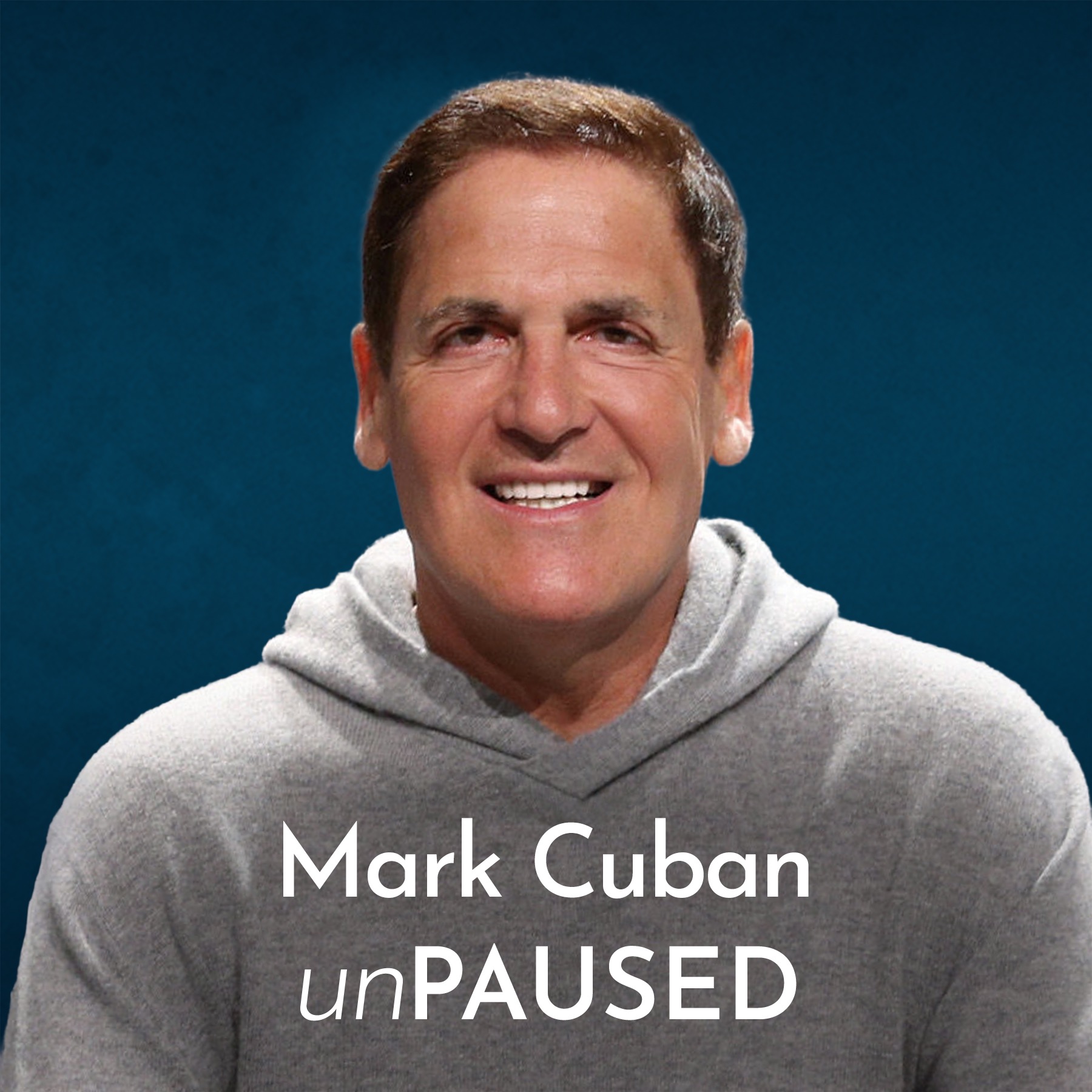
Mark Cuban, entrepreneur/investor and co-founder of Mark Cuban Cost Plus Drug Company (launched Jan 19, 2022), formerly focused on understanding drug pricing/distribution mechanics. Dr. Mary Claire Haver (host), OB-GYN and menopause practitioner.
Estrogen patch prescriptions rose nearly 3x (Cuban says “at least 10x” in his context) while supply lagged due to specialty patch manufacturing. PBMs can classify “specialty drugs” (even pills) and extract rebates, inflating list prices and patient costs. Women’s health is underfunded (Cuban cites <9% of NIH grant money to women’s health over a decade) and is “run by men.”
A patch costing “hundreds” retail is priced around $39.18 on Cost Plus (Dotti estradiol twice weekly), with a breakdown of manufacturer cost, 15% markup, pharmacy labor, and shipping. Social media reports of estrogen patch prices ranging from about $14 to $90 for the same dose. Cuban cites vaginal estrogen as a preventative for recurrent UTIs/urosepsis.
0:00It's a scam from top to bottom. Nobody looks at the economics of healthcare and says it's working well.
0:05Dr. Mary Claire Haver: So in the past two years, estrogen patch prescriptions have nearly tripled. Oh my God, at least 10x. It was hundreds of dollars for a simple tube and you were selling it for$13.45 or something. Shows you our markup's only 15%. It's on short supply because money? Yes. If it's harder to get, you can price it more. This can't be legal. These middlemen, too big to care. Don't give a shit. My next dollar is not going to change my life, but my next dollar might save somebody's life. Less than 9 % of NIH grant money went to women's health over the last decade. Why do you think that is? It's run by men.
0:39What was truly missing wasn't his trust. I'll give you the craziest example, and that's how I found out about the Everolimus.
0:54Dr. Mary Claire Haver: the views and opinions expressed on unpaused are those of the talent and guests alone and are provided for informational and entertainment purposes only no part of this podcast or any related materials are intended to be a substitute for professional medical advice diagnosis or treatment. Every time I post about what medication costs on social media, my comment section explodes. One woman pays$14 for her estrogen patch. The next one pays$90. Same drug, same dose, same country. And underneath almost all of it, the same question. Asked a hundred different ways. Why isn't the cost consistent? Two women can be handed the same prescription on the same day and pay wildly different prices, and neither of them can understand why.
1:41Dr. Mary Claire Haver: That is not an accident. It's how the system was built. And lately, a lot of you can't get your estrogen patch at all, at any price. Here's why it's so confusing. Between your doctor and your pharmacy, sit a handful of middlemen between drug companies and your health insurance. They're the ones negotiating medicine prices and deciding which drugs your insurance will cover. My guest, Mark Cuban, is an entrepreneur and investor many of you may know as one of the sharks from Shark Tank. He has built and run many different types of companies, including the Mark Cuban Cost Plus Drug Company. He co-founded the company in January of 2022 and spent four years inside the machinery of how drugs get priced, bought, and distributed in this country.
2:24Dr. Mary Claire Haver: With the Mark Cuban Cost Plus Drug Company, he did the thing this industry treats as radical. He published the price of each medication with transparent pricing and a limited markup. It's all right there on his website, and today we're going to talk about how this has fundamentally changed the pricing of medications in the United States. I'm Dr. Mary Claire Haver, a board-certified obstetrician and gynecologist and certified menopause practitioner and adjunct professor at the University of Texas Medical Branch. Welcome to Unpaused, the podcast where we cut through the silence and talk about what it really takes for women to thrive in the second half of life.
3:05Dr. Mary Claire Haver: This podcast is sponsored by MidiHealth, the first virtual clinic created for women by women for the treatment of menopause. Don't let anyone tell you menopause is something you have to suffer through alone. Midi can help. Visit joinmidi.com to learn more. This episode of On Pause with me, Dr. Mary Claire Haver, is brought to you by Alloy Health. One of the things no one really prepares you for in your 40s and 50s is how much your skin can change. And it's not simply aging. When estrogen declines during perimenopause and menopause, skin can become thinner, drier, and lose elasticity. For years, I thought the answer was just finding a better cream or stronger retinol.
3:49Dr. Mary Claire Haver: But when hormones are part of the equation, skin care alone may not be enough. That's why I was so interested in the M4 skin care from Alloy, specifically designed for perimenopause and beyond. In a clinical study, 88 % of women reported improved elasticity with M4 face cream. And their line goes beyond your face with products for your neck, chest, hands, and knees. And because these are prescription-strength products, Alloy connects you virtually with a menopause-specified doctor who reviews your profile and determines what's right for you. Try M4 Skin Care from Alloy and see results in as little as eight weeks.
4:28Dr. Mary Claire Haver: Head to myalloy.com and use the code MCH20 to get 20 % off your first order. Your menopause-specialized doctor will help you build a skincare plan for your needs. Plus, you get$0 unlimited messaging with your doctor. Head to myalloy.com and use code MCH20 to get 20 % off your first order. This code is valid on products only. These are compounded products not subject to FDA approval. A beautifully designed Squarespace website is the difference between thinking about photography school and selling your portraits online. It's the difference between giving away those cookies you just made for free and running your cookie empire.
5:14A beautifully designed Squarespace website is the difference between having a movie-reviewing hobby and a movie-reviewing career. Squarespace, because no matter what you're into, a website makes it real. Use offer code DIFFERENCE for 50 % off select plans. Terms and conditions apply.
5:35Dr. Mary Claire Haver: Mark Cuban, welcome to Unpaused. Thanks for having me. So I'm excited to have you on the show, mostly because you are a problem solver, and we have big problems in women's health and supply chain for our estrogen patch, which I brought mine in today. What are you doing differently with the Cost Plus drugs versus me going to CVS or Walgreens? CostPlusDrugs.com is our site. What makes us different initially is when you go, we show you our actual costs. When you put in a strategy or whatever it may be and it comes up, we'll show you what our cost is, what our markup is. And that typically means we're going to sell it for less than everybody else.
6:16So that's our initial goal, to make sure it's affordable because it doesn't matter if it's available if you can't afford it. And so affordability is a key for us. Transparency is a key for us. But like everybody else, we're very aware that there's a shortage of a lot of HRT therapies. And so what we've done is rather than having one vendor or sometimes we'll have two, but typically one vendor, we've gone out and sourced every source that we possibly can find. We've gone to the two major manufacturers and said, look, we will take every unit of inventory that you're able to give us. And it's crazy because we still can't keep up.
6:54We thought, OK, we have enough inventory. Are we going to be able to sell it all? And it just flipped completely around. And because of that, the two primary vendors that we use have completely different pricing. And so we made the conscious decision to say, even if we run out of inventory of the less expensive one, we're going to explain to people that, look, we want to make sure that there's inventory available. Our most expensive version is still less expensive than most retail pharmacies. So we'll make that available to you. And you'll have the choice of ordering, you know, the more expensive one or waiting for the less expensive one.
7:30And because we wanted the availability because both prices are better than typical. And that's worked for us so far. We still run out every now and then. But literally, we are trying to buy up everything we can. If we were able to manufacture it, we would. But because it's the patches, it's a lot more difficult. We're not geared to do that. and we've gone to some of the manufacturers and we've literally asked if we can buy out their entire volumes.
7:54Dr. Mary Claire Haver: All right, hormonal medication. Mm-hmm. So in the past two years, estrogen patch prescriptions have nearly tripled. So this whole menopause, gold rush. And our volumes are far more than two. So what have you seen? Oh my God, at least 10X. Okay. Yeah, I mean, it went, I don't know when the trigger point was when the rules changed, but all of a sudden I was like, oh my God, we're out of stock. Black box warning was one watershed. moment. You know, the people were less scared to go get their prescription filled and doctors are getting more comfortable prescribing it. But I think it's 44 % of all estrogen scripts are now the patch specifically.
8:33Dr. Mary Claire Haver: Why do we have specifically a patch shortage versus oral estrogen shortage? Oral is really easy to make. The patches require specialty manufacturing. If I could just gen up of manufacturing plant that could do with patches. Yeah, because it would take five years. I don't know, five years, but it's going to take a period of time. So demand for the patches at least tripled in two years, but the supply didn't. Right. Did no one see this coming or? Okay. No. They didn't care? Yeah, it's not that they didn't care, right? I don't think people really, you know, once a drug goes generic, just the way it's dealt with.
9:13Yeah, the economics are completely different. and the manufacturers who had been making it, you know, if the numbers are the same for years, you don't anticipate that all of a sudden it's going to change. And then it did. And now they're responding and they're adding capacity.
9:28Dr. Mary Claire Haver: But they were forced to, I think. Well, they could have raised the prices, but they chose to add capacity. And we really tried to push them to that. There was a letter writing campaign to the FDA when women couldn't find their patches. So at first on the website, on the FDA website, I would say there's no patch shortage. Everything's fine. everything's fine, but like millions of women are on social media screaming that they can't get their patches. And then finally, just in the last week, the FDA wording changed on the website that they're working with six manufacturers to try to, you know, encourage them to, what happens when we run out of stuff?
10:04Dr. Mary Claire Haver: Like how does the FDA get involved? I think they can approve manufacturing plants or expansions more quickly. Okay. And that's a help, but it really just is how quick is the acceleration of demand. Okay. Because it's one thing to say we're going to make more, but if you make more for twice the demand thinking you're capturing everything, but the number, the acceleration rate because women are getting more comfortable and doctors are, is five times that, you're going to be behind no matter what. And I think that's what we really ran into. It wasn't a lack of interest. It was more, oh my God, at least that's what it was for us.
10:40It was, okay, stradiol, okay, It's going up the sales charts, right? Now it's a big hit. And what can we get? What do you mean that's all we can get? You know, and, okay, we'll add manufacturers and we'll keep on just adding manufacturers wherever we can. But it was just the demand just outstripped the supply far more than they could add supply.
11:03Dr. Mary Claire Haver: The demand isn't going to go down for menopause hormone therapy. I only predict it getting increasing. As a population age. We had about 40 % of women who were eligible on hormone therapy. We're still less than 10 % right now. Yeah. So we're thinking. But literally, we've tried to buy manufacturers. I've tried to buy manufacturers. I get it, right? Yeah. I see it in my family. My husband jokes we should buy an estrogen patch factory. We're kidding. We have no real plans to do that. No, but I would if I could. Yeah. And to build one is just not a simple task. Yeah. But we discussed it. And, you know, it wasn't something we could do, but we're looking to try to pre-buy as much of people's inventories as we can.
11:52Dr. Mary Claire Haver: Would it be easier to make the gels or the sprays? Yes. I think it would be, but they're still under patent. Like, why don't we have a generic for those yet? Because of the patent. Okay. Okay. I don't know the exact dates they come out of patent, but you can look those up real easily. Yeah. All right. So I want to walk our listeners through this. I'm on your website right now. Okay. And this is the Dottie Estradiol twice weekly. That's basically this generic. You know, this is the generic patch I have in my hand. And on video, we're going to fly in actual images from the website. So your drug price with us,$39.18.
12:25Dr. Mary Claire Haver: That's just slightly higher than, I think that's the more expensive price. But it's not really that much more. I think it was like$25 before. Okay, yeah. So, and you have in stock the.05 and the.1, which are the two most commonly prescribed ones. So, yay. So, you save$146.69 on your medication, and here's why. I love how you say this. So, retail price at other pharmacies. Now, is this the retail price for the brand name? No. This is the generic. It's the generic, but there's a standardized price called NADAC, and that's what we use to determine. Okay. All right. Because if you just walk into a pharmacy as a cash pay, in most retail pharmacies, that's what they'll charge you.
13:08Dr. Mary Claire Haver: Without like a GoodRx coupon or something. Even with sometimes. Okay. So manufacturing price. This is your price that you paid the manufacturer was$29.72. Your 15 % markup, which is you markup across the board, was$4.46. Pharmacy labor, so to go get that filled and, you know,$5. and then the standard shipping,$525. That's where we get our$39.18 from. So this person, me, saved$146.69 had I not just gone to whatever pharmacy, walked in and paid the price without my insurance. Where is that$146 going? It's not going to us. I mean, that's when I mentioned earlier - When I throw my credit card down, where's that Delta going?
13:53Dr. Mary Claire Haver: Who's profiting? Okay, so it's like some pharmacies, so you're saying if I bought it for$146, where's that money? Oh, into the pocket of the pharmacy. So take me back to 2022 when you started the company. Why? Why did you do this? Because nobody looks at the economics of healthcare and says it's working well. And specifically for pharmacy, we've all heard the stories of somebody walking into a pharmacy, waiting in line, getting to the counter, and realizing they don't have enough money or costs more than they expect. And it's horrific. It's tragic. And that was the motivation, that there are drugs that nobody knew the price to, that to this day, unless you're going to cost-bless drugs or maybe, you know, good Rx in some cases, you have no idea what a medication costs.
14:39And if you don't have insurance or if you're high deductible, that can create all kinds of economic problems for you and obviously health problems if you can't afford it. So we wanted to be completely transparent because what was truly missing was and is trust. And I look at our primary product at costplusdrugs.com as being trust. And really, to me, it's a formula where trust equals transparency divided by self-interest. And we're the only pharmacy anywhere in the world where you can go to our site and it shows you what our actual cost is. That's about as transparent you can get. And it shows you our markup's only 15%, which is about as little self-interest as somebody can afford to do and still stay in business.
15:23And so because of that, we really focused on trust. We launched January 19th of 2022 with 110 drugs. Now we're to thousands of them.
15:33Dr. Mary Claire Haver: So let's start with the basics for our listeners. How does the current prescription drug price model work. Like take what you're doing out of it. Take me back to 2021. Right. Typically. So typically people have insurance of one form or another. You may have Medicaid, you may have Medicare Advantage, you may have Medicare with Part D, then you may have it from your employer. And so typically you have a plan that you're a part of and you know for the given medications that you take what your cost out of pocket is going to be. Typically, not always. So if it's an inexpensive generic, it might be$5 or$10, whatever.
16:15If it's what they call a specialty generic, which is still just a pill, right, but they use it as an excuse to increase the price, you might have a coinsurance, which might cost you$25.50. Or if it's a cancer drug or Everolimus or something, it might be more than$100 that you're paying out of pocket. And then either the taxpayers or your employer covers whatever the balance may be. That's typically how it works for most people then and today.
16:41Dr. Mary Claire Haver: Talk to me about tears. You know, as a healthcare consumer myself, besides being the person writing the prescriptions, I can remember like trying to help patients would bring in paperwork and like sitting there with them trying to figure out what their out-of-pocket would be. And like, I have 15 minutes maybe with a patient, 10, you know, if it's not a well-woman exam. And, you know, for me to sit there and help them go through the paperwork to figure out the pricing, to help them, and then source the pharmacy where they're going to get the best deal was we just don't have time. Yeah. I mean, it's not cost-effective for anybody, and it's maddening because you want to spend more time with patients, but what good was your time if they can't get access to the medical?
17:27They can't get it. Right. And so typically that's all part of the plan that they chose, right? Because, you know, there's open enrollment and your employer, whoever, and you go through that whole process. And, you know, to their credit, for the most part, there's apps where you can go and look and look up the medication and it'll tell you at the patient side, not on the doctor side, right? Real-time pharmacy benefits offered through Epic or whoever is hard to come by right now. And they're actually trying to improve that so that doctors can have more say in what's going on. But really, it comes down to people just thinking it's going to be done the way it's always been done.
18:08You know, I chose this plan. This is what I thought would happen. And unfortunately, sometimes they change the plans and the rules of the plans, you know, midstream. But that's typically the way it works.
18:18Dr. Mary Claire Haver: How do you how did you spread the word about this? I found about it on social media. I saw a clip of you talking about something and then I got curious, went to the website. and I couldn't believe, and I think you had just gotten it on formulary, how cheap vaginal estrogen was. And this was right when the GSM guideline, the general urinary syndrome and menopause guidelines were coming out, and we were preaching from the rooftops, but patients couldn't afford it. It was hundreds of dollars for a simple tube, and you were selling it for$13.45 or something, and I just couldn't believe it. Yeah, and that's because we're cost plus.
18:55Literally, we go out there and we find quality manufacturers. And there's some things we manufacture ourselves, but they're more injectables than tubes, creams, or pills. But we go out there and find a quality manufacturer and then we negotiate. And whatever price we're able to get, we show it and mark it up just 15%. But the better news is as our volumes go up and our volumes have really skyrocketed lately, our cost goes down. And that means the cost to the patient goes down as well. And in terms of spreading the word, right, initially it was just my big mouth, right? I have a platform and I get out there and I talk about it, social media, TV shows, whatever it may be.
19:35But we don't spend any money on marketing. We made the conscious choice that we'd rather be able to sell the medications for less because you never know when that threshold is, right, where above this amount they can't afford it. So rather than spending money on marketing and advertising like a lot of the people in the company wanted to do, I was like, no, you don't understand. When somebody, you know, a cancer drug like Imatinib, right? If somebody was paying$900 or looking at paying$900 and our price was$34, they're going to be happy, A. Yeah. They're going to tell their doctor.
20:10Dr. Mary Claire Haver: They're going to tell their friends. Right? They're going to tell their friends. They're going to go on the Facebook groups or social media groups. And everybody else who has a similar condition, they're going to say, hey, go check out Cost Plus Drugs. So we went from launching in January of 22 to now having millions of people we've helped. So I found a quote where you said the prescription drug industry is the easiest industry you've ever disrupted. Yeah. Why is that? Because it's really, really simple, right? What's the price? How much does it cost? You know, what's the price? Who pays for it?
20:40And if that person can't pay for it, who helps them?
20:43Dr. Mary Claire Haver: Okay. That's it. And we made it clear what the price is. And we deal with cash. We deal with some insurance companies through some PBMs. but mostly we just try to make it so it's as simple as possible. You just go to costplusdrugs.com, you sign up, you find the med, you put in your credit card, you tell your doctor where to send it, and that's it. I've done it online and showed people how to do it. I appreciate that. Thank you. So especially for the vaginal estrogen. So let's go back talking a little bit more about disparities in drug pricing. I'm on social media a lot. I do a lot of education around menopause.
21:17Dr. Mary Claire Haver: And a few months ago, we were talking about how long did it take you to get your prescription for hormone therapy? And then what was prescribed to you and what did you pay? And there were thousands of comments. And women really shocked by the differences in what they were paying. So one woman was paying, you know,$25 for her box. Hers happened to be covered by it. That was her copay. Another woman, it was well over$100. And so why is that? So the co-pay is obvious, right? She's paying her insurance premiums. And even then, your co-pay might still be more expensive than a cash out of pocket price.
21:55But at the same time, if you walk into a retail pharmacy, they're trying to make as much money as possible. Especially if it's part of a big conglomerate, a lot of these big, huge healthcare conglomerates are too big to care.
22:08Dr. Mary Claire Haver: Welcome back to another MidiPause. I'm Dr. Mary Claire Haver, host of unpaused. Let's talk about a menopause symptom that affects millions of women, but still doesn't get nearly enough attention. Genital urinary syndrome of menopause, also known as GSM. Now, that may sound like a complicated medical term, but GSM refers to a group of symptoms that can affect the vaginal and urinary systems during and after menopause. And the reality is, it's incredibly common. Symptoms can include vaginal dryness, irritation, burning, painful sex, urinary urgency, frequent urinary tract infections, or feeling like you constantly need to use the bathroom.
22:54Dr. Mary Claire Haver: And unlike hot flashes, which often improve over time, GSM symptoms can actually worsen if left untreated. One of the reasons you may not have heard about GSM is because not enough women, and sadly some doctors, know about it. This lack of awareness can be due to women feeling embarrassed or just not reporting their symptoms. It is important to remember that vaginal dryness is not a little annoyance or something to dismiss. GSM can significantly affect physical comfort, intimate relationships, self-confidence, and overall quality of life. You do not have to suffer in silence. The reason GSM occurs is simple.
23:41Dr. Mary Claire Haver: Estrogen plays a critical role in maintaining the health of vaginal and urinary tissues. As estrogen declines during menopause, these tissues can become thinner, drier, and less elastic, leading to symptoms that affect both intimacy and everyday comfort. Unfortunately, many women assume these changes are just a normal part of aging that they must accept. That isn't true. Effective treatments are available, and the first step is talking to a healthcare provider who understands menopause care. That's where MidiHealth can help. Midi specializes in caring for women during midlife and menopause, including conditions like GSM that are often overlooked or undertreated.
24:28Dr. Mary Claire Haver: Their clinicians help women understand what's happening in their bodies, discuss treatment options, and develop personalized care plans. Depending on a woman's symptoms and medical history, they may include vaginal estrogen therapy, non-hormonal treatments, moisturizers, lubricants, or other evidence-based approaches designed to improve comfort and quality of life. Just as importantly, MIDI provides a supportive environment where conversations about your symptoms are taken seriously, not dismissed or minimized. The good news is that relief is possible, and women don't have to just tolerate these symptoms.
25:09Dr. Mary Claire Haver: Go to joinmidi.com, join M-I-D-I.com, and connect with one of their clinicians today. This podcast is sponsored by Midi Health. You've heard me talk about my menopause toolkit. It consists of nutrition, exercise, hormone therapy, and other medications, stress reduction, sleep quality, and community connection. When you put those pieces together, they don't just ease symptoms, they support your long-term health. That's why I recommend MidiHealth. They put your toolkit to work for you. Midi is a virtual clinic built by leaders in women's health with clinicians who understand the science of female aging and who take the time to understand you.
25:54Dr. Mary Claire Haver: Through one-on-one visits, they listen to your symptoms, your goals, and your concerns, then create a personalized care plan tailored specifically to you. And best of all, MIDI is covered by most major insurance plans, making expert, high-quality care accessible and affordable for every woman. All of which is why Midi should be part of every woman's menopause toolkit. Book your virtual visit today at joinmidi.com. That's joinmidi.com. Insurance coverage varies. Check with your plan for coverage. One of the biggest things I see, most women are not getting enough fiber, especially the right kinds of fiber, and they don't even realize it.
26:39Dr. Mary Claire Haver: That's why I like using Chronometer. It makes it incredibly easy to actually see what you're eating and understand your nutrition on a deeper level. I especially appreciate that it tracks both soluble and insoluble fiber because they each play different roles in overall wellness, digestion, and metabolic health. What sets Chronometer apart for me is the accuracy and detail. A lot of tracking apps only focus on calories, but Chronometer gives you meaningful micronutrient data I can actually use. The platform is easy to use, reliable, and helps you make more informed nutrition choices without guesswork.
27:22Dr. Mary Claire Haver: If you want better insight into your nutrition during midlife and beyond, download Chronometer for free today at chronometer.com and start learning what your body may really need.
27:38Dr. Mary Claire Haver: Let's talk about the conglomerate because I saw someone testifying in Congress and they had a, you know, a board popped up and it was, I didn't realize, walk me through a CVS, you know, and all the touch points they have in the healthcare system. The largest of them has more than 3 ,000 subsidiaries. They do more than$160 billion dollars a year of intercompany transfers, meaning they work with those 3 ,000 subsidiaries in every way they can. What's in the subsidiaries? It might be like for CVS, they own Aetna, the insurance company. It might be the CVS pharmacies. It might be Caremark, which is their pharmacy benefit manager that works with your employer.
28:25It might be, I forget the name of their third-party administrator who works on the medical side and makes the drugs that are infused at a hospital or a clinic more expensive. And so they always default to paying their own subsidiaries more, particularly in a world of the ACA where there's this thing called medical loss ratio, where they have to spend at least 85 % of their premiums on healthcare. Well, if you pay a subsidiary doctor, clinic, pharmacy, more, you reach that threshold, the 85 % threshold, much more quickly. And on the alternate side, you get to keep that margin in your subsidiary company.
29:05So it's left pocket, right pocket. And then at the pharmacy level, they charge to market whatever they can get away with. I mean, that's normal business. I mean, I'm not mad at them, but again, that's the difference with costplusdrugs.com because it's the same price for everybody, no matter what city, what state, what time of day. It doesn't matter. It's the same price.
29:27Dr. Mary Claire Haver: You mentioned the PBM, Pharmacy Benefit Manager. What is that? And that was not a term I'd heard of until probably about a year ago. You start popping up on my fees, talking about this. Raising hell. Explain to our listeners who these people are and who they work for. What's a Pharmacy Benefit Manager? It's just what it implies. When your employer, if you get your insurance through your employment, or if you get your insurance through the ACA, or if you get Medicare and traditional Medicare and you buy Part D supplemental insurance, the company that manages the pharmacy benefit is called a pharmacy benefit manager.
30:09And their job originally was to just process claims. You know, hey, you know, I need my estradiol. I'm going to, you know, I've got a prescription. When I show up at the drugstore, they have my prescription and somebody needs to process that to make sure everybody gets paid. Okay. That's what it was originally meant to do. Okay. Then because in doing that, they were able to build up a formulary, you know, the list of drugs that's available to you in your insurance plan. because they were able to build up tens of millions of lives each, they were put in a dominant position where they basically controlled how much volume any manufacturer would get.
30:49So if you're on the formulary to the exclusion of your competition, you are in a great position. Well, the pharmacy benefit managers realized that they could charge the manufacturers for access to that formulary. And that's where you hear these discussions of rebates and everything going on. Now, they would tell you they offer all these other clinical services and everything. I'm not a big fan of that. I'd rather get my clinical services from doctors rather than insurance conglomerates. But that's what they do. They process claims, they go out and negotiate pricing, and they make determinations of how much you're going to pay as a plan holder.
31:32Wow.
31:33Dr. Mary Claire Haver: Does the way that PBMs pay for generic, does that lead to shortages? It's not so much how they pay for shorted, how they pay for generics. It's more how affiliated companies of theirs structure their purchasing. So CVS is a partner with a company called Red Oak. And they go out and together they purchase a lot of generics, probably purchase a lot lower cost than we do at Cost Plus Drugs. But they retain a lot of that margin. And then because they have to set up a network of pharmacies who want access to all the lives they cover, the plan holders they cover, they tell the pharmacies, we're only going to reimburse you X amount of money for your generic prescriptions that you fill.
32:21And by definition, that's going to make them more expensive in certain circumstances. this?
32:28Dr. Mary Claire Haver: Women in menopause are, you know, experiencing besides the shortage, and we'll go back to that in a second. But it's, you know, that's mostly our listeners are women in menopause. But I think it happens across the board where suddenly you're, everything's covered, you're doing great, you've got your meds, and then boom, it's a new year. Oh, yeah. Yeah. And things change. And things change. You can't get it. You can't find it. I know my kids' ADHD meds was a calf scramble, you know, to try to find their medications because things are coming off and on formularies. Is that even legal? It's legal, unfortunately, because what happens is the insurance company that designs the plan and works with or is owned by the pharmacy benefit manager says, wow, Things changed in HRT.
33:19We're getting a lot more patients that are expecting us to use the premium money that they paid us or that their employer paid us. Well, we're spending a lot more, and it's so popular, we can charge them more. And again, they're too big to care. Their mission is to make money. When you, you know, they're public companies, and when you listen to them talking to Wall Street, you don't ever hear them say, well, our volumes are going up, so our price is going to go down to patients. You hear them say, business is great. We have the opportunity to raise prices, so we're going to do that because we're going to make more money.
33:58That's our fiduciary responsibility to their shareholders. But at the same time, the laws are changing so that the PBMs that they own are now being defined as fiduciaries to the employer that they're hired by. And the employer has a fiduciary responsibility to the health and wellness of their employees or their members, employees and their families. And so while these prices have gone up, there's an opportunity for employers, in particular self-insured employers, to respond to this and take their fiduciary responsibility and say no to the PBMs. And that's where I spend a big part of my time is trying to educate CEOs that it's your money.
34:39You did hire this conglomerate to manage all the claims and set the pricing. But at the end of the day, you want the women in your company or the wives or the daughters or the mothers to be as healthy as possible. I mean, that's why you have insurance in the first place. And so a lot of these rules are evolving now and changing right now, and the employers lag behind. Cost plus drugs pricing where Canadians have to buy out of pocket, most drugs, if it's made available in a hospital in Canada, you don't have to pay out of pocket. If it's not prescribed out of a hospital and the rules are changing, you do have to pay out of pocket.
35:15And so we're cheaper than Canadian drugs. In Germany, there's some of the same things. Other countries. So cost plus drugs, we have people from all around the world trying to buy from us. We can't sell to them. So on the generic side, which is 92 % of the prescriptions, the U.S. is cheaper. And I'm proud to say that cost plus has played a big role in that. On the brand side, we're a lot more expensive. On the specialty drugs, on the cell and gene therapy, we're a lot more expensive. Part of that, I would say, and I'm guessing 70 % to 80 % of that is middlemen increasing the price. If you took out the middlemen of that, the pricing structures would change and prices would go down.
35:54Dr. Mary Claire Haver: Why? Walk me through that. So if you want the inside baseball? Yeah. Okay. So when a brand medication - So say we get a female testosterone approved. Pretend. And it's a brand, right? It's going to be a brand to start. So let's just say it's a$600 testosterone. I don't know what a good price is. I don't know. I'm trying to use - Just pretend it's$600. Yeah, this is meant to use easy math. Yeah. And so it's$600 list price. The manufacturer probably has to pay rebates to the pharmacy benefit managers - Why? In order to be on their formula. Okay. Otherwise, they're going to say - For the privilege of like having it on the formulary.
36:30Dr. Mary Claire Haver: Right. So they can sell it. Literally, I had a conversation yesterday with a company that sells Combogesic. which is a non-opioid pain medication. And they told me that the PBMs that they talked to, and all of them basically, all the big ones, the big three, told them that unless they raised the price, and I forget what their exact price is, but it's under$200, but unless they raised it to$700, with most of that being rebate, not only would they not put them on the formulary, but they will block them otherwise. That's the way this industry works. And so if you have a testosterone that's supposed to be$600, again, pulling numbers out of the air, what ends up happening now is the manufacturer, there's three big wholesalers too.
37:15There's three big pharmacy benefit managers and three big distributors that, in the case of the wholesalers, control 95 % of the transactions in pharmacy. You would think they'd be big enough as multi-hundred-billion-dollar companies each to go and negotiate a great price. But what ends up happening for brand medications is they'll say, the brand will say to them, okay, we'll give you 5 % off. Okay, that's kind of weird. But okay, so now it's$570 to the distributor. Can they sell to pharmacies? They can't sell for less than$570, right? Otherwise, they'd be losing money. So now anybody who walks into a pharmacy for that testosterone is going to pay at least$570.
37:59And if you don't have insurance or you have a high deductible or you're in your deductible phase, you're probably paying$570 to$600. Now, here comes the crazy part. The manufacturer of that brand testosterone isn't making$570. They are only making$300 to use easy money or easy numbers. Why is there a discrepancy between the$570 and the$300? Because they have to take that delta and pay it to the pharmacy benefit managers in order to get placed on those formularies and not exclude it.
38:32Dr. Mary Claire Haver: So that's the middleman you're talking about. That's the middleman, right? So if we were in a good system, what would end up happening is that brand manufacturer, the testosterone, would say, look, in the old system, I would make$300. I'm going to sell it to this distributor for$310. And the distributor was previously making$30. So they're going to sell it to the pharmacies for$340. They're going to make more. But now the pharmacies are only paying$340 instead of$570, so they can sell to every patient for$230 less. And that is the delta you see between what happens here in the United States versus what happens in the rest of the world.
39:12And it's another reason why the prices of brand medications are so high. And the crazier part is when I talk to the CEOs of these brand companies, I say, why do you do this? You have all these patients who can't afford it for the reasons we mentioned, can't adhere to it if they were able to afford it once, right? Right. Why are you not doing it this other way that is the more efficient and better for everybody way? And they say to me, they're like, Mark, we literally get threatened by the pharmacy benefit managers who are part of these big conglomerates that if we don't play by these rules, They will remove not just this drug from that formulary, but all of our portfolio.
39:56All right.
39:57Dr. Mary Claire Haver: When a generic goes short, who gets served first? So whoever's hustling on the back end, like if CVS or Walgreens or Mark Cuban or... When a generic goes on short supply, it really depends who the manufacturer is and who they have relationships with. Okay. And how did you... You have patches in supply. Because we're telling our manufacturers more, more, more, more, more. We need as much as you can make and we'll pay you a little bit more. And so that's why you saw we had one really low price and then we basically sold all they could make. So we went to a manufacturer who charged us more. But I just felt, I made a decision, I just felt that when we got the low cost patches in, then people, they would be available to people.
40:42but I wanted to have a supply even if it was more expensive.
40:47Dr. Mary Claire Haver: Okay. Yeah. Okay. So I want to talk to you about estrogen vaginal cream. Okay. This was the cheapest I'd ever seen it. I had patients, we were prescribing it left and right in my clinic, and they were coming back and it was hundreds of dollars. And these poor women were having to choose between X and Y. but they had to have this medication or they were having recurrent UTIs, dryness, all the pain, everything. And so I don't know if you know Rachel Rubin or, okay. Dr. Rubin was one of the very first people that reached out to us about this. Yeah, so she said you have saved millions of women by being really the first person to have affordable vaginal estrogen.
41:36And I owe it to her because she's the one who educated me on it.
41:38Dr. Mary Claire Haver: So she wanted me to make sure I told you this. So your drug price, so the drug price is$13.21. If every single postmenopausal patient, like over 65, use vaginal estrogen regularly, we could save Medicare billions in urosepsis and hospitalizations and recurrent UTIs. It is the number one preventative treatment for recurrent UTIs, which then can lead to sepsis and death. And so, so much of this could be prevented with this. And you were the first person to make this affordable. Well, I appreciate that. For our patients. What I would recommend, there is a woman by the name of Dr. Allison Galvani, who's out of Yale.
42:22She does a lot of research work for Medicare for All. Like when you see the Medicare for All savings reports, she did those. And I can connect you. You should have her do some research on the impact on the cost to Medicare versus the availability here. Yeah. And or, and some people, you know, I don't want to get into politics, but, you know, on TrumpRx, I don't know if it's listed there, but that's one more source as a portal where people can find out that it's available to them. Okay. And so those are the two steps I would take because to your point, you just want more people to know what's available.
43:02Dr. Mary Claire Haver: No, it's available and be able to afford it. Yeah. And that's our mission too. The only drug that's going to work is the one you're using. And that's not something we typically run into shortages on either. Okay. At least not so far. So it's literally going generic in Canada next year. Wow. Yeah. I think people will be going across the border. Yeah, they'll be taking the trip, right? But that's always the thing, right? If you're responsible enough to buy multiple months and store it properly, always buy as much as you can afford. There's something I love about the change of seasons. Rediscovering the pieces in my wardrobe that I know I'll reach for again and again.
43:40Dr. Mary Claire Haver: As we head into fall, I'm especially looking forward to pulling out my Quince Mongolian cashmere sweaters. They're the kind of wardrobe staple that makes getting dressed feel effortless, comfortable, timeless, and incredibly versatile. That's one of the things I appreciate most about Quince. They focus on the everyday essentials that we actually wear, using elevated materials like Mongolian cashmere, organic cotton, and quality denim, while keeping the prices remarkably accessible. Their Mongolian cashmere sweaters start at just$50. Quince works directly with ethical manufacturers and cuts out the traditional metalman, which allows them to pass those savings on to you.
44:25Dr. Mary Claire Haver: Their pieces can be 50 to 80 % less than comparable luxury brands. Find the fall pieces you'll reach for most at Quince. Download the Quince app for app-exclusive offers or go to quince.com. Get free shipping on your order and 365-day returns. Now available in Canada and the UK, too. And when Quince asks where you heard about them, let them know it was unpaused. It's the best way to support the show. There are a lot of reasons Chicago homeowners have chosen Four Seasons since 1971. An A-plus rating with the Better Business Bureau. That's one. Two, BBB Torch Awards for Ethics. That's another. And service around the clock every day of the year.
45:11That's a big one. For all your heating, plumbing, and electrical needs, you know who to call.
45:16Dr. Mary Claire Haver: For all the right reasons, call 866-4-SEASONS. This episode is brought to you by Whoop, the wearable health and fitness coach that gives you personalized insights into your sleep, recovery, strain, and overall health so you can empower your day. Whoop keeps things intentional by staying screen-free. It won't buzz to you to hit a step count, but rather works alongside a companion app to deliver clear, actionable physiological data. With membership tiers like Whoop One for Everyday Performance, Whoop Peak for Long-Term Wellness, and WHOOP Life for medical-grade insights, there's a fit for every goal.
45:58Dr. Mary Claire Haver: Lately, I've been spending a lot of time in Colorado, hiking and getting outside whenever I can. And with how much I travel for work and how busy my schedule can get, I'm always looking for ways to better understand how my body is responding to everything I'm asking of it. That's where I think something like WHOOP 5.0 wearable could be really helpful. It could give me insights into my sleep, recovery, and strain, whether I'm hiking in Colorado, traveling for work or simply trying to keep up with a busy week it can help me recognize when i have the energy to push myself and when my body might be telling me it's time to slow down and prioritize recovery to learn more head to whoop.com all right let you had mentioned something earlier that caught my attention you talked about specialty drugs we have generic and then we have what is a specialty drug and why does it seem like so many women's health drugs are specialty drugs?
46:54A specialty drug is whatever a PBM decides is a specialty drug.
46:57Dr. Mary Claire Haver: Okay. That's it. Like, literally, when you look at a PBM contract for an employer or city, state, whatever, it says, we are not going to pass through rebates. We're not going to pay this or this or this for specialty drugs. And then separate 500 pages away, it says, we get to decide what's a specialty drug. I mean, like, imatinib is considered a specialty drug. I don't know what those are. Amatinib is for CML. Okay. For cancer. Chronic myologic leukemia for our listeners. And then Everolimus is for heart rejection medication, right? And literally, they're pills. And pills are easy to make. They're not hard to make, you know?
47:40And so, you know, that's what happens. Now, there's also more complicated ones that are injectables, like a GLP-1 would be, but hospital-administrated drugs, right? They're not necessarily hard. And what you're seeing is you're seeing infusion centers and places that will charge less than a hospital for that medication. But it's really structured just to maximize earnings for providers and the middlemen and to a certain extent the manufacturers as well. So we're going to do a deeper dive into women's health.
48:14Dr. Mary Claire Haver: But before that, how would you fix all this? Like, you know, you're you're I'm working on it every day. Right. Yeah, I'm working on it every day. But like if you could blow it all up and start over. This is the Shark Tank hat I put in, right? Because that's what I do. That's what I've done my whole career. This part of this business, this part of this business, this part of this business. Here's where I can compete with it. Here's where I can invest in it. Here's where I won't touch it. And that's what's happened here. And by not working inside the system, all those middlemen we talked about, we don't work with them.
48:46Because I don't want to be, there's no way we're ever going to be aligned. because they're not ever putting patients first. And people are like, well, you're a rich guy. You're just trying to make money. No. My next dollar is not going to change my life, but my next dollar might save somebody's life. And that's the way we look at it at Cost Plus.
49:05Dr. Mary Claire Haver: So you've talked about women's health. We found some good soundbites. Right now, less than 9 % of NIH grant money, and I know a lot about this, went to women's health over the last decade, specifically to women's health. and you've talked about it as being overlooked and underfunded. Why do you think that is? It's run by men. I hate to keep saying patriarchy, but I grew up in the system. I was trained in the system. And it took me, what, 20 years of practice to really be able to take a deep breath and realize how much bias was built into the system. Look, as an entrepreneur, I always look to see where things are screwed up because that's what creates opportunity.
49:52But most people don't think that way. Most people just go to work, do their job, do the best they can, want to go home, play with their families, the dog, the cat, and that's it. You know, I used to tell, you know, as my early, in my early companies, people say, well, let's listen to our customers. And that's what you're supposed to do. I was like, no, our customers, it's not their job to figure out where we're supposed to go next or what's coming next. It's just like the strategy, all right? We saw Dr. Rubin, you know, turn me on to it. I realized it was an issue. Let's get ahead of it. Most people, that's not their job.
50:26They don't think about that. They just want to, you know, spend time at home and live their lives and live as best a life as they possibly can. And when it comes to NIH grants, the people making the decisions even are like that. Yeah. Right? They just want to go home. Right? They're going to take the path to least resistance every single time. And that's what happens in medicine in general. That's what happens in government. That's what happens in most companies. As I said, I think, you know, these CEOs could change all of health care in this country, literally change it for the better. So we have a better system than overseas.
51:00But that's not their core competency.
51:04Dr. Mary Claire Haver: So there, I had mentioned it earlier, this menopause gold rush, right? Right. And menopause seems to have become, and that's what the media is calling it. I'm just happy the conversation is happening. But this does seem to be a category that investors are getting more curious about and maybe fighting over a little bit. What do you think is happening here? What do you see in your - People see opportunity. Not so much in the manufacturing side of it, but using AI, trying to come up with new drugs, drug discovery, repurposing, other drugs to see if they're applicable. And the FDA is open. I give them credit.
51:43There's people there, Chris Klomp at HHS, really want to do the right thing. And I think some of those things have been accelerated to the benefit of women.
51:52Dr. Mary Claire Haver: So just yesterday, the day that we're filming this yesterday, there was an FDA open hearing on testosterone for women. And I mean, it went on eight hours of testimony from clinicians, from patients, you know, who have been helped. But, you know, our listeners may not realize we don't have an FDA-approved testosterone product for women in this country. I had no idea. Yeah. And so when we do prescribe it, I borrow the men's version or something. Right. It's off-label, right? Some people compound it. We use it off-label. But, you know, men need 10 times the amount in general that women do. And so having to titrate the pump can be a little sketchy and having to check levels.
52:35I'm excited by this meeting because everyone at HHS and FDA who were there speaking, you kind of got the feel that this was positive and they were, you know,
52:48Dr. Mary Claire Haver: but it's more complicated than that. FDA doesn't make drugs. FDA approves drugs. What would it take to get a female, knowing what you know about manufacturing? I mean, somebody's got to make the time and investment to go get all the approvals. You know, we've looked into it, and the FDA typically isn't the inhibitor unless you're trying to make hundreds or thousands of drugs like we do. Then they can get in the way, but not operationally more on a cost perspective. But I think as it comes to light just what the gold rush is, people find ways. Like I've invested in two companies that are trying to figure out ways to get through endometriosis.
53:33You know, I mean, I've had somebody in my family that we've had to deal with it, other people close to us. And, you know, it's crazy. It's like almost every woman is going to go through it at some point. and there's no way.
53:46Dr. Mary Claire Haver: Well, it takes seven to 10 years to get the diagnosis. She goes through years of, oh, you're just crampy, that you're this, you're that. And there are some biologics being explored on. Yeah. And I've invested, who knows, will they'll turn out? I'm like, I don't know. I don't understand this. Here's some money if it helps. Let's see what happens. Yeah. I do. One of the things I think is powerful about social media is all of this awareness and knowledge around. Oh, sure. Female health and. For sure. Where the discrepancies are when we look at female versus male health. When you got into this business and really started digging through, because you've been doing this for four years, and I think, did I read 2018?
54:26When I really started getting into health care.
54:28Dr. Mary Claire Haver: And so it took four years to build the company, and then you've been so eight years in the game. When you look at male versus female, what do you see? I never looked at it that way. For us at Cost Plus, it was every FDA drug that was approved that we were allowed to sell. We weren't getting access to brands like we wished, and we didn't do controlled substances just because it's too risky. It's too, yeah, it's a lot. So it was more about how can we offer every FDA-approved medication and do it at the least expensive price. We didn't really try to discern if it was for men or women. But just as out of common sense, watching our volumes go, talking to Dr.
55:10Rubin, talking to you, you see the obvious, right? We're not dumb. And so, you know, and then that educates us on the whys, you know. And it's good, you know, that women are getting more attention. I went and spoke at a women's health event at the New York Stock Exchange, learned a lot more there. You know, it's just if I think of it, put aside gender or biology. if I think of it just as a taxpayer, healthy people are a lot less expensive.
55:40Dr. Mary Claire Haver: Yes. You know, and wellness is an issue, but wellness can't cure everything. You know, there are just certain things, man. We're going to get sick. No one dies healthy, you know. And so the more we can invest, knowing that it's an investment, not a cost, and the smarter we can be doing it. And probably the harder part is the smart side of it because there's politics involved. But even then, the risk-reward is off the charts. So when women are healthy, they tend to reinvest in their communities. They tend to—their families are healthier. You know, they're making 80 % of the health care decisions in the U.S.
56:21Dr. Mary Claire Haver: Well, let's just look at the birth rate. Yeah. If we don't have enough babies and, you know, now menopausal women are a little bit different, but still just healthy women, endometriosis. You know, if we can't deal with that. It's taking 10 years to get her diagnosed. And if we can't deal with it, you're losing those years of fertility. And again, not to be political, but just having two daughters. Yeah. You know, and nieces and, you know. And so there's value in that. Again, if you put aside the empathy and the human value of it and just looked at it as a business. And I'm not saying do that, right?
56:56They're both important. But just as a business decision, it's good economics. It saves taxpayers money, healthier, less.
57:07Dr. Mary Claire Haver: Less burden on the medical system. Less burden on everybody. Less emotional burden. Less burden on families. Less burden on schools. Less burden on companies. Because if that 10-year point hits and they realize it's endometriosis and you're 30 and working at your job, you're going to HR first. Yeah. Right? Because then you want to find out, you know, what doctors am I eligible to go to? Are they any good? What are the circumstances? Can I afford my co-insurance or my co-pay? What's the availability? Can I go tomorrow? I'm in pain. Or can I go six months from now? All those things impact everything.
57:40Dr. Mary Claire Haver: So in menopause, in the UK, they measured it. They're measuring it better than here. It's 20%, one in five women will leave their job due to untreated menopause. And that's just hot flashes. That's what we know how to measure. We're not talking about the brain fog. In the U.S., it's at least 10%. So this is, you're at your peak. You're supposed to be leaning in. You're supposed to be running the company. And all of a sudden, you're taking a back seat. Now, some people leave jobs for good reasons. But we're losing workforce, well-trained employees to the stuff we're not even treating. Yep. And in an AI world, those people are more valuable.
58:18You know, you want people, AI doesn't understand the consequences of its actions. People with experience and domain knowledge do.
58:26Dr. Mary Claire Haver: So my parents' generation, so my dad's passed away, my mom's in 90, so she's kind of, we're at the end now. But they grew up wanting insurance to cover everything. And, you know, they had insurance, they'd worked for it, they were proud of it. But if insurance wouldn't cover something, then they didn't get it. They would go without because it's not worth having this should be covered. I don't think my children, when I talk to them about it, they look at insurance for catastrophe. The number one cause of bankruptcy in the U.S. is medical. And so my kids look at it as, well, this is something that's going to keep us out of bankruptcy if the unthinkable happens.
59:08Dr. Mary Claire Haver: You know, we end up with these huge bills. And, you know, I think I'm somewhere in the middle. and do you, you know, but what's happening is the older generation, me plus, so I'm 58, they won't go get their medication. What would you say to them? So let's divide medical and medication pharmacy. Yeah. So just their prescriptions. They're like, well, insurance isn't going to cover it. Pharmacy is a bigger problem because with medical, if you go to a nonprofit hospital and you don't have the financial resources, I'm not just talking the emergency room, right? I'm just saying if you don't have the resources and there's something, endometriosis, whatever it may be, right?
59:53They have to offer you some type of payment plan. Most people don't know this. Exactly why I mentioned it, right? They have to do it, but it has to be a nonprofit hospital, federally qualified health centers. They have to see you if you don't have a nickel to your name. And so they may not be able to solve or support you or care for you in everything that you're facing, but they can refer you to somebody who can. Don't ever not get care. And you're better off not going to the emergency room. Because if you go to the emergency room, they just look at it, well, we have to treat you. Are you going to die or not?
1:00:28Dr. Mary Claire Haver: Right. Yeah. Right. And then we're going to stabilize you and kick you to the curb. Right. That's an overstatement, but still. But if you go to a nonprofit hospital and you say, hey, here's what I'm facing. I can't afford it. I'll work on your schedule. Right. Now, if it's an emergency, go to the emergency room. But you have a chance where they're supposed to work out a payment plan and work with you. They're supposed to offer charity care in order to get the tax breaks that they get as a non-profitable. That's where that tax breaks. How would a regular person figure this out? Like, okay, I have this medical problem.
1:01:02Claude.
1:01:03Dr. Mary Claire Haver: Aha. Chat TPT. Go to whatever your favorite AI is and say, you know, I've got this. I really want to see a doctor. I don't have insurance. I don't have coverage. What's the best approach for me to take? Will any of them work with me on a plan and see me? And I don't want to go to the emergency room. If you have it on there, you can type it in there and see what it comes up with. So let's get practical for our audience as we're wrapping up. Give them some advice like on prescription drugs. Yes. So first, know your health plan. Know what drugs are covered. And can AI be helpful here? AI is less helpful in this because each plan is different and it may not have access.
1:01:49But I would definitely recommend if whatever you have online that's available to you, put that link into your AI and have it just say, hey, I want you to understand all this so I can ask you questions about it because the AI will be able to look at all the details in the fine print where your eyes are going to glaze over and you might not see it. And then you can then ask AI questions like, is my estradiol covered? Whatever it may be, right? What's the price? What tier is it in? Where can I buy it? It'll answer those questions. I mean, I use it. Does cost plus drugs carry it? All those things I use it for.
1:02:26So that's first and foremost in understanding. Um, but from there, you know, you just got to understand all your options. And I know it sounds. It seems like a lot of work. It's not intuitive, right, to do this, but please use AI, but just don't use one AI. Okay. Use the interface, the free interface, right, for Claude and ChatGPT and Gemini and ask the same question to each. It's like if you have three friends just sitting there. They're all going to be a little bit right. None of them are going to be 100 % right. And so you have to take, or if you do a search, right, you're going to get three different links.
1:03:09One might be misinformation and you may not know it, right? But having them ask the same question and challenge your AI. Are you sure that's right? Don't just presume that it's automatically accurate. So, okay, chat, QBT, I'm not quite sure if this is right. It doesn't matter whether you know or not. Will you check this for me? I want you to be absolutely positive. Okay, Gemini, this is what my friend said. And they said, A, B, and C, will you check this for me and tell me if they're accurate, meaning the output from ChatGPT. And then go to CLOT and do the same thing. They're not all going to be wrong.
1:03:46And they all might have a different perspective. They all might give you different information. They can fact check each other. Yeah, they can fact check each other. And you can use your common sense to make a determination. but they will be able to go and look at the websites of hospitals and say, hey, I can't afford this. I need this. This is what my doctor said. I can't afford this.
1:04:05Dr. Mary Claire Haver: This CAT scan, this medication, this surgery. And I looked at my insurance and the CAT scan was going to be$1 ,800 out of pocket. Is there somewhere else? And oh, by the way, I live in the state of Texas. Can I apply this to my deductible? In Texas, you can, but not for pharmaceuticals. And Indiana, you can for pretty much everything. Tennessee, I think you can too. So using AI as a tool, it's not the end all be all. It's not the final answer on anything, but we know how we are as humans. Our eyes glaze over when we look at these plants. I don't care who you are. You know, I consider myself marginally smart and I just like...
1:04:43Dr. Mary Claire Haver: Any last advice to our listeners? Yeah, go to CosmosTrugs.com. you can find full episodes of unpaused on youtube at dr mary claire you can also find me on instagram at dr mary claire and get honest and accurate information on health fitness and navigating midlife at thepawselife.com unpaused is presented by odyssey in conjunction with good roommate Media and Longwave Digital.
1:05:16Dr. Mary Claire Haver: This episode was sponsored by Midi Health, the first virtual clinic created for women by women for the treatment of menopause. Don't let anyone tell you menopause is something you have to suffer through alone. Midi can help. Visit joinmidi.com to learn more.
In this episode of unPAUSED, Dr. Mary Claire Haver sits down with entrepreneur Mark Cuban, cofounder of the Mark Cuban Cost Plus Drug Company, to unpack the estrogen patch shortage and why so many women in perimenopause and menopause struggle to find and afford hormone therapy. Holding up her own patch, Dr. Haver asks the question her patients keep asking: why is this so hard to get? Mark explains why the shortage hit so hard — patches require specialized manufacturing that pills don't, demand surged after the black box warning was removed, and supply couldn't keep up — plus how Cost Plus Drugs has worked to buy every patch manufacturers can produce, and who gets served first when a generic drug runs short.
Then they take apart how drug prices are really set: how pharmacy benefit managers (PBMs) decide what your insurance covers, how rebates drive list prices higher, and why a handful of conglomerates now own the insurer, the pharmacy, the PBM, and the physician practice all at once. They compare what a generic estradiol patch costs to make against what many women pay at retail, cover Dr. Haver's case for vaginal estrogen as one of the most affordable treatments in menopause care, why there's still no FDA-approved testosterone for women, how untreated symptoms push women out of the workforce, and the playbook for lowering your prescription costs — from 90-day supplies to comparing cash prices with your copay.
Guest links:
Mark Cuban Companies https://markcubancompanies.com/
Cost Plus Drug Company https://www.costplusdrugs.com/
Mark Cuban (Instagram) https://www.instagram.com/mcuban/
Mark Cuban (X) https://x.com/mcuban
Books:
"The New Perimenopause," by Dr. Mary Claire Haver https://thepauselife.com/pages/the-new-perimenopause-book
"The New Menopause," by Dr. Mary Claire Haver https://www.amazon.com/dp/B0CKBZ4K1Z
Articles:
Menopausal Hormone Therapy Use Among Postmenopausal Women (JAMA) https://jamanetwork.com/journals/jama-health-forum/fullarticle/2823976
Scan the code with your iPhone camera
Listen in the app.