
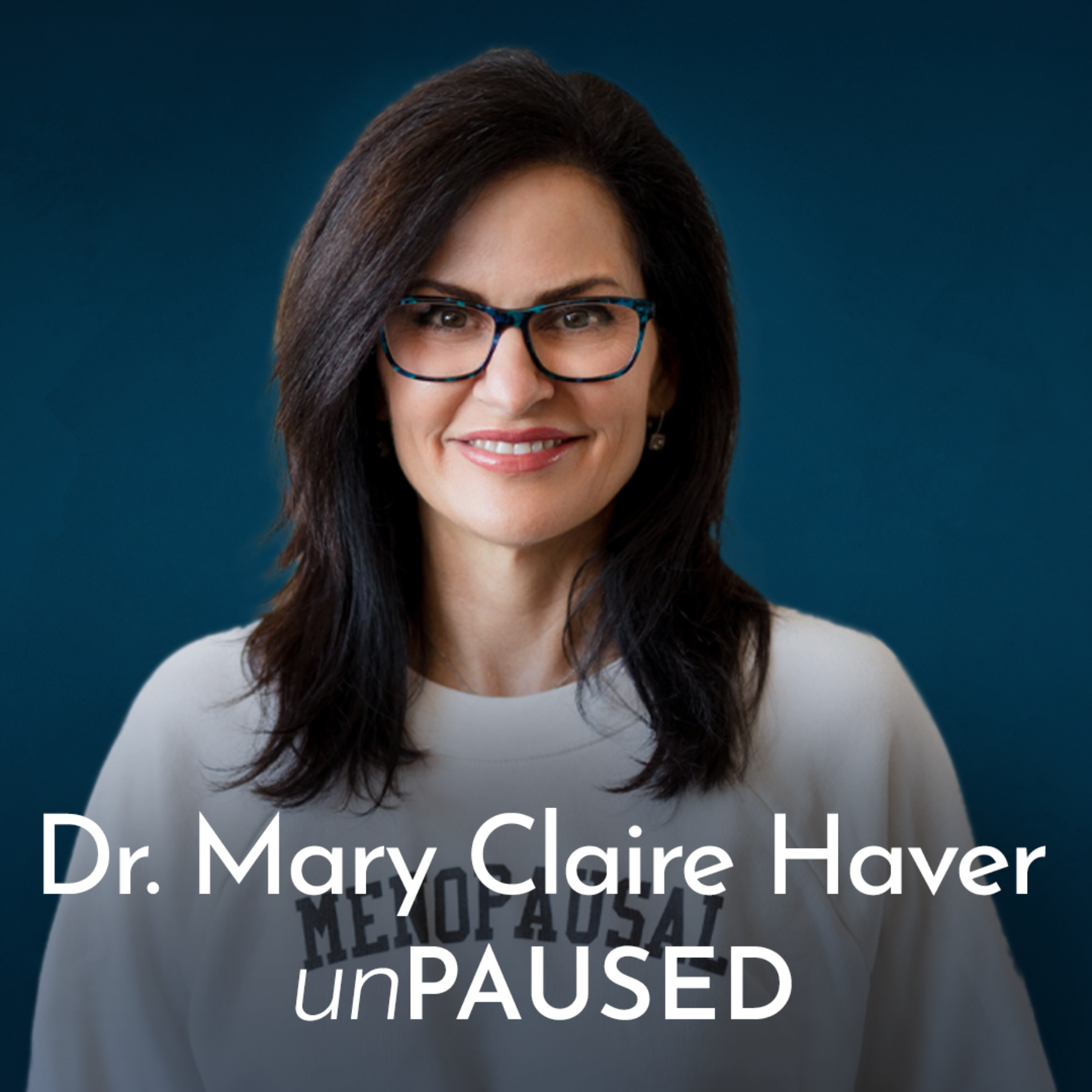
 unPAUSED with Dr. Mary Claire Haver
17 Nov 2026 · 46m

 Add vo to ChatGPT or Claude to ask about everything you hear
vo listened to this episode to put together the overview and transcript, so there may be the odd mistake.
How menopause increases women’s heart disease risk, especially via rising LDL/ApoB, blood pressure acceleration, and visceral fat; why women often present with atypical heart-attack symptoms; and what’s modifiable through early, aggressive prevention during perimenopause.
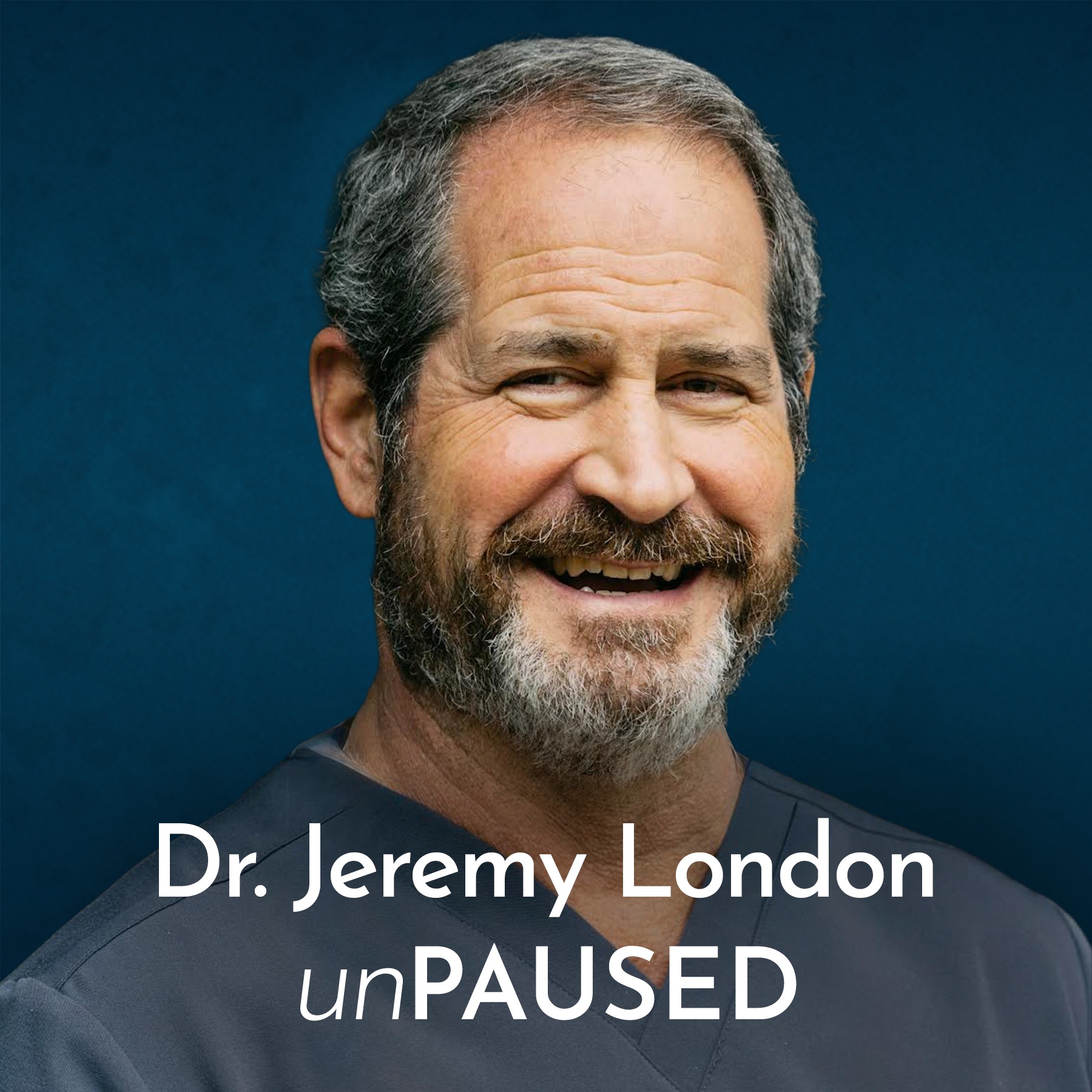
Dr. Jeremy London, board-certified cardiovascular surgeon with 25+ years’ experience, thousands of heart surgeries; focuses on both surgery and prevention. Dr. Mary Claire Haver, board-certified OB/GYN and certified menopause practitioner; adjunct professor at UT Medical Branch; host of Unpaused.
Heart disease is the #1 killer of women in the U.S. The “vulnerable window” opens in perimenopause. LDL rises ~18% on average during the menopause transition; blood pressure trajectories accelerate; estrogen’s arterial protection withdraws. Atherosclerosis is “something we have,” not something we “get,” developing over years. Women’s risk factors (smoking, hypertension, poorly controlled blood sugars) impact them more than men. Women may have vaguer symptoms (fatigue, nausea, abdominal pain, sweating) and face delayed diagnosis.
Fatty streaks found in most children (autopsy/P-DAY study). Endometriosis linked to 23% higher cardiovascular risk via chronic inflammation. Pregnancy history (preeclampsia/gestational hypertension; gestational diabetes) increases later ischemic heart disease risk. Autoimmune diseases (e.g., lupus, RA) associated with ~50% higher cardiovascular risk.
0:00Dr. Mary Claire Haver: Cardiovascular disease kills more women than all of the cancers combined. There's another factor here that is menopause. Which is why we see so many women have a problem with cholesterol management. All of the risk factors that we know, smoking, high blood pressure, poorly controlled blood sugars, actually impact women more significantly than they do men. Really? Yes. Endometriosis carries a 23 % higher cardiovascular disease risk driven by chronic systemic inflammation. Is this inevitable for women or is it modifiable?
0:45Dr. Mary Claire Haver: The views and opinions expressed on Unpaused are those of the talent and guests alone and are provided for informational and entertainment purposes only. No part of this podcast or any related materials are intended to be a substitute for professional medical advice, diagnosis, or treatment. Heart disease is the number one killer of women in America. Not breast cancer, heart disease. And the window when women are most vulnerable to the trajectory that leads there opens during perimenopause. Most women do not know this. I was not talking about it in the way I should have been. For years, I thought I was giving my patients comprehensive menopause care.
1:26Dr. Mary Claire Haver: Hormones, bone density, brain health, sleep, sexuality. I thought I was covering it all. And then I started looking at the cardiovascular data, really looking at it. And I realized that I'd been missing something that should have been at the center of every single conversation I was having with every single woman in perimenopause. LDL cholesterol rises an average of 18 % during the menopause transition. Blood pressure trajectories that were stable for decades start to accelerate. Visceral fat that was not there in her 40s appears and stays. The protective effect that estrogen has been providing to her arteries, her blood vessel flexibility, her inflammatory markers, her lipid profile for her entire adult life starts to withdraw.
2:11Dr. Mary Claire Haver: And this doesn't happen slowly at 65. This starts happening at 47, at 44, sometimes earlier. Dr. Jeremy London is a board-certified cardiovascular surgeon with more than 25 years of clinical experience who has performed thousands of heart surgeries and seen firsthand what happens when heart disease in women goes undetected and untreated. He approaches heart disease from both surgery and prevention, which means he understands what the missed window costs and what protecting it is actually worth. I'm Dr. Mary Claire Haver, a board-certified obstetrician and gynecologist and certified menopause practitioner.
2:50Dr. Mary Claire Haver: I'm also an adjunct professor of obstetrics and gynecology at the University of Texas Medical Branch. Welcome to Unpaused, the podcast where we cut through the silence and talk about what it really takes for women to thrive in the second half of life.
3:08Dr. Mary Claire Haver: For women navigating midlife, here's a simple question. Why does the number on the scale stop telling the whole story? Withings Body Scan 2 measures more than weight, including muscle mass, bone mass, visceral fat, and vascular age. During perimenopause and menopause, your muscle-to-fat ratio can shift even when your weight doesn't. That's why tracking body composition, not just weight, matters more after 40. Learn more at withings.com and use code UNPAUSED for 10 % off. Can we talk about bras for a minute? because something we wear every single day shouldn't be something we can't wait to take off the second we get home.
3:45Dr. Mary Claire Haver: The straps dig, the band shifts, and finding something that's both comfortable and supportive can feel almost impossible. That's why I want to tell you about the Honey Love X Balance Bra. It's designed to give you the best of both worlds, the comfort of a wireless bra with the lift and shape you still want. The Signature X design provides natural separation and the molded cups create a smooth silhouette under your clothes. No underwire required. And as women, our bodies change throughout our lives. Having things that fit well, feel good, and support us matters. I love that Honey Love is a female-founded brand creating thoughtfully designed essentials for real bodies, including bras, bodysuits, and tanks.
4:28Dr. Mary Claire Haver: Because getting dressed shouldn't have to be a struggle, especially when it comes to something as basic as a bra. treat yourself to the most advanced bras and shapewear on the market use our exclusive link to save 20 off honey love at honey love.com slash unpaused that's honey love.com slash unpaused after you check out they'll ask you where you heard about them please support our show and tell them we sent you experience the new standard and comfort and support with honey love
5:00Dr.
5:01Dr. Mary Claire Haver: Jeremy Lunden, welcome to Unpaused. Thank you so much. So I like to start off asking all clinicians this question. How does menopause show up in your practice? Well, first, I think it is worthwhile just noting that 10 or 15 years ago, a cardiac surgeon sitting down with an OBGYN women's health expert would never have. Never have happened. It would never have even happened. We would have passed each other in the hallway and said a nice good morning. I might have delivered your wife's baby. Likely. Likely. That's our only interaction in the hospital. Right. And to your question, well, I take care of the menopause age population.
5:47I mean, the 50 to 65-year-old women is the bulk, men and women, but specifically women, that's who we care for. So it is primarily what we see and practice.
6:05Dr. Mary Claire Haver: So heart disease is the number one killer of women here in the U.S. and in a lot of areas of the world. And you're on a mission to knock it out of the number one spot. Do you really think that's possible? Absolutely. Me too. I do. Absolutely. I feel like it's kind of low-hanging fruit. That's what's so frustrating about it, that there's been absolutely no change in that number for 50 years. I do think it's important that we take a step back. Just for a moment and zoom out a bit because when we're talking about heart disease, that's a huge topic. There's thousands of diagnoses that fall in heart disease.
6:47So I want to be really clear what we're actually focusing on so that this makes really good sense. So if you look at all of those thousands of diagnoses, they all fit in one of three buckets. The first is structural heart disease, and that's just problems with the valves inside the pump, either block valves or leaky valves. The second is a problem with the electrical system. The heart has its own electrical system. People are probably very familiar with atrial fibrillation. It's one of the most common diagnoses where the top chambers of the heart look like a bag of worms, and the heartbeat is very irregular.
7:24It's a very inefficient rhythm. And then the third category is atherosclerotic coronary vascular disease or blockages in the coronary arteries. What are the coronary arteries? Those are the arteries that actually supply the pumping chamber of the heart. That's where blockages cause heart attacks. We look at the 20 million people worldwide, 80 to 90 % of those patients fall in that one bucket.
7:56Dr. Mary Claire Haver: In heart disease. When we're talking about heart disease, 80 % to 90 % fall in this category of atherosclerotic coronary vascular disease, the type of blockages that cause heart attacks. Why? Well, what is a heart attack? We have blood vessels that sit on the surface of the heart that supply the pumping chamber. Well, that heart muscle needs nutrients and oxygen to function properly. So when there's a blockage there, a portion of the heart muscle becomes – Downstream. Downstream from that becomes blood starved. And if it is not reinstated, if that flow is not reinstated, if the plumbing is not fixed, that heart muscle dies and causes a heart attack.
8:42And that is where the deaths come from when we see the vast majority, when we see that number of 20 million people. So when you ask the question now, what are we really targeting? It's that particular area of heart disease in general.
9:02Dr. Mary Claire Haver: And that 80 to 90 % holds across both males and females. Absolutely. Okay. Absolutely. So I was under the assumption, because as I came up the ranks in medicine, you know, I did my, like you, four years of medical school, and then I went off onto my OBGYN specialty, that things like high blood pressure and high cholesterol were some kind of a combination of poor lifestyle choices and genetic factors, right? Never in medical school and never in my residency, there was some whispering maybe about pregnancy being a little bit of a stress test, but it was just kind of theoretical. It was not solid data, you know, in the late 90s when I did my training.
9:43Dr. Mary Claire Haver: But it was really been in the last few years that I learned that, you know, another factor here for women, especially, that is menopause that is contributing to both of these conditions. When did you learn this? I had the exact same experience you did. Now, I will say that about 10 years into practice, I became very disillusioned with taking care of the same patient for different reasons over the course. A patient would come in with a blockage in their leg. Like I'd do a bypass in the leg, then they would continue to smoke. And five years later, they would come back and I'd do bypass surgery on their heart.
10:24Then five years later, they'd have lung cancer. It really became an exercise in futility. And so I got interested in functional medicine right at that point, just looking for some other perspective. And it really was dramatic for me. I mean, it really did. It was renewed interest. And so at that juncture, that's where the discussion started for me. I didn't quite realize the implications and how powerful that was really until the last few years. But I think to address your question about how are we going to do this now with all of these pieces in place, if we look at why blockages start in blood vessels to begin with, we can break it down into two basic buckets.
11:16Okay. If we've got the highway of the blood vessel and bloods. The plumbing. I like that. The plumbing and the blood is flowing through the plumbing. There are basically two factors. We have factor A, which is attack of the vessel wall, things that can break through that barrier.
11:38Dr. Mary Claire Haver: Okay. Cholesterol. All right. Right. ApoB specifically, which is the lipoprotein, which is the dangerous particle. And we can dive more into that. But I think right now, just conceptually, I want people to understand that there are two things that happen. Attack of the vessel wall, things in the bloodstream that attack the vessel wall. And then the health and integrity of that lining that makes it more vulnerable. Those are the two things that we are balancing because it's the penetration of that vessel wall, a local inflammatory process that then sets this cascade in motion to eventually cause blockages, calcification, and potentially occlusion.
12:29Dr. Mary Claire Haver: So how long does this process take from a healthy vessel to a full blockage in general? Years. Now, of course, everyone's different based on lots of things that we're going to talk about today, but it does not happen overnight. And just to put this in perspective, I really think that there needs to be a shift in the narrative when we talk about atherosclerosis because I believe that atherosclerosis is something that we have, not something that we get. You know, people always think, oh, I don't want to get heart disease. Well, if we look at autopsy results, and it's kind of sad, of small children, three-year-olds, they actually have a fatty streak.
13:17Dr. Mary Claire Haver: Which is the precursor lesion, right? In their distal aorta, right before the main blood vessel splits to go down to the legs, 65 to 75 % of three-year-old otherwise healthy children have a fatty streak. The P-Day study that was - So this is just a normal part of aging? Yes. The P-Day study, which looked at 18 to 25-year-old male recruits and trauma victims, showed the same thing in the coronary arteries. Now, granted, none of these things were causing any problems. They weren't causing blockages. But my point is that we all have a certain propensity. And it's not a matter of not getting it. It's how do we take that runway out long enough so we don't get the problems associated with it.
14:04So when you ask me how long, years.
14:11Dr. Mary Claire Haver: This episode of Unpaused with me, Dr. Mary Claire Haver, is brought to you by Alloy Health. Have you noticed your skin changing in midlife? Maybe it's feeling drier, looking thinner, or you're seeing dark spots that weren't there before. Here's the thing. Declining estrogen can play a major role in those changes. And no, it's not just about finding a better moisturizer. It's about understanding what your skin actually needs. That's why I'm excited to share Alloy's Estrogen-Focused Skin Care. They now offer two new prescription treatments. Copper Peptide Cream RX, designed to help firm and smooth thinning skin on the face and neck while calming redness.
14:49Dr. Mary Claire Haver: and Hyperpigmentation Treatment Rx, which helps fade dark spots on the face and chest without affecting your natural skin tone. Getting started is simple. Complete a quick online intake, connect with a doctor who specializes in menopause, and have your prescription delivered right to your door. Try Alloy's new prescription treatments, Copper Peptide Cream Rx, and Hyperpigmentation Treatment Rx, or add them to your N4 routine. Head to myalloy.com and use code MCH20 to get 20 % off your first order. Your menopause specialized doctor will help you build a skincare plan for your needs. Plus, you get$0 unlimited messaging with your doctor.
15:30Dr. Mary Claire Haver: This code is valid on products only. These are compounded products not subject to FDA approval. As women, we're so good at building lives around other people, aren't we? their dreams, their values, their expectations of who we should be. And then one day we wake up and we think, is this it? Is this it? I'm Susie Welch, the host of Becoming You. There is a way to figure out exactly who you are and build a life that is actually yours. This isn't a pep talk. It's not platitudes. This is a methodology. Listen to Becoming You wherever you get your podcasts. If you work in healthcare, you know how demanding your days can be, especially during the holiday season.
16:12Dr. Mary Claire Haver: Between long shifts, caring for your patients, and everything going on outside of work, the last thing you need is uncomfortable scrubs distracting you. That's why I wear figs. I've worn figs for years because they're made for the demands of long clinical days. The fabric is incredibly soft, breathable, and has just the right amount of stretch, so you can stay comfortable whether you're in clinic, on your feet all day, or running between patients. My oldest daughter is in medical school and she loves FIGS too. It's fun that we share that love and with so many styles and colors to choose from, there's always something new to try.
16:47Dr. Mary Claire Haver: And just in time for the holidays, FIGS has launched its new holiday collection featuring festive colors, fresh styles, and accessories. Because when you wear scrubs day after day, it's nice to switch things up a little. And the holidays are the perfect excuse to find a new favorite. So whether you're looking to refresh your own work wardrobe or find a gift for someone in healthcare, FIGS has plenty of options to love. You can get 15 % off your first order at wearfigs.com with the code FIGSRX. That's wearfigs.com, code FIGSRX.
17:24Dr. Mary Claire Haver: Let's break down cholesterol for our listeners. You know, most of our listeners have regular medical care or have had their lipid panel drawn. Explain to the listeners why this is important, what it really means, what the different types are. Well, let's just utilize that lens, first of all, so we know why the cholesterol conversation is even important. Well, we talked about things that can attack the vessel wall and things that affect the lining. What we're looking at with the cholesterol conversation, and we're going to get much more specific about it is the things in the blood that can actually penetrate the vessel wall and start this process.
18:04That's what we're talking about. Now, cholesterol is necessary for life.
18:09Dr. Mary Claire Haver: It's how we make our hormones. It's how we make it to bring it home. It's how we make our hormones. It's how we make our neurotransmitters. It's every cell wall in the body. We can't live without cholesterol. So I think that's really an important mindset for people to understand. But too much cholesterol also is not good. And we know that ApoB and specifically, and we'll talk about what that is in just a second, is causal for heart disease. So the question is, where is that sweet spot enough to what our body needs versus too much? And I think we have pretty good guidelines for that now. Now, when we talk about LDL, which is what everybody says is the bad cholesterol, we're talking about low-density lipoprotein.
19:02Doesn't say anything about cholesterol in that, does it?
19:06Dr. Mary Claire Haver: No. Right. So cholesterol has to be encased in the liver in a lipoprotein to be transported in the blood because it can't physically be transported without that truck, if you will, to carry it. So what makes a particle dangerous or not dangerous is the truck it's in. What we're looking at is the actual trucks that the cholesterol is carried in. So LDL gives you some information, but ApoB or apolipoprotein B we know is the atherogenic lipoprotein, the main particle that we are concerned about. So why is that important when we're looking at risk? And how can two people have the same LDL and have different risks?
20:07Well, imagine if you will, two patients that have LDLs of 100. In one of those highways of the blood vessel, that 100 is carried in 50 trucks. So just a little bit of cholesterol, but in 50 dangerous ApoB trucks, LDL is still 100. But in the other patient, that same LDL of 100 is carried in three trucks. So the number of particles, again, what we're worried about is damage to that inner lining. So the more particles you have, the more opportunity there is for actual damage. So it's really particle count, specifically ApoB, that we are most interested in. Now, You mentioned LP little a. Again, lipoprotein that is genetically passed for the most part.
21:08There is variation through life, particularly in women, and we can touch on that. Why is LPA even different? Well, it's basically a very similar LDL molecule, but it's got this weird tail on it. And what that tail does is it makes it more atherogenic. Again, going back to that same model, makes it easier for it to actually penetrate the vessel wall. And then it kind of creates this perfect storm because not only can it penetrate the vessel wall more easily, it also is more inflammatory and it is thrombotic, which is where we really see that increased risk. Now, for the most part, the recommendation is you get it checked once in your lifetime.
21:58And I think that is true for men, certainly. But there is good data now that these numbers can change as women go through the menopause transition. And the reason for that is because of the way it is actually cleared by the liver. because one of the things that estrogen, it's not so much that you're making more of it, you were just clearing less of it because one of the direct effects that estrogen has or lack of estrogen that it has on cholesterol as we see that rise is an increase in this PCSK9 gene. Now, what is PCSK9? I'm using all these fancy numbers. So the liver does two things. It makes cholesterol and it sucks cholesterol through these little receptors at ApoB in particular out of the bloodstream.
22:54So as estrogen drops, there's less receptors to pull that ApoB out of the bloodstream. So you're taking a big part of cholesterol metabolism out of the picture, which is why we see so many women have a problem with cholesterol management afterwards. and that's why we see these levels change. It's not some -
23:20Dr. Mary Claire Haver: That you're making more. That was why I was assuming I was just making more cholesterol once I went through more LDL. My HDL is the same, but I'm so grateful for you for explaining this, that I'm not clearing as much as I did when I had the benefit of my ovarian hormones still producing. Exactly. Amazing. Now, what do triglycerides do here when we're having the lipid panel checked? So triglycerides are an interesting part of this conversation because I think it's a place where a lot of people get quickly confused because everyone hears this connection between glucose and why is my triglyceride up and my glucose is up and why is there a connection there and what have you.
24:01And why does this even matter with ApoB, this ApoLipoprotein B? Well, when you eat sugar or a high-carbohydrate meal, particularly in ultra-processed fashions, or you're just eating in excess, your liver immediately is going to exchange this to convert this to these very low-density lipoproteins and encapsulate it, which is an ApoB, VLDL, very low-density lipoproteins are triglycerides. So it's going to be directly related. Now, I think one of the reasons everybody talks about and is concerned about the triglycerides is because LDL in most labs is a calculated number based on triglycerides and HDL.
24:48Now, we're getting a little out of the cardiac surgeon's wheelhouse here, getting way down the rabbit hole. But I think for the most part, as far as tactically how to think about it, like you want to make certain that you're being mindful of the amount of sugar you're eating in connection with that triglyceride level as well.
25:11Dr. Mary Claire Haver: Okay. So cardiovascular disease kills more women than all of the cancers combined. And I don't think our listeners understand that. When women are surveyed, like what's the most likely thing you'll die from, a huge percentage of the patients will say breast cancer, which is a legitimate fear, but it's actually low on the list of what you will actually die from. Actually, a breast cancer survivor is most likely to die from cardiovascular disease, not from her breast cancer. Death rates from ischemic, so atherosclerotic disease, are actually rising in younger women. And I printed out and we'll bring this little Wall Street Journal published this, but this is coming from the AHA.
25:55Dr. Mary Claire Haver: Do you see this graph? I am familiar with that graph. Yeah. And I didn't know this information. What do you think is happening here? I think there's a couple of things happening. Part of it is that all of the risk factors that we know, smoking, high blood pressure, poorly controlled blood sugars, actually impact women more significantly than they do men. Really? Yes, by significant factors. Significant factors. And part of the problem is because men present with laboratory values, cholesterol, etc., that are concerning much earlier because women have the protective effects of estrogen. As a result, the institution of therapy is much earlier for men because there are triggers for that earlier.
26:55And so there's this discrepancy of, well, we didn't have those trigger points because women hadn't entered this. So they don't have that runway. because again, when we're talking about the development of atherosclerosis, it's you want
27:12Dr. Mary Claire Haver: to treat early and you want to treat fairly aggressively. When I say treat, I mean lifestyle changes first, medications if needed, and we'll get to all of that. But just to be clear, this doesn't mean that you immediately need to go on a medication, but it's more an awareness as a result of it. And I think the combination of those together have really led. And then there are, I'd like to believe, mindset shifts that are slowly coming into place when it comes to how when a woman would show up in the emergency room with signs and symptoms that may not be the what I call the TV heart attack, the Fred Sanford, I'm coming to see you kind of thing.
28:02Although many women -
28:03Dr. Mary Claire Haver: Big on the Peloton. Right. Right. Exactly. I mean, listen, a lot of women do present in the classic way. So I don't want to make that distinction too dramatic, but many don't. And so then there is a delay in diagnosis, a delay in treatment. And when we go back to this idea of what causes a heart attack, well, we know that there's starved blood, there's starved heart muscle there. What changes outcome? Early intervention. Time equals heart muscle saved. So I think that we're looking at a lot of different components that are making up that number. And I don't know that one is necessarily more than the other, quite frankly.
28:47I think it's one of these compounding situations, but I feel strongly that bringing all of this to center stage is going to make a dramatic difference, whether it's just identifying the problem more clearly or just by raising awareness, things actually get better. And we don't actually know what the main driver was, and then it won't matter as long as we get the result.
29:20Dr. Mary Claire Haver: Let's talk about getting stronger in midlife because muscle isn't about how you look. It's about protecting your bones, supporting your metabolism, and staying strong and capable as you age. But here's the thing. Knowing you need to lift weights and actually knowing what to do when you walk into the gym are two very different things. And you don't need another thing on your to-do list that leaves you feeling overwhelmed. You need a plan. That's why I've been loving ladder. I'm doing the Max Strength series with Team Limitless, and I've already completed six workouts, logged over four hours of training, and hit four new personal records.
29:57Dr. Mary Claire Haver: I love that I don't have to figure it all out myself. I just press play, follow my coach, and get stronger over time. And the community? There's even a perimenopause and menopause group where women can support each other without being sold another detox or miracle cure. You don't have to be perfect. You just have to start. Keep showing up and let the progress build. That's how we get stronger for the long haul. Go to ladder.fit slash unpaused. L-A-D-D-E-R dot fit slash unpaused. Take the two-minute quiz and get matched with your coach. Seven days free, no credit card,$10 off your first month if you stay.
30:33Dr. Mary Claire Haver: That's ladder.fit slash unpaused. Your future self will thank you. This podcast is sponsored by MidiHealth. Have you noticed the conversation around menopause is suddenly everywhere? It's trending on social media. Celebrities are opening up about their symptoms. And conversations that used to happen in whispers are finally out in the open. And honestly, it's about time. For decades, women were dismissed, ignored, or told their symptoms were just part of aging. And while I'm glad the conversation is happening, here's the truth. Menopause care isn't a trend. It's long overdue medical care that women have always deserved.
31:14Dr. Mary Claire Haver: If you've been listening to me, you know this isn't new territory for me. This is my life's work, helping women navigate perimenopause and menopause with real science. That's why I want to tell you about MidiHealth. Midi is a virtual menopause clinic staffed by clinicians who listen, who take your symptoms seriously, and never utter the words, it's all in your head. Like me, Midi focuses on your health span, not just your lifespan. That means taking a comprehensive look at your metabolic health, bone density, cardiovascular risk, and cognitive function, because all of it matters. MEDI delivers the kind of proactive, evidence-based care I've always believed women deserve.
31:58Dr. Mary Claire Haver: And the best part? Women in all 50 states can access personalized care, and it's almost always covered by insurance. So yes, I'm glad menopause is finally getting attention. But don't settle for noise. Get care from clinicians who are in this with you for the long haul. Book your virtual visit today at joinmidi.com. That's joinmidi.com. Insurance coverage varies. Check with your plan for coverage. The holidays are a wonderful time to refresh our routines and make our homes feel a little more inviting for ourselves and for the people we love. One simple place to start is with a more comfortable sleep space, whether you're upgrading your own bedroom or getting the guest room ready for holiday visitors.
32:44Dr. Mary Claire Haver: That's why I'm excited to share CJO. Their airy weight eucalyptus sheet set is made from 100 % tensile lyacil with a silky soft feel, moisture wicking properties, and a cool to the touch finish. They're also Ecotec certified and HSA and FSA eligible. And if you're navigating hormonal changes and finding yourself waking up hot at night, breathable bedding can be one simple way to help create a more comfortable sleep environment. CJO offers options for different preferences, including their Luxweave French Linen Sheet Set, which is stonewashed for that relaxed, lived-in softness that only gets better over time.
33:24Dr. Mary Claire Haver: Ladies, the holidays can get busy, so don't forget to make your own comfort a priority too. Whether you're treating yourself or welcoming loved ones, CJO makes it easy to make the season feel a little more special. Go to cjohome.com and use code UNPAWSED to get 20 % off your first order. That's S-I-J-O-H-O-M-E.com and use code UNPAWSED for 20 % off. And CJO's Black Friday sale starts on November 22nd, and you can use the same code for 25 % off your first order.
34:01Dr. Mary Claire Haver: So in medical school, I learned the concept of atypical chest pain. Sure. And that was not all women, not all men, but women tended to have the atypical presentation and men tended to have that classic presentation. Chest pain shortness of breath, jaw pain, radiation. Do you think that's part of – why was my chest pain atypical? Yeah, sure. Which is yours, if we're having heart attacks, rooms next door in the ED. So why do women have atypical chest pain? Yeah, there's a pathophysiology here that's different than men, right? There is. And part of that has to do with the location that blockages occur many times in the heart.
34:40So let's walk through that.
34:41Dr. Mary Claire Haver: I think it's important for our listeners to understand. Sure. And so there is a general agreement that the smaller blood vessels, the more distal blood vessels tend to be the ones that are more affected in women as opposed to the more upstream blockages that are then affecting a larger territory of the heart muscle that as you can imagine, if there's a dramatic lack of blood flow to a huge portion of the heart muscle, then that's what causes a more dramatic, and it does happen in women. But this more subtle, and I think let's define what those symptoms are too, just so people understand. It can be fatigue.
35:21It can be, I just don't feel right. Abdominal pain, nausea, anxiousness, sweating. Sweating. Really common symptoms that would not necessarily trigger the same level of concern that the classic symptoms would. But I really feel strongly that that is changing. I do too. I really do. I want to have a glimmer of hope here as we talk, particularly when I talk to my friends that are ED physicians and the cardiologist.
35:57Dr. Mary Claire Haver: So my daughter's a fourth year med student going into ED and we talk about this all the time. So you have a great opportunity to... Well, she's in San Diego on a sub-I right now and just talking about how they are recognizing you know, like the heart attack that's from the LAD. They don't go male, female. They're like, if her blockage is high or if their blockage is high, they're going to come in with these classic symptoms. If the blockage is lower, they're going to have these less specific kind of vague symptoms and you don't want to miss it. For sure. I mean, it just goes back to the, you know, classic training that I'm sure you got from that one attending that you really resonated with, like they'll look at you and say, just listen to patients.
36:4490 % of the time, they'll tell you exactly what's wrong. But you have to be listening. You have to actually be listening to get there.
36:55Dr. Mary Claire Haver: Agree. Women do tend to dismiss their own symptoms or especially the vaguer ones, the ones that aren't clear. Oh my God, I might be having a heart attack. I'm just tired. I'm just run down. I have fatigue. I have nausea. Do you see that in your own practice as well? Sure. Well, you have to realize, you know, I'm seeing people kind of after that presentation. Right. You're the plumber. Right. Much of the time. But that being said, absolutely. I mean, that personality carries into the post-operative period too, when you're talking about patients and recovery and you're dealing with that same mindset of, you know, at some point, like, remember, you do have to care for yourself, not just the entire family and all the things that you're accustomed to doing.
37:37So yes, and I think that that does delay patients from presenting to their, even their primary care physician. I'm just getting older. I'm just getting, I'm out of shape. You know, lots of -
37:50Dr. Mary Claire Haver: Not sleeping. Right. You know, I'm tired because I haven't slept well. Exactly. All the things. So here's what I see in my clinic typically. You know, I just do menopause now, which is like the most beautiful medicine I think I've ever practiced. That's incredible. And a woman will come in. She's 48 and her cholesterol was fine two years ago at her last regular physical exam. Now her LDL is up 18 points. Her blood pressure is starting to creep up a little bit and she's got new abdominal visceral fat that really wasn't there before. I can remember before I was woke to menopause, the patients that they're well women in their 30s and 40s would grab their tummies in their little paper gowns and shake them at me and be like, what is this?
38:33Dr. Mary Claire Haver: And I practiced at a big institution, but still in a small town, probably similar to Savannah. So these were moms at my kid's school. I did book club. We ran marathons together. Like, you know, like I knew these women. And they were not changing diet and exercise habits to any significant degree. And they're like, what is going on? How is this happening? And I didn't know enough to connect the dots back then. Wow. You know, that menopause could be a part of this. And how powerful the lifestyle changes could be. Yeah. So is this inevitable for women or is it modifiable? Well, let's look at what's actually happening to those women first.
39:12And you can educate me too as we have this guy. Seriously, I would love that. Here's my understanding of those three kind of clinical presentations of like, I haven't changed anything. I'm getting really frustrated. What's up?
39:30Dr. Mary Claire Haver: Yeah. Okay. So let's look at estrogen. And we've already kind of touched on why LDL and ApoB specifically goes up. The liver is the command center. We're not taking as much ApoB out of the bloodstream. It builds up. There we go. We can explain that. Blood pressure. Estrogen has a direct effect on the blood vessel wall, specifically through something called nitric oxide, which relaxes the blood vessel. Less estrogen, less nitric oxide, the blood vessels become much more tonic or stiff. So we start to see that rise in blood pressure. Well, visceral fat. You know, visceral fat is such an interesting process.
40:25And we throw around this whole idea of insulin resistance and metabolic syndrome with, I think, a lack of understanding that we're all talking about the same thing, you know. So really what we're talking about is the fact that our cells are not responding to insulin as well as they used to. And so you have all of this sugar, insulin's cranking up, trying to drive it into the cells. Well, high insulin levels are directly damaging to a portion of the kidneys. You retain more sodium. that then increases the blood volume that also increases blood pressure you've got all this extra sugar floating around let's go back to that model of the health of the blood vessel wall well now we've got high blood pressure damaging that wall we've got sugar that that changes the health and in high insulin itself all of these things are occurring from a cardiovascular standpoint So it's really like this perfect storm scenario from a metabolic and cardiometabolic scenario.
41:44So now the question is, is it inevitable? Yes, it is inevitable that estrogen is going to decrease and the transition is going to happen. Absolutely. Is it inevitable that you're going to have problems from all those things? Or do you have the agency to change the trajectory of your journey? I absolutely believe that you can.
42:09Dr. Mary Claire Haver: Yeah. A hundred percent. And I think that the awareness before is really where the needle can really move dramatically, that you are prepared. Yeah. Now, what does that look like? The standard pillars. And look, it's always this way. It's foundation, foundation, foundation. Agree. Diet, move your body, sleep, relationships, stress management. Now, what do those look like specifically here, though? I mean, if we're going to talk about what attacks the vessel wall and all of these things, I think we have to know tactically what that's going to look like for women. You know, when we talk about diet, nutrition is like having a conversation about religion or politics.
43:04It is so emotionally charged. And rightfully so, because in the end, we all have our own instruction manuals and it's about figuring out what works for you. And so I always feel like it's important to talk about how to eat, not what to eat. I mean, I think that's a lot easier for people.
43:24Dr. Mary Claire Haver: How do you explain it to your patients? Yeah, I get pretty specific with it, to be honest with you. I tried to get pretty specific and not get too far in the weeds of, you know, even Mediterranean, which if we look at durability in the literature from a cardiovascular standpoint, it's the one that has - It's the one, has the best data. It's the one. But diet - It's hard to do in the US. And diet studies - Easy to do in Greece. Right. And diet studies are hard in general. You know, I mean, they just are. So I really try to simplify it from like, okay, if we're going to talk about decreasing the things that attack the vessel wall and keep the vessel wall happening.
44:01What are those things? Well, from a dietary standpoint, it's make sure you're getting enough protein. Okay. Why? Because it's the building blocks of your muscle and it makes you full. So you don't eat as much. Watch your sugar and processed wheat intake because that's going to help with your insulin resistance. It's going to decrease your ApoB because you're not going to be making as much triglycerides. And I know it's not sexy, but fiber is so important. I mean, it is the food for your microbiome. It helps control cholesterol metabolism and it slows how quickly you absorb the sugar that you are eating.
44:43Those three things from a dietary standpoint, then you can add like fiber. You can go into the grocery store and decide what fiber works for you, what protein works for you. Okay, well, let's talk about sugar. How come this sugar is okay in this? Well, it's all in the packaging. You know, an apple that has fiber associated with the same amount of sugar as the gummy bears will slow that absorption. Is the sugar the same? Yes, the sugar is identical. You still have to be mindful. So that's kind of from the dietary standpoint. move your body every day. It's got to be aerobic training and strength training.
45:23The both are magic. You know, it's not just functional fitness with the lifting. It is actually building muscle as Gabrielle Lyon says, I love her, you know, muscle is the organ of longevity because it is our glucose sink in our bodies. And, you know, cardio is what changes our cardiorespiratory efficiency, this idea of VO2 max, which just means how hard can your heart and lungs really work to keep up with the effort? That's all that really means. Well, it makes sense if you can keep up more, you're probably going to live longer.
46:00Dr. Mary Claire Haver: And we'll get into specifics and like how many minutes and how, you know, later. Sure. Let's look back at how do those things actually affect this model of attack and the vessel wall? Well, we know that those dietary changes and exercise are how you lower ApoB with lifestyle. But that's also how you keep blood pressure under control. We know that weight loss directly impacts blood pressure. We know that aerobic training directly impacts blood pressure. We know that keeping your blood sugars under control helps keep those insulin levels low so that there's less attack on that vessel wall. So that let's say your APOB doesn't drop quite as low as you wanted it to, at least make sure that that vessel wall has the best chance to survive that attack.
46:56And the key is to work both of those two things with those lifestyle changes. Now, if you actually do all those things and your numbers don't shift, that's when we can get into the other levers that are important.
47:13Dr. Mary Claire Haver: Pharmacology. Yes. Mostly. Okay. So I want to specifically focus on women and our unique risk factors. Sure. So like I said earlier, there was whispers of pregnancy being a cardiac stress test when I was in training. But now it's really, I mean, the latest guidelines are, I mean, did you ever take a pregnancy history in your entire career until recently? I would only admit so much on this podcast. Absolutely not. So, and now it is part of, you know, now with the latest guidelines, a history of preeclampsia, history of endometriosis, you know, all these things. Turns out we have unique factors to us that put us at even higher risk, which would basically lower our threshold, I guess, for earlier testing.
48:03Dr. Mary Claire Haver: And we can get in more into what that looks like. But so, you know, for me knowing, I knew that a history of certain pregnancy outcomes increased risk of heart attacks, but I didn't know the numbers. And so a history of preeclampsia or gestational hypertension increases the risk between two and seven times for ischemic heart disease versus a woman who didn't have that. Gestational diabetes can have cardiovascular consequences within 10 years after she has a baby. And I'm excited to see the guidelines recommending getting that history now, but what do we do with it? So I agree with you. I think that this is a first step is just shining a light, right?
48:52As far as what we do with it, again, I kind of drop back to the real simple maneuvers. Recognize that these women are increased risk. That means that I'm going to push the pedal down even harder with the things that I can actually control. And I have to to be honest with you, I don't know why the pathophysiology of hypertension preeclampsia with pregnancy, but my gut reaction to it, and I may be totally off base, I freely admit this, it's like things that happened previously are more likely to happen again. And the fact that if you think about preeclampsia or even gestational diabetes, the magnitude of those things are much worse during that short, short for a man.
49:45Pregnancy interval, yeah. Yes, long gestational period for a woman. But the degree of those are magnitudes higher than they are over a lifetime. So I think in my mind that it almost kind of sets that stage. But again, it's still the exact risk factors. It shouldn't be a surprise that high blood pressure, poorly controlled blood sugars, high inflammatory states are taking us down this road. So to me, even if these young women that are in between pregnancies or done with their pregnancies but still kind of below what we would consider age of coronary disease that have this history, they deserve a much more aggressive approach.
50:34I mean, until we delineate this, that's what we can do. And we know those things work. We know they work. And if they don't entirely allow the individual to avoid a problem, I suspect that the magnitude of those problems or their ability to deal with them from a physiologic standpoint, they'll be much better off.
50:58Dr. Mary Claire Haver: And we can increase the runway until they become symptomatic. That's all we can do. So when we look at women of color, black women have significantly higher cardiovascular mortality than white women with equivalent calcium scores. And we'll get into what exactly a calcium score is. there's you know in my world like in obstetrics especially even it with equal socioeconomic status black women don't do as well with obstetrics you know they have poor outcomes you know for multiple reasons are we seeing the same thing in cardiovascular disease to a point yes i mean i think that there is certainly a higher incidence of high blood pressure diabetes all the same things that you're seeing in your practice that we know are kind of those pillar risk factors that we're concerned of.
51:50But there's definitely issues where access is certainly a problem when we're looking across the board. There are issues with application of standard of care guidelines, both in primary intervention and in women of color that have had an event with secondary prevention. There's also a lot of social scenarios of level of chronic stress and things of that nature that are different.
52:23Dr. Mary Claire Haver: The weathering phenomenon. The weathering phenomenon is what I'm referring to exactly, that I think is really an underutilized and underrecognized component. But that we're talking about it, you know, I think is important. And I had Sharon Malone on, who talked extensively about it on the podcast. So I think, again, starting these conversations, putting it out there, and letting women realize you're special. And you had these things, and we need to get you in sooner, faster, more aggressively, so that we can avoid the sequelae long-term that we know you're more likely to have. For sure. So when we look at autoimmune disease, women make up the vast majority of patients with autoimmune disease like lupus, systemic sclerosis, rheumatoid arthritis, and that, I didn't know this, these diagnoses carry a 50 % higher cardiovascular risk, and it has to be the inflammation, right?
53:19Dr. Mary Claire Haver: So we send her to rheumatology to manage her autoimmune condition, and the cardiologist is managing her heart until she has a heart attack and it comes to you, you know. But, you know, we're siloing medicine. I'm helping them set up a lifestyle plan, and we jokingly call it a nursing home prevention program. So we are specifically trying to avoid frailty, heart disease and Alzheimer's. And what do we know lifestyle wise can do that? I think that's a wonderful mindset. It's like the, you know, the Munger quote, show me the place I'm gonna die, I'll never go there. Yeah, because women are very specific.
53:55Dr. Mary Claire Haver: They don't wanna live to 120 by and large, my patients. They were like, I don't wanna live forever. I don't wanna be alone at the last 20 years of my life. but I'd like to be a benefactor and not a burden. And we just see this really high rate of women needing long-term care versus men. And it's usually a heart condition that just, you know, or frailty. So it's such severe frailty or, you know, fractures and sarcopenia and then dementia. So, and they're like, what can I do to avoid this? So my kids aren't having to make these decisions for me or for a shorter time as possible. How can our listeners find you?
54:35DrJeremyLondon.com, all the social platforms. We have a newsletter, a free newsletter that goes out several times a week and a podcast in all the usual spots.
54:44Dr. Mary Claire Haver: Well, thank you for coming on Unpaused. You've been a great guest and hopefully our listeners have learned quite a bit. This was awesome. I had so much fun. You can find full episodes of Unpaused on YouTube at Dr. Mary Claire. Also, you can find me on Instagram at Dr. Mary Claire and get honest and accurate information on health, fitness, and navigating midlife at thepawselife.com. Unpaused is presented by Odyssey in conjunction with Good Roommate Media and Longwave Digital.
55:20Shopping around for a new furnace before the cold sets in? Four Seasons will beat any competitor's quote by up to$1 ,000. guaranteed honest upfront pricing that you can trust from a team with over 35 ,000 five-star reviews for all your heating plumbing and electrical needs you know who to call for all
55:40Dr. Mary Claire Haver: the right reasons call 866-4SEASONS details at fourseasonsheatingcooling.com
Heart disease is the number one killer of women — not breast cancer — and the window that sets the trajectory opens during perimenopause. Dr. Mary Claire Haver sits down with Dr. Jeremy London, a board-certified cardiovascular surgeon with more than 25 years of experience and thousands of heart surgeries behind him, to put cardiovascular health at the center of the menopause conversation. They break down what heart disease actually is, why 80–90% of it comes down to blockages in the coronary arteries, and what really happens in the transition: LDL cholesterol rising an average of 18%, blood pressure starting to accelerate, and visceral fat appearing — all as estrogen’s lifelong protection of the arteries withdraws.
Dr. London explains cholesterol the way no one learns it at the doctor’s office — why ApoB and Lp(a) matter more than your LDL number, and why menopause raises cholesterol because the liver clears less, not makes more. They also cover why women get missed: risk factors that hit women harder than men, the “atypical” heart attack symptoms that delay diagnosis, and the female-specific histories — preeclampsia, gestational diabetes, endometriosis, autoimmune disease — that call for earlier, more aggressive attention. The good news: the transition is inevitable, but the trajectory is modifiable — starting with protein, fiber, strength training and cardio.
Guest links:
Dr. Jeremy London (Website): https://www.drjeremylondon.com/
Dr. Jeremy London (Instagram): https://www.instagram.com/drjeremylondon
Dr. Jeremy London (TikTok): https://www.tiktok.com/@drjeremylondon
Dr. Jeremy London (YouTube): https://www.youtube.com/@drjeremylondon
Books:
The New Perimenopause: https://thepauselife.com/pages/the-new-perimenopause-book
The New Menopause: https://www.amazon.com/dp/B0CKBZ4K1Z
Never miss an episode—sign up for The ‘Pause Life Newsletter: https://thepauselife.com/pages/newsletter
Medical Disclaimer: The information, including opinions and recommendations, on this platform is meant for informational and educational purposes only. Mary Claire Media, LLC, the unPAUSED podcast, and The ‘Pause Life are not medical organizations. Medical advice or medical diagnosis cannot be provided to you through the platform, any associated website, or customer portals. Using this platform does not establish a patient-physician relationship.
Scan the code with your iPhone camera
Listen in the app.