 unPAUSED with Dr. Mary Claire Haver
10 Nov 2026 · 46m

 Add vo to ChatGPT or Claude to ask about everything you hear
vo listened to this episode to put together the overview and transcript, so there may be the odd mistake.
How to tell perimenopause apart from other causes of brain fog, anxiety, fatigue, hair loss, sleep problems, and mood changes; when to test and when to treat; and why clinicians shouldn’t assume symptoms are “just hormones.”
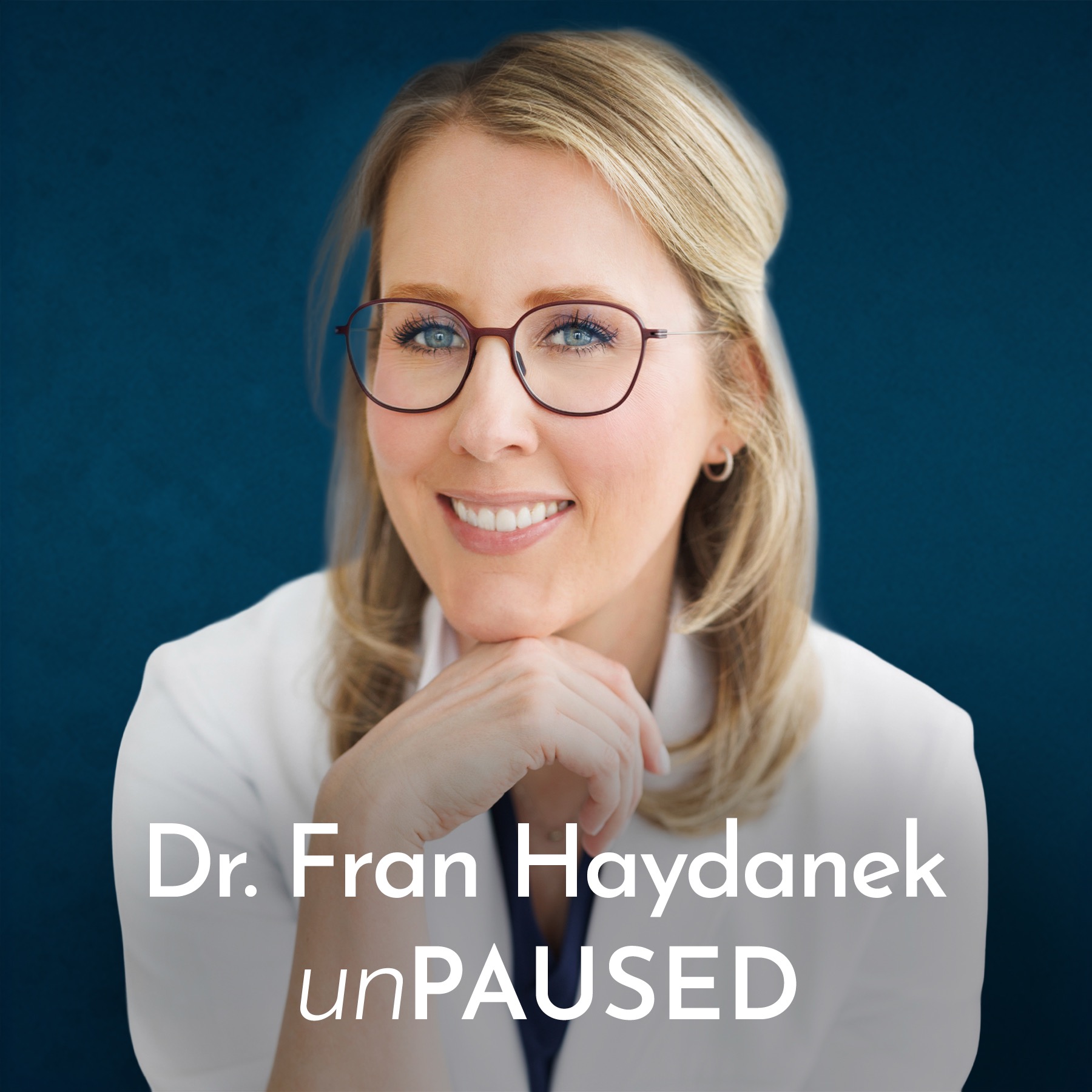
Dr. Fran Haydanek, board-certified OB-GYN and host of I Did My Own Research, focusing on debunking hormone claims online. Dr. Mary Claire Haver, board-certified OB-GYN, certified menopause practitioner, adjunct professor at UTMB (host).
Perimenopause can’t be diagnosed with a simple blood test; it requires history and ruling out other conditions (e.g., alopecia, iron deficiency, thyroid disease, sleep apnea, hyperthyroidism, heart issues). Mood changes may relate to “reproductive hormone sensitivity,” where hormone receptor changes (not hormone levels) drive anxiety/depression; odds of depressive disorders rise 2–4x during the menopause transition. Postpartum depression history strongly predicts later depression risk (up to ~13-fold in one large study).
“Crossing your legs” for urinary leakage after childbirth; a patient with cyclical PMS who may later experience perimenopausal mood symptoms; ferritin-guided workup for fatigue/hair loss (iron deficiency without anemia); gestational diabetes and hypertensive pregnancy as long-term cardiometabolic risk markers.
0:00Dr. Mary Claire Haver: We are allowing women to be blindsided by these symptoms when they were completely predictable. You're going to go through another 20 years of crossing your legs every time that you have to sneeze, and that's unfortunate because we could have helped you fix that, right? Wait, what? This could also be something completely different, right? This could be alopecia, this could be iron deficiency. It's not always perimenopause. You are a human outside of your hormones. As a fellow patient with PMLS, we have a five times higher rate of endometrial cancer. Wait, wait, wait, wait, wait, wait. how high?
0:30Five times higher.
0:31Dr. Mary Claire Haver: When is it just a one-off and when is it really a problem that she should address with her clinician?
0:46Dr. Mary Claire Haver: The views and opinions expressed on Unpaused are those of the talent and guests alone and are provided for informational and entertainment purposes only. No part of this podcast or any related materials are intended to be a substitute for professional medical advice, diagnosis, or treatment. About one in eight American women has postpartum depressive symptoms. That is the CDC figure, 13.2 % from more than 30 ,000 women. And during the menopause transition, the odds of a depressive disorder run two to four times higher than before it in women who have never been depressed in their lives. In the largest study to date, more than 270 ,000 women, a history of postpartum depression raised the risk of depression and perimenopause almost 13-fold.
1:33Dr. Mary Claire Haver: But a history of any prior depression raised it almost 12-fold. The postpartum episode was not special. What was special was that she had been depressed before and nobody asked. That is a failure. Not that we lack the science. That a woman can have a documented history of postpartum depression sitting in her own chart, walk into an office at 45, saying she feels like she's losing her mind, and no one opens the file to see if the symptoms she is experiencing in perimenopause connect to the one she had during her last major hormonal transition. My guest is Dr. Fran Haydanek, a board-certified OB-GYN who hosts I Did My Own Research, where she spends her time pulling apart the hormone claims that the internet hands women.
2:14Dr. Mary Claire Haver: She is going to help us draw the line from the last baby to the first hot flash and tell us what the science really says. I'm Dr. Mary Claire Haver, a board-certified obstetrician and gynecologist and certified menopause practitioner and adjunct professor at the University of Texas Medical Branch. Welcome to Unpaused, the podcast where we cut through the silence and talk about what it really takes for women to thrive in the second half of life.
2:43Dr. Mary Claire Haver: This podcast is sponsored by MidiHealth, the first virtual clinic created for women by women for the treatment of menopause. Don't let anyone tell you menopause is something you have to suffer through alone. Midi can help. Visit joinmidi.com to learn more. A beautifully designed Squarespace website is the difference between thinking about photography school and selling your portraits online. It's the difference between giving away those cookies you just made for free and running your cookie empire. A beautifully designed Squarespace website is the difference between having a movie reviewing hobby and a movie reviewing career.
3:22Dr. Mary Claire Haver: Squarespace, because no matter what you're into, a website makes it real. Use offer code DIFFERENCE for 50 % off select plans. Terms and conditions apply.
3:35Dr. Mary Claire Haver: Dr. Fran, welcome to Unpaused. Thank you for having me. It's an honor. So a question I like to ask all the clinicians is, how does menopause show up in your practice? So I think it's important to understand that I'm an employed generalist physician for a healthcare system. I did the same job for 20 years. So I'm the type of doctor that probably most people are seeing for their obstetric and gynecologic care. And so menopause shows up in my practice in all parts, but most often during an annual exam. And I think it's important for listeners to understand what an annual well-woman preventative care visit actually is for.
4:08Because I think people say, oh, I have an appointment with my gynecologist once a year, and that's when I'm going to get all my problems addressed. The reality is that an annual preventative care well-woman's visit is a type of visit that insurance has dictated what we're going to do. They're saying, here are the things that we have determined will help you live longer. And so I, as a gynecologist, can cover certain things in this visit. So for me, it's cancer screening. So breast cancer screening, cervical cancer screening, colon cancer screening. We talk about vaccines. We talk about basic parts of birth control counseling.
4:38We talk about your family history. But what comes up in the conversation, you'll notice I didn't say comprehensive menopause care, right? But what comes up in our conversation as we're talking about her menstrual history, her sexual history, how she's feeling, those parts of perimenopause and menopause like creep into the conversation. My periods are starting to space out. I have vaginal dryness. I feel really irritable all of a sudden. And that's where we really start having the conversation of perimenopause, menopause, and what we can do about it. And I bring up the preventative care aspect of all of this because I think most people don't understand that insurance is dictating how we run these appointments with each other.
5:17And so what we do in my practice when you come for an annual preventative care visit, we address that you are having these issues. I most often then order a couple of things that I need to help guide my management or rule out other conditions. And then my patients come back for what we call a problem visit, where we have more time dedicated to just talking about their concerns and really addressing what they want to address and how we want to address it outside of the confines of that annual well woman visit.
5:45Dr. Mary Claire Haver: You're one of the best science communicators I've seen on social media. So what is the single question you think that lands in your inbox, in your DMs, more than any other when it comes to this phase of life? Yeah, I mean, the number one question really is like, how do I know if I'm in perimenopause? And that's such a hard question to answer because in so much of medicine, I can say, let me order that blood test. Let me get that x-ray. Let me just quickly do this one thing. I can tell you yes or no. And when it comes to perimenopause, I can't do that. Really what it comes down to is, can I talk to you about what's going on?
6:17and then go from there. So it's hard to answer because if someone was like, well, how do I know if I have PMOS? Okay, well, we have these three criteria. You order this, this, and this, and you have two of the three. You meet, you get that diagnosis. It's a lot harder in perimenopause. I don't have just a simple blood test I can order and therefore give you the diagnosis.
6:34Dr. Mary Claire Haver: So how do you make the diagnosis? I mean, in my office, when patients come for their annual exam and we start talking about their periods, most often patients are going to say, well, my periods aren't what they used to be. I used to be very regular every 28 days down to the hour. I knew when I was getting my period. Now they're starting to space out. Now they aren't coming when I expect them to or they're shorter than before. And then there's all the other things that come along with that. I'm starting to have hot flashes. I wake up every night with night sweats and I can't sleep. My mood is changing.
7:04The most common thing I hear people really say is I don't feel like myself. They can't verbalize always what that is exactly to them. Like what does that mean to you? But it is the most common thing that people say. I just don't feel like myself. And also I'm hot all the time, right? So that's most often how we kind of start the conversation of like, well, could this be perimenopause? And what do we want to do about it?
7:24Dr. Mary Claire Haver: OB obstetrics, you know, I probably spent 60 % of my training doing OB and I'm super proud of that. And what a beautiful part of my life for many, many years. And that though is where most women have sustained contact. You know, we are default, the primary care docs for these women in that phase of their lives. and then they kind of disappear until something breaks. Yes. You know, what happens, you know, in that gap between that last baby and that first hot flash? Yeah. There's so much of our life that happens in between there, right? You have your babies, you see us all the time. You know, there's times where we see you weekly at the end of part of your pregnancy and we're taking your blood pressures and we're talking to you and how do you feel and da-da-da-da-da.
8:06And then you have a baby and then we maybe see you two times in the next six weeks and then maybe you don't see us for another 20 years. It is not uncommon for me to have patients come in like, well, I haven't come in since I had my last child and my baby's going to college, right? There is a lot of life that happens in there, not only as like women, but also in our bodies. So you think about, are your periods different now than they were before? And if you're not regularly seeing us, I can't address that. How's your pelvic floor after you had those babies? Is there an opportunity because you didn't really want to mention to anyone else that every time you sneeze, you lose a little urine, right?
8:39If I'm not seeing you to have your annual preventive care visit where I can ask you, you're going to go through another 20 years of crossing your legs every time that you have to sneeze. And that's unfortunate because we could have helped you fix that. There could be mood disorders that are underlying what's happening with your periods and you just thought you had to live with this. And really getting ahead of some of these issues with vaginal dryness, these mood disorders, problems with your periods, if we don't see you, then if you don't come to us until you're dying of hot flashes, then we never had time to address all those other things that are comprehensive women's health.
9:13It's not just like just your period and that's it. And here's some hormones when you turn 50. There's a lot of in between where we can do things and help you and not feel like you have to suffer through all of that alone.
9:22Dr. Mary Claire Haver: Right. You touched on mental health and mood changes. There was a paper that came out, I think, in the last year that used a term that made me stop in my tracks for a second. And it was reproductive hormone sensitivity. And we've kind of known this because we've practiced for so long, but women who are having mood changes associated with hormone changes, so PMS, PMDD, so premenstrual syndrome, premenstrual dysphoric disorder, or postpartum depression, psychosis, anxiety, whichever spectrum that they end up on, are much higher risk to develop similar or worsening problems in the perimenopause transition.
10:04Dr. Mary Claire Haver: And I was also interested to learn that if they don't have hormone sensitivity, that they aren't at an increased risk. They will most likely not have mental health changes in their perimenopause. And then the third thing in that paper was it's not the hormones. We all have the hormones. It is the receptors in their brains. Can we talk about that? Yeah. So I think it's important exactly what you said, that's the receptors in the brain. Because first of all, people are going to come in and say, I have a hormone problem. I need a hormone panel to tell me that there's something wrong with me. The issue with all these different disorders is that there's nothing wrong with your hormones.
10:40Your hormone levels are going to be normal, which is why we talk about not drawing your hormone levels, right? You're going to hear your doctor be like, that's not necessary. And I want people to understand it's because your hormones are normal. It's that your brain is reacting to how those hormones are changing. And not that saying that if you have PMDD that you will have postpartum depression, so you will have perimenopausal depression as well. But it makes sense if you think about that if your brain is one that's sensitive to those changes, so think like PMDD, for example, where every menstrual cycle, the seven or so days before you start bleeding, you turn into a different person.
11:15That is not due to your hormone level itself, but it's due to the hormone levels changing and your brain reacting to it. So it also makes sense that if your brain is one of those brains that reacts that way, you may also react when you become immediately postpartum. You have high progesterone and then all of a sudden it drops after you deliver your placenta. If your brain is sensitive to that, you may have postpartum depression as well. And so same thing when you get to perimenopause, that if you historically have had your mood change due to these big fluxes of hormones, that when you get to perimenopause where you're having big fluxes of hormones, maybe you too will have some changes in how your mood responds.
11:55And I think that's very interesting for people to know about themselves. No one's saying that if you have one, you will for sure have the other. But it's an association that's interesting, I think. And I think obviously always deserves more research, but also is important for people to know that this could happen to you because of your own history.
12:11Dr. Mary Claire Haver: Well, I think they're less likely to be blindsided by it and feel a sense of, okay, this is happening. I know why it's happening. I just, we are allowing women to be blindsided by these symptoms when they were completely predictable. Yeah. As with everything, knowing something about your history and how it can affect your future is very important. We say this in obstetrics all the time, right? If I know what happened in your previous pregnancy and delivery, I can prepare for the next pregnancy and delivery. And same with gynecology and these mood disorders and just knowing about yourself and how you're going to respond is going to change how you may go into that next transition.
12:43Dr. Mary Claire Haver: Take a girl who was devastated every month as a teenager. We all had patients like that, right? Her PMS was just off the train for her. And she was missing school. She was not doing well. Do we think this is the first appearance of the sensitivity? Is this what PMS really is? I mean, it could be, right? Other than puberty, this is the first time now really that hormones are making a big change. And obviously, it's hard because that age is also a lot of other things are happening. But if you're noticing that it's cyclical, that is the first clue that if, again, just seven days of the month, they turn into a completely different person, that yeah, this could be the first time that we're seeing this, that she has that hormone sensitivity, that her brain is reacting to those fluxes and hormones.
13:33And it'll be interesting to see if that same person, then when they have a baby some years later, how they react to that. Yeah.
13:40Dr. Mary Claire Haver: Or just being, having this on your radar, especially as a clinician, so that she doesn't, you know, she doesn't lose the ability to take care of her child. Yes. You know, or to just cope out in the world. Yeah. I mean, it's hard enough when you don't have the sensitivity to care for a newborn and figure out how to feed them and keep them alive and, you know, and figure out how you're going back to work and all the things. And then when you add on this just complete overwhelm from, you know, how your body is reacting through anxiety or depression or psychosis, I just I think we're doing a disservice.
14:18Yeah. I mean, it really gives people some insight into what they can do to prepare for that. If you know that you are someone who has reacted that way in the past, maybe you're going to have a better team around you. You're going to let your OBGYN know I'm concerned that this is going to happen. I'm going to need to see you sooner. You might have a psychiatrist that you already established with to help you manage your medications rather than waiting until your one week postpartum. You may have a counselor who's going to help you through that. You may, if you're financially able, to get more support around you.
14:45So it's just a way to prepare going into the next phase. If you know this could happen, let me do what I can ahead of time to prepare myself for that.
14:57Dr. Mary Claire Haver: Welcome back to another MidiPause. I'm Dr. Mary Claire Haver, the host of Unpaused. Something that can feel impossible to avoid during perimenopause and menopause is stress. Because for many women, this stage of life arrives at the same time as some of life's biggest responsibilities. You're balancing careers, relationships, aging parents, growing children, financial pressures, and somehow trying to take care of yourself in the middle of it all. Then add hormonal changes into the mix, and suddenly stress can feel more intense than it used to. During perimenopause and menopause, the brain's stress response shifts.
15:42Dr. Mary Claire Haver: With less estrogen, there's nothing to counterbalance the effect of stress hormones, especially cortisol, on the brain. That's why many women notice they become more easily overwhelmed, more anxious, less resilient to everyday challenges are quicker to feel emotionally exhausted. That's not just a coincidence. Hormonal shifts during perimenopause and menopause can affect the body's stress response, sleep quality, mood, and overall sense of well-being. Now, stress reduction doesn't necessarily mean booking a week-long wellness retreat or meditating for an hour every day. Often, it's the small, consistent habits that make the biggest difference.
16:28Dr. Mary Claire Haver: Things like taking a daily walk, setting boundaries around work, prioritizing sleep, practicing deep breathing, spending time with friends, exercising regularly, or simply carving out a few minutes each day to do something you enjoy. The goal isn't to eliminate stress completely. That's impossible. The goal is to give your body more opportunities to recover from it. And this is where having the right support system can make a huge difference. MidiHealth understands that stress is often deeply connected to the other symptoms women experience during perimenopause and menopause. Their clinicians take a whole person approach, looking beyond individual symptoms to understand how sleep, hormones, mood, energy, and stress all interact.
17:22Dr. Mary Claire Haver: What's especially helpful is that Midi doesn't just focus on what's happening physically. Their providers help women navigate the emotional and mental challenges that often accompany this transition, creating personalized care plans that reflect each woman's unique experience. For some women, reducing stress may start with improving sleep. For others, it may involve addressing anxiety, managing hormone-related symptoms, or making lifestyle changes that create more balance and resilience. Because when you're constantly running on empty, it's hard to feel your best in any area of life. Go to joinmidi.com, join M-I-D-I dot com, and connect with one of their clinicians today.
18:09Dr. Mary Claire Haver: Get into a fall state of mine with Pura. Start the season with a free Pura Plus Home Diffuser when you subscribe to two scents for six months. Choose from seasonal and best-selling fall fragrances. Swap your scents anytime and set a custom schedule so your home always feels like a crisp, cozy autumn day. Bring the scents of fall like pumpkin, apple, and vanilla home with this exclusive offer only at Pura.com. As women, we're so good at building lives around other people, aren't we? Their dreams, their values, their expectations of who we should be. And then one day we wake up and we think, is this it?
18:48Dr. Mary Claire Haver: Is this it? I'm Susie Welch, the host of Becoming You. There is a way to figure out exactly who you are and build a life that is actually yours. This isn't a pep talk. It's not platitudes. This is a methodology. Listen to Becoming You wherever you get your podcasts. There are a lot of reasons Chicago homeowners have chosen Four Seasons since 1971. An A-plus rating with the Better Business Bureau. That's one. Two, BBB Torch Awards for Ethics. That's another. And service around the clock every day of the year. That's a big one. For all your heating, plumbing, and electrical needs, you know who to call.
19:29Dr. Mary Claire Haver: For all the right reasons, call 866-4SEASON.
19:41Dr. Mary Claire Haver: you know we use a lot of oral contraception yeah for good reason i was on it for over 20 years yeah i was on pills for 15 years for and i had pmos and it was great for me it worked absolutely great but there are patients that we have who who get on the pill and there's so many formulations, right? And it's usually a progestogen issue. Who feel flat, anxious, not herself. And then somebody tells her, give it three months. Is that really what we should be doing for these patients? I mean, that's hard, right? Because sometimes you do want to give it a little bit of time to see if that works. And sometimes you want to say, let me see you back in a month so we can discuss how you tolerated that.
20:21And so it's hard too, because the data on a population level says like, well, for the most part, we don't see mood changes. but that's hard because on a patient like basis they're going to say well I definitely felt mood changes so I think it's important that people know that some people will feel those mood changes and to know that I don't know if anything's really going to change in three months I think one month is reasonable because what's going to it doesn't add the second month doesn't add more to it you're just doing the same thing again so you're going to do the thing again to see the same result so I think you know if people you know if a listener is like oh that was me or that's currently me We don't have to wait three months.
20:55We can see you again in four weeks and then talk about something different. Maybe you don't want an oral contraceptive pill. Maybe you want an implant of some sort. Maybe you want a shot. Maybe you're done having babies and you want to talk about surgical options, right? So I don't think that waiting three months is the answer just so that you have three months of feeling bad.
21:11Dr. Mary Claire Haver: Okay. Agree. If they're not feeling good after a month, they're probably not going to feel good. Their mental health is not going to improve. Does treating reproductively linked to depression, we're learning this, right? It looks like it's going to differ. in perimenopause than it would in postmenopause. And the newest data when I was researching for the new perimenopause was coming. When we talk about if you are someone who is sensitive to hormones, when we help you with those hormones, do you feel better? Yes, that makes sense. That makes sense for a certain group of people. And that's what I tell my patients in the office, when we're talking about starting menopause hormone therapy, I say, here are the things that I very much know that we'll probably make better for you.
21:51Your hot flashes, night sweats, And with vaginal estrogen cream, your vaginal dryness. I was like, everything else after that, we'll have to see. Because your mood may get better, but it may not. Your joints may feel better, but they may not. And so it makes sense that for some people, they will feel better with hormones. But it's one of those things that I won't know until we try.
22:11Dr. Mary Claire Haver: So there's somebody out here listening who is thinking, oh my god, that was me after my babies. I mean, literally, I posted about that study. And people were like, I'm 65 years old. I had terrible postpartum depression. Nothing was treated. Thank God I survived. You know, and I went through it all again in perimenopause. So if she's out there listening and she's heading into perimenopause, what advice would you give her? Well, first, I want you to make a problem visit with your OBGYN, right? You want that time with your doctor to actually talk about what your concerns are and what the plan could be.
22:46You don't want to put it at the end after your pap smear and your mammogram order and your colonoscopy discussion. As they're walking out the door. Good luck to you, right? So scheduling a problem visit with your doctor as you're like, if you're going into that, if you're concerned about it or in the past, just want to talk about it now. And then if you're going into this part of your life where you are going into that perimenopausal phase and you have this history, having that conversation with your doctor now also gives the ability to talk about what you want to do next. If you feel like, first of all, if you feel that you can't do anything while you're perimenopausal, that's not correct either, right?
23:19We can do hormones when you're in perimenopause. We can also do antidepressants. We can do both. We can do both. And it's not to say one or the other is going to help, but they could both work together or you do one or the other to feel better. So what it comes down to is you want to make an appointment with your doctor to talk about it, see how the symptoms line up for you. Were you feeling totally fine? And then all of a sudden your periods started to change. You also had hot flashes and your mood changed. Well, that tells me something about you and something that I want to do going into that next phase as well.
23:50Dr. Mary Claire Haver: Okay. Amazing. The odds of a depressive episode run two to four times higher across the menopause transition. And I've also seen data, it's a 40 % increase across the transition. So meaning pre-menopause through perimenopause up to menopause itself. And that holds in women with no prior history of depression at all. So you can hit this with no warning. Exactly. From the past. How should she be watching for it? When is it just a one-off and when is it really a problem that she should address with her clinician? Well, first of all, if you've noticed it, you should address it. So even if you're like, okay, yes, this isn't severe, but if this is impacting your life, you should talk to your GYN, your PCP, your therapist, your psychiatrist, right?
24:36So I don't want people to wait like, well, it's not bad enough. It's not impacting my life enough. No, we want to help you. Let's talk about it. But it also is helpful for us to when we're, you know, say that a 45-year-old woman comes in. If she all of a sudden has a lot of stressors in her life, her children are about to leave. She's also taking care of her parents. She's at a high, like, part of her career where it's like there's a lot going on. And she's not having any other, like, perimenopausal symptoms, but just is it, like, feeling sad and tired. Well, that could just be depression. Right.
25:06And we should really talk about that. Not reproductive related. This is not reproductive related. But if you're that same person and your periods are starting to space out and you have hot flashes, could this be related to your hormones? Absolutely. And or is it both or neither? Right. I think we kind of struggle at times that we've almost like swung too far currently that everything is perimenopause. And there are many other things that could cause similar feelings in your body. So it's you kind of have to take a good history. You have to have the time to take a good history and then talk about what are our options.
25:37And then sometimes it's playing with those options. Sometimes we say, okay, this sounds like depression. Let's talk about how we treat depression. But if that's not working, we talk about the next step.
25:46Dr. Mary Claire Haver: If the provider that they see has no real menopause training, you know, doesn't have a comprehensive menopause background, what do you tell them to do? I say, first, you want to look local, right? If your OBGYN says, I don't really treat a lot of menopause, I appreciate the honesty. ask them who they recommend that you see then. Because they very likely know someone in their organization, in their city who does practice this type of medicine and is known for that. So if your doctor says, well, I don't do this, ask who does. Second, there's many online people who will provide this for you, which I think is helpful.
26:22Dr. Mary Claire Haver: Obstetrician, gynecologists, I think, should do obstetrics and gynecology. And I don't think menopause should be a part of gynecology. That's so interesting. Why do you think that? I think that it should be a part of health, of medicine, of all the things, of every clinician who touches a female over the age of 30. This should just be part of the curriculum. We disease differently than men. We age different than men. Everything about us is set up differently, and we weren't studied as women, by and large, outside of reproduction. We do a good job. Of course, we can do better. And I was a great surgeon, but I'm here trying to take care of the last third of a woman's life and trying to do part-time cardiology, part-time neurology, part-time endocrinology.
27:03Dr. Mary Claire Haver: You know, I'm trying to manage an autoimmune disease. And it's like, I don't think OBGYN is busy. And it's four years. And we have to be surgeons and obstetricians and babies and all the things. And then there's fellowships. But I really think this should be part of all medicine. I agree with you. All primary care. Any person who's a clinician who touches a female patient, which is basically everyone except for maybe the pathologist, I'll give them a break, should know how to take care of this patient population. There's just no excuse. So I was co-writing a paper with some dermatologist for the Journal of Dermatologic Surgery.
27:39Dr. Mary Claire Haver: Basically, how does menopause show up in their office? And what do we do about it? And there was this kind of initial reluctance to be the first ones to prescribe vaginal estrogen. Not from my co-author on the paper, who she and I have worked together for 20 years. She's a dermatologist. And she was like, I'm the only person who might see her vagina for 20 years, if she's coming in for some dermatosis or whatever. and she said we have to prescribe it and so you know the authors of the paper had to take a deep breath and be like you're right and we had to show them the aua guidelines and like they're like well we'll just give lubricants i'm like no no no please prescribe this very low risk medication we're not asking for anything like crazy this is such a low risk medication that can make such a difference for people that many people like everyone who is a clinician should feel very empowered to prescribe vaginal estrogen yes a hundred percent so let's talk about perimenopause and how it's gonna show up for some people.
28:31Dr. Mary Claire Haver: So we have all these studies, right? We have the Women's Health Initiative. Most people have heard of that if they listen to this podcast. We have things like SWAN and KEEPS trials, basically giving women hormones and see what happens. And most of these studies were done decades ago and we're still playing with the data. So the SWAN data puts the median final period, and this is for white women, at 51.4 years. And that the cycle length, so menstrual period length, starts lengthening about seven and a half years before that with the biggest change in the last four. But how do you explain to your patients what is happening during that window?
29:06Yeah. I mean, the hormone fluctuations that our body goes through is very complicated, right? So we've seen the charts at the pretty up and down. So we start with that chart and say, this is what's happening in your body.
29:16Dr. Mary Claire Haver: I say it's like an EKG. Yes. Every month. It just goes and follows what it's supposed to do. And what's happening in your body is that as you're going through these cycles, your body's recruiting follicles, you grow them, you ovulate. Wait, what's a follicle? A follicle is, you know, when your egg is recruiting the little eggs to pop out, right? You grow a couple of them and eventually one pops out to ovulate. When that happens, you have a rise in other hormones and you go through this beautiful, I mean, it's really very smart and clever. It's very elegant. So you go through this cycle and then you get to those five to seven years before that last period and your follicle count is lower than it used to be and now your brain has to work harder to recruit them and then there it's working and it's working it's working and finally you may ovulate but then everything else isn't responding either and so this very timed elegant graph of hormones that we all know all of a sudden goes right it just goes crazy because nothing's responding the way it was supposed to and so that zone of chaos right when your hormones aren't responding in any logical way is when your body all of a sudden isn't responding in any logical way.
30:27Dr. Mary Claire Haver: And it's very different from woman to woman. Yes, it's so different. Why do we think this transition is so much bumpier than people expect? Like, I always see comments and you probably do in the DMs. Why is menopause a big deal? Women have gone through this for eternity. Why is it all of a sudden a problem now? Yeah, well, it was always a problem. No one was talking about it. right um we didn't have social media to bring awareness we didn't have people sharing it on youtube and we didn't have people sharing their own stories on facebook and making reels about it you know people just with everything in women's health we kind of had to keep it to ourselves we all know grandmothers who had stillbirths who didn't talk about it we all had no you know all these things that people didn't talk about and now we feel we're at a point where we get to talk about it and so it's not that people 50 years ago 100 years ago 10 000 years ago didn't suffer they did.
31:15They just weren't talking about it and we don't have options. Now people are talking about it and now we have options. And if you don't have problems, amazing. Like that's incredible. I'm so happy for you. But if you do have changes that you don't like, now we have options and we have ways to talk about it and get you care so that you don't have to white knuckle your way through this whole transition and feel like, well, my whole life turned upside down and I don't feel like myself and everything sucks. Yeah.
31:47This year, I've decided to get more from my holiday shopping
31:50Dr. Mary Claire Haver: by heading to Bob's Discount Furniture. Every week this month, Bob's is unboxing more of their bestselling styles, which means you can get more design in your dining room, more lounging in your living room, more rest and relaxation in your bedroom, and feel more right at home in your home. Stop in or shop online and unbox more of what you value only at Bob's. Let's talk about getting stronger in midlife because muscle isn't about how you look. It's about protecting your bones, supporting your metabolism, and staying strong and capable as you age. But here's the thing. Knowing you need to lift weights and actually knowing what to do when you walk into the gym are two very different things.
32:34Dr. Mary Claire Haver: and you don't need another thing on your to-do list that leaves you feeling overwhelmed. You need a plan. That's why I've been loving Ladder. I'm doing the Max Strength Series with Team Limitless and I've already completed six workouts, logged over four hours of training and hit four new personal records. I love that I don't have to figure it all out myself. I just press play, follow my coach and get stronger over time. And the community? There's even a perimenopause and menopause group where women can support each other without being sold another detox or miracle cure. You don't have to be perfect.
33:07Dr. Mary Claire Haver: You just have to start. Keep showing up and let the progress build. That's how we get stronger for the long haul. Go to ladder.fit slash unpaused. L-A-D-D-E-R dot fit slash unpaused. Take the two minute quiz and get matched with your coach. Seven days free, no credit card, $10 off your first month if you stay. That's ladder.fit slash unpaused. Your future self will thank you. This episode is brought to you by WHOOP. When life gets busy, our own health is often the first thing we put on the back burner. We push through fatigue, sacrifice sleep, and forget to listen to what our bodies are telling us.
33:45Dr. Mary Claire Haver: That's why I want to tell you about WHOOP. Unlike other devices, it doesn't have a screen competing for your attention with notifications and step counts. Instead, it gives you actionable insights into your sleep, recovery, stress, and daily strain, helping you understand how your everyday habits affect how you feel. WHOOP offers three membership tiers, WHOOP One, WHOOP Peak, and WHOOP Life, with different levels of personalized insights and coaching to support your health goals. Because taking care of ourselves starts with understanding our bodies. And whether you're managing a busy career, caring for your family, or navigating the changes that come with midlife, having the right information can help you make more intentional choices and prioritize your health for the long term.
34:31Dr. Mary Claire Haver: Head to join.whoop.com slash unpaused to join Whoop and get one month free. That's join.whoop.com slash unpaused.
34:45Dr. Mary Claire Haver: Beyond hot flashes, most women, I think, recognize that the hot flash is the poster child for menopause. And about 85 % of us will have a disruptive hot flash in this process or several of them. But what do you find that the symptoms women are not connecting with perimenopause and that they're just kind of suffering through without any options? Yeah. Well, let's talk about like from head down. Okay. Right. Hair loss. Yep. Right. And I think it's important this time to also think about as we go head down what could be related to perimenopause and what else could this be? So, okay, hair loss. Right.
35:18You may start losing your hair as your periods start to get a little weird. This could also be something completely different. Right. This could be alopecia. This could be iron deficiency. So there is that. You could have sleep disturbances. So what does that look like? You could be waking up in the middle of the night because you have hot flashes or you wake up at 3 a.m. and you can't go back to sleep. Could this be perimenopause? Yes. But could this be sleep apnea? Yes. Could this be an insomnia condition? Yes, it could. You can have heat intolerance. Could this be perimenopause? Yes. But could this be hyperthyroidism?
35:50Yes. You could have palpitations. Could this be related to your hormones? Yes, it could. But could this be a heart condition? Yes, it could. you could have vaginal dryness that one i can't really explain too much by anything else right so if you have vaginal dryness that that's perimenopause for the most part unless you're breastfeeding then that's lactation so there's a lot of the you know joint pain again could this be perimenopause absolutely people have joint pain they have stiff shoulders all those things but could you have arthritis yes you could right so that's hard it makes it hard to sometimes put it all together because how do you connect that you have hair loss and also your hips hurt and those are both related to hormones because it could be related to hormones and It could be related to something else.
36:26And that's why I think it's important to have that conversation. And also how I mentioned at the top of the episode saying that I order a couple of things before we have a conversation, right? Because there's a couple very simple blood tests I can do to help me rule out some of those things. A ferritin level, right? Like we, I am like, I am screaming about ferritin levels from the rooftop. Okay.
36:47Dr. Mary Claire Haver: Let's go there for a second. They just changed the guidelines. So let's talk about the ferritin guidelines. So when we order a CBC in the office or the hospital, right, to see if you're anemic, your hemoglobin can show that you're not anemic. But a ferritin level shows you your iron stores in your body. And you can have iron deficiency without being anemic. And I would argue the majority of people are iron deficient without being anemic. If you're anemic and needing a blood transfusion, that's a different thing. But many of us are walking around the world not being anemic where we need blood transfusions, but we have low iron.
37:19And that presents in many different ways for patients. You can have hair loss, like we mentioned. You can have fatigue. You can have restless legs. Those are the common ones, right? And so when I have patients who come in for their annual visit and they say, I feel tired and fatigued, my hair is falling out, I'm thinking, is this perimenopause? But also, I'm going to get a ferritin level because 40 % of menstruating women are iron deficient, up to 40%, right? That's a lot of people.
37:44Dr. Mary Claire Haver: And that's under the new guidelines or it's probably still under the old ones? It's probably the old ones, right? Because they've increased the level. Yeah. So they just came out with this from the American Society of Hematologists that said, previously, no one could really tell me what iron deficient was. I was kind of like piecing it together by what everyone said. I saw 15. 15. Is it 30? Is it 100? I don't know. I was going with 50 because that made sense to me at the time. So what the American Society of Hematologists is saying is, if you are an uncomplicated patient who's not having heavy bleeding, if you don't have an inflammation state, then for you, it's 30.
38:17But if you're someone who's bleeding heavily, like our paramedics.
38:20Dr. Mary Claire Haver: 80 % of perimenopausal patients. 80 % of perimenopausal. If you're having heavy bleeding and you're losing more blood, then iron deficient for you is 50. Or if you're symptomatic, if you're tired, you're fatigued, your hair is falling out, 50. So for me, I'm mostly going with 50 now. Yeah, us too. And so we're starting, you know, we have the conversations about, like, what are the lifestyle interventions that we can do to help with your iron, right? Let's talk about that. Right. So we can do lifestyle interventions. We can increase our iron-rich foods. We can use those cute little fish that you can put in your soups to put more iron into your food.
38:48You can take an iron supplement over the counter. And we can recheck in three-ish months or so and see how you're doing, especially if you were like 45, right? You're going to get better. For most of my patients, they're not going to go from a ferritin of seven to 55 in three months. So even though we've done the lifestyle interventions at that point, I can prove that we did them and it didn't help. And then we send them for iron transfusions. Yeah.
39:11Dr. Mary Claire Haver: I just feel like it's the most underutilized treatment in women's health besides menopause hormone therapy. Yeah. We're just constantly chasing it in certain patients. and talk about the inflammation. So if someone has a chronic inflammatory condition, the rate's even higher. I think it's important. It's up to 100 because it's an acute phase reactant, meaning ferritin goes up when you're inflamed. So it's artificially elevated. So we need to set that bar a lot higher for those patients with chronic inflammatory disorders. So yeah, I'm so glad we covered that because that all was hitting social media this week.
39:42So that's one of the things that I order for a basic, anyone who has a symptom of anything, I'm like, we're gonna check your ferritin level, right? But we also check your thyroid to make sure that we're ruling out those things. Which labs do you check? I mean, I order TSH with reflex. That's what my hospital offers. So that's what I do, right? Other people may have more expansive panels. That's what I have available to me. We also check an A1C. And especially this is important because I was talking about your obstetrical history. There's so much in our obstetrical history that can tell us a little bit about our future.
40:08Dr. Mary Claire Haver: For example. For example, if you had gestational diabetes, in the next 27 years, 70 % of those patients will have type 2 diabetes, right? Wait, what? Yeah. Yeah. 70? 70 % by 27 years after birth. It's a very high number. And we should be telling our patients this. Like I remember 50 at 15, but now they've pushed it out even further. 70 at 27 years. Holy. Yeah. So if you had gestational diabetes, we really should be testing your A1C. Every one to three years is what they say. Wow. And if you don't see me, your OBGYN, since you gave birth, and you don't tell your PCP, oh, I had gestational diabetes, you just went through 20 years of no one testing you because you didn't meet any criteria for anything else.
40:51So I get an A1C on, again, just about everyone because pre-diabetes, we can do things to help. And diabetes can cause symptoms. And so I wanted to catch that as well when we're talking about, is this perimenopause or is this something else?
41:05Dr. Mary Claire Haver: What are the labs or general? Do you check a vitamin D? Oh, I do check a vitamin D. Yep, I do a vitamin D. I get my mammogram in preparation for the hormone replacement discussion, a lipid panel. But then there's some things, you know, if your lipids are high, then that's when I work with your PCP and say, like, please talk to your primary care that your cholesterol is high and we need to talk about this. Or I get them into their registered dietitian or whatever. So it's kind of like a balancing act of like I'm ordering tests, but I may not always be the best person, right? If you have an A1C of 10 and you have diabetes, I'm still going to send you to your primary care doctor to help me with that.
41:38But they're a nice screening test for me to rule out other conditions. that can mimic perimenopausal symptoms, you could have both. You can have iron deficiency and be perimenopausal. But let's work at both at the same time.
41:50Dr. Mary Claire Haver: Let's walk back to the obstetrical history because the American Heart Association has changed some guidelines there as well. Can you talk about that? Well, which ones are we specifically talking about? So a history of preeclampsia, gestational hypertension. Yeah. So any of these pregnancy-induced hypertensive states, gestational hypertension, preeclampsia, preeclampsia with severe features, are a little bit of a continuum of the same thing. And we see this as like a little bit of a crystal ball into your future. What is your heart and your cardiovascular system going to do as you get older? Because if you in this high tense state of pregnancy had this reaction, you may also have that as you age.
42:26And so there's, you know, the guidelines are a little bit like harder to follow than the gestational diabetes, right? The gestational diabetes, let's get an A1C. That's very easy. This is more get your blood pressure checked. Make sure you're getting a lipid panel. If you have any other signs or symptoms of metabolic disease, looking into that, making sure it's not as easy to say, like, is your heart OK? But there are certain markers that we can look at to make sure that you don't have really uncontrolled hypertension that can lead to further problems as well.
42:57Dr. Mary Claire Haver: I was just excited to see that the cardiologists were talking about pregnancy as a stress test. Yeah, that's basically what it is. I was like, oh, my God, they're recognizing that women's heart disease is different than men's. You know, and that her pregnancy outcomes are going to change the course of, you know, her risk for cardiovascular disease. And again, it's important that women just know that about themselves. If I had preeclampsia, whether it's last month or 30 years ago, that's a risk factor for me in my life. And that should stay on a problem list in the chart. And that should be a conversation that you continue to have throughout your lifetime.
43:29Dr. Mary Claire Haver: And I think it's hopefully going to trigger earlier screening testing, you know, angiograms or calcium cardiac scores or whatever. in the future. So there is a, and this is probably my fault, partially my fault. There's a running list of 30 plus symptoms of very menopause. We're all blaming you. I'll take it. At least people are talking about it all over the internet. And so there's no real source for that, though. This is really the where I came up with the list that I created for the new menopause was I was cross referencing on PubMed menopause plus all these symptoms and finding research that would tie it to musculoskeletal stuff, to frozen shoulder, to elevated cholesterol.
44:13Dr. Mary Claire Haver: Like none of this was taught to me in residency. And so I just compiled a list based on where I can find menopause was linked to these diseases, either symptomatically or as a root cause. And so that's where my list came from and it was actually 70 things. Yeah. But there were a lot of them were like cousins of each other. So things like your smell changes, you know, I heard that one. Yes. So like your body odor changes. And that's your own personal. Okay. I think I meant like your sense. No, no, no, no, that's a new one to me. No, sorry. Your body odor. So and that was really a testosterone issue.
44:50Dr. Mary Claire Haver: And so pretty interesting. But like, I ran my own survey for the new perimenopause, right and um the number one symptom at least in the 900 people who answered the survey was not hot flashes yeah it was in the top five but it was anxiety yeah and fatigue and really the brain changes the mental health changes are you seeing the same thing oh yeah i mean it's either i don't feel like myself which is those things they wrote a paper called i don't feel like myself they presented at the menopause society and brain fog which is hard too most patients say to me I'm having trouble finding the words. I used to be able to say all these things and now I can't find the words anymore.
45:31So we do see it in the brain. That makes sense. And it's, again, harder to figure out how those tie together for people, right? I think people just are like, well, I have a lot of stuff going on, so I'm forgetting things.
45:43Dr. Mary Claire Haver: Well, we call it pregnancy brain or menopause brain or. Yeah. Yeah. I mean, it's interesting that you bring up the pregnancy brain because they did have that study come out a couple of years ago where a female neuroscientist put herself into an MRI machine throughout her entire pregnancy. And we did see the brain changes. We did say that there was changes in the gray and white matter of her brain. So I'm hopeful that we're doing similar MRI studies. So Lisa Moscone is doing, they're trying to figure out the tie between menopause and Alzheimer's. And so they're looking at the brain changes. And usually it's like estrogen receptor status or how your brain's uptaking glucose, not so much the white matter.
46:18Dr. Mary Claire Haver: But Lisa is really trying to figure out the link between menopause and Alzheimer's. Why do women get Alzheimer's at much higher than men? It's not because they live longer. And where does menopause fit in that puzzle? And then how do we prevent it? So she is looking at that. And it was astounding. It was the first brain scans I saw in a pre, a peri, and postmenopausal patients and saw the glucose uptake changes, which were directly related to brain fog. So we are seeing that people's brains are changing. We may not be at a point in science yet where we understand all aspects of it. And I'm excited for our future to figure it out.
46:54But I think we're starting to see that the science supports that something's happening in your brain. What we need to figure out next is how do we help you with that?
47:02Dr. Mary Claire Haver: In your clinic, why is perimenopause so easily mistaken for burnout? A thyroid problem or a straightforward depression? Yeah. Well, I mean, if you think about who this is happening for, these are mostly women in their 40s who have a lot of things going on that can cause burnout. Your children, whether they're 2 years old or 15 years old, have a lot of needs from you. Your parents are aging and need you too. You are at a point in your career where you probably have a lot of responsibilities and all of those things can lead to burnout that can also look like perimenopause, right? So is this perimenopause or is this burnout is a really fun game to play with yourself?
47:36It could be both. It could be both, but we have to, you know, again, going back to if about 85 % of people are going to have hot flashes, do we start there? How are your periods looking? What other body symptoms are you having? Does it makes sense that this is just, well, my life is busy and I feel really tired from that? Or is this, my hormones are changing and I'm reacting to that?
47:56Dr. Mary Claire Haver: One of the things that we tend to miss clinically for a while is thyroid disease in a patient. How often are you picking that up in your clinic? I mean, I order a lot of thyroid panels. It's interesting, I actually don't get a lot of abnormals. I try, I'm looking. But interestingly, I don't get a lot of abnormals. Even with the comprehensive panel that I'm able to get. It's not showing me anything, but I keep looking because there are going to be people who do have it. So I think it's an important thing to roll out because thyroid problems can mimic, whether it be hypothyroidism or hyperthyroidism, can mimic many of these same things.
48:30So I do think it's important that everyone keeps looking just because I haven't found it yet.
48:34Dr. Mary Claire Haver: I mean, we do it standard on all patients. You know, I tell people in our clinic, and it's just menopause, right? I'm done with the baby's part, is I don't have a great test for perimenopause. I'm a great listener. And but I do need to rule out all these other things you were talking about. Yeah, you know, autoimmune disorders, inflammatory disorders, etc. Because so much looks like the other. And really perimenopause just becomes a diagnosis of Asian exclusion, really what I don't want to miss, you know, I picked up lupus twice this year. You know, like, get to that point. Her symptoms just weren't relieved with hormone therapy.
49:10Dr. Mary Claire Haver: She still was presenting with these same symptoms. And it just taught me to dig deeper. you know until we found it. I mean I think that's important for people to hear. Oh you weren't managing rheumatology conditions? Oh yeah sure. But it's important to hear right is that sure could this be perimenopause in your hormones? Yes but if you're not getting better when we give you the treatment then it's time to keep digging. It's time to keep looking and talking about it and like are there other treatment options because this isn't related to your hormones. So I think that's a great point and again the important point of saying it's not always perimenopause.
49:40You are a human outside of your hormones and it may be related to your hormones, but it may be something completely not related to hormones.
49:46Dr. Mary Claire Haver: And whatever's not fixed by this magical patch or whatever we give you, we have to keep looking. We have to keep looking and sending, I'm not gonna do a full rheumatology workup on you. I'm not trained to do that. I would be doing you a disservice, but I'm gonna send you to my friend, the rheumatologist who can, because she knows how to help you. Yeah, how can our listeners find you? So you can find me on all social medias at Paging Dr. Fran. And then my podcast, which is called, I did my own research is on all major podcast websites as well. All right, Dr. Fran, thank you so much for joining Unpaused.
50:18Dr. Mary Claire Haver: You can find full episodes of Unpaused on YouTube at Dr. Mary Claire. Also, you can find me on Instagram at Dr. Mary Claire and get honest and accurate information on health, fitness, and navigating midlife at thepauselife.com. Unpaused is presented by Odyssey in conjunction with Good Roommate Media and Longwave Digital.
50:44Dr. Mary Claire Haver: This episode was sponsored by MidiHealth, the first virtual clinic created for women by women for the treatment of menopause. Don't let anyone tell you menopause is something you have to suffer through alone. Midi can help. Visit JoinMidi.com to learn more.
What happens in the gap between your last baby and your first hot flash? Dr. Mary Claire Haver sits down with Dr. Fran Haydanek — board-certified OB/GYN and the science communicator behind Paging Dr. Fran — to connect the dots most women are never shown. They unpack “reproductive hormone sensitivity”: why women whose brains react to hormone fluctuations with PMS, PMDD, or postpartum depression face a dramatically higher risk of depression in perimenopause — in the largest study to date, almost 13-fold — and why that history sits unread in your own chart.
They also get practical about diagnosis: why there’s no blood test for perimenopause, the conditions that mimic it — iron deficiency (and the new ferritin guidelines), thyroid disease, sleep apnea, diabetes — and what your pregnancy history predicts about your future health, from gestational diabetes to preeclampsia and heart disease. Because knowing your own history means you never have to be blindsided by symptoms that were completely predictable.
Guest links:
Dr. Fran Haydanek (Website): https://www.pagingdrfran.com/
Dr. Fran Haydanek (YouTube): https://www.youtube.com/@PagingDrFran
Dr. Fran Haydanek (Instagram): https://www.instagram.com/pagingdrfran
Dr. Fran Haydanek (TikTok): https://www.tiktok.com/@pagingdrfran
Dr. Fran Haydanek (Threads): https://www.threads.com/@pagingdrfran
Dr. Fran Haydanek (Facebook): https://www.facebook.com/pagingdrfran/
I Did My Own Research (Apple Podcasts): https://podcasts.apple.com/us/podcast/i-did-my-own-research/id1879906055
Books:
The New Perimenopause: https://thepauselife.com/pages/the-new-perimenopause-book
The New Menopause: https://www.amazon.com/dp/B0CKBZ4K1Z
Never miss an episode—sign up for The ‘Pause Life Newsletter: https://thepauselife.com/pages/newsletter
Medical Disclaimer: The information, including opinions and recommendations, on this platform is meant for informational and educational purposes only. Mary Claire Media, LLC, the unPAUSED podcast, and The ‘Pause Life are not medical organizations. Medical advice or medical diagnosis cannot be provided to you through the platform, any associated website, or customer portals. Using this platform does not establish a patient-physician relationship.
Scan the code with your iPhone camera
Listen in the app.