 unPAUSED with Dr. Mary Claire Haver
16 Oct 2026 · 53m

 Add vo to ChatGPT or Claude to ask about everything you hear
vo listened to this episode to put together the overview and transcript, so there may be the odd mistake.
Menopause and other low-hormone states (perimenopause, postpartum, breastfeeding, some birth control) and how they drive women’s sexual dysfunction and urinary symptoms; why clinicians often miss the anatomy and treat it as “psychological”; evidence-based roles for local vaginal hormones (estrogen, DHEA) and addressing medication side effects.
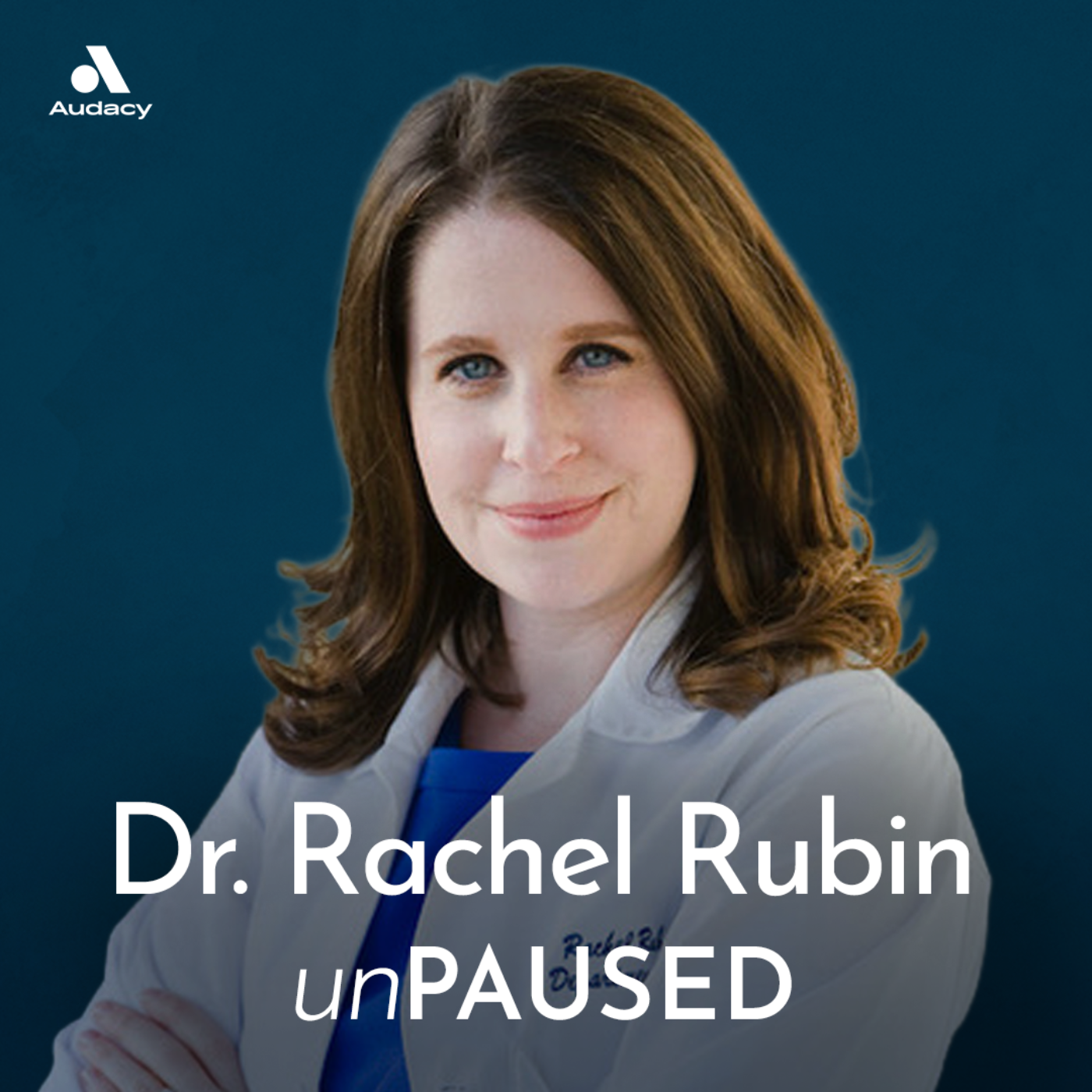
Dr. Rachel Rubin, board-certified urologist and nationally recognized sexual medicine expert; fellowship-trained in female and male sexual health; assistant clinical professor of urology at Georgetown; contributor/advocate for 2025 AUA genital urinary syndrome of menopause guidelines. Host Dr. Mary Claire Haver, board-certified OB-GYN and certified menopause practitioner.
Doctors aren’t taught libido/arousal/orgasm/pain; women’s genital anatomy is homologous to male anatomy (clitoris/penis tissues); pain and orgasm changes after hysterectomy are often physiologic; genital urinary syndrome is driven by low estrogen/androgens (not just “menopause”); vaginal estrogen or vaginal DHEA can prevent UTIs and improve pain/arousal; moisturizers/lubes help pain but don’t prevent UTIs.
16-year-old seeking vestibulectomy after learning vulvar pain from Sex Education; patient who lost orgasm after hysterectomy; women whose pain worsened after oral contraceptives; ICU/nursing-home UTI burden; discussion of antidepressants, spironolactone, finasteride, and GLP-1 sexual side effects; FDA-approved low-libido drugs flibanserin and bremelanotide.
0:00So the reason your doctor doesn't know how to talk to you about libido, arousal, orgasm, or pain is no one ever taught them. Three programs in the last three years that even acknowledge women's sexual health.
0:10Dr. Mary Claire Haver: We have more than 27 for men's sexual health. How many times I would blank stare at a patient and feel horrified that I didn't know how to help her, that she was complaining of some type of sexual dysfunction that was affecting her life. I had a patient come to see me, she was 16 years old, and she said, I need a specific vulvar surgery for pain. She said, I watched a show called Sex Education. In that show, there was a character who had vulvar pain, and she saw a doctor, and she learned about X, Y, and Z. So I went on Google, and I looked this up. I examined myself, and I said, holy shit, am I excited for the future.
0:51Dr. Mary Claire Haver: The views and opinions expressed on Unpaused are those of the talent and guests alone and are provided for informational and entertainment purposes only. No part of this podcast or any related materials are intended to be a substitute for professional medical advice, diagnosis, or treatment. Today's guest is not only one of the most influential voices in sexual medicine, but someone I'm lucky enough to call a friend. Dr. Rachel Rubin is a board-certified urologist and a nationally recognized expert in sexual medicine. She is one of the few physicians fellowship trained in both female and male sexual health, and she serves as an assistant clinical professor of urology at Georgetown University.
1:32Dr. Mary Claire Haver: And she is a contributor and vocal advocate for the 2025 American Urological Association Guidelines on the Genital Urinary Syndrome of Menopause. Rachel is one of the rare physicians who combines rigorous scientific expertise with compassion, clarity, and courage. She is tireless in making sure no woman is ever left in the dark about her own anatomy, her hormones, or her sexual health. I'm Dr. Mary Claire Haver, a board-certified obstetrician and gynecologist and certified menopause practitioner. I'm also an adjunct professor of obstetrics and gynecology at the University of Texas Medical Branch.
2:11Dr. Mary Claire Haver: Welcome to Unpaused, the podcast where we cut through the silence and talk about what it really takes for women to thrive in the second half of life. This podcast is sponsored by MidiHealth, the first virtual clinic created for women by women for the treatment of menopause. Don't let anyone tell you menopause is something you have to suffer through alone. Midi can help. Visit joinmidi.com to learn more.
2:43Dr. Mary Claire Haver: Welcome to Unpaused. Oh my gosh, how cool that we're finally doing this. Oh my God, Like you are like people don't know that we actually know each other. So when we're like, who do we have on the podcast? Your name was like at the top. Oh, my gosh. Like they want to talk about sex. They want to talk about sexual health. And I'm like, I am. And here we are doing it. Why urology? It's, you know, for our listeners, most women do not choose urology as a profession. Yeah. Every little girl dreams of being a penis doctor. Actually, it's part of, you know, a live stream. It is kind of strange how I got here.
3:14Sometimes I wake up. I say, how how did I end up here? You know, about 10 % of practicing urologists are women. So we are a small but mighty group. We are very funny. We're very silly. And we can say as many bad words as we want. It's actually something we all like each other very much. But, you know, urology is a fascinating field where you can take care of women. Nobody realizes this. You can take care of women. You can take care of men.
3:39Dr. Mary Claire Haver: Because women actually have kidneys and ureters and bladders. Shocking. Women have kidneys and bladders and genitals. And urologists are sex doctors. We care about quality of life. We care about sexual health. And people assume that their gynecologists know everything about sex, and it turns out they don't. And so it was a really fun field where I didn't have to deliver babies and be up all night, and I could do women's health without being an obstetrician. Three programs in the last three years that even acknowledge women's sexual health. We have more than 27 for men's sexual health. And so the reason your doctor doesn't know how to talk to you about libido, arousal, orgasm, or pain is no one ever taught them.
4:16I learned nothing, like literally nothing. And say it louder for the people in the back because it's not your fault.
4:24Dr. Mary Claire Haver: I never learned the framework of addressing sexual dysfunction until about until I decided to open my menopause clinic. Women, they stop even thinking that they can have good sex or that they deserve good sex or that they even know who to ask if they have a sexual problem. Parkinson's was a psychological disease until they discovered dopamine, right? Right. Schizophrenia, right, is a psychological disease until they discovered, you know, dopamine and neurotransmitters like all of these things. So erectile dysfunction was a psychologic disease until they discovered nitric oxide and it became a biological disease.
4:58And so all of women's health or sexual health tends to be, oh, it's all in your head. It's all psychological because nobody wants to study dopamine and blood flow and nitric oxide. And no one wants to figure out how to measure clitoral blood flow because the clitoris is internal and nobody does the work.
5:13Dr. Mary Claire Haver: So most clinicians, and this is myself included, I was OBGYN and I could not have drawn a clitoris, anatomically correct clitoris, until I saw the Gumby picture. And you're wearing the clitoris necklace. So for those of you on YouTube, she has a beautifully jeweled clitoris. This is what they look like. I only knew the top part. And I think of all the stitches I threw in the bulbocavernosum, you know, repairing lacerations after delivery. And I was going right through these little legs on her necklace right here. So it's really interesting. I'm obsessed with this concept of a word called homologs.
5:50Okay, homologs are this idea that the head of the penis and the head of the clitoris are exactly the same thing. We all form. We're the same. It's the same tissue. It looks the same under the microscope. There's a shaft of the clitoris that you can kind of feel if you go kind of beyond the head of the clitoris. And the penis also, there's the shaft. And then the penis splits into two. And it has these things called crura, which are these legs that go all the way down to your butt bones. OK, clitoris also goes all the way down to your butt bones. And so this idea, the scrotal skin is the same as the labia majora.
6:21The line that goes down the center of a penis and a scrotum, it's the same as the labia minora. It's so fascinating. The male urethra, the tube that men pee and ejaculate through, is the same as this most important tissue in the world, which is called the vulvar vestibule, which is the opening around the urethra where women have pain with sex, which is so common. And we see all the time and no one examines properly. And so we see these homologues and they're important because how you experience pleasure is important. And so everyone knows, everyone who's ever pleasured a penis knows that you don't just lightly touch the head of the penis to get pleasure.
6:57You don't touch the man's thigh to get pleasure. It's kind of this whole shaft thing and there's a whole thing, there's a whole organ there. And so when you teach women about their organs and their body parts, you have to tell them that this is just the head of the clitoris, which is like the head of the penis. There is a shaft and there are these legs that are sort of beneath the skin and a little bit deeper and may require excess stimulation, vibration, more, right? Like, so you have to really think logically about your anatomy and why you are or are not having pleasure. And so if a penis were buried and you couldn't access it with your hands or your mouth or vagina or whatever it was, how would you stimulate the penis?
7:35And it's kind of that question of like, how do you stimulate a clitoris when you can only see the tip of the iceberg?
7:41Dr. Mary Claire Haver: Yeah. And that's why the vibrator industry is a billion dollar, many billion dollar industries and probably should be a quadrillion dollar industry. If people understood that it doesn't make you a bad partner, most women are never going to orgasm from penetration. Those who do, They're my ninja unicorns. They're extra sensitive. I have theories behind that if you're curious. But the reality is most people orgasm from clitoral stimulation, just like most men orgasm from penis stimulation. But why is it that Hollywood, every woman has an earth-shattering orgasm within 14 seconds of penis and vagina?
8:12Why is the WWF not real? You know, it's entertainment. How are you going to depict a female orgasm and female pleasure? Who's doing those depictions and how do they choose to do it? And then it's this thing of have they always done it that way because that's what normal or that's just how they've done it and they continue to do it that way is probably the answer. But it's wild, right? Because people think they come. No man comes to see me as Dr. Ruben. I'm broken. I rub my thigh, but I just can't orgasm. You're like, well, no shit. That's not your penis. Right. So so it's really, you know, when women say I'm broken, I can't orgasm from penetration.
8:48Well, it's probably going to take you longer than five and a half minutes to have an orgasm with a partner, which is what the data shows. Your partner certainly does not last in much longer than five and a half minutes, which is what the data shows. And so sex needs to become more than just about penetrative activities. Right. And it should be more than just about orgasm. It should be sort of adult playtime fun that people are having and they're laughing and they're joking and they're enjoying each other's bodies if that's fun for you. And then the question is, how can we make you drive better if that's what you want?
9:17Dr. Mary Claire Haver: You know, I think about the misunderstanding of this genital anatomy and where the clitoris is. How do you think this is playing out in like surgical mishaps and things that go wrong in the surgical space because we were never taught really the correct anatomy? Yeah, this is a true disaster. Even the anatomical diagrams in our anatomy textbooks don't have the full extent of the clitoris and they don't have the neuroinervation. so the nerves which actually go around the uterus to the arousal nerves are going to go around the uterus and go to the clitoris so all those hysterectomies again could be affecting arousal not just sensation of i feel the clitoris being touched but i feel the engorgement i feel the blood flow the penis is innervated right by the pudendal nerves which is the sensation i feel my penis being touched but then there's the cavernosal or you know arousal nerves that go through the prostate and allow that erection, that stretching of the erection.
10:16So it's the same anatomy, except the textbooks show the penis one and no one even looks at, no one's even decided to study the clitoris side of things. And so we don't even have that data, right?
10:27Dr. Mary Claire Haver: So a lot of patients, at least on my end, would complain of some change in their sexual function after hysterectomy. Now, some it was positive because they had this big giant uterus that was driving them crazy and causing pain. And we've gotten rid of that and now they're happy. But like some were like, whoa, So something's really, really different. And I was taught that that was, unless it was a surgical complication, this was psychological. So it is not psychological and it needs to be studied further. And what the data shows, listen, if you need a hysterectomy because you're bleeding like crazy, you have pain with a fibroid, you have endo, like if you are getting a surgery for a reason, you are usually pretty damn happy that that surgery happened.
11:04And so the data shows improvement in sexual function overall. But the data doesn't get granular enough to talk about arousal and orgasm because we're barely asking women, think all your listeners, has a doctor ever asked you about your libido, arousal, orgasm or pain, right? Maybe you've gone to the doctor to say, hey, I have a libido problem or a pain problem, but have doctors ever brought it up? Have they ever before surgery said, hey, this surgery could affect your libido, arousal, orgasm or pain or hey, how do you orgasm? Because if you are one of those ninja unicorns who can orgasm from penetration, who like your cervix stimulated or you feel you have a uterine orgasm, which is what some of our patients describe, will my surgery hurt that?
11:45I had a patient once. She came to say, she said, Dr. Rubin, I used to orgasm and I tasted color when I orgasmed. So that sounds pretty good. She said, but I lost it when I had my hysterectomy and I want it back, please. Can I have that orgasm back? And I was like, I don't know, right? Because no one asked you before surgery, how do you experience pleasure? So I'm not saying don't take out the uterus. If it's indicated and the patient needs a hysterectomy, I'm not saying don't do it. I'm saying ask your patient, you know, a little bit more information about how they experience pleasure in the bedroom because it matters.
12:17Because there are patients who really love anterior vaginal wall stimulation. There are patients who, listen, what did you learn in OBGYN residency about cervix inner innervation?
12:27Dr. Mary Claire Haver: Cervix has no nerves. Okay, so everyone hears that, right? OB-GYN, very high academic center, was taught cervix has no nerves. Yet when you stick the cervix and pinch it for an IUD, does it not hurt people? They scream. So there are no nerves. That doesn't make any sense. And you know, after the X amount of time, you're like, this is hurting her. And so the research shows that it's not only is it no nerves, it's triply innervated. There are very few organs that are innervated by three different places. So it's innervated by the pelvic nerve, the hypogastric nerve, and the vagus nerve, which is why you do that.
13:02And they kind of feel, you know, when you're stretching, they vagal, right? Which is they get dizzy and nauseated and try to pass out. Which is also cool because this amazing researcher, Barry Kamazurak, he proved that even someone with a spinal cord injury, if you stimulate their cervix, can have an orgasm because of the vagus nerve, which is just awesome research. But OBGYNs are taught no nerves. The actual reality is it's triply innervated. So when women come in after hysterectomy and say, hey, my orgasm has changed, believe them. Believe them. And let's show that curiosity of, well, wait a minute.
13:34Maybe the science I was taught, maybe it's not true. And it's like, do we know the answer? Do we not know the answer? Have I just not been taught the answer?
13:43Dr. Mary Claire Haver: So you treat women who, by the time they get to you, because you're like high-level specialists, like a woman doesn't think, I need to go to a urologist. Right. You know, most women don't even know that a sexual medicine specialist exists in the world. So it's probably safe to assume that women have been bounced around by several doctors. I see them pushed into anxiety and depression diagnoses based on this. Is this what you see as well? Absolutely. So, you know, the data is very clear. If you have pelvic pain specifically, right, you go to like 10 doctors, 15 doctors before you get to someone.
14:16It's getting better. The internet is helping here and these patient advocacy groups are helping here. And I had a patient, this was actually so magical. I had a patient come to see me. She was 16 years old. This was quite a few years ago. I think she graduated college at this point. And she said, Dr. Rubin, I need a specific vulvar surgery for pain. She said, I need a vestibulectomy. And I said, oh, nice to meet you. Like, tell me more. And she said, I watched a show called Sex Education. And in that show, there was a character who had vulvar pain. and she saw a doctor and she learned about X, Y, and Z.
14:47So I went on Google and I looked this up and I found a doctor and I've examined myself and I think I might need a vestibulectomy. And I said, holy shit, am I excited for the future.
14:57Dr. Mary Claire Haver: You should never have pain. Okay, let's be clear. Say that louder for the people listening in the back. You should never have pain. Yeah, it shouldn't hurt. Ever. Yeah, it shouldn't hurt. Right, sex shouldn't hurt. Penetration shouldn't hurt. Tampons shouldn't hurt. Tampons shouldn't hurt. Speculums shouldn't hurt. If there is pain, you must get a diagnosis of why you have pain. OK, you must get a diagnosis. You couldn't should not get a diagnosis of you're stressed or, oh, the doctor, you just need to relax or, oh, you just need time or you need to stretch things out. You need a diagnosis for why you have pain.
15:30And so there are often big reasons why you might have pain. Maybe you have a tissue problem. We'll talk about that. You may have a muscle problem because you your pelvis is just surrounded by. Let's go there. Let's go there.
15:41Dr. Mary Claire Haver: Why would a woman have pain in this area? So it's such a small area. So if you have superficial pain, so anything penetrating hurts you, it could be a tissue problem like in the tissue called the vulvar vestibule, which is actually bladder urology tissue that nobody taught us. You could have a nerve problem, right? So you could have a nerve issue or you could have a muscle issue from your pelvic floor muscles. And so it is important to see a sex detective or someone who can look at your tissue to say, wait a minute, here's your story. Maybe there's a hormone issue that's causing an irritation of your tissue like we see in menopause or birth control pills.
16:18We see changes in this tissue called the vulvar vestibule, which again is a strip of tissue that surrounds the urethra, which is the hole you pee through. So if you spread open those inner wings, those labia minora, it surrounds sort of the urethra. It's below the clitoris and it goes all the way down to the opening of, you know, sort of all around. It's like a sort of a rim of fire, a rim that can be of a fire. We call it the rim of fire. And so what's so fascinating and important about this tissue that none of us were taught in medical school is you understand that the outside of your cheek is different than the inside of your cheek, right?
16:52One is skin that's very, very thick. It's very protective. So if you took a jalapeno pepper and you rubbed it on the outside of your cheek, it would feel very different than if you rubbed it on the inside of your cheek. The inside of your cheek is mucosa. It's very delicate. So this vulvar vestibule tissue, right, the labia, our skin, it's tough. They can take a beating. They can take a jalapeno pepper. Inside, inside the labia minora is where it turns into the inside of your cheek. And that is called the vulvar vestibule. And it's actually different than the vagina. It's so subtle. It is not a large piece area, but this is the rich biology that causes genitourinary syndrome of menopause or pain with tampons or pain with speculums.
17:32And this tissue is very hormone sensitive. It's rich in hormone receptors, both estrogen and testosterone. And so, again, this is where the, you know, people like me are screaming from the rooftops about it because we see it all day every day. Our colleagues are seeing it, but they miss it because they put the speculum in and it bypasses that tissue. And if you were never taught to look for something, you're never going to find it. Right. And most doctors are not routinely taught how to examine this tissue. And so this tissue can be a source of pain for many people.
18:05Dr. Mary Claire Haver: OK, so you have skin issues. So that caused pain. And you mentioned muscle. Yeah. So what is that like? So your pelvis, everybody's pelvis, if you have a pelvis, it is bones that are surrounded by very thick, big muscles. And these muscles are so important. They're called the pelvic floor muscles. And they help so you don't, you know, fart in public. Right. They help so you can hold your urine. They help release the urine. They help relax enough to have sex. They help, you know, they contract delightfully when you have an orgasm. Right. Like these muscles, and there are superficial ones, and there are deeper ones, and there are very big muscles.
18:44And I don't know about you, but when I'm working all day at a computer, like I get sore muscles sort of in my neck. That's where I get, you know, my muscles tighten up. Well, listen, I work in Washington, D.C. We're full of a lot of tight asses in Washington, D.C. But what can happen is you can feel those muscles in your pelvis sort of tighten up, right? And so what can happen is people can hold their stress or there can be problems or things like endometriosis or problems that can tighten these muscles. And so they come with symptoms. You can have urinary frequency, urinary urgency. You can have difficulty having bowel movements.
19:16You can have pain with intercourse. You can have difficulty with any kind of speculum or tampon. And so this is where we work with our—we get a good diagnosis and we work with our musculoskeletal colleagues, the geniuses of the world, who we call pelvic floor physical therapists. and if you have, like, they treat men, they treat women, they treat every, you know, and they relax and get these muscles rehabbed because you can get a knee replacement and a rehab makes sense to you. But if you have a watermelon come out of your vagina and you have a baby, rehab suddenly doesn't make sense to you. And that's kind of wild.
19:50Dr. Mary Claire Haver: Amazing. What are the, like, common misdiagnoses that you see after women finally make their way to your office? I had a patient just this week where she had seen so many doctors, so many doctors, and she thought that I was just going to be another doctor that didn't have a hypothesis, didn't have an idea, and just told her it was all in her head. And I gave her a mirror, which we do in our field. We give people mirrors and we say, this is your labia majora. This is your labia minora. This is your clitoris. This is your vulvar vestibule. This is your pelvic floor. And you poke them and you find their pain and you find where they don't have pain.
20:20And they've already looked at diagrams. So they are just as smart as you at that point. They see their pain. They see it in the mirror. And when you touch it and you say, does that hurt? And they say, yes, that's what it feels like. That's what sex feels like. That's what my UTIs feel like. That's the tissue where it hurts. You see their brains, their eyes, their bodies just sort of all of a sudden believe themselves. That is the most incredible thing. They just believe themselves because they've been gaslighting themselves. They've been gaslighting themselves. They're like, well, surely this is in my head because I've seen 10 doctors.
20:49And that's the magic, right?
20:51Dr. Mary Claire Haver: Have they been told that everything looks normal? All the time. This podcast is sponsored by MidiHealth. You've heard me talk about my menopause toolkit. It consists of nutrition, exercise, hormone therapy, and other medications, stress reduction, sleep quality, and community connection. When you put those pieces together, they don't just ease symptoms. They support your long-term health. That's why I recommend MidiHealth. They put your toolkit to work for you. MIDI is a virtual clinic built by leaders in women's health with clinicians who understand the science of female aging and who take the time to understand you.
21:32Dr. Mary Claire Haver: Through one-on-one visits, they listen to your symptoms, your goals, and your concerns, then create a personalized care plan tailored specifically to you. And best of all, MIDI is covered by most major insurance plans, making expert, high-quality care accessible and affordable for every woman. All of which is why MIDI should be part of every woman's menopause toolkit. Book your virtual visit today at joinmidi.com. That's joinmidi.com. Insurance coverage varies. Check with your plan for coverage.
22:11Dr. Mary Claire Haver: so let's let's move on to genital urinary syndrome of low estrogen yeah i hate calling it of menopause but there were there is a menopausal version because there are multiple times in a woman's life she might have low estrogen that is going to give her pelvic symptoms and i would clarify and this is actually the problem so the name of this condition it was used to be terrible and they called it genitourinary syndrome of menopause. And those are the signs and symptoms that happen with a low hormonal state. So it's not just vaginal dryness, which is what everyone thought of it as, but it's actually change in arousal and orgasm.
22:46It is dryness. It is decreased lubrication. It is pain with intercourse, but it's actually a very serious urologic condition, which causes urinary frequency, urinary urgency, leakage, and urinary tract infections, which can and do kill
23:01Dr. Mary Claire Haver: our patients, right? So let's break it down. How does low estrogen states cause the urinary symptoms? Yeah. And one clarification is it's not just estrogen. And the guidelines that we put together, the American Urologic Association is so historic because the word androgen is all over that guideline because actually it's just a low hormone state, right? And that's a challenge because women are told all the time by their OBGYNs because those are the only people talking to these women, right? And they say, well, you're normal if your periods are normal. Well, you're normal. You're not having a hormone problem if your periods are normal.
23:35And we have to stop telling women that because it's not true.
23:38Dr. Mary Claire Haver: That is controversial. I mean, when you look at the way that we diagnose perimenopause, if it's even on your radar, it is bicycle irregularity. And I have a huge problem with that. But again, it's not about menopause. It's about androgens dropping in your 30s. And so the genital tissue is androgen and estrogen driven. And so what's happening... Biandrogens for our listeners, you're testosterone. Testosterone, right? So testosterone changes. And actually the menopause people are very clear that this isn't a menopause problem. It's an age problem. So in your 30s, if you're listening and you're in your 30s and you're saying, oh, I keep getting UTIs.
24:14I keep getting vaginal infections. Oh, BV keeps coming up. Oh, I keep sex kind of hurts now. I just don't like it as much. Early in my period, it just doesn't feel so good. I'm a little irritated. Right? What's happening or my libido is a little bit lower. Your testosterone is dropping precipitously. OK, and that causes genital and urinary changes. Sometimes it can cause mood changes or libido changes. Now, we don't study it to the level that we should. Again, going back to we need more funding, we need more research in women's health. But if you feel not like yourself, it's real. I'm going to say it's real.
24:50Right. And that doesn't mean science is fully figured out with guidelines to give you a book answer. and every doctor is going to give you the same answer, that doesn't make it any less real. And so when these genital and urinary symptoms are happening, it's because of hormone changes. And so the terminology genital urinary syndrome of menopause is a little bit not good because it's not menopause. It's perimenopause. It's breastfeeding. It's postpartum. It's birth control pills can cause these hormonal changes. Even though birth control is hormones, it's adding back fake estrogen and fake progestin, but it's not adding back testosterone.
25:24And so we do see women who on many women on birth control do great. But there is a subset who start having pain with tampons, pain with sex, vaginal infections, urinary tract infections. And our guidelines that we wrote were very clear to include these patients to say we should be giving these people vaginal hormones, either vaginal estrogen or vaginal DHEA, which are all FDA approved and should be used in more than just the menopause population.
25:49Dr. Mary Claire Haver: So in GSM, we have urinary symptoms. You mentioned arousal and orgasm. So talk about those in this low hormone state. So hormones are like water to a plant for the genitals, right? So baby genitals, babies don't have any hormones in their body and their genitals don't look like grown up genitals. So babies have no hormones. Then they become jerky teenagers and their genitals literally blossom, right? You grow labia. They get bigger. Your clitoris grows. You get an opening that is not red and irritated, but it's lubricated. It's pink. It can put tampons in. It can have sex. It can make babies, right?
26:25The genitals transform. And that is because of a surge of hormones, estrogen and testosterone. And so with that surge of hormones, the genitals change. So it makes perfect logical sense that when you then lose hormones and we turn off the cycle, which happens in perimenopause and menopause, then the genitals are going to change because they're very responsive to hormones. So you and I broke the Internet this year because we talked about.
26:49Dr. Mary Claire Haver: In reference to that viral video where you talked about the loss of the labia. Okay, yeah. The labia minora. So it is fact. I'm going to say this out loud for the whole world to hear. It is a fact that when you lose hormones, the labia minora start to resorb. That means they start to shrivel up and go away. That doesn't mean everyone loses their complete labia. For all of you saying I should lose my medical license, it means that the labia minora changes. They do change. And they do. If you open your eyeballs, you're going to see the labia minora change in menopause. We actually don't know from science.
27:20Is it estrogen? Is it testosterone? Is it something else? I want to study this. This is my dream to have a lab where we can study these very important questions. But it changes. But it's not just the labia that changes. The clitoris gets smaller. Talk about that.
27:33Dr. Mary Claire Haver: We lose the volume of the clitoris. The clitoris is a testosterone-driven organ, right? If men lose testosterone, their penis shrinks up. If women lose testosterone, which they do in their 30s, their clitoris starts to get smaller. If you use things like birth control, it may affect the size of your clitoris, but we haven't studied it to the level that we should because we don't study women's sexual health, right? So it's this wild thing. Again, so you arousal, right? Again, plant needing water in order for the vagina to arouse and to fill with blood and you need hormones to help with arousal and lubrication.
28:09The tissue requires hormones in order to work well and have a healthy microbiome and a healthy environment. And so when you lose hormones, there are consequences. And those are the sexual symptoms, which historically everyone said, just use some lube, lady. And I'm sorry, we researched this for the guidelines. Lubricant makes painful sex go from 8 out of 10 pain to 4 out of 10 pain. I don't know about you, but I don't want to have sex if I have 4 out of 10 pain every time I try to have sex, even if it's a little slipperier, right? So what if we made the pain go to zero and then added some lubricant?
28:44That sounds like it's a better option to me, right? And it's safe and that's the challenge.
28:48Dr. Mary Claire Haver: You know, the old guidelines said, you don't start, you don't replace the hormones or consider hormone treatment until they failed lubricants. It was my personal mission in life. My biggest goal in life was to do what we did this year, was to shut down that being the rule, right? the first line therapy as moisturizers and lubricants because moisturizers and lubricants do not prevent urinary tract infections. Urinary tract infections kill your grandmother. They kill your mother. They kill the people that you love. And we should be preventing them with every fiber of our beings. How much can we prevent with vaginal estrogen?
29:23More than half. More than half. And it's probably higher than that. But the data is more than half in most studies. It's wild.
29:30Dr. Mary Claire Haver: Every ICU doctor, every ICU nurse is going crazy right now because they are constantly chasing. My mother in the nursing home, they are chasing UTIs and neurosepsis. I'm so excited to do this, right? Because every nursing home director has a huge problem with urinary tract infections because when little old ladies get urinary tract infections, they get delirious. They fall. They break their hips. It is costing our healthcare system so much money. So we published this year, or not this year in 2024, if we gave women in Medicare vaginal estrogen, which is so safe, is there's literally not a paper on earth that shows harm.
30:09If we gave women vaginal estrogen, we could save Medicare between six and$22 billion a year. And I think it's a conservative estimate, which is insane. Right. And so it should be talked about. But I always joke and I wish this it's kind of serious. Right. There's two dirty words in the English language, vagina and estrogen. Right. Everyone has so many feelings about the word estrogen and the word vagina can barely get talked about. Also, your ICU doctor, the last thing they're going to talk about is vaginal estrogen. And so we actually need a rebrand.
30:39Dr. Mary Claire Haver: Like, I think we should call it like GLP 12 or something. Like, call it a peptide, like this new GLP peptide. It's a little insert you put, you know, you just place it vaginally. But it's your bladder microbiome support. It's your it's your probiotic. It's your essential oil. Call it whatever you want. It literally will save lives. And yet no one is getting this information. And so you on your podcast talk a lot about whole body hormone therapy. And I love whole body hormone therapy. So estrogen, progesterone, testosterone. But what every woman can and should consider and should use is local vaginal hormones, which are low dose.
31:15They don't travel throughout your whole body. They're safe for great grandma. And they prevent urinary tract infections. And so, yes, there are sexual benefits. Like I talk all the time how they're Viagra, right? They increase blood flow. They increase blood flow. They help with arousal. They're better than Viagra. They help with urinary symptoms because they prevent urinary tract infections. And so whether it is a tablet you put in your vagina, 10 microgram estradiol tablet twice a week. So for all you ICU doctors listening, estradiol 10 micrograms twice a week in the vagina till death does she part.
31:44Or a estrogen cream, which tends to be the cheapest option cash price, a 0.01 % estradiol cream, one gram twice a week. rub it into the walls of the vagina till death does she part. These are not hard prescriptions to write.
31:57Dr. Mary Claire Haver: Talk to me about DHEA and the differences. You know, how is that different and the vaginal DHEA? And would you consider systemic DHEA? Yeah. So from what I understand, the systemic DHEA data is kind of all over the place. It's meh. And so when you take a pill of DHEA, I don't have a lot of data to say you definitely should do this for your health. Because it is the darling of the wellness world. And I'm not here to just like I think it needs more data. I'm not saying it's like, I think I would love to see more data and more research on it. You know, again, your adrenals make lots of DHEA. And so, but when you put it vaginally and there is an FDA approved product of vaginal DHEA, when placed vaginally, it helps with preventing UTIs.
32:35We published on that. It helps with pain with sex. It helps with all of the same microbiome issues that vaginal estrogen. And it may be useful in your patients on aromatase inhibitors and things like that, where it blocks, right? The aromatase inhibitors is blocking the estrogen, but you can still get the androgen benefit from the DHEA, and that needs to be further studied as well. And so DHEA, remember the vagina, the vestibule, the clitoris, the bladder has estrogen and testosterone receptors. DHEA is the precursor to estrogen and testosterone. So it makes logical sense. I love logic. When I don't have data, I use logic.
33:08It's shocking. It makes logical sense that it is a good option for this tissue, especially if estrogen is not doing enough. We've seen some urgency data where your urinary urgency, if you're still having it on vaginal estrogen, you switch to DHEA and you can actually improve some of that urgency. I remember looking at the data on when HRT prescriptions hit the tank.
33:27Dr. Mary Claire Haver: So before the WHI, the Women's Health Initiative, which we've discussed on this podcast ad nauseam, but in case you've lived under a rock, after this data was released from the Women's Health Initiative, about, we guessed, 30 to 40 percent of women were on some form of systemic HRT, and that dropped to almost nothing. So as of two years ago, FDA-approved formulations were at about 4%. What we did see was sleeping pills and antidepressant prescriptions skyrocketed after. So right now, a woman has about a 10 % chance of being on an SSRI and antidepressant before what would be perimenopause. It doubles across the menopause transition and then goes up again at 65.
34:09Dr. Mary Claire Haver: A lot of that, I think, while we see that dramatic increase of the mental health changes we see at perimenopause, doctors aren't trained in menopausal medicine. They don't know what to do. They're going to treat the symptoms, throw an SSRI at them. But there are sexual side effects as well. Yeah. And it's funny because no one seems to disagree that there are sexual side effects of antidepressants. Right, I was taught there are sexual side effects. And so patients understand this. Doctors understand this. this idea of if you take an SSRI, certain ones are worse than others, that you may prolong orgasm, right?
34:39It may take longer to have an orgasm or not at all, right? We have people who can't orgasm. All we were taught was sexual side effects.
34:45Dr. Mary Claire Haver: We did not quantify. Okay, well, we quantify it. Okay, fine. So, yes. So, okay, medicine can have sexual side effects, right? It just, that's the way that it works. And so, antidepressants can have sexual side effects. We see a lot of low libido. We see a lot of delayed orgasm. And so if it matters to you, then it should matter. And we should have tools in our toolbox to help with this problem. And the challenge is, if you're depressed, it also has sexual side effects. Anxiety has horrible sexual side effects. And so it's that balance between treating your mental health, supporting you, working with a team to figure out what do you, the person, need and what side effects are acceptable and what medicines can we use to limit the bad side effects and promote the good effects, right?
35:29It becomes working to figure out with your doctor of what matters to you, right? If you take an antidepressant and it's changed your orgasm and that upsets you, then you have every right to go to your doctor and say, I miss my orgasm. Is there something else I could take or is there something I could add? And how do we sort of quantify this? And there's the libido issue potentially.
35:46Dr. Mary Claire Haver: And then there's also arousal and orgasm issue. So let's break those down because the listeners are like, whoa. Yeah. No. And there are some that really don't get talked about. So there's so again, sometimes low libido can be seen. Sometimes change in orgasm can happen. Sometimes change in arousal can happen so that either the erections or clitoral arousal. And we see we see these different conditions, you know, genital what we call dysesthesia or when your genitals just don't feel like they used to. So patients report it's It's really, it's wild because patients will say, I feel like I feel nothing when my genitals get touched.
36:23Like I feel the sensation like you're touching me, but it's no different than if you touched my elbow. There is no longer that sexual sensation.
36:32Dr. Mary Claire Haver: So one other drug I want to cover as far as sexual side effects. And this, you know, I feel like we have to tread lightly because this is like a hot topic political. Anytime we mention birth control and we talk about proper counseling and shared decision making and side effects, A lot of people get really upset because there seems to be a certain political group that wants to remove all access to contraception. That is not what we're talking about here. So I just want to be clear. These are medications that have side effects. Walk me through, because this has happened to patients and I didn't know how to help her, that of some of the sexual side effects of being on oral hormonal contraception where we're suppressing ovulation.
37:08Yeah, so the data is mixed here, I would say. And I would love to see more data on it. But let's think of how birth control works, okay? Birth control, different kinds of birth control. But if you take an oral contraceptive that is combined estrogen-progestin, the goal of it is to turn off your ovaries, which is elegant, right? So you don't ovulate? You don't have a baby.
37:29Dr. Mary Claire Haver: You don't ovulate, you don't have a baby. Well, you're winning. And there's no fluctuations of your hormones. So in many ways, it's very elegant and quite lovely. the challenge becomes when you are giving back this large dose of a final estradiol which is and and a progestin that is is comes with side effects for some people weight changes mood changes potentially other changes like any drug there can be side effects which is totally again reasonable for any drug to have side effects pros and cons but what it doesn't do like the ovary the the way I was taught, does estrogen, progesterone, and testosterone.
38:03And so there's no conversation about testosterone. And so if we believe as a society that testosterone, that women have testosterone and make testosterone, and we know that testosterone helps with libido, well, then if women take birth control and are complaining about low libido, which I know a lot of you listening are complaining about, is the logical answer that it may be a testosterone problem. It makes logical sense, right? Do we have all the funding in the world and all the research to prove it? No, but for all the people listening, we would love to fund some research on this. But it may be a testosterone story.
38:36Now, again, I said that vulvar vestibule where people have pain with sex at that opening around the urethra has testosterone receptors. So researchers have seen that when women take birth control pills, that tissue can get red, it can get irritated, it can get painful. And when you examine it, you find a source of pain. And so women have pain with tampons, they have pain with sex. So I was fine until I started my birth control pill. And then everything went south. And so for those patients, we get their story. We talk to them. We examine them. And we say, huh, could this be your birth control pill?
39:08Could we switch to something like a Mirena IUD, a hormonal IUD, which actually is not a combined, doesn't shut ovulation off, so you still can make your own hormones. And we find that is a lot better for a contraception, for these patients who are prone. And not every patient that takes birth control has these side effects, but those who do, they may have improvement. Now, we also add back some local hormones, whether it's vaginal DHEA or topical estrogen or a topical estrogen testosterone that gets compounded, right? Those are treatments that we have seen work for these patients. And pelvic floor physical therapy, which all of those combined can be life-changing.
39:45Not to say that also sex therapy also is wonderful because if something hurts you all the time, why would you ever want to do it? And you got to work on those aspects as well. Spironolactone.
39:55Dr. Mary Claire Haver: Let's go back for a second. Another medication was surprising, very commonly given for acne, for hair loss. You know, how does it work and why would it change? So when I teach, you know, I say when you play with hormones, there are consequences, sometimes good, sometimes bad. So if it's good for your hair, it's probably bad for your genitals. And so that's like my go-to, right? If it's a hair loss medication, it's probably bad for your sex life. I don't know why God made it that way, but it tends to be true. But so if it blocks testosterone, it might be good for your skin. It might be good for your hair.
40:25But again, you need testosterone and hormones for the oils of your body, for the lubrication of your vagina, right? Accutane dries everything out. So it's going to dry out your vagina and may cause pain and changes with arousal and orgasm. A finasteride for men can cause horrible sexual side effects in a certain population that we don't know which it will be. And no one seems to study it to the level that it needs to be studied. We see, again, spironolactone is one.
40:52Dr. Mary Claire Haver: So one more drug and a new paper just has just come out or is coming out. I think I got a sneak peek of it is a paper looking at GLP-1 use and sexual function. Did you read it? So I think that paper is a hypothesis of what could be happening. I don't know if there's data, but we actually did a big survey and you helped us. Thank you. Because we put it out on social media and we did a big survey of GLP-1 users. We presented it at a few conferences and we're working on the data now. But you do see about 10 to 15 percent sexual side effects with GLP-1s. So my men are coming in saying they have delayed orgasm, lower libido.
41:26I've got women coming in. Some are saying I'm having better sexual function because I've never felt better in my body. and this is great, but I actually get just as many patients coming in saying, I've never felt as good in my body. I feel great. And I have no interest in sex whatsoever. And so we are seeing sexual side effects from these medications. Again, that is not to say don't take them. It is to say that these are just like slow gastric emptying or nausea or side effects. Sexual side effects may be happening. And I have patients who couldn't care less about sexual side effects. And I have patients who their identity is their sexual health.
41:59And those are different patients and we should treat them differently. I have patients who will literally travel to the ends of the earth to figure out what is going on with their sexual health because it's so important to them. And I'm thrilled that they exist in this world and they're different patients. And we are, so there are medications. So if we all agree now, we just had a huge conversation that medications can cause sexual side effects. So let's use logic, friends. Can medications boost sexual function? Of course they can. And of course we actually do have options. And here's a place where I have options more for my women patients than I do for my male patients.
42:35You don't hear that very often. We have two FDA-approved drugs for low libido in premenopausal women. They work great in postmenopausal women, and we use them frequently. And the data is very clear. They work in postmenopausal women. Adi, which is flubanserin, and Vilisi, which is bremelanatide. One is a pill you take every day. Works kind of like it works on your brain. So it boosts dopamine in your brain. You take it every night. similar to Welbutrin, but the side effects are better. It kind of gives you a good night's sleep and patients really like it. And so it takes about, you know, two to three months to know if it's working for you.
43:06My patients say, oh, my God, my sex dreams are back. Oh, my gosh, my partner initiated. Oh, this is so great. And the people it works for, it really is fabulous. And it's not that scary. It's been out 10 years. We've never had major any issues with the medication. It's like any other. Give it a try. Right. If you are comfortable with Lexapro or Welbutrin or any drug like that, Addy is very no different from the side effect profile. So the other drug is Vilesi. It's an auto-injector, just like your Ozempic. It's an auto-injector that you give an hour before you want to want. And it's a giant hit of dopamine.
43:35So it's on demand. So you get a huge surge of dopamine to your brain, a huge surge of dopamine to your genitals. We are publishing a paper right now that looks at it's not just libido. It's arousal. It's orgasm. It's sort of all of these domains. And Addy is, too. So if you look at Addy, these are sex drugs. They help with arousal. They help with orgasm. They help with libido. And so they help with lubrication. So when you hit dopamine receptors, right, you can improve sexual health. Why have you never heard of these drugs? Because your doctor has never been taught about sexual medicine drugs.
44:04And so what's so crazy is while they were trying to get this approved, the 27th or whatever drug for men's sexual health gets approved by the FDA. It is studied in 1 ,000 men. It's for penile curvature. And the side effect is penile rupture. so your penis can explode. And that is seen by the FDA as acceptable because if it makes your 30-degree curvature go to 20 degrees, that is a need and it gets approved right away. Whereas the FDA didn't approve. It took three tries to approve this drug that improves libido, decreases distress, improves more than just libido, but causes a little bit of sleepiness, which is why you take it at bedtime.
44:45I mean, you can't make this stuff up. There was a beautiful paper that came out last year, this year, like in the last 12 months.
44:53Dr. Mary Claire Haver: And it got presented at the Menopause Society meeting. She was invited to present called I Just Don't Feel Like Myself. Reading it and seeing that put on paper and like someone actually studied this was a lightning bolt moment for me. I shared it on the Internet. It went viral, of course. I DFLM. You hear it all the time in clinic. I hear it all the time in clinic. How much of it? Like a woman just comes in as like, I don't feel like myself. Now, this is a woman who was previously feeling like herself, previously functional, had her stresses, had her marriage, had her kids, had aging parents, had her job, had all the shit, but it was she had it handled.
45:27Dr. Mary Claire Haver: And then all of a sudden she is feeling like, I'm not handling this. Yeah, this is hard. How much of that do you think is due to hormones? Getting to know people, talking to them, finding out their story, their timing, what's happening in their life, understanding how hormones work in the body. When I give women back hormones in their body in an evidence-based way. The magic words that I hear, this is why I'm addicted to this work, because over and over and over again, the women come back and they say, I feel like myself. Thank you. Refills, please. And that's it. Like, that's the magic words that I need to hear is I feel like me.
46:02I don't need you to feel like someone else. I don't need you to be on all the things your friends are on or your neighbor is on. I care that you feel like you and you know that you have the options and the toolbox to tinker with and play with until we get to what's right for you. And we don't hit it out of the park every time. I wish we did, right? It is not the same for each person, which is actually why menopause medicine is a little bit challenging because it is not a one size fits all and not everyone needs the same thing in the same way. But I find, and that's why I sort of, I love, I love estrogen and progesterone.
46:33I love testosterone too, because I can't unsee what I see in my clinic every day, which is about four to six months into their chest. It's not right away. It takes about four to six months of testosterone. I told this story to you earlier. I had a neighbor who was walking her dog and ran up to me on the street and said, Dr. Rubin, my testosterone finally kicked in. She'd been doing great on estrogen and progesterone. She said, my testosterone finally kicked in. I said, oh, fabulous. How long did it take? She said, five months. I said, great. I said, so what's up? She said, oh, I quit my job. I said, oh, she said, because I'm starting my own thing.
47:07She was so powerful. She felt like herself so much that she wasn't putting up with her toxic job that she left to start her own thing. And like, that's amazing, right? I think more people never start testosterone because they're afraid of the side effects than actually get the side effects and stop testosterone. It's not saying that testosterone doesn't have side effects, but rarely do I have patients saying, oh my God, I'm bald now. You know, again, pellets are high doses. I don't use those. I use lower doses and topical testosterone.
47:34Dr. Mary Claire Haver: Where does testosterone matter most in this like cascade? Because, you know, female sexual function is, I like to describe it like a traffic circle. And there's several like pathways in there. We have elasticity. We have lubrication. We have pain. We have libido in the brain. We have all these things. Is testosterone kind of lubing that whole wheel? I think there's local topical testosterone, like your vaginal DHEAs that can help with the bladder and the urinary. Is there a vaginal testosterone formula? DHA is the closest thing that we have at this point that's FDA approved. There are some of us who will do a topical, a low-dose compound, not for libido, but for that vestibule tissue that's a common compound.
48:10I don't compound a lot of things, but that's one area where I will. So we don't have a lot. We need more data. There actually is quite a bit of data on testosterone for GSM, and we need more of it. And so it is a really important area of research. In postmenopausal patients.
48:22Dr. Mary Claire Haver: Yeah, like when it's very rare that people actually study a woman who's postmenopausal. And when you do vaginal testosterone, you do see improvements in arousal, orgasm, libido, and things like that at different doses. So it's a very interesting area of study. Where I work with patients, I take the time to meet them where they are and give them what they need and give them the toolbox. And so it's not a one-size-fits-all. And we figure out where to start. We figure out, is it your hot flashes that are the thing that's driving the crazy? Are you not sleeping? Is your sexual health the thing that's driving this?
48:50And it's kind of what is the right formula that's going to help maximize your quality of life? because that's all that matters, right? I lost my mother back in November and quality of life. Like to me, we are all going to die. And dignity, the dignity of life is so important. And so we don't talk about it enough. And so I don't care how many years I live. I want to live good years. And my grandmother had dementia and osteoporosis and broke all her ribs when my grandfather gave her a hug. Like, I don't want that life. And so my patients don't want that life. And patients are reason, no patient is saying like, well, I have to live to 103.
49:25you know, at all costs, you know, like no one cares about that. They want. They want to age with dignity. Yeah. And so how. It's so simple. I think of hormones as I think of peptides as like crypto. Right. So like I think of like that's crypto. So if you're putting all your money in crypto and everything you do is peptides like you're a crypto, bro. Congratulations. I think good exercise and nutrition is kind of like your your like savings. It's like your high yield savings account. Everyone should have one, have an emergency fund. Like those are things you should do. I think hormones might be like your your like investment portfolio might be your 401k of like I want, you know, like it's OK.
50:02Right. Like as you're thinking of diversify, right, diversify your portfolio. So take care about your nutrition, care about your connection to people, care about your mental health, care about your sexual health. Right. Hormones might be a part of that diversification. And if you're curious about some of the like, you know, bro science and stuff like sure. and dip a little in crypto if you want to, knowing that crypto's risky.
50:22Dr. Mary Claire Haver: You know, a lot of questions I'm sure are gonna come from the audience of like, am I on the right mix? Can I take, you know, there's a lot of misconceptions around, well, my doctor says I can't have vaginal estrogen because I'm on systemic. I don't need testosterone because no one was trained on how to give it. And actually you taught me how to do it. Thank you very much. What's the right formulation? Do women need all of them? Can you take all of them together? Really, you as a patient have, I would say five hormone things on your menu. It's going to be whole body systemic estrogen, whole body systemic progesterone, especially if you have a uterus.
50:55You have to protect that from uterine cancer if you're going to use estrogen. Now, some people say it helps with sleep and it helps with mood and some people without a uterus take it. Whole body testosterone therapy, which is global consensus that it helps with libido and is approved in Australia and New Zealand. And so if it's safe enough for them, give me a break. It should be safe enough for our Americans. So that's whole body, three estrogen, progesterone and testosterone. that's three things. Then there's vaginal hormones, which are needed even in the setting of systemic hormones and should and can be used without systemic hormones.
51:26Vaginal hormones prevent urinary tract infections, help with the genitourinary syndrome of menopause, and are safe for everybody on earth to take. And the fifth thing, which is sort of extra credit, and y 'all are so smart, you learned about it today on this podcast, is that vestibule. And so sometimes even with vaginal hormones, that area around the urethra still be a little spicy. And so for your doctor who says you can't have this, your question back to them is, well, what are you afraid of and what does the data actually show? Are you afraid because you don't know how to do this or are you afraid because you're unclear at the updated data that sort of exists and the way it's been interpreted now?
51:59And so and then, you know, it's really teaching that you can do all of the things in the toolbox. You can do some of the things in the toolbox, but you deserve as the patient to know what your toolbox is.
52:09Dr. Mary Claire Haver: What is one step that she can take tomorrow to begin reclaiming her sexual—she is not happy. She's like, my sex life, my sexual experience is not where I want it to be. Where does she start? The most important thing here is it is not anyone else's job to make your sex life good. It is your job to make your sex life good. And so you must do the work that it takes to make sure you are having the best sex possible that you want to be having. Too often people are having bad sex because they're just having sex for their partners or they're doing what their partners love or they expect the prince or princess charming to come and fix all their needs.
52:46But the reality is, is you have to use your words. You have to learn your body. You have to know what works for you and you have to have the fun that you want to have and you have to change and know your body's gonna change. And so you have to be resilient and continue to have fun in the face of problems. And so that's what we do is trying to figure out and that comes with learning about your body, how it works, learning the biology, learning the hormones, everyone's learning. The more you learn about your sexual health, the more you can tinker with it to say, what can we do to have more fun? And remember, sex is supposed to be fun.
53:15We are reproducing like a very short period of time in our lives. And so if sex is important to you, it's important because of connection and pleasure and orgasm and joy. And so the question is, if you're having bad sex, that's on you. You got to find joy. And if sex is not joyful for you, you will not die. No one has ever died because they didn't have an orgasm, right? No one has ever died from not having sex. If you don't want to have sex, do not have sex, right? If you want to want, if you care about sex, if you want to not have pain in sex, then you deserve like options and doctors and people in your medical team that can help and really support you.
53:52Dr.
53:53Dr. Mary Claire Haver: Rachel Rubin, this has been incredible. I'm so happy you came and shared all your incredible knowledge. I feel like we could have gone for another couple of hours, but sadly we have hard stops and have to get on airplanes and things and trains. Thank you so much. And we'll have to have you back. Oh, thanks for having me. You can find full episodes of Unpaused on YouTube at Dr. Mary Claire. You can also find me on Instagram at Dr. Mary Claire and get honest and accurate information on health, fitness, and navigating midlife at thepawselife.com. Unpaused is presented by Odyssey in conjunction with Good Roommate Media and Longwave Digital.
54:34Dr. Mary Claire Haver: This episode was sponsored by MidiHealth, the first virtual clinic created for women by women for the treatment of menopause. Don't let anyone tell you menopause is something you have to suffer through alone. Midi can help. Visit JoinMidi.com to learn more.
In this episode of unPAUSED, pulled from the archive because it’s one worth hearing again, Dr. Mary Claire Haver sits down with Dr. Rachel Rubin, board-certified urologist, nationally recognized expert in sexual medicine, assistant clinical professor of urology at Georgetown University, and a lead advocate behind the 2025 American Urological Association guidelines on genitourinary syndrome of menopause. The conversation starts with the number that explains everything: three training programs in the last three years even acknowledge women’s sexual health — men have more than 27. The reason your doctor doesn’t know how to talk to you about libido, arousal, orgasm, or pain is that no one ever taught them.
Dr. Rubin delivers the anatomy lesson medicine skipped — why the clitoris and penis are the same tissue, why the cervix is triply innervated despite being taught as nerve-free, and why “my orgasm changed after my hysterectomy” is biology, not psychology. They cover why sex should never hurt and pain always deserves a diagnosis, the vulvar vestibule tissue most doctors were never taught to examine, the hormone changes that start in your 30s — not at menopause — and the case Dr. Rubin has built her career on: vaginal estrogen and DHEA prevent more than half of UTIs and could save Medicare an estimated $6–22 billion a year. Plus the medications that quietly affect sexual function, the two FDA-approved drugs for low libido most women have never heard of, and the five hormone options every woman deserves to know are on her menu.
Guest links:
Dr. Rachel Rubin (Website) https://www.rachelrubinmd.com/
Dr. Rachel Rubin (Instagram) https://www.instagram.com/drrachelrubin/
Dr. Rachel Rubin (X) https://x.com/drrachelrubin
Books:
“The New Perimenopause,” by Dr. Mary Claire Haver https://thepauselife.com/pages/the-new-perimenopause-book
“The New Menopause,” by Dr. Mary Claire Haver https://www.amazon.com/dp/B0CKBZ4K1Z
Never miss an episode—sign up for The ‘Pause Life Newsletter: https://thepauselife.com/pages/newsletter
Medical Disclaimer: The information, including opinions and recommendations, on this platform is meant for informational and educational purposes only. Mary Claire Media, LLC, the unPAUSED podcast, and The ‘Pause Life are not medical organizations. Medical advice or medical diagnosis cannot be provided to you through the platform, any associated website, or customer portals. Using this platform does not establish a patient-physician relationship
Scan the code with your iPhone camera
Listen in the app.