
 unPAUSED with Dr. Mary Claire Haver
23 Oct 2026 · 43m

 Add vo to ChatGPT or Claude to ask about everything you hear
vo listened to this episode to put together the overview and transcript, so there may be the odd mistake.
Painful sex, vaginal dryness, and broader pelvic-floor/menopause issues, including GSM (genital urinary syndrome), prolapse support (pessaries), urinary habits, constipation/hemorrhoids, and chronic vulvar pain.
Dr. Mary Claire Haver (“Vagina Whisperer”), an OBGYN/urogynecology-trained clinician and pelvic floor specialist; she discusses her clinic experience and patient cases.
Local vaginal estrogen plus pelvic floor training improves pessary outcomes; pessaries require proper fitting and follow-up. Avoid “power peeing” (pushing) and don’t doomscroll on the toilet; sit, chill, breathe, and double-void. Constipation and pelvic floor tension drive hemorrhoids; use a squatty-potty-style foot stool and address pelvic floor spasm. For GSM, symptoms progress without treatment; providers often don’t screen, so women must advocate. Lube helps but isn’t a cure; hormones alone aren’t enough—muscle training matters.
OTC silicone urethral-support pessaries (tampon-like) for mild leakage during running; a woman with years of labial pain after motorcycle-nerve compression who improved with pelvic floor therapy; a sister-in-law harmed by “vaginal rejuvenation” lasers instead of vaginal estrogen.
0:03Dr. Mary Claire Haver: The views and opinions expressed on Unpaused are those of the talent and guests alone and are provided for informational and entertainment purposes only. No part of this podcast or any related materials are intended to be a substitute for professional medical advice, diagnosis, or treatment.
0:25Dr. Mary Claire Haver: A beautifully designed Squarespace website is the difference between thinking about photography school and selling your portraits online. It's the difference between giving away those cookies you just made for free and running your cookie empire. A beautifully designed Squarespace website is the difference between having a movie reviewing hobby and a movie reviewing career. Squarespace, because no matter what you're into, a website makes it real. Use offer code DIFFERENCE for 50 % off select plans. Terms and conditions apply. Now that fall is in full swing and October report cards are right around the corner, keeping up with classroom lessons can feel like a challenge.
1:03Dr. Mary Claire Haver: That's why I love IXL. IXL is an award-winning online learning platform that helps kids truly understand what they're learning, from math and reading to science. It gives kids personalized practice aligned directly with what they're covering in class, offering instant feedback and clear explanations that build lasting confidence. Whether your child needs a boost in a tricky subject or is ready to move ahead, IXL adapts to their exact level and pace. Plus, one subscription covers all your kids from pre-K through 12th grade. And an entire month of IXL costs less than just one hour of tutoring. Make an impact on your child's learning.
1:43Dr. Mary Claire Haver: Get IXL now, and listeners can get an exclusive 20 % off IXL membership when they sign up today at IXLLearning.com slash audio. Visit IXLLearning.com slash audio to get the most effective learning program out there at the best price.
2:04Dr. Mary Claire Haver: So let's talk about pessaries for a minute. What are they? How do you, can I go to Walgreens and get one? I wish. pessaries are internal bladder support devices there are different shapes there can be a ring a cube there are different ones typically you have to be fit for them by a medical provider so a urogynecologist a gynecologist a nurse practitioner or even physical therapists fit patients for pessaries now and i love to think about like they're like a little support just like we lay a little brace for our knee it's like an internal support for the vagina and the pelvic floor. So their internal supports, they have to be prescribed.
2:42You should be using topical vaginal estrogen, which we'll say a thousand times because it can break down the tissue and cause irritation if the tissues are frail. But you also have to be doing your pelvic floor training. It is not just insert it and forget it. Set it and forget it. Set it and forget it. It's not. The research clearly shows the pessary in conjunction with pelvic floor training is where you get your best results.
3:05Dr. Mary Claire Haver: Fitting success, because I fit them, is a little tricky. You know, they fit great when you're in the clinical office and she walks out the door and goes to the bathroom and it pops right out. Right. So is that a user error? Is that the clinician error? Is it just, we really don't know because it's dynamic, right? We're fitting them when she's laying down flat on her back. Right. So there's no standard protocol for how to fit these. There's no standard training. No, we would just roll in with that giant rack with all the different, you know, all the different pessaries. And I just start guessing based on her anatomy, her issues, her urethra, is her uterus falling out?
3:41Dr. Mary Claire Haver: Like, what are we trying to replace here? So to your point, we fit them in a certain position, but that's not necessarily the activities they're going to be doing that are problematic or symptomatic. Are her tissues healthy? So we need to make sure that they're using topical vaginal estrogen. Also, I tell people using a pessary is like trying on a pair of pants. If you try on a pair of pants and they don't fit, you can't say, I'm just going to stop wearing pants. You need to try on different sizes. The challenge with pessaries is there's not a lot of follow. We need to make sure that we're following up with the patients.
4:10It's costly though. Once a patient buys a pessary, it costs more money to buy another one. And this is where it gets a little tricky because then like, well, I already purchased one. I don't want to wear another one. But if the fit isn't right, the compliance is low and they don't get the benefit. Some of my favorite things are actually over-the-counter pessaries that you can get on Amazon. Let's talk about that.
4:31Dr. Mary Claire Haver: I've seen the ones, I mean, at a medical conference, and it looks like a tampon. Yeah. It was to support the urethra, and people would wear it. I was recommending it to patients while they were running or doing, you know, go jump on the trampoline with your kids. You can put one of these in, and it'll support the urethra. I love them. And this is where I think really this is, it makes it more accessible because you don't have to, if it's a mild prolapse or urethral, we call it hypermobility, the urethra moves a lot with activity. So you can get them on Amazon. You can get them, they're online.
5:02I even just tell women like, try using a tampon. Like insert a tampon and see if that helps decrease your leakage when you're playing tennis or when you're running. And then you can go out and buy one and use it. They're silicone, so they're reusable. You have to wash them and sterilize them. They can last for up to 30 days. And they're the same material as a menstrual cup. So you can wash it, clean it, wear it for 30 days. It's a medical grade silicone. and then you just trade it out. And they're like 30 bucks. But what it does is it helps support the tissues while we're strengthening still. And it helps women stay dry so they can do the things that they love.
5:37I want you to lift weights. I want you to run. I want you to travel. So what can we do to help you have the quality of life that you want while we're still addressing the pelvic floor?
5:45Dr. Mary Claire Haver: Can we prevent prolapse? Yes and no. She's asking for a friend whose mother had horrific prolapse. She also had eight children. eight vaginal births. I only had one and a C-section. And so I think I've lowered my risk versus my mother. There is a genetic component. So if you have a first-line relative, an aunt, a mother who had prolapse, you are at a higher risk of developing it. The more vaginal births you have. So I want more women to have vaginal births. A C-section is not in preventing prolapse is not an indication to have a C-section, but the research does show the more vaginal births you have, the more likely you are to get one.
6:26But we also have to look at her daily habits. So simple things like if you are peeing and you push when you pee. What does that mean? I call it power peeing, where you sit on the toilet and you push your pee out as fast as possible because we are efficient and we want to empty completely and we want to get on to the next thing.
6:45Dr. Mary Claire Haver: So we shouldn't be doing... We should not be power peeing. Oh my God. That weakens your pelvic floor. But I'm in a hurry, Sarah. We're always in a hurry, Mary Claire. And this is the thing. We do that six to eight times a day. And you're straining your pelvic floor. You're straining your ligaments. You're weakening your muscles over time. Okay, okay, okay, okay. How should we pee? Sit, chill, don't push. Can I be on my phone? For peeing, I would just sit and chill. It goes so fast. So I always say if you're on your phone longer than five minutes in the toilet, it's too long and you're going to give yourself hemorrhoids.
7:16So that's a whole other conversation. But sit, chill. You can be on your phone if you want. But just breathe. Breathing helps relax your pelvic floor muscles. So you activate your parasympathetic nervous system, your pelvic floor muscles can relax, and your bladder is a muscle that actually pushes the urine out for you. So you do not have to push. When you push, you weaken your pelvic floor, and you could also be tightening your muscles unknowingly and causing less emptying. So sit, chill, breathe. And then again, I tell women, double void. If you feel like you have to push those last few drops out, don't do it.
7:49Just wipe, stand up, kind of wiggle your hips and sit down again, and then wipe and walk away. So no pushing when you pee. How do we wipe? You know, the research shows that it does not even matter. Like you can go front to back, back to front.
8:03Dr. Mary Claire Haver: Oh my God, that literally, I still tell patients that. Yeah, it really doesn't matter. But what I will say is that more often women have really sensitive tissues post-menopausally. Yeah. So I want to make sure that I really recommend women using a vulva balm, like a daily moisturizer to the tissues around the urethra, around the vulva so that they're not wiping really harshly. You can pat dry, but it doesn't really matter how you wipe. Okay. So what should be in a vulva balm? Where would I find such a thing? So I work closely with a company called Medicine Mama, and it was developed by a doctor who was actually an oncologist who saw patients post breast cancer.
8:41And they also are in low estrogen states. and it's an organic olive oil-based moisturizer. I think I've seen it or someone sent it to me or I got it at a conference or something. I love it. And it's actually a patient brought it to me and said, I'm using this. And I looked into it and I said, there's four ingredients. It's incredible, four or five ingredients. It's non-hormonal, it's non-irritating. And it's just an oil-based natural balm. So it's just a moisturizer that you can use in conjunction with your estrogen. So I tell my patients - And you recommend both? I recommend both. Why? Because the topical estrogen is working locally on the days that you use it, but you still might have dryness, itching, irritation in between then.
9:22Okay. So I don't want you scratching or itching your tissues, right? And so I say put the vulva balm on there around the labia. It's all external around the vestibule and around the clitoris. And it's going to keep those tissues moist and lubricated. What's a vestibule for our listeners? Can I use my model? Yes. Okay, so the vulva. Okay, so we actually should just cover general terminology. So the vulva is what we see externally. It's the labia minora, which is hairless, the thin inner lips. It's the labia majora, which are the kind of hairy outer lips. It's the clitoris, the mons pubis, which has hair, all the way down to the anal sphincter.
10:01This is the vulva. The vestibule is the area inside of the labia minora. So those are the tissues that have the urinary opening, the urethral opening, and then the vaginal opening. So that's the vestibule. Think about a vestibule. It's an entryway. It's a foyer, right? This is the entrance to the vagina. The vagina is the internal canal that is the pathway to the uterus. So sometimes we say vagina like we're talking about this. This is the vulva. This is the vagina. And then the inside of the labia is the vestibule. So you want to make sure that you're putting that tissue, that balm, all around those tissues on the days you don't use your topical estrogen.
10:43Dr. Mary Claire Haver: You mentioned hemorrhoids, so let's go there. What is hemorrhoid? I know what they are. A lot of women do, especially if you've ever given birth. A hemorrhoid is a prolapsed vein in the anal sphincter. So we talked earlier about a hernia in the abdominal wall is a prolapse. of the hemorrhoid is also a prolapse of the inferior rectal vein. So it can be above the anal sphincter. Internal hemorrhoid. And internal hemorrhoid, the symptoms of that will typically be bleeding, pain, itching, or it can be an external hemorrhoid, which is just a prolapsed vein. And you'll see it on the outside of the anal opening.
11:21It almost looks like little blueberries when they're engorged. And then it's from straining. And chronic straining, often because of bowel movements, constipated bowel movements will cause hemorrhoids to happen. And so we're treating hemorrhoids with tucks and creams. And again, you have to get to the root cause. If you're not treating the constipation, the hemorrhoids will return and straining with bowel movements can weaken your pelvic floor more than running, jumping, coughing. So we have to get that constipation managed for pelvic floor health. Okay.
11:51Dr. Mary Claire Haver: So, all right, hemorrhoids. So, all right, that's what they are. How do we prevent them? How do we treat them? So first of all, as I said, said hemorrhoids are due to straining, often chronic straining. So we have to figure out what's causing you to strain. Is it heavy lifting? Is it constipation? If it's constipation, then we have to treat that. It could be making sure that your stool is soft, making sure that you're hydrated, that you're getting enough physical activity. What should our stool look like? It should be soft serve soft, like TCBY coming out of the machine. It should be soft serve soft.
12:23It should look like that. If it's too loose, it's going to be more difficult to hold in. And if it's too hard, it's going to be dry and can cause irritation and just pain with emptying. So that's how your poop should look. And then the second thing is that if you have tense or overactive pelvic floor muscles, that can often cause constipation. It's like kinking in the hose at the very end. So people who are constipated, we need to address their pelvic floor tension. And this is why I often recommend people use those stools, those toilet stools underneath. They're called, they're squatty potties.
12:54Dr. Mary Claire Haver: So the first squatty potty I ever saw, I was at a urologist house filming her podcast in San Diego. And I went to use the guest bathroom and there was a squatty potty in there. And I said, I thought it was for the kids. I thought it was like a step up for the kids. She said, this is a squatty potty. And I go, what is that? Like, and she had, so here I am, OBGYN, you know, did six weeks in urogynecology, did not know what a squatty potty was. So please educate everyone because I think it's so important. It's funny because I go over this in the book. I had to research like why do we need squatty potty?
13:28So a squatty potty is a stool, any stool that you put underneath your feet when you are having a bowel movement. And elevating your feet puts your knees above your hips level and puts you in more of a squatting position. And the squatting position is the best position to relax your pelvic floor muscles for a bowel movement. So if we think about historically, or if you're in nature, or if you even go to Asia, there are holes in the ground where you have a bowel movement. And that's actually what our bodies were designed for. But then with indoor plumbing and Western toilets, we're now sitting upright, which is not the most physiological position to poop.
14:01So using a squatty potty can help relax your muscles so you don't have to strain, which can lead to better emptying and also less hemorrhoids. And the last thing I'll add about hemorrhoids is that you can't doom scroll on the toilet. So don't take your phone in. Don't take your phone in. If it's longer than five minutes, you got to get up and go because all of that pressure is sitting right there and that can lead to those prolapsed veins.
14:25Dr. Mary Claire Haver: So what is digitalization? What is it a sign of? What is digitalization? Putting your fingers in, splinting. Okay. So I call this like digital evacuation. There's a couple of different ways that I tell folks to do it. So I actually tell them to support the perineum. So I'm going to show us on our pelvic model. but the perineum is the area between the vaginal opening and the anal opening. And so if you are going to have a bowel movement and you feel like you can't empty well, to take a piece of toilet paper and hold it against the vulva and the perineum, and as you bear down to poop, you're supporting this area.
14:58So you're supporting the perineum and all of the pressure goes towards the anal sphincter to help you empty. That's one tactic. If you don't empty well and you feel like you have poop left in your rectum, we call it a poop pocket, then what you could do is actually insert your finger, your thumb into the vagina and push back on the back wall, that posterior vaginal wall. And that can actually help empty the poop out. And then the third maneuver is some people do what's called manual evacuation, where they actually have to insert their finger into the anal opening to remove the excess poop. And that is a more significant and severe sign of constipation if you're having to manually evacuate yourself.
15:36But digitalization is actually, there's even tools out there that can push that back vaginal wall.
15:41Dr. Mary Claire Haver: So I think I would discover that patients were splinting. So putting two fingers in the vagina at the time of bowel movement, and they were basically correcting the rectal prolapse, the poop pocket. And they didn't realize they were doing it. They're like, that's not normal. And I'm like, that's a sign that you have prolapse. When I asked them, are you using any fingers in the vagina when you have to empty your bowels? And they're like, yes. And because women are smart, and they figured out a way to navigate this, but not realizing that one, it is a good short-term solution so that they're not straining, but they also have to address why are they having to strain in the first place?
16:17So if someone's listening, who's doing this, who do they go see? A pelvic floor physical therapist. You can also see, start by seeing a GI doctor, a gastroenterologist or colorectal surgeon, and they can do some testing to see if there is a pelvic floor muscle spasm, overactivity, or even a prolapse. And then, but pelvic floor therapy should be a part of it. And then obviously get your squatty body.
16:43Dr. Mary Claire Haver: This episode of On Pause with me, Dr. Mary Claire Haver, is brought to you by Alloy Health. One of the things no one really prepares you for in your 40s and 50s is how much your skin can change. And it's not simply aging. When estrogen declines during perimenopause and menopause, skin can become thinner, drier, and lose elasticity. For years, I thought the answer was just finding a better cream or stronger retinol. But when hormones are part of the equation, skincare alone may not be enough. That's why I was so interested in the M4 skincare from Alloy, specifically designed for perimenopause and beyond.
17:20Dr. Mary Claire Haver: In a clinical study, 88 % of women reported improved elasticity with M4 face cream, and their line goes beyond your face with products for your neck, chest, hands, and knees. And because these are prescription-strength products, Alloy connects you virtually with a menopause-specified doctor who reviews your profile and determines what's right for you. Try M4 Skin Care from Alloy and see results in as little as eight weeks. Head to myalloy.com and use the code MCH20 to get 20 % off your first order. Your menopause-specialized doctor will help you build a skincare plan for your needs. Plus, you get$0 unlimited messaging with your doctor.
18:05Dr. Mary Claire Haver: Head to myalloy.com and use code MCH20 to get 20 % off your first order. This code is valid on products only. These are compounded products not subject to FDA approval. I'm neuroscientist and actress Mayim Bialik. And I'm Jonathan Cohen. On our podcast, Mayim Bialik's Breakdown, we explore the biggest questions about consciousness, quantum physics, healing, and what it means to be human. Featuring conversations with Neil deGrasse Tyson, Michio Kaku, and other leading scientists and experts, our podcast is where science and spirituality meet. Listen to new episodes of Mayan Bialik's Breakdown every week.
18:43Dr. Mary Claire Haver: Follow the show on Apple Podcasts, Spotify, or wherever you listen to podcasts. Watch full video episodes of Mayan Bialik's Breakdown at youtube.com slash Mayan Bialik. As we move through midlife, hormonal changes can affect so much more than we realize, including our skin, hair, and scalp. And suddenly, the routine that worked perfectly for years may not be working quite the same way. But here's the thing. Your scalp is skin. It has a barrier and a microbiome and constantly stripping it isn't necessarily helping. That's what caught my attention about Hair Story. Their pre-wash is designed to lift buildup and help reset the scalp in just three minutes.
19:22Dr. Mary Claire Haver: Then, NuWash combines cleansing and conditioning in one gentle detergent-free step. Because when it comes to healthy-looking hair, it makes sense to start where the hair actually begins, the scalp. A healthy scalp is the foundation for healthy hair. Try pre-wash at hairstory.com. Use code UNPAWSED to get 15 % off your order. And if you want to take it a step further, NuWash replaces your shampoo and conditioner entirely.
19:55Dr. Mary Claire Haver: let's do a deeper dive into gsm okay again genital urinary syndrome of being a woman or menopause um so the menopause society puts gsm percentages somewhere between 27 to 84 percent of postmenopausal women i think it's 100 i think once you lose estrogen you're it's a continuum and we're all on the path for GSM. So that range tells me we're not counting the same stuff. We're not counting the right stuff. What are you actually seeing in your clinic? You know, we're seeing some earlier signs of GSM, which I don't even think women relate to menopause. So as we mentioned earlier, that waking at nighttime to pee, when you've never had to wake up before and now you're waking one or two times, that is an early sign of hormonal changes.
20:44And we see it in perimenopause in my clinic. Yeah. I mean, so we know you've discussed this before menopause is one day and you can be in perimenopause 10 years before that. So we're thinking late thirties, early forties. And what I see now is women who are having babies later in life, they go through postpartum right into perimenopause. So you're in this blurry phase and you're like, am I leaking or waking at night because I'm postpartum or because I'm perimenopausal? And it's all the same. Both. Exactly. And so some of the symptoms that we're seeing are, you know, waking at night to pee, more frequent urination during the day, like you can't sit through a movie anymore or you can't go for a long car ride without having to pee.
21:24Discomfort with intercourse. The pain with sex is one of the first things that shows up and it's because of vaginal dryness. So if you are feeling like you need lubricant during intercourse when you didn't have to have it before, when you're having discomfort if you don't have it, those are some of the early signs that are not being screened for. We are post-menopausal for the second half of our lives. And the symptoms of GSM are progressive and they only get worse over time. So what this means is that if you're in your 40s and you're having some of these early symptoms, maybe 20, 30 % of people have them.
21:58By the time you're 80, as you mentioned, 100 % of people have them. Because if we don't address them, they only get worse. And so this is why there's so much range is because it just depends on who you're asking, what symptoms you're asking about.
22:10Dr. Mary Claire Haver: So in the Empower survey, half of women with these symptoms had never used any treatment at all. So they were just living with it, suffering through it. And nearly three quarters of these women had never mentioned it to their clinician. What do you think is stopping the conversation? So the research is very clear that if medical providers don't ask about pelvic force symptoms, patients are less likely to tell them. One in 10 patients will offer up, you know, that they may be experiencing something. but if they're not asked, patients won't disclose it. The other thing is that who do we tell? Do we tell our primary care doctor?
22:46Do we tell our gynecologist? Do we tell our cardiologist? As you've mentioned, every physician should be really screening for menopause and we don't have that when it comes to pelvic floor symptoms. And so I think it's something where providers need to be trained, women need to be proactive. And if the response is, oh, well, that's just part of menopause, that's not a sufficient answer. You know, patients always ask, like, if my doctor says I don't need pelvic floor therapy or for just ignore something, what should I do? And I say, find a different doctor, right? And so I think that we need to really educate providers.
23:19You have to have those screening questions to ask them. It could even be a survey or a piece of paper they fill out beforehand. And patients have to advocate for them. The tricky thing about pelvic floor symptoms is they span a lot of different specialties. The way that our medical system is set up is that you have a doctor for the uterus. You have a doctor for the colon. You have a doctor for the bladder. The pelvic floor muscles intersect all of those different systems. So who's assessing the pelvic floor muscles?
23:46Dr. Mary Claire Haver: No one. No one. So this is really where pelvic floor health, in my belief, needs to be integrated into women's healthcare across the lifespan from whether they're young girls are getting their periods or they're becoming sexually active or you're postpartum or you're perimenopausal or postmenopausal. Is use more lube a real fix or a patch? First of all, are you a fan of lubricants? I love lube. Me too. Me too. Don't come near me without lube. I love a good lube. You know, it's neither and it's both. So it is not a patch because a patch indicates that you put something on it and you can eventually just kind of take it off, right?
24:24It is something that can be helpful to decrease the symptoms of dryness and increase pleasure during sex. But it's also not something that is a fix-all because it's much more nuanced than just dryness, right? There's a physiological change in the tissues that's happening that needs to be addressed. So we have to think about putting pieces of the puzzle together. Are they using topical vaginal estrogen? Do we need them to use a vaginal moisturizer regularly when they're not using the estrogen or the days, the off days? Is there pelvic floor muscle tension, stenosis of the vagina, you know, different things that are causing discomfort with intercourse?
25:03And what is their pelvic floor muscle strength life? Is there a low sensation? So we have to really look at all of this and say, what are the different specialties, interventions, treatments that we need? Lube is one of them, but it's not the only answer. And it's kind of like Kegels. It's like, if you leak, do Kegels. If you have pain with sex, use Lube. And then that was the end of the conversation, which it needs so much more than that. Exactly.
25:25Dr. Mary Claire Haver: You're pretty adamant that hormones alone will not fix a pelvic floor problem. even though local vaginal estrogen is well-supported, safe for these tissues. So why does the muscle work still have to happen? As we have discussed, we get weaker as we age. So low estrogen levels thin the tissues, they decrease the collagen, and using local estrogen can help plump up those tissues and help at the tissue level. But at the muscular level, we are losing strength every year. After the age of 35, you lose external urinary sphincter strength every year. What? Yes. So these symptoms are progressive. And so if you are not actively training your pelvic floor, this is how we end up in diapers, in nursing homes, falls, going to the bathroom.
26:16Because we are weakening the pelvic floor muscles or the pelvic floor muscles are weakening over time. So you have to actively strengthen. And just like we are prescribing topical vaginal estrogen for women during perimenopause, I recommend pelvic floor training during perimenopause because you're already losing muscle mass. Like I see it in my core. I see it in my arms, right? It's happening in your pelvic floor as well. You have to be proactive and strengthen before the storm hits of menopause.
26:44Dr. Mary Claire Haver: We've got a woman, and this is very common. Anytime I post about desire and sexual activity before, during, after menopause, there's really two camps of women. One who is like, I miss this. I want it back. Please help me. The other is like, I don't give a shit. If I ever have sex again, if I ever have a partner, I'm completely fine without it. So for that woman who really desire is not something she's missing in her life and she's completely happy. What does keeping her tissue healthy look like for her? So one, you may find a partner later that you do like, and I've actually had those women come in and say like, hey, I'm divorced, I'm dating again.
27:23Like, how am I gonna do? It's been a minute, right? So we need to optimize blood flow, optimize lubrication and tissue integrity and keep the pelvic floor muscles strong. So I obviously recommend pelvic floor training. This is lifelong. Just like you train the rest of your muscles in your body, you do your pelvic floor training. It's gonna help blood flow to the area. It's gonna help strength to the area. The second thing is that you need to be using your topical vaginal estrogen and vaginal moisturizers to make sure the tissue is pliable. I actually recommend these devices called vaginal trainers or dilators.
27:57Yeah, they look like large tampons, but they're silicone, they're colorful, they're soft. But I teach women to insert them into the vaginal opening because stenosis of the vagina can occur if you're not sexually active regularly. And so it's almost like something that helps like soften the tissues and keep it soft over time because you also need to be able to have a pelvic exam. It's not just for sexual activity that you need the tissues of the vagina to be pliable and soft. So I often recommend that they use vaginal dilators once or twice a week. And you can get those online. You don't have to have a
28:30Dr. Mary Claire Haver: doctor. If you look up vaginal dilators or they're on my website, you can get these. And they're just really simple things that you can do to make sure that the tissues are staying soft. So vaginal trainers, topical estrogen and moisturizers, pelvic floor training. And I also say have regular orgasms, right? That helps contract and relax the muscles, bring good blood flow to the area. You don't have to have a partner to have sexual activity. And orgasms are one of the top ways that you can keep these tissues healthy and active and strong. Do you recommend vibrators? Love a vibrator. Why? It brings blood flow to the area.
29:06We know that the majority of women, 90 % of women have orgasms with clitoral stimulation, not internal vaginal stimulation. And so this is like, you know, stimulating those tissues, the clitoris can help bring blood flow to the area, help with orgasms that brings blood flow to the area. And it feels good. You release oxytocin. It's a feel-good pleasurable event. One of the reasons that women stop wanting to have sex later in life, it's decreased arousal, but it's also pain. So if something's painful for you, you don't want to do it. So how can we make sex pleasurable in a way that you actually want to do it?
29:45Again, with a partner or without a partner, but it shouldn't be something you have to just tolerate. It should be something that you enjoy.
29:51Dr. Mary Claire Haver: So that brings me to vaginismus. So we're talking about, you were talking about stenosis and all the things. What is vaginismus? And why does Just Relax fail these women? Vaginismus is a muscle spasm of the outer third of the pelvic floor muscles. And those are the pelvic floor muscles that close the vagina. So looking at the model here, again, you've got those two layers. This is the vaginal opening. And these are all muscles that surround that area. So if those muscles are tight, tense, or spasmed, particularly when trying to insert something into the vagina, it could be a finger, it could be a speculum, it could be a tampon, it could be a partner, those muscles clench up.
30:34And the symptom women often report is it feels like my partner's hitting a wall. It feels like something can't get in. And it's literally muscle tension. It's the equivalent of you've got neck and shoulder tension and you have a migraine. But women don't know what should be painful, what should not be painful. Should sex be painful? Never. Exactly. Never. But we're never told that. Oftentimes we just white knuckle our way through it because we think that that's what we're supposed to do or nobody told us.
31:02Dr. Mary Claire Haver: Everything we see on TV is, you know, she has an orgasm within 28 seconds of penis and vagina sex. I'm like, I want to be in that movie. So I think a lot of it is helping women understand this is a muscle, like every other muscle in your body. We need to help the muscle relax. We need to help you dissociate tension from expecting something to happen. So what the research shows is that we can tense these muscles up when the thought of something traumatic is going to happen. The actual event doesn't even need to happen. And so just the thought of sex or the thought of something inserting into the vagina can cause it to close.
31:41This is also where vaginal dilators come in, teaching women to gently insert something non-painful into the vaginal opening so they can start to, it's like graded exposure, have a non-threatening, non-painful event with vaginal insertion. And then relaxation, breathing, lubricant, a lot of things in the toolbox so that women can, again, not even just tolerate sex, but enjoy it.
32:10Dr. Mary Claire Haver: The first freezing night is the worst time to find out something's wrong with your furnace. Get peace of mind with a Four Seasons 35-point safety inspection and tune-up for just$89.95. That's right,$89.95. Backed by a one-year, no-breakdown guarantee from the team with over 35 ,000 five-star reviews. For all your heating, plumbing, and electrical needs, you know who to call. For all the right reasons, call 866-4-SEASONS. Fall is finally here. And if you work in healthcare, you know what that means. Pumpkin spice everything. brisk air and busy waiting rooms. It also happens to be the perfect time for a uniform refresh with new styles and colors from FIGS.
32:58Dr. Mary Claire Haver: Lightweight, durable, and ridiculously soft, FIG scrubs are hands down what you want to be wearing this fall. From under scrubs and scrub wear to outerwear and accessories, you'll be layered up, looking good, and ready to take on anything this season and beyond. I wear figs. My daughter wears figs. And let me tell you, we're both fans. Because if I'm going to spend the day in scrubs, I want to be comfortable. I want to feel good. And yes, I actually want to like what I'm wearing. And figs checks all three boxes. My daughter has the Dawa high-rise straight leg pants and the Katarina top in deep reef.
33:36Dr. Mary Claire Haver: And I love that color on her. It's such a beautiful rich shade. And now I'm thinking, I might need a set of my own. Why wear scrubs when you can wear figs? If you're in health care or know someone who is, get 15 % off your first order at wearfigs.com with the code figsRx. That's wearfigs.com code figsRx. As I've gotten older, I've become much more intentional about what I put on my skin. I read labels, I pay attention to ingredients, and I've started asking myself a simple question. If I'm careful about what I put into my body, why wouldn't I be just as careful about what I put on it? That's what caught my attention about Bare Minerals.
34:21Dr. Mary Claire Haver: They've spent more than three decades backed by real science, proving that clean formulas don't mean you have to compromise on performance. Their Complexion Rescue Tinted Moisturizer with Mineral SPF 30 gives you lightweight coverage with hyaluronic acid to keep your skin hydrated. And if you want more coverage, their original loose foundation lets you build it exactly where you need it. For me, that's really the goal. I don't want a complicated makeup routine or a face full of products. I want products that work, that feel good on my skin, and that I can feel good about using. Right now, Bare Minerals is offering our listeners 20 % off your first order using the code UNPAUSED20.
35:03Dr. Mary Claire Haver: That's bareminerals.com to get 20 % off your first order. bareminerals.com.
35:14Dr. Mary Claire Haver: What is the pudendal nerve? I know this, but, and why is it important? The pudendal nerve is a sacral nerve. It comes out of sacral nerve roots S2 through 4, kind of the base of the spine. And it's a motor and sensory nerve. So what it does is it kind of has this tortuous path through muscles and ligaments in the pelvis. and it helps contract and relax the urinary and anal sphincters. But the sensation also goes to the clitoris, the labia, the vaginal opening, and the anal opening. So I always compare it to, there's a condition called pudendal neuralgia, which is kind of a nerve inflammation or irritation.
35:51And that means that the path of that nerve is irritated somewhere along the way and it's causing symptoms. It could cause bladder issues, bowel issues, but also pain. And so this is the most important nerve in this part of your pelvis because it has motor and sensory function and innervates really the entire pelvic floor complex.
36:11Dr. Mary Claire Haver: And the pudendal nerve takes its name from Latin for to be ashamed. Right. I know. And that's unfortunate, but not surprising. And what that really indicates is that even historically, this is a part of the body that was not talked about. and therefore because it wasn't talked about, it wasn't researched, it wasn't addressed. And I think that that's really gotten us to where we are, where one in four, one in three women have these pelvic floor issues, but we're just now realizing there's actually a conservative treatment for them. So I always say, again, this is, we need to normalize the conversations.
36:47Dr. Mary Claire Haver: Let's talk about pain, chronic vulvar pain. So it affects eight to 10 % of women. So So there was a Boston population study, 60 % of women who sought care saw three or more doctors, and nearly 40 % never sought care at all. Why is this so hard? A couple of the reasons we've already mentioned. So one, a doctor is over a uterus, a bladder, a rectum. And so no one is over kind of the vulvar and vaginal tissues, which span across all of these different specialties. So we need someone specifically evaluating the vulvar and vaginal tissues, often where we are feeling the pain is not the source of the pain.
37:26So we mentioned the pudendal nerve earlier. If that nerve is irritated, I kind of compare it to like hitting your funny bone. You can hit - Or carpal tunnel. Or carpal tunnel. So if you have kind of tension or restriction at the wrist, you feel the symptoms in your hand. The same thing happens if you have restriction along the pudendal nerve from tight muscles or fascia, where you feel the pain may be in the clitoris. It may be at the vaginal opening. So you may be looking at where the symptoms are, but not necessarily where they're coming from. So you really need to see a specialist, a pelvic pain specialist, often a physician who can do more specialized testing to see where is this coming from.
38:05Dr. Mary Claire Haver: I've had women get their uteruses removed and they still have pain. So you tell a story in the book, a woman went on a motorcycle ride with her husband and then had searing labial pain. So her, you know, just burning, horrible pain. Over 10 years, she got antibiotics, numbing creams, nerve blocks, Botox, and finally two surgeries to remove her labia. Yeah. None of it helped. Yeah. And then what happened? She came to pelvic floor therapy. I saw her for almost a year. She was from another state. I live in Louisiana. She drove in from Oklahoma. And it was eye-opening for her that, oh, there are tight muscles and tissues.
38:43The nerve had gotten compressed with the motorcycle ride. We see this often with cyclists, horseback riders, motorcycle riders, that that nerve kind of goes right underneath the sit bones. And when it's compressed over time, it causes pain in these areas. And so we worked on decreasing tension and restriction along the course of the nerve. But after chronic pain, there was a psychosocial component. There was an emotional component. She was not wearing underwear at the time. She was laying down on the back of the car to sit, I mean, to travel because she couldn't sit. She stopped, you know, doing things with her husband because he loved to ride motorcycles.
39:19So her complete life had changed. And she also felt, you know, for lack of better terminology, she felt disfigured because she had had her labia removed. And the surgeon was going to the source of not going to the source of the pain. He was going to wherever she was feeling it. Because he didn't understand. He also didn't investigate further. There was no course of therapy in her previous history prior to getting that done. Because I would have been like, absolutely not. You don't have ear pain and remove the ear, right? We see this. So we have to really think that all of these things are happening for a reason.
39:55And we have to dive deeper to really understand where they're coming from. Because women are suffering. and no one is, you know, we're just treating symptoms and not really treating a true dysfunction.
40:06Dr. Mary Claire Haver: So this lack of education, awareness, knowledge, training leads to a market, right? Of women looking for symptoms and people trying to sell them things that may or may not help. One of the things I find very concerning was this new wave of vaginal rejuvenation for multiple reasons. One, that the vagina is supposed to look a certain way we're watching too much porn people, you know, like, like the vagina comes in all shapes and sizes, just like humans. Yeah. And, but vaginal rejuvenation is a$5 billion market. Does any of it work? I mean, we've seen everything from the jade eggs, laser wands, weekend certified experts.
40:51Dr. Mary Claire Haver: Yeah. I mean, it's unfortunate because this industry is tapping into an insecurity that women have. How does it look? How does it smell? How is it supposed to feel? Where it's not supposed to smell like anything, right? It's supposed to look like yours does. And so there's a sense of insecurity in here that this market has tapped into, but it's not focused on function. It's focused on, I always say - Aesthetics. It's aesthetics. It's like trying to put a chandelier in a house with no walls, that none of that matters if you have not built the foundation. And so some of these devices purely focus on aesthetics.
41:25Some of them are quite expensive and the effects are very short term. So you can get on a Kegel vibrating chair and it can vibrate and do 30 ,000 Kegels in 30 minutes. Well, nobody needs to do 30 ,000 Kegels, but you use it for 30 minutes, 12 for 12 weeks. But once you stop, you lose all the benefits that you had if you even gained any at all. So there's no long-term effectiveness of this. And the same thing goes for laser wands and other types of treatments as well. there can be some small benefit, but it's not longitudinal where it's gonna persist over time.
41:59Dr. Mary Claire Haver: Where I get really upset is looking at the like laser and radio frequency treatments where she just needed vaginal estrogen. Like this happened to my sister-in-law. Wow. Like no one gave her vaginal estrogen and they lasered her vagina, you know, and telling her it would cure her GSM basically. And I was just horrified. Yeah. You know. And she probably spent thousands of dollars. And it was very painful. Very painful. She did not get any benefit from it. No. And this is really, I think, it's like we're just, we're throwing things at the wall and to see what sticks when really, if we just dial it back to go to the basics of tissue integrity, pelvic floor strength, lifestyle habits.
42:40I mean, it's the basics. It's the foundation we really need to build. But with social media now, I mean, there is a lot of noise. There is a fire hose of information. You could be pregnant and see a pelvic floor therapist, and now you're like an expert training hundreds of thousands of people. So you really have to vet, you know, is this person credentialed? Are they certified? Are they experienced? And are they selling me a quick fix, right? Or are they looking at really ways to help improve my quality of life and give me long-term solutions?
43:09Dr. Mary Claire Haver: You say very clearly that pelvic floor care is healthcare. Yeah. Not wellness and not fitness. Yes. Most of us think of physical therapy as more in the wellness fitness end of the world, but how does, so, you know, how does a woman tell a real intervention from an expensive one? So you talked about credentialing. Yeah. So credentialing experience, it's part of medical care. And it's interesting because I talked about dentistry a little bit. I'm like, we go to the dentist twice a year from the age of two on, we get regular checkups, We get education on how to prevent things. We get immediate treatment if something happens.
43:47Your pelvic floor gets none of that until you're maybe lined up to have surgery. So this education and information has to be integrated very early into our lifetime. When you are educating young daughters about how to pee and poop, you know, when you're potty training them, they should know how do you pee and poop. When you are, they're hitting puberty and we talk about, you know, menstrual hydrine and use of tampons and periods shouldn't be painful, they should know what to look out for. When female athletes who have never given birth, 25 % of them leak urine. So this is starting very early and they're falling out of sport.
44:24They are wearing only black clothes. They're embarrassed. And we can see these things happening earlier where it should not even just be a post-menopausal conversation. It's a lifetime conversation and we need healthcare providers to screen for them and we need pelvic floor therapists to be available to treat them. Because you can, often the women that we see say, this has been going on for a long time. It didn't just start yesterday.
44:49Dr. Mary Claire Haver: So you have a list of things you could do every day to help the pelvic floor, and most of them are free. Yes, correct. So what are your top five? I wrote this in the book, and it really is like, what does the vagina whisperer actually do for her vagina? Let me tell you. One we talked about, do not push when you pee. You are peeing eight to 10 times a day. You push and you will weaken your pelvic floor muscles over time. We're supposed to pee eight to 10 times a day? Six to eight times during the day and zero to two times at night. Okay. So six to eight times during the day and zero to two times a night.
45:21So if you're peeing 10 times in 24 hours, that's 10 times you could be pushing your pee out that's weakening your pelvic floor. So stop pushing when you pee, sit, chill, and breathe. Second is use a pooping stool under your feet. Again, you have a bowel movement once. Okay, like note to self, squatty potty on Amazon. Drop into the cart right now. And you can use, you know, I'm traveling, I turn the trash can on its side, right? You could just lift your heels if you don't have a stool available, but getting your knees above hip level will help you empty your balls better. And again, straining with ball movements weakens your pelvic floor over running, jumping, coughing.
45:57So that's something you do every day that needs to improve. I use a lube. I love a lube. Correct. Ever since I was postpartum, I breastfed and then I just went right into perimenopause. And so I have more dryness and I want to enjoy sex. So using a lubricant, I use a water soluble one, is just automatic for me. Another one is I exhale with exertion. So we didn't talk a lot about this. When you have pressure down on the pelvic floor muscles, when you lift something heavy, it could be your grandchildren, it could be a box of Costco groceries. It could be lifting weights. If you're holding your breath as you do that, that locks in pressure and that pressure has to find a place to go.
46:41And in women, it's going to go to the path of least resistance, which is the vagina. And that's what can lead to prolapse and weakness and urinary leakage over time. So before I lift something, I go, okay, one, two, three, and I exhale as I lift. If you ever see me lifting weights, I have all of these workout videos on my app and I exhale when I do them because we're loading our body, loading the pelvic floor, and you need to exhale. Okay. Okay. And the last one we talked about is perineal splinting. So if you have that poop pocket or if you're straining with bowel movements, supporting that perineum while you're bearing down can actually help you empty better.
47:18And I train all of my pregnant and postpartum moms to do this. I train everyone with prolapse to do this, which we know is over 50 % of women. And I train anyone aging because constipation is the number one GI complaint in the United States. And straining weakens your pelvic floor. So all of these things are free and you can do them in your bathroom, you can do them at home. And it's just something that making these small changes can have a huge impact. I often think when we think about, I've got to do my pelvic floor training, it feels like, oh, another thing on my to-do list. But it's really making these lifestyle changes, bringing pelvic floor training into workouts you already have.
47:57Pilates, bar, weightlifting, it just becomes a lifestyle versus another thing on the to-do list.
48:03Dr. Mary Claire Haver: Anything else you want to leave for our listeners? You know, one thing I want to say is that it's never too late. I often think that a woman will feel like, oh, I've had this for 10 years. It's probably too late. We have had women in their 80s and 90s in our clinic, and everyone deserves to have the quality of life that they want, to stay active, sexually active, physically active, social in their later years. and we deserve that. And so I just wanna encourage you, it's never too late. And whether you read the book or you do an app or you see a pelvic floor therapist or you see a virtual pelvic floor therapist, there are a lot of entry ways for you to work with a specialist and you deserve that care.
48:41And so I think that focusing on your pelvic floor, as we talked about, can really have such wonderful ripple effects in every aspect of your life. If someone is looking for a therapist like you, how do they find them? So I would ask your doctor. I would ask friends in your area. You can go on Google or chat and just look up pelvic floor therapists in your area. And there's also a website, I'm unaffiliated with them, but it's called rehab.com. And you can go on there and type in pelvic floor therapists in your zip code and many will pull up. But again, make sure that they do internal assessments, make sure they have specific qualifications and make sure that you feel comfortable with them.
49:19If this is an intimate type of therapy, And I always say I might not be the right therapist for everyone, but I'm going to help you find someone who is. And so it's just like pants. If the first pair of pants don't fit, keep trying on different pair of pants. So where can our audience find you? So I am mainly on Instagram as the Vagina Whisperer. I am on TikTok as the Vag Whisperer because TikTok doesn't like the word vagina. True. My website is thevaginawisperer.com. I have an app called the VHive, which has at-home pelvic floor training, which everyone can get a free trial and they can test it out.
49:53Like what does a pelvic floor workout look like? And you can also find my book Floored at anywhere you'd like to buy books.
49:59Dr. Mary Claire Haver: Awesome. Thank you so much for joining us on Unpaused today. Thanks for having me. You can find full episodes of Unpaused on YouTube at Dr. Mary Claire. Also, you can find me on Instagram at Dr. Mary Claire and get honest and accurate information on health, fitness, and navigating midlife at thepawselife.com. Unpaused is presented by Odyssey in conjunction with Good Roommate Media and Longwave Digital.
50:31From athletic stuff like a full-court pickup game, swish, to athletic-ish stuff like a half-mile stroll. Get those steps in. Head to Sierra or Sierra.com for the brands you want at the prices that let you do it all. From athletic to athletic-ish, Sierra's got it.
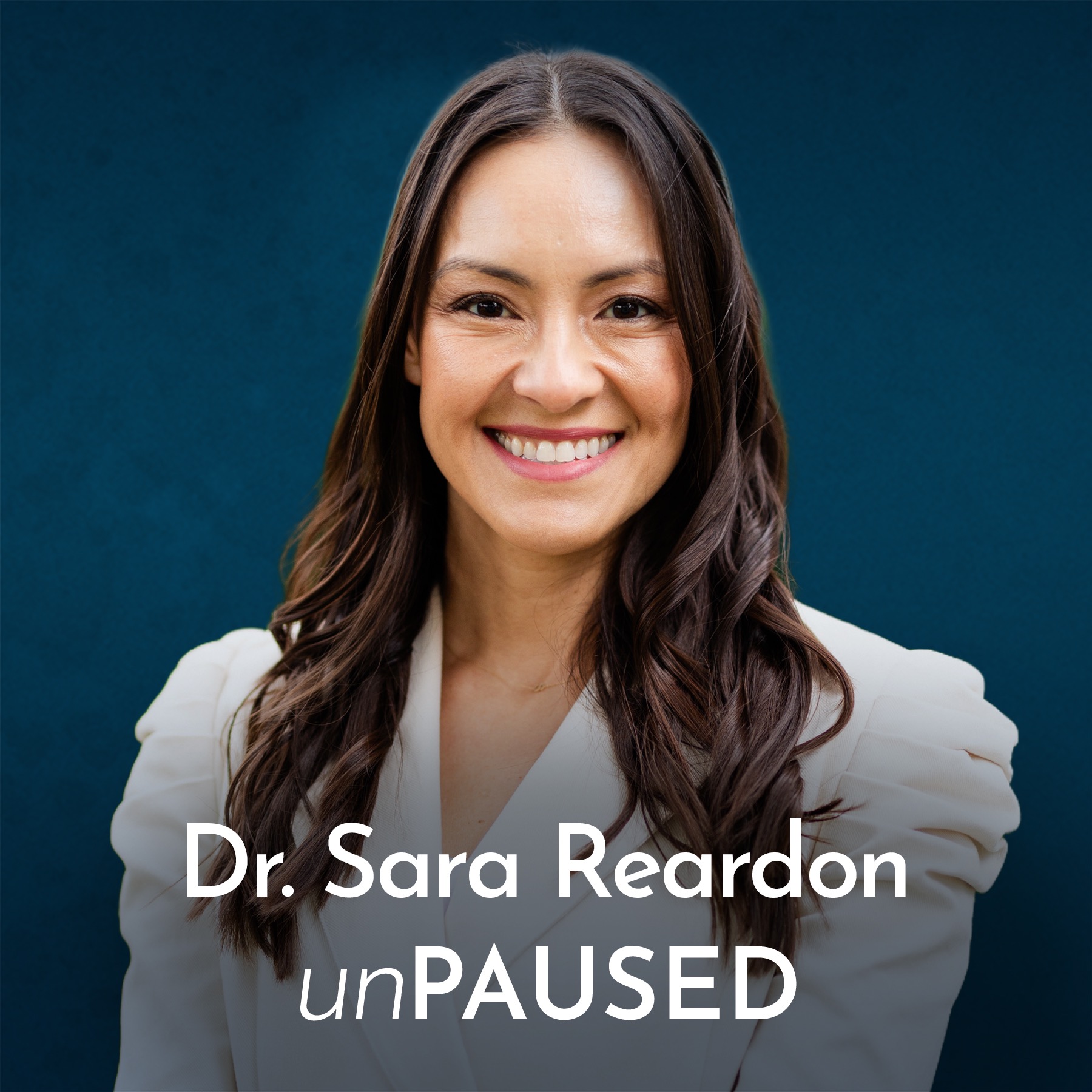
In this episode of unPAUSED, Dr. Mary Claire Haver continues her conversation with board certified pelvic floor physical therapist Dr. Sara Reardon, known on social media as The Vagina Whisperer — and this time it’s the toolkit: what you can actually do, starting today, to protect and rebuild your pelvic floor. They begin with pessaries, the internal support devices so few women are offered, why getting one fitted properly is harder than it should be, and the over-the-counter silicone supports that let women run, lift, and travel leak-free while they strengthen. From there they get into the everyday habits that quietly weaken the pelvic floor: pushing when you pee, straining on the toilet, scrolling past the five-minute mark, and holding your breath while lifting — plus hemorrhoids, what healthy stool should look like, and why a simple toilet stool changes everything.
They then take a deeper dive into genitourinary syndrome of menopause (GSM), why nearly three quarters of women with symptoms never mention them to a clinician, and why hormones alone aren’t enough — you lose urinary sphincter strength every year after age 35, so the muscle training has to happen too. Dr. Reardon covers keeping vaginal tissue healthy with or without a partner, what vaginismus is and why “just relax” fails, the woman who endured ten years of searing pain — and surgery to remove her labia — when the real culprit was a compressed pudendal nerve, the $5 billion vaginal rejuvenation industry, her five free daily pelvic floor habits, and the message she wants every woman to hear: it’s never too late, with patients in their 80s and 90s still getting better.
Guest links:
Dr. Sara Reardon (Instagram) https://www.instagram.com/the.vagina.whisperer/
Dr. Sara Reardon / The Vagina Whisperer (Website) https://thevagwhisperer.com/
NOLA Pelvic Health (Website) https://www.nolapelvichealth.com/
The V-Hive App (The Vagina Whisperer) https://thevagwhisperer.com/membership/
Books:
“Floored: A Woman’s Guide to Pelvic Floor Health at Every Age and Stage,” by Dr. Sara Reardon https://thevagwhisperer.com/floored/
“The New Perimenopause,” by Dr. Mary Claire Haver https://thepauselife.com/pages/the-new-perimenopause-book
“The New Menopause,” by Dr. Mary Claire Haver https://www.amazon.com/dp/B0CKBZ4K1Z
Never miss an episode—sign up for The ‘Pause Life Newsletter: https://thepauselife.com/pages/newsletter
Medical Disclaimer: The information, including opinions and recommendations, on this platform is meant for informational and educational purposes only. Mary Claire Media, LLC, the unPAUSED podcast, and The ‘Pause Life are not medical organizations. Medical advice or medical diagnosis cannot be provided to you through the platform, any associated website, or customer portals. Using this platform does not establish a patient-physician relationship.
Scan the code with your iPhone camera
Listen in the app.