 unPAUSED with Dr. Mary Claire Haver
27 Oct 2026 · 47m

 Add vo to ChatGPT or Claude to ask about everything you hear
vo listened to this episode to put together the overview and transcript, so there may be the odd mistake.
Correcting “estrogen causes breast cancer” dogma and explaining hormone therapy options after breast cancer and for family history; focus on systemic vs low-dose vaginal estrogen, risk/benefit discussions, and treating sexual and urinary symptoms.
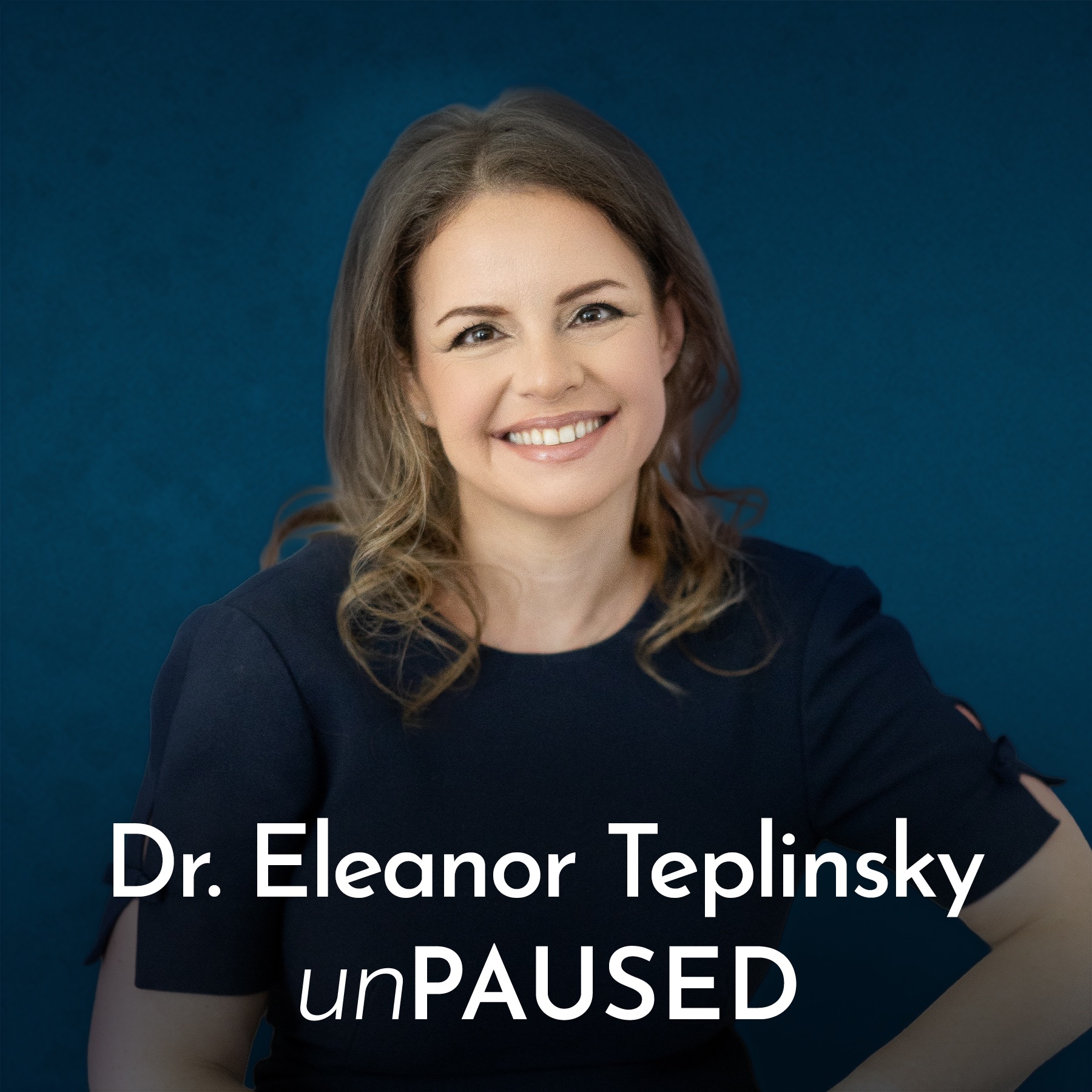
Dr. Eleonora Toplinski, board-certified medical oncologist specializing in breast and gynecologic cancers; author of Beyond the Pink. Host: Dr. Mary Claire Haver, OB-GYN and certified menopause practitioner.
Estrogen does not cause breast cancer. The main fear stems from older studies using specific hormone formulations; results can’t be applied directly to today’s regimens. Systemic hormones may be appropriate for some breast cancer survivors after individualized recurrence-risk assessment and shared decision-making. Low-dose vaginal estrogen is effective for genital urinary syndrome/UTI-like symptoms and is supported by guidelines even for many patients on tamoxifen or aromatase inhibitors.
WHI/HABITS/Stockholm trial discussions; 2002 risk estimate (8 additional cases per 10,000 women/year, specific combination); WISH survey (73% no sexual-health discussion; 78% vaginal dryness); BRCA 2025 study showing lower breast cancer rates with hormone therapy; “knives” pain from GSM; practical vaginal estrogen use instructions and DHEA as an alternative.
0:00We know that estrogen does not cause breast cancer. Let's say that again. Estrogen does not cause breast cancer. In some cases, the risk of recurrence from drinking alcohol may outweigh the risk of recurrence from taking hormones, depending on the individual situation. We can't apply 25-year-old data to a completely different, you know, we use different formulations that we think are safer. Women are thrust into estrogen deprivation without even understanding what's happening, what to expect, how we're going to treat it. And I have had women tell me it feels like knives.
0:34Dr. Mary Claire Haver: Let's talk about testosterone. The National Comprehensive Cancer Network, their guidelines used to say prior to 2026 that testosterone was contraindicated. Really? In patients with breast cancer. It just changed. Why? All of these are theoretical. However, on a positive note.
0:59Dr. Mary Claire Haver: The views and opinions expressed on Unpaused are those of the talent and guests alone and are provided for informational and entertainment purposes only. No part of this podcast or any related materials are intended to be a substitute for professional medical advice, diagnosis, or treatment. I want to start with something I was taught in my training, something I believed for years, and something I know now is wrong. If you have had breast cancer, or even if you only had a family history of it, you cannot take estrogen. That was the dogma. It is in our textbooks. And it has left millions of women to suffer through menopause with the door to treatment slammed shut before the conversation even started.
1:46Dr. Mary Claire Haver: Here's what the data actually says. The 2002 study that scared everyone off hormones translated to eight additional cases of breast cancer per 10 ,000 women per year. And that stat showed up in only one specific hormone combination, not with estrogen alone. And a 2025 study of women who carry the BRCA gene, who are amongst the highest risk women, found that those who used hormone therapy had a lower rate of breast cancer than those who did not. Yet right now, up to 60 % of breast cancer survivors live with genital urinary symptoms that low-dose vaginal estrogen safely treats, and nearly 75 % say no provider ever discussed this treatment with them.
2:33Dr. Mary Claire Haver: My guest, Dr. Eleonora Toplinski, is a board-certified medical oncologist specializing in breast and gynecologic cancers, and the author of Beyond the Pink, the book I wish every one of my patients and every previvor had the day they were diagnosed or tested. She doesn't traffic in fear. She traffics in evidence and choice. Today, we're going to discuss the truth about estrogen after cancer and with a family history, what your options really are, and the line from her book I cannot stop thinking about. I'm Dr. Mary Claire Haver, a board-certified obstetrician a gynecologist and certified menopause practitioner and adjunct professor at the University of Texas Medical Branch.
3:16Dr. Mary Claire Haver: Welcome to Unpaused, the podcast where we cut through the silence and talk about what it really takes for women to thrive in the second half of life. From athletic stuff like a full court pickup game, swish, to athletic-ish stuff like a half mile stroll, get those steps in. Head to Sierra or Sierra.com for the brands you want at the prices that let you do it all. From athletic to athletic-ish, Sierra's got it. This podcast is sponsored by MidiHealth, the first virtual clinic created for women by women for the treatment of menopause. Don't let anyone tell you menopause is something you have to suffer through alone.
3:56Dr. Mary Claire Haver: Midi can help. Visit joinmidi.com to learn more.
4:04Dr.
4:05Dr. Mary Claire Haver: Eleonora Teplinsky, welcome to Unpaused. Thank you so much for having me. So I like to ask this question of all of our clinicians. How does menopause show up in your clinic? As a breast oncologist, menopause shows up in my clinic every single day. All of our patients are experiencing some, you know, form problems, concerns, questions about menopause, whether it is their cancer treatment that put them into an earlier premature menopause or whether they're in natural menopause and now are on cancer treatment that is exacerbating those side effects. So we are talking, thinking about it every single day.
4:41Dr. Mary Claire Haver: And you are the author of Beyond the Pink. And tell me, what is this pink ribbon leaving out? You know, why did you title it Beyond the Pink? The pink ribbon out leaves out so much. I think the, you know, symbol of the pink ribbon is really a brand now. It has very clear brand recognition about breast cancer. So it accomplished that. But that really focuses on awareness and very little about what actually comes after. What comes after diagnosis, the treatment that we kind of think about more mainstream, like chemotherapy and surgery and radiation, and then everything after that we don't talk about.
5:19And so when I think you see the pink ribbon everywhere, it does not highlight the after. And honestly, there are so many more challenges with the after, and we're not talking about them, and we're not helping our patients.
5:30Dr. Mary Claire Haver: Here's a woman I want you to talk to, okay? She's listening right now, more than likely. She finished her breast cancer treatment two years ago. She's 51. She's not sleeping. She has hot flashes all night. Sex hurts. And her oncologist told her, because that's how they were trained, no estrogen ever, and the conversation shut down. um what do you think she was really owed in that appointment you know where's the failure here and what did she need to hear i see this every single day these are the patients that i'm taking care of day in and day out in clinic the conversation first of all i think we think about the menopause conversation i know we're going to do a deep dive into hormones and that is one part of the conversation the you know the other really important part of the menopause conversation and how we're caring for our patients is really a comprehensive evaluation of their side effects What are effective non-hormonal options that we can try?
6:23Where is the counseling on lifestyle medication, the modifications and lifestyle choices and habits? And then that conversation about hormones, and we'll separate vaginal hormones, which we're very comfortable with, with systemic hormones, where they may be right for some women who've had breast cancer, they may not be right for others, but you have to have a conversation about what exactly is the risk? What symptoms are we trying to, you know, take care of both in the short and long term? And how does your risk of recurrence, you know, how would that be impacted by systemic hormones? So it can't be a hormones, no, and shut down the conversation.
7:02Really need to start diving deeper into those discussions.
7:06Dr. Mary Claire Haver: So give her a script, okay? What are the first three sentences? She sits down with her oncologist, maybe even she's passed treatment, you know, with her primary care doctor, with her OB-GYN. what should she say? Number one, name the symptoms. I am suffering from vaginal dryness, trouble sleeping, horrible hot flashes, whatever it is, name them. And they are impacting my quality of life. And I would urge people not to kind of downplay them. I see this every day. They're not so bad. I feel bad complaining, right? Name, stop doing that. Name the symptoms, explain how they're truly affecting you without trying to downplay that.
7:44The number two specifically state, I would like to have a conversation about the use of systemic hormone replacement therapy for me. I understand that there might be a risk of recurrence, increased risk of recurrence, but I'd really like to better understand what that looks like for my individual breast cancer, balancing the tumor characteristics, my side effects that I'm having, and what I've tried in the past. And so really pinpoint, you know, ask for that data, right? Follow that with, based on the available data that we have, what would be the increase in my risk of recurrence if I were to go on hormone therapy, right?
8:25To really start to make sure that those conversations are happening. And I would follow that with, if the person that she's speaking to is not comfortable or is unsure, right? We want to then have that referral to the person that's going to help her, right? So it's not enough to say, oh, I don't know how this would affect you and shut down the conversation. We want to then have the next step of, but here are people who could help you, right? And I want to see this documented in the chart.
8:55Dr. Mary Claire Haver: Our clinic has become a little bit of a referral center for patients and usually well past their treatment and they're suffering horribly from symptoms. And so we've gotten really good at pulling data to show them, okay, risk of recurrence with this grade, this stage, you know, with as far as we can tell with this particular formulation of hormone therapy would be X, Y, Z. And then we, they're grown women. We let them make a decision for themselves. Are you willing to take this 0.3 % increase, you know, whatever it is to get this quality of life issue managed? And the answer is usually yes. And we have them sign forms and...
9:34Dr. Mary Claire Haver: It's risk tolerance. You know, everyone has a different... Do you think that's being denied to patients? 100%. 100%. You know, everyone has a different risk tolerance. And if you think about it, alcohol increases breast cancer risk. We don't police how much alcohol people are going home and drinking. Most women aren't even... No one's no one's even talking to them about that as a risk. And so in some cases, the risk of recurrence from drinking alcohol may outweigh the risk of recurrence from taking hormones depending on the individual situation. And so yes, our patients, our women are educated.
10:11They're smart. It's all about what level of risk you're willing to tolerate. I do have patients who say, I will do anything not to have a recurrence and I will do anything not to have another diagnosis. And that's fair. And then other people will say, well, of course I don't want to have my cancer come back, but I am suffering. And this is not a quality of life that I am comfortable with. And we should not be denying them those conversations, those discussions, and then helping them make a decision that they feel comfortable with.
10:39Dr. Mary Claire Haver: Not every woman is a candidate, correct? Yes. So who, you know, in your practice should genuinely not be on systemic hormone therapy, at least during what time period? So when someone is newly diagnosed, especially with a hormone receptor positive breast cancer, estrogen can fuel the growth of those cancer cells. And so we do in that new diagnosis, kind of within a few years after diagnosis, that may not be the right time. Again, more for hormone receptor positive breast cancer. For hormone receptor negative, it gets a little bit more nuanced and we can talk about some of that. A lot of it really depends on where we are from diagnosis, what treatment someone is on, what symptoms are they having, What is their risk of recurrence?
11:23And then for hormone receptor positive, if someone, let's say, is a stage 3 breast cancer diagnosed two years ago, and I may want to hold off, I may want to see, make sure we don't have a recurrence, and can we manage those symptoms non-hormonally with non-hormonal medications? On the other hand, if you had someone who had a stage 1 breast cancer that's, let's say, diagnosed at 35 and is now 45 and really struggling, that could be something that we are more comfortable with. Metastatic breast cancer stage four, again, we have a little bit less comfort, but it really depends on the individual situation.
12:00These are cancers that can come back 5, 10, 15, 20 years down the road. And so I don't think we should be saying, well, for 20 years, that's it. You can't have anything. But we really need to weigh those individual risks. And that really goes into the stage, the treatment they receive, the characteristics. and so I don't have like a blanket yes or no. I think it's really that discussion because there's so much that goes into it, but it comes down to you have to have that conversation. Right, and they're not getting it.
12:32Dr. Mary Claire Haver: They're not getting it. By and large. Walk me through, so we have a healthy breast cell and a 25-year-old woman, right? And it has estrogen and progesterone receptors on it normally, right? When we go through the malignant transformation, What happens? Like why are some breast cancers, estrogen receptor positive, some are negative? I'm asking this because I want us to understand so many women think estrogen caused my breast cancer, progesterone caused my breast cancer. And I think there's a ton of misinformation and misunderstanding around that conversation. Exactly. So we know that estrogen does not cause breast cancer.
13:11Let's say that again. Estrogen does not cause breast cancer. However, if you do have a cell that has undergone malignant transformation, about 70 % of breast cancer cells will express hormone receptors. Will retain their hormone receptors. Exactly. And remember, these are cells that are now growing out of control. They are proliferating very rapidly. And estrogen will now fuel their growth. These are not normal cells anymore. They have completely lost that. And so now they are following these very aberrant abnormal growth pathways. And so estrogen will fuel their growth. But that's very different than estrogen causing them to form, which did not happen.
13:52Where I think there's a lot of misconception, you know, there's breast cancer is on the rise in younger women. And there's a lot of thought about why that's happening. And we don't know all the answers. But some factors that could be contributing are that girls are going through medarchy and getting their periods at an earlier age. People are having children later in life or not having them at all. And so that's kind of been construed. We'll say, wait, you have more estrogen if you get your periods at an earlier age. But that's not the case. It's really what is happening in those cells. And as they're dividing, every time a cell divides, there's a chance for mistakes to be made and DNA errors to be made.
14:33And that's where you can have those malignant transformations. But it's not the estrogen that's doing that.
14:38Dr. Mary Claire Haver: If you get breast cancer, somehow people think it will define the rest of your life. And in many ways it will. No one wants to get cancer, right? I'm doing multiple things in my life to avoid cancer. But somehow the breast cancer diagnosis, more than lung, more than brain, more than colon, carries this emotional, I don't know, do you see this in your practice? Yeah, there's a lot of fear. I mean, I talk to patients, I see patients all the time who've, you know, never had, don't even have a genetic mutation, you know, never been diagnosed to talk about hormones. And from that breast cancer perspective, and they, there is a lot of fear.
15:16And I think it's just so ingrained in us, right? That one in eight women will get breast cancer and you see it everywhere. And again, here's the pink ribbon, right? Making its way everywhere. And so there is a lot of fear, but I think we really have to think through of, okay, well, for somebody who is not at high risk, you know, we'll talk about those in a second, we have to think about benefit of hormones and the impact on short and long-term health. And yes, of course, we don't want a breast cancer diagnosis, but we have to understand that women who were on hormones and who weren't on hormones are still being diagnosed with breast cancer.
15:50So it's not an absolute. Yes, you could be one of those additional eight women, but you also could be one of the thousands who don't get diagnosed.
16:05Dr. Mary Claire Haver: Welcome back to another MidiPause. I'm Dr. Mary Claire Haver, the host of Unpaused. Did you know that one of the most powerful tools for navigating perimenopause and menopause is exercise and movement? When hormones start shifting, many women can notice changes that feel frustrating. Maybe your energy levels aren't what they used to be. Maybe you're gaining weight despite not changing your habits. Maybe you're experiencing joint stiffness, trouble sleeping, or feeling more stressed than usual. While there's no magic solution to menopause, exercise remains one of the most powerful prescriptions for healthy aging.
16:46Dr. Mary Claire Haver: But the right type and intensity matter. Building strong bones and muscle requires progressive overload, the principle of gradually increasing resistance or intensity to stimulate adaptation. Lifting the same three-pound weights for years will not maintain our bone density. Our bodies need challenge to change. Traditional lightweights and high rep workouts are excellent for endurance, but not sufficient to prevent frailty. To maintain balance, bone strength, and independence, women must train for power, not just stamina. Strength training in particular becomes incredibly important. As estrogen levels decline, women naturally begin to lose muscle mass and bone density.
17:37Dr. Mary Claire Haver: Resistance training can help improve both while supporting metabolism, balance, and long-term mobility. Cardiovascular exercise matters too. Whether it's walking, cycling, swimming, dancing, or jogging, regular movement supports heart health, which becomes even more important after menopause when cardiovascular risk begins to increase. And don't underestimate the value of flexibility and recovery. Activities like yoga, stretching, and mobility work can help reduce stiffness, improve balance, and support overall well-being. But here's something many women need to hear. More is not always better.
18:21Dr. Mary Claire Haver: The workout routine that worked in your 20s or 30s may not be what your body needs today. During perimenopause and menopause, recovery, sleep, stress management, and proper nutrition become just as important as the workouts themselves. That's why personalized guidance can make such a difference. Mitty Help helps women understand how hormonal changes impact everything from energy levels and muscle mass to recovery and overall health. Mitty's clinicians take a whole body approach to menopause care, helping women create strategies that support their goals and symptoms, not just offering generic advice.
19:06Dr. Mary Claire Haver: What's especially valuable is that Mitty helps women connect the dots. If you're struggling to maintain muscle, feeling exhausted after workouts, or dealing with joint pain, or wondering why your body suddenly responds differently to exercise, their providers can help identify what's actually driving those changes. They can evaluate hormone-related symptoms, discuss treatment options, review lab work when appropriate, and create a plan tailored to your specific needs and goals. So if you're in perimenopause or menopause, remember, movement is one of the best investments you can make in your future self.
19:45Dr. Mary Claire Haver: And it's never too late to start. Go to joinmidi.com, joinmidi.com and connect with one of their clinicians today. A beautifully designed Squarespace website is the difference between thinking about photography school and selling your portraits online. It's the difference between giving away those cookies you just made for free and running your cookie empire. A beautifully designed Squarespace website is the difference between having a movie-reviewing hobby and a movie-reviewing career. Squarespace, because no matter what you're into, a website makes it real. Use offer code DIFFERENCE for 50 % off select plans.
20:23Dr. Mary Claire Haver: Terms and conditions apply. Can we talk about one of the most frustrating things about sleep and midlife? Waking up hot. You know the feeling. You're tossing and turning, kicking off the covers, flipping your pillow over, just trying to find a cool spot so you can get back to sleep. But here's something we don't usually think about. Your bedding can make a difference. That's where CJO comes in. Their Airy Weight Eucalyptus Sheet Set is made from tensile lyosil, and it's incredibly soft, lightweight, and breathable. And these sheets absorb 70 % more moisture than standard cotton, making them a great option if overheating or night sweats are getting in the way of your sleep.
21:07Dr. Mary Claire Haver: They're also Ecotec Class 1 certified, safer sensitive skin, and HSA, FSA eligible. And for an even cooler sleep setup, pair them with CJO's adjustable FlexCool memory foam pillow. So if you're ready to make your bed less of a battle zone and more of a sanctuary, check out C. Joe's Airy Weight Eucalyptus Sheet Set and FlexCool Memory Foam Pillow. Go to cjoehome.com and use the code UNPAWS to get 20 % off your first order. That's S-I-J-O-H-O-M-E dot com and use code UNPAWS for 20 % off at checkout.
21:50Dr. Mary Claire Haver: So if, and I always, for the survivors who come to us and we have the long conversation and we decide, or she decides, okay, I would like to do this for my quality of life, for my bones, you know, for my sleep, for whatever. I always warn her, if you recur, the uneducated and uninformed will blame you for this, that you did this to yourself because you were selfish and you wanted a better quality of life. Yeah. A hundred percent. I mean, yes, people are afraid to say, And here's the thing, and I tell this to my patients all the time, there could be a recurrence, but there also could be a recurrence not on hormones.
22:31So you could recur whether you take them or whether you don't. But we have to stop. We see this so it's in women's health and medicine all the time. We have to stop the blame and the shame. So back to the Women's Health Initiative, I want our listeners to understand that study was with a very specific type of hormone therapy, which was the most popular form back in the 90s when we were starting this study.
22:57Dr. Mary Claire Haver: And it's not something I've never, I haven't prescribed it in years. I mean, since I was a resident. And so the conjugated equine estrogen, so it was an oral estrogen, which had multiple forms of estrogen in it. and then medroxyprogesterone acetate, which is Provera. And it's probably not okay to assume that all of the formulations work the same. Exactly. And synthetic, we now know that synthetic progestin is going to carry, we think, a higher breast cancer risk than a non-synthetic. And it's important to know that the Women's Health Initiative study, and for patients who not been diagnosed with breast cancer.
23:40And so I know we're going to talk about the breast cancer studies, but understanding that these are not the formulations that we use now. And so we can't apply 25-year-old data to a completely different, you know, we use different formulations. We use forms of progesterone that we think are safer. And, you know, observational studies with the, you know, micronized progesterone really don't show that same risk that we see with the synthetic forms.
24:06Dr. Mary Claire Haver: And then the 20-year follow-up that was published in JAMA in 2020 found that the breast cancer incidence in the estrogen-only arm was lower. But that didn't get any attention. No. So it's like headlines, the world stopped, everyone threw their all hormone therapy away, and the black box warning went on. I was prescribing vaginal estrogen, we all were, and then the patients would get it, open up that packaging, and it basically says, you're going to have a stroke, you're going to die, you're going to have a heart attack, you're going to have a stroke, you're going to have all these horrible things.
24:39Dr. Mary Claire Haver: And they'd be like... I mean, I still see this today. Today. Yeah. The new packaging just came out in February. So the black box came off in November, but it takes a while for the packaging. And people are still being told. Still. Still being told when they pick it up. I just had this happen last week. Are you sure? This is not safe for you. From the pharmacist. Wow. So let's talk about the black box warning. So the FDA and HHS announced the removal in November. The labels came out in February. But we're still struggling for the patients too. But I do think this is power of social media. You know, every time I post about reducing the risk of recurrent UTIs, which will therefore probably reduce the risk.
25:29Dr. Mary Claire Haver: Well, we know it will reduce the risk of sepsis death. And the orthopedic surgeons who fix hips say that 60 plus percent of women who come in at the time of hip fracture have a concurrent UTI. And that they feel like there was some delirium involved from the infection that led to the fall. You know, getting out of bed in the dark, going to pee, you know, your irritated bladder, and then boom, fall. This is a medical issue. This isn't even about, you know, women's pleasure, which even gets less attention. But this is a medical issue. And I was just speaking at a conference and a woman came up to me because I had been talking about sexual health and vaginal estrogen.
26:06And she says, you know, my mom is 85 and she's been really confused recently because of a urinary tract infection. She's like a light bulb just went off that she should be on vaginal estrogen. I said, call her doctor today and get her started on that.
26:20Dr. Mary Claire Haver: So there's a growing group of clinicians, myself included, who feel like all women above of a certain age or, you know, in a certain menopausal stage should be on vaginal estrogen prophylactically. Do you feel that way? I agree. I mean, I think that we are so hesitant to prescribe it for something that is life-saving, life-changing for so many women. And I think that if we can remove some of the barriers, you know, on it, I think it would make it more accessible, more acceptable. You know, in the breast cancer literature, we have so many studies showing that it does not increase the risk of death.
27:00And our guidelines, multiple guidelines support it, you know, with shared decision-making because guidelines and people point to those, but guidelines have to be, you know, they're not going to be absolute, right? They have to give you - We're still humans. Yeah. They have to give a buffer. You have to allow for the conversation. And I think it is important that, you know, we're counseling women, especially in how to effectively use vaginal estrogen. I think that's really important because I do see some patients on it, but they're not, maybe they're using it once a month or they're not, you know, they have it, but they're not using it at all, or they're using a really tiny amount.
27:30So I do think the counseling and how to effectively use it is valuable.
27:34Dr. Mary Claire Haver: It's important. In your book, you talk about two separate trials, the HABITS trial and the Stockholm trial. And let's go through those and what you think is important about those two. So we've had, you know, a number of different studies really looking at what happens to using hormones after a breast cancer diagnosis. So WHI was for patients who never had breast cancer. So habits is the one that's most kind of commonly cited and quoted. It's the most popular one. And it was a study of several hundred women that, you know, had a stage, up to a stage two and included breast cancer. And they followed them for a few years and, you know, they gave them hormones and half the group received and half the group didn't receive hormones.
28:14Dr. Mary Claire Haver: And this is systemic hormones. Yes, systemic hormones, not vaginal hormones. And the study was terminated prematurely after about two years when they found that there was a higher risk of recurrence in the group that used systemic hormones. And so that study, again, published now over 20 years ago, really has been kind of the pivotal one that people point to and say, wait, we can't do it. Now, there's a lot of caveats to this. Again, it's 20 years old, higher, you know, different forms of estrogen. Again, we're not using the synthetic progestin that we used back then. We also don't know anything about, really, about how these women were treated.
28:52This was before the day that we were even doing things like checking HER2 on breast cancers, right? So it does not reflect modern day breast cancer treatment.
29:01Dr. Mary Claire Haver: And HER2, for our listeners, is one of the Oca genes, right? It's one of the, yes, it's one of the markers that we check and we really tailor our treatment if you have a HER2 positive breast cancer. And so when you look at, you know, higher risk of recurrence, we don't know, these were not women that were treated the way we treat women now. And the other thing is that they did not have a mammogram prior to enrolling onto the study. They weren't required to like rule out active disease, you know, before enrolling onto the study. So it's certainly possible that there may have been a recurrence brewing already.
29:35and so that's where you know it's really hard to use the data it's the best it's the data that we have but it's hard to use that data now in 2026 because things are so different now they you know they did a lot of follow-up on that study and some of those you know kind of risks again persisted but again you have to think through wait a second we're not using the same hormones we have completely different and better treatments risk of recurrence for breast cancer in general has improved significantly in the last 20 years with so many drugs that we didn't have back then. So I find it hard to apply a lot of that data.
30:12Now, Stockholm was a similar study, but used kind of a lower dose of progesterone. And so initially, Stockholm did not show the same increase in the risk of recurrence. And so you have Stockholm, you have habits, And then you have a number of observational studies that have come out that have shown maybe there isn't that same increase in risk. You can see all the data is very nuanced. So how do you now think about it for the woman that's sitting in front of you and saying, well, what do I do, right? And I go through it. I go through what we know, what we don't know. And then I go through her risk of recurrence.
30:53Everyone wants to know, well, what is my risk of recurrence? And I think of it as low, medium, or high. Okay. rather than, you know, I can give you a number of 13%, right? But what is that? How do we contextualize that, right? I say you're in the low risk, medium risk, or high risk. And if you're at high risk of recurrence, right, maybe hormones are not going to be our first.
31:16Dr. Mary Claire Haver: There are a lot of reasons Chicago homeowners have chosen four seasons since 1971. An A-plus rating with the Better Business Bureau. That's one. Two BBB Torch Awards for Ethics. That's another. And service around the clock every day of the year. That's a big one. For all your heating, plumbing, and electrical needs, you know who to call. For all the right reasons, call 866-4-SEASONS. Now that fall is in full swing and October report cards are right around the corner, keeping up with classroom lessons can feel like a challenge. That's why I love IXL. IXL is an award-winning online learning platform that helps kids truly understand what they're learning, from math and reading to science.
32:04Dr. Mary Claire Haver: It gives kids personalized practice aligned directly with what they're covering in class, offering instant feedback and clear explanations that build lasting confidence. Whether your child needs a boost in a tricky subject or is ready to move ahead, IXL adapts to their exact level and pace. Plus, one subscription covers all your kids from pre-K through 12th grade. And an entire month of IXL costs less than just one hour of tutoring. Make an impact on your child's learning. Get IXL now. And listeners can get an exclusive 20 % off IXL membership when they sign up today at IXllearning.com slash audio.
32:44Dr. Mary Claire Haver: Visit IXllearning.com slash audio to get the most effective learning program out there at the best price. This podcast is sponsored by MidiHealth. Have you noticed the conversation around menopause is suddenly everywhere? It's trending on social media, celebrities are opening up about their symptoms, and conversations that used to happen in whispers are finally out in the open. And honestly, it's about time. For decades, women were dismissed, ignored, or told their symptoms were just part of aging. And while I'm glad the conversation is happening, here's the truth. Menopause care isn't a trend.
33:23Dr. Mary Claire Haver: It's long overdue medical care that women have always deserved. If you've been listening to me, you know this isn't new territory for me. This is my life's work, helping women navigate perimenopause and menopause with real science. That's why I want to tell you about MidiHealth. Midi is a virtual menopause clinic staffed by clinicians who listen, who take your symptoms seriously, and never utter the words, it's all in your head. Like me, MIDI focuses on your health span, not just your lifespan. That means taking a comprehensive look at your metabolic health, bone density, cardiovascular risk, and cognitive function, because all of it matters.
34:04Dr. Mary Claire Haver: MIDI delivers the kind of proactive, evidence-based care I've always believed women deserve. And the best part? Women in all 50 states can access personalized care, and it's almost always covered by insurance. So yes, I'm glad menopause is finally getting attention. But don't settle for noise. Get care from clinicians who are in this with you for the long haul. Book your virtual visit today at joinmidi.com. That's joinmidi.com. Insurance coverage varies. Check with your plan for coverage.
34:43Dr. Mary Claire Haver: So give me an example of who would be high risk for recurrence. So a good example is, let's say I have a 37-year-old woman who was diagnosed two years ago, young, with a lymph node positive, larger size tumor that has a high grade, meaning these cells are growing very rapidly. And so we worry about giving them more fuel. That's somebody who currently is going to be at a high risk of recurrence. Is this just based on stage? No, it's based on stage. it's based on really a lot of tumor characteristics that some make it into the stage, some don't. Because the survivors are taking notes right now. So it's not as simple as saying lymph node positive.
35:23It's how many lymph nodes were involved. Do the cells in the lymph node, how do they look? Do they have what's called extra nodal extension where the cells look like they're maybe breaking through, right? All of these factors. And so it's also age, grade, you know, we know, and what's the treatment recommended? And what's the treatment that's been done? What was the response to that treatment? And when were you diagnosed? And so you may be at high risk of recurrence right now. You may not always be at high risk of recurrence. Some time could go by and you haven't recurred and we might think, okay, that risk is going to be lower now.
35:54On the other hand, a low risk of recurrence could be my 55 year old woman who had, you know, five years ago an eight millimeter lymph node negative cancer, did not need chemotherapy, that may be someone who is at a lower risk. It doesn't mean you can't recur, but it helps us to think about that risk tolerance and then helps us really think through how are we approaching hormones and how are we approaching the conversation? And is it no, or is it not right now?
36:26Dr. Mary Claire Haver: You authored a study called the WISH Breast Survey Trial, well, survey, and it was of survivors. It was almost 2 ,000 survivors. And you found that 73 % said a provider never discussed sexual health with them. And 78 % reported vaginal dryness. When you see that number, why do you think we're sidelining? You went through the oncology training, you specifically just treat gynecologic and breast cancers. What's happening? So this was a study where I did with Dr. Kern-Man and Dr. Leila Agrawal. We surveyed women on both on social media and through - I shared that. Thank you. Through, you know, patient groups and, you know, over a thousand women responded and they responded immediately.
37:18They wanted to share their experiences. And I will say we were not surprised when we saw the numbers, but it was really important to have that named, right? To have that published,
37:27Dr. Mary Claire Haver: to share that. Because if we don't have data, it doesn't exist in science. Exactly. And so it was really important to have this published in our oncology journals, right, to have our clinicians say, wait a second. And there are a number of reasons for why we're not discussing it. So patients are hesitant to bring it up. They're nervous about bringing it up. They don't know if they should. They think they might be alone. They think they're the only ones maybe experiencing something. And sometimes they're there in their appointment with a spouse, a partner, a family member, and they're not comfortable.
37:58It should not be on the patient to bring up sexual health. It should be on their healthcare team to acknowledge that this is a side effect that many women experience, acknowledge, talk about ways to what symptoms we might have, and then talk about treatment. And yet, providers are not bringing it up. And years ago, I worked with this lovely older male oncologist. And he goes to me, you talk about this an awful lot. It's not really happening. And I said, no, no, no. Patients are just not talking to you about it because they're shy and they're not sure. And so just because patients aren't bringing it up does not mean it's not an issue.
38:43And so I really think, and I'm hoping we can change this by having these conversations in the oncology literature, that we're really hoping that our clinicians are bringing it up and saying many women experience sexual health changes after a cancer diagnosis and treatment. Here are symptoms to watch for. And it's more than dryness. It's the recurrent UTIs. It's pain. It's burning. It's irritation. It's all of these things. What about libido? And we'll get there in a sec. And here are ways that we can address it, including vaginal hormones. Libido, it's even lower on the list of things that we talk about.
39:20And so many women experience changes in libido. And I will say we're talking about women. Men also get breast cancer. And this is something that happens to men as well. But libido is affected by so many factors. One, if it's painful to have sex, who wants to have sex? But then the body image changes. The change in everything, right? The symptoms. You're not sleeping. You're having hot flashes. there's so many factors. And then relationships change in how you feel about your body, how your partners say to me all the time, I'm afraid to hurt her.
39:54Dr. Mary Claire Haver: There's a pretty high divorce rate. What is that? Let's talk about it. Yeah. Relationships change after a diagnosis. I've seen some relationships really grow stronger. I've seen the partner show up to appointments and take notes and be involved and be part of the conversation. And then I see the women that or initially come with someone and then start to come alone. And I had a woman who sat in front of me and said, he just doesn't understand me. I'm suffering. I'm talking about my brain fog. I'm talking about how things don't feel good in my body. I'm not myself and I'm getting blamed for it.
40:32I'm getting blamed for not recovering faster. And it's really hard. And I think we have to talk about it. I think we have to name it and explain that this is common. And so I, from day one, I'll say, this is a strain on relationships, right? Roles change, responsibilities change, everything kind of shifts. Wow.
40:56Dr. Mary Claire Haver: So general urinary syndrome of, I hate to call it of menopause because we see it with nursing. We see it with long-term birth control. Anytime we have low estrogen in our body, the general urinary system is going to take a hit. So, but it's up to 70 % in survivors versus roughly half of women in natural menopause. I think those numbers are skewed. I think a hundred percent of women in natural menopause at some point untreated have GSM, but, but let's talk about aromatase inhibitors here. So I'm a non-oncologist. I know just barely scratch the surface. So when we're trying to reduce the effect of estrogen on breast cancer, okay, we have two basic options.
41:39Dr. Mary Claire Haver: We can block the receptors with something like tamoxifen, okay? So that's one treatment option. But we can also stop the production of estrogen in the body, which is a more dramatic effect with an aerobin taste inhibitor, which basically stops the conversion of the prehormone to the estradiol. So she has no estrogen in her body whatsoever. And tamoxifen kind of preferentially binds to different alpha and beta receptors. So she does a little bit better as far as some of the symptoms of menopause on tamoxifen versus aromatase inhibitor. But what's happening in the tissue on the aromatase inhibitor?
42:17So I describe being on an aromatase inhibitor as menopause on steroids. It's really profound estrogen deprivation, again, more so than what we see in natural menopause. So in that vulvar or vaginal tissue, everything is dry. It's thin. It's fragile. It's uncomfortable. Again, more so than what you see in natural menopause. So we see discomfort very quickly, very early on. We see the UTIs or we see people with, you know, that feeling like they have a UTI, but there's no actual, you know, bacteria growing on the culture. And then that, again, impacts libido. It impacts comfort or discomfort with sex.
42:55And it has really widespread effects. And for some people, I mean, I have had women tell me it feels like knives. Every time I go to the bathroom, every time I try to have sex, it is painful. It is uncomfortable. And it's awful.
43:08Dr. Mary Claire Haver: And it's treatable. It's treatable. And it's treatable with low-dose vaginal hormones, which are local, which have very little, if any, systemic absorption. and they're life-changing. So what would you tell the patient who's been denied twice? You know, my doctor said, nope, nope, nope, nope, nope. What would you, would you have her print out the AUA guidelines, which clearly say we can treat breast cancer patients with this? So I would, yes, I would, there are a number of studies that have been published and in the book I list them all out. And then we have guidelines and I would bring the studies with the guidelines, not just from - We will link these in the show notes for our listeners.
43:45Not just from the American Urologic Association, but from our oncology society that show that with shared decision-making, 100 % we can use vaginal estrogen. So I would bring the guidelines to the oncologist. And I will say everyone is doing their best. We are limited very often by 15, 20-minute appointments.
44:06Dr. Mary Claire Haver: Same as us. And it's hard to do a lot. And it may not be that everyone's trying to – it may just be that your oncologist does not know. is not aware of the guidelines or is not aware of the studies. And so if we're going to be partners in our healthcare, right, I think bring the studies and say, or send them on the portal, I'd like to make an appointment to review these studies together, right? Really be very clear about what you're asking. So to be clear, and this is at least, you know, my world is ACOG, American College of OBGYN, says that low-dose vaginal estrogen may be used, including women actively on tamoxifas or on an aromatase inhibitor with shared decision-making.
44:53Dr. Mary Claire Haver: So that is clear. And women are under the assumption, well, I'm on an anti-estrogen estrogen blocker. I can't use vaginal estrogen. That's not true. Not true at all. And I will add that we use vaginal hormones in women who are not just with a history of breast cancer, but who are living with metastatic disease as well. often they feel excluded that some of these guidelines don't apply to them. We use them. And I will say if there is concern of absorption, right? The big concern is that you're going to absorb some of that estrogen and it's going to raise the estrogen levels in the blood. We can monitor the estrogen levels in the blood if there is concern.
45:30You want to be mindful of that because initially if it's very dry, when you start using it, you'll have more absorption in the beginning. The tissue's really thin, but it's six weeks.
45:38Dr. Mary Claire Haver: You grow the tissue back. Follow it, you know, or check it in. You know, don't check it immediately. Don't check it in a week, right? Give it a few weeks. And you can monitor those levels. And sometimes they will provide some additional comfort knowing that we're not increasing the systemic absorption. Let's talk about DHEA and where that would fit for your patient and how it's different than vaginal estrogen. So DHEA is a hormone that gets converted to estrogen and testosterone. So we can administer it vaginally. This is prostorone or intrarosa. And it's another option for vaginal hormones. The nice part about DHEA is that there's also some testosterone.
46:15So for some patients, they don't get full relief with simply vaginal estrogen. And for them, DHEA might be a better option because testosterone also innervates the vaginal and the vulvar tissues. And so if you're very low testosterone, estrogen alone may not be enough. So that's an option for some of our patients. And we actually do have some data. There was a study of a couple of hundred women using DHEA in patients with breast cancer. And what they showed was that although there was a little bit of increase in hormone absorption, it still remained in the lowest kind of quartile of postmenopausal range.
46:50So it didn't bring anyone to, you know, a premenopausal range, I mean, minimal. And there was improvement in sexual function. So this is an option. But just like with vaginal estrogen, there's a warning on it that you can't take it in breast cancer. But yet we have the data. I think I use it sometimes. The big issue I have is really access and cost. Vaginal estrogen is cheaper and more affordable. Yeah.
47:14Dr. Mary Claire Haver: There's no generic for the DHEA, for enterosa. I mean, the sexual medicine docs love it because they get the testosterone, the androgen and the estrogen in the vulvar tissues. And so you bind both receptors and the patients love it. But cost is an issue. So in vaginal estrogen, cost plus pharmacy, you can get it for$13 right now for a tube. And it'll last you. The tube will last for some time. Just quick, back to vaginal estrogen. Did you love that study where they put it on the finger instead of the applicator? I tell my patients that all the time, but I love that now we have a study to say it works just as well.
47:54So throw at the applicator, put it on your finger. And I think it actually is easier for people to apply. The applicator gets messy and sticky. Yeah, you have to wash it and it never gets clean. Just throw it out. And, you know, I think part of it also is as we're prescribing it in the oncology world, I prescribe it like every day. We also have to counsel people on how to use it, right? So we do, you know, think about bottom third of the vagina, but also both internally and externally. That's really important to put on the vulva as well. And so it is important not just to prescribe the vaginal hormones, but to actually counsel our patients on how to use them to get the most benefit from them.
48:29Dr. Mary Claire Haver: So walk our listeners through it. If you've got your tube of estrogen, how would just use your words, you know, how would you do it? So if you have estrogen cream, I always say kind of put it just on the like top, you know, kind of top part of your finger. I always kind of apply it to like how you're putting on under eye cream, you know, kind of similar to that. Put it on top of your finger, put it both bottom third of the vagina internally and then on the vulva externally. And you can do a loading dose of, you know, daily for two weeks. You don't have to do a loading dose. Some people are nervous about that.
49:01So then skip the loading dose and then about twice a week after. And that really, really helps so many women.
49:09Dr. Mary Claire Haver: I tell patients to, when we're doing the external, I say, okay, start at your clitoris and then work your way down the labia minora. Most women knows, you know, with that. And then we have a model in clinic and we can show them exactly where to apply. And then, of course, and then I say roto-rooter it in the, you know, halfway up your vagina and you'll be fine. And I think the key is not to go all the way up to the vagina. And that's really the big thing because that's where we might see more absorption. Let's talk about testosterone. So in 2019, there was a global consensus position statement that lists exactly one evidence-based indication, hypoactive sexual desire disorder.
49:47Dr. Mary Claire Haver: There was a paper that just got published in Journal of Sexual Medicine, JSM, I guess. that kind of looked at, and it was observational. Again, the patients were all treated. They were all in a private clinic. So a very special subset of the population. They did not have breast cancer, but they saw global improvements. These were women on menopausal hormone therapy in the form of estrogen plus or minus progestogen who were still symptomatic outside of hot flashes. Their hot flashes were managed, but they were still having sleep issues and fatigue and da, da, da. And I guess 23 out of 26, you know, domains got better when they added testosterone, but we don't have an indication for that yet.
50:28So, and in breast cancer, there was a similar study, very small in a menopause clinic for breast cancer survivors in the UK, again, showing very similar things. Testosterone helped with menopause and menopause-related quality of life. Again, observational small numbers. But what's interesting is, and what's not really being talked about is that the NCCN, the National Comprehensive Cancer Network, their guidelines used to say prior to 2026 that testosterone was contraindicated in patients with breast cancer. It just changed. Like the theoretical conversion of testosterone to estrogen?
51:02Dr. Mary Claire Haver: Yeah. So theoretical concerns that testosterone gets converted to estrogen and that if there are residual cancer cells, they could express the androgen receptor, which testosterone could bind to and could theoretically stimulate growth. All of these are theoretical. However, on a positive note, those guidelines just changed to say testosterone should be used with caution in patients with breast cancer. That's a huge step. For an oncology guideline to go from contraindicated to use with caution, I actually think really opens the door for conversation. Do you think medical oncologists by and large are comfortable even talking about sexual health and wellness and then talking about testosterone?
51:43No, but I, no, I think it's changing a little bit. I do see in our conferences, discussion groups that people are starting to ask the questions, which is more than they were doing a few years ago. And then also I think a lot of it is if we're working with a gynecologist or a menopause specialist, right, a lot of it they'll say is, well, I can prescribe it for you, but your oncologist has to say yes.
52:04Dr. Mary Claire Haver: And I fell into that trap for a long time. Yeah. You know. And so if the oncologist or at least now we have these guidelines that are opening the door. Thank you so much for sharing all of your wisdom and knowledge with our listeners today. I think you've made a huge impact. Thank you for having me. You can find full episodes of Unpaused on YouTube at Dr. Mary Claire. Also, you can find me on Instagram at Dr. Mary Claire and get honest and accurate information on health, fitness, and navigating midlife at thepawselife.com. Unpaused is presented by Odyssey in conjunction with Good Roommate Media and Longwave Digital.
52:49Dr. Mary Claire Haver: This episode was sponsored by MidiHealth, the first virtual clinic created for women by women for the treatment of menopause. Don't let anyone tell you menopause is something you have to suffer through alone. Midi can help. Visit joinmidi.com to learn more. We'll be right back.
In this episode of unPAUSED, Dr. Mary Claire Haver sits down with breast oncologist Dr. Eleonora Teplinsky, author of Beyond the Pink, to take on the dogma that women with breast cancer — or a family history of it — can never take estrogen. They cover why estrogen does not cause breast cancer, who is and isn’t a candidate for hormones, the script for a dismissive appointment, vaginal estrogen and DHEA for survivors, and the NCCN’s shift on testosterone from “contraindicated” to “use with caution.”
Guest links:
Dr. Eleonora Teplinsky (Website) https://interludecancerstories.com/
Dr. Eleonora Teplinsky (Instagram) https://www.instagram.com/drteplinsky/
Dr. Eleonora Teplinsky (Substack) https://drteplinsky.substack.com/
Dr. Eleonora Teplinsky (TikTok) https://www.tiktok.com/@drteplinsky
Dr. Eleonora Teplinsky (Facebook) https://www.facebook.com/drteplinsky/
Dr. Eleonora Teplinsky (LinkedIn) https://www.linkedin.com/in/eleonora-teplinsky-md-fasco-220aa02
Dr. Eleonora Teplinsky (YouTube) https://www.youtube.com/@drteplinsky
Dr. Eleonora Teplinsky (X) https://x.com/drteplinsky
INTERLUDE: Cancer Stories with Dr. Teplinsky (Apple Podcasts) https://podcasts.apple.com/us/podcast/interlude-cancer-stories-with-dr-teplinsky/id1451816690
Living Beyond Breast Cancer https://www.lbbc.org/
Books:
“Beyond the Pink,” by Dr. Eleonora Teplinsky https://www.hachettebookgroup.com/titles/dr-eleonora-teplinsky-m-d/beyond-the-pink/9781538777145
“The New Perimenopause,” by Dr. Mary Claire Haver https://thepauselife.com/pages/the-new-perimenopause-book
“The New Menopause,” by Dr. Mary Claire Haver https://www.amazon.com/dp/B0CKBZ4K1Z
Never miss an episode—sign up for The ‘Pause Life Newsletter: https://thepauselife.com/pages/newsletter
Medical Disclaimer: The information, including opinions and recommendations, on this platform is meant for informational and educational purposes only. Mary Claire Media, LLC, the unPAUSED podcast, and The ‘Pause Life are not medical organizations. Medical advice or medical diagnosis cannot be provided to you through the platform, any associated website, or customer portals. Using this platform does not establish a patient-physician relationship.
Scan the code with your iPhone camera
Listen in the app.