 unPAUSED with Dr. Mary Claire Haver
9 Oct 2026 · 48m

 Add vo to ChatGPT or Claude to ask about everything you hear
vo listened to this episode to put together the overview and transcript, so there may be the odd mistake.
Pamela Brown (CNN) and Dr. Mary Claire Haver discuss women’s health conditions often missed by medicine, centered on Brown’s postpartum OCD/anxiety experience and her CNN streaming series Body Language. They cover perimenopause, GLP-1s (including “GLP-1 babies”), egg freezing, PCOS/PMOS, thyroid disease, breast reductions, the “fourth trimester,” postpartum psychosis, and Alzheimer’s prevention. They also discuss telemedicine pros/cons, FDA testosterone-for-women gaps, estrogen patch shortages, and the role of vaginal estrogen to prevent UTIs and falls.
Pamela Brown, CNN anchor and chief investigative correspondent; mother who developed postpartum OCD after her mother’s death while in the sandwich generation. Dr. Mary Claire Haver, board-certified OB-GYN, certified menopause practitioner, adjunct professor at UTMB.
Intrusive thoughts are not the same as psychosis; women are dismissed due to bias and short visit times; postpartum care should extend beyond a single 6-week visit; GLP-1s can increase fertility, requiring contraception planning; testosterone for women is under-studied but may help symptoms when dosed carefully; vaginal estrogen can prevent many UTIs and reduce sepsis/fall-related fractures.
Brown’s intrusive thoughts about dropping her baby down stairs; Andrea Yates postpartum psychosis; Lindsay Clancy trial; “GLP-1 babies” and “GPS protocol” (GLP-1 + protein + strength training); estrogen patch shortage response via FDA letters.
0:00Dr. Mary Claire Haver: This episode contains references to child loss and death. Some listeners may find it distressing. Please listen with care and step away if you need to. I was just emotionally broken. I just remember having like a really scary thought of, what if I drop my baby down the stairs? I developed postpartum OCD. So these intrusive thoughts just kept getting louder and louder and scarier and scarier. Did you reach out to anyone? No, I didn't even tell my husband. The stress of that really manifests in different ways for different people. It was a lot, and it's an experience that so many women have. It wasn't unique to me.
0:35Dr. Mary Claire Haver: And these women have been to see it 6, 10, 12 times. And how many times this woman begged for help from the medical system? And she was basically let down at every turn. Could that have been me? Exactly. When did you come out on the other side? Oh.
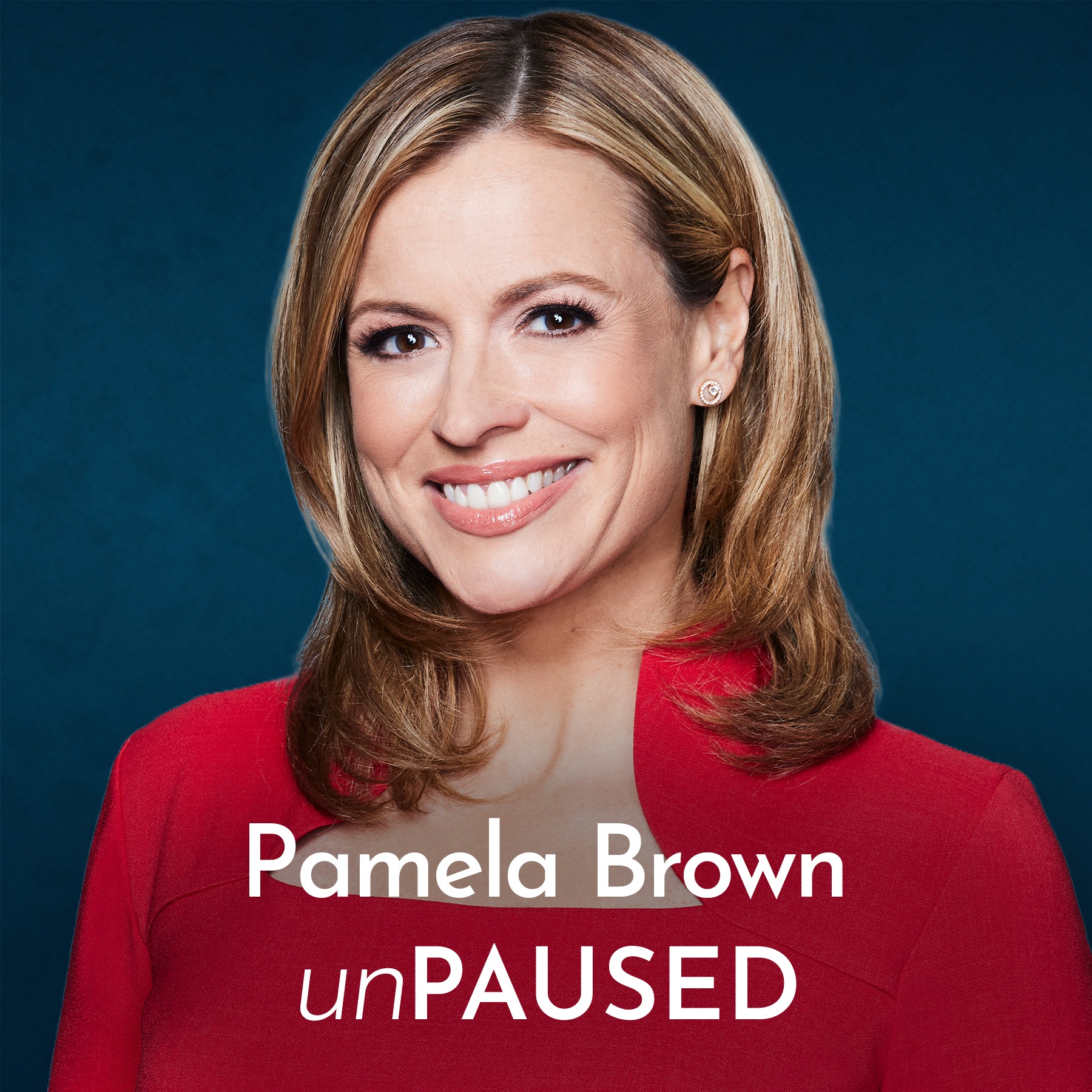
0:58Dr. Mary Claire Haver: The views and opinions expressed on Unpaused are those of the talent and guests alone and are provided for informational and entertainment purposes only. No part of this podcast or any related materials are intended to be a substitute for professional medical advice, diagnosis, or treatment. My guest today on Unpaused is Pamela Brown, a CNN anchor and the chief investigative correspondent for the network. She's also a mother who, in the same year that she lost her own mother, found herself blindsided by severe postpartum anxiety, an experience she's written about candidly, and one that nearly went unseen.
1:36Dr. Mary Claire Haver: As a result of what she endured, she used her personal experience as motivation to dig into the many health stories that are too often overlooked. This week, CNN will premiere her multi-part streaming series called Body Language, about the moments medicine misses, perimenopause, GLP-1s, egg freezing, PMOS, thyroid disease, breast reductions, the fourth trimester, and Alzheimer's. Today we're going to talk about why she produced the series, what she learned about what women are actually experiencing, and the moment she realized how close she'd come to losing herself. I'm Dr. Mary Claire Haver, a board-certified obstetrician and gynecologist and certified menopause practitioner and adjunct professor at the University of Texas Medical Branch.
2:24Dr. Mary Claire Haver: Welcome to Unpaused, the podcast where we cut through the silence and talk about what it really takes for women to thrive in the second half of life. A beautifully designed Squarespace website is the difference between thinking about photography school and selling your portraits online. It's the difference between giving away those cookies you just made for free and running your cookie empire. A beautifully designed Squarespace website is the difference between having a movie-reviewing hobby and a movie-reviewing career. Squarespace. Because no matter what you're into, a website makes it real.
3:01Dr. Mary Claire Haver: Use offer code DIFFERENCE for 50 % off select plans. Terms and conditions apply. From athletic stuff like a full-court pickup game, swish, to athletic-ish stuff like a half-mile stroll. Get those steps in. Head to Sierra or Sierra.com for the brands you want at the prices that let you do it all. From athletic to athletic, Sierra's got it.
3:24Dr. Mary Claire Haver: Pamela Brown, welcome to Unpause. Thank you. It is an honor to be here. Truly. I'm right back at you. So let's talk about the series. Yes. You had a very personal reason for building it. before any of it, you were in what's called the sandwich generation. So your mom was having surgery. You were recently, you just had a baby and your mom was ill. Your dad was getting older all the time. You were, and you were covering the white house in a very demanding, the first Trump term. Yeah. Yeah. So how did you survive? Like what did that season of your life? It wasn't pretty. It was pretty. I mean, you have the job of a lifetime.
4:10Dr. Mary Claire Haver: Yeah. You know, a beautiful new baby and your poor sweet mama, you know, who's very ill. Your dad was also not doing well. Yeah, that was a lot. It was a lot. And it's an experience that so many women have. It wasn't unique to me. And I think the stress of that really manifests in different ways for different people. For me, it manifested in postpartum OCD. so I think just the stress of of having a toddler a newborn the pandemic my mom dying my dad aging like all of it combined just was the recipe for uh this like faucet to turn on in my brain that caused these intrusive thoughts and I had no idea what it was so it came on about I'd say a couple months after I gave birth and I just remember I had gotten through the fog of like Like my mom dying and the trauma of like her being in the hospital during the pandemic and then the funeral and just everything.
5:10And I got home back home from Kentucky back home to D.C. And like I was in such a weakened state. I was just emotionally broken. And I think that is when, from what I've learned, OCD really seizes the moment. Yeah. And my hormones were fluctuating and everything. Everything was a bit crazy. And I just remember having like a really scary thought of what if I drop my baby down the stairs or, you know, what if something bad happened to the kids? Or what if I'm like driving and I hit a pole and I just lose control? And I suddenly instead of dismissing them as like really crazy thoughts. And by the way, we all have subconsciously what we should pay attention to.
5:49Right. I actually started to like really worry about it. Like, oh, my God, this would have this happened. And so these intrusive thoughts just kept getting louder and louder and scarier and scarier. And what I've learned is it's really about the emotional attachment you have to the thoughts. Like everyone has intrusive thoughts, but it's the attachment you develop toward them. And then the more that you kind of give them oxygen and think about it and worry about it and try to reassure yourself, which I was doing, the worse it gets. So the beast gets bigger and bigger. and so I was back at work covering the Trump White House after all of this and I just was going through this internal hell basically and it was manifesting with heart palpitations and a frog in my throat and I felt like I couldn't sleep but I didn't really tell anyone I was I was really ashamed you know did you reach out to anyone no I didn't even like tell my husband and And I did.
6:49The only person I reached out to is actually my kid's pediatrician, because, you know, they have you fill out that form that says that asks you questions about how it is postpartum. And on the scale of one to 10 for anxiety, I put like the highest. And I remember the doctor and I know, you know, no ill will toward this doctor. There was a lot going on. It was during the pandemic. But she said, you know, everyone's having anxiety right now because of the pandemic and just kind of brushed it off. And so then I'm thinking, well, gosh, maybe this isn't this is just normal and I just need to fight through this.
7:20But the more I fought through it, the worse it would get. And I just remember there was one day they wanted me to cover Trump on Air Force One as part of the pool. And a lot of people probably know what the pool is now because of all the recent news. I do now. You do. Where it's like you're selected. Each network gets selected to be with the president for the day. So it was our turn. I was the reporter assigned to it. And I did it that day. And no one would have known if you read my pool notes that day, you would never know. But inside, I was just feeling so overwhelmed and almost paralyzed. And I just remember it was that day that I thought, I don't know how, but I'm going to use this experience that I'm going through that feels like hell to help other women going through this.
8:04Because I just, there's got to be a reason why I'm going through this. I don't know what it is. Yeah. When did you come out on the other side? So it was that day. I just thought I'm not going to tolerate this anymore. I've got to figure out a solution. When there's a problem, you figure out a solution. And I started Googling and I just came across. Dr. Google. Dr. Thank God for Dr. Google because no one else was listening to me. And I came across an article and it described everything I was going through. Like, do you worry about dropping your child down the stairs? Do you have intrusive thoughts?
8:33And I was like, oh my God, that's me. And then it said, you probably have postpartum OCD. And so I immediately emailed the author of the of the article, Dr. Jordan Levy. And God bless him. He got right back to me. And it changed my I mean, it changed everything. He was like, this is what yes, you have postpartum OCD. And this is what you need to do. You need to do exposure therapy. And then he walked me through. And of course, I was like, I was an A student, because I wanted to get the hell out of this experience. Yeah, Everything he told me to do, I did. And he really changed everything for me.
9:05But coming out the other end of it, I thought, my gosh, like how many other women suffer like this? The mental health part and the way our hormones fluctuate, impact our brains. And it just got me a lot more interested in that space. But then I realized there's not a lot of places to turn to to get credible, verified information and to have a community. And so many people, as you all know, get their news, their health news online. And, of course, you're credible, but there are a lot of people who are putting misinformation out there. And so it's like it's hard to navigate where, you know, the information wasteland around women's health.
9:46And so I just thought, let's, I've worked for CNN. Let's, let's do it for CNN. And to their credit, and Mark Thompson, our president, when I pitched it to him, I mean, he, he was like, all right, let's see, let's do this. It's honestly surreal to go back to that day on Air Force One where I was like, I'm going to do something with this. To now years later, it's now going live. We have eight episodes all together. The first batch is four, and then the other four will be released in November. And then one of them, the first four, is the perimenopause one. That was the pilot. And that was so much fun.
10:22And you and Dr. Shepard had the most amazing chemistry. And everyone there that day in the room filming, including the men, actually, especially the men, were like, oh, my God, that was amazing. I learned so much. And so I was like, this is good. And the way that our team, you know, produced it and edited it and we sent it out to all the executives and they were raving. It did help that some of them are within the perimenopause. It always helps. You can relate to so much of it. But I also think it was like, oh, my God, like I've been wanting this information. I didn't know where to turn. And it's here.
10:55It's right here. It's one stop shop. And so thank goodness that it was such a success that paved the way for doing seven other episodes on other issues around women's health.
11:05Dr. Mary Claire Haver: So the issues. So you cover, we cover perimenopause. We, you cover your own journey. So your own experience, which led to this idea. Yeah. GLP ones, which is everything, everywhere. My top two episodes were covering the ins and outs of GLP ones. Yes. Egg freezing, which is a really hot topic. Something one of my own children is considering. Yeah. PCOS, PMOS. Yes. Thyroid disease, another huge topic. Breast reductions. Yes. The fourth trimester, which what is the fourth? For our listeners, a lot of people don't understand what that is. The fourth trimester. So it's the trimester after you give birth.
11:43Now they say it's like the three months after, but I think it's a lot longer. It's a year at least. It's at least. And I think there's been a lot more focus on that because of the Lindsay Clancy trial. You know, postpartum psychosis, which I know we're going to get back. We'll talk about. But the fourth trimester is a really important time. Of course, with my postpartum OCD, it's really personal. and Alzheimer's yeah so which is huge and all the things you can do prevent to prevent it yeah because it's so much more prevalent among women than men but there are really there are things you can do when you're younger to prevent it absolutely and that we talk a lot about that we didn't tell our mothers this Alzheimer's of course is so important my grandmother had it so it's personal in that way but Lurney just asked one of the doctors I said what would you do what would you never do in order to prevent Alzheimer's?
12:33And she said, I would never not exercise at least a few times a week. I will not go a week without walking, exercising, doing something. She was like, that to me is the most important thing. So that has stuck with me. I'm like, I'm going to exercise, even if I'm tired, I feel like I don't have time.
12:50Dr. Mary Claire Haver: So when I've, I've focused with my patients on the benefits of exercise outside of aesthetics. And they're much more likely to be consistent when I'm talking about avoiding Alzheimer's, avoiding frailty, avoiding osteoporosis and fracture and heart disease. Like this is the easiest thing you can do to limit the risks of those things. For your future self. Yeah, for your future self. And so when you get, you know, when you're like, time to go to the gym or whatever, instead of I'm working out to look a certain way, Exactly. Yeah. I'm working out to save my brain, to save my heart, to save my children from having to take care of me for a long time.
13:29Dr. Mary Claire Haver: That is so motivating. Yeah. You're so right. My patients are way more likely to be consistent about their exercise when they focus on the long-term benefits outside of a bikini, which would be nice for all of us. I mean, it's nice, but it's hard to be motivated every day, especially when you're like me in middle age, married for 10 years. that doesn't motivate me quite like it used to but the idea of I'm protecting my brain health my you know like you said for your kids you do it for your kids too I mean so I'm much better about strength training too than I ever was I used to just do cardio and now I'm like I got to get out there forever no I didn't I didn't even know how to lift weights that's what the boys did on the other side of the gym the best I would do was some kind of a Zumba with like a three pound And wave my hand and call it good.
14:14Dr. Mary Claire Haver: And now I'm like squatting my body weight. Oh, I see it on Instagram. I mean, you're kicking butt. I have a trainer now. I see her twice a week on it, you know, and it's really been life changing. What about the GLP-1 conversation? Okay, that's a fascinating one. First of all, I learned that apparently GLP-1 babies is a thing. Like more women are having babies because they've been on GLP-1s. Well, one of the risks of things that lower your fertility, right, are obesity, are irregular periods, are, you know, PMOS, PCOS. And one of the best treatments we're learning for PCOS, PMOS, this metabolic syndrome that women have is the GLP-1.
14:54Dr. Mary Claire Haver: So now she's used to this level of fertility, right? Yeah. Which was impaired because of her weight or because of her metabolic syndrome. Right. Now we have repaired that with the medication she was taking for weight loss. But also all these other factors are getting better. But she wasn't planning for the increase in fertility. And here we are and she's pregnant. Yep. And so, I mean, when gastric bypasses first became a thing, we saw surprise pregnancies all the time. One, because their rates of ability to get pregnant were increasing because their metabolic factors. Same thing, right? Also, their body image had changed.
15:33Dr. Mary Claire Haver: They felt better about themselves. They were more likely to go seek a partner because they felt attractive. And people were finding them attractive, you know, for good or bad reasons. So I'm, you know, we prescribe GLP-1s in our patients. We still have patients in perimenopause. I am warning them, what are we doing for contraception? Yes. Our listeners take anything away from this. Like, if you're new to a GLP-1 and you're still fertile, your fertility will likely increase. So if you're not using contraception, you need to plan on being pregnant. So choose wisely. That's what these doctors were saying.
16:08They're like, we have seen a big boom in GLP-1 babies. And I was like, wow, I'd never thought about that. But how you just described it. Pandemic babies. And now we have GLP-1 babies. And also, you know, everyone wants to know about like the sunken face or the flat butt. How do you prevent that on GLP-1? So we talked a little bit about that. And going back to our exercise conversation, I think it's like you got to really make sure you're eating the protein. Yes. and you're doing the strength training. It's non-negotiable. Non-negotiable if you're on GLP-1s. Do you know Rocio Salas?
16:37Dr. Mary Claire Haver: She was the one I interviewed. She has the GPS protocol, which is GLP-1 protein strength training. They have to go together. Yeah, that's it. It's non-negotiable because so often the conversation is around starting it and what can happen, but it's like you need to really focus on what is your life post-GLP-1 when you lose all that weight. You've got to really make sure that you're keeping that muscle. And if you don't do what she says, you're losing really on the track for, for you're on a faster path to loss of independence because of low muscle mass or bone density. Yes, exactly. Yeah. Which no one wants to be frail.
17:12Dr. Mary Claire Haver: No one wants to be frail. It's like, I want to be 80 and not be able to get off the toilet without help. Or I want to, I want to be able to fall and break my hip, you know? So I am so focused. I never thought I would be so focused on building muscle. And now just thinking about my older self in that way. I'm like, no, no, no, I'm not gonna let myself be frail like that. Yeah. The other thing with GLP-1 is that I actually, I'll admit this, a little secret, I did try after this because I was like, it helps with neuroinflammation, it helps with this, like all the benefits. And I think I'm probably in the breast cancer.
17:41I know. So I was really sold on it after this. And, you know, I'm probably in perimenopause and there's maybe some benefits. So I was like, all right, let me try it. I was really nauseous and I lost my sense of taste.
17:54Dr. Mary Claire Haver: And I wasn't, I know that that can happen, but it like did happen to me and I was really bummed. So I stopped. Did you, was it semaglutide or trisepatide? Trisepatide. Trisepatide. I probably should have given it longer, but I don't have time. Well, guess what? We're almost, I think we're almost there with retitutide. So that would be the next thing you would try. So we see less GI side effects with, as, as we're, you know, as the medications get better and better. I knew it was a side effect, but then when it actually happened to me, I was like, well, hold on, if I'm not eating because I'm nauseous, that like it's not worth it.
18:26That's not worth it. I felt like I was in my first trimester of pregnancy. That bad. Yeah. And I know it can impact everyone differently and it can be a life-changing drug, but maybe the next iteration will work better. I still want to try it again and get the shot. Yeah, you might have a better outcome from it.
18:42Dr. Mary Claire Haver: Yeah. A lot has changed since Bob's Discount Furniture opened its first store 35 years ago. Car phones have become cell phones, grunge band hits have become oldies, and you can order furniture online. But what hasn't changed is the way they do business, aka the Bob's way. Doing things the Bob's way means that when I shop at Bob's, I know I'll find the latest top-rated styles like the Aspen sofa for just$3.99, bedrooms with great features like storage and charging, consumer reports recommended mattresses, and real marble dining sets, all at 90s-era prices, with financing to fit any budget and lightning-fast shipping.
19:22Plus, Bob's still makes furniture shopping fun, with friendly associates and cafes full of free treats and ice cream. Want a seat for yourself? Stop into your local Bob's store or shop mybobs.com to celebrate 35 years of the best values in the furniture biz. Only at Bob's Discount Furniture.
19:46Dr. Mary Claire Haver: so i want to touch on some of the big topics in the news right now okay since you are a world-class reporter um telemedicine boom is a thing um we kind of were in the perfect storm i think um the pandemic showed us that telemedicine could be a viable option you know medicine from home instead of having to get up and go to the office so a lot of us switched to doing a lot of telemedicine because of COVID and restrictions. And it was just easier to do that. And it taught us, we can do this medically. Now we're gonna have this menopause boom, and not have enough providers at all to take care of the women who are seeking care now who realize this might be an option for me, I want to go and talk to someone.
20:32Dr. Mary Claire Haver: So these telemedicine companies popped up, and it's happening in GLP ones as well, that it's a easier kind of fast way to get access. Have you, you know, have you guys covered the good, the bad, the ugly, you know, anything about the best of telemedicine versus where some of the pitfalls are? You know, I want to. That's actually a great, a great episode for the Women's Health Series season two. I have my own thoughts about it. I think it's a wonderful thing for the most part because it gives more people access. And especially people in more rural areas who, you know, you've got hospitals closing and doctor's offices closing.
21:14You know, it's like it gives more access, which I think is wonderful. I mean, I use telemedicine for the most part.
21:20Dr. Mary Claire Haver: I mean, that's what I rely on pretty much for any of my needs. So I think it's wonderful. I think the risk is there are some things that an in-person consult just like can't replace. I mean, you know, as a doctor, you can feel if someone's having, like, for example, like the anxiety that you can tell. Yeah. There's nothing replaces a face-to-face visit. Right. And it's always the best. Yeah. In our clinic, we do a body composition scan. I can't do that through telemedicine. Now, I have a poor, you know, we do a waist to ratio and they can report the numbers back to me where I'm trying to estimate visceral fat.
21:55Dr. Mary Claire Haver: But I have a machine in my office. I can actually measure visceral fat. So I have a much clearer metabolic picture of what's going on with the patient. It doesn't mean I'm if the only way she can get to see us is through telemedicine. Yeah. You know, if she's in doubt, you know, I practice in Texas. So if she's in El Paso, which is eight hours away from Houston, we're going to make it work. But I always prefer an in-person visit. I just get that vibe. Or at least for the beginning, like in the beginning. Right. So you can just establish that rapport, get to know your patient. And then but there are some things that I think telemedicine is just so convenient for like, I don't know, especially moms.
22:35Dr. Mary Claire Haver: I know exactly. To not have to pack up a toddler and take them into a doctor's office and chase them around the waiting room. I don't have time for. I just it's like I probably have better care because of telemedicine than otherwise, because if it was I had to or no care time, I wouldn't get the care. Yeah. Right. So I do think it's good for people in terms of like they're more likely to get the care because it's at your fingertips. It's just it's right there. I do wonder, though, so many women report feeling dismissed, you know, by their doctors. And I wonder, like, how much telemedicine. At least in the menopause world, the companies that were specifically built to take care of menopausal patients.
23:13Dr. Mary Claire Haver: Now, some telemedicine companies who were doing other things are adding menopause care. But I've really kind of dug in because I recommend these right to people who can't come see me. and are out of state is that I really wanted to look at their protocols and dig in. And I feel like the top two or three were really built for this. With that in mind, these women have been dismissed six, 10, 12 times. So they are going all in with the women. They know how to cancel. They're training their providers, their clinicians, how to not dismiss a patient, to undo the bias that was built into the system. I love that.
23:47I think the, I don't know that that's every woman's experience You know, like those are there are special ones that like you're getting the best care because they they know exactly who the patient is. You know, but I do. I think it's great. And I hope it continues to evolve in that way that that every doctor has that perspective. When a woman comes to them with perimenopausal menopausal symptoms that they'll say, let me take you. Let me listen to you and really take your concern seriously. I do think the part of the if there is still something that needs to be worked on is just the time limits.
24:22You know, the 15 minutes. That's an insurance. That's an insurance thing. I know we could go on and on about how the whole our whole health system needs to be changed.
24:29Dr. Mary Claire Haver: So much of that system is dysfunctional. And I think time limits on visits is one of them. But it is an economic reality on how the system is built. Yeah. And in my when I was back doing regular practice, when I was a full time OBGYN, we make our money doing procedures, right? Sitting down across from a patient is where we get paid the least. Our time is valued in doing a biopsy, delivering a baby, doing a surgery, you know, doing an outpatient procedure, putting in an IUD. That's where the bulk of our pay comes from. So when I flexed and left and said, I just want to do menopause care, which is an hour across the table, unpacking her menopause trauma, you know, and her dismissal and untangling all these symptoms.
25:15Dr. Mary Claire Haver: And what is thyroid disease? And what is, you know, your metabolic syndrome? And how is this related to menopause? It takes time and time that the current system under insurance really doesn't value. So I stepped out from the insurance system so I could provide this care. Well, I'm so glad you did. Well, it is privileged, right? And so I feel like I'm figuring out a model. Then we can take back to insurance to make it work somehow. We got to. Because it's just, it's not serving people, right? And especially women, we're complicated beings. Yeah. We're just complicated. And we talked about this in the perimenopause episode where it's like, you really also have to detangle.
25:51Is it perimenopause or is it a thyroid issue? Or both. Or both. Is it something more? Is it autoimmune disease? Is it autoimmune? Is it something more serious? I mean, and you need time to unpack that. And I was just talking with Dr. Shara Malone, who you know, on the scene in her podcast, and we were talking about this issue. And I asked, I was like, why do you think so many women feel dismissed? And one of her theories is that doctors, especially ones with big egos, like to have answers. Like they like to just be able to tell you, like to have an answer. They don't like to just like, I don't know.
26:25I'm not really sure. Okay, time's up. Bye. And so she hypothesized that that could also be part of it. But thank goodness for people like you and other doctors who are now shining a spotlight on this.
26:40Dr. Mary Claire Haver: Big news in menopause in legislature, in regulatory agencies last week. At the time we're filming this. One, we had a FDA hearing for women's testosterone. Lots of great testimony there. Yes, I could talk about this. We had the Senate, the Council on Aging, if I'm saying that agency correctly, had a whole day on menopause. We also had a discussion about the estrogen patch shortage, which we'll talk about in a minute. Let's talk about testosterone. Oh, my gosh. Can we talk about testosterone? I was actually just texting with Dr. Gabriel Lyons about this because I had an official from the Pentagon on my show about the men's testosterone.
27:26protocol now for like men in the military. And I, and I was like, I think it's crazy that there is no FDA approved testosterone for women. And like, you don't, you don't, we don't even know what our range should be. Like I, I earlier this year had my labs done and a doctor tested my testosterone. I don't think I'd had that tested in years and it came back and I was like zero. And I went to my endocrinologist this, because this doctor was like more of like a, an internist. So I went to my endocrinologist and I said, well, my testosterone is at zero. So I think I need to go on some sort of therapy.
28:04And she was like, well, the data doesn't support you going on. And I was like, but hold on. I'm pretty sure I shouldn't be like this low. And it turns out that it's just that there hasn't been enough studies done. And there is no FDA approved testosterone. And some doctors will just say,
28:22Dr. Mary Claire Haver: well there's nothing we can do for you i had zero training in testosterone replacement low levels it wasn't until i kind of got into the menopause space and became friends with rachel rubin kelly casper and urologist who treat male and female and you know joining ish wish which is the international society for the study of women's sexual wellness and they have very clear guidelines and realizing that we have great studies for hypoactive sexual desire disorder. Exactly. And we just had a paper come out in the last two to three weeks looking at non sexually related, you know, women talking about their experience on testosterone and seeing improvements like global improvements in mood and function.
29:07Dr. Mary Claire Haver: And so, you know, it's an observational study. And it just means we need, again, we need more research, but because we don't have it. Lack of research does not mean, you know, you must accept the patient's clinical experience and let her make a decision for herself. It's not harmful. I mean, everything is harmful when not dosed properly. But every medication has risks and benefits. But, you know, it is a conversation that we are having in our clinic with patients. So the way I do it, I borrow the men's version and we titrate it the best we can, which is a tenth of the dose. So I'm taking a giant pump meant for men and he gets four big pumps and slathers it on whatever body part.
29:46Dr. Mary Claire Haver: And then we have to do like a pea sized amount. Now, other people will draw it up in a syringe or try to make it more. But I mean, again, we are literally trying to figure it out, figuring it out as we fly. I tell patients, let's try it for three months. Let's just try it. We, you know, if you're not having a great response to it, we'll stop. Yeah, but no harm done in that three months. And women are so understudied and under research, all the things I did. I mean, so it's like, okay, well, let's put all of this into context. We don't have the data because of all these different reasons. So I did try it and I felt so much better.
30:19I didn't even know that I needed it. And then I tried it and I was like, oh, I'm feeling pretty good. You know, it takes about, I think, I don't know, six weeks to two months.
30:28Dr. Mary Claire Haver: Most of our patients, at least like for sexual function, are seeing the uptick somewhere four to six weeks. If nothing's happening by three months, we'll check some levels. We always check levels, but because absorption rates can be really variable. And the other thing is depending on where you put it and where you draw the blood. So you never want to like if you're going to go have blood drawn, you don't want to put it anywhere near here. So there's like nuance to to all of, you know, how we manage it. Yeah, I did. I did like the inner arms. Yeah. So I like to put it here because there's no hair follicles here.
31:02Dr. Mary Claire Haver: So I don't have to worry about the fur. You know, if you put it on your thigh. A lot of my friends put it on their calf. Do you use it? I do. Yeah. Yeah. Very happy with it. I am too. I think it's not just for sexual health. I mean, it's like energy, brain fog. You know, if you're low on it like I was, I didn't realize. And then I got on. I was like, oh my God, I've been missing out. I mean, I'm using it as a comprehensive plan for bone and muscle, right? Right. Because bone and muscle kind of go together. So testosterone on its own probably won't do a lot for bone and muscle, but I am eating the protein and working out.
31:35Dr. Mary Claire Haver: And I had low testosterone levels. And so. Oh, yeah. And so and I was also 58, as we would expect. It goes down with age, just like a man's. And so I just was able to get myself up to what was likely my 25 year old range. I'm not super physiologic. I'm well within the female range. But as you know, probably where I was at 25. and yes, desire did improve. I would not have, this is the funny thing, I would not have qualified according to the scoring system for hypoactive sexual desire disorder, okay? It was not super distressing. I started it because I wanted to make sure I was packing my toolkit, potential toolkit, right?
32:14Dr. Mary Claire Haver: We don't have great studies saying take testosterone and you'll never get, you know, sarcopenia or frailty. But I knew that women with naturally higher testosterone levels have better muscle. Those studies are clear. So I'm like, this is theoretical. I'm willing to do this for myself. But what I did see was an uptick in desire. And I would miss it if it went away. Interesting. So. Well, that's an uptick in desire. I'm sure your husband was very happy. There were no complaints. There were no complaints. No complaints in my house. So what is, because isn't testosterone also important for estrogen and other, I mean, I'm.
32:53So it's a precursor.
32:54Dr. Mary Claire Haver: Yeah, it's a precursor. So when we go down the steroid pathway, so like if you think of a Rube Goldberg machine or Chitty Chitty Bang Bang when he made the eggs, you know, you put this thing and this flips over. So we have this enzymatic chain reaction to make our hormones. And so testosterone gets converted to estradiol. Okay. So it is a precursor. I mean, if a patient came to you and had basically zero for testosterone. You know, so if I'm worried about low estrogen, I'm going to replace her estrogen. I'm not going to give her testosterone in the hopes that she converts. But wouldn't it be a red flag if a woman had?
33:26Dr. Mary Claire Haver: Yeah. I mean, I would start talking to her immediately. Tell me about your, because we do screen our patients when they come in, especially with their, and lots of our patients are coming in. I used to have desire. I was happy with it. I miss it. It's gone. And I have a great relationship. I really want this back. It's affecting me. It's causing me distress. First thing I'm checking for her is the testosterone level. Yeah. And so many women don't get it tested or doctors just don't think to test it. Well, we were trained. Again, it's not, you know, we're getting there, but most people who understand testosterone for women have sought training outside of their traditional residency programs.
34:02Dr. Mary Claire Haver: Yeah. So we're making progress, but ways to go. Now that fall is in full swing and October report cards are right around the corner, keeping up with classroom lessons can feel like a challenge. That's why I love IXL. iXL is an award-winning online learning platform that helps kids truly understand what they're learning, from math and reading to science. It gives kids personalized practice aligned directly with what they're covering in class, offering instant feedback and clear explanations that build lasting confidence. Whether your child needs a boost in a tricky subject or is ready to move ahead, iXL adapts to their exact level and pace.
34:44Plus, one subscription covers all your kids from pre-K through 12th grade. And an entire month of IXL costs less than just one hour of tutoring. Make an impact on your child's learning. Get IXL now. And listeners can get an exclusive 20 % off IXL membership when they sign up today at IXllearning.com slash audio. Visit IXllearning.com slash audio to get the most effective learning program out there at the best price.
35:16Dr. Mary Claire Haver: let's talk about the patch shortage okay that's been going on for a while it has but it took the internet to get people to pay attention so i started seeing a couple of patients would call in ah my that pharmacy was out of my patches well that happens from time to time i'm like okay we'll call you in a different brand or we can move it to this pharmacy or whatever and then it was getting more and more consistent then we were seeing it on the internet and people were like whoa, I couldn't get my patches either. So all of a sudden, in the last few months, you know, the water cooler that is the internet has become we're realizing people cannot get their patches, especially at the bigger pharmacies like the CVS and the Walgreens.
35:55Dr. Mary Claire Haver: So I'm like, huh? Okay, so we reach out to the FDA. And they're like, there's no patch shortage. And then we start a letter writing campaign to the FDA. So all of us with big platforms are sharing how to reach out to the FDA what to say. Here's a letter you can write. Let them know what your experience is. And now the language on the FDA website has changed. We are working with the top six pharmacies to increase production. Well, look at that. Yeah. The power of the Internet and people like you. We hopefully will get this this navigated. The thing with patches is they're harder to make. The pills are much, much, much easier to make, much cheaper to make.
36:33Dr. Mary Claire Haver: The patches we prescribe, The ones that they're running out of are generic. So there's not a huge margin to inspire. These are financial decisions. So it was a supply and demand company. Supply stayed stable. And the demand exploded over the last few years, especially since the black box warning was removed and women felt more comfortable getting their prescriptions. I had you on my show that day. Yeah. That was a big day. That was a big day. And then after that, so I think it was what, like a month or two after it became a story about these shortages. And I had on the FDA commissioner at the time.
37:02He's now on. Marty McCary. And I was asking him about it. And that's what he said. He was like, well, it just the demand exploded once we made this announcement and the supply just couldn't keep up. But I would think by now that would have been resolved. Not yet.
37:15Dr. Mary Claire Haver: All right. So keep writing those letters. And the supply, the demand is still increasing every day. So I want to let our listeners know, you know, that there are other options. We have gels. We have creams. We have other transthermal options. We have pill options. And most people can safely take an estradiol pill. So it's not hopeless. I can't make patch production go any quicker. We're going to get there. But in the meantime, we have other options. So you're not going to have to go without your estrogen. But what's the difference between a patch and, say, estrogen gel? Yeah. So they're all transdermal.
37:51Dr. Mary Claire Haver: So the gel is just a formulation made in a gel. The biggest thing is that there's no generic for the gel. There's no generic for the spray. And the creams are compounded. Okay. And so, you know, the cost is the biggest thing. The patches, we had five strengths. So we had lots of options to kind of play with and they were generic. So with a coupon or doing something like Walmart or Cuban pharmacy, we could get patches to patients for maybe$25 a month. And that was, you know, for most patients, pretty affordable. And the way it made her feel her quality of life improved so much, that was an expense she was willing to tolerate.
38:24Dr. Mary Claire Haver: When you look at something like, and it depends on your insurance coverage, but the gel or the spray is going to be well over$100 a month, sometimes two. So a big thing is the cost. Yeah. The cost difference. The other thing I learned from our episode was how important vaginal estrogen is. Yes. You said it should be sold at every drugstore. From the rooftops. Yes. I, you know, I think one of the biggest things we can do for women's health, especially our most vulnerable population, which is our elderly women, we can prevent 50 percent of UTIs, urinary tract infections. A certain percentage of those will move on to sepsis.
39:02Dr. Mary Claire Haver: When a woman is septic, you know, she's febrile. She's our organ system starts shutting down. She becomes delirious. Even with the UTI, you can be delirious. The orthopedic surgeons who do hips, right, the hip replacement surgeons are telling us that over 65 % of women who hit the OR, they come into the ER with their fractured hip, have a UTI at the time of diagnosis. And they're postulating that part of why these people fell or got out of bed in the middle of the night, it's always at night, is that they were a little bit delirious and they lost their balance and fell and broke their hip from osteoporosis.
39:37Dr. Mary Claire Haver: and that if we had healthier vaginas, bladders, ureters, urethras, that we could prevent probably 50 % of this. So we not only are cutting down on UTIs, cutting down on sepsis, saving women's lives and the misery, we're also going to cut down on possible fractures from falls. That's huge. So when should women really start taking vaginal estrogen on a regular basis? You want my opinion? Yeah. The minute they're menopausal, they should just be on it prophylactically. So does that mean perimenopausal? Maybe. So if they start having symptoms of genital urinary syndrome and menopause, and I think it's a problem we're calling it GSM.
40:14Dr. Mary Claire Haver: It's genital urinary syndrome of low estrogen. That could be when you're nursing, your estrogen drops because you're suppressing ovulation because that's God's way of keeping us from being pregnant. As long as you nurse, you tend to space your kids out more, which is healthier. if and then people on long term birth control pill long term suppression they also can have low estrogen that doesn't penetrate the urethra so there's a lot of conditions of just being a woman where estrogen levels are lower and you're having these symptoms dryness you can't make as much mucus the tissue thins out it's painful to have intercourse sometimes feels like razors for current UTI so I don't care how old the patient is if she's coming in with recurrent urinary symptoms I think she should give vaginal estrogen a try and see if we can prevent this especially our most vulnerable older patients that was eye-opening for me like when you talked about that I was like I'd never thought about that I never now I'm like god I feel sad for the women and my family you know who didn't have access to this who didn't have access and my mom didn't take hormone therapy because she was worried about you know and that that study is what saw her sweat and suffer and And of course, let's talk about the Lindsay Clancy case.
41:29Dr. Mary Claire Haver: So let me walk you back 26 years. You talked about having intrusive thoughts. So my daughter was born when I was a third year resident. I was on labor and delivery night. So I'm already working insane hours and shift work, whatever. I signed up for this. I had a baby at 32 for her. And I delivered. I had six weeks off and then had to go back to work. and I remember having intrusive thoughts and no one had ever talked to me about that. I didn't understand what was happening and in my, I kept thinking she would drown. So I would sit in the bathtub and like a few inches of water, my husband would hand me the baby and I would wash her hair and give her a little bath instead of putting her in the sink.
42:12Dr. Mary Claire Haver: It was just easier for us to do it this way. And I kept having these visions of my legs opening and her falling in, even though it It was like two inches of water that I couldn't stop thinking about. She would get hurt or drown or I would drop her coming down the stairs or whatever. And it was so scary. And it eventually just passed and I got on with my life. But I'll never forget that fear and wondering what is wrong with me. Yeah. Yeah. And we didn't understand the connection between hormones and mental health like we do now. Okay. Then just a few months later. So I'm in Galveston, Texas. Clear Lake, Texas is just a few miles away.
42:49Dr. Mary Claire Haver: Andrea Yates so those of you listening who are old enough so drowns her children due to postpartum psychosis here's voices to telling her that the devil's going to kill her children you need to save them and in her mind that meant she drowned all of her children her husband got home and the kids are all you know that affected us so hard and I remember we had a mandatory screening like the state put into place for this. But it was very like draconian. It was very, do you want to hurt your baby? Do you want to hurt yourself? Yes, right. It doesn't account for intrusive thoughts where you don't want to.
43:27Dr. Mary Claire Haver: Not this like continuum or no help. And then if she screened positive, we had to admit her to the hospital, of course, but her babies got taken away. You know, we had to call social services or get someone to put the baby in foster care if she didn't have anybody. But, you know, so it was so traumatic. And so and the screening really didn't get a whole lot better. We understand better about postpartum depression now and medications available. And, you know, we're doing a better job. But that was such a life changing thing for me. And like me thinking, hearing about Andrea Yates and thinking, could that have been me?
44:02Dr. Mary Claire Haver: Exactly. Like, so then fast forward. History repeats itself. a woman with severe postpartum psychosis, right? Does the nearly unthinkable because that's what her brain is telling her to do. And we're all watching the trial and how many times this woman begged for help from the medical system, how many physicians, how many prescriptions she got. And she was basically let down at every turn. And I'm so glad you're sharing your story because it doesn't have to be this, right? Like where could we have intervened in this woman and given her life back, her children back. And this is actually interesting too because there's so many layers to this, but one of the things we learned from covering her trial was that a lot of her appointments were telehealth.
44:49So she wasn't going to have the face-to-face interaction with the doctor or the practitioner she was seeing. And you do have to ask the question, had they seen her in person and had that connection and read her body language and felt her energy and nervousness, whatever, would it have been a different story? Would she have gotten better treatment? You know, I mean, I think it's a fair question, right? And I think also in terms of the mental health aspect of it, I think in many ways, it was important to raise awareness about mental health postpartum because you have the postpartum psychosis, but you also have depression and you have anxiety and OCD.
45:31There's different buckets. And I can tell you, as someone who suffered from postpartum OCD, if I had been going through that during this trial, I would have been freaking out. Yeah. Just like you were during the Andrea Yates stuff. Right. But there is a big difference. And I want women to understand. And so I covered this a lot on the show. Like intrusive thoughts does not make you any more harmful to anyone around you, including your children. Right. Psychosis is you're entering a different reality. Like you're in a totally different world. You think the devil is going to take your kids, your voices.
46:04I interviewed a woman. And there's also a big debate about like how how long is postpartum? Right. I interviewed a woman on my show who said hers developed eight months after she went to a happy hour and she just suddenly thought the government was going to go kidnap her kids. Her husband was in on it.
46:18Dr. Mary Claire Haver: It takes us nine months to like complete a normal, healthy pregnancy. Right. It should take us that long to be unpregnant. Yeah. You know, like then when you add in the sleep disruption, the nutritional changes that demands that, you know, all of the things going back to work probably before our bodies are ready. Right. Oh, yeah. Not having enough support at home. You know, it's so different how we turn a lot of new mothers out into the world and everybody's got to go back to work and, you know, perform at their highest level. And so I just think we could do this better. Oh, 100%. 100%. And if there's one good thing that comes out of this, and in honor of those three precious children, is I hope the system is better for moms in that postpartum area and caring for them.
47:05We need more than one six-week appointment postpartum. I mean, think about one appointment. Yeah. That's it. Yeah. I know in other countries, they go actually to the woman's home.
47:14Dr. Mary Claire Haver: In the UK. In the UK. The midwives will go to the home, and it's part of the visit. Yes. And the other thing is, I don't know about you, but I had a different postpartum period for all three of my kids. And it sounds like Lindsay Clancy. I mean, she had three kids and it sounds like she didn't have the postpartum psychosis with the other kids. For me, it's like my first one postpartum was a breeze. I had the best experience. I like went on the daily walks and was happier than I've ever been in my life. I thought it would be that way for the second one because the first one was so great. Well, I developed postpartum OCD.
47:53Then somehow I thought it was after all that, I had a third kid. I thought it was a third kid. Why not file it on? And actually, it didn't come back for the third, the postpartum OCD. But I went through a two-day deep depression when I weaned from nursing. Massive hormone shifts. I literally could not get out of bed for two days. And I thought, well, this is what it's like to be depressed. I couldn't get out of bed. And then it was like things and then my hormones stabilized and I was like totally back to normal. It was so weird. Like what was that? I just couldn't get out of bed for two days and now I'm normal.
48:27It's just all hormones in our brains. And we need to better understand it. And thank God you have Dr. Lisa Moscone who's out there doing this kind of research. Because it has a tremendous impact on our brains.
48:39Dr. Mary Claire Haver: Right. And it that impact, even though you're not depressed anymore, that changed something in you. Yeah. You know, and not necessarily for the better. No, but it also gives me more empathy for true. And thank you for sharing your personal story. Because to know you can go through these things and overcome them and be charge ahead and be OK. How are people going to find body language? Yes. Thank you for asking. So it's going to be on CNN. And so it's going to be streaming. You can go to our CNN site, All Access. There's going to be lots on my Instagram at Pamela Brown CNN, on CNN's Instagram. And so All Access is like our subscription model, but we'll also have plenty of clips that you can see on our different platforms.
49:26So hopefully people will watch it. And the more that, you know, eyeballs that are on it, the better that will be for hopefully covering more episodes around this topic. because I'm really passionate about it. And every day I think of another episode topic. I'm like, oh, we got to do that. We got to do that. I already have like five seasons planned out. So, and you know, you've been a big inspiration and I'm so glad that you helped me kick off this wonderful new project. Well, thank you for coming on Unpaused. Thank you. It was so much fun.
49:58Dr. Mary Claire Haver: You can find full episodes of Unpaused on YouTube at Dr. Mary Claire. Also, you can find me on Instagram at Dr. Mary Claire and get honest and accurate information on health, fitness, and navigating midlife at thepawselife.com. Unpaused is presented by Odyssey in conjunction with Good Roommate Media and Longwave Digital.
50:24Is your furnace ready for another Chicago winter? I guess we'll find out. Here's a better idea. Get a complete 35-point furnace tune-up from Four Seasons for just$89.95. backed by their one-year no-breakdown guarantee. If it breaks down, they'll come back for free. Don't fight out the hard way. For all your heating, plumbing, and electrical needs, you know who to call.
50:43Dr. Mary Claire Haver: For all the right reasons, call 866-4-SEASONS.
In this episode of unPAUSED, Dr. Mary Claire Haver sits down with Pamela Brown, CNN anchor and chief investigative correspondent, and host of the network's new women's health streaming series Body Language by CNN — born from an experience Pamela nearly kept hidden. In the same year she lost her mother, while covering the White House, she was blindsided by postpartum OCD: intrusive thoughts that grew louder and scarier, hidden from everyone — including her husband — while she reported live on air. Dismissed when she flagged the highest score on a postpartum screening form, she finally found her own diagnosis through an article online, and turned the experience into an eight-part series covering perimenopause, GLP-1s, egg freezing, PCOS, thyroid disease, the fourth trimester, and Alzheimer's.
Pamela and Dr. Haver dig into what the series uncovered: why intrusive thoughts are not psychosis — and why that distinction matters so much for new mothers — with Dr. Haver sharing her own postpartum intrusive thoughts as a young resident, and what the Andrea Yates case changed for her generation of OB-GYNs. They cover the "GLP-1 babies" boom and why fertility rises on these medications, the GPS protocol (GLP-1, protein, strength training), the telemedicine revolution in menopause care and its limits, the FDA hearing on testosterone for women — including both women's own experience using it — the estrogen patch shortage and the letter-writing campaign that forced the FDA to respond, and why Dr. Haver believes vaginal estrogen could prevent half of UTIs in older women, along with the falls and fractures that follow. The episode closes with why the postpartum system fails mothers — one six-week appointment — and what needs to change.
Guest links:
Pamela Brown (Instagram) https://www.instagram.com/pamelabrowncnn/
Pamela Brown (X) https://x.com/PamelaBrownCNN
Pamela Brown at CNN https://www.cnn.com/profiles/pamela-brown-profile
Body Language by CNN https://www.cnn.com/videos/title-2600886
Books:
"The New Perimenopause," by Dr. Mary Claire Haver https://thepauselife.com/pages/the-new-perimenopause-book
"The New Menopause," by Dr. Mary Claire Haver https://www.amazon.com/dp/B0CKBZ4K1Z
Scan the code with your iPhone camera
Listen in the app.