In short
How Salomon Aiach left traditional career paths to co-found Origins Fund, a pre-seed/seed VC that pairs investing with media and celebrity network effects, and how he mentors founders to trust their “gut” and build internationally minded companies.
Guests
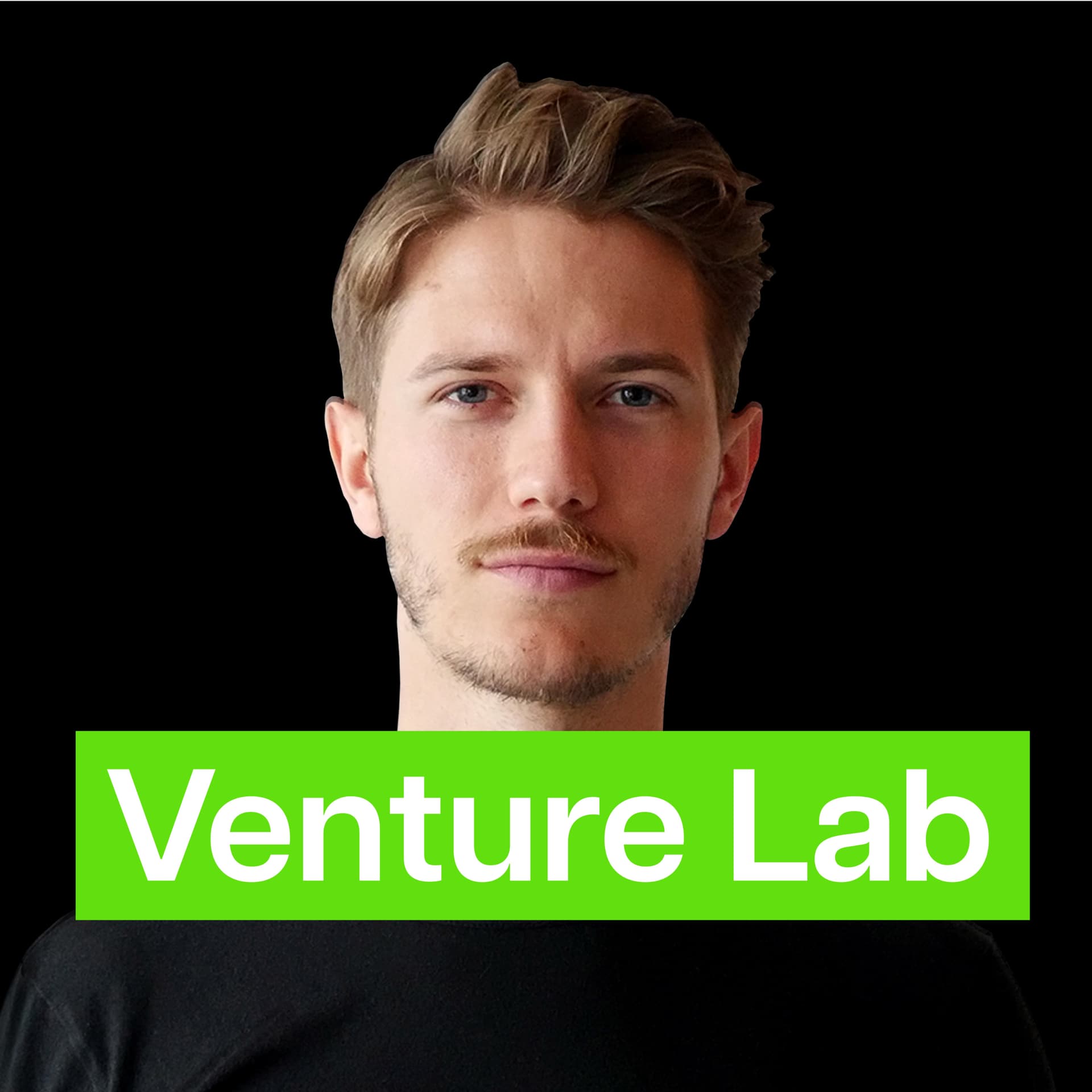
Salomon Aiach, VC/investor and co-founder of Origins Fund; previously early employee building Marcus consumer lending at Goldman Sachs and head of startup/venture capital at Facebook France. Also referenced: Blaise Matuidi, French World Cup winner (2018) and co-founder/partner in Origins Fund.
Key claims
Money is becoming a commodity in VC; founders prefer smaller, “cool” syndicates. Origins Fund differentiates via 160M+ followers across socials and Blaise’s ability to win intros and open HR/enterprise meetings. Consumer investing is binary, so they de-risk with varied consumer business models.
Notable examples
Marcus (Goldman); MochaCare (mental health) via HR intros; portfolio includes Upway, Numize, MochaCare, Routes AI, plus “anti-portfolio” postmortems on missed deals.
Written by AI. May contain mistakes. Listen to the episode to check what was said.
Chapters
Tap a time to open that second in VOThe Vision Behind Origins Fund
0:42 to 1:26
Discover how the Origins Fund combines investing and media in a unique way.
“At a time where capital has become a commodity, an investment from origins fund comes together with 160 million followers across different socials.”
Personal Experiences Shaping Entrepreneurial Mindset
1:26 to 2:30
Salomon shares how personal experiences and living abroad shaped his entrepreneurial mindset.
“And by doing this, making the venture landscape a little bit more accessible.”
The Value of International Experience
2:30 to 4:36
Understand the importance of international experiences in shaping one's perspective on business.
“So a lot of things of the way I grew up and I grew up in a very fortunate family, but ultimately wanted to like a bit more business oriented, etc.”
Embracing the Entrepreneurial Spirit from a Young Age
4:36 to 6:04
Salomon reflects on early signs of entrepreneurship from childhood experiences.
“I've traveled in like 45 countries so far.”
Parental Influence on Career Choices
6:04 to 8:00
Explore how Salomon's family background influenced his entrepreneurial path.
“So what I try to do is like, I try to take the founder and just go on a walk with him.”
Recognizing the Entrepreneurial Calling
8:00 to 10:50
Salomon discusses the moment he realized he wanted to pursue entrepreneurship.
“And when that day came, I knew it was the right time.”
Building a Unique Business Background
10:50 to 14:00
Learn about Salomon's roles at Goldman Sachs and Facebook and how they shaped his investment strategies.
“And I think the interesting part of the examples that you just gave is the one thing I think that combines all of them is the idea of taking action.”
Building a Fund: Journey from Facebook to VC
14:00 to 16:46
Salomon Aiach discusses his transition from Facebook to founding a venture capital fund with Blaise Matuidi.
“and let me explore, but then I'll come back to the cage.”
Unique Value Proposition in Venture Capital
16:46 to 21:01
Salomon explains how they differentiate themselves in a competitive venture landscape.
“So I'm sure we're going to get back later in the podcast, but the job of an investor is five things.”
Investing in Consumer-Focused Startups
21:01 to 23:34
A discussion on the challenges and strategies of investing in consumer-centric businesses.
“and what kind of industries are you mostly active in?”
Show all 16 chapters
Learning from Investment Decisions
23:34 to 26:54
Salomon reflects on the importance of evaluation and learning from investment successes and failures.
“And eventually you have a very long time horizon, like a kind of a learning curve, like sometimes with over 10 years before you actually know if a decision that you made was good.”
Future of Venture Capital and Advice for Newcomers
26:54 to 28:01
Exploring the future of venture capital and offering advice for aspiring investors from non-traditional backgrounds.
“And if we look at the future of venture capital, and let's say we would be having this conversation in 10, 15 years from now, what do you think the venture landscape would look like?”
Navigating Venture Capital for Young Talent
28:01 to 29:19
Learn what young individuals should focus on to enter venture capital.
“that really truly want to change the world.”
Understanding Motivation vs. Purpose
29:20 to 31:29
Explore the distinction between motivation and purpose in career choices.
“right because if you look for some if you're looking for a job the math is really simple you have a hundred million dollar fund two percent management fees that's two million dollars to pay the entire team.”
The Mission Behind Investing
31:30 to 32:58
Discover the speaker's mission and the joy of supporting entrepreneurs.
“I don't know how you have those amazing questions today.”
Open Letter to the Younger Self
32:59 to 34:09
Hear the heartfelt advice the speaker would give their younger self and entrepreneurs.
“It's like you're pushing this rock up the mountains.”
Transcript
Automatic transcript. May contain errors.0:00I was this like lion in a cage and I just never had the courage to basically say F the cage. I'm just going to go in the jungle. And I would have loved to meet a Salomon 10 years ago. Somebody that looks into my eyes and say, you are so smart. You can be an entrepreneur and I'm going to give you half a million dollars so that you can start your company. Too many people and especially the young ones are looking for a job in VC. And it's the only job that you don't look for a job. I'm very excited to introduce Salomon Ayak. Before he entered the world of venture capital, he built the consumer lending platform Marcus at Goldman Sachs and was head of startup and venture capital at Facebook France.
0:41The reason I reached out to Salomon was that the fund he co-founded combines investing and media in a unique way. At a time where capital has become a commodity, an investment from origins fund comes together with 160 million followers across different socials. many of which are related to Salomon's co-founder Blaise Matuidi, who is a professional football player and won the World Cup with the French national team in 2018. What really stood out to me in the conversation with Salomon was to hear how he empowers founders to believe in themselves and to trust their inner voice when it says, I want to change the world.
1:18Take a look.
1:22Ladies and gentlemen, by way of introduction. The reason for me to start this podcast was to find people that did not take the typical path into VC and to share their story. And by doing this, making the venture landscape a little bit more accessible. So and to understand who you are and what your motivations are, I think in general, it's best to start at the beginning. So what are your early experiences that shaped you and that had an impact on who you are today? Yeah, first of all, Luis, thank you for taking the time and inviting me. uh i know you're getting started here so it's always like an amazing part to be like a part of something that is just starting um i think in terms of like things that shaped me you know it's you have two things in life you have your professional life you have your personal life and i think on a personal level it's what shaped me is extremely personal i don't know how much i want to share it here uh with the with the wide public but ultimately you go through personal experiences that just shape who you are and just creates resilience, creates a willingness to do better for your family, whatever that might be.
2:30So a lot of things of the way I grew up and I grew up in a very fortunate family, but ultimately wanted to like a bit more business oriented, etc. And I think on the professional life, if I had to retain one thing that truly shaped me is I've lived in like three or four different countries. And ultimately, this insanely opens your mind to how people behave, how people work, how people think, how people consume. And I think too few people experience the ability to go work, live, or study abroad. And I think it's literally the biggest reward that somebody can give to himself or to herself is to do that because ultimately, it makes you such a rich person obviously not in terms of financial, but in terms of the experience that you have in life.
3:19And that truly shapes who you become as you grow up for sure. Yeah, because you grew up in the US and then you moved to France, right? I was born in the US and then grew up in France and then went back to the, I then studied in Israel for a few years and then went back to the US for university and now back in France. So I would say I truly lived in like four countries. and when I put it all together, whether it's education in the US, whether it's traveling through Israel, whether it's growing up in Paris, you truly understand how and it's obviously different cities within those countries. Yeah.
3:56Truly try to grasp how the world works and when you build a company or when you back a company or when you work with a founder, one of the main questions that I ask myself is, hey, can that person work internationally? can they hire people internationally do they understand the world works and and that's truly one of my first questions because i think that's the only way you can actually build insanely century life-changing companies is to have this this worldwide mindset so i know it's something that shaped me and something that i look for in different founders yeah no i think it's interesting that you mentioned it because i made similar experiences and i think until the moment you actually move to a different country you don't even reflect on your own situation because you never experienced anything else so this actually allows you to have a very different perspective on what you have experienced so far i mean we're getting very philosophical here but i think ignorance is a bliss sometimes when you don't know better you you think you're doing the best and i think that's a big blessing for some people um i'm my father happened to be like that he's a a bit more like one city, one country, it was like very routine.
5:10I've traveled in like 45 countries so far. So I'm like literally on the complete extreme, but yeah, it really depends on it's some people are, are just a bit more curious than others. Yeah, exactly. And I mean, I think, I don't, I mean, I think it's important to say that there's no like right or wrong either way, because I think, and also it was a very different time back then. Like I think we are growing up in a different environment where it's like normalized and much more like globalized to, to do so. Absolutely. Absolutely. And when was the first time that you came in contact with like business, investing and entrepreneurship?
5:43Like, was it something that you knew that you wanted to get into? So I think the way I look at entrepreneurship is the way I look when I look at other founders, right? When I back a founder, I'm sure we're going to come back on this, but we like to back pre-seed and seed companies. That's our switch. And when you back a pre-seed and seed company, there's rarely anything there. So what I try to do is like, I try to take the founder and just go on a walk with him. I'm like, tell me about your life. And then you can look at patterns from like childhood or when they grew up where they basically were entrepreneurs without knowing that they were entrepreneurs.
6:19And if I can take myself as an example, is when I was 12 years old, my mom was giving me snacks to go to school. She was making me like avocado sandwiches. And then I would bring them to school and sell them in school. and then would come back to my mom and say, mom, your sandwich was so good. Can you make me two or three tomorrow? I love that. And then sell those three, right? I'm not the best example, obviously, but I think being an entrepreneur is not at all correlated with age. You can be an entrepreneur at eight year old, collecting soccer player cards and trying to buy them on eBay and selling them and be an entrepreneur at 40.
7:00Like it's really not correlated. I think this burning desire that you have inside of you to just create and be independent in a way, because I think you're the opposite of independent. But you have this burning desire to create and to have an impact on the world. And I think that desire, you can have it in any age. Yeah. And what role did your parents play in this? Like, did you have, were they supportive of the CERNY or did they actually, were they entrepreneurs themselves and you had like kind of the exposure to it when you were growing up? Yeah. So my parents are actually not only my parents, my entire family is actually the opposite of entrepreneurship.
7:35Really? Um, we are from North Africa. So my, my, my father's side of the family, my mother's side of the family is from North Africa. And then when they came to France, you had this thing where you couldn't be an entrepreneur because you had to make it. You were coming from country and then they all became doctors or lawyers. then ultimately you can say a doctor is for some form of entrepreneurship but it's not really and so i really grew up in a family where you always had to play the safe side yeah my father was always we have to get a job and then you have to get a contract an employment contract yeah and then ultimately this builds a certain narrative within yourself and start to listen to it until the day where you say wait maybe i have to do something on my own and i have to build something on my own.
8:24Yeah. And when that day came, I knew it was the right time. But if you ask my parents, they would always tell you that I was different from my sisters in a way. I've always wanted to create, I've always wanted to buy and sell things. And how did... Sorry. No, no, no. So that's kind of like some patterns that you can see very early on. Yeah. And I'm curious about this moment. Like, how did you reach that day that you actually, like, realized this? Because I think many people can relate to this, right? Like they grow up, but again, like they don't understand, um, kind of the, that they are already being entrepreneurs, like within their, like, uh, within their childhood basically.
9:05Um, but then it needs probably like a moment or certain like influences that then, uh, helps them understand that, uh, they can do something on their own. Yeah. It's a very good question. I think, I mean, it depends on what age you are, right? If you're really early, maybe it's hard, but if you see yourself trying to put groups together, right? It doesn't have to be in business, but if you're that one guy that likes to organize the birthday of someone or that likes to organize the trip, or if you're that one girl that likes to text her friend on Sunday and say, hey girls, there's this new exhibition, let's just all go together.
9:42You can be 12 years old, but it means you have some form of leadership within yourself. But then as you grow up, if you start looking at yourself, at your job, and you really suffer, regardless of the amount of money that you make and salary, but you really suffer from not having an impact enough. You really suffer from not being able to create enough, and you're frustrated despite being very comfortable financially. it probably means I'm not going to say with certainty but it probably means that you have something inside of yourself that is burning that wants to go out there and you know some people have families some people are singles and I think everybody has this right time with the right amount of money saved on the side to be able to make the jump but I think no one should ignore those patterns and those little voices right like we have something within ourselves called the gut feeling and And I think too many people try to shut it down, whether it's in love, whether it's in work, whether it's in entrepreneurship.
10:42And if we look historically at our lives, when we follow the gut feeling most of the time, we weren't that wrong. So I encourage more people to just follow it. Yeah, I totally agree. And I think the interesting part of the examples that you just gave is the one thing I think that combines all of them is the idea of taking action. Because it can be in any direction, as you said, but like it starts with like this kind of like desire to be active and to like actually produce something. Okay. And if we make a little jump, like before you co-founded Origins Fund, you built a fintech business with Goldman Sachs and worked as head of startup and venture capital for Facebook.
11:25What did you learn in those two positions that is helping you now in the role of an investor? It's a very good question. And I'll just go back to what I was saying earlier. Both of those jobs where I didn't have the courage to live and be an entrepreneur. But I always asked myself, I was like, within those big organizations where I can be comfortable, what group can I be a part of that looks like entrepreneurship? Right. and when I was at Goldman, they were just starting this online business to basically help people save money called Marcus and I was one of the first employees and that basically was a startup and really building out a project, building out a product, et cetera.
12:10Facebook, the same thing, the role when I joined Facebook in France wasn't created and I basically had to lead that role from scratch. So it's not called entrepreneurship, it's called intrapreneurship because you do need to do cooperation but I think it was my way just to go back to earlier. It was my way of trying to fulfill this quest of wanting to build something. And I think the thing that I've learned the most is how big organizations work. It's, I think a lot of people that just jump right into startups and try to build companies don't have that experience, but ultimately every small thing one day becomes big and every small thing one day needs to sell to someone big to really be kind of like, on the other side of the curtain and understand how this organization works, I think it's really a valuable lesson that I've taken with me, whether it's Facebook, which was a rocket ship at the time, whether it's Omen, which was much more of a legacy player, ways like hierarchy and old style Wall Street.
13:09I think most of these experiences have been insanely rewarding for sure. And did you know that you were looking like at entrepreneurship? Like, did you know that you wanted to have something like entrepreneurship within a more secure frame? Or was it more that you actually realized it by looking back that you saw this pattern that you were actually like seeking for those occasions or opportunities? Yeah, I really like this question. I think I was a lion in a cage. Yeah, okay. Right? And I started in strategy consulting, I was really a lion in a cage. And then I swear you're like, okay, I need to get out of this cage.
13:45But then you're really scared because this cage is quite golden, right? Great salary, great company names, drug prices, et cetera. And the question that you ask yourself is, do I just get out of the cage and go in the wild? Or do I just ask for the people to just open the door and let me explore, but then I'll come back to the cage. And I chose a second option because I knew that by choosing the second option, I would be able to explore the jungle once I understood how the jungle worked, right? but I just wasn't ready in terms of skills, in terms of network, in terms of even financial savings that I had to be able to say, okay, I'm ready to go.
14:27Let's start build something. Yeah. And Salomon, like being a huge football fan myself, I have to ask you this question. So you have built this unique collaboration between you and Blaise Matuidi. So how did this come into being? And maybe you can first give a bit of context of who he is for people that don't know. Yeah, for sure. so right after facebook i worked at a german fund one of the biggest fund in europe called early bird i opened and headed the french office and then i wanted to build the kind of like a fund on my own and i was blessed enough with one of my closest friend elan uh that knew blaze we got on a call and blaze was thinking about his after career just for the record and for people blaze i would say is one of the most appreciated loved and liked players out there uh played for psg played for juventus played for france national team won the won obviously the world cup in 2018 but it's built this reputation throughout this whole life of this like hustler mentality was playing midfielder always running people say i had like a third um uh i don't know i'm still like the thing that you do to a third long yeah exactly and kind of like build this hustler mentality and when we spoke we started speaking and we said like why don't we build a fund and i was at facebook at the time and i saw how many how much it was competitive to get into good deals and how founders were looking for different kind of money wanted money was more cool yeah um and we said if we have cool if we have something cool and on top of that we give money i think we should get into the right deals and that's kind of like how we started building the firm and we started raising and we were successfully to raise a few million dollars on the first fund, double digits.
16:15And it's been an incredible, incredible ride to see two worlds that are completely opposite being brought together. It has its ups, it has its downs. Yeah. But ultimately, I think what we built is it's something really valuable and here for the long run. Yeah, you mentioned it. Basically, the two of you, you come from very different worlds. How do you complement each other also on the personal level? What does Blaise bring to the table and what does Solomon put in? Yeah. So I'm sure we're going to get back later in the podcast, but the job of an investor is five things. One, raise money from LPs.
16:56Two, source new companies to invest in. Three, it's selecting which companies to invest. four is making the investment and winning the deal and five is actually once you've made the deal helping the portfolio company and i think on those things blaze truly helped on raising from lps in the first fund we have 30 i think we have 40 40 plus uh athletes or there are lps or celebrities that are in the fund yeah but that's the thing maybe it doesn't help that much on sourcing. It doesn't help that much on selecting the portfolio companies unless there are companies within industries that he truly understands, such as sports.
17:38On winning the investments, I think it's truly helpful. If Louis were to create a company and I want to invest, and suddenly you pick up your phone and it's Blaze on the line saying like, hey, I want you to take my money and I want 3 % of the company, it's a fact. And I think we've used that card and Blaze has been extremely helpful to win deals. And I think the last thing, which is the most important is helping portfolio companies. When we invested in a company called MochaCare, which is in mental health, they need to speak to a lot of HR people. When Blaze makes the intro to an HR person, they'll take the meeting.
18:17And to having kind of that very notorious person, very visible, being at the frontline to help its portfolio companies has a massive impact. And I think we've done it over and over and over again. And hopefully we have an amazing reputation at doing what we say we would do on the market. And that's why I think we're performing the way we are. Yeah. I think it's interesting too. And it goes into the similar direction because I think that money as a value proposition in venture is dead. So how do you set yourself apart in the venture landscape? You already touched upon it.
18:53is a question like is money dead or no it's more like for instance within the competition of the venture landscape like them they're much more like especially also in europe over the last decade like there's a huge increase of uh venture capital firms so like what is what makes you stand out and what kind of value do you can you offer uniquely to companies that you want to work with i think i think you're very much on point i think money became a commodity in venture and even more in 2022 2023 now it's a bit more challenging for people i think what we realized and that's very true for friends is we realized two things founders didn't want to take those big fun names anymore they don't want to do a two million round with one person they'd rather do five pay four times and take five people that are cool around the table yeah first thing and i think the The second thing was when you build a fund the way we do and you do what you say you will do, you have a network effect.
19:52It's something like that truly warms my heart. It's literally no later than yesterday, somebody posted on LinkedIn, say like, hey, Salomon plus Matt Twini, like flames, in terms of like what they build is fire. Somebody quotes five days ago, what Blaise and Salomon and Ilan kind of like built together. is actually outstanding, extremely good feedback from founders. And I always say my LPR are my shareholders, but my customers are my founders. And we truly, truly, truly go above and beyond to help every company we invest in, regardless of the ownership we have. And I think, I don't know if that answered truly your question, but in terms of support, whether it's having other celebrities speak about the companies, whether it's insurance with your companies, whether it's insurance, juicing them to new investors that are going to make the new round.
20:46We've always hit all those check marks. And that's why we are where we are. And that's why we're building what we're building, right? We've built a real reputation that now enables us to have a network effect. And that's what we want to double down on. Yeah. And you already mentioned that you are mostly investing in pre-seed and seed. and what kind of industries are you mostly active in? Yeah, so we invest pre-seed seed and we try to invest in companies where the end user is a consumer. So we like to invest in companies where, so it's a B2C, B2B2C, B2SMBs. The way we look at things is we prefer when the customer acquisition strategy is on Instagram ads, on TikTok ads, on Facebook ads, et cetera, because it's very B2B2C.
21:32Yeah. And that's how we did the first thing. And also because some of the players sometimes speak of other portfolio companies. Yeah. Mainstream companies available around the world. I think it truly helps. And that's how we do it. And why is consumer considered to be so difficult to invest in? And probably what implications does it have on the composition of the portfolio? Yeah, it's a really, really good question. I think consumer is really hard because it's extremely binary. That's the first thing. I think it's extremely hard because you need insanely sizable outcomes to be able to, right? You can't just figure it out with like 5 million AR.
22:11You all need to grow. And the answer to that for the portfolio is if you look at the portfolio, the way we build the portfolio is we try to de-risk it by investing in a lot of different business models. Meaning we believe consumer social is extremely binary. So we only have two companies. and buddies that are in consumer social. We have consumer marketplaces with Upway. We have B2SMBs, consumer SMBs of financial planning with Numize, which is a new company that we've done. We've done B2BDC with MochaCare. And we've done B2C, like mobile app subscription with routes, AI. So the way we really truly build the portfolio was to say, as long as the end user is a consumer, let's try to invest in different business models so that we really de-risk it and not have a completely zero or $1 billion outcomes on each of the portfolio companies that we back.
23:17And so far, it's working out really, really well. We're investing in 22 companies. 10 of them have raised another round after us. And only two companies are dead. So we're hit ratio close to 50, 55%. So yeah, it's great. We're not that bad. Very impressive. And eventually you have a very long time horizon, like a kind of a learning curve, like sometimes with over 10 years before you actually know if a decision that you made was good. How do you deal with this large timeframe and have you established like any mechanisms or systems to evaluate your decisions? It's, I love, love, love this question.
23:55First of all, I'm not only here to make money. Obviously, my LP shouldn't hear this, but there's something that you can measure, and I want to write about this, actually. I think I tweeted about this. I think there's something you can measure is the impact that you have on people and on founders. And this, within six months, if you have a founder that say, you've changed my life. Thank you so much for your help. Your questions were so much on point. You've helped me think through product market feed. You've helped me hire people. those small wins basically help you stay for the long run it be for the long run so that's like super important on the life cycle on the life cycle on the long life cycle so first of all we just got out of the j-curve meaning i don't think it's you don't need to wait 10 years but you have to wait three years at least okay company to mature find product market for raising like i'm in the middle of it just april i have three upruns so it's like we didn't have anything for like six months and then suddenly it all comes together so i think patience is a big key and i think another thing is every time you want to invest in a company every time you decide to not invest in a company and that company kind of like went on to raise big rounds after it's really important to do an exercise within the team and say okay guys why did we do wrong yeah why did we miss it right and not kind of like blame one or the other and i'm telling you like i've said no to two company that went on to raise like 10x, 30x after.
25:26And it's really, really hard mentally to look at the team and say, okay, why did we decide? You look back at your notes and to truly reflect and say, okay, this is how we're going to do better. And I think the life cycle is really, really long, but ultimately, whether with your wins or with the one that you didn't do, what we call anti-portfolio, you have so much to learn within timeframes. that gives you like a lot of feedback on how you think and how you build portfolios, that it's something that you should use for sure. I think it's a very good point. And it's actually the first time I hear about the concept of the anti-portfolio.
26:05I think it's very cool. It reminds me a bit of like, probably it's also related to the football analogy of like players because like you, as a football player, you always like analyze the games that you lost, like probably more than the ones that you won. Big time. And I think too few people, a lot of like a lot of people put in the thing and they say oh we saw that company and they went on to raise etc but then you just move on to do the true exercise of sitting with the entire team and say guys why didn't we do it was it our voting process that wasn't right was it a thinking process whether a due diligence process and how can we improve it so that that entire portfolio doesn't happen again i think it's an extremely important exercise that every single firm should do.
26:48And we try to do it very diligently every time we see an entire portfolio. Yeah, I think that's very impressive. And if we look at the future of venture capital, and let's say we would be having this conversation in 10, 15 years from now, what do you think the venture landscape would look like? I don't know. Okay. I don't know. I don't know because it's such a good question. And I'm going to tell you what my wish is. My wish is for LPs to understand that there are new emerging managers out there that are really, really hungry to help founders. And I think, unfortunately, we've arrived in a world where a lot of managers are sitting on fund six, fund seven, fund eight, where management fees kind of like piling up and ultimately lost that hunger.
27:42But they've built really firms and established firms. And as an LP, when you work for a big pension fund, you always want to back the established firm. And it makes sense because it's a safe thing to do. But ultimately, I like to back not established guys or established women that start. I like to back hungry people that really truly want to change the world. And my biggest wish in the next 5, 10, 15 years is for new generations of LP to emerge, to understand that backing emerging managers and backing like first time, second time founders can truly have an impact. And that's what we do. Yeah. And talking about like the hunger in people, because I think that there are many young people that are extremely hungry and, but it's, I think it's becoming more and more difficult to kind of navigate the complex environment that we are in.
28:35So what would you say to a young person from a non-traditional background that wants to enter the field of venture capital? And what would be steps that you could recommend to get there?
28:50You take the five things that I said earlier. Bringing LP, sourcing company, selecting them, making the investment, winning the deal, and supporting the portfolio. and as a young person and that's why I always say and it doesn't have to be a young person it's basically anyone too many people and especially the young ones are looking for a job in VC and it's the only job where you don't look for a job it's not like hey there's a job posting we're looking for an analyst right because if you look for some if you're looking for a job the math is really simple you have a hundred million dollar fund two percent management fees that's two million dollars to pay the entire team.
29:32We don't grow that much. So unless you come in and you can say, I can be of tremendous value add on number two and number three or number one and number four, it's really hard to break in. And I think the main question that you should ask yourself is when you take those five things, what is the one thing that you're the most passionate about? And what is the one thing that you can truly, if you join a firm now, you can truly have an impact, whether it's sourcing because you've built you've created a podcast within specific offices whether it's lps because you've family and friends are come from different backgrounds whether it's supporting portfolio companies because you've built an amazing media but that may be right but i think too many people are looking for a job yeah and my advice is to say don't look for a job look at those five things write them on a piece of paper and for each of them say this is what I can do, this is what I can do, this is what I can do and pick one or two and basically become the best at it and that's where you pitch when you go on an interview I think it's a very beautiful take because it also ties back to that you actually come with the value that you can offer yourself instead of being complacent and just trying to get a job 100 % Salomon I think people often confuse their motivation with their purpose no, sorry, confuse their motivation and purpose with the tool that they actually kind of use to follow it.
31:01So to give you an example, what I mean is like, my motivation is, for instance, to inspire young people to find their path and then to have the courage to follow it. And the tool that I chose to do it is podcasting. So what I'm saying is like, I could be walking around in London, for instance, and trying to inspire other people like this. I mean, it would be a bit weird, but I chose like podcasting as the most effective way to do it. So my question is like, what is your larger mission that you're on? And why do you think investing into early stage startup is the best way to achieve this? I don't know how you have those amazing questions today.
Read the full transcript
31:36Early in the morning. You're very inspired. My bigger mission is I've never had the courage to be an entrepreneur. And that's why I became an investor. I was this like lion in a cage. And I just never had the courage to basically say, excuse my language. F the cage. I'm just going to go in the jungle. And I would have loved to meet a Solomon 10 years ago. Somebody that looks into my eyes and say, you are so smart. You can be an entrepreneur and I'm going to give you half a million dollars so that you can start your company. I would have loved to meet and then say, this is how you incorporate it.
32:13This is your lawyer. This is your thing. and my big mission is two things is being able to back as many people as possible that true and make them truly believe in themselves and i think the second thing is really building investing in companies that are being used by thousands and thousands there's no more pleasure than being at a dinner and somebody speaks about a company that he's using and it's a company that you invested in. You're a small part of the chain, right? And I think those two things truly, truly helped me kind of like go to war every day because it's not easy to raise money, to find those companies, to have those portfolio, to win those deals.
32:58There's this metaphor. It's like you're pushing this rock up the mountains. And if one day you stop pushing, basically the rock rolls down. and but to have those two missions i would say in mind is is really kind of like uh super important to me and drives me every single day for sure i think that's that will be very inspiring to to the listeners to hear and someone we have this uh closing tradition on the podcast uh it's called the open letter and you can address a one sentence letter to a specific person or to a group of people so for instance to your younger self to future entrepreneurs who would that be and what would you say i mean the simple thing is is really to my younger self and i i'm saying it to my younger self but i also say to myself it's like everything will be all right you know i try to say to founders you can go sometimes through like really really big moments but if you look back at your life when you were the most stressed and you look at today 24th of april 2025 everything worked out like you just don't know how but everything ends working out and i think the thing to my younger self is like look where you are appreciate it and just don't worry everything will be all right now i think that's very beautiful so this conversation has been such a pleasure for me and thank you so much for joining me i i really like the way how you humanize like venture capital like for me personally and how you're marrying like the best of two worlds and yeah i'm incredibly excited about your journey and thank you so much for showing your story.
34:29Thank you so much. I mean, the questions were very, very much on point. I like them. Different from every podcast. So truly happy we did this together so early in the morning and keep hustling and doing that work. Thank you so much, Salou. Thank you for your time.
From the publisher
Salomon Aiach is an investor and founder who’s reshaping what it means to break into venture capital. After working at Goldman Sachs and leading startup partnerships at Facebook, Salomon co-founded Origins Fund alongside World Cup winner Blaise Matuidi and Ilan Abehassera. Together, they’ve built one of Europe’s most unique early-stage funds, backed by athletes and celebrities, and focused on supporting consumer-facing companies with global potential. Salomon’s multicultural background, having lived across the US, France, and Israel, is deeply influencing his investment philosophy and global perspective on entrepreneurship. In this episode, we explore the "golden cage" mentality that traps high-achievers, why he chose intrapreneurship as his bridge to building companies, and how combining sports celebrity with venture expertise creates unprecedented value for founders.