In short
Venture Unlocked Episode Summary
Podcast Title
Venture Unlocked: The Playbook for Venture Capital Managers
Episode Title
Building Competitive Moats in VC at Lerer Hippeau with Ben Lerer and Graham Brown
Episode Overview
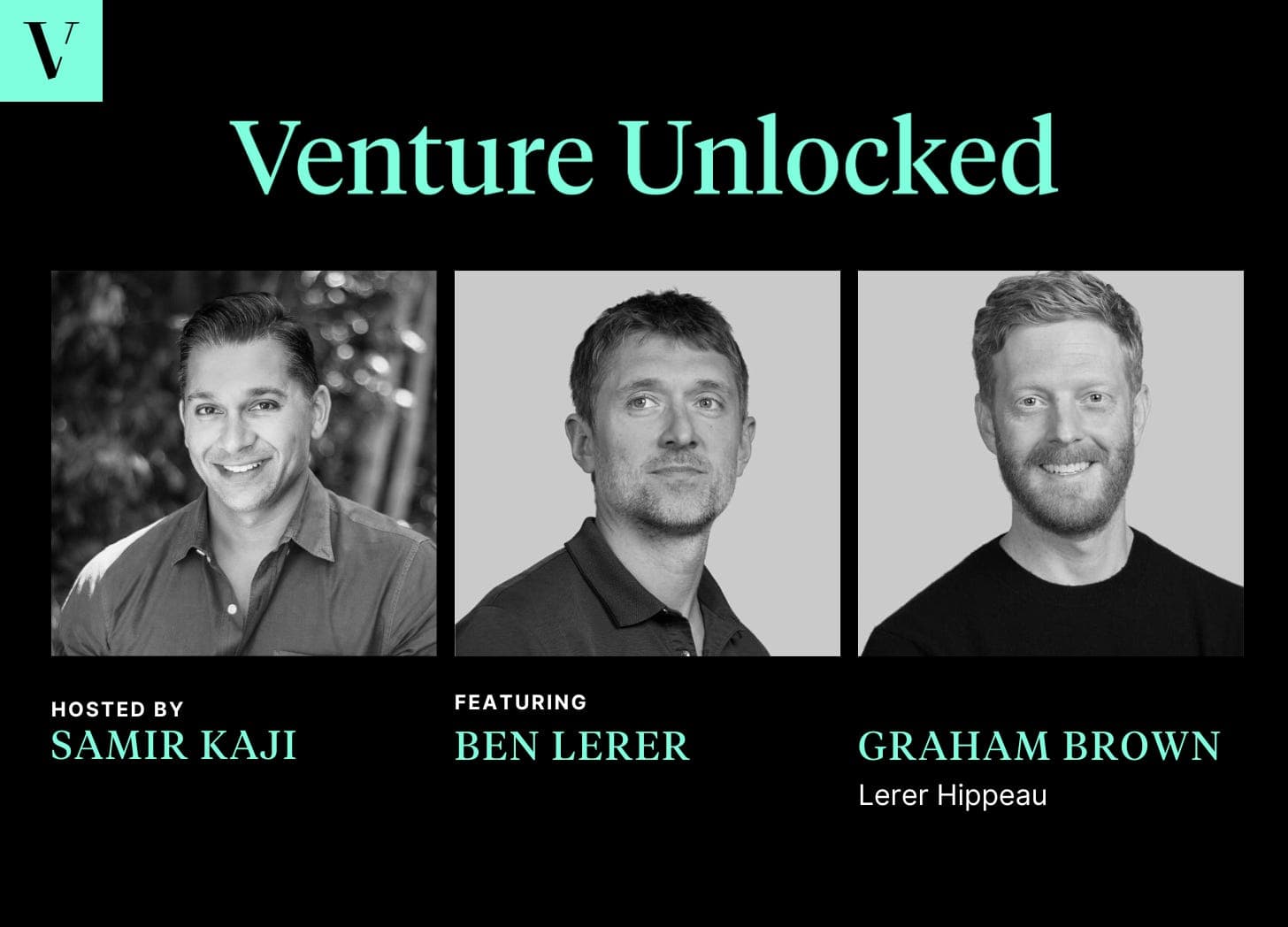
In this episode, host Samir Kaji interviews Ben Lerer and Graham Brown, Managing Partners at Lerer Hippeau, a venture capital firm founded in 2010 in New York. The firm has invested in over 400 companies, including notable names like Oscar, BuzzFeed, and Warby Parker, and currently manages $1.2 billion. The discussion focuses on Lerer Hippeau's evolution, competitive advantages, and the changing landscape of venture capital.
---
Key Topics Discussed
- Founding Principles
- Why Start a Company?
- Ben Lerer speaks about the personal motivations behind starting a company, emphasizing the need for genuine passion.
- Only start a company when it's a necessity.
- Acknowledgment of the hardships involved in building a successful business.
- The Gap in the Market
- The founders identified an opportunity in 2010, as New York's startup ecosystem was beginning to develop.
- Initially, Lerer Hippeau was seen as a hobby, which later became a serious venture as the ecosystem matured.
- Evolving Competitive Advantage
- Community as a Brand:
- The firm has built a significant community of over 400 New York-based companies, creating a network of founders that acts as a competitive moat.
- Operational Discipline:
- Maintaining a disciplined approach to investing, with an emphasis on consistent engagement and support for portfolio companies.
- Investment Strategies
- Typical Investments:
- The firm usually makes around 45 core investments per fund, aiming for 10-15% ownership in each.
- Adaptations to the Market:
- During market fluctuations, the firm has remained disciplined, avoiding over-investment in inflated rounds.
- Handling Investment Exceptions
- While the firm generally adheres to its investment model, exceptions are made when necessary, especially for unique opportunities.
- The importance of staying flexible while adhering to core principles was emphasized.
- Select Fund Strategy
- Lerer Hippeau has introduced a select fund to invest in companies at Series A, B, and C stages, focusing on supporting early-stage founders as they scale.
- The intent is to maintain engagement with previous investments while also capturing new opportunities.
- Learning from Past Investments
- The team discussed how they often revisit companies they passed on initially, recognizing that market conditions and company trajectories can change.
- The Role of Empathy in VC
- An emphasis on treating founders with respect and empathy, understanding the human side of investing.
- Building long-term relationships is vital in the venture capital business.
- Market Realities
- The conversation touched on the challenges faced by VCs in a changing economic landscape, including increased competition and the necessity for hard work in the current market.
---
Key Takeaways
- Passion and Resilience: Entrepreneurs should only start a company when driven by a genuine need, as the journey is fraught with challenges.
- Community Building: Creating a strong network among portfolio companies can provide a competitive advantage.
- Operational Discipline: Staying true to investment principles is essential, even when market hype tempts deviation.
- Learning and Adaptation: The ability to learn from past investments and maintain flexibility is crucial for long-term success.
- Empathy in Relationships: Building strong, respectful relationships with founders fosters an environment of trust and collaboration.
Final Thoughts This episode provided valuable insights into the operations and philosophies of Lerer Hippeau, outlining how the firm has navigated the complexities of the venture capital landscape while maintaining its core values.
---
For more insights, visit [Venture Unlocked](https://ventureunlocked.substack.com) and follow Samir Kaji on Twitter for ongoing commentary on the venture market.
Written by AI. May contain mistakes. Listen to the episode to check what was said.
Transcript
Automatic transcript. May contain errors.0:00Welcome back to another episode of Venture Unlocked, the podcast that takes you behind the scenes of the business of venture capital. I'm your host, Samir Kaji, and on this week's show, we're excited to have Ben Lear and Graham Brown, managing partners at Lear Hippo. Lear was founded in 2010 in New York to back early-stage entrepreneurs. Today, the firm manages over$1.2 billion and has invested in over 400 companies, including Oscar, BuzzFeed, Mirror, Warby Parker, and Casper. Before becoming a full-time venture capitalist, Ben was a founder and the CEO of Thrillist, while Graham joined Lear Hippo in 2015 from SoftBank.
0:33During our chat, we talked about the origin story of Lear, how they've evolved over the last decade, and the things they've had to do to maintain their competitive edge. I think you'll really enjoy the conversation, so let's get right to it. This episode is being brought to you by Grasshopper Bank. Privately owned and headquartered in New York City, Grasshopper Bank is built to serve the business and innovation economy. As a client-first digital bank, Grasshopper combines technology and years of industry expertise to provide clients with a best-in-class banking experience. Grasshopper's digital solutions are tailored for venture capital and private equity firms, startups, and small businesses.
1:10In addition, they also work closely with fintech-focused banking-as-a-service and commercial API banking platforms. Serving clients globally, Grasshopper provides flexible, firm-focused lending solutions as well as dedicated relationship managers committed to meeting the unique needs of funds and companies alike. Grasshopper is a member of the FDIC and an equal housing lender. For more information, visit the bank's website at www.grasshopper.bank or follow on LinkedIn and Twitter. Samir Khadji is the CEO and co-founder of Allocate. Allocate and Venture Unlock are independent of each other. Any statements or references made by Samir or his guests regarding third parties, investments, or securities are solely their views and opinions and are not intended as investment advice or an endorsement of such parties or securities by Samir, his guests, or Allocate.
2:01Allocate or its clients may maintain relationships with or investment positions in guests, third parties, or securities mentioned in this podcast. This podcast is for informational purposes only and should not be relied upon as a basis for investment decisions. Guys, it's so great to have you on the show. Thanks for coming on. Thanks for having us. Thanks for having us, Samir. I want to go back. And I think a good starting point for this conversation is going back to 2010. Ben, I was listening to actually an older podcast you did, and you said something around why people should start companies.
2:32And I think it went something along the lines is, only start a company when you need to start a company. And I thought that was a good sort of quote. And I want you to unpack that. And also maybe tailor that to why did you start Lear in 2010? Why did you have to do that? maybe unpacking that not in the context of of lure hippo but in the in the context of being a founder and and i don't think that i'm the person who created that statement but i think basically what that means is understand you know having built something myself i can personally attest to how hard it is and how much you have to put in to build a successful business i think from the outside the way that the press sort of glamorizes startups or glamorizes, you know, these great companies are overnight successes 10 years later, 15 years later.
3:22And the, the hardships that people have to go through to build really good companies are very real. Even, even fairy tale stories have a lot of dark moments in them. And I think if you start a company because you are drawn to the idea of being a founder or the, you know, you think it's exciting or you think it's a way to get rich or you think it's a way to be the boss or a bunch of whatever, you're starting it for the wrong reasons and you are probably going to be very unpleasantly surprised with some of the sacrifices that you're going to need to make. And so that comment is really about starting with the right expectations that this is going to get pretty close to killing you and probably won't work.
4:11Why subject yourself to the horrors unless it is something that you absolutely can't not do? Yeah, and it speaks a little bit to the resiliency you need to have as a founder. And you are going to go through those peaks and valleys. And those valleys, if you're not passionate about what you do and why you're doing it, it's going to be really tough to navigate through those. It's really tough even if you are really passionate. I think that's sort of the point is like, it's tough no matter what. So you have to be, you just have to be so all in or the hard times are probably going to prove to be too hard.
4:50Yeah. And I think this actually does tie back to even starting a venture fund. So many people have started venture funds. We were talking about this right before the podcast of over 2000 firms being founded since the global financial crisis, a lot of seed funds. You started right after there too. But when you start a firm, you're actually starting a company and it's not two or three or four or five years. It could be 17, 20, 25 years. A single fund may last 14 years. So you have to be passionate and you have to understand why you're doing it. So I want to go back. What did you see maybe as the gap and the opportunity back in 2010 when you were at the realist and then decided, hey, let's launch a firm.
5:32In fairness, I really don't think I knew what I was getting myself into. You know, this was the Lira Hippo one. It was at that point, it was called Lira Ventures when we did our first fund. It was a hobby. I mean, the idea was I was operating and building a company and we did see an opportunity to do something that we thought was going to be interesting and fun and lucrative and, and, you know, worth doing. But I definitely wasn't launching the fund and saying, this is what I'm going to do for the next 25 or 40 year, you know, whatever number of years in my life, it was a secondary pursuit and a sort of creative outlet and a way to invest into the ecosystem that I myself was a part of as a founder.
6:16And I think over the years, it became clear that what started as a hobby became something that was a lot more than that. But admittedly, I didn't come in the way that I would tell people to come into something. I, you know, I sort of fell into it, you know, for a long time. as I was continuing to build my company and the fund, it remained this creative outlet even as we were scaling. And it got very serious and we built a big team, but it didn't carry, you know, I think it's very easy to get someone's personal self-worth and their career intermingled in sometimes really unhealthy ways. And I've certainly had a tendency to get caught up in that over the years.
7:00And the way that my brain worked and the way that I was able to sort of, you know, compartmentalize things, I, I associated a lot of that anxiety and stress with my operating and Lira Hippo remained this sort of escape and this place where I got to do these, these sort of meet these interesting people and be associated with these cool companies and help in ways that I didn't get to do on the day-to-day basis in my, in my operating job. And so it was this sort of like beautiful thing. And the market was broadly, I mean, of course there was, you know, moments of correction and there were harder and easier cycles, but it was generally an up into the right market for 10 or 11 years.
7:43And I do think that now meeting the realities of, you know, the rubber meets the road in terms of our correction in the market, you know, probably too much capital in the asset class. This is a moment where I think a lot of managers are going to need to sort of look themselves in the mirror and have that like, oh boy, is this really what I signed up for? Like, I thought that this was not the same way that I would say to you that I think founders can do a business school project and think this sounds really fun and cool. And it turns out that it's a lot more than that. I think that that moment is emerging for a lot of managers who are going, I thought this was like, this was a cool form of pseudo retirement after my successful career beforehand.
8:25And to win in this market is, you have to work so hard. I mean, this is just, this is hard right now. This is hard. This is, you know, you're getting the crap kicked out of you every day as a VC right now. I would never as hard as a founder, but this is tough. And I think that it'll be interesting to see how many folks that came into this hobby style or low conviction are going to decide that it's not worth waiting around and that this is not what they thought they signed up for. And I do want to double click on that a little bit later in this conversation in terms of what we have seen, where the market is.
9:04Venture, as a lot of people that have been in the industry for a long time. No, it's a long, long feedback cycle filled with false positives and negatives, especially in short timeframes. And we have come off this incredible period of economic prosperity because interest rates were low. There was a lot of money sloshing around, things have changed. And we'll come back to that. But going back to, you started as essentially like a hobby and realized that, hey, there's something real here. You bring on Eric. And now, as part of building a firm, you're institutionalizing how you do things, you're bringing on a team, and you're building a certain cultural ethos around what does Lear Hippo actually stand for for founders.
9:46And Graham, you joined in 2015. I'd love to hear maybe for somebody looking on the outside at that point, Lear Hippo being five years old, what really drew you to the culture of Lear? Maybe I'll frame it a little bit in what I was doing. I actually started in the mid on the investing side in the middle of GFC in growth equity and was in New York, made my way to New York, was in New York working for SoftBank at the time when I got to know the Larry Hebbels. And so I actually started with a later stage focus, highly thematic learning curve and worked my way earlier and then got to know Larry Hebbels closely while I was at SoftBank Capital.
10:30Eric Hibba was actually one of the founders of SoftBank Capital Investment in the U.S. back in the 90s. And so there was a very close tie between the two firms. And in thinking about an opportunity and sort of where I was in my career, it's really three things. One, the people. You know, most important, like, do I want to come to work and learn from these people, work with these people, trade ideas with these people and spend, you know, my professional lives with these people. So thinking about sort of like a long-term decision, it's about the strategy and the insight and the sort of competitive advantage.
11:06And with where Ben, Eric and Kenny started the fund in the bet on New York and the bet on an institutional class that focused on being founder aligned and partnering at the very earliest stage was just like a really, really unique position to be in. and New York was growing very, very rapidly from where it started. And so just the sheer opportunity of what could be built was very, very attractive. And then I think just sort of thinking about personal growth, long-term, where I wanted to be, what gave me energy, being at that earliest stage, being part of what could be a really cornerstone brand and investing in New York for the long run was really, really exciting.
11:53And sort of the path of like a ton of success in the first four funds. And then I joined when we raised Fund 5, pulling together sort of the first fund where like, let's do the math on what we want this fund to look like exactly. And how many companies is right for the diversified strategy we want? What should our ownership be? Sort of like that build phase coming in with people that in a culture that love to be a part of a strategy that I thought was winning in a competitive advantage that I thought would win. And then the ability to build was just like the perfect world for me with where I was in my career.
12:28And so it was at the time, you know, it's never an easy decision in the moment, but like looking back on it was like such an easy and obvious decision for me. So when you look back then, this is a question for both of you, as you think about evolution of the industry, which has changed so dramatically. No longer this monolithic industry, so many funds, sector, niche, geographies, things like that. New York was a great opportunity because you started so early on in the New York tech scene. But over time, the arbitrage opportunity just to show up starts to go away as more funders come in, more VCs, more investors realize the opportunity that New York had and has continually.
13:11How did you evolve this concept of competitive edge? Graham, you said competitive edge, which I like it. We also think about comparative advantages, but over time as competition changes, you also have to evolve. So we'd love to think about how you guys have thought about staying competitive and actually creating this overall brand that allows you to win consistently. Our strategy, if we started today and said, let's go do early stage New York, that is not a particularly defensible strategy. The sort of moat that we've been able to build around our business is in large part a product of maybe being lucky in that we started and sort of planted a flag at the right moment as New York, the train left the station and we had a good seat on the train.
14:01The compounding effect of being consistent about the role that we've played in this ecosystem for over a decade now. And so we often say, and I think maybe I may have even mentioned this last time we were together, our community is our brand is our community. Over 400 companies that we've financed over the course of 12 years, more than half of them are New York-based. That is the largest community of New York-based founders that I think anyone has accumulated or put together. And that in and of itself becomes part of a competitive advantage that we become, You want to be a part of this community that roots you in this market, that gives you access to this network of founders, this network of talent.
14:42And I really do think that there's something about building a company. You have a job somewhere else and there's a format or a structure. You're sort of a part of a system. When you start a company, you are at sea. You are alone building something and it's this self-motivated, self-policing, very nebulous thing. And I think being part of a community that is tailor-made to work with and help companies from zero to one is really valuable and grounding. And by the way, something that when I started my company didn't exist here and I had to sort of knit together by banding together with other founders and friends and trying to create a sense of community in a market that didn't really have one yet.
15:30I think that that is a competitive advantage. Good deals beget good deal flow. We've seen this time and time again. We've been fortunate to... I've been early in a lot of companies that are successful and important and category leading in various industries. By the way, in a lot of different industries, because we've done this for a really long time now and have a vast portfolio and have, I don't know, 20 or so companies that we were the first money into that have at least paper billion dollar companies. And you want to be a part of this community, I think. And you want to work with the funds who have worked with the companies that you look up to.
16:03A lot of this is a people business. The way that we find deals is often through referrals from our founders, from folks leaving portfolio companies that we were early in. It's an organic thing that happens. And there's no substitute for the work that's been done and the time and experience that we've put into building a platform here. That's one answer. The other answer, instead of getting a short answer, you have the longest answer in my life. The other part of the answer is we have to continue to get better, actually. And so not just say, hey, we've been here for a long time. We're going to keep doing the same thing as we've always done it.
16:38But how do we deliver a higher and higher level of service to the founders that we work with? How do we give better information and advice that starts with everything from even in the last year, fully reconstructing the way that we onboard a company after we invest in it and the way that we set up, the way that we help them sort of put the right infrastructure in place around org planning, around how they think about their compensation philosophy, how they think about their mission and vision values, how we construct a financial model with them working backwards from their next round of financing, not just using the old$1 million of ARR gets me to an A, but taking into account the ever-changing nuances of the funding landscape, how we work with companies around getting them to commit to transparency in how they report results, not only for us, but for them so that they build a culture of sort of self-awareness in early stages that over the course of a decade, We've seen a bifurcation where companies who report a certain way and are eyes wide open around business performance in a certain way drive different outcomes than founders who good news travels fast, bad news travels, not at all.
18:01You take the learnings of doing this for a long time and hone the model by which we engage with founders and help them. And this is a long game. And then over time, you do the right work with founders again and again and again and again. You show up and you help and you are founder first genuinely. And it all sounds very cliche on an individual company basis. But when you do it for a really long time with genuine consistency, you build a reputation and a brand. And then that reputation and brand becomes part of the value of what you bring and it gives you the right to win. And so we feel like we've done that and we're getting better and we need to continue to get better.
18:45You mentioned two dimensions. One is how do you help companies in really specific ways? And we've seen the rise of the platformization of venture funds, somebody that helps with talent, financing, adding people that have very specific skill sets that can drive a company in different ways during that zero to one, maybe even one to two phase. And then there's the community aspect, which is everybody gets to meet each other, they learn from each other. And that, of course, over time requires a level of consistency of what you're offering. and you're almost productizing these things. I hear this a lot.
19:22And I always like to ask the question of what does this mean in practice? How do you create that consistent framework? What does it mean to productize that community? If the team invested in very early, even prior to my joining, I think we've evolved and honed. And I think you said it well, productized the things that we can to give it individual team members who are focused on the platform side and in supporting the founders from going to zero to one, any and all unfair advantages that we can. The community one's easy, right? We've tried every different platform. An email, listserv, that is searchable and archivable continues to be the place everyone returns to, ranging from small tactical questions and info sharing to bigger strategic things that they're looking for.
20:16you know, someone who looks more like them in terms of where they are in stage and industry. And, and so like, it's, it's a wide range that, that exists there and it continues to build. Our operating partner, Stephanie is incredible organizer and pulling together community. And we will do community events based on cohorts and strategy and things where people can really share learnings and talk about the things that are very current and top of mind for them, not just CEOs, but CTOs, go-to-market leaders, really sort of runs the full range. And we'll do close to an event a week. And so there's constant content and communication and connection that keeps communities amazing.
21:02And it's like the most important thing, as Brad mentioned, our brand is communities. That is so key. We have to continue to invest in it. And we are constantly investing in that connectivity. Some of the other key things you think about, like when you're starting a company and going to series A that you need to think about that maybe is not your superpower. These are all things that we've invested in that every company will need and that where we know we can help. Talent and recruiting, including how you sort of set yourself up for long-term. And then communication, storytelling, and go-to-market and how you hone that and do that really well.
21:42Those are the sort of key areas that we've invested in, continue to invest in for our founders. And we have incredible people that lead both those. In addition to, we productize some of this. We've built a jobs marketplace that effectively functions as a double opt-in connection where we can funnel talent and the hundreds of people that we meet and that come inbound to us that we think are really good. And we can connect them with our portfolio companies in automated fashion. And so it's sort of like you learn by doing, and then you productize what you can to continue to scale. And now having done it for over eight years, we're, we're, we're really figuring out the points of leverage and we're going to continue to do more, but it's something that's been just invested in over time and, you know, pays back in huge ways.
22:28And, and, but one thing I would also add to this is I think a lot of the, the value that a fund provides, it needs to match up with expectation and reality. It's very easy to promise the world to companies and say, oh my God, we'll do everything for you. We'll hire all your devs. We'll do you. And there's a natural tendency for funds to make big promises, particularly when they're chasing a deal and want to win a deal. I think the really important thing is be clear about where you're going to engage and how you're going to engage and where you're not. And so we've, I think very clearly sort of landed on an operating model where we work with companies broadly around what we call the big moments.
23:09So we create all these community opportunities and all these learning opportunities for, you know, founders to learn from one another. And then where we really get involved is at these very big moments. And so we're not going to employ a large team of recruiters here to try to hire your 6 PM. We're going to work. We're going to try to help you learn to help yourself. I mean, this is like the proverbial teach a man to fish kind of thing. If you look back historically, the best companies are not ones that are constantly asking for tons and tons of help from their investors to do their jobs for them.
23:45I mean, our job as early stage funders is to find people who we think are going to be self-sufficient, competent leaders. We're not building a platform to do dirty work for people. We're learning, we're building a platform that creates some opportunities for us to get involved at very high impact moments around the moment of the pivot, the moment of the next round of fundraising, the moment of the co-founder hire, the moment of the decision around, are we selling, you know, top down or bottoms up? Like really, really, really important moments where the partner and some of the sort of operational leaders on the team roll up sleeves and get involved with you.
24:22But otherwise, we're going to create a framework for you to be more self-sufficient and build your own company because your early stage venture fund and frankly, any venture fund should not be responsible for making a company successful. The company is going to ultimately be successful if they take responsibility for themselves. And setting that expectation early is really important. And by the way, that may mean that, you know, one in 10 or one in 20 or one in 100 founders may say, well, this other fund is going to give me, they're going to put a full-time recruiter in my office. And if that's the thing that they want, like that's great for them.
24:56And like, we're not going to be the fit for that. But I think most of the best founders, they want the accountability to build their business for themselves. Yeah, I love the framework. And when you think about NPS or satisfaction, it is this delta between expectation and reality. And we have seen so many people in the want to win a deal, just offer the world and then just can't execute on it. And then ultimately over time, that brand diminishes and you don't get the benefit of the founders referring you to other founders. And it is really important. And I'm glad you brought that up because we have seen so many of the memes out there of how can I be helpful?
25:37And it's always been around promising all these things and delivering on a very small percentage. So when you think about all of the things you're doing, which is very productized, plus, you know, matching expectation reality, you have to do those things, especially as your portfolio size gets bigger and bigger. And of course, you're playing the biggest role at that zero to one, maybe one to two, and maybe even beyond that for some founders that you maintain those relationships, even as they scale. And, you know, when you think about that portfolio size, I wanted to come back to that. Graham, I think you mentioned this earlier.
26:10You know, I thought the portfolio model in terms of diversification made sense. Talk to us a little bit about what is your model around the number of companies? What did you examine to really land at that? This is sort of on the sort of virtuous cycle and things take time and credibility takes time and you need to earn the right to win being a big part of how you build a successful brand in any category. And, you know, the roots were winning an allocation. And then you earn the right to lead or co-lead. And then you earn the right to be the first call to lead, to decide what's the right ownership and work with the founder to pull together the rest of the investors.
26:56And those all take time and it's something we've thought about and invested in um over many years in the in the early days in fund one very small fund where we're just winning allocation we might have had 65 70 companies starting with fund five where we where we really switch from our core focus leading or co-leading it was like four i think four five four was probably the Look, Graham wants full credit. Graham's like, I got here for five, and then we're able to win full allocation and whatever we want. Take it easy. Okay. You really, it's really despicable behavior here. So where we are in it, we think about sort of 45 core positions where we're going to own between 10 % and 15 % with that first check.
27:48We're always going to be collaborative. We want to work a huge amount of what we see and how we partner with our co-investors. And so we still have a core focus on collaboration and how we think about keeping fund size to the right number. We're able to do that and still have a shot of any single one of those 45 companies being able to return their fund or more if it's a breakout. We think a lot about diversification across industries, maintaining significant ownership from the start. That first check is where we're going to buy the majority of our ownership in any investment. And then obviously deploying follow-on capital as those companies progress.
Read the full transcript
28:28But we're, you know, in a fund we'll reserve roughly half to continue to support the team, but that those first checks is really the important place. We're not trying to buy up layers. So when you think about that, so I'm just looking at my notes here. So 45 companies, 50-50 in terms of initial versus follow-on leading, 10 to 15 % ownership, which is really strong ownership. But we've also come through a time where 18, 19, 20, and 21, round sizes got bigger, valuations got bigger. did you have to modify anything during this period to maintain this discipline around the ownership? What was the overall operating model during that time?
29:11One interesting structural decision that we made, and I would say that it played out, I think we think well for us, was we decided that just based on the way that fund size and structure, we were not going to write checks over$3 million as a first check. I'm based on, you know, first check and reserves and how that could work. And we want to own 10 % plus. So we structurally weren't able to go and do those crazy rounds, those, you know, five on 50 seed rounds that I think now looking back, look, probably not great. We didn't participate in that ecosystem. And so what that's meant is when there's a hype cycle, so this happened in the crypto hype cycle, this is happening now in the AI hype cycle.
30:04Granted, I'm not equating the two things. I think there's very different things happening, but we didn't break our model when the market, when there were some really hectic, hot things happening. And we're glad we didn't. And so now as things are sort of regulating a little bit, changing, I mean, there's some interesting things happening now with A's getting done at 21 seed prices and opportunities for us to participate in some A's in our seed fund where we can get the ownership and be de-risked and we feel like we're going to have some of those bets in this fund and we're excited about that. we didn't have to rewrite our model in that cycle.
30:49And what we did do a little bit is looked at reserves. And I think that what we found was particularly in the fund that was invested in 20 and 21 and the beginning of 22 in like the real like hot moment, those rounds were a little bit larger and the A rounds are going to be a little bit smaller or less expensive relative to the seed round. And so that fund, we actually will look more like a 60-40 in terms of first check and reserves. We decided that we needed to reserve a little bit less against a fund where some of the A round dynamics are changing. We're not dogmatic about that. We're going to be flexible and sort of actively manage on a fund to fund basis.
31:32I think historically it's looked 50-50-ish looking, you know, the last cycle and maybe this cycle may look a little bit more 55, 60 on the front end. And you talked about this structural parameter he had. It sounds like it's more ownership driven. We want to get at least 10%. This is the most amount of capital we're going to risk at that initial round. But at the time, there was a lot of conversation, hey, we're in a new paradigm. Multiples are going to change forever. And I can imagine sitting around that table as you talk to these companies and you have a term sheet out. They get another term sheet at maybe two or three X the valuation and almost feeling like, are we missing something here?
32:14Are we missing some of the best deals and we're going to look really foolish? What were those internal conversations like during that time? So you wait, by the way, here's a good one. Here's a good one. So, so we add the dynamics of our team is we are in like a truly multi-generational team. The managing partners are, you know, two of them are a generation older than Graham and I. They've been through a bunch cycles. They've seen, they have like a different kind of, a different view on when things get a less frantic view than, than we tend to have around. Like it's never as good as it looks. It's never as bad as it looks.
32:50Things may generally be moving in one direction, but like these really, really, really big swings are don't fall for the trick. And on the other side, we have folks a generation younger than me who are, you know, kids going like, go, go, go. Like we're missing everything. NFTs are the future. And we're sort of like caught in the middle. And I would say I'm like perfectly susceptible to FOMO. And we've had some really fun and good and sometimes spastic conversations around how to participate in these things. And I think that We've really benefited from the multi-generational thing here and the wisdom, particularly that Eric has brought.
33:35By the way, not that, you know, Eric is keep your head down and play the same game. I think he's he is fully aware of, you know, large structural changes that have happened in the industry. But the makeup of our team prevented us from getting off course too far. You know, we would like run the, you know, the car would like pull into the grass for a minute and be like, like, you know, get it back. But like, we never like ran it off the road. And I really do think that that the team structure is what was one of the reasons that we stayed, we stayed consistent. Well, as it turns out, it was the right decision.
34:11And certainly, things are not always go up and to the right. But were there situations where you did make exceptions? And maybe talk a little bit about the circumstances or characteristics of when you did sacrifice slightly on ownership. we've always made an exception here or there we made an exception yesterday in a deal where we're going to own seven and a half or eight percent in that thing we're really really excited about the term sheet is not a term sheet we would have given but it's a deal we really wanted to be in and we thought long and hard and talked long and hard and we made a small exception we will continue to do that you know the week before we did a deal and got 12 or 13 ownership and sort of like it, it equaled its way.
34:52Generally speaking, we're pretty firm on that 10%. And, and we don't, we don't like to make exceptions, but, but like a, a, a few points here or there in certain situations does happen. By the way, there are other times where a founder will be like, Hey, you're at eight. And we'll be like, no, we're not. And they'll be like, okay, you'll take it. We're like, no, we won't. And they're like, yeah, you'll tell you, we're like, we're not going to do the deal. And we won't do the deal. And like, we, we generally are like real, real firm on this stuff because we think it is important for our model long-term.
35:18I'd say the other place that we've made exceptions is very infrequently. We will write a very small check into a company that into a round that structurally we never do. There was a round in a highly, highly unique AI team out of one of the, one of like, you know, what we think of as like a top 10 in the universe AI team that was doing a deal, West Coast lead, putting in$20 million for them to leave their gigantic leadership perch at one of the most important fan companies. And we knew them and And they were clearly doing a deal that was skipping seed entirely. We put a very small check in. We're the only other firm that participated at all other than the lead who took the whole round.
36:13And we did it because we think that they're going to be sitting in the midst of the heart of the heart of the heart of an ecosystem that we think is going to be interesting and produce a bunch of talent. We think we're going to have a great opportunity to learn. We do think they'll build a great company, but it wasn't a place where writing a multimillion dollar check and only a few points would make sense for us, but it was a place where we could put a very small check and treat it as a real learning opportunity. We do those very infrequently, but we do do them every once in a while. They will make up a low single digit percentage of the deployments in a fund, very low single digit percentage of deployments.
36:51We like the flexibility around that and think that it will over time be like a compounding thing and that we'll make money in that strategy, but it is not our core strategy. And the overwhelming majority of what we do and what we spend all day, every day focused on is these core checks. And when we meet a founder who says they're raising five on 50, we say, we're not going to spend time on this. It's not what we do. We're happy for you, but history says those deals don't turn out well. Yeah. And kind of going back to a lot of conversations I've had over the years is exceptions are really important.
37:24You don't want to be overly dogmatic, but if you have a fund that is all exceptions, that essentially is your business model now, and it's no longer an exception to do that. Speaking of the growth, you mentioned this company,$20 million. You also have a select fund that you created, which is not backing companies at the pre-C and C level, but at the Series A, B, and C level. How did you know you were ready to execute on that type of business model, which is a little bit different because you're investing a little bit later on. And what led up to the comfort of doing that? And we've, of course, seen a lot of opportunity funds pop up.
38:02This doesn't seem like that's it. It's not a true opportunity fund. Maybe, Graham, you can speak a little bit about that. Yeah, for sure. And I think you're exactly right. Describing this as a growth fund would be a misnomer. It's still on the earlier stage where we focus on coming. And now we still think about at least a path. I mean, if it's pre-B, much higher, but especially like the core of where we want to concentrate capital is at the B stage. We're still thinking about path to 10X or more. And so we still want to see that upside in a company versus coming in much, much later in something that is certainly more proven, but the growth potential looks very, very different.
38:45We built the fund off of really a core output of what we were doing at Seed and that's how we think about it as well. Whether we're making a new investment or coming in and continuing to invest at the Series B in one of our pre-seed or seed portfolio companies, which is where we concentrate the capital. It's really like, how do we continue to support the really special founders that we back at the beginning and were reserved through the A effectively out of our seed fund. That was really the genesis for why we did this. Then over time, we think about, okay, like the amount of data that we see.
39:28So we'll see thousands of companies. We'll invest in half a percent of those companies. 99.5 % of those, there's going to be some real gems there. and we met them early. We think about founders at a human level and having a great interaction with founders no matter when we meet them, starting that relationship as early as possible, following along on founders, whether or not we made the seed investment and then thinking about when things are further along for those special teams or founders that like keep us up at night, what's the second opportunity when we're on the other side of product market sit that we can come in.
40:09And we're always in that case, partnering with funds that we know really well that invest in our portfolio companies and lead our series A rounds. And so it's not a, you know, we're trying to come in and out compete and take ownership here. It's more where we have really unique relationships from having a very broad top of funnel and being able to track really closely how those things evolve. Where are the special situations where there's a second where there's a second shot. And then, and then with what we're doing with our portfolio, it's really like outside of the founding team, like we're the first to see when things start to really break out.
40:46And for us not to have the opportunity, once we get to repeatable growth, to invest more capital, we want to build a deploy there. And so that's really what we thought about when we're, you're raising this fund and how we want to deploy it. And one more thing you mentioned, You said, how did you know we were ready? Our first select fund is our worst fund ever. It's our really like the only fund that I think is not like, like a great fund that we've ever invested. And we learned from deploying that fund in ways that I think were less disciplined and, and less, you know, it's funny, it's called select.
41:22I think we were less selective in that fund. And we, It was more of like, we have pro rata. This is a valuable asset. We should take said pro rata and fill it versus which are the right companies to do this way, which are the ones that we think not are like entirely de-risked. We still want select to have risk because risk and upside are going to be correlated, but we're, we're learning too. And, and I think when we did select one, it was a, I think we did it for the right reasons, but with, with not all the right execution and, and, you know, each select fund has gotten materially better than the one before it, because we're continuing to just sort of hone that strategy.
42:01And I'm hopeful that that will continue. It's actually really refreshing to hear somebody acknowledge, you know, the difficulty of actually launching new products. I'm used to hearing that 90 % of funds are top best styles. And, you know, one of the things you mentioned is kind of learning and, you know, I think Graham, you even said the second shots, just oftentimes you make your a company out of this select fund at the series a you might have looked at at the seed if you kind of look back at ones that you did invest in the second shot second act what did you learn from those and why you passed there the first time and are there some tangible learnings like that can help you avoid missing those there's so many different reasons there i mean i think i think i'll I'll talk about two things and I'll let that away if there's anything else that comes to mind.
42:49One is the path and expectations at the seed are very rarely the reality. And that reality can look better. It could look different, but it could look different and better than we have thought. We could be wrong, even though we were right at the time in a company's trajectory, just because so many things change. So it's just not a straight line. and following people that we think are really talented in markets that we think have attractive tailwinds and create opportunity, you don't know how that business is going to evolve and what you were wrong about. And so staying close, just so. And I think the other side of that is that seed, you can talk yourself out of any investment.
43:30And I think we spend, especially on markets where we don't feel like we have like real domain expertise no we can diligence ourselves to a no and i think we found that like as we track some of those companies we sort of like look back on the process and hey we talked ourselves out of this in part because there's so many unknowns and you got to accept some at the seed stage and you know we sort of got in our own way by getting held up on diligencing ourselves to and now. And I think those are probably like two things that we think about and try to learn from at the seed. But the truth is like again, these companies are going to change and things are going to be very different than the initial expectations and being able to track that and follow that journey just so.
44:20Well, and then also two other things which are not our process as much as just the realities of the market. Some of these are deals where we just like it was going to get done at terms that we weren't comfortable with and so we don't do it because of because we don't like the shape of the round and then there's other times where we're just we're simply late it's a fast-moving process it's one where maybe we we didn't prioritize it properly in our funnel and we've got a lot going on and it wasn't the thing that rose to the top and at a different shop they grabbed it and ran with it hard and we were, were late and like, couldn't get the, the allocation that we wanted or the ship sailed without us.
45:01And like that, you have to pretending that that doesn't happen in this business is just another ridiculous, you know, that's a, that's the 90 % of funds are top decimal thing. Like, that's just not real. Like there's times where, oh, we're, we're late and we, or we can't get what we want because the shape of the thing is whatever it is. And so those are other ones where I think we run a, I think we run a diligence process that is excellent in that we add value while learning. We're trying to not just like suck up information, but also make real potential customer introductions, real angel introductions, real, you know, that are relevant strategic folks in the space that they would want on their cap table, real potential partnership introductions so that even if we don't do a deal, we don't do the deal.
45:48And even in a situation where like, we don't do the deal and we were late, and it's like, it just doesn't work out for us, we leave a positive impact. And so when that next round does come together, and actually we're likely doing a deal right now when negotiating, we may do it, we may not, with a deal that we passed on. This will be one that we will do in the seed fund, not the select fund, but in the seed fund. But they came out, we met with them six months ago. We spent time. We didn't love the shape of the round. It just didn't feel right. There was a price thing. There was a dynamic thing.
46:20They came back to us six months later and said, hey, listen, I'm not doing a full next round. I'm going to raise$2 million opportunistically. I'm looking for one new external partner. You're my first call. I love the process with you guys. I know you didn't get there last time. And we're spending time looking at this company that I don't think is in market. I think we're the only people getting a look at this company right now because of the way that we treated them six months ago. It's nice when that happens. and I think it reinforces, it's something we talk about a lot. Like, you know, and this is something that it's funny, like we'll hire a new analyst or an associate and I'm like, copy me on your past notes.
46:58And they're like, what? And I'm like, I want to see your past notes. You better be adding value in your past note. Now, like, and again, like, does this happen every time? Like, are we perfect? No, but like writing the like, hey, thanks for spending seven hours with us. It's just not a fit. You know, let us know next round. I'm like, no, you need to explain your rationale, explain how we got to our decision, why, how you want to stay in touch and help moving forward. And that's something that we want to train from the day that someone starts here. And I think that that's really important in terms of, again, you're building something over the course of a decade that is going to hopefully be for a bunch more decades, everything communicates.
47:42We need to be maniacal about how we treat people all the time because this is how you maintain that moat and that lead and that advantage in a market with 7 million emerging managers and multi-stage funds pouring money into seed without going to investment committee and all kinds of crazy stuff that happens. Yeah, I totally agree with you. And I think that ultimately, this ties around sort of this entire thing about relationship business people, creating consistency in everything you do, including sort of the past. And it is a testament to the to the brand that people want to actually seek out even after you've passed.
48:21And it's not that email of, you know, we're passing, it's not a fit, but we're going to share from the sidelines, you know, type of thing. But it's actually, we are here to help you may not have been a fit right now. but let's keep in touch. And I think that's really important over the longterm as you build NPS. Yeah. There's such a, there's such a human element in this business and in the right to win, particularly at early stage, when things are all coming together and treating people in the right way and actually caring and listening is just such an important thing that compounds over time.
48:54It's easier to save and do, but like holding yourself accountable and responsible and making sure that you are bringing that to every interaction is just so critical for success. And I remember, look, I raised a bunch of money as a founder. I still remember the people. I remember the way people passed on me. I mean, there are folks who, you know, whined and dined and took me out to dinner and told me I was the greatest and gave me all these warm and fuzzies and then ghosted. Real people that everybody in this room knows that are well-respected just ghosted me. And that happens so much. We see it with our portfolio companies now.
49:32People do such bizarre, inhumane stuff in this business. And so just being an empathetic human being is a competitive advantage sometimes. Yeah. It's amazing how something so basic, including things like responsiveness, do matter so much. But again, I want to go back and just say, you've built a great brand over a long period of time. This has been a great, very transparent conversation. Really have enjoyed this. Looking forward to continuing to see the growth of Lear. So thanks again for being on, guys. Thank you. Thanks so much for having us. This is great. Thanks so much for listening to another episode of Venture Unlocked.
50:14We really hope you enjoyed our conversation with Ben and Graham. To learn more about them or Lear Hippo, be sure to go to ventureunlocked.substack.com for detailed notes on the show, as well as my ongoing commentary and writing about the world of venture capital. Venture Unlocked is also available on iTunes or Spotify for download. And while you're there, please leave us a rating and a review as it really helps us out. And don't forget to hit the subscribe button in order to get each and every Venture Unlocked episode as soon as it's released.
50:52Thank you.
From the publisher
Follow me @samirkaji for my thoughts on the venture market, with a focus on the continued evolution of the VC landscape.
On this week’s show, we’re excited to have Ben Lerer and Graham Brown, Managing Partners at Lerer Hippeau. The firm was founded in New York in 2010 to back early-stage entrepreneurs. Today the firm manages $1.2B and has invested in over 400 companies including Oscar, Buzzfeed, Mirror, Warby Parker, and Casper.
Ben’s background prior to investing was as Founder and CEO Thrillist, while Graham came over in 2015 from Softbank.
During our chat, we covered everything from building and productizing a community to the evolution of the firm in maintaining its competitive advantage in the region. Hope you enjoy our conversation.
A word from our sponsor:
Feature-packed operating account & partnership ecosystem
Nationally chartered and headquartered in New York City, Grasshopper Bank is a client-first digital bank built to serve the business and innovation economy, combining the best of banking technology and years of industry expertise to deliver best-in-class experiences with trusted security and unparalleled support.
Serving clients globally, the client-first digital bank recently announced the launch of Accelerator Checking, a feature-packed operating account with powerful digital tools designed to serve a wide range of venture-backed startups. With its latest offering, startup clients also receive exclusive access to its newly established partner marketplace, as well as a curated community of investors for fundraising support. For more information about Accelerator Checking or how to leverage Grasshopper’s platform for your firm, visit the bank's website at www.grasshopper.bank or follow on LinkedIn and Twitter.
About Ben Lerer:Ben Lerer is a Managing Partner at Lerer Hippeau. He is the Co-Founder and former CEO of Thrillist, which was acquired by Vox Media in 2022. He chairs the Board of Directors for Urban Upbound and is an Associate Member of the International Academy of Digital Arts & Sciences (IADAS).
Lerer holds a BS from the University of Pennsylvania.
About Graham Brown:Graham is a Managing Partner at Lerer Hippeau. He joined Lerer Hippeau from SoftBank Capital, where he focused primarily on early stage investments in mobile and Internet, with a particular interest in marketplaces. Prior to SoftBank Capital, Graham was an Associate at Polaris Partners and then helped lead digital strategy at Life Line Screening, a direct-to-consumer preventive health company backed by Polaris Partners.
Graham is a graduate of Colby College and Columbia Business School.
In this episode, we discuss:
(02:48) Why start a company? (05:33) The gap they saw when founding the firm in 2010(09:59) What drew Graham to the firm in 2015(13:34) Why their investing thesis of early-stage NYC companies worked so well in retrospect(19:32) How the the firm invests in its community(26:32) The number of investments typically per fund at Lerer Hippeau(29:11) Maintaining operational discipline(34:24) Deciding when to make an exception on a deal(38:08) Why they launched a select fund to invest at Series A, B, and C(42:41) Learnings from investing in companies later stages after they passed the first time(48:36) The importance of empathy and being humane when passing on a company
I’d love to know what you took away from this conversation with Ben and Graham. Follow me @SamirKaji and give me your insights and questions with the hashtag #ventureunlocked. If you’d like to be considered as a guest or have someone you’d like to hear from (GP or LP), drop me a direct message on Twitter.
Podcast Production support provided by Agent Bee
This is a public episode. If you would like to discuss this with other subscribers or get access to bonus episodes, visit ventureunlocked.substack.com