In short
Podcast Summary: Venture Unlocked - Doing a Successful GP Led Secondary in Venture Capital, Why Seed Funds Can Scale, and What a Good VC Platform Team Looks Like
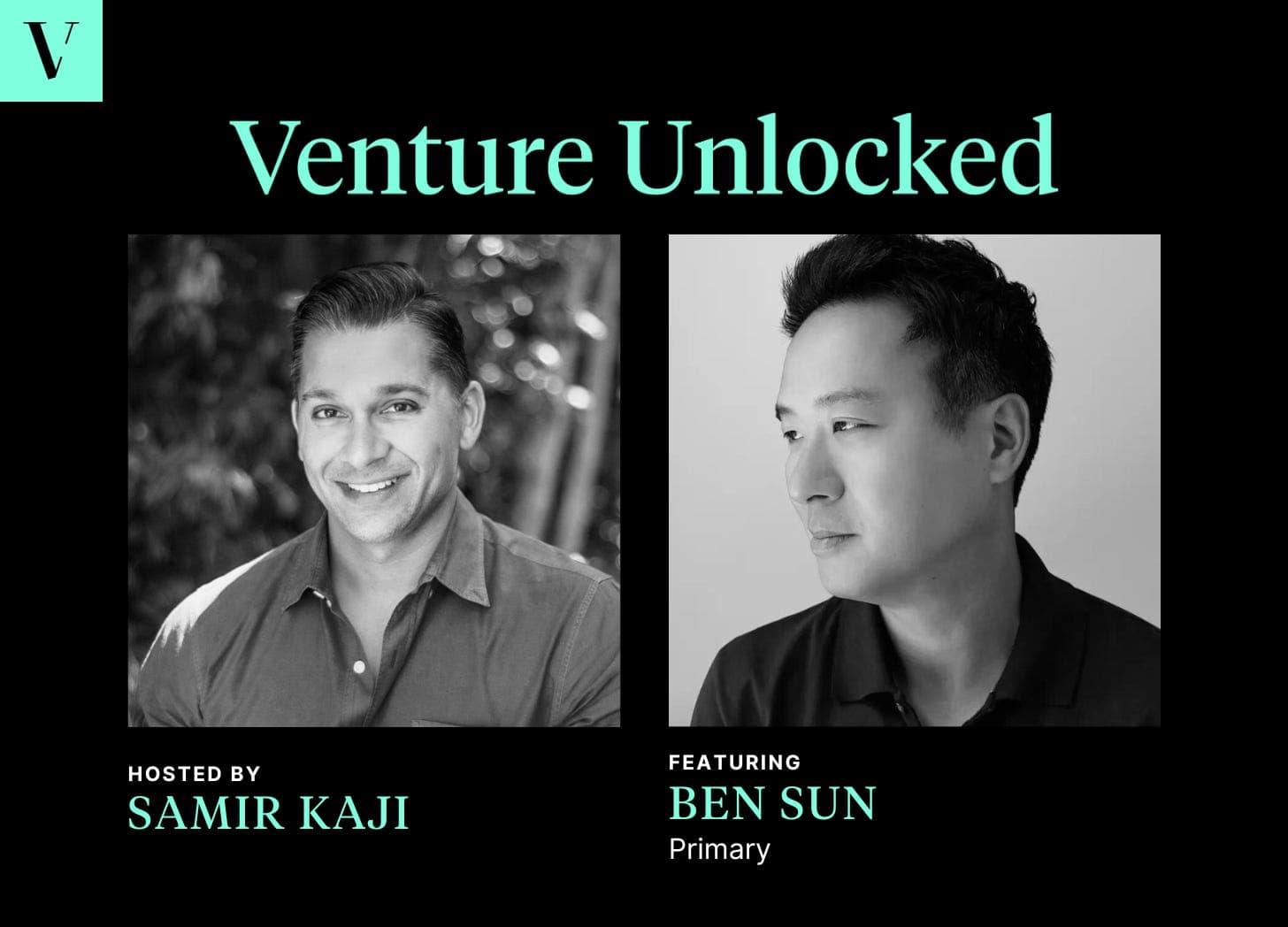
Podcast Title: Venture Unlocked Host: Samir Kaji Guest: Ben Sun, Co-founder of Primary Ventures Release Date: [Insert Date of Release]
Episode Overview In this episode, Samir Kaji and Ben Sun delve into the intricacies of venture capital, focusing on GP-led secondaries, scaling seed funds, and the ideal structure of a VC platform team. Ben shares his transition from investment banking to venture capital, emphasizing lessons learned from his journey.
---
Key Themes and Discussions
- Ben Sun's Journey
- Background: Transitioned from investment banking to startup founder and finally to a venture capital co-founder.
- Founding Primary: Established in 2015 with a focus on seed-stage investments in New York, having backed successful companies like Coupang and Jet.
- GP-Led Secondaries
- Definition and Importance: GP-led secondaries allow general partners to provide liquidity to limited partners. This can be essential for early-stage funds.
- Realization of Liquidity: Discussion on the need for liquidity in the venture capital landscape, especially in light of a changing market environment.
- Seed Fund Scaling
- High Seed-to-A Graduation Rate: Importance of achieving a high rate of success from seed funding to Series A funding.
- Investment Philosophy: Focus on being hands-on and supportive of portfolio companies to boost their chances of success.
- Structure of a VC Platform Team
- Team Composition: Primary Ventures has a substantial impact team (approx. 30 out of 50 total employees) dedicated to operational support for portfolio companies.
- Roles: The impact team focuses on talent acquisition, go-to-market strategies, and strategic finance, aiding startups in critical growth areas.
- Measuring Success
- Key Metrics: Success is measured through surveys, key performance indicators, and the number of hires made through their talent acquisition efforts.
- Focus on Founders: Emphasis on being a supportive partner to founders, which includes understanding their businesses deeply.
- Sector Specialization
- Benefits of Specialization: Discussed the advantages of sector specialization, particularly in high-growth areas like fintech, and how it contributes to better investment decisions.
- Navigating Market Fluctuations
- Strategies to Maintain Low-Cost Basis: Shares insights on how to navigate market fluctuations, including the importance of secondary sales and managing capital effectively.
- Advice for New Venture Capitalists
- Support for Founders: New VCs should prioritize founder support and develop a long-term strategy for their firms.
- Focus on the Journey: Reinforces that startups are challenging, and founders deserve better support.
---
Key Takeaways
- Hands-On Approach: Investing in startups is not just about capital; it requires a deep understanding of their operations and challenges.
- High Graduation Rates: Aim for high graduation rates from seed to Series A to maximize investment returns.
- Role of Team: A well-structured platform team can significantly impact the success of portfolio companies through active support.
- Adaptation to Market Changes: Venture capitalists need to adapt to changing market conditions by utilizing strategies such as GP-led secondaries for liquidity and taking calculated risks.
---
Conclusion Ben Sun's insights provide a valuable perspective on the evolving landscape of venture capital and the importance of being a supportive partner to startups. His approach at Primary Ventures emphasizes the need for hands-on involvement and sector specialization to navigate the complexities of the venture capital world successfully.
For more insights and past episodes, visit [Venture Unlocked](https://ventureunlocked.substack.com).
---
*Note: This summary captures the essential points of the podcast episode and is meant to serve as a quick reference. For full context and detailed discussions, it's recommended to listen to the episode directly.*
Written by AI. May contain mistakes. Listen to the episode to check what was said.
Transcript
Automatic transcript. May contain errors.0:00Welcome back to another episode of Venture Unlocked, the podcast that takes you behind the scenes of the business of venture capital. I'm your host, Samir Khaji, and today we're thrilled to be joined by Ben Sun, co-founder of Primary Ventures, a seed stage fund out of New York. During the episode, Ben shared his journey from investment banking to becoming a startup founder to co-founding Primary Ventures, which has now become a premier early stage fund, having backed companies such as Coupang and Jet. I really enjoyed my time with Ben as we got really deep on venture math, as well as going through the inside baseball of completing a GP-led secondary.
0:33He had so many great nuggets. So without further ado, let's get into the episode right now. Samir Kaji is the CEO and co-founder of Allocate. Allocate and Venture Unlocked are independent of each other. Any statements or references made by Samir or his guests regarding third parties, investments, or securities are solely their views and opinions and are not intended as investment advice or an endorsement of such parties or securities by Samir, his guests, or allocate. Allocate or its clients may maintain relationships with or investment positions in guests, third parties, or securities mentioned in this podcast.
1:07This podcast is for informational purposes only and should not be relied upon as a basis for investment decisions. Ben, thanks for being on. It's great to see you, man. Same here, Same here. Thanks for having me. There's a lot of things that we talked right before the show that we're going to unpack in a lot of detail. But the first thing I want to do, Ben, is just go through your background and maybe what inspired you to start primary in 2015? Thanks, Amir. Yeah, the background of me, I was born and raised in New York City, started my career in investment banking. I was focused on tech. This was back in the mid to late 90s, so quite a while ago, and then soon realized I didn't really like banking, but I loved tech.
1:42And so I was done after my two-year analyst program, became a founder. I bootstrapped a startup out of my apartment for the first two years here in Manhattan, And finally then raised some angel money and some venture money. So raised about$20 million, most of that during the peak of the dot-com boom. But then when the dot-com crash happened, fortunately, we were one of the few companies that survived. So I had this early social networking company called Community Connect. It was predates even Facebook. Got the business to be profitable. Had about 130 employees here. And I ran the company as CEO for 12 years until we sold it.
2:16Sold the company in early 2008. I had Bear Stearns as my bankers while we were in merger docs. bear goes bankrupt uh so it was definitely not easy uh but the deal got done we were officially the last deal that bear got uh bear did uh i did pay gp morgan their fees uh who is who acquired the asset as you remember i transitioned out by the end of 08 and then uh took some time off during the height of the financial crisis and then came back and started personally investing in incubating companies with my own capital. I did that for four years where I invested or incubated about 10 companies altogether.
2:54So I wasn't like an angel that was writing small angel checks around. I was often writing more meaningful checks and taking board seats or at least being a strategic advisor. And fortunately, in those 10 companies, I built a really great portfolio. I was one of the first investors. I'm still on the board of a company called Coupang. It's a$40 billion market cap, publicly traded in New York Stock Exchange. It was one of the first checks at thejet.com, which exited to Walmart for$3.3 billion and invested in other companies like Noom and Yippa Data. So I started building this really great track record.
3:25Then basically the New York scene started hitting this major inflection point. And I said, oh, wow, this is as good of any time to start a venture fund, especially a seed fund focused on New York because there just weren't many guys here. I co-founded Primary at the end of 2014 with my partner, Brad Svluga. I started investing out of our first fund in 2015. And so, yeah, we're nine years in. We now manage about a billion dollars, a team of 50 people here in New York, and kind of really loving what's happening in the ecosystem in New York City. Yeah, we'll get into the fact that you have 50 people, which is a lot of people for a steep fund that has roughly a billion dollars in assets.
4:04A question I often like to ask people that were consumers of venture capital, then over time started their own venture capital firms. What did you identify as things that you didn't get as a consumer venture capital that you wanted to make sure that was going to be part of the core thesis of the firm that you started? You know, when I went through and reflected by my journey, I was always puzzled because like my VCs, my investors, especially my VCs, were actually really never that hands on. I never really wanted them to run my business, but I wanted them to better understand my business. And I often felt like every board meeting, it was like we were constantly misaligned because I was trying to get them aligned.
4:44And it was just hard because they didn't really kind of understand really the business well enough. And it was always some kind of like, shouldn't you be doing this? Or shouldn't we be doing that? Or it was just it's off and it's almost a state of chaos to some degree. I often find like the best boards are those that are completely aligned with the priorities of the companies or with the exec team. And so I was always a big believer at Devils in the Details. I always felt like if you were more hands-on and helpful, you would become a better investor. You would understand that business. you'd have a better reputation with that founder, which would then lead to a better reputation would help affect like your deal flow and your ability to win great deals.
5:24And so I had a really kind of simple kind of North star of like this kind of journey as a founder, like startups are hard and founders deserve better. And if you were really helpful, that good things would really happen. So I really started there. And when I talked to my other founder friends during that time, there was a common story. Everyone felt the same kind of pain point. And so I felt like There was a real opportunity to do that in the market, which sounds kind of simple, but it kind of surprised you in venture where, especially back then, we're talking like especially 15 years ago, where there wasn't much attention on, hey, how do we really help the founder?
5:57How do we make them the center of our business and our core customer? So today, we're very familiar with things like platform teams. And of course, Andreessen, in 2009, they had this huge thesis, which was actually inspired by CAA, for example, in terms of providing all these different services. Since then, we've seen other firms emulate that where there's platform teams, small receipt funds often do it, but they have three or four people. You mentioned a second ago having 50 people. Can you just break down the cross-section of those people and how that impacts that that zero to one that you're working with, many of these founders given you're a seed stage firm?
6:34Yeah. So if you look at the 50 people that work at primary, less than 20 are investors, our investment and incubation team. We also help start companies. Almost two thirds of the organization are what we call our impact team. These are all operators dedicated with helping our companies after we invest. And so what kind of operators are we really kind of bringing on? And well, when we think about especially that seed to series A, the early stage journey, we want to say what were the most powerful levers to affect your success to graduate from seed to A? And some of the key things that we kind of reflected upon were like hiring great talent.
7:11You know, after you raise a seed round, you haven't raised enough capital to hire a cheap people officer or hire a dedicated recruiting team. And your brand is unknown. So Samir starts Allocate. He needs to reach out to people to try to find a great engineer. They're like, who are you with? And why should I talk to you? Like, that's a hard call for a recruiter than me. Versus for us, we get to call on candidates and say, hey, we're primary. We're a great venture from here in New York. Like, people take those calls. And then we can bring out also world-class kind of recruiting talent. You know, Rebecca was the chief people officer at Capsule, Enigma, and Sailthrough.
7:45And she has a team of eight people on her, people on networks team around talent acquisition. And that's a really powerful lever. Other levers are on go-to-market, getting your first customers and helping you build pipeline, learning how to set up your go-to-market organization the right way. Another big one is strategic finance. You don't have enough money to hire a CFO or a head of FP &A. And we think that that importance is, I tell people a lot of times where companies fail is not the right talent, but also not the right focus. You know, there's a thousand great things you can do, but you need to focus on the one or two things that really, really matter.
8:23And sometimes really having someone with strategic finance skills to really understand the levers of your business allows you to narrow down and say, ah, these are the one or two or three things that really, really matter that we have to execute over the next 12 or 18 months. And so we start with C-suite level execs at the top. Cassie Young was CRO, a$200 million SaaS company. Rebecca Price was chief people officer at a number of startups. Brian Guzziassi was head of FP &A at a SaaS company. So we start with teams of people like that or leaders like that. Then they have teams of people under them around talent, strategic finance, go to market.
8:56And then we really try to bring those resources in a much bespoke and hands-on way with our companies. We're not giving them playbooks or blog posts. We're saying, how do we go deep in your business, be real partners with you? often working on site at where your offices are and helping you with the early parts of the journey. And we felt like if we do that in a really material way, one, you actually make a big difference. And two, you actually start gaining a reputation in the market of being hopefully the most helpful guys at the cap table. So one of the things that often comes up, and I see this both in terms of conversations I have with LPs and GPs, but also I've seen you post and other people post.
9:38And some other people say, hey, with platform teams, they end up being just another function of marketing, and they're really not actually doing anything meaningful for these companies at the early stages. How do you actually measure success that is actually tangible to, hey, this is working? There are a lot of venture firms with so-and-so-called platform teams. I would say most of them, to be candid with you, probably aren't that impactful. The big question around them is a legit question. And I think on the question of like how you measure impact, first and foremost, your founders are your customers.
10:14So we do a regular semi-annual, like one CSAT or NPS survey to our founders, where we really want to know not only how we score, but all the really direct feedback of like, hey, was our talent team really impactful for helping you hire? Was, you know, Brian Gozowski and strategic fan resources really helpful, in your process of building out your finance function and thinking about the business correctly. I mean, those are the real things that we go deep on. And then we have our own internal KPIs of how we're measuring things as well. So I'll give you an example. We measure how many people we directly place in the portfolio via our talent team.
10:51We're now placing four or five people a week in the portfolio. Our go-to-market team helps generate customer leads. We measure pipeline that we provide. So we have like really tangible metrics that also the portfolio companies obviously know because we work hand in hand with them that we also measure on both externally internally. So you really need to understand one, the levers, like how impactful they are being and how actually well you're pulling on those levers. And I'd say most firms don't invest that heavily in it because they're almost disincentivized from doing it. Venture capital, when you look at from a manager company, profit margin, these venture funds have now become big where the fees are actually a very profitable business.
11:39And so I tell folks, hey, we have 50 people as a billion of AUM to be candid with you. We can easily fire half the people in our LPs probably wouldn't blink of an eye because they rarely see a venture firm at a billion AUM with 25 people. So they'd be like, oh, you guys are best in class already. What would we do with all that money that we'd save from those 25 people that we would fire? We put it in our own pockets. A lot of managers are almost incentivized to kind of poo-poo platform because, wow, that's manager fee going in their own pockets. And so Jeff Bezos has this great line, like your margin is my opportunity.
12:18That's basically what we saw. We said, wow, this has become a high margin business. our chance to build a new venture firm to hopefully do it better is our opportunity. And the idea, of course, is if you do it right, you're going to get into those companies, you're going to help those companies get to a standpoint or at least a stage that they're more likely and have a higher probability of success. And in your case, it's how do you get a company from C to Series A? And what are those milestones that are necessary? And what do they have to show from a talent standpoint, from a go-to-market standpoint, and also from a capitalization standpoint, which of course will in turn provide better returns for you as an individual and the team because you'll have better carry because you've actually performed these funds.
13:02How do you then think about this KPI? And I've seen you write about this and I really agree with it, which is when you invest in a company at the seed stage, there are certain markers, but there's not a lot of markers. There's not a lot of traction. Maybe it's a first-time entrepreneur. Even if it's a repeat entrepreneur, you don't know what the company is going to look like in five, seven, 10 years. You don't know if Coupang, for example, is going to go from a Groupon company to becoming the Amazon of Korea. So you never know those things. But you can measure, as you've mentioned, can I get a company from C to Series A?
13:37And you've had some compelling stats around this. Maybe we can unpack that. How do you think about investing in companies and this notion of like, I have to underwrite to that Series A? Over the last really kind of 14, 15 years, I've really gotten the opportunity to be a student of the asset class. And I've worked with a lot of really great LPs and also potential LPs that have kind of shared a lot of their insights and data. I remember one family office I met with looked at early stage venture being basically seed and sharing their data over the last 25 years, what the median IRR was for basically seed, the precedency part of the asset class and the median IRR of the last 25 years was seven percent not that compelling for such an illiquid high risky high volatile asset the mean was 50 and this was like oh this is what power law exemplifies we talk about power law distribution versus a normal distribution or egosian or in between it's like a log normal like even within venture, the real power law is an early stage.
14:48If you actually get back to like late stage, it really becomes more log normal, close to, you know, normal. And so really when you then look at the early parts of it, you're like, wow, you see this huge spread between median and mean. I often call it like, it's like the good lottery odds problem. If I said to you, Samir, like, your chances of winning the lottery are one in a hundred million. And the jackpot is a billion dollars but you can only buy a hundred thousand dollars worth of lottery tickets because that's all the money you have would you do it probably not right because it's most likely you're going to go to zero now if you could buy 60 million dollars of lottery tickets maybe you would do it still pretty risky but at least like you roll the dice on it because you say all right more than 50 chance that i'm going to get to that billion dollar mark but that's the problem with venture was like, wow, as an asset class, you have all these seed managers that are going to be at more of the median, but the few that get to that be the outliers and capture the outliers, they're going to have amazing funds.
15:53So I was like, wow, how do you create consistent returns, fund after fund after fund as a pre-seed investor running funds? And when we dug into this data on IRR for seed, the big opportunity that we saw was the reason for this low IRR on a median basis was that there's a low C to A graduation rate. The average C to A graduation rate is between 20 % to 30 % over these couple of decades. And I remember the folks at Horsley Bridge, one of the partners there, shared me this insight. When you get to a series A, 60 % of series A's get to a B 60 % of series B's get to a C 60 % of C's get to a D and usually the unicorn you become a unicorn in either D E or F if you look at historical data so I tell people like hey you need to get hopefully a couple unicorns in a fund usually at least 10 % of your fund needs to be unicorns that have over a 3x net and in order to get there you need a high CTA graduation rate.
17:04And you can't be at 20, 30%. I kind of talk about like, if it's like infant mortality. If you want a country to have a growing population, but 80 % of this population dies between the ages of zero and two, it's going to be really hard for that population to grow. Well, we saw the opportunity to say, well, there's an opportunity to go after a high CTA graduation rate. And so how do you do that? I think the reason why the graduation rates are low is that one, you have a lot of these kind of small funds, non-sophisticated investors that really don't really study the asset class and know what are series A, series B investors really looking for to really understand that the plane is going to land and how to underwrite it.
17:49There's also a lot of seed bets that get done by big multi-stage firms as optionality bets. And inherently by optionality bets, you aren't investing a lot of time and making sure that like, hey, it's going to be a high CDA graduation rate. If you thought it was a high CDA graduation rate, you wouldn't be an optionality bet. You just make the bet. So you just start taking a lot more swings at wild pitches instead of like waiting for your pitch. And that's often our mantra here at the firm is, hey, we want every partner to maybe do two max three deals a year. Wait for your pitch. Wait for your pitch.
18:22Make seed your core business. There is no optionality bet here. And so we really kind of start with that. And then the next thing that we do is say, hey, let's give these portfolio companies that we invest in at Cedar Core Competency the resources to get to the A. And that's what our impact team really does. Let's get into talent, the customers, the capital that they need to get to that Series A. We think about it as, hey, this is a great asset class in aggregate, but with too much volatility, but you can hack the volatility if you focus on that C to A graduation rate. If you can focus on C to A graduation rate, the more things you get to that A, the better the chance that you'll get a unicorn out of that because it's hard to go from C to unicorn if you don't get to a series A.
19:10Based on the 30 % graduation rate, it basically says that only about 12 out of 100 companies will get to the Series C if you do 100 seed stage companies, which is really difficult. And your unicorn status is usually E, which then means you're down to 3%, which is actually the industry average. If you looked at historical data the last 20 years, seed to unicorn graduation rate is 3%. So it's exactly that funnel is what happened. It's that low graduation rate that gets you to 3%. Now let's talk about that 3%. If you do a seed deal right now at a 20 post, most of your unicorns are really between one to two billion.
19:51Like even among unicorns, it's not a distribution of a normal distribution. It's power law again. 80%, 90 % unicorns are going to be one to two billion because look at decacorns. Decaorns, there are 1200 unicorns. They're only about 70 decacorns. So only about 6 % of all unicorns are private decacorns. You got again, this power law distribution among unicorns. So let's say the range of your unicorn outcome is usually going to be to one to two billion dollars even if you come at a 20 post if you took zero dilution you're most likely going to make 50 to let's call it 100 times your money once you from your seed bet if you follow on the a that's going to drop your cash on cash returns because usually your a price is two to three times higher than your seed bet but let's take that out you're just talking if you just didn't reserve and follow on the and you just put in the seed bet, you'd be making 50 to 100 extra money.
20:46That's assuming no additional dilution. If you look at historical data, you're going to get diluted at least 50%, usually 50 to 60 % by the unicorn status. So now you're talking about a multiple of 25 to 50 times. Let's call it roughly 30X and you're only 3%. That's one turn of your entire fund gross. That's not net of fees and carry. So that's one X gross on your outlier. And then you're maybe getting another turn at best from the rest of your book, right? So then we're talking, that's why you're suddenly looking at 7 % median IRR is because you're really at like a one and a half to two X gross.
21:26That's the problem. And so we saw that and said, Oh, let's get to a higher graduation rate. So our first fund,$60 million fund, it's at a 6x net, 2.5x DPI almost. That was over a 90 % seed day graduation rate. The math is so difficult. So let's talk a little bit about what is a great fund. I think a great fund historically is something that is 5x or higher, maybe 10x or the DecoCorn version of a venture firm. Even the unicorns that you mentioned, let's say there's 1 ,200 global unicorns, many were a product of the ZERP environment, are never going to actually exit for those amounts, and people never took money off the table.
22:10Increasing your probability of generating a great fund. So number one, you have to increase that 30 % to something substantially higher. It can't be 30 % because the math just doesn't work. Number two, you have to have enough ownership in those companies that are unicorns that are between one and two billion at the time they do exit. And number three, you have to do that consistently over many cycles and turns. So what is the internal rubric? You mentioned waiting for your pitch. What is waiting for your pitch actually mean in identifying the companies? Maybe you can talk a little bit about what is primaries, fall on rate from CTA, and how it's different from 30%.
22:52But maybe just talk a little bit about that. How do you wait for your pitch? I remember years ago, I was talking to one potential LP. They actually didn't end up being LP, but we've co-invested on another company together. And they did this analysis on venture managers. And they were trying to lock into like, what is that key input for success? And the factor that they thought was most material was deals per partner. The lower the amount of deals per partner, the better the performing fund. And that kind of made sense to me. I was like, huh, if you're a benchmark and it's a smaller fund, but more importantly, you have a number of partners and only doing one deal a year and they get great deal flow, right?
23:36Because they have such a great brand. If you get great deal flow and you're saying to yourself, you know, I'm not only do one deal a year. Is this the one deal I really want to do? You wait for your pitch. you know you're like hey this is good maybe great but i'm not like blown away like holy cow i have to do this attraction looks good but is it unbelievable those guys can wait for great and so when we thought about it we said well we went from our first one being a 60 million dollar seed fund to this new fund that our fund for is now 280 million the difference is we had two partners being me and my co-founder, Brad Svluga, to now seven check writers.
24:18And if you look at the number of deals we do per partner, it's actually less than when we started our first fund. I get to add a partner and say, hey, you're only doing two deals a year versus Brad and I were doing like really like four a year. And so I'm like, you can, and our deal flow is much more robust. I get to say, hey, wait for your pitch. Wait for great, right? That's step one. And then And when you do that, if you don't have that larger of a portfolio, you have more time to spend with that company. Your impact team is less spread thin. That 30-person team is like, okay, the amount of seed investments we're doing out of this fund at 280 is 25 to 30 deals.
24:59This is outside of incubation. Our first fund was 25 deals, even though it's a$60 million fund versus a 280. The difference is we're writing the whole round for the seed round instead of like, hey, we're just collaborating with four or five guys. We're writing a 750K check. We're writing$4 million seed checks a second. We're writing the whole round and buying ownership up front. So I'd say the main lever there is we start with this one principle, Samir, of like, if each partner is waiting for their pitch lower volume and focused on, hey, get that seed bet to your A. And so I'd say, hey, Samir, man, you're a partner at primary.
25:38you need to get over 80 % of your seed bets to a series A. You start underwriting differently. You start thinking about the companies differently. I don't want you to do optionality bets. Every seed deal that you do, you got to get it to over 80 % of an A. And in fact, our funds, if you look historically, are about 90%, it's high 80s because investors, our partners come with that mindset. And that's how you start as your basis of fund construction. The rest of it, in terms of number of deals, ownership, deploy capital, all that is basically just outputs off that main input of your partner per the amount of deals you want them to do.
26:17Let's say a partner comes in and joins primary and they know that they're going to do two deals in this given year. How do you avoid the situation where somebody comes in and no deals get done in January and February because it sounds like there's got to be another deal that's going to come over the next 10 months. You have no activity in the first six months because people are too afraid of essentially not waiting for the pitch and not seeing enough opportunities for that given year. Is there a certain rubric of what that pitch looks like where it's so clear regardless of how much time is left in the year?
26:49So we've now, with the seven partner checkwriters, each of them are more focused on a sector specialization. Venture and tech has gotten more complicated because there's so many companies and the complexity of the sectors, you need to make sure you best understand that. So what do we mean by that? Emily Mann joined us last year around this time from Redpoint. She's been in venture for the last decade. She helped launch Point72's fund and then went over to Redpoint to do early growth over there, where she did a lot of fintech deals, including companies like Ramp. Emily came on with this deep understanding of fintech.
Read the full transcript
27:27and more importantly she knew what series a series b investors are going to be looking for and so when she comes in she kind of really has a good understanding of hey what deals that i want to underwrite that i'm really confident that in the next 18 to 24 months that i can really have a good understanding of they're going to raise their series a because she knows it from being basically a buyer of it working at Redpoint, as well as through her own networks and knowing what the market is looking for. That is a big change in the market. Why that's also important for the founders is founders want Emily as a strategic thought partner because they want more deep sector expertise and understanding.
28:12In our first fund in 2015, we did a couple of fintech infrastructure deals like Alloy and Bestwell, two unicorn companies. If we were to market map market mapped fintech infrastructure back in 2015, you can easily fit in half a slide. If you tried to do it market map now, you can fill a 30 page deck and with like very fine print. It's become really complex. Everyone's getting each other's business. You're trying to navigate who's who and what, yeah, how they're going to encroach on each other. It's like a chessboard that's coming together. That's really complex. And founders are now saying, I want a strategic thought partner that understands the market, understands the players, can help me look around the corners and plan out my business strategically.
28:53And that's what they're also asking for. So getting back to your original question, when Emily joins on, she's looking for that great. Now the next thing we measure is like, hey, are you getting enough deal flow? And seed is an interesting part where if any manager says, hey, Samir, I looked at a thousand opportunities. I'm like, that doesn't really mean anything. I can literally go on Twitter right now and say, send me your deck. I'll get a thousand decks today. I guarantee you 99 % of them will never raise capital. And that's a difference in seed versus series A, series B, series C. You don't raise a series B unless you raise a series A.
29:28So that filters it down. Seed is so noisy. So one of the stats that we track is we look at all the opportunities that each partner looks at. And then we look back and say, did that company raise a round from somebody? And so we call it seen deals. Like these are the actual deals that got done in the market. historically across our partners they'll look at almost a hundred deals that got done in the market a year and they'll put down term sheets for maybe two of them and then we usually win 90 percent of the time and every deal is competitive so that's how we look at deal flow which is very different we don't track all the opportunities those are thousands we track what are the things that we looked at actually got done and then to me that's a measure of your pipeline of hey is this stuff that you're looking to see, is it crap, crap, pick good, or good, good, pick great?
30:19And if I say, hey, Emily, you're actually looking at a lot of stuff that gets done in the market and just not willing to do it, and you're waiting for great, that's a good sign. So we look at that as another KPI of how we manage a firm. At the seed stage, you really don't know what the final form of the company is going to be. And it's incredibly difficult to even project out three years from now, let alone 10, 15 years. And because of that, a lot of people say, well, when you invest at seed, it's about sourcing, winning, and yes, picking to a certain degree, but it's really hard to pick at that level.
30:54And because of that, a lot of folks tend to gravitate toward bigger portfolios, get more shots at goal. In fact, I think you've done maybe 40 or so investments throughout the entire time over almost a decade. How do you think about that model and having 35, 40, 50, 60 companies versus what you do? The real math on it is whether you do 10 deals or 100 deals, you really need to look in the cash and cash multiple of what drives your fund or the outliers being the unicorns plus. And so the math is if you do 10 deals or 100 deals, you really need about 10 % of those deals to be unicorns. So if you do 10, you need one.
31:38If you do 100, you need 10 unicorns. Now you might say, wow, 10 unicorns sound impossible. It's a lot harder. I mean, if you're swinging at 100 pitches, trying to connect on 10 of them is going to be really damn hard. That's our philosophy. Some people, like some models, they're able to gravitate to a higher hit rate. Even a business like YC, if you looked at their data over the last decade, they had 2 ,000 companies go through the cohort, only 5 % got to unicorns. So they're much higher, they're higher than that 3 % average. But at 5%, that usually won't get you great returns. But what YC does in conjunction with that, they have a much lower cost basis.
32:19They're now writing, I think, 150K check for 6%. Back then, you know, years ago, it was even a much smaller check for 6%. If you took their cost basis, their cost basis is so low, right? Much lower than the industry average. So they find alpha by saying, hey, I'm going to go from industry average three to 5%, which still doesn't give you great returns normally, but I drop the cost basis down dramatically. The other thing that YC does is because they've actually gotten 100 unicorns, they actually then get decacorns. So if you look at their 100 unicorns, they got Airbnb, be. They got Stripe, Rippling, Instacart, DoorDash, GitLab.
32:58They get all these companies between five, 10,$50 billion. So if you took the average value of the unicorns, it's about 5 billion. So it's no longer a, hey, this is a$1 billion, it's a$5 billion. Remember I did that math earlier? Like, hey, this is a 30 or 50X. Oh, this is now 150 to 250X. That's your average unicorn so that is a special to me you know i don't know gary tanwell but he co-founded initialize initialize a very good reputation i know the folks are running it terrific but you can see why he then went to one yc it's like hey you got a you got alpha in this incredibly part of the asset class with a real structure of lunch you have a much lower cost basis and you have this volume to unlock Decacorns and the real outliers.
33:49And that's why they have these great performing funds. And that to us is how we look at venture is like, wow, this is a great, especially seed stage is an amazing asset class, but you got to think differently. You got to approach it in a much different way. If you want to find alpha consistently. YC is a great example. And they've, they've found their own form of asymmetry that is not only huge, but it's been continuous for over a very, very long period of time. During most of the time that you ran primary, I think about 2015 to 2021, especially those 2019, 20, and 21 years, where I did see the graduation rates go way up.
34:28And actually, the step up from Series C to Series A was more than that 2 to 3x. It was like 5, 7x, sometimes even higher. During that time, did you ever question the philosophy of fewer bets and partners who are probably looking at all these deals and saying, I see all our peers doing a lot of deals, they're getting marked up, they're tracking really well. Maybe walk us inside some of the partner conversations during that time. Yeah, I think this gave us even more conviction on the fact that seed as our core bets were, even for our core seed fund, the majority of our capital, our investable capital goes into that first check.
35:09Because when you think about the dollar cost average, especially in hot markets or a hot company, the next round price goes up that three, five, seven X. So then you say to yourself, well, I wish we would have just wrote that check in the beginning, or you could have wrote a fifth of the check and own the same ownership and got the same price. So then we were like oh really that's what like is the why we advocate seed in fact let's buy up front and then what you may have is a more of a j-curve right like oh you have a company couple companies fail you deploy capital early oh you kind of get into this j-curve situation but once you get the markups you're right out of the j-curve like you pop right back out because you got a such a low cost basis that those big markups suddenly pop you right back out.
36:00And then, you know, you're not, and then, and then people that were hoping for like, Oh, I want to double or triple down on my winners. I'm like, look, you know, what's happening. The series a investors are getting bigger funds. They are feeding, people are fighting for just a prorata. If they're lucky to say that you're going to get super prorata and buy up good luck, especially for those hot deals. And you want to do what's right for the founder. You're not going to say, Oh, my legal docs, It says I mandate this. I'm going to block this. If Sequoia does it, you'll have the worst reputation in the world.
36:31So then you're like, okay, well, I guess I can't buy up. I barely can get my pirata or sometimes I can't even get the pirata. And that's the worst situation to be as a venture firm. It's like, oh, you spent all this time picking, seeing, winning this great deal. And you didn't get your ownership up front. You didn't get to make that bet really work. So we take that into account all the time. And we say, wow, there's this amazing, like where you want to play in seed is the lowest cost basis. But do it right. Do it right. Because you can make a lot of bad bets a low cost basis and get the median IRR, which you don't want.
37:09It's like pay attention, focus on like getting the seed bets right. Unless you got some other hack like a YC who does it differently. There's a lot of different ways to find alpha in this game. But if you aren't really focused on the data and really thinking about it, I think you get caught in the traps and you're going to fall right into the median. Yeah. And of course, like the median going from 7 % to the mean of 50%. I mean, we're talking about a 43 % delta. 7 % doesn't even meet the public market equivalent. So why would you even do it? It doesn't even make any sense. And, you know, when we think about alpha, one of the heuristics out there is as you grow fund size, your returns are going to regress.
37:48Now, I've made the case that, well, it's a different product. Risk return is different. If you look at a$800 million Series A firm, if you actually look on a look-through basis, the vast majority of the capital is kind of Series B, C, and D, which are cost averaging up. Of course, you're going to reduce the multiples on those later checks. Therefore, it's a very different return profile. But I think generally people assign it, well, bigger fund, worse returns. And I don't think that's always true, especially if your exposure is at the pre-seed seed kind of series A level. You've grown your fund size from 65 million, I think, fund one.
38:24Last set of funds, or at least the early stage fund was 275, meaning the seed fund. How do you think about fund size and the impact on returns? That's the, I think, a bit of a myth where either people say, oh, small funds outperform big funds. By the data that looks right, but it's not the size of the fund that's a factor. as you said, the stage of the bet. So when you run bigger funds, you no longer are doing these, mostly deploying a pre-seeded seed. You're starting to do series A, B, C, D, becoming multi-stage. You're reserving for these later rounds. That just increases your cost average, as you just mentioned.
39:00Ventures shouldn't be considered one beta. It's a pretty wide range of beta. And we kind of talked about it. Seed is like super parallel. And then when you get to like late stage, it looks like it looks log normal. So when we think about the asset class, we think about it in that front instead of, hey, can you actually focus still on seed while growing the scale of your fund? So let's talk about a$280 million seed fund. Even now, people are like, wow, that sounds really big. Seed last year was$15 billion in the US alone, right? And that's off in the peak 2021 it was 20 billion so let's talk 15 billion and it's grown pretty dramatically the last decade where it was like a tenth of the size so 15 billion even as a 280 million seed fund where we're writing most of the fund in the first check let's call it hey we're deploying 60 70 million dollars a year right in seed bets 60 million dollars of checks out of a 15 billion dollar seed market a year, right?
40:04Low single dinnage of the TAM. So seed has become industrialized. It is now scale where we can say, look, we can still hopefully cherry pick the 1 % of the seed deals that we love and still deploy a$280 million fund. So that's how we think about it. So we think about the set of the opportunities of the TAM and then we think, hey, can we wait for a pitch and feel like we can be picky out of the quality deals that we're seeing done in the market? And is there enough stuff to be done? And then wait for that pitch and get it to a high CDA graduation rate. And on top of that, we do do incubations, which lowers our cost basis as a fund as well, which I think is an important part of our formula of finding alpha.
40:43Obviously, the ownership on those companies is higher, similar to what YC does. Of course, they get 6 % for 150. And presumably on those incubations, you get a much higher ownership stake up front, which actually reduces the size of the exit, those companies need to drive to be able to get a nice multiple and a return on the fund. It still then becomes, okay, you got your entry price, you want to get into these companies, you wait for your pitch. But ultimately, there has to be some exit of these companies. And certainly, during the ZERB period, we did see plenty of opportunities for people to sell into secondaries where there was a tender.
41:21A lot of that has gone away outside of the top companies. You did something really interesting. And this is an area that I'm incredibly fascinated. And I do think we're going to see more of this. But within the GP-led secondaries or a GP-led liquidity, so Lightspeed purported is doing a continuation fund. You had a transaction done, I think it was with Stepstone, where you generated liquidity for fund one. Walk us through how that actually worked and what a strip sale is for those that aren't familiar. Great point on realizations in this business. Another interesting one, and I'll start with this first, was, again, that same person at Horsley Bridge, who's not actually an LPA, but gave me some really interesting stats.
42:05They actually made the point that your realization period for an early stage fund has become about the same as your growth fund. And so you think about it, the reason why is that an early stage fund, you get things like early M &A. So in our first fund, we invest in a company called Mirror. It's an IoT fitness company. Mirror device, you probably saw commercials for it. It got acquired by Lululemon for$500 million, right? Returned almost half the fund back for us. That's a great example of like, that was a, I think three years from doing a seed round, within three years of doing a seed round to that exit.
42:41When you're doing a growth deal M &A, like if your entry price is like 500 million and you're waiting for the$3 billion M &A outcome, there are not many companies that could do a$3 billion M &A transaction versus a company that could do$100 million to a$500 million transaction. So you have more likely earlier M &A or smaller size M &A coming out of a seed fund than you do from a late stage fund. The next thing that you get as a lever is secondary sales. So during the peak of the market, we were seeing companies in our portfolio that were getting, you know, valuation multiples that were like 70, 80 X ARR.
43:23And I remember, you know, having gone through the dot-com bubble days and the bust when I was in the middle of the dot-com days of when all the hype, there was one guy that gave me this piece of advice. He said, Ben, if they're passing a plate of cookies around, take one. and so my partner and i talked about it we're like uh i think they're passing the plate of cookies around and we said look we can sell 25 30 percent of our position we're a seed fund and in fact you know getting to some of your clients that you work with same year with our family offices the high network folks you know we're into the qsbs period on some of these as well so we're like wow we can sell secondary and be you know shielded from capital gains from qsbs Like, oh, wow, this is amazing.
44:06And we felt like, look, and maybe we're leaving someone at the table. But if we're right and if the market really corrects and this thing doesn't work out, we're going to look like geniuses. So it's like and if we're wrong and the thing keeps on climbing, they're still going to make out great. There is the opportunity to sell secondary in that situation in the heated market. And maybe even now we obviously see a bunch of stuff happening now in this market. now secondary has then now become even more interesting with things like continuation funds and now strip sales and so getting the definition of strip sales you're finding investors funds uh stepstone has a secondary fund that's been very successful they just they just announced their most recent one at three billion a lot of other firms to do it and you know industry ventures top tier has one number of folks now have secondary funds and they'll do a deal where it's a strip sale, well, they'll look and underwrite across your entire portfolio and buy basically a strip or piece of every position in your fund.
45:08And that gives it a clean kind of, hey, it gives them enough of a bite size to do the transaction. Plus, it keeps the diversification of what they see, hopefully, as a good underlying portfolio. And so for us in this market, Stepstone being an LP, we went through discussing with them and some of our other LPs that have these secondary funds as well as non-LPs because we wanted to do a market check and say, all right, well, our first fund's a 2015 vintage. It's over a 1x DPI. But when we looked at the IPO and M &A windows, we were like, I don't know if we're going to see a lot of significant realizations over the next two years.
45:49It's now a 2015 fund. We're approaching 10 years into it and we're like hey can we can we return more back the fun as i kind of described to you is you know at a 6x net and we said and we're getting priced pretty close to that and we said hey i think especially with our high network family offices where we're returning money back with usbs protection on top of that i think we were gonna look like heroes and we talked with rlps and a lot of them said look you guys are already winning like giving some back it's even And this is great. And so you shouldn't think of it like all the sacrifice. In fact, like you guys are winning and taking something off the table right now is going to be great.
46:31So, you know, that fund is now close to two and a half XDPI, which you looked at, you know, in that vintage puts us in probably the top 1 % of both TVPI and DPI. And I think more and more of this is going to happen because as I told you, like seed has become industrialized. and if you're doing 15 billion dollars a seed a lot of that is among early stage or seed funds this whole secondary strip sale opportunity i think is going to become more and more robust and so i think that as a product for investors and lps is only going to get more substantial which is also another good thing for seed investors to give them another potential liquidity realization path it certainly seems so and the things that you know at least if we look at the trend line.
47:13So think about public companies. We had 8 ,000 roughly public companies in the 90s. We have a little over 4 ,000 right now. But it's not only the decrease in the number of public companies, but it's the bar to go public. We had this slide that we presented last week, and it looked at the median level of revenues for a company that's going public in 2021 to 2023. In 2023, it was north of$400 million. I think you have to get to$200 to$300 million to be viable as a public company. I don't think you could do what we saw in the late 90s where companies were going public through the Robbie Stevens of the world.
47:52That just doesn't happen anymore. With the bar going up to be a public company, which was a great place for liquidity, I don't see SPACs coming back to what they were in 2021. And even large M &A to a certain degree is maybe uncertain because of what we've seen for Adobe and Figaman. There's been a few other examples that we will see some of these other GP-led opportunities, which I think LPs will welcome. In fact, LPs, all the people are talking about is I put a lot of money into VC funds. The time to exit gets longer and longer and longer, which then decreases overall IR, does it really actually make sense after a certain point?
48:32So I do think it's going to happen. It's very early though. I know Shasta tried to do this. I think the difference was it was like year seven versus later in the fund's life where I think the LPs were much more amenable to it. So it is interesting to see. So I want to end with a question related to now that you've been at it for almost a decade, you were doing angel investing before that. If you were to impart one piece of advice to yourself when you first started? What would it be in terms of investing in venture? You know, I don't think I would change that much. I would think I would just reinforce this message I had right from the beginning of why I got into it, which is this whole mantra of like, startups are hard, founders deserve better.
49:19I think we talk about all the tactics and strategies and asset class, but at the deep root of it, I got into this business really because I wanted to help founders, especially in the early parts of their journey. Everything kind of cascades from there, right? And you're like CTA graduation rate, being more concentrated, having an impact team, and then the outputs of like, oh, doing a strip sale or whatever, hopefully the fruits of really good productivity from there. But this being grounded on like that core purpose, I think is so important. I think it's so important. I think that's number one.
49:51Number two, and maybe I wasn't thinking about this from the very beginning i think i was starting i started out at that's just like how do i do some good deals and make sure i'm helpful i think if you don't take a much longer term strategic view of how to find alpha and create a structural advantage a real structural advantage i think especially now with a with a venture market has gotten so much more competitive you're gonna get drowned out and be part of the median instead of the mean or set up in the outliers and i think that is a very dangerous place to be. And so I think I probably got away with it earlier in my career because it was not as competitive.
50:29And if I had to suddenly do it now as Ben's son, early stage, very new newbie, I'd be like, hey, think about what gives you that edge right out of that gate and make sure you're building upon that and how to compound that. Because if you don't, you're going to get crushed. There are a lot of great venture managers out there. And a lot of them are thinking about how they're going to have that edge and they're like going deep on it and figuring it out. And I'm sure you guys work with a lot of managers there and what your platform's about of really sussing that out. And that's the amazing part of the asset class.
51:05Yeah. And that edge is harder and harder in a world that's hyper competitive, similar to starting a company. I think things are far different in the mid 2000s in terms of the number of companies that were starting versus what we've seen over the last few years. So you guys have built a great platform, a great community, Ben. I really appreciate you coming on. And it's a lot of fun when we can go into the actual brass tacks of venture math and how things work. And so really appreciate all the data and congratulations on what you've built so far. And same to you, Samir. I think what you're doing for the asset class, especially for those early stage emerging managers is going to be such a huge catalyst in terms of those managers upping their game and making the ecosystem that much are rich and productive.
51:48And you guys helping bridge that is awesome. So congrats on your site. Thanks so much for listening to another episode of Venture Unlocked. We really hope you enjoyed our conversation with Ben. To hear more, please subscribe to Venture Unlocked on iTunes or Spotify to get the latest episodes straight to your inbox, or go to ventureunlocked.substack.com for the latest episodes, as well as my ongoing commentary and content on the world of venture capital.
52:17Thank you.
From the publisher
Follow me @samirkaji for my thoughts on the venture market, with a focus on the continued evolution of the VC landscape.
In this episode, we are thrilled to be joined by Ben Sun, co-founder of Primary, a seed-stage fund based in New York. Ben shares his journey from investment banking to startup founder, and eventually to co-founding Primary, which has backed companies like Coupang and Jet.
Ben provides deep insights into venture math and the intricacies of completing a GP-led secondary. He discusses his background and the inspiration behind starting Primary in 2015. Ben talks about the challenges he faced as a founder and the importance of truly understanding the business as a VC. He explains Primary's hands-on approach, emphasizing the need for a high seed-to-A graduation rate and how their impact team supports portfolio companies.
The conversation covers the metrics used to measure success and the importance of waiting for the right investment opportunities. Ben explores the changing landscape of venture capital, strategies for finding alpha and generating returns, and the importance of sector specialization and deep sector expertise. He also touches on deal flow challenges at the seed stage and the role of incubations in lowering the cost basis.
So many great nuggets in this episode, enjoy!
About Ben Sun:Ben is a Co-Founder and General Partner at Primary. Forbes' Midas List ranks him as one of the top 100 tech investors in the world. His founder-first approach originates from having been one: His experiences cofounding Community Connect, one of the first social networking companies, and LaunchTime, an incubator, inform how he supports founders in the portfolio.
Ben focuses his investing activities on primarily consumer-facing companies. Ben has been active in the NYC tech community for over 20 years. Prior to becoming an entrepreneur and investor, Ben worked at Merrill Lynch in the Technology Investment Banking Group, but he really began his career at the age of eight when he worked in his parents’ Chinese restaurant.
In this episode, we discuss:
(01:21) Journey from investment banking to founding Primary Ventures.
(03:45) Starting Primary Ventures and focusing on seed-stage investments in New York.
(04:12) Emphasis on being hands-on and aligning with founders.
(06:34) Roles and functions of the impact team at Primary Ventures.
(10:00) Measuring success through surveys and key performance indicators
(13:23) The importance of choosing the right investment opportunities and achieving high graduation rates from seed to series A
(22:00) How partners wait for the right pitch using an internal rubric
(26:57) Benefits of sector specialization, with a focus on fintech expertise
(35:00) Strategies for maintaining a low-cost basis and navigating market fluctuations, including secondary sales
(41:00) GP-led secondaries and benefits of providing liquidity to limited partners
(49:00) Advice for new venture capitalists: support founders and develop a long-term strategy
I’d love to know what you took away from this conversation with Lindel. Follow me @SamirKaji and give me your insights and questions with the hashtag #ventureunlocked. If you’d like to be considered as a guest or have someone you’d like to hear from (GP or LP), drop me a direct message on Twitter.
Podcast Production support provided by Agent Bee
This is a public episode. If you would like to discuss this with other subscribers or get access to bonus episodes, visit ventureunlocked.substack.com