In short
Venture Unlocked Podcast Episode Notes
Episode Title
Fundraising Best Practices for Managers, Strategic LP Management, and LPACs with Meghan Reynolds of Altimeter
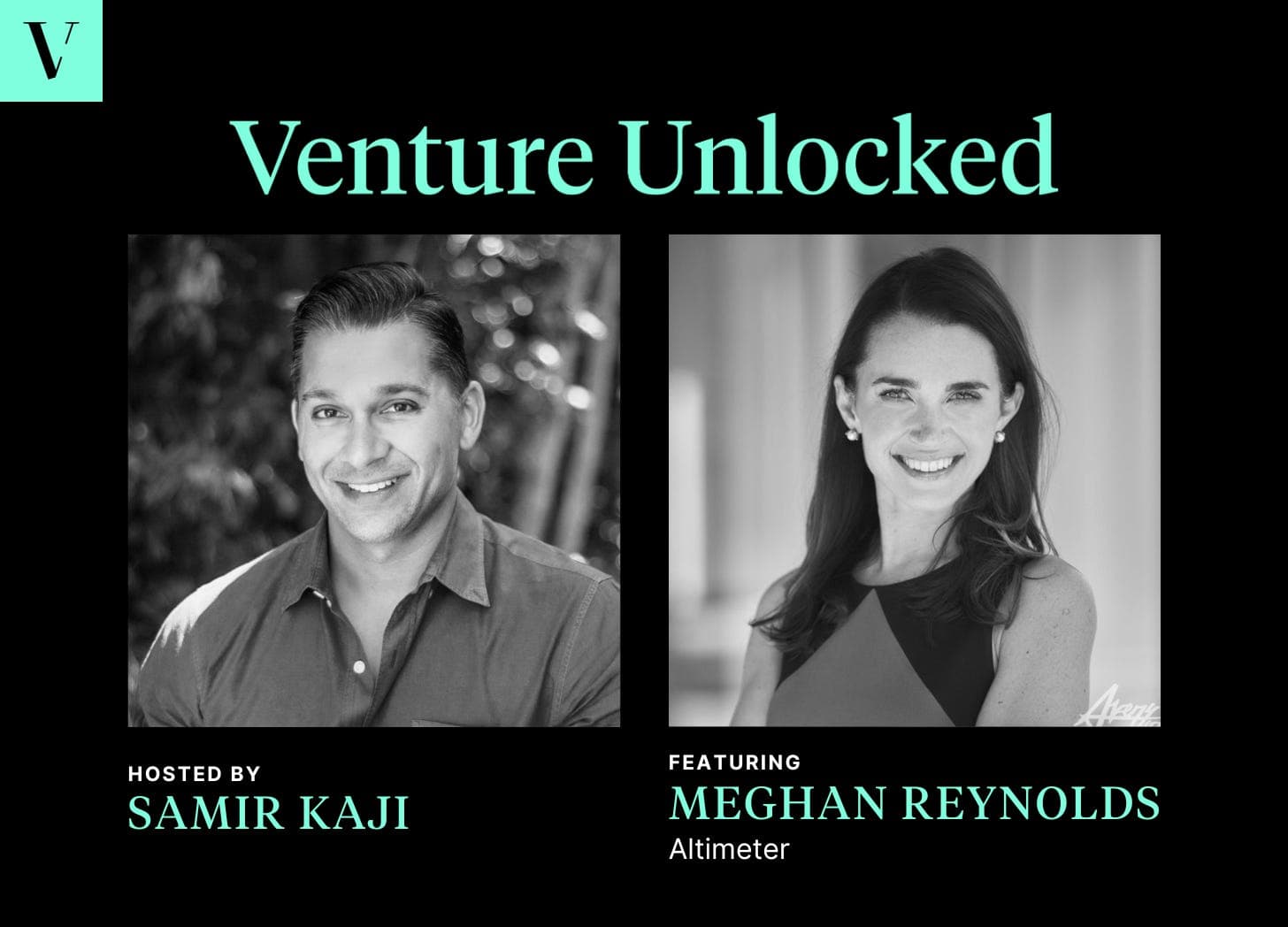
Episode Overview In this episode, host Samir Kaji speaks with Meghan Reynolds, partner and head of capital formation at Altimeter Capital. They discuss best practices for fundraising, the importance of strategic management of Limited Partners (LPs), and the role and optimization of LP Advisory Committees (LPACs) in venture capital operations.
Key Guests
- Meghan Reynolds:
- Partner at Altimeter Capital.
- Head of VC Capital Formation and Fundraising.
- Previous roles included positions at TPG, Goldman Sachs, and JAZZ Venture Partners.
- Active contributor to discourse on LP relationships via Twitter.
Key Topics Discussed
- Meghan's Career Path
- Background in Goldman Sachs’ private equity group.
- Transitioned to TPG where she co-led global fundraising.
- Joined Altimeter to engage with the evolving venture capital landscape.
- Capital Formation Defined
- Capital Formation vs. Fundraising:
- Capital formation encompasses investor relations, product management, strategic planning, and relationship management with LPs.
- Importance of understanding investor expectations and delivering ongoing communication.
- Building Relationships with LPs
- Importance of Listening:
- Engaging LPs to understand their needs and expectations.
- Tailoring pitches to align with LP interests.
- Key Factors Beyond Returns:
- Team dynamics and operational insights are increasingly vital to LPs.
- The significance of transparency and regular communication.
- Strategic LP Management
- Frameworks for Long-term Partnerships:
- Establishing partnerships that focus not just on immediate returns but on sustainable growth and shared goals.
- Empathy Towards LPs:
- Understanding LPs’ situations and providing relevant information and insights without overwhelming them.
- Utilizing an LP Advisory Committee (LPAC)
- Role and Value of LPACs:
- Engaging with LPAC members to strengthen relationships and obtain strategic insights.
- Treating LPAC interactions like board meetings to discuss growth strategies and fund timing.
- Market Trends and LP Reactions
- Observations on current market conditions and how LPs are adjusting their strategies in light of economic fluctuations.
- Discussion on the importance of maintaining investor interest through insights and transparency.
- Fundraising Advice for Solo GPs
- Constant engagement with potential LPs and maintaining a visible presence in the market is crucial even outside of fundraising cycles.
- Consideration for hiring dedicated capital formation roles or utilizing external advisors.
- Future Market Predictions
- Insights into upcoming super cycles in technology, particularly around AI and machine learning.
- Discussion on the evolution of the LP base and the diversification of capital sources.
Key Takeaways
- Capital Formation is Holistic: It includes not just fundraising but continuous engagement, transparency, and relationship management with LPs.
- Invest Early in Capital Raising Talent: GPs should prioritize hiring individuals focused on capital formation to build robust investor relationships from the outset.
- Listening is Critical: Understanding LPs' needs and aligning with their strategies can significantly enhance fundraising success.
- Embrace the LPAC: Utilize the insights from LPACs to inform strategic decisions and create a collaborative partnership approach.
- Anticipate Market Cycles: Be prepared for market fluctuations and adapt fundraising tactics accordingly.
Additional Resources
- For more insights and updates from Samir Kaji, follow him on Twitter [@SamirKaji](https://twitter.com/Samirkaji).
- To learn more about the podcast, visit [Venture Unlocked](https://ventureunlocked.substack.com?utm_medium=podcast).
Conclusion This episode provided valuable insights into the intricacies of venture capital fundraising, the importance of strategic LP management, and the evolving landscape of the venture capital market. Meghan Reynolds’ extensive background and practical advice offer a roadmap for venture capital managers aiming to build successful fundraising strategies and foster long-term LP relationships.
Written by AI. May contain mistakes. Listen to the episode to check what was said.
Transcript
Automatic transcript. May contain errors.0:00Welcome back to another episode of Venture Unlocked, the podcast that takes you behind the scenes of the business of venture capital. I'm your host, Samir Kaji, and on this week's show, we're thrilled to be joined by Megan Reynolds, partner and head of capital formation at Altimeter Capital. Founded by Brad Gerstner in 2008, the firm has backed companies such as Snowflake, Unity, Gusto, and Modern Treasury. Prior to joining Altimeter, Megan worked in a variety of investor relations roles, including at TPG, Goldman Sachs, and Jazz Venture Partners. She's also quite prolific on Twitter with her insights on the LP world, and this conversation was a lot of fun as she went through the system she uses to form and maintain relationships with world-class LPs.
0:38We hope you enjoy my conversation with Megan, and let's get right into the show. Today's episode is brought to you by Juniper Square. Venture capital firms and their investors have realized that a fund administrator without best-in-class technology is no longer acceptable. At the same time, experienced fund managers also know that a reliable and responsive fund accountant is critical to ensure fund activities are done in a timely and completely accurate way. It's time you talk with Juniper Square, a fund admin built for sophisticated venture capital firms by pairing world-class support with leading technology.
1:11Request a call at junipersquare.com. That's J-U-N-I-P-E-R-S-Q-U-A-R-E.com. Samir Khadji is the CEO and co-founder of Allocate. Allocate and Venture Unlocked are independent of each other. Any statements or references made by Samir or his guests regarding third parties, investments, or securities are solely their views and opinions and are not intended as investment advice or an endorsement of such parties or securities by Samir, his guests, or Allocate. Allocate or its clients may maintain relationships with or investment positions in guests, third parties, or securities mentioned in this podcast.
1:51This podcast is for informational purposes only and should not be relied upon as a basis for investment decisions. Megan, it's so great to see you. Thanks for joining us. Samir, I'm so happy to be here. I feel like this is meant to be you and I chatting about this stuff. I think so too. And you are one of the most active people when it comes to LP Twitter. And that's something that obviously is near and dear to my heart, given how many LPs I talk to. But there's going to be so much to unpack in terms of what we're both seeing. But maybe a good place to start is you've been with Altimeter now for almost two years.
2:31And before that, you had a variety of roles, different firms, you know, in the capital formation world. But let me just start with your history and what led you up to Altimeter? Sadly, I have a long history, which is giving a some indication of how old I am. But, you know, I've essentially had three chapters of my career, which goes back to early 2000s when just by a stroke of luck, I landed at Goldman Sachs in their private equity group right out of school and into a capital formation role at really what was kind of the advent of the asset class. Private equity had been around a long time, but it was really at the point when private equity and venture capital and alternative investments were starting to grow from a very small cottage industry to a real institutional asset class.
3:23So when I joined Goldman there in their private equity group, they were managing about 10 billion of assets. When I left 10 years later, they were managing about 40 billion of assets. And this was through a series of fund of funds and secondary funds and direct funds. And that was mainly through both institutional and high net worth growth. So had a great start to my career there. And then I left Goldman and joined TPG, time in the market that was post-global financial crisis, post-mega buyout boom, but when the buyout part of the market and the large end of private equity was really expanding into multi-product firms and public alternative firms.
4:07And I was really lucky to spend another decade learning many things about being at that part of the market and what it meant to service investors both coming out of a crisis and raising capital in a multi-product format. And so 10 years at TPG, watched them grow from 40 billion when I joined to over a hundred billion when I left. And when I left, I was co-leading fundraising for the firm globally. And I was really ready for a third chapter in my career. I love the build and grow, as you can imagine, given what the first two chapters look like. And I feel really excited to be a part of Altimeter when venture capital, the venture capital part of the industry is really going through its own transitions and institutionalizations.
4:51And we can unpack that, but exciting to be at Altimeter for people that don't know Altimeter. It's a life cycle technology investment firm that invests from the earliest parts of a company's journey and venture all the way through to public markets, technology focused, and a fabulous LP base that I get to work with every day. It's a great history. And there's something that I wanted to come back to, which is this concept of capital formation. Oftentimes, when you think about fundraising, you're thinking about it into the context of investor relations, working with LPs, working on the fundraise.
5:29But I think capital formation is a more nuanced term that probably has several dimensions to it. Maybe we can talk about what does capital formation mean from your perspective? Happy to chat through that. And it's funny, I think that the role is called many different things and the industry across the board could use some consistency in what we call this role. I mean, some people call it fundraising. Some people call it investor relations. I think capital formation encapsulates all that's involved and doesn't just, I think those other terms have a tendency to capture a portion of the role, but not a complete definition of what's involved in servicing and raising capital for servicing investors and raising capital for an alternative investment firm or private markets firm.
6:20So I think that, you know, there's different components. One, as you said, is investor relations. So I think, you know, what, and I think this is what people have a tendency to think about when they think about an investor related role in a firm. So traditional IR would be the servicing of your existing investors from an administrative standpoint, from updating addresses to sending out capital calls to doing your quarterly reporting to answering, you know, day-to-day Q &A around what's happening, what's happening with the fund that I'm invested in. And I would say this is something that from a, just like a pure legal standpoint, you have to accomplish certain things when you are a fund manager, you have to send the reports and send the capital calls.
7:06And there's a certain amount of administration that's just related to that. And it's, it's extremely important, but you know, it's certainly only a portion of the role. And then I think there's also a part of capital formation that what I call product management, other firms call it project management. But this is, I define this as looking at the portfolio that you're running, thinking about the fund that you're managing from the lens of what your investors expect from you and need from you. So how does you're working with the investment team, working with the portfolio manager or general partners to say, how do our investors think about the actions that we're taking?
7:53And are we delivering on what was marketed and promised to them in the management of our portfolio? And I think about this in terms of when is the right time to distribute capital? Are we communicating proactively about not just our annual reporting, but are we communicating proactively about what's happening day to day? Part of what they need from us is information. It's insights. It's beyond just an annual report. I think about this around fundraising strategy and timing, right? How do we strategically plan when we're coming back to market with a new fund, you know, running, what capital do we need for a product and when?
8:40So a little bit is, is push out, like what do we need from our investors? And some of it is pull of what do investors need from us? There's a third component around like relationship and brand management that I think is more traditional sales, but like, how do we maintain relationships with both our current and prospective LPs? What channels and resources are we leveraging to build new relationships in the market and connect with existing investors? There's a lot there. And the things that I think are pretty obvious to most people that are fundraising, and this could be somebody that is a professional that's working at a firm that is in the IR position, or it could be a smaller firm where the GP is both investing and also managing those LP relationships.
9:28And the things that people typically think about is, okay, when I'm fundraising for a particular fund, there's a number of things that need to happen. I need to fill up the funnel. I need to work people through the funnel. There's materials that I need to put together after they invest. There's those quarterly reports. There's these inquiries that come up. It's the AGM. But you mentioned something during that part of what you're describing, which is around how do you work with the investment team to be more strategic in nature? You mentioned distributions, the DPI. You're listening to your clients, which are these LPs or shareholders, which are the LPs and understanding and empathizing on what they're going through.
10:11And ultimately, you're working in concert with the investment team. So all of it is very holistic when you make decisions. What does that look like and how you interact with the investment team to ensure that number one, the investment team is doing what they're best at, but at the same time, it aligns and corresponds to the LP or shareholder side of the table? It's an everyday component of the business. It really is. And one would think that it would be very straightforward, right? Like we marketed a fund and we're going to invest the fund. And do we really need to be understanding the LP mindset as we move forward?
10:49But it really is dynamic. And it looks like a lot of different things. It looks like sitting in an investment committee meeting and we're discussing an investment that may be sensitive for a certain like component of LPs because, and I'm making up a hypothetical situation here, but it may tap on something that's ESG related where we have ESG sensitive investors, or it might be, look for us, like it might be something that's maybe out of stage from where we typically participate. And it's like, okay, this is a really attractive investment, but to LPs, this might look like strategy drift. So how do we, it's not that we shouldn't do the investment.
11:33It's not that the LPs are determining how we go about day to day and that we're oversensitive, but maybe we need to communicate why this extra, like have extra communication on why this is relevant, or maybe we should be sensitive to how this might be perceived by our LPs. Sometimes it looks around the timing of an investment because, you know, this has been an interesting market because LPs are liquidity constraints. And if going out and doing a big deal and having to make a big capital call at a time that it's, you know, where the public markets are way down, again, it's not, it doesn't mean you're not going to do it, but having a sense of how LPs will respond in what position that they'll be in if you do do it.
12:15And on the flip side, maybe distributing capital at time where liquidity is needed when you have level level levers to pull in that regard is important. And I love that you use the word empathy. I think that's really the component that's most important here. It's like as general partners, you have a ton of empathy. I see it in venture. Everyone has empathy, founder empathy. Like they really relate to founders and they really think about how is how our founder is going to feel. And I think the same level of empathy needs to just be turned on our LPs, right? Well, how are they? What's going on in the LPs mindset?
12:55What do they need from us? How would they feel when, you know, certain actions are being taken by the buyer firm? You're describing a lot of things that refer to really knowing the LP, their incentives, who they are as people, what their individual situations are. And of course, as you have more LPs, there's more to track and you really have to determine exactly whether an LP is a good fit for your fund. How do you work with them over a period of time? I still see a lot of managers when they think about the LP component is how do I get them to invest in my fund and then I'm going to hopefully perform so they go into the next fund and the next fund and the next fund.
13:36There's much more to that. And especially at the front end of fundraising, tell us a little bit about how you go about when you are meeting an LP for the first time, instead of just pitching what altimeter is, for example, what are the things that are necessary to build the right sort of frameworks and foundation with LPs who may ultimately become long-term partners? What are the things that you do in that first meeting? I think the most important part of a pitch is listening. Personally, I think that every meeting with a potential partner. And I use that word partner, right? Because that's what you are.
14:16You're going on a 10 year journey together. And probably more, right? Probably more. Very few of these journeys actually end up in 10 years. And hopefully it's a 30 and 40 year journey as involves multiple funds, right? I would say, so understanding an LP's program, where you fit, what's important to them, what makes for a good partnership, like what defines a successful venture capital partnership for them is really helpful. One, it helps you adjust your pitch. So you're focusing on the things that are most important and relevant, but I think it also helps you understand, is this a good fit for me as a general partner, right?
14:59If someone, you know, if you find out in that conversation that you're working with an LP who, whose program is really IRR focused and you're, you have, you know, you're focused on MOM and maybe long dated capital and you're unlikely to, you know, that where you're not going to see, you may have a deep J curve in your portfolio because of the style of investing. It's really important to establish that fit up front because frankly, it will save everyone's time or maybe avoid frustration. Down the line at Altimeter, we love to think about partnerships that are not just focused on the opportunity set right in front of us today, but look to have a multi-fund journey that have a deep understanding of the style of our investing that is patient in nature, that is going to understand there will be ups and downs of the journey, but that you can build together with great transparency and sharing of insights.
15:56And that has to resonate. And so I think it's going back to that listening mode. And there's lots of questions. I think if you don't spend five or 10 minutes of an hour long meeting on at the minimum of understanding an LP's program, you're really missing out. Also an opportunity to just learn more about the market and what the LP mindset is. Yeah, I like that. And it seems such an obvious thing to do, but oftentimes people just start unloading on what they're doing and why it's going to be the right fit for the LP and it goes straight into sales mode. Sales 101 is know who you're selling to and what product you're actually selling.
16:33And the product that you're selling has to conform to what is actually important for the person you're talking to. Most people, most GPs I talk to, when they think about fundraising and are talking to an LP, they really hone in on performance. You know, what have I done before? What can I do potentially going forward? Here's why we're special. But are there other things that are non-obvious that you found that LPs actually do really care about, but they may not vocalize outsider returns? Hmm. That's a great question. I think it's especially relevant today where we're coming out of a part of the market where everybody had good returns.
17:14And frankly, returns haven't and private markets haven't really fully adjusted yet because they're on a deep lag. So everybody's returns look pretty good. So differentiation beyond returns matters a lot. Team dynamics are really important to LPs and having an LP understand how decisions get made, like how organizational design, there's no right or wrong answer, but how a team functions and how you move an opportunity from the top of the funnel all the way through is extremely important. I find time and time again, LPs get to the question, what makes, you know, I'll use altimeter because I work at what makes an altimeter deal an altimeter deal?
18:06Like what is, how do you describe the playbook? How does that work with your team? What are the organizational dynamics that bring you to, to help us understand what is classically you in the market? I think that is incredibly important in working through an introductory meeting and frankly, as you go through diligence. And it all kind of leads you to getting to what is really unique and different about is the differentiation piece beyond returns. And of course, when you invest in a fund, especially in venture, it could take four, five, six, seven years to know actually directionally how good that one's going to be.
18:52And during that time, during a five or six year period, you may have a venture fund raise three funds during that period. So LPs are often forced to make decisions based on limited information at the time they invest on the past fund that they have allocated to. what does that ongoing relationship dynamic look like in terms of driving things that are post not just distributions, but helping the LP with other things that they care about, whether it's sometimes it's learning, sometimes it's information, it's network. And it's all outside of like what is legally required for you to do, which is you have than at the quarterly report.
19:34So you have to do K-1s. I have to believe that when you run a shop of your size and scale, there's much more that goes into the ongoing relationship management. Completely. And we're in the business not of just delivery. Returns are really just one component. There's other components to it. And you can see this time and time again with firms that, you know, frankly, have pretty mediocre performance, but continually raise capital and can raise very meaningful. So there's got to be some other value add if it's not just, you know, if returns are frankly mediocre. I think a lot of that in the market today looks like insights.
20:16You know, what I am learning from you, you are operating in a market that I need, you know, I have, I manage a portfolio within that market and private markets by their nature are harder to digest and analyze than public markets. And so what insights am I gaining from you and your team about what you're seeing on the ground? And how is that making me a better investor? It's such an important component to managing the entire portfolio, the insights that you're getting out of private market investments. And so I think that could look like your specific sector expertise. It could look like your macro observations.
20:57It could look like geographic observations, but delivering insights is very important to LPs. And that can be delivered in many different forms. I have heard some LPs say they continually invest in a manager because they can't miss out on their annual meeting because the annual meeting is so good. And you would think like, that's crazy, right? You'd think you have an investment when you still get invited to the annual meeting, but that shows you how much insights matters to certain investors. For some investors, it's co-investment. Co-investment is, you know, they want direct deal flow. And I think some managers do a very good job at looking at, you know, at delivering direct deal flow.
21:39Sometimes it's access to big thinkers. GPs will have incredible thinkers around the table, either because they run the organization or they have access to them, or they've brought them in as advisors. And if you're managing a private investment portfolio at a family office or even a pension fund, and you can get access to former treasury secretaries or head of the FDA and get regular insight, that's incredibly valuable. And so I would think about, you know, as a GP, even if you're small, think about what unique insights you can deliver to your investors that they would otherwise not rely on and or otherwise have access to because that is very special.
22:28It's such great insight. And there was actually somebody I had on my podcast recently, and it's a smaller manager, sub$50 million. What he was saying is that one of the most valuable things that he is providing his LPs is effectively his newsletter. And the newsletter is very thoughtfully done. It provides a lot of insight into trends, what they're seeing from a technology perspective. and he called it a very expensive newsletter that somebody is signing up for. At the end of the day, his point was returns are table stakes. Over time, you're going to have to drive returns, but in the interim periods, you have to augment it with more of an experience for the LP.
23:11And it sounds like you would agree with that assessment. Totally. I think transparency is another piece of it too, right? You can have great returns, But if you're not delivering transparency on where those returns, on how those returns are derived, there's some real missing pieces. And it's a missed opportunity. And I think LPs can be very frustrated by that. So it works both ways, too. There's opportunities and value that you can provide. And there's also actually frustrations that you can end up delivering and you can destroy value with investors by not communicating transparently or not being thoughtful about your reporting or not being able, because at the end of the day, most LPs have sitting in an allocator role, unless you happen to be an LP that is managing your own family wealth.
24:07And even then you have, you have constituents, you have family members or, you know, other people in your life. Like most people are managing that portfolio on behalf of someone else who needs information. And I think that all of these things, the insights, the transparency helps those allocators deliver the value that they need to provide. And it's a really important component of a relationship between GP and LP is understanding that they're sitting, they're your advocate. And they are sitting between you and another underlying customer or underlying important constituent base that needs to understand what you're doing and where you're coming from.
24:52Transparency is obviously something very important, the GP LP dynamic. And most LPs would say that in venture, transparency is still a work in progress with a wide range of how different VC firms provide information, disseminate updates and the like. And we're in a world now that things aren't up and to the right the way they were for most of the last decade. And that level of transparency can be a differentiation, as well as just being simply LP friendly. And we've seen things just over the last few months where Sequoia dropping fees or Founders Fund splitting their fund, you know, essentially in half or cutting it in half.
25:33And then other firms like Tiger going from a$12.7 billion fund to publicly announcing they were going to cut the most recent fund, even down from$6.7 billion to$5 billion. Curious from your lens, what are you hearing from LPs and what they're seeing GPs do? And some of the things that I mentioned with founders Sequoia and Tiger, actually part of a broader trend line or are these still kind of outliers? This is a natural ebb and flow of a market that is not new, not unusual, and has been seen before in private markets, right? Markets don't always move up and to the right. The deal market doesn't move that way.
26:17Returns don't move that way. Fundraising does not move that way. And you need to adjust to the supply demand dynamics of the industry and GPs need to do that. And we are in a market where there is constrained capital and ultimately the deal market has changed, right? We've in venture round sizes have come in, deal pacing has slowed, the opportunity set is shifting in real time. We've seen massive shifts in subsectors of the market from crypto to AI, and all of that flows through to dynamics. And we've seen public markets move dramatically, which has an impact on private market allocations. So it is only natural that the GPs will have to adjust to those dynamics in the market over time.
27:12And that's going to look like fund size, economics, legally agreed upon transparency, LPs demanding limitations on funds that look like various things, could be limitations on sectors that you could participate in or an LPAC having more control than it used to. These are all things that we saw happen in the buyout end of the market post global financial crisis, when we had a very similar dynamic of capital being deployed very fast, very peaky markets, valuations getting very high, and then dropping off a cliff, the rise of mega funds. And, you know, in, I think in 2009, I was looking at the data recently, global private markets fundraising dropped over 50 % from 2008 to 2009.
28:06Now we're not in the global financial crisis. but there will be contracted fundraisings that people still raise capital, but their funds got smaller and there was a big adjustment and terms changed and you had to react. So I think it's just, I don't think it's a permanent shift in the market. I think this is just natural supply dynamic, you know, markets ebbing and flowing. There's a few things that I wanted to double click on that you just mentioned, and we'll talk about the traditional market and we'll talk about alternatives for this capital. But before we go there, you mentioned the LPAC, LP Advisory Committee, which a lot of funds do have.
28:46But what we found historically is they've been more symbolic than anything else. In other words, leveraging the LPAC, there's nothing different outside of bringing maybe a few agenda topics to the LPAC on a quarterly, semi-annual basis. I've heard you say that there's a deeper relationship you can create with an LPAC to not only drive synergies, but to drive better decision-making as a firm. Maybe you can unpack what that actually means. The LP advisory committee is set at the time that you raise a fund. And it typically is made up of your largest, some of your largest or some of your most sophisticated investors.
Read the full transcript
29:29Because legally, if something were to go wrong in the fund or there's a conflict, they are given some level of power just like a board would over a company, right? And they are a body that can act as a representative for the broader LP base. But at the end of the day, these are your largest and most sophisticated customers. And for you to have an opportunity, those are folks that you should have a very regular dialogue with. And as you think of them as large and sophisticated, they're strategic to your business. They're strategic because their capital is very important to your ongoing existence and your ability to grow over time.
30:10But they're really strategic because they are representative of what's important to the broader group of LPs. And so missing, there's an opportunity, it just formalized through an LPAC meeting or the bringing together of that group, but it is a formalizing of an opportunity to have direct discussion about a variety of topics with your largest and most sophisticated investors. And that can look like not just opining on something that may or may not have been a conflict that was related to your limited partnership agreement, but how are we thinking of growing? How are we thinking of building out our organization?
30:53What are we thinking about the timing of the next fund? What's your reaction to that. Just like a company would talk about these things with their board. As a GP, this is your board, right? In many ways, it's not exactly governed like this, but this is your board. Think about how, what you expect from a founder as they speak to their board, what you would expect to deliver and what that dialogue would look like. And hopefully that looks like not just conversations during the board meeting, but lots of interim chats and direct dialogue with the key board members. And so I think that that's the really the analogy that I love GPs to really keep in mind and treat it that way, because that is, you know, that's the opportunity at hand.
31:39And it certainly strengthens the bond between those yourself and those LPs and creates this level of transparency, or they're part of the firm building exercise versus through limited partner that's passive in nature. A lot of these people that are on the Alpac are sophisticated institutional investors that not only are wrecked big checks, but I've seen a lot of different managers. I've seen a lot on what's happening in the market and being able to leverage those insights can be quite valuable as you're growing and you're scaling and you're building an organization? Oh my gosh. I mean, they have seen everything.
32:17They've seen all the mistakes get made. They've seen things that work, things that don't work on any, like any topic. Leveraging the LP insight for the development of your business is something that so few firms do, but is so hugely important and valuable because think about it most you know especially if it's a sophisticated institutional lp that has a a private markets venture capital program that's been around for 10 years or more they've most likely invested in hundreds of funds you know anywhere from 30 to 120 general partners and of of all sorts of stages of their development and evolutions as firms And so, I mean, think about being able to tap that insight as you develop your own firm.
33:12It's pretty darn valuable. So when you think about the institutional market, and we've talked a little bit about the dislocation in the markets, which happened last year, leading up to last year, there was so much liquidity in the system. And LPs had more capital than they knew what to do with, right? Their public market securities were going up. Yields on fixed income were very low. The risk-free rate was effectively zero. So there was more capital going to risk on assets. And we saw fund sizes grow 2021, 22, about$150 billion each year was raised in venture. And now a lot of these institutions are in a position with both the drawdowns in the public market in 2022 facing the denominator effect being over allocated to privates, which haven't had mark to market markdowns, as well as other asset classes becoming like private credit, perhaps being more interesting.
34:11And so in today's world, you have a lot of firms competing for those same dollars from those U.S. institutions. And what we've seen, and I'd love to get your perspective, is managers look at alternative sources of capital. And there's two in particular that we see. One is looking at the private wealth sector. Blackstone has famously said that in five years, 50 % of their LP base will actually be retail sector, which is now getting bigger and bigger. And then you have international, where a lot of people are going to places like the Middle East, Abu Dhabi, Dubai to raise capital from people that are not as allocated to the asset class.
34:53What are you seeing in terms of other alternative sources outside of U.S. institutions? We also saw this happen in buyout where it took where sources of capital were very consistent for a very long period of time, largely endowments and foundations and pensions and very, very high net worth, you know, ultra high net worth families. And then post GFC, you realized you had customer concentration. It was hard to raise capital. You needed to be more creative, have more boots on the ground, source more widely. And what happened was there were new sources that were focused on insurance, geographies outside of the U.S., and new channels like high net worth or bank channels, I would say, raising from RIAs and banks very successfully.
35:49So, and now as the, a lot, you know, we now have public large alternative asset managers and they talk about the diversity of their LP base as a way to analyze the strength of their business and where the growth is coming from. And a lot of times that's outside of the channels where they grew their business. So I go through that, the history lesson only to say that this was natural to happen for venture as well. And it sometimes takes a constrained market in where you're comfortably raising capital from your very consistent sources. And now you're forced to go elsewhere. But that is part of the natural evolution of building a healthy business.
36:33Chances are your LP base was too concentrated within channels to begin with. And building a healthy institution, you should have a diversity of channels, a diversity of LPs, you know, not overly concentrated with a single source of capital. I think those sources that you mentioned, like outside of the U.S., whether it's the Middle East, Asia, Europe, they're all growing their allocations. They've historically allocated less to venture. Many people have been investing out of for many, many years. The Middle East investors and coming to venture capital is not new. Like there have been many, there are many great institutions that have been investing for many, many decades, but they have capital at the moment.
37:19Like there are people because of market dynamics, there are people and organizations and institutions that have more capital to deploy, aren't as constrained as the US. And Europe is also a place where we're seeing, you know, continued growth. They've historically allocated less to venture. I think they were more conservative over the last few years in managing allocations because some of the geopolitical things happening in the lead of 2020 and 2021, where they thought there was more currency risk, etc. etc. So maybe kind of pulled back early in the crisis. And then, you know, certainly bank channels, family offices, RIAs are just, you know, you look to the places where people have historically allocated less to the asset class, like that is an opportunity for growth, because those groups should be participating in what is today a very standard institutional asset class.
38:16And I know that's something really near and dear to your heart. So I don't know that I added to your, I don't know that that was particularly additive to what you're saying. I don't think there's any magic sources of capital out there, but you do have to be pretty sophisticated in tapping all parts of the market and really understand where you provide strategic value as a GP. There was a report, I think it was by Bain that just came out maybe a week or two ago, and they were actually talking about capital being the private wealth sector. And one of the things that they outlined was that of the funds that they had analyzed, only 15 % of the capital going into those funds was from non-institutional capital.
38:56So most of it, as you would imagine, is pensions, endowments, foundations, sovereign wealth. But yet, if you look at the allocation to private alternatives, the big institutions are fairly allocated, 20, 30, 40%. And it's not like a new pension is forming every day, a new foundation. It's a pretty limited universe. Whereas the non-institutional world of private wealth is actually larger in AUM today than the institutional. But the average investment into alts is sub 10%. The challenge for a lot of people is number one, they don't have you or someone like you dedicated to go out and find all these channels.
39:37Sometimes it's a GP that's both investing and raising capital. Going to different geographies is also difficult because each has a different culture, a very different way of decision-making. And I was thinking about when you're raising, you want to find product market fit for your fund, right? So if I'm a$50 million fund, I'm not going to pitch a pension whose minimum check is$50 million. It doesn't make sense. But what advice would you give to somebody that is doing everything on their own and how to actually think about the right type of LPs, regardless of these different sources that we've talked about.
40:14You mentioned something like a small GP that's doing everything on their own and that they might not have someone like me in their organization. And I put it back to those GPs a little bit to say, you know, if you were looking at a startup that had developed a product, at what point in the organization would you expect that company to hire someone to focus on business development and sales? My guess is pretty early in the journey, because if you're out of a product, you got to sell it. I put that to the GPs who have a tendency, I've seen a lot of GPs really hesitate to add talent because they're focused on building out an organization.
40:56You don't have a huge P &L when you're small. You've got to focus on growing the investment team, but I'm pretty sure you're not in business until you have the capital. And that happens every, that resets every three to four years. So you really need to think about how you're going to build out the sales part of your business. And sales comes from servicing investors because investors re-up and also from building new relationships. And it's not necessary that you have to do it in-house. There's wonderful service providers across the industry that help you outsource that. And I really encourage people that placement agents are in business for a reason.
41:36There's advisors, there's important players that help people understand and access different parts of the market. So again, these things cost money, but what better investment than in selling, you know, in being able to manage more capital over time. And if not, then you really need to think of yourself as like constantly being in the market and constantly, you know, and that is one of the biggest mistakes I think that GPs make is they think that once they're done raising, they're done for three years. And I always go back to the Glenn Gary, Glenn Ross, always be closing, like always be fundraising.
42:17Do not stop. Absolutely take a couple of weeks off and then continue to go. And if you can't do that because you need to invest the fund, then hire someone that's going to help build your brand while you're not in the market. The people that are listening to this can't see me, but I was nodding furiously because I always tell people you're always raising. Now you're during your time, right? So during a fundraise, it's really intense. And then between raises, maybe you're not spending as much time. But there are a lot of people that say, hey, I just want to get this fundraise over so I can invest.
42:50I'm like, well, that's true. But remember, just like a company, an entrepreneur, you're always talking to future sources of capital that can actually allow you to execute on your business model itself. And you mentioned hiring, at some point, firms get bigger and bigger. They are going to want to bring in an in-house expert that can really lead capital formation activities. I'm just curious, you've worked in a lot of different shops and you've seen people do this. What is the mark of a exemplary capital formation person? So if I'm a GP looking to hire somebody, what are the must-have characteristics that I should be looking for?
43:32There's a lot of different dynamics at play, right? Like how involved is the GP, is the existing partnership want to plan to be in the ongoing marketing of the fund? How much capacity do they have for that? Where are you in your evolution of your existing, you know, of growth, right? Where you are in hard, where you've got, maybe you have a very supportive and fantastic performance existing LP base and you're not growing your firm and it's more of servicing the existings versus purely outbound relationship management. Putting that all aside, I think that it's really, you really want a well-rounded individual.
44:10I think I see mistakes being made where people assume that they want, okay, we really want to build a relationship. So we're going to go out and hire like a classic salesperson that's just like can sell sand in the desert and, you know, likes to be on the road all the time and is really about relationship building. And sometimes that might not look like having a skill set where you really know product technically pulled and where the LPs find that they, well, this person may be great. They feel like they're being sold to and they don't have, they don't feel like they're really getting the insight, the technical insight on the organization or market observations delivered direct to them.
44:58And the GPs are then frustrated because they still have to show up at the meeting, even though they've got the salesperson out there. And also, you've got sometimes people hire someone that's administrative monster and can build slide decks like no other, but they're really limited as it relates to sales and building new organizations and mapping. So I would say that well-rounded individual that can really do a little bit of everything, like can really drive content, especially if you're not going to hire tons of people. And what this looks like at very large organizations is they have sales teams and they have product managers and they have administrative IR and those are separate functions.
45:41But if you're a very small team, I think to start, you want someone that can very comfortably exist in all areas. And if not, recognize that you are going to still need to be involved as a GP in whatever area that might not be the strong suit of the person that you're hiring. Yeah, it's a great advice. And I do think it is very firm specific in terms of what you actually need, what the existing team looks like. For example, if you have a GP team that loves to sell and be on the front end, you know, having someone from an administrative standpoint, just knocking those things out could be a great thing.
46:17I wanted to maybe shift for the last question I have is just, is this underwriting to the art of what's possible on a go-forward basis, looking at the future, seeing trends? Of course, Brad has spoken a lot about super cycles, and he mentioned a lot of super cycles with mobile and cloud. And we've seen these technology super cycles exist. venture went through this massive, both a secular cycle of technology through mobile and cloud. Plus we saw the macro economic picture really drive a lot of capital into the market, $150 billion. I mentioned 2021, 22. Don't think that's going to be the case this year, probably not next year.
47:01Maybe it settles in at$80 to$120 billion. But what is your current perspective on the next five, 10 years? Is there another super cycle from a technology perspective? And what does that mean for the private markets? Well, we're at Ultimate Earth, we're incredibly excited about the future. It's easy in venture on Sand Hill Road. Last year, it felt a little doom and gloom, bubbles bursting, and the age of excess ending has a tendency to do that. But you can't spend time in San Francisco and Sand Hill Road without feeling just an incredible amount of excitement and optimism for the super cycles that are developing now.
47:45You know, at Altimeter, we spend a lot of time in and around the super cycle of all data moving to the cloud and ultimately machines being able to help humans make better decisions with that data, which is very relevant to AI and machine learning and everything happening in that space. You know, I'd say there's other super, super cycles happening in electrification and life sciences where we spend less time, but, you know, where other venture firms are focused. Though it's easy to sit in a capital formation seat and say that fundraising is really hard and people are, you know, maybe people aren't allocating as much.
48:26The reality is that LPs ultimately know, and I think most investors know at this point, that they need to have, they don't want to miss the boat on super cycles of innovation. It's happening now. It's hard to predict when it will happen in the future. And so you want to be consistently participating. And the massive scale companies, the power law companies of venture, and when they are founded, are not directly tied to interest rates. They're tied to the brilliance of the innovation that happens in not only Sand Hill Road, but the other places of the world where brilliant people exist. And I love being a part of this asset class for that reason.
49:16I am incredibly optimistic that LPs will continue to allocate more and more to venture because they realize that what we have access to as technologists today will help companies scale faster, grow for longer, and much of that will happen in a private markets context. and you just don't want to miss out. If you pulled back in 2009 and spent the last 10 years on the deck, like on the sidelines, then you missed out on a lot in terms of returns. The best performing asset class for 10 years in a row was venture. You know, we could dive into any one of those super cycles and talk about it in more detail, but I think that's the high level feeling over here.
49:56I feel like that could see a part two, actually for this, for this con. Let's get Brad for that. I will actually add just one data point that came out of that bay too, where they looked at the universe of companies that they had data on that had 100 million or higher in annual revenues. Only, I think it was 14 or 15 % were public companies, rest were private. This speaks to this decade, multiple decade long sort of trend. Your public companies, private companies staying longer. I mean, you had a company like Figma, we'll see what happens with the acquisition, but Adobe bought this company for$20 billion.
50:37And if you look back at when Google went public, when Amazon went public, Amazon went three years after being found in the public markets. And now it's really in the private markets, which have expanded in size. Yes. And it's impossible to know and time it, but the private markets have so much capital to support these businesses to a point of profitability. And that takes a long time or a point of massive revenue growth. But look, to get to a hundred million in revenue is nearly impossible. I don't know the exact percentage, but the percent of venture-backed companies that get to a hundred million in revenue is really, really small.
51:17So if you can access the great managers, I mean, that's what it takes though in venture to have great returns is being able to access that very small percentage of companies. So, you know, it's about access and leveraging great partners and building relationships so that you can, you can get access to very small, small group of businesses out there, but we're excited. We're excited about this time. And certainly nothing has changed in terms of innovation, being able to support, you know, massive businesses. Well, as you know, we're very aligned with that long-term secular. We think it's still early.
51:54So Megan, this has been really, really fun. I'm so happy for you to come on and share your insights and excited to continue the conversation in part two. Samir, thank you so much. It was a blast. It's always a blast to see you. If it's ever helpful to spend more time together, you know where I live. I do. I do. Which is at my office.
52:44as soon as it's released.
From the publisher
Follow me @samirkaji for my thoughts on the venture market, with a focus on the continued evolution of the VC landscape.
This week on the show we’re joined by Meghan Reynolds, partner and head of capital formation at Altimeter. Founded by Brad Gerstner in 2008, Altimeter has backed companies such as Snowflake, Unity, Gusto, and Modern Treasury. Prior to joining Altimer, Meghan worked in a variety of investor relations roles including TPG, Goldman Sachs, and JAZZ Ventures partners.
She’s also quite prolific on Twitter with her insights on the LP world. This conversation was great as she went through the system she uses to form and maintain relationships with world-class LPs.
A word from our sponsor:
Venture capital firms and their investors have realized that a fund administrator without best-in-class technology is no longer acceptable.
But experienced firms also know that when it’s crunch time and that capital call needs to go out now, no technology can replace the need for an expert, highly responsive fund accountant working with you.
It’s time you talk with Juniper Square: the first technology-driven fund admin built for sophisticated venture capital firms.
Learn more and request a call today
About Meghan Reynolds:Meghan is the Head of VC Capital Formation and Fundraising for Altimeter, a lifecycle technology investment firm. Prior to joining Altimeter, Meghan was Managing Partner and Co-head of Fundraising at TPG. She began her career and spent nearly a decade in the Investment Management Division of Goldman Sachs. Sh
Meghan is also currently a Venture Partner with JAZZ Venture Partners, an early stage Venture firm focused on the intersection of technology and human performance.
Meghan graduated from the University of Notre Dame.
In this episode we discuss:
(02:42) Meghan’s career path that led her to Altimeter(05:40) How Meghan defines capital formation(10:33) Making decisions that allow the investment team to thrive while balancing LP interests(14:03) Building the right frameworks with LPs who may ultimately become long-term partners(17:03) Ways managers can differentiate outside of returns(19:44) Other factors that go into LP relationship management(23:16) The importance of transparency with your LPs(26:01) How LPs are reacting to current market trends(29:17) Using an LP Advisory Committee strategically(35:00) International sources of institutional capital(40:14) Fundraising advice for solo GPs(43:32) What to look for when hiring for a capital formation role(47:16) Predicting the market over the next 5 to 10 years
I’d love to know what you took away from this conversation with Meghan. Follow me @SamirKaji and give me your insights and questions with the hashtag #ventureunlocked. If you’d like to be considered as a guest or have someone you’d like to hear from (GP or LP), drop me a direct message on Twitter.
Podcast Production support provided by Agent Bee
This is a public episode. If you would like to discuss this with other subscribers or get access to bonus episodes, visit ventureunlocked.substack.com