In short
Venture Unlocked: Episode Summary
Episode Title
Investing in USV Fund I, Lessons Learned as an LP, and Why Emerging Managers Are So Important
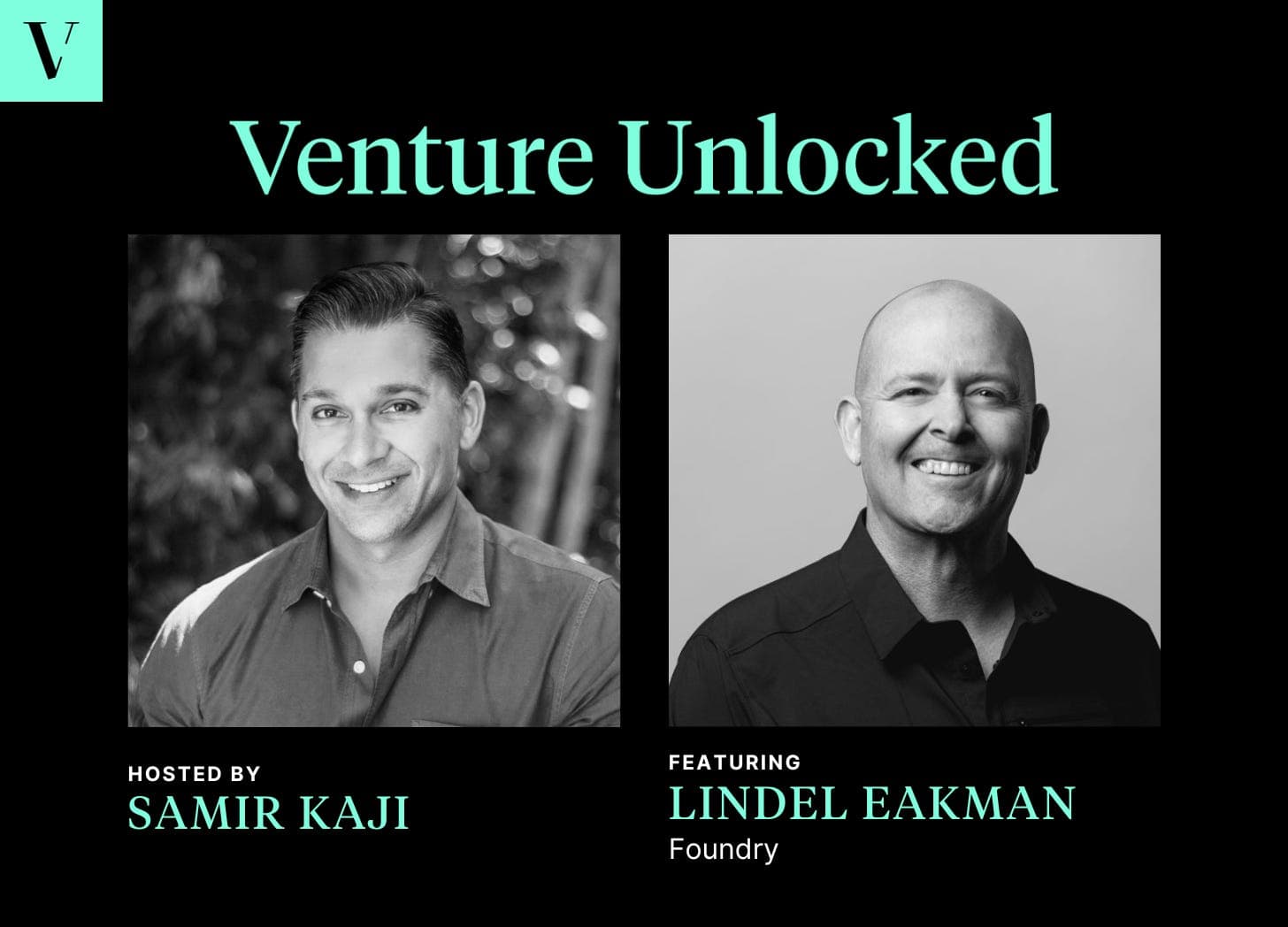
Host
Samir Kaji, an experienced venture capital advisor with over 20 years in the industry.
Guest
Lindel Eakman, Partner at Foundry, with extensive experience investing in funds and companies.
---
Key Topics Discussed
- Early Career and Background
- Lindel Eakman began his venture career at UTIMCO in 2002.
- His first significant investment was in Union Square Ventures (USV) in 2004.
- He emphasizes the importance of understanding the venture landscape.
- Investment Philosophy and Strategy
- Lindel advocates for smaller partnerships and emerging managers.
- Discusses the challenges of making investment decisions and evaluating General Partners (GPs).
- The importance of aligning investment strategies with strengths and fund size is highlighted.
- Current Venture Market Landscape (2024)
- The episode delves into the changing dynamics of the venture capital market.
- Concerns about liquidity and the implications for emerging managers are discussed.
- Lindel posits that we're in a period reminiscent of early 2003, with a potential long cycle ahead.
- The Importance of People
- Venture capital is fundamentally a "people business."
- Trust and alignment of values between investors and entrepreneurs are critical.
- Lindel shares insights on how partnership dynamics can impact investment outcomes.
- Best Practices for Conducting Reference Checks
- Effective techniques for assessing the quality of GPs through references.
- Importance of asking open-ended questions that encourage insightful responses.
- Challenges and Opportunities for New Managers
- The evolution of the venture capital landscape presents unique challenges.
- Opportunities for liquidity and secondaries in the investment landscape are identified.
- Building a Venture Portfolio
- Lindel provides guidance for a hypothetical CIO looking to build a venture portfolio.
- Emphasizes the need for experienced staff and an understanding of the sector.
---
Key Takeaways
- Investment in Emerging Managers: Lindel strongly supports investing in smaller funds and emerging managers, highlighting their potential for innovation and returns.
- Assessment is Key: The qualitative evaluation of GPs is crucial, with an emphasis on partnership dynamics, shared values, and the ability to work together.
- Market Cycles Matter: Understanding historical patterns in venture capital can help predict future trends and make informed investment decisions.
- Networking and Resources: For institutional LPs, having the right team and resources is vital for navigating the complexities of the venture capital space.
- Human Connection: Building relationships and understanding the motivations of the people behind the funds can lead to better investment outcomes.
---
Final Thoughts Lindel emphasizes the importance of having patience and diligence in the current venture market landscape. As new opportunities arise from the ongoing evolution of the industry, investors should remain focused on building strong partnerships and strategically investing in emerging talent.
For further insights and discussions, listeners are encouraged to connect with Samir Kaji on Twitter and follow the Venture Unlocked newsletter.
Links
- [Venture Unlocked Substack](https://ventureunlocked.substack.com)
- Follow Samir Kaji on [Twitter](https://twitter.com/Samirkaji)
- Connect with Lindel Eakman on [LinkedIn](https://www.linkedin.com/in/lindel-eakman-778326/)
Written by AI. May contain mistakes. Listen to the episode to check what was said.
Transcript
Automatic transcript. May contain errors.0:01Welcome back to another episode of Venture Unlocked, the podcast that takes you behind the scenes of the business of venture capital. On this week's episode, I'm excited to sit down with Lyndall Eichmann from Foundry. Lyndall has a long history as an investor in funds and companies going back to the early 2000s when he was at UTIMCO. During our chat, we covered the history of him being one of the first investors in Union Square Ventures, his affinity for smaller partnerships, and the art behind conducting quality reference calls on GPs. He and I have known each other for a while, so it really felt like a fun and casual water cooler conversation about venture.
0:36I hope you enjoy the show and let's get right into it now. Samir Kaji is the CEO and co-founder of Allocate. Allocate and Venture Unlocked are independent of each other. Any statements or references made by Samir or his guests regarding third parties, investments, or securities are solely their views and opinions and are not intended as investment advice or an endorsement of such parties or securities by Samir, his guests, or Allocate. Allocate or its clients may maintain relationships with or investment positions in guests, third parties, or securities mentioned in this podcast. This podcast is for informational purposes only and should not be relied upon as a basis for investment decisions.
1:14Lyndall, it's great seeing you. Thanks for being on. Yes, Amir. Good to see you. All right. So this is going to be a lot of fun because I love how you think about investing in GPs. And you and I have shared so many notes over the last, I feel like, decade in what's happening in emerging managers, what's happening in venture. We're old. We are old. We're age inclined, I'm going to say. I feel better when I say it that way. We have perspective to offer. Speaking about perspectives, let's talk about your start into venture and a little bit of the background leading up to Foundry. So I really started paying attention to venture back in 2002 when I first joined UTEMCO as an intern, actually, University of Texas Endowment, as an intern.
1:56I really didn't know anything about endowment foundations or particularly venture at that point in time. And I fell backwards into this opportunity at UTEMCO. Ended up, I think because of my age and like the age of the group, spending a lot of time focused on venture. we were relatively large at that point we were about nine billion in capital we had a cio that had been in uh in california in the late 90s who was like go get me four percent in venture we had almost none what we did have was kind of not great from a from a consulting firm that had put it in there um on on the endowment's behalf um so we did get to learn some lessons from that you know we had a young team i personally was naturally interested in tech um i'd taken a bunch of classes and just sort of was naturally oriented that way.
2:42I spent a lot of time sort of focused on that piece of it. I also got lucky. My first investment was Union Square Ventures in 2004. We can talk about that and sort of the predilection for why it was a back then it was a PPM and a pile of PPMs, you know, on a desk and why that made sense and why, you know, I've gotten and a girl old with Fred and Brad. Over time, I took over the lead role at University of Texas Endowment. I always did venture because I thought it was the hardest to do and the most interesting. And so it's the lead person you get to pick where you spend time, but also covered all the other areas.
3:20So I got to see the whole menu of opportunities in the endowment world globally, including emerging markets. I was turning 40. I was looking for the next thing, looked at a bunch of different things actually. But one of the conversations I was having and had been having for a while with my partners here at Foundry, kind of thinking, you know, they had personally been investing in these new small funds. And this is sort of 2014, 2015 timeframe. And it was an opportunity area that looked really enticing, but now UTEMCO was big. We were 25, 30 billion, starting to get harder to invest in things like that, even with some success.
4:00We helped put Michael in business over at Sandana Capital. He was our test case for, this is really interesting exposure. We really want to get it. That led me further down this path of, I want to be in tech. I want to be in venture. I want to do something that combines all the different elements, be it primary investing in funds, but also investing in companies. I want to continue learning about that. Then I had some good friends over at Foundry that we were aligned around that. It was time for them to start thinking about the next iteration of Foundry. And we put together Foundry Next, which is now three funds, where we invest kind of 25 % funds, 75 % directs.
4:40It's all early stage. It's primarily seed funds on the 25%. As you know, we've put a bunch of small checks into a good number of funds. We're in about 40 something funds, fund managers. We try and bring more than just capital, but we work with them as if we're their true partners. We like to say they get the benefit of an experienced senior partner without having to give up a bunch of economics. And that sometimes I have to help them learn to speak LP a little bit. And so I spend a lot of time helping GP speak LP. I've also done a bunch of direct investing over here. I will say that I've sort of lost my LP hat and I've put the GP hat on at this point.
5:22I've learned so much about the deals and about the business and just how it actually gets done when you're down in the soup, when you're not up in the ivory tower at the endowment. And I love it even more. I love being closer to the founders. Such an interesting shift over time, going from a really, really big sort of institutional investor and just looking to allocate capital. I do want to get into USV in a second here. And then now doing a lot of direct. I didn't realize it was up to 75 % of these funds actually doing direct deals. But going back, when we think about venture, venture is the absolute people business, right?
6:00You're betting on people, whether it's an entrepreneur who you are underwriting to be able to execute on something, and that vision could change over time, but somebody that can stay with it, to a GP that ultimately you're looking across the table and saying, this person is going to deliver on something. And they have a set of characteristics where I can put money in them relative to the sea of opportunities. And one of the things I always love to ask really experienced investors and LPs is, what do you actually look for? Use USV as a test case. I think at that time, if I'm not mistaken, Fred had come from Flatiron.
6:38USV was kind of in the infancy. It was just getting started. Why did you do that deal? What were the underlying characteristics of Fred? I'm going to answer that direct question, but a couple of thoughts in there. One is everything you do as a GP is just like one level up or one level down from the LP world. And so it really is all about people, whether you're picking founders or you're picking founders of a VC firm. There's always the risk of founders of a VC firm not getting along and founders of a company not getting along. And understanding how you're aligned with them and and that you share the same strategy, the same vision, and that the team at the company or at the partnership sort of have the strengths to attack that same strategy.
7:23I always say, does the strategy match your strengths, and does that match the size of your fund? And at the highest level, that's how I think about this. I think we'll talk about some things in a minute, like specific questions. But to talk about Fred and Brad in 2003, 2004, they couldn't raise capital. Everybody hated venture. They hated venture. Yeah, they've gone on to be a huge success and I got lucky and they were great and all that. But I think we're entering a period right now that's going to start looking a lot the same, which is experienced investors who have made good investments and bad investments.
8:06who have now honed their craft, who have the network to be able to know and the right people to see it, to source it, who have, as I said, good and bad heuristics on how to pick them, have been doing it long enough to know how to help a company. And they're now all of a sudden freed up in their own firm with their own specific view. We can talk about sort of spinning out firms versus transitioning firms too in a minute, but I think it's so important that the partnership team has its own view that they create from first principles and they align behind and then they run at it. Well, Brad and Fred had this framework about digital networks and digital natives at the time.
9:01And it resonated with me because I was 29 years old. It was a moment where this made sense and they matched. I was probably their ICP, ideal customer at that point, who had capital and it resonated with. And we actually saw it. And maybe a little before the rest of my team, I was like, we want to do this. We had an appetite to do it. And so I called Brad, actually. I was like, hey, can we be 25 if you're 125? And he's like, yeah, sure. Great. That sounds amazing. He at the time didn't know if it was that big a deal. And I was like, I hope I can back that up. I think I can internally. And then that turned out to be an amazing investment for the endowment.
9:45Today, I'm still looking for that same set of characteristics. I think Fred was like 40, maybe 42. By the way, if I look back in history, there's so many firms of asset management broadly, like public markets, hedge funds. How old was the founder? He was 42. It's also the answer to the universe. But he was 42 when they founded it. I think that's just the happy place of when you've got that much experience that you're willing to take the risk and you have the vision to take your own risk. Maybe it's 35 to 45, but it's that kind of zone. Well, it's actually interesting you talk about the age, but also the position that you were in.
10:31You did essentially 20 % of that fund, and it was a fund one. And people generally think of individuals that work in endowments, pensions, as being completely risk averse. You just don't do those type of things. How did you get conviction at the age of 29? because there's some career risk. You just get in, you're supposed to build this portfolio up to 4%. But what most people would do is find brand name X, find a way to get in and then start building it that way. Why did you decide to do it the way you did? Well, we were lucky because we were forced to. They wouldn't let us in to the name brand.
11:10We were public. Remember, we're a big public institution. I mean, this was what? This was right after George W. Bush had been in office and And there'd been a bunch of kerfuffle about, you know, him giving money to friends and cronies, you know, via Texas systems. And so there was all this risk of having to disclose things. Brad and Fred needed money. They weren't picky about it. And they would take$25 million, you know, 20 % of their fund from us. Look, if Sequoia had let us in or KP at the time had let us in, maybe we wouldn't have had appetite for this new set of emerging managers, if we're being honest.
11:54But I will say now having done it for 20 years, it's so much more fun to be somebody's first check and to help them. And now that I have experience enough to help, I couldn't help Brad and Fred. But I mean, they helped me more than anything else. But I now have the experience to really help people and to think about how they build their business. And that part to me, I do it for free sort of thing. It's really fun to be a first checker and early check into these new funds or companies for that matter. Yeah, it's interesting because I started working with emerging managers 14 years ago. And I would agree, it's much more fun.
12:34And a lot of these people felt like entrepreneurs that just happened to write checks versus code. but the way they were thinking about building a business, the way they were thinking about being a service provider, both to the founders, but also to the LPs, fundamentally felt that. Now, it was a little bit of a necessity for you back in 03, but you've learned a lot, of course, and I know you've been such a big help and a big proponent of investing in these smaller funds, and we've seen a big, big increase in, let's call it first-time managers over the last 15 years. We count over 2 ,000. You probably have your own database.
13:09But one of the questions now is, well, what happens to the venture market? And specifically, all of these funds that raised a fund one, two, and three during the extreme hype cycle, how do you see it playing out? Because many of these folks raised at a time where actually money was easy to get. Markups were being had so you could raise your next fund. But now we're sitting in a very different environment. So how do you think about the market today? Yeah, let's just acknowledge that the number of VCs formed and that the number of talented individuals choosing that as their vocation skyrocketed during this period.
13:49Foundry is a pretty well-known venture fund. And at one point, once we raised our hand and said we were making emerging manager investments, I think we were getting more fund pitches than company pitches for a little while there. How many were you getting a month? I mean, out of control. I couldn't give you a number. We couldn't even track them. Some of them were just randoms. So we just said, sorry, no, you know, a bit like a nightclub or something where you had to get a, you know, you had to get an invite or you had to get a warm, a warm intro just to even sort of take the first meeting because it was overwhelming.
14:19And because we were active in it, it was pretty easy to reference around for us. But to answer your specific question, I think that what we're going to see is a lot more fluidity of that talent. Because there are talented people that are investors. I think there's a lot more fluidity back and forth between entrepreneur and investor. and that many of these people will become operators with a side hustle that is their old fund. Because there's really no reason for them to give it up. They should just keep working it. And especially these small funds, they don't have any control. I mean, they've got shareholder consents to sign and that's kind of it.
15:02And then they wait for capital to come back. And they outsource all the back office. So hopefully that's running well. So I don't see them quitting. There is no way to quit, by the way, other than selling it or something. But I think bouncing back and forth, we've actually already seen a number of people say, nah, this is harder than I thought it was. I'm not going to get paid for a lot of years. I'll raise what I can. I'll do a smaller fund maybe. Maybe I'll just manage my own money. And they start to look more like angels, which is what they were for the most part anyway. angels with their friends' money.
15:41And that needs to exist. That should exist. Was it ever part of an institutional LPs opportunity set? I don't know. I mean, we always were looking for people that had an institutional mindset. Like they wanted to do this as their full-time vocation and they wanted to become experts at investing. I don't think it was part of ours. I do like small funds. I don't mind solo GPs. I think there's some value to that. those two pieces of it. But that has to be their primary vocation and they have to be dedicated to the craft, I guess, is what I would say. So when we kind of going back to the question, maybe in a slightly different angle.
16:24So of course, yeah, we can acknowledge the number of firms that have come. Some will decide they'll continue those funds. And the average length of these firms could be 14, 15 years until the last portfolio company. And you kind of hope that everything runs as it should. There are going to be some people that continue to raise capital that are backed by institutions, but we may not have 4 ,000 active VC firms. Maybe it drops to 2 ,500. Who knows what the number is? But there's still this concept and this question of like, from a macro standpoint, you and I have been around long enough to see the 99 internet boom, the bubble bursting in 2000, and then almost a dead period for a number of years.
17:0708, 09 was a little bit different because it was more focused on the real estate sector. We had a blip in terms of capital raise, but it seemed like things went back really, really quickly. And we had the tailwind of interest rates going down. And so - Oh, it was so net positive, Samir. I was an allocator at the time. And I'm like, it was scary as could be. Like, I remember. Actually, I had breakfast with Brad Burnham. He was in town. And he's like, should we take money out of the ATMs at this moment in time? Is the financial system going to shut down? But the big picture for venture was so positive.
17:42It was right about the time that iPhone had come out. AWS was ramping up. People trusted cloud all of a sudden. And you had this giant unlock of people, the talent that became available across all these different industries. So tech went from a vertical to a horizontal. and opened up because costs came down 80, 90%. And, and all these people that were experts in other industries were suddenly unemployed. It was a huge tailwind. I feel like actually it wasn't a, wasn't a blip negative. It felt like a blip for this, for us living right in 08, 09. We're like, oh my God, this is a bank. And I mean, by the way, I remember hearing from people, oh, venture's dead because you've had this lost decade of returns.
18:27Everything's bad. Of course, things change. And you did mention two of the things that are that actually really drove seed to what it is right now, which is really AWS. I mean, AWS made it so and I think the cost of starting a company went down by 90%. I think that's the actual number. And then of course, the mobile made it easy to distribute it. But when we look at the past as a proxy, perhaps, and history doesn't repeat, but of course, we've heard that it does rhyme. Where are we right now? Is this closer to like 2011? Is it like 0203? How do you think about where we are in 2024 from a venture standpoint?
19:03I think we just went through a 20-year cycle. To me, we're kind of early 2003 is my guess. I actually looked up. I don't have it at handy, but somebody sent it to me on my team. They were like, look at this Bloomberg post about fundraising from 2003. And it reads just like today's headlines. It's shrinking, it's getting harder, and it's so much less than last year. And what we didn't realize in 2003 was it wasn't temporal. It was a long period of time that LPs were souring on venture. And in 2002, LPs thought they hated venture, but in 2003, they definitely hated venture. 2004 brad and fred couldn't raise any money because nobody wanted to do any venture my partners at foundry like mobius had blown up and in 2006 they were casting around trying to figure you know they'd given up on raising a mobius fund because that didn't work then they were like okay let's reconstitute let's raise foundry again couldn't raise money people with great track records a great story that was 2006 2007 now you know now you're into like 2008, we never caught up from 2002 to 2009 in that financial crisis.
20:31That was back in the days. Beezer and I were talking the other day. That was back in the days when we knew every firm that was raising. We knew them personally, and they came to us. There were 10 of them that raised every year that were backable. Our jobs was a lot easier in a lot of ways because we knew, And it was kind of easy to pick the top half out of 10 rather than 1 ,000 trying to raise. But if you think about this period of these returns and all this big emerging manager formation, all these high marks we've got now at TVPI, we are so not done with this cycle. Mark Sooster's got that great quote about 60 % of the unicorns of the 1 ,200 unicorns come from four firms from 20 and 21.
21:22Well, guess what? In 22, the markets went down. They didn't have to write them down because they had just done the financings. Markets came back. So now they're marking them somewhere with good comps around what they paid for them. that means that nobody has had to recognize all those made up valuations that are still in the system it's going to take years for that to come out we're already seeing some of them come out billion two valuations selling for 200 million okay great some people still make money but it's not a billion two that's going to continue to play out over the next year two years three years and LPs move slowly and they look at track records and CIOs in particular and boards are going to get tired of seeing these headlines and get tired of these slow write downs.
22:14And they're going to say, I hate venture. I absolutely hate it. And you're going to see this place where, you know, we're already seeing this path to like brands and where people think it's good and think it's safe. I think it's going to dry up even further and cause a further consolidation. Therein lies the opportunity. But I think we've got, we're 2003, we've got a few more years to go. Yeah, I agree with that. And people sometimes do forget is the quantum of capital, these companies raised in 21, and you can kick the can down the road by doing reduction in forces, and you do bridge rounds, and everything kind of looks okay.
22:55And yes, there's some markdowns, but they don't really reveal what the true DPI or what the true exit of some of these companies are. And you mentioned that stat, my Mark, which, yeah, I think 60%, those four firms are inside SoftBank, Code2, and Tiger. And they were playing a different game, right? They were playing a very different game where it was valuation insensitivity. And it was just, let's get into the best companies and let's ride this wave. And arbitrage between the private markets, late-stage private markets and the public markets, of course, things changed. So it is going to take some time.
23:28And intuitively, you think that you should invest when others aren't. This is the whole Warren Buffett sort of view. Invest when others are fearful, but that doesn't happen in LP land. So when you think about opportunities, where are those opportunities? Because I think we as investors, like when you invest in a fund, you're saying, well, I want GPs that can find things that other people aren't excited about, get in early and be contrarian and right. What is that version of that from an LP perspective today? LPs have very few levers to pull. The one they can do is commitments. It's always amazing to me that LPs don't keep investing through the cycle at a consistent level.
24:13I get it. I understand human psychology. I understand the denominator effect. But venture is different. Fred wrote a post a long time ago, maybe 2008, 2009 timeframe. You got to have inventory on the shelves to sell when the times are good. And you got to keep investing through the cycle so that you can benefit from those up cycles. That's the kind of the lever that LPs have. And they can then do selection. So I can commit a certain amount and then I can pick which managers. We can talk about selection in a second, but like, do you go to established brands? Do you go to new managers? Think about that in the context of the cycle, cycle, the macro cycle, the market cycle, also where that manager is in their cycle.
25:01To me, LPs can't help, but slow down and chase it. And, you know, you ask like, where do I see the opportunities today? It's kind of a reflection. of that, which is endless opportunities are coming for secondaries. You don't want to catch a falling knife, but there are opportunities here to build on secondaries, especially with managers you already know. There are opportunities on the company side to provide liquidity because liquidity is a long ways off for a lot of these firms. And LPs are desperate for that liquidity, especially all the individual LPs, most of the LPs you mentioned, all those firms you mentioned, those 4 ,000 firms or whatever, most of them are individual LPs.
25:48And stuff happens in their lives. Divorces happen. They need money for this or that. And they realized that they had too much money in and they thought it'd all come back in three years when it's actually coming back average duration of eight years before you make any gains. So people just get over their skis and they just decide, you know what? I don't need the upside. I just need my money back. And taking advantage and being able to pick up all those small checks, huge opportunity. And that I think we're now, again, in this period where there's going to be a lot more Brad and Fred's that come out of these brand name firms.
26:28In fact, I'm talking to some of them that are coming out that want to start their own firm with their own thesis, with the right partnership, the right size and bandwidth. That's something nobody talks about is like, by the time you're on your third fund, everyone has a big board load and they're busy on the existing portfolio. Well, you get the same experienced investor and you set them up on fund one. And with that same set of knowledge, well, now they got all this hustle and all this bandwidth. And by the way, they're scared. They're running so hard to prove themselves. That spin-out firm or that group of experienced investors, those are coming.
27:09You can't see it yet in the markets. Some of my LP friends asked me, they said, what's the one firm we should invest in this next year? And I was like, it doesn't exist yet. And they're like, what do you mean? I was like, no, it does not exist yet. It's coming. Just be patient. There are two or three or four firms that you should invest in over the next few years that don't exist yet. And that's because they're going to look a lot like Foundry in 2007 or True in 2004 or USV in 2004 or first round in that same time frame. Experienced investors creating their own platform in a right-sized firm. That's happening.
27:48But the GPs at those name brand firms are getting greedy because they're realizing that the carry is not going to be worth as much as they hoped. then the younger partners are going, wait a minute, my golden handcuffs aren't as valuable. Huh? Wait, how should I think about that? Or they're not going to retire as soon as I thought they were going to retire, you know? And they're like, huh, maybe I should start looking. Well, then they start looking and then they decide to go, but then they got a date for a partner on the GP side and then they got to negotiate their way out. And maybe there's, that takes a while and there's a little gardening leave maybe because you know the name brand firm's about to go fundraise or something like it just takes two years for for for all that to happen but it's happening it's just slow motion in the background so interesting because i think it aligns with what we're seeing too like i i think we're going to see more spin outs than we've ever seen over the next few years because of what you just brought up and by the way many of them are very successful in raising that first fund it takes a little bit of time of course but at the same time there is this opportunity to kind of hang your own shingle, you know, do a right size fund, invest in what you're passionate about.
Read the full transcript
29:00So I think we'll see that as we move from the macro, which is, yes, human psychology is always investing on the way up and not investing on the way down. That probably is always going to continue. And that's why we have these massive cycles. I do think that Stepstone had this great report that they talked about, not power laws in companies and portfolios, but power laws of vintage years, like certain vintage years are going to outperform, but you don't know about them until seven to 10 years later. So you have to invest fairly consistently over time, vintage year after vintage year. Let's say an LP does adopt that and you say, okay, well, I'm going to invest every single year through cycle, up cycles, down cycles, but I still have to go through a manager collection which it isn't like 2008 where there's only 10 or 12 managers.
29:47You're always doubting. You're playing the industry as who's going to come out. What makes them different? And there's a lot of heuristics that people use. And heuristics could be as simple as what is their prep pass track record and how does that now apply to what they're doing? There's things that I see like, oh, what is their GP commit? Because somebody with a 3 % GP commit must be better than a 1%. What are some of those heuristics that you think are probably overused and you pay no attention to and the ones that you think really actually matter in assessing a potential investment in a manager that you're going to back for the future?
30:28Perhaps I'm old school. But I will say that I think this is a qualitative business. By the time you have the quantitative data, it is often too late or not relevant. You have to do your own work. And most of that to me is the qualitative piece about matching with the person that's across the table from you. You and I have been doing this long enough that we know it's a people game, first off. I think that's a really important piece of this is investing with good people, somebody that matches your values. And you're going to be proud to be partnered with and isn't going to end up in a Wall Street Journal headline or a newspaper headline.
31:11That's important. But when I think about like, okay, what are some dumb things that I used to do? I used to break apart track records and I used to look at, and I'd say, you know, give me all the track records and how much you invested and what's your loss ratio after this round and on the 14th, you know, uh, fundraise. And is it enlightening? Sure. Is it interesting? Definitely. Can you learn from that? Like as an LP of like what not to do? Yes. Today, like I hardly look at track records because they probably aren't meaningful. And to the extent I do, it's to go do my own work on the companies or to see if I already know them from some other portfolios.
31:51And to see if they match with the strategy that they've already said that gives me a sense that they have the network that they're saying they're going to be able to source from. Another thing I used to do, and this was programmed into me by UTEMCO, like I still can't help myself a little bit, is I used to care so much about every LPA term. There's like five terms that actually matter in an LPA. It is set up so much for the benefit of the GP anyway that I really only care about things that affect cash and the movement of cash. Okay. After that, I need one governance term and that's no fault termination or no fault removal.
32:33After that, I sort of don't care. You know, but we used to negotiate all this other nonsense and it was just a distraction. And in fact, the GP attorneys do that on purpose, by the way. They do all these other things to distract you from the real thing. Another thing I would do is, you know, call on list references. Like you already know what they're going to say. So, you know, call a few of them, get a sense for what the storyline is, and then go fishing and go find out what, you know, even make some stuff up sometimes. Well, I heard this and get people to react to things. So, you know, I heard Samir is really great at doing podcasts with LPs, but he is terrible at doing podcasts with GPs, react.
33:19And so like just making stuff up. And of course, that always gets back to the GP, but it's kind of fun to see how they react in the conversation you have afterwards, because you start to get a sense for how they're going to partner with you. And they understand that you were just doing your job referencing. You know, sometimes it's a game of playing with the psychology of the GP, just so you know what it's going to be like and to make sure that you both want it. They want you as much as you want them, I guess. It's something we always say about founders. I think it's also true for LPs and GPs.
33:54References are such a critical component of the diligence process of a GP. And whether you're talking to an LP, GP, or an entrepreneur, to get really deep and get great answers, oftentimes, whether it's off-sheet or on-sheet, it's best when you have a pre-existing relationship with the other person that you're talking to. And not everyone has that. And in fact, a lot of the folks we work with are doing venture, maybe for the first time, don't have a lot of pre-existing relationships. And when they do a reference, it might be the first time they're talking to the person on the other side. And in that case, they have to be really good at asking the right question.
34:33What is a good question, if you were to distill it down to one, that people should absolutely ask somebody on the other line when they're doing a reference on a GP? It's usually in the context of a story, piece of the story that they've made up. There's always the obvious one, which is, are you investing or would you invest? And surprisingly, you elicit some responses out of that. But the one I'm looking for is a good human. Would you invest with them? Would you trust your kids with them? And so that puts people on a psychology track rather than a reference track. Because when you make it human, you bring your kids into it.
35:15That's really important. If it's something like, seriously, I often go fishing is the way I say it. It's like, all right, so I've heard that so-and-so is quite difficult on boards. Sometimes they can be a divisive force in the boardroom. React. I think it's more the style of question and the way you set it up so they have to defend somebody rather than agree with somebody. That to me is the important psychological trick when you do references. So you kind of make them, you force them to say something or they agree with you, which tells you a lot more about something. Yeah, it highlights the importance of being able to ask questions in this incisive way to be able to get insights that you can then thread together to understand the quality of the person, the quality of thought and how they're building.
36:11But one thing I wanted to kind of press on a little bit is, you know, you mentioned a lot of the investments that you do make are people that share the same ethos, good people, good human beings. Sometimes that's hard to make a black and white judgment on because there are people that are incredibly divisive, that are hard to work with, but are incredible investors and actually good human beings, but from a professional context, you're very different. How do you separate those two things when you're making and evaluating somebody? Life's too short, first of all. Like I only wanna be with people that, I mean, especially at this age, I only wanna work, and there's plenty of good people that are the kind of people that I wanna spend real quality time with inside of work and outside of work.
36:55So life's too short for the divisive people that are great investors. That doesn't mean I have to love them or I want to go have beers with them. But if it's going to be a relationship that I don't enjoy, well, there's plenty of others to invest with. And by the way, we get it wrong sometimes. Especially when you're investing in not just an individual, you're investing in a partnership. We didn't talk about that, but the biggest risk to emerging managers is partnership risk. It's a reason I've come around totally to investing in solo GPs rather than partnerships is because it's so hard to underwrite partnership risk in fund one or fund two, or when they're adding a partner.
37:36It's just really difficult. In those cases, you can sort of do some diligence around governance and who controls and all that, but that's the biggest risk, I feel like, in investing in emerging managers is actually that partnership risk. I want to put a more crisp answer on your question about references. is you need to ask them the question in such a way that a non-answer confirms your comment. People won't say bad things about people. People will not defend people, but they'll not answer if they agree with it. And so you have to set up the question in a way that you get a confirmatory response by silence.
38:18And so that's really important for people as they think about referencing. It's great. And it's also, I mean, this offsheet references, and one of the things that you're also looking at is you're evaluating the human being less around, okay, they're investing in enterprise SaaS or AI. I mean, those things you can sort of look at. What is the person's background? What is their network? But it is more complex when you have multiple people. You mentioned, and I'm glad you brought it up, solo GPs versus partnerships. Historically, I mean, if you go back 10 years, people are like, I'm not investing in a solo GP because they get hit by a bus or they have nobody to kind of push back on their ideas.
38:56And do they have too much going on to be able to execute on a certain thesis? But you and I have seen so many, so many partner dissolutions where people were essentially put together because on paper, it made sense. We're seeing there's a lot that aren't public yet. It's happening. And we'll continue to see that. And it's hard to mitigate all those type of risks. But have you found any tactics or ways that you've been able to mitigate the overall risk of a partnership not being set up with a strong foundation? What do you look for? Well, first of all, when you do have a partnership, my favorite question is, all right, how do you fire each other?
39:35And the body language around that is amazing to watch and tells you all you need to know right there. in the room. It's important to ask that when you're in the room together. The second piece of it is really the governance behind that question is how have they thoughtfully set it up? And if so, I think you'll find someone that has done the work and put in the structure to make sure that they get along. Often I'm looking for things like a coach. Have they hired a coach? Have they done the testing, the background testing to make sure they're compatible? Have they worked together on boards? Have they have some experience to think that they might be compatible?
40:20I hate first-time partnerships where they haven't had some runtime. I don't like first-time partnerships when they're not of a similar age or background of experience. It's a married couple, right? They're essentially marrying someone and like, how are they going to get along and have they put real effort into that? And have they prepared, you know, is there a prenup in place? It's really hard. We've all been friends with couples that divorced and you have to pick one side or the other. And I think that is how you lose money in venture and emerging manager ventures is you have a disgruntled pair of partners that want to prove each other's deals or aren't paying attention to the deals because they're so focused on the impaired relationship that they have and bad and poor investing decisions get made and so that like to me that's the one thing you had to spend so much time on and if you need to skip a fund and and you have any questions just just wait there's no don't push it there's sort of no reward for it if if you have questions on it yeah and it's tough because you do definitely want people with complementary backgrounds that have some level of diversity across the base, but there are limitations to that.
41:39And of course, you don't want to end up in a situation two years later where people are like, oh, it made sense for us to partner up, one, because we could raise more money. And on paper, people liked it. And then two years later, they hate each other and they can't agree on any. And then investment decisions are made with a lot of politics involved, which is never, never a good thing. You and I have seen that. in this day and age, so much of the fundraising still happens over Zoom. And so it's not, you're not always in person with people. What do you look for from those verbal and nonverbal cues to assess how strong a potential partnership is?
42:16And this is sort of coaching I give my GPs too, which is show up together. When we raised, Jacqueline and I would be sitting here together, like, you know, literally shoulder to shoulder on the same mic. and we thought it was important for people to see us together. We could give each other the nonverbal cues that sort of were like, okay, Lyndall's faltering now, Jacqueline, pick it up. And you can carry a conversation so much better if you can kind of poke them under the table a little bit on Zoom. We thought it was worthwhile to be together if we could in person on our side. It also is an LP when you're looking at the GPs together.
42:57How they interrupt each other or slightly correct each other or redirect tells you a lot. It tells you about the person and that they can't let an answer lie. So, you know, if I'm constantly correcting Jacqueline, it's what dynamics going on between Lyndall and Jacqueline, right? That like, I need to explore that dynamic. If I'm just reshifting it just a little bit. rather than letting the answer light. Sometimes when Brad and I were fundraising, Brad would say something, me being an LP, I would say, I knew he wasn't exactly answering the questions the LP was getting at, but it was better to not redirect.
43:43Because I trusted that we would get there if it was important to the LP. And I was comfortable with the answer. I can then take my learnings and then flip it around and be in the LP chair and sort of look for those tips and tricks of watching people try and fundraise. I do think it's important. And for what it's worth, like outside of another COVID pandemic, there's no way I'm going to invest with people without spending real time with them in person. First meeting, probably on Zoom. If I'm serious, they can come to Boulder or I can go to wherever they are. You know, LPs make so few commitments a year, especially new ones.
44:21Just you got to spend the time in person. When you look at institutional LPs, you're not investing just for that fund one. You're looking at, is this somebody that I can see backing in fund two, fund three? It often is this multi-fund type of decision that you're making, so you have to spend the requisite time. Maybe kind of shifting and ending with something, a thought exercise. I'd love to go through this because we've talked about a lot, the macro, the micro, what you look for, where there's opportunities. I know you have this very strong affinity for smaller funds that you've backed over a period of time on a go-forward basis.
44:59But let's say I'm a CIO. I'm a new CIO at a$10 billion endowment. And I want to build no venture in my portfolio, similar to where you were with UTEMCO back in 2003. How would you advise me to actually build a venture portfolio, given how stratified venture is today? And it would be fun, actually. I would love to go do that again. I really enjoyed it the first time, especially knowing what I know now. The question is, in that$10 billion endowment, is do you have the staff, the bandwidth, and the risk tolerance, the process even, to be able to be nimble enough to invest in smaller managers? What I would tell you is to think about your own set of resources.
45:48First, if you don't have the resources you need, you should find a partner. Whether it be a fund of funds or an outside resource or a platform, you're going to need help, especially to navigate the smaller managers, emerging managers, and frankly, need somebody that's got the experience, has been doing it, and has the network to be able to reference. There's just no doubt about that. Let's say you do, though. Let's say you have that team on staff. I think that you go out and you think about networks. All right, how do I get exposure to the most interesting set of sectors? And I would go top down and start.
46:24And I would go from a sector perspective more so than I would have 20 years ago. It was all generalists back in the day. And I'd go more sector, more vertical specialists. Because I'm me, I would do a bunch of emerging managers because I think I know, I don't even think the data shows and I know that you get rewarded for taking risks in fun one and fun twos. And I would definitely go build a bunch of exposure there. That's probably where you need the most help and spend the most time. I would do that at seed and series A. So all early stage. For me personally, I would not do a lot of mid-stage.
47:00I just think it's hard to do mid-stage and late-stage venture. I would do some growth. so growth being different than late stage venture and growth being more focused on b2b and enterprise sass type of opportunities that are more bootstrapped opportunities i wish we'd have done more of that maybe some consumer growth when i was at utemco like i would add that piece in but like my bread and butter the part that i think where you're going to really earn the illiquidity premium is in the small managers small partnerships by the way i don't think you should have more than four partners in a fund. I think you should look for kind of a$200 million or smaller, maybe less than$400 million for total size, but your average should be$150,$200 with your seed funds in that mix.
47:45And you should just look for sort of venture done right with some small partnerships that are particularly good in their certain networks of knowledge that together build up a really interesting high-level exposure from a sector standpoint. What's your thoughts on big funds? So for example, we've seen a lot of the funds, and I think there's data out there. If you look at the AUM of some of these very large firms, a lot of the AUM was built in 2018, 19, 20, and 21, to the point where some of these are 10, 20, 30, 40, 50 billion dollar AUM shops. Same example,$10 billion endowment. I have the resources, so I'm going to do some of the emerging to get this true alpha type of opportunity, would you stay away from big funds?
48:32Or is it still reasonable to have it as part of the portfolio from your perspective? I've got two teenage daughters and they would say, dad, the math isn't mathing. I personally, I mean, look, remember, I was in charge of all the total endowment. I mean, I was there 13 years. Over the course of those years, we figured out where we could earn a premium return. For us, because of our experience, it was an early stage venture. Great. I would do that all day long. And it's in small funds. For us, it was in small, lower middle market buyouts. For some of the same reasons, we could earn venture-like returns in small funds.
49:12They were more concentrated. Sometimes they had SPIC leverage. Two of my other team members wanted to go do that. It's called serve capital. And then we felt like we could use our scale to our advantage and do credit funds where we controlled the flow of capital. We turned on and off the investing because we could do a separate account. Those are the three places we thought you could make a lot of money. Big funds, Samir, and late state, which means you have to be in all phases of venture. I don't think they're bad investments. I don't think you earn the illiquidity premium. you need to allocate the time and the risk in your portfolio against them.
49:52I would rather get that exposure through some public markets and then use all of my limited staff time against smaller funds where I'm going to get more bang for your buck. Yeah. You and I have had this conversation so many times. And look, the venture market isn't one size fits all at all anymore. In fact, 12, 13 years ago, venture was a$30 billion a year business in terms of funds raised. Last year, I think it was close to 200. If it went over 20, it was too much. Remember? I think it was 20. If it was over 20 billion, it was too much per year. Too much. Of course, times have changed pretty substantially, but this has been a lot of fun.
50:31I feel like we could have gone so much deeper in terms of fund diligence. Maybe we should do a webinar around how do you evaluate fund managers? Because I think that's probably the most popular thing we have done for all these emerging LPs. And when you look at emerging managers, there's a lot of them. So how do you avoid adverse selection? How do you find the next Brad, the next Freds of the world? But this has been a lot of fun. Thanks again for coming on. And I really appreciate everything you've done for the industry and the community over time. Yeah, right back at you, man. It's always fun to chat.
51:06And you and I have been running around in the same circles for a long time now. And so it's fun to do one of these with you. Thanks so much for listening to another episode of Venture Unlocked. We really hope you enjoyed our conversation with Lyndall. Please subscribe to Venture Unlocked on iTunes or Spotify to get the latest episodes straight to your inbox. And also make sure to join my venture newsletter at ventureunlock.substack.com for all my content.
51:57Thank you.
52:27Thank you.
52:57Thank you.
53:27Thank you.
53:57Thank you.
54:27Thank you.
54:57Thank you.
55:27Thank you.
55:57Thank you.
56:27Thank you.
56:57Thank you.
57:27Thank you.
57:57Thank you.
58:27Thank you.
58:57Thank you.
59:27Thank you.
59:57Thank you.
1:00:27Thank you.
1:00:57Thank you.
1:01:27Thank you.
1:01:57Thank you.
1:02:27Thank you.
1:02:57Thank you.
From the publisher
Follow me @samirkaji for my thoughts on the venture market, with a focus on the continued evolution of the VC landscape.
This week I'm excited to sit down with Lindel Eakman from Foundry. Lindel has been an investor in funds and companies since the early 2000s when he started at UTIMCO.
In our conversation, Lindel talks about being one of the first investors in Union Square Ventures, his preference for smaller partnerships, and the art of conducting quality reference calls on GPs. Having known each other for a while, our chat felt like a fun and casual water cooler conversation about the venture capital world.
About Lindel Eakman:Lindel Eakman is a partner at Foundry, where he focuses on early-stage investing. Since joining in 2015, Lindel has been active across the portfolio, working closely with partner funds and leading new direct investments. He is known for his humble and supportive approach, valuing the hard work of founders.
Before Foundry, Lindel managed the private investment program at the University of Texas Investment Management Company (UTIMCO) from 2002 to 2015. At UTIMCO, he built the venture capital program and invested in firms like IA Ventures, True Ventures, Union Square Ventures, and Foundry.
Lindel began his career in finance at KPMG in the M&A Tax Practice from 1997 to 2001 and then worked as a Corporate Finance Associate at Stephens, Inc. in 2002. He holds an MBA from the University of Texas at Austin McCombs School of Business and a BBA in Accounting and Finance from Texas Christian University. He is a CPA and a CFA charter holder.
In this episode, we discuss:
(01:14) Early Career and Union Square Ventures and moving to Foundry
(03:00) Investment Philosophy and Strategy
(04:28) The value of partnering with emerging managers
(05:55) Selecting GPs and Making Investment Decisions
(10:30) The Current Venture Market Landscape in 2024.
(13:00) Challenges and Opportunities for New Managers
(17:00) Future of Venture Capital
(21:00) Importance of People in Venture
(25:00) Secondaries and Liquidity Opportunities
(29:00) The importance of evaluating partnership dynamics in emerging managers
(33:00) Best practices for conducting reference checks.
(37:00) How virtual interactions affect partnership assessments and fundraising
(42:00) Advice for new managers on constructing a venture portfolio, focusing on sectors and small funds
(47:00) Role of Large Funds in a Venture Portfolio
I’d love to know what you took away from this conversation with Lindel. Follow me @SamirKaji and give me your insights and questions with the hashtag #ventureunlocked. If you’d like to be considered as a guest or have someone you’d like to hear from (GP or LP), drop me a direct message on Twitter.
Podcast Production support provided by Agent Bee
This is a public episode. If you would like to discuss this with other subscribers or get access to bonus episodes, visit ventureunlocked.substack.com