In short
Venture Unlocked: Limited Partner Unlocked - Episode Summary
Episode Title
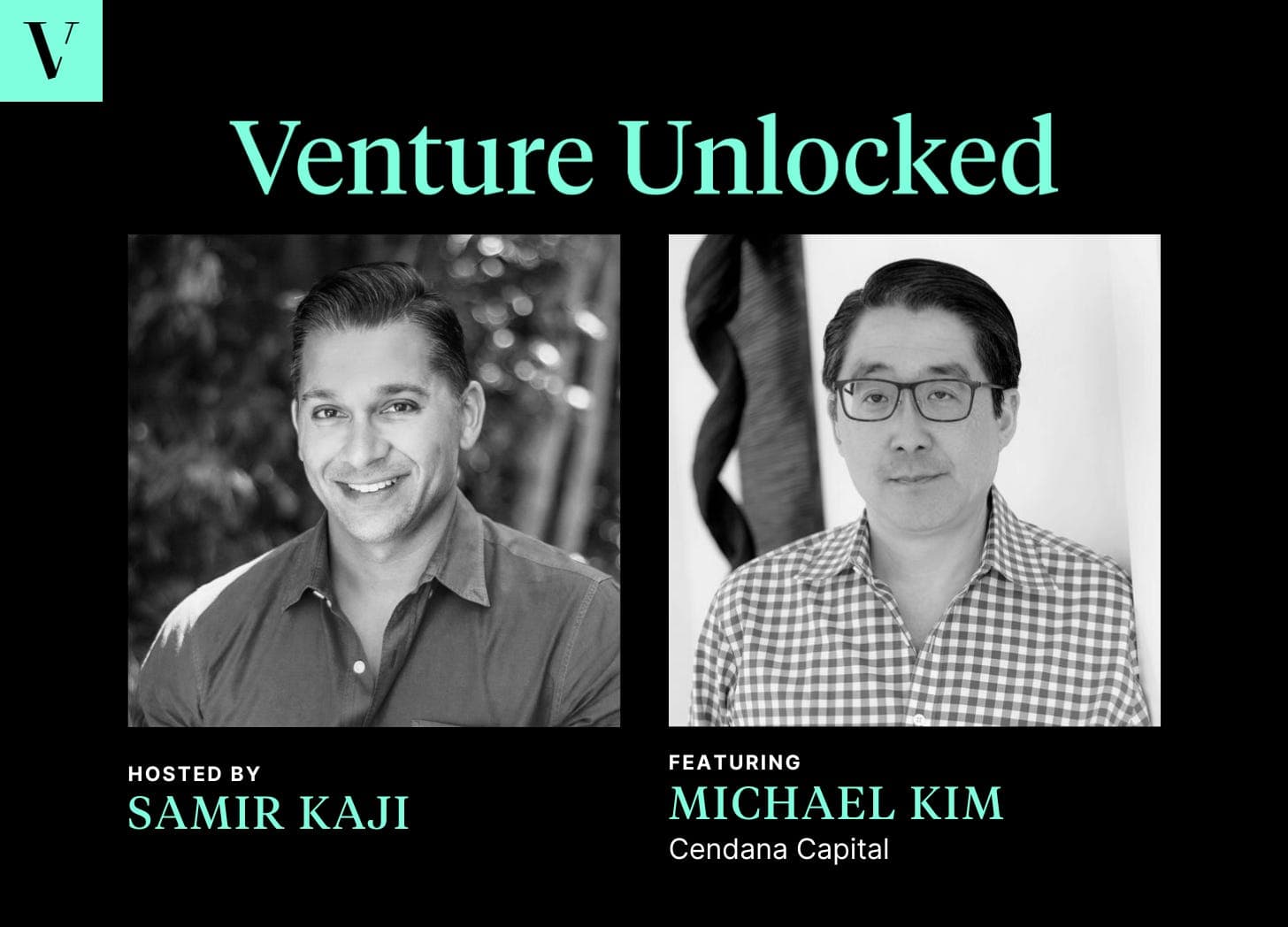
Limited Partner Unlocked: Michael Kim of Cendana Capital
Host
- Samir Kaji: Over 20 years of experience in venture capital and startups.
Guest
- Michael Kim: Founder of Cendana Capital, specializing in investing in early-stage VC funds.
Key Themes and Discussions
Introduction to Cendana Capital
- Founded: 2010, with over $2 billion in assets under management (AUM).
- Investment Thesis: Focus on backing small, emerging managers at seed stage, which was initially met with skepticism from institutional LPs.
Evolution of Seed Stage Investing
- Market Growth: The number of seed funds has expanded from around 25 in 2010 to over 2,700 today.
- Shift in Definitions:
- Seed stage investing has evolved to be more akin to early-stage venture.
- Pre-seed is now seen as the new seed round, typically ranging from $1 million to $3 million.
Qualities of Successful Fund Managers
- Key Traits:
- Grit, determination, and hustle.
- Domain expertise and contrarian thinking.
- Ability to establish strong ownership positions early in their investments (12-15% ownership recommended).
Fundraising Challenges
- Current Landscape: Difficulties in raising funds due to market conditions and skepticism about new fund managers.
- Trust and Communication: Emphasizes the importance of building trust through transparency and ongoing dialogue with LPs.
Fund Size and Ownership Dynamics
- Impact of Fund Size: While larger funds often target greater returns, smaller funds (under $100 million) tend to outperform larger ones in terms of returns.
- Ownership Strategy: Fund managers must carefully evaluate their investment sizes to ensure meaningful ownership and potential returns.
Importance of Liquidity
- Secondary Markets: The discussion highlights the necessity for seed funds to consider liquidity strategies through secondary market opportunities.
- Advice to Fund Managers: Suggests selling 10-25% of positions to maintain flexibility and avoid full exits.
Future of Venture Capital
- Market Outlook: Anticipates a positive outlook for venture capital investments in the coming years due to market corrections and the return of innovative thinking among founders.
- Emerging Managers: As tourist fund managers exit, there is room for new, innovative managers who have strong networks and the ability to adapt to changing market dynamics.
Key Takeaways
- Trust and Transparency: Essential for long-term relationships between GPs and LPs.
- Evolving Investment Strategies: Managers need to adapt to the rising size of seed rounds and changing market conditions.
- Focus on Ownership: Maintaining adequate ownership stakes is critical for ensuring returns, especially in a challenging exit environment.
- Future Opportunities: The next few years may present favorable conditions for venture investments as the market stabilizes and creative solutions emerge.
Closing Remarks
- Michael Kim emphasizes that the evolution of seed stage investing and the shift towards more strategic partnerships among emerging fund managers will shape the future of venture capital. This episode underscores the importance of adaptability, network strength, and the ongoing need for trust in investor-manager relationships.
---
For further information and insights, visit [Venture Unlocked](https://ventureunlocked.substack.com).
Written by AI. May contain mistakes. Listen to the episode to check what was said.
Transcript
Automatic transcript. May contain errors.0:00Welcome back to another episode of Venture Unlocked, the podcast that takes you behind the scenes of the business of venture capital. I'm your host, Samir Kaji, and on this week's episode, we continue our series of LP Unlocked conversations with Michael Kim, founder of Sindana Capital. Sindana focuses on investing in seed stage VC funds across the globe. The firm has also invested alongside managers in co-investments and recently launched a partnership with Klein Hill for a secondaries fund. As someone that's been a student of the VC landscape for decades, Michael brought many unique insights to the conversation, including the traits he's observed from successful seed fund managers, how to foster trust with LPs, and his view on fund sizing.
0:41Let's get right into the episode, and I hope you enjoy it. As a founder, you understand the power of efficiency and growth, and with Accelerator Checking, earning up to 2.25 % APY, your money works as hard as you do. For those aiming higher, you can unlock the full potential of your cash reserves with exclusive access to Accelerator money market savings, earning 4 % APY on balances over$50 ,000. Say goodbye to unnecessary fees and hello to Grasshopper Bank, your next leap forward. Nationally chartered and headquartered in New York City, Grasshopper is a client-first digital bank built to serve the business and innovation economy, combining the best of banking technology and years of industry expertise to deliver best-in-class experiences with trusted security and unparalleled support.
1:28It's time to switch and make Grasshopper your financial foundation and watch your cash reserves grow as much as your business. Grasshopper, the future of startup banking. Samir Kaji is the CEO and co-founder of Allocate. Allocate and Venture Unlocked are independent of each other. Any statements or references made by Samir or his guests regarding third parties, investments, or securities are solely their views and opinions and are not intended as investment advice or an endorsement of such parties or securities by Samir, his guests, or allocate. Allocate or its clients may maintain relationships with or investment positions in guests, third parties, or securities mentioned in this podcast.
2:05This podcast is for informational purposes only and should not be relied upon as a basis for investment decisions. Michael, it's so great to see you and thanks for being on. It's great to see you. It's been a long time. It has been a long time. Speaking about a long time, it's hard to believe that Sindana has been around for 12 years. And you and I were talking right before the show, the number of seed funds, or back then we called them super angels, micro VCs, whatever the nomenclature was, but there was only about 25. Today, there's over 2 ,500 seed funds. But maybe we go back to the origin story of Sindana.
2:39And you had been a direct investor. What did you see in the market at that time that represented a gap in the LP world? You know, we can even go back further. So back in the 90s, I was at Morgan Stanley's Tech M &A Group. You can see the loose sites that we got from the deals we closed. And back then, you know, a software company needed to raise$5 million to get going. They had to buy Sun Microsystem servers. They had to pay for software licenses. And thanks to AWS and the cloud, thanks to open source software, you know, you can start a software company for literally an order of magnitude less for$500 ,000.
3:16It sort of started the opening in the early 2000s for firms like Union Square Ventures, Foundry, and True, and then mid-2000s like First Round Capital. In the late 2000s, you saw these super angels, people who were using their own capital but spending 100 % of their time investing, start to institutionalize. Horsley Bridge actually was very early to that. They backed Mike Maples and Steve Anderson and Michael Deering, for example. Then you have sort of the next layer of guys like Jeff Clavier, who was pretty well known at the time and started institutionalizing himself. So, you know, that was sort of the context and the dynamics.
3:54Venture capital writ large, you know, the multistage firms were getting bigger and bigger and bigger. And so there was an opportunity cost for those GPs at the multistage firms to spend time with these smaller checks. And so I think that was sort of the driving forces behind the rise of seed funds. I launched it in 2012. It took me almost two years to raise the first fund. So we were up and running by 2011 and 12. We started talking to groups like IA Ventures, you know, Roger Ehrenberg, prolific angel, phenomenal investor, Kirsten Green at Forerunner, had a thesis, had made pretty interesting investments at the time, like Warby Parker, for example.
4:33and they started institutionalizing, but most institutional LPs at the time did not know what seed stage investing was. When I was raising my first fund, the common reasons people were passing on me were, you know, your sole GP, it's a fund of funds, there's extra layer of fees, it's the illiquid asset class. This is coming out of 2008 and 2009. And then what is seed? Is it a fad? You know, why wouldn't the multi-stage firms just dominate here? So So there are a lot of headwinds. Today, after 12 years, people have started understanding and appreciating what seed stage investing is. And our thesis from the beginning was, it is de facto early stage investing.
5:15Yeah. And we'll get into the evolution of seed and how you think about pattern recognition and what you've learned in terms of lessons back in these managers and some of the things you can extract. I do want to go back to your fundraising cycle. This was right after the GFC. So it was actually hard to raise. And what typically happens after these periods of resets, people tend to go toward this perceived flight to quality, meaning I will back things that have been around with long track records. And while there were folks like the Steve Andersons and Michael Derings and Mike Maples and Jeff Klavy and others, it's still early.
5:53And it was still unproven that, number one, you could raise these really small firms and get these great returns. Number two, many of them, there were solo GPs, which for a lot of LPs was something that you shouldn't do because it's key man risk. Tell us a little bit about the thesis that you had that you were going out to LPs and maybe talk about that first investment. The thesis that we're talking about is, as I mentioned, that seed stage investing will become de facto early stage venture. And thankfully for us, that's played out. I think one of the core elements around that whole investment thesis is that if you find fund managers who get relatively large ownership for their first check and potentially can even build on that, they need more measured returns.
6:43So$100 million exit to a fund that owns 15 % of a company and that fund, let's say, is$60 million. You just return a quarter of your entire fund. And meanwhile, of course, the multistate firms are getting bigger and bigger. And so$100 million exit would not move the needle for a billion dollar multi-stage fund. In fact, our first investment was to Roger Ehrenberg at IA Ventures, spent a lot of time with him, talked to a lot of the founders that he invested in. Roger had a specific point of view. And back then, he was calling it big data, if you remember. And I thought that that was a very interesting take in the investing world.
7:25It was an interesting organizing principle. And then adding to that, Roger had a portfolio construction where he wanted to have 25 to 30 companies. He wanted to own 10 % or more and then actually would build up. So one of his major successes is TradeDesk. And this is a company where when it went public, iAventures owned 17%. 100%. But if you look behind the curtain, things weren't always up and to the right. The company had some difficulty. And Roger and also Eric Paley at Founder Collective, which was also an investment that we had made, both stepped up and were able to increase their ownership.
8:06So I think both of those fund managers, Roger and Eric, really have an investor mindset. And so one perception of VCs is that they're dreamers, they want to change the world. I think that's great. And that helps you think through what could be possible. But just as importantly, you have to be an investor, you have to be able to get sufficient ownership. And there's a lot of elements that sort of fall from that, including the credibility. And that gets into sort of some of the areas that we look for when we diligence a new fund manager. Yeah, and you mentioned a number of names, and certainly Roger, who has been, you know, one of the legends in the industry from the day he started IA.
8:51Obviously, he's doing his own thing now with his sons. For example, Eric and David over at Fabric Collective, you had Kirsten Green, and they were real craftsmen in terms of how they approached investing and helping companies. And since then, the seed market, as you mentioned, has institutionalized, it's grown, probably grown more than you and I could have imagined in terms of the number of funds and number of firms come into market. Last time we counted, it was like 2 ,700. And that's probably missing a lot of the really, really small ones. You've been through so many of these discussions and sitting on LPACs.
9:27What have you noticed, I guess, behaviorally in terms of the characteristics of these people? You mentioned one thing, the investor mentality. Are there other commonalities that you've seen that have made some of the managers the most successful? Yeah, I mean, I think table stakes is grit, determination, and hustle. Deal flow is not just going to come to you. You have to have a point of view, and then you have to go find what you want. sort of underpinning all of that aside from high, you know, high horsepower and grit determination and hustle is that you have to have domain expertise. You have to have a certain base set of understanding about how things work.
10:07This is sort of a cliche now, but contrarian thinking, you have to think, well, just because it's being done this way, doesn't mean it can't be this way. And then the other even sort of like mind expanding dynamic here is that you have to be able to really get a good grip on what the TAM is, the total addressable market. So like when Uber started, you know, everyone was like, oh, that's just, you know, a replacement for black cars. And no one saw the vision. And maybe Uber ultimately stumbled into it. But, you know, where you could crowdsource drivers and really have network effects. Again, maybe that was partly luck and partly experimentation, but to be able to see something beyond the corners is a special skill.
10:51That vision, the ability to do that is predicated on high horsepower, grit, determination, hustle, and domain expertise. Another thing we should do is just juxtapose between now and 12 or 13 years ago. Of course, the level of competition has increased. We've talked about it as a seat is institutionalized. And we've also seen the change in the size of rounds. I think back then, it was atypical to see a seed round done in that$1 million, maybe $1.5 million, and sometimes even less. And today, seed rounds are typically$3 to$5 million. Pre-seed might be in that$1 to$3 million range. And so a lot of firms have had to evolve their business models, bigger fund sizes, more competition.
11:43I'm curious in terms of what you've seen the most successful managers do in involving their own strategies as the market has evolved over the last 15 years. So we looked at our portfolio data over the past 12 years. And, you know, today, as you mentioned, and this is Sendana portfolio data, the median seed round is 4 million on 18 and a half post. That basically is where Series A's were being done around 2012. And then when we look at where pre-seed rounds are done today, the median in our portfolio is 1.5 on 8.5 post. And that is actually almost spot on where seed rounds were being done in 2012.
12:23So we've been telling our LPs that pre-seed is the new seed. And I think the refrain that seed is the new A, that's been around for a while. But I think we are really emphasizing a focus on pre-seed, partly because of the dynamic you talk about. If there are 2 ,700 seed funds out there, most of them are not going to be writing big checks. They're not going to be leading in deals. Let's say 10 % of them. So that's 270 right there. And in order to do that, and if the median seed round is$4 million, they're going to have to be able to write$2 million to$3 million checks. And then if you have 30 portfolio companies, that's almost$90 million, right?
13:033 million times 30. And then you'd want to have some reserves. So fund sizes have gotten bigger. So you can see a group like that having a fund size of$150, maybe$180 million. Not even that long ago, first round capital, Union Square Ventures, those funds were generally around the$150 to$165 million mark. They're a little bit larger now, especially first round. But I think the seed market has definitely changed. The high-integrity fund managers who are leading the deals and really thinking about how to optimize their portfolio, they need 15 % ownership, 12 % to 15 % ownership. They need to write$3 million checks, and they need to have diversification of their portfolio companies.
13:49So that math checks out to about$150 million. And then the question then becomes, going forward, in a non-ZERP world where exits are much more difficult, where the unicorn exit is actually a true outlier, and maybe$500 million exit is a great outcome, You know, then you can do sort of the reverse math and say, if I owned 8 % at exit at$500 million, you know, you're getting back$40 million. That may not even be a fund returner. You're having this confluence of market forces where, yes, seed rounds have gotten bigger, and we can talk about why. But then also the exit opportunities becoming fewer and smaller.
14:36Yeah. So going back to a little bit of the pre-seed, which used to be the old seed in terms of size, and what we see about pre-seed right now is typically it's almost at inception. Maybe there's a product with very little revenue. The multi-stage firms, while they're doing seed, they're usually doing big seed, and it's the more obvious seed, right? So entrepreneur that's a repeat entrepreneur in a fairly hot sector. And getting that type of ownership of, let's say, 15 % to 17 % has actually been really hard for a lot of seed stage investors because of the inflation of the valuation and their fund size.
15:11In cases where you are seeing some of your managers get that 15 % ownership, and of course, they'll be diluted down to maybe 10 % or somewhere around that by the time the company goes public or gets acquired. it's still you have to convince the entrepreneur to take your money in many cases. As the firms that you've backed, what are you looking for in terms of their ability to show that in their thesis they're going after, let's say it's a sector, maybe it's a geo, or maybe it's just a thematic area where they have domain expertise, what are the necessary ingredients for these folks to be able to win that 15 % without taking on adverse selection?
15:51Yeah, adverse selection is super important because, you know, especially in 2021 and 22, why raise a pre-seed fund? Why not go straight to seed and raise the$3 to$5 million? We were really cautious with our pre-seed fund managers saying, you've got to really think why and how you're getting this 15 % ownership with this founder. The best answer that we hear from our pre-seed managers, as you said, pre-seed is like inception stage investing. It's a founder with a PowerPoint. That generally is true, but I think our pre-seed managers are actually spending T-minus two, T-minus one, meaning that they are working and iterating with people who are perhaps employed at Google or the big public tech companies or at the later stage private companies.
16:39and thinking through and understanding, does this person have the vision and the ability to create an alternative or something totally different? And so because they're devoting that time, basically sweat equity, and I'm talking about from the GP side, they're spending the time with that potential entrepreneur. I think there is sort of moral suasion where the entrepreneur, if they decide to go out and pull the trigger, quit the company and take the risk of being an entrepreneur, they would want to work with the person that helped come up with the idea. So we're seeing a lot more of that. And that's sort of been the playbook of our best pre-seed managers.
17:15You talked a little bit about pre-seed and seed, of course, seed being the old, what used to be a series A in terms of the size of the rounds, the traction of the companies, often the valuations we were seeing in the 20s, even in today with the reset. It wasn't uncommon for me to see seed rounds even done at a 30 cap in 2021. But today, downstream financing is harder. So we saw almost an unnatural level of graduation rates from seed to series A, and series A to series B. I think that is now going to regress. And some companies are going to need more capital to get to the milestones necessary to go from pre-seed to seed, seed to Series A.
17:57How are you thinking about that component of it? And do you think that means that the managers that you're backing should have more reserve capital to account for the fact that the bar is much higher for the downstream capital? Part of the reason why I think the median seed round today is$4 million in our portfolio is because founders want to have a little bit more cushion. From the get-go, over 10 plus years ago, the seed round was supposed to provide 18 to 24 months of runway. Back then, before the public companies like Google and Salesforce and all the others started paying their engineers$500 ,000, in general, the seed stage companies could do that and get away with a million or two as a seed round.
18:41Today, there is obviously inflation. Wages are much higher. It does cost more, but it'll be interesting to see how AI plays out. And, you know, for Copilot, it's a good example of how you may need less developers to generate the same amount of code. So I think there'll be productivity enhancements. For better or worse, today we're kind of stuck at$4 million. And again, that drives what kind of seed funds are going to be formed. Because, as I mentioned, you know, if you're going to lead a$4 million seed round, you need$2.5 to$3 million check to do that. And then that aggregates up to seed funds that are over$100 million.
19:16The other comment I'd make is that there's a bifurcation of what seed is in that, as I mentioned, our fund managers, the median is$4 million on 18.5 posts. When you talk to groups like Excel or Index, and I had conversations with them, and they'd say, oh, yeah, we're active seed fund managers. We have a separate seed fund. They're talking about like five on 30, seven on 33. That's a totally different league. And then the way you can kind of titrate that is they are focused on repeat entrepreneurs, very credentialed ones, whereas I think our fund managers actually are starting to work with ones who are perhaps more first-time fund managers.
19:59And I think it's an open question on whether someone who is highly credentialed and maybe the second or third-time entrepreneur is actually going to outperform a first-time fund manager or a first-time entrepreneur. The data is not completely clear on that. And I've seen some of the data in terms of first-time entrepreneurs versus second or third. In many cases, the first-time entrepreneur actually has done incredibly well versus their second or third act. And I don't think there's any clear conclusions we can come on that, but it is very clear there have been some great companies by people that have started companies for the very first time.
20:36This concept of a seed round being$4 million and pre-seed being$1 to$3 million, depending on the type of company, it does suggest, of course, these rising fund sizes for seed managers to be able to get the ownership, to have the reserves. I'd love to get your take on fund size and the correlation to returns, because one of the things that many people think is as you get bigger fund sizes, it's going to have an inverse correlation to returns. But at the same time, you have to balance it between you have to prosecute on a strategy and prosecuting on that strategy might require you to raise 150 versus 110.
21:15So how do you evaluate that when you look at managers increasing fund sizes? We had our annual meeting in December and we told our LPs that we are actually focusing even further on pre-seed, even further on funds that are under$100 million and funds that are like funds 1, 2, 3, as opposed to fund 8, fund 9. And we have a lot of data around that. Smaller funds outperform larger funds, both on TVPI, DPI, and net IRR. You can argue that, well, if you had a$5 million fund and you had one big hit, of course it's going to do well. But that's not a real fund. One way that we addressed that is that we created that nano program in 2021, which was because over the years, a lot of founders want other founders on the cap table.
22:00AngelList enabled people to be able to start a fund that AngelList would administer. I think that also led to the blooming of the number of seed funds out there because basically anybody and their sister could have a seed fund and AngelList could help facilitate that. In terms of how we think specifically about fund size, a long time ago, I used to say we look for fund managers who lead their deals. And we modified that view. It's a little bit more nuanced. In general, we now say that we look for fund managers who punch above their weight relative to their fund size. So we do have a number of$25,$30,$40 million funds.
22:39They're not going to be able to lead their deals. But we want to see that they're getting meaningful ownership. We did an analysis of our portfolio, and we compared fund size to initial ownership and figured out a ratio from that. Generally speaking, for our seed funds, it's about 10 % of fund size. So if you had an$80 million seed fund, you should at minimum be getting 8%. And so you can see that if you get larger, like$150 million,$200 million, you're pushing 15%, 20 % ownership. That may actually be very, very difficult to do. So the fund manager really needs to have a story of how they're going to build up their position.
23:14In a way, they're subject to the vicissitudes of just how the company is doing and whether there's an opportunity to buy up. If Sequoia came in and took the entire round, the lead seed investor may not be able to get in a super parada, for example. When you think about the nano, maybe you can just describe the nano fund. What is the nano fund? What are the characteristics? Because my assumption is most of the nano funds are not leading deals. Oh, yeah, for sure. For us, we defined it as sub$20 million. One element of this is that if we're investing in a$150 million seed fund, we want the fund managers to be working full time, right?
23:50But as I mentioned, a lot of operators and founders have full time jobs, but they might have a side fund. So basically, it was going after the sub$20 million side funds. And people like Ahmad, actual operators who are really much in the deal flow, and other founders want them on the cap table. The program that we started was actually to invest 20 % into those funds. So$15 million fund, we would write$3 million check, for example. Right. And for these folks, some of them that go on to be successful and they show that they can execute on a strategy, they may grow bigger. And one of the things that I often get asked, and I'd love to ask you this question, is when is the right time to grow fund strategy?
24:34And how do you know you're ready for it? because there are certain managers I like at$30 million, but I don't like them at$75 million. Yeah. I mean, we see this all the time where, just to use a nano fund as an example, they might be running a$20 million nano fund, nano-sized fund, and they're writing five to 700K checks. It's a material change from going from that kind of check size to a$3 million check. Because when you're smaller, you can come into a hot round where it's oversubscribed and the founder wants you to be part of their cap table. You can slide in a 500k check. It's a totally different game if you're going to write a$3 million check and lead it.
25:17And so we spend a lot of time assessing the credibility of that fund managers to be able to write that larger check. And what I mean by that is that we spend a lot of time talking to founders. If Samir had this$50 million fund, could you have envisioned him writing, you know, leading it around with a$2 million check? And if they say yes, you know, that's a good proof point. We've had many cases where smaller funds do want to get bigger. And then when we start talking to founders, they're like, ah, maybe, you know, they're pretty valuable at$500K. I'm not sure I would necessarily want them to be the lead investor for my seed round.
25:53And so that's how institutional LPs and that's how we really try to diligence the credibility of a fund manager to execute the portfolio construction that he or she is trying to sell. Because ultimately, LPs are buying a portfolio and the fund manager's ability to execute on that portfolio. So you really got to get a sense of, can that person actually do what they want to do? Another element is that we met with this one group that were three operators, very, very well-known, highly credentialed. They came out of the box saying, hey, we want to raise$200 million. And I said, well, so how are you going to get a 3X on that?
26:32And this is just a few months ago. They were like, we're going to get a Decacorn and five unicorns. And this is out of a portfolio construction of 25 companies. And we're like, that's pretty unrealistic in this world. And then sure enough, they came back to us and said, you know, we thought a lot more about portfolio construction. I think we're going to target 80 to 100 million. At least they had self-awareness and they took some advice to heart. And I think they'll do quite well. I think it's great advice. And if you actually look at the math, and I'll make it very simple and extract recycling for a second.
Read the full transcript
27:04But if it's a$200 million fund just to return to 3x with a 20%, let's say 20 % carry, you really have around 3.5x gross that you have to return to the fund, given the carry element. And let's say you only own 10 % of those companies, you're really looking at$700 million that needs to come back, which would mean$7 billion worth of enterprise value that you need to deliver in the portfolio. And if you have 25 companies, we already know that PowerLaw exists and Horsley Bridge had that data of the concerns. Let's say it's three or four or five companies. Well, even getting a billion-dollar company, a billion-dollar exit, means a company that's doing north of$100 million in revenues.
27:43Yeah, that's exactly right. I remember in our pitch deck for Sendana Fund 1, I talked about the rule of 15, which was actually assuming 20 % ownership. And so, you know, you take fund size, you multiply that by 15. That's actually the total exit value that you need in order to get a 3x. Your math is exactly right. And I think fund managers really need to think through this. And they need to have more realistic exit assumptions and then work the math backwards to figuring out what the fund size should be. And also what credibly they can tell LPs that they can write those check sizes. A lot of the decisions that you make and even we make at the company I'm with is really ex-ante decisions.
28:28Ultimately, you're not just looking at the prior track record, which may be limited or irrelevant for whatever reason. We're looking for this list of ingredients that increases the probability of success moving forward in this new environment that we're now in. And oftentimes, and there's a lot of GPs listening to this show, of how do I actually meaningfully differentiate? So it's not just differentiation for the sake of it. It's actually creating an edge. And people often break it down, sourcing, picking, winning. If you think about what you're looking at right now, the different managers, you mentioned this manager you looked at recently that is rating 8 ,200.
29:07There's other ones raising 50 million. what is needed right now to create a real tangible edge that is not just transit, but is going to be durable? Because you and I are both looking at managers where we can invest over multiple funds, not just one fund. In addition to those ingredients I mentioned about, high horsepower and grit determination and domain expertise, you need to have a strong network. And one of the things that we really spend time understanding, because we view ourselves, our funds as a collection of networks, a collection of ecosystems. And as we build our portfolio, we want to have not overweight in certain areas and perhaps underweight on other areas.
29:50How we think about a GP is really what networks do they bring to the table? And that also has somewhat of a short shelf life. We talked a little bit about why smaller fund ones outperform. Aside from being small, I think it's because the GP is going after the low-hanging fruit in their networks. And then by the time you get to fund two, you may not have as many of those low-hanging fruit. And so you're going to have to actually build a reputation. You're going to have to build market position. And certainly by fund three, you're going to have to create new networks and always be creating new networks.
30:27And certainly as a fund manager is thinking about what does my next fund look like? I'm a little bit weak here. I need to add here. They may bring on a new partner to actually help build that network. And so that's where you can also start seeing where funds get much larger, because then one way that GPs do think about fund size, aside from portfolio construction and everything we just talked about, is how much capital per partner do you allocate? And let's say the average is like$40 million. So if you had four partners, you're suddenly looking at a$160 million fund. It's a real question of, from an LP perspective, how is that team going to execute?
31:06Do they have the right networks? Are they constantly refreshing and improving their networks? And are they going to win? Are they actually going to be able to compete and win against the incumbents? So it's a very dynamic thing. But I do think that our central organizing principle about how we look at a fund manager's position in the world is really their networks and how they're improving upon it. That makes sense. The challenge, of course, is being able to quantify the strength of a network isn't very easy. And of course, it evolves over time from fund one to fund two to fund three and so on and so forth.
31:43But this brings me back to another thought that I had is a lot of these funds or firms rather are coming out with new funds every two years, two and a half years. And I think during the hottest period of the market, it often was 18 months. And the difficulty there is when you're making a decision to re-up or not, when a fund manager goes from that first fund to the second fund, there really isn't a lot to look at. Sure, you could look at the portfolio companies and understand if they were able to execute on the strategy, were they able to do things to, you know, you can do references and things like that, but there still isn't a lot of data.
32:26What's your rubric in deciding whether to re-up or not when there's so much limited information? Are there certain things that you look for? Obviously, as fund raising cycles have compressed in the, you know, especially around 2021-22, meaning fund managers are coming back 18 months after they raise their current fund for the next fund, you didn't have that much to look at, right? You're not going to have markups necessarily, But there are elements that we look at in order to supplement that. So we would look at actually their angel track record. And that might have been like five years ago. You can see the progression of those companies.
33:04That somewhat indicates the taste that they had and actually how those performed. So it's not necessarily looking at the prior fund. It could go as far back as possible. The other thing I think that's important is, you know, venture in a way is more of an anecdotal story than, say, private equity, right? With private equity, you have metrics. You can see actual performance. There are KPIs, et cetera, as you mentioned. At the early stage, it is still anecdotal. It's very story-driven. And specific to fund managers and how we look at them, we want to engage with fund managers who really understand the company and actually not just tell a good story about it, basically explain to us how and why they made that investment, how they even met the founder.
33:52And so we're always asking, how did you meet the founder? How did you get engaged? How did you think about your investment decision around this? What were you looking for? What are you hoping for? There are fund managers in our portfolio that may not be able to describe that well, how and why they made an investment. I'll say that. Not by name, but some could be thrown under the bus for that. Others will give you an hour-long story about each company. And so then, in a way, that reflects, in our minds, that investor mentality and also proactive thinking that they have about their portfolio. It's not like, oh, I'm a social-proof investor.
34:32My friends were coming in or Sequoia is leaping the seed round, so I'm going to try to get my$250K check-in. that's not the investing that we want to see we want people who have disciplined thinking about investing and finding the opportunities and be able to justify why they did it yeah you're 100 right and i think that qualitative aspect for a lot of people it's hard to grok but ultimately it is the how and the why how did you go about executing on the strategy and why did you do certain things that help you get the inside of how the manager thinks and how they can build repeatability. Now there's, you know, you mentioned having a lot of data.
35:08I think you just hired somebody on the data side to look at all this data and maybe bring some science to it as well. Looking back at all the data so far, are there any things that surprised you when you look back? Sometimes we wonder if our fixation on ownership is misplaced. To be honest, that's the first time I ever said that publicly, but we do debate it internally. And we're known for being very focused on that. But we want to be intellectually curious, and we do debate this internally. Where the rubber hits the road, I'll give you an example. If there's a fund manager whose stated portfolio construction is, I'm going to write$3 million checks, I'm going to get 12 % ownership.
35:48And then they come to us and they say, hey, there's an entrepreneur that I think is phenomenal. This will be a generational company. I just know it, but I'm late to the game. I can only get 500k in. It's not my target ownership. What do you think we should do? In those cases, we've always said, just do it. Another, probably a harder example is there's a generational founder. They're raising at 250 million. It's totally not seed. Should I actually do it? There are reasons why I think this will be 100x from here. That's a little bit harder, to be honest, because again, institutional LPs don't want to see style drift and meaning that you want your fund manager to invest in the stage that they said they're going to.
36:33But at the same time, ultimately, we're betting on that fund manager to be a smart investor, to be a profitable investor. And if they do have that conviction internally, ultimately, we are betting on the fund manager. So our advice actually in that case was, well, you should send an email to your LPAC, explain the reasons why you want to do that and ask for an exception. So, you know, I don't want to give anyone this impression that we're super rigid. We are here as stewards and fiduciaries to making sure our LPs get a great return. And so if a fund manager has a one, you know, that sort of once in a generation opportunity, then they should do it.
37:15Well, I think it's having some structure in how you think and execute on a strategy, but not being so rigid where you don't know when to make exceptions. every manager has been successful and knows when to do it without building a portfolio full of exceptions. Right. You know, one of the common reasons institutional LPs do not re-up is because of style drift, right? If you're investing in a series A fund and all they did were series Ds, you know, obviously it's just no longer fit and that fund manager actually sold you the wrong bill of goods. So style drift is a very important thing and fund managers need to be disciplined.
37:48But also, I think if you have a close enough relationship with your LPs and explain why you're doing something, that can be justifiable. It may come back to haunt you if it's a disaster, but at least you are being transparent. And I think that's another element that GPs really need to do. I think your earlier question was around, in this tougher market, how do fund managers differentiate themselves? You know, it's very important that they have strong relationships with their fund, with their LPs. And that includes reaching out and also being very transparent about things that they're looking at.
38:23And I think having that dialogue, that ongoing dialogue will help you raise your next fund because that LP is in the loop. They know what's going on. They see the progression. They see the setbacks. And they ultimately trust the fund manager. I mean, a lot of this LPGP investing, seed stage, multi-stage, it's about trust. And you're betting that the fund manager is a good steward and a fiduciary of the capital that you're entrusting him or her with, and that they're not going to do something stupid, that they are the best jockey, and they're going to find amazing opportunities. You know, just on the stuff that I've been just talking about and expounding on for the past few minutes, it really is a human thing.
39:11You know, you have to trust someone. You have to be transparent. I think that goes a long, long way. Yeah, I think that sometimes people underrate the importance of trust in building a long-term investment relationship. Investments are all about trust, and no one likes surprises, especially to the downside. I have seen managers who have not been able to successfully raise because they simply haven't had that level of communication with their LPs consistently that gives them a sense of the why and the how. Everyone's going to have a mulligan. There's mulligan funds. Even the best managers will have a mulligan fund.
39:49Maybe there's a few mulligan investments. But the transparency of saying, here's why we did it at the time. We still think it's the right thing. Here's what we learned about it actually delivers a lot more trust and can help build these long-term bridges with your LPs. Yeah, exactly. It's like our parents taught us when we were little kids, you know, to get trust, you have to give trust. And so I think fund managers need to take that leap of faith that the LP is not going to just shoot them in the head. And they actually appreciate being told, being appreciated, brought into the fold and viewed as someone who's actually having a real dialogue as opposed to just being on the receiving end of good or bad news.
40:26Speaking of good news, certainly there was plenty of good news to go around during most of the zero interest rate policy period. People are getting markups, the numbers look great, but there wasn't a ton of actual DPI that was driven. And one area that comes up a lot now is just this concept of liquidity. The time to exit is certainly protracting, not contracting. And as we look ahead, it's just difficult when some of these companies are illiquid for 8, 10, 12 years. And during that 2020 and 21 time firm in particular, there's plenty of opportunities for seed funds to take money off the table with these big rounds, which usually came with some level of a secondary tender.
41:12Some took it, some didn't. I think a lot of people look back and see some of those rounds as weighted. They could have generated liquidity at a valuation that may be the highest those companies will ever achieve. And I think going forward, I have a lot of conversations with managers about overall liquidity strategy. So I wanted to get your take on that. And what are you counseling your GPs when it comes to taking some money off the table along the way? I should preface it by saying that we just launched a secondaries fund. We've raised it, so I'm not front-running any sort of SEC regulations here.
41:48We've actually raised a secondaries fund. And the goal for that fund is to buy LP interests from seed fund managers. And largely, it's like family offices. Let's say they had a$5 million commitment to a seed fund, but the family office needs liquidity. Our GP or a GP would call us and say, hey, I have this family office that wants some liquidity. Would you be interested? So we would take a look. I think at a higher level, seed funds are actually best positioned to execute on secondaries. And I say that because, especially as you saw through 2018, 19, 20, 21, as the rounds were getting larger and higher in valuation, those rounds were often oversubscribed.
42:31And so no one actually cared if the seed fund or an early stage investor actually took some capital off the table. It didn't matter to the founder because it's just one pocket to the other. And it actually solved the problem because people wanted more into the company. Since I started Sindana, we've seen a number of secondary transactions by our fund managers. And our advice to them always was, if you're going to do a secondary, sell 10 % to 20%, maybe 25%. Don't sell the whole thing. You need some schmuck insurance. Fortunately, we've had a number of fund managers who were selling into those 2021 evaluations at multiple billion dollars.
43:10They returned meaningful parts of their fund, if not more than their entire fund. And even today, we've seen in the past three months, we've seen a number of secondaries executed by our fund managers, which has actually brought back distributions to us. So we appreciate that. But it's also the whole fear versus greed dynamic, the fear being, am I being an idiot selling at this level? This could be a 10x from here. Sorry, that's the greed part. And then the fear part is, is this going to be a disaster and should I have exited already? So I think you have to kind of balance where you think the company ultimately ends up versus being prudent and taking some off the table.
43:49Seed stage funds are actually more inclined to do that. And the contrast would be if Sequoia was the lead investor in a company, they're less likely to do a secondary because it sends such a negative signal to existing and future investors. So I think seed stage funds actually have more degrees of freedom. There's another element about secondaries. So my first fund is from 2012. And the funds that I've mentioned from that, Founder Collective, Forerunner, IA Ventures, they all are hitting or have hit their 12-year mark, right? 10 plus 2-1-year extensions. So the question becomes, what do you do with the remaining assets?
44:28The simple answer is you can get an extension and get another three-year extension and make the case that the remaining assets here are very valuable and we expect these to exit within this time period. A firm like Lexington can come in and do a continuity vehicle, meaning they can actually enable the GP to put those assets into a new vehicle and do a tender offer to the LPs and saying, hey, if you want, we'll cash you out, or you can just roll your interest into this new vehicle. I think that's a very important element within the secondaries world. And if you look at any charts about secondary markets, it's always up and to the right in terms of GP-led deals.
45:10It's a very important tool. And that's actually why we launched a secondaries fund. And we did that as a joint venture with Klein Hill, which is a secondaries fund in Grants, Connecticut. The secondary market right now in venture is still fairly limited. We're not seeing some of the things that we see in private equity, at least the number of things like strip sales and continuation funds, at least on a relative basis. Do you believe we're going to see much more of that in the next several years ahead? The answer is yes. I do think there'll be a continued increase in these type of deals, but there aren't that many.
45:45So we're starting from a very low base. It's not like every other seed fund is doing a continuity vehicle for their oldest fund. Maybe they should consider that. But to be honest, the easiest thing that a fund manager can do is just ask for an extension. I'm actually an investor in Founders Fund 2. That's a 2007 fund, and they are still active. They have SpaceX in there. And so they made the case that they're LPs. We actually need a fair amount more runway and years ahead of us. So I think we're in year 17. And I think it's going to go past year 20. And I think all the LPs are very happy about it.
46:24They can see the value. So again, it's really about being transparent about the remaining assets in the vehicle and why you think there's going to be value, you know, greater value down the road. Yeah, and that's an exceptional case for sure. And in that fund to not only had SpaceX, but such a large proportion of the fund was SpaceX. And so despite all the extensions, I think there's likely a lot of very happy limited partners out there. So shifting maybe to my final more macro question, and right now we are seeing, of course, a lot of new funds coming to market still, so fund ones, but we're also seeing people that raised in that 16 to 21 timeframe that are back for a fund two or fund three or fund four.
47:11And it's a far different time now, whereby some of the marks have come down. The LP sentiment is far different than what we saw several years ago. And either people are risk off. They've built out a full portfolio. They're actually looking to condense the number of managers. What's the outlook for a number of those firms that did raise their first fund one or fund two during the peak period? In 2021, you had a lot of tourist founders. You know, I'm going to start a company because my brother and my sister is doing it. And I think you also had that with fund managers. You had tourist fund managers.
47:51Oh, my friend just raised that$15 million seed fund. I'm going to do that too. I think a lot of those type of fund managers are out of the market. They recognize that it's not an easy thing. It's a 12-year commitment at minimum, and that they may actually want to go back to operating. So I do see that a lot of the tourist fund managers have flushed out of the market. We do see very interesting fund managers coming into the market for the first time. And some of them are able to create a lot of interest. We invested in Jack Altman's fund, pretty quick fundraise. He raised$150 million. He's a very unique guy, right?
48:31He's an operator, was the founder of Lattice, and has an amazing network. I think what you'll see is that a lot of these first fund ones may not raise their fund too. They may end up being recruited actually to a multi-stage firm to lead early stage investing for them. You may also see that they might combine and partner up with another group to create a more compelling story. So I do think that there will be fewer new fund managers launched, new funds launched. but the quality hasn't declined at all. There are always interesting people coming into the market and if they can talk about the special networks that they bring and why they're going to win deals and if they have the appropriate portfolio construction, we are always interested.
49:22I think it's a great time. To be honest, much as VCs have said, there's much more time to do diligence. There's more time to think about and work with and get to know that fund manager. And so I think it's a great time to be investing. And by the way, we haven't talked about this, but I do think the next few years, the next few vintages are going to be phenomenal for venture. I agree with that. And it's not just because of the drop in valuations, it's just the return of sobriety. I think that when you have capital constraints in place, people are forced to be more creative and resourceful. And that always has led to good outcomes.
49:58So I'm 100 % with you, Michael, this has been a lot of fun. I feel like we could have talked about a number of different topics. Likely there's going to be a part two, but I really appreciate you coming on this time. Yeah. Congratulations on everything for you too. Thank you for tuning into another episode of Venture Unlocked. We really hope you enjoyed it. To learn more about Michael and Sandana Capital, make sure to visit ventureunlocked.substack.com where you'll find comprehensive show notes and a catalog of previous episodes. You can also find us at Apple or Spotify and subscribe to receive the latest episodes as soon as they're released.
From the publisher
Follow me @samirkaji for my thoughts on the venture market, with a focus on the continued evolution of the VC landscape.
We are back with another LP-focused episode with Michael Kim, Founder of Cendana Capital. Michael shares how he started Cendana around his thesis (at the time very early) of backing small, emerging managers. This led to early investments in firms such as IA ventures, Forerunner, and Lerer Hippeau.
During our discussion, we chatted about what qualities he’s seen in great emerging managers as well as his thoughts on portfolio construction.
We also get into the challenges of raising funds today and why the secondary market will a critical component of venture moving forward.
A word from our sponsor:
As a founder, you understand the power of efficiency and growth. And with accelerator checking, earning up to 2.25 percent APY, your money works as hard as you do. For those aiming higher, you can unlock the full potential of your cash reserves with exclusive access to accelerator money market savings earning 4 percent APY on balances over $50,000.
Say goodbye to unnecessary fees and hello to Grasshopper Bank, your next leap forward.
Nationally chartered and headquartered in New York City, Grasshopper is a client-first digital bank built to serve the business and innovation economy, combining the best of banking technology and years of industry expertise to deliver best-in-class experiences with trusted security and unparalleled support.
It's time to switch, and make Grasshopper your financial foundation and watch your cash reserves grow as much as your business.
Grasshopper, the future of startup banking.
About Michael Kim:Michael Kim is the Founder of Cendana Capital, a San Francisco-based firm that specializes in investing in very early-stage VC funds globally. Founded in 2010, Cendana Capital has over $2B in AUM.
Prior to Cendana, Michael served as a General Partner at Rustic Canyon Partners where he contributed to the firm's growth and investment strategies. He also was a Board Member of the San Francisco Employees' Retirement System (SFERS), and an Investment Banker at Morgan Stanley focusing on Technology M&A.
Michael holds an MBA in Finance from The Wharton School, an MSFS in International Economics from Georgetown University's Walsh School of Foreign Service, and an AB in International Relations from Cornell University. Michael is a founding board member of the Wikimedia endowment, which supports Wikipedia.
In this episode, we discuss:
(02:49) Michael’s time at Morgan Stanley's tech M&A group in the 90s
(04:11) Cendana’s launch and how it took two years to raise the first fund
(06:16) Seed stage investing has become like early stage venture.
(07:07) The importance of fund managers getting large ownership early
(09:50) Why grit, determination, and hustle are crucial and domain expertise and contrarian thinking are vital
(12:00) Pre-seed is the new seed and rounds have gotten bigger
(14:00) High integrity fund managers need 12-15% ownership
(16:12) Pre-seed managers work with potential entrepreneurs before they start a company
(18:00) Founders now raise more initially for a longer runway
(20:00) How fund size affects ownership and return potential
(23:00) Why smaller funds often outperform larger ones
(25:17) What changes when making the leap from small to large checks
(27:00) The importance of network strength for fund managers' success
(33:00) Fund managers need to explain their investment decisions well
(37:15) Fund managers need to be flexible but transparent
(39:00) The importance of trust and transparency for long-term relationships.
(42:00) Seed funds are best positioned for secondaries
(45:21) The potential rise in secondary market deals
(48:00) Tourist fund managers have mostly exited the market
(50:00) The next few years should be great for venture investments
I’d love to know what you took away from this conversation with Michael. Follow me @SamirKaji and give me your insights and questions with the hashtag #ventureunlocked. If you’d like to be considered as a guest or have someone you’d like to hear from (GP or LP), drop me a direct message on Twitter.
Podcast Production support provided by Agent Bee
This is a public episode. If you would like to discuss this with other subscribers or get access to bonus episodes, visit ventureunlocked.substack.com