In short
Podcast Summary: Venture Unlocked - Episode with Mitchell Green of Lead Edge Capital
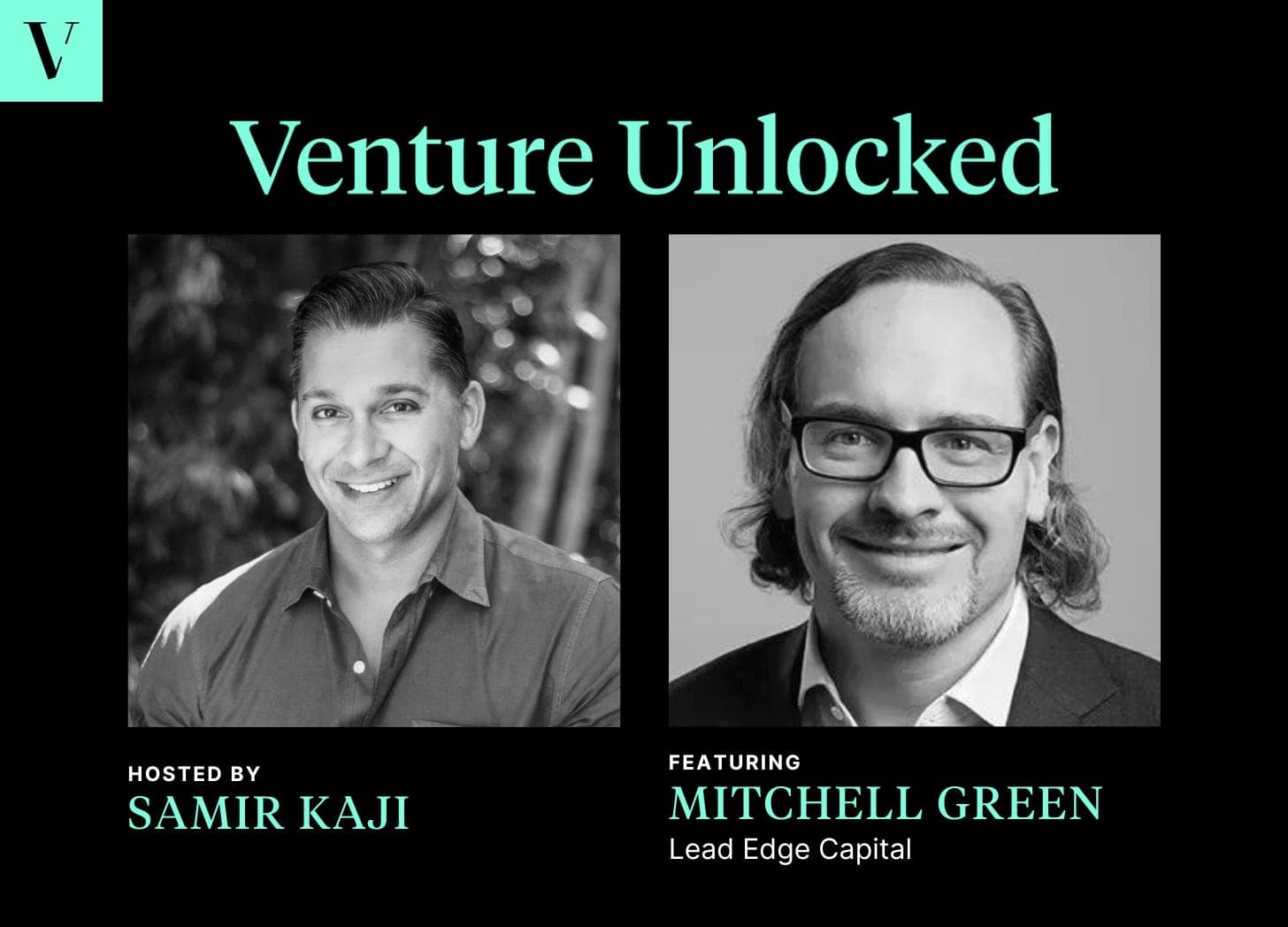
Podcast Overview Title: Venture Unlocked: The Playbook for Venture Capital Managers Host: Samir Kaji Description: A guide for starting, operating, and scaling a successful venture capital firm, featuring insights from experienced venture capital professionals.
---
Episode Details Title: Mitchell Green of Lead Edge Capital on the Moneyball Approach to Investing Duration: ~1 hour Key Guest: Mitchell Green, Founder and Managing Partner at Lead Edge Capital Assets Under Management: $5 billion Focus: Growth-stage companies, leveraging a large network of LPs (Limited Partners)
---
Key Discussion Points
- Origins of Lead Edge Capital
- Founded in 2009 during a challenging financial climate.
- Inspired by the cold calling and direct outreach methods used at Bessemer Venture Partners.
- Initial funding was raised through personal networks and a focus on strategic partnerships.
- Investment Philosophy and Approach
- "Moneyball" Approach:
- Focus on quantifiable metrics such as revenue growth, capital efficiency, and gross margins.
- Evaluation criteria include:
- Revenue: Companies must have over $10 million in revenue.
- Growth Rate: Must grow at least 25% annually.
- Gross Margins: Should exceed 70%.
- Capital Efficiency: Revenues should exceed historical cash burn.
- Retention Rates: Aim for high gross retention rates.
- Customer Base: No individual customer should contribute over 10% of sales.
- Recurring Revenue: Preference for recurring revenue models.
- Profitability: Must be profitable or breakeven at the EBITDA line.
- Role of Limited Partners (LPs)
- Active engagement with over 700 LPs, which provide a strategic advantage.
- LPs assist in due diligence, sourcing deals, and post-investment support.
- Building a community among LPs is critical for mutual success.
- Emphasis on leveraging LPs' networks for introductions and insights into potential investments.
- Challenges and Market Dynamics
- Discussed the evolving landscape of venture capital and the influx of capital that led to inflated valuations.
- Importance of being contrarian and recognizing that many companies may not warrant venture capital.
- Addressing risks associated with high valuations and down-rounds in the market.
- Sourcing Investment Opportunities
- Cold calling remains a primary method for sourcing deals.
- The significance of persistence and building relationships with entrepreneurs.
- The team at Lead Edge Capital reviews around 8,000 companies annually, narrowing it down to about 150 for further diligence.
- Hiring Strategy
- Focus on hiring individuals who demonstrate persistence, analytical skills, and the ability to engage with entrepreneurs effectively.
- Preference for former athletes or entrepreneurs who have a track record of resilience.
---
Key Takeaways
- Contrarian Thinking: The importance of thinking differently from market trends to find undervalued opportunities.
- Networking: Building a network of engaged LPs can significantly enhance the investment process.
- Data-Driven Decisions: A rigorous, data-driven approach to evaluating potential investments is crucial.
- Market Awareness: Understanding the broader market dynamics and being able to adapt strategies accordingly.
---
Conclusion The episode features valuable insights from Mitchell Green on how to navigate the venture capital landscape by leveraging data, fostering strategic partnerships, and maintaining a contrarian mindset. The discussion highlights the complexities and opportunities in the current investment climate, offering lessons for both emerging and experienced venture capitalists.
---
For more information about the podcast and to access previous episodes, visit [Venture Unlocked](https://ventureunlocked.substack.com).
Written by AI. May contain mistakes. Listen to the episode to check what was said.
Transcript
Automatic transcript. May contain errors.0:00Welcome back to another episode of Venture Unlocked, the podcast that takes you behind the scenes of the business of venture capital. I'm your host, Samir Kaji, and on this week's episode, we have a conversation with Mitchell Green, founder and managing partner at Lead Edge Capital. With offices in New York and Santa Barbara, the firm has over$5 billion in AUM and specializes in helping growth stage companies scale. As you'll hear during the dialogue, the firm has a very interesting model on how it combines elements of private equity, growth, and an active network of over 700 LPs to build a really powerful moat.
0:29There were a lot of fun takeaways from this conversation, and I really enjoyed hearing about the strategic nature of the LP base and the programmatic way they evaluate companies. I hope you enjoy the conversation. Samir Khadji is the CEO and co-founder of Allocate. Allocate and Venture Unlocked are independent of each other. Any statements or references made by Samir or his guests regarding third parties, investments, or securities are solely their views and opinions and are not intended as investment advice or an endorsement of such parties or securities by Samir, his guests, or Allocate. Allocate or its clients may maintain relationships with or investment positions in guests, third parties, or securities mentioned in this podcast.
1:07This podcast is for informational purposes only and should not be relied upon as a basis for investment decisions. Mitchell, it's great seeing you. Thanks for being on the show on a late Friday night. Sure, absolutely. Thanks so much for having me. One of the areas that I think is a good place to start is going back to the origin story of Lead Edge, which now 14 years old, you were at a hedge fund at the time. And this was 2009, which is one of the toughest times to raise any capital. Tell us what inspired the start of Lead Edge back in 2009. Sure. So I would actually say it started before even 2009.
1:43And look, thanks so much for having me on. Quick background. So I'm from Grand Rapids, Michigan. I was a nationally ranked ski racer. I went to Williams. It's the only way I got into that school I could ski down a hill fast. Division of Wetski came after Williams. I made PowerPoints at three in the morning, investment banking for a year. And then I joined Bessemer Venture Partners. And that's kind of where it all started. So when I was at Bessemer, Bessemer had been a very like Shark Tank-esque fund. And this is talking 2005 thereabouts. Every year, Bessemer had five partners. Every year, 800 entrepreneurs would walk in the door.
2:22And they would, you know, invest in five to 10 of them. And like, it would be very inbound-ish. They had seen what firms like Insight, which had replicated what Summit and TA did by hiring 22 to 24-year-olds to go outbound looking for deals. And at that time, it was literally cold calling. You know, pick out the phone and we had a joke. If the CEO called you back, the company sucked. It was the CEO, you call every two days for a month. Like, that's who you want to get on the telephone. when you know you realize what's a good company by speaking to 10 ,000 bad companies that's all it did so I did that for a few years I left because while I loved Bessemer I just like didn't couldn't have told you the difference between like if you spoke to an entrepreneur of a company that was 30 million in revenue growing super fast bootstrap business didn't hadn't raised money or had raised very little money you know what was the difference between Bessemer's Growth Fund and Excel and Sequoia and General Atlantic and TCV and Insight and Summit Partners.
3:21They're like all really good firms. And I just felt like they didn't really have a lot of competitive differentiation. So I left and was like, I think there's a bunch of good firms that all the returns are going to go to in this industry and they all kind of look similar. So I left to go to Wharton Business School. And while I was at Wharton, I joined a hedge fund started by Julian Robertson at Tiger, one of the Tiger Cubs. And I joined this Tiger Cub and the guy that ran that firm and dabbled in privates. By dabbled in, you know, he started the fund in like 03 and in 04, he bought$10 million of Alibaba Group at 25 cents a share.
3:59And we can feel bad that, you know, Alibaba stock has gone from 300, you know, down to where it is today, it's still$75. So, you know, it would still have been a, you know, absolute grand slam. When I came to him, I, you know, I told him what I used to do. And he was intrigued by the fact that he'd be like, well, I've, I've, I've only ever owned common stock. I've only ever owned 3 % of a company at most. I've never been on the board. He's like, you know, would there be private companies if we said that, that would might want to take, that would take our, our private capital from us. And I was like, well, of course there's, you know, cause a lot of the standard venture guys or growth guys at the time wanted to own 25 % of your business, be on the board, wanted to like, you know, all these securities.
4:38And I was like, yeah, I mean, like if you're willing to buy common stock and buy 3 % of a company and don't need a board seat, we can probably, we can probably find a bunch of interesting things to do. And that's how it actually started at the edge fund. I did a couple of deals in early 08 working for them. What I would do is use the edge fund network. I like, I'd go to the prime brokerage network and meet companies like public companies. And then if I had a private company that wanted to sell into the public company. When I met the CFO of the company, I'd literally hand them a business card and be like, hey, I got this private company.
5:07They have a bunch of your competitors or customers. They'd love to talk to you. It's a lot easier to sell down than it is to sell up in an organization. So I ended up making a couple of investments when I was at the hedge fund. This is like a wait time frame. And the first one I invested in was a software company, Bizarre Voice. It had been a company that I had cold called when I was at Bessemer. It had originally been backed by Austin Ventures, and then Battery Ventures invested in it. And Bessemer could never get in it. But I had stayed in touch with the CEO. I had made a bunch of customer intros for him, and he invited us into the deal.
5:39And it started off as like, look, you weren't going to be on the board. You were going a couple percent of the company, combination of preferred and common stock. And then I started helping him a bunch, literally making customer intros using the public market networks. And we started to see other deal flow. So in the summer of 08, we set out to raise like a$50 million fund inside the hedge fund. Then September of 09 happened and I was lucky to have a job. And then I actually, in early 09, the founder of the Bizarre Voice came to me and said, Hey, would you guys want to put another 10 million bucks in the company?
6:14I'm not letting what happened to my last company happen to me again, which was a company called Core Metrics. He ended up selling it for 300 million bucks, but they had done a down round in 01 and the founder of Bisky had had nothing. And so he was like, you guys have been super helpful. I'd love if you guys want to put 10 million bucks in this thing and I'll do it like at a 10 % simple price. It's like February of 09. I'm thinking to myself, well, this sounds amazing, but the hedge fund, you know, it doesn't have any capital. I was like, can I have a month? I was like, can I have a month or six weeks?
6:44I'm like, you know how I help you a lot with big customer rentals to public market investors? I'm going to go raise money from people that I used to cold call, from people that were rich in my business school class, their parents. Then I'm just going to ask them for help. I'm going to be like, oh, look, you run a big e-commerce business. You're on the board of Procter & Gamble. This company is$20 million in revenue. They're looking for an entry at Procter & Gamble. Can you help? So I ended up raising a bunch of money in the spring of 2009 for this one vehicle to invest more money in Bizarre Voice.
7:15We actually then bought out the hedge fund stake as well. Did a second deal on another software company called Monetate in 2010. A bunch of my LPs came to us in 2010 and said, stop screwing around. Stop doing deal by deal. Raise a fund and we'll give you money. We'll be your first investors. We like love what you're doing. We're investors in a bunch of funds. Nobody asks for help. We ask for customer entrants like you're doing or helping with recruiting. So we literally started the fund, the first fund, from these same investors. And we'll call it, I think it closed on April of 11. $52 million fund.
7:57All the LPs from the SPV, some of them introduced me to their friends. And our pitch was really simple. We're going to run around the world and look for companies that meet very specific criteria. We're going to source them the same way we did at Bessemer. We're going to start to build a team of associates. That was two at the time. It's now almost 20. You know, we're going to run around North America and Western Europe and find companies that meet very specific criteria. And when we find them, we're going to leverage you through the entire investment lifecycle. You're going to be, you know, if this company is in Ann Arbor, Michigan, and you're from Detroit, we can't get in, we can't get an audience at the company.
8:32We're going to send you an email asking like, hey, do you know anybody at this company? Or if you're the, you know, former CEO of General Motors and, you know, we're looking at an automotive software company, we're going to ask the CEO if he wants to meet you in the process. It's like, you'll help us win. And by the way, you'll be our McKinsey. To post investment, we're going to help leverage you with recruiting at the senior level or C-level, or, hey, we're looking for a female audit chair. We're looking for customer interest to these 20 people. Hey, this company's 70 million of revenue, profitable, and looking to, you know, expand into Western Europe or going to Asia.
9:03Can you just like offer advice? That's what it does. Like, that's what it did. It's blossomed from this little SPV of the 10 million bucks into our last fund was$2 billion with over 700 LPs. And we met all these people through one another. So I know that was a long answer, but I just wanted to give you the background. It's actually incredibly helpful to get that type of background. And there's so many threads I can pull on, especially the fact that you still have 700 LPs to this day when so many firms as they grow and scale over time, they actually reduce the number of LPs and go more with the institutional LPs.
9:37Yet for you, these LPs that you have that are on the smaller side, i.e. high net worth individuals, CEOs, or people that are incredibly strategic to the mission. When we go back maybe 14, 15 years, how clear was the why of that and what the overall long-term plan for LeadEdge was going to be? Pretty clear. I'm one of a few people that run firms today at scale that have actually cold called the company. I started my career cold calling. And the three of us on the IC since fund one, my partner Brian and I worked at Bessemer together. He left to go to Columbia and then went to FTV and then joined me at the end of FUT1.
10:17My partner named I worked at Insight. I was on the frontline call-ins companies. I could not figure out what was going to differentiate at Bessemer. And when I started my own firm, I knew where the returns came from. I mean, Thelda Hardeman, who was a partner at Bessemer, is now one retired. He's there forever. He's probably 50 years. He was a Harvard Business School professor. They had all the data. He taught venture capital. All the returns in this industry flowed to the top 20 venture funds. Now, again, look, two-thirds of the companies we invest in have never raised money from, quote, tier one venture funds.
10:53So a lot of stuff we do is back a company like Pacemate in Sarasota, Florida that raised$8 million from 70 angel investors, and it only like barn three. You know, but yeah, yes. Have we backed companies back by Bessemer or back by benchmark or Sequoia? Yes. But it's not like a lot of times we don't. I'm an entrepreneur. I joked that I was in business school and at the entrepreneur conference, I never understood why they didn't get Steve Cohen to come and speak or Dan Ock or like guys that have built giant edge funds or private equity funds. Like Steve, Steve Schwartzman is an entrepreneur. And so is Steve Cohen.
11:25Like they might be investors, but they're entrepreneurs. They started companies. Why? I mean, if you, the only way to really get paid now, Like you can make a lot of money working for somebody else. You can make more if you do it your own. You could make a lot, but you would have made more had you done it yourself. But I also did. I want to be my own boss. I'm an entrepreneur. I started a company in college, totally failed. But like, uh, I, I, it's just, it's just my personality. Like, you know, my partner, Brian, if he was on here, would be, would be cheap chiming in right now that I was the worst ranked analyst at UBS in my analyst class.
11:56Making PowerPoints at three in the morning and what the line is straight on page 60 to media, I don't think is very relevant, but to some people, it matters. An area that I want to spend a little bit of time is on the sourcing side. So traditional venture, especially in Silicon Valley, maybe New York to a certain degree, you do have a lot of the opportunities that are through warm intros. And that could be from a founder, it could be from an LP, it could be from another GP. But your model is very much outbound cold calling, which is tough to do, but at the same time can yield really interesting opportunities that are uncovered.
12:32Maybe talk a little bit about how you built that team. So we have a team today, I think 18 associates, analyst associates, same thing. There's been title inflation in the last 20 years. These associates speak to about 8 ,000 companies a year. And we have these like eight criteria. And if you were to say that the companies need to meet all eight criteria, you would have 1 % or 80 companies that met all eight criteria. That would be too small of a sandbox to invest in five to seven deals a year because we want to invest about 20 companies a fund. That's not a big enough sandbox to do five to seven deals.
13:12So we find if you do like five or more criteria, and I'm happy to do what these are, then you get about a 10 % yield. So we get about 800 companies a year that fit our mold. And that results in us doing about diligence on 150 to 175 to do five to seven deals a year. Now, how do you get from 800 to 150? The founder's nuts. The market size is too small. The company's not raising money. A whole host of reasons. Now, to get to this 8 ,000, it's primarily outbound cold calling. But of course, we cover small investment banks. Of course, we cover small private equity firms. Of course, we have coverage officers for the different early stage venture funds.
13:53How the LPs help, starting with sourcing. Of course, they send us inbound lead flow and it's sometimes good. It's oftentimes fair. Not good. Remember, they're not seeing the company with 100 of revenue growing 25 % a year with 35 million of EBITDA. They're just not seeing that business. In a million years, they would never see that business. They're also probably not seeing the business that does 50 % of revenue going 150 % a year. This is not what they're seeing. Where they are insanely helpful, though, is what we call hard to cracks. We're calling into a company, the data looks really interesting from the outside, like employee count growth, the fact that it hasn't raised much money, and it's based in, you know, Minneapolis or Kansas City.
14:36Could we then email our LPs in Kansas City and be like, look, we've tried to email this company 10 times. Do you know anybody? We'll also have LPs email the company and be like, hey, I'm an advisor to Lead Edge. You like our software company that sells into the food space. I'm the former CEO, Kogi Pavalov. I would love to talk to you. He will respond. I'm not telling you it's 100%, but we have a pretty darn good hit rate of meeting companies that way. Now again, there may be nothing to do. The CEO's probably not looking for money, but we still get in front of the company. Then it's about diligence.
15:12So you say to the CEO, how do you need help? And he says, well, and everybody wants more customers. So, you know, let's say it's a company that makes restaurant point of sale system software. And you could say like toast. And I said, look, I got a bunch of employees that own restaurants. You want to talk to them? I mean, if the CEO says, no, you don't want to invest in the company to begin with. But if he says, yes, he like loves you or she loves you. And at the same time, you're getting diligence as well, because you're like asking the people like, well, what'd you think? and if a bunch sign up as customers you're like oh that's pretty damn good diligence like that's a pretty good signal and so it just like helps you and then we'll put lps on the boards of companies we'll make them advisors to companies is our lp based only individuals no by number it's 95 individuals 5 institutions by dollar it's about half individuals 20 percent individuals that write institutional size checks and 30 percent traditional institutions, you know, big pension funds, endowments, things like that.
16:15How do we leverage them? We literally just send them emails asking for help. We're like, hey, we just sent an email. Hey, one of our companies sells price optimization software to manufacturing companies. You know who owns manufacturing companies? Mid-market private equity firms. You know who cares about margins and pricing, private equity funds. They're like a perfect channel to sell into. We literally just sent an email out to like our LPs for 20 random private equity funds. I would say seven people helped out of like 20. Again, some of those were institutions actually, because they were like, listen, I'm like invested in this fund.
16:49I'm happy to help. So that's a way to think about how we leverage our LPs. When you think about all of these LPs, obviously many of these people are running companies or they're in a fairly senior position, probably really busy. How do you balance between adding value to both the NLP, who may want to see some of these companies, understand what's going on, and maybe they could be a client of some of the companies that you're bringing them, but not overtaxing them because sourcing, maybe it's a little bit of diligence, maybe it's the post-investment help. How do you make that balance? By the way, another way to ask the question is, how do you convince a multi-billionaire where they put$10 million in your fund to help?
17:29It's very simple. We've built this community of people where it's like, look, don't invest if you don't want to help. I don't actually care. We've got enough people that want to help. And when you've got 700 plus LPs, and we track every intro. We know how we met every LP, and we know how many intros we've made them to, how we've helped them, how we've engaged them. We track all this stuff religiously. If you have 700 people, no one person is helping that much, to be quite honest. And it's like very low touch, the low touch way to help. It must work because how do you think we've met all these people?
18:07I think Fund 1 had like 70 LPs or 100 LPs. Fund 6 has got 700 of them. Now, look, we could have 1 ,500. Now, the easiest way to double your fund size, right, is just ask every LP you invested a dollar to have them introduce you to somebody that invests the same amount as them and you've doubled your fund. But that's why we have institutions as well. We don't want to have 2 ,000 LPs. We treat people well. We have a quarterly call where we walk people through the portfolio. We tell people how we need help. We ask for help. I constantly talk to LPs and I'm like, institutional LPs, I'm like, how many times have you gotten an email in the last year asking for help?
18:49I know the answer already. The answer is zero. We just ask. You know, one of the things that often comes up with a lot of the firms that have scaled, and many of them did actually start the way you did, which is mainly non-institutional capital. And some of that was out of necessity, didn't have the track record to be able to raise. Over time, if you actually look at the percentage of institutional capital versus non-institutional, it becomes like 90-10. So 90 % of the capital comes from the endowment's foundations. And part of the reason they do that is because it's long-term sticky capital. It's much more predictable, at least.
19:24That's the biggest fallacy in the planet. Rich individuals who generate, who have wealthy individuals who have cash-generative businesses are the best LPs on the planet. They don't understand the whole idea of being over-allocated to private equity. I'm not talking about doctors and lawyers here, by the way. I'm talking about our LPs. If you look at our website, they are some of the people that run some of the biggest businesses in America. out of the world. These people have cashflow that come in every year. They don't think about, well, I've got 16.6 % of my assets in private equity and venture.
19:55I better not make another commitment. They're like, no, what's my unfunded? And like, how much money am I going to be called for this year? That's it. That's all that matters. We initially also thought, we had tons of people tell us, oh, you know, individuals are not sticky. They can't scale. The same people that told us that we have a fund that's four X bigger than them now. You know, I don't know. Something works. And by the way, I will tell you this, we raised Fund 5. We were going to start Fund 5 raising in March of 2020. The individuals were ready to go. They're like, dude, the market's down.
20:24Let's rock and roll. All the institutions are like, oh, we're freaking out here. We ended up raising it in July or September. The individuals are like most individuals that are investors tend to buy when times are scary, right? Yeah, and you're right. I mean, like a lot of firms found this the tough way in 2022 when all the big institutions had the denominator effect, couldn't do anything. And it was a lot of the, what I would call ultra high net worth investors, they were looking at and saying the markets have changed. This is actually a great buying opportunity. Rich people are still rich. Go look at the S &P.
20:58Yeah. Rich people own Apple and Microsoft and Google and they own NASDAQ. And yes, they're still rich. Like nothing has changed with them. Look, the reason we also have institutions are they make us a better firm. they do scale. You can raise nine-figure checks. So you don't have 2 ,000 or 3 ,000 LPs. We want to be able to have high touch and know all of our LPs. So that's why we have both. But look, our pitch to companies is, listen, let us invest in your business. We'll introduce you to our LPs. And oh, by the way, you're going to meet our LPs before we invest. That's not going to change. That's the entire proposition of what Lead Edge is based off of.
21:35It certainly speaks to the overall ethos. But going back, to something you said earlier about the eight criteria and looking at a company that meets all eight criteria, probably really, really hard to do. So let's say it meets five or six of the criteria. Maybe you can describe, you know, what those criteria are. And if you were, if you were to index on some of those criteria, which are like the most important criteria that are, are there must have criteria? No, there's not. It's money ball. Are you a 10 million plus, I'll just tell you, I'll give you the criteria and then I'll tell you like why they're important.
22:07One, to give you a sense, are you 10 million plus in revenue? We want companies that have product market fit. We don't invest in startups. We invest in companies that are growing, that have product market fit, that understand how to scale. Two, are you growing 25 % a year? We don't generate returns through leverage. We generate returns through growth. Three, do you have 70 % plus gross margins? There's a reason that Facebook gives away Apple iPads in the vending machine and Dell charges for sodas in the vending machine. or at least they used to. One has 90 % gross margins and one has 14 % gross margins or whatever they have.
22:43At the end of the day, businesses trade off on multiples of earnings when they don't grow that fast, when they grow 10%, 15 % a year. Businesses that have high gross margins are much more likely to be profitable at the end of the day and can actually run less efficiently than low margin businesses. Are you capital efficient? This is like our version of return on equity, it's really stupid, but it works for us. Are your revenues greater than your historical cash burn since inception? In other words, the world is littered with like$20 million software companies that have burned like a hundred million to get there or more.
23:19We define efficient as it's if you burn less than 20 million to get there. So in other words, if you've got a$20 million revenue business, it's only burning 3 million bucks. Even though you've raised 10, you're doing something right. So that's really important. Do you have 90 plus percent gross retention and then probably net that are like 130 plus? Again, leaky bucket syndrome. When you're like 10 million in revenue, really easy to have 80 % gross retention and survive. You need to fill the bucket and get$2 million back in new customers. Problem is when you get to 200. And if you've only got 80, 70 % retention, you got to get 40 to 60 million in new revenue every year just to break even to get to par.
23:58that's hard to do. Do you have a diversified customer base? Are you over 10 %? Do you have any customer over 10 % of sales? You could say the same thing about suppliers, but we don't tend to invest in businesses with suppliers. We don't want to wake up and find out a 30-year revenue has disappeared. Are you recurring? It's just easier to invest in December. Nine-year revenues are going to be in April. Then are you profitable or breakeven at the EBITDA line? These are all yes, no answers. This is our strike zone. Five or more criteria. Less than five, don't even care, won't spend more than two minutes on it.
Read the full transcript
24:29I can count on one hand the amount of time I have spent on GoPuff and Instacart and every food delivery business combined because they meet three out of eight criteria. They are not for us. They might be great businesses. This is not what we invest in. We would have missed Amazon. That's totally fine. When you look at those businesses, like let's say they do meet those five criteria and I want to maybe juxtapose that against the actual funding environment, which of course, especially in 19, 20, 21, we saw companies that were quality, that had those retention rates, had those growth rates, had the revenue.
25:05Capital efficiency kind of went away for the most part because there's so much capital abundance. How did you reconcile that with, they meet all these standards we want, but at the same time, the price is so high that it's hard to see the type of net return that you're looking for for any one investment. What happened during that time. Look outside Silicon Valley. Look, our biggest investment in, I'll give you our two examples. Our biggest investment, look, and to be clear, in our 2020 fund five, we definitely overpaid for some stuff. But I would like to think that our portfolio is sitting a lot better than a lot of people's portfolios.
25:42I think a lot of people are delusional about some of the stuff they have. I'll give you examples. Our largest investment in our 2020 vintage fund, which we did in summer of 21 is a tax accounting software business. It was bootstrap business. It was like 13 million of recurring revenue growing, I don't know, 60, 70 % a year, had never raised money based in Ann Arbor, Michigan. It was COVID enabled. It's electronic signatures for tax returns. Unlike virtual conferences where everybody wants to go back in person to go drink beer and hang out in Vegas. Nope, you've never gotten a DocuSign and asked for it to send you a paper copy.
26:27It's always the reverse, right? No, you can send me a DocuSign. This was that, but for tax returns. 13 million, going 60, 70 % a year. We bought 70 % of the company for like 90 million of equity. That business, you know, was it done in like July of 21, two and a quarter years later, two and a half years later, a business will do$35 million of revenue and probably $7 to$8 of EBITDA this year. And we're in it. We bought 70 % for$90 of equity. We're not like$120,$130 million. If that deal had been a minority deal based in Silicon Valley, backed by Sequoia, our benchmark, it would have been$700 million.
27:12$600 million. And it was because we were competing with private equity funds for it, not crossover edge funds that thought everything grows to the sky. Our second largest investment, our second big investment in the fund is a company called LiveView Technologies. It makes outdoor camera systems. It was like$20 million of revenue. Bootstrap business was selling$40 ,000 camera systems to Costco or Home Depot or Walmart. like, you know, you've seen these things in outdoor parking lots. They were in the business of selling the camera system one at a time and buying them one at a time. And really, you know, they needed the money to sell on the next, on the system they sold to build the next one and the next one.
27:59So it was bootstrap. But it was again, selling camera systems. We convinced these guys with our experience in toast. We invested, we buy like 25 % of the company at a sub$200 million our valuation. That company this year, three years later, will do like closer to 200, growing 100 % a year, printing money. We started into a subscription business. They now give the systems away for free and rent them. It was just like, I don't know, it was in Salt Lake City. People didn't want to invest in some boring camera system business that was like one-time sales. So it was just like chucking and jiving and going where other people weren't.
28:34Yeah. And one of the things that you just kind of mentioned, which there's not like this massive database that just exists where you can just say, all these companies are here. Here's that they're going to meet the criteria. You actually have to speak to the entrepreneur. You need people on them. There's no Bloomberg. Correct. There's no Bloomberg, right? Correct. Especially when you're looking at these off the beaten path, under the radar, companies that are doing things in areas that people generally are not looking at, especially sort of the Silicon Valley VCs. Yeah. So like, anyways, I was talking to this company, so like this company, Havista Plan, that we just invested in.
29:06It's in freaking College Station, Texas. There's like nothing there. Exactly like one of the big universities in Texas. That's it. This company was bootstrapped, like 8 million of revenue, growing fast, 80 % a year, never raised venture money. We just did it at a great price, like a fantastic price. It's just because like nobody knows about this thing. Badly, this isn't going to be the next snowflake. There's like 0 % it will be. Most people, the problem in the venture capital industry is everybody's trying to back generational companies. Most companies don't grow to$100 billion in value. That just doesn't happen.
29:43Look, we want to be in the business where you back a company with$10 or$15 million in revenue and you grow it to$50 and make it$20 at EBITDA. You sell it to a private equity fund or to a strategic, you can make three, four times your money. That's a great business to be in. Now, look, we've backed some generational companies. We were early Alibaba investors. We were very early Toast investors. were very early Grafana investors. I don't know, we looked at them all like deal by deal. And we're like, what does this software company do? What's the target market? What's the available TAM? Can we make two to five times our money in three to seven years for a 20 % net IRR?
30:22Like we've only lost all of our money in like one deal, in one core deal. It also speaks to the fact that most companies actually should not take venture money. And a lot of people jumped on the venture treadmill and actually - A lot of the companies that raise venture money shouldn't even exist. Selling dollar bills for 80 cents is a great way to grow revenues. It's not a way, actually, if you need to generate profits. All these businesses with 30%, 40 % gross margins are never going to make money because the unit economics don't make sense. And a lot of these companies, I mean, candidly, were able to raise, based on narratives and the fact that they could be generational companies if you squinted in certain directions, but actually might've been okay if they were bootstrapped or they raised very little capital and were cash flowing companies.
31:07Which is what's really interesting going on right now. There is a class of companies that are effectively uninvestable. Here's what happened. So you've got minority deals by 15, by 20 % of a company and you can buy it from a founder and never raise money from a tier one venture fund, maybe raise money from some local venture fund or a bunch of angel investors, didn't participate in the insanity of 20 and 21. He doesn't have a vote. That entrepreneur might be nervous about the world. And guess what? There's stuff to do. If 10 is busy and zero is dead, it's like a six. There's stuff to do. Where it is dead is the company that was like 20 million to 50 million of revenue in 2020 and 21.
31:52Those companies went out and completed the equivalent of a 2006 IPO. Those companies raised$100 to$300 million. They never need to raise money again, ever. No different than if you went public in 2006. You went public. You don't raise money again, right? You're done. Now, I think where the down rounds are going to happen, yes, if those companies needed to raise, they would have down rounds. They'll probably have IPO down rounds if they make it that far. Some of them won't. Some of them will be fantastic companies. A lot of them won't be. the downruns are going to happen in the companies that were like 2 million to 10 million that raised 50 million dollar rounds and it burned through 30 and only have 20 left and are like going to need to raise more money now the best ones probably will raise flat to up rounds but there's a huge swath of them that just like massively missed their numbers that are probably are okay companies they just need to be like repriced they're just completely and it's the cap structure that's going to be their biggest detriment.
32:51And it's really tough. I mean, when you make such a dramatic shift, both up and then what we've seen over the last couple of years, because there were companies that were raising at absolute crazy multiples, whether it be 50, 70, 100x. And many of those companies now have to come back and test the capital markets. And what they find is that even with some level of growth, you can have a company that's grown 3x. But if the marks today are showing a 20x multiple if you're at 100x before, you're going to have to do a down round if you can raise. And that obviously creates some tough cap table gymnastics with all of the early investors, the common shareholders.
33:29You really have to figure out a way to keep everyone incented and aligned after that point. Yeah, and it's funny. I think the public markets are actually pretty efficient. And what I mean by that is in the back half of this year, there were three IPOs, One of them was Birkenstock. You know, if you look where Birkenstock went public, it was our luck hand. Instacart is like a fraction of its IPO price. And the Summit, I'm just blanking on the name of the other deal, the Summit partner software company that went public is at or above its IPO price. Look, one of them is a great company. One of them, Birkenstock, is owned by a private equity fund that still owns 90%.
34:08So like, why would anybody buy it until the private equity firm starts selling? And one company is kind of a crap coat. You know, I think public markets are pretty efficient. I think good companies can go public right now. They may not like the price, but like, just because some idiot paid you$6 billion or $20 billion or$50 billion in your last round, like, it doesn't mean you're worth it. Looking at some of those companies that raise it big rounds, one of the things that's probably happened in the boardroom is you had some of those big firms, whether it's Tiger Co2, D1, Dragoneer, that came in, they have preferred stock.
34:38But if those companies do go public, they're probably going to have a down route in the public markets. everything gets converted to common. And that's not a good thing for those late stage investors, where the early stage investors, they're buried behind hundreds of millions of dollars of preferences. And for them, the company going public, for the common shareholders, company going public is the best thing because then everything converts to common. A million percent, that's true. Yes. Down round IPO. But the problem is some of these companies may not be going fast enough to even go public. But yes, you're 100 % right.
35:11And I'll huge amount of these deals didn't have IPO ratchets or like IPO thresholds where the investor had to be able to make like two times his money or make something. No, the way to screw all the late stage investors is to take all these companies public 100%. I don't know if it happened because I'm not sure all the early stage venture guys are that sophisticated enough for capital markets. One last question I want to get to on the elitist side. So, you know, you've scaled sort of the LP base, you figure out how to activate them consistently. You have a team now that you've built across operating professionals, you have your analyst team.
35:46One of the things that we talked about is sourcing these interesting companies that are in College Station, for example, is that you need people to do what you did before, which is cold call people and be incredibly persistent. So maybe talk about how you think about hiring people to ensure that the DNA that you had is something that continues because you really do need that to be able to source effectively and stay in front of these entrepreneurs. Oh, for sure. Look, I mean, there's seven private equity partners at Lead Edge, two of which started here as analysts, and three of which were here at the beginning with partners.
36:20So yeah, look, you hire like, it tends to be a lot of athletes. You know, those people have actually failed. Like if you drop, if you're playing in the Rose Bowl and you throw the ball out of bounds to win the game and you lose. That's actually failing. Not like, you know, you know, getting a C on a test and also people, college athletes have full-time job. They're effectively full-time jobs while going to school. If you've got a three eight at Stanford and you're on a golf team and you're like the number two on a golf team, you're a stud. You know, look, we're looking for really smart. If you think about the job, you got to, you got to be able to convince the person to talk to you.
36:57So you got to be persistent. So, you know, the best CEOs never call you back the first time. you might call them you might call an email them 10 times until they get back to you 20 times once you get them on the phone you got to be smart you got to be able to know about the industry you got to be able to talk about the sectors you got to be able to engage the ceo you got to be able to sell you got to be able to sell lead edge and get the guy to like want to do a second call you got to be like an investigative journalist and that you got to like build a pry information out of them that's not public it's amazing what people will say and then you got to be able to pitch the investment committee at LeadEdge every Monday and tell us why you think it's a good company and why somebody should get on the phone with this.
37:35And then to be a rockstar, you need to build the right investment memos and to be able to engage the LP base to figure out how to help. We find the best people are former athletes or former entrepreneurs, time and time again. By the way, we've hired people who we didn't give them a job who were like, you are wrong. here are the five reasons why i'm coming back in and like i'm not saying i'm here i'm not taking no for an answer here like those are the types of people we want because they have the persistence the sanity they've probably gone through not everything handed to them so like my my guess is some of the colleges they went through are not the yales and mit's and stanford's in the world yeah we recruit from all the i believe schools but we also recruit from like the university of Richmond and USC and UCLA and UT and Mission University of Michigan.
38:23I'm like, I can tell you right now, the top 20 people at USC or the top 20 people at UT Austin are just as smart as anybody at Harvard. It's just fine, tenacious, hardworking people that are super creative, super intuitive, are really curious, ask lots of questions. Frankly, I usually am the last person to interview most of these analysts and they join. And I actually just ask very few questions and then let them pepper me with questions. The analyst who asks the most questions of me is the analyst I usually think is the best. Yeah, that's great. So maybe just last question in terms of, if you were to think about the last 20 years of your career, 18 years maybe, within sort of the investing world, if there was one piece of advice, 2023 Mitchell would tell 2005 Mitchell in terms of investing, what would it be?
39:14Trust your gut. Like when you're right, you probably are right. Being diversified is a way to not make money. Like you want to make concentrated bets. Be contrarian. That's actually probably the most important thing. Like the market is going to go in the way that causes the greatest amount of pain to the greatest number of people. Put it this way, February of 2020, people were not sitting around saying the market was hanging on 40%. nor were they saying in March, at the end of March of 2020, that the market was about to rip 100%. When everybody is like, I couldn't for the life of me figure out what we were putting$2 trillion or whatever, why nobody was like talking about inflation.
39:54It was just like insane. And then now you hear about like the CEO of Walmart talking about deflation. Nobody's talking about that right now. He was. And by the way, he knows because they see what all these consumers are going into. Like, I just think that being a contrarian and just ignoring all the noise, make your own path, pick the types of companies you want to invest in, and then just like march to your own beat is the best way to do it. Yeah, I mean, look, and being contrarian and being right is where we've seen the biggest returns. And the reason people don't do it is because of the risk of being contrarian and wrong.
40:29And it's much easier for people just to be non-contrarian and do whatever everybody else does and be consensus. and if you're right, you're right with everybody else and if you're wrong, you're wrong with everybody else too and it's a safer place that a lot of investors play but I've never seen that to be the place where the greatest investors make money. That's right, 100%. Well, Mitchell, this has been a lot of fun. Thanks for being on, really appreciate it and congrats on all the success so far. Thanks so much, really appreciate it. We'll talk soon. Thanks so much for listening to another episode of Venture Alonc.
41:03We really hope you enjoyed it. To learn more about Mitchell or Lead Edge, Go to adventureunlock.substack.com where you'll find detail notes of the show and a listing of past episodes. You'll also find us on Apple or Spotify where you can subscribe to get all of the latest shows as soon as they're released.
41:39Thank you.
From the publisher
Follow me @samirkaji for my thoughts on the venture market, with a focus on the continued evolution of the VC landscape.
We have a conversation with Mitchell Green, Founder and Managing Partner at Lead Edge Capital.
With offices in New York and Santa Barbara, the firm has over $5B in Assets under management and specializes in helping growth-stage companies scale.
The firm has an interesting model that combines elements of PE, growth, and an active network of over 700 LPs to build a very powerful moat.
I was really interested in several business components, especially the LP base's strategic nature and the programmatic way they evaluate companies.
A word from our sponsor:
Invest in innovation. Allocate allows investors to access top-tier private funds and co-investment opportunities within the technology sector.
Despite the enormous growth of the private markets and the rapid increase of retail demand for private alternatives, investing in the highest quality private assets within the innovation sector still remains limited to institutions and ultra-connected high net worth individuals.
With Allocate, wealth advisors, banks, family offices, and other qualified investors can have a streamlined way to responsibly invest with confidence.
Go to allocate.co to find out more and please sign up to the waitlist to learn more and get early access to the platform.
About Mitchell Green:Mitchell Green is the Founder and Managing Partner at Lead Edge Capital, a $5B growth equity firm investing in software, internet, and tech-enabled services businesses globally. Mitchell oversees the fund’s global activities and has led several of the fund's largest investments, including Alibaba Group, Asana, Bumble, FIGS, Grafana, SignalSciences, Spotify, Toast, Uber, and Wise. His career began with roles on the investment teams at Bessemer Venture Partners and Eastern Advisors. Mitchell is a former nationally ranked alpine ski racer and currently serves on the boards of the U.S. Ski & Snowboard Foundation and the Laguna Blanca School in Santa Barbara, CA.Mitchell holds a B.A. in Economics from Williams College and an M.B.A. in Marketing from the Wharton School at the University of Pennsylvania.
In this episode, we discuss:
(01:38) Shares the origin story of Lead Edge Capital, reflecting on the early experiences before 2009, and the influence of Bessemer's deal-sourcing approach of cold calling and direct outreach.
(09:57) The value of being his own boss and learning from failures
(12:35) Building a team for outbound cold calling to find unique investment opportunities.
(15:27) Leveraging LPs in the due diligence process for valuable insights and validation of potential investments
(17:21) Creating a community among LPs where engagement and assistance are core expectations
(20:55) The resilience and opportunistic nature of high-net-worth individuals during market downturns
(21:59) The "moneyball" approach to investment criteria, prioritizing revenue, growth, gross margins, and capital efficiency
(26:00) A success story of investing in a rapidly growing, COVID-enabled electronic signatures company
(30:32) Many companies raising venture capital should not exist
(36:09) The need for persistence to get into the best companies
(38:57) Trusting your instincts and the strategic advantage of being contrarian in investment
I’d love to know what you took away from this conversation with Mitchell. Follow me @SamirKaji and give me your insights and questions with the hashtag #ventureunlocked. If you’d like to be considered as a guest or have someone you’d like to hear from (GP or LP), drop me a direct message on Twitter.
Podcast Production support provided by Agent Bee
This is a public episode. If you would like to discuss this with other subscribers or get access to bonus episodes, visit ventureunlocked.substack.com