In short
Venture Unlocked Podcast Episode Summary
Episode Information
- Podcast Title: Venture Unlocked
- Episode Title: Special LP Roundtable: What are LPs Thinking About in Venture
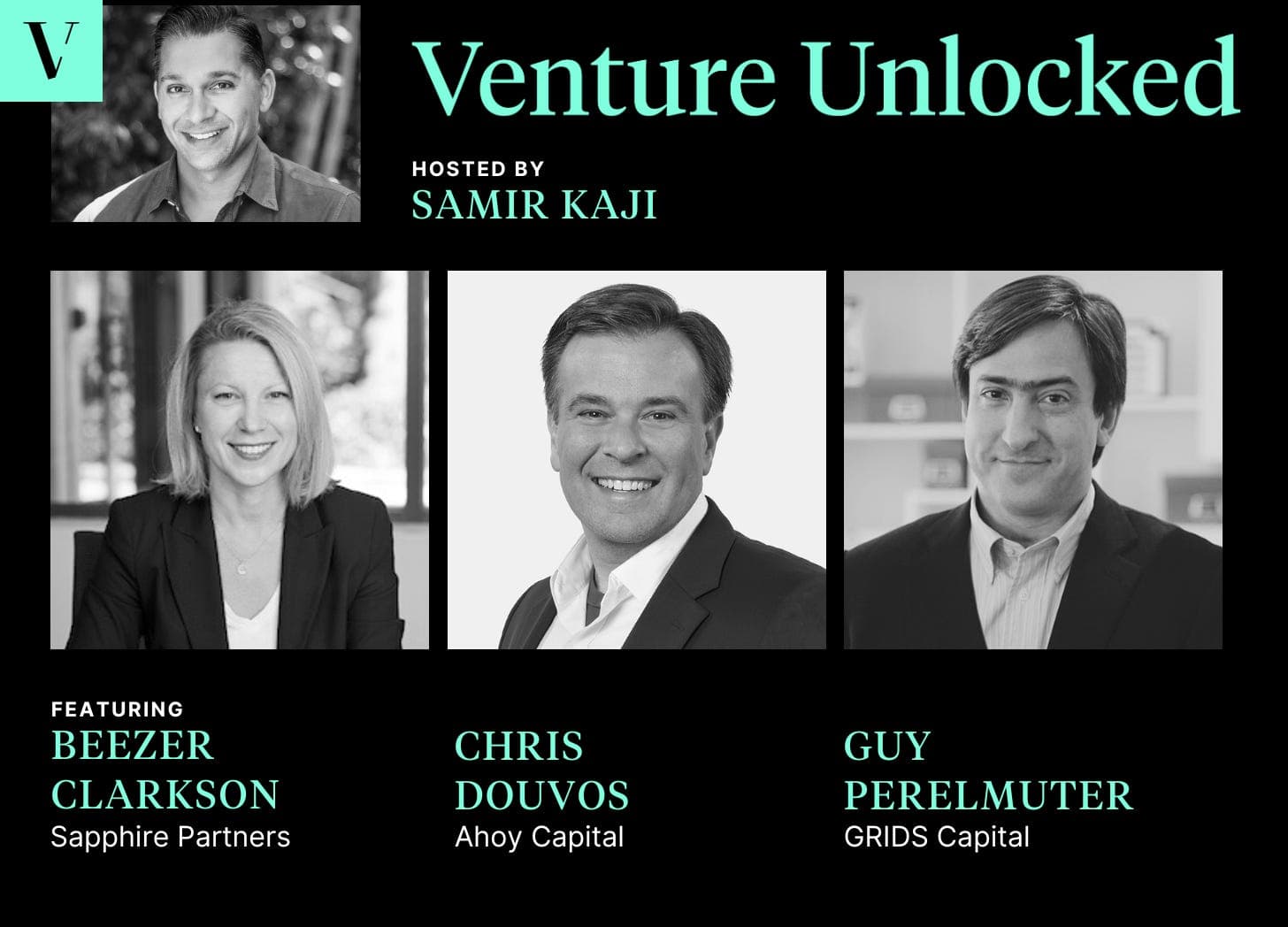
- Host: Samir Kaji
- Guests:
- Beezer Clarkson - Sapphire Partners
- Chris Douvos - Ahoy Capital
- Guy Perelmuter - GRIDS Capital
- Date Recorded: [Exact date not specified, but the last meeting was two years prior in October 2021]
- Sponsor: Juniper Square
---
Episode Overview The episode features a roundtable discussion among three experienced institutional LPs (limited partners) discussing the current state of the venture capital landscape and the implications for emerging managers. The conversation touches on the shifts in the VC market over the past two years, especially in light of a downturn and changing investor sentiment.
Key Topics Discussed
- Current State of Venture Capital
- Each guest was asked to fill in the blank: "Venture is __."
- Guy: "Venture is healing," reflecting a return to rationality after the peak hype.
- Chris: "Venture is a tempestuous child," indicating volatility and contrasting fortunes within the market.
- Beezer: "Venture is an ecosystem that loves a hype cycle," echoing the sentiment of ongoing cycles of excitement and downturn.
- Challenges for Emerging Managers
- The panel discussed the difficulties faced by emerging managers in fundraising, particularly in the current economic climate.
- The average survival rate for emerging managers transitioning from fund one to fund four is only 17%.
- Institutional investors are placing higher expectations on emerging managers, requiring them to demonstrate significant experience and a credible track record.
- Role of Secondaries in Venture
- Discussion on the impact of secondaries (the buying and selling of existing commitments to venture funds).
- The current market dynamics are seeing increased activity in secondaries, which may provide liquidity options for managers who need to show DPI (Distributions to Paid-In capital) to attract new investments.
- Institutional Capital and Manager Selection
- The need for managers to exhibit a strong understanding of running a financial services business.
- The importance of alignment of interests between GPs (general partners) and LPs in venture capital, emphasizing the need for trust and long-term thinking.
- Market Dynamics and Future Outlook
- The panel remarked on how the venture market is experiencing a recalibration, particularly regarding fund sizes and expectations from LPs.
- Despite a tough fundraising environment, the belief in the potential for innovation and entrepreneurship remains strong.
---
Key Takeaways
- Market Changes: The venture capital landscape has significantly changed since 2021, with a shift towards more cautious and strategic investment practices.
- Emerging Managers: Emerging managers face greater scrutiny and must demonstrate robust qualifications and past performance to secure institutional backing.
- DPI Importance: Distributions to Paid-In capital remain a critical metric for LPs, influencing fundraising success for managers.
- Secondaries: The evolving role of secondary markets is providing new opportunities for liquidity, suggesting that selling early can sometimes be a strategic move.
- Institutional Understanding: GPs must operate with a mindset that prioritizes fiduciary responsibility and demonstrates a clear vision for how they will attract and manage capital.
---
Conclusion The discussion underscored the evolving nature of the venture capital industry, especially in the context of emerging managers navigating a complex landscape. The insights provided by established LPs reflect the importance of strategic clarity, fiduciary responsibility, and adapting to market realities, which are crucial for the future success of both GPs and their LPs.
For further insights, listen to the full episode on [Venture Unlocked](https://ventureunlocked.substack.com) and follow Samir Kaji on Twitter for ongoing thoughts on venture capital trends.
Written by AI. May contain mistakes. Listen to the episode to check what was said.
Transcript
Automatic transcript. May contain errors.0:00Welcome back to another episode of Venture Unlocked, the podcast that takes you behind the scenes of the business of venture capital. I'm your host, Samir Kaji, and this week we're thrilled to bring back our LP roundtable with Chris Duvos of Ahoy Capital, Beezer Clarkson of Sapphire Partners, and Guy Perilmuter of Grids Capital. The last time we all got together on the pod was at the very tail end of the cycle two years ago, where we all tried to make sense of the venture market. Of course, a lot has changed since then, and this time we spoke about the impact of the downturn on emerging managers, what emerging managers can do to navigate this fundraising market, and the role of secondaries.
0:36This is always a fun group to have on, given their knowledge and transparency about venture from the LP lens. We really hope you enjoy the episode, so let's get right into it. This week's Venture Unlocked episode is brought to you by Juniper Square. Managing structured and unstructured data often means struggling to centralize information, build internal cohesion, and deliver a best-in-class experience for investors. Today, more than 1 ,800 fund managers rely on Juniper Square's end-to-end solutions for fundraising, investor management, and fund administration to manage more than 34 ,000 investment entities that span over 500 ,000 LPs and$1 trillion in investor equity.
1:17It's time to work with a partner who understands what venture and private equity firms need and get a single source of truth for all your fund and investor data. To learn more, go to junipersquare.com. Samir Khadji is the CEO and co-founder of Allocate. Allocate and Venture Unlocked are independent of each other. Any statements or references made by Samir or his guests regarding third parties, investments, or securities are solely their views and opinions and are not intended as investment advice or an endorsement of such parties or securities by Samir, his guests, or allocate. Allocate or its clients may maintain relationships with or investment positions in guests, third parties, or securities mentioned in this podcast.
1:58This podcast is for informational purposes only and should not be relied upon as a basis for investment decisions. Beezer, Chris, and Guy, great seeing you all and thanks for joining us today on a Saturday. Happy to be here. I was looking back at our last episode, which was October 19, 2021. So the height of all the craziness. In fact, we recorded on a Friday in September. And I remember starting off that conversation by posing the question of complete the sentence. Venture is blank today. And you all had different answers. It went from fascinating, interesting, confusing. and maybe that's the same of what we see right now.
2:43But why don't we start with that thought exercise, with that sense? I'll start with you, Guy. Venture is blank today. What is it today? So I think venture is healing right now. This is, for me, the key, the defining word for what we're experiencing right now. We have been through an incredible hyped-up market. We can argue that some of that is still going on right now with specific pockets. But as a whole, I think we witnessed the boom of the VC industry, especially in 2021. And I think we're living through the healing process of things getting a little more rational, if you will. And I think this is going to continue for a little while longer.
3:26All right. So we're in healing. Chris, what do you think? You know, I think last time I said something so generic, like interesting. This time I'm going to say venture is a tempestuous child, a petulant adolescent who by turns is calm and focused and afflicted with these bouts of madness and paranoia. Yeah, that's what it feels like now. It's been really interesting to watch the portfolio over the last our own portfolio over the last year or so, because we've got a bunch of companies that are just plugging away, well financed, you know, certainly had, you know, valuations that may prove in the fullness of time to be overwrought, but just building great businesses.
4:15And then there, the people are just like crawling and struggling and stressed about bridge raises and stuff like that. And it's, it's really kind of a tale of two cities. It's very different than, yeah, just saying interesting. And I, and I, and I like that. And we're going to dig into what, what you mean by tale of two cities a little bit later in this conversation. Beezer, what is your complete the sense? I love the fact that Guy made the thought that I had, which is venture is bumping along the bottom, a healthier, optimistic view at healing. But I think I'm going to bridge off of what Chris said to keep things spicy because I think this is what I said last time that we were spicy.
4:51I think venture is an ecosystem that just loves a good hype cycle. And I'm going to leave it there. That is actually the most amazing answer because literally we're just like the biggest hype beast. Like venture is just one big virtual hype house. Yes. And we just went through one of the biggest hype cycles that we've seen in a long time during 2020 and 21. And again, we talked last time in 2021, things were at the peak peak of that hype cycle. The last 18, 19 months have obviously changed. From my standpoint, I think we're healing. We're not healed yet. I think we're reaching that point of sobriety.
5:26But there's still folks out there that I don't think have completely adjusted to what, candidly, is the new normal. You know, as we think about venture, a lot of people put venture in this one big bucket, this monolith. They don't make the distinction between someone like an insider or a tiger versus that first-time pre-seed$20 million manager. Of course, these are very different type of investment vehicles with different risk returns. Let's maybe break down what's happening right now with each one of these things. Emerging managers is an area that all of us have spent a ton of time within our careers looking at investing in supporting the train of the number of emerging managers.
6:11I mean, I lose count even at this point, but north of 2 ,500 have been formed since the GFC to now. Many of them may not now get to a fund two, fund three, fund four. Beezer, you had described something that I thought was really interesting, which is the survival rate of emerging managers going from a fund one all the way to a fund four. Maybe we can start with what did you see and then how is that affecting now your outlook on many of the emerging managers that you might have backed as a fund one or fund two? Sure. So we tried to create a pretty meaningful database of both our portfolio returns and then the industry as a whole.
6:54And so what we did is we looked at data from 1995 to 2014 of all original funds. So the core funds, right? Not your state tacked on growth funds or overage funds or whatever that is, but the main core funds that become the real heart of a firm's fundraise. It's really shockingly, I thought it was hard, but it's harder than I thought to get from a fund one to a fund four on average, your odds are 17%. And that's because there's so many initial funds that come out. and then it gets worse if you want to get through to a fund eight your odds are less than 10 and again this is because there's just so many more emerging managers and by the time you get to a fund five or a fund four even like the funnel is just winnowed down there's still break points between them but it's really really hard there's certain vintage jumps which are harder than others and fund one to fund two i mean i'm rounding but it's on average 50 breakage i don't think people realize and i don't think and again because the last couple of years may have had a different texture to it.
7:52And there are a lot more VCs investing as LPs through programs and things like that that wasn't true back in the older days. So I think the getting to fund one to fund two might look a little bit different now, but I think what it's speaking to is the jump to institutionalizing. And I just think a lot of managers, there's not a lot of places to go to get education on this, but I think they underappreciate what it takes to attract institutional capital because it's not just your top line and here's my three companies that I got 50k into. It's much more than that because an institutional LP is looking for something else.
8:24And it could be that you just want to wait to institutionalize till fund three, but you see these break points. And I think in the beginning, it speaks to the ability to attract capital. I think later it speaks to the ability to manage your firm and make good investments. But I'll stop there. I think those are the things we see in the industry. And we apply that thinking to when we're looking at funds is what is their understanding of the venture world as well as their picking ability. There's an interesting analogy here, right? So if you think about, you know, seed stage companies going to a series A, going to a series B, going to a series C, historically, that's the percentages or roughly the percentages, you know, half of the series seed companies don't necessarily make it to an A.
9:02And then you have attrition from the A to the B and B to the C. And it's usually due to traction. In funds, it's hard to show traction, particularly within a two-year timeframe, which many of these funds were raising, maybe even 18 months, how much of that attrition from fund one to fund two is really driven by the fact that retail or family office capital might have been dried up, so the non-institutional capital, versus many of these folks just realizing that venture isn't what they thought it would be, and the opportunity cost of doing other things is so high. How do you all see that? That's a surprising number, 50 % don't make it to a fund two.
9:42You know, let me take a crack at that. And by the way, you know, this, this is a really hard question to answer with my adult onset ADD, because I've got like 19 different things in my head. But a lot of it is, you know, I'm thinking back to when I started doing this stuff in 2001. And we had just seen this, like, you know, it's like the dying out of the dinosaurs, or actually, they weren't dinosaurs, they were the little emerging managers that had been raised in 99 and 00. And this feels like, you know, similar time, But a neuron that's firing, as you say this, Samir, and earlier you said, you know, getting people adjusted to the new normal, you know, the new normal is actually the old normal.
10:15This is, we really have this recency bias. The period, you know, 1990, like late 1996, early 2021 was like really, really unusual. And I think the world feels a little bit more like the normal world of like 2012 or 2006, you know, or 1995. five. It just, you know, because the reasons he buys it, it just feels different. But, but back to the topic, you know, one thing that's, I think a lot about the difference between building a company and building a venture fund, somebody, I think it was Stuart Alsop once said, the advice he gives every entrepreneur is he says, look, you have a number of shots on goal to build intergenerational wealth.
10:55Think about how old you are now. Think about when you want to retire. You know, how many years is that divide that by four, because that's a vesting period. He's like, that's how many shots you have on goal, different opportunities to build intergenerational wealth. And you start a company, the company goes on and raises an A or not, you pack it up, you go and you start the next thing. What people fail to realize, and I think a lot of the dilettantes who came in, the tourists, what have you, came into the business, don't realize is the average venture fund lasts twice as long as the average American marriage.
11:25Think about the worst relationship you had in high school, and you have to deal with that person for for the next 14 years. That's really daunting. So if you're, you're a tech bro coming out of, you know, programmer coming out of, you know, you're a PM or biz dev at, you know, hot co, and you raised a$20 million fund, that thing is, and you're 30 years old, you're saddled with that thing until you're 45. People sometimes get caught up in it and raising a fund became like the thing to do. People think you're moving up the capital sector, actually like moving down in some bizarre ways. But it became the thing to do, you know, the way like law school is the thing to do for every humanities major coming out of it.
12:04It's just like the thing to do because we don't know what else to do. And, you know, go out and build. Don't raise a fund for crying out loud. All right, off rant. One maybe counterpoint that, you know, some people say is that having more funders come in with different backgrounds was actually a net positive for the industries, particularly at the seed stage, because most of these emerging managers are not coming in raising$600 million dollars doing series a series b investing but it's a 10 20 30 million dollar fund and the capital that was brought in is actually a good thing for the environment you know just maybe going back to your your point chris of you know yeah we've seen these a lot of atrophy do you view the you know the injection of so many emerging managers as a net positive or do you feel like the environment where you start to weed you know folks out and maybe the number of funders at the early stage decreases over time is the healthier balance for the ecosystem.
13:00For me, it actually fundamentally comes down to the question is, and by the way, when you say, you know, these managers coming in, is that a good thing? My answer to that is for whom? There's all kinds of different constituencies and the three of us on the LP side, or all of us have a very particular set of interests that are governed more by the world of Warren Buffett than they are by the world of Steve Jobs. But that's a whole other story. But what I'd ask is for me, the crux of it is like, is entrepreneurship an infinitely renewable resource? Is there like infinite demand for entrepreneurship?
13:32I have this debate with people here in the Valley all the time. If there were an infinite number of dollars available, would we see meaningful differences in the profits that people could make or the good that we could do in the world, etc, etc, etc? And I actually think it's not because we live in a world where there's a rate limiting step, which is like what happens to these companies? They have to go somewhere. They have to be acquired. They have to go public. Like something has to happen to these companies for them to like survive long term. I do believe that entrepreneurship generally is an infinitely renewable resource, but not venture backed entrepreneurship, which has a very different set of hurdles and expectations.
14:13All right. I'm going to take the side of, yes, we believe there's always room for new innovation and thought, which is a bit of a threading the needle in between. And I would say in part of the research we were doing, because one of the questions I wanted to answer, because everyone's like, oh, downturns are the best time to raise a fund. turns out legendary funds and we define legendary as the ones out of any vintage that have survived the longest to raise the most number of funds and are still a going concern because sometimes you can raise the most number of funds but there's not they're not going forward which is a different conversation this will not really surprise you three folks because you're well in tune to the industry but no no amazing funds have come out of good times and bad times again not a surprise but we we sort of accept that as reality and say great which means you should always be in the market and you should always have room for emerging managers in your portfolio.
14:59So we do a combo and to the Samir, thank you for offering to let me just say this. So that's why we've taken over the emerging manager program for CalSTRS. And we're really excited about that, but we really, we've long believed in the importance of having it as part of a portfolio. So now we get to do it on behalf of the teachers, pensions, and other educators of California. Go team. That's fantastic. By the way, as a resident of California and my daughter is actually, Lee, she just started her first year teaching in inner city San Jose. Well, I feel the responsibility of managing her pension.
15:32So keep me informed and in line. I think it's such an exciting development. It's certainly one that bodes well for the emerging manager mandate. You said something that LPs should have emerging managers as part of their investing profile. And I want to dig into that. all of us, while we agree with it, it probably poses the question of why. If you look at some of the more established firms, you can get often two to three X. You don't take the same risk. Why is it important? Maybe Guy, you can maybe mention because you invest in funds of all sizes and stages. Why do you have emerging managers as part of your investing thesis?
16:16The crux of the matter when it comes to emerging managers has to do with supply and demand, like so many other aspects of our business. And what we have seen over the past 24, maybe 36 months, is that the environment was ripe for people claiming any sort of special talent and trying to raise money and actually being able to do that, which for me was mind-blowing because the actual process of becoming a portfolio manager, being able to steward capital for other people, choose companies, allocate accordingly, schedule your follow-ons, make sure that you have the mindset as this is, as Chris said, this is like a decade-long process at least.
17:03It blows my mind that it became so easy for so many people with very little to show for to convince their potential LPs, this is why I am a good bet. But the fact of the matter is that at any given point in time, regardless of the point in the cycle where you're at, and I think we're definitely going to be talking cycles here at some point, there is talent, true talent, real talent, that is going to take their first stab at their first fund, right? And for us, I think it's incredibly important that we are always of an open mind and able to detect, okay, who within this group of people has a shot at becoming a great talent, a great new dynasty, if you will.
17:49And when it comes to the way we approach this is we are very much into first-time funds because we feel that this is the best opportunity for you to build a relationship with the GP and with the franchise because you are there to support them from day one, but we're not that excited about first-time portfolio managers because I think the jump from being an analyst or being an associate or a principal or a junior partner or a full-fledged PM is not a process that happens overnight, right? I mean, I tease some of my LPs is that if you drive by Meta's door or Microsoft door, that doesn't automatically make you a potential portfolio manager just because you drove by their door, right?
18:44And I feel that over the last couple of years, that's what happened, right? Well, I drove by University Avenue a couple of times, so I probably can run a portfolio. So what we try to do is when we look at those emerging managers or those new kids on the block, if you will, we're going to take a double click and see, okay, what does this person bring to the table? Did they work at a Sand Hill Road icon before? Did they do any sort of company building before? Have they had any experience with running people's money before? And this is for us a big, big part of our thought process. And this is what makes us really proud that every single fund one that we started backing in our first fund, we were able to kind of re-up in the following vintages because these were the right calls.
19:34These were the right bets. And what I'm seeing now is that the threshold for LPs to now be even bothered about a first-time fund has really, really exploded, which had to be the usual way for us to do things before the boom cycle began. Hopefully now this is as Chris said, this is becoming, this is getting back to the normal way of dealing with venture. So now we see emerging managers, but they know that they have to come in with more than just a couple of great or cool ideas they have or views they have on the industry. It has to come with, you know, the proper backing, the proper credentials, the proper experience.
20:19And I think that for us to stick to our principles on what we consider, you know, the bare minimum prerequisites for a manager to come into our portfolio has served us really well over this interesting period of time. Let's just define emerging managers for a second for a lot of the folks, because I think it's still a little bit ambiguous. But, you know, typically the way we've looked at it, and maybe a lot of other folks is, you know, fund one, two, three, typically are viewed that. And the difference between a first-time fund and a first-time manager. A first-time manager is somebody that's never run somebody's money, where a first-time fund could be somebody spinning out of a large shop.
20:59Given the fact that all of you run fund-to-fund vehicles, you have limited shots at goal. You're not going to do 1 ,000 different managers. You're doing, in a portfolio, 10, 15, maybe 20 at the extent. Maybe there's a few more strategies that you run. But ultimately, if you're backing a fund one to decrease and mitigate the risk of not getting to fund two. You don't want to spend a lot of time investing in a fund one if you don't feel like it's going to be a fund two, fund three, fund four type of long-term franchise. It speaks to being institutional. So is it saying that the most important criteria is having some level of track record, at least showing that you have been a fiduciary?
21:39Or are there other things that fundamentally you look at for somebody to be deemed institutional from the beginning? For me, the bare minimum requirement for me to start looking at them is that they have had some level of fiduciary experience that they have touched other people's money before. They know the responsibility to understand how serious this is, that this is not monopoly money, right? This is not make-believe money. This is a serious commitment that you have to have with your LPs and with the companies you're supposed to back. So this is like the first, the very first thing we'll look at.
22:16And then everything else in our diligence process stems from that. But if there is not a previous experience at some level, even as a very junior person at some other shop, and it's a no-go, we're not going to start a conversation. Chris, maybe you can speak to this. I know you've done a lot of first-time funds, and some of them have been started by people that didn't have this long apprenticeship investing other people's money. What's your view? And do you have a counter to what Keith said? It's funny because as an aside, I'm probably going to regret saying this because my inbox is going to fill up, but I was really excited about Fund 1s in the kind of really going back to 2006, 2005, but really kind of especially through like 2016, 2017.
23:06And then in 2018, in our portfolios, we took like a very conscious decision to pivot towards quote unquote, grownups. I've never said this out loud. And I say this with all the love, like, I literally just like pilfered Beezer's playbook. Beezer, I think does a lot of great investing in grownups. And I was like, how can I be more like Beezer? And so did a bunch of that. And I actually feel like that phase is coming to an end. We've got this great portfolio. I love our grownups. But as I look ahead to 2024 and beyond, I actually am thinking about jettisoning. I'm basically going to like burn the house down and start new.
23:38In fact, you know, just, just only investing in funds three or younger. Basically what we're looking for is, is repeatability, right? Like actually if I have to boil it down, I want people to have experience building something and maybe we index a little bit less than Ghi on. And I think this is what you're getting at index a little bit less on actually prior investing experience, but I need to have investing role models. I spent a lot of it, you know, and maybe this is like arrogant of me, but I've taken on some projects where we've taken people who have maybe a little bit less investing experience.
24:10And I've actually tried to mentor them really hard. So like, what is their unfair advantage they have that's going to like, lead to like repeatable outcomes? And to you know, to what extent can I be like a little bit helpful? In some cases, these guys weren't really raw investors per se, but like, Beezer and I like spent half of 2012 and 2013, aggressively mentoring in air quotes, one particular set of GPs. And I think that helped a little bit. And sometimes it works, but sometimes it doesn't. But for me, ultimately, I believe that there are lots of different sources of unfair advantage. For me, leveraging ecosystems is my watchword.
24:50So we've invested in a handful of groups that are tied to research institutions that have a first look at things that are coming out, different inventions and innovations. And I'm more than happy to take on the load of like, okay, the next three months, I'm going to talk to these folks on the phone every day, or every other day about like portfolio construction, why you shouldn't use safes, why you should try to try to price rounds. And it's actually like exhausting, but we run a really concentrated portfolio, we do maybe two or three managers a year, actually two to four, let's call it. For for us, that's what makes that all work.
25:23Can I ask the follow up question? How do you mentor or guide when your point of your perspective is different from the other LPs around the table? because I find that I'll roll up and I'll have an opinion on fun size or something. And there's always some other LP who has the other 180 degrees. And it's not that they're just choosing to be different, like for their system that works for them. And then the GP is in the middle of it. And no one knows who's right until a decade from now when a million different things could have occurred. So on that input side, because we were having this experience right now with somebody and I was like, Oh, we're going to have a really different response than the other LPs and everyone's, everyone's authentically giving their best advice, but it's different.
26:04That by the way is the most savage subtweet that I've ever heard. Cause I know you may be talking about somebody completely different, but I'm, I'm thinking back to, back to 2012, 2013. That happened to me yesterday. So, so no, but, but same thing, but Samir, this is what happens on the Saturday morning podcast recording. Apparently we get unconscious savage subtweets. Yeah. Yeah, I will tell you, though, that I remember something that like really, you know, one of my formative experiences is there's a brand name Sand Hill Road Fund that's still around and really quite successful. And back in 2002, they're trying to push an amendment.
26:38And I was at, you know, at Princeton's endowment. They called me up. They said, well, look, everybody signed the everybody at advisory board has signed this amendment. And I think LPs, GPs don't understand how much LPs talk. So the first thing I do is I call up Peter Dolan and go, hey, Duvos, what's going on? And then I call up Tim Sullivan. He's like, hey, Duvos, how's it going? And literally by the time I was done with all my calls, I found out that the GP was completely full of shit. So I think, by the way, Beezer, your interpretation that the poor GP is in the middle, surrounded by all this conflicting information.
Read the full transcript
27:07That is the most, like, generous interpretation in the world because I will tell you, 80 % of GPs are commercial animals who just want to get bigger, bigger, bigger, bigger, you know, as well as I ever increase. And we'll listen to whatever advice fits that bill. Well, can I tell you on that point, I know this is total digression, but this GP called me and they're running the same size fund. I mean, maybe it flexes up five or 10 million, but which relatively speaking is semi-inconsequential. They're being shamed. And I'm calling this out because I think it's just ridiculous. Other GPs were like, basically like, what's wrong with you for not raising more money?
27:42And I was like, well, they're going to have a really easy one and done fundraise. If they do well, they're going to hit the ball out of the park, or they could try to double or triple their fund size and it's going to screw up their portfolio strategy. But yes, for one fund cycle, they'll have more management fees. But other GPs were giving them pressure, like you're not really serious about this business if you're not radically increasing your fund size. I will tell you, there is another Sandhill Road firm where once they used to be a 20 carry and they went to a 30 carry in 2006 or 7 or 8. And I asked the GP who is like a multiple Midas list, you know, guy, I said, why, why, why did you take now to raise your carrying?
28:20He says, well, because at, I was having dinner with a bunch of, a bunch of other GPs at the circus club over here in Benlo, which is a very fancy place. And they were making fun of me that our carry was only 30, 20%. And I'm like, literally that that's why you're, and you're telling me that like, that's shocking. Number one. I mean, it's, it's just mind boggling. Number two, I will tell you that it's also the lawyers. It's like we're boiling frogs. We're constantly boiling frogs. And I remember, I will name names. But I think we're the frog. We're the frog, yeah, exactly, right? Like I'll name names.
28:53Like I remember when First Round was raising their first institutional fund and Josh and I were sitting down because I was like helping with the docs and introducing to a bunch of people. And he said, well, here's a term sheet. They say that we should do this because Duvos is your lead investor. and he just signed up for this term sheet on Fund X. And if he's okay with it there, he should be okay. And I'm like, Josh, Fund X has six companies that by the way, today are in the NASDAQ 100. And they've been around for 20 years. And you're like, literally, this is your first go around. And I love you madly.
29:28But my God, can we start with a vanilla term sheet for Christ's sake? And literally like, I was like, why is he being such a hard ass? I'm like, because you're a first time institutional fund for crying out loud. And I don't begrudge people making money. This is America, God bless it. But for crying out loud. Wait a second. Are you saying that general counsel doesn't make the distinction between funds or companies? And now you're bringing back some PTSD from my banking days when I used to see the red lines on all the deals that we did. One thing that just kind of sparked in my head when you were talking, Chris, around thinking about fund sizes carry and some of the crazy ways things are translated then into what we see, bigger fund sizes, are often based on no rational or logical reason outside of more fees or pressures by LPs to raise their fund sizes so they can park more money.
30:18and I had a conversation with somebody yesterday great GP been around for you know 20 plus years you know one of the best I think out there and we were just talking about institutional capital and raising institutional capital and he's like look we're gonna do things our way he's like I think the most important thing uh of being a good GP in a fiduciary capital is just knowing who you are and what game you're playing you know we started talking about the concept of sourcing picking and winning. It's like, look, even us, we can't really draw OKRs around picking because by definition, it takes a long time to determine if we're any good.
30:54So it's all about OKRs around sourcing and winning. Also, the thought about like, well, that needs to also fit within the fund model or the fund size model because fund size is your business model. And I thought that was really smart. And so many people have been pushed out of their comfort zones because of these externalities like LPs saying do more, GPs, the council. And now you have this whole collection of funds who are now trying to raise based on the way things they did during the hot period and are now having a really tough time because the market's changed and it doesn't work. And so what are you seeing?
31:31I think, and this goes for both established and emerging funds, it's almost like that Series A company that raised at a$400 million pre with no revenue now is going towards Series B, now is stuck. What are you seeing for those people that are in this uncomfortable place of having to either dramatically decrease fund size, change terms, which isn't the easiest thing to do? I mean, we're seeing a recalibration. I think for some managers who are the people you were talking about, some of them who are thoughtful and played their game and they've played it well, they're seeing a lot of interest. So we're definitely seeing LPs try to concentrate.
32:06So be that as it may, we're also seeing a lot of funds, like companies who have waited to fundraise this year and are now going to come back to market theoretically q4 q1 i i wish everyone the best because it it's it i think the industry can expand and drive good innovation there's no limit on the number of excellent companies we can have i think i'll take the other side of chris's comment they should all be able to grow an ipo but they won't i don't know man i think if the macro stays where it is we could have another six to nine months of a bit of a struggle bus in getting funds raised if you don't really like swing down this narrow fairway of what LPs are looking for right now, be that as it defined.
32:46But you're going to see large funds like have their size. You were already seeing them, but they already were so big to start with. You know, if you were raising 3 billion and now you have to raise 1.5, you're not out of business. You still have a lot of capital. There's only so long you can go out to, you can be in the fundraising market if you don't have a lot of personal capital. And so we, I think people are going to have to make decisions on if they want to be a venture capitalist or not, or join a program or merge up. And we've seen it before. We'll see it again. I just think there's a lot of numbers out there that to your point, this is a different reality and to institutionalize, it's going to be a tougher, tougher set.
33:17But I'm also going to throw the middle of the fairway into the chopper too. If you didn't have DPI before and you're trying to create it now, I don't know how much patient cell piece will have. It's not that it won't be appreciated if it feels like an authentic DPI, but this goes to one of the questions you had asked, Samir, so I'm going to open the door and then let my smarter colleagues finish it, which is we are seeing a lot of secondary activity. But if it's secondaries where you could have sold it or shared the stock at$10 and now you're getting a dollar, an LP that knows the market is going to know the difference.
33:49Segwaying into what I think is a really interesting topic is DPI. Of course, at the end of the day, DPI is what matters. And DPI, coupled with, of course, a time period that makes sense where you can actually generate the right type of net IR alongside it. During 2020 and 2021, we saw so much liquidity. SPACs, M &As. In fact, 2021 was one of the biggest years of liquidity we've ever seen. So super, super cycle. Many managers didn't take advantage of selling in those huge private rounds that Tiger or Co2 or D1 or whoever, name your big crossover fund, led, and in many cases actually held on to public stock after an IPO.
34:35How do you then think about managers when you're looking at them today and looking at past DPI? Because to a certain degree, DPI is one of those things you want. But as a manager and as an LP and a manager, you're ultimately sometimes a prisoner of when that company goes public or there's liquidity event stripe and roblox are good examples of that what are you looking for in terms of looking at past performance on dpi is it decision making and how do you think about secondaries overall is that something that should be part of a unique segment of a strat manager strategy go going forward given what we've seen well i'm gonna start by saying you can't onesie twosie your way to a three or 5x fund.
35:16But that said, we do like to understand because your points are right on the money. You can't always engineer an exit, nor probably should you. But we do want to understand the thinking behind when they have opportunities, why and when they're choosing them. And how much of is that formulaic versus having to decide incrementally because, and Fred Wilson talks about this a lot, so I want to give him credit. Having a process that you run all the time will just help you. and I actually think back in the day, I remember Mike Maples talking about this too. Like you don't overdo it in some markets. You don't underdo it in the others.
35:50Do you leave some money on the table? Yes. But overall, none of us can time the market. Or if you can, you should be in the public markets, not the private markets. It's really, really hard to make the bet. So we try to understand what the thinking is and then look at past behavior to understand how it played out, future potentially being different. We have a number of GPs telling us that they have now learned some hard lessons. So we'll see what the future holds. We're all about learning from past mistakes. We do the same thing. We post-mortem stuff. So that's my generous answer. Now someone else can take the other side.
36:19No, I fully agree with that. And speaking of quantitatively observable measures or metrics, we try to establish those all over our own portfolios because this will give us a little bit of a protection against being either too optimistic, which personally has never happened to me, as my wife can tell you, for 20 plus years, and also not being overly pessimistic. So we try to establish not only as we build our portfolios, you know, the limits, risk limits for sector or geography or style or many other metrics that you can think of, but also when it comes to the tail end of a fund and you look at your exits, you start to establish some crude metrics or benchmarks on how much is enough, right?
37:09Because we live in a world where when we're writing a success story, and all of us have done that, fortunately, a number of times, our instinct is to kind of let's ride it all the way into sunset, right? Let's wait until it's played out to its fullest. But it is an incredibly tough thing to do, because once that company is into the public eye, it's listed, then it's not only about their entrepreneurs and their technology and their services. It's about a whole gamut of things that you have no control over. So we have established metrics when it comes to when are we going to leave a position? When are we going to close the position, take the money and return it to our investors or even make an in-kind distribution or whatever it is that are very easy to measure?
37:59And that, again, gives us the ability to try to block out the noise. Oh, are interest rates still going to rise? Because if they are, maybe there's still something to be done here. Oh, no, we're now getting to a cycle where inflation is under control. And so everything should be up and to the right. And there's no way you can try to avoid a 10x or 15x in another year or two. So we try to avoid all that. This is something that is desirable when you talk to a manager in your deal diligence or in your relationship with them to make sure that you know when are they going to pull the trigger, or at least to expect them to pull the trigger.
38:37Because everything that is too subjective is, of course, very dangerous in times like this that they have just lived. Chris, I'd love to hear maybe from you what you've seen as well around the notion of when do you let your winners ride and when do you take chips off the table? But it does feel like the markets have not only shifted where there's more secondary opportunity today. And I think going to go forward basis, you know, with things like Nasdaq private markets and some of the other platforms that their managers will have more ability. I think some of the stigma of selling early and having a bad signal probably should be put to bed because if you're a seed stage manager selling in a series D or E, what value are you providing at that point anyway?
39:18way. In fact, it's probably responsible to kind of change over the shareholder to somebody that can add value. What is a good example of somebody that has a formula that actually makes sense? I mean, Fred has talked about it, Beezer, you mentioned, and they've done it many times. It's part of their DNA. But a lot of emerging managers didn't take money off the table. Maybe they're doing it now because they need to show DPI to raise that next fund. To me, that seems like a short-term band-aid versus having a formula going back to chris like what have you seen it's funny because this has been an area i mean as far as like managing money goes venture is like the most unsophisticated asset class in the world i'd sit in my monday meeting at old ivy and you know the hedge fund guy would be talking about well our portfolio has an omega of this and an epsilon of that you know all this stuff and i'm just like yeah you know venture's going great it's like It's with the teams.
40:14It's good, good. But one thing that I think the venture guys can learn something from is the buyout guy. And Hellman and Friedman actually does something really interesting. And obviously, in venture, you have a little bit less control over this kind of stuff. But what they do is they basically look at their portfolio, I think, every six months. They re-underwrite everything. They say, what is our go-forward IR in each deal from today? And if that IRR doesn't meet their hurdle rate, then they start a sale process. And their viewpoint is like, we are not a holder. We're either a buyer or a seller.
40:42and I think a lot of people in venture are glad to be holders and it's the dynamics of the industry are such that that you've been rewarded for that but the number of companies that I've seen go way way way up and way way way down has been been remarkable you know so many companies I like literally my mind I've got like all these neurons popping I could name like 16 company names right and by the way even before the crazy valuation stuff you know in one company that the one firm and again I hate to keep you know kind of flogging them because I'm the ultimate fanboy but like the first round guys actually got really thoughtful about this.
41:11They had a couple of companies that went to the moon and came back. One that I think of is ModCloth or Fab back in the 2010, 2011 era. And they actually started getting really sophisticated about, in 2015 or 2016, they actually brought in somebody from Capital Group on the public market side to help them think about how public markets think about portfolio companies, how in the public markets they think about their kind of buy, sell, hold decisions. And it actually led them to a four-part constant re-underwriting process. I spent a lot of time talking to them about this Hellman and Friedman thing I just described.
41:52I won't say what it is though, because I think it's like actually trade secret, but they actually spend a lot of time thinking constantly about their winners and how much juice is left and is the juice that's left worth the squeeze and whether or not they can take liquidity, I think, as the stigma has gone down. And by the way, as later investors have been more and more voracious for ownership, there are lots of opportunities. And I think everybody should be taking advantage where they can to put moolah in the coolah. Yeah, I completely agree with that. And it's the same thing that we've been talking to managers about.
42:27There is time to take chips off the table, and it's actually good portfolio management. If you're going to get a fund returner by selling 70 % of your position, it surprised me sometimes that within the private markets, people think everything just goes up and to the right. So valuations just keep creeping up. And in the public markets, things vastly, we have down rounds every single day. In fact, people forget that Meta or Facebook at the time had a down around. And this is just part of how things have been normal. Going back to your comment, Chris, earlier, what we've seen over the last decade plus has not actually been normal.
43:05And certainly what we saw from 18 to 2021 was completely anomalous and abnormal. One last thing I want to maybe touch on just in the interest of time on a Saturday here is thinking about when you are looking at managers, and there's so many managers that are going to be listening to this podcast, and saying, okay, I want to do this. I want an institutional capital. And there's a lot of talk on LinkedIn and Twitter about how do you differentiate? And some of them are like, oh, you have to build a certain portfolio size or it's no follow on financing. And I've always looked at those things as on the margin.
43:42And ultimately, it comes down to do you have some kind of asymmetric edge when it comes to sourcing and winning? I mean, picking, I'm not going to You know, I'm going to put money behind you because I believe you're going to be a smart picker in what you do. But it's this concept of GP business model fit. Fund size doesn't make sense. Does the thesis map to your respective team strengths? And this is not for emerging managers only. It's for established as well. Because all of the decisions we make are ex-ante. We're not buying what they did in the past. We're really buying that as maybe a data point, but also looking at that repeatability.
44:17Maybe starting with Beezer, you brought this up earlier. What does it mean to make the jump across the chasm to being institutional? What are you exactly looking for if it's not Mark's? I think you said so many great parts of, I just want to underscore. I do think it's a mindset. I think it's about understanding that you are running a financial services business, which I know is super pedantic LP answer. But if you want to be a fiduciary of somebody else's capital, they will just feel better if they think that you understand me versus what we had in the last couple of years, where it was a lot of chasing people to take money who were like, I don't know, I'm personally very wealthy and I don't need to, but I'm so excited to join the game, which can be great, but it's not the same thing as having someone say, I mean, like we post on our website, what we're looking for in a deck.
45:07So we're like, we'll tell you. So please read it. Like if you want to ask me for money, like spend two minutes looking at it. I mean, I guess it sounds picky, you know, I don't mean to, but it's about understanding the audience as well as them being able to answer these questions, which is to your point. How is your network different or super powered or something about what you're going to have coming into the pipe? And then it's about your picking. But as you said, I can only understand why you picked today. We'll know how well the picking is later. Absolutely. And one thing that I think it's one of the key flaws of the way people in general, both GPs and LPs, think about industry as a whole is that we live in a world, right?
45:49Venture is such an adverse selection type of asset class, right? We're always looking at things, I think, in a way where the stack is probably against us. But the truth of the matter is that the great entrepreneurs, which is all that we care about, the great entrepreneurs with the drive, the idea, the edge, these entrepreneurs are the ones that, at the end of the day are going to be able to make their choices and pick the GPs they want to work with, right? And I really believe that. And in that sense, I feel that for you to be a GP and to ask for money, I want to learn, understand on a very deep level, why would you be the chosen one, right?
46:38Why are you neo in the sense that we're all in the matrix and you're going to be able to attract all the great entrepreneurs into your orbit. And if you do that, if you're able to show me that, then I think we're probably going to be able to build a very, very healthy relationship. Bring it home, Chris. Well, look, somewhere somebody must have published a blog post that said you have to be differentiated. Then all of a sudden, everybody started coming up with like, their quote unquote differentiations. And some things are differentiated in how much they suck, right? Like differentiation can have a negative sign as well as a positive sign.
47:14So, you know, ultimately what we look for is sustainable competitive advantage. You guys have articulated that far better than I could. People talk a lot in startups about founder market fit. You know, I think about, you know, GP market fit. You know, Biser, you mentioned Mark Maples or Mike Maples earlier. Mike always says your fund size is your strategy. And so understanding that alignment. And then the thing that I come to, which like we don't actually talk about as much as we should. And this is, I think, where people make the leap to being institutional. David Swenson, you know, I was lucky to take his class.
47:48So now I get to name drop him for the rest of my life. And David spent a lot, David was really dogmatic. And one of the things that he was super dogmatic about that people don't appreciate enough is alignment of interests. And alignment, you know, we use financial alignment as a proxy for that. But really, there's this whole like psychic alignment. And one thing that I found is a lot of people came into venture, especially like 90 % of the angel of syndicates. And I don't want to paint with too broad a brush. But I think people are just like, hey, this is a great way to leverage my dollars. I've got all this deal flow.
48:19I'm going to get some leverage. And it became about other people's money. OPM. I think about that. When I'm sitting across from you, are you looking at me as the O? My M is like your OPM. And by the way, if you say OPM fast enough, OPM, OPM, OPM, OPM, it sounds like opium. And it's a hell of a drug. right? And a lot of people get just addicted to having a fund and just buying a lot of optionality. And they're long the option, and I'm short the option. That is the thing I think of every single discussion I have with a GP. You're long that option, and I'm short that option. How are we going to close that gap, you know, as much as possible?
48:55And a lot of that comes down to the psychic alignment of interest. So I'm going to leave it there. Yeah, it's a great way to kind of tie all this together. Like always, there's so many things that we can unpack and have a conversation for. We'll leave it to, you know, part three. Hopefully we don't spend another two years. Maybe this is a little bit more recurring because there's so much LP fun stuff to talk about. But thanks for joining us on a Saturday. And no one can accuse any of you of not being in the arena as LP. So I'm sorry, I couldn't help myself. Let's go, let's go. Thanks so much for listening to another episode of Venture Unlocked.
49:35we really hope you enjoyed it. To learn more about Beezer, Chris, or Gee, be sure to go to Apple Podcasts or Spotify, where you'll find detailed notes on the show. While you're there, please leave us a rating and a review, as it really helps us out. And don't forget to hit the subscribe button to get each and every Venture Unlocked episode as soon as it's released.
50:05Thank you.
From the publisher
Follow me @samirkaji for my thoughts on the venture market, with a focus on the continued evolution of the VC landscape.
We're thrilled to bring back three experienced institutional venture LPs with Chris Douvos of Ahoy Capital, Beezer Clarkson of Sapphire Partners, and Guy Perelmuter of GRIDS Capital.
When we last convened, it was almost exactly two years ago in October of 2021. We had an inkling of the changes to the market on the horizon, but what a two years it has been.
Given the dramatic shift in the market, we had a lot to cover, and we spoke about the impact of the downturn on emerging managers, what managers can do to navigate this market, and the role of secondaries.
A word from our sponsor:
Is AI coming for your administrator?
With ever-increasing investors, dollars, and data to manage, the fund administration industry has evolved significantly in the last 20 years. Now, forces like AI, automation, and cybersecurity are coming together to drive even more change.
Juniper Square’s latest guide looks at the five biggest trends shaping the future of fund administration.
Download it now to learn more.
About Beezer Clarkson:Beezer Clarkson is Managing Director of Sapphire Partners, the LP arm of Sapphire Ventures. She began her career in financial services over 20 years ago at Morgan Stanley in its global infrastructure group. Since, she has held various direct and indirect venture investment roles, as well as operational roles in software business development at Hewlett Packard. Prior to joining Sapphire in 2012, Beezer managed the day-to-day operations of the Draper Fisher Jurvetson Global Network.
Additionally, she is a judge for 100&Change, a MacArthur Foundation competition that provides funding to solve critical challenges of our time. In 2014, she was named to the Forty Over 40 list of women to watch.
About Chris Douvos:Chris Douvos is the Founder of Ahoy Capital, a boutique Fund of Funds that focuses primarily on allocating into early-stage venture capital funds, while selectively co-investing directly into companies.
Chris started his career at Morgan Stanley while still at Yale earning his MBA. From there he worked at Princeton University’s endowment fund where he got his start in venture before moving on to The Investment Fund for Foundations (TIFF). At TIFF he decided that the right strategy was to make “heroic investments” and invest in very early-stage, and often unproven managers.
About Guy Perelmuter:Guy Perelmuter is the Co-Founder and CEO of GRIDS Capital. Guy began his career in Banking as Chief Risk Officer at Banco Pactual (acquired by UBS), one of the largest banks in Latin America. He went to Vinci Partners, an investing platform for alternative investments in 2009 as Chief Risk Officer. He and his partner, Isabelle, Co-Founded GRIDS Capital in 2016.
He received a BS in Computer Engineering and an MS in AI from Pontifícia Universidade Católica do Rio de Janeiro.
In this episode, we discuss:
(02:51) Venture is _______(06:46) Outlook for emerging managers(09:42) Why it’s so difficult to raise a fund two right now(13:01) Is new money and funders in venture a net positive(16:16) Why emerging managers are still important for LPs(21:46) What they look for in a fund one investment(22:48) The decision to stop investing in grownups and look to emerging managers(25:24) How GPs get mentored and how information flows to them(27:23) Peer pressure amongst GPs to grow their fund size(31:53) How managers are recalibrating their funds to the current market(35:12) The role of secondaries(39:49) Why Venture is an unsophisticated asset class(44:29) How do you get institutional investors
I’d love to know what you took away from this conversation with Guy, Chris, and Beezer. Follow me @SamirKaji and give me your insights and questions with the hashtag #ventureunlocked. If you’d like to be considered as a guest or have someone you’d like to hear from (GP or LP), drop me a direct message on Twitter.
Podcast Production support provided by Agent Bee
This is a public episode. If you would like to discuss this with other subscribers or get access to bonus episodes, visit ventureunlocked.substack.com