In short
Venture Unlocked Podcast Episode Notes
Episode Title
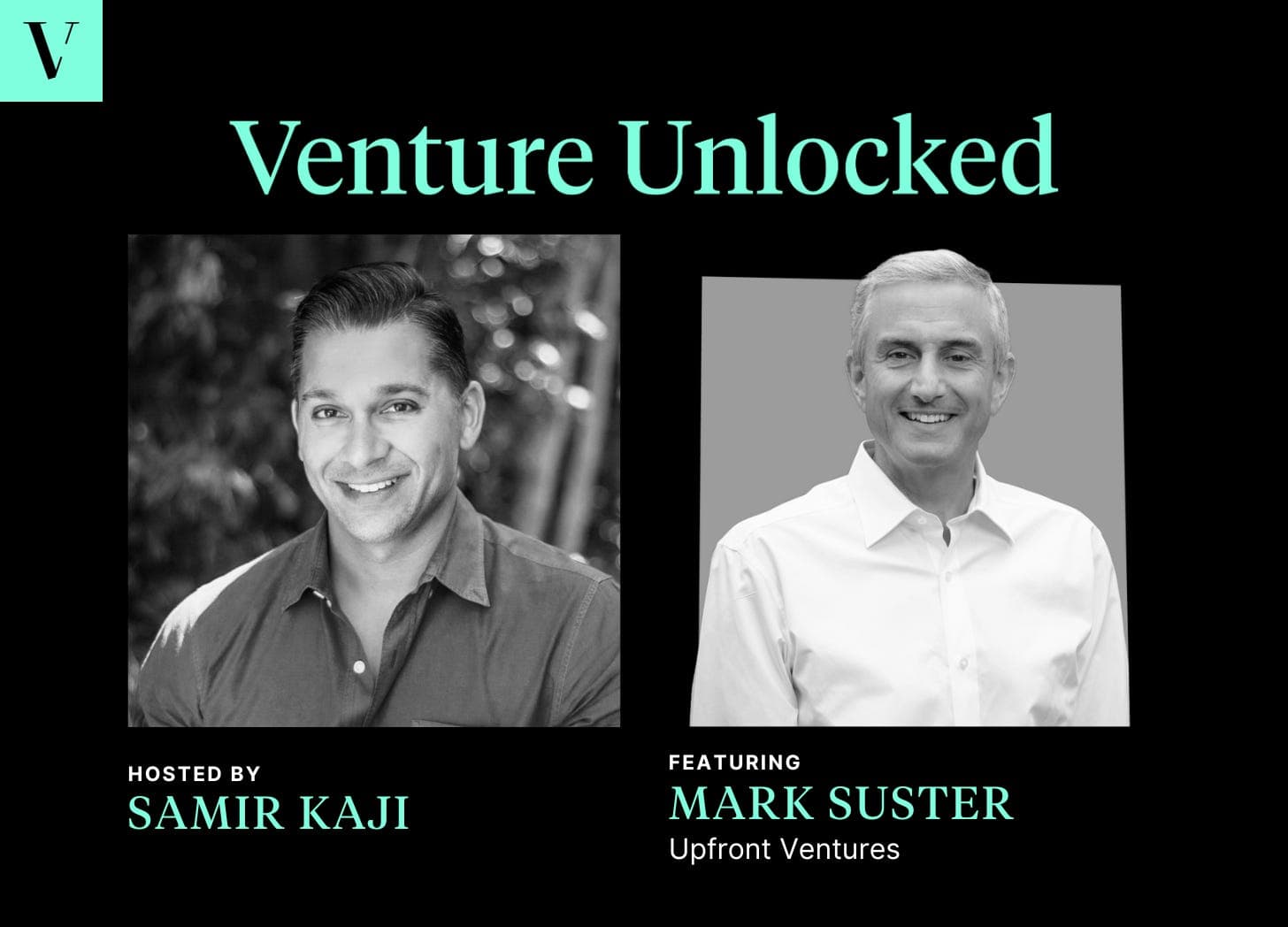
The Art of Raising from LPs in an Economic Downturn with Mark Suster, Upfront Ventures
Podcast Description *Venture Unlocked is the playbook for starting, operating, & scaling a successful venture capital firm. The host, Samir Kaji, has over 20 years of experience assisting and advising startups and venture firms. This episode focuses on navigating venture fundraising during economic downturns.*
Guest Information
- Mark Suster: Managing Partner at Upfront Ventures, founder and CEO of two enterprise software companies, contributing writer to the blog "Both Sides of the Table."
---
Key Discussion Points
Current Fundraising Landscape
- Market Overview
- Fundraising has significantly declined from over $150 billion in 2020-2021 to approximately $33 billion in early 2023.
- Emerging managers face challenges in an environment where institutional LPs (Limited Partners) are more selective and cautious.
- LP Sentiments
- LPs are adjusting to a reality where too much capital entered the market over the past decade, leading to inflated valuations and unsustainable growth.
- The "denominator effect" impacts LPs, as declines in public markets require them to rebalance allocations away from venture capital.
Strategies for Emerging Managers
- Access to Capital
- Emerging managers should target pools of capital that are currently under-tapped, including:
- Pension Funds: Typically invest larger sums, ideal for established funds rather than early-stage managers.
- Sovereign Wealth Funds: Increasingly interested in venture, particularly in the Middle East and Southeast Asia.
- Registered Investment Advisors (RIAs): Often have high-net-worth clients seeking exposure to private investments.
- Building Relationships and Sales Pipeline
- Focus on building a robust sales pipeline for fundraising by:
- Leveraging referrals to gain introductions to potential LPs.
- Segmenting potential investors based on their stage of investment and alignment with the fund’s focus.
- Maintaining engagement through regular updates and strategic in-person interactions.
Fundraising Tactics
- Mid-Funnel Management
- Many emerging managers struggle in the mid-funnel stage where initial interest does not convert to commitments.
- Managers should devise a sustained engagement strategy, including sharing updates, holding informal dinners, and hosting discussions around relevant industry topics.
- Non-Obvious Tactics
- Invite LPs to meet entrepreneurs, fostering valuable connections and insights.
- Host informal events to build rapport and gather market intelligence.
Differentiating in a Competitive Market
- Trust Building
- Establishing trust is crucial; LPs are looking for assurances regarding the stewardship of their capital.
- Managers should focus on showcasing their track records, team capabilities, and strategic vision for building long-term value.
- Positioning Against Larger Funds
- Emerging managers should articulate their unique value proposition and how they intend to outperform larger funds.
- Emphasize the benefits of investing in smaller funds, such as increased attention, tailored strategies, and potential for higher returns.
The Bull Case for Venture Capital
- Long-Term Perspective
- Historical data suggests that venture capital can provide higher returns than public markets when managed effectively.
- Managers should present data-driven arguments for the advantages of venture investments, particularly in comparison to public market benchmarks.
- Understanding Asset Categories
- LPs are evolving in their understanding of venture as a composition of sub-categories rather than a singular asset class.
- Emerging managers should clarify their niche and competitive advantages in a landscape dominated by established brands.
Importance of Reserves
- Portfolio Construction
- Emerging managers should consider reserving a significant portion of their fund for follow-on investments in high-performing companies.
- Emphasizing reserve strategies helps protect against market volatility and ensures flexibility to support promising portfolio companies.
---
Conclusion
- The episode provides valuable insights for emerging venture capital managers navigating a challenging fundraising environment. By focusing on relationship-building, effective communication, and strategic fund management, managers can enhance their chances of success even in a downturn.
Call to Action
- Listeners are encouraged to engage with the host and guest on social media for further insights and discussions on venture capital and fundraising strategies.
---
For more information, visit [Venture Unlocked](https://ventureunlocked.substack.com?utm_medium=podcast).
Written by AI. May contain mistakes. Listen to the episode to check what was said.
Transcript
Automatic transcript. May contain errors.0:00Welcome back to another episode of Venture Unlocked, the podcast that takes you behind the scenes of the business of venture capital. I'm your host, Samir Kaji. Today, we're excited to bring Mark Zuster back on the pod. Mark is the managing partner of Upfront Ventures and also an active contributor of great content for the venture ecosystem through his blog, Both Sides of the Table, which I'd highly recommend you subscribe to. Mark and I were recently chatting about venture funds raising this market, and given some of the macro challenges, we thought it would be timely to record a session on what we're both seeing and how venture fund managers should think about navigating in this market.
0:32I really hope you'll enjoy my conversation with Mark. So let's get into the episode now. Samir Kaji is the CEO and co-founder of Allocate. Allocate and Venture Unlocked are independent of each other. Any statements or references made by Samir or his guests regarding third parties, investments, or securities are solely their views and opinions and are not intended as investment advice or an endorsement of such parties or securities by Samir, his guests, or Allocate. Allocate or its clients may maintain relationships with or investment positions in, guests, third parties, or securities mentioned in this podcast.
1:06This podcast is for informational purposes only and should not be relied upon as a basis for investment decisions. Mark, it's so good seeing you and thanks for being on the show for the special episode about fundraising. Of course, I'm always happy to talk to you. Let's talk about what's going on. I was actually just looking at the numbers right before this call about VC fund fundraising,$150 billion plus 2020-21, dropped off a cliff in 22, early part of 23, about$33 billion raised during the first six months. And it does seem to be affecting everybody, big funds, small funds. Since you spent so much time both with LPs and GPs, maybe provide a summary of what you're seeing and hearing at a high level.
1:50If I'm talking for a minute to fellow GPs, let me tell you that the market that you exist in is no different than the market you're serving where you're looking to invest. So everything that you can see psychologically going on for your own fund and how you're deploying capital, of course, is the same of LPs. And let me say it clearly, which is there was way too much supply of capital for the last seven, eight, nine years, maybe even 10 years. As a result, every startup you funded got funded at a higher price after you. Everything you funded seemed to be working. Loss ratios were at an all time low.
2:35Loss ratios, deals worth less than 1x were south of 40%. By 2021, it had gone south of 20 % that were any amount of loss. And we all got used to this period of time where fundraising into startups was easy. So the same was true of managers. LPs have always been hard to raise from. They have always been very selective with where they put their dollars. But so much money entered the ecosystem in the last five, seven, eight years that we have all fooled ourselves into thinking this is easy. Turns out it's not easy. And I would say today reminds me a lot of 2011. Because 2011, we were just fresh off the global financial crisis.
3:23People were questioning whether or not venture capital was a real asset class. There was a report that had come out from Kauffman saying, like, don't invest in venture capital. and of course if you'd followed that advice you'd have missed the best decade of venture capital maybe ever i think it's just a return to normal is like i think how i would call it you mentioned 2011 and i remember the coffin report i think it was called the enemy is us right and it talked about the big funds versus small funds the difference is back in 2011 rates were really low rates are much higher at least from what we've seen historically over the last 25 years What are you hearing, I guess, from the institutional LPs?
4:06Because a lot of the institutional LPs had the denominator effect affect them in 2022, at least, when public markets went down, the actual markdowns of the private markets didn't happen, and so they were over allocated. It seems like some of that has been not necessarily fully resolved, but to a certain degree, we've seen the public markets go up. Private markdowns are happening. But what are you hearing, I guess, from the institutional investors as they approach venture today? So we can't put everyone into one bucket. You have endowments, U.S. endowments. You have big pension funds. You have foundations.
4:45you have corporate investors and then you have family offices and of course they're all in different situations i would say the people who seem to be most over their skis have the biggest problem with the denominator problem which just as a reminder for everybody if i have a fixed allocation for venture let's say that's eight percent of my total investment book and then suddenly the stock market percentage, because the stock market declines by 30 percent, if I was at my target at 8 percent, I might find myself at nine and a half, 10 percent because one of the other categories went down and venture doesn't mark down as quickly.
5:26So on a relative basis, I have too much assigned to venture capital. So to rebalance my books, I have to slow down my pace to venture. That's the denominator problem. There also was the numerator problem. The numerator problem is because venture got marked up so much in 2020, 21, and 22. Because venture got marked up so much, my percentage, my relative percentage also went up. So you had a compounding problem on both sides. I would say there are really three pools of capital that are not overtapped that the smartest, most savvy investors are focused on. Number one is pension funds that historically didn't have big allocations to venture.
6:08And that's a game for scaled venture, because those are people writing$7 ,500 million minimum. So not your fund one, fund two, fund three that Samir, you are normally advising and talking to. So that's kind of not available. You shouldn't be talking to them if you're raising a$200,$300 million fund and you're fund one, two, or three, they're not going to invest. The second big pool of capital is sovereign wealth funds. So there are a ton of investors that are spending time in the Middle East right now. And there's a lot of capital. And in Singapore, there's a lot of capital in those two places.
6:46They historically have not been in venture or had access to venture. They know that they are suddenly the pretty girl or pretty boy at the ball right now. And they know that everyone's trying to get access to their money. They rightly are a little bit skeptical and they want to see how committed are you to you? You know, is this like a one night stand or are you really committed? Right. That also is not really a game for early managers. So the most important third pool of capital is RIAs. And this is people who are managing usually high net worth individuals, people who don't have scale, who would like some exposure to private investments, who know that historically endowments and foundations have done really well by investing in privates who haven't had the availability to do so.
7:36And those pools of capital are increasing their exposure to venture. Now we can talk about some of the problems of the last 12 months, but generally speaking, want more access. And I think that is the best place for emerging managers to look. And let's maybe double click on something there and maybe add a fourth, which is direct family offices that are domestic, not just the folks in Singapore, Abu Dhabi, Dubai, the Middle East regions. And RAs, of course, do work with a lot of those families too. So it's either working directly with the family or going to the RA that's managing, putting something on the platform, and effectively allowing their high net worth individuals to invest in an asset class that historically has been unavailable.
8:22So you're right that the emerging manager category, I think I looked at the numbers last year. I think it was at the midpoint of this year. Something like 62 % of the capital was raised by 6 % of the firms out there. That does lead to what you just said is the bigger funds are able to raise from these big pools of capital. But if you're an emerging manager, that's a fund one, a fund two. Let's even say a fund two. You might've had a fund one that's two years old. You have some performance, but everyone rightfully is going to be skeptical about the markups, the resiliency of that portfolio. So what are you seeing as maybe the path for somebody that's raising a fund to that does have a long-term view and wants to build a long-term franchise?
9:12How do they navigate in this environment? And what is that pool of capital? You mentioned RAs. How do they go after them? First of all, of course, you're right. There are family offices that act independently and invest on their own. So I think that is another good source. I think when they're working with managers, when they're pooling their money together with OCIOs, outsourced CIOs or RIAs or other people, they just end up with the degree more sophistication of understanding the asset class, which is why that's appealing. Or if they're working with people like yourselves, where they really understand what venture is, then you're entering a conversation with a sophisticated buyer.
9:55And I think that's a good thing for emerging managers to be in that position. Look, fundraising isn't easy. It's not meant to be easy. And venture capitalists historically have not allocated that much time to it. Like we at Upfront, we think very long-term about relationships. I remember so many people that I went to see in 2011 said no to me. And VCs don't like to be told no. And I think I found it a little bit easier, Samir, both because I had been an entrepreneur before, so I was used to no, and because it was 2011 where the norm was no. So I didn't feel like anything was wrong with me. And I said to every LP who passed, listen, I totally get it.
10:42Like I'm first time managing partner. The fund isn't new, but I had just taken over as managing partner. I'm going to tell you the five things that I'm going to achieve as managing partner. And I want you to be in line first for my fifth fund. I was raising fund four at the time. And overwhelmingly people told me no. There was really one guy who turned up, who said, I believe in you. I believe in what you're doing. I'm going to be the guy who takes the risk on you. I call people like this egg breakers because they're people willing to break the rules. You know, the old saying, like you can't make an omelet unless you're willing to break some eggs.
11:19Right. And the guy was Jamie Sparrens. He worked at Morgan Stanley at the time. He's no longer there. I took seven trips to West Conshohocken, seven. And I remember because he called me on a Saturday and he said, I think we're making progress. Could you be here on Monday? And I was with my family camping in the mountains. It's the first time we've ever camped in a tent together. And I said to my wife, I need to leave you here. I've got to jump on a red eye and go to Philadelphia. And luckily I have a very patient wife, a very understanding wife. And I did that and I flew out there because he said, come.
11:58And that's really what it takes. It was the seventh visit. And for whatever reason, that was the time. And he called me a week later and he committed 22 and a half million dollars. And that will be the best performing fund that upfront's ever done. So I feel grateful for the risk. And I told them, you're a lifetime friend, anything you ever ask of me, the answer is yes, because you took the risk when no one else would. But the truth, Samir, is that by fund five, all of those people that I was nice to when they said no, that I kept the relationship going through the fundraising process, the next fundraise was so easy.
12:35And that was a 2015 fund. I had, I want to say like$95 million of new capital, even before I started asking people for money. So you really need to manage through one cycle and understand that if you're raising fund two, you might not meet all of your goals. You might not meet all of your ambitions. You might have to get used to hearing no's and manage through that and get to your next fund. And I think you'll see more yeses as long as you consistently keep relationships built and deliver against what you said you would do. There's another thing that I do want to juxtapose in a minute in terms of the differences maybe in 2011 and where we are in 2023.
13:16Before we go there, though, one thing that I'm curious about is as you thought about raising fund four, talking to a lot of LPs, that speaks to almost like building a sales funnel. You're picking the right target. You mentioned as an emerging manager, there's no way I should go to a pension or sovereign wealth fund and these folks. So it's figuring out who your target segment is and then building a pipeline around it. Tell me a little bit about how you built that pipeline and how do you move people through the sales funnel? I'm a big believer in referrals. It's no different than selling enterprise software in that regard, which is if I cold call a senior vice president at a customer, they might take a meeting.
14:01But when they meet you, they're leaning out like their arms are crossed and they're leaning out and like, tell me why you're wasting my time. When a customer says, man, we got a lot of positive benefit out of using this tool. You really ought to meet this person and see what they can do for you. They come leaning in. And the same is true for venture capitalists raising money. So if I ping a bunch of LPs and I say, I'm going to be in New Orleans, would you meet me? I'm going to be in Chicago, would you meet me? Most of the time they'll say, sure, stop by, right? Because it's their job to meet people.
14:38But having a referral that said, hey, I've sat on a board with Mark. He was valuable. Would you meet him? And it's someone that they trust. That matters a lot. So the top end of your funnel is just knowing who's out there, segmenting it by are these people who invest in my stage. Let's say I'm raising$150 million. If it's people who are writing 100 million plus checks, you're wasting your time. If it's people who have never really invested in venture, you're probably wasting your time. So making sure there are a few managers that are at the right stage size. You know, because we've talked before, I told you, for me, that's why buy anything?
15:21And why buy anything is like, are you really in the market for this kind of venture capital? And then the second rule of sales is why buy me? Do you buy my differentiation, what I do that's differently than other people? And so that's just a segmentation game. So we research who's in the market. We're constantly talking to VCs and LPs, asking who's active, put it in a funnel. and then we look for buying signals okay so it i usually have my rt ir team like try to get a initial call to just feel out whether it's worth our time so if you say i have too many managers and we're trying to pare back but yeah we do occasionally take new people you just have to beat someone who's on my existing roster maybe i could beat them but like that's not a very efficient use of my time.
16:13If they say we're over allocated to venture, our target is 12 % and we're at 22%, I'm probably wasting my time. Now, what makes our ears perk up is if they say we're building a program. We're at eight managers, we'd like to be at 18. We're at 4%, we'd like to be at 9%. And we just ask, what is your current outlook on venture? If it's highly referred, if we feel like they are interested in our stage of venture, if we feel like they're in a phase of their deployment of capital that we would be a good fit, we put a lot of energy into Top of Funnel. Now, Top of Funnel, Samir, is incredibly easy. It's easy because everyone's nice in the first meeting.
17:00They want to learn. They want to get to know you. They smile. They ask good questions. So you walk away thinking, man, this is easy. And then nothing closes, right? And so the problem is top of funnel. Like if you're smart and good at segmentation and you do a little bit of desk-based work and you ask your friends for referrals, top of funnel is easy. Mid-funnel is where everything dies. Mid-funnel. So tell us about mid-funnel because I think you're right. You know, you have that first meeting. You walk away energized. They're asking good questions. And a lot of times the manager will think, oh, I got them.
17:33They're going to definitely come in. I could feel it. A month goes by. You send an update. Maybe they respond. Maybe they don't. And at some point during that mid-funnel, because these things do take a long time, you lose momentum. And then you realize that what you thought was real is actually not real. And you realize maybe you hadn't built enough of big of a top of the funnel and moved the high value prospects through the mid-funnel. What does it actually mean to move people through mid-funnel? So I wrote a blog post about this once. I think you know I keep a blog both sides of the table. And I have Y-axis is love and X-axis is time.
18:13Okay? Love and time. And when you're in the room and it felt magical and they engaged and asked you good questions and you built rapport, it was probably real. You know, I'm not saying that they weren't like – in that moment, they're like, hey, we could write a check here, right? But 60 days later, 90 days later, they've met 38 other funds and they sort of kind of forget you. Like Mark, he was that, was he that guy? He's from California. He's a gray hair dude, right? You want to think that you're so memorable that they know everything about you and they just don't. And it's no different than when we see an entrepreneur.
18:55If we see an entrepreneur in the meeting, they might have wowed us. And then six weeks later, we've seen 48 other companies and we're like, yeah, they did AI for voice recognition, you know. So you need to mid funnel is about having a campaign that sustains itself over six to 12 months. So you've got to have a plan for what are all the documents I'm going to release over the next year? What is all the materials I'm going to share over the next year? if you have more than a solo GP, I always tell people don't go together. Because if you have two GPs or three GPs, and you all go together and you go to St.
19:37Louis and you meet a high profile prospect for you. Now there's no reason for them to meet you again, because they met you all. So you call them six weeks later and say, can we meet you? And they're like, they don't want to meet you because they know that's a that you know, they have to now do work or decide to tell you no or decide to buy. But if you see them and then six weeks later, another partner happens to be in town and six weeks after that, you invite them to an event in Chicago that you're doing, that you're hosting with a bunch of LPs. It's just a way of continuing to keep engagement, which is no different than any sales marketing campaign that exists in any market.
20:17You need to produce materials. You need to send them emails. You need to stay top of list. I also tell people like, it's really good to get people out of their office. Like if you sit in an office with a PowerPoint or keynote slides and you're flipping a deck, you're doing what everyone's doing. And you probably know this from our prior conversations. We did something we called city tours. We decided to travel all across the United States. We went so far, we've been to seven separate cities. We host 12 to 14 LPs in a dinner discussion, no obligation to them. We're not pitching people. I invite other GPs to attend.
20:54So it's not just an upfront event. And we host a dinner and have a dialogue with people. It's the kind of stuff we do with entrepreneurs as VCs all the time. We do dinners, we do breakfast. We just don't do it with LPs. And that makes no sense to me. So we started hosting these with LPs. And lo and behold, I learn a lot about what's going on in their industry. I learn a lot about what their challenges are because we talk about them as a group. And they get to know me in a context that's different than the conference room. And then we're a little bit more memorable. When you think about those type of events, it makes not only a ton of sense, but it seems like a great return on investment because you're also learning.
21:36You're getting a bunch of people in a room in a less high-stress situation because they're not looking to buy, they're just talking. And actually, LPs do like talking to each other. What are some of the other non-obvious things that you've learned in terms of great ROIs, in terms of getting people through that mid-funnel? Well, first of all, LPs love to meet entrepreneurs. They don't get invited to meet entrepreneurs a lot. And that's something most VCs have access to. I remember in the early days of Tinder, Sean Radd, I had backed Sean's previous company. It was called Adly. And then suddenly Tinder was the hottest thing in the world.
22:14So I called in a favor and said, Sean, I'd like to host a bunch of LPs. If I did, would you come to a dinner with me? And, you know, he was super gracious and said yes. And, you know, so I was writing to LPs saying, would you like to come to meet the CEO of Tinder? And this is, again, when Tinder was on the ascendancy, right? So So what does every LP want to know right now? They all want to know what's going on with AI. Like they read about in the paper, they hear about it from every VC. They don't want to hear about it from VCs. They want to hear about it directly from the CEOs who are running that.
22:48So much better if you could host eight CEOs talking about how their businesses are responding to AI and invite four LPs to attend. There's so much low hanging fruit for what you can do. and you know i always goes back to me this thing about sales uh i don't know have you ever heard of zig ziglar now yeah so zig ziglar i'm sure no one on the no one who's watching or listening uh will have heard of him he's old school but it was all about sales and he's a genius and what he said that always sat with me samara is he said um people don't care how much you know until they know how much you care. And I'd love people to reflect on that.
23:34People don't care how much you know until they know how much you care. So the care how much you know, we all like to feel like we're super smart and we all went to good schools and we want to tell everything we know to people. And we also think that's what they expect of us. So like, it's almost like this imposter syndrome thing. Like I have to know everything about technology and everything about the market and tell people how smart I am to win. But in reality, they also want to know that you actually care about them, that you are interested in them, that you're going to be a real partner for them.
24:09It's kind of like I was saying to you about the Middle East. You turn up once and think people are going to suddenly throw$20 million at you. They're like, you're here for my money. You turn up three times or you do them favors or you host them at an event in New York or London, they'll see. So for me, we host LPs all the time. We don't ask for a lot all the time. We're trying to tee up opportunities for them. And they see you just as, he's kind of a nice-ish, normal guy who's got a point of view and an opinion and surrounds himself with smart people. And I like the way that guy thinks. Not everyone will think that.
24:45But if you're having 12 people turn up at dinners seven times in six months, that's 42 people. When you think about those dinners, and of course, you're in a position where you have institutional LPs, maybe some family offices as well. And many people are raising from both camps and maybe it's$150 million fund. You know, I may not be able to raise from the pensions, but certainly fund of funds, endowments, foundations. And then I also have my family office, which are two very different segments in terms of the way they behave, characteristics. what have you noticed as the tangible differences when talking to these groups and ultimately how does that shape how you work with them well as a starting point if it's a family office is it run by the family or is it run by an outsider by a professional manager usually when you're talking to big institutions well not usually always they're run by professional managers i think when it's your own money, people have a harder time making commitments.
25:49They have a harder time just thinking in aggregate numbers and I'm just making 12 manager bets. I find it easier when you're mostly dealing with professional management, managing other people's money. There's a sort of more of a dispassionate, I'm just going to look at, do I think you have the right skill sets, the right access, some competitive edge? Do you have a history of performing well? And that's suited me better. Maybe other people have a different model. Other things, Samir, that I test for, you know, we're an atypical investor up front, and I'll say it this way, which is in a really booming market, we never perform as well.
26:34And the reason is we're not rushing to get into the hot category. So if you wanted to perform incredibly well in the last 18 months. And you're not worrying about cash returns. It's just TVPI. You should have put as many quick dollars into small dollar increments into AI because rest assured someone else was going to market up to an astounding high price and it will be valued at, let's say, a billion dollars. That doesn't mean it's worth a billion dollars. That's the value. whereas we tend to shy away from momentum and try to focus on where we think the market's going to be in three four five years and so you don't get as quick of markups but in a correcting market like this we show much better because we have like i always say to people look look at unicorns in 2012 there was one unicorn one in 2013 there were three in fact aileen lee wrote the article in 2013 when she wrote it there were four they were unicorns that's why she called them unicorns by 2015 there was like 45 net new ones created that year by 2018 it was 125 in 2021 there were 725 ish new unicorns created 2021 compare that with the public market samir There are about 175 internet companies worth a billion dollars public in the US.
28:08There's about 175 software companies worth a billion dollars. So approximately 350 total, total, that's it. Public companies worth a billion. So why do we think you could create 725 net new ones in one year? It's fantasy. Everybody's TVPI who were in those deals are fantasy. So I tell LPs, if you're going to look, go through someone's portfolio, say how many were funded by SoftBank? How many by Tiger? How many by Coachu? And I'm not picking on those people. They're good investment funds and they make money. But you can rest assured that if they have a bunch of those funded in 2021, they're just significantly overvalued.
Read the full transcript
28:51I mentioned all this, Samir, is like the why by me is you need to align yourself with someone who thinks the way you do. If you come into me and you're saying, I want to know how many unicorns you have, or why isn't your TVPI 12x? Well, I can say, look, historically, TVPI for the best performing top quartile funds consistently, 2.5x. So if you expect me to be 12x in every fund, you don't understand the market very well. And we're not likely going to be a good match for you. Yeah. And, you know, I think a lot of people forget that. So I posted this the other day in terms of what returns are looking at 96 to 2021.
29:33And the top quartile about 2.38x, median much lower, of course, and even top decile, according to pitch book, about 3x, right? And I think a lot of people did get a little bit spoiled. And it was a red herring that, oh, you can get a 10x. And a lot of those funds were really small funds where people were writing a lot of checks and they were getting marked up really quickly. And so people were able to raise going from a fund one to a fund two based on marks that were essentially two years into a fund. You had 77 % IR, you had a 2.6x, and it was able to be raised. And of course, now that isn't the case.
30:12And a lot of those past portfolios are going to show less resiliency because not only are those markdowns happening, but they're also behind several rounds of preferences. So when you look at somebody that's raising today, I think we counted 2 ,600 new firms that were formed post your fund for back in 2012. How would you advise somebody that's going out, knowing that you can't really rely on the numbers, the benchmarks really don't mean as much today? How do you actually differentiate in a pool of managers that are all trying to raise at the same time, often from the very same people? As VCs, we need to think, how do we fund companies?
30:54And the kinds of decisions at the seed round that we are looking at is similar to how you should expect people to think about you, even if they don't verbalize it. Here's what I mean. I always tell people the thing you're fundamentally buying is trust. Now, what does that mean, trust? If I'm going to hand a 28-year-old$4 million on zero revenue, I want to trust that you're going to be a good steward of my capital. I want to trust that you're going to be all in on this and not other things. I want to trust that you're going to be able to attract and retain really good talent. I want to trust that you're going to produce intellectual property that's differentiated.
31:36and I want to trust that if things are starting to succeed at your company, you're not going to sell quickly for 3x, but you really truly want to build something long-term. And I might dress it up as an evaluation of your IP, or I might dress it up as, you know, we've done a TAM analysis or a SAM amount and that whatever, blah, blah, blah. But fundamentally, those are checklists used to create to justify instinctively, do I trust this individual and are they going to be a good partner to me? And the same is true for LPs. And I don't want to speak for LPs, but I would purport it's the same, which is they're going to go through all their lists, which is, did you make a good investment?
32:20Do I believe in your partnership team? Do I think you have some competitive advantage? Are you getting good markups in the portfolio? Do VCs say good things about you? Do your founders say good things about you. But at the end of the day, they're handing you a pile of money for a blank pool, a blind pool of capital, right? Blind pool of capital. Tell me that's based on anything other than just trust. And they have much less say in our funds than we have on the boards of directors of startup companies. So how do you build trust with people? And I think it's important for GPs to think that way, because if you accept that that's true, and it may not be true, but I think it's true, then you should do the kind of behaviors with LPs that lead to building rapport and trust.
33:08And that takes time. It takes number of meetings. It takes amount of time. It takes references and referenceability. LPs don't want to pick up the phone and call your references because that's doing work. But there are things you could do to drive people to send emails or make phone calls to your LPs to get them hearing from other people, right? And that's mid-funnel type activities. So let's actually go back to that for a second, because I do think that's right where people do create their own confirmatory bias by the instinct, by the rapport, and it's often the brain that justifies what the heart or gut has already told them.
33:47And we've seen this time and time again, but yet oftentimes managers, particularly newer ones, when they talk to an LP, even if it's a warm referral, the first thing is launching into the story. Let me tell you what I've done. Here's my thesis. And it's really going through this pitch deck that is speaking to the brain. What do you do, I guess, before, like, what would you advise somebody before an LP meeting? What are you actually doing to prepare for that meeting? And what does that first 10 or 15 minutes look like to create that foundation of trust and rapport? Look, every meeting is going to be different.
34:19And I will tell you what an ideal meeting would be. An ideal meeting to me is to start by listening rather than talking. And it's hard to do. So I'll tell you my opening line of almost every LP meeting. Almost every LP meeting, I start by saying, we have an hour together. I know I'm going to do a lot of talking and I'm kind of hard to shut up once I start. And Samir, you can attest to that. But before I start talking, gosh, I would love to learn a little bit more about your program if you're okay with that. And I'd say 95 % of the time people say, yes, absolutely. If they say, look, I'd rather just you get started than get started, right?
35:03Inviting someone to talk about their business is an important way of learning what's important to them. You can learn what their belief system is. It doesn't mean you need to pander to them. Like if they tell you their beliefs and that's at odds with your beliefs, you can politely try to say, well, look, I know you said A. You know, we've kind of discovered B. Can I at least share with you why we feel B is true? But if you just assert B and you don't even know that their point of A is A, like you're just blindly telling them something that they're not going to agree with. I would start by getting them talking.
35:42I try really hard and not everyone can do this, but we know our deck cold. We know our data cold. We know our stories told cold. And we try to balance three things. One is talking about the team and what we think is unique about the people we have because it's a people business. Number two, we try to share data because we know fundamentally that's what LPs want as both proof of how you're performing and that you have knowledge and command of the market. it. Number three is storytelling. And storytelling to us comes through telling you about our portfolio. So I try really hard to pick four or five stories from the portfolio that I think will resonate with this investor.
36:25And I tell you, let me tell you a story about Bionaut. Let me tell you why we invested in this company that invented micro robots that they inject into the base of your spine and use magnetics to put it up at the base of your brain to perform a procedure. And I'll tell the whole story. And there's a very good story behind it. And we own a lot of the company. We put a lot of dollars. We've been in that company seven years. But then there's a chance not for me just to tell you about how I think we can treat cleoblastoma, but also why we hired Kevin Zhang and why Kevin's been so successful at funding healthcare-related things and what we think comes next for this company.
37:04And if I can tell you four or five stories about really inspirational companies we've invested in, it's a lot more memorable than telling you, hey, our TVPI is 4.2 on the 2012 fund or 3.6 on the 25th. I'm making up numbers, but they're not going to remember that. I think all of that is actually very insightful in terms of thinking about these. and LPs also do like to talk about what they're doing. And oftentimes you get a lot of really key, interesting tidbits during those first 10 or 15 minutes that allow you to tailor your conversation and pitch on things that do resonate. And one of the questions that often comes up is institutional investors versus families and families do like to hear the stories.
37:52They wanna be close to the game. But at the same time, family offices don't have hard set allocation strategies like an endowment. Endowment might say, this is my percent target in real assets. This is how much I'm going to do in private equity, in private credit, fixed income, stock, venture. Family offices tend to be a little bit more opportunistic unless they follow an endowment style. And for them, it's not just, hey, Mark, are you a good manager? And is this a good fund? And have you shown something? It's also about why venture capital? Why do I need venture capital when the risk-free rate is north of 5%, close to 6%, private equity, private credit is also, generally speaking, a little bit less risky, less liquidity, illiquidity rather.
38:41So what is that bull case for venture in this type of market? Well, I think one has to have a long-term outlook in general, and one has to be a good student of history and data. And it's helpful to read about that so you can answer that question with LPs. But if you look over the last 30, 40 years, people who have invested in private illiquid markets and people particularly who have invested in venture have gotten a premium relative to putting your money in the stock market. Stock markets, I guess, pay on average 11, maybe 13 % per year, somewhere in that range. I think corporate bonds are paying like 9 % per annum.
39:25You can get risk-free five and a quarter or not totally risk-free because the U.S. could default one day, but let's assume that the U.S. doesn't default. And so you have these baked in rates of return that you typically get in asset classes. Now, in order to invest in venture, they better do better than that because if I put my money in an index fund and get 11 % per annum, that's liquid. I can take that out anytime. So if you're not able to get 18, 20, 22, 25 % per year IRRs, why should they give you money? And so you've got to show a premium. There's actually an analysis that we do called PME.
40:08I don't know if you guys ever look at PMEs. What we do, they're called public market equivalents. And so we say if we were going to write a dollar in the NASDAQ or the Russell or the Wilshire 1000, or I forget what the benchmark is, if we were going to write this in 2016, 2017, 2018, and those are the three years we deployed a fund, for every dollar we put into that index, what if we instead put that dollar into upfront? how would those two things have performed differently? And then we produce a comparison to show how we perform relative to the public markets. And frankly, if you're not beating the public markets, I don't think you deserve to raise LP money.
40:53Yeah, and just the stats, I mean, I was just actually looking this up. I mean, long-term S &P, about 9.5%. NASDAQ, about 11.5%. QQQ has done a little bit better, especially over the last 14 years. But at the end of the day, private markets, especially if you have proper manager selection, is going to outperform. One thing that I wanted to test and maybe pull on a little bit is you mentioned this premium that you have to get over the public markets in terms of justifying the liquidity and risk you're taking. But it also does seem now that venture is not this singular asset class, but a composition of almost sub-asset categories within it where somebody like an Insight is very different than that$30 million pre-seed fund.
41:43How do you think about LPs thinking about venture as an asset category and thinking about the risk premiums or the liquidity premiums across the entire market? So first of all, if you are an emerging manager and you talk to LPs, you'll hear one message and then you'll see different actions. What you'll hear is the big platforms have gotten too big. They're way too big. You're not going to get returns from those. They're like 2x at best, probably going to do 1.5x. And then they turn around and commit to them anyway. And it's sort of a nobody ever got fired for buying IBM type situation. Versus I'm going to pick five managers no one's ever heard of and put my name and reputation on the line.
42:36It's much harder to do that. The person I maybe respect the most in LP world historically was Lyndall Eakman, who on behalf of Utimco, a very large pool of capital, backed Union Square Ventures, Spark Capital, True Ventures, thankfully Upfront Ventures, at a time where none of those brands were known. And he really put his neck out on the line and made a lot of money for the University of Texas. But that was not the norm. The norm was writing your checks to Sequoia and Greylock and Kleiner Perkins. And by the way, those are great funds too. I'm just saying it's really hard to get people to break from IBM.
43:18So what they say is they really want small funds. But what they do is they write their capital into big funds. Yes, there are multiple asset classes. So people generally think about early stage as one distinct category, let's say sub$300 million funds. Then they think about the full cycle investors, the people who have seed and growth and opportunity and Asia and Europe. And those are, let's call it the platform funds. And then they think about venture growth equity. And let's call that Insight. And I think those are really three distinct markets. Now, if you're a public pension managing$75 billion and you have a small team of public servants using a manager to write checks and you're writing$150,$200 million checks, you're backing Insight.
44:16and insight has for their size and scale from my understanding performed incredibly well in good markets and bad and going back to that a little bit right so if i'm a big pension of course i'm limited in terms of time i have resources writing a single 150 million dollar check is degrees of magnitude easier than picking 15 managers and doing 10 million each and oftentimes what I've heard is, and I'd love to get your take on it, is like, well, if I invest in those 15 managers at 10 million each, there's more volatility with those small firms. I might have an outperformer here, but I might have a bunch that are underperforming, and I might end up with a 2.2 to 2.5x, maybe a little bit more versus 1.75x with a big firm.
45:06And that comes up a lot with the big institutions, but even family offices sometimes say, I'd rather just buy the brand because it's easier. And if I build a huge portfolio of emerging managers, maybe I get around the same return. Now, I don't think that's statistically true, but it's too early to test because the last seven years, we've seen only one world, which is markups, markups, markups. And we haven't seen the full effect of what's going to happen with a lot of these companies that were minted unicorns. What's your take on these asset categories when you think about that early stage sub 300 versus the return profile of the multi-platform?
45:46And what does make sense? If you're not putting in the time or hiring an expert to help you figure out who people think the good performers over the next 10 to 15 years are going to be, it is more rational to hand your money to light speed. If you want to get better returns or have a bigger seat at the table, a better strategic relationship, or maybe better co-invest, if you're putting in the effort either yourself or working with somebody like Allocate to better understand managers, you're probably better off with the 10 because you're diversifying your risk and having diversified set of underlying assets is more likely to have less risk.
46:37And also, if you back 10 managers and you get to know six of them really well, you might size up on one or two in your next fund. And those one or two, you might have a bigger seat at the table. I often say to family offices when I talk to them, I'm like, okay, so you've got$7 million to commit. Do you want to be$7 million of a billion and a half dollars or would you rather be seven million dollars of a 250 or 300 million dollar fund where people care about you more where you're not just a line item you're not like you're putting seven million dollars into a billion and a half dollar fund i can just tell you you're just not that important to them yeah and this goes the same for big funds investing in companies at Seed where you're a million dollars out of a$600 ,800 ,000 ,000 fund?
47:30Every analogy holds, Samara. I think the markets and generally how they work between VCs and entrepreneurs is how they work between VCs and LPs. And I think managers are best off thinking about their own personal behavior and then saying, well, if this is how we behave with founders, this is how we should expect LPs to think about and behave about us. The other thing I'd like to encourage your managers a little bit off topic, but I'd like to encourage your early stage managers to think more thoughtfully about reserves because it's been one of my pet peeves over the last few years. Like we invest 42 % of our fund and we reserve 58%.
48:11And that's a pretty conservative but thoughtful approach to venture markets. So, you know, I might deploy$300 million, but I'm really thinking about 42 % of that being in first checks. And I pace ourself on 42%. Why does that matter? You know, let's put things into multiple buckets, three buckets in particular. I want a large pool of my dollars then backing my winners and being able to deploy places where I have asymmetric data on something performing well. Number two is there's always those companies that they're doing well, but it's taking longer or the market slows down and they need to like get over the hump and not having dollars to deploy is unhelpful to that.
48:58But the third is a correcting market like this where people start doing pay to plays and you think there's value in a company. And if you don't have dollars to protect your position, you get wiped. And for those three reasons, having reserves really matters. And I think what a lot of emerging managers did is they deployed as much as possible of their fund into first checks. And they assumed, let's say I did 25 deals, I assume my best eight or 10 I can do is SPVs. Now, that was very GP friendly, but I think that market is going away. And people realize that what you're doing there is you're getting deal by deal carry and it misaligns the incentive between LP and GP.
49:42We have not done SPVs in 26 years. And what I tell people is then if I've allocated 80 to 90 percent of my fund to first checks, I have no ability to protect myself. So I think a more prudent strategy is to keep a lower first dollar check and more reserves. Yeah, it's actually a topic that we talk about a lot in terms of portfolio construction. And many managers are 50-50, or in some cases, the smaller funds are almost no reserves, or it could be 80 % to 90 % initial. And now the logic was, I get more ownership of these companies when it's the cheapest and everything will be fine. I can raise an SPV.
50:24What I think a lot of people lost in the SPV side is number one, if that SPV goes wrong, LPs remember, and they may not back your core business, which is your actual fund business. And we're seeing some of that. And I do agree that pay to plays are happening. The washouts, the highly dilutive rounds, things that we hadn't seen for eight to 10 years almost. Now we're in play. Low reserves, high SPV is a bull market behavior. Agreed totally. Well, Mark, this has been great. Thank you again. This is the second time you've been on. Very, very timely given all the things that are going on in the fundraising world.
51:04But thanks again for coming on. I appreciate it, Samir. As you know, we often have these conversations and it's nice to occasionally turn a video camera and audio camera on. I always enjoy talking to you. I love following you on Twitter because you actually put out real data in the market. And I encourage entrepreneurs, managers, LPs all to follow you because there's so much misinformation about how markets work out there. And the fact that you have, you know, decades of analysis, I think is really helpful to kind of ground the market. So thank you. Thanks so much for listening to another episode of Venture Unlocked.
51:40We really hope you enjoyed it. To learn more about Mark Suster and Upfront Ventures, be sure to go to Apple Podcasts or Spotify, where you'll find detailed notes on the show. While you're there, please leave us a rating and a review as it really helps us out. And don't forget to hit the subscribe button in order to get each and every Venture Unlocked episode as soon as it's released.
From the publisher
Follow me @samirkaji for my thoughts on the venture market, with a focus on the continued evolution of the VC landscape.
Today we’re excited to bring Mark Suster back on the pod. Mark is the managing partner of Upfront and also a frequent contributor of great content for the venture ecosystem through his blog, Both Sides of the Table, which I’d highly recommend you subscribe to.
Mark and Samir were recently talking about venture funds raising in this market, and we thought it would be timely to record a session on what we are seeing, and how venture fund managers should think about navigating in this market.
About Mark Suster:Mark Suster is a Partner at Upfront. He previously was the Founder and CEO of two successful enterprise software companies, the most recent of which was sold to Salesforce.com where Mark became VP, Products. Prior to being a founder, Mark was a software developer at Accenture where he lived and worked in Europe, Japan and the U.S.
Mark is a graduate of UCSD and has an MBA from the University of Chicago.
In this episode we discuss:
(01:51) With fundraising down from its high in 2021, what are GPs and LPs saying about the market(04:33) What institutional investors are saying about the market(09:19) How emerging managers can access larger global pools of capital(13:47) Building a sales pipeline for your fundraising process as an emerging manager(18:03) Moving deals through the mid-funnel death trap(21:55) Non-obvious things managers can do to improve their fundraising(25:29) Strategies to talk to Family Offices versus large institutional investors(30:49) How to stand out as a manager in a crowded field(34:17) Preparing for an LP meeting(38:45) The bull case for venture moving forward(41:44) How are LPs thinking about venture as an asset category and about the liquidity premiums across the entire market(45:49) Putting in the work to find good managers versus investing in a larger brand name fund(47:30) The importance of having a reserve as an emerging manager
I’d love to know what you took away from this conversation with Mark. Follow me @SamirKaji and give me your insights and questions with the hashtag #ventureunlocked. If you’d like to be considered as a guest or have someone you’d like to hear from (GP or LP), drop me a direct message on Twitter.
Podcast Production support provided by Agent Bee
This is a public episode. If you would like to discuss this with other subscribers or get access to bonus episodes, visit ventureunlocked.substack.com