In short
Podcast Summary: Venture Unlocked - Episode with Alex Pall
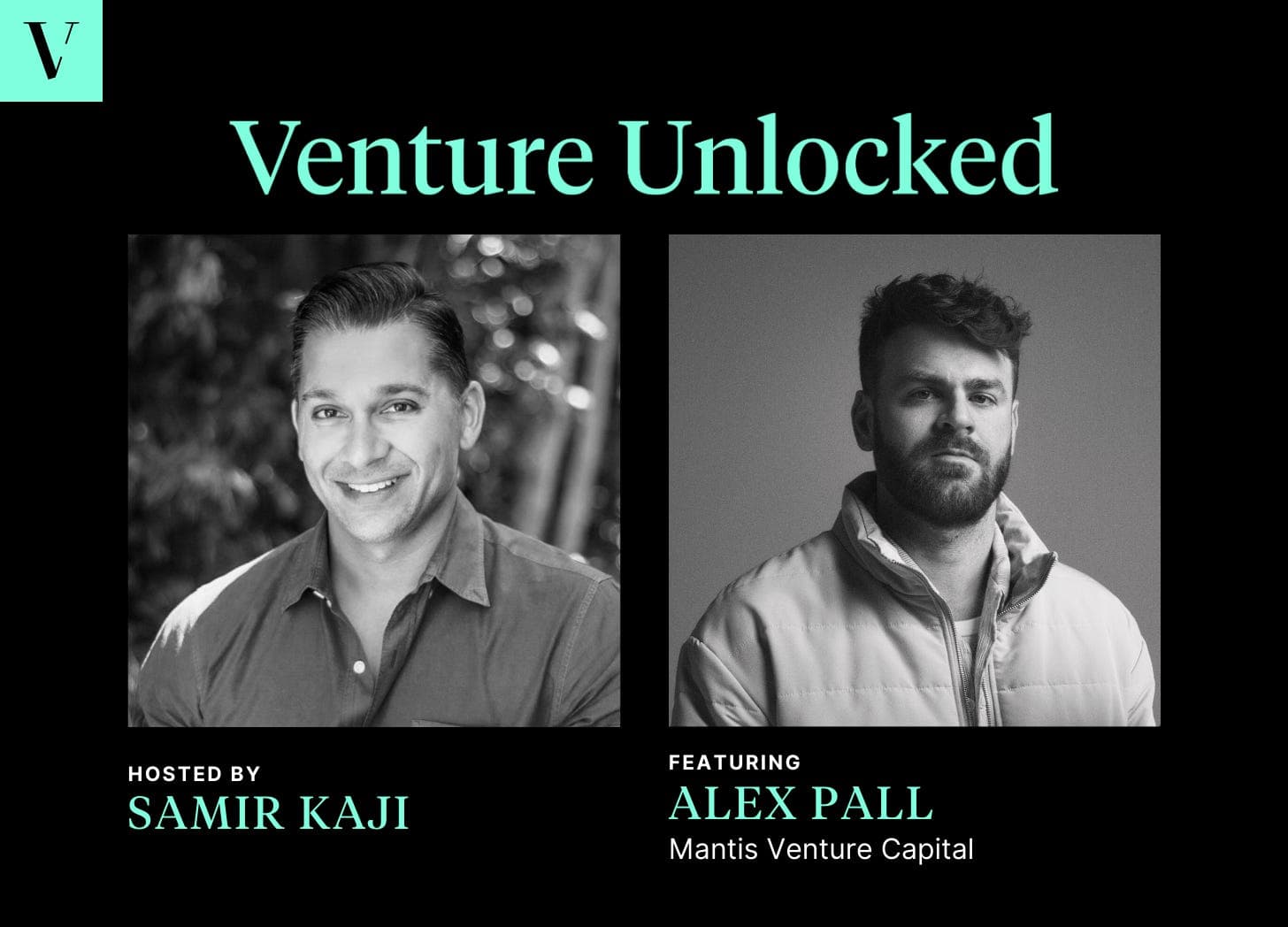
Episode Overview Title: The Chainsmokers' Alex Pall in crossing over from a Grammy nominated group in the music industry to starting Mantis VC Host: Samir Kaji Guest: Alex Pall, General Partner at Mantis VC Focus: The transition from music to venture capital, lessons learned, and insights into the venture capital landscape.
---
Key Themes and Discussions
- Background of Alex Pall
- Co-founder of The Chainsmokers, a Grammy Award-winning duo.
- Transitioned to venture capital with the founding of Mantis VC.
- Early entrepreneurial ambitions evident during their music career.
- Transition to Venture Capital
- Motivation for Change:
- Desire to leverage their celebrity status and network for venture investing.
- Interest in technology and investment opportunities grew over time.
- Self-awareness in recognizing strengths as investors and capitalizing on their platform's influence.
- Founding Mantis VC
- Formation and Early Days:
- Founded in 2019, focusing on seed and early-stage companies.
- Emphasis on building a unique fund that differs from traditional VC firms.
- Investment Philosophy
- Passion-Driven Investments:
- Importance of investing in sectors they are passionate about.
- Avoiding adverse selection and focusing on companies where they can add value.
- Building a Network:
- Utilizing celebrity status to connect with other investors and founders.
- Collaboration is key; they view themselves as partners rather than competitors.
- Early Challenges and Learnings
- First Fundraising Experience:
- Initial goal of $100 million was scaled back to $35 million.
- Navigated fundraising challenges during COVID-19, learning the importance of timing and adaptability.
- Learning from Mistakes:
- Experienced losses and have been transparent with LPs, turning setbacks into trust-building opportunities.
- Value Addition to Portfolio Companies
- Unique Support Model:
- Mantis VC positions itself as a supportive partner that provides not just capital but also operational assistance.
- Utilizes storytelling and connections to enhance portfolio companies' growth.
- Reflections on the VC Landscape
- Market Changes:
- Observations regarding the shifts in venture capital over the last 18 months.
- Importance of focusing on fundamentals as the market fluctuates.
- Parallels Between Music and Venture Capital
- Similarities Identified:
- Both industries depend on finding and nurturing talent (founders/artists).
- The power law applies to both sectors—few successes drive the majority of returns.
- The significance of team dynamics and the importance of surrounding oneself with the right people.
---
Key Takeaways
- Self-Awareness: Understanding one's strengths and limitations is crucial for success in any field, including venture capital.
- Collaboration Over Competition: Building partnerships in the industry leads to better investment opportunities and shared knowledge.
- Transparency Builds Trust: Being open about challenges and mistakes fosters stronger relationships with investors and founders.
- Focus on Core Competencies: Both in music and venture, sticking to what makes you unique is vital for long-term success.
---
Conclusion The episode highlights Alex Pall's unique journey from music to venture capital, illustrating the importance of leveraging personal brand, building meaningful relationships, and maintaining self-awareness and transparency throughout the investing process.
Written by AI. May contain mistakes. Listen to the episode to check what was said.
Transcript
Automatic transcript. May contain errors.0:00Welcome back to another episode of Venture Unlocked, the podcast that takes you behind the scenes of the business of venture capital. I'm your host, Samir Kaji. On this week's show, we're thrilled to have Alex Paul, general partner at Mantis VC, a LA-based early stage fund with over$100 million in AUM. Alex is a great example of someone that has made a significant crossover from another industry, as he is one of the two founders of the Chainsmokers, who have become amongst the largest EDM and dance musicians in the world, with five songs that have been on the Billboard Top 10. In our chat today, we discuss how Alex and the team thought through joining the ranks of venture capital, their early learnings, and the importance of knowing where your strengths lie in investing and really leaning into them when building a fund model.
0:42I hope you enjoy the unique perspectives that Alex was able to bring. Now let's get right into the show. Samir Kaji is the CEO and co-founder of Allocate. Allocate and Venture Unlocked are independent of each other. Any statements or references made by Samir or his guests regarding third parties, investments, or securities are solely their views and opinions and are not intended as investment advice or an endorsement of such parties or securities by Samir, his guests, or Allocate. Allocate or its clients may maintain relationships with or investment positions in guests, third parties, or securities mentioned in this podcast.
1:16This podcast is for informational purposes only and should not be relied upon as a basis for investment decisions. Alex, it's great seeing you, man. Hey, what's going on, Samir? How are you? I'm good. I'm good. I'm excited about this conversation. And you have such a unique and interesting story. And I actually do interview a lot of folks that have made a crossover from a different sector industry. You've followed a really interesting path in your career leading up to starting Mantis. But maybe a good place to start, Alex, is just going through your background and how you arrived in starting Mantis in 2019.
1:51I won't go too far back into the genesis of the Chainsmokers, but I do think there's some relevancy there. And Drew and I met, our anniversary is actually, I think about a week away to today for 11 years of chain smokers, which is pretty wild. And, you know, we met in New York City, probably not far from where I am now, actually. And, you know, we got together and we obviously, you know, had these huge ambitions to become some of the world's biggest electronic acts. And beyond that, from the very first time we met, we kind of shared this passion for wanting to be super entrepreneurial. From the get go, we were like, and not only do we want to become the biggest electronic act, but if we become the Biggest Electronic Act.
2:26Let's use that platform to create adjacent opportunities and businesses and things that we're interested and excited about. So we went off on our journey to begin the Chain Smokers. And looking back now with hindsight, I didn't know any of this at the time, but we actually employed a lot of interesting tactics from growth hacking to crowdsourcing that are now kind of commonplace terms that I've learned as I've gotten more into venture and just the journey of other people's stories building businesses. probably about six years into the into the chain smokers we finally had some success we're no longer broke starving artists our business manager who's kind of i say the mvp to our team i think it's so critical especially with people like myself we're not idiots i've graduated from myu what drew into syracuse and graduated but you know like setting yourself up financially for the future is so important and i can't tell you how many other artists i've spoken to that they don't even know where their money is and i was like blown away by that josh did a great job kind of preparing us for our own future.
3:21And he was like, listen, guys, you know, you're kind of in a great place financially, you own your homes, you're diversified your portfolio, you know, you have this huge platform, and you have a ton of inbound interest from different types of people and companies that want you to potentially participate and partner in. And he was like, you know, I'm not going to tell you what you should or shouldn't do here. And I'm happy to help guide you through this process and vet these different opportunities. But you know, I would think about it the same way, Alex, that you told me how you think about buying art, which is like, don't buy things for the promise of it becoming a multi million dollar painting by because you love it, you know, you're gonna have to live with this thing in your home, there's a good chance that it won't be worth a lot of money in the future.
4:00So make sure that you're passionate about it. And you can look back fondly on the experience, at least of owning or being a part of that journey. So we began to start investing. But it wasn't long before we kind of realized that we were the victims of adverse selection, and maybe victims too strong a word. But kind of the reality was, and it really is at the time is that, you know, with CPG consumer related companies, the most important X factor in their success is distribution and marketing. And so naturally, as an artist or an athlete, or actor, whoever, that's kind of the bread and butter of our whole platform.
4:34So there's this kind of alliance between our two worlds that, you know, frequently sought out. So for the most part, that's kind of the kind of companies that we were being sent and looking at. But simultaneously, I'm reading the news about companies like Palo Alto Networks and Stripe and Robinhood and so on. And I was like, damn, why are these companies not emailing us to be a part of their journey? I didn't really know at the time, you know, what to do so much, but we were very fortunate. And, you know, I'll kind of stop after this, because I can talk all day about this stuff. But that's part about being the chain smokers is really just our ability to have met so many great people throughout our career, you know, and we've never approached those relationships transactionally.
5:11We've played shows for every fortune 500 company on the planet, every rich guy or woman's daughter, sweet 16 or bar mitzvah. And going into these shows, we're always, who are these people? What can we learn from them? You know, I have no like actionable thing that I want from them right now, but if we can become friends with them and accumulate their knowledge, and maybe one day there'll be something really relevant for us to work on or help us with. And so, you know, the reason I bring it up is because a couple of those people were like Brian Chesky for Airbnb. be. I give Drew Houston from Dropbox a ton of credit, Justin and Daniel Kahn, Michael Seibel from YC.
5:44And, you know, we became really close with them. And they were like, guys, it's very clear that you have this real passion and interest in technology and investing. I don't even really know or want to know what you guys have invested in so far, but I'm just going to go out on a limb here and say that it's not as good as what it should be. You guys have this superpower where you can kick down doors and build bridges and connect with people that other people can't. And I just feel like you're selling yourself short. And, you know, we're sitting here in front of you telling you right now that we would have loved to have had you as investors in our company at any part of our journey.
6:14And not only that, but I think you guys could have been, you know, instrumentally helpful to us. And that's kind of where things really began to kick off. So Alex, one of the things I always think about is I look at things through the lens of opportunity costs. The opportunity cost of starting a firm obviously comes at the expense of other things that you could do. What led to the decision of, hey, we want to do this full time and we want to actually create a firm, which is obviously a long term commitment versus continue to just angel invest. Maybe give us a little bit of background on the thought process you and Drew had.
6:44It was years of kind of mulling this idea over, you know, before we jump into anything, Drew and I are very critical about we're either in or out. There's no kind of 50 % with anything. And there were a lot of questions that we wanted to have answered, a lot of conversations that we wanted to have. And I think it really started actually with this lunch we luckily had with Jimmy Buffett, of all people. We weren't friends with him before. We got connected with him and we were lucky enough to, you know, sit with him in LA and have a great lunch. And, you know, at that lunch, I was asking him all about his like Margaritaville empire and kind of how he had the idea and the evolution of it.
7:19And he was like, listen, I'm buying I'm building retirement communities now for my fans. I've created this business model that has served my fan base throughout my entire career. And it's always aligned with the core values of my music platform being Jimmy Buffett. And he's like, so you don't be ever be ashamed to go out and start new businesses. just make sure they're like inherently connected to the things that make you special and or core tenants or principles that you know chain smokers are built on so he's like i would think long and hard about you know what those things are and then go out and seek out those opportunities that are exciting and interesting to you obviously venture wasn't like oh we should do venture then but in through our angel investing through these conversations with different people that we had met through our lifetime, it kind of became more clear that some of the most powerful parts of venture are just like the relationships, the network, the connectivity, and just most importantly, just the work that goes into it, and the willingness to do that.
8:16And from our perspective, like we love hosting people, we love connecting people, you know, we've never been the smartest person or best musician in any room we've been in. But our work ethic is really what has what allowed us to succeed. And I love the idea of kind of using the accumulated knowledge experiences and things that we've built over the years and paying it forward to different founders. And we kind of got a taste of it in our angel investing. I remember, you know, you get a call from a founder being like, Hey, do you know, a buyer at Whole Foods, you know, we're trying to get on a shelf there.
8:45I do actually change the whole course of the direction of this company from a very low lift, you know, phone call that I would make. And and that was exciting to us. And firstly, like in talking with, you know, people like Brian and Michael Seibel and Drew Houston, it kind of became clear that there was no real strong bridge of connectivity between the entertainment world and the technology world yet. I think like Ashton Kutcher has done a bang up job. He's definitely an exception to what I'm about to say. And I'm sure there are a few other people out there like Joe Montana, and some other people, but especially from the musician side of things, at least, it felt like there was this, I don't know, sour taste between both worlds where there was no way musician could invest in cybersecurity or understand it.
9:27And conversely, if they did, they would sit, they would promise the world and then never show up. Drew and I were like, I feel like we have so much we can offer to these different companies. And I'm fascinated and curious about these different businesses that are kind of this invisible fabric that powers, you know, society in so many different ways and somewhat in some cases. And that was a challenge. I like this idea. Like, what if we can build the first real venture fund coming from the entertainment world, leveraging all the things we've done and come into venture. And I don't want to look and feel the same as a Sequoia.
9:59And by the way, I hope one day people will put us on the same level as them. It might be a hundred years before that happens, but that's the goal. But I don't want to look and feel like them, but I reputationally want to be thought of like them. But what if we come in here with kind of a different perspective, a different outlook, a different set of values and things we can impart on these founders and do it in a complimentary way that can really help people grow. Going back to kind of the initial question, like, it wasn't kind of clear to us how we knew it was going to take a lot of work. I didn't know how much I was going to love it.
10:29I didn't know how deep and successful it was going to be by any stretch. But also, you know, we're super self aware, Drew and I and a big part of a Chainsmokers success has always been about putting the right team of people together that are hungry, and excited and willing to go to the same lengths that we are to accomplish these things. And doing so, I was like, I think I'm great judge of character. I can look at someone and determine whether they have the gusto or grit to like pull, do something special. But, you know, I've never read a data room before in my life. And I've certainly not a tradition, have a traditional venture capital background, even operationally, while we built, you know, a multi hundred million dollar business, it's not the same as building like rippling or something like that.
11:08And that's kind of the whole idea of Mantis also to begin with. So we were lucky to find Jeffrey and Milan, and our partners who kind of felt like they had the complementary skills and experiences that drew and i were lacking between us and our extended chain smoker team who became minority partners i think we have foundationally something at least something to begin thinking about what mantis could become not thank god for covid we really used our time that completely decimated our main business and music to like build and start mantis because we needed those two and a half years to have the 20 hours of conversations a day with different people to really understand what it takes to be successful.
11:45What are the things we should be thinking about looking out for? When you think back on all the successes of the Chainsmokers and going from playing in really small venues with maybe not a lot of people to being on the main stage, along with some of the best acts in the world. And you think about venture, you're starting over in many ways. And I I know you and Drew went through this long-term thought process of how do we get to be on the main stage in venture. But at the beginning, I'd be curious to hear some of the early pieces of advice you received from some of your advisors. And I know both of you spent a lot of time with VCs.
12:25So maybe you can unpack some of the early things that guided launching that first fund. Three things kind of jump out to me. I think the first one is just this. I remember this email that got forwarded to me when we launched or announced that we were doing our first fund. And it wasn't a nice email. You know, it wasn't to me directly. It was like the Chainsmokers are launching a fund. This is the end of venture. And I was like, I didn't get mad about it. I used, you know, I was very motivated by it because I actually understood what they meant. I understood that if you just followed us on Instagram, maybe you wouldn't understand how serious we are about this or the types of people we are.
12:58I also understood that a lot of bad blood had been created before us through other, you know, partnerships and relationships. And and I wanted people to really understand that we respected the work that of all the people that had come before us and the people that were working now in this space. And so part of what I mentioned before about doing eight to 10 hours of calls a day with everyone and anyone that would speak to us was like how I imagined like moving into a cul-de-sac. And, you know, and people are like, oh, my God, the Chainsmokers are moving in as neighbors. We're never going to sleep.
13:28And I wanted to come in and have real serious conversations with people to listen to them and also hopefully convey just how serious we were and the type of people we were in the space. Another part and probably some of the most helpful advice in terms of framing our strategy as a fund came from, you know, a mentor of ours, Jim Coulter, who's the chairman of TPG. He's been like a father to us in so many ways. And, you know, we came to him first to kind of like get his perspective on what he thought about us potentially doing this was. he gave us a lot of advice, but the one piece of advice that really stuck out, and it sounds condescending, but it's just our relationship.
14:03I swear it's not. But he was like, I love this idea. I think you guys do have unique access. I've gotten to know you over the last six years. You guys work incredibly hard. You're very thoughtful. And if you're excited about this, by all means, pursue it. But my one piece of advice is that make sure you're investing with an adult at the table. That sounds like he's calling us kids and that you're kind of like need supervision or something like that. But you know, what he really meant, and what at least I took away from it is that he's right. He's like, there are so many people out there that have so much experience in this space investing operationally, or just on the private equity side or whatever, that you'd be foolish not to leverage your ability to build those connections with these people and invest alongside them instead of coming out here firing out of the gate, pretending like you guys are no it all is which we never have ever thought we were be a collaborative person, you know, in our music collaboration's always been, you know, our most successful touch point.
14:57So why should venture be no different? Don't come in here and put your frame yourselves as competitors to everyone, frame yourselves as the collaborator, the preferred partner, the companion to everybody. And through that, you'll have the ability to learn and grow and be a part of the best opportunities. Because like I would if I was a founder, and it was like, I'm sitting there, it's me and Alfred Lynn, you know, and I'm like, you got to pick one of us. You'd be a fool to pick just, you know, like, and maybe, you know, that's not maybe the case for everything. Certainly like Alfred has decades more experience and he brings something operationally to the table that I don't know yet.
15:35By working with Alfred instead of against him, we have the opportunity to learn his playbook, to understand the values that he brings. And then hopefully, you know, the idea with Mantis is that we do stuff that he can't do. Collaboratively, we give our founders the most holistic level of, you know, opportunity to go out and build exactly what they want to build. Yeah. So when you think about this value system, and it's largely the networks, the relationships you've built that you can bring to bear to the different companies that you're working with, and it's not just CPG or consumer, it's all across in terms of the type of companies.
16:10You know, as you go back to that 2019, and right before COVID, you launched Fund One, I think it was a$35 million fund. And you have this thesis that you're going to be this great collaborative partner with all these great founders and great VCs as part of their cap table. How did that first fundraise go? Because I remember 2019, still in a very hot period, in fact, leading up to the hottest period that we saw in 2021. But there were so many emerging managers coming to market. You're raising capital coming from a non-traditional background, Milan and Jeff having some experience, but ultimately there wasn't a lot of track record with the four of you together.
16:49How did that first raise go? And what did you learn during that process? Well, thank God that Drew and I have been nice to everybody throughout our career, because I think that played a huge role in it. First of all, I remember when we were having conversations early on and we were trying to decide how much capital we wanted to raise. And someone was like, a hundred feels right. I was like, a hundred, that's a lot of money. Maybe we shouldn't start there. Let's start low. And if we want to exceed that number, we feel good about it. Kind of obviously went back to the drawing board, thought long and hard and pick 30 as the number and then, you know, winded up at somewhere around 35.
17:19Going out, it was funny because I think we started initially in February, or going to start in February of 2019. And COVID was just ripping, you know, just started to like scare the shit out of everybody. It wasn't like the market it was in that tanking phase before it like bumps back. Going back to Jim Coulter, we called him and we're like, what do you think? Should we just, he's like, pump the brakes. We don't even know if there's going to be a world anymore at this point. So there's no point in fundraising until we have clarity around what the economy is going to do if we're all going to die.
17:50A lot of like question marks right now. So we chilled, waited. And then around, I think it was like mid-April, it was pretty clear that things were bouncing back in a really major way. And so we began the process again and went out. I was really shocked by, first of all, how vast our network was, but how awesome everybody was to the idea of us starting something like this. Throughout our whole career, you know, I mentioned we met all these amazing people. And honestly, like everyone has always been like, what can we do together? What can I do for you? All you guys do is take care of me and help me and, you know, your great friends, our family and us.
18:23Is there anything that I can do for you? And we're always like, no, no, just hang tight. It's great to know you. And then finally, we were like, I have something. I have something that I can ask from these people from and totally cool if they say no, and this isn't their cup of tea. But we started going out and approaching those various people. And I couldn't believe how supportive they were of the idea. I always laugh now because part of me feels like it was like, how much of it was charity versus like a belief in what we were actually doing? I didn't have the answers at the time, but it wasn't until we went out and raised our second fund that not only did all those people come back in again, but half of them doubled down.
19:01And then I was like, oh, so these people actually do believe in what we're doing and they see the progress. I give those people a ton of credit because fund one was like a science experiment. Very little discipline across the board. We were making compromises on which rounds we were going to jump into. It wasn't so much that anything was, we weren't out here like shooting from the hip, but it was like, I think we understood that we were like a pledge and a frat or something. We were going to have to take the trash out, compromise on ownership. We were going to have to, you know, it was more important to us than to be a part of the best team than to not be a part of it.
19:35Goal was like, we had to show people that we could bring value to the equation. getting to our first fintech deal and then having that founder turn around and say, holy shit, you guys really helped me. That enabled us to open that vertical up and now, and then be more serious and disciplined about how much in the stage and allocation and things like that. So it was a really like exciting moment for us, but also like, it was crazy. I mean, I remember talking to, it was some great, I mean, we spoke to everybody. We spoke to Bill Gurley, Peter Fenton, Alfred Lynn, Roloff Bratha, Andrew Brachia, you name it.
20:07We were lucky enough to have the opportunity to speak to them for a couple of hours about venture. And everyone by the end of the two years had contradicted each other. There was like very little cohesive, you know, ideals like people were, you know, but the things that I really walked away was like, your, your best investment that you think you have is going to become your worst and your one you like think is your silliest will become your best. They're like people, things change overnight, but there was so much, you know, wisdom imparted to us of just about how obviously important ownership is, but that only becomes clearer when you're in the winner that you wish you owned more of.
20:40And then you're going to have plenty of losers that you wish you didn't own as much as a result of it. So they're like ventures, like experience. They're like, it's very hard. I could sit here all day, write down 30 rules for you. In fact, Michael Seibel literally presented us 10 rules about venture. And they were very, I don't know, I want to say like contradictory to like what you would imagine from the YC, you know, out of YC, invest in companies that don't need your help. That was like the sort of thing that he was, and he's right, by the way. One thing that really stuck with us from an advice standpoint was just people were like, you know, time for diversification is important.
21:12And they were like, don't rush decisions. It's important to do research and diligence. But then we were thrown into this 2019, 2020 period where I don't think any, I don't think there's a single investor out there that at some point didn't make an investment decision within a 12 hour period about a company. And so we were all, I was like, I thought we were going to have like weeks to make decisions. I'm on calls with founders telling me I have 45 minutes to get back to him. And that was really scary and kind of weird, a weird experience to get into for our first time in venture. What were some of the biggest learnings?
21:43I mean, I do agree that when you're first doing it, there's a model that you're continuing to build in terms of how you invest, how you make follow-on decisions, the ownership, when you flex outside of the normal parameters, when you don't, how do you be disciplined on check sizing, pace of investing, all those things. or the biggest learnings from fund one to fund two from an investment modeling standpoint so much i mean i think we're very self-aware and self-critical people and i think you know we did i don't want to call it soul searching but like we knew we were going to have to kind of come back and look at what we've been doing and create process and structure to our investing build out a team to help do that and support that you know you know we're speaking to these other funds and you're looking at the things that they practice and you're like we have to instill this We want to continue to have the magic that makes us special.
22:31But I think discipline is very important. It's like Kobe Bryant in the gym. You got to have these sort of boundaries and guiding principles and processes to formulate as you're thinking. We can't just be getting on ICs being like, I love it. You know, you need to do the research. You need a red team. You know, you need someone to always play the contrarian, even if they support it. Forget the ownership stuff, which is obvious. You want to own more of the great companies and sticking to certain areas. Don't be so generalist. But I think for us, it really comes down to the team. In fund one, a lot of our deal flow came from co-investment opportunities.
23:10And in doing that, we were kind of filtering through who we actually think are the great investors. There are great funds out there with great specific investors, but it doesn't mean everyone at that fund, even if it's a tier one, is actually the best investor within that vertical. So, you know, identifying your computing, not falling into this herd mentality that just because some tier one fund's sharing you something, that it's actually good. You've got to do the work yourself. And in doing so, you know, you grow a lot more as a fund and begin to formulate your own ideas around where you think you should be investing.
23:42And again, like prioritizing the founder was just like the best thing that we could have ever done. We understood that our survival as a fund really depended on us adding value in a way that literally would have a founder say, holy crap, I am so glad that I let these guys, these people invest. And because we needed them to be our promoter to the next opportunity. Really take building out a team to focus on that area specifically in ways that continue to distinguish us from the other funds that exist out there. because we never wanted to feel and look the same. And we still continue to this day, don't want to.
Read the full transcript
24:17Hiring Steve was one of the best decisions we ever made. And he's really been, you know, an instrumental person on our platform team that's like built out, you know, these incredible pieces of value that we can bring to our founders. And how do you think about sort of the value piece? Because you mentioned, I think, at the beginning of this conversation, and you're right, there's a lot of VCs historically that have promised the world to founders. And then once the investment's made, sometimes the value is either episodic or it's not actually necessarily real value that's tangibly changes the direction of the company how do you think about that value because you know when you say putting the founder at the center it's really driving this great net promoter score so you're helping them with their companies but it's also them sending you other companies and other founders who say oh i heard you work with mantis and mantis is a great fund you should definitely take their money.
25:08Like, what are the key value drivers that you think are important? To tie off the last question leading that, like, we invested in a couple companies where like, we can't add value. Like, I don't know what to do for this company. And they're doing some of them are doing great. And some of them are doing okay. And some aren't doing okay. But it's like, so frustrating to just be a passive passenger. It's one thing to be like, I can help you. And the founder is like, I don't need your help. But it's another thing to be like, I actually can't help you and you need help. And that is a really frustrating experience.
25:38And it does absolutely nothing for us as a fund. And it's okay. I think we're always honest and upfront. One of our first investments was this company, Dandy, a back office dental software company, incredible founding partners. They've been in college together. They've been friends forever. One's super technical. The other one's great leader, kind of community builder, salesman for the business. And I remember speaking to them and I was like, guys, like Human Capital had put us in touch with them. And I was like, God, I love this company, but like, what can I possibly do for them? You know, I can sign my dentist up, but I collectively, we have four dentists between all of us.
26:15I don't think that's going to really drive, move the needle for them. And they were like, and I was like, guys, I'm really, you know, I'm stressed out because I want to invest, but I don't know. I don't want to be dead weight. I really need every investment. You're a third investment. You know, I need you to turn around and kind of help us get the next one. And they were like, listen, we're in the dental space. It's pretty cool to have the chain smokers on board. That will help us. And I was like, I don't really like signaling as a value add perspective. That should just be a given. That shouldn't be the actual value that we're bringing.
26:42But listen, like if you guys are comfortable, like let's talk every two or three weeks and through our conversations, maybe we'll come up with some ways that we can add value to what you're doing. And it was quickly apparent that they were, first of all, growing exponentially fast. and with that exponential growth, all sorts of problems were popping up because they couldn't manage the growth properly. They needed to hire excellent people to facilitate and direct all this growth most effectively need to go. And so they kept going through these interviewing processes and losing out great candidates on the one yard line to other, maybe more sexy software businesses.
27:17And they were frustrated. And I remember speaking to them and I was like, hey guys, next time you have someone that you're excited about, why don't you just shoot me their name and number and anything you've learned about them in the process and let you and I call them and just tell them about why we love Dandy, why we love the culture, what we think about the opportunity. And maybe it works. And we've done this for them like 100, over 100 times. And it's worked maybe 97 of those 100 times. I didn't know that this would be an effective thing. They're not like, I mean, you know, it's like, it sounds like a cameo.
27:46We're investors. So it's not we have a really funny way of kind of hammering that point home. But you know, it's like some reason, we've been able to really help change the fabric of this company and allow them to really, you know, harness this growth in the right way and make the hires they want to do. And, you know, that was through conversation and being connective. And I think that that's what who we are. You know, I always tell founders, we're like your bloodhounds. Like think of us as that utility bloodhound player that's like, I'm always going to be checking in. I'm always going to be down to be in the trenches with you.
28:18We sit at a different cross section than other investors out here. So like, think about it in that capacity. And a lot of these seed and series A companies, which is where we invest, there's a cold start problem, which is like, how do we get our first design partner? How do we get our first enterprise sales customer? How do we build the story around our business that separates us from anyone out there that's building in the same space? That's where I think we come in, because Drew and I, we've played shows, we've built close relationships with so many of these different people they want to talk to.
28:46And we can facilitate these introductions in a much more effective way. And not only that, but like we're storytellers. And I think that idea of storytelling gets lost in the black and white nature of business, which is like, hey, you're, if you're a seed founder, or pre seed, even sometimes depending on, you know, who knows anymore, what qualifies one is one or the other at this point, you're dealing with these incredibly technical founders building these, you know, really complex ideas, but that doesn't mean they're naturally gifted at like communicating that story or a difference to the world.
29:17And we very much believe in product-led driven companies. But at some point, you're going to have to convey, even when it's product-led, why that product is better than the next product. And you need to open up that door. And then they'll try it and be like, oh, my God, this is amazing. And hopefully become the customer. But for us, it's like crafting that narrative. That's what I want Mantis to be known for. I want to be known for our experience in go-to-market motions that encompass everything from sales to marketing to the narrative around what your company actually does. And all of those things are so important because they ultimately lead to you either signing up your customers to hiring your first employees or even compelling your next investor to be a part of that journey.
29:59Now, looking back over the last four years that you've been in business and you've had a couple funds that you've invested in, and you've been in the trenches with LPs, founders, co-investors, presumably you've learned a lot, not just on the investing side, but also building a firm. and when we always talk about investing in a firm, we're always thinking about the firm as a company and you've been building brand, you've been hiring people. I would love to hear, what do you think you got the most right over the last four years and maybe some of the things that you got the most wrong? We pride ourselves on our communication and transparency.
30:36I mean, that was very important to me with our LPs that we're accountable. We're musicians. I'm sure they think we're never going to send an update or we're going to be willy-nilly with everything. So like dotting our I's, crossing our T's, hiring the best accountants and auditors, making sure that we look and feel the best that we possibly can. And I'm an investor in 10 or 12 funds myself, and I'm always like shocked by the level of communication and clarity around the updates that I get. So I wanted to establish like a relationship of trust. And I think like someone like Warren Buffett, you know, this is like a pillar of why his success is the trust he's built with his investment community.
31:09It's easy to see the shiny object and chase it. You're all trying to make money, but you kind of have to remember, like, what are the what are you doing this for? What are your things? And I think Web3 was certainly one of those spaces that everyone was chasing this. This is the shiny object in some ways. Our angel investment made us very practical relative to most people. I think we were very grounded in terms of the infrastructure pieces that we wanted to invest in. But even so, I remember we did Luna. That was a stupid fucking decision and not so much that it went to zero. Even if it went gangbusters, it was a stupid decision for us because it was outside the scope of why we got into venture and the types of things that we wanted to be a part of and help and how we could be helpful.
31:48So I remember when that opportunity tanked, I was terrified. It was the first time we had really taken an L and I was, what do we do? How mad are people going to be at us? How stupid do we look? And we were like, the right thing to do is send out a letter right away telling investors what happened with a postmortem that kind of breaks down the decision process. why we thought this was a good decision, why it ended up not being a good decision, and why we're not going to make decisions like this in the future. We sent out the note and every LP wrote back. I mean, I feel like we have like a 20 % open rate on our LP updates.
32:19This one was like in the 60 % to 70 % range. And every LP wrote back and was like, I can't tell you how much trust this builds between us now. It's okay. You're going to lose money. We understand what venture is. The fact that you're owning it and learning from this experience and being honest with us as investors about it gives us more trust in what you're going to do in the future. And that was obviously like a really, you know, took a really shitty moment and put a positive spin on it for us. You know, since that day, that was a lesson that, you know, we won't make that same mistake again. The importance of team and partnerships and the dynamics of founders, you know, that's my specialty is like investing in great people, you know, at the core, like ideas change a lot, but the team really remains the same.
33:02And I think there's like a founder profile that, you know, when I was at times adventure, you're kind of like, this guy's just way smarter than me. So I got to invest in him. You know what I mean? He sounds smart, but that's not really all that matters. I mean, Drew and I are definitely not the best musicians. We're definitely not the smartest guys, you know, but we're like good listeners. We're self-aware. We take advice. We're good team builders. And those are like equally as important qualities almost as an idea at the day. Cause we had a founder that technically was incredible, but like this guy could not communicate to a, to a priest in a, in a confession booth.
33:35It was, and it was painful. And we tried to get him coaching and it just, nothing worked and effectively couldn't hire anyone. And, you know, the company didn't end up working out and I'm sure he'll grow. He's young, you know, it's a long road ahead and there's plenty of opportunity to become better at all of those things. But that taught me that, you know, you kind of can't look so singularly at an idea or a founder. You really need to think about it much more holistically. And then, you know, the last thing that I think I'm still working on now, which I think is really important is the idea of just being a little bit more harsh sometimes with founders.
34:12We serve this weird layer where we don't take board seats. We do require major investor rights. So I think we're more like the cool older brother or sister in the equation versus mom and dad. And I always think that your founder's trapped at a house party, the cops are coming, you know, you can call mom and dad, you're going to get grounded, or you can call your cool older brother and sister. They're going to come pick you up. They're going to give you a harsh lesson, but you're not going to get grounded. It's our job to help try to fix problems before they become bigger issues. But part of our job is also to be really, really honest about when things aren't right or we think people are wrong.
34:43And I see it, I've found myself doing it. I see other investors doing it all the time. They either don't say anything or they're too scared to speak up because they're worried that it will reflect badly on them. And the founder will be like, I hate this investor. he just you know didn't yell at me but he was like pretty critical of the stuff we're doing right now and i don't like him for that those are the best people to have around and i and i think about that in a music our music job all the time where drew and i will like show a demo to a friend and every there's a group of friends that are like i love it it's the best song you ever made and you're like is it though you know what i mean like like you begin to like it's an echo chamber and you're just like damn i don't know if this is actually a good song anymore versus like those friends that are like, I like this part, but like, I don't know, it's not doing it for me.
35:31And you're like, thank you. It doesn't mean you're right. That person's necessarily completely right or wrong, but it's like, I appreciate you for not just gassing me up and, and making me now go back to the song and think a little bit more critically about what I can improve about it. I think that's something I need to like, certainly continue to work on because I'm generally a nice person, but you know, I think it's okay. That's, those are the best friendships when you can have those types. I mean, you know, Drew and I are very honest with each other. And I think the key part of the success of that is taking your ego out of it.
36:00It's not like I'm the investor. I know best. It's really just, you know, how you phrase it like, hey, I think the classic one is like, you're spending too much money, you know, right now, and you're growing your team too fast. And I'm very concerned about that. And I'm trying to tell you, as an investor that's in 150 companies right now, you're an exception to the rule in terms of how you're treating your business right now. And I think you're going to find yourself in a really dark place if you don't, you know, take heed my advice. Listen, it's your company at the end of the day, I can't force you to do anything.
36:29But the founder generally doesn't listen three months or four months later, they're like, I'm fucked. You know what I mean? I'm in a really tight spot now. And you're like, well, I tried to tell you. And this is part of the process. I think there's this concept of being founder friendly. And, you know, I think over over time that sort of get misinterpreted as you do whatever the founder says and you kind of just be a cheerleader versus somebody that is adding a kind of an additional critical or outside lens to the business to help that business grow and a lot of investors at the early stages of they're starting their firm they want to be so founder friendly because it helps them have the founder say really great things about them but i think the world has changed obviously over the last 18 months we've seen the market completely shift from everything up into the right to now companies are facing one of the toughest fundraising environments ever.
37:21Everything is slower. And you've kind of been through this kind of whipsaw of starting the firm at the hottest of the hot times. And now we're the last 18 months changing. How is this last 18 months kind of informed your thoughts on investing and helping companies? Yeah, it's funny. I always joke because it's like, you know, I fully admit I'm like a rookie compared to some of the veterans that are investing out there. But like in the four and a half, four years we've been investing, like, I feel like I've lived a lifetime of kind of cycles. It sucks sometimes. I mean, there are moments, you know, in the last 18 months, we were like, this sucks now.
37:54This is not fun. Every week, there's some new massive crisis, or, you know, whether it was like, you know, started with FTX or the SVB or whatever, you know, the economy, you were just like, Jesus Christ, interest rates, you're just like, this is one week thing after or another one struggle. But I maybe really appreciate, first of all, never take for granted the good times 6 % a year. I'll fucking take that shit for the rest of my life. When it comes to public stocks, you know, I remember used to give my like investment advisor a hard time. And I was like, bro, what are you doing out here? And now I'm just like, I would kill for that, you know, the stability of that.
38:28But it really taught, you know, it taught us a lot of valuable lessons. And, you know, I think that's where you have growth during the hard times. You know, I look back at the first half, call it, of Mantis. And I remember, I remember like, I don't know if it was like Peter Fenn or someone where they were just like, you know, most of your portfolio is not going to go on to even raise capital, let alone become, you know, a fund returner scenario. And so be prepared. And I was like, I'm very comfortable with this idea because most of our songs don't go on to be hits. You know, it's like, I'm in the game of getting back up and going back to the drawing board and doing it with confidence.
39:02But, you know, sometime around 2020, I looked at our portfolio. And I was like, am I the best investor ever? You know what I mean? I was like, every single company was getting marked up. I was like, I know this isn't fact. I kind of, I say it like satirically, like this can't be true, but this is what the portfolio is reflecting right now. So this is kind of wild. And obviously, you know, the last 18 months have been, you know, a sobering experience where they're absolutely right. Like we've lost a handful of companies. Some companies are struggling in talking with founders and working with the, you know, the companies.
39:31It's like, there was too much, so much bullshit out there. You know, it was like, there was a moment where I was like, I just need an idea and I can go out and raise a hundred million dollars. Like, you know, I was like sitting in my apartment, like, what can I think of that? You know, I can go out and raise capital for because somebody is just going to give it to me. And I think that mentality is completely the wrong way to be building. You know, that idea that there's always going to be another million dollars, no matter what, at the end of that rainbow, you need to build. And it was so refreshing to begin to speak to founders along the lines of like, Hey, we're going to be profitable by our series a based on this model whether or not you know they obviously go out and actually do that that mentality was so much more appealing to me as an investor because it wasn't you know growth at any cost i understand in some ways like companies like uber and things like that like they needed this these huge capital injections to get to scale in order to pull off these you know this uber and i'm so glad they did because i love uber but not every company needs to be built with that same philosophy and strategy.
40:27And so, you know, it's been great to work with founders that are thinking about, you know, unit economics and contribution margins, you know, from the jump still, you know, it's still not easy. And it makes me appreciate, you know, the wins a lot more now, because I know how hard they are to actually come by. There's always some backdrop show. I mean, AI, we were I think we were all like, writing the ship, and then AI comes along and it's just like back up into the crazy world again uh so there's always something yeah definitely there's uh a lot that's happened in a very short amount of time and you know one of the things that i've um observed in venture is things are rarely as good as they seem they're rarely as bad as they seem we have seen just this massive whipsaw over the last 18 months it's been interesting to be a part of.
41:14I want to maybe end with a question that refers to parallels. And you mentioned earlier the notion of the power law. So a small percentage of companies really drive the majority of returns within a fund and really the industry as a whole. And I think about the music business as somewhat similar in that you may put out 100 songs, but there's maybe three or four or five songs that really have that power law in terms of being these mega hit songs. Are there other parallels that you see between the music business and venture capital? Yeah, so many things. And I think that's what kind of got us comfortable with the idea of not only just becoming an investor, but, you know, even like looking at chain smokers, you know, we didn't build it like a tech company, but there are certainly a lot of strategies and things that we employed that are similar things to how, you know, any founder would think about building his business.
42:08And I think they're like a little bit more, you know, maybe like philosophical in some ways, but you know, the idea of finding your audience and really speaking to it, you know, finding out what that product you're delivering to the market is, uh, and becoming the best at that. Something we struggled with probably six years into our career was like this idea, you know, you see online, all your songs sound the same that it has. And like, Drew and I are good producers, you know, we can make anything. So we're like, I'll show you. We're like, what did we just do that for? We have a huge audience that loves Roses and Closer and Don't Let Me Down.
42:38And now we're making like this style of music, you know, for who? Because some fan on the internet said that we didn't have the chops to like, experiment outside what we were doing. And I think that's like a common trap that so many people fall into. It's okay to grow and have growth and experiment. But I think, you know, remembering those core things that make you make your company special and really sticking to those principles. I mean, our venture fund is no different than any startup as well. I think of ourselves the same way that as a Series A company I'm investing into right now. Maybe we're like a Series B company.
43:15We've raised like$100 million. We got to think about what are those things that make us unique and special in this market relative to people out there? What are people seeking us out for? And how do we deliver on those promises to our customers? I guess it's kind of a two-sided marketplace in some ways. with the LPs and the founders. The founders are what makes it all truly happen. But it's tough. And I think being accountable to the importance of the team also, I think it's something that I think a lot about. Like, yes, Drew and I are the ones making the music. We're the ones touring. But like our tour manager, our agent, our manager, our day-to-day manager, these are the glue to our society and how important it is to hire people that share that commonality.
43:56The founders are critically important, but your first five hires are probably just as important as the founding team. And, you know, I've always prided myself on finding like underdogs. I've always considered ourselves underdogs, even to this day. And, you know, I love giving people opportunities to, you know, to show their full potential. I don't believe in the idea that you need to have graduated from Harvard Business School or, you know, have these certain things in order to be successful. I think there's, everyone has, you know, that innate ability to excel. and you know and i think that that is something that founders need to think a lot about too is just don't worry so much about the bells and whistles and all these things just work hard you know what i mean like so many successful companies have been come out of the weirdest corners of the world and honestly like i like those outliers and i think all most venture investors do too you're generally paying a better price for them and you know you have these founders have a chip on their shoulder.
44:54And it's like, I think taking Brian Chesky, who's like, I admire him so much. I don't know if I had, if someone had just handed me Airbnb's deck from, you know, the beginning and was like, I'm not going to, you don't get to meet Brian, but would you invest in this company? I'd be like, absolutely not. I'm not investing in this company. But if I had met Brian, 100 % would have invested in Airbnb. And, you know, as I've gotten to know him better, this man is not motivated by money. He's motivated by something completely different than that. He's on a mission to bring this sort of experience that he's created to the world.
45:25And the guy still sleeps in Airbnb. He lives and breathes Airbnb to the fullest. And that's the sort of founders that you should be. And music, it's no different for us. It's like we have to live and breathe Chainsmokers and believe that there's someone out there that's working twice as hard as us on the same idea. And that's so critically important because Drew and I, while I want to generate outsized returns and I want to invest in the best companies, I'm not motivated by the financial implication of that. I'm motivated by winning. That's what I love and the competition of it. And that's what always pushes me into new spaces, into new heights.
46:00And I think that's really important. And then the last thing I would just say is, again, we love the music we make. We made a song called Selfie. That song sucked. We made it in 20 minutes. I don't think that represents us, but we made Roses. And I was like, this is everything I want people to think about us for. And it's such an honest expression of who we are. Your company should be the same thing, Because if you're going to be working on this thing for 10 years, you need to be bought into that idea fully. Because there's going to be all sorts of ups and downs. And like similarly to like the last two years in venture, getting kicked in the nuts every week sucked.
46:33But I still loved venture. And it didn't change my perspective. It just motivated me more to work harder to get out of that, out of that painful period. One of the most important things that just to extract from what you said is just self-awareness of what business model actually makes sense for you and kind of leaning into your strengths and not playing somebody else's game. I think that is an area that so many people, businesses, firms have where they start to move out of stuff that they're really core to. And then, you know, as you mentioned, you do things, but they're not very good and they don't lean into your strengths.
47:06And I think that's one of the most important things of a venture fund manager, know where you play and stop trying to play somebody else's game because that's where you're not going to be able to win consistently a hundred percent really appreciate uh you know you coming on this has been a lot of fun talking about the crossover you know all the things that you've learned in the early days and congrats on the early success i know the manta story has multiple decades ahead of it but we're really excited to chart the path with you thank you samir i appreciate you letting me come on here. Thanks so much for listening to another episode of Venture Unlocked.
47:41We really hope you enjoyed our conversation with Alex. To learn more about him or Mantis VC, be sure to go to ventureunlocked.substack.com for detailed notes on the show, as well as my ongoing commentary about the world of venture capital. Venture Unlocked is also available on iTunes or Spotify for download. And while you're there, please leave us a rating and a review as it really helps us out. And don't forget to hit the subscribe button in order to get each and every Venture Unlocked episode as soon as it's released.
From the publisher
Follow me @samirkaji for my thoughts on the venture market, with a focus on the continued evolution of the VC landscape.
We're thrilled to have Alex Pall, general partner at Mantis VC, a seed and an early stage fund based in LA.
Alex is a great example of someone who has made a significant crossover from another industry—he is one half of the award-winning duo of the Chainsmokers, a group that has found mainstream success by breaking boundaries between pop, indie, electronic, alternative, and rock.
We discuss how Alex and the team thought through joining the ranks of venture capital, their early learnings, and the importance of self-awareness in terms of `
About Alex Pall:Alex Pall is one half (Drew Taggart is the other half)of the GRAMMY® Award-winning, RIAA Diamond-certified duo The Chainsmokers. In 2020, alongside Drew Taggart, Jeffrey Evans, and Milan Koch, founded Mantis Venture Capital.
Other businesses under their purview include a stake in the popular JAJA Tequila and The Chainsmokers’ very own film, television, and podcast production company, Kick The Habit Productions—which boasts a full slate of projects in development.
In this episode, we discuss:
(01:51) Chainsmokers' Early Days and Entrepreneurial Goals
(02:48) Transition from Music Artists to Financially Savvy Investors
(03:37) Emphasis on Passion-Driven Investments
(04:50) Building a Network and Seeking Investment Opportunities
(06:43) Critical Decision-Making in Business Ventures
(07:00) Inspiration from Jimmy Buffett's Business Model
(08:14) Importance of Work Ethic and Assisting Founders
(12:31) Addressing skepticism about a celebrity fund
(13:50) Mentor's Advice on Investing with Experienced Partners
(16:51) Setting Realistic Goals in Initial Fundraising
(17:19) Fundraising Challenges During COVID-19's Onset
(19:01) Learning from the first fund
(20:11) Insights on Unpredictability in Venture Capital Investing
(22:15) Developing a Disciplined Investment Approach
(26:01) Adding Value to Portfolio Companies
(27:46) Storytelling as a Business Differentiator
(31:01) Trust as a Cornerstone in Investment Community
(31:32) Learning from past Investment Decisions
(32:45) Investing in Great Teams and People
(33:51) Holistic View in Investment Decisions
(36:04) Providing Honest Feedback to Founders
(37:52) Navigating a Challenging Investment Landscape
(39:25) Avoiding Overreliance on Large Capital Raises
(40:09) Differentiating Business Strategies
(41:32) Parallels Between Music and Venture Capital
(44:13) Success Beyond Prestigious Educational Backgrounds
(45:30) Passion and Commitment in Projects
I’d love to know what you took away from this conversation with Alex. Follow me @SamirKaji and give me your insights and questions with the hashtag #ventureunlocked. If you’d like to be considered as a guest or have someone you’d like to hear from (GP or LP), drop me a direct message on Twitter.
Podcast Production support provided by Agent Bee
This is a public episode. If you would like to discuss this with other subscribers or get access to bonus episodes, visit ventureunlocked.substack.com