In short
Podcast Summary: Venture Unlocked Episode - "The Great Startup Reckoning Event of 2023 and 2024"
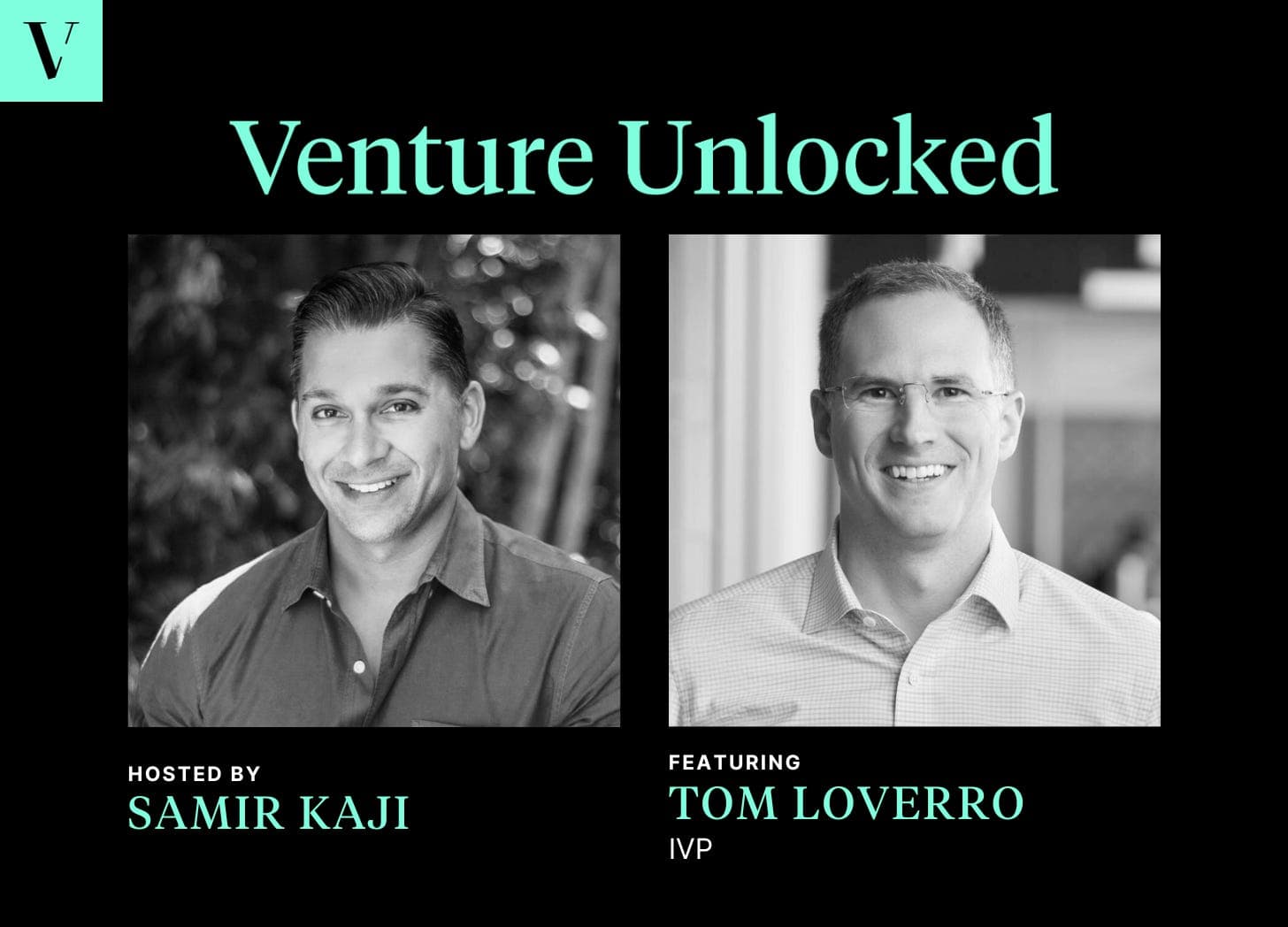
Podcast Details Title: Venture Unlocked Description: A podcast focused on starting, operating, and scaling venture capital firms, hosted by Samir Kaji.
Guest
Tom Loverro, General Partner at IVP Episode Focus: The market shift in venture capital and why startups should shift from a defensive to an offensive strategy.
---
Key Themes and Discussions
- Market Shift and Startup Survival
- Historical Context: Refers to Tom's January 2023 Twitter post highlighting the transition from a zero-interest-rate environment to a capital-constrained market.
- Mass Extinction Event: Tom predicts a significant extinction event for startups in 2023-2024, drawing parallels to the Great Financial Crisis but emphasizing that the current situation is driven by venture excess and a shift in capital availability.
- Aftermath of 2021: Excessive funding in 2021 created unrealistic expectations, leading to a direct impact on startups as funding dried up.
- Current Market Conditions
- Venture Fund Deployment: VCs have slowed down their deployment of capital, affecting the availability of funds for Series B, C, and D startups.
- Dry Powder Theory: Previous beliefs that excess capital (dry powder) would keep valuations high have been challenged by a drop in deployment pace.
- Valuation Trends: Series C and D valuations have plummeted by over 50% from their peaks as public market corrections impacted private equity valuations.
- Startup Strategies and Adaptations
- Archetypes of Startups:
- Thriving Startups: Companies that have managed to grow into their valuations successfully.
- Struggling Companies: Those hovering near previous valuations facing difficult growth trajectories.
- Zombie Startups: Companies that may not survive without significant changes or funding.
- Defensive vs. Offensive Play: Transitioning from a defensive posture (cutting costs and conserving cash) to an offensive strategy focused on growth.
- Characteristics of Companies Ready to Go on Offense
- Survival Test: Companies must have sufficient cash to operate for 1.5 to 2.5 years, depending on their stage.
- Product Market Fit: The existence of a product that customers rely on, highlighted by metrics like net dollar retention.
- Unit Economics: Companies must ensure that they are profitable on a per-sale basis and can sustain growth with their current revenue model.
- Advice for Founders
- Embrace Growth: Founders should avoid the trap of defensive thinking and consider how to thrive, especially in a recovering market.
- Investment in Key Areas: Suggests focusing on critical growth initiatives (like AI) to stay competitive while being smart about spending — only increasing operational expenses if unit economics are viable.
- Potential Risks and Considerations
- Unpredictable Exogenous Events: Acknowledges the risk of unforeseen events (geopolitical issues, economic downturns) but encourages founders to focus on their current strategy.
- Future Outlook: While the IPO market remains challenging, alternative paths for liquidity (PE acquisitions, secondary markets) are available.
Conclusion Tom Loverro emphasizes the need for startups to pivot from a defensive to an offensive strategy in response to changing market dynamics. With the right financial health and market positioning, many startups can seize new growth opportunities, particularly in light of stabilizing market conditions.
---
Key Takeaways
- The venture capital landscape is evolving, with a shift from excess capital to a more cautious approach.
- Startups need to assess their financial health and market fit to strategize effectively.
- Emphasis on smart spending and growth initiatives, particularly in advantageous market segments like AI.
- Founders should maintain high conviction in their strategies while being aware of potential macroeconomic risks.
For further insights and to stay updated on future episodes, subscribe to [Venture Unlocked Substack](https://ventureunlocked.substack.com?utm_medium=podcast).
Written by AI. May contain mistakes. Listen to the episode to check what was said.
Transcript
Automatic transcript. May contain errors.0:00Welcome back to another episode of Venture Unlocked, the podcast that takes you behind the scenes of the business of venture capital. I'm your host, Samir Khaji, and today we're joined by Tom Lovero, a general partner at venture firm IVP. This episode is part of our Venture Unlocked short series, intended to go deep on a single topic, and in this case, revisit Tom's Twitter post from early 2023, which spoke to the market shift that was in motion and the difficulty startups would face in a capital-constrained market. We spent time during the discussion going through that original post and what's transpired since then.
0:32We also went through his new post on why he thinks well-positioned startups should go on offense again. Tom brought a lot of interesting insights for founders and VCs alike, so we really hope you enjoy the episode. Samir Kaji is the CEO and co-founder of Allocate. Allocate and Venture Unlocked are independent of each other. Any statements or references made by Samir or his guests regarding third parties, investments, or securities are solely their views and opinions and are not intended as investment advice or an endorsement of such parties or securities by Samir, his guests, or Allocate. Allocate or its clients may maintain relationships with or investment positions in guests, third parties, or securities mentioned in this podcast.
1:12This podcast is for informational purposes only and should not be relied upon as a basis for investment decisions. Tom, it's great seeing you. Thanks for having me, Samir. I've known IVP for a long time and you've joined there fairly recently in the fund's history, which is now 44 years. But you had a really interesting post that for those that haven't seen it, this is on Twitter back in the beginning of 2023. And this is after the year we had in 22 when rates shot up. There was a lot of uncertainty in terms of things like where do the capital markets go? The public markets effectively flip from going from massive multiple expansion to contraction.
1:52And the private markets are trying to figure things out. VCs, entrepreneurs, So maybe we can take a step back into time to January 23, and maybe you can describe not only the inspiration, but what the post was about. And for those that haven't seen it, I'll link it on the episode. Yeah, the post was about getting founders, our founders, other founders in the ecosystem to understand the winds had changed, that the zero interest rate environment of spending to grow at all costs was gone. And the era of hedge funds and others piling money in, easy capital raises, that time was over. And it wasn't coming back just because it had been that way for a couple of years.
2:36Didn't mean it was the permanent normal. And founders are heads down. They're thinking about growing their startups. They're thinking about all the things they need to do every day. And sometimes you have to shake them a little to get them to understand when the macro changes. And so when there's this important shift in the winds, we have to be the ones who are out there making sure our founders and CEOs notice that. Let's unpack that a little bit and go into what the post actually talked about in detail. There was a concept of 23 and 24 being a mass extinction event for so many startups. So maybe talk a little bit about the post itself.
3:15The headline from my perspective is it's been a rough couple of years as predicted in that January 23 post. If you look at the data for what's happened in 22 and 23 across down rounds, across bankruptcies, those have all spiked tremendously. Carta is really good about publishing this data. Pitchbook as well. It's been a tough couple of years. And what I was trying to call out in that post, this was going to be worse than the great financial crisis because the great financial crisis was a liquidity event centered on Wall Street, whereas 2021 was really a time of startup excess, venture excess. And that meant it was going to have a really direct effect on the ecosystem you and I live in.
4:01I agree with that. And I'm glad you brought up the excesses that we saw in 2021, both on the venture and startup side. And those excesses, of course, were caused by no capital constraints. And now we have them. And we're dealing with some of the after effects, which I think we'll continue to do. But going back to that post in 2023, I made a series of predictions. How have those predictions actually played out in the 18 months after? Yeah, I predicted there would be a mass extinction event of startups that would be caused by the fact that capital started drying up and becoming choosier. What you had was a lot of venture firms, and thereby a lot of the LPs you know really well, deploying their entire fund in six months or a year.
4:48And then LP wallets tighten, and therefore the venture funds realize they have to start deploying slower. And so you get this knock-on effect where it's not just that venture funds may raise smaller funds, but if you go from deploying in six months to three years, it's a 6x difference in pacing. So all of a sudden, the actual amount of money going into venture drops dramatically. And it became very hard, especially for the series B, C, and D, the closer you got to IPO, companies to raise additional financing. And companies always go bankrupt much quieter, more quietly than they do raise money.
5:30So the number of bankruptcies has really spiked. But these things do take years to play out because you can cut burn, you can become a zombie. There's lots of ways to sort of defer the end times. But I think what you've seen between the deaths of startups and the number of startups that have entered zombie land is a really dramatic difference versus the 2017, 18, 19 time period period, where startups could just raise more money and kick the can down the road. There was another point that a lot of people, when they read the post, and I remember some people talking about this, said, well, Tom, that makes sense.
6:08There are going to be so many companies that were overfunded that don't really have product market fit, that aren't going to be able to raise new capital. And they're going to either quietly go away, or even publicly go away in some ways. Hoppin is an example of a company that was the product of a time where everybody was at home. Of course, it changed over time. The counter to that was, well, there's so much dry powder because funds raised so much capital in 20 and 21. What happens to that? Isn't that there for those companies to support them through this very difficult time? Therefore, is there really going to be a mass extinction?
6:46Maybe talk a little bit about your view on that piece of it. Yeah, the dry powder theory of, hey, startups will continue to get money and the prices will continue to stay high, I think was pretty much disproven in seeing the venture pacing. In the latest thread I published on Twitter the other day, you can see from Carta, the amount of money being deployed, it looks like Mount Everest in 21 and the very beginning of 22. and it just dropped off very quickly after that. And so that pacing suggested VCs were being choosier with their dollars, their opportunity cost was higher, and that there may be dry powder, but the VCs were happy to just sit on it, that the pacing didn't continue.
7:29And if people are happy to sit on their dry powder, it's not helping the ecosystem much. What we've seen is, and I saw actually some of the data, I think Carta published either this morning or last night, series C, I can't remember it was the C or D prices are down about 51 % from their peak. So if that's not a crater, you know, in terms of pricing, I don't know what is. It's hard because a lot of this follows the public markets. And so when public markets, SaaS companies are trading at 40, 50, 60 times revenue, the private markets are going to follow, but the public markets are rational again.
8:07And there's very few companies out there trading at 10x revenue. And so you've seen the same thing translate into both the dollars and then the valuations in the private market. And in 21, I think I saw the public markets, depending on the company, of course, and the maturity and the growth rate, it wasn't uncommon to see, and particularly in hot areas, fintech, a great example where even the median multiple was like 24.6x and now it dropped to like 4 or 5x. But in the public markets, you can have the mark-to-market happen fairly quickly, which we saw during 2022. I mean, you look at what happened to recent IPOs, technology was hit hard.
8:46Of course, that's changed a little bit in 23 and 24, particularly with the big tech companies. But in the private markets, you might have just raised a large round where somebody in the private markets was willing to pay 50 to 75x based on that old anchor of 25 to 50x in the public markets. And as a company, Now you're looking at a very different set of metrics to be able to grow to, to be able to even justify the overall price that was paid last time. What did you actually see, I guess, in your portfolio? So you mentioned cutting burn, typically through rifts. Then there's bridge rounds that were happening.
9:23There were some quiet acquisitions. How did you actually see that play out mainly? Because it doesn't seem like we hear about a lot of the unicorns actually going away. It feels like there might be some zombie corns as Aileen, but maybe talk about the last 18 months and what you've actually seen in these companies in adopting this more defensive posture. So it takes years for the final chapter in many of these stories to be written. So we don't know how it ends for any particular company. So I'll speak in some generalizations. The typical startup from that era may have raised when they were, let's say, five or 10 million of run rate for a very hot, you know, series C at a billion, billion and a half and have raised a lot of money.
10:09But now they have to actually grow into that. And so the last few years, what we're seeing is those startups kind of end up on divergent paths. Some of them, I would say a small select few, and I'm not talking about the IVP portfolio here. Just to be clear, I'm trying to talk about startups in general. You've got a select few who they may have gone, you know, five to 15 to 30 to 60. And they're on that path where they're actually earning into their valuation and have a smooth glide path ahead. But the economy was so hard. Everybody was slashing budgets. Very few startups grew like that. What was good before 200%, 300 % growth at a certain scale became, well, you know, 80 % growth is great now.
10:56So like the top decile growth, all of those numbers just sandwiched down. The growth rates that were good when burn didn't count were out the window and people started caring and all of a sudden growth rates came down. They started caring about burn. So what we saw is a very select cohort that was on that trajectory. And then I think there's a big fat middle of companies that are kind of plotting along. and depending on the severity of the discrepancy between where they raised money and their current trajectory, you know, they're either feeling, yeah, there's a good shot we get above our last round valuation all the way down to, man, you know, we have a very small window to do it, but we think it's possible.
11:40And they're just battling out there every day to try and claw back to that valuation or above. And then you've got the cohort below that who they know they're not getting back. It's just, even if, you know, you probably, when you look at the expected value, the founders, the investors have acknowledged they're not going to. And so they're trying to make the best of a bad situation. And you're thinking, should we return cash to shareholders? Should we just sell for, you know, X cents on the dollar? And those are, you know, the more rescue situations. So you see those three, I think are kind of the, the sort of archetypes that have come through from the Zerp era.
12:20That makes sense. And it's very consistent with what we've seen, which is great companies are going to raise in any environment and there is going to be capital. We'll put artificial intelligence to the side because it does feel like it's one of these areas of immunity to what we've seen over the last couple of years. But yeah, some companies raised at a big valuation, they've grown into it, they'll raise and they'll get the benefit of maybe even an up round, even in this environment. Other folks, they can raise the next round, but it's going to come at a repricing event relative to what they did in maybe 19, 20 or 21.
12:55And then there's that other side, which you can't really raise at all. How much of that are you seeing? Because that to me is like the extinction area where you might sell assets, maybe it's a fire sale, maybe it's an acqui-hire, maybe there's some return of capital based on what's on the balance sheet. Are you seeing a lot of those things happen in 2024 relative to maybe Q2, Q3, Q4 of 23? Yeah, I think reality is setting in for a number of startups that they're not going to get back to where they were. And they're now thinking about what are the alternatives? I mean, at the same time, there's startups that have gotten cash efficient and have plenty of runway.
13:33Maybe they'll never go out to raise again. And we have some of those in the portfolio where TBD, if they They can never achieve their prior round valuation, but they also don't need cash. They can get profitable or to an exit event. And the question is, is that 90 % of the value of, you know, the last time they raised 50%, 25%. You also have a set of companies though, where they're going to have to do some work. They're going to have to raise again or find a home before that happens. And those are trickier situations. You mentioned the thing about the LPs, right? So the LPs in 22 kind of, pulled back, the institutions at least.
14:11And the reason they pulled back is because number one, they had the denominator effect that their public market portfolios had gone so much. The private markets hadn't marked marks, so they were over allocated. Some of that has largely dissipated because of the run up in the public markets and the markdowns on the private side. Still a liquidity problem because we're not seeing the same level of liquidity. But if LP Capital is coming back, which I do see it coming back for at least from our lens to a lot of the top funds. Does that change the equation in terms of what happens to some of these companies?
14:45Man, the venture ecosystem is so much more focused on the future than it is the past. These companies that are in trouble but raised at a peak valuation and probably need a recap, there's just very few venture funds that are focused on that. Because the venture game is one of, hey, let's see if we can get a 50x return, a 20x return, a 10x return, there are relatively fewer funds that are thinking, let's go out there and recap a startup and get a 3x or a 2x. It's very rare to have a recap situation where there's 50x or 100x upside. It's a messy middle. It's not quite private equity. It's not quite venture.
15:26It's a specialty version of venture where people are willing to do highly structured deals and kind of wade into making big operational changes. The existing cap table doesn't love that. Founders don't love that. So it's a really tough spot to be in. If we take a look forward a little bit, and you've touched on this a little bit about where many of these companies may go, and I always think about exits and the IPO bar is incredibly high from what you have to show from revenues, growth, path to profitability, unit economics, all those things that are now in play. And many of those companies that raise a lot of venture money may not be on that path to ever get there and may be actually a better fit for a private equity firm coming in.
16:15And Mark Suster has talked about private equity being a buyer for a lot of companies that will have to change course to become cash flow break-even or cash flow profitable companies. And it still could yield a good return for all of the existing shareholders. Do you see private equity as a viable buyer? Absolutely. The P firms, I think, are going to grow their SaaS investing business and this sort of mid-market quite a bit because today the bar for going public is probably$300 million to$500 million plus run rate revenue. Either at or close to profitability, and this is the hard part, also growing 25 % plus.
16:58and everybody knows you have to beat and raise. So to project on the street to the world growing 20%, you need to feel like you're growing 30%. You can't be sort of borderline. Maybe we'll grow 15 or 20%. You have to be significantly better than that. Otherwise it's just not worth being public. There's this cohort of startups that maybe they're not growing 25, 30%. They're growing 10, 15%, 5%, they're not going public. What's the path to liquidity there? PE should be a pretty good outcome. Now, it depends though, because you can't be burning a lot of money. They want to see businesses with really good unit economics and net dollar retention.
17:40But for the class of businesses that have good net dollar retention, that have good unit economics, and the growth is somewhere between zero and call it 15%, 20%, that's where PE is going to play. And frankly, they're willing to pay pretty comparable multiples to the public markets if those conditions are met. So I think that's actually going to be a pretty positive outcome for most of the VCs, except for maybe the last money in and some of those 21 rounds. The VCs should do fine by that, actually. And we've sold companies in the past to, you know, these larger tech-focused PE firms. And those have been outcomes everybody's very happy with.
18:19I've always thought it would be in those situations. And sometimes the PE firms are buying those companies for, in some cases, less than the liquidation preference of how much capital has been raised. And whilst there are a lot of companies that raise, and it was all pair of pursue and across the stack, but I always thought that it would be the seed VCs that would hit the hardest because those are the folks that invested early. They're probably holding it at the highest value. And ultimately, they get maybe their liquidation 1x back. Sometimes they don't even get that because there's more of a waterfall of the liquidation.
18:55Do you think that it's more the late stage investors that probably get hurt more? I think it depends on what your definition of hurt is. If you have something marked up 50 times, and you end up at a 2x profit, it, you made a profit, but that's a lot of compression there. For a later stage firm, it may be they go from a 2x markup to getting their capital back. So it's less compression, but you're not making any money. So which of those two things is worse? It's a relative thing, but I think that's kind of the name of the game and what's going to happen in some of these outcomes. But there's going to be a lot of outcomes where the private equity firm buys a company for$500 million, the company maybe had$200 million of paid-in capital, and everybody makes money, just not nearly as much money as they had hoped for.
19:43And I think that's, like, for the assets that these PE firms want to buy, they're probably good enough companies that you're clearing the pref stack, in my opinion. You just may not be attaining the common or the equity valuation that you thought you'd get. I've always thought it would be the seed VCs that would be hurt the most by some of these formerly high-flying companies getting marked down to a 1x by a PE fund, buying it at whatever the liquidation preference is, the logic being the proportional impact a write-down would have of one of these companies to a seed fund. No, I think the normalized bar for going public is very high.
20:23There's no reason to see that retreating unless we go back into some sort of low interest risk-on environment in a really meaningful way. How big of a problem do you think that is in terms of the public markets changing so dramatically? I think back in the 90s, there's 8 ,000 public companies. Today, there's 4 ,000. The bar has just gotten higher and higher. Of course, there's regulatory issues that came up for a lot of companies not wanting to go public because of Sarbanes-Oxley. And of course, now, the public markets actually don't value companies well that don't have profitability. And so that sometimes is antithetical to tech companies that are still in growth mode and reinvesting.
21:03How big of the problem do you think the liquidity markets are, at least on the public side? This may be a contrarian answer, but I don't worry about it. If we don't have a product that public markets investors want to buy, that's our problem, not theirs. They're being rational actors in terms of thinking about their cost of capital, the interest rate environment, and the ability to get equities coverage, research coverage from analysts. It's hard. Being a public company is not easy. If you want to speak to the many, we've had like 130 plus IPOs and IVPs history. We have a lot of CEOs who will tell you it is a very hard job.
21:43They thought investor relations with all their VCs was hard. They go public and And they realize the VCs are a cakewalk compared to the grilling they get and the frequency and the time involved in keeping their public investor base up to date. It's hard. But the good news is, when I look around, when I started in venture in 2005, the ways you could go to find liquidity as a GP for a company that you've invested in, you go public. But after the dot-com era, very few companies were going public. The bar was very high. You also had to be profitable back then. But that was kind of it. It was almost that or nothing.
22:25Today, for the very best companies, you've got the IPOs. We just had Rubric go out. So companies are getting out. That's an IVP company. And then below that tier, though, you've got the Toma Bravos and the Vistas who will buy companies for billions of dollars, whether they're already public or they're private. And by the way, those large cap private equity firms that will buy software companies did not exist 20 years ago. They did not exist. When I was in banking at Goldman Sachs, the idea of a leveraged buyout of a software company was almost preposterous. Today, it's normalized, partly because the business models have changed to become more predictable.
23:09But that's a major change. So you have something up here called the IPO, you know, step below that. You've got the biggest PE buyers. And then you have an entire ecosystem of firms in private equity that will buy from a billion dollars down to$50 million as long as they can see some good revenue quality. And then, of course, next to that, you have the strategics who have always been out there. And they come and go a little bit with the markets, too. But they're there. In addition to that, you have the secondary markets, both for the companies where you have brokers and Carta and all these folks selling secondary.
23:46And that market also didn't really exist to any degree. And it was frowned upon 20 years ago. And now you see in SpaceX and Stripe, all these companies, massive secondaries happening regularly. So there are so many more paths to liquidity today for us as an investor and in startups, as well as the employees and founders of startups. that even if the IPO window is fairly narrowly opened, we're in a much better spot than we were 20 years ago. Yeah. That's a great point on the number of PE firms that have grown and done large cap buyout investing. And you mentioned two that are the largest, Vista and Tom Abrava, of course, is like the Francisco partners of the world that also do very similar type of activities.
24:32Let's go back to the post and then your new post, which just came out, it was very clear that January 2023, it was warning people, there is a winter here and do not ignore this. This is here to stay. Very similar to that Sequoia, in my mind, the RIP Good Times. And it was a function of reality and it's played out that way. The new post you had was understanding which companies should shift from a defensive posture to playing offense. And of course, we talked about the three type of groups of companies that survive this. Some can go and raise more capital, some can raise maybe at a different price.
25:12But maybe talk a little bit about what inspired this playing offense. And then what does that actually mean in practice? Once again, it's coming to when the winds change in the market. And I think the winds have changed. We went from a time when you had to be on defense to when I look at the data, it's the perfect time to go back on offense. What does that mean? We're not waiting for the economy to be perfect, to be 50 % better than it is today. You're waiting for it to be good enough that you think you can raise that next venture dollar and that your customers will be there when you try selling to them.
25:47And if you look at the data, public software companies' growth rates is just beginning to tick up. Is it going up a lot, a little? Is that going to be consistent over the next few quarters. It doesn't matter. You're missing the forest from the trees if you're asking if we're at the exact bottom or not. The point is it's good enough. It's stable enough. The growth rates are stabilizing. The net dollar retention, i.e. the health, the spend of the existing customer base within the software world has stabilized. It's come way down from the peaks of 21, from like 130 % net dollar retention to about 110%.
26:22but at least it's stable there. I'm trying to encourage founders and CEOs to kind of avoid Stockholm syndrome of being on defense and survival mode and start thinking about thriving because the natural footing of every startup should be offensive. How do we grow? How do we think about what we're going to look like in two to three years? We're in the business of big outcomes. And so you need to start thinking about that, which means spending more money. It means increasing OPEX. Now, it means not just saying, hey, let's grow faster, spend another$20 million in marketing. The 2024 version of that is how do our unit economics look?
Read the full transcript
27:01I'll give you more money to spend in marketing if you can bring the customer acquisition cost down 20%. We call that stage gating, unlocking budget for good performance. So it's about being smart about spending that money. But if you don't spend it, your competitor might, the competitor might realize the economy is okay now, and they may get ahead of you, especially in AI. I'm encouraging my companies and have been for four or five quarters at least to really unlock budget for their act two or their product two or three in artificial intelligence because everybody's doing it, but you'd rather do it first and better, which may mean under-resourcing or under-spending against other priorities.
27:45When you think about a founder or founding team or CEO, we went through this period for a long, long period of time where it was only playing offense. And it was playing offense to the point of massive aggression that sometimes belied actually any rational thinking. Then we hit the wall in 22 and 23, and everybody went on defense. We saw so many people getting laid off, burn was cut, there wasn't a lot of capital going into new initiatives because it was just difficult. And now we're going back to this potential mind shift change that we're assessing the wins to have changed. And now you're playing Offense, but not the 2021 version of Offense, but the 24 version.
28:26What are the characteristics of a company, for the founders that are listening, where you can say it is the right time because it's almost like this yo-yo that goes back and forth and it's a single asset. So people can be a little nervous of, are we really out of it? Will I run out of cash? So what are the markers of a company that should play offense? The very first thing you have to think about the test first test is survival. Are you alive? Do you have enough cash to survive? And if so, how long will that cash last you? So it's very hard to go on offense if you have six months of cash. But for companies that have a stage appropriate amount of cash and you pass that test, then you can go on to the next set of tests.
29:12I would say that bar changes based on stage. For a series B, C, D company, you probably want a year and a half to two and a half years of runway, more runway, the later stage you are. For a series A company, you probably only raise 18 to 24 months of cash. So it's hard to have more than that. So granted, but the growth expectations by stage, also people are going to expect higher growth the earlier you are. So a series A company, the expectations of growth are going to be higher. So it's a riskier game, which means you're not going to have comfort that you have runway to last forever. But if you don't spend, you'll never hit the growth rate to raise that B.
29:54So there's always that tension there. In terms of other tests, do you have enough cash? do you feel like you have meaningful product market fit? That's a qualitative thing that is hard to assess, but you kind of know it when your customers rely on your product. You can look at benchmarks like net dollar retention. If your logo retention, gross retention, if your customers are churning off your product, maybe they don't need it. And then a step down from there, and this is probably where the rubber meets the road, but as some way of calculating your unit economics, which is, are we making enough money every time we sell our product to fund a profitable enterprise?
30:35And if you feel like you've met those three tests, which is we have enough cash to survive. People like our product, we call suction, like the market's kind of sucking up the product or that there's some pull as opposed to just a push of the product into the market. And then when we do sell the product, we can make money on it, that's when you probably want to think about going on offense. So there's a lot of companies, I think, that pass those three tests. And for those companies, this is the time to be saying, hey, am I still thinking like it's 2022 and being too defensive? Is there anything on the horizon that you think could change those wins that you've now indicated that should allow companies to go on offense?
31:18I mean, we have some macro events going on geopolitically. We have the election coming up later this year. Inflation continues to be fairly stubborn. We may only see one rate cut, maybe no rate cuts in 2024. Is there anything that you're worried about that may make that prediction or at least that advice? And by the way, this is much more sanguine than a lot of people about the go forward, that might make it something that would change your mind in terms of how companies should think. There's always a set of exogenous events that can occur, a September 11th, a war that breaks out suddenly. But these are by definition impossible to predict.
32:00They're black swans. They're black swans. And so my thing is don't try to predict them. You'll be wrong far more than you'll be right on what's going to happen if this happens in some election or that. You don't want to be the guy with the red yarn at the cockboard. Just keep it simple. Yes, interest rates and economic cycles matter and GDP matters. But in general, I think it's just a safe time to operate that the economy is kind of neither overheated nor totally on ice. Now, if you want to get into some subtlety, you may want to think about what sector you're in. For instance, if you're tied to automotive, interest rates, consumer spending, consumer credit matter.
32:44I was on the board of a public company called NerdWallet. We were very indexed to consumer spend and consumers taking out credit cards and taking on loans and small businesses taking on loans. They really care about those particular metrics in the market, and they don't really care about net dollar retention of a bunch of public software companies. So your mileage may vary. You have to really zoom in to what sector you're in. If you're purely a consumer discretionary, once again, who cares about net dollar retention? I care about what does the consumer pocketbook look like? There's some subtlety here that's hard to pack into a tweet or two, but you should be paying attention to the economic indicators that are most relevant.
33:30Is there anything potentially looming that in your mind would change the advice you give founders of moving into the offensive posture? And I'm thinking about some of the more macro things, whether it be the geopolitical conflict that's raging, of course, the election coming up. Trust your instincts. When you're high conviction on something, go after it without any hesitation because the big outcomes in venture can be bigger than you think they're going to be. And at least speaking, you know, for myself, knowing how I act, I'm not a super high velocity, you know, do 20 deals a year guy. I find very few things that I love, but when I love them, I should just do them.
34:14And my biggest regrets have been getting very close to doing something that I'm in love with and then talking myself out of it because of burn or valuation. That's a great piece of advice. And I've heard that consistently across a lot of the investors we've had on here. There's a million reasons you can say no. But when you have conviction, it has to be based on this master upside, which in venture is the business of getting these parallel outlier returns. Tom, this has been a lot of fun. Thanks again for being on. Thank you, Samir. It was a lot of fun. Thanks so much for listening to another episode of Venture Lock.
34:48We really hope you enjoyed our conversation with Tom. To get more venture capital insights, please subscribe to the Venture Unlocked Substack at ventureunlocked.substack.com. Podcasts can also be found on iTunes or Spotify, where you can subscribe to get the latest episodes straight to your inbox. And don't forget to leave a rating as it really helps us out.
35:22Thank you.
35:51We'll see you then.
From the publisher
Follow me @samirkaji for my thoughts on the venture market, with a focus on the continued evolution of the VC landscape.
Tom Loverro, General Partner at IVP is our guest as part of our Venture Unlocked Shorts series intended to go deep on a single topic.
We revisit Tom’s Twitter post from early 2023, which spoke to the market shift that was in motion and the difficulties start-ups would face in a capital-constrained market. Specifically, he spoke about 2024 as being a time of reckoning for many companies that were built with growth at all costs mentality.
We went through that original post, and what’s transpired since then, including why it’s time for well-positioned startups to go on offense again.
Tom brought a lot of interesting insights for founders and VCs alike, so we hope you enjoy the episode.
About Tom Loverro:Tom Loverro is a General Partner at IVP in Menlo Park, California, where he focuses on investing in enterprise software and fintech companies. Since joining IVP in 2015, he has served as a Board Director or Observer for several companies, including Attentive, NerdWallet, Paper, Podium, Skydio, and TaxBit. He has also co-led investments in Amplitude, Datadog, GitHub, IEX, OnDeck, and Tanium.
Prior to IVP, Tom was a Principal at RRE Ventures, focusing on early and mid-stage startups, and an Entrepreneur-in-Residence at Lightbank. He also served as Senior Director of Product Marketing at Drobo, Inc., and began his career as an Investment Banking Analyst at Goldman Sachs within the Technology, Media, and Telecommunications Group.
Tom holds an MBA from the Kellogg School of Management at Northwestern University, with concentrations in Finance, Marketing, and Entrepreneurship & Innovation. He earned a BA in Political Science and History from Stanford University.
In this episode, we discuss:
(01:37) - Discussion on Tom's Twitter post from January 2023 and its context
(02:09) - Tom's insights on the shift from a zero interest rate environment
(02:59) - The concept of a mass extinction event for startups in 2023-2024
(03:31) - Comparison with the Great Financial Crisis and its impact on startups
(04:01) - The role of venture excess in 2021 and its aftermath
(05:00) - Discussion on venture fund deployment and its impact on startups
(06:49) - Dry powder theory and its implications on startup funding
(07:49) - Insights on current market conditions and startup valuations
(09:14) - Strategies startups adopted in response to market conditions
(10:27) - The three archetypes of startups in the post-2021 era
(13:18) - Observations on fundraising challenges and potential outcomes for startups
(14:48) - Impact of LP capital dynamics on venture funding
(16:34) - The evolving role of private equity in acquiring tech startups
(18:09) - Comparison of venture fund impacts on early and late-stage investors
(21:30) - Discussion on the IPO market and its high bar for startups
(24:19) - The broader ecosystem of liquidity options for startups today
(25:41) - Tom's recent post on shifting from defensive to offensive strategies
(28:47) - Characteristics of startups that should consider going on offense
(30:00) - Importance of survival, product-market fit, and unit economics for startups
(31:50) - Potential exogenous events and their impact on market predictions
(34:00) - Tom's advice to founders on acting with conviction
I’d love to know what you took away from this conversation with Tom. Follow me @SamirKaji and give me your insights and questions with the hashtag #ventureunlocked. If you’d like to be considered as a guest or have someone you’d like to hear from (GP or LP), drop me a direct message on Twitter.
Podcast Production support provided by Agent Bee
This is a public episode. If you would like to discuss this with other subscribers or get access to bonus episodes, visit ventureunlocked.substack.com