In short
Podcast Summary: Venture Unlocked - Episode with Villi Iltchev
Episode Overview
- Podcast Title: Venture Unlocked
- Episode Title: The New World of VC and Building a Durable Firm with Category Ventures' Villi Iltchev
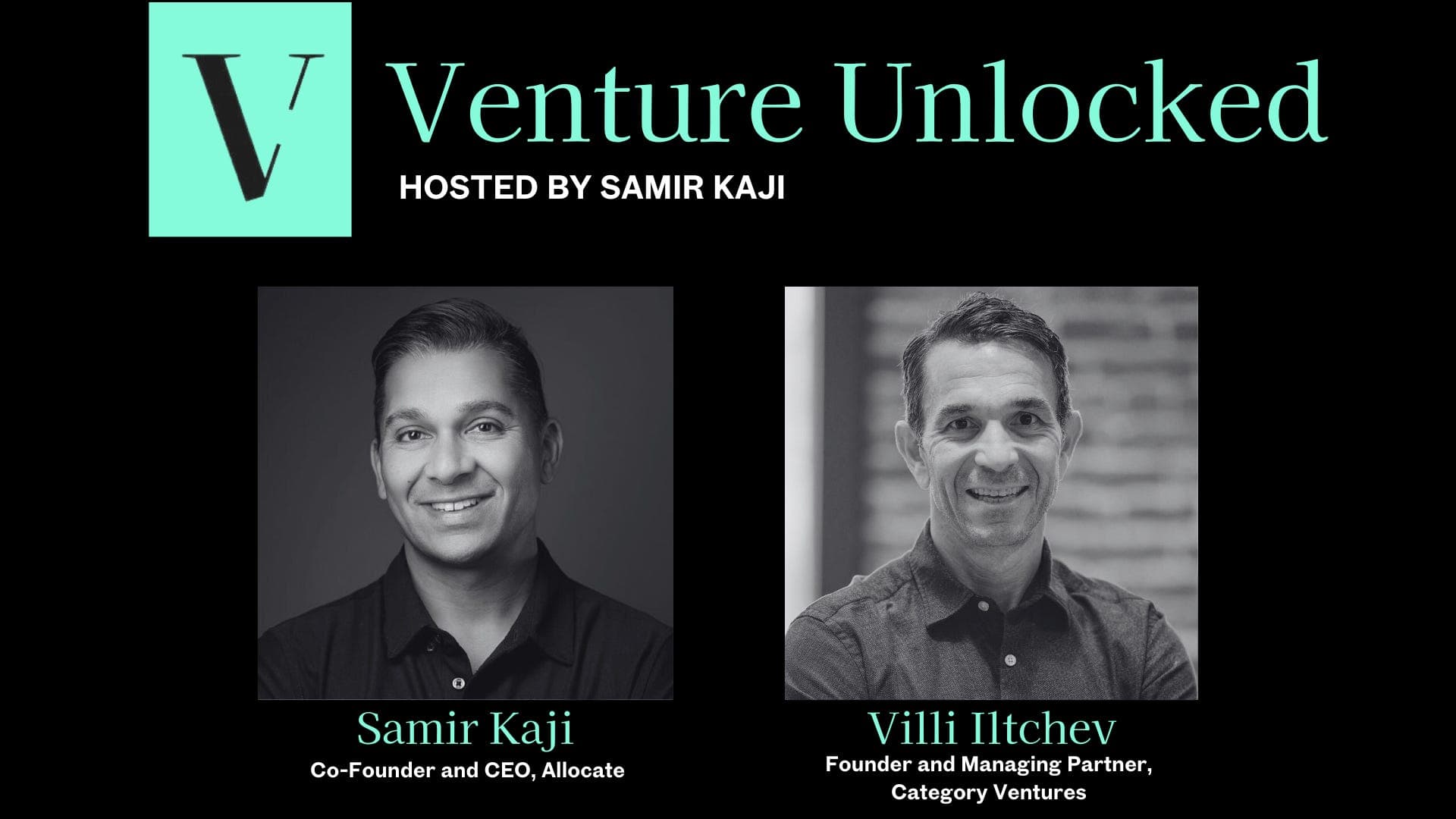
- Host: Samir Kaji
- Guest: Villi Iltchev, Founder and Managing Partner of Category Ventures
- Date: 2024
- Listen: [Venture Unlocked Substack](https://ventureunlocked.substack.com?utm_medium=podcast)
Key Themes
- Exploration of the current venture capital landscape and the challenges faced by emerging funds.
- Discussion on building a founder-centric venture firm.
- Insights on investment strategies, market fragmentation, and the importance of community and kindness in venture capital.
About Villi Iltchev
- Background in both operating roles (Box, LifeLock) and investing roles (August Capital, Two Sigma).
- Experience led to the founding of Category Ventures in 2024, focusing on category-defining enterprise software startups.
- Notable investments include GitLab, with a proven track record of significant returns.
Discussion Highlights
- Villi’s Background and Journey (1:50)
- Interest in technology and venture capital developed during the dot-com boom.
- Transitioned from finance to technology after gaining experience in investment banking.
- Joined Salesforce, which shaped his perspective on cloud computing and software.
- Lessons from Venture Capital Firms (5:35)
- Insights gained from both established firms (August Capital) and emerging firms (Two Sigma Ventures).
- Emphasis on learning from diverse experiences to shape a firm’s investment strategy.
- Market Fragmentation in Venture Capital (8:47)
- Increasing number of seed funds, leading to intense competition and subscale firms.
- Need for adaptable investment strategies to thrive in a crowded market.
- Flexible Investment Strategy (12:24)
- Advocates for a flexible approach rather than fixed check sizes, addressing founders' varying capital needs.
- Aims to invest in what is appropriate for the opportunity rather than sticking to a rigid model.
- Challenges with Traditional VC Models (13:26)
- Critiques the inflexibility of many established seed funds.
- Highlights the need for venture firms to adapt to the evolving requirements of startups.
- The Importance of Product-Market Fit and Founder Support (17:35)
- Emphasizes the significance of aligning capital with the specific needs of founders to achieve success.
- Counterpoints on Large VC Firms (21:40)
- Discusses the potential drawbacks of partnering with large VC firms, particularly in terms of support and attention given to startups.
- Winning in Venture Capital (24:07)
- Identifying the right conditions for success in venture investments amidst market fluctuations.
- Kindness and Community (26:24)
- Advocates for building a community around kindness, respect, and meaningful feedback for founders.
- Components of Success (30:00)
- Discusses essential traits such as teamwork, authenticity, and competitive intensity for a successful venture firm.
- Decision-Making Process (33:21)
- Importance of collective judgment and diverse perspectives in making investment decisions.
- Intellectual Honesty in Investments (36:16)
- Stresses the value of recognizing the difference between successful investments and those that were not the right choices.
- The Role of Fresh Perspectives (40:08)
- Highlights the need for new ideas and approaches in the venture capital space.
- Acting on Great Ideas (42:27)
- Encourages recognizing and acting on promising opportunities quickly, rather than over-analyzing.
Conclusion
- The episode concludes with Villi sharing insights on the importance of empowering team members and fostering a collaborative atmosphere to make effective investment decisions. The objective is to build a firm that not only recognizes great ideas but also acts decisively on them.
Final Thoughts
- The conversation provides a rich perspective on navigating the complexities of the venture capital landscape, with a strong emphasis on adaptability, founder relationships, and the values that drive success in this competitive field.
For more insights, visit [Venture Unlocked's Substack](https://ventureunlocked.substack.com?utm_medium=podcast).
Written by AI. May contain mistakes. Listen to the episode to check what was said.
Transcript
Automatic transcript. May contain errors.0:08Welcome back to another episode of Venture Unlocked, the podcast that takes you behind the scenes of the business of venture capital. In this episode, I had the pleasure of welcoming Billy Ilchef, founder and managing partner of Category Ventures. Before starting Category Ventures in 2024, Billy has had a long history in technology, both in operating roles at companies like Box and LifeLock, as well as investing roles at firms such as August Capital and Two Sigma. We covered a lot of ground during our conversation, including his inspiration for starting a new firm in this market and the experiences in his past that informed his true north.
0:43We also spoke about the mass fragmentation of the venture market today and what it means to consistently win in early-stage investing in a market that's so heavily crowded with dedicated seed funds and also larger funds who are active in seed. I really enjoyed the authenticity of the conversation and I hope you do as well. Samir Khadji is the CEO and co-founder of Allocate. Allocate and Venture Unlocked are independent of each other. Any statements or references made by Samir or his guests regarding third-party investments or securities are solely their views and opinions and are not intended as investment advice or an endorsement of such parties or securities by Samir, his guests, or Allocate.
1:25Allocate or its clients may maintain relationships with or investment positions in guests, third parties, or securities mentioned in this podcast. This podcast is for informational purposes only and should not be relied upon as a basis for investment decisions. Billy, it's great to see you, and I'm glad we're getting this done finally. Thank you. Thanks for having me, Samir. It's been up and coming for a few weeks now, so glad to make it happen. Yeah, there's going to be a lot of things that we're going to unpack, but maybe we start off with your journey into technology and venture and a little bit about your background leading up to Category Ventures.
2:00Yeah, I mean, I get oftentimes a question from young people, how can I follow my path? And my answer tends to be like, don't, because if I have to repeat my path myself, again, I don't know that I could. It's a bunch of random events that got me to where I was. Obviously, you have to kind of have a prepared mind for the next step in your career journey. But my journey into tech was I was very interested in tech at a young age before that's during the dot-com bubble that I got really excited about tech. Started even investing whatever money I had at the time, which was very little into tech stocks.
2:38I lost most of it. But when I went to business school, I very much had this idea of getting into tech somehow. how I couldn't really get into tech out of the gate because I was an international student. And there were very few tech companies at the time that were sponsoring international students other than maybe a few consulting firms. And so I started my career actually in finance. And that's what brought me to California doing tech investment banking, covering software companies and internet companies, semiconductor companies, all kinds of stuff at the time. and that got me into San Francisco and Silicon Valley.
3:17The first opportunity I had a few years later to actually lead finance and get in working industry. I took advantage of it. I had gotten married and so I had more job flexibility. And so I ended up joining one of my clients, Hewlett Packard, in 2008 before the financial crisis. And another one of my clients, Salesforce, called back a few, a year and a half later. And I could totally see the rise of cloud computing and SaaS and thought that is the future of software. And I wanted to be part of it. And so I joined Salesforce, which was actually probably the best thing that happened to me career-wise because Salesforce was such a relevant, impactful company in the ecosystem.
4:03It was probably at the time when I joined in 2009 bigger than the entire SaaS ecosystem combined. And so I was at the right place at the right time, working for the right founder, right company. It was really an amazing experience. And so I was leading there the strategy team, which included the investment arm of Salesforce, what is now Salesforce Ventures, as well as the strategy and M &A function. Great experience. I had a couple of other operating roles after that. I was one of the execs at a company called LifeLock. And then Box after that, before and after the IPR, I had invested in Box when I was at Salesforce, which kind of prepared me for venture in many ways.
4:45But venture was not the end state. It wasn't the goal. I actually didn't know what I wanted to do. Every single step in my journey was kind of being at the right place, right time, being prepared to take that next step in my career. and when I started talking to venture capital firms, it turned out that a lot of the things I had done made me well-suited to be a VC. I joined August Capital in 2016, which was just an amazing opportunity and a great place for me to start my career in venture. After August, I spent five years at Two Sigma Ventures, kind of continued on that journey, which kind of prepared me and led me to finally kind of decide to do it myself, start my own firm, category ventures, and build a new venture capital firm.
5:35You mentioned a lot of different things there, and it does sound like you had a lot of serendipity throughout your career. But when I talked to a lot of emerging managers, and I've had a lot of people that have started to fund one or are on to fund two now, and all those experiences in some way shape the mental model of the type of firm based on the observations working with founders being in some cases within companies like you were at LifeLock and Box. Maybe tell us a little bit about the true north and the gap in the market that you saw that you could fill with the firm. Yeah. I mean, I think one of the reasons I am where I am today and kind of the mental model that I've built over time is my ability to pull from this wide variety of experiences I've had, being an operator at like four different companies.
6:22And they all were great in some way and dysfunctional or challenged in other ways. And then I was part of two different venture capital firms, very different. Again, August Capital was a historic firm, truly historic, you know, people that most people don't know the history, but like Benchmark and August came out the same firm, TVI. It was just an incredible firm in the 90s, first investor, only investor in Microsoft. Series A and some microsystems and Compaq and Symantec, into it like amazing firm, great history, great legacy, very established. But obviously when you have that prestige and credentials, some other maybe the hunger creep the lack of hunger creeps in into your mindset and you your your drive kind of diminishes and so I learned a lot from that experience and then I joined Two Sigma Ventures which was very much an up and coming from you know a couple of people at Two Sigma were experimenting with this venture model and you know how do you build a venture capital firm.
7:35So actually, I took the August capital lessons, tried to really help to signal put that firm on the map, very much firm building from the get-go. And I think all of these experience kind of led me to be prepared to start Category Ventures and definitely shape kind of how I invest, how I think about opportunities. Whenever you, and this was, you know, 2024, I think when you did the final close or single close of category. And we've been in a time where we haven't had a really blue sky year for a while. So 2021, of course, peak at the market since then, you know, the markets have been pretty choppy, raised the fund, you know, fairly quickly, which we'll get into a second.
8:20But a lot of what I have seen over the last maybe 10 years is a lot of new firms coming to market. I think I count over 2 ,000 seed funds. And from an LP perspective, oftentimes it's very difficult to extract what makes a seed fund really successful over a long period of time. And there's certain markers you can look at, maybe track record in some cases, like you had a track record coming from August from Two Sigma. But oftentimes it's much more around the future view of is this team or is this person going to be able to execute? and often it comes down to prepared mind, not just raising a fund, but thinking about building a long-term franchise.
9:00What was the mental model in terms of the type of ethos you wanted to create for this firm? And how much of that was coming out during your conversations with LPs? Yeah, I mean, I started out even this fundraise very much with an open mind. And the first thing I did before I even decided to do this was to go and ask for a lot of feedback from LPs that I had met over the years that knew me and would be honest with me about my strengths, my weaknesses, my ability to execute on this, but also other GPs who had gone down this journey. just so I understand how to think about it, my level of preparedness, etc.
9:48And so I did a lot of homework leading up to it, which in some ways gave me the confidence to finally kind of go off the deep end and try to do this. And when you start, you just don't know. Unless you've started a fund before, like a startup, like the first time it's always you just don't know what to expect. and neither did I. So I went very much into the process with this mindset of, I have a strategy, I see an opportunity, but I'm very much open for feedback here. And that's how a lot of my conversation started. The opportunity I saw in venture was, you know, my impression of early stage venture was that it is highly fragmented, highly competitive, but also in some sense, subscale.
10:40There are hundreds, and you suggested there are even thousands of these firms that get started or have gotten started over the last few years. And most people start a venture capital firm raising, you know, starting even with their own money, but raising small funds, leveraging their expertise, their network, their insights, and kind of hope to find some good opportunities to invest and build their reputation and track record. And there are hundreds of these firms, but they are subscale. They're by definition subscale. There are hundreds of firms that have 15, 30, 50, 80, even 100 million in fund sizes.
11:22For the most part, they're subscale firms. They can't really lead around. And my insight was even the more established seed funds kind of operate in a subscale way or inflexible way. They're kind of stuck in their box, if you will. We write two, two and a half, maybe$3 million checks into three to$4 million seed rounds, get 10 % ownership, this is what we do. And my impression was early stage venture is just a lot more messy. And you kind of need to meet the founders where they are for the amount of capital they're raising for the opportunity they're pursuing. And those things need to fit together.
12:06And sometimes that may mean a$1.5 million receipt check into a$2 or$2.5 million seed round. But sometimes that may mean a$4 or$5 million check into$6,$7,$8 million seed round. You know, different companies require different amounts of capital. And so try to find, like, try to build a venture capital firm that is super narrow and specific around what check size is the right for what type of ownership, to me, never really made sense. So I wanted to build a firm that is more welcoming and inviting and flexible, which is to say we're the firm that is only focused on enterprise software, B2B only, infra-deaf tools and apps.
12:48We're highly technical. We appeal to this technical founder profile. And we are very flexible. We lead seed grounds. And we're very flexible with that means. We can write a$1.5 million check. We can write a$5 million check. Anything in between, whatever is appropriate for that opportunity and the needs of the founder to build the startup they're looking to build. And I thought that there are just very few of those in the market that exist today. And I think founders are mostly lost today when they're looking to raise that seed round. You know, it's such an interesting thing that we should pull the thread on a little bit more because I do agree with you that, you know, firms that are raising, let's say 50, 100, 150, you typically have fairly cookie cutter portfolio constructions, i.e.
13:3925 to 35 companies. 50 % of the fund is going to be initial, 50 % is going to be reserved for follow-on. That leads to a check size of X and an ownership requirement of Y to be able to get to a certain exit ownership that kind of makes sense from a mathematical standpoint. I had somebody on the podcast, Oren Zav, and when Oren was talking about his model, it was very open and kind of founder-based. Like, what is the best opportunity? I might do a Series B. I might do a Series C. It could be a$3 million check. It could be a$15 million check. And for a lot of LPs, the question is, where is that?
14:14Is there some kind of portfolio discipline? Or how do you think about when you size up versus you size down ownership? How do you think about answering, or how did you think about answering some of those questions? Yeah, and I think Oren's model works for Oren because he has such tremendous reputation in the ecosystem and people seek him out. But it is Oren. it is hard to build a firm around this model right an individual elad can do this because he just has tremendous reach and reputation in the ecosystem but it's really hard to create a system around it that scales and so i very much you know even though there were a few conversations that kind of pulled me higher in the market.
15:07It raises a slightly bigger fund. You know, you've done a good job picking, keep picking. Maybe you can do some seed and some eggs. That's what you've done most of your career. Keep doing what you've been doing. And the challenge, I think, with that strategy is I think, well, first of all, it's really hard to lead rounds in kind of the alternative model. I think you earn the right to lead through experience, reputation, and track record. And that is especially pronounced at Series A, which is really the stage where brand and reputation, I would argue, matters the most to founders. That is truly the first big round that puts you on the map.
15:55and the reputation of the firm you raise that round matters to founders a lot and you can't just show up at series a and say hey i have money i do series a's now you earn the right to do these types of deals you can't just show up and do these types of deals you can't go and compete with the best firms for the best deals just by having money and so my strategy was like a i saw an opportunity get seed. I want to build this seed firm. And B, I have the self-awareness and having been in venture for a long time to know that you earn that right to do the Series A deals. And maybe one day in the future of Category, the firm can mature and become this mostly seed with some Series A's in between kind of what Amplify has done.
16:49They've done an extraordinary job. But you do that when And your brand and your reputation allows you to do that, not just because you can raise capital. Well, let's talk about the product for a second, because I think that when you look at pre-seed and that$2.5 million round versus that$7 million seed round, which is going to invite other types of investors, especially some of the bigger firms that will look at that and say, I can put in six of the seven or six of the eight. And it's going to be a valuation that might be 2x, which you're willing to pay because it's optionality for them. They want to get ones that then can go into Series A, Series B, Series C and continue to pump capital in through the lifecycle.
17:28What is that, almost that go-to-market motion that allows you to win in those type of rounds? This is a great question. And it is kind of the core belief that I have in founding this firm. I think the reason oftentimes founders go to the larger firms is because it is a lot easier, right? It's a lot easier to go to one of the big firms. They're going to write a check. To them, writing that$4 million or$5 million check is the equivalent of me writing a$200 or$250K check. Who cares? No big deal, right? It's just a lot easier. And that's actually an indictment of the seed ecosystem today and kind of the core thesis.
18:14I think over the next five years, we're going to see a few firms like Category emerge that are actually able to offer that$4 million or$5 million check to founders. So they don't have to go to the large firms. And because the alternative today has been cobbled together a syndicate of these smaller firms. It takes time. You need to align all of these smaller firms. Nobody has actually meaningful ownership. And so, but the belief I have is that these large firms are just not a good product for founders, it seems. You are probably, and a lot of issues that I see with that model, they, you're probably, you know, they've hired an army of people.
19:01They have a bunch of junior partners that you're probably talking to that may or may not have any meaningful experience investing or other owners that are dabbling in seed to build their track record and reputation. They may or may not be there in a couple of years to support you. Turnover is really high at those firms at that level. If you're dealing with a senior partner, you know, they're busy. They're on 15 boards. That$4 million check they wrote, as I said, that's the equivalent of me writing a$250K check. It doesn't matter. It doesn't move the needle. They don't have time for you, nor are they doing this investment with the intention of working with you and going through the nitty gritty and finding part of market fit and advising you and spending time with you.
19:53And so I just think there's just no alignment in that model with founders other than the money part. There's the signaling, there's the conflicts, there's the willingness to support you over time. The reality is that basically they manage a lot of money. They don't have the time to like put together a bridge, nor would anybody else bridge you. Because if you have one of these big firms on your cap table, why is anybody going to get in the middle of this and try to bridge you? So I just think a new product needs to emerge like in the market. And you're starting to see that now of seed stage focused firms that have some skill and the ability to like do these types of rounds.
20:38Check sizes that are meaningful to the firm that matter to them. And you know the partners are going to care about your startup and treat it with the care that they would if they had written on much larger check. if you're at a big firm. I guess the one counter that I just want to actually bring up, and this is through a conversation I had with another entrepreneur who actually took money from a large tier one Sand Hill shop. And it was a seed round. They raised 5 million. The tier one put it for 4 million. And their view was, as a second time founder, we don't really need a lot of help to get from zero to one.
21:13You know, it's fine. And they had the opposite on the signaling. Their view was signaling is actually positive because, having this big name can allow us to attract talent. It can attract customers. People know there's more cash behind us. And yes, there's that signaling risk that they don't come into the Series A. Why didn't they do the Series A? How would you maybe advise an entrepreneur that's thinking in that way? Listen, when things go up and to the right, it's all good. It doesn't matter what you do or who you raise money from. It's when things are kind of on the margin and take longer to get, find part of market fit or find the monetization.
21:56That's when things get tough. So, you know, if you're optimizing for everything going up into the right, then it doesn't work for you to raise capital from. So do I think employees and customers customers probably less so but to some extent they do pay attention we raise capital yeah maybe maybe on the margin that matters but i don't think that outweighs the downside and the series a challenge is not just the challenge of are they coming into the series a or not the question is are they leading it there's a very reputable firm on sandhill we don't need to drop names but But if they lead your seed, and I'm seeing it at the A, they're smart people.
22:51The whole point of doing that seed, so they can deploy more capital behind it, like, why am I getting in the middle of this? Like, the signaling is actually really strong. And I've always had the mindset of, like, I'll make up my own judgment. But it's there, and that's the reality of it. But I think the bigger problem is what I said earlier, like people move on. They just don't have the experience. You're rarely dealing with one of the senior companies. They're not your point personally. And so if things are not up and to the right from the get-go, those types of firms move on. Right. They just move on.
23:31Yeah, you lose the attention and it's human nature. It only makes sense economically if they put a$4 million check out of a billion dollar fund. And it doesn't move the needle. It doesn't matter, right? But it does matter to a$4 million check going out of$160 million fund, which is very different. And that's why they are going to get that senior attention. But going back to this earn the right to win, right? I think about this a lot when I talk to venture investors. What does constitute the right to win in today's market? Let's say there's 2 ,500 seed funds of which 20%, 30 % can actually lead deals consistently at seed.
24:06What does it actually take to win? Because it's brand. You've done this. It's founder references. It's the fact that you have some kind of value ad proposition that's tangible. What are the different elements? And if you were to force rank those things that help you win consistently with the opportunities that you want to get into, what are those things that constitute that earning the right to win? Yeah, I mean, I think brand and reputation matters. category doesn't have much of a brand today. It's a new firm. All right, I do hope in five years, category is a name that most founders would recognize.
24:45But we need to do a lot of things right along the way to get there. And so in the short term, whose brand is it? It's probably my personal brand. Like, you know, until category becomes a household name in this community, then it's mostly your personal brand that you need to leverage and your relevant experience or breadth of experiences that you can bring to the table you know the team you've put together like I alluded to this I want every person on this team to be highly technical one of the things that I've noticed in the ecosystem is there are actually very few firms that you can go to really know that every person on the team is actually highly technical and will get it.
25:33And admittedly, I'm actually not an engineer by background, but I do want that firm to be everybody on the team is highly technical so that we can connect with this highly technical founder and provide them with a different experience. You know, references matter. How you treat people matter, leaving founders with a positive experience every time matters a lot. I see track how many founders I pass on that connect me to another founder. That matters to me a lot. I can't invest in every idea or every founder I meet with, but I can be nice to them and give them meaningful feedback that leaves them with a positive impression that would that allow them to still recommend me to their friends that actually is really important to me kindness is free like it doesn't take any additional incremental effort for you to treat people with respect and give them meaningful candid authentic feedback and so those are like all the little things you need to do to win the and there's other activities community events like other things you can do to drive awareness but i kind of go back to like the core values behind which i founded the firm authenticity like be a real person be a human treat people with like respect give them meaningful feedback teamwork like build a firm where we can all work together collaborate in the same office you know make decisions together kindness and finally intensity you know i want to win i'm a super competitive person i want to win at whatever i do and you need that like drive and intensity to be successful in this business it's very competitive and so i think those core things if you can put them together i think it actually can provide founders with a very different experience than what they would give to other firms.
27:38When you think about all those elements, which is really serving the founder consistently by adding real value that helps them scale from when you invest to when they get to the next phase and so on and so forth, oftentimes it's not just about you providing, but providing sort of this united way across the entire organization. You've hired a number of people within the firm. And I love asking this question because I think it goes back to the ethos that I asked about earlier, which is when you're bringing on people, you mentioned one of the non-negotiables is we want them to be technical, but there are also personality non-negotiables that you're filtering for.
28:16Maybe talk a little bit about that and how did you actually filter for those things during your interviews with some of the people that you brought on? Yes, I do care about the intentionables, right? Back to the values, teamwork. I'm not looking for people that are looking to mark an opportunity in the CRM as their Like, that's not what we're trying to do here. We're trying to collaborate to help each other make a better decision. If we make better decisions, we win. It's not about you making a good decision. That matters over time. I mean, I'm evaluating my team on kind of how they make decisions and, like, how they think about opportunities.
28:57Are they building their track record, their reputation with founders, et cetera, or their ability to attract? founders, but teamwork, being authentic, treating founders with the respect they deserve, leaving them with a positive impression, giving them good feedback. And yeah, that requires a certain personality type to want to work in that type of environment and system. But, and also like back to the intensity, you can't do away without that. You need a certain level of also intensity to be successful. So I'm looking for those components in every person I bring to the team. And as you think about this, this goes back to all of these folks, you know, looking at the end of the day, get into great companies, help those great companies, and then provide, you know, what we hope to be a great return for your limited partners, right?
29:50Which in, you know, LP world, getting a 3x net and higher is, you know, where you want to be as a venture firm, you know, fairly consistently. Not easy to do. I mean, if you look at the math, there's not a lot. There's a very small percentage that get to 3x. In fact, even during the 2010s, that was like top 20%. And in down markets, that's even sometimes less than that. How do you think about building that probability of getting those top end returns? So I think about a venture fund as like, yes, there's the winning, which is once you find a deal that you really like, did you earn the right to win?
30:25But you have to see the deals. You have to make the decisions. Can you break down each one of those and how you think about building an edge in when it comes not just to the winning, but the sourcing and picking? Yeah, I had a conversation with a couple of friends at larger firms a few weeks ago. And the question one of them posed was, what do you optimize for when you hire? Sourcing, judgment, or winning and winning? Those are the three components. And my answer was, if I can have two out of the three, I would pick sourcing and winning and judgment is last. And the reason I say that is there are several reasons.
Read the full transcript
31:06Number one, judgment is really hard to filter for. You know, it takes sometimes a decade for you to know if somebody has the judgment. And so judgment is really hard to evaluate in the short term. What I tell some of my team is like, your judgment at this point in time is what it is. you can't do a whole lot to make it better today over time you can learn your experience matters all that but at this point in time it is what it is the things you control today are sourcing your input the hard work you put into it connecting with founders every interaction you have with a founder being purposeful in how you're building your brand your reputation I engage with the community events, content, whatever, all the things you can do on the sourcing side.
32:00And then the winning, which is kind of the history of all of your work that gives you then the right to win. And obviously, initially, it's a team sport, like we win as a team. But that's how I think about it. And so those are the things I think are most important to any investor when they're starting out. I agree with you. And I do think it takes a long time to know if there's, I mean, certainly people like Doug Leone, Mike Moritz, you know, folks like that. Very clear, incredible judgment. They know how to do this, right? They've done it for a long time. But it could take 10, 12, 15 years to know whether there's false positives or negatives in somebody's track record to determine their judgment, especially at the early stage when so much is so opaque in terms of the business model, the human being that you're investing.
32:51But going back to that decision part, because that is so difficult to filter for, you've built your own pattern of recognition throughout your time at Two Sigma in August, even before that. How does that translate into helping other investors across, you know, around the table with their own judgment and also the other way around it? You know, people that are maybe more junior in their roles, helping you sort of refine and get better. How does that work from a decision making process within category? On my personal judgment, again, I had the luxury of drawing from, you know, 20 plus years of just being around the ecosystem.
33:29them. You know, I became a VC, you know, nine, 10 years ago, but, you know, I probably made more investments at Salesforce than I'll make as a VC. So I was very active on the investing side, and also personally as an angel. And so you kind of have seen that whole, you've made every mistake in the book, you kind of can learn from it. In many ways, I think good judgment is what's exciting, but also kind of how to stay out of trouble. A lot of things seem exciting early on and just being able to kind of get to the crux of a bet you're making, understanding what is the bet you're making, asking the right questions, and understanding is this a bet worth making.
34:24It's not a formula, right? I can't even articulate it with words because it's not a formula. You draw on a lot of experience and analogies. But it really boils down to kind of clarity of thought, understanding of the bet you're making. There are bets that didn't work, that if I have the opportunity to make over again, I would. And there are bets that I've even asked my former partners in the past. I'm like, yes, this worked, but it was a bad deal. They're like, what do you mean it's a bad deal? It worked. Like, would I make a lot of money on it? I'm like, but it's a bad deal. We shouldn't have made this investment at this time.
35:05So I think that intellectual honesty, sometimes it works, but it was actually a bad investment. Understanding that I think is really important. And so back to teamwork, the reason I want this teamwork is I do want that thinking to like, for me to be able to infuse the team with that type of thinking. But also it comes from, you know, some humility on my part in that I don't pretend to be the smartest person in the room. I don't pretend to know it all. You know, this is hard. And so the more kind of feedback you can get that can help you inform your decision, the more interesting different perspectives you can hear around you, the better decision you can make.
35:52And so this is not to be confused with like groupthink or like consensus-based decision-making or any of that. But it is to say it's really valuable to hear like a different look, a perspective coming from a very different angle or experience. And I think that's how you make good decisions. Speaking about decisions, and you mentioned this, and I love the intellectual honesty of even looking at deals that work and say, Maybe we shouldn't have done the deal. And conversely, deals that didn't work well that you said, well, I'm glad we did it. And it was the right thing to do at the time. And we're consistently testing those things.
36:34But one truism, like a lot of people say is a truism in venture is like a lot of the great opportunities are not obvious. And they can be non-consensus. But for a lot of younger investors that we see, and I'm sure as you continue to build your team, even though venture is a risk-on category, people tend to go and risk off when they start their careers. They want to go with the known areas of heat where it's like today it's AI. It's a founder that's done something. It's who else is in the round because those companies are more likely to get marked up. You have a nice TVPI by your name. How do you combat that, I guess, internally in terms of making sure that people are working on things independent of what the rest of the market is doing and really just getting into things that you have the highest conviction in?
37:23That's a really good question and a hard question to answer. So it is true that some things are not really not obvious at early stages. there's, you know, a great opportunity can hit you over the head 10 different ways and you still don't see it. One example is I saw a seed, I saw it at the A, and I just didn't get it. I just could not get it. I saw it multiple times. And so you see that, but man, sometimes it just hits you as, and it's as obvious to you as the light of day, And that, again, is this is what makes venture so fascinating. Why was it obvious to you and not anybody else? The investments I made that became like really big success stories, I didn't perceive as taking great risk.
38:24I didn't perceive it as non-obvious. To me, it was obvious. Like this should exist. It absolutely makes sense. but I think it goes kind of back to the different the prepared mind the different experiences you have and things you've seen over the years that kind of put you in a position to recognize it at that point in time and to you it's kind of obvious but maybe less obvious otherwise so I think that's kind of how I think about it I think if I look back on my career one thing it seems interesting to me is oftentimes you see something interesting and you have to do a lot of work and you're kind of working to get excited about it and you're doing research and you're trying to like get over the line my experience is every time i've done that i I have probably made a mistake, probably made a mistake.
39:27The things that in my track record, in my history that have done the best of the things that I knew within 20 minutes I really wanted to invest. It's really fascinating, which is not to say I don't continue to try to do the work to get excited and see something that's not obvious that other people don't. I do, I try, but if I look back, it was the first, you had me at hello, is kind of where most of my success comes from. it's interesting and this in some way might preempt the you know final question i was going to ask you around you know you've had the experience of being at two different firms now running your own fund and you know venture is one of those apprenticeship businesses you learn along the way you make mistakes you learn from those mistakes hopefully and over time you start to build your own way of doing things is there something in particular that you wish you knew when you first started that you know now?
40:27It's an interesting question. When I was talking to another firm before, several firms, but one firm I came really close to joining before I joined August Capital. And I remember talking to the partner of that firm and he was telling me, listen, first six to 12 months, just sit around, do nothing, learn, observe. And when I joined August, I had a conversation with David and David said you know listen your ideas your energy your perspective is most fresh now you will never have this type of perspective and point of view that you have now he said just if you see something you get really excited about just go go invest and I will never forget that because it empowered me I would say in the first six months of my career manager, we saw three of the, you know, the three best apps companies in the last decade.
41:30And fortunately, one of them. But, you know, if I was at another firm, I probably would have never had this opportunity. And so, you know, one thing I've learned is like, when you bring people on board, empower them, The ideas are most fresh today. The network is most fresh today. And so empower them because you may miss. We don't get compensated for, you know, passing on a bunch of mediocre deals. We get compensated for investing in the great ones. And so if you see it, you've got to empower people to put on the table and act on creation. But the second thing I would say is what I said earlier.
42:17My experience is great ideas don't come about that often. Most of the time we try to convince ourselves that something is a great idea. But in adventure, like you may see two great ideas a year and it makes you feel like a bum, like you're not working hard enough to see more great ideas. But the reality is there are only 10 to 20 great ideas every year. and so you do want to act when you see it and oftentimes you know it very quickly you just need to have the conviction and guts to be honest with yourself and say this is the one let's go that's great well i really enjoyed the conversation billy this is this was great and appreciate the insights and again congratulations on launching the firm i know the story is long from being written, but it's been great getting to know you and really appreciate you coming on today.
43:15Thank you, Samir. Thanks so much for listening to another episode of Venture Unlocked. I really hope you enjoyed our conversation with Vili. To learn more about him or Category Ventures, go to the Venture Unlocked's Substack page at ventureunlocked.substack.com, where you'll find more details on the episode as well as past episodes. To get all future podcasts right to your mailbox, sign up through Substack, or go to Spotify or iTunes and sign up for our mailing list.
From the publisher
Follow me @samirkaji for my thoughts on the venture market, with a focus on the continued evolution of the VC landscape.
Welcome to another episode of Venture Unlocked. In this episode, I had the pleasure of welcoming Villi Iltchev, founder and managing partner of Category Ventures. Villi has had a long history in tech, both in operating roles at companies like Box and Lifelock, as well as investing roles at August Capital and Two Sigma, where he departed in 2024 to launch Category Ventures.
We covered a lot of ground in our conversation, including his inspiration for starting a new firm and the experiences that informed his true north. We also spoke about the fragmentation of the market and what it means to win in early-stage investing in a heavily crowded market of dedicated seed funds & larger funds who are active in see and Series A. I really enjoyed the authenticity of the conversation and hope you do as well.
About Villi Iltchev
Villi Iltchev is the Founder and Managing Partner of Category Ventures, an early-stage venture firm focused on backing category-defining enterprise software companies. With over two decades of experience as both an operator and investor, Villi has held leadership roles at Box, LifeLock, and Salesforce, where he led investments and acquisitions in companies like HubSpot, MuleSoft, Gusto, and Zapier. As a General Partner at August Capital and later at Two Sigma Ventures, he backed standout startups like GitLab—turning a $20M investment into over $900M in returns. Originally from Bulgaria, Villi brings a global perspective and a founder-first mindset to every partnership.
Category Ventures is an early-stage venture firm founded in 2024 by veteran investor Villi Iltchev, focused on backing category-defining enterprise software startups. With a $160M debut fund, the firm invests in pre-seed and seed-stage companies across infrastructure, dev tools, AI, and applications. Drawing on Iltchev’s track record—including early investments in GitLab, Zapier, and Gusto—Category Ventures brings deep technical and go-to-market expertise to help founders build enduring businesses. Their approach centers on hands-on support and founder-first partnership to shape the future of enterprise software.
In this episode, we discuss:
* Villi’s Background and Journey (1:50)
* Lessons from Venture Capital Firms (5:35)
* Market Fragmentation in Venture Capital (8:47)
* Flexible Investment Strategy (12:24)
* Challenges with Traditional VC Models (13:26)
* Product Market Fit and Founder Support (17:35)
* Counterpoints on Large VC Firms (21:40)
* Winning in Venture Capital (24:07)
* Kindness and Community (26:24)
* Components of Success (30:00)
* Decision-Making Process (33:21)
* Intellectual Honesty in Investments (36:16)
* The Role of Fresh Perspectives (40:08)
* Acting on Great Ideas and Final Thoughts (42:27)
I’d love to know what you took away from this conversation with Villi. Follow me @SamirKaji and give me your insights and questions with the hashtag #ventureunlocked. If you’d like to be considered as a guest or have someone you’d like to hear from (GP or LP), drop me a direct message on X.
This is a public episode. If you would like to discuss this with other subscribers or get access to bonus episodes, visit ventureunlocked.substack.com