In short
Venture Unlocked: Episode Summary
Episode Title
Venture Unlocked Shorts: Looking Back at the Era of Unicorns and What's Ahead?
Podcast Overview Venture Unlocked is a podcast focused on providing insights into the venture capital ecosystem, aimed at managers and stakeholders in the industry. Host Samir Kaji engages with industry experts to explore the intricacies of starting, operating, and scaling venture capital firms.
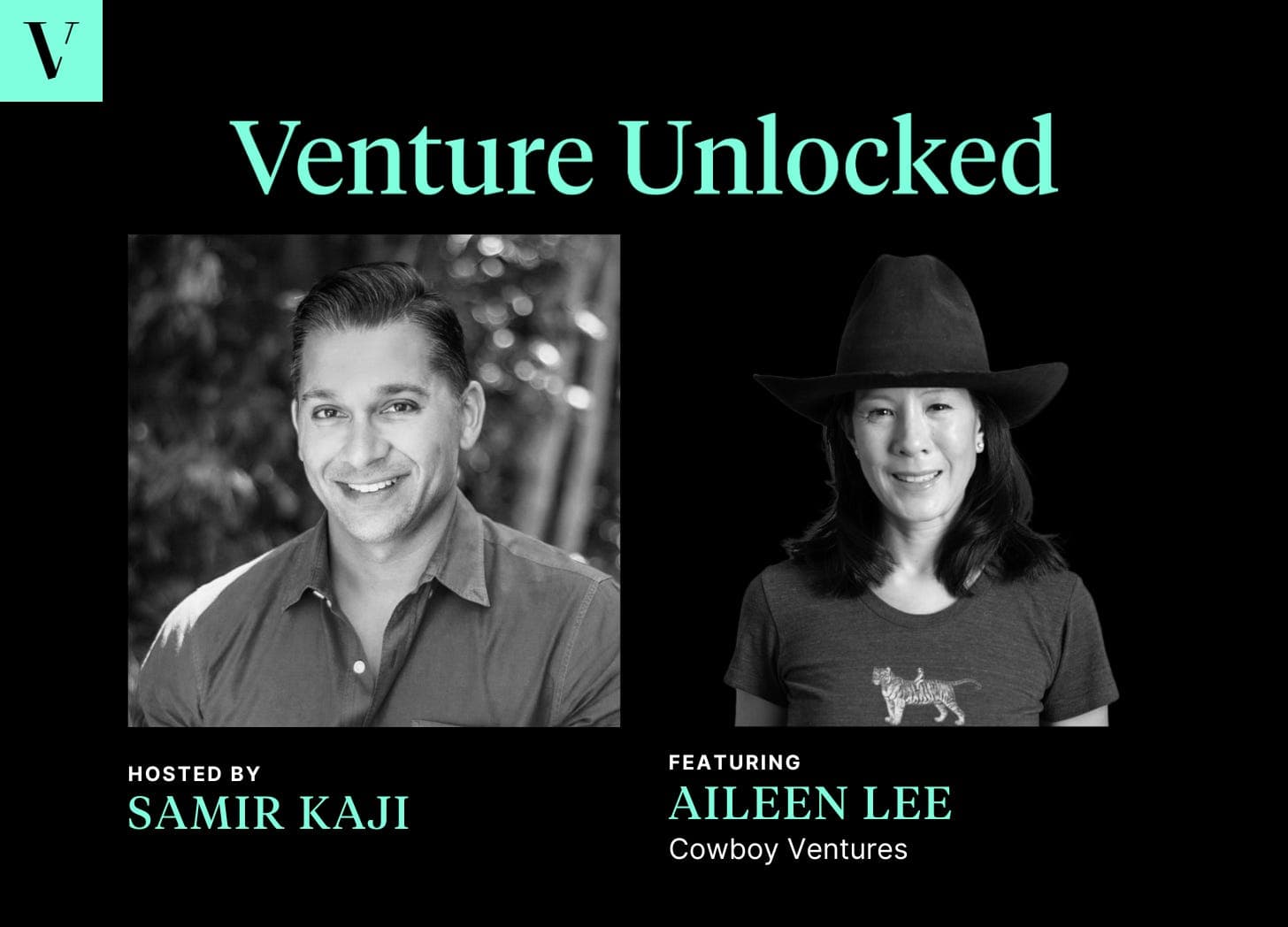
Episode Description In this episode, Samir Kaji speaks with Aileen Lee, founder of Cowboy Ventures, who originally introduced the term "unicorn" in 2013 to describe startups achieving a billion-dollar valuation within 10 years. The discussion revolves around Aileen's recent publication reflecting on the decade since her initial article, analyzing the evolution of unicorns and what the future may hold.
Key Topics Discussed
- The Growth of Unicorns
- Past vs Present: Aileen highlights the dramatic increase from 39 unicorns in 2013 to approximately 532 in the U.S. and 1,200 globally.
- Key Takeaway: The surge in unicorns is attributed to increased access to capital and a shift towards diverse industries beyond just consumer tech.
- Impact of Macroeconomic Factors
- Zero Interest Rate Policies: Aileen describes the surge in unicorns as a 'perfect storm' caused by macroeconomic conditions, particularly zero interest rates.
- Terminology: Introduced terms like "Zerpicorns" (unicorns born during low interest rates) and "Papercorns" (companies that hold unicorn status on paper but lack solid financial backing).
- The Landscape of Startups
- Diversification: Today's unicorns are emerging from a broad range of sectors, including climate tech and healthcare, indicating a more democratized tech landscape.
- Changing Founders: The origin of founders has diversified, with successful entrepreneurs coming from varied backgrounds and industries.
- Future Predictions for Unicorns
- Outcomes for Startups: Aileen predicts a mixed outcome for startups due to the changing economic landscape, with many facing challenges.
- Capital Efficiency: There is a growing concern about capital efficiency within the venture capital framework, highlighting that many companies are raising more without sustainable growth.
- 2021 - A Peak Year
- The discussion includes a retrospective on 2021, marking it as a peak year for capital influx into startups and valuations, driven by abundant capital and a shift in investor focus.
- Understanding Venture Capital
- Fund Dynamics: Aileen emphasizes the importance of founders understanding the business model and incentives of the VC funds they engage with.
- Investor-Funded Relationships: Misalignment between company growth objectives and investor expectations can lead to negative outcomes.
- The Road Ahead
- Thinning the Herd: Expectation of increased company shutdowns and layoffs in the coming years as economic pressures mount.
- Opportunities for Growth: Despite challenges, there are still opportunities for robust companies to thrive and potentially go public.
Key Insights
- Technology Adoption: The conversation highlights a belief in a new technology super cycle, particularly with the advent of AI, which could drive renewed growth in the venture landscape.
- Recency Bias: There is a recognition that current perceptions of unicorns are shaped by recent capital conditions rather than long-term potential.
Conclusion The episode provides a reflective yet forward-looking perspective on the venture capital landscape, emphasizing the need for adaptability and awareness of macroeconomic influences. Aileen Lee's insights foster a deeper understanding of the complexities facing today's unicorns and the evolving nature of the VC industry.
Additional Resources For more insights and detailed notes from this episode, listeners can visit the official [Venture Unlocked Substack](https://ventureunlocked.substack.com).
Written by AI. May contain mistakes. Listen to the episode to check what was said.
Transcript
Automatic transcript. May contain errors.0:00Welcome back to another episode of Venture Unlocked, the podcast that takes you behind the scenes of the business of venture capital. Today, we're launching our second episode of Venture Unlocked Shorts, where we highlight a specific point of view of a guest. These points of view may have come through a tweet, an article, or a conversation offline. And our goal is to unpack these interesting views in a short dialogue. In this week's Venture Unlocked Shorts, we're joined by Aileen Lee of Cowboy Ventures. About a decade ago, Aileen wrote a now famous article where she coined the term unicorn to describe technology companies that reach a billion dollar valuation within 10 years of founding.
0:35Recently, nearly 10 years after the first article, she and her team published a successor article looking at the last 10 years of these unicorns and what they believe will happen in the future. I had a lot of fun unpacking the article through the discussion, and I think you'll really enjoy hearing her findings and thoughts on what we may see going forward. Now let's get right into the episode. Samir Khadji is the CEO and co-founder of Allocate. Allocate and Venture Unlocked are independent of each other. Any statements or references made by Samir or his guests regarding third parties, investments, or securities are solely their views and opinions and are not intended as investment advice or an endorsement of such parties or securities by Samir, his guests, or Allocate.
1:16Allocate or its clients may maintain relationships with or investment positions in guests, third parties, or securities mentioned in this podcast. This podcast is for informational purposes only and should not be relied upon as a basis for investment decisions. Aileen, great to see you. Thanks for coming on. Oh, I'm excited for us to talk because I know, I mean, you are great at data and industry analysis, so I think it's going to be fun. This will be a lot of fun. So this is part of our new show where we look at specific things that have come out. You wrote an article recently, which is really kind of the successor article to what you put out 10 years ago around the rise of unicorns.
1:55And for those that are listening, unicorns are companies that reach a billion dollar valuations within 10 years. Looking back in 2013, I was actually reading that article. There's only 39 unicorns back then, of which only a third were private unicorns. The rest had gone public or had been acquired. 10 years later, we've seen this massive shift. I think you count 532 US unicorns, maybe 1 ,200 globally. and maybe a good place to start is what are the main takeaways in this run-up of the number of unicorns over the last decade? I'm going to try and boil it down because there were a lot. Last summer, our team had a conversation.
2:35We said, hey, you know, it's 10 years. It'd be, you know, maybe we should get right something. And so we started digging into the data. And then of course, then like, you know, September turned into October because there's just so much more data. It wound up being a much more extensive project. And also there are more data partners now who have more data. In 2013, I think there was Crunchbase, but it was just a very different ecosystem in terms of the data that's available. And also because there are 39 companies, I called a lot of people. I'd call Drew Houston and be like, hey, how did you guys meet?
3:06So it's a lot harder to do with 532 companies, but there's just a lot more to look into. So it took us quite a while because a lot has changed. One was obviously, like you said, going from 39 to 532. It's like, holy cow. And then two thirds having exited in the public or private markets last time, and then realizing, holy cow, because there was so much private capital, 93 % of them are basically unicorns on paper only. So we call them paper corns. And then 60 % of them basically became unicorns during the period when interest rates were almost zero. So we call those Zerpicorns because it's the impact of basically zero interest rates and how that kind of changed the game in the private ecosystem.
3:48And I'd say like the positive things about the 532 is like, we basically in 2013, most of the companies were general products that were kind of one size fits all, like everyone can use their kind of horizontal platforms like Facebook or Workday, you know, you could, any industry could use Workday basically. And when you look at what you see in the new crop, it's just these unicorns have spread. People have been building software for climate, for nursing, for hospitals, for back office financial services, just all kinds of sectors that basically were being run on old software, pen and paper, and didn't really have access to modern applications.
4:31I think that's part of what powered this total swing to enterprise was all these industry sectors and business processes that basically got new software in the past decade, as you spread out into industries, the people who start the companies are different. So it's no longer, you know, the hoodie wearing guy who drops out of Harvard who studied computer science. It can be someone who comes from industry. It's someone who lives in Ohio. It's someone who lives in Michigan. It's someone who lives in North Carolina, Nevada. So I think it's kind of exciting in terms of how technology, at least in some respects, has become a little bit more democratized in terms of who the people are, like where they went to school changed a lot.
5:08I could go on for a long time, I think, talking about capital efficiency and how much the venture industry changed and how that negatively impacted capital efficiency is important as well. And as investors and allocators, making sure that we're staying on top of our game so that venture remains an attractive asset class is important as well. What's really interesting, and I like the term zerbricorn, looking at things like paper corns, which, yeah, you're right, 93 % are still privately held. And maybe we can throw in Covidicorn too, right? So companies that - Yeah, totally. Everybody being in front of a computer all day.
5:43Covidicorn, I had not, I like that, that's good. Surely there is a lot of tailwinds, of course, by the macro, right? So zero interest rate policies. And then in 2021, of course, we saw a flood of capital coming in through fiscal and monetary policy, everyone behind the computer, capital is flowing. So it created this product of so much growth and so much growth and valuations, along with the big crossover funds coming in because they saw this arbitrage opportunity in the late stage private markets versus the public markets. But one of the other things is there was also this tailwind of things like mobile and cloud.
6:18So the adoption of technology was so much quicker. How much do you attribute to, I guess, the macro, the ZERP period versus the fact that technology was just so much more ubiquitous, easier to distribute. And there's just the tailwinds of like the technology adoption curve. I mean, I don't know if you had 100 points if you had to allocate, I think it'd be pretty tough. It kind of was a perfect storm. I think it was all of it that combined to create this tsunami of capital into the industry and which basically funded all kinds of companies and gave them the chance to grow. In the research, because we triangulate another bunch of these factors, like how many of them are Zupercorns, how many are Papercorns, how many are trading below a billion dollars in the secondary markets.
7:04The whole curve of the valuation distributions shifted closer to a billion. And then obviously, when you look at multiples and how much public market multiples and public market comps, when companies were trading in the public markets during that time at 30 times revenues, 50 times revenues, 70 times revenues, and how much it's gone down to six to 10, right? So if you take the valuations that were probably based on public comps at the time, when these companies, if they are fortunate enough, I mean, hopefully some of them will, and I think a number of them will get profitable on what they have.
7:40Some of them will have to try and raise and it will be a down round, significant down round. And then some of them will not, you know, they'll have a hard time. So we think this, the herd will thin quite a bit, But I do think, you know, just the power of software and the adoption of software, like you mentioned, like we all have supercomputers in our hands now, right? Basically, I mean, not supercomputers, but when you adopt this in your consumer everyday life, and then you go to work and you're like, God, this computer is so freaking slow. And why does it suck so much? You know, then when someone hits you with something new, that's faster and more delightful, and maybe it's going to have AI baked into it.
8:15We're very bullish on how many more software power unicorns are going to be in the future. Yeah, and we'll get to the forward-looking outlook for a second, both in terms of the potential thinning of the herd, but also what the next 10 years look like, because I do think that there's this interesting intersectional point that we're at where the market has reset, plus now you have AI as this major platform. You mentioned something, though, before looking back now 10 years in terms of the growth of the unicorns and the concept of capital efficiency. So I kind of look at it two vectors. One, people were raising far more capital to be able to get to those valuations because more capital was available.
8:54And the time to get to becoming a unicorn was so much more contracted than what we had seen back in 2013. Maybe talk a little bit about those two. One of the things when we did the analysis in 2013 that impressed me so much was even though enterprise-oriented software companies were the minority, 80 % of the value of the list was in consumer companies and it was 60 % of the companies. And this was the heyday of Groupon and Guilt and Twitter and LinkedIn and Facebook. The companies that were enterprise software like Workday or Viva, which we actually missed in our original list, which is an incredibly capital efficient company and probably one of the best.
9:33Enterprise software companies were 26x capital efficient, meaning that their public or private valuation was 26 times the amount that they had raised. That is a fantastic return. I think it equates to about a 40 % IRR. That's what makes venture capital and investing in private companies so attractive. And so I think we looked at that and fortunately we do invest in primarily enterprise software and partially for that reason. I mean, software has generally high margins, high stickiness. When you do a great job for customers that keep your software in place for a long time, it's hard to switch out, especially if you become a system of record.
10:08You can build on that and upsell. And so your average transaction will get even larger over time. So those are really compelling qualities of enterprise software. And I think, I don't know if a lot of people saw that. I mean, just more people opened their eyes to it and more founders had ideas. So just a ton of money went into enterprise software. And then as the public markets, and I'm interested in your take on this, you know, as these enterprise public companies got so valued, you look at Snowflake and I'm like, oh, this could be the next Snowflake. And so they were like, let me, let me find Snowflake earlier.
10:40And so they just piled tons of money into these private enterprise companies, round sizes and valuations got really big, bringing the capital efficiency down to 7x, which is not great. It's pretty bad relative to the also especially given public tech companies and how much they've appreciated the best in years. Basically, you would have been better off putting money into public tech than a lot of these private companies. Yeah, I think you're right. And it is interesting to see the big delta, right? in capital efficiency, so 26X going to 7X. Part of it though, during that time, because there's so much capital that was out there and it was cheap capital for entrepreneurs.
11:22Many companies actually viewed the capital cannon as being the competitive differentiator to be able to grow faster, quicker. The fundamental metrics that people cared about, both in the public and private markets was top line revenue. And things like margins and all the other stuff that typically we care about in normalized times became a little bit of an afterthought. And so it created this behavior, grow fast as you can, raise as much capital. And in cases where a company is raising $50,$100 million, as a capital provider, meaning if I'm a crossover fund, the valuation is going to be you write it on the page and I just care about the other terms like what is my liquidation preference and things like that.
12:07You basically had a lot of these unicorns as a product of the capital environment and the business models of those funds. And of course, that reversed over the last few years. And one of the questions that a lot of people have is how do we think about things on a go forward basis? If I do the math, 532 unicorns that are out there, the 480 or so are still private. So what is thinning of the herd look like? And what is happening on the ground? If you read the articles, of course, there's a lot of doom and gloom, there's going to be shutdowns. But there are some fundamentally good companies that even with a restricted capital environment will still make it to the other side.
12:46So how do you see this? Because they're private companies, we don't have transparency into their revenue, their year of year growth, their margins, those kinds of things. So that's where obviously people who are insiders in the companies can see And, you know, we're fortunate at Cowboy to have invested in companies like Guild based in Denver or Drada. Guild is an upskilling company that partners with enterprises. Drada is a security platform that's based in San Diego, and they are companies that raised during this low interest rate period. But fantastic, real revenue, real customer delight, great margins, healthy companies.
13:23And so I think those are examples of companies that will grow and thrive post this period. But I mean, we've been reading about it in the paper about these kind of abrupt shutdowns of companies that raised hundreds of millions of dollars. We were just talking on our cowboy team call this morning about a dinner that one of my colleagues went to last night for like kind of a high flying name brand unicorn company that raised about$300 million. And sounds like it's not in the news yet, but basically everyone on the management team has left. Churn is insane. It's just a matter of time before they announce that they're going to hit the wall and not make it.
13:56I just think that there's a lot of that going on behind closed doors that we don't know about yet. And I wish we could save all the people who are going to suffer pain through the rundown of what happens and plays out. But there are a lot of important lessons to be learned about being thoughtful. I mean, capital, you cannot ignore. You have to have a strategy for fundraising and be thoughtful about because it can be a competitive asset. I think Amazon is a great example of that in terms of your strategy and how much you raise and how you raise it and how you deploy it. It's an important component.
14:34But raising too much and not being able to grow into it, especially when wins change, it's very, it's risky. One of the things we looked at was falling unicorns and how many companies basically either have shut down or which ones and or went public and then really have fallen in public markets. And a lot of them are ones who raised really quickly and at high valuations very fast. So I think in some cases, it can be a curse, not being a little more slow and steady. This question was posed to me by one of the LPs the other day. And this is somebody that's been investing across multiple cycles. They've seen a lot of things that you and I have seen, you know, the dot-com bubble, the GFC, of course, what we've seen, he made this statement that there were really a lot of smart people that have seen these cycles before that were complicit in these rising tide markets, writing big checks, raising bigger funds.
15:31And his question to me was, how did this happen? And what was going through the heads of all of these general partners that worked at these great firms, had been through these markets, but still were playing that game on the field. You can make money arbitraging momentum. If you time it right, you get in the right time, you get out of the right time, you can make money. And I think that's what happened was it kind of became a momentum business in a lot of respects. And you talked about this earlier about larger funds. As you know, at Cowboy, we are a smaller fund. We are seed oriented. We keep our fund sizes quite constrained.
16:08That's our strategy. We are focused on delivering great multiple of money to our investors. But there are a lot of funds that have a different strategy. They probably talk to their LPs about a different return profile, but they are a great place for a different LP to invest large sums of money and get kind of exposure to the asset class, but potentially with different returns. They're not looking for a 10 or 20 or 30x. You know, they may be looking for a different return, but they also need the outcomes to be really big. Founders who might be listening, who you take money from, you really need to understand the incentives of the fund.
16:44And those funds can be great, I would argue, for later when your business is a little bit more de-risked and you're really looking for scale capital. But I think a lot of those funds came in pretty early. And then also as the funds got bigger, they hired a lot of new people who basically got new checkbooks because they just didn't have the capacity to deploy all the capital that they were managing. And so we wound up adding a lot of people with less experience. And also there was less oversight. And I think that also contributed to some of the challenges that we're seeing today. What you actually said is a really important point in terms of founders, understanding the business model of the fund that you're taking capital from.
17:20I actually think that might even go to funds that are raising from LPs because some LPs need to write large chunks. And so oftentimes you do assume the business model to a certain degree of the person you're taking capital from. And we saw that when you take venture money, you're expected to grow really quickly. You get put on a different path. Many founders probably took the venture path when they likely should have bootstrapped or done a different way of growing a sustainable company. And you and I have both seen that sometimes we've had billion-dollar exits where the founder walks away with less capital than maybe another founder that doesn't raise capital and has a$50 million exit but owns the majority of the company.
18:00And so I think those are important lessons. When we think about the future, so let's kind of shift a little bit. 2020, I'd love to get your reaction on this. So 2021 was where people were able to raise a lot of money. Big rounds, multiple years of runway. And when the music stopped to a certain degree in 2022, and certainly at the tail end of 2022, a lot of companies took measures to reduce burn to extend the runway. In certain cases, people were able to do bridge financings with internal to kick the can down the road. But now it feels like rubber's hitting the road, and many of these companies needing to either test the capital markets, go public, or make some very tough decisions on how do you either remain viable or non-viable.
18:43What do you anticipate to be the major trend lines of all these 500, or let's say 480 that are still private in terms of what they may experience? You mentioned downrounds, maybe M &As. What do you think this looks like for the next 12 to 18 months? Yeah, I think it's going to be a combination of there will be more shutdowns. There is a lot of what we call dry powder in the industry, right? A lot of funds that raised a lot of money in 2021, 22, even 23, and have not been deploying it. But my sense is versus prior downturns, they're not bargain shopping as much as they have in the past and thinking I can get a good deal on slightly damaged goods.
19:26I'm sorry to be so crass about it because I know these are people's jobs. In the past, there's been opportunities to recap companies and then help them grow again. And I just don't see it happening as much. It's funny, I was meeting up with some lawyers at a law firm recently, and they were saying how they're seeing a lot of sharp elbows around board tables, a lot of people playing chicken. Sometimes it's the founder playing chicken with their investor. Sometimes the investor's playing chicken with the founder, which is just not pleasant. And they're cutting it really close. And so I think, unfortunately, in most cases, that's not going to lead to a good outcome.
20:01So there will be shutdowns. There'll be more layoffs. And we just read about it every week. There are a lot of people bulked up. We had this incredible war for talent. People had lots of money. So I think companies did get kind of sloppy and maybe had a lot of people covering a lot of different fronts. And they're going to use this period as a time to get a lot more efficient and a lot more focused. And so there will be more layoffs. Hopefully there will be companies that are getting ready to go public. And we have a couple that are working on it and hoping to be ready by the end of this year.
20:32So we'll have to wait for the right windows. A lot of them do have cash. They basically made cuts in 2023 to extend runway for another, let's say, three, four years or get profitable in what they have so they can control their timelines. there will be companies that go public over time, but many of them are not going to be forced to go public because they actually can live a lot longer as private companies. Sorry, that was a very long answer. No, I totally agree with that. And there's not one size fits all. And the thing that I have also seen, and I think it's really important. So number one, there's a lot of dry powder.
21:08We know that. It recommends the dry powder. Now that dry powder, you mentioned one thing. I think the other thing also is important, which will be deployed over a longer period of time. So the fundraising cycles are no longer 18 months between the funds or going back to the two to three years. So you have capital actually also being concentrated into the highest quality companies. And there isn't that buying on a discount. Some of those companies fundamentally may get capital, but they still have to show the strongest fundamentals where there's still a return hurdle that the ultimate investor is looking for.
21:41And they're really looking for that growth story. So I think that's completely right. Maybe let's end with the longer term outlook. I think in one of the slides, the projection was roughly 1400 unicorns by 2033. And where I'd like to get your opinion on is that we don't expect another long term period going forward, meaning multiples will be normalized, you know, companies will have to be more efficient in terms of getting there, what is going to drive us from 480? Maybe that gets down to 350 when we call the herd a little bit to maybe 1400 within 10 years. So this is a fun one. Folks who are listening, if you're familiar with Moore's Law, which is the idea that basically, year over year, we're going to be able to get more transistors on a chip, which is going to give us more processing power.
22:31And that basically was going to follow a certain curve of increasing performance over time. When we looked at the number of unicorns that had grown and obviously interest rates and historical returns and like you mentioned, cloud, mobile, AI, all these things created this perfect storm. But another component of it is compute capacity and storage and the cost and accessibility of being able to actually harness so much power for your software. In the past, when we had less capacity, software was kind of gated and built assuming that you'd have certain resources to leverage. And now that we've got so many, we've got open source software, we've got AWS and Azure and Google Cloud and AI and these horizontal AI models, we're going to be able to put so much more under the hood of software.
23:16And that is going to cause people to build interesting, diverse software for all different kinds of industries that bring new efficiency and new capability. And so we kind of see an echo to Moore's law, which is as you have more compute power and capacity, people are going to build more software and software is going to spread out into more corners of society. And so that's going to drive all kinds of new, exciting companies in the next 10 years that gets us very excited. So much of that resonates. And as human beings, we tend to have a lot of recency bias of all these unicorns were a product of a capital environment versus looking at what you also have to reconcile is where we are in the tech adoption scale and the introduction of a potential new technology super cycle with the advent of the AI and what that can do for both the enterprise and consumer.
24:09So I really love that overall framework of thinking. This has been a lot of fun in kind of going deeper. It's hard to believe that the unicorn term that you coined 10 years ago has now become ubiquitous. Now we'll see. I'm sure I'm going to hear paper corn and zerpacorn. Hopefully we're going to hear covacorn. Yeah, as well. Yeah. Thanks so much for coming on and sharing your insights. Oh, thanks for having me. Thanks so much for listening to another episode of Venture Unlock. We really hope you enjoyed it. To learn more about Aileen, be sure to go to the official Venture Unlocked Substack at VentureUnlocked.substack.com, where you'll find detailed notes of the show, a listing of past episodes, and my ongoing commentary on the world of venture capital.
24:55You'll also find us on Apple or Spotify, where you can subscribe to get all of the latest shows as soon as they're released.
25:17Thank you.
Read the full transcript
25:42Thank you.
From the publisher
Follow me @samirkaji for my thoughts on the venture market, with a focus on the continued evolution of the VC landscape.
This is our second episode of Venture Unlocked Shorts where we highlight a specific point of view of our guest. These points of view may come through a tweet, an article, or an offline conversation, and our goal is to unpack these interesting views in a short conversation.
In this week’s Venture Unlocked Shorts, we’re joined by Aileen Lee of Cowboy Ventures. Aileen wrote a now famous article in 2013 where she coined the term Unicorn to describe technology companies that reach a billion-dollar valuation within 10 years of founding.
Recently she and her team published a successor article looking at the last 10 years of these Unicorns, and what they believe will happen in the future.
It was fun to unpack the articles through this discussion, and I think you’ll enjoy hearing her findings and thoughts on what we may see in the future.
About Aileen Lee:Aileen is the Founder and Managing Partner of Cowboy Ventures, a firm that invests in early-stage enterprise and consumer startups. With over two decades of experience in venture capital, she has a history of involvement from seed stage to beyond, including her time at Kleiner Perkins Caufield & Byers.
Before her venture capital career, Aileen held roles at Gap Inc. and started at Morgan Stanley. She holds degrees from MIT and HBS. Additionally, she co-founded All Raise and sits on the board of Castilleja School.
Aileen is known for introducing the term “unicorn” in the context of business. She has been recognized in Time 100's most influential people and has appeared on the Forbes Midas List.
In this episode, we discuss:
(02:30) Marking a decade of the term Unicorn and how many Unicorns have been created in the last ten years
(05:46) The impact of macroeconomic factors like zero interest rate policies on the venture capital industry
(06:37) Aileen describes the situation as a 'perfect storm' of factors leading to a surge of capital in the industry
(08:18) The future of unicorns in the venture capital landscape
(15:46) What happened in 2021?
(17:13) The importance of founders understanding the business model of the funds they are engaging with
(19:00): Aileen predicts a mix of outcomes for startups and whats ahead
I’d love to know what you took away from this conversation with Aileen. Follow me @SamirKaji and give me your insights and questions with the hashtag #ventureunlocked. If you’d like to be considered as a guest or have someone you’d like to hear from (GP or LP), drop me a direct message on Twitter.
Podcast Production support provided by Agent Bee
This is a public episode. If you would like to discuss this with other subscribers or get access to bonus episodes, visit ventureunlocked.substack.com