 Ask ChatGPT


The disappearance and murder of 17-year-old Helen Mary Harrison in Pitt Town, NSW, on March 16, 1968, and the decades-long investigation culminating in Frank Abbott’s 1995 acquittal (after a hung 1993 jury). The episode also discusses later statements and renewed attention after the 2020 William Tyrrell inquest.
No podcast guests are interviewed in the provided transcript; it’s a solo narrative by host Sarah Turney, citing reporting and interviews (e.g., Caroline Overington; Dan Box and Nina Young; retired detective Steve Ticehurst; witnesses Brian Collier, Elaine Harding, Dee Smith).
Helen was last seen cycling home; her body was found March 23 in a shallow grave; police believed she was sexually assaulted and homicide. Frank Abbott was investigated, allegedly confessed to multiple people, but was acquitted due to lack of forensic evidence and credibility/timing issues. Later informant testimony (Gary Grimson) and long-delayed witness statements were central.
Helen’s bicycle basket found at East Courajong; sightings of a pale blue Holden Ute; Abbott’s shifting alibi; Mr. X/Grimson confession details; two women’s 1977 confession reports; 1995 not-guilty verdict; renewed public interest after 2020.
Written by AI. May contain mistakes.
Learn about Helen Harrison's life and disappearance.
“Yet your doctor says everything looks fine.”
Learn about Helen Harrison's life and disappearance.
“For the last four weeks, I covered three-year-old William Tyrrell's disappearance and a man named Frank Abbott.”
Details surrounding Helen's last known movements and family concerns.
“Saturday, March 16, 1968 started like any other weekend for 17-year-old Helen Mary Harrison.”
Follow the investigation leading to the discovery of Helen's body.
“In the next few days, Helen's family basically just drives around asking people if they've seen her.”
Details about the crime and potential suspects emerging in the case.
“This area is described as even more remote than Pitt Town.”
Exploration of Frank Abbott's involvement and police investigation.
“The name Frank Abbott first appeared in the investigation a few weeks after Helen's body was recovered.”
Explore the inconsistencies in Frank Abbott's alibi and police investigation.
“So they call in Frank's mom, and she tells police that Frank was home with her that day.”
Investigate the details leading to Frank Abbott's arrest and confessions.
“he was doing between 1970, when Helen's case went quiet, and 1991, when he was arrested for her murder.”
Learn about the allegations against Frank Abbott and the ensuing trials that followed Helen's murder.
“A court document obtained by Box and Young reads, quote, After the women came forward, it seems that the police did not initiate any further investigation into the matter.”
Explore the renewed interest in Helen's case following connections to William Tyrrell's inquest.
“Nearly 30 years after 17-year-old Helen Harrison was murdered, it felt like her case was back at square one.”
Learn about the ongoing investigation and the family's struggle for justice.
“They also reached out to Les Abbott about this, but they say they never heard back.”
Find out how you can help share Helen's story and seek justice.
“As a reminder, Helen Harrison was 17 years old when she disappeared from Pitttown, New South Wales, Australia, on March 16, 1968.”
Explore deeper insights and personal reflections on Helen's story and related cases.
“The studio door is open, and our emotional support puppies, Popcorn and Heber, are in the room.”

Get the gist, explore an idea or ask about something said.
 Claude
On Voices for Justice, what are the key points of this episode?
Searching your listeningAutomatic transcript. May contain errors.
0:00This Monday.com ad was created by a team of people and AI agents. The agents wrote the copy and managed the timelines, while our human creative director made sure it all made sense. Easy. Create your own AI agent today on Monday.com. Most women have been there. Something feels off. You don't feel like yourself. Yet your doctor says everything looks fine. Spoiler, it's your hormones. MIDI is a virtual care platform built for women by women and offers specialized hormone care from trained clinicians. Plus, it's covered by most major insurances. Getting started is easy. You can book your first visit with a clinician right away.
0:36It's not you. It's your hormones. Visit JoinMidi.com to book your first visit. That's JoinMidi.com. Insurance coverage varies. Check with your plan for coverage. Voices for Justice is a podcast that uses adult language and discusses sensitive and potentially triggering topics, including violence, abuse, and murder. This podcast may not be appropriate for younger audiences. All parties are innocent until proven guilty in a court of law. Some names have been changed or omitted per their request or for safety purposes. Listener discretion is advised. My name is Sarah Turney and this is Voices for Justice.
1:19Today I'm discussing the case of Helen Harrison. For the last four weeks, I covered three-year-old William Tyrrell's disappearance and a man named Frank Abbott. He was heavily investigated in William's case and discussed extensively at the inquest. That's where we learned about 17-year-old Helen Harrison. On March 16, 1968, Helen was two weeks from her 18th birthday. She worked at a general store in Pitt Town, New South Wales, Australia, and cycled to and from work. That day, Helen finished her work and headed home, but never arrived. In the years that followed, multiple people came forward claiming they knew what happened to Helen.
2:02Some even described conversations in which a man allegedly confessed to killing her. That man was Frank Abbott. You guys know I couldn't leave Helen behind. So this is the case of Helen Harrison. Saturday, March 16, 1968 started like any other weekend for 17-year-old Helen Mary Harrison. She got up that morning and headed to her job at Miller's General Store in Pitttown. It's a suburb of Sydney, about an hour north of the New South Wales capital. Helen was the typical eldest daughter, described as incredibly responsible. She'd worked at Miller's for about two years, biking about three to four miles from home in nearby Morelia, where her father drove tractors, raised cattle, and grew mushrooms.
2:54Helen biked to and from every shift. This happened so often that people along her route said that they often heard her singing before they saw her. This absolutely fits her family and friends' description of her as outgoing. And at this point, Helen was only two weeks from turning 18 on March 30th. Her mother Mary told police that Helen had planned to buy cake mix at work so she could bake it later that afternoon. But somewhere between leaving work and arriving at home, Helen went missing. Peter, the older of Helen's two younger brothers, was only 14 when she disappeared. He told journalist Dan Box on the podcast Witness William Tyrrell that their parents immediately knew that something was wrong when Helen was late coming home from work.
3:40On top of that, there was a big storm coming in that afternoon that only added to their fear. Knowing that Helen is incredibly responsible and dependable, this family goes immediately to the police. But, like we've seen in way too many cases, Peter says that the police basically weren't concerned. They say that maybe Helen went to stay somewhere else, or basically ran away. Helen's father, Claude Harrison, fights back. He tells them Helen is happy at home, and there's no reason that she would run away. But the police basically tell him to just give it some time. Unsatisfied with that answer, Claude begins his own search by late afternoon.
4:20Peter says he stayed out all night. In the next few days, Helen's family basically just drives around asking people if they've seen her. and a few people do report seeing her on Saturday. Coworkers confirm that she did finish her shift at 12.45pm. The Windsor and Richmond Gazette report several sightings of Helen cycling homeward on Boundary Road between 1 and 1.15 that afternoon. And her route was pretty rural. It crosses over a lot of farmland with a few homes spread across it. One of these witnesses was an 8-year-old boy. He was also cycling that afternoon. He says he saw Helen on Katai Road, which was part of her usual route.
5:02Then a motorist said that he saw her cycling on Dural Road between its intersection with Katai Road and an abandoned airstrip. A man cited as Mr. Moss told police and the Gazette he saw Helen cycling on Dural Road while driving towards Pitt Town. And he says he remembers this pretty vividly, because after stopping there for only a few minutes, he kept going along the road, and thought it was strange that he never caught up to her. So we know Helen left work. She's seen cycling along her normal route. At this point, police initially thought that Helen may have been struck by lightning on her bike during the thunderstorm.
5:39But they slowly moved away from this theory as searches for her kept coming up empty. And really, at this point, they're not just looking for Helen, they're also looking for her bike. And thankfully, Helen's parents knew very precise details about this bicycle. It was a ladies 28-inch frame that they'd painted dark reddish-brown at home. It had mud guards, a pump behind the handlebars, along with front and rear lights powered by a small generator. That's also known as a dynamo light. It had blue plastic handlebars turned upward, with a silver frosted wire basket attached. They even knew it was about 15 inches wide and 8 inches deep.
6:20One pedal was covered in black rubber and the other was solid metal. This information was obviously incredibly helpful to the investigation, but especially when they got a tip that led them to East Courajong. This is after a local man named Merv Packer brought a small cane basket into the police station. He'd found it off Blacksland's Ridge Road and assumed it was left there after a picnic, but then he read about Helen's disappearance in the newspaper and realized it could be hers. And sure enough, Claude and Mary identified it as Helen's. It was actually a smaller basket she kept inside the bicycle's wire basket.
6:59It often held clothing and personal items like her address book. So this is really the first lead in Helen's case, and unfortunately, because of where it was found, it does point to foul play. This area is described as even more remote than Pitt Town. It's in the Blue Mountain foothills about 16 miles from Miller's General Store. So of course, police launch another search in this area. and on March 23rd, they finally find Helen's body. She was found in a shallow grave in the bush, about 100 yards off the road where her basket was found. Whoever buried her had tried to cover her with dirt, leaves, and stones.
7:41According to reporting from the Sydney Morning Herald, she was only wearing a bra and an unbuttoned blouse. She was nude from the waist down. One article described her blouse as white, and another as light green. Her green floral shorts, underwear, and gold sandals were missing. And I do think it's important to note here that the Gazette says Helen wore a skirt to work, then changed into shorts before cycling home, and they imply that the skirt was found in her basket. Her marcosite Soma watch was also missing, along with a little over$20 in weekly pay that she got from work. Unfortunately, due to how badly her body was decomposed, no official cause of death was reported.
8:28But because she was found in that shallow grave, her manner of death was listed as homicide, and the police did confirm that she'd been sexually assaulted. As far as exactly when this happened, the Gazette reported that decomposition matched Helen dying shortly after she disappeared. They also say that Helen's face had been savagely beaten, to the point they had to identify her using dental records. While they don't say it officially, police do believe that she'd been battered to death. Obviously, this is just a horrific crime, but there were some promising leads. Court documents describe police interviewing thousands of people, and Peter says that several people told his family that they'd seen a light blue Holden Ute, or utility vehicle, in the area around the time Helen disappeared.
9:27Witnesses reported three people inside that vehicle, with Helen seated in the middle and a bicycle in the truck's back. Now, a 1960s Holden Ute would only have a front bench seat and an open bed with no backseat, so this does match the description. And really, it also just makes sense. Peter says his family does believe Helen may have accepted a ride due to the storm. And it's around this same time that a witness tells the police about a man in his 20s named Frank Abbott. This episode of Voices for Justice is sponsored by BetterHelp. There are plenty of reasons we put off getting support, and for a lot of people, cost is one of them.
10:12With BetterHelp, insurance options may now be available nationwide, with an average copay for eligible members of just$23 per session. And while we're reconsidering old assumptions, maybe there's a few others worth questioning too. Let's talk about the unwritten rules for women. Be ambitious, but not intimidating. Be there for everyone, but still make time for yourself. Have it all together, but don't look like you're trying too hard. It's worth considering where that rule came from and whether you would ever impose it on someone you care about. That's just one way therapy can help. If you've been waiting to start therapy, BetterHelp works with more than 125 health plan networks, and eligible members have an average copay of just$23 per session with insurance.
10:55Don't have insurance or don't live in the United States? You can still get 10 % off your first month. Visit betterhelp.com slash justice to explore your payment options. That's better help.com slash justice. This is Tamsyn Fidel from The Tamsyn Show. Fall in New York City is my favorite time of year. Crisp mornings, that excuse to layer up, walking around the city without melting. and once that shift happens, I genuinely don't want anything on my feet except Bombas. Their new suede moccasins have been my go-to for the second it cools down. Cushy soles, shearling lining, water-resistant suede, and I have to remember comfort this good is technically allowed outside the house.
11:35When I'm traveling, I reach straight for their compression socks. They help with the fatigue from being on the plane so much and I feel so much better landing when I have a pair on. My sock drawer is filled with Bombas now, so I have merino wool for the cold mornings, sweat wicking pairs for workouts, and a few dressier ones for whatever fall wedding season throws at me. My favorite part though, for every item you buy, Bombas donates an essential clothing item to someone facing housing insecurity. One purchased, one donated, over 200 million donations and counting. Head over to bombas.com slash audio and use audio for 20 % off your first purchase.
12:09That's b-o-m-b-a-s dot com slash audio. Code audio at checkout. out. The name Frank Abbott first appeared in the investigation a few weeks after Helen's body was recovered. A 16-year-old boy told police that about two weeks before Helen disappeared, in late February or early March 1968, a passenger in an old white Cortina sedan asked about Helen and her whereabouts. Of course, they believe this man may be Frank Abbott, so they pull him in for an interview in April 1968. When asked about this encounter, he said yes, he was that passenger. He said his friend Trevor was driving, but denied asking anything about Helen, though he did admit to knowing her.
12:52He said they'd met at a dance a few months earlier, and that he'd, quote, seen her around a few times since, end quote. Of course, they also ask him what he was doing on Saturday, March 16th, and he tells investigators that he and his brother, John Abbott, had a few beers at a hotel in nearby Penrith around 10.30am, and left by 12.30pm. As a reminder, that's just 15 minutes before Helen finished work. That would also place them about 30 minutes away from Pitt Town, where Helen was working. But after this, Frank said that John drove them about 6 minutes to their parents' home in nearby Kingswood, where Frank lived, and he stayed there until about 4.30pm when his other brother, Ted Abbott, came to pick him up.
13:38So police talk to Ted too. Ted tells them he worked in Penrith from 6.30am to 4pm, then visited their parents' home, finding Frank there with their parents and his friend Rodney Plackett. And this detail about Rodney is something Frank Abbott did not tell the police. There was also another discrepancy here. While Ted mentioned seeing Frank, he didn't say anything about taking him anywhere. So they call in Frank's mom, and she tells police that Frank was home with her that day. But police never interviewed John, the person Frank said he was with in the hours before Helen disappeared. However, court records reviewed by Dan Box and Nina Young show police interviewed Trevor, the owner of the white Cortina sedan, and he remembered Frank asking a teenager about a girl living nearby, creating yet another discrepancy in Frank's account.
14:33And Frank does have ties to Pitt Town where Helen Harrison was working that day. He'd worked on road crews in the area. So at this point, Frank Abbott was clearly on their radar. But back in the late 1960s, his criminal record wasn't nearly as concerning as it would become in the next few decades. At this time, he'd really only faced non-violent charges. Things like theft, burglary, and breaking and entering. But while they're following these leads in Helen's case and looking into Frank Abbott, there's another major break in the case. In September 1968, six months after Helen went missing, police finally found her bicycle.
15:12Or at least parts of it. The Gazette reports that on a Wednesday, police found the rims, tires, and wire basket in the bushland off Spence Road in Berkshire Park. Two days later, they found the frame and pump elsewhere nearby in the bushland. Now, let's talk geography. Berkshire Park is about 12 miles, or a 30-minute drive from where Helen was found, and about 10 miles from Pitt Town. And these are in different directions. Helen's remains were found northwest of her home and work, while her bicycle was found southwest. To keep it very simple, all of these locations are less than an hour from each other.
15:53But let's talk about this scene where these parts were found. Of course, we don't know everything. but the Department of Agriculture experts noted that most grass beneath these bike parts remained green, so they estimate that they'd been there for no more than two weeks. And police did confirm that timing, so at this point it seems likely that whoever did this to Helen held onto her bicycle before dumping it in September. Not long after this, Premier Robert Askin announced a reward of$5 ,000 for information leading to the arrest of those responsible. He added, quote, in addition, His Excellency, the governor, will be advised to extend a pardon to any accomplice not being the person who actually committed the crime who first gives such information, end quote.
16:40Now, you guys, adjusted for inflation in Australia, that would be over $75 ,000 today. So this is a huge incentive. And while they still didn't know who did this, It felt like they were getting closer, or at least checking as many people off the list as possible. In the fall of 1968, police believed the offender was local but lacked direction, and no evidence pointed to any type of relationship with Helen. Her mom did tell police that Helen had boyfriends in the past, but none she believed would want to hurt her. While it's not explicitly laid out in the reporting, it does appear that everybody who knew Helen personally in her family her friends around her, any romantic interest, they were all ruled out.
17:27And despite this massive reward, Helen's case didn't see much progress over the next year or so. Really, it seemed like their best lead at this point were those reports of the pale blue Holden utility vehicle in the area and Frank Abbott, whose story happened to be changing around this time. In September 1969, Abbott basically changed his alibi. Now he told police that his initial account was wrong. He says on March 16, 1968, he woke up at around 8 or 8.30 a.m., then helped his father in the backyard. His friends Brian Stockman and Rodney Plackett arrived, and the four men brought Brian's car into the backyard to dismantle it.
18:11Around 11.30, they went to Penrith Shell Station for parts. All four visited Ted Abbott on Woodruff Street for about an hour, then went back to Frank's parents' house for lunch. In this version, Ted went with them and helped on the car until Brian and Rodney left around 2pm. Or at least that was Frank's guess. Frank said he then helped his father and brother in the shed until 6.30pm, reporting no other trips. Of course, this new alibi heavily conflicts with what Ted Abbott told the police. He never mentions Frank visiting him around lunchtime. He says he was at work from 6.30am to 4pm before going to their parents' house.
18:54This just isn't adding up. Unfortunately, it doesn't seem like police did much to verify this new alibi. Because Box and Young report that for some reason, Frank's father, friends Rodney Plackett and Brian Stockman, were never interviewed. I have no idea why. But in other ways, investigators seemed really dedicated. And around this same time, they try something new. Something I've never seen before. They went to the Hawkesbury Agricultural Show to generate tips. They had their own exhibit for Helen, where they had a full-scale recreation of the Blue Holden Ute. They even made sure to include the unusual pipe body rack witnesses reported.
19:37Also displayed were Helen's bicycle, a mannequin in her clothes, recovered personal items, and photos of her. Large-scale maps marked her usual route home and where her body and bicycle were found. The idea was to trigger somebody's memory among the thousands of people attending this show. But despite this effort, Helen's case goes quiet. We don't know who, if anyone, police considered a suspect at this time, or know any details about what investigative steps were being taken. If there was any movement, they weren't telling the media about it. There's nothing new to report in this case for over 20 years.
20:19That is, until July of 1991, when police arrested Frank Abbott and charged him with the murder of Helen Harrison. This episode of Voices for Justice is sponsored by HERS. If you've been waiting for the right time to tackle your weight loss goals, this is it. HERS now offers access to an affordable range of FDA-approved GLP-1 medications, including the WeGoV pill and the WeGoV pen. And everything is 100 % online through HERS. You'll connect with a licensed provider who will determine if treatment is right for you. And they do offer support beyond medication. They offer 24-7 messaging with your care team and tons of in-app lifestyle and nutrition tips.
21:06They have recipes, meal plans, fitness videos, sleep content, and more. Ready to reach your goals? Visit 4hers.com slash crime to get personalized, affordable care that gets you. That's 4hers.com slash crime. 4hers.com slash crime. Weight loss by HERS is not available in all 50 states. Wegovy is the registered trademark of Novo Noro Disk AS. To get started and learn more, including important safety information, Wegovy clinical study information, and restrictions, visit ForHers.com.
21:45Before we get into the case against Frank Abbott, let's take a tiny step back and talk about what he was doing between 1970, when Helen's case went quiet, and 1991, when he was arrested for her murder. During that time, Abbott served several sentences for various non-violent crimes. He also married a woman named Katrina. Together, they had a son and daughter. As I mentioned in my William Tyrrell series, their son Darren Abbott passed away under mysterious circumstances in 1984. He was either 2 or 3 years old. The listed cause of death is asphyxiation. An inquest was held, but Overington reports its files remain inaccessible and marked top secret even 40 years later.
22:30To be clear, no one has been charged with a crime related to Darren's death. By the year 1990, Frank and Katrina had separated, and he was living in Tari with their teenage daughter. Now, Overington interviewed retired homicide detective Steve Ticehurst. He worked on Helen's case and was actually the officer who arrested Frank Abbott for her murder. He recalled a filthy backyard covered in grease and oil, with an interior that wasn't much better. He said they were basically living in absolute squalor, and he described Abbott as a grub. Ticehurst also told Overington that police were sure they had their guy.
23:08According to reporting by Cole Allison for the Sydney Morning Herald, police reinvestigated Abbott after a prison informant only known as Mr. X came forward in May 1990 claiming to know what happened to Helen. So here's what he says. Mr. X tells police that earlier in 1968, before Helen disappeared, he visited Frank and his parents' home, intending to steal a car with Frank and his brother, Les Abbott. He said the three picked up a blue-green F.J. Holden ute at a dog track. Then they hid it under a tarp in the bush before he and Frank attended a dance that evening. He says Frank went outside with a blonde woman who Mr.
23:51X estimated was 18 to 20 years old. About five minutes later, he heard a commotion outside. So he leaves the dance to see what's going on. There he sees a woman laying on the ground near a wall while Frank Abbott is standing over her. pulling at her clothes. Now, we know that Frank told police in 1968 that he'd met Helen at a dance, but we don't know whether Mr. X meant that this woman was Helen, especially because we know that her hair was very dark brown, almost black. But of course, even if this wasn't Helen, this is extremely concerning behavior fitting the profile of a man who would sexually assault a woman.
24:32Either way, Mr. X says that Les Abbott approached him a few days after the dance, warning that police would ask about a girl who'd been killed, and he threatened to firebomb his parents' home if he mentioned the Ute. He alleged that Frank and Les then held him at gunpoint with a.22 caliber rifle, took him into the bush near where Helen's body was found, and forced him to push the Holden Ute into the Hawkesbury River. He says after this, Frank basically told him to stay quiet because he was now involved in a murder. When he asked what murder, Frank replied, quote, The girl I knocked out, end quote.
25:10Mr. X says that Frank then described him following Helen home from work on her bike, grabbing her, taking her into the bush, assaulting and killing her before burying her near where they stood. And that's not all. He said Frank and Les showed him a pair of blue women's underwear they claimed was Helen's before letting him go. Of course, this is absolutely insane if true, and I will say that police seem to have good reason to believe Mr. X. That's because at Abbott's November 1991 committal hearing, the public learned that Mr. X wasn't the only person who Frank Abbott allegedly confessed to. Two women had also separately told police in 1977 that Abbott confessed to raping and killing Helen.
25:58Why those statements weren't taken more seriously in 1977, I don't know. Court records identify the first woman as Abbott's ex-wife Katrina's cousin, who was only 13 or 14 when she says Frank confessed to killing Helen. But she told the police that in 1969, the year after Helen's death, Frank took her and Katrina to where Helen's body was found. She says he showed them where he claimed to have buried Helen, and took Helen's watch from his glove compartment to show them. As he drove, she said he repeatedly hit Katrina. She also testified that Frank told them he tried to date Helen, but she refused, and she added that Frank bragged about raping and murdering Helen as though it were a big joke to him.
26:45And she does describe this in a little more detail. He told them Helen wouldn't stop screaming as he drove her away from her home into the bush, where he strangled her to death. She said he described raping Helen before and after her death. She said, quote, I remember thinking he must be sick in the head, end quote. She said that for years afterward, whenever she saw Frank Abbott, he threatened to do the same to her if she told anyone, which is why she waited until 1977 to come forward. The second woman was Katrina's sister-in-law, who said Abbott lured her into his car in 1972 and tried to make sexual advances.
27:31When she rejected him, she says he pulled out a knife and told her to shut up, saying, quote, You're like that other stupid bitch. I took her out into the bush, and I soon shut her up. She said he drove her into the bush and raped her at knife point four times during a Night-long ordeal. She said he refused her pleas to go home to care for her baby, and showed her a watch in the car that he claimed was Helen's, just like the other witnesses said. A court document obtained by Box and Young reads, quote, After the women came forward, it seems that the police did not initiate any further investigation into the matter.
28:14End quote. Based on those records, it appears that Abbott wasn't interviewed or informed of these allegations until police reinvestigated in the early 90s. Katrina, described as a witness and a victim in the first account, was never interviewed either. We don't know why these allegations went uninvestigated, but some have speculated that it may have been because both women were Indigenous Australians, and basically, police just didn't take them seriously. But, after his 1991 arrest, Abbott's lawyer sought a permanent stay, citing the prosecution's extreme delay and, quote, incurable prejudice that would make a fair trial impossible, end quote.
29:00It also appears that some documents and evidence were destroyed or lost. To make matters worse, by the time this went to trial in 1993, 25 years after Helen's murder, several key witnesses had already passed away. Katrina's cousin had passed away in 1991, two weeks before the committal hearing. Abbott's ex-wife Katrina also died in 1991. Her listed cause of death is liver failure, despite speculation about whether her estranged husband was involved Katrina's sister-in-law did testify, but the records reportedly suggest that she struggled under cross-examination because of memory issues But we do finally get some form of accountability here The judge outright asks why the women's statements weren't investigated when reported more than 15 years earlier At this point, one of the two officers responsible for taking and following up on the statements had passed away by 1993, and the surviving officer said that his deceased colleague had decided against following up.
30:03So it looks like one man said that we don't need to follow up, and they never did. Police interviewed both women again when they reinvestigated Abbott in the early 90s, but his lawyer, Michael Kidd, was quoted in the Sydney Morning Herald saying, Even if someone goes around bragging of murder, that doesn't mean he actually did it. Mr. Abbott is no more than a victim of the prison system, one who stands over people to get his way, but that doesn't make him a murderer. The defense basically argued that a family dispute gave both women an axe to grind when they reported these incidents in the late 70s.
30:43And then we finally learn who Mr. X is. That prison informant whose statement prompted police to reinvestigate Abbott was a man named Gary Grimson. He knew Abbott in the late 1960s, and of course the defense challenged Grimson's trial testimony, arguing that he was an untrustworthy prison informant. They say that when he made these statements about Abbott, he was about to be transferred to a prison where he had enemies. Obviously he didn't want to go there, and reportedly avoided the transfer by testifying against Abbott. The defense also noted that he'd told police none of this when he was interviewed in 1968, and other friends who might have known about the crime had mentioned none of it in their 1968 and 1969 interviews.
31:30But Grimson fought back. He said he waited because he feared Abbott and his brothers after Les allegedly threatened his family. Due to the lack of forensic evidence tying Abbott to the crime, the prosecution just focused on the alleged confessions reported by witnesses. Meanwhile, the defense argued that these three people who'd come forward to make these statements were only trying to support their personal interests and cash in on that$5 ,000 reward. In the end, the jury deliberated for over 21 hours, and they were not able to reach a verdict in the 1993 trial. So, a second trial was held, and the evidence was presented to a new jury in 1995.
32:15That second jury found Frank Abbott not guilty.
32:38wardrobe. And that's exactly what Quince does so well. They make elevated everyday essentials using premium materials. The designs are timeless, thoughtfully crafted, and made to be worn again and again. You guys know I've been talking about Quince for a long time. I have a ton of pieces in my closet, but one new thing I just tried was their Ultraform bike shorts. I needed some new workout gear and I wanted to give them a try. And of course, like everything else I have from Quince, they did not disappoint. They are so soft and they stay in place, which isn't easy to find. So if you're looking for true quality essentials, I definitely recommend Quince.
33:12Find the fall pieces you reach for most at Quince. Download the Quince app for app-exclusive offers or go to Quince.com. You get free shipping on your order and 365-day returns. Now available in Canada and the UK too. And when Quince asks where you heard about them, please let them know it was Voices for Justice. It's the best way to support the show.
33:36Nearly 30 years after 17-year-old Helen Harrison was murdered, it felt like her case was back at square one. Despite this acquittal, Helen's detective Steve Ticehurst considers Abbott the one who got away in Helen's case, and he thinks Abbott has gotten away with far more than he's ever been charged with, and argues that escaping accountability for a rape and murder like Helen's, removes a deterrent to further heinous acts. And you guys, I promise I'm not just focusing on Frank Abbott and ignoring everything else. As of recording this episode, no other suspects have been publicly identified. Now, after Abbott's trial, Helen's case received practically no media attention for more than 20 years.
34:21That is, until 2020 during the inquest into William Tyrrell's disappearance and suspected death. By the time William's inquest resumed in 2020, Frank Abbott was already serving a 16-year prison sentence for sexually abusing three children. In my four-part series about William Tyrrell's case, I extensively detailed the testimony given about Frank Abbott and William's inquest. So if you want to hear all of that and how he could potentially tie into William's case, you'll find that in those episodes. but here I'm just going to specifically highlight the statements pertaining to Helen and the information that came to light about Helen's case after William's inquest.
34:58A man named Daniel Parrish, whose property Frank Abbott lived on in a caravan at the time of William's disappearance, testified at the inquest that Abbott had told him that he'd beaten a murder charge before and wasn't afraid to go to jail. Another man, Dean Anderson, testified that Abbott often talked about beating a murder charge like it was a badge of honor. Now, Abbott was previously unknown to the public as a person of interest in Williams' case until the inquest, but statements like these caught the attention of journalists who'd covered Williams' case, following every development with each person of interest since 2014.
35:37So at this point, they started asking, what happened to Helen Harrison? I've cited Caroline Overington's work and the Witness William Tyrrell podcast by journalist Dan Box and executive producer and journalist Nina Young extensively in this episode and in my series on William. After William's inquest and while conducting their own research for the podcast, Box and Young continued interviewing people who knew Abbott, including some who did not testify at the inquest, and one who has never spoken to police at all. That man is Brian Collier, He lives in Johns River. It's a small village on the New South Wales mid-north coast.
36:18Abbott lived there before he was convicted on the child sexual abuse charges. In an interview with Dan Box, Collier describes Abbott as, quote, a bloke you couldn't trust if there were kids around, end quote. He says Abbott used to do work for him at his house, adding that his grandchildren often stayed there. He says one evening, his granddaughter was walking up the street towards the home. He says Abbott, coming from the other direction on the street, ducked behind Collier's car and hid, waiting for her to get closer. So Collier goes outside to ask what he's doing, and he says Abbott said he was just going over there to scare her.
36:58In another story, he says that one of his grandsons had a friend over, a girl who was about 14, and says that Abbott tried to grab her. Collier also told Box that Abbott, quote,
37:16And Collier recalled inviting Abbott in for a few beers while he cut Collier's grass on a hot day. As Abbott drank and loosened up, Collier says he admitted to having sex a few times with a girl who rode a pushbike and said she was going to tell on him. Now, Collier understood him to mean he had to silence her. He recalls Abbott mentioning putting her bike in a ute, and while discussing sex with the girl, Collier says Abbott seemed to realize he'd said too much and just stopped talking. And it is worth noting that in this interview with Box, not all of these details are correct if he is talking about Helen.
37:53He called Helen the girl in Windsor, which is not where Helen was from. But Windsor is about a 10-minute drive from Pitt Town where Helen was last seen. In the late 1960s, Pitttown was a very small country town, and Windsor had a larger population. It's possible that Abbott did call her a girl at Windsor to avoid giving too many specific details. Of course, we also know that Collier said the girl he thought Abbott was talking about was about 14, and we know Helen was 17. He also said, quote, He went to court for that, but the jury on three occasions, I think it was, they couldn't reach a verdict.
38:30End quote. Again, Abbott faced two trials, not three. I'm just trying to be fair, but I will say that most people believe he was talking about Helen. Collier told Box that he'd never spoken to police about Frank Abbott or Helen Harrison. He said he thought reporting that conversation after Abbott's trial just wouldn't achieve anything. Now, Box also interviewed Frank's niece, Dee Smith. She's the daughter of yet another brother named David Abbott. She called Frank creepy, but recalled no instance of him touching her or otherwise doing anything to her. But Smith did remember something. She remembered being in the shed as a child while her father showed off Playboy magazines.
39:15She said she doesn't know why, but he told her about a girl, age 16 or 17, who went missing in the Penrith, Windsor area. He said his brothers picked her up while she was riding a pushbike, put her bike in the back of a ute, took her into the bush, and they all raped her. He said, quote, she ended up dead, but no one knows how, end quote. Now, Smith did give a witness statement to her local police in 2022, but says that she's never spoken to the New South Wales police, even despite urging them to follow up before her father passes away. Box and Young also spoke to Elaine Harding, one of Frank Abbott's sisters.
39:57She confirms that Frank did know Helen Harrison, because he used to buy lunch from Miller's in Pitt Town and would chat with Helen when he went in. She remembered her brothers mentioning a car, and saying police were trying to pin the murder on Frank, quote, just like they did with William Tyrrell, end quote. She called Frank a thief, but said that she'd never known him to hurt a woman or a child. But it was another comment that caught Box's attention. While discussing lunch at Miller's, Harding said she didn't know whether Helen was, quote, an epileptic or something, end quote. And this reminded him of another witness statement about Helen from Williams' inquest.
40:38Now, there's a court order protecting the identity of Abbott's former friend, but at the inquest, the coroner did ask whether Abbott had told him about a murder in 1968. He and Abbott describe a couple of guys borrowing his car, raping a girl who then had an epileptic fit and died. So this would at least be the second person to mention Frank claiming someone matching Helen's description as having epilepsy. And in reviewing court records, Box and Young found that Helen's former boss at Miller's mentioned her taking epilepsy tablets during Abbott's 1991 committal hearing. And Helen's brother Peter confirmed to Box that Helen had epilepsy and took medication.
41:20This is only something he learned after Helen's death when he overheard his parents telling detectives. So we have a lot of statements here. If you remember, Smith said that her father told her that Helen ended up dead but no one knew how. Katrina Abbott's cousin said Abbott claimed to have strangled Helen. But other sources say police believe she suffered head trauma. So it seems possible that epilepsy may have played a factor in Helen's final moments. But that is just a guess. Box and Young did try to reach out to Frank Abbott in prison to ask him about these allegations, specifically about Gary Grimson's testimony.
42:02They also reached out to Les Abbott about this, but they say they never heard back. But we know they are tenacious and they have dug so deep on these cases, so they asked their sister Elaine to pass along this message, but she told them they didn't want to talk about it. Of course, they also informed the New South Wales Police Department of the statements from Brian Collier, Elaine Harding, and Di Smith, but as of the podcast concluding in 2025, none of them had heard from police to follow up on their statements about Helen's case. As of this recording, Frank Abbott is still alive, serving out his 16-year prison sentence in Long Bay Prison in Sydney.
42:45And that is pretty much where Helen Harrison's case is today. Peter Harrison says his family has heard little, if anything, from police since Frank Abbott was found not guilty over 30 years ago now, and his parents passed away without seeing justice in their daughter's case. Peter was only 14 years old when Helen went missing. Now in his 70s, Peter told Box and Young, quote, I would like to see a resolution, because there has been a lot of evidence over the years, a lot of people interviewed and provided their thoughts and some facts, and it's all come to nothing, in spite of two court cases after all this time.
43:27We know Abbott is a bad person, and the sheer amount of stories he really has got to be, there's got to be more interest put in Abbott, end quote. Which brings me right to our call to action. Please share Helen's story. You may help this episode reach someone who knew Helen, remembers that time, or has information they've never passed on. Helen's parents didn't live to see her case resolved, but Peter is still here, nearly 60 years later, still asking for answers. And I would like to see him get those answers in his lifetime. So please share for Helen, and for the family who has already spent so much of their lives waiting.
44:19As a reminder, Helen Harrison was 17 years old when she disappeared from Pitttown, New South Wales, Australia, on March 16, 1968. She left work at about 12.45pm to ride her bicycle home, but never arrived. One week later, on March 23rd, her body was found in a shallow grave in the bushland at East Curijong. Helen has been described as approximately 5 feet 5 inches tall with dark brown, almost black hair. If you have any information about Helen Harrison's disappearance or death, please contact Crimestoppers at 1-800-333-000 from within Australia. or you can submit information online at nsw.crimestoppers.com.au.
45:11But as always, thank you, I love you, and I'll talk to you next time.
45:20Voices for Justice is hosted and produced by me, Sarah Turney, and is a Voices for Justice media original. This episode contains writing and research assistance by Brocaines. If you love what we do here, please don't forget to follow, rate, and review the show on your podcast player. It's an easy and free way to help us and help more people find these cases in need of justice.
46:28Welcome to the Secret After Show. The studio door is open, and our emotional support puppies, Popcorn and Heber, are in the room. We have been spending a lot of time in Australia, but you guys know I could not leave Helen behind, and neither could Brooke. After researching William's case, and really it happens in so many cases, you find all these, I don't want to say smaller, you find all these other cases along the way. And I really hate just like leaving them in that episode, so I'm really glad that with, of course, the assistance of our amazing Brooke, we were able to bring a full-length episode about Helen Harrison.
47:07Even though it is incredibly frustrating. Now, on my list next, I just want to say pronunciation. I hope I got it right. Especially for Helen's case, there was a lot of very like rural areas that I couldn't find videos saying the words. That's like my go-to. is especially like a town or whatever, I will look for somebody in Australia touring the area or, you know, whatever it might be. Sometimes it's like a real estate listing. If they're local and they're saying it, you know, I usually assume that's right. Of course, like the best source is going to be a news video. That's where I get a lot of my pronunciation from.
47:45I'll look up local news to see how they say the name of a city and try to confirm it, you know, two to three times. But that just like wasn't available for a lot of the pronunciation in this episode, so I hope I got it right. Next, I want to talk about how Helen's parents knew every detail of her bicycle. Now, I, of course, I think that that's pretty helpful when you're looking for this bicycle, but I also think it's this testament to how much they loved her. Unfortunately, like, we don't have a lot of reporting about her home life, which is why that, you know, section of this episode was pretty sparse, but them knowing, my goodness, down to like which petal had which covering.
48:28Those are parents who are at least watching, observing, and know about their kids. Now, while I'm giving shoutouts, I also want to talk about that agricultural show and the display with the ute and Helen's personal items along with her clothing. That is such a good idea. and again it was like one i hadn't seen before that i thought was so innovative you know this is a rural area there are a lot of farmers like we talked about helen's dad was one of them or at least partially um so it makes sense that they're going to see a large portion of that population likely go through that show so very smart i love that and of course you guys know i have to talk about peter which i'm already getting emotional um it's just you guys two cases in a row.
49:17We have a sibling after so many years picking all of this up. And I'm not going to like drill down again how horrible that is. I think we all know. I just wanted to point that out that once again, we have the next generation, for lack of a better term, carrying these cases forward. Now, as far as media discrepancies, I really pointed those out in the episode. It was a lot of tracking who was who, but really unlike William's case, the reporting on Helen was pretty straightforward. So I think we're going to go right into the hero of the episode, which is Peter. No surprise there. Peter, Peter, Peter.
49:56He is in his 70s doing interviews, still trying to bring attention to this case. He's still calling out Frank Abbott in this case. He could have left all of that behind him, but he still chooses to fight. So Peter, if for some reason you're listening, I hope you know that you're amazing, and any sister would be lucky to have you. But let's go on to our segment of hope. I'm reading from CBS News, and unfortunately they don't cite a specific journalist, but the headline reads, Killer Identified Over 60 Years After Woman Murdered in Her Albany, New York Home. Now, this is the case of 50-year-old Catherine Blackburn from September 1964.
50:41But the article reads, After more than six decades, authorities in Albany, New York, have identified the man they say raped, stabbed, and bludgeoned to death a woman inside her home. Oh, I'm sorry, I did forget to mention that this article is from October 2025, so a year ago. But it goes on to read that officials linked DNA from Joseph Nowakowski, who died in 1998, to the killing of 50-year-old Catherine Blackburn in September 1964. It says the identification was made through a joint effort by the Criminal Investigation Resource Center at Russell Sage College and other forensic and investigative agencies.
51:20and shout out to this department because apparently all that evidence they found at the scene was collected and preserved and intact the evidence eventually allowed authorities to match dna from the crime scene with dna from nowakowski whose body was recently exhumed as part of the investigation now this guy had a lengthy criminal record he was attacking older women several burglaries so just like not a good guy it looks like he was in his early 30s when this happened and was not a suspect at the time. Ugh, and Blackburn was found by a niece, Sandy Carmichael, who went up to the home after one of Blackburn's co-workers went to pick her up from work but could not locate her.
52:02Sandy says, quote, 61 years ago, evil entered my aunt's house and changed our lives forever. We prayed for this day. To all who made this possible, God bless you. end quote. And I do want to mention that Sandy is now, as of 2025 anyway, 81 years old. Of course, I thought this was very relevant for Helen's case, and I really hope that soon Peter can find some answers as well. But of course, that's why it made our segment of hope. But before I leave you guys, I do want to tell you that I'm out next week to celebrate my birthday. So while there won't be a new episode, there's still going to be an episode in your feed, a rerun of a case still in need of justice.
52:50But with that being said, thank you, I love you, and I'll talk to you in two weeks. The mighty dollar. Once upon a time, it had a whole menu named after it. Now, no more. But$1 a day lets you add progressive renter's insurance to your auto insurance. Definitely something your younger self would roll their eyes at but your current adulting self appreciates. Learn more at Progressive.com. Progressive Casualty Insurance Company affiliates and other insurers. Average premium costs based on Progressive home data from 2025. Product and prices may vary by state. You know that feeling when too many things fall through the cracks?
53:25Monday.com was built for that gap. The AI work platform where people and agents work side by side to deliver more together. Create your first Monday agent today at Monday.com.
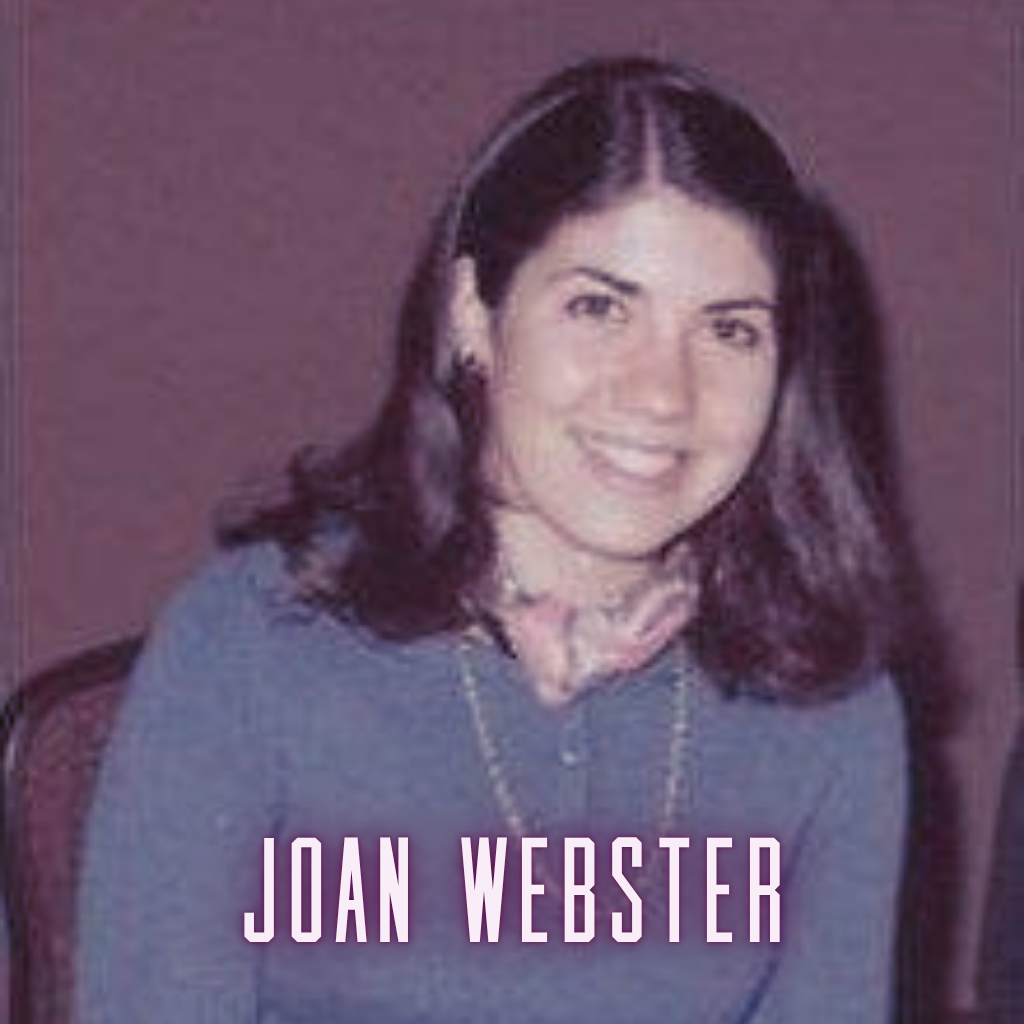
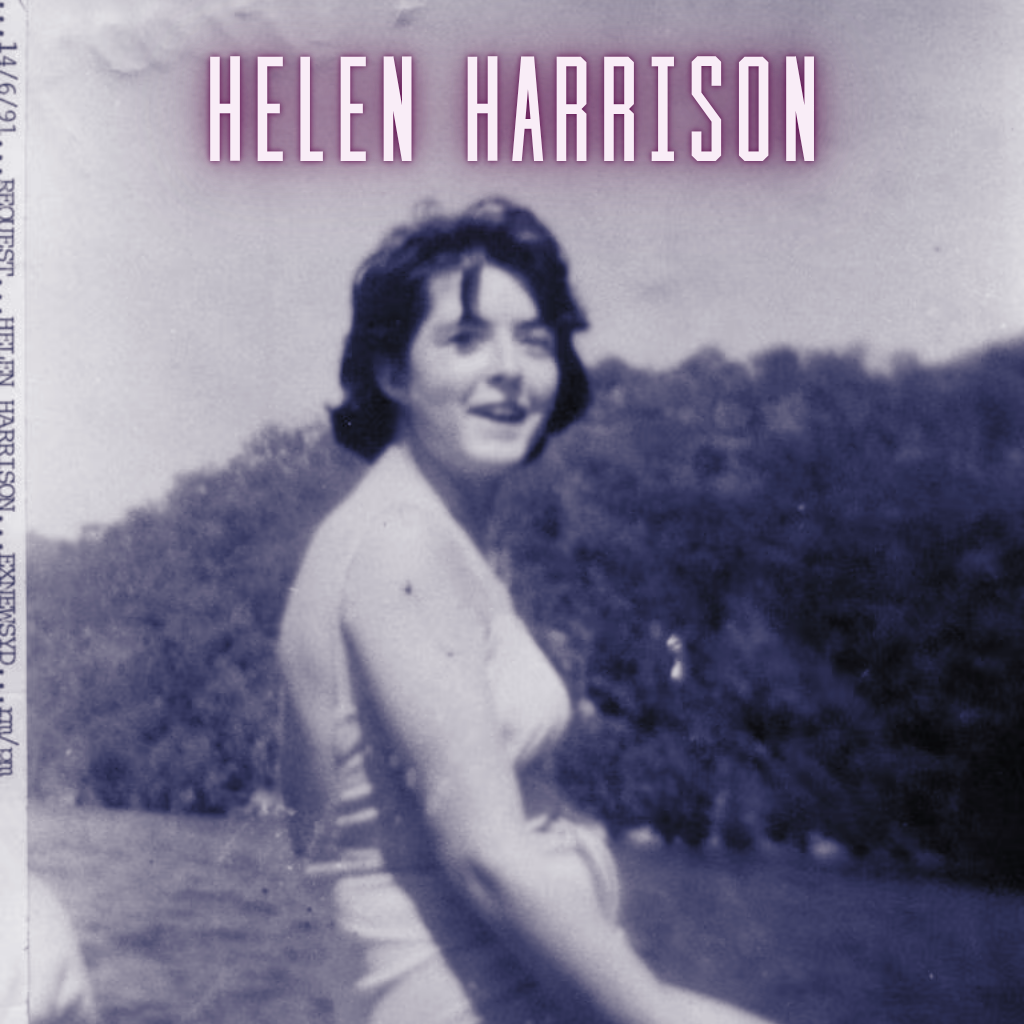
On March 16, 1968, 17-year-old Helen Harrison finished work in Pitt Town, New South Wales, Australia, and set off on her usual bicycle ride home. She never arrived.
More than fifty years later, Helen’s name surfaced during the inquest into William Tyrrell’s disappearance. Why was a teenager who vanished in 1968 being discussed in the search for a little boy who disappeared decades later?
This week we follow Helen’s story, the accounts that emerged over the years, and a family’s determination to find out what happened on that ride home.
Anyone with information about Helen Harrison’s case can contact Crime Stoppers on 1800 333 000 from within Australia or submit information at nsw.crimestoppers.com.au.
For more information about the podcast and the cases discussed, visit VoicesforJusticePodcast.com
For even more content or to further support the show, join the Voices for Justice Patreon.
Follow us on social media:
Twitter: @VFJPod
Instagram: @VoicesforJusticePodcast
TikTok: @VoicesforJusticePodcast
Facebook: @VoicesforJusticePodcast
Voices for Justice is hosted by Sarah Turney
Twitter: @SarahETurney
Instagram: @SarahETurney
TikTok: @SarahETurney
Facebook: @SarahETurney
YouTube: @SarahTurney
The introduction music used in Voices for Justice is Thread of Clouds by Blue Dot Sessions. Outro music is Melancholic Ending by Soft and Furious. The track used for ad transitions is Pinky by Blue Dot Sessions.
Learn more about your ad choices. Visit podcastchoices.com/adchoices